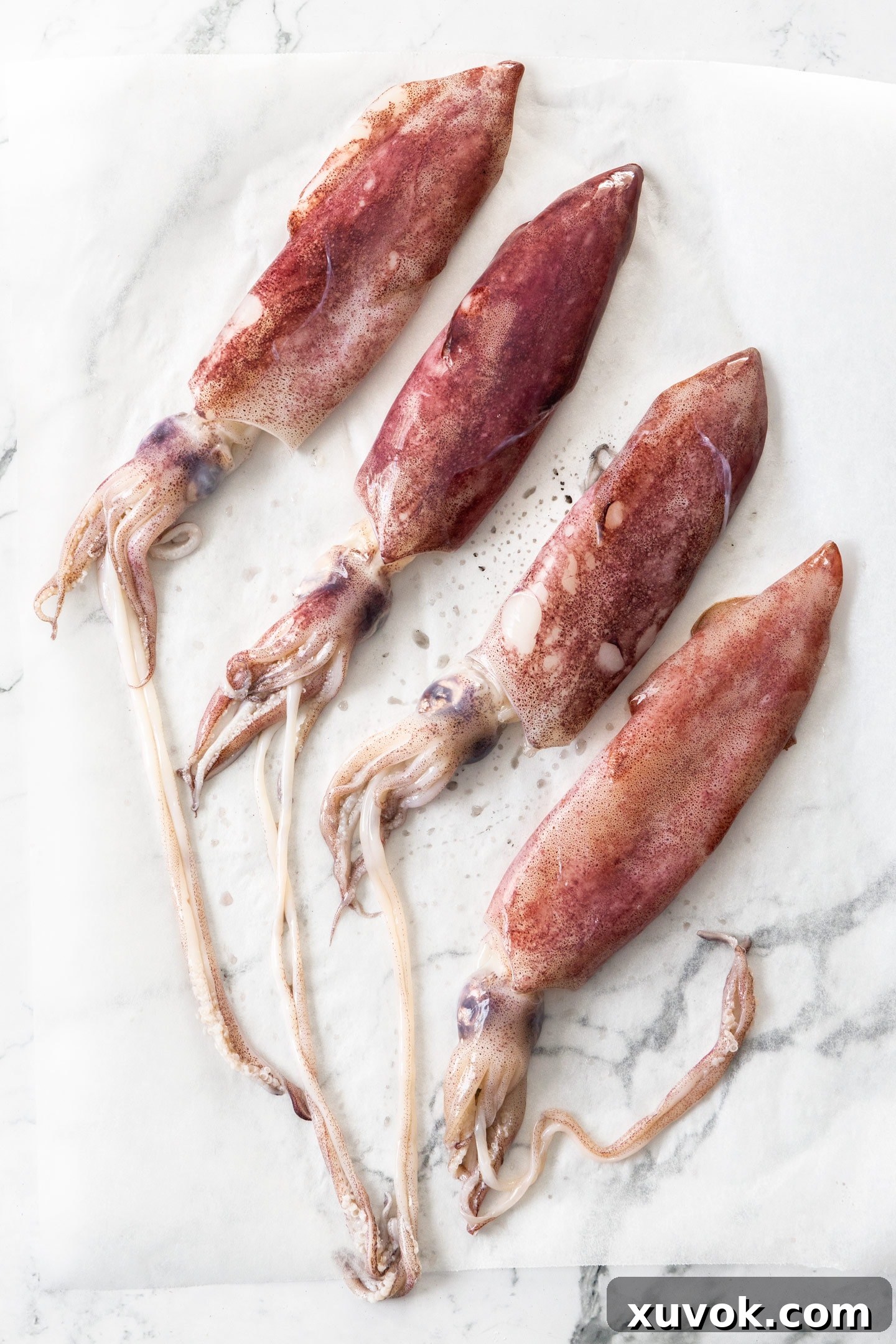
Mastering Squid: Your Comprehensive Guide to Cleaning and Preparing Calamari at Home
Unlocking the delicious potential of fresh squid begins with mastering the art of cleaning it. This in-depth guide provides an easy-to-follow, step-by-step process for cleaning squid, transforming it into pristine calamari rings, steaks, or stuffed bodies ready for your favorite recipes. While a fishmonger can certainly clean squid for you, learning this simple skill at home offers numerous benefits, including significant cost savings, superior freshness, and the satisfaction of preparing your own seafood.
Whether you’re a seasoned chef or a curious home cook, preparing squid doesn’t have to be intimidating. With our detailed instructions, you’ll learn how to efficiently separate the edible parts from those to discard, ensuring a clean, flavorful end product. Beyond just basic cleaning, we’ll delve into the anatomy of squid, offer tips for sourcing and thawing, and even show you how to harvest the prized squid ink for gourmet applications.
The culinary versatility of squid is astounding. From the iconic crispy fried calamari, reminiscent of Mediterranean calamari fritti or the beloved salt and pepper squid, to succulent grilled preparations or savory stuffed squid, there’s a myriad of dishes to delight any seafood enthusiast. Starting with a perfectly cleaned squid is the first and most crucial step to achieving restaurant-quality results in your own kitchen.
For the best flavor and texture, always aim to source fresh squid if possible. Look for squid with bright, clear eyes, a creamy white body, and a mild, briny scent, avoiding anything with a strong fishy odor or discoloration. If fresh squid isn’t available, high-quality raw, whole frozen squid is an excellent alternative. When using frozen squid, ensure it’s raw (not pre-cooked) and allow it to thaw slowly in the refrigerator overnight. This gentle thawing process helps maintain its delicate texture. For quicker thawing, submerge the sealed squid package in cold tap water, changing the water every 15-30 minutes until thawed but still cold. Never use hot water, as it can partially cook the squid and negatively impact its texture.
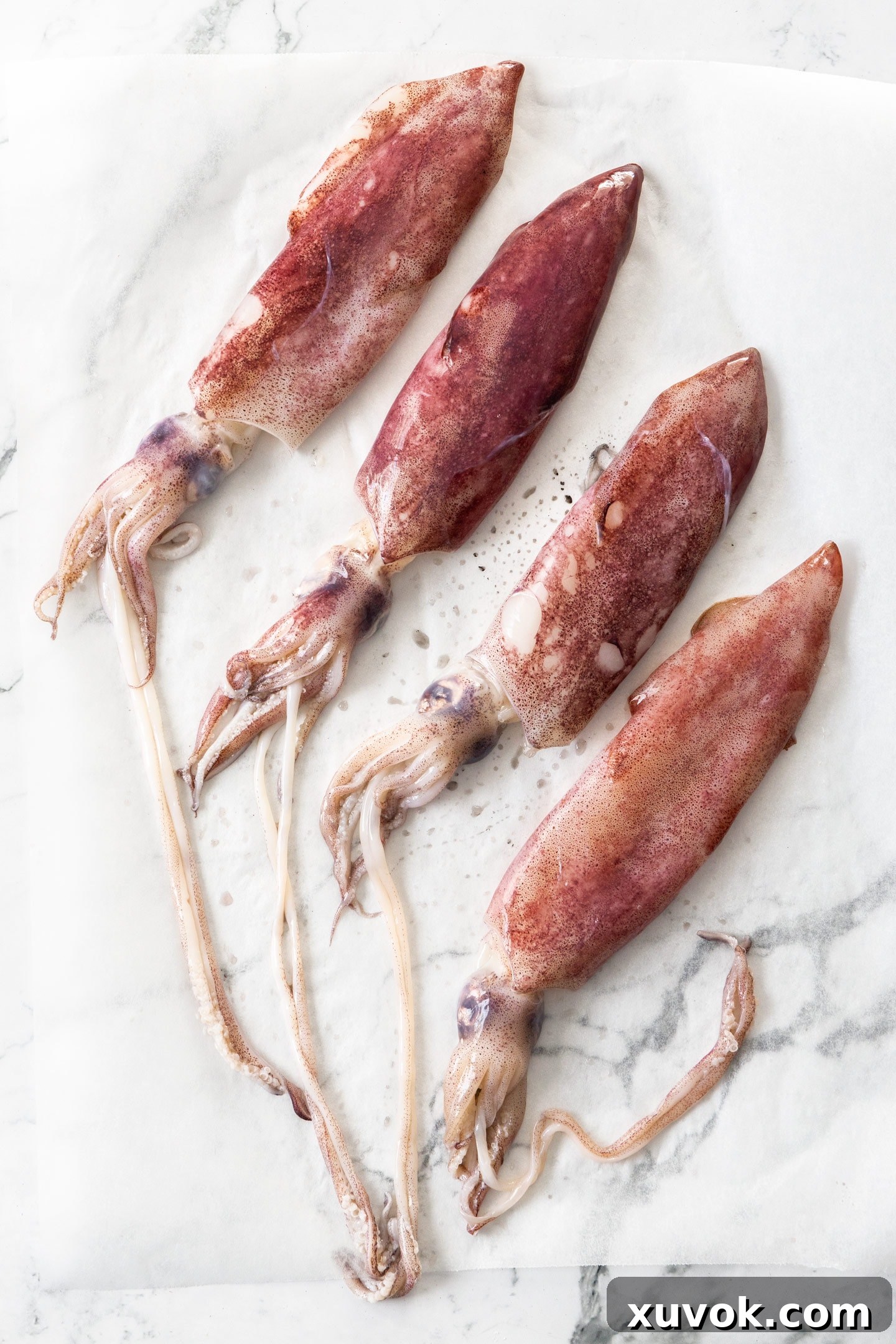
Table of Contents
- Why Clean Squid at Home?
- Squid vs. Calamari: Understanding the Terms
- Anatomy of Squid: A Quick Overview
- How to Clean Squid: A Step-by-Step Guide
- 1. Separate the Tentacles from the Mantle
- 2. Locate and Remove the Beak
- 3. Prepare the Tentacles for Cooking
- 4. Extract the Innards from the Mantle
- 5. Pull Out the Gladius (Pen)
- 6. Peel Off the Outer Skin
- 7. Detach the Wings (Optional)
- 8. Slice the Mantle for Calamari Rings or Steaks
- Post-Cleaning Care and Storage
- How to Harvest Squid Ink
- Beyond Cleaning: Cooking Your Calamari
Never Miss a Recipe!
Get the latest recipes straight to your inbox!
Join our newsletter for exclusive recipes and cooking tips!
Why Clean Squid at Home? The Benefits of DIY Preparation
You might be wondering, “Why go through the trouble of cleaning squid myself when I can buy pre-cut rings?” The answer lies in flavor, freshness, economy, and versatility. While buying pre-cleaned calamari from the freezer section is convenient, it often pales in comparison to the taste and texture of squid cleaned at home.
- Superior Flavor and Texture: Freshly cleaned squid retains more of its natural, delicate flavor and tender texture. Pre-cleaned and frozen squid can sometimes lose some of its nuanced taste and become slightly tougher. By cleaning it yourself, you ensure the freshest possible product for your culinary creations.
- Cost-Effectiveness: Whole, uncleaned squid is generally more affordable per pound than its pre-cut, processed counterpart. This means you get more for your money, especially if you cook seafood frequently.
- Full Utilization: Cleaning squid at home allows you to utilize every edible part, including the flavorful tentacles and, if you’re adventurous, the prized ink sac. Pre-cleaned calamari rarely includes the tentacles, and the ink is almost always discarded.
- Control Over Preparation: You have complete control over how the squid is prepared – whether you want perfectly smooth rings, creative criss-cross patterns for stir-fries, or whole bodies for stuffing. This customization is often unavailable with pre-packaged options.
- A Sense of Accomplishment: There’s a certain satisfaction that comes from mastering a new culinary skill and knowing you’ve prepared a dish from its most basic form.
Squid vs. Calamari: Understanding the Terms
In culinary contexts, the terms “squid” and “calamari” are often used interchangeably, and for good reason: they refer to the exact same mollusk. The distinction is primarily linguistic. “Calamari” is simply the Italian word for squid – calamaro (singular) or calamari (plural). Over time, it has been adopted into English, especially in restaurant menus, to refer to dishes made from squid, particularly fried squid rings. So, when you order “fried calamari,” you’re essentially ordering “fried squid.” Understanding this helps demystify menu descriptions and confirms that any cleaning guide for squid is also a guide for calamari.
Anatomy of Squid: A Quick Overview of Its Parts
Before we dive into the cleaning process, let’s familiarize ourselves with the basic anatomy of a fresh squid. Knowing these parts will make the cleaning steps much clearer and more efficient. Think of this as your quick course in squid biology for the kitchen!
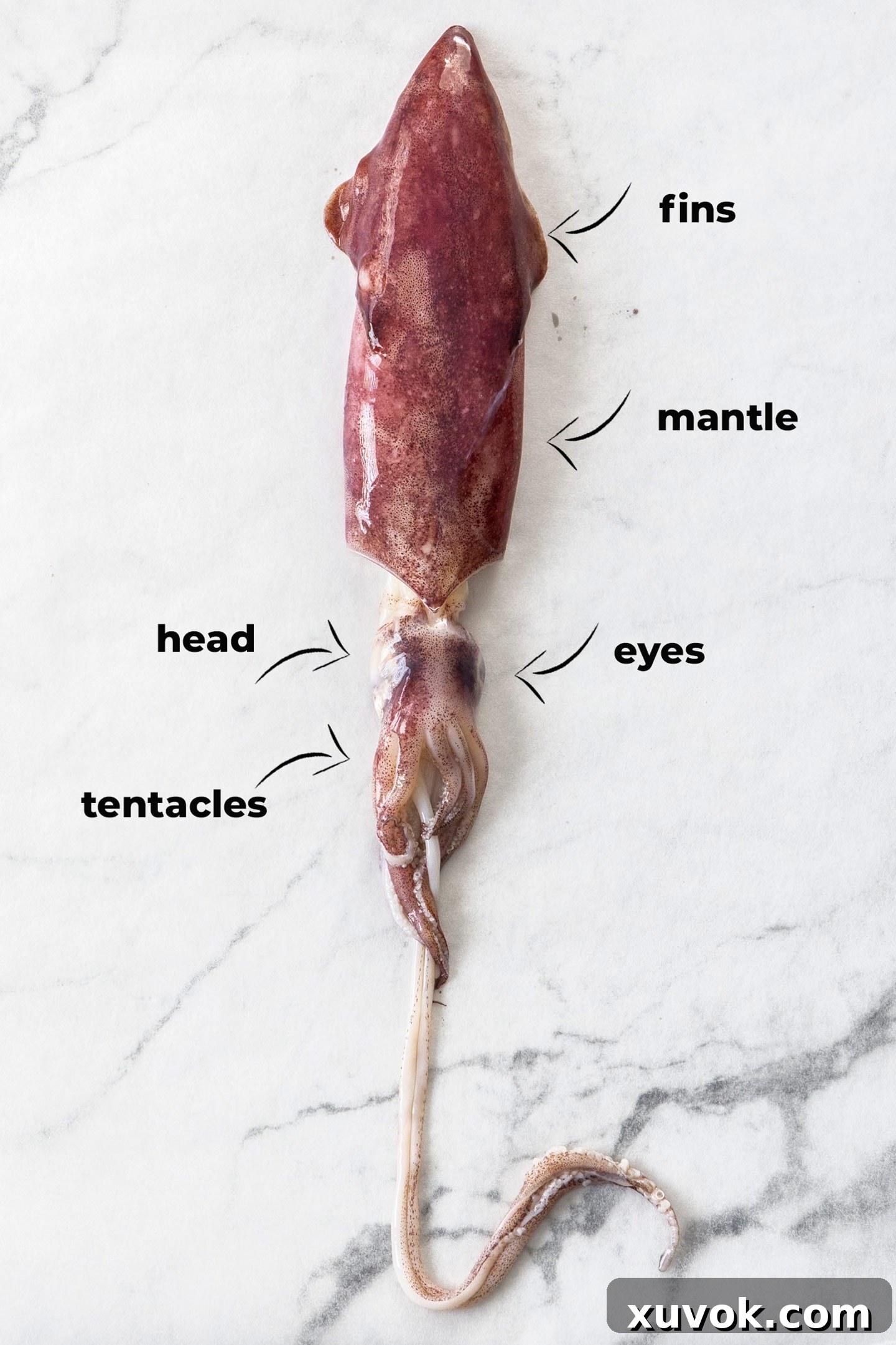
- Tentacles: These are the “legs” attached to the head of the squid. Typically, there are eight shorter arms and two longer feeding tentacles, all equipped with rows of small suckers. All parts of the tentacles are edible and delicious when cooked properly.
- Beak: Located at the center base of the tentacles, just below the eyes, is a small, hard, parrot-like beak. This is the squid’s mouthpart and is inedible, requiring removal.
- Eyes: These prominent, beady eyes are connected to the head and are typically discarded along with the rest of the head assembly.
- Mantle (or Hood/Body): This is the main, conical or tube-shaped body of the squid, which encases all the internal organs, the ink sac, and the pen. The mantle is the primary part used for calamari rings or steaks and can also be stuffed.
- Fins (or Wings): Two triangular or wing-like fins are attached to the mantle, usually near the tail end. These are edible and can either be left attached for certain preparations or peeled off for smoother rings. They have a slightly different texture than the mantle.
- Skin: A thin, purplish-brown membrane covers the entire outer surface of the squid’s mantle. While edible, it is often peeled away for aesthetic reasons, resulting in a cleaner, whiter appearance, and sometimes for a more tender texture.
- Gladius (or Pen/Cuttlebone): This is the squid’s internal skeleton, a thin, clear, flexible piece of chitin that runs the length of the mantle, protecting the internal organs. It resembles a transparent feather or quill and is easily pulled out and discarded. It’s often referred to as the “backbone” of the squid.
- Ink Sac: Situated within the innards, typically above the head and inside the mantle, is a small, silvery sac containing dark, edible ink. This ink can be carefully harvested and used to add dramatic color and a unique umami flavor to sauces, pasta, or risotto.
How to Clean Squid: A Step-by-Step Guide for Flawless Calamari
Cleaning squid might seem a bit messy at first, especially if you encounter the ink sac, but it’s genuinely simple once you understand the process. These step-by-step instructions will walk you through preparing your squid with ease. A quick tip: if you’re concerned about staining your fingers with ink (though it washes off easily), consider wearing a pair of kitchen gloves.
Watch a video demonstration of how to clean squid step-by-step.

(Video demonstration of the squid cleaning process)
1. Separate the Tentacles from the Mantle
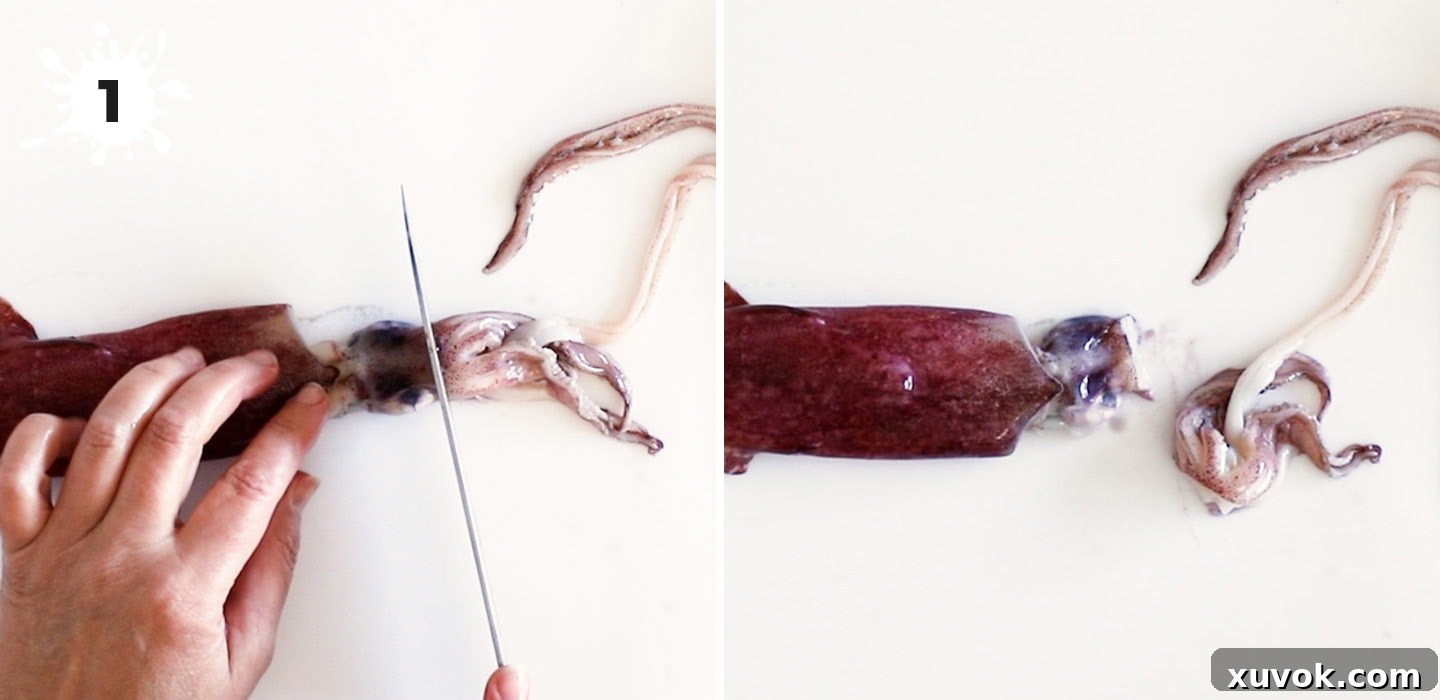
Lay your fresh squid out on a clean, large chopping board. Grip the main body (mantle) firmly in one hand and the head/tentacle section in the other. Using a sharp knife, make a clean cut just below the eyes, separating the tentacles and head from the main body. Be careful not to puncture the ink sac if you plan to harvest it, as it’s usually located within the innards you’re about to remove with the head.
2. Locate and Remove the Beak
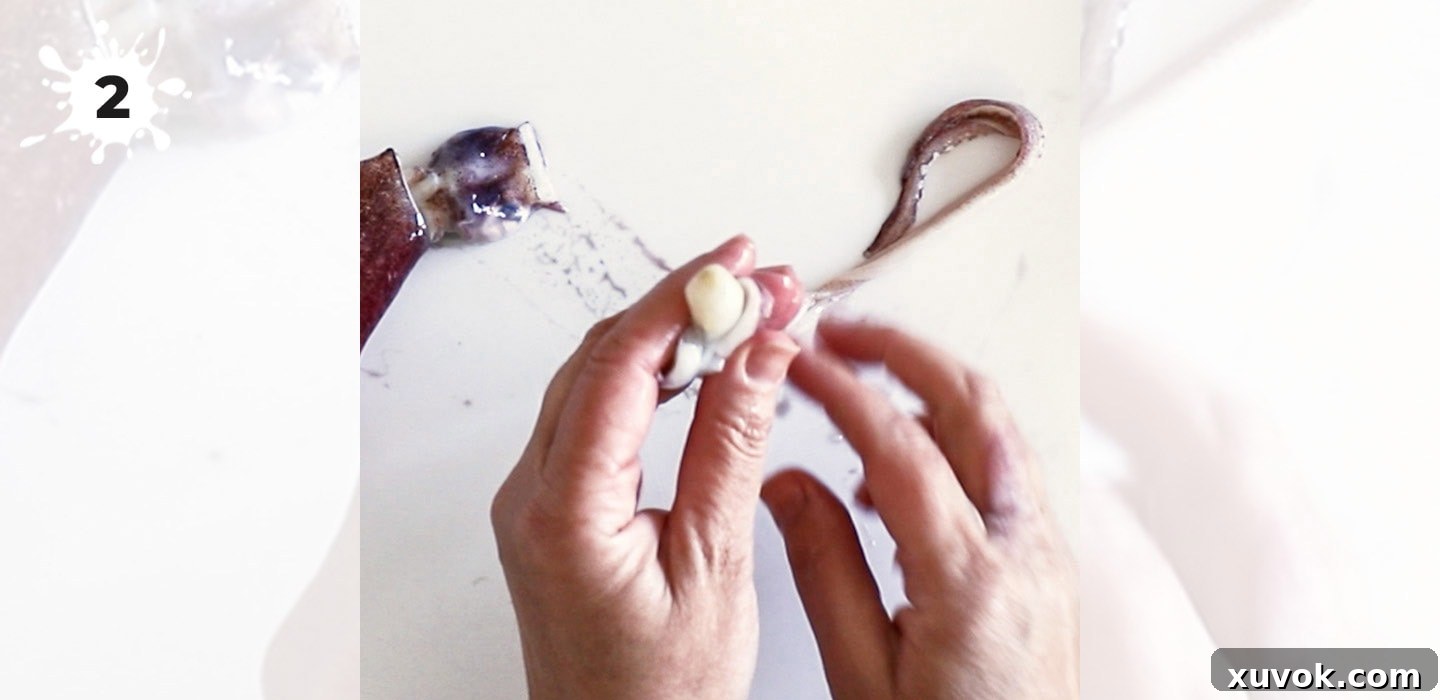
Take the severed tentacle section. Hold it with the cut side facing upwards. In the very center, you’ll feel a small, hard, round object – this is the squid’s beak, which is inedible. Gently squeeze the base of the tentacles around the beak; it should pop out relatively easily. If it doesn’t, you might need to push it from the opposite side (the exterior base of the tentacles). Once it’s out, discard it. Rinse the tentacles briefly under cold water to ensure all debris is removed.
3. Prepare the Tentacles for Cooking
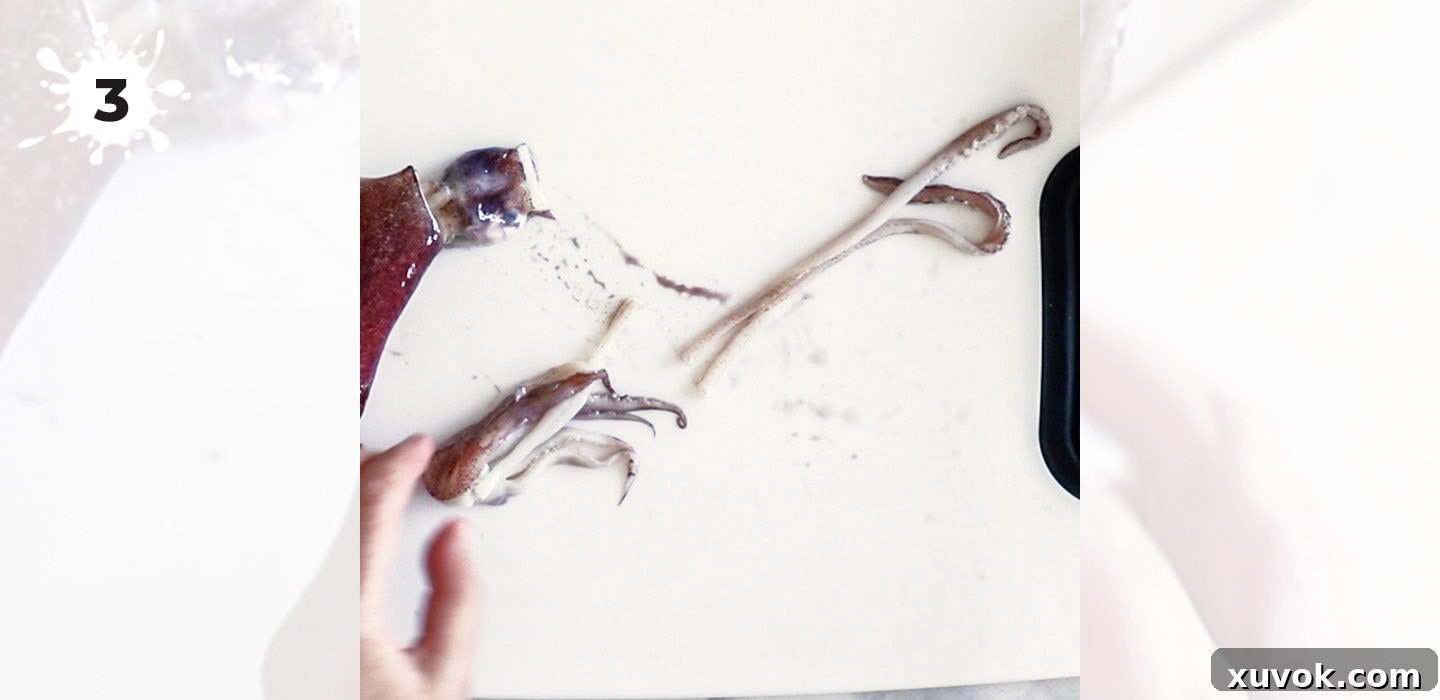
This step is entirely optional but recommended for easier cooking and eating, especially if you have very large squid. You can leave the tentacles whole if you prefer, but often, the longer feeding tentacles are separated from the cluster of shorter arms. Simply use your knife to cut the entire tentacle cluster into two or three more manageable sections. Place the cleaned and cut tentacles aside on a clean plate. They are now ready for your recipe.
4. Extract the Innards from the Mantle
Now turn your attention to the main body, or mantle, of the squid. Insert your fingers into the open end of the mantle and gently grasp the mass of internal organs just above where the head was attached. With a firm but gentle twist and pull, extract the entire cluster of guts. This includes the eyes, the digestive tract, and often the ink sac (if you’re not harvesting the ink, discard this entire portion). Once the main mass is out, reach back inside with your fingers or a small spoon to scrape out any remaining small bits of innards or membranes, ensuring the mantle is completely clean inside. Rinse the mantle thoroughly under cold running water.
5. Pull Out the Gladius (Pen)
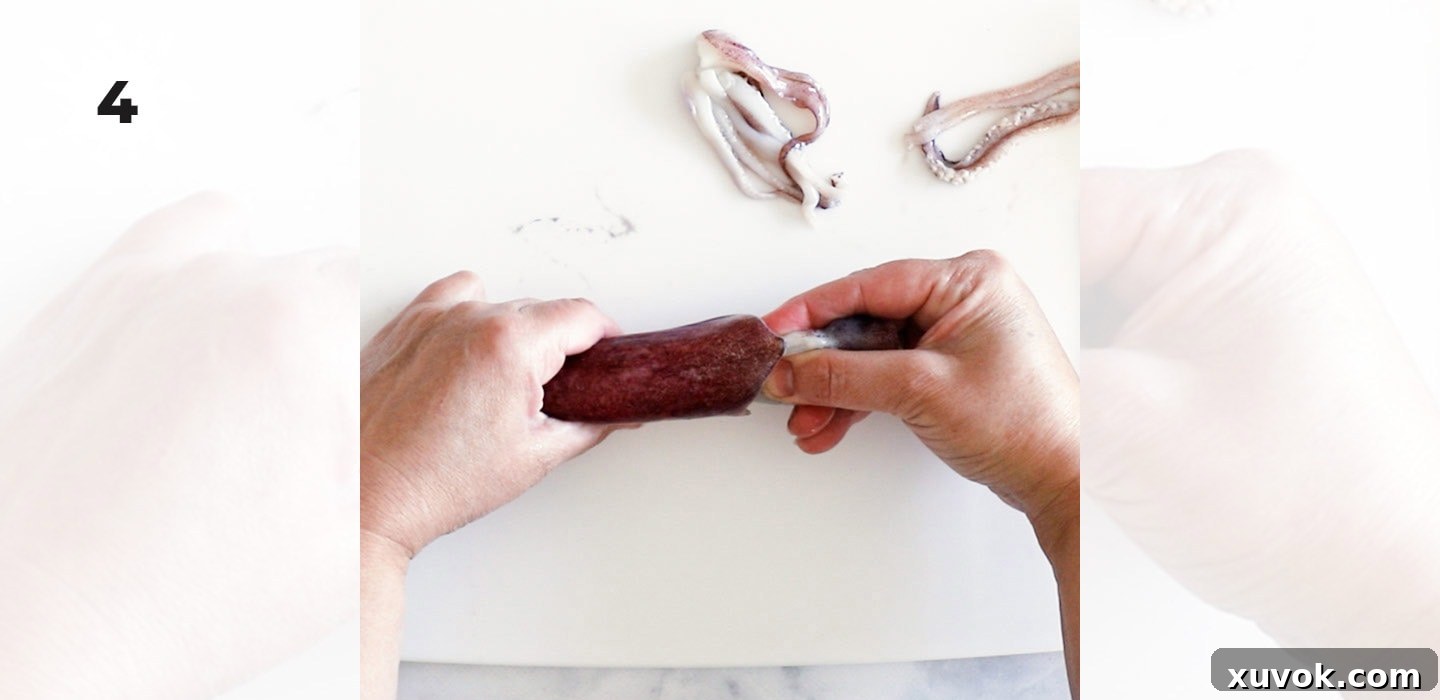
With the innards removed, you’ll easily spot a thin, clear, somewhat rigid “backbone” running the length of the mantle. This is the gladius, or pen. It might be slightly pointy at one end. Simply grasp the end of the pen and pull it straight out. It should slide out easily in one piece. If it snaps, reach in and retrieve any broken pieces to ensure the mantle is entirely free of it. Discard the pen.
6. Peel Off the Outer Skin
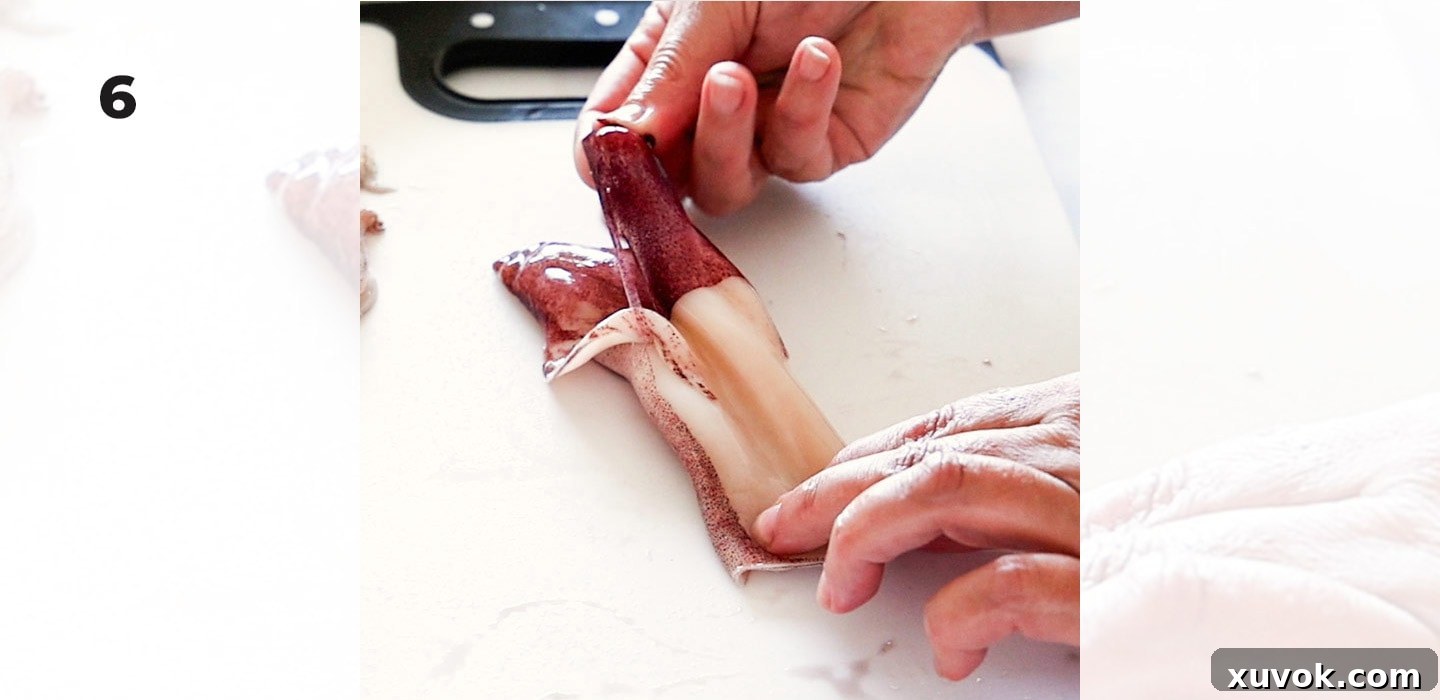
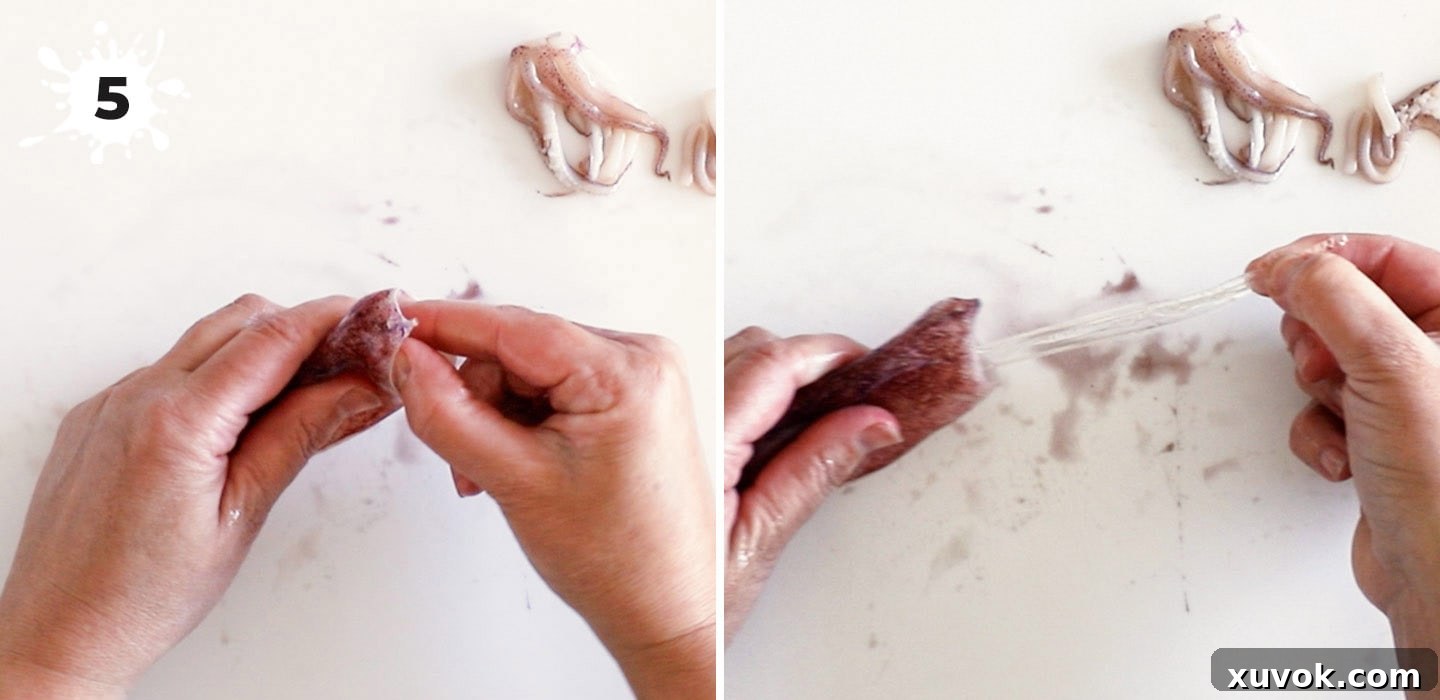
The squid’s mantle is covered in a thin, purplish-brown membrane or skin. While edible, many prefer to remove it for a cleaner, whiter appearance and a slightly more tender texture. To do this, simply pinch a small piece of the skin at the open end of the mantle and gently pull it away. It usually peels off quite easily in strips or larger sections. Don’t worry if it tears; just keep pinching and peeling until all the dark skin is removed. Once peeled, give the inside and outside of the squid tube a final thorough rinse under cold water to wash away any remaining bits of skin or debris.
7. Detach the Wings (Optional)
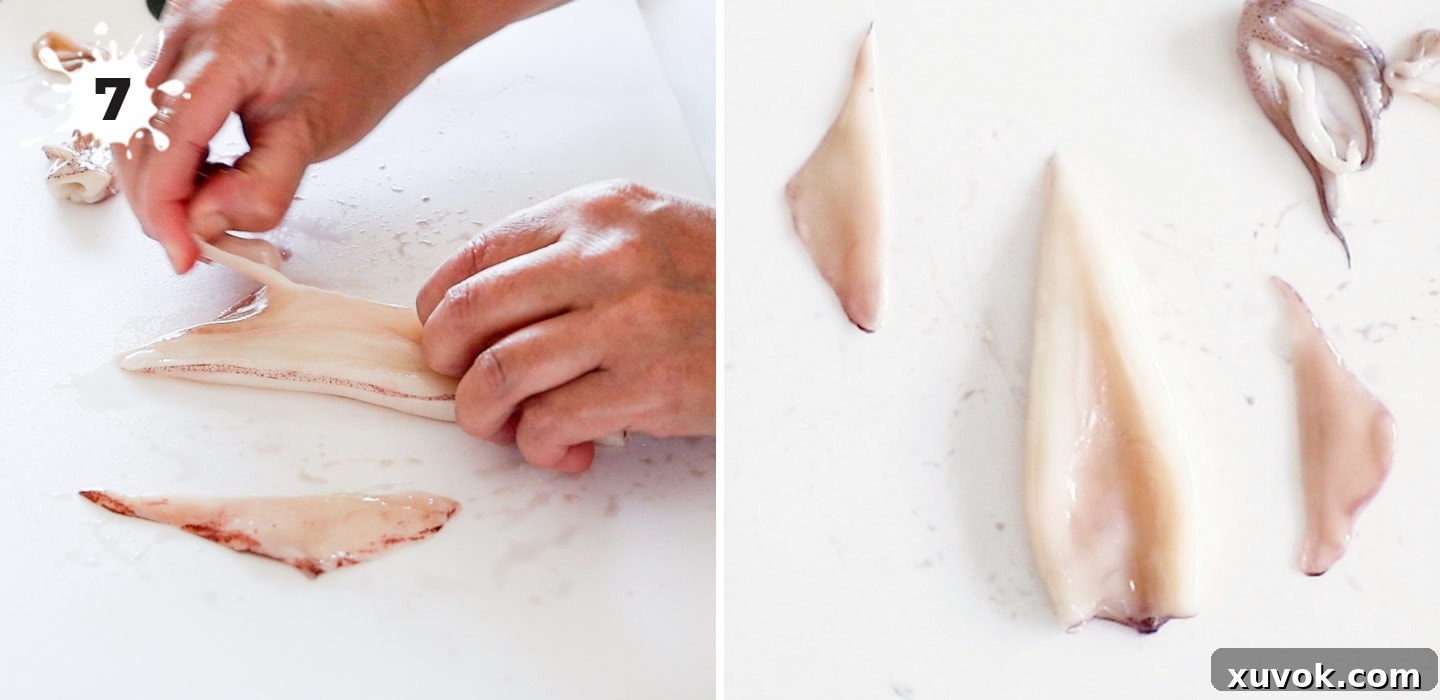
The two triangular “wings” or fins attached to the mantle are completely edible and flavorful. You can certainly leave them on, especially if you plan to grill the squid whole or chop it for a stir-fry. However, if you’re aiming for perfectly smooth calamari rings, you might want to remove them. To do so, simply grasp the edge of a wing at its base and peel it away from the mantle. It should come off fairly easily. Set the peeled wings aside with your tentacles; they can be cooked similarly and offer a delightful texture.
8. Slice the Mantle for Calamari Rings or Steaks
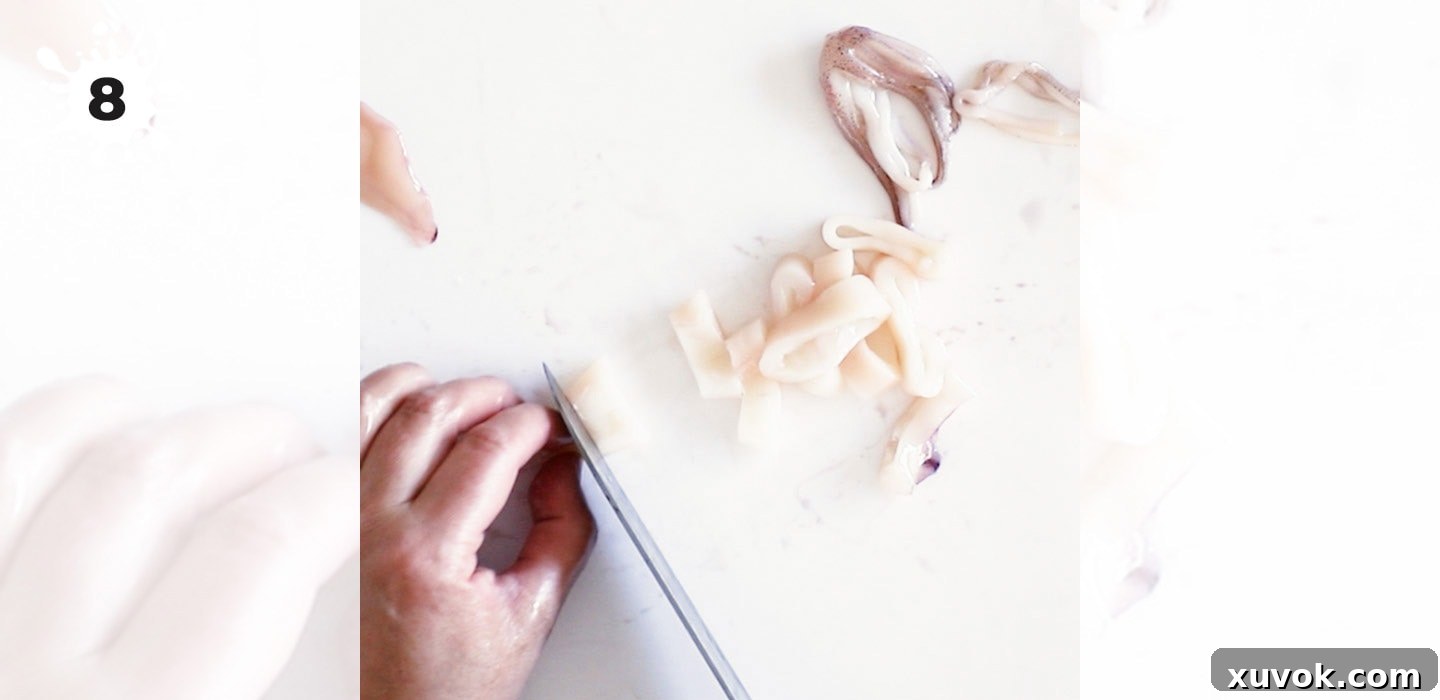
Now that your squid mantle is thoroughly cleaned, rinsed, and peeled, it’s ready to be cut into your desired shape. There are two primary ways to prepare the body for cooking:
- Calamari Rings: This is the most popular preparation. Simply lay the cleaned squid tube flat on your cutting board and slice it into rings, about 8mm or ⅓-inch thick. Aim for consistent thickness to ensure even cooking. These rings are perfect for frying, sautéing, or adding to seafood pastas.
- Criss-Cross Pattern for Steaks or Strips: For a more gourmet presentation or for dishes like stir-fries where the squid curls beautifully, you can create a criss-cross pattern. Start by slicing the mantle open lengthwise along one side, allowing it to unfurl into a flat piece. With the inside surface facing up, lightly score the squid flesh diagonally with your knife, being careful not to cut all the way through. Repeat this in the opposite diagonal direction, creating a diamond or criss-cross pattern. Now you can slice the entire scored squid piece into larger “steaks” or smaller strips. As the squid cooks, the scored pattern will cause it to curl up attractively, creating a tender, visually appealing texture.
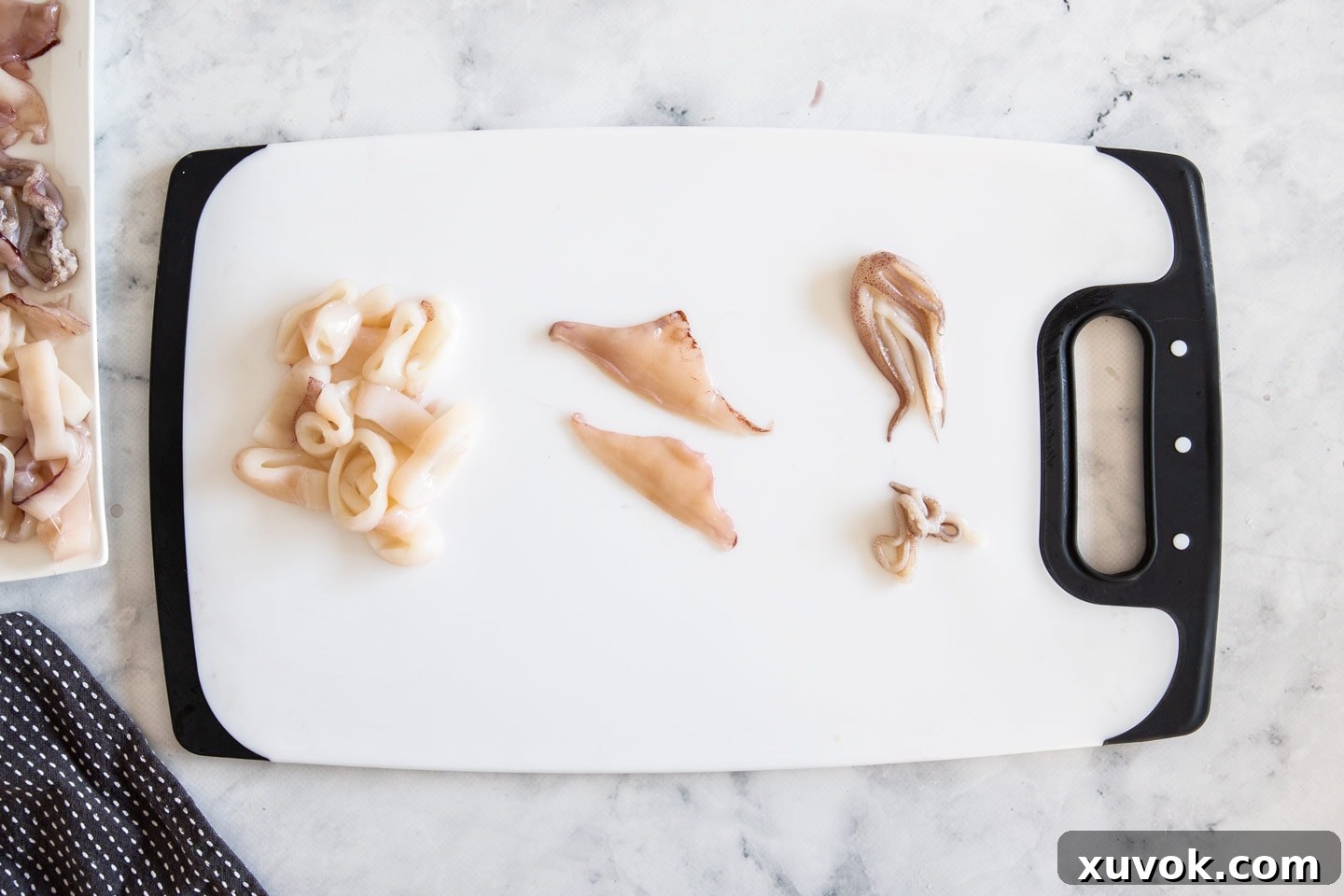
Post-Cleaning Care and Storage
Once your squid is cleaned and cut, it’s important to prepare it for cooking or storage properly. After rinsing, gently pat the squid dry with paper towels. Excess moisture can lead to a less crispy fried calamari or a less flavorful sautéed dish. For immediate use, your calamari is ready to go into your recipe.
If you’re not cooking it right away, place the cleaned squid in an airtight container or a zip-top bag. It can be stored in the refrigerator for up to 1-2 days. For longer storage, cleaned squid freezes exceptionally well. Arrange the pieces in a single layer on a baking sheet and freeze until solid, then transfer them to a freezer-safe bag or container. This prevents them from clumping together. Properly frozen squid can last for up to 3 months. Thaw frozen cleaned squid in the refrigerator overnight before use.
How to Harvest Squid Ink: A Culinary Delicacy
Squid ink is a true culinary gem, capable of adding a deep, mysterious color and a delicate, savory umami flavor to a variety of dishes. If you’ve always wanted to experiment with this unique ingredient, harvesting it yourself is surprisingly simple. Often, just a few drops are enough to make a significant impact on flavor and visual appeal.
The ink is contained within a small, silvery ink sac located among the innards, usually above the squid’s head and inside the mantle. It typically looks like a slender black vein or a small, elongated bag. To harvest it, carefully separate the ink sac from the rest of the discarded innards. Have a small, non-porous dish ready (squid ink can stain porous surfaces like plastic or wood). Add a tablespoon of liquid – water, white wine, or vinegar – to the dish. Using the tip of a small, sharp knife, carefully snip the end of the ink sac. Gently squeeze the sac to release the dark, viscous ink into the liquid in your dish. The liquid helps to dilute the ink slightly and makes it easier to work with.
Once harvested, squid ink can be used immediately or stored for future use. For longer preservation, pour the ink into an ice cube tray (be aware it might stain the tray) and freeze. Each ice cube can be a convenient portion for a single dish. Frozen squid ink can be stored for up to 3 months. When cooking, remember that a little goes a long way – one ink sac often yields enough for several dishes. You can always dilute it further with more liquid during the cooking process if needed.
Beyond Cleaning: Cooking Your Calamari
With your squid expertly cleaned and prepared, a world of culinary possibilities opens up. The key to delicious calamari, regardless of the cooking method, is usually high heat and quick cooking times. Overcooked squid becomes rubbery and tough, so keep a close eye on it!
- Crispy Fried Calamari: A classic for a reason. Toss rings and tentacles in seasoned flour, then quickly deep-fry until golden brown and tender. Serve with a squeeze of lemon and a dipping sauce.
- Grilled Squid: Whole mantles (or cut into large steaks) and tentacles take beautifully to the grill. Marinate briefly in olive oil, garlic, lemon, and herbs, then grill quickly over high heat until just cooked through.
- Sautéed or Stir-fried: Thinly sliced squid or the scored criss-cross pieces cook rapidly in a hot pan or wok. Perfect for adding to pasta dishes, risottos, or Asian-inspired stir-fries.
- Stuffed Squid: Large squid mantles can be stuffed with a savory mixture of breadcrumbs, herbs, cheese, and sometimes chopped tentacles, then baked or braised until tender.
No matter how you choose to cook it, starting with well-cleaned squid is the foundation for a truly delicious seafood experience.
If this guide helped you successfully clean your squid, we’d love to hear about your experience and culinary creations in the comments below! Your feedback is invaluable.
Hungry for more seafood inspiration or new recipes? Subscribe to our newsletter for a fresh dose of free recipes delivered straight to your inbox. Plus, follow along on Facebook, Pinterest, and Instagram for daily cooking tips, behind-the-scenes content, and delicious food photography.