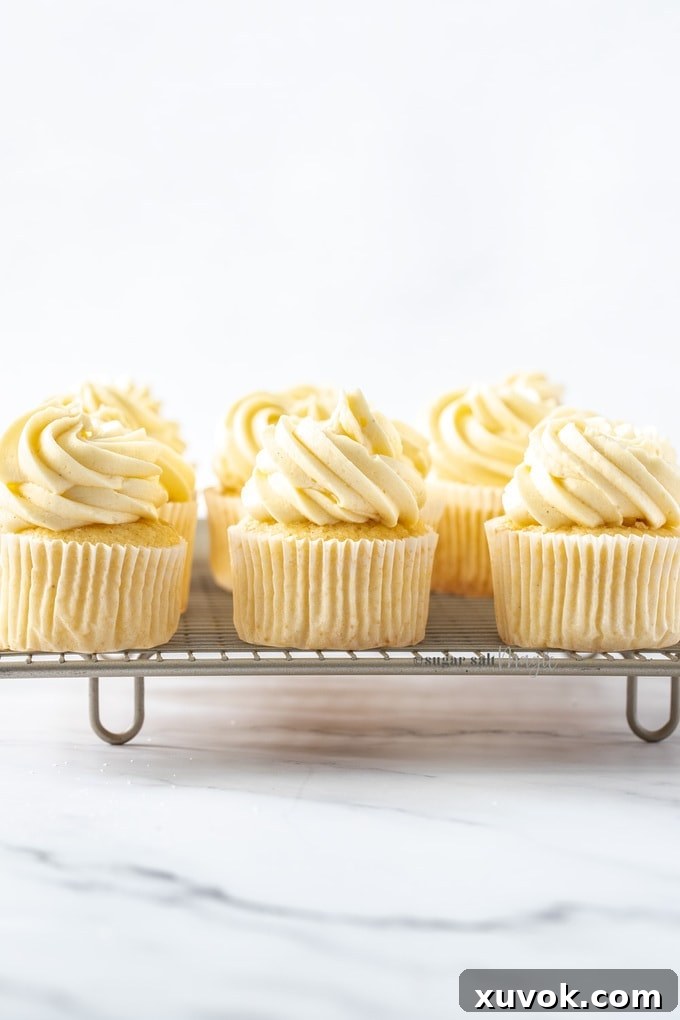
Indulge in Silky Smooth German Buttercream: The Not-Too-Sweet Frosting You’ll Adore
If you’ve been searching for a truly exquisite buttercream that boasts a delicate sweetness, a luscious texture, and an irresistible creaminess, your quest ends here. Say hello to German Buttercream – often hailed as one of the finest frostings for its rich flavor and incredibly smooth finish. Last week, we delved into the secrets of crafting perfect pastry cream (crème pâtissière), and today, we reveal how that very custard forms the heart of this divine German Buttercream recipe. Prepare to transform your cakes and cupcakes with a frosting that truly stands out.
While you’re here, don’t forget to explore other popular choices like our Swiss Meringue Buttercream or our beloved Vanilla Bean Frosting.
Why You’ll Fall in Love with German Buttercream
This frosting holds a special place in my heart, ranking just after the equally delightful ermine frosting. In fact, German buttercream shares many similarities with ermine frosting (also known as flour buttercream) in both its creation process and its luxurious texture. Here’s what makes it an absolute favorite:
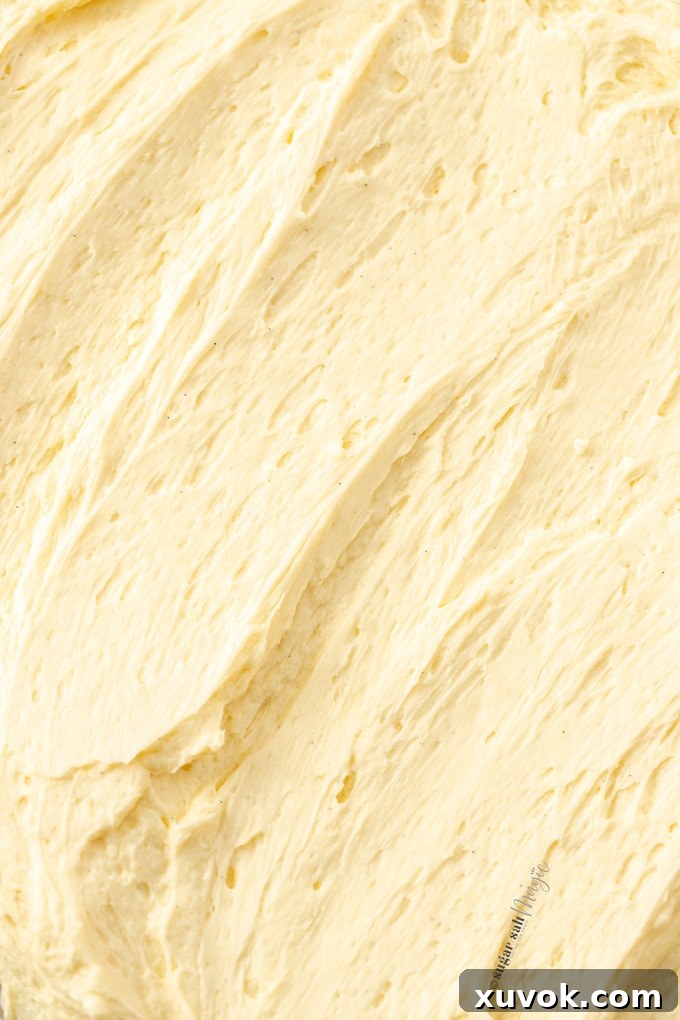
- Unparalleled Softness & Creaminess: Unlike some heavier frostings, German buttercream melts in your mouth, leaving a sensation of pure silk. Its unique custard base contributes to a tender, yielding texture that is simply heavenly.
- Perfectly Balanced Sweetness: If you find traditional American buttercreams overly sweet, this is the frosting for you. German buttercream offers a refined sweetness that complements your desserts without overpowering them, allowing other flavors to shine through.
- Effortless to Make & Pipe: Despite its sophisticated taste, this buttercream is surprisingly straightforward to prepare. Once you master the simple steps, you’ll find it incredibly easy to pipe intricate designs or spread smoothly onto any baked good.
- Luxuriously Silky Smooth: The secret to its impeccable texture lies in the meticulously prepared pastry cream, which, when combined with butter, creates an incredibly fine, uniform consistency free of any graininess.
- Rich and Buttery Indulgence: Made with real butter and a creamy custard, German buttercream delivers a rich, decadent flavor that elevates any dessert. It’s a true celebration of buttery goodness.
Contents
What is German Buttercream? (Custard Buttercream Explained)
German buttercream, also widely known as custard buttercream or pudding buttercream, is a unique and highly prized frosting. Its distinct character comes from its base: a rich, thick pastry cream (crème pâtissière) that is lovingly beaten into softened butter. Unlike traditional American buttercream, which relies solely on powdered sugar and butter, German buttercream incorporates cooked eggs, milk, and a starch like cornflour (cornstarch). This starch provides additional structure, making it a surprisingly stable buttercream despite its soft consistency, and contributes to its unparalleled silky smoothness.
The cooking of the eggs and sugar with milk and cornflour creates a deep, comforting flavor profile that is far less cloyingly sweet than other frostings. While it requires a couple of extra steps compared to a simple powdered sugar frosting, the luxurious texture and balanced taste are unequivocally worth every moment spent. It’s a sophisticated choice for those who appreciate nuanced flavors and a truly elegant finish on their baked goods.
German Buttercream vs. Ermine Frosting: A Close Comparison
While often compared due to their similar techniques and delightful textures, German buttercream and ermine frosting have subtle but important distinctions:
- German Buttercream (Custard Base): This elegant frosting begins with a rich custard, or crème pâtissière. Key ingredients include sugar, cornflour (cornstarch), egg yolks, milk, and vanilla. These components are gently cooked together until they form a very thick, pudding-like consistency. Once cooled to room temperature, this velvety custard is gradually beaten into softened butter, creating the signature smooth and creamy finish. The egg yolks contribute to its richness and pale yellow hue.
- Ermine Frosting (Flour Pudding Base): Also known as boiled milk frosting or flour frosting, ermine buttercream starts with a simple flour and milk roux cooked with sugar. It typically uses milk, flour, and sugar, and may or may not include butter in its initial cooked base before whipping with more butter. While it achieves a similarly amazing, velvety texture to German buttercream and involves a comparable process of combining a cooled cooked base with butter, it is egg-free in its cooked base, offering a slightly different flavor profile and sometimes a whiter appearance. It remains my personal favorite, and I’ll be sharing a comprehensive guide to ermine frosting soon!
Beyond these two, other popular buttercreams include:
- American Buttercream: The simplest, made from butter, powdered sugar, milk/cream, and flavorings. It’s very sweet and stiff, ideal for decorating.
- Swiss Meringue Buttercream: Made by heating egg whites and sugar over a double boiler, then whipping into a meringue and incorporating butter. It’s light, silky, and less sweet than American.
- Italian Meringue Buttercream: Similar to Swiss, but hot sugar syrup is poured into whipping egg whites, then butter is added. It’s known for its incredible stability.
- French Buttercream: Made with egg yolks, hot sugar syrup, and butter, resulting in a rich, intensely buttery, and yellowish frosting.
German buttercream carves out its niche by offering the richness and balanced sweetness of a custard, making it a uniquely satisfying choice for many dessert applications.
How to Make German Buttercream: A General Overview
The creation of German buttercream is a two-part symphony, beginning with the delicate crafting of a custard and culminating in its luxurious marriage with butter. Here’s a general outline of the process:
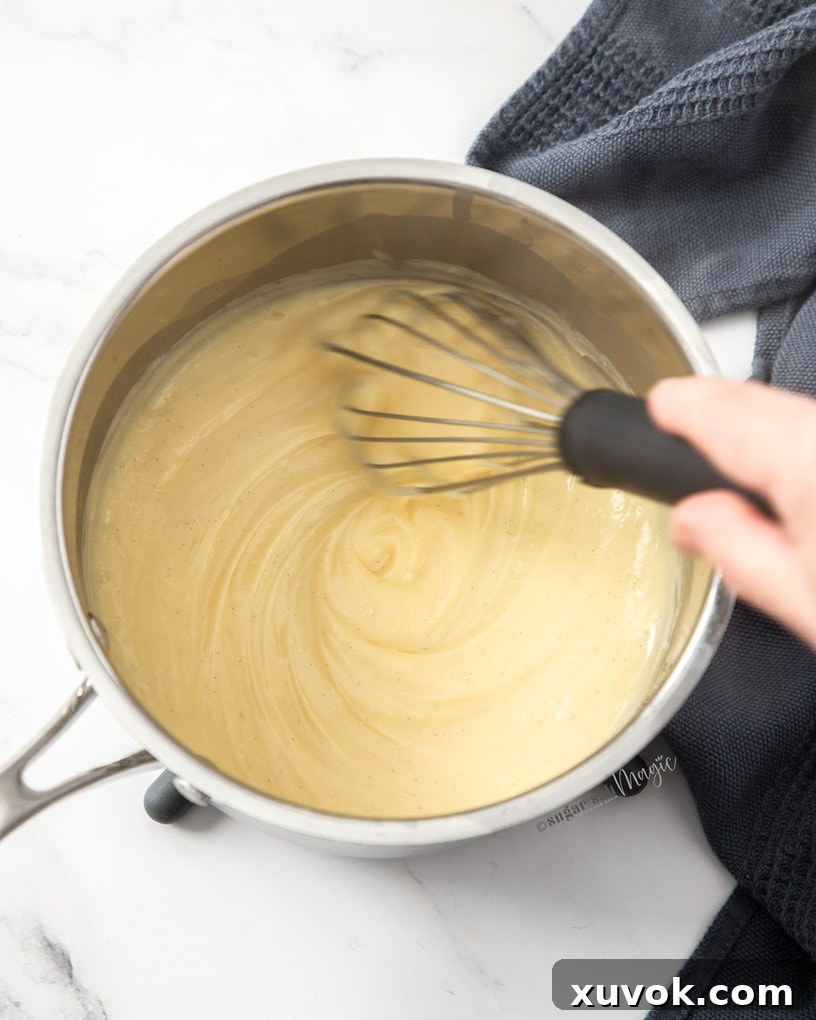
- Prepare the Custard Base (Crème Pâtissière): This foundational step involves whisking together egg yolks, cornflour, sugar, milk, and vanilla. The mixture is then cooked over gentle heat, with constant stirring, until it thickens into a rich, velvety pastry cream. Precision is key here to avoid scrambling the eggs and to achieve the perfect consistency. For a detailed walkthrough, you can refer to our dedicated post on How to make Pastry Cream (Crème Pâtissière).
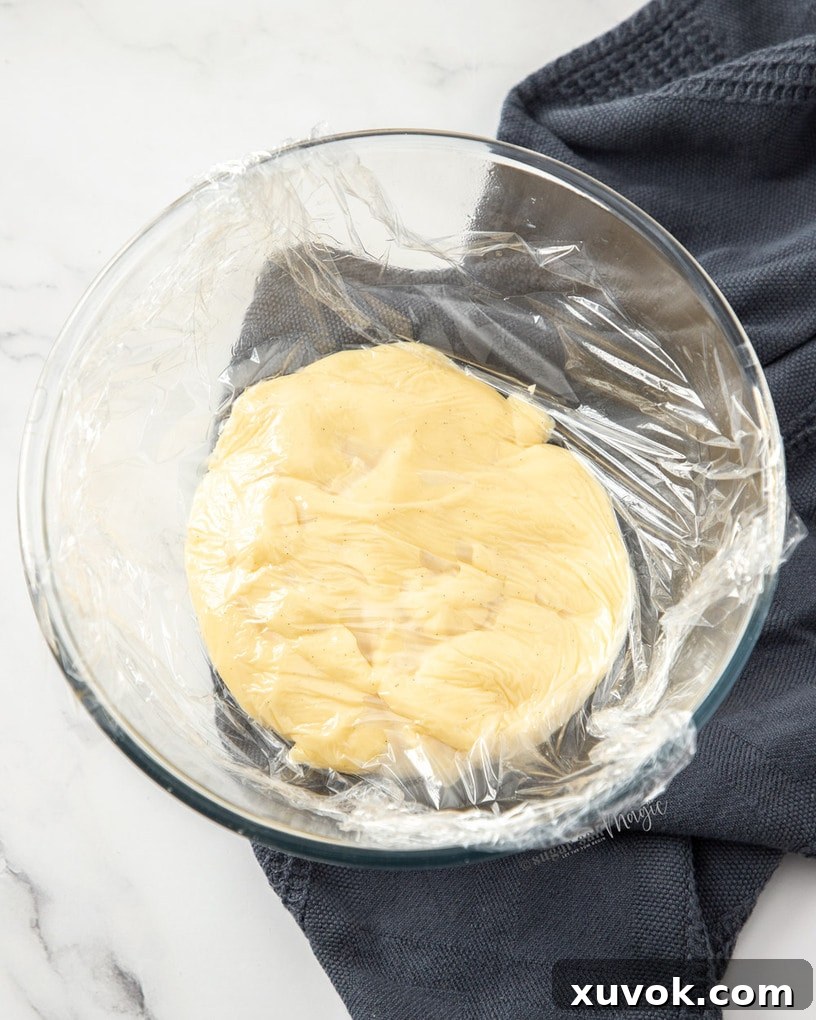
- Cool the Custard Completely: Once cooked, the pastry cream must be cooled to room temperature. This is a critical step. To prevent a skin from forming on the surface (which can lead to lumps in your buttercream), press plastic wrap directly onto the surface of the custard.
- Whip the Butter and Reserved Sugar: In a stand mixer, beat the softened butter with a small amount of sugar until it transforms into a light, fluffy, and very creamy consistency. This aeration is important for the final texture.
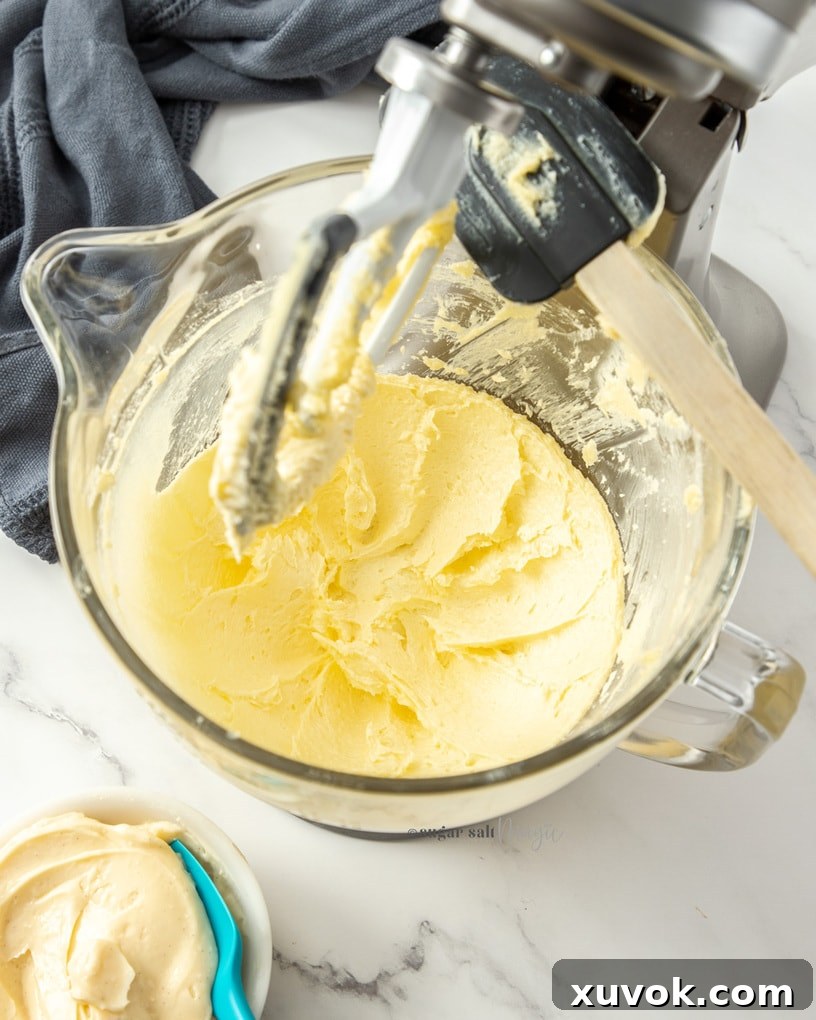
- Gradually Incorporate the Custard: With the mixer running on low speed, add the room-temperature pastry cream to the whipped butter, one spoonful at a time. Beat for a few seconds after each addition to ensure full incorporation before adding the next. This slow, steady addition helps prevent the buttercream from splitting or curdling.
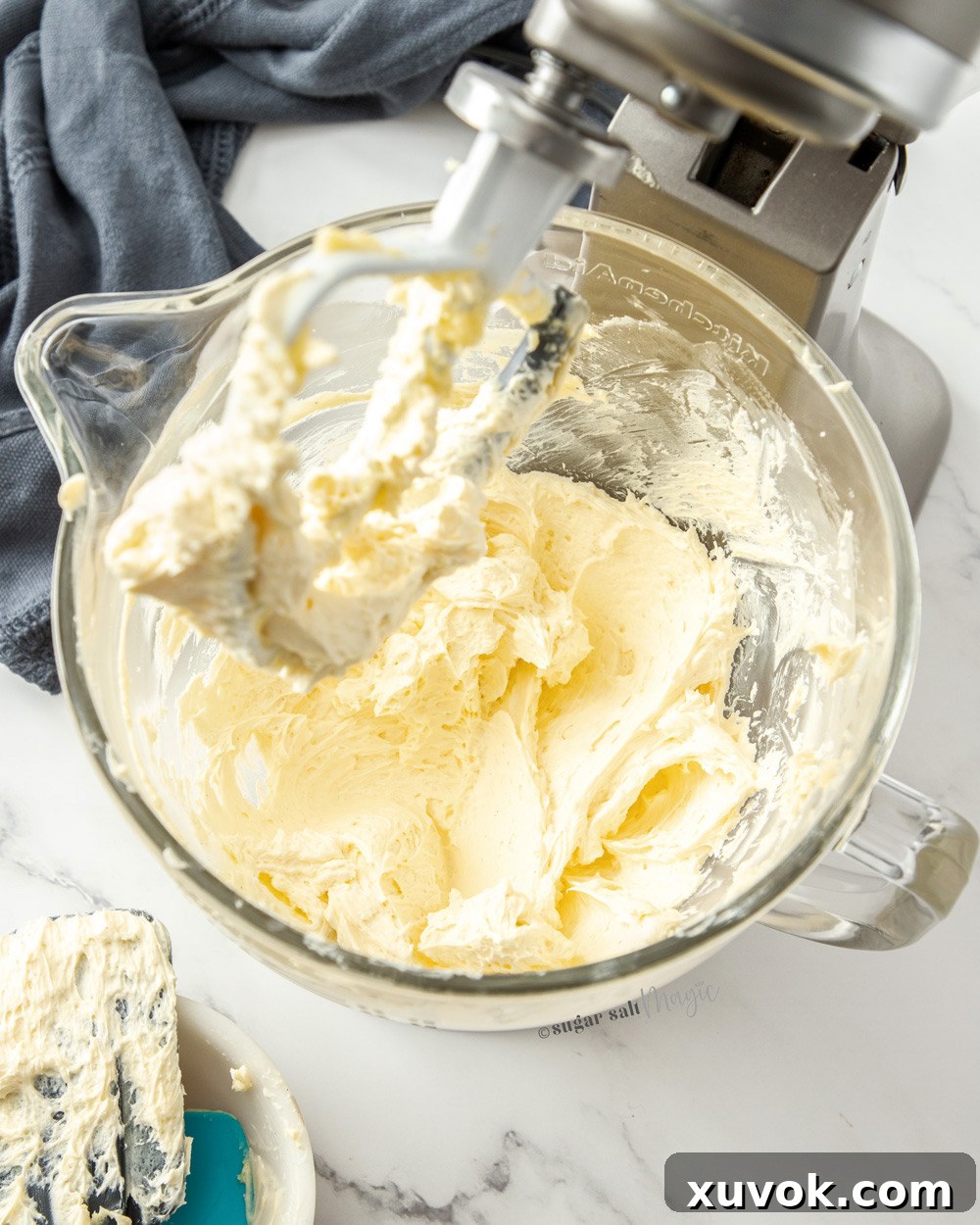
- Season and Finish: Stir in a touch of salt to balance the sweetness, then use a spatula to gently stir and press the frosting against the sides of the bowl. This crucial step helps eliminate any large air bubbles, resulting in an even silkier texture that is easier to pipe.
The result is a dreamily smooth, incredibly creamy, and perfectly balanced frosting that tastes absolutely divine. It’s ready to adorn your cupcakes, layer cakes, or be used as a luscious filling.
For a delightful twist, consider making a rich chocolate German buttercream by using our decadent chocolate pastry cream as the base!
Expert Tips for Flawless German Buttercream
- Sugar Choice Matters: For the best results in your pastry cream, use regular granulated sugar or superfine (caster) sugar. Do not use powdered (icing) sugar in the custard, as it contains cornstarch and can alter the texture. Don’t worry, the granulated sugar will fully dissolve during cooking, ensuring a grit-free, smooth custard.
- Divide the Sugar for Optimal Whipping: I recommend using most of the sugar in the custard base but reserving a small amount (around ¼ cup) to whip with the butter. The friction generated by whipping butter with a little sugar helps aerate the butter more effectively, making it wonderfully light and fluffy before the custard is added.
- Cover the Custard with Plastic Wrap: This step is non-negotiable. As soon as your pastry cream is cooked, transfer it to a clean bowl and immediately press plastic wrap directly onto its surface. This contact barrier prevents a “skin” from forming as it cools, which would otherwise create unpleasant lumps in your final buttercream.
- Temperature is Your Best Friend (and Worst Enemy): Both your cooled pastry cream and softened butter *must* be at room temperature. This is the single most critical factor for a successful German buttercream.
- If the custard is too warm, it will melt the butter, leading to a greasy, soupy, or split buttercream.
- If the custard is too cold (straight from the fridge), it will firm up the butter, resulting in a lumpy, curdled, or hard buttercream.
- Plan ahead: allow chilled custard to sit out for several hours, or gently warm it slightly (e.g., stirring over a very low heat or very brief microwave bursts) if you’re in a hurry, ensuring it’s truly room temperature throughout. Similarly, ensure your butter is genuinely soft to the touch but not melted.
- Gradual Custard Addition: When incorporating the cooled pastry cream into the whipped butter, add it gradually, one tablespoon at a time. Beat for a few seconds after each addition to ensure it’s fully combined before adding the next spoonful. This slow, steady process allows the butter and custard to emulsify properly, preventing separation and ensuring a smooth, stable buttercream.
- The Final Spatula Stir: After all the custard is incorporated, give your buttercream a minute or two of vigorous beating. Then, switch to a silicone spatula and spend a minute or so stirring and pressing the buttercream against the sides of the bowl. This helps to eliminate any trapped air bubbles created by the mixer, resulting in a perfectly smooth, velvety texture that is ideal for piping.
Flavor Innovations: Beyond Vanilla German Buttercream
While classic vanilla German buttercream is a timeless delight, its versatility makes it an excellent canvas for various flavor adaptations. Here are a few ideas to get you started:
- Chocolate German Buttercream: As mentioned, simply swap out the vanilla pastry cream for our rich chocolate pastry cream. The resulting buttercream is deep, decadent, and incredibly smooth.
- Coffee German Buttercream: Brew a very strong espresso or dissolve instant espresso powder in a small amount of the milk before making the pastry cream. Adjust to taste.
- Citrus Zest: Add finely grated lemon, orange, or lime zest to the milk when making the pastry cream. The heat will infuse the flavor beautifully. A little extra zest can also be added at the end with the salt.
- Nut Paste: Incorporate a tablespoon or two of a smooth nut butter or paste (like pistachio, almond, or hazelnut) into the finished buttercream for a rich, nutty flavor.
- Fruit Puree (Carefully): For delicate fruit flavors, reduce a fruit puree (like raspberry or strawberry) until very thick and concentrated, then cool completely before folding a small amount into the finished buttercream. Be mindful not to add too much liquid, which can destabilize the buttercream.
- Liqueur Infusion: A teaspoon or two of your favorite liqueur (e.g., Grand Marnier, Amaretto, Kahlúa) can be added to the cooled pastry cream or at the final mixing stage for an adult twist.
Remember to taste as you go and adjust the flavorings to your preference. The key is to maintain the delicate balance and texture of the buttercream.
Can German Buttercream Be Frozen? (Storage and Make-Ahead Tips)
While plain pastry cream doesn’t freeze particularly well due to its delicate texture, the finished German buttercream handles freezing quite effectively. You can store it in an airtight container in the freezer for up to 2 months. This makes it an excellent option for make-ahead baking and reducing last-minute stress.
However, it’s important to note that like many buttercreams, German buttercream can be a little temperamental after being frozen. Here’s how to ensure it’s perfect once thawed:
- Thawing: Always thaw frozen buttercream slowly in the refrigerator overnight. Avoid thawing at room temperature too quickly, as this can lead to separation.
- Bring to Room Temperature: After thawing in the fridge, transfer the buttercream to your stand mixer bowl and allow it to come to a full room temperature for at least a few hours. This is crucial for re-whipping successfully. If it’s too cold, it will curdle.
- Re-Whipping: Once at room temperature, re-whip the buttercream on medium-low speed with the paddle attachment until it becomes smooth, creamy, and light again. If it looks curdled initially, don’t panic! Keep whipping; it usually comes back together beautifully. If it’s still looking a bit loose, try adding a tablespoon of softened butter and continue whipping.
For shorter storage, German buttercream can be kept in an airtight container in the refrigerator for up to 5-7 days. Always bring it to room temperature and re-whip before using, following the same process as for frozen buttercream.
Versatile Applications for German Buttercream
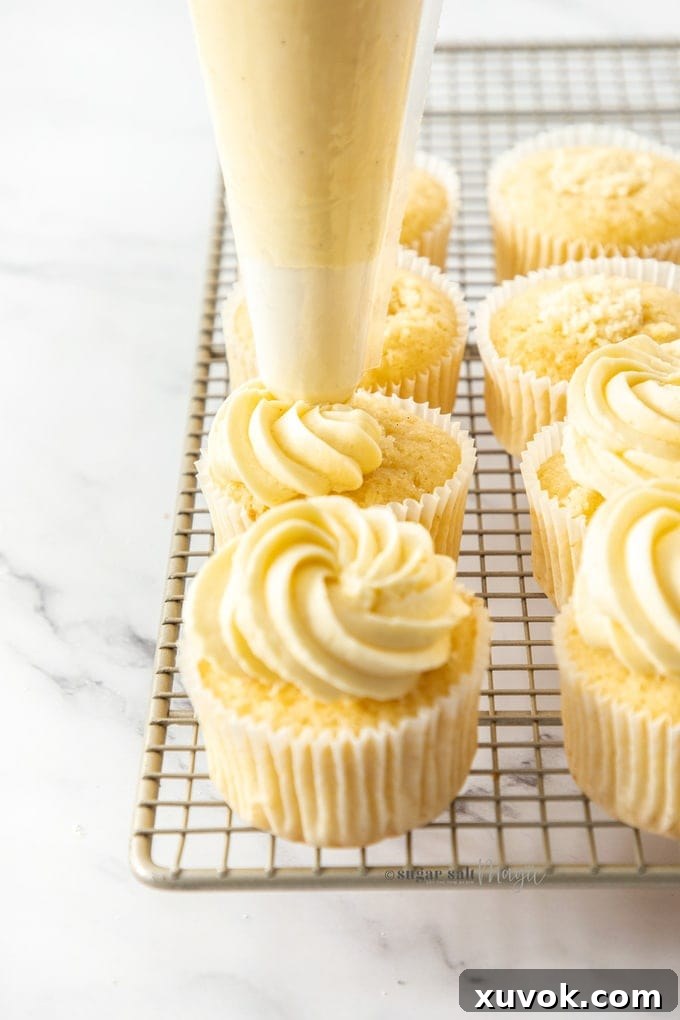
If you’ve never tried making German buttercream, now is the time to experience its magic. Its delicate flavor and soft, light, and creamy texture make it incredibly versatile. It’s truly perfect for filling cream puffs, profiteroles, or cream horns, and absolutely fantastic for frosting cakes and cupcakes. Its stability and less sweet profile also make it ideal for delicate pastries where you want the filling to complement rather than overwhelm.
To see this exquisite buttercream in action and get inspired, be sure to check out our Vanilla Cupcakes with German Buttercream recipe!
Troubleshooting Common German Buttercream Issues
Even experienced bakers can encounter hiccups. Here’s how to fix common problems with German buttercream:
- Curdled Buttercream: This is almost always a temperature issue. If your butter or custard was too cold, the mixture might look chunky or curdled.
- Solution: Place the mixer bowl over a warm (not hot!) water bath for a minute or two, or gently warm a small portion of the buttercream in the microwave and return it to the bowl. Beat on medium speed until smooth. The gentle warmth helps the butter and custard emulsify.
- Greasy or Soupy Buttercream: This typically happens if the custard was too warm when added to the butter, causing the butter to melt.
- Solution: Place the mixer bowl (with buttercream) in the refrigerator for 10-20 minutes, stirring occasionally to check consistency. The goal is to chill the mixture enough for the butter to firm up slightly without becoming hard. Once slightly firm, return to the mixer and beat on medium-high speed until it comes together and becomes fluffy.
- Too Thin or Loose: If your buttercream seems too soft and not firm enough to pipe, it might be too warm or simply needs more whipping.
- Solution: Chill the buttercream in the refrigerator for 15-30 minutes, then re-whip on medium-high speed. If it’s still too loose, ensure your butter was properly softened (not melted) and your custard was thick enough. Sometimes, a tiny bit more cornstarch can be added to the custard if it consistently comes out too thin, but this is rare if the instructions are followed.
- Too Thick or Stiff: If the buttercream is too firm, it’s likely too cold.
- Solution: Let it sit at room temperature for a while, or gently warm the bowl over a very slight warm water bath. Beat on medium speed until it reaches the desired consistency.
Patience and careful temperature management are your best allies when working with German buttercream. Don’t be afraid to experiment and adjust!
Want Egg-Free Buttercream Recipes?
If you’re looking for fantastic buttercream options that are entirely egg-free, we’ve got you covered. Explore these delicious frosting recipes:
- Coffee Buttercream
- Caramel Buttercream
- Oreo Buttercream
- Peppermint Buttercream
- Orange Buttercream
- Raspberry Buttercream
- Cream Cheese Buttercream
- Cinnamon Buttercream
⭐⭐⭐⭐⭐
Did you try this German buttercream recipe?
Show it some love with a rating and comment below. Your feedback is invaluable!
Hungry for more? Subscribe to the newsletter for free recipes straight to your inbox. Also, follow along on Facebook, Pinterest and Instagram for daily inspiration!
How to Make German Buttercream
12
serves
20
minutes
15
minutes
45
minutes
1
hour
20
minutes
Rate
Pin
Ingredients
FOR THE PASTRY CREAM
-
1 ½
cups
whole milk
(375ml) -
2
teaspoons
vanilla extract -
150
g
caster sugar (superfine sugar), divided in half
(¾ cup / 5.3oz) -
35
g
cornflour (US cornstarch)
(¼ cup / 1.2oz) -
2
egg yolks
FOR THE BUTTERCREAM
-
226
g
unsalted butter, room temperature
(1 cup / 2 sticks) -
¼
teaspoon
salt
For best results, always weigh ingredients where a weight is provided
Equipment
-
stand mixer
Instructions
FOR THE PASTRY CREAM
-
Pour 1 ¼ cups of milk into a heavy based saucepan, and add roughly half cup of sugar and the vanilla. Heat on low heat until steaming, stirring regularly. Remove from heat.
-
In a large bowl, whisk together the remaining ¼ cup milk, egg yolks and cornflour until smooth and fully combined.
-
While whisking, very slowly pour the hot milk mixture into the egg mixture in a slow but steady stream. Don’t pour it too quickly or the heat will scramble the eggs (this process is called tempering).
-
Once everything is combined, return the mix to the saucepan. Heat over medium heat, stirring with a whisk constantly, until it gets very thick and no longer settles into itself when you move it around. This will happen quite quickly after about 5 minutes, so it’s important to keep gently whisking, increasing intensity as it gets very thick. Continue cooking while whisking for another minute to ensure the cornflour is fully cooked and to prevent lumps.
-
Swap to a silicone spatula and pass the custard through a fine-mesh strainer into a clean bowl. This step ensures a perfectly smooth, lump-free custard.
-
Immediately press plastic wrap directly to the surface of the custard in the clean bowl. This prevents a skin from forming. Allow to cool completely to room temperature. This can take several hours, or you can refrigerate once partially cooled, then bring back to room temperature before use.
FOR THE BUTTERCREAM
-
Using an electric mixer, or a stand mixer with a paddle attachment, whip the room temperature unsalted butter and the remaining ¼ cup of sugar for about 5 minutes. Beat until the butter is very light in color, fluffy, and airy.
-
With the mixer on low speed, add the room temperature custard, one spoonful at a time. Beat for a few seconds after each addition to fully incorporate it before adding the next. Once all the custard is added, continue beating for another minute or so until the buttercream is smooth and cohesive.
-
Finally, mix through the salt to enhance the flavors and balance the sweetness.
-
Use a silicone spatula to stir and press the buttercream against the side of the bowl for about a minute. This technique helps to remove any large air bubbles that might make piping difficult, resulting in an even silkier finish.
-
Please take a moment to leave a comment & rating. Your feedback is truly appreciated and incredibly helpful!
Notes
- Sugar: You can swap the caster sugar in the buttercream for granulated white sugar. However, do not use powdered or icing sugar, as it contains cornstarch and can negatively affect the custard’s texture.
- This recipe generously frosts 12 standard-sized cupcakes or one 8-inch two-layer cake.
EXPLORE MORE CUPCAKE & CAKE RECIPES
224
kcal
Marie Roffey
Dessert, Sweets
German
Have you tried this recipe?
Don’t forget to leave a rating and comment below and let me know how it was! I love hearing from you. Nutrition information is approximate and derived from an online calculator. The brands you use may cause variations.
Calories from Fat 153