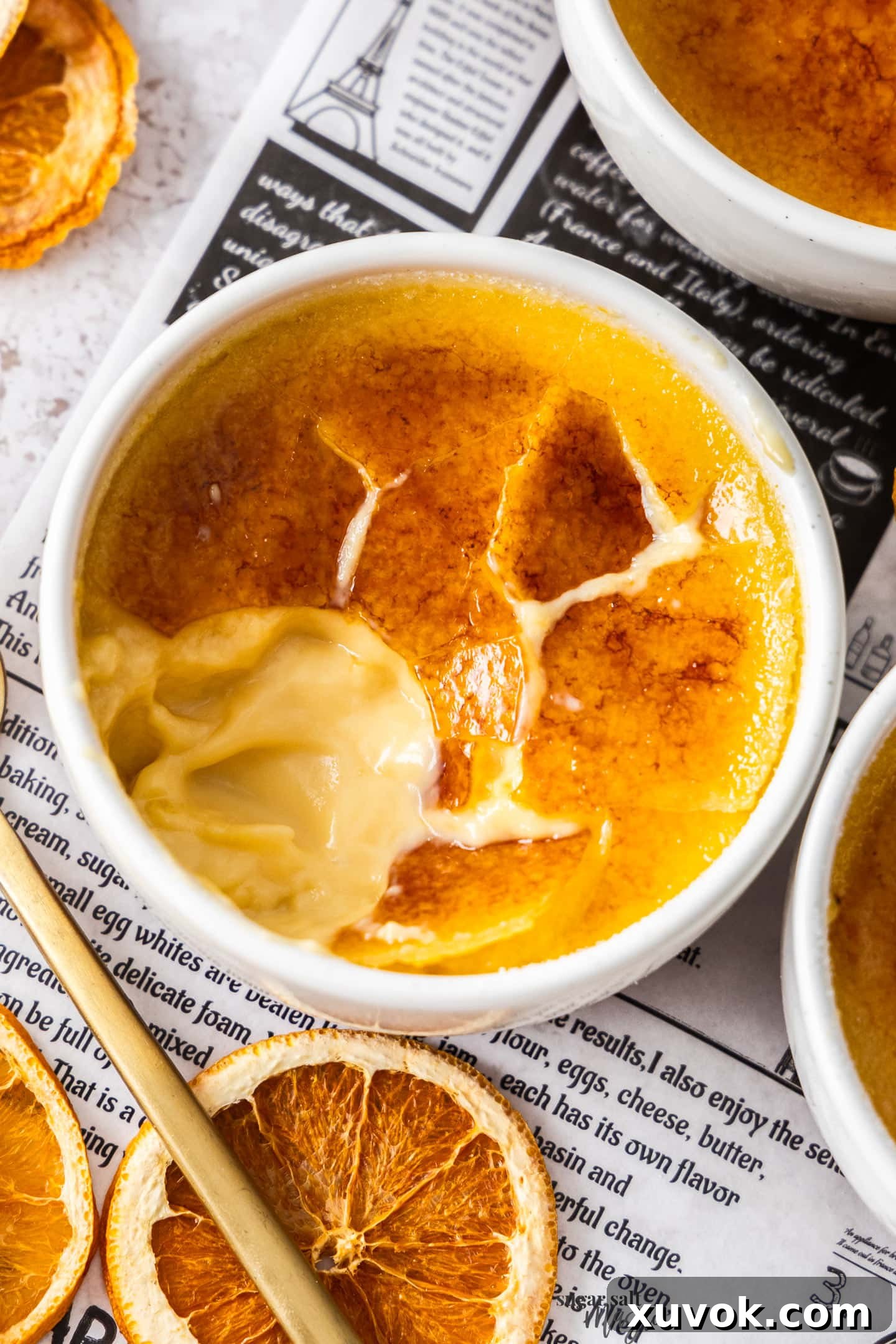
Discover the Zesty Delight of Homemade Orange Crème Brûlée
Prepare to elevate your dessert game with this unbelievably rich and creamy Orange Crème Brûlée, a truly exquisite twist on a beloved French classic. Imagine a silken orange-infused custard, perfectly set beneath a dazzling, caramelized toffee crust that shatters with a satisfying crack upon first spoonful. This dessert isn’t just scrumptious; it’s an experience waiting to happen, promising a burst of bright citrus flavor in every decadent bite.
While often gracing the menus of high-end restaurants, suggesting a complex preparation, the truth is delightfully simple: Crème Brûlée is remarkably easy to master at home. Our recipe demystifies the process, proving that you don’t need a culinary degree to create this impressive treat. It’s incredibly comforting, yet surprisingly light, making it an ideal indulgence for any occasion – whether you’re hosting a special dinner for family and friends or simply treating yourself to a moment of pure bliss.
Once you realize just how accessible this luxurious dessert is, you’ll find yourself eager to explore new flavors and variations. Beyond this vibrant orange version, consider diving into the deep richness of a chocolate crème brûlée, awakening your senses with a coffee crème brûlée, or even embarking on a more ambitious project like a stunning caramel crème brûlée tart. Each variation offers a delightful journey for your palate, but none quite capture the sun-kissed essence of this orange rendition.
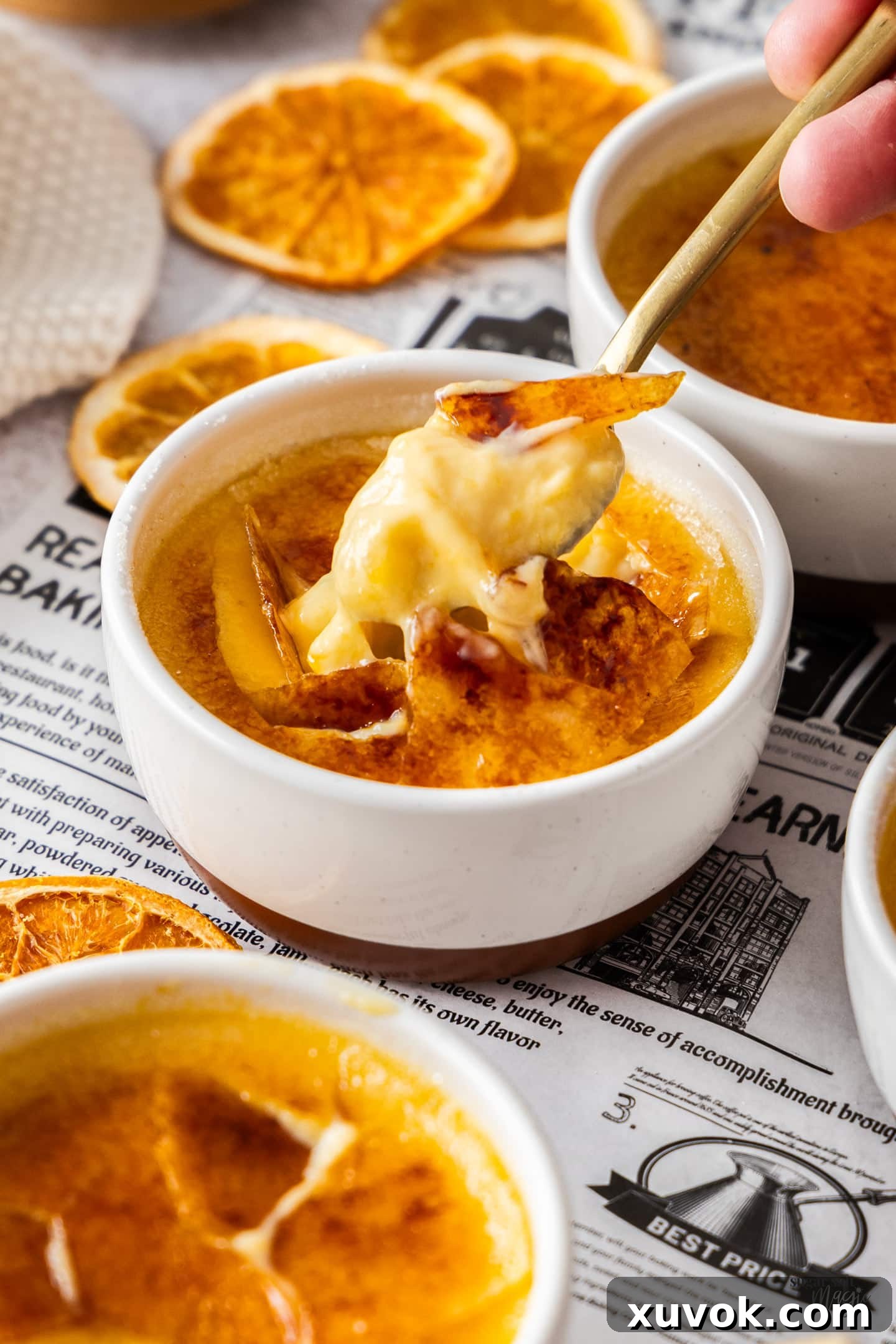
Table of Contents
- Essential Ingredients for Perfect Orange Crème Brûlée
- Step-by-Step Guide: Crafting Your Orange Crème Brûlée
- Expert Tips & Tricks for Crème Brûlée Success
- Choosing and Using Ramekins for Crème Brûlée
- Proper Storage for Your Crème Brûlée
- Serving Your Elegant Orange Crème Brûlée
- More Irresistible Dessert Recipes You’ll Love
- Frequently Asked Questions About Crème Brûlée
Never Miss a Recipe!
Get the latest recipes and culinary inspiration straight to your inbox!
[Sign up for our newsletter to receive delicious recipes weekly!]
Essential Ingredients for Perfect Orange Crème Brûlée
Crafting this delightful orange crème brûlée requires only 6 basic ingredients, most of which you likely already have in your pantry. The beauty of this recipe lies in its simplicity and the ability to prepare it ahead of time, making it an absolute lifesaver for dinner parties or a spontaneous family treat.
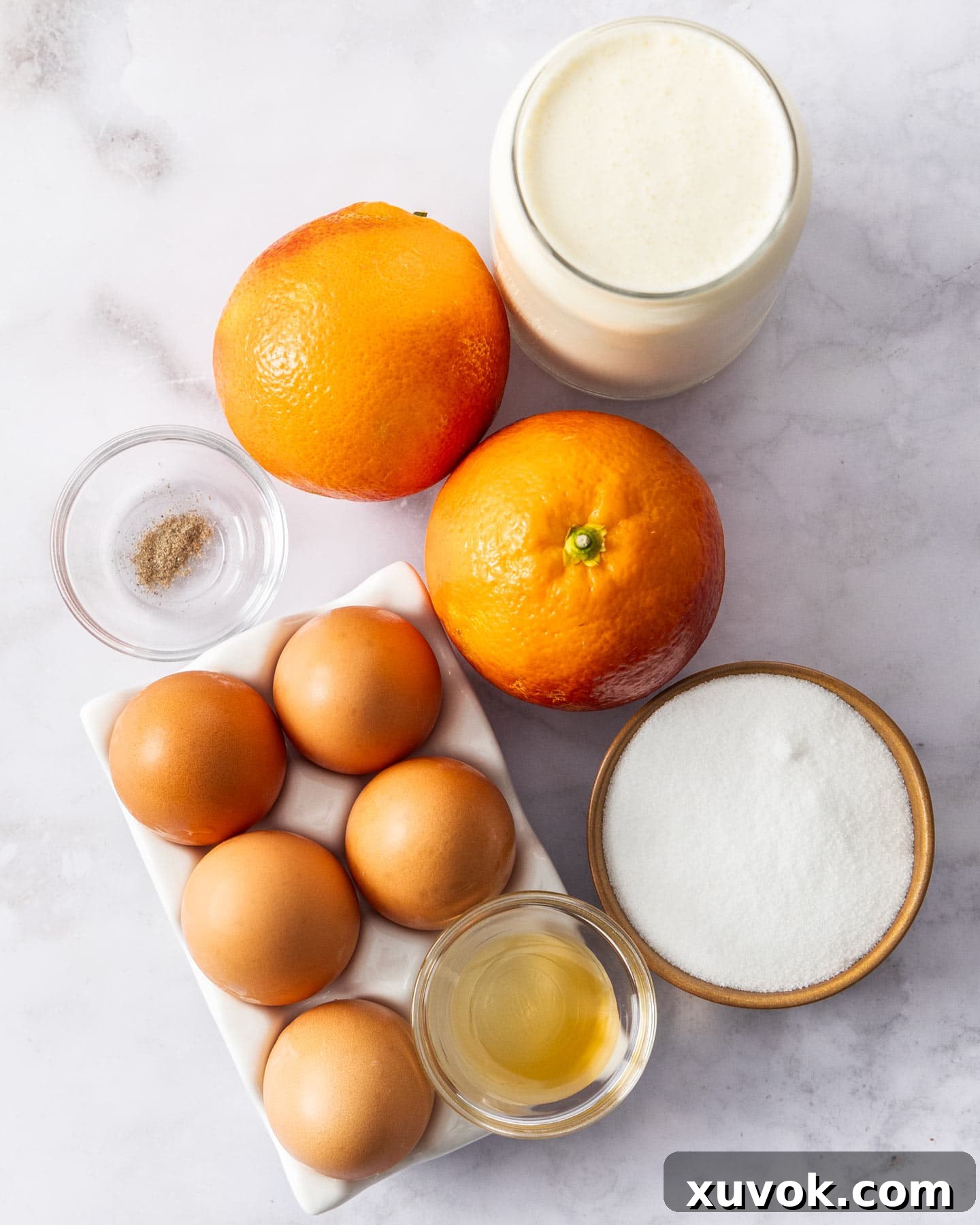
For precise measurements and full instructions, please jump to the detailed recipe card below.
- Oranges: The star of the show! While I personally adore blood oranges for their beautiful hue and distinct flavor, any variety will yield fantastic results. Navel, Valencia, or Cara Cara oranges are excellent choices. For a slightly different citrus note, you could even experiment with tangerines or clementines to infuse your custard with their sweet, aromatic essence.
- Egg Yolks: These are crucial for creating the rich, creamy texture and vibrant color of the custard. This recipe specifically calls for egg yolks, so don’t be alarmed by leftover egg whites! They can be frozen for future use or transformed into another delightful dessert like a light and airy pavlova.
- Cream: The foundation of a truly decadent crème brûlée. Aim for a full-fat cream with approximately 35% milk fat content. This ensures your custard sets beautifully and achieves that luxurious mouthfeel. Options like thickened cream, heavy cream, or whipping cream are perfect – just double-check the milk fat percentage on the packaging. Avoid reduced-fat creams, as they may prevent the custard from setting properly.
- Sugar: Caster sugar, also known as superfine sugar, is my preferred choice for both the custard and the iconic crunchy topping. Its fine granules dissolve quickly into the custard base and caramelize more evenly and rapidly under the torch, resulting in that perfect glass-like crust. While regular granulated sugar can work for the custard, superfine sugar truly excels for the brûlée step.
- Vanilla Extract: A touch of high-quality vanilla extract adds a harmonious balance to the bright citrus notes of the orange. It rounds out the flavors and contributes to the overall warmth and depth of the dessert, making it even more irresistible.
- Cardamom: This aromatic spice pairs exquisitely with oranges, offering a subtle, exotic warmth that elevates the flavor profile. However, moderation is key; a small pinch is all you need, as too much can impart a soapy taste. Its presence is delicate, enhancing rather than overpowering the orange. Feel free to omit it if it’s not to your preference, or substitute with a tiny hint of freshly grated nutmeg for a similar warming effect.
Step-by-Step Guide: Crafting Your Orange Crème Brûlée
Despite its sophisticated reputation, orange crème brûlée is surprisingly one of the easiest gourmet desserts you can create at home. The process requires minimal effort but promises an incredibly scrumptious reward. Given that the orange custards can be prepared 2-3 days in advance, they are an excellent choice for entertaining, allowing you to focus on your guests at party time.
The exhilarating final step – brûléeing the sugar topping to achieve that signature satisfying crack – should ideally be done right before serving. This ensures the toffee crust remains perfectly crisp, as it can soften and dissolve if left in the fridge for too long after torching. For this reason, investing in a good quality kitchen torch is highly recommended. The upside? The spectacle of torched crème brûlée is a fantastic crowd-pleaser! Perform this step in front of your guests and watch their anticipation (and mouths!) water.
Ready to begin? Jump to the full recipe card for detailed ingredients and instructions.
1. Infuse the Sugar with Orange Zest
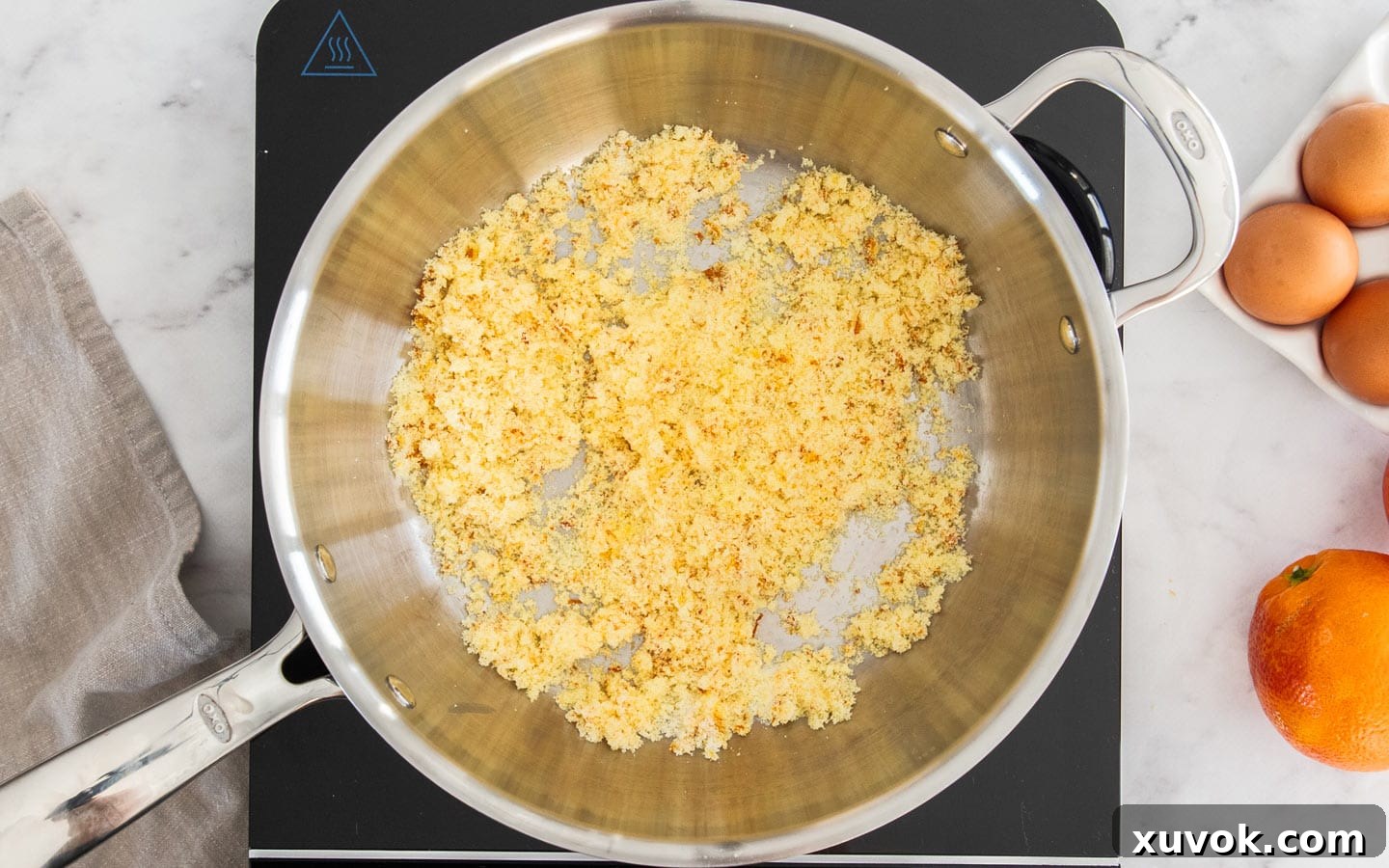
Begin by combining the caster sugar with finely grated orange zest in a saucepan. Use your fingertips to gently massage the zest into the sugar. This crucial step helps to release the aromatic oils from the orange peel, intensifying the citrus flavor that will permeate your finished custard. Continue pressing the mixture between your fingers until the sugar takes on a slightly damp, sandy texture and a vibrant orange aroma fills the air. It’s important to do this directly in the saucepan where you plan to heat the cream, streamlining the process.
2. Gently Heat and Steep the Cream
Pour the heavy cream and a pinch of ground cardamom into the saucepan with the infused sugar and zest. Place the saucepan over medium heat, stirring occasionally to ensure the sugar fully dissolves. Heat the cream until it’s heavily steaming and you observe the very first tiny bubbles just beginning to form around the edges of the pan. Crucially, do not allow the cream to come to a full boil, as this can negatively impact the final custard texture. Once steaming, remove the saucepan from the heat, cover it with a lid, and let the flavors steep for about 30 minutes. This steeping process, much like brewing tea, allows the orange zest and cardamom to deeply infuse into the cream, creating a profoundly aromatic base. After steeping, reheat the cream to steaming point once more before proceeding.
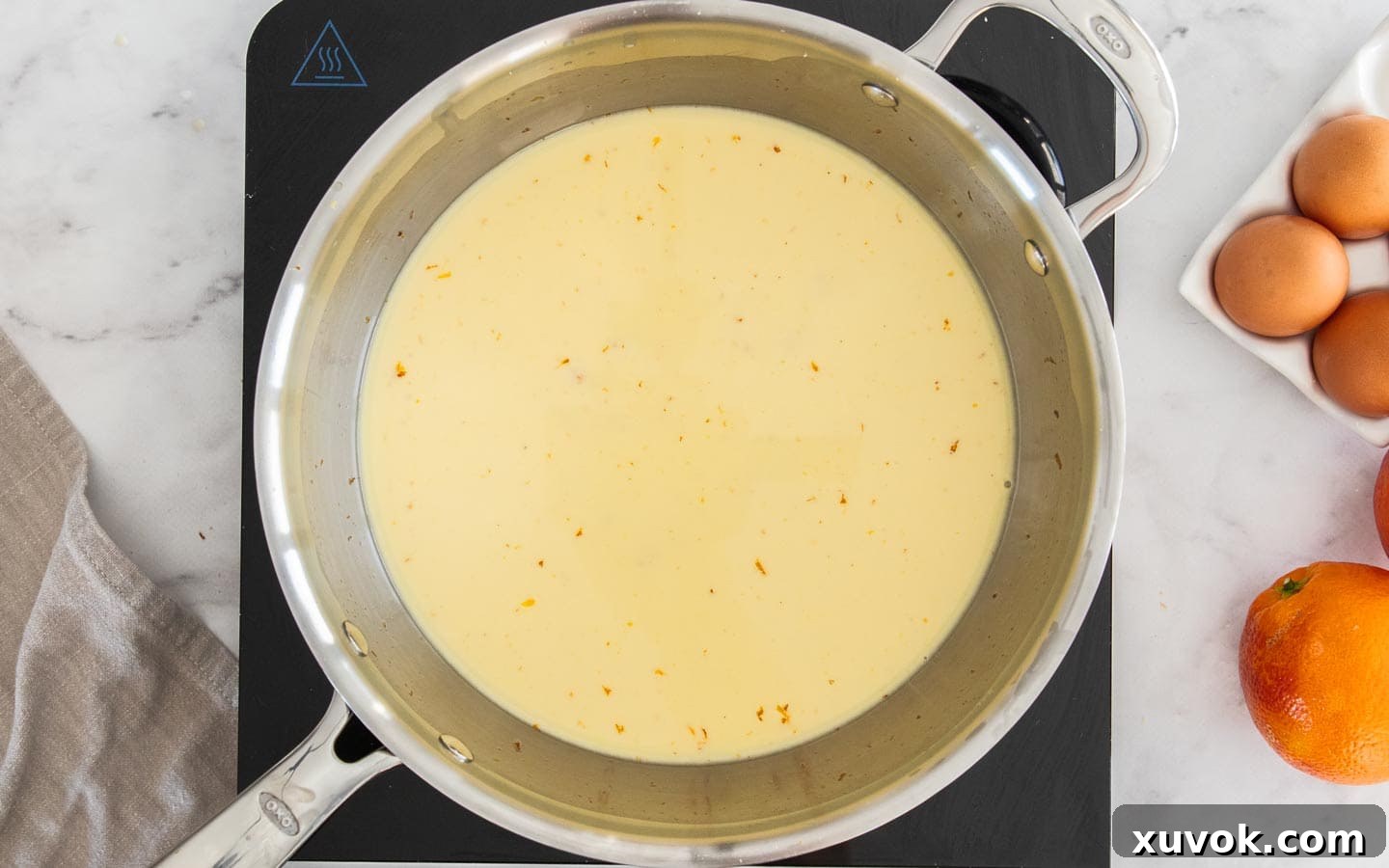
3. Temper the Egg Yolks
In a separate mixing bowl, whisk the egg yolks until they are completely smooth and a uniform pale yellow color (I typically whisk for a full 30 seconds to ensure thorough blending). This initial whisking helps to break down the yolks and prepare them for tempering. Now, while continuously whisking the egg yolks gently, slowly drizzle the hot, infused cream into the bowl in a thin, steady stream. The goal here is to temper the eggs – gradually raising their temperature to prevent them from scrambling. Pouring too quickly or stopping whisking will cause the eggs to cook unevenly, resulting in a lumpy custard. Patience is key in this step to achieve a perfectly smooth and creamy consistency.
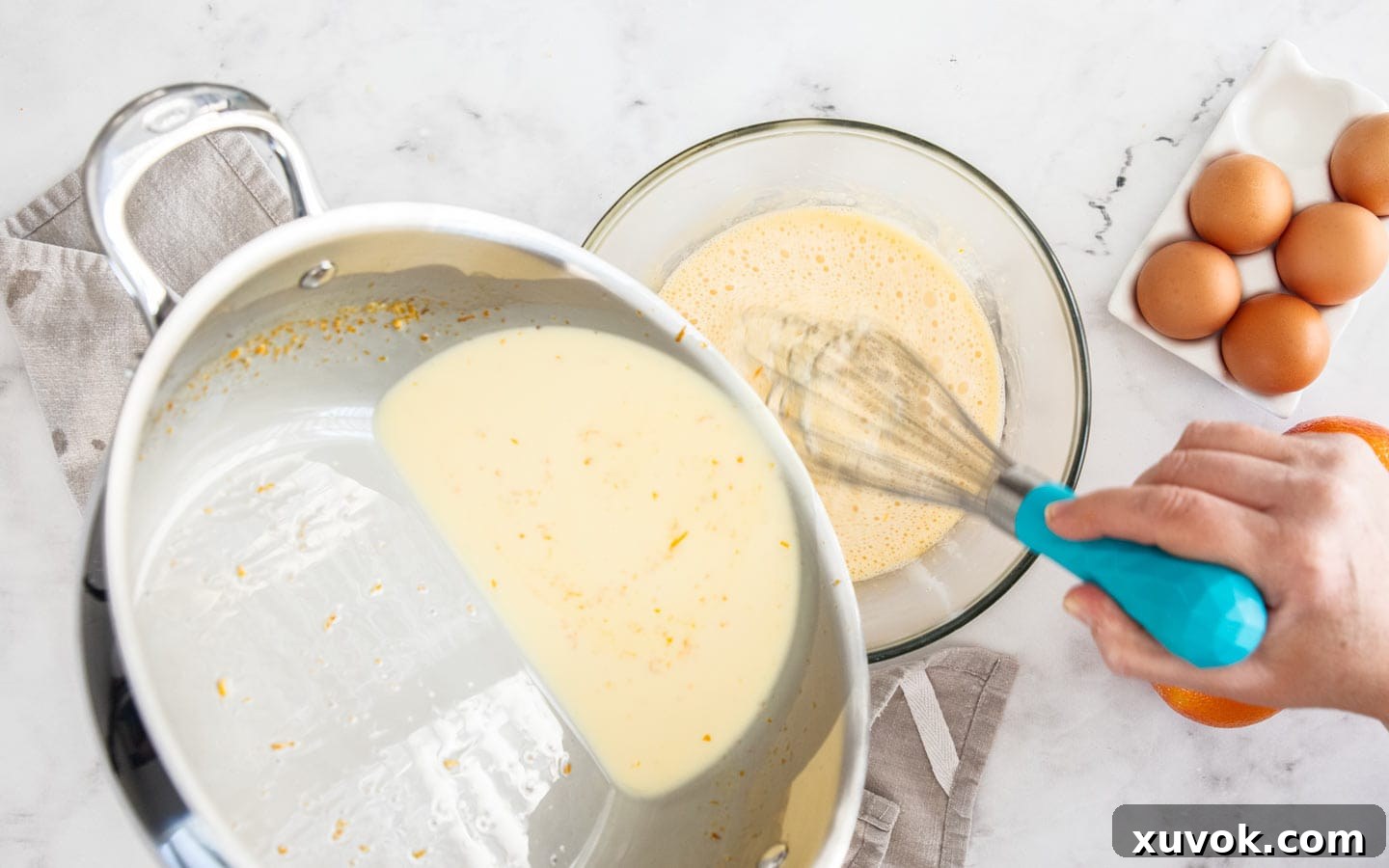
4. Strain for a Silky Smooth Custard
Once the cream and egg yolks are thoroughly combined, it’s time to ensure a perfectly smooth and luxurious custard. Carefully strain the entire mixture through a fine-mesh strainer directly into a clean pouring jug. This vital step removes any lingering pieces of used orange zest, as well as any minuscule eggy bits that might have accidentally scrambled during the tempering process (though if you’ve tempered correctly, there should be very few, if any!). Straining guarantees an impeccably silky, unblemished custard base, which is essential for that signature crème brûlée texture.
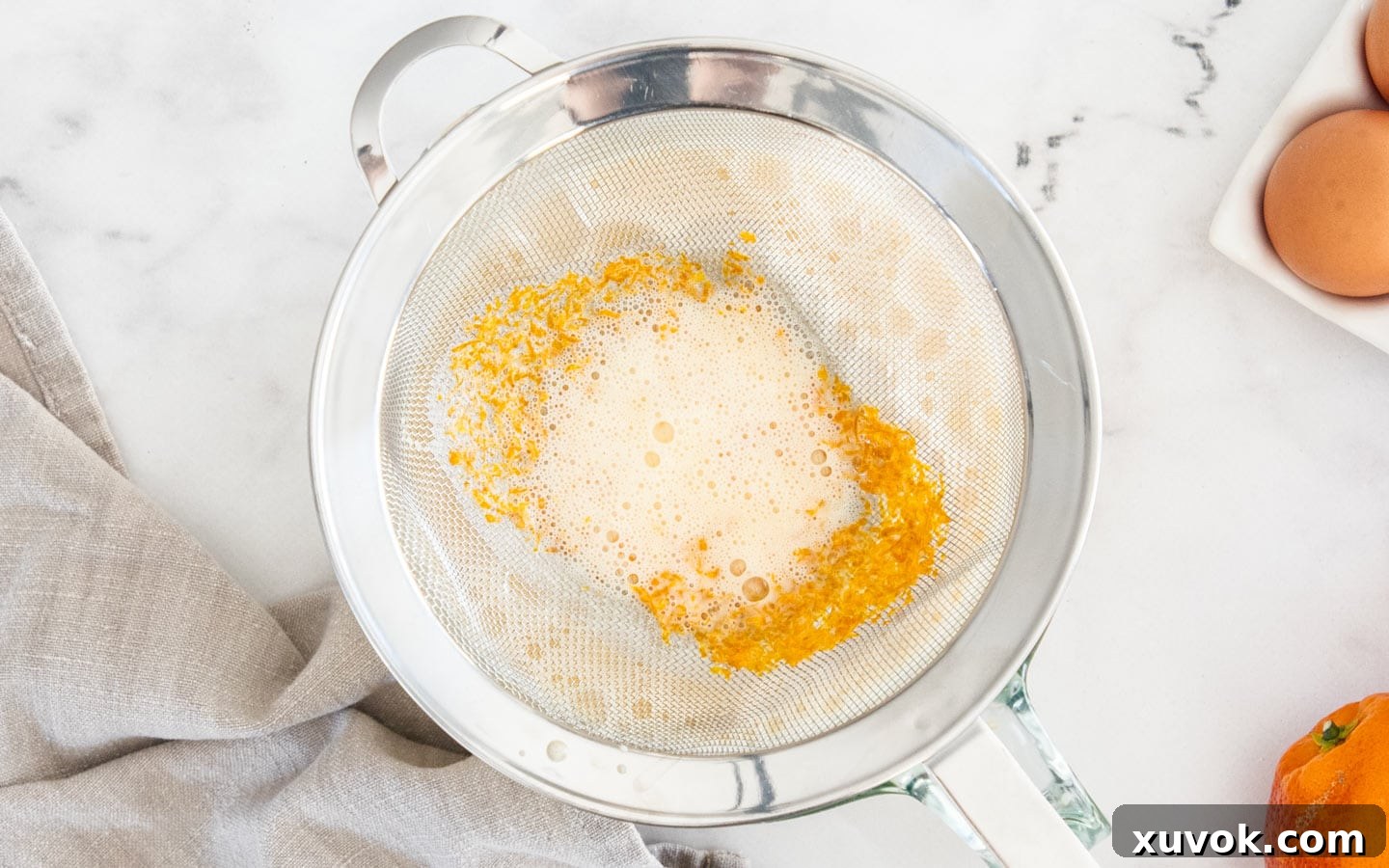
5. Portion into Ramekins and Bake in a Water Bath
Now, stir in the fresh orange juice and the remaining teaspoon of very finely grated orange zest into your strained custard mixture. The fresh zest, added at this stage, provides an additional layer of bright citrus aroma that truly shines in the final dessert. Ensure the zest is grated super finely – ideally with a microplane – so that it seamlessly melts into the custard without creating any textural disruptions. Arrange 4-6 ramekins into a high-sided baking tray. Carefully and evenly divide the silky orange custard mixture among the prepared ramekins. (See our section below on “Ramekins Vary” for more guidance on sizes and quantities.)
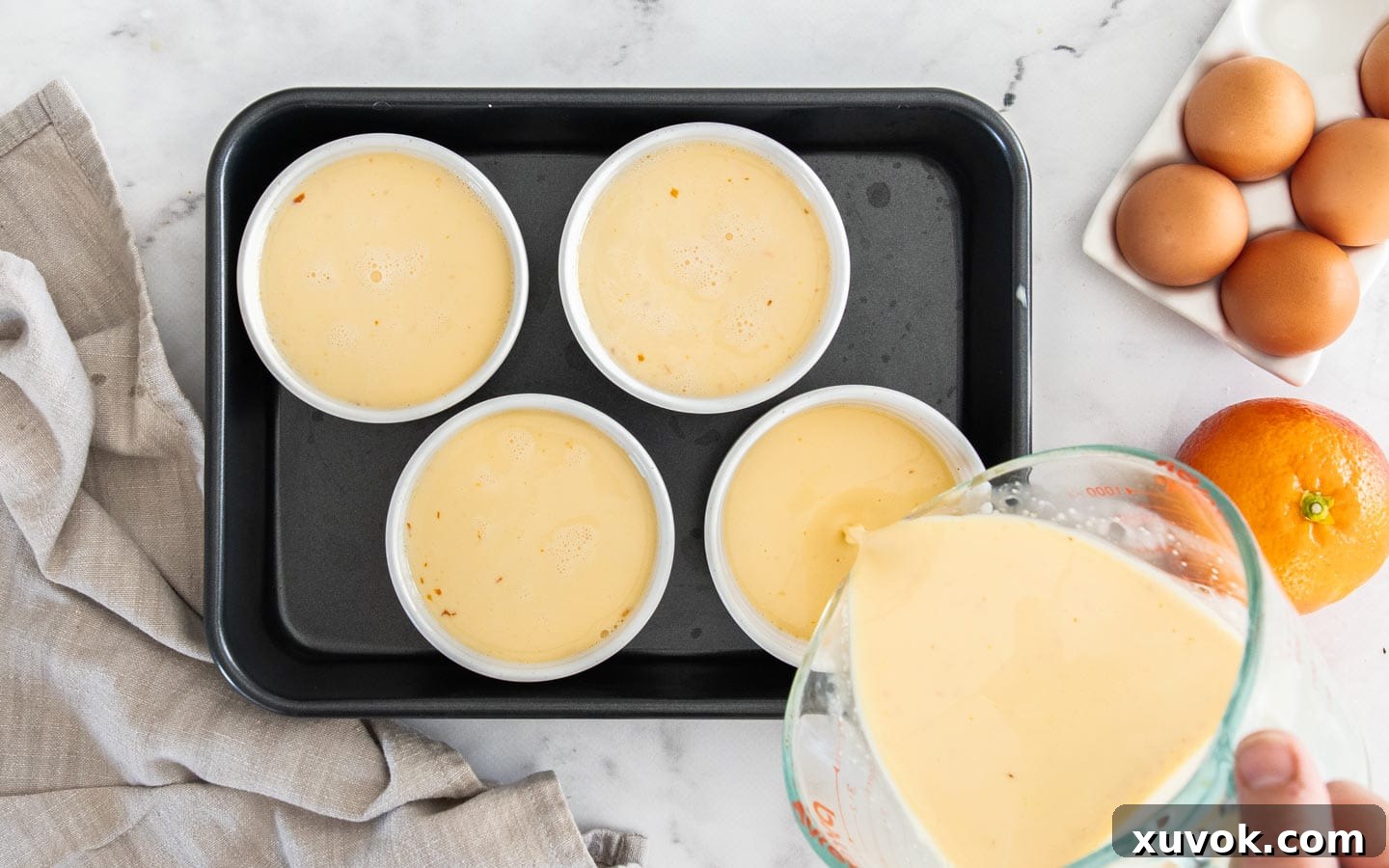
With the ramekins filled and placed in the baking tray, carefully pour hot water (freshly boiled from a kettle works perfectly) directly into the tray, ensuring it comes halfway up the sides of the ramekins. This creates a “bain-marie” or water bath, which is essential for baking crème brûlée gently and evenly, preventing cracking and ensuring a consistently smooth custard. Gently slide the tray into a preheated low-moderate oven and bake for approximately 45-50 minutes.
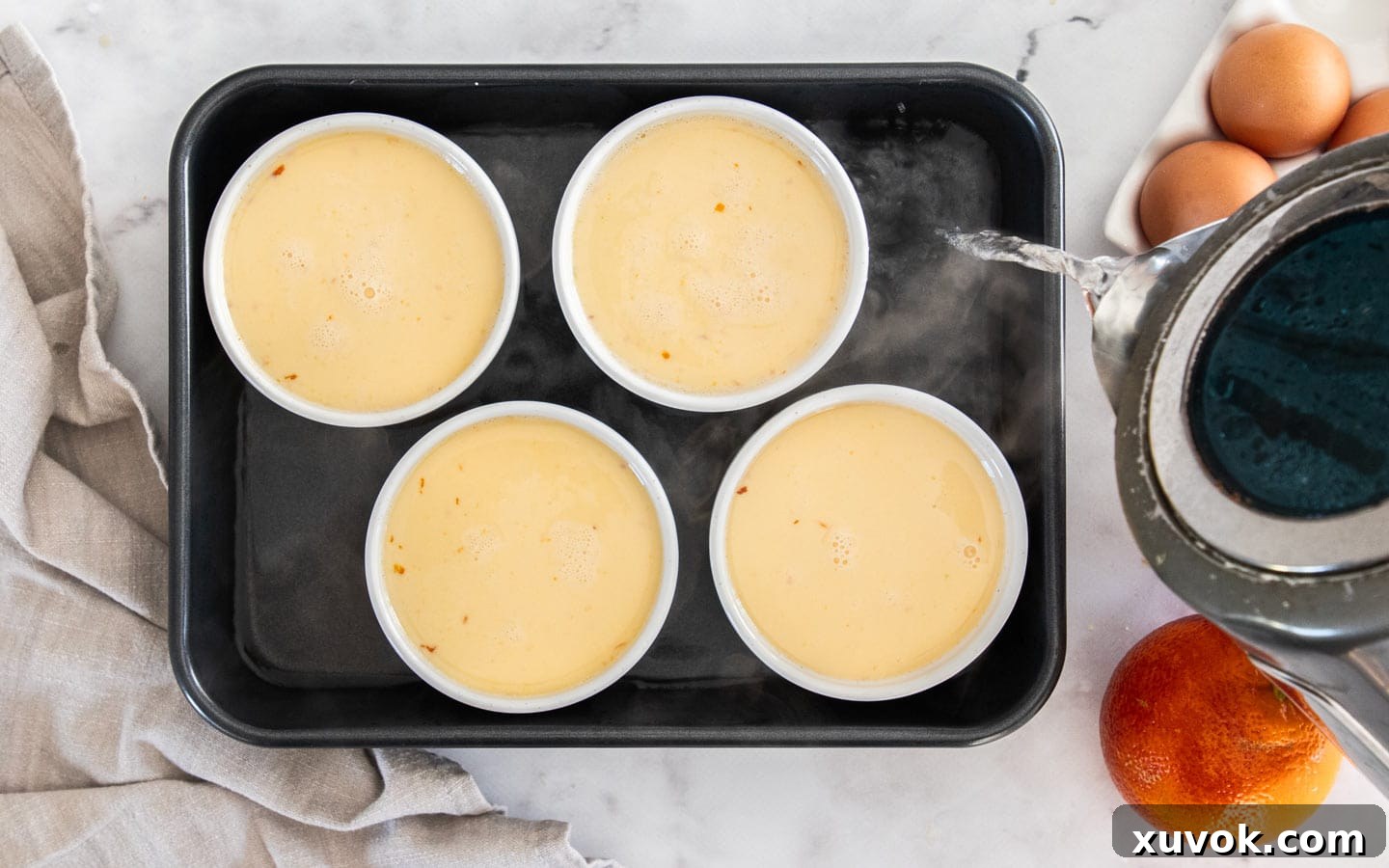
Your orange crème brûlée is perfectly baked when the edges appear set and firm, while the very center retains a slight, jelly-like wobble. It should not look liquid in the middle. Once baked, carefully remove the tray from the oven. Immediately and with extreme caution (to avoid scalding yourself), lift the ramekins out of the hot water bath. I find it helpful to wrap a tea towel around my open hand for grip and protection, holding the other ramekins out of the way. Transfer them to a wire rack or a stone kitchen bench to cool at room temperature for about 30 minutes.
After cooling, transfer your orange crème brûlées to the refrigerator. They require a chilling period of at least 4 hours, or ideally overnight, to fully set and firm up into that irresistible creamy texture. This extended chill time is crucial for the perfect crème brûlée experience.
6. Create the Iconic Caramelized Topping
The crowning glory of crème brûlée is its spectacular caramelized topping, which I prefer to create in two distinct steps for optimal results. First, sprinkle approximately a teaspoon of caster sugar evenly over the top of each chilled custard. Gently tilt and shake the ramekin to ensure an even, thin layer of sugar covers the entire surface, then carefully tip away any excess. Using a kitchen torch, gently torch this first layer of sugar. At this stage, you’re not aiming for deep color, but rather a thin, melted layer of sugar that will serve as a foundational crust.
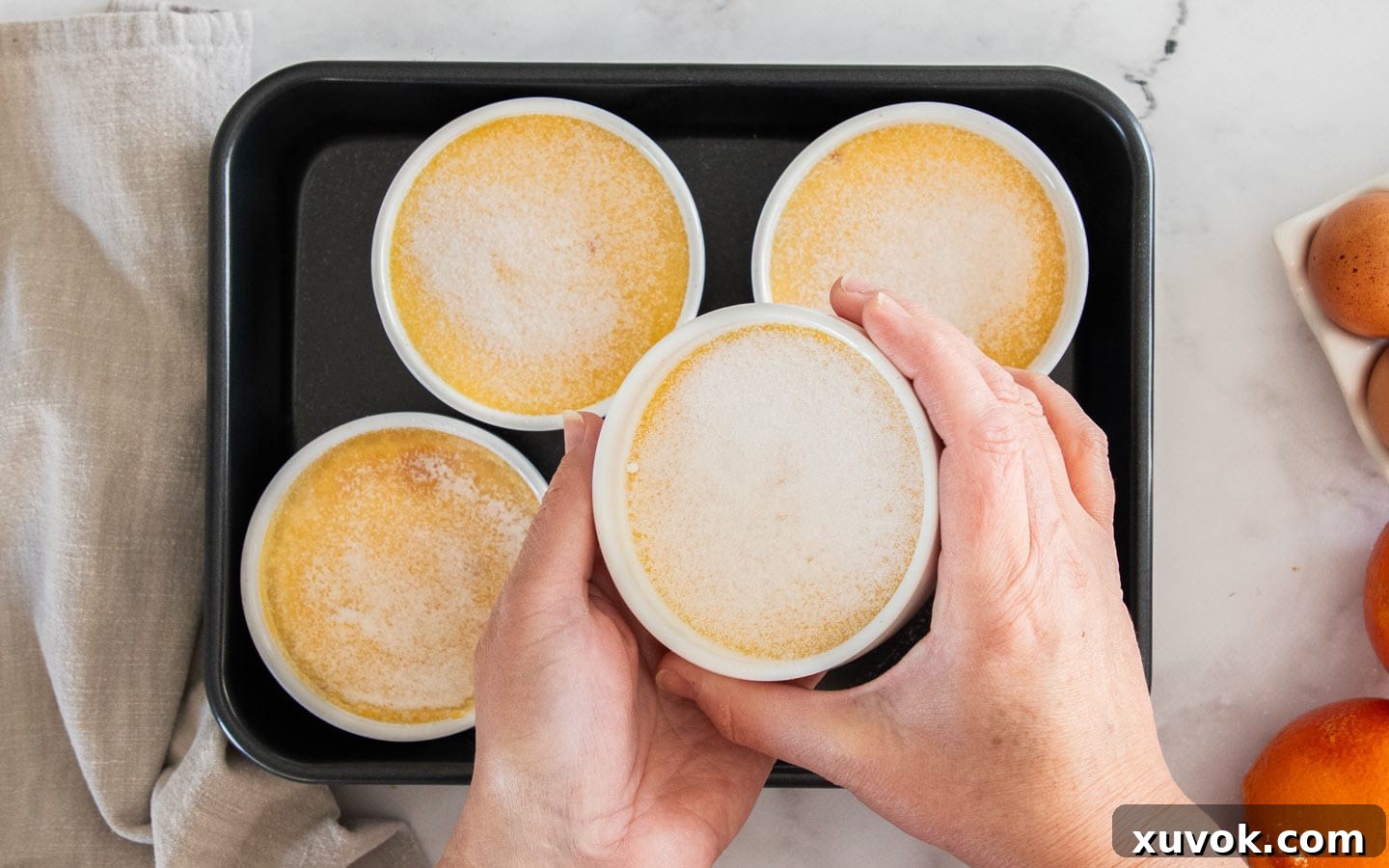
Next, add another teaspoon or so of sugar to each ramekin and again, gently shake to create an even second layer. Now, with the kitchen torch, systematically torch this layer, moving the flame steadily over the surface until each part transforms into a beautiful golden-brown, hardened caramel. Be mindful not to burn the sugar, but aim for a rich, amber color. This two-step method helps create a thicker, more robust caramelized crust that offers a more satisfying “crack” when broken, truly defining the crème brûlée experience. Serve immediately to enjoy the delightful contrast of textures.
Expert Tips & Tricks for Crème Brûlée Success
- The Magic of a Microplane for Zest: For an impeccably smooth custard, using a microplane to zest your oranges is a game-changer. It yields incredibly fine zest that melds seamlessly into the custard, contributing flavor without any noticeable texture. If you don’t have one and can only grate zest coarsely, it’s best to omit the fresh zest added at the end of the recipe. Coarsely grated zest can disrupt the creamy smoothness you’re striving for. However, any size zest can be used in the initial steeping stage, as that zest will be strained out anyway.
- Embrace the Water Bath (Bain-Marie): A water bath is not merely optional; it’s absolutely essential for achieving the delicate, even baking that crème brûlée demands. It provides a gentle, consistent heat that prevents the custards from curdling or developing cracks on their surface. Don’t be intimidated; it’s quite simple! Just place your ramekins in a high-sided baking dish or tray large enough to comfortably hold them, then pour very hot (not boiling) water into the pan, ensuring it comes halfway up the sides of the ramekins. This simple technique guarantees perfectly cooked custards every time.
- Choose Full-Fat Cream Wisely: The quality of your cream directly impacts the texture of your crème brûlée. Always opt for full-fat cream, ideally with around 35% milk fat. Look for varieties labeled “heavy cream,” “thickened cream,” or “whipping cream.” Importantly, check the ingredients list to ensure it contains only cream, avoiding products with added stabilizers, which can alter the custard’s consistency. Reduced-fat creams will struggle to set properly and won’t deliver the rich, luxurious mouthfeel that defines this dessert.
- Respect the Chilling Time: Patience is a virtue, especially with crème brûlée! Adequate chilling time is paramount for the custard to fully set and achieve its ideal firm yet creamy texture. Allow at least 4 hours for chilling, though preparing them overnight yields even better results. Resist the temptation to torch and serve too early; a well-chilled custard is the foundation for a spectacular crème brûlée.
- Invest in a Kitchen Torch: While some recipes might suggest using an oven broiler/overhead grill to caramelize the sugar, I strongly advise against it for crème brûlée. The intense, indirect heat of a broiler will warm up the custard too much, causing it to become soupy rather than maintaining its firm, chilled state by the time the sugar caramelizes. For that perfect, crisp, golden-brown topping without compromising the custard beneath, a good quality kitchen torch is an indispensable tool and truly a must-have for any serious crème brûlée enthusiast.
Choosing and Using Ramekins for Crème Brûlée
One common question when making crème brûlée revolves around ramekin sizes, which can indeed vary significantly, from a tiny ⅓ cup volume to generous 1-cup capacities. The ramekins featured in this recipe, for example, have a capacity of nearly ¾ cup, but I typically fill them to just over ½ a cup each. This specific batch of custard will yield approximately 2 ¼ cups in total, demonstrating how the final quantity of individual desserts will depend on your chosen vessels.
The excellent news is that your delicious orange crème brûlées will work beautifully in whatever size ramekins you happen to possess. Don’t feel limited by specific dimensions! I’ve successfully used everything from traditional ceramic ramekins to charming mini jam jars for other recipes like my coffee crème brûlée. The type or precise size of the dish isn’t critical for the actual baking process, as the gentle water bath ensures even cooking regardless of shape.
What will change, however, is the number of servings you can create from a single batch of custard. If you opt for smaller ramekins, you’ll simply yield more individual desserts. Conversely, larger ramekins will result in fewer but more substantial servings. Another comforting piece of good news is that opening the oven early to check on your crème brûlées will not harm them. So, if you’re using smaller dishes and aiming for, say, 6 servings instead of 4, you can confidently check their doneness a little earlier in the baking cycle.
Proper Storage for Your Crème Brûlée
To maintain the pristine quality and creamy texture of your baked crème brûlées, proper storage is key. After they have cooled down completely on a wire rack for at least 30 minutes (but not yet torched), they must be transferred to the refrigerator. It’s crucial to allow them to cool sufficiently before covering; otherwise, condensation from evaporation could drip back onto the custard tops, compromising their smooth surface. Once cool, cover each ramekin tightly with plastic wrap or transfer them to an airtight container.
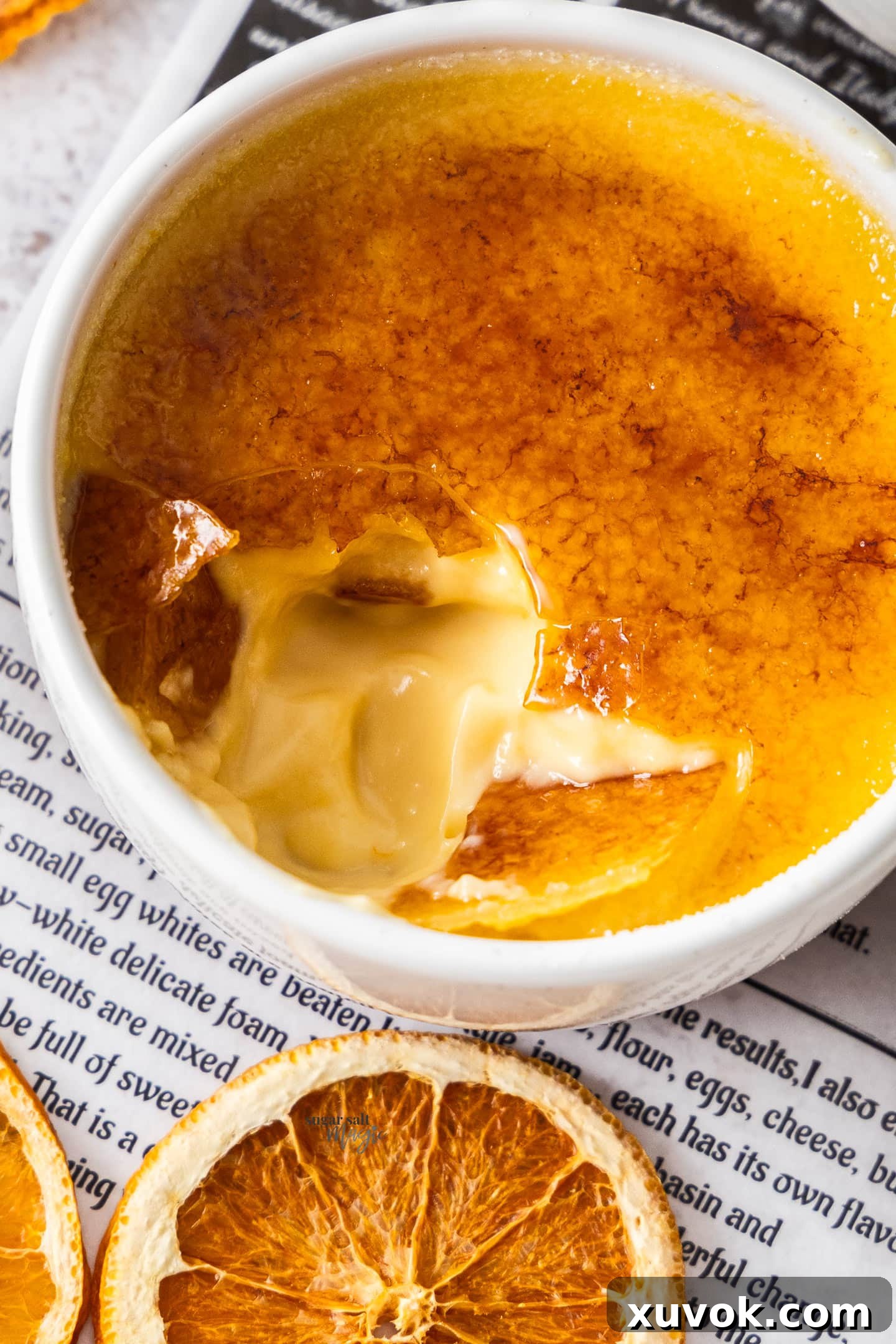
Stored in this manner, your custards will remain fresh and delicious in the refrigerator for 2-3 days. Remember, the golden rule for crème brûlée is to only brûlée (torch the sugar topping) when you are absolutely ready to serve. This ensures the caramelized crust is at its crispest, delivering that iconic crunch that makes this dessert so special.
Serving Your Elegant Orange Crème Brûlée
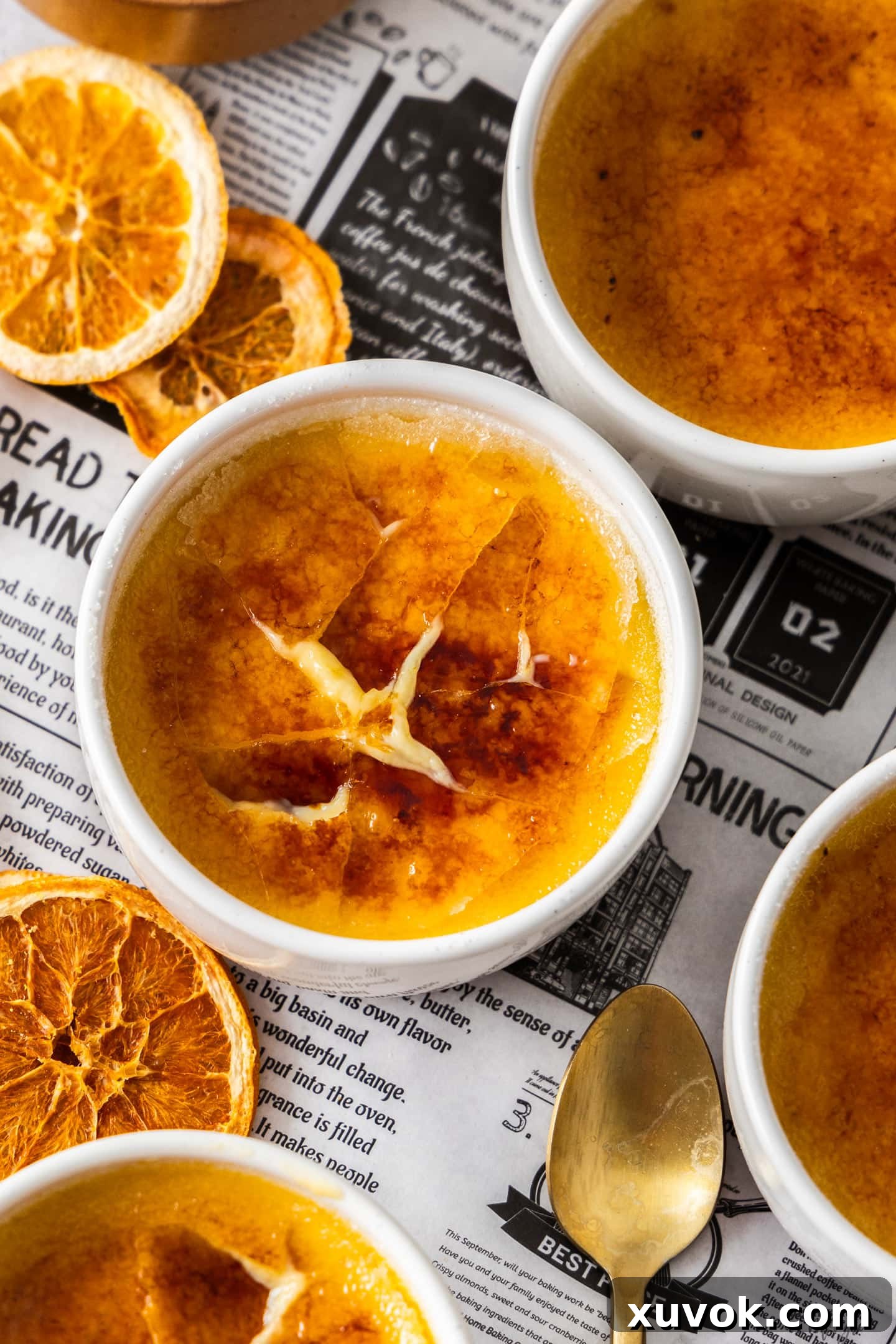
Crème brûlée, a French term meaning “burnt cream,” is best enjoyed when served still cool, crowned with its signature perfectly caramelized, crunchy toffee topping. The delightful contrast between the chilled, silken custard and the warm, brittle caramel is what makes this classic French dessert truly extraordinary. It is a dessert that confidently stands on its own, requiring no elaborate accompaniments to impress.
However, if you wish to enhance the experience, subtle additions can be considered. Crisp tuiles or delicate homemade sponge fingers can offer an additional textural dimension. For this particular orange version, I sometimes like to add a few delicate dried orange slices on the side, which echo the citrus notes and add a beautiful visual touch. But honestly, the inherent elegance and balanced flavors of this orange crème brûlée mean you truly don’t need anything extra to make it a showstopper.
While undoubtedly a rich and indulgent treat, it’s worth noting that crème brûlée is naturally a wonderful gluten-free dessert, making it a perfect and inclusive option for guests following a GF diet. Its rich dairy content, however, means it is not suitable for dairy-free diets.
More Irresistible Dessert Recipes You’ll Love
If you’ve fallen in love with the art of crème brûlée or simply adore creamy, indulgent desserts, here are a few more recipes that are sure to captivate your palate:
- Eggnog Crème Brûlée: A festive and spiced twist, perfect for holiday gatherings.
- Vanilla Panna Cotta with Orange Syrup: Another elegant Italian classic with a vibrant citrus accompaniment.
- Tiramisu Cups: Individual servings of the beloved Italian coffee-flavored dessert.
- Easy Chocolate Pots: Rich, dark chocolate pots de crème that are surprisingly simple to make.
- Salted Caramel Pots de Crème: A delightful balance of sweet and salty in a silky smooth dessert.
⭐⭐⭐⭐⭐
Did you try this orange crème brûlée recipe? Show it some love in the comments below and let us know your thoughts!
Hungry for more? Subscribe to our newsletter for free, delectable recipes delivered straight to your inbox. Also, connect with us on Facebook, Pinterest and Instagram for daily inspiration.
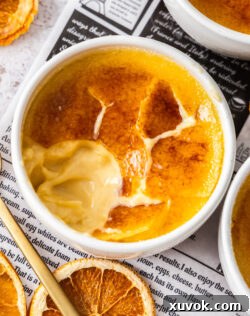
Orange Crème Brûlée Recipe
4
-6 servings
15
45
4
30
5
30
⭐Rate
📍Pin
Ingredients
-
½
cup
caster sugar (superfine sugar)
(100g / 3.5oz) -
3
teaspoons
orange zest
very finely grated (from 2 medium oranges) -
2
cups
thickened cream (heavy cream)
(500ml) -
Good pinch
ground cardamom -
1
teaspoon
vanilla extract -
5
egg yolks
from large eggs -
¼
cup
fresh orange juice - Extra sugar for topping
For best results, always weigh ingredients where a weight is provided.
Equipment
-
microplane
helpful but not essential for initial zest; crucial for final zest -
medium saucepan
-
mixing bowl
-
whisk and spatula
-
Fine mesh strainer
-
pouring jug
-
4-6 ramekins
-
High-sided baking tray
-
Kitchen blowtorch (for brûléeing)
Instructions
-
Preheat your oven to 160°C (140°C fan-forced) / 320°F. Select 4-6 ramekins (refer to Note 3 for guidance on sizes) and arrange them in a flat-bottomed baking tray that has sufficiently high sides to accommodate a water bath.
-
In a medium saucepan, combine the caster sugar with just 2 teaspoons of the finely grated orange zest. Use your fingers to gently massage the zest into the sugar. This crucial step extracts the flavorful oils from the zest, creating a more intense and aromatic orange flavor for your custard. Continue massaging until the sugar feels damp and fragrant.
-
Pour the heavy cream into the saucepan along with the cardamom and vanilla extract. Place the saucepan over medium heat, stirring continuously to ensure the sugar fully dissolves. Heat the mixture until it is heavily steaming, and you observe tiny bubbles just beginning to form around the perimeter of the pan. It is important not to let the cream boil. Remove the saucepan from the heat immediately, cover it with a lid, and allow it to steep for 30 minutes. This infusion period allows the flavors to deepen considerably.
-
While the cream is steeping, boil a kettle of water. This hot water will be used for the water bath later.
-
After the steeping period, bring the cream mixture back to medium heat. Heat just until bubbles start to appear once more around the edge of the pan. Remove it from the heat immediately.
-
In a separate medium bowl, vigorously whisk the egg yolks with a balloon whisk for at least 30 seconds until they are smooth and light yellow.
-
To temper the eggs, place the bowl of whisked yolks on a damp tea towel to prevent it from slipping. While continuously stirring the egg yolks slowly with a whisk, gradually drizzle the hot cream mixture into the bowl in a very thin, steady stream. This slow addition and constant whisking ensure the egg yolks warm up gently without scrambling, creating a perfectly smooth custard base.
-
Strain the tempered custard mixture through a fine-mesh strainer into a clean pouring jug. This step is crucial for achieving an ultra-smooth consistency, removing any cooked egg bits or larger pieces of zest. Once strained, stir in the fresh orange juice and the remaining 1 teaspoon of very finely grated orange zest.
-
Carefully pour the custard mixture evenly into the prepared ramekins, filling each one to your desired level (typically about ½ to ¾ full, depending on ramekin size).
-
Gently pull out the middle oven shelf and place your baking tray containing the filled ramekins onto it. Carefully pour hot water (from your kettle, ensuring it’s no longer actively boiling) into the baking tray, around the outside of the ramekins, until the water reaches approximately halfway up their sides.
-
Very carefully push the oven shelf back into the oven. Bake for 45-60 minutes (refer to Note 4 for varying bake times based on ramekin size), or until the edges of the custards appear set and firm, but the centers still have a slight, jelly-like wobble. The center should not look liquid.
-
Once baked, carefully remove the tray from the oven. Using a tea towel wrapped around your open hand for protection and grip, very carefully lift each hot ramekin out of the water bath. Transfer them to a wire rack to cool at room temperature for at least 30 minutes. After cooling, cover each ramekin tightly with plastic wrap (after about an hour to prevent condensation) and chill in the refrigerator for a minimum of 4 hours, or ideally overnight, until thoroughly cold and set.
-
When you are ready to serve, evenly sprinkle about 1-2 teaspoons of caster sugar over the top of each chilled custard, ensuring no custard surface is visible. Use a kitchen blowtorch to caramelize the sugar until it turns a rich golden-brown and forms a hard, brittle crust. Serve immediately to enjoy the delightful contrast of textures and temperatures.
-
Please take a moment to leave a comment & rating. Your feedback is greatly appreciated and incredibly helpful!
Notes
- Caster / Superfine Sugar: This type of sugar, not powdered sugar, is highly recommended as its fine granules dissolve more rapidly. If you only have regular white granulated sugar, simply reduce the heat slightly during the cream heating step to allow more time for the sugar to dissolve before the cream begins to steam and bubble.
- Finely Grated Orange Zest: For the best, smoothest custard texture, it is crucial to grate your orange zest very finely. A microplane is an excellent tool for achieving this. If you cannot grate your zest finely enough, it is best to only include it during the initial steeping phase (as it will be strained out) and omit the additional fresh zest added at the end, as larger pieces can detract from the creamy mouthfeel.
- Ramekin Varieties: Be aware that ramekin sizes vary considerably. This will directly influence the number of servings you get and, more importantly, the baking time required. Ramekins or jars should ideally have a capacity of at least ⅔ cup for optimal results.
- Baking Time Variability: Baking times for crème brûlée can fluctuate due to several factors: individual oven variations, the initial temperature of your custard when it enters the oven, and significantly, the width and depth of your chosen ramekins. For example, taller, narrower ramekins (like the ones used here, holding just over ½ cup of custard) typically bake in about 45 minutes. Flatter or smaller dishes might take slightly less time, while larger, deeper dishes will require a little longer. It’s perfectly fine to open the oven and gently check your crème brûlées after around 35-40 minutes if you suspect they might be smaller or bake faster.
- Testing for Doneness: You’ll know your crème brûlées are perfectly baked when you give a ramekin a gentle shake, and the edges appear set and firm, while the very center retains a slight, jiggle-like wobble. The key is that the center should resemble set jelly (Jell-O) and not appear liquid or runny under the surface.
- Make-Ahead Convenience: Crème brûlée is an ideal make-ahead dessert! The baked custards can be prepared up to 3 days in advance and stored chilled in the refrigerator. However, always remember to add the sugar topping and brûlée them just before serving for the freshest, crispest caramel crust. If necessary, you can brûlée up to an hour before serving, but immediate consumption is recommended for the best texture.
- Nutritional Information: Please note that the nutrition details provided are approximate values, typically derived from an online calculator. The specific brands and precise quantities of ingredients you use may cause variations in the final nutritional content.
EXPLORE MORE AMAZING PUDDING RECIPES!
585
kcal
Marie Roffey
Dessert
French
Have you tried this recipe?
Don’t forget to leave a rating and comment below and let me know how it was! I love hearing from you. Nutrition information is approximate and derived from an online calculator. The brands you use may cause variations.
Calories from Fat 441
75%
188%
126%
2%
5%
10%
1%
33%
14%
42%
13%
11%
6%
Frequently Asked Questions About Crème Brûlée
Crème brûlée is an iconic French dessert distinguished by its rich, smooth, and creamy custard base, which is then topped with a layer of granulated sugar that is caramelized until it forms a hard, brittle, glass-like crust. The name “crème brûlée” literally translates to “burnt cream,” referring to this torched sugar coating that is the hallmark of the dessert.
While crème brûlée is indeed a specific type of set custard, the term “custard” itself is quite broad, encompassing a wide array of pudding-like desserts made from eggs, sugar, cream, and often milk. The key defining feature that sets crème brûlée apart from other custards is its unique crunchy, caramelized sugar topping. This brittle crust provides a delightful textural contrast that is absent in a standard, un-torched custard.
The true “secret” of crème brûlée is how surprisingly easy it is to achieve perfection! Many believe it’s a difficult dessert, but the reality is quite the opposite. As long as you follow the correct ingredient ratios and use a gentle baking method (like a water bath), you genuinely can’t go wrong. The main trick lies in tempering the egg yolks correctly and ensuring proper chilling time for the custard to set. The final brûlée step, while dramatic, is straightforward with a kitchen torch.
While a kitchen torch is highly recommended for the best results, you can attempt to caramelize the sugar under a very hot oven broiler (grill). Place the ramekins on a baking sheet and put them under the broiler for a few minutes, watching them continuously to prevent burning. However, this method can sometimes heat the custard too much, potentially making it soupy, and might not achieve the same even, hard crust as a torch. A torch offers precise control and keeps the custard chilled.
Cracks often appear if the custard bakes too quickly or at too high a temperature. This causes the edges to set and shrink before the center, leading to tension and cracking. Using a water bath (bain-marie) is essential to provide gentle, even heat and prevent this issue. Overbaking can also contribute to cracking. Ensure you pull the custards from the oven when they still have a slight wobble in the center.
The perfect crème brûlée will have edges that are set and firm, but the very center will still jiggle slightly like a soft jelly or firm pudding when you gently shake the ramekin. It should not appear liquid in the middle. The residual heat will continue to set the custard as it cools. Err on the side of slightly underbaked rather than overbaked to ensure a creamy texture.