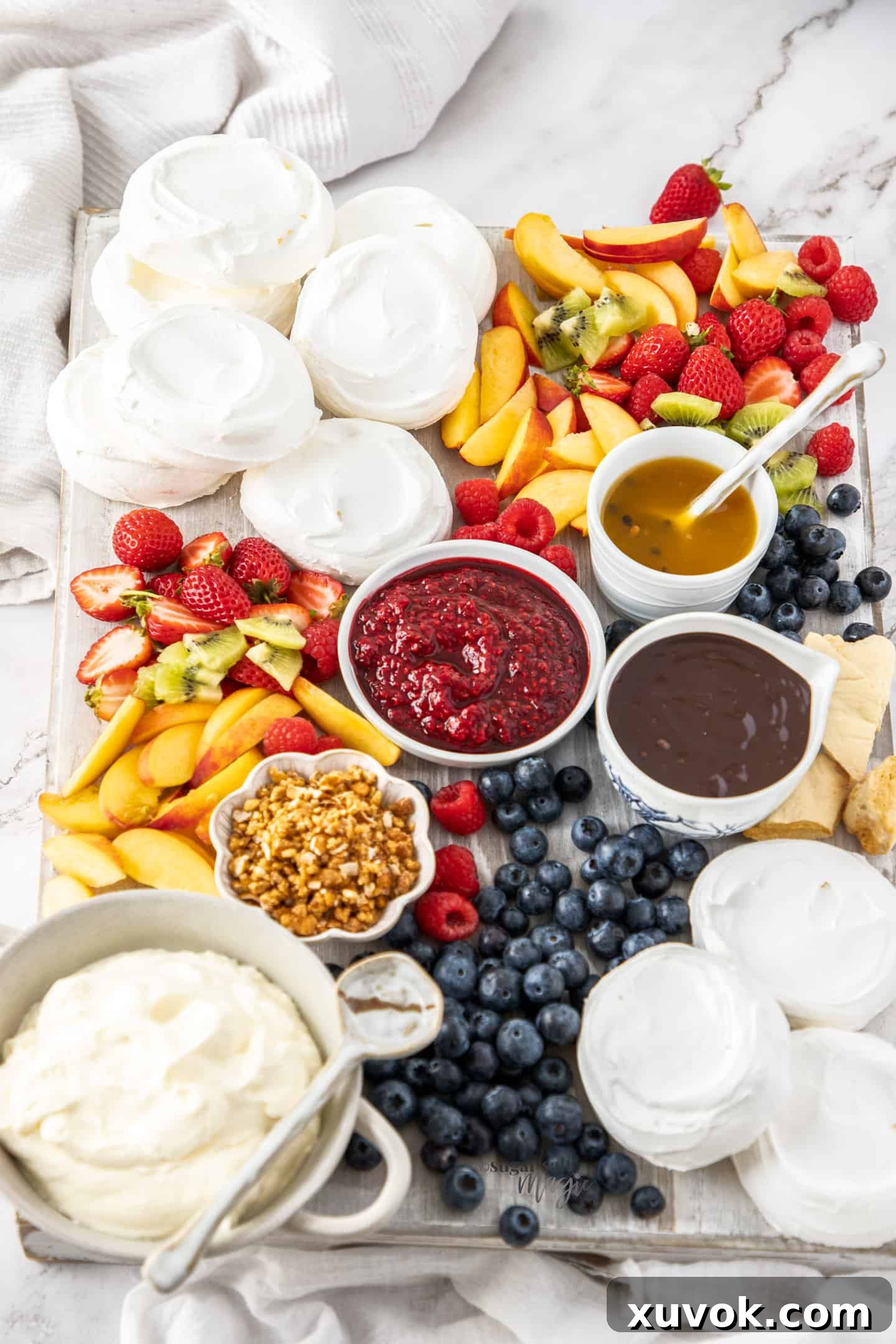
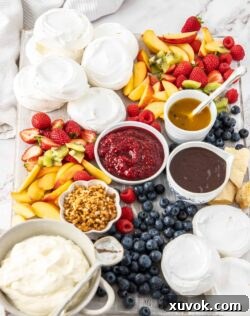
Transform your dessert presentation with a stunning Pavlova Grazing Board – an effortlessly elegant centerpiece that caters to every palate. This innovative dessert concept combines the airy crispness of mini pavlova shells with an array of vibrant, customizable toppings, making it perfect for any gathering. Imagine a breathtaking spread where guests can craft their ideal dessert, choosing from luscious creams, rich sauces, and an abundance of fresh fruits. Not only is it incredibly beautiful, but it’s also surprisingly simple to assemble and can be prepared well in advance, taking the stress out of entertaining. If you’re a fan of the classic pavlova, get ready to elevate your dessert game with this showstopping platter.
For more pavlova inspiration, delve into our Chocolate Pavlova or indulge in these delightful Chocolate Swirl Meringues.
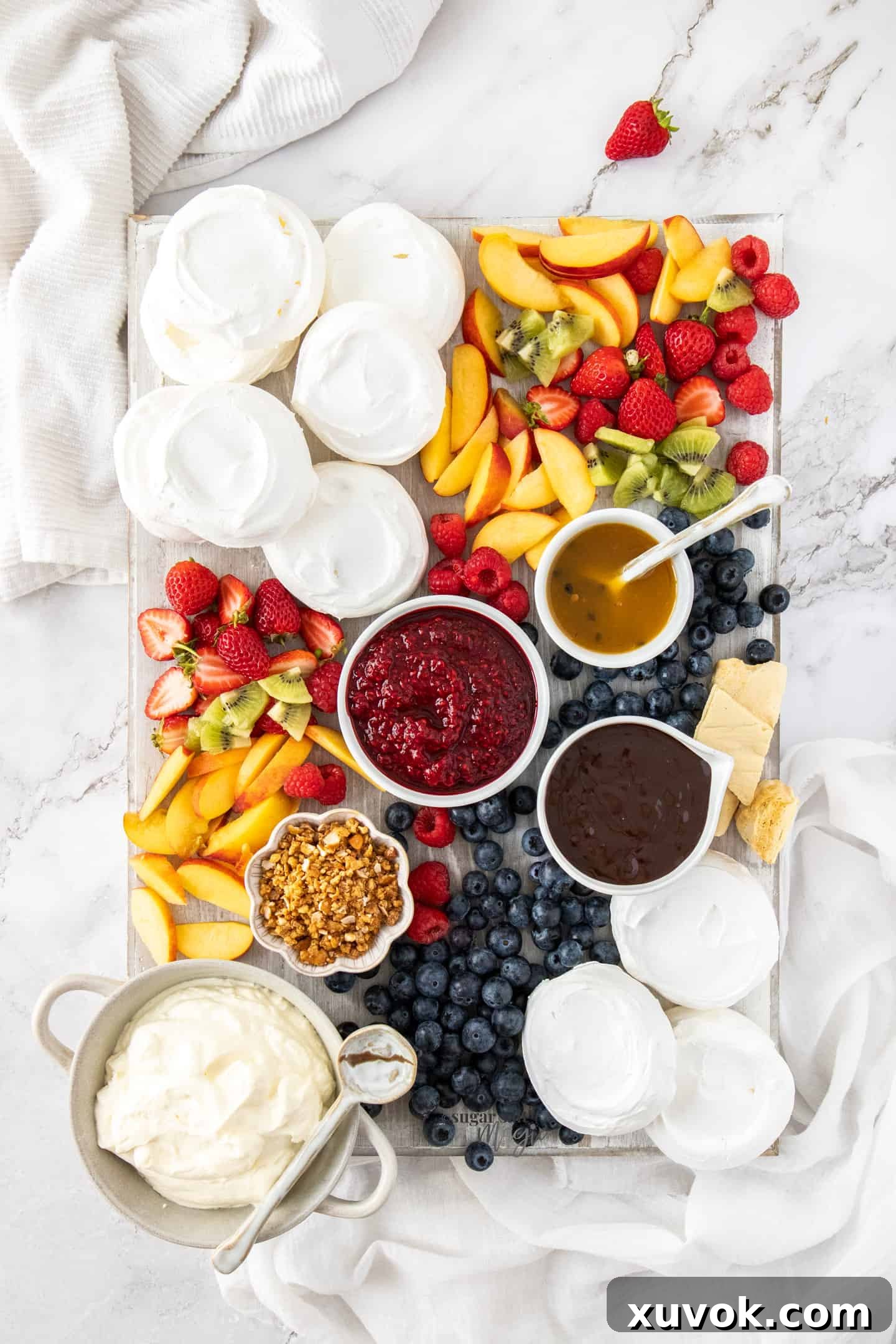
Why You’ll Adore This Pavlova Grazing Board
Grazing boards have soared in popularity for their interactive and visually appealing nature, and this pavlova rendition is no exception. While a traditional pavlova holds a special place, this deconstructed version is the ultimate dessert for feeding a crowd, transforming any occasion into a memorable feast. From festive Christmas celebrations to light and airy summer soirées, its versatility shines.
- Effortlessly Easy to Make: Don’t be intimidated by homemade pavlova! These mini versions are actually simpler and less prone to cracking than their larger counterparts, making them a fantastic project for bakers of all skill levels.
- Perfect for Make-Ahead Preparation: The meringue shells can be baked and stored weeks in advance, and many of the toppings can be prepared days ahead, freeing you up to enjoy your event without last-minute rush.
- Endless Topping Combinations: This board is a blank canvas for creativity. Offer a diverse selection of fruits, sauces, and decadent additions, ensuring there’s something to delight every guest, every time.
- Unquestionably Elegant and Beautiful: The vibrant colors of fresh fruit, the pristine white of the meringue, and the artful arrangement of sauces create a truly stunning dessert display that will leave a lasting impression.
Each mini pavlova boasts that perfect crisp meringue shell, giving way to a tender, melt-in-the-mouth marshmallowy center – the hallmark of a truly great pavlova. When it’s time to serve, simply whip up some fresh cream, prepare a simple chocolate ganache, and arrange an abundance of fresh, seasonal fruit. You can even pipe your meringue shells for a classic look, much like these charming meringue nests.
The beauty of the mini pavlova board lies in its customizability. Guests love the freedom to “DIY” their dessert, selecting only their favorite flavors and avoiding anything they don’t fancy. This interactive element adds a fun, engaging dimension to your entertaining. My inspiration for this board actually struck about six years ago when I created a ‘pavlova bar’ for a family get-together. It’s been a long time coming, but finally, this beautiful, celebration-ready pavlova grazing board is here, just in time for your next festive occasion.
Essential Tools for Your Pavlova Project
Crafting perfect mini pavlovas requires just a few basic kitchen tools. Having these on hand will make the process smooth and enjoyable:
- A stand mixer or a powerful handheld electric beater is crucial for achieving stiff, glossy egg white peaks.
- A set of mixing bowls in various sizes and a few spatulas will be invaluable for preparation and mixing.
- Several baking trays, lined with baking paper, are essential for baking your meringue shells evenly.
Ingredients for Irresistible Mini Pavlovas
The beauty of mini pavlovas lies in their simplicity, requiring only five core ingredients for the perfect shells. The real magic happens with the toppings, which are truly boundless. Let’s start with what you’ll need for those delectable, cloud-like bases.
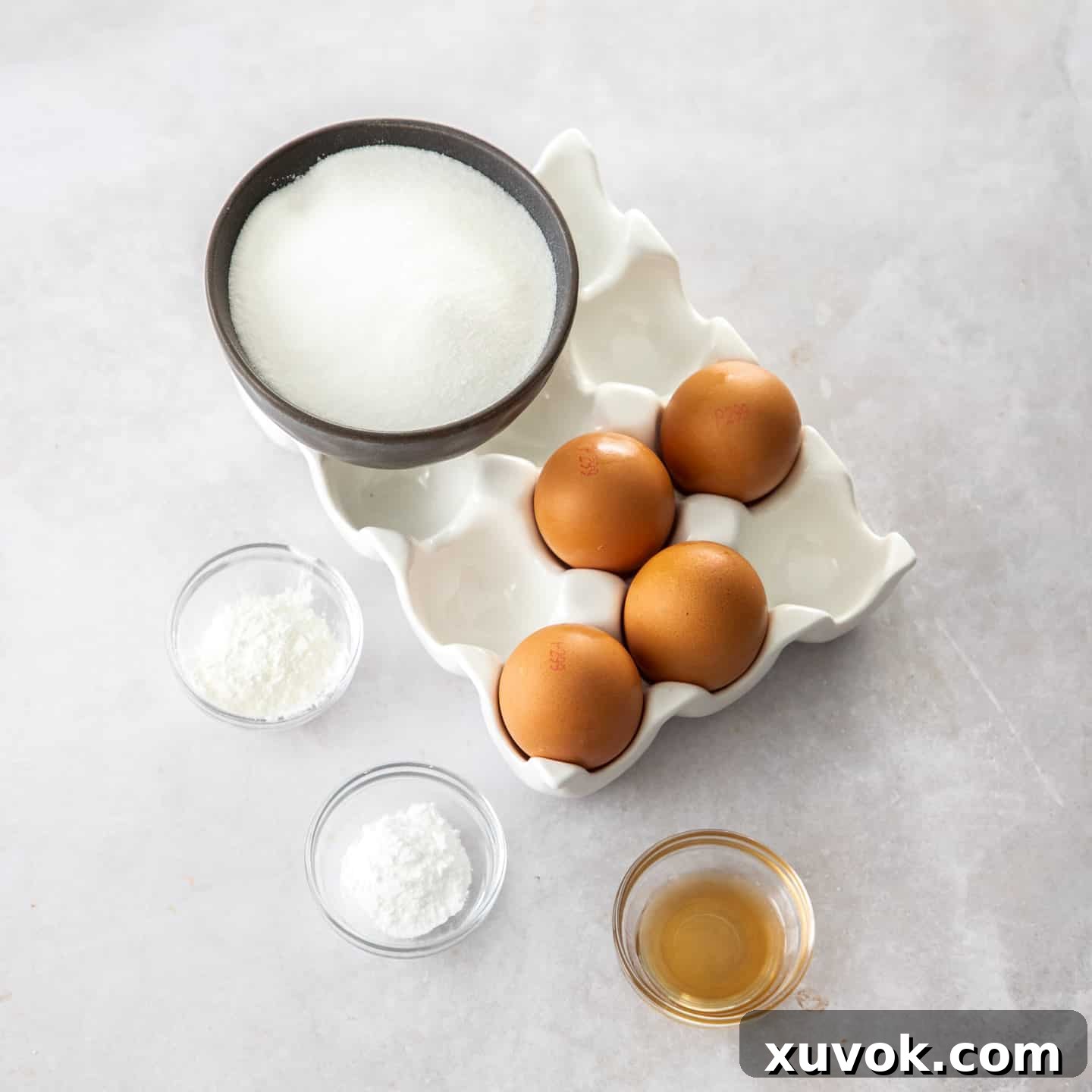
For detailed quantities and step-by-step instructions, please refer to the recipe card below.
- Eggs: The foundation of any pavlova. Use large, fresh, room-temperature eggs. Free-range eggs often yield better results due to stronger egg whites, contributing to a more stable meringue. Room temperature egg whites whip up with more volume and stability.
- Cream of Tartar: This acidic ingredient is a secret weapon for meringue stability. It helps strengthen the egg white proteins, preventing them from collapsing and ensuring a lofty, sturdy pavlova structure. If you don’t have cream of tartar, an equal amount of lemon juice or white vinegar can be substituted.
- Cornflour (Cornstarch): The key to achieving that signature soft, marshmallowy interior. Cornflour creates a tender crumb within the crisp shell, distinguishing pavlova from a simple meringue. It also helps stabilize the meringue during baking.
- Caster Sugar (Superfine Sugar): The primary sweetener and structural component. Using superfine sugar is crucial because its small crystals dissolve quickly and thoroughly into the egg whites. Undissolved sugar crystals can lead to a “weeping” meringue, where liquid seeps out. For an added layer of flavor, consider using this homemade vanilla sugar.
- Vanilla Extract: While optional, a good quality vanilla extract adds a lovely aromatic depth to the meringue shells, complementing any topping choice beautifully.
The Pavlova Toppings: An Ode to Customization
Here’s where the fun truly begins! The concept of this pavlova grazing board revolves around offering an exquisite array of toppings, allowing you and your guests to craft countless unique dessert masterpieces. While a classic pavlova might feature just a simple dollop of cream and fruit, these mini pavlovas invite a world of creativity and flavor exploration, all while maintaining an elegant simplicity.
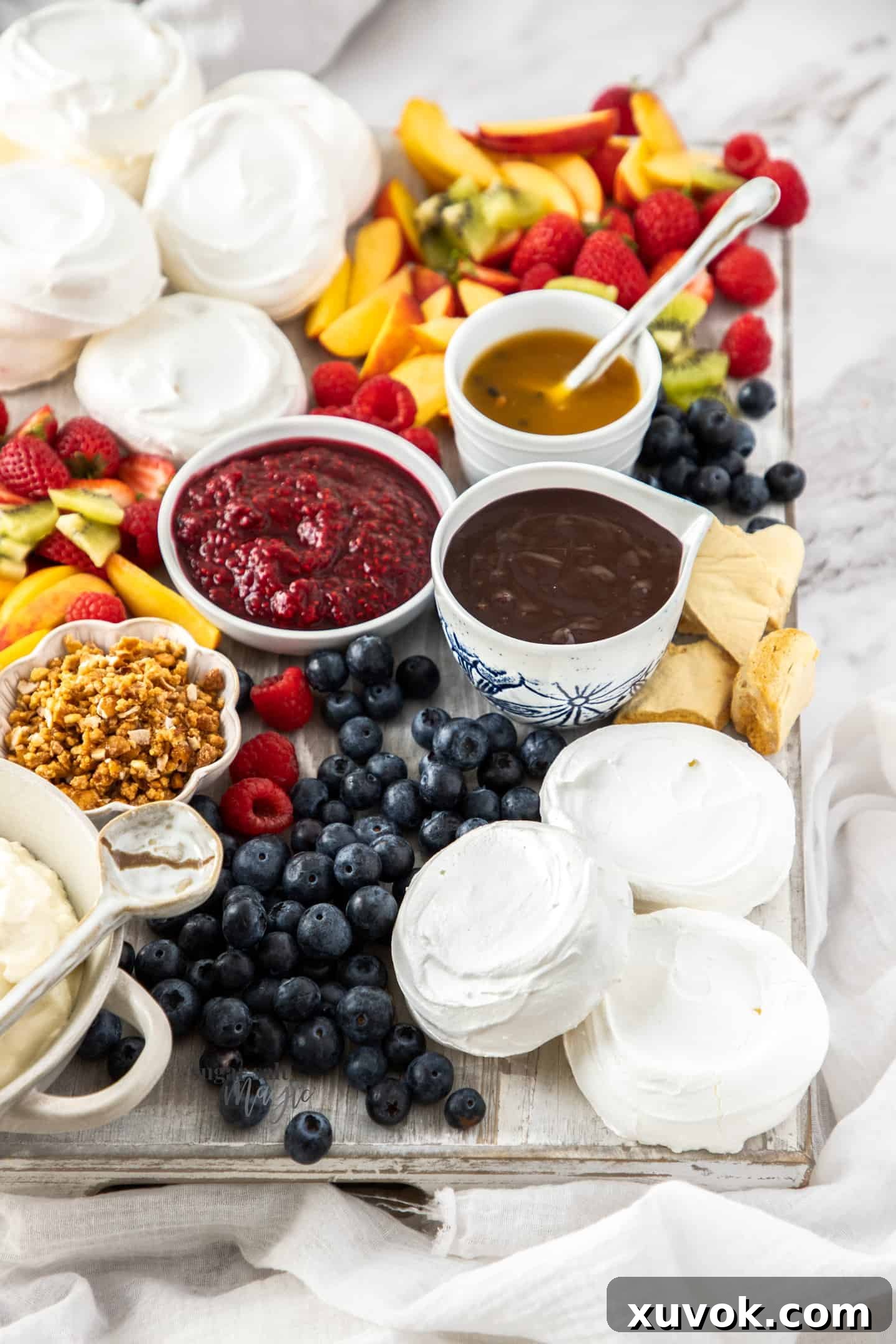
- Whipped Cream: A non-negotiable component for any pavlova. Even if you’re not typically a whipped cream enthusiast, its role here is vital. It provides a creamy, rich contrast to the sweet meringue and tangy fruit, balancing the flavors perfectly. Skip the canned stuff and whip fresh cream for superior texture and flavor – it takes mere minutes and ensures a silky-smooth, non-grainy consistency.
- Decadent Sauces & Spreads: Beyond the cream, a variety of sauces can elevate your pavlovas. Traditional pavlovas often feature simple passionfruit pulp for its bright, tropical tang. On this board, we expand the options to include a luscious, easy-to-make chocolate ganache and a vibrant raspberry compote. Explore our sauces and spreads category for even more ideas, such as a bright and zesty lemon curd, a rich caramel sauce, or a tangy berry coulis.
- Abundant Fresh Fruit: What is a pavlova without its crowning glory of fresh fruit? Berries, such as strawberries, raspberries, and blueberries, are always a popular choice due to their simplicity and beautiful color. Other fantastic options include ripe, juicy mango slices, vibrant kiwi fruit, jeweled pomegranate arils, and sweet sliced peaches or nectarines. Consider seasonal availability to ensure the freshest, most flavorful selection.
- Exciting Other Toppings: Add texture and an extra layer of indulgence with diverse toppings. Our board features finely chopped nut praline, which adds a wonderful crunch, and delicate honeycomb pieces. Other fantastic additions could include grated chocolate shavings (dark, milk, or white!), toasted shredded coconut, a sprinkle of chopped nuts (pistachios, almonds, or pecans), or even a touch of edible glitter for extra sparkle.
Mastering the Mini Pavlova Recipe
Despite its impressive appearance, pavlova is surprisingly straightforward to make. Success hinges on a few simple rules, and while a stand mixer or an electric hand beater is recommended for ease, the technique itself is very approachable. Here’s a breakdown of the critical steps and the science behind them.
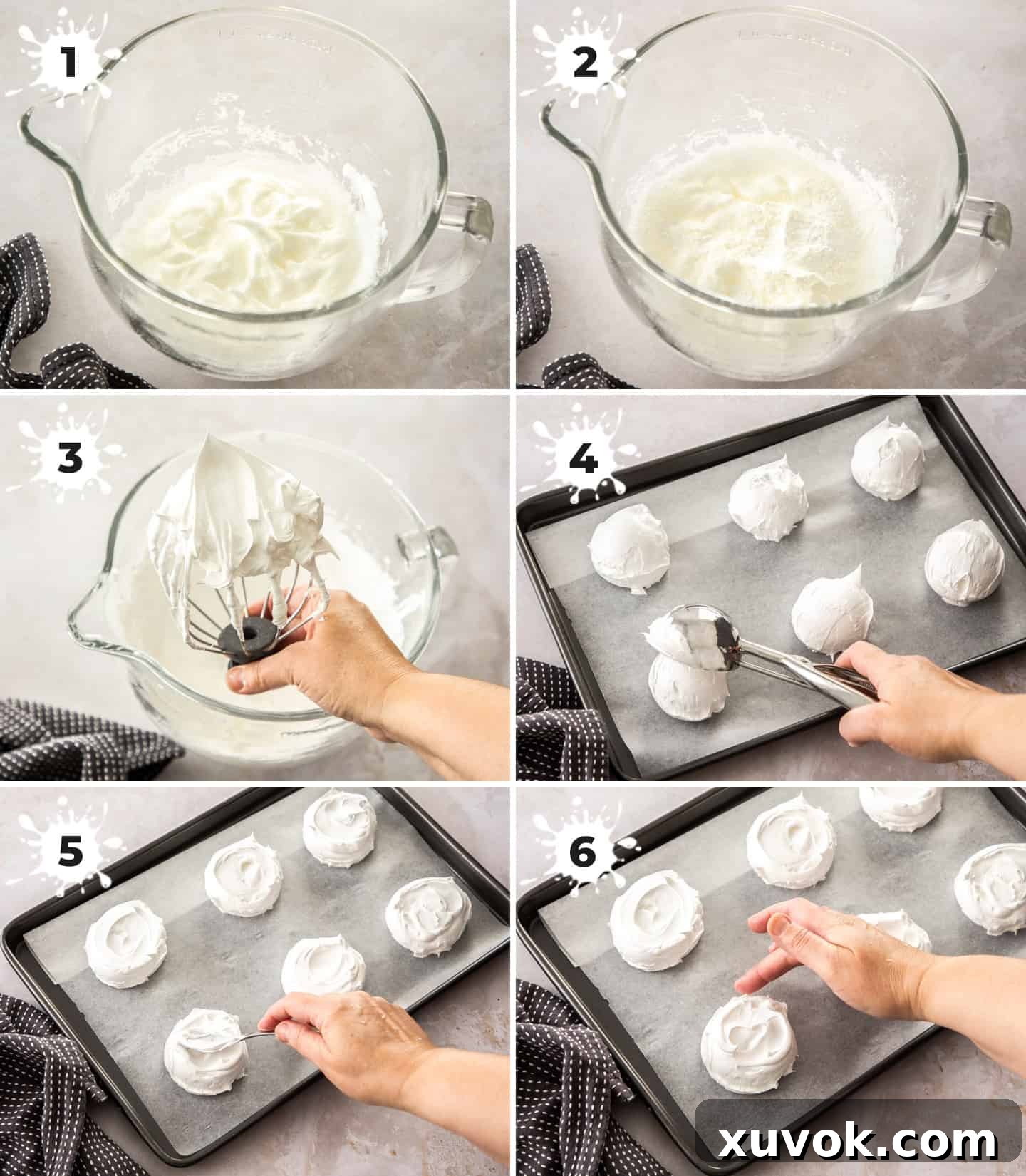
For complete detailed instructions, including precise measurements, please see the recipe card below.
- Carefully Separate the Eggs: Begin by cracking each egg, one at a time. Let the egg white fall into a small bowl, transferring the yolk to another. Once confirmed yolk-free, pour the white into your main mixing bowl. This meticulous process ensures no yolk contaminates the whites, as even a tiny drop of fat can prevent them from whipping effectively.
- Beat Egg Whites to Soft Peaks: With your mixer on medium speed, beat the egg whites for a few minutes until they become fluffy, opaque, and form soft peaks. This means when you lift the beater, the peak will gently curl over but not completely sink back into the whites. Avoid overbeating at this initial stage, as it can compromise the final texture. Reaching soft peaks first establishes a robust structure for the meringue, while early overbeating can damage the protein bonds.
- Incorporate Cornflour and Cream of Tartar: Sift the cornflour and cream of tartar directly over the soft-peak egg whites. Beat for just a few seconds until thoroughly combined. Sifting prevents lumps and ensures these crucial stabilizers are evenly dispersed, contributing to a smooth, stable meringue.
- Gradually Add the Sugar: With the mixer running on low to medium speed, add the caster sugar one tablespoon at a time, allowing approximately 20 seconds between each addition. This slow, steady addition allows the sugar to dissolve completely into the egg whites, preventing the meringue from collapsing and ensuring a smooth, glossy finish. Dissolved sugar is key to preventing weeping.
- Beat to Stiff, Glossy Peaks: Increase the mixer speed to high and continue beating until the meringue is incredibly glossy, thick, and holds nearly stiff peaks. When you lift the whisk, the meringue should hold its shape firmly, though the very tip might still have a slight curl. This stage is vital for ensuring your meringue shells maintain their beautiful shape and structure during baking.
- Perform the Sugar Crystal Test: To confirm the sugar is fully dissolved, rub a small amount of meringue between your thumb and index finger. If you feel any grittiness from sugar crystals, continue beating on high speed until the mixture feels perfectly smooth. Undissolved sugar is a common culprit for a “weeping” meringue, so this step is critical for a dry, crisp shell.
- Add Vanilla Extract: Pour in the vanilla extract and give the meringue one final, quick beat to incorporate it evenly.
- Bake Low and Slow: Transfer your shaped meringue shells to the oven, preheated to a low temperature (110°C fan-forced / 125°C conventional / 260°F), and bake for approximately 50 minutes. The “low and slow” baking method allows the meringue to gently dry out and set, developing that signature crisp exterior while retaining a soft, marshmallowy interior. The low heat also ensures the pavlovas remain beautifully white.
- Cool Completely: Once baked, remove the trays from the oven and let the mini pavlova shells cool completely at room temperature. Rushing this step can lead to cracks or a sticky texture. They typically cool within an hour, becoming perfectly crisp and ready for assembly.
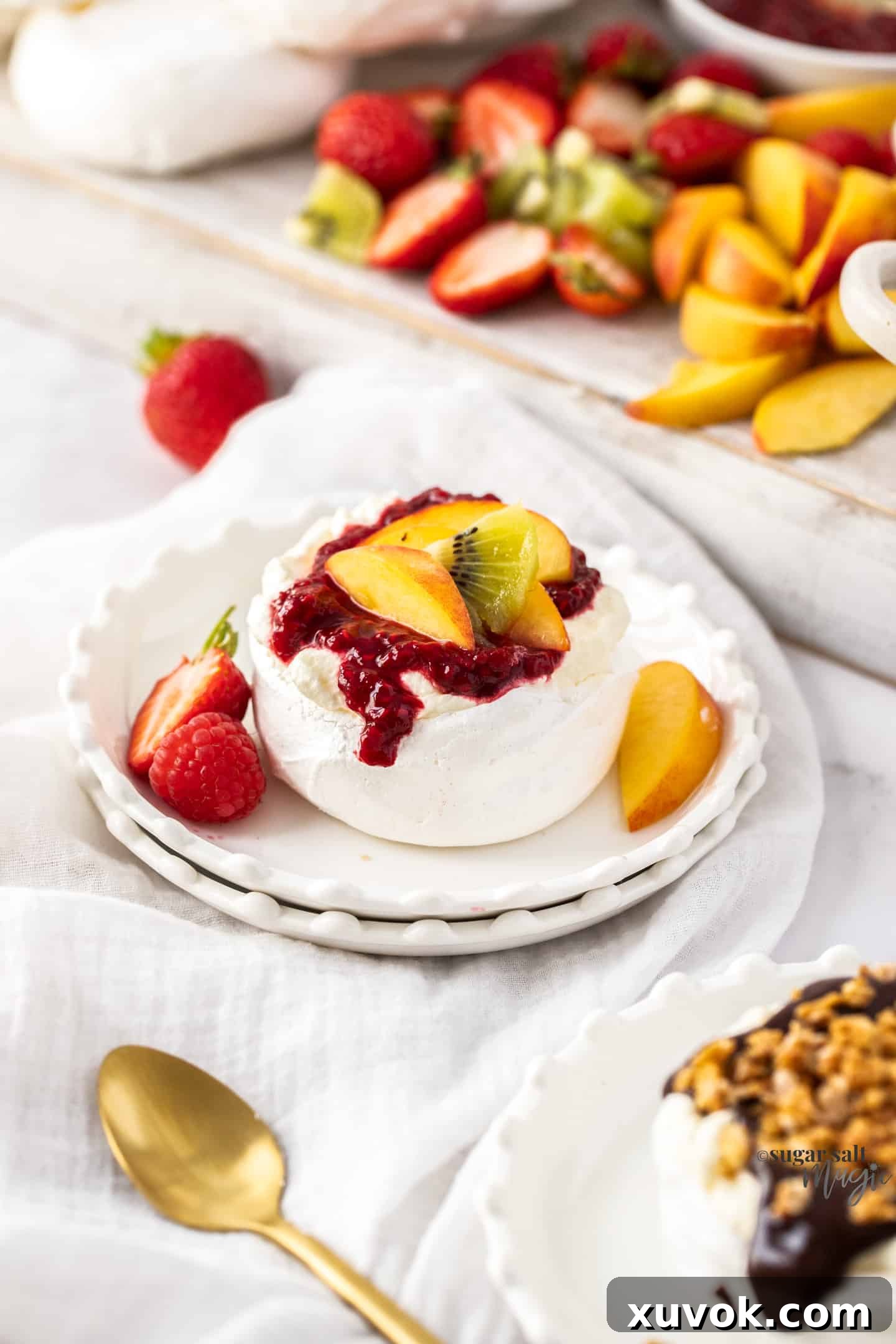
Crafting the Irresistible Toppings
The beauty of this pavlova platter lies in its simple, yet impactful, topping recipes. We focus on just a few key components: velvety whipped cream, rich chocolate ganache, and a vibrant raspberry compote. These can be prepared with ease, leaving you more time to enjoy your event.
- Whipping the Cream: Pour chilled heavy or whipping cream into a mixing bowl. Using an electric beater or a balloon whisk, whip until soft peaks form. Be vigilant to avoid overwhipping, which can result in a grainy texture. Resist the temptation to add sugar to the cream; the sweetness of the meringue and other toppings will be perfectly balanced by the plain cream.
- Creating Chocolate Ganache: This indulgent sauce is incredibly simple. Gently heat a portion of cream in a saucepan until it just begins to simmer around the edges. Pour the hot cream over finely chopped dark chocolate, ensuring the chocolate is fully submerged. Let it sit undisturbed for a minute or two to allow the chocolate to soften, then stir gently until you achieve a smooth, glossy ganache.
- Homemade Raspberry Compote: For a burst of fruity flavor, combine frozen raspberries, a touch of sugar, and a squeeze of lemon juice in a saucepan. Cook over medium heat for about 10 minutes, stirring occasionally, until the berries break down and the mixture thickens into a syrupy compote. A dash of vanilla extract at the end enhances its aroma and flavor.
Remarkably, you can prepare all of these delicious toppings in under half an hour. For ultimate convenience, the chocolate ganache and raspberry compote can be made up to two days in advance and stored in the refrigerator. While whipped cream is best prepared on the day of serving for optimal freshness and texture, it can be gently whipped a few hours ahead and kept chilled.
How to Assemble a Breathtaking Pavlova Grazing Board
With your perfectly crisp meringues and luscious toppings ready, it’s time to bring your vision to life. Assembling the grazing board is an art in itself, and here’s how to create a display that’s both functional and stunning:
- Select the Right Board: Choose a generously sized serving board or platter to accommodate all your elements without overcrowding. Ensure it’s not so large that it looks sparse or becomes difficult to transport. Wooden boards, slate, or even multiple chopping boards laid side-by-side work beautifully.
- Create Meringue Mountains: Begin by arranging your mini pavlova shells. Pile them in elegant “mountains” or clusters at one or two strategic spots on the board. This creates visual anchors and adds height and interest to your display.
- Position Your Sauces: Next, place your various sauces and spreads. Use small, attractive bowls, ramekins, or mini jars for each sauce (whipped cream, chocolate ganache, compote, passionfruit pulp, etc.), providing a small spoon for serving. Distribute these around the board to balance the layout and offer easy access. These, along with the meringue clusters, form the structural backbone of your board.
- Add Auxiliary Toppings: Integrate any additional toppings you’re offering, such as nut praline, honeycomb, chocolate shavings, or toasted coconut flakes. Place these in even smaller bowls or directly sprinkle them in appealing clusters around the main elements.
- Fill with a Bounty of Fruit: This is where the board truly comes alive with color and freshness. Arrange a diverse selection of fresh fruit, ensuring everything is washed, sliced, and ready for guests to enjoy. Think about color contrast and variety: sunny mango or peaches, vibrant red berries (strawberries, raspberries), deep blue blueberries, and bright green kiwi slices or mint leaves. Distribute different fruits across various sections of the board for visual appeal and to encourage exploration. Pro tip: Placing smaller, roll-prone fruits like blueberries in a small bowl helps keep your board tidy!
- Timing for Impact: For the most impressive presentation, assemble your pavlova grazing board right before serving. This allows guests to witness the magic as it comes together and ensures all ingredients are at their freshest. Position it prominently where everyone can admire its beauty and easily access the delightful components.
This elaborate display is truly a showstopper. People are invariably drawn to variety, and it’s rare to find someone who doesn’t adore pavlova. It’s a beloved classic for a reason. You could even draw inspiration from a mango pavlova and design a lush, tropical-themed board!
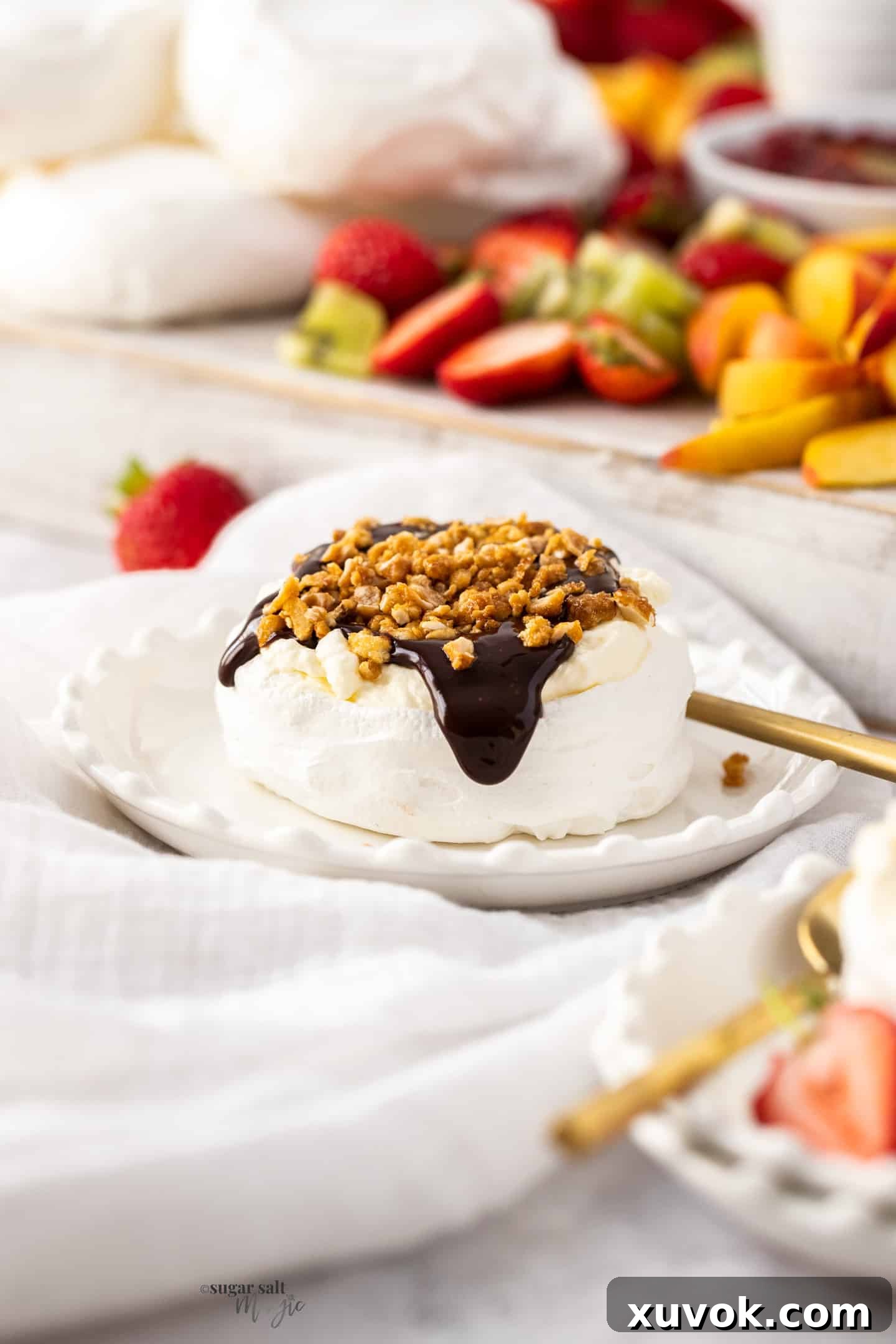
No Large Serving Board? No Problem!
While expansive serving boards and grazing platters can be a significant investment, don’t let the lack of one deter you from creating this magnificent dessert spread. There are plenty of creative and budget-friendly alternatives:
- DIY Your Board: If you’re handy, procure some food-safe timber and apply a food-grade glaze. You don’t even need to permanently join boards together; simply arrange several pieces side-by-side to create a larger surface.
- Utilize Everyday Chopping Boards: Gather several large chopping boards you already own. Arrange them together to form your grazing surface. They’re practical, versatile, and readily available for daily kitchen use.
- Build a Multi-Tiered Display: Think vertically! Your dessert doesn’t have to be confined to a single flat surface. Group aesthetically pleasing bowls and small platters together on your table. Create visual interest by elevating some elements; for instance, place the meringue shells on a cake stand at the back, arrange small jam jars filled with sauces on a tiered tray, and scatter fruits across a large, flat platter.
- Center-of-the-Table Runner: If your dining table is clear, consider using a decorative table runner as your base. Arrange all the components directly down the center of the table. To ensure easy access for all guests, group items strategically along its length, preventing anyone from having to reach too far or across others.
How to Store and Make-Ahead Mini Pavlova Shells
One of the most appealing aspects of this pavlova grazing board, especially for hosts, is its incredible make-ahead potential. The meringue shells are remarkably stable and can be prepared well in advance.
Once your mini pavlova shells have cooled completely, gently stack them into a rigid, airtight container. Avoid using bags, as the delicate shells can easily get crushed. These perfectly crisp shells can be stored in the freezer for up to two months. When you’re ready to serve, simply remove them from the freezer and let them thaw quickly at room temperature; they’ll retain their crisp texture beautifully.
For shorter-term storage, always keep meringue in a cool, dry place. An airtight container in your pantry is ideal on the day of serving. Humidity is the arch-nemesis of meringue, as it can cause them to become sticky and eventually start to weep or dissolve. As long as they are kept cool and airtight, your pavlova shells will remain wonderfully crisp and ready for your delicious toppings.
PIN IT:
Click to PIN this recipe for later!
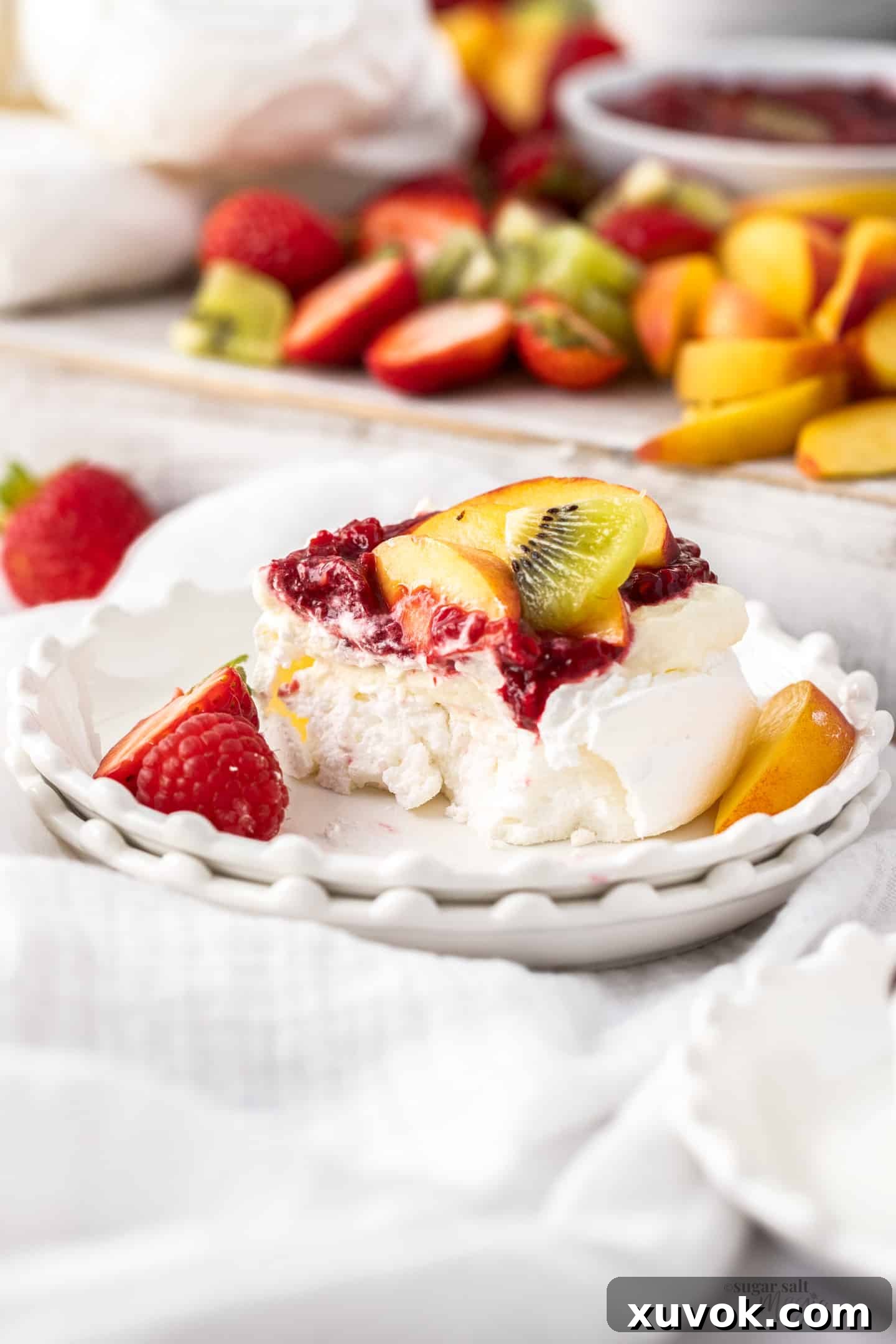
If you create this delightful pavlova grazing board, please take a moment to leave a rating and comment below. Your feedback is incredibly valuable and helps other dessert enthusiasts! Feel free to share your beautiful creations on Instagram and tag @sugarsaltmagic.
Explore More Delicious Meringue Creations
- How to Make Perfect Pavlova
- Pavlova Wreath
- Chocolate Meringue Cake
- Swirled Chocolate Pavlova
- Peppermint Meringues
- Chocolate Meringue Brownie Cake
- Chocolate Swirl Meringues
- Biscuit Base Lemon Meringue Pie
- Meringue Nests
Pavlova Grazing Board
10
serves
1 hour
50 minutes
0 minutes
1 hour
50 minutes
Rate
Pin
Ingredients
FOR THE PAVLOVA SHELLS
- ½ cup egg whites (approximately 4 large eggs), room temp
- 1 cup caster (superfine) sugar (200g / 7oz) (notes)
- 2 teaspoons cornflour (cornstarch)
- 1 teaspoons cream of tartar (notes)
- 1 teaspoon vanilla extract
TOPPINGS
- 1 ½ cups whipping (heavy) cream
- 150 g dark (50%) chocolate
- Fresh fruit, washed and sliced (notes)
- Passionfruit pulp
- Raspberry compote (or other compote or curd)
- Nut praline, chopped finely (or crushed nuts or coconut flakes, even granola)
For best results, always weigh ingredients where a weight is provided
Equipment
-
stand mixer or electric hand mixer
-
Mixing bowls, spatulas
-
baking trays
-
Serving board, chopping boards or nice platters
Instructions
FOR THE MERINGUE SHELLS
-
Preheat the oven to 120C / 250F / 110 (fan forced). Line two baking trays with baking paper.
-
In a stand mixer, with the whisk attachment (or using a handheld beater), beat the egg whites to soft peak stage. About 3-4 minutes.
-
Sift over the cream of tartar and cornflour and beat through.
-
With the mixer on low-medium, add the sugar one tablespoon at a time, counting to 20 seconds before adding the next.
-
Once all the sugar is incorporated, turn the mixer up to high and beat until the meringue is glossy, thick and can hold a (fairly) stiff peak when you pull the whisk out – it’s ok if the very tip of the peak bends.
-
Test the mixture by rubbing a little between your finger and thumb. It should be smooth. If it is still grainy, keep beating until it is smooth when you test it.
-
Add the vanilla extract and give the meringue one final best to mix it through
-
Use a large ice cream scoop, to take large scoops of the meringue mixture and carefully release them onto the cookie trays. You can use spoons, the scoop just helps shape them. Space them at least 3 inches apart as they will puff up while cooking.
-
Use a spoon to swirl a little dent in the centre, not too deep, then use a damp finger to pat any peaks down.
-
Bake for 50 minutes. Very gently remove trays from the oven and set them at room temperature to cool. They cool in about 1 hour.
WHIP THE CREAM
-
In a mixing bowl, using a electric handheld mixer or balloon whisk, whip 1 cup of cold cream to soft peaks. Cover the bowl and place in the fridge until required.
FOR THE CHOCOLATE GANACHE
-
Finely chop the chocolate and place it in a heatproof bowl.
-
Heat the remaining ½ cup of cream over low-medium heat, swirling every so often, until starting to bubble around the edges.
-
Pour it over the chocolate and give the bowl a shake to submerge the chocolate under the cream. Wait 1-2 minutes, then stir well until smooth.
OTHER TOPPINGS
-
Use this recipe to make the raspberry compote or use another spread from here.
-
Use this recipe to make your own nut praline, or use crushed nuts or coconut flakes instead.
-
Prepare the fruit by washing and slicing as needed to make it ready to top the pavlovas.
ASSEMBLING THE PAVLOVA GRAZING PLATTER
-
I recommend doing this in front of everyone and letting them watch the magic come together.
-
Make a mountain out of the pavlova shells in one or two spots on the ends of the board.
-
Place sauces in little jars with spoons and the cream in a nice bowl, then place them around.
-
Fill in all the gaps with lots of fruit.
Notes
- Meringue nests / shells can be made up to 2 months in advance and frozen in a stiff-sided airtight container in the freezer.
- Chocolate ganache, raspberry compote and nut praline can all be made a couple of days ahead.
- The cream can be whipped a few hours in advance and stored in the fridge.
- Don’t top the meringues with cream to serve, let the guests do it themselves as the cream will soften the meringue.
- You can also use things like Nutella or caramel sauce.
- Best fruits to use: Strawberries, raspberries, blueberries, blackberries, mango, peaches, nectarines, grapes, kiwi fruit. While not a fruit, fresh mint leaves add lovely colour.
331
kcal
Marie Roffey
Dessert
Australian
Have you tried this recipe?
Don’t forget to leave a rating and comment below and let me know how it was! I love hearing from you. Nutrition information is approximate and derived from an online calculator. The brands you use may cause variations.