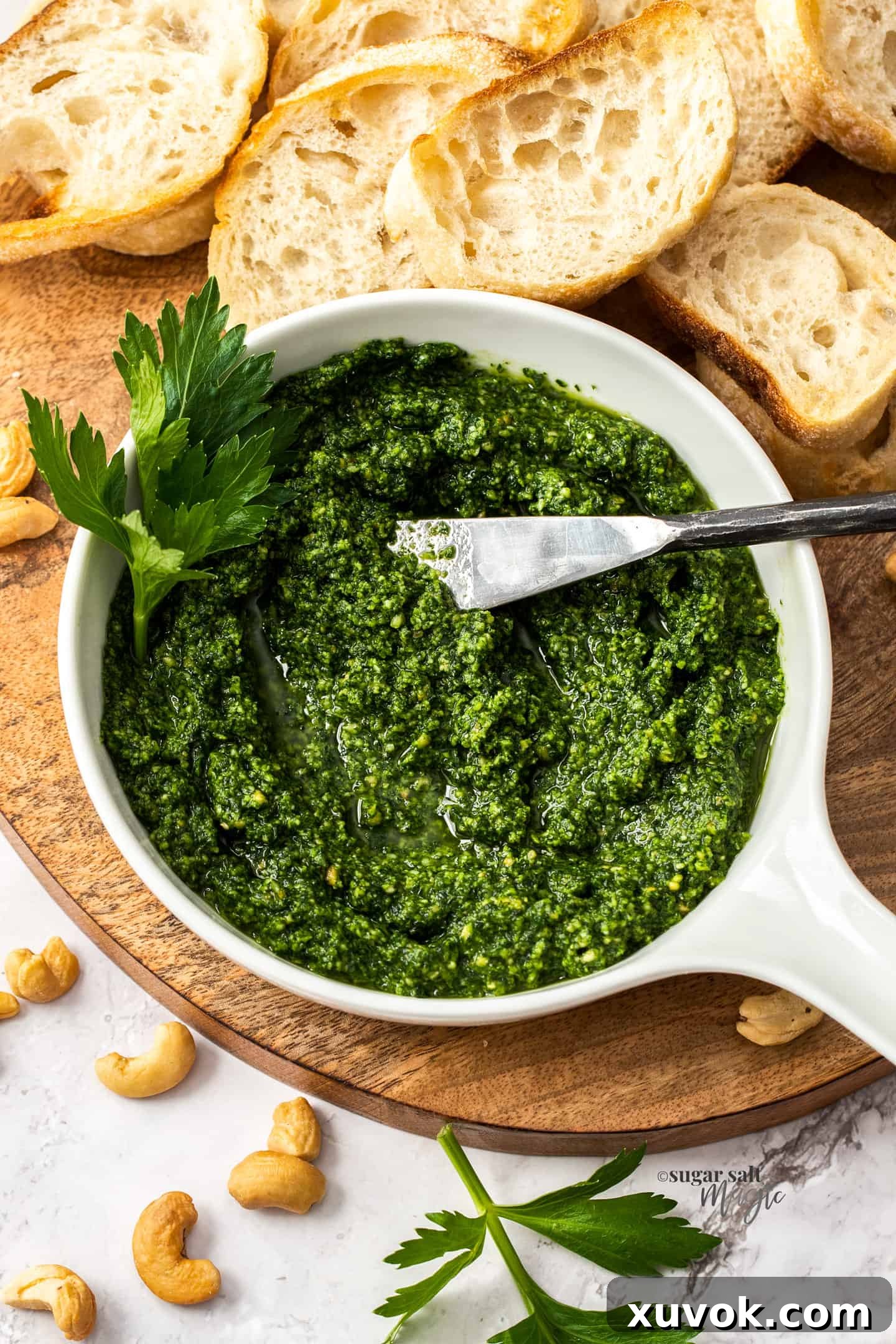
Have you ever found yourself eyeing those vibrant green celery leaves and wondering, “can you eat celery leaves?” The answer is a resounding yes! For too long, these often-discarded tops of celery bunches have been overlooked, destined for the compost bin rather than the dinner table. But with a little culinary creativity, they can be transformed into something truly spectacular and incredibly flavorful. Today, we’re diving into the world of celery leaf pesto – a delightful, aromatic spread that not only helps reduce food waste but also adds a unique, subtly peppery, and herbaceous twist to your favorite dishes.
Pesto is a culinary marvel, offering endless possibilities beyond the classic basil. While a traditional basil pesto remains a timeless favorite, the world of pestos is vast and exciting. Have you explored the savory depths of an olive pesto or the rich intensity of a sundried tomato pesto? Each offers a distinct flavor profile, but this celery leaf version stands out for its freshness and a milder character that makes it exceptionally versatile.
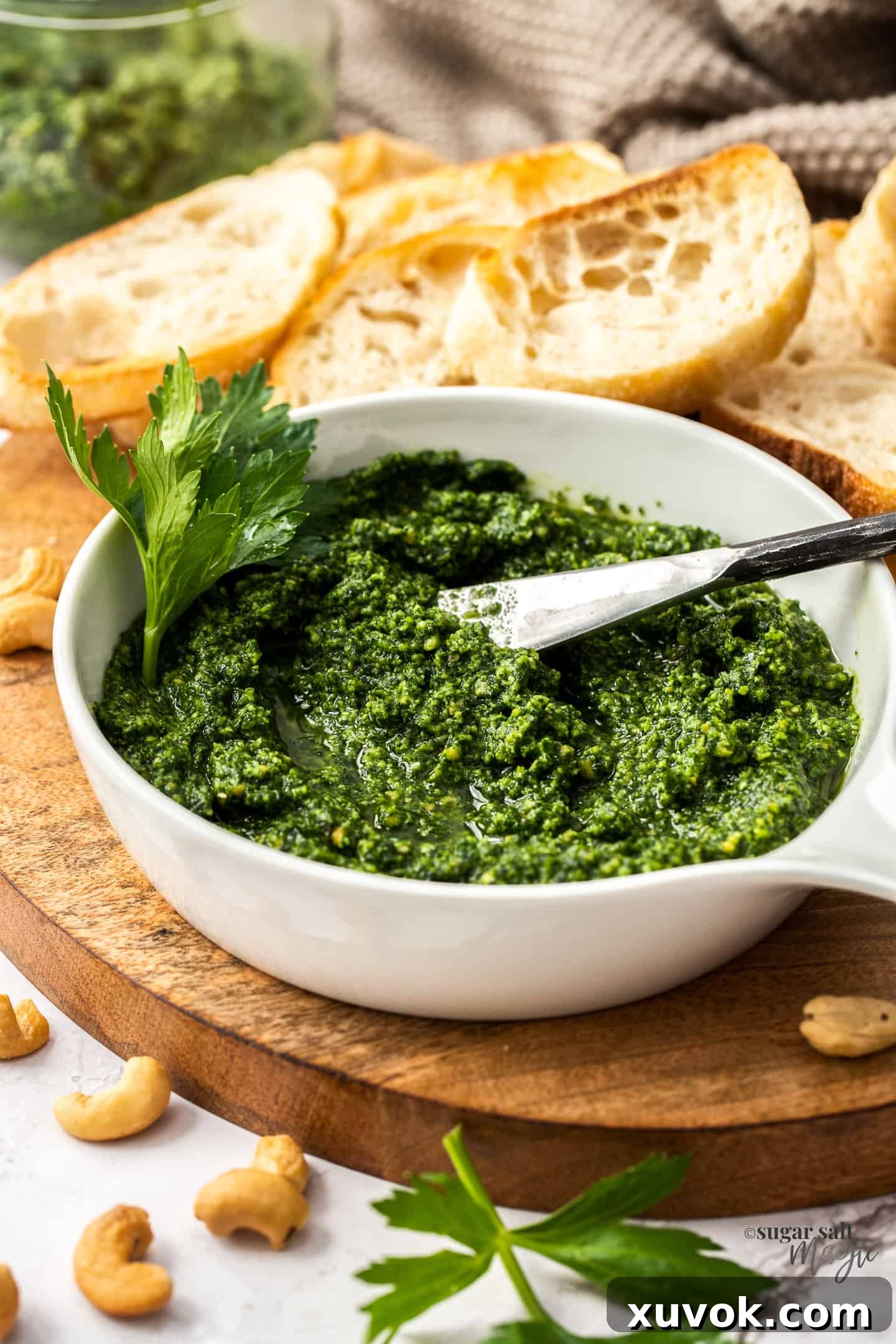
My journey to creating this recipe began out of a simple desire to minimize waste. Each time I chopped the leafy tops off a fresh bunch of celery, a part of me felt it was a missed opportunity. These leaves are perfectly edible, packed with nutrients, and possess a distinct, slightly bitter yet wonderfully fresh flavor. The idea of transforming them into a pesto immediately sprang to mind. Pesto is, after all, one of the simplest culinary creations – often taking mere minutes to assemble – and its applications are virtually limitless.
The resulting pesto is truly a feast for the senses. Just look at that captivating color – a vibrant, luscious green that promises freshness and vitality. This celery leaf pesto offers a mildly peppery, subtly herbaceous flavor profile that is both intriguing and utterly delicious. It’s lighter than traditional basil pesto, with a crisp, earthy undertone that can almost be “tasted” in its beautiful hue. It’s ideal for those seeking a unique spread, a lighter pasta sauce, or a flavorful addition to countless other dishes.
Why Celery Leaf Pesto? Embrace Flavor and Reduce Waste
Beyond its delicious taste, making celery leaf pesto offers several compelling benefits. Firstly, it’s a fantastic way to practice sustainable cooking and minimize food waste. In an era where food waste is a significant global concern, utilizing every edible part of our produce is a small but impactful step we can take in our kitchens. Celery leaves are often discarded, yet they are brimming with flavor and nutritional value, making them a prime candidate for a “waste-not, want-not” approach.
Secondly, celery leaves bring a unique flavor dimension to pesto. While basil pesto is undeniably king, celery leaves offer a refreshing, slightly peppery, and wonderfully green taste that is distinctively different. It’s a fantastic alternative for those who find basil too strong or simply wish to experiment with new flavors. The vibrant green color is also an added bonus, making your meals look as appealing as they taste.
Finally, this pesto is incredibly easy and quick to make. With just a few ingredients and a food processor, you can whip up a batch in under 10 minutes. This makes it a perfect solution for busy weeknights when you need a quick flavor booster or a last-minute appetizer. It’s also a delightful conversation starter, as many people are surprised to learn how delicious celery leaves can be when prepared in this manner.
Simple Ingredients for an Extraordinary Pesto
One of the beauties of this celery leaf pesto is its simplicity. You only need six core ingredients, and the process is so quick that you can literally make it as soon as you unload your groceries. Quality ingredients make all the difference, so choose fresh produce and good quality pantry staples for the best flavor.
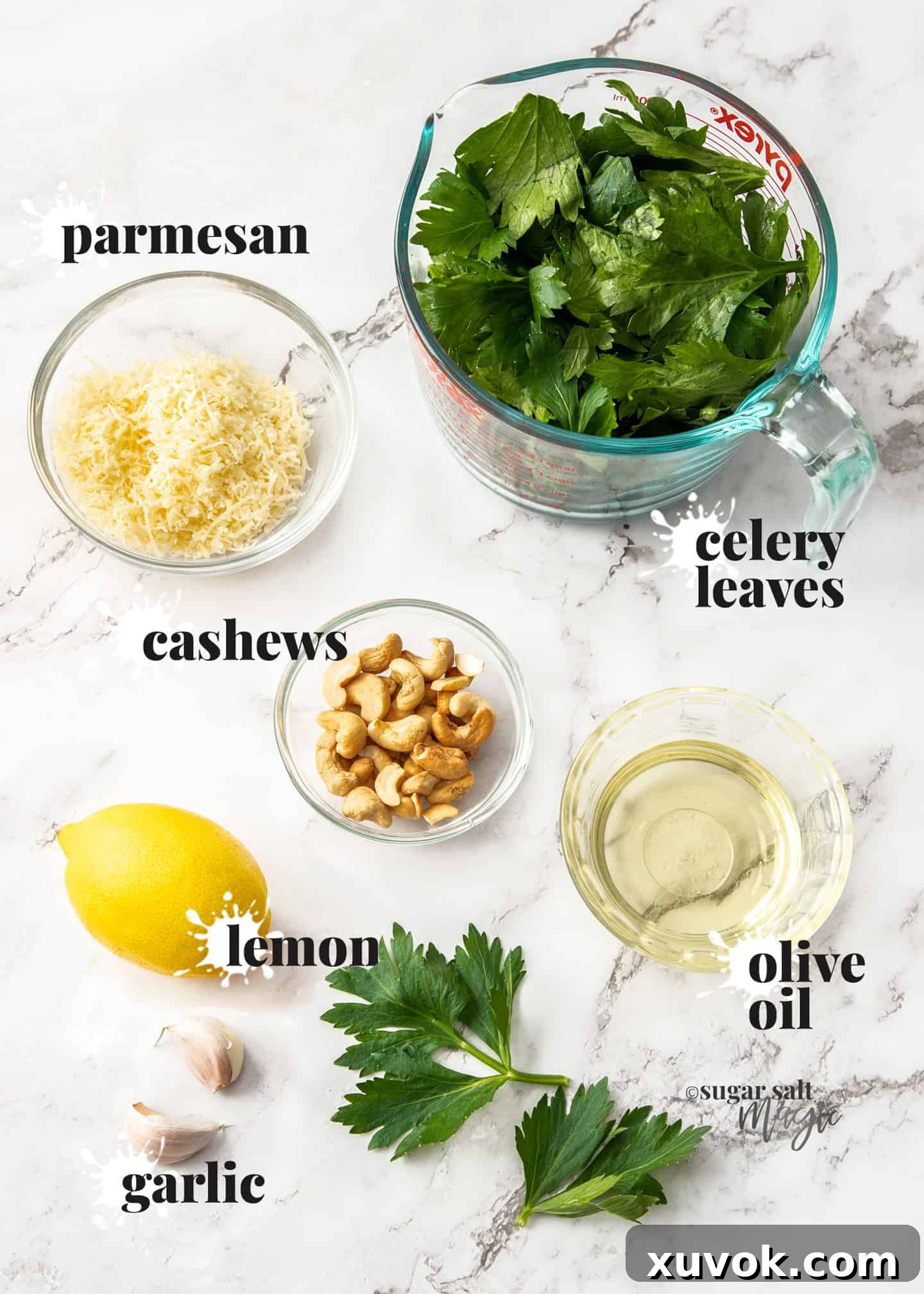
- Celery Leaves: These are the star of our pesto. They provide that gorgeous green color and a unique, mildly peppery and herbaceous flavor. For best results, use the freshest leaves you can find, typically found at the top of the celery stalks. Ensure they are well washed and thoroughly dried before use to prevent a watery pesto.
- Parmesan Cheese: Freshly grated Parmesan adds a depth of creamy texture and that essential umami flavor which is crucial for a well-rounded pesto. Its salty, savory notes complement the celery beautifully. For an even more intense flavor, you can use Pecorino Romano, or a blend of both.
- Nuts: While pine nuts are traditional in many pestos, I find cashews work exceptionally well here. Their inherent sweetness and creamy texture beautifully balance the slight bitterness of celery leaves, resulting in a smoother, more harmonious pesto. Almonds would also be a good alternative, offering a similar creaminess. However, I’d advise against walnuts, as their strong, slightly bitter flavor can overpower the delicate celery notes and make the pesto too astringent. Toasting your chosen nuts beforehand enhances their flavor significantly.
- Garlic: A couple of cloves of fresh garlic are vital for that pungent, aromatic kick. Garlic provides another layer of umami and brings a robust flavor that elevates the entire pesto. Adjust the amount to your preference – more garlic for a bolder taste, less for a milder version.
- Lemon Juice: A small amount of fresh lemon juice is a game-changer. It provides a bright, acidic zing that cuts through the richness of the oil and cheese, lifting all the flavors and preventing the pesto from tasting flat. It also helps to preserve the vibrant green color of the leaves.
- Olive Oil: As olive oil constitutes a significant portion of any pesto, its quality and flavor are paramount. I prefer a light-flavored extra virgin olive oil for this recipe, as the celery leaves already have a distinct peppery note. A very robust, strong olive oil might compete too much with the celery. However, if you adore a strong, fruity olive oil, feel free to use your favorite – it’s all about personal taste.
Crafting Your Celery Leaf Pesto: A Quick & Easy Guide
Preparing this celery leaf pesto is remarkably straightforward. With just a food processor and about 5-10 minutes of your time, you’ll have a fresh, flavorful pesto ready to enhance countless meals.
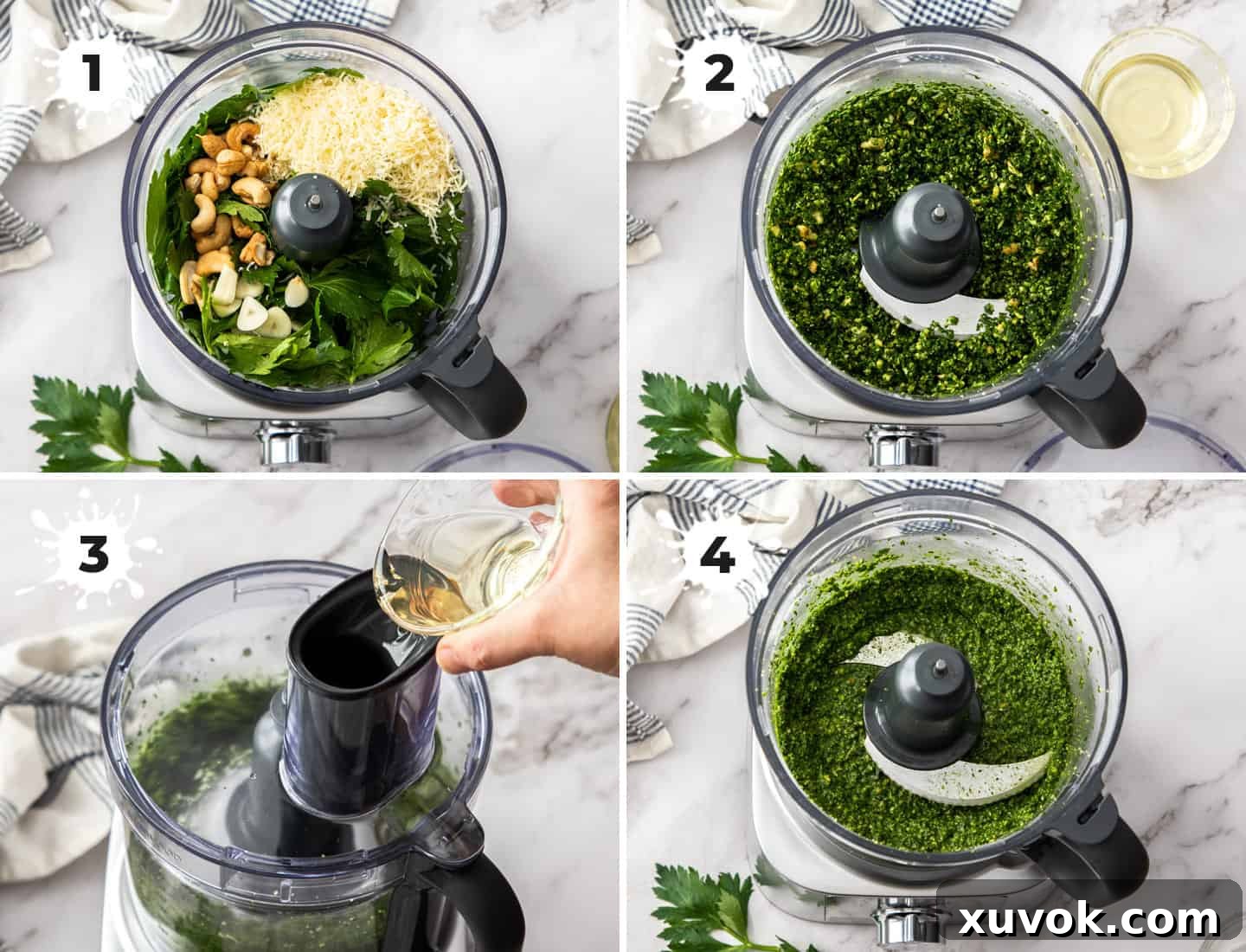
- Prepare the Celery Leaves: First, thoroughly wash your celery leaves to remove any dirt or residue. This step is crucial. Once washed, dry them exceptionally well. Excess moisture can make your pesto watery and can also affect its shelf life. A salad spinner is ideal for this, but if you don’t have one, lay them out on clean paper towels and gently pat them dry until no visible moisture remains.
- Initial Blend: Place the dried celery leaves, cashews (or your chosen nuts), grated Parmesan, peeled garlic cloves, and fresh lemon juice into the bowl of your food processor.
- Process to a Coarse Paste: Pulse the ingredients until they are finely chopped and form a coarse, crumbly paste. Scrape down the sides of the bowl as needed to ensure everything is evenly processed.
- Slowly Incorporate Olive Oil: With the food processor running on a low setting, slowly and steadily drizzle in the olive oil through the feed tube. The key here is to add the oil gradually. Pouring it all in at once can result in a less emulsified, oil-separated pesto. The slow drizzle allows the oil to incorporate beautifully, creating a smooth and luscious texture.
- Final Check and Storage: Continue processing until the pesto reaches your desired consistency – smooth or slightly chunkier, depending on your preference. Observe that gorgeous, vibrant green color! Once ready, transfer the pesto into a clean preserving jar. It’s best used within 7-10 days when stored properly in the refrigerator.
From the tops of just one large bunch of celery, you can often yield a generous amount – enough for 1 to 1 ½ cups of this delicious pesto, which is typically two smaller batches. If you find yourself with more than you can use in a week, consider sharing a batch with your neighbors or friends. It makes for a thoughtful and unique homemade gift!
Grab a charming gift tag here to print and attach to your jars before gifting away!
Tips for the Best Celery Leaf Pesto
While the recipe is simple, a few pointers can elevate your celery leaf pesto from good to exceptional:
- Don’t Over-Pack Leaves: When measuring your celery leaves, pack them lightly into the measuring cup. Over-packing can lead to a more intense, potentially bitter flavor in the final pesto due to the concentration of the leaves’ natural compounds. Aim for a gentle, airy measure.
- Toast Your Nuts: Even if your cashews (or other nuts) are labeled as “toasted,” giving them a quick toast in a dry pan over medium heat for a few minutes, or in an oven at 180°C (350°F) for 5-10 minutes, will significantly deepen their flavor and aroma, adding more complexity to the pesto. Watch them carefully to prevent burning.
- Adjust Consistency: The amount of olive oil can be adjusted to achieve your desired consistency. For a thicker spread, use slightly less oil. For a looser, more pourable sauce, add a touch more until it reaches your preference.
- Balance Flavors: Taste your pesto as you go. You might want to add a tiny pinch of salt or a little more lemon juice to brighten the flavors, especially if your celery leaves are particularly peppery.
- Prevent Browning: The lemon juice helps, but to keep your pesto vibrant green during storage, ensure it’s topped with a thin layer of olive oil and covered tightly. Exposure to air is the enemy of fresh pesto’s color.
Versatile Uses for Celery Leaf Pesto
The beauty of pesto lies in its incredible versatility, and this celery leaf version is no exception. Its fresh, mildly peppery flavor makes it a fantastic addition to a wide array of dishes, both hot and cold.
- Pasta Perfection: Toss it generously with your favorite hot pasta for a quick and flavorful meal. It pairs wonderfully with rigatoni, as seen in this Celery Pesto Rigatoni, or mixed into cold pasta salads like a refreshing pesto caprese pasta salad.
- Delicious Dips and Spreads: Serve it as a standalone dip with crusty bread, pita chips, or vegetable sticks. For a creamier dip, swirl it through cream cheese, Greek yogurt, or sour cream. Spread it generously on pizza bases before adding toppings, or slather it inside savory calzones. It’s also fantastic spread on a sandwich for an elevated grilled cheese or a gourmet turkey wrap.
- Enhance Baked Goods: Swirl this vibrant pesto through bread dough before baking for a beautiful marbled effect and a burst of savory flavor. Simply roll out your dough, spread the pesto evenly, then roll it up and bake.
- Flavorful Protein Companion: Use it to stuff chicken breasts along with some cheese before baking for an elegant and flavorful main course. It also makes a wonderful marinade for fish or roasted vegetables.
- Compound Butter: Create a celery pesto butter by blending the pesto with softened unsalted butter. Roll it into a log, chill, and then slice into disks to melt over hot steaks, grilled seafood, or roasted chicken. You can even freeze portions of this compound butter for future use.
- Beyond the Obvious: Try adding a dollop to scrambled eggs or omelets for a vibrant breakfast, or mix it into rice or quinoa dishes for added depth. It’s also a surprisingly delicious secret ingredient in savory muffins or scones.
Storing Your Homemade Celery Leaf Pesto
Proper storage is key to maintaining the freshness, vibrant color, and delicious flavor of your homemade celery leaf pesto. By following a few simple steps, you can enjoy your pesto for days or even months.
When stored in the refrigerator, this pesto will keep well for 4 to 7 days in a clean, airtight preserving jar. For best results and to prevent oxidation (which can cause the pesto to turn brown), always ensure the surface of the pesto is covered with a thin layer of olive oil. Alternatively, you can press a piece of plastic wrap directly onto the surface of the pesto before sealing the jar with a tight-fitting lid. This minimizes its exposure to air, which is the primary cause of discoloration and spoilage, keeping it fresher for longer.
For longer-term storage, freezing is an excellent option. There are a couple of convenient methods:
- Baking Tray Method: Line a baking tray with parchment paper, then spread the pesto evenly over the surface. Place the tray in the freezer until the pesto is completely solid. Once frozen, you can easily break the pesto into pieces, transfer them to an airtight freezer-safe container or a ziplock bag, and store them for up to 3-4 months. This method allows you to break off just the amount you need.
- Ice Cube Tray Method: For perfectly portioned servings, spoon the pesto into an ice cube tray. Freeze until solid, then pop out the frozen pesto cubes and transfer them to a freezer-safe bag or container. This is ideal for adding a quick burst of flavor to individual servings of pasta, soups, or sauces.
Thawed pesto might have a slightly different texture, but its flavor will remain robust. Simply give it a good stir before using.
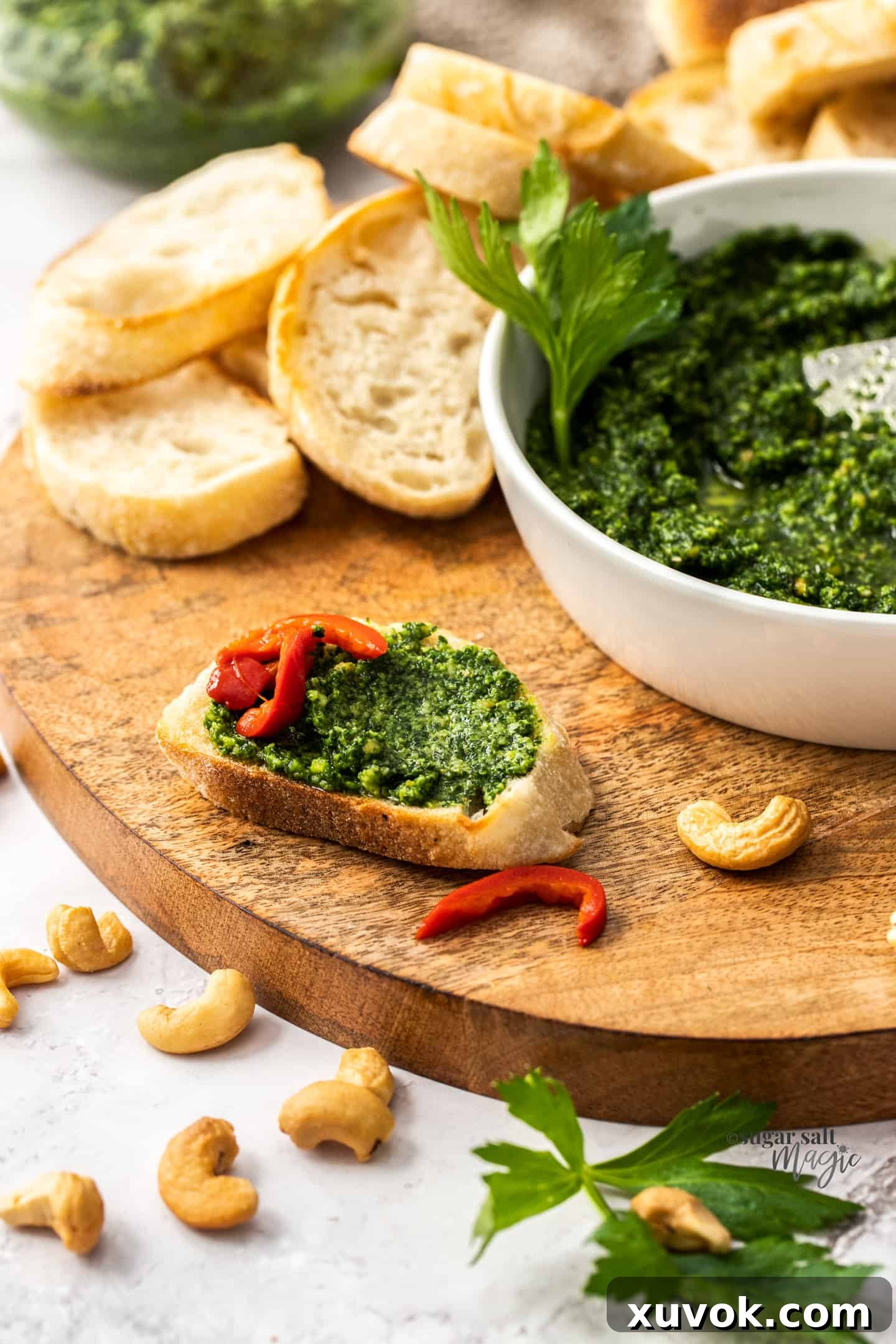
Beyond Pesto: Creative Ways to Utilize Celery Leaves
While celery leaf pesto is undeniably a fantastic use for these often-overlooked greens, their versatility extends much further. Don’t limit yourself – these flavorful leaves can enhance a multitude of dishes! For optimal freshness, store unwashed celery leaves in an airtight container in the refrigerator as soon as you chop them off. This allows you the flexibility to use them at your leisure.
- Fresh in Salads: Finely chop fresh celery leaves and scatter them through green salads, potato salads, or grain bowls for an added layer of freshness, a subtle peppery bite, and a beautiful pop of color.
- Aromatic Base for Cooking: Treat celery leaves like a delicate herb. Chop them finely and sauté them with onions, carrots, or other aromatics as the base for savory dishes. They are wonderful in sauces like bolognese, hearty soups, stews, or even a rich lasagna.
- Stuffing Enhancement: Replace some of the traditional herbs in your favorite stuffing recipe with finely chopped celery leaves. They add a fresh, herbaceous note that complements poultry beautifully.
- Elegant Garnish: Use small, tender celery leaves as a vibrant garnish, much like you would use parsley. They add a sophisticated touch and an extra layer of flavor to finished dishes, especially soups, roasted meats, or fish.
- Compound Butter (Savory): Beyond pesto butter, finely chop celery leaves and mix them through softened unsalted butter with a touch of minced garlic. Form into disks, chill, and then place on top of hot steaks, pan-seared scallops, or grilled chicken to melt into a flavorful sauce.
- Homemade Celery Salt: This is a wonderful way to preserve their flavor. Dry the leaves in a low oven (around 120°C / 270°F) for 20-25 minutes until crisp. Once cool, crush them and mix them through coarse salt to create your own homemade, aromatic celery salt. Perfect for seasoning anything from Bloody Marys to roasted potatoes.
- Breakfast Boost: Chop them finely and add them to omelets, quiches, frittatas, or scrambled eggs for a fresh, healthy, and flavorful twist to your morning meal.
- Stocks and Broths: Throw them into your next batch of homemade vegetable or chicken stock for added depth and aroma. They are a natural fit for savory liquids.
- Green Smoothies: For a nutritional boost, blend a handful of celery leaves into your morning green smoothie. They add freshness without overpowering other flavors.
The possibilities are genuinely endless. Celery leaves are not just pretty; they are flavorful and nutritious. Why waste them when you can transform them into something delicious and wholesome?
Recommended Kitchen Tools for Pesto Making
While you don’t need a gourmet kitchen to make amazing pesto, a few key tools can make the process significantly easier and more efficient:
- A food processor: This is undoubtedly the most essential tool for quick and easy pesto. It does all the chopping and blending effortlessly.
- A salad spinner: Crucial for thoroughly drying your celery leaves, ensuring a concentrated and flavorful pesto.
- Good preserving jars: For storing your pesto, airtight jars are a must. I personally love these Weck preserving jars for their quality and aesthetic appeal.
PIN IT: Click to PIN this recipe for later!
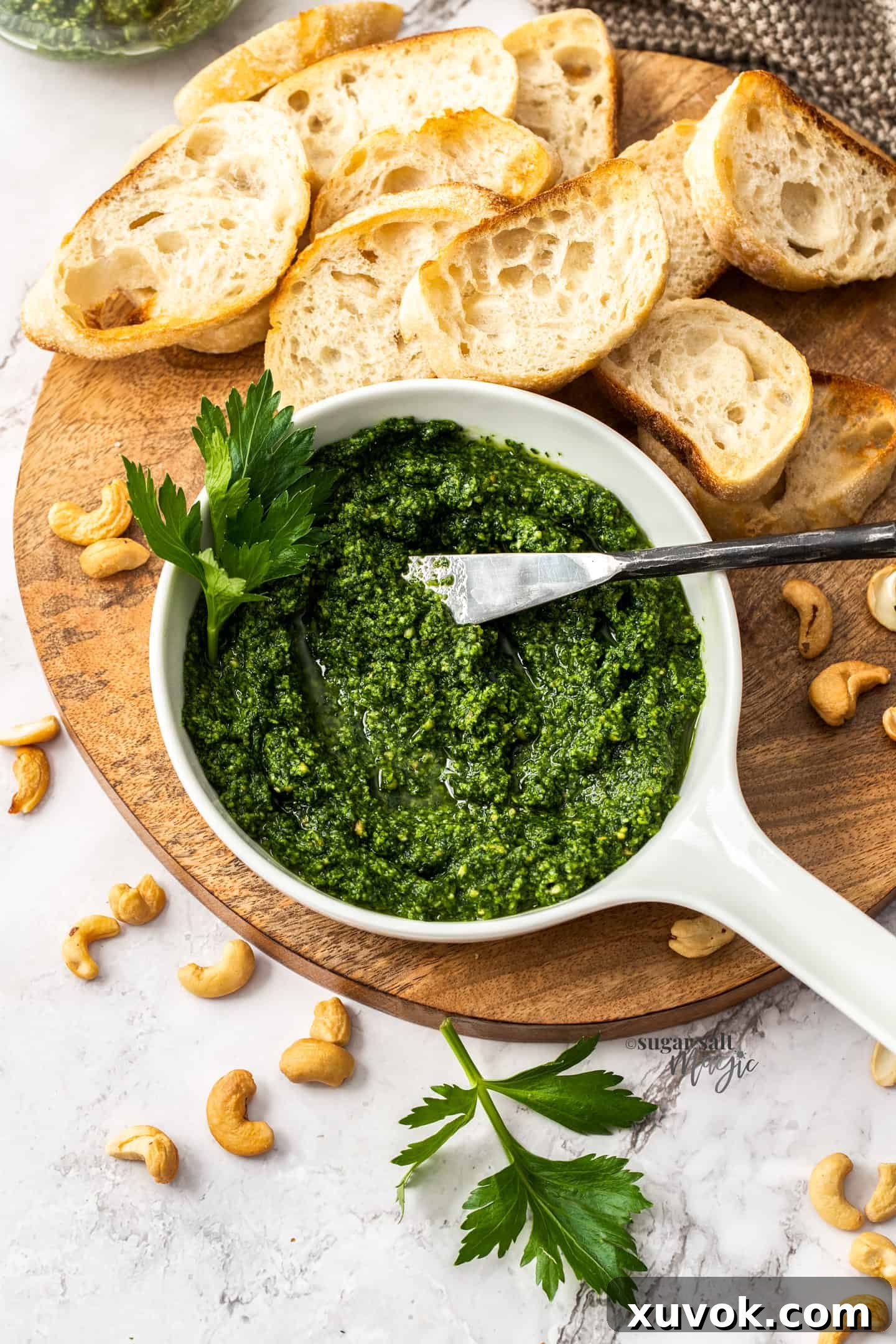
If you give this celery leaf pesto a try, don’t forget to leave a rating and comment below to share your experience. Your feedback is invaluable and helps others discover this delicious and sustainable recipe!
More Flavorful Recipes You’ll Love
If you’ve enjoyed exploring the world of pestos and resourceful cooking, you might be interested in these other fantastic recipes:
- Homemade Basil Pesto (Genovese Pesto): The classic for a reason!
- Mojo Verde (Spanish Green Sauce): A vibrant, herbaceous sauce from the Canary Islands.
- Pesto Chicken Calzone: A delicious way to incorporate pesto into a hearty meal.
- Chicken Basil Pesto Pasta: A comforting and quick weeknight dinner.
- Celery Pesto Rigatoni: Another fantastic way to use this very pesto!
Celery Leaf Pesto
Yield: 8 serves
Prep Time: 10 minutes
Cook Time: 0 minutes
Total Time: 10 minutes
With this celery leaf pesto, there’s no need to throw away those celery tops anymore. This 6 ingredient, 5 minute, flavorful pesto is perfect for everything from spreading on pizza bases to mixing through pasta.
Pin Recipe
Ingredients
- 4 cups lightly packed fresh celery leaves (approximately 52g) (see notes)
- 2 cloves garlic, peeled
- ½ cup finely grated Parmesan (approximately 35g)
- ¼ cup toasted unsalted cashews
- 2 teaspoons fresh lemon juice
- ⅓ cup light extra virgin olive oil
For best results, always weigh ingredients where a weight is provided.
Instructions
- Wash and thoroughly dry celery leaves.
- Add celery leaves, garlic, Parmesan, toasted cashews, and lemon juice to the bowl of a food processor and blend on low until finely chopped.
- With the processor still on low, slowly drizzle in the olive oil in a steady stream until well combined and smooth.
- If not using immediately, store in the fridge in a preserve jar with a thin layer of olive oil on top for up to 4-5 days.
Notes
- Celery Leaf Packing: Do not pack the celery leaves too tightly into your measuring cup, as this can result in a pesto that is too bitter. Aim for a light, airy pack. A large bunch of celery typically yields about 7-8 cups of lightly packed leaves.
- Toasting Cashews: If you cannot find pre-toasted cashews, you can easily toast them yourself:
- In a dry pan over medium heat, toss frequently until they begin to turn golden (watch closely to prevent burning).
- Alternatively, in an oven preheated to 180°C (350°F), spread them on a baking tray and bake for 10-15 minutes, stirring every 5 minutes.
- Other Nut Options: While cashews are recommended for their creamy sweetness, almonds or macadamias can also be used. Due to the inherent slight bitterness of celery leaves, it’s best to stick to these creamier, sweeter nuts.
DISCOVER MORE SAUCES AND CONDIMENTS!
Calories: 144 kcal
Author: Marie Roffey
Course: Accompaniment, Snack
Cuisine: Italian, World
Have you tried this recipe?
Don’t forget to leave a rating and comment below and let me know how it was! I love hearing from you. Nutrition information is approximate and derived from an online calculator. The brands you use may cause variations.