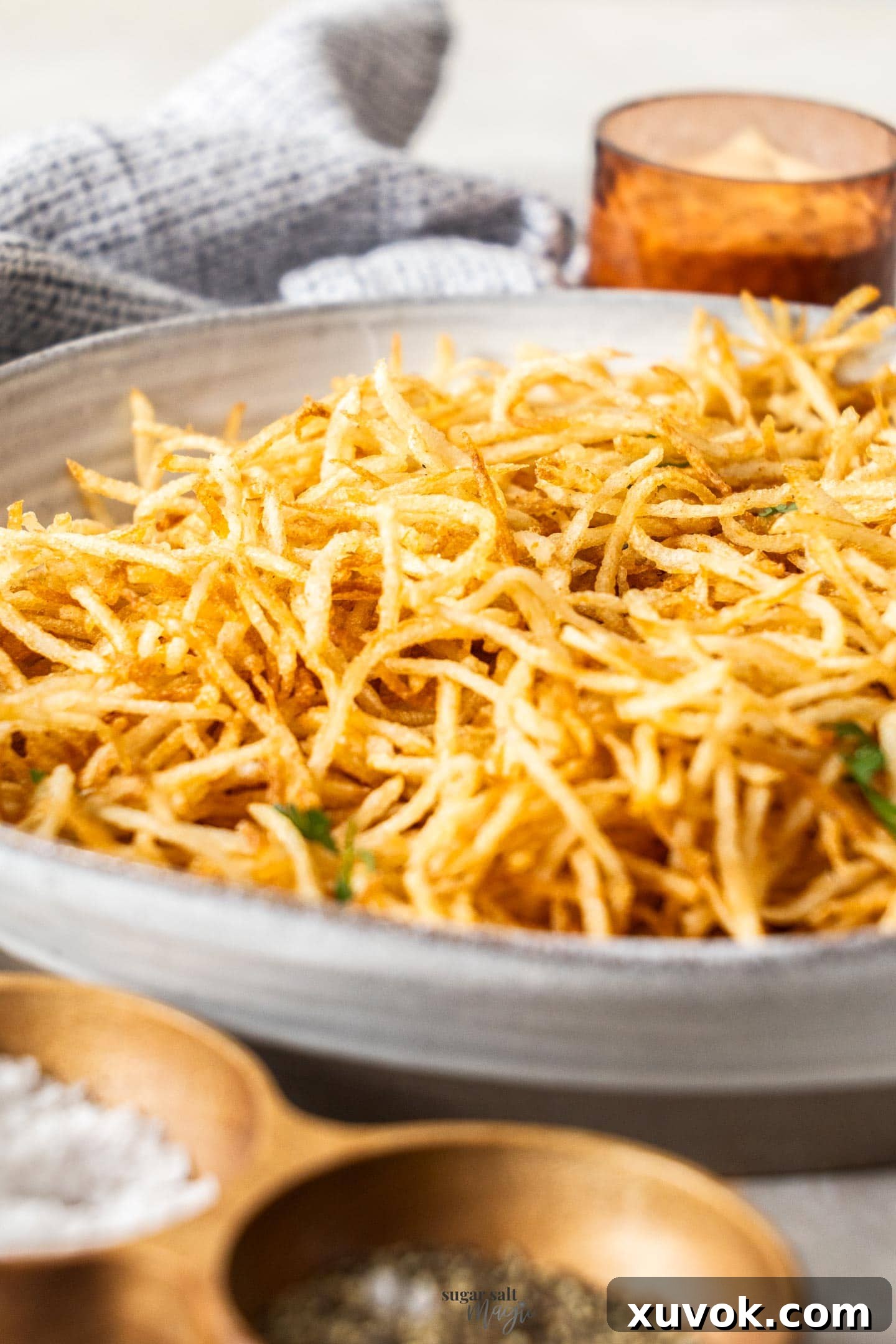
Mastering Homemade Shoestring Fries: Your Guide to Perfect Crispiness
There’s something uniquely satisfying about perfectly seasoned, deep-fried, and incredibly crispy shoestring fries. They’re a timeless classic, often reserved for restaurant visits, but what if you could recreate that irresistible magic right in your own kitchen? This comprehensive guide will show you exactly how to achieve golden, crunchy shoestring fries that rival your favorite diner’s, complete with a tender, fluffy potato interior.
These slender, salty potato strands are, of course, the ultimate companion for a juicy burger. But their versatility extends far beyond – imagine them alongside succulent chicken wings, a perfectly seared steak (hello, steak frites!), or even as a delightful standalone snack with your favorite dipping sauce. Once you master this recipe, you’ll find countless excuses to make them!
Why You’ll Fall in Love with These Homemade Shoestring Fries
What makes these shoestring fries truly stand out? It’s their unparalleled crispiness that lasts, not just for a moment, but long after they emerge from the fryer. Unlike many attempts that result in burnt, bitter, or overly crunchy fries devoid of any potato essence, our method guarantees a delightful balance: a supremely golden and crisp exterior housing a delicate ribbon of fluffy, tender potato within. This harmony gives you the best of both worlds – the satisfying crunch you crave, coupled with a hint of comforting tenderness.
The secret lies in a two-fold approach that might sound a little extra, but is surprisingly straightforward and absolutely worth the effort. First, we blanch the finely cut potato strings in hot water. This crucial step helps to wash away excess starch and surface sugars, which are often culprits for soggy or quickly burning fries. By removing these, we pave the way for a cleaner, more consistent crisp. Secondly, we employ a “twice-fried” technique. The initial fry is a gentle cooking process, primarily focused on evaporating internal moisture and softening the potato. The second, shorter, and hotter fry is where the magic truly happens, transforming those softened potatoes into the glorious, golden-brown crispy perfection you dream of. This double-frying ensures your fries stay crisp much longer than single-fried versions, making them ideal for sharing (if you can resist eating them all yourself!).
While I’ll be honest – deep-frying at home isn’t my everyday go-to due to the potential for mess and dealing with very hot oil – the reward of these exquisite shoestring fries makes it an occasional, worthwhile endeavor. Your kitchen might smell faintly of delicious fried potatoes afterward, and you’ll definitely go through a fair amount of paper towel, but for a treat this good, it’s a small price to pay. Please, always prioritize safety and carefully read our deep-frying precautions before you begin.
If you’re a fan of comforting potato sides, you’ll also adore our sheet pan hash browns for a breakfast treat, or for a completely different potato experience, try these hearty potato wedges with rosemary.
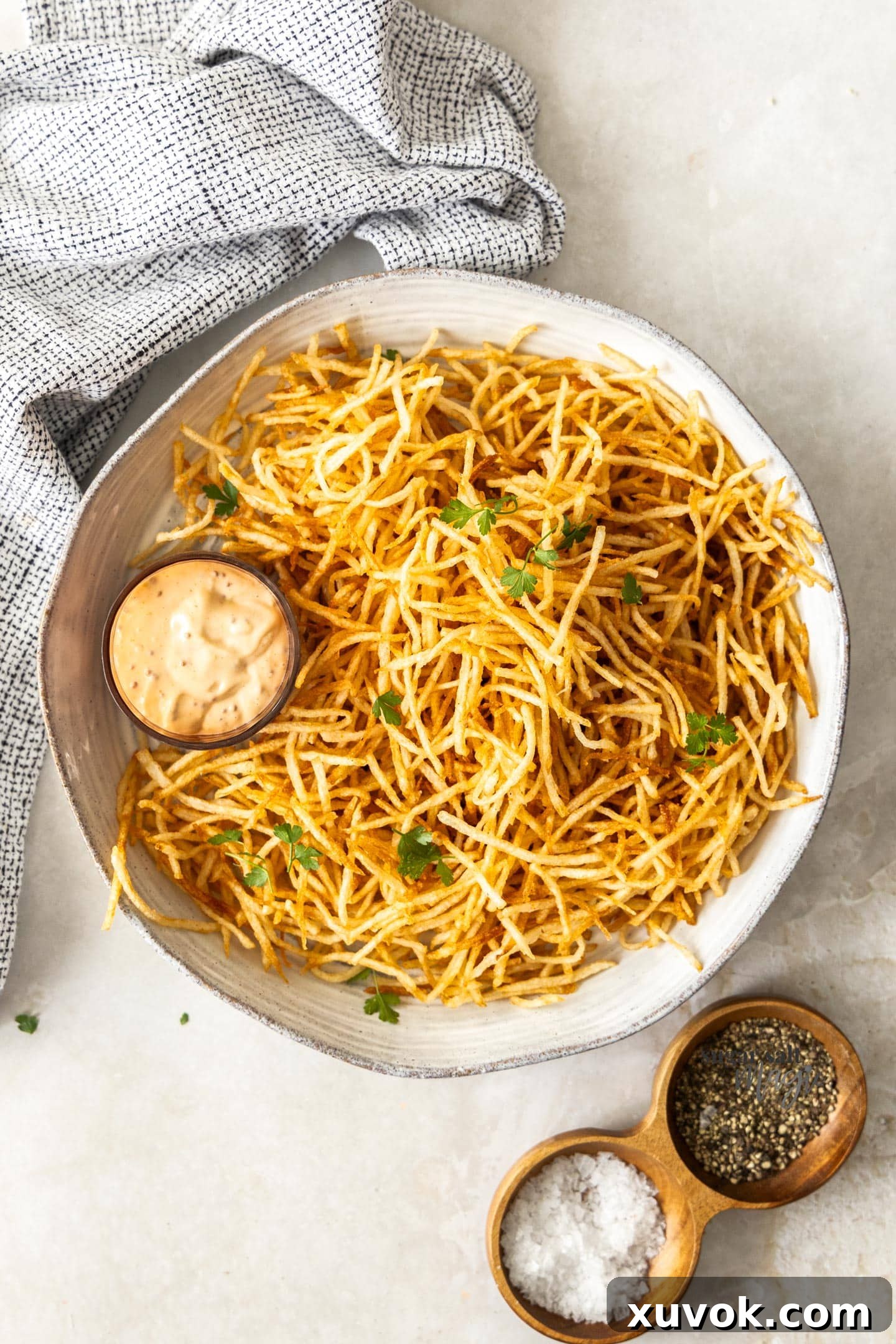
Table of Contents
- Why You’ll Fall in Love with These Homemade Shoestring Fries
- What Exactly Are Shoestring Fries?
- READ THIS FIRST! Essential Deep Frying Safety Tips
- Ingredients You’ll Need for Shoestring Fry Perfection
- How to Make Shoestring Fries: A Step-by-Step Guide
- Step 1: Precision Potato Cutting
- Step 2: The Crucial Blanching Process
- Step 3: The Initial Moisture-Removing Fry
- Step 4: The Final Crisping Fry
- Serving Suggestions: What Pairs Best with Shoestring Fries
- Storage & Reheating Tips
- Frequently Asked Questions (FAQs) About Shoestring Fries
- More Delicious Potato Recipes You’ll Love
Never Miss a Recipe!
Get the latest recipes straight to your inbox by subscribing to our newsletter!
Forget those disappointing shoestring fries that are overcooked, bordering on burnt, and offer only a bitter crunch with no hint of soft potato left. These homemade fries are a game-changer. They achieve a beautiful golden hue and an undeniable crispness, yet they retain the slightest ribbon of fluffy potato at their core. This delicate interior contrasts perfectly with the crunchy shell, offering a satisfying texture that is simply addictive.
With this recipe, you are in complete control. I’ll provide all the essential tips and tricks to guide you towards my definition of shoestring fry perfection. However, if your ideal fry leans towards the super-crunchy texture of a snack-shelf packet, simply extend the frying time a little longer. It’s all about tailoring them to your personal preference!
What Exactly Are Shoestring Fries?
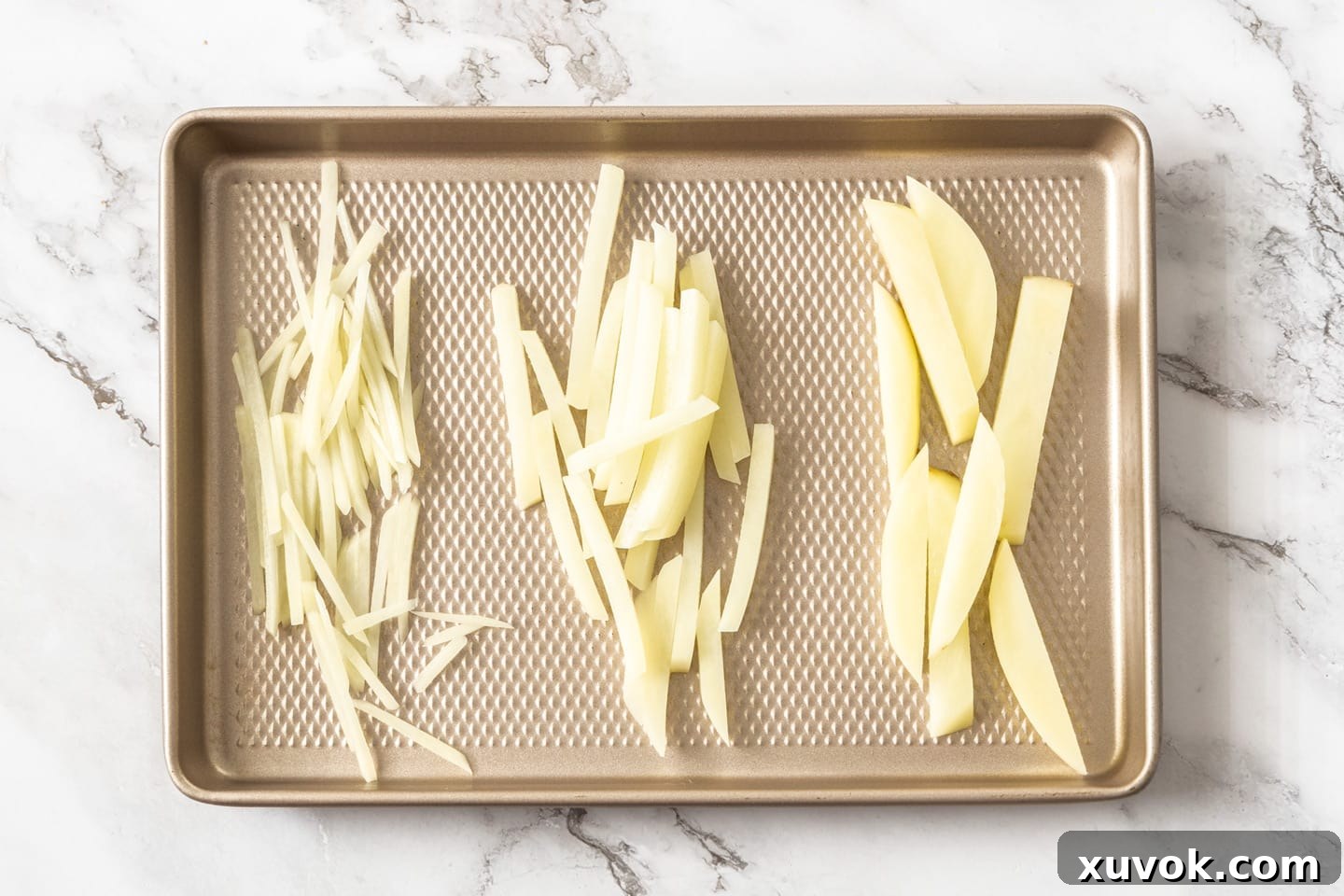
In the vast world of fried potato delights – from chunky chips to hearty wedges and various styles of fries – the defining characteristic of shoestring fries is their distinctively slender cut. While wedges and chips (as seen above, right) are easily recognizable by their larger dimensions, the realm of “fries” is all about precision in size and thickness.
Standard French fries (above, middle) are considerably thicker than their shoestring counterparts (above, left), typically measuring around 5mm (or ⅕ inch) in thickness. Shoestring fries, on the other hand, boast a delicate thickness of only about 3mm (or ⅛ inch). This ultra-thin cut is technically known as a julienne. While it’s certainly possible to achieve this precise cut by hand with a very sharp knife and a steady hand, a mandoline slicer is an absolute game-changer here. A mandoline can effortlessly slice an entire batch of potatoes into uniform shoestring strands in mere minutes, ensuring consistency in cooking and presentation. For safety, always use the food guard when operating a mandoline.
Due to their slender profile, shoestring fries are also commonly known by other names such as matchstick fries or matchstick potatoes, aptly describing their resemblance to tiny wooden matchsticks.
READ THIS FIRST! Essential Deep Frying Safety Tips
Deep frying can be one of the most rewarding cooking methods for achieving incredible textures, but it absolutely requires respect and careful adherence to safety protocols. We’re dealing with oil at extremely high temperatures, and preventing accidents is paramount. Molten hot oil can cause severe burns upon skin contact and poses a significant fire risk if it comes into contact with an open flame or overheats. To ensure your homemade shoestring fry experience is both delicious and safe, please review these essential deep-frying guidelines:
- Choose the Right Pot: Always use a large, deep pot or a Dutch oven for deep frying. The depth is crucial to contain any bubbling or splattering oil, significantly reducing the risk of boil-overs. Never fill the pot more than one-third of the way with oil to leave ample room for expansion when food is added.
- Monitor Oil Temperature: An accurate deep-frying thermometer is your best friend. Maintaining the correct oil temperature is vital for crispiness and preventing soggy or burnt fries. Overheated oil can ignite, while oil that’s too cool will lead to greasy results.
- Watch for Smoke: If you see the oil begin to smoke, it’s a clear sign it’s too hot and approaching its smoke point. Immediately remove the pot from the heat and allow it to cool down before proceeding. Never pour water on an oil fire.
- Use Proper Tools: Invest in a large wire skimmer or spider strainer. This tool is invaluable for carefully lowering ingredients into the hot oil and safely removing them. Its long handle keeps your hands a safe distance from the heat.
- Fry in Small Batches: When frying shoestring fries, never overcrowd the pot. Add no more than a quarter of the potato strings at a time. The natural moisture in the potatoes will cause the hot oil to bubble up. Frying in small batches helps maintain a consistent oil temperature, prevents excessive bubbling, and ensures each fry cooks evenly and crisps properly.
- Stay Attentive: Deep frying demands your full attention. Do not walk away from the pot of hot oil, even for a moment. Accidents can happen quickly.
These guidelines are straightforward, but their importance cannot be overstated. With a little preparation and vigilance, deep frying at home can be a simple and highly rewarding cooking method.
Ingredients You’ll Need for Shoestring Fry Perfection
Crafting the perfect shoestring fries requires just a few key ingredients. The quality of each component, particularly your choice of potato, plays a significant role in the final texture and flavor. For the complete list of ingredients and detailed instructions, scroll down to the full recipe card below.
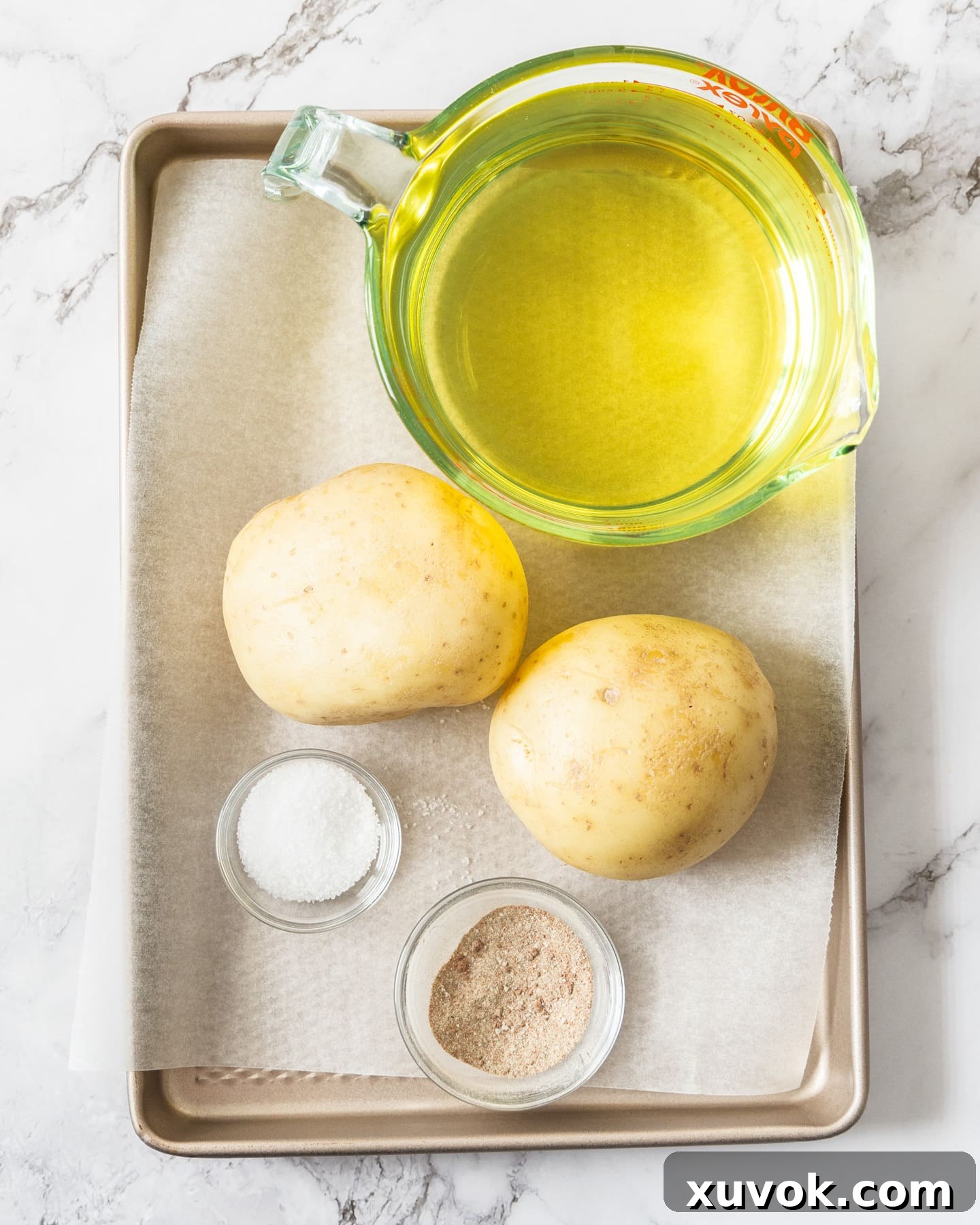
- Potatoes: The foundation of any great fry! For shoestring fries, you’ll want to opt for starchy or floury potato varieties. These types have a lower moisture content and a higher starch level, which is crucial for achieving that desirable fluffy interior once cooked, while the hot oil takes care of the crisp exterior. Avoid waxy potatoes, which tend to hold their shape too much and don’t yield the same tender texture. Here are some excellent choices, depending on what’s available in your region:
- Russet potatoes: A classic choice for French fries, known for their high starch content and fluffy texture.
- King Edward potatoes: Popular in the UK, these are floury and produce excellent crispy fries.
- Yukon Gold potatoes: A versatile all-rounder that offers a lovely golden color and creamy interior.
- Sebago potatoes: A common all-purpose potato, great for frying due to its balanced starchiness.
- Coliban potatoes: Another good all-rounder, similar to Sebago, that performs well when fried.
- Desiree potatoes: A red-skinned, slightly waxy but floury potato that yields good results.
- Maris Piper potatoes: A popular British variety, highly favored for its frying qualities.
- Vegetable Oil for Deep Frying: Choosing the right oil is essential for a neutral flavor and a high smoke point, allowing it to reach the necessary frying temperatures without burning. I typically use canola oil, but other excellent choices include peanut oil, sunflower oil, or corn oil. Ensure you have enough oil to fill your pot to about one-third of its capacity.
- Fries Seasoning: While a simple sprinkle of fine sea salt is always delicious, my favorite seasoning blend elevates these fries to another level. It’s a balanced mix that enhances the potato flavor without overpowering it:
- Fine sea salt: Essential for bringing out the potato’s natural flavor and creating that addictive salty crunch.
- Ground white or black pepper: Adds a subtle warmth and aromatic depth.
- Onion powder: Contributes a savory, umami note that’s incredibly complementary to potatoes.
- Paprika: Provides a touch of color and a mild, sweet peppery flavor.
This blend is a fantastic starting point, but feel free to customize it to your taste!
How to Make Shoestring Fries: A Step-by-Step Guide
Making truly exceptional shoestring fries at home is an achievable feat with a bit of patience and attention to detail. Follow these steps for golden, crispy results every time. For the full list of ingredients and detailed instructions, refer to the recipe card below.
Step 1: Precision Potato Cutting
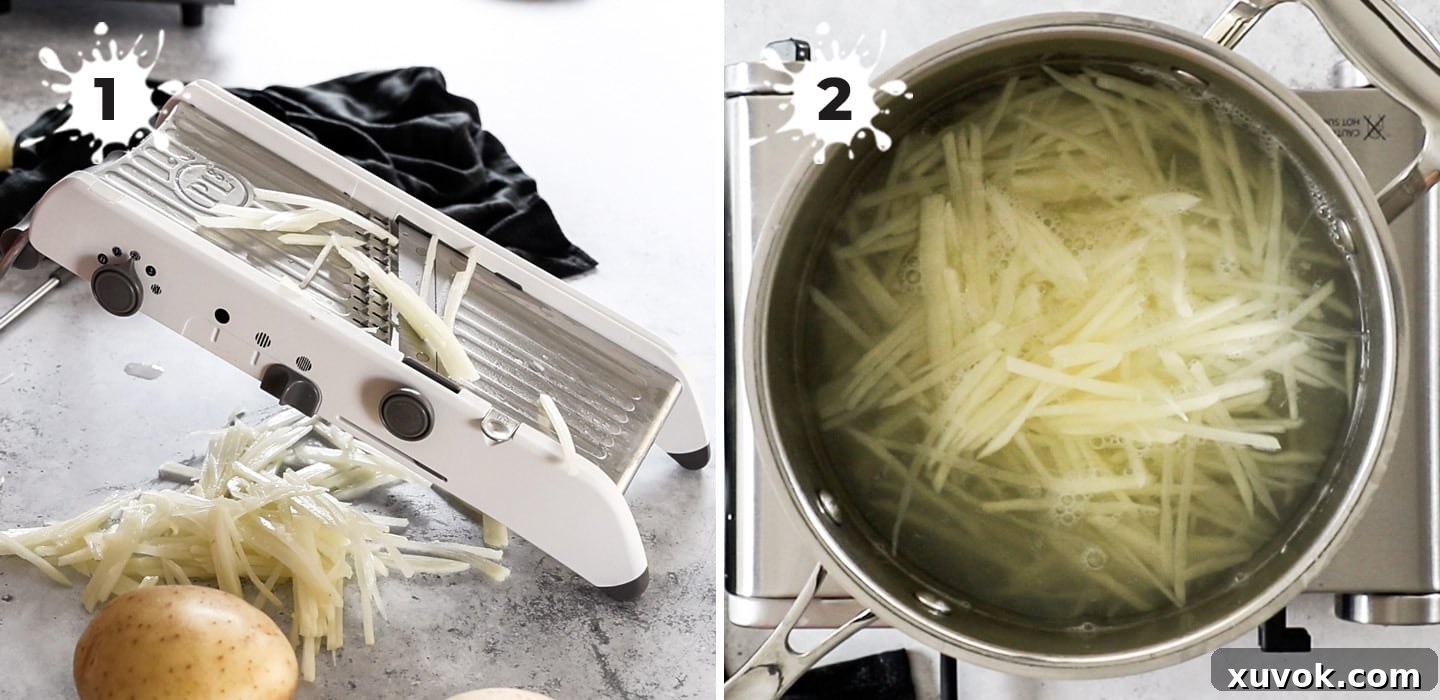
- Before we can begin the cooking process, the potatoes must be transformed into their characteristic shoestring shape. The goal is to achieve an even thickness of approximately 3mm (or ⅛ inch) across all strands. This uniformity is crucial for consistent cooking, ensuring every fry crisps up perfectly. While a sharp chef’s knife and a sturdy chopping board can work for experienced cooks, a mandoline food slicer (photo 1) is highly recommended for speed, precision, and perfect consistency. If using a mandoline, always employ the food guard and exercise extreme caution to keep your hands safely away from the razor-sharp blade.
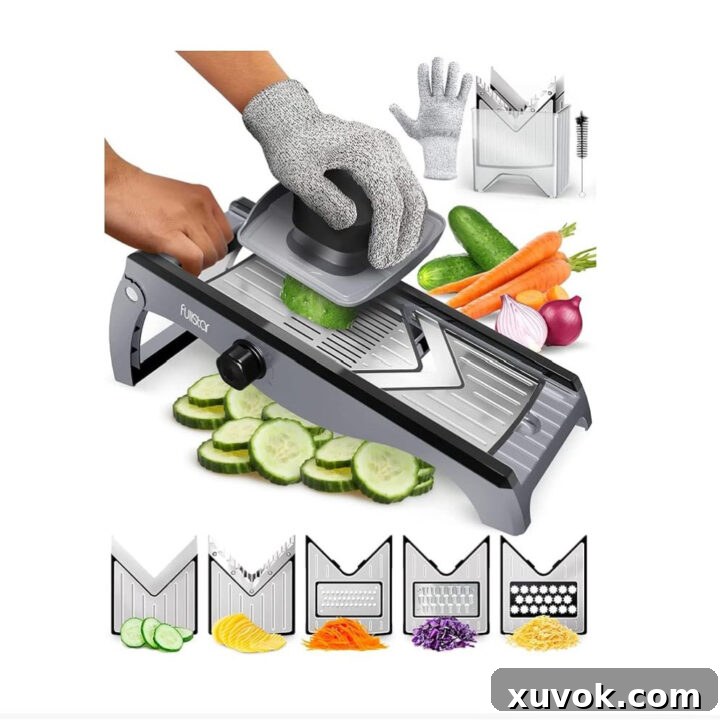
A mandoline slicer is an indispensable tool for achieving uniformly sized slices and julienned vegetables, making it perfect for shoestring fries. Look for one with a good thin julienne setting and multiple blade options for versatility. Remember, mandoline blades are incredibly sharp, so always exercise extreme caution, use the food guard, and handle with care during use and cleaning.
Step 2: The Crucial Blanching Process
Blanching, or par-cooking, the potatoes before their first fry is a critical step that cannot be skipped. This process helps to extract excess starch from the exterior of the potato strands. By removing this starch, we prevent the fries from becoming gummy, sticking together, or burning too quickly, allowing the oil to penetrate more effectively and achieve that incredibly crispy texture.
- Fill a large pot with water and add a generous pinch of salt. Bring the water just to the brink of a boil – you should see a few small bubbles beginning to form at the bottom and sides of the pot, but avoid a rolling boil.
- As soon as the first bubbles appear, turn off the heat completely. Carefully add the julienned potatoes to the hot water (photo 2). Cover the pot with a lid or a large plate and let the potatoes steep in the hot water for exactly 10 minutes. This gentle heat helps to soften them slightly and release the starch.
- After 10 minutes, immediately drain the blanched potatoes through a colander. Rinse them briefly but thoroughly with cold water to halt the cooking process and wash away any remaining surface starch. Once rinsed, transfer the potato strands to a clean, dry tea towel (photo 3, below), spreading them out in a single layer. Pat them very gently but firmly with another clean tea towel or several sheets of paper towel to absorb as much moisture as possible. It is absolutely crucial that the potatoes are as dry as they can be before frying. Finally, let them cool completely to room temperature. This drying and cooling step can be done well in advance, giving you more flexibility.
Step 3: The Initial Moisture-Removing Fry
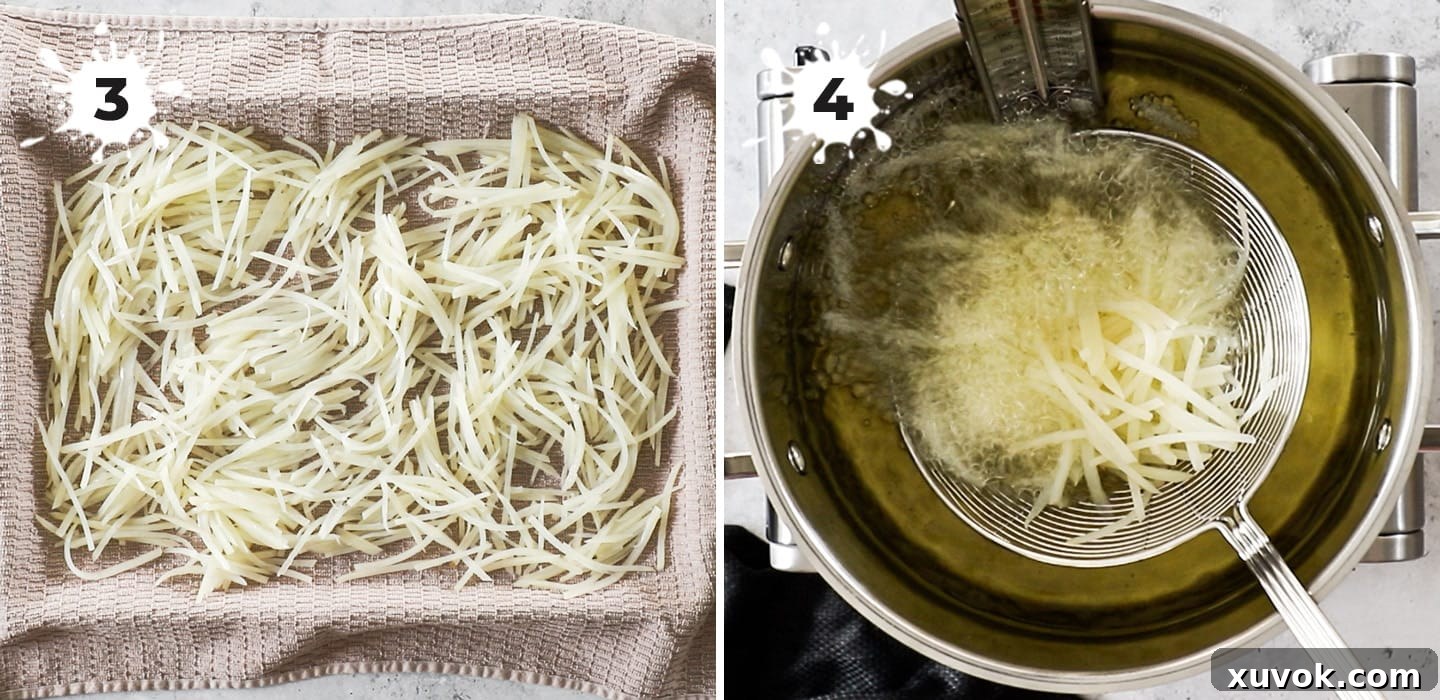
- In your large, deep saucepan or Dutch oven (remember the ⅓ fill rule!), pour in enough vegetable oil. Attach your deep-frying thermometer and bring the oil temperature up to 170°C (340°F) over medium-high heat. Maintaining this temperature is key for the first fry.
- Prepare to fry in small batches. Take no more than a quarter of the thoroughly dried, blanched potato strings and place them onto a large slotted spoon or wire skimmer. Very gently and slowly lower the skimmer with the potatoes into the hot oil, holding it there for a few seconds (photo 4). This allows you to gauge how much the oil will bubble up due to the potatoes’ inherent moisture (even after drying, potatoes contain a lot of water!). Once you’re confident the oil won’t overflow, carefully slide the potato strings off the skimmer into the oil. Use a fork to gently separate any strands that may stick together.
- Fry this first batch for a brief 1 minute. The primary goal of this first fry is not to brown them, but to cook the potato through and further reduce its moisture content. They should remain pale, with perhaps only a couple of strands showing the barest hint of a golden hue. Over-browning at this stage will lead to overcooked fries later.
- Using your skimmer, promptly transfer the lightly fried potatoes to a baking sheet generously lined with paper towel to absorb excess oil. Keep each batch separate on the baking sheet to help you remember the order for the second fry.
- Allow the oil to return to 170°C (340°F) before adding the next batch of potatoes. If the oil becomes too hot, briefly remove it from the heat or add a tiny amount of room-temperature oil to help cool it down. Repeat the process for the remaining batches.
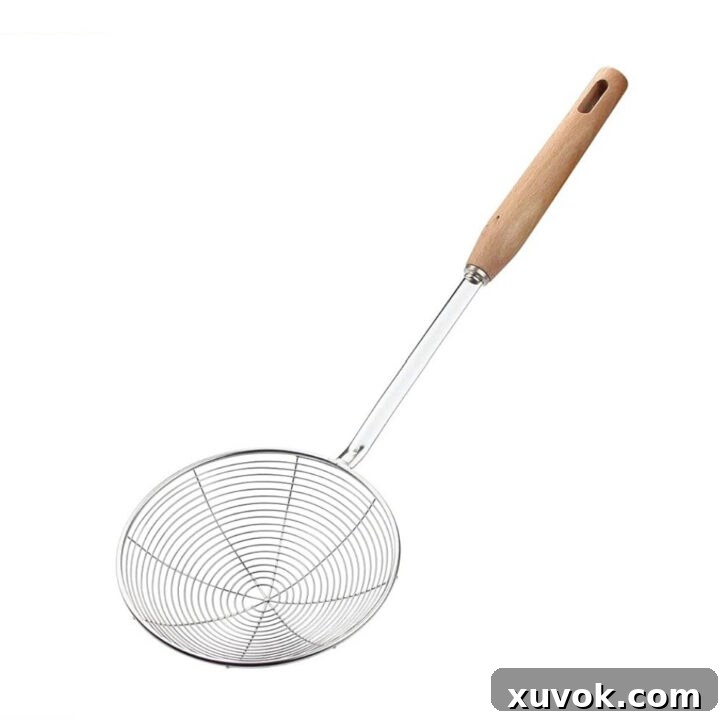
A large wire skimmer (also commonly referred to as a spider strainer) is an essential tool for deep frying. Its generous size and sturdy construction make it perfect for both gently introducing fries into the hot oil and efficiently lifting them out once cooked. Be sure to select a skimmer that is appropriately sized for your saucepan to ensure ease of use and maximum safety.
Step 4: The Final Crisping Fry
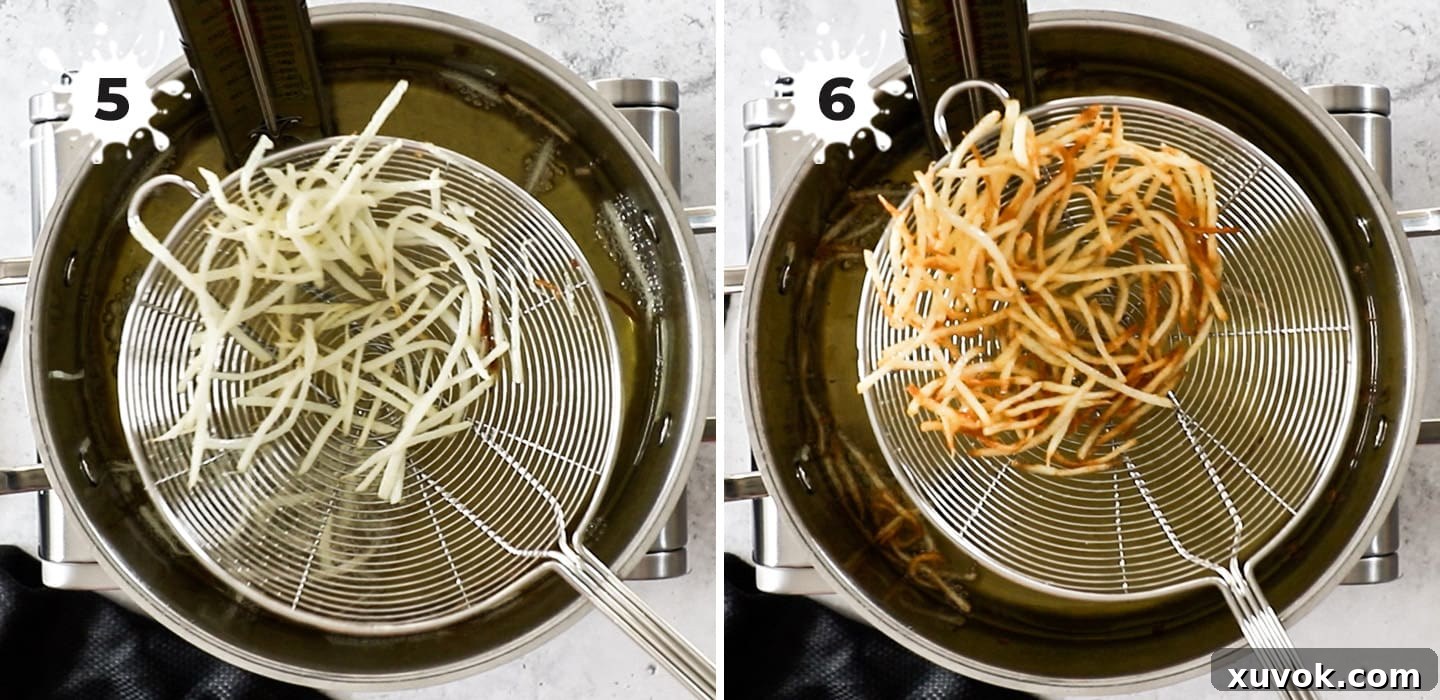
- Now for the exciting part – achieving that ultimate crisp! Reheat your oil once more to 170°C (340°F). Starting with the first batch of fries you initially fried, gently lower them back into the hot oil (photo 5). This second fry is much quicker. Cook them for approximately 30 seconds, or until you observe them deepening slightly in golden color and becoming visibly crispier (photo 6). You’re aiming for a beautiful mix of golden and light blonde hues, not a uniform dark brown, which would indicate over-frying.
- As each batch finishes, transfer the golden, crispy fries to a clean roasting pan that has been lined with fresh paper towel and kept warm in a low oven (around 70°C/160°F). This helps to keep them hot and allows any remaining excess oil to drain off while you finish frying the other batches.
- Once all batches are perfectly fried, remove the paper towel from the roasting pan. Immediately scatter your chosen seasoning blend evenly over the hot fries. Toss them gently to ensure every delicate strand is thoroughly coated. Alternatively, you can transfer them to a large bowl and toss.
Serve your irresistible homemade shoestring fries immediately to enjoy them at their absolute best!
Serving Suggestions: What Pairs Best with Shoestring Fries
While shoestring fries are a star on their own, their potential for flavor customization and versatile pairings is immense. Here are some ideas to elevate your serving experience:
- For Seasoning: Beyond our recommended blend, there’s a world of flavor to explore. Sprinkle generously over your hot fries:
- Gourmet Herb & Cheese: Finely chopped fresh rosemary, a dash of garlic powder, and a generous grating of Parmesan cheese for an aromatic, savory twist.
- Spicy Southwest: A vibrant dusting of fajita seasoning for smoky, zesty notes.
- Bold Louisiana Kick: A generous sprinkle of Cajun seasoning for a spicy, earthy punch.
- Other ideas: Truffle salt, smoked paprika, chili lime seasoning, or a simple blend of garlic salt and black pepper.
- For Dipping: The right dipping sauce can transform your fries from great to extraordinary. While classic ketchup or creamy mayonnaise are always winners, consider these fancier options:
- Sweet & Tangy: A homemade honey mustard sauce or a zesty aioli.
- Korean-Inspired Heat: A delectable gochujang mayo for a spicy, savory, and slightly sweet kick.
- Spicy & Creamy: A vibrant jalapeño mayo for a fresh, fiery burst.
- Herby & Cool: A refreshing homemade ranch dip, perfect for balancing rich flavors.
- Classic Garlic: A simple garlic aioli or a roasted garlic dip.
- Meal Pairings:
- Burgers & Sandwiches: The quintessential pairing! Any classic or gourmet burger, hot dogs, or a hearty deli sandwich.
- Steak Frites: A perfectly cooked steak with a generous pile of shoestring fries and a rich pan sauce.
- Seafood: Crispy fish fillets, shrimp po’boys, or alongside crab cakes.
- Poultry: Fried chicken, chicken tenders, or a simple grilled chicken breast.
- Brunch: A surprising but delightful addition to omelets or scrambled eggs.
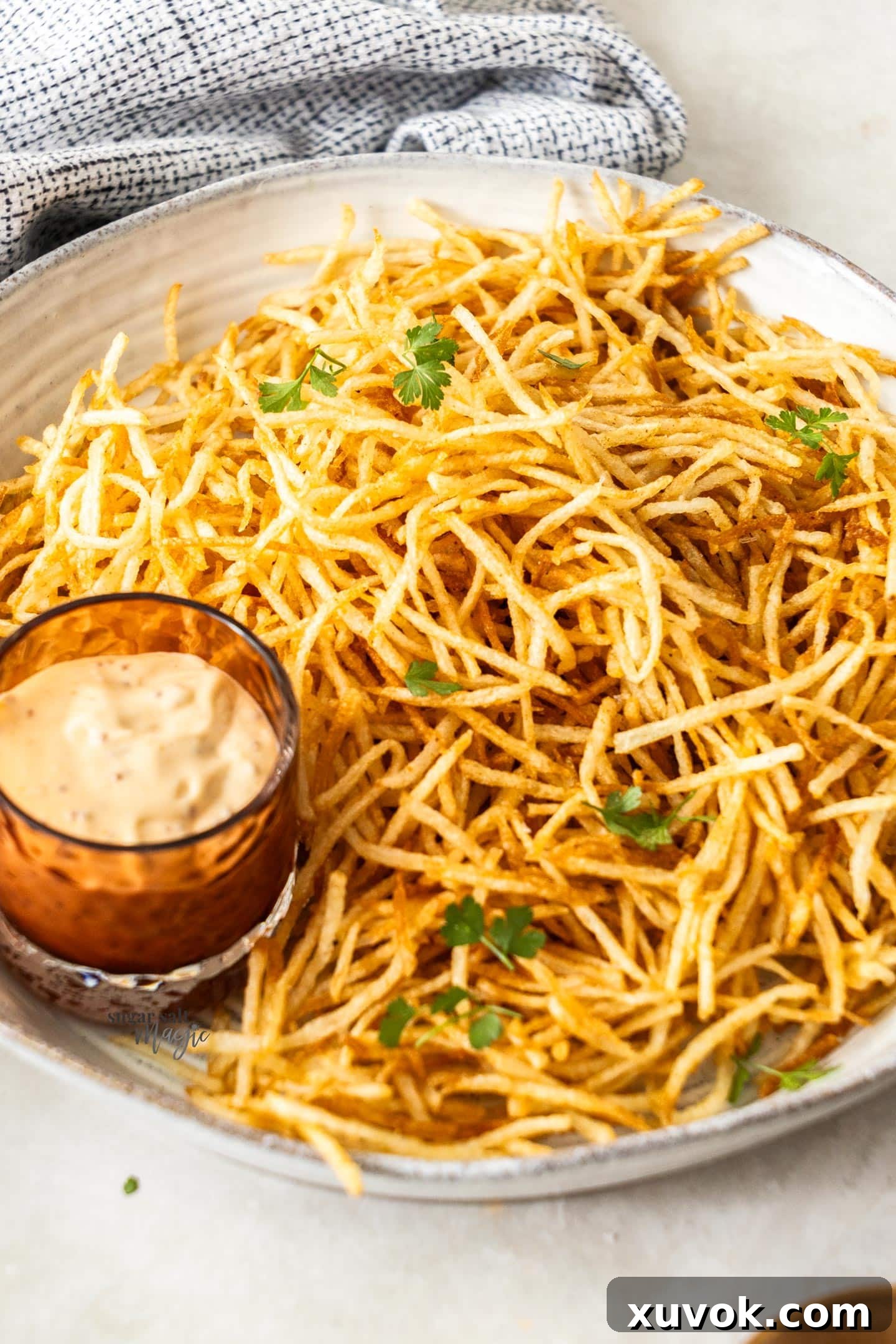
Storage & Reheating Tips
While shoestring fries are undoubtedly at their peak fresh from the fryer, sometimes you might have a few leftovers or want to prepare ahead. Here’s how to handle them:
Storage: Leftover cooked shoestring fries should be stored in an airtight container in the refrigerator for 1-2 days. Be aware that they will lose most of their crispiness once cooled and refrigerated, but can still be revived.
Reheating: To bring some of that crispiness back, avoid the microwave, which will only make them soggy. Instead, reheat them:
- In the oven: Spread them in a single layer on a baking sheet and bake at 200°C (400°F) for 5-10 minutes, or until hot and re-crisped.
- In an air fryer: This is often the best method! Arrange them in a single layer in your air fryer basket and cook at 190°C (375°F) for 3-5 minutes, shaking halfway through, until they are hot and crispy again.
- On the stovetop: A quick pan-fry in a little oil can also work to re-crisp them, but watch carefully to prevent burning.
Freezing Ahead (Blanched Potatoes): For convenience, you can prepare the julienned and blanched potatoes in advance. After blanching, rinsing, and thoroughly drying them, spread them in a single layer on a baking sheet and freeze until solid. Once frozen, transfer them to an airtight freezer bag for up to 3 months. When ready to fry, thaw them completely, blot again with paper towel to remove any surface moisture, and then proceed with the double-frying steps as usual.
Frequently Asked Questions (FAQs) About Shoestring Fries
Absolutely! While deep-frying offers the ultimate texture, air-fried shoestring fries are a fantastic, lighter alternative. For best results, ensure the potatoes are well-dried after blanching and lightly mist them with oil before air frying. You’ll likely need to work in batches to avoid overcrowding the basket. Air fry at 200°C (400°F) for approximately 8-12 minutes, shaking the basket vigorously every 4 minutes until they reach your desired crispiness. The exact time may vary by air fryer model.
The primary difference lies in their thickness. Shoestring fries are considerably thinner, typically around 3mm (⅛ inch) thick, providing a higher crisp-to-fluffy potato ratio. Standard French fries are almost twice as thick, usually around 5mm (⅕ inch), offering a more substantial, fluffy interior.
Shoestring French fries are also commonly known as skinny fries, matchstick fries, or matchstick potatoes, all referring to their distinctive thin, slender cut.
No, McDonald’s serves classic French fries, which are thicker than shoestring fries. While their fries are slender, they don’t quite meet the ultra-thin definition of shoestring potatoes.
This is purely a matter of personal preference! Shoestring fries are celebrated for their heightened crispiness and delicate texture, offering more surface area for seasoning. French fries, with their thicker cut, tend to be fluffier on the inside. If you prioritize crunch and a lighter mouthfeel, shoestring fries might be “better” for you. If you prefer a more potato-forward, soft interior, then French fries might be your favorite.
Yes, absolutely! You can cut, blanch, rinse, and thoroughly dry the potato strings several hours in advance, or even the day before. Once dried, store them uncovered in the refrigerator on a baking sheet lined with paper towels to ensure they remain as dry as possible. This step is crucial for crispy fries and makes the frying process much quicker when you’re ready to cook.
For both the first and second fry, maintaining an oil temperature of 170°C (340°F) is ideal. A thermometer is indispensable for accuracy. Too low a temperature will result in greasy, soggy fries, while too high will cause them to burn quickly on the outside before the inside is properly cooked.
More Delicious Potato Recipes You’ll Love
If you love potatoes as much as we do, explore these other fantastic recipes:
- Crispy Potato Fritters
- Easy Sheet Pan Hash Browns
- Creamy Cheesy Mashed Potatoes
- Garlic Parmesan Roasted Potatoes
- How to Make Perfect Roast Potatoes
- Flavorful Potato Wedges with Rosemary
Did you try this shoestring fries recipe?
We’d love to hear your thoughts! Leaving a rating and comment below the recipe is incredibly helpful and appreciated!
Hungry for more? Subscribe to our newsletter for free recipes delivered straight to your inbox. Also, follow along on Facebook, Pinterest and Instagram for daily inspiration!
Ultimate Homemade Shoestring Fries
Rate
Pin
Ingredients
FOR THE POTATO FRIES
- 2 large potatoes (about 700g / 1 ½lb, starchy varieties like Russet, King Edward, or Yukon Gold recommended)
- 2 teaspoons salt (for blanching water)
- 1 ½ litres vegetable oil (such as canola, peanut, or sunflower oil, ensuring a high smoke point)
THE SHOESTRING FRY SEASONING
- ¾ teaspoon fine sea salt
- ½ teaspoon ground white pepper or black pepper
- ½ teaspoon onion powder
- ¼ teaspoon paprika
For optimal results, always weigh ingredients where a precise weight is provided.
Instructions
-
PREPARE POTATOES: Peel the potatoes and julienne them into very thin “matchsticks” of roughly 3mm (⅛ inch) thick. A kitchen mandoline with a julienne setting is the quickest and most consistent option for this. Always use the safety guard and be extremely careful not to cut your hands.
-
BLANCH THE POTATOES: Fill a large pot with approximately 2 litres (2 quarts) of water and add the 2 teaspoons of salt. Place over high heat and bring the water almost to a boil, until you see the first few small bubbles beginning to appear at the bottom of the pot.
-
As soon as the bubbles form, turn off the heat immediately. Add all the julienned potatoes to the hot water. Cover the pot with a lid or a large plate and let the potatoes sit and par-cook in the hot water for exactly 10 minutes. This helps remove excess starch.
-
DRAIN AND DRY THOROUGHLY: Drain the blanched potatoes using a colander. Rinse them briefly but thoroughly with cold water to stop the cooking and wash away residual starch. Transfer the potatoes to a clean kitchen towel, spreading them in a single layer. Gently pat them very dry on top with another clean kitchen towel or several sheets of paper towel. Let them cool completely to room temperature (about 15-20 minutes). This step is crucial for crispiness; ensure they are as dry as possible.
-
SET UP FOR FRYING: Line a large baking sheet with a thick layer of absorbent paper towel for draining the first fry. Line a second baking sheet with a fresh layer of paper towel and place it into a warm oven (approximately 70°C/160°F) to keep the finished fries warm.
-
Pour the vegetable oil into a Dutch oven or a large, deep saucepan, ensuring it fills no more than one-third of the pot’s capacity. This is critical for safety to prevent oil from boiling over. Attach an oil thermometer to the side of the pot and heat the oil to 170°C (340°F) over high heat.
-
THE FIRST FRY (PAR-COOKING): Before proceeding, please carefully review the safety notes provided in the “Notes” section below. Deep frying requires extra precautions. Grab a large wire skimmer (or a very large slotted spoon) and a fork. Place no more than ¼ of the blanched and dried potato strings onto the skimmer. Gently lower the skimmer into the hot oil. Hold it there for a few seconds to observe how much the oil bubbles up due to the potatoes’ natural moisture. If it appears safe and not too high, gently turn the skimmer to release the potato strings into the oil. Use the fork to carefully separate any strings that may stick together.
-
Fry this first batch of shoestring fries for 1 minute. The potatoes should remain mostly pale, with only a few strands just beginning to show a very faint golden hue. Do not let them get too golden, as they will continue to cook in the second fry. Use your skimmer to scoop them out and transfer them to the first paper towel-lined baking sheet, placing them in a distinct section.
-
Allow the oil temperature to return to 170°C (340°F) before frying the next batch. Repeat this first frying process three more times with the remaining potato strings, keeping each batch separate on the baking sheet.
-
THE SECOND FRY (CRISPING): Once all batches have undergone the first fry, bring the oil temperature back up to 170°C (340°F) again. Add the first portion of previously fried potatoes back into the hot oil. Cook for an additional 30 seconds, or until they turn a slightly deeper golden color and become perfectly crisp. You’re aiming for a beautiful mix of golden and light blonde tones; avoid letting them become uniformly dark brown. Using your skimmer, transfer these crispy fries to the second baking sheet kept warm in the oven. Repeat this process for all remaining batches.
-
SEASON & SERVE: In a small bowl, combine the ingredients for the shoestring fry seasoning. Once all fries are out of the oil and in the warm oven, remove the paper towel from under them. While the fries are still hot, generously sprinkle the seasoning mix over them. Toss gently to ensure every delicate strand is evenly coated. You can also transfer them to a large mixing bowl for easier tossing. Taste and adjust seasoning as needed, adding more salt or pepper. Feel free to experiment with other seasonings like garlic powder, cumin, cayenne powder, celery salt, or ground celery seed.
-
Serve your perfectly crispy, homemade shoestring fries immediately and enjoy!
-
Please take a moment to leave a comment & rating below. Your feedback is greatly appreciated and helpful to others!
Notes
- Tablespoons: Please note that I use a standard Australian 20ml tablespoon in my recipes (which is equivalent to 4 teaspoons). Always check the size of your measuring spoons before you begin to ensure accuracy.
- Choosing the Best Potatoes: For the longest and most appealing shoestring fries, it’s best to use large potatoes. As discussed, starchy or floury varieties are ideal for achieving that coveted fluffy interior. Depending on your geographical location, keep an eye out for these excellent options: Russet potatoes, Yukon Gold potatoes, white all-purpose potatoes (such as Sebago and Coliban), Royal Blue potatoes, Maris Piper potatoes, or King Edward potatoes.
- CRITICAL SAFETY PRECAUTIONS – PLEASE READ CAREFULLY: Through extensive testing, I’ve found that shoestring fries, even after thorough drying with a towel, contain enough natural moisture to cause the hot oil to bubble up quite significantly. Your safety is paramount, so please observe these very important precautions:
- Use a Deep Pot: It is absolutely essential to use a deep pot, such as a sturdy Dutch oven or a very large, deep saucepan. The deeper the pot, the safer it will be, as it provides ample space for the oil to bubble without overflowing.
- Never Overfill: Regardless of the pot you choose, do not fill it more than one-third (⅓) of the way up with oil. This leaves crucial headroom for the oil to expand safely when the potatoes are added.
- Small Batches Only: To prevent dangerous boil-overs and maintain optimal oil temperature, never add more than one-quarter (¼) of the potato strings to the oil at any given time. Frying in small batches is key for both safety and achieving perfectly crispy results.
- Essential Tool – Wire Skimmer: I highly recommend using a large wire skimmer (also known as a spider strainer). Its design is perfect for carefully lowering the fries into the hot oil and efficiently scooping them out quickly, which is important given how rapidly these thin fries cook.
- Test the Waters (Carefully!): When adding a batch, lower the potato strings into the oil on the skimmer and hold it there for a few seconds. This allows you to observe how much the oil is going to rise. Once you can gauge the bubbling and confirm it’s safe, you can then gently release the fries into the oil. Always prioritize a slow, controlled entry.
EXPLORE MORE DELICIOUS SIDE DISHES!
Calories from Fat 63