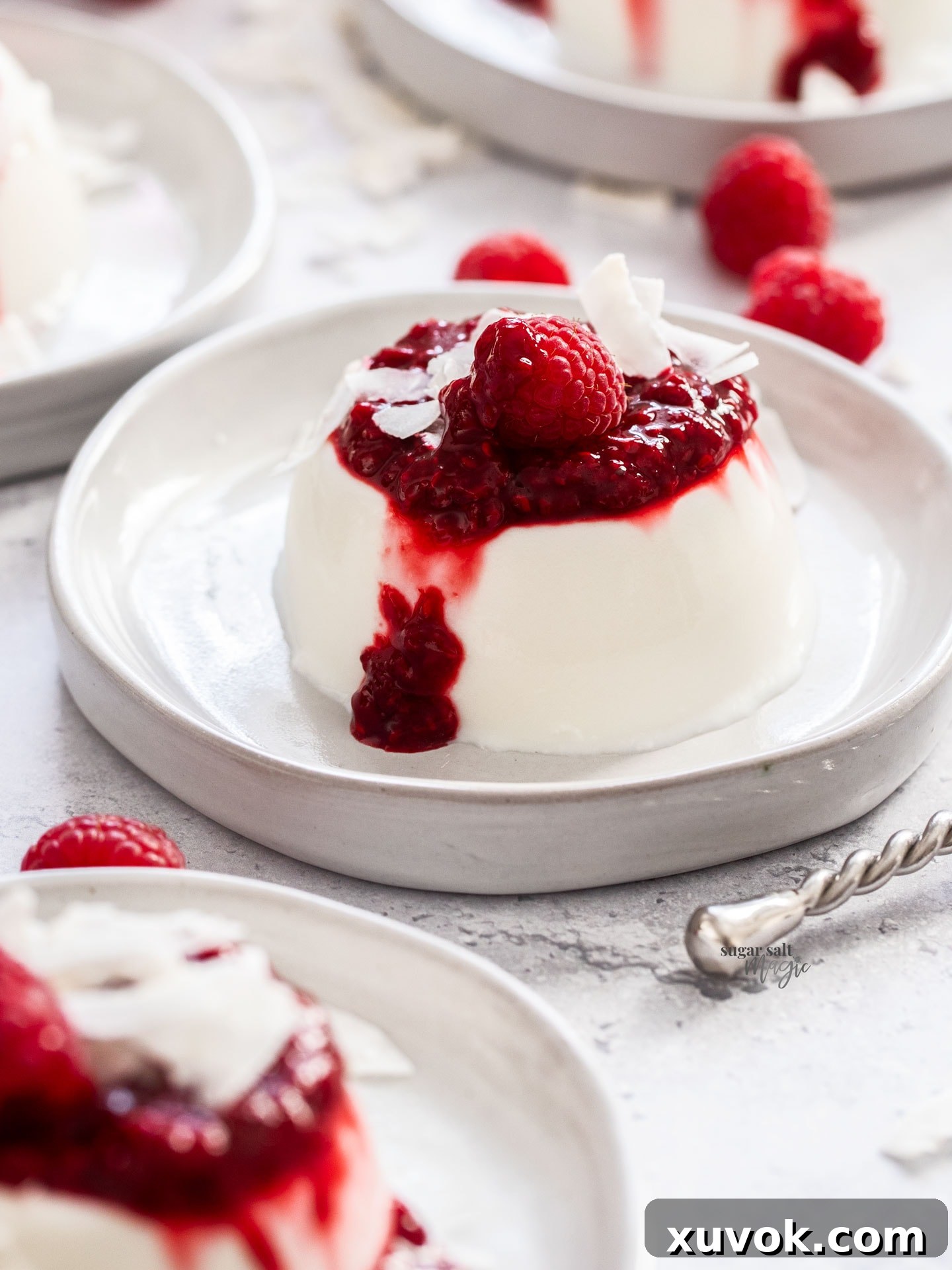
Exquisite Coconut Panna Cotta with Tart Raspberry Sauce
Indulge in the delicate pleasure of Coconut Panna Cotta – a dessert that is both incredibly creamy and delightfully light. This elegant treat takes mere minutes to prepare, making it the perfect choice for any occasion. Of all the classic Italian desserts, panna cotta stands out for its sophisticated simplicity and luxurious appeal. It’s an ideal dessert for impressing guests at dinner parties, yet straightforward enough to whip up for a casual sweet craving any day of the week.
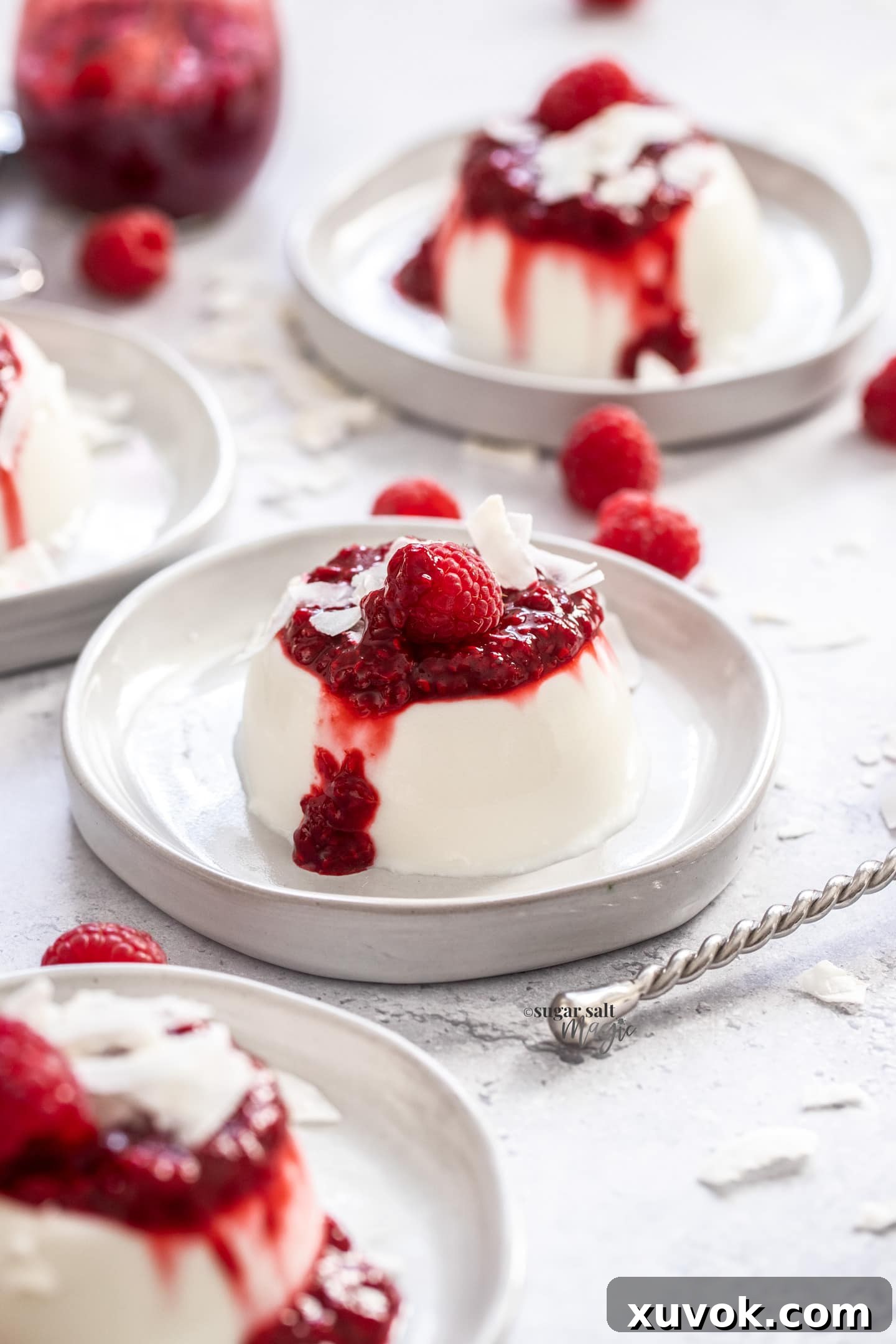
This particular coconut cream panna cotta recipe offers a vibrant tropical twist on the traditional vanilla panna cotta. Its rich coconut base is beautifully complemented by a bright, tart raspberry compote topping, creating a harmonious balance of flavors and textures that will transport your taste buds to a tropical paradise.
Why You’ll Adore This Coconut Panna Cotta Recipe
Prepare to fall in love with this coconut panna cotta, a dessert that promises convenience, elegance, and incredible flavor. Here’s why it will become your new favorite:
- Dietary Adaptability: This recipe is naturally gluten-free and can be easily adapted to be completely dairy-free and vegan with simple substitutions, ensuring everyone can enjoy a slice of this heavenly dessert.
- Unrivaled Texture: Experience a dessert that is exquisitely creamy and light, boasting a velvety, silky-smooth texture that melts in your mouth with every spoonful.
- Effortless Preparation: You’ll be amazed at how quickly this panna cotta comes together. It takes mere minutes to make, making it a fantastic option even on busy days.
- Perfect for Planning Ahead: This is a wonderful make-ahead dessert. Prepare it a day or two in advance, chill, and it will be ready to serve when you are, saving you precious time on event day.
- Foolproof Gelatine Method: Don’t be intimidated by gelatine any longer! My fail-proof method ensures a perfectly set panna cotta every time, allowing you to confidently create this elegant dessert.
- The Ideal “Jiggle”: The panna cotta is set just enough to be creamy and soft, yet it holds its shape beautifully with that signature, irresistible “jiggle” that panna cotta is famous for.
- Scalable and Versatile: This recipe is easily scalable, so whether you’re making a small batch for a cozy evening or a large quantity for a grand celebration, you can adjust it to suit any number of guests with ease.
This beloved recipe was originally published on April 6th, 2022, and has been thoughtfully updated with enhanced details and step-by-step photos to further simplify your dessert-making experience.
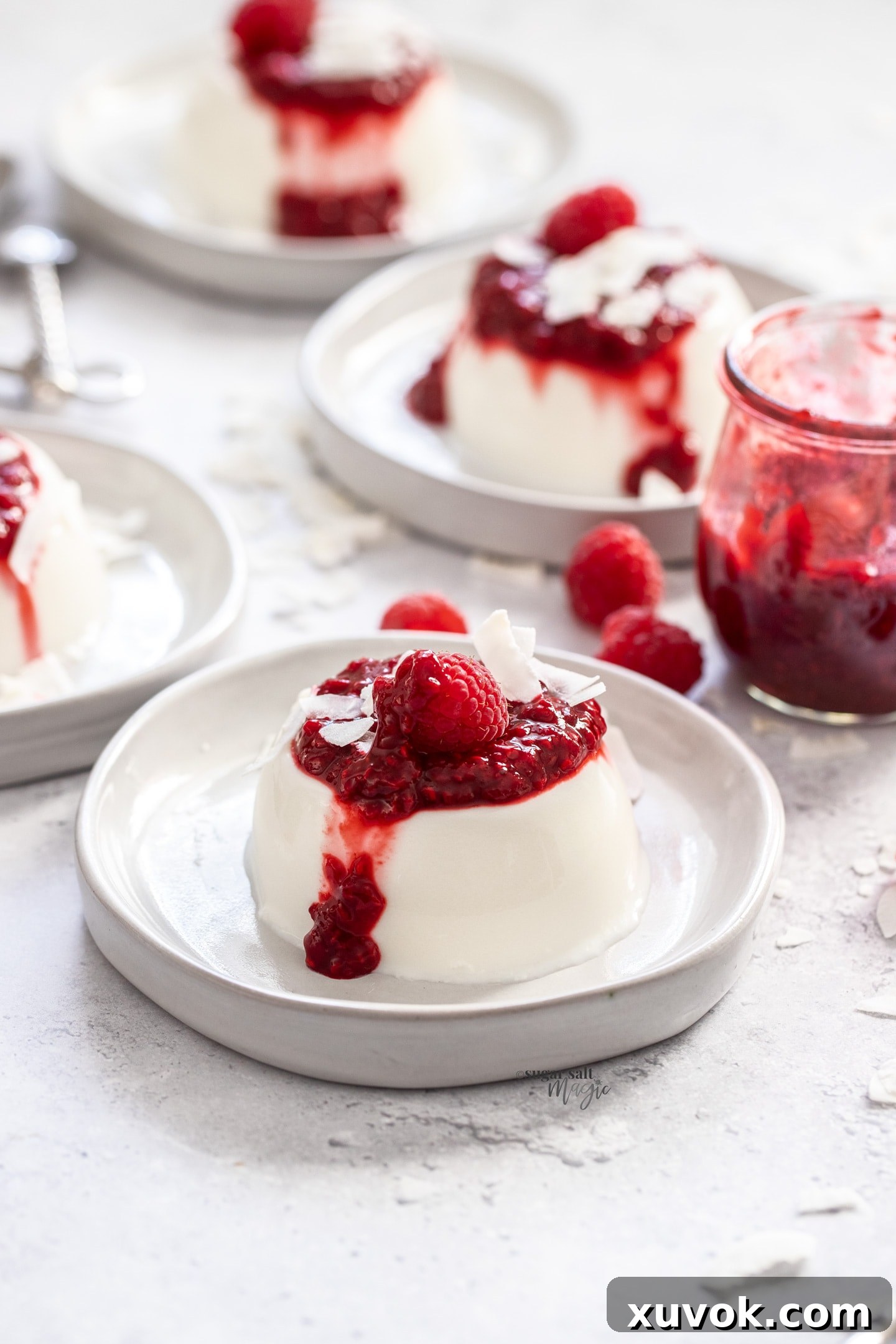
Understanding Panna Cotta: A Classic Italian Delight
Panna cotta, meaning “cooked cream” in Italian, is a truly exquisite no-bake dessert that hails from the Piedmont region of Italy. Traditionally, it’s crafted from a simple blend of milk, cream, sugar, and gelatine. This delightful set dessert requires chilling until firm, resulting in a soft, smooth, and utterly melt-in-the-mouth texture that is unlike any other.
While often served unmolded, allowing its elegant form to shine, panna cotta is incredibly versatile. It can be presented in a myriad of ways, from individual ramekins and pretty glasses to grander family-style dishes or even as a unique tart filling. Its neutral base lends itself beautifully to countless flavorings, making it a canvas for culinary creativity. Unlike crème brûlée, which uses eggs and baking for its set, panna cotta achieves its signature texture purely through the magic of gelatine, offering a lighter, jigglier consistency similar to a sophisticated milk jelly.
Essential Ingredients for Perfect Coconut Panna Cotta
Crafting this delightful coconut panna cotta requires a few key ingredients, each playing a crucial role in achieving its signature creamy texture and tropical flavor. Here’s a closer look at what you’ll need:
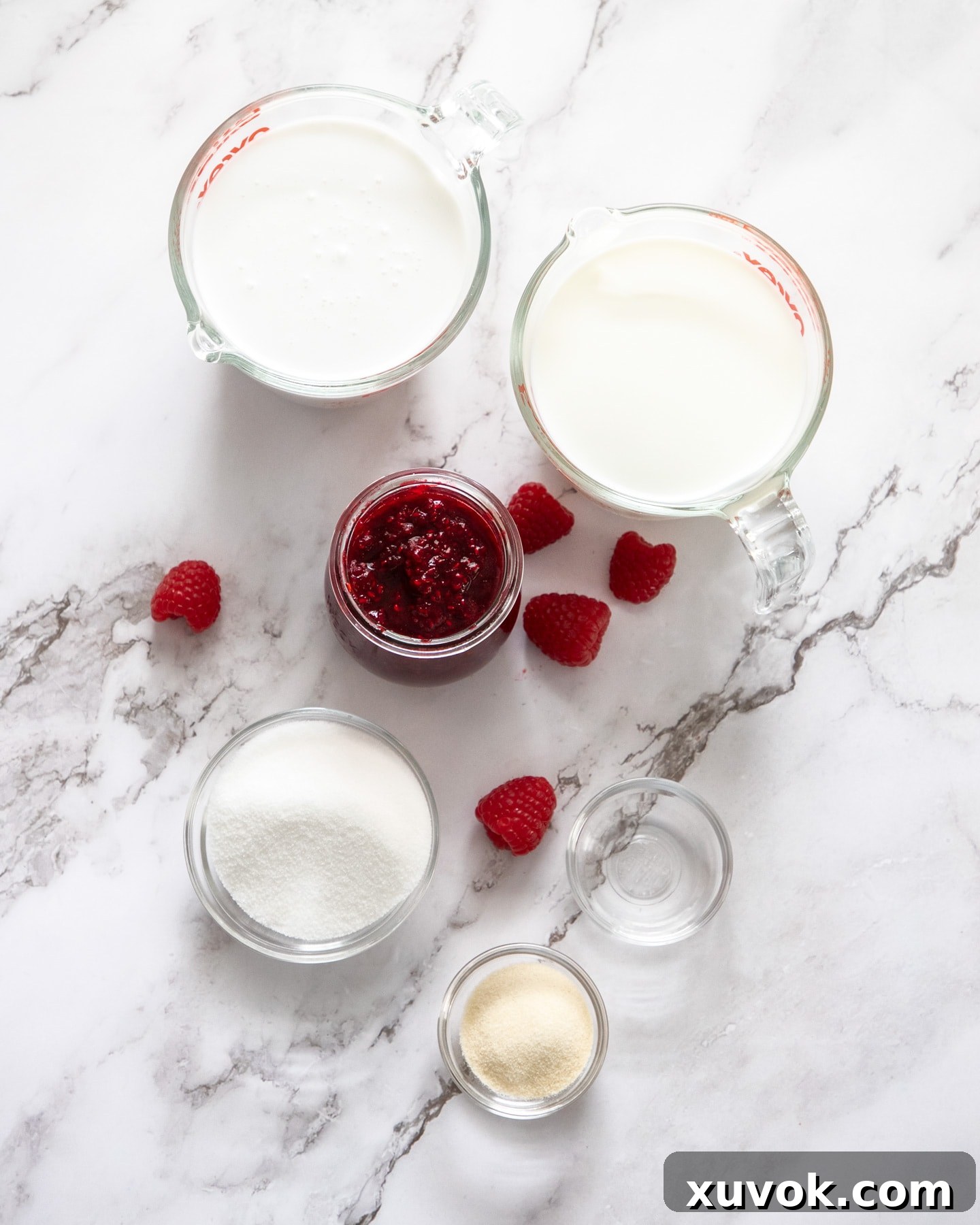
For detailed quantities and step-by-step instructions, please refer to the recipe card below.
- Milk: For the most luscious results and superior flavor, I highly recommend using full-cream dairy milk. While some low-fat milks might work, they occasionally cause separation as the panna cotta sets. If you’re aiming for a dairy-free dessert, you can substitute with full-fat canned coconut milk, though note that the final texture may be slightly less smooth than with dairy milk. For an even richer, more indulgent panna cotta, consider swapping the milk entirely for heavy cream.
- Powdered Gelatine: Do not let powdered gelatine intimidate you! It’s surprisingly simple to work with, especially when following my method, which ensures consistent success. This recipe specifically calls for powdered gelatine. While agar-agar powder is a popular vegan setting agent, it produces a notably different texture (firmer, less wobbly) compared to gelatine. I do not use gelatine sheets in this recipe, so I cannot advise on the appropriate number or strength for substitution.
- Sugar: Regular white granulated sugar works perfectly here, but for an even smoother and quicker dissolution, superfine sugar (also known as caster sugar) is an excellent choice.
- Coconut Cream: This is the star ingredient that infuses your panna cotta with its delightful tropical coconut flavor. Always use full-fat canned coconut cream. Before opening, give the can a good shake to ensure the solids and liquids are well combined, as we want to use the entire contents for optimal richness and consistency.
- Coconut Extract (Optional): If you desire a more pronounced coconut flavor, particularly when using regular dairy milk, a touch of coconut extract can enhance the tropical notes. This ingredient is optional and can be omitted if you’re using coconut milk, as the flavor will already be quite strong. Crucially, make sure to use an extract, not an essence. Extracts derive their flavor from natural sources, offering a superior taste profile, whereas essences are typically synthetic flavorings. I consciously avoid adding vanilla extract to this recipe, as it can sometimes overshadow the delicate coconut notes we want to highlight.
Dairy Milk vs. Coconut Milk: A Texture & Flavor Comparison
In developing this coconut panna cotta, I conducted extensive testing using both dairy milk and coconut milk to achieve the perfect balance. Here are my observations on how each affects the final dessert:
- Flavor Profile: When dairy milk is used, the coconut flavor still shines through distinctly, though it presents as a more subtle and nuanced undertone compared to the bolder taste achieved with coconut milk. If you prefer a more intense coconut flavor in the dairy version, incorporating the optional coconut extract will amplify it beautifully.
- Achieving the Perfect Texture: Dairy milk consistently delivers a significantly smoother, more luxurious texture that is characteristic of traditional panna cotta. The version made with coconut milk, while still delicious, tended to be ever so slightly grainy, missing that exquisite, unparalleled smoothness that panna cotta is celebrated for.
- Ease of Preparation: Both variations are equally simple to prepare. However, when using canned coconut milk, it’s beneficial to ensure it’s at room temperature and to give the can a vigorous shake before adding it to the mixture, ensuring a homogenous blend.
Based on these comparisons, for the ultimate creamy and smooth coconut panna cotta with a lovely, yet balanced coconut flavor, dairy milk emerges as the clear winner in my kitchen. It provides that sublime, silky texture that truly defines a perfect panna cotta.
Step-by-Step Guide: Crafting Your Exquisite Coconut Panna Cotta
You might be wondering how to make coconut panna cotta, but I assure you, it’s far simpler than you imagine. This luxurious coconut cream panna cotta follows the same ridiculously easy method as any traditional dairy-based version, guaranteeing a stunning dessert with minimal effort. Follow these straightforward steps to achieve a perfectly smooth and wobbly panna cotta every time:
Find detailed ingredient quantities and complete instructions in the recipe card below.
1. Bloom the Gelatine for Optimal Setting
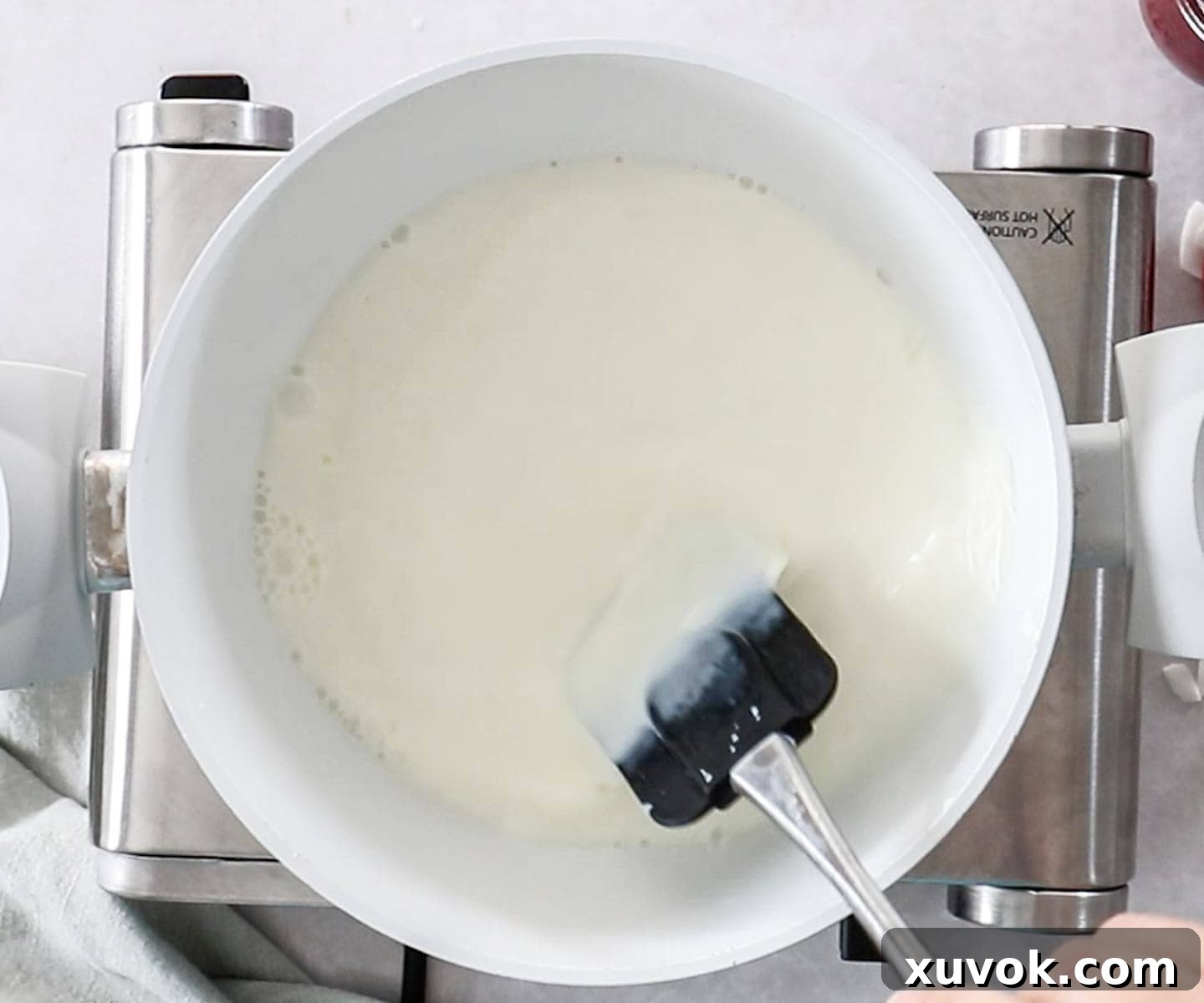
The first crucial step for a perfectly set panna cotta is blooming the gelatine. In a medium-sized saucepan, generously sprinkle the gelatin powder evenly over the surface of the cold milk. Allow this mixture to sit undisturbed for a full 5 minutes. This vital process, known as blooming, allows the gelatine granules to fully hydrate and soften, ensuring they dissolve smoothly and evenly when heated, which is key to avoiding lumps and achieving that desirable silky texture in your finished panna cotta.
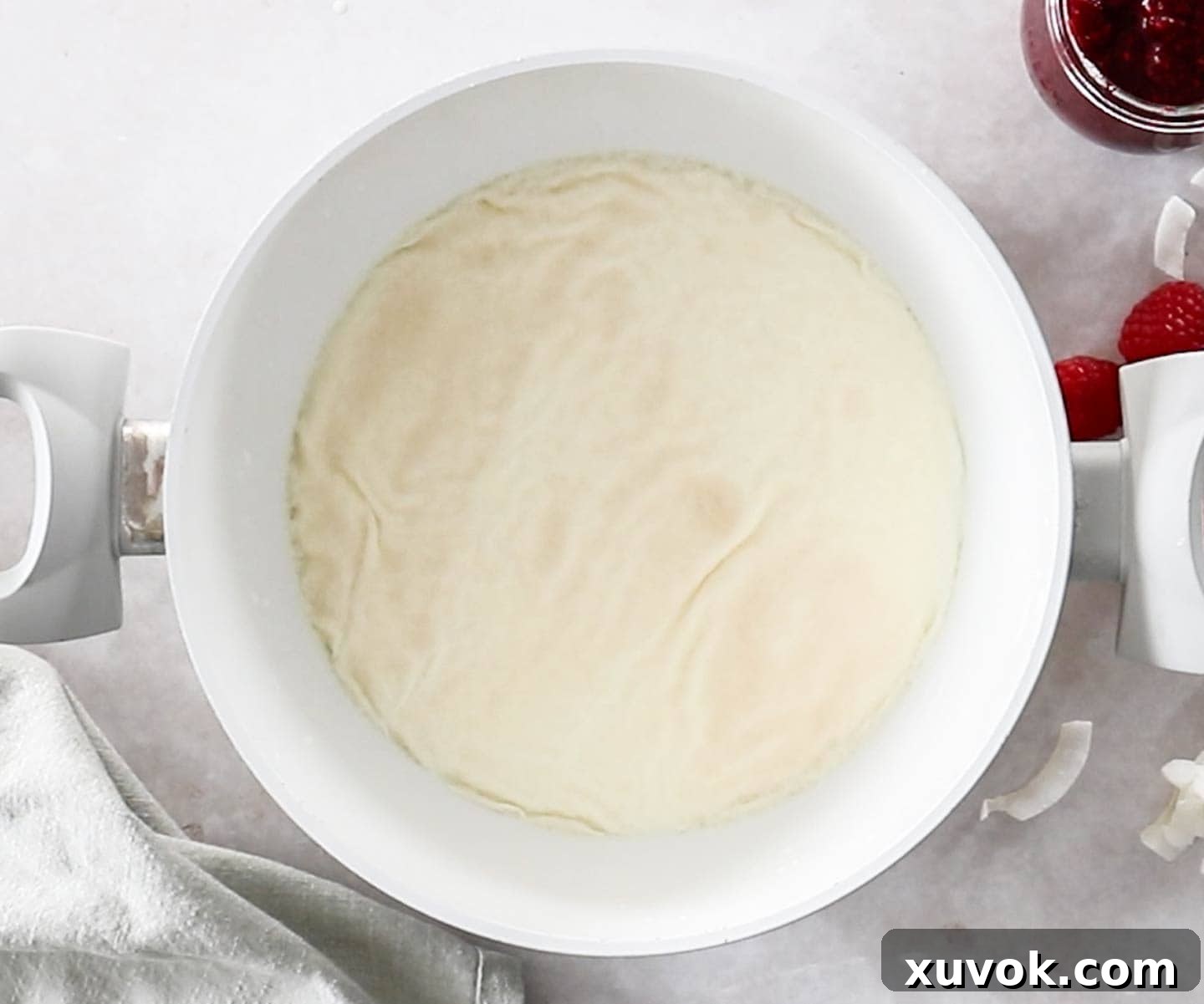
2. Gently Heat and Dissolve for Smoothness
After the gelatine has bloomed, place the saucepan over low heat. It’s imperative to maintain a gentle heat and stir the mixture continuously until the gelatine is completely dissolved. To check for complete dissolution, lift your rubber spatula from the liquid; if you see any small, clear specks clinging to it, continue stirring gently. Once the gelatine is fully dissolved and the liquid is smooth, add the sugar and continue to stir until it too has completely melted into the mixture. Immediately remove the saucepan from the heat once the sugar has dissolved; overheating can diminish the gelatine’s setting power.
3. Infuse with Rich Coconut Cream
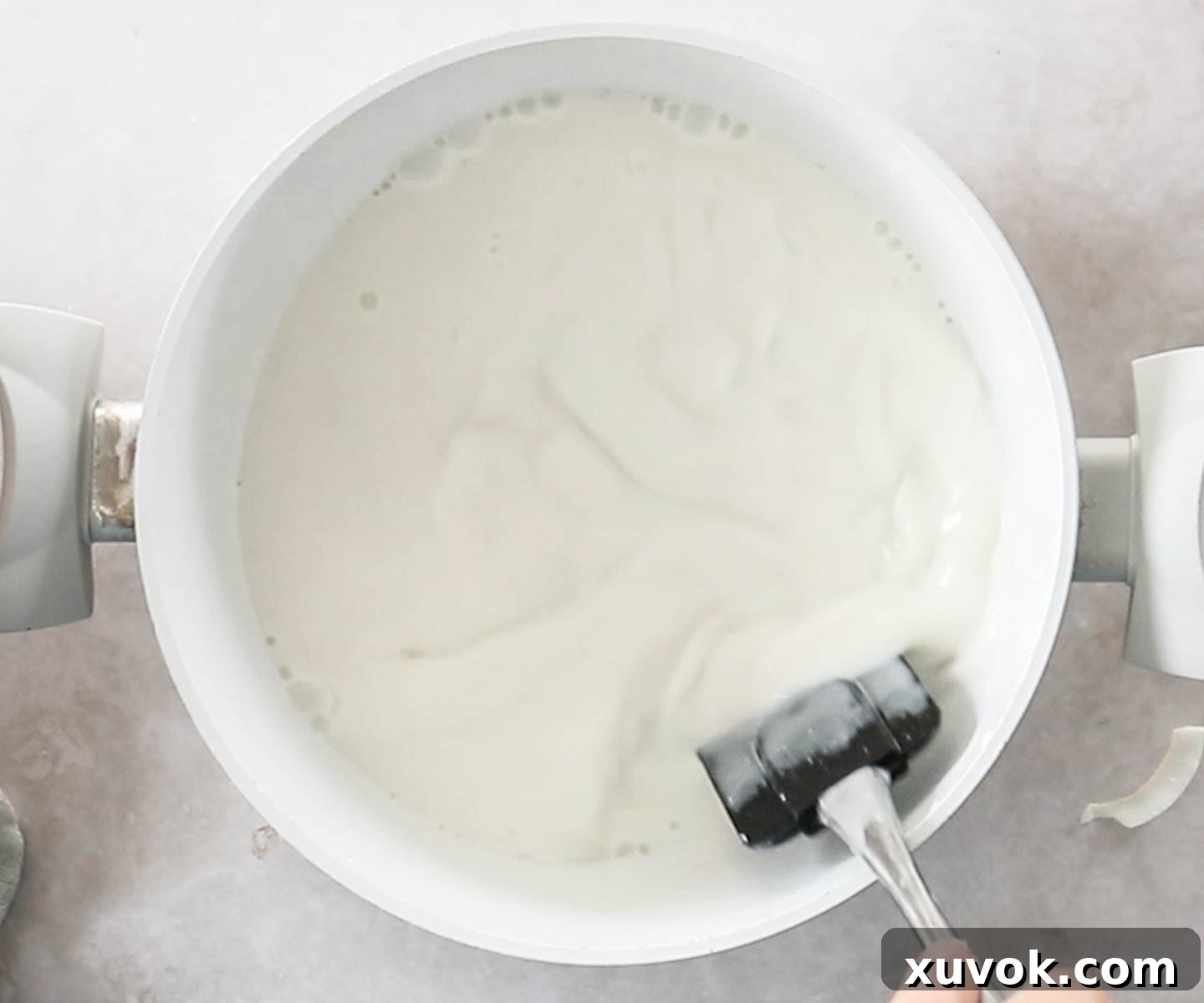
With the gelatine and sugar perfectly dissolved, it’s time to introduce the tropical essence. Give your can of full-fat coconut cream a thorough shake before pouring it into the saucepan. If you’re opting for an intensified coconut flavor, now is the moment to stir in the optional coconut extract. Mix everything together meticulously until the coconut cream is fully incorporated and the mixture is homogenous and beautifully smooth. This ensures an even distribution of flavor and a consistent texture throughout your panna cotta.
4. Decant and Chill to Perfection
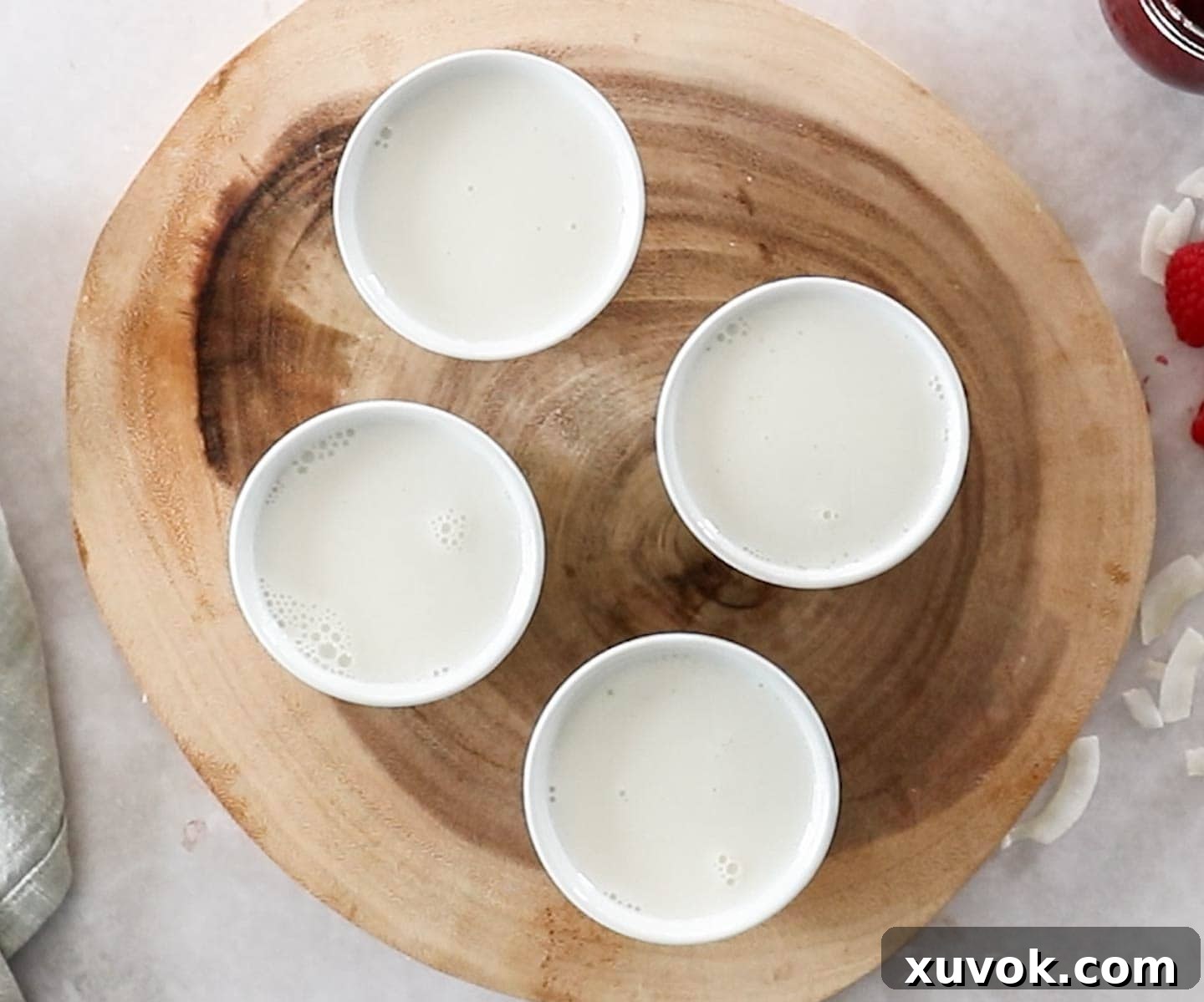
Carefully pour your warm panna cotta mixture into individual ramekins or small dessert bowls that have been very lightly greased. Greasing is essential if you plan to unmold your panna cotta later. Once filled, arrange the ramekins in a deep tray, which makes them easier to transfer to the refrigerator without spills. Cover them well with plastic wrap to prevent a skin from forming and to keep any fridge odors out. Chill the panna cotta in the refrigerator for a minimum of 4 hours, or ideally, prepare them the night before to ensure they are perfectly set and firm, ready for serving.
5. Craft the Zesty Raspberry Sauce
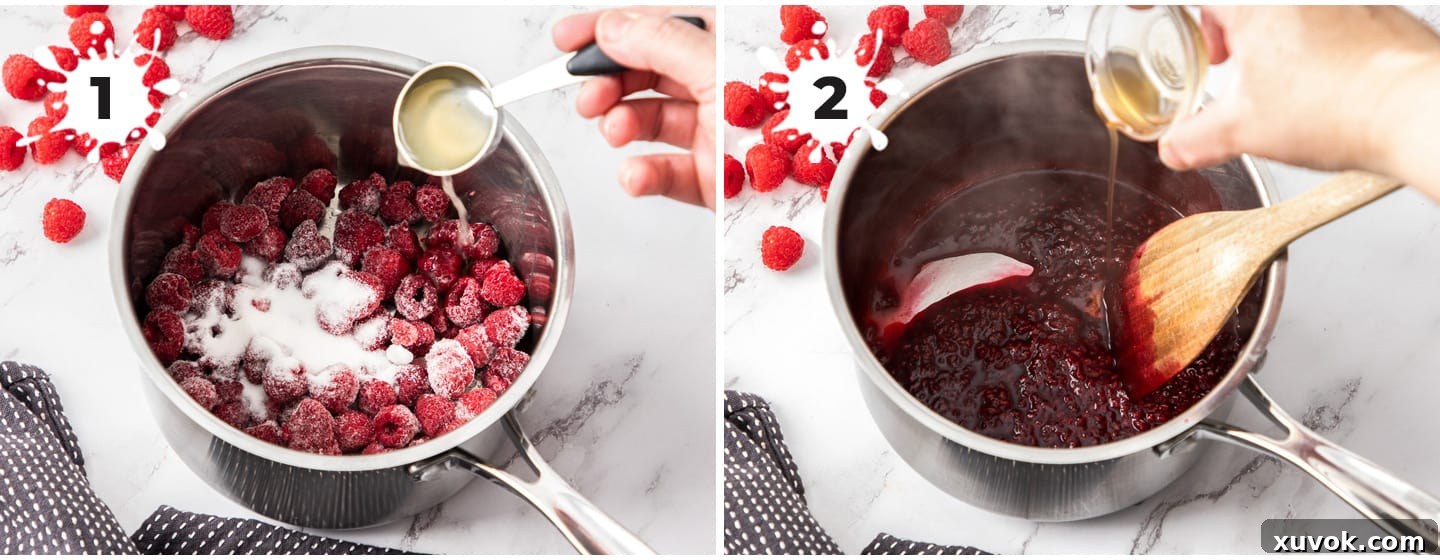
To perfectly complement the creamy coconut panna cotta, a vibrant raspberry sauce is a must. Simply combine fresh or frozen raspberries with a touch of sugar and a splash of water (or lemon juice for extra tang) in a saucepan. Cook the mixture over medium heat, stirring occasionally, until the raspberries break down and the sauce thickens to your desired consistency. For a smooth sauce, press it through a fine-mesh sieve to remove seeds. Pour the finished sauce into a clean preserving jar and chill it in the refrigerator until ready to serve. This delicious compote can be made up to 2 days in advance, allowing for even more convenient party preparation.
Creative Ways to Serve Your Coconut Panna Cotta
Panna cotta’s elegance extends beyond its taste to its presentation, offering numerous creative serving options. While turning it out onto a plate, as showcased here, highlights its beautiful form, there are many other delightful ways to present this dessert:
- Individual Servings in Glasses: Serve the panna cotta directly in charming jars or elegant glasses, perfect for layered desserts. Explore ideas like my coffee panna cotta or boozy eggnog panna cotta for inspiration.
- Elegant Tart Fillings: Incorporate panna cotta as a creamy filling for tarts, offering a unique texture contrast. My rose pistachio panna cotta tart and this fresh peach panna cotta tart demonstrate just how stunning this can be.
- Family-Style Presentation: For a more casual, shared experience, set the panna cotta in a large pie dish or baking dish, like this beautiful strawberry panna cotta. Guests can simply scoop their desired portion.
Beyond the tart raspberry sauce, this coconut milk panna cotta truly shines with additional garnishes. A sprinkling of toasted coconut flakes adds a lovely textural crunch and enhances the tropical theme. For a bright, zesty finish, a small amount of finely grated lime zest is absolutely beautiful, lifting the flavors and adding a fresh aroma.
Expert Tips for Panna Cotta Perfection
Achieving a perfectly smooth, wobbly panna cotta is simpler than you think with a few key techniques. Here are my top tips and tricks to ensure your coconut panna cotta turns out flawlessly every time:
- Mind the Heat – Don’t Boil! The most critical rule when working with gelatine is to avoid boiling the mixture. Gelatine will lose its setting capabilities if it reaches a boiling temperature. Always ensure you are only gently heating the milk mixture. It should never do more than lightly steam; rapid bubbling indicates it’s too hot. Keep the heat low and stir constantly to achieve an even dissolution without scorching or diminishing the gelatine’s power.
- Strategic Greasing for Effortless Unmolding: If your intention is to beautifully turn your panna cotta out onto serving plates, proper greasing of your ramekins or molds is essential, yet it needs to be done subtly. Begin by applying a tiny amount of neutral oil (like vegetable or canola oil) to a paper towel. Gently rub the interior of each ramekin, then use a fresh, dry paper towel to wipe most of the oil back out. You want to leave behind only an extremely thin, almost imperceptible film of oil. This minimal coating provides just enough lubrication for easy release without leaving an oily residue on your panna cotta.
- The Ultimate Make-Ahead Dessert: One of the most appealing qualities of panna cotta is its incredible suitability for advance preparation. Since it requires approximately 4 hours to fully set, you can certainly prepare it on the morning of the day you intend to serve it. However, for maximum convenience, you can make your panna cotta up to 2 days ahead of time. Simply store the covered ramekins in an airtight container in the refrigerator, and they will be perfectly ready for your event, alleviating last-minute stress.
- Effortless Unmolding Technique: This coconut panna cotta is designed to have a delicate, soft set, which means it generally doesn’t require any external heat to help it release from its mold. Follow these steps for smooth unmolding:
- Firstly, gently press around the very edge of the panna cotta with your clean fingertip. You should feel and see it slightly pull away from the side of the ramekin, breaking the vacuum seal.
- Next, place your chosen serving plate upside down over the top of the ramekin. With a quick, confident motion, flip both the ramekin and the plate together, inverting the panna cotta onto the plate. You should ideally hear a satisfying “plop” sound as it detaches and drops cleanly.
- If, for some reason, the panna cotta doesn’t immediately release, don’t force it. Instead, very gently lift one edge of the ramekin slightly. Use your finger to carefully press just one side of the panna cotta away from the ramekin’s rim. This action allows air to enter and break any remaining vacuum, usually causing the panna cotta to slide out smoothly. Once released, you can very gently reposition it on the plate as needed before adding your sauce and garnishes.
Delicious Panna Cotta Variations to Explore
Panna cotta is a remarkably versatile dessert, offering endless possibilities when it comes to flavor combinations and serving styles. Once you master this basic coconut panna cotta, you’ll find it easy to adapt and experiment with a myriad of creative twists.
Beyond this tropical delight, my blog features a wide array of panna cotta recipes. You can simply type “panna cotta” into the search bar to discover more, but some personal favorites include my aromatic chai panna cotta, the rich and invigorating coffee panna cotta, and the visually stunning rose pistachio panna cotta tart, which is incredibly popular for its beauty.
Think beyond individual servings! Panna cotta can even be served as a delightful topping for other desserts, like my innovative coconut mango panna cotta cheesecake, adding an extra layer of creamy decadence.
This coconut panna cotta recipe is also wonderfully adaptable to a variety of other fruit pairings. Instead of raspberry sauce, consider a luscious blueberry topping, or simply pour over some fresh, tangy passion fruit pulp for an instant tropical upgrade. Fresh strawberries or any mixed berries you love would also be fantastic. For a citrusy twist, serve it with segments of juicy orange or mandarin, or drizzle with a homemade orange syrup.
Troubleshooting Common Panna Cotta Issues
💡📃For quick answers and solutions, check out my “at a glance” panna cotta troubleshooting guide here.
To successfully unmold your panna cotta, start by dabbing a small amount of water onto your serving plate. This ingenious trick provides a little slip, making it easier to gently slide and adjust the panna cotta’s position on the plate once released. Next, delicately press your fingertip along the very edge of the panna cotta to break the seal between the dessert and the ramekin. Then, carefully place your dessert plate on top of the ramekin and confidently flip both over. Give the ramekin a gentle jiggle, and the panna cotta should cleanly drop onto the plate. If it remains stubbornly stuck, you can try submerging the bottom half of the ramekin in hot water for just a few seconds at a time. The warmth will help loosen the panna cotta enough for it to release.
If your panna cotta hasn’t set as firmly as desired, the most common culprit is often incomplete gelatine dissolution. It’s crucial that the gelatine fully melts into the liquid. If you suspect this is the case, you can gently reheat the mixture (ensuring it never boils) and stir continuously until all the gelatine specks have dissolved. Another vital step not to skip is blooming the gelatine for a few minutes before heating (as outlined in step 2 of the recipe). This softening process makes it much easier for the gelatine to dissolve. Conversely, overheating the gelatine can also be an issue; if the mixture comes to a boil, the gelatine’s efficacy can be significantly reduced, preventing a proper set. Always keep the liquid at a gentle steam, never boiling.
While you can swap coconut milk for coconut cream in this recipe, it’s important to be aware that this substitution will likely result in a slightly softer set for your panna cotta, and it won’t be quite as rich or decadent. Coconut cream has a higher fat content, which contributes significantly to the creamy texture and firm yet delicate set of the dessert.
If you wish to make this recipe dairy-free or amplify the coconut flavor, you can swap the whole dairy milk for full-fat canned coconut milk. Be aware that while the coconut flavor will be more pronounced, the texture might be slightly grainier compared to using dairy whole milk. For those who want to use dairy but swap the coconut cream, you can use heavy cream in place of the coconut cream to ensure a similar rich texture and set.
Storage and Freezing Guidelines for Panna Cotta
Proper storage is key to enjoying your coconut panna cotta at its best, especially if you’re making it ahead of time. Once prepared and fully set, panna cotta should always be stored in an airtight container in the refrigerator. Alternatively, if keeping them in their individual ramekins, ensure each is tightly covered with plastic wrap to prevent them from absorbing any fridge odors and to maintain their delicate surface texture. These panna cottas can be beautifully made up to 2 days in advance, making them an ideal dessert for entertaining.
Can Panna Cotta Be Frozen?
Unfortunately, panna cotta, especially varieties made with coconut cream, do not fare well when frozen. The delicate emulsion and texture of the panna cotta undergo significant changes upon thawing, resulting in a grainy, unappealing consistency. For the best culinary experience, it is strongly recommended to enjoy this coconut panna cotta fresh from the refrigerator within the suggested storage period.
More Delectable No-Bake Desserts You’ll Love
If you’re a fan of elegant, easy-to-make desserts like this coconut panna cotta, you’re in for a treat! Discover more fantastic no-bake creations that promise minimal effort and maximum flavor, perfect for any occasion:
- Passionfruit Panna Cotta: A bright and tangy delight with a tropical flair.
- Buttermilk Panna Cotta with Blood Orange Jelly: A sophisticated blend of creamy and citrusy notes.
- Almond and Honey Panna Cotta: A subtly sweet and nutty indulgence.
- Mango Panna Cotta Coconut Cheesecake: A layered masterpiece combining creamy cheesecake with tropical panna cotta.
- Coffee Panna Cotta: A rich and invigorating dessert for coffee lovers.
- Strawberry Panna Cotta: Fresh and fruity, perfect for summer gatherings.
- Mango Panna Cotta: Another vibrant tropical panna cotta, bursting with fresh mango flavor.
⭐⭐⭐⭐⭐
Did you try this exquisite coconut panna cotta recipe?
Show it some love by leaving a rating below! Your feedback is incredibly helpful and appreciated.
Hungry for more culinary inspiration? Subscribe to our newsletter for free, delicious recipes delivered straight to your inbox. Also, follow along on Facebook, Pinterest and Instagram for daily doses of sweet and savory magic.
Coconut Panna Cotta with Raspberry Sauce
Rate
Pin
Ingredients
- 1 ½ cups whole milk (dairy) (375ml)
- 2 ½ teaspoons gelatine powder
- ⅓ cup caster sugar (superfine sugar or granulated sugar) (66g/~2¼oz)
- pinch salt
- 1 ½ cups coconut cream , room temp (375ml)
- ½ teaspoon coconut extract , optional
- 1 batch raspberry compote
For best results, always weigh ingredients where a weight is provided
Equipment
-
heavy based saucepan
-
silicone spatula
-
Ramekins, preserving jars or even a pie dish
Instructions
-
If you plan on turning your panna cotta out onto dessert plates, begin by very lightly greasing the ramekins with a neutral oil. Use a paper towel to wipe most of the oil out, leaving only a faint film.
-
In a small, heavy-based saucepan, pour the milk. Evenly sprinkle the gelatine powder over the surface of the milk. Let it sit undisturbed for 5 minutes to bloom and soften.
-
Place the saucepan over low heat and stir continuously. Ensure you scrape the bottom and sides of the pan to help the gelatine dissolve completely. You can check if it’s dissolved by lifting your spatula – if you see any small, clear specks, continue stirring. Do not let the mixture boil.
-
Once the gelatine is fully dissolved, add the sugar and a pinch of salt. Continue stirring until the sugar completely dissolves into the mixture.
-
Remove the saucepan from the heat. Give the coconut cream a good shake, then pour it into the saucepan. If using, add the coconut extract. Stir everything together very well until fully combined and smooth.
-
Carefully pour the panna cotta mixture into your prepared ramekins. Place the ramekins in a deep tray for easier transfer. Cover them tightly with plastic wrap and chill in the refrigerator for 4-6 hours, or until perfectly set.
-
While the panna cotta chills, prepare the raspberry sauce. Alternatively, you can try this delightful blueberry sauce.
-
To unmold, gently press around the edges of each panna cotta with your finger to release the vacuum seal. Place a dessert plate on top and, with a confident motion, flip the ramekin and plate. Give it a gentle wiggle until you hear it “plop” down onto the plate. If it’s stubborn, lift one side of the ramekin slightly and press the panna cotta edge again to help release it.
-
Generously pour the raspberry sauce on top of each unmolded panna cotta and serve immediately. Enjoy your elegant, homemade dessert!
-
Please take a moment to leave a comment & rating. Your feedback is truly appreciated and helps other home cooks!
Notes
- Dairy-free option: For a completely dairy-free panna cotta, you can substitute the dairy milk and coconut extract with additional full-fat coconut milk. While the flavor will still be lovely and distinctly tropical, please note that the texture may not be as exquisitely smooth as with dairy milk. Additionally, the final color might appear slightly greyer.
- This recipe is crafted to produce a beautifully wobbly yet soft-set panna cotta. For the best experience, keep your panna cottas refrigerated until just before serving. If preparing several and transferring them to individual serving plates, place them back in the fridge promptly to maintain their ideal consistency.
- Given the delicate set of this panna cotta, you typically won’t need to apply any heat to unmold them. If, after pressing the edge with your fingertip, a panna cotta resists releasing, simply dip the bottom of its ramekin in hot water for only a few seconds. This brief warmth should be sufficient to loosen it.
- Yield Variation: The exact number of servings from this recipe can vary based on the size of your ramekins or molds. This recipe is designed to make approximately 6 servings of ½ cup volume. However, the smaller ramekins pictured in this post yielded about 10 servings, as their volume is closer to ⅓ cup each.
- Adjusting Coconut Flavor Intensity: You can taste the panna cotta mixture while it’s still liquid. If you desire a more pronounced coconut flavor, feel free to add a little more coconut extract to suit your preference.
- The nutrition details provided are an estimate only. Please scroll below the recipe to find the full nutritional information. Ingredients and brands used may cause variations in nutritional values.
EXPLORE MORE NO-BAKE DESSERT RECIPES!
Calories from Fat 207
Frequently Asked Questions (FAQs) About Panna Cotta
If your panna cotta has turned out excessively firm or rubbery, it’s highly probable that too much gelatine was added or there wasn’t enough liquid in the mixture. Precision in measuring ingredients is crucial; ensure that your measurements reach the top of the spoon or cup without overflowing. For gelatine, it’s best to level off the teaspoon using the back of a knife to ensure an accurate amount. Even a small excess of gelatine can significantly alter the texture.
Yes, you absolutely can make panna cotta using entirely coconut milk by substituting the dairy milk with full-fat coconut milk. However, it’s important to note that the resulting texture may not be as exceptionally smooth as when dairy milk is used, and it might have a slightly grainier consistency. If you’re looking to swap out coconut cream for coconut milk, then for the best texture and set, use heavy cream in place of the dairy milk component.
The Italian term “panna cotta” directly translates to “cooked cream.” Despite the name, it’s crucial not to bring the mixture to a full boil during preparation. While the cream is heated, actual boiling can degrade the gelatine, preventing it from setting properly. The key is gentle warming, not vigorous boiling.
No, panna cotta is quite distinct from crème brûlée. While both are luscious chilled desserts, their setting methods differ significantly. Crème brûlée achieves its set through a combination of eggs and gentle baking in a water bath, resulting in a custard-like texture. Panna cotta, on the other hand, relies solely on gelatine for its structure, giving it a much softer, smoother, and characteristically “wobbly” consistency, more akin to a sophisticated milk jelly than a firm custard.