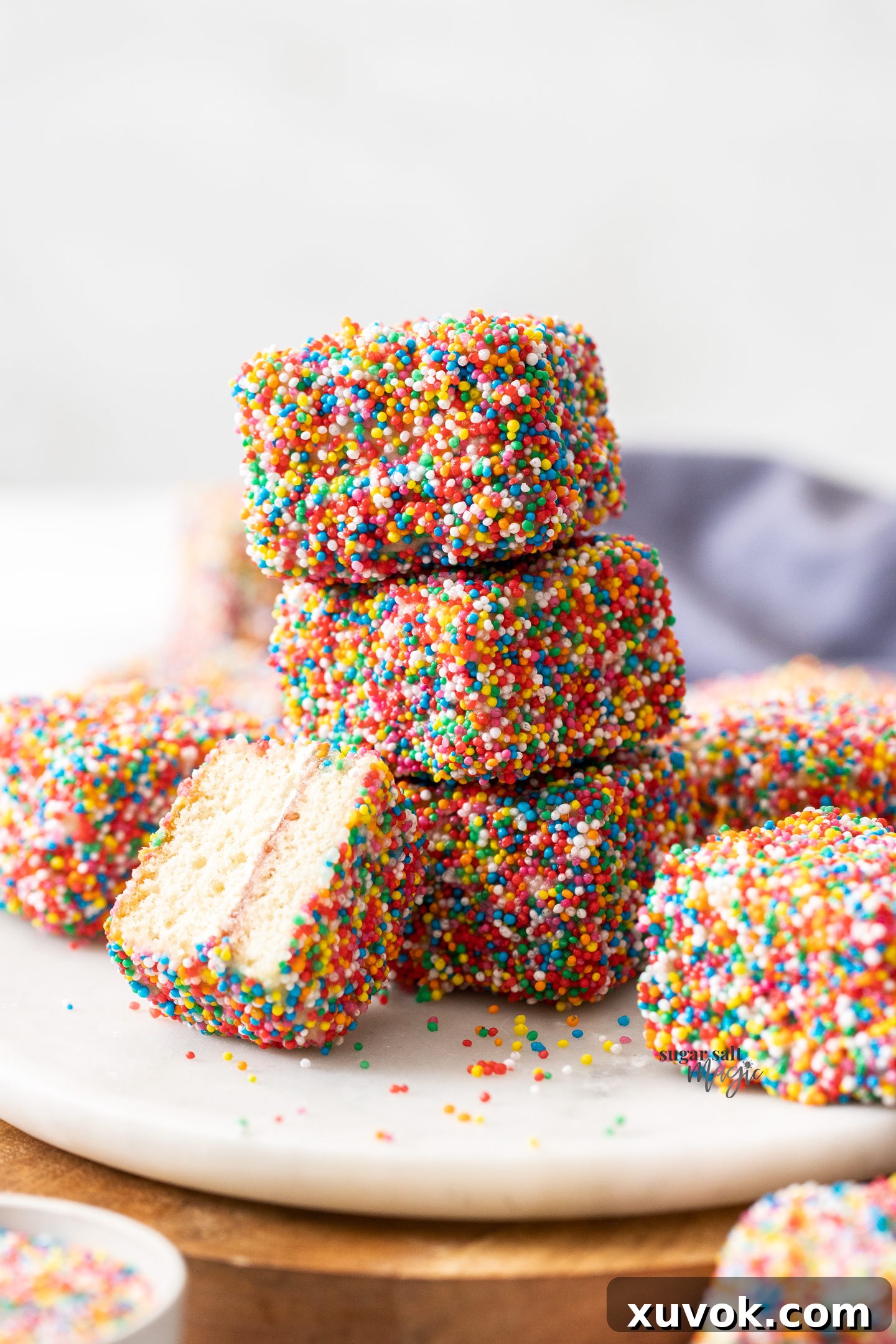
Fairy Bread Lamingtons: A Whimsical Australian Dessert Mash-Up
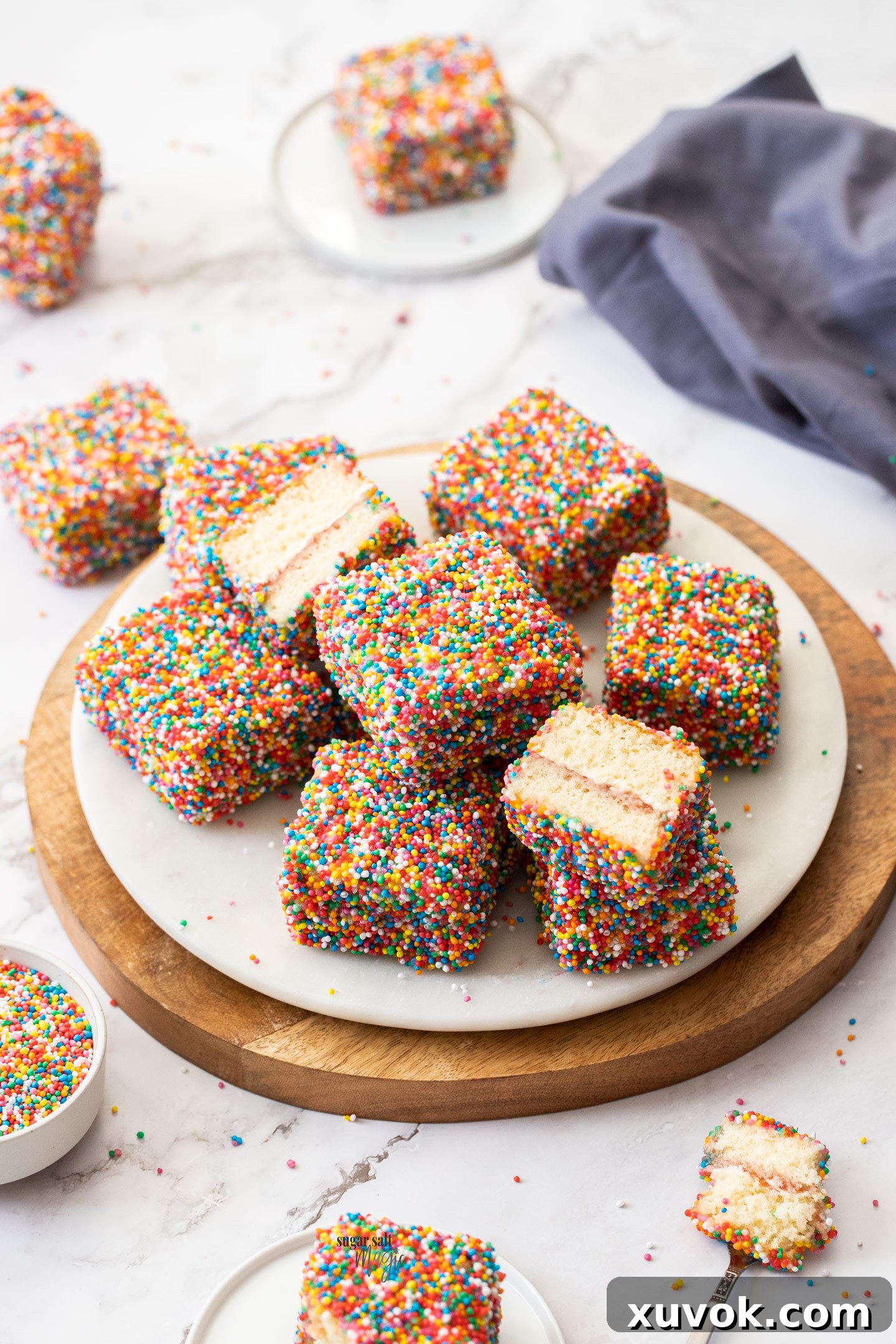
Imagine the delightful charm of classic Australian fairy bread merged with the beloved soft, pillowy texture of a lamington. These enchanting Fairy Bread Lamingtons are precisely that – cute, bite-sized morsels of exquisitely soft and fluffy sponge cake, generously coated in vibrant, crunchy sprinkles. It’s a whimsical culinary creation that brings together two iconic Australian treats into one unforgettable dessert, perfect for any celebration or simply to brighten your day.
- Incredibly Fun to Make: The process of dipping and decorating these lamingtons is a joyful experience, especially with kids.
- The Most Delicious Lamington Sponge: A light, airy sponge cake base that melts in your mouth.
- A Guaranteed Kid-Pleaser: The colorful sprinkles and sweet flavor make these an instant hit with children.
- Loaded with 100’s and 1000’s (Sprinkles): Each lamington is adorned with a generous coating of vibrant sprinkles, ensuring a festive look and delightful crunch.
If you love simple, crowd-pleasing desserts, you’ll also adore this classic vanilla tray bake.
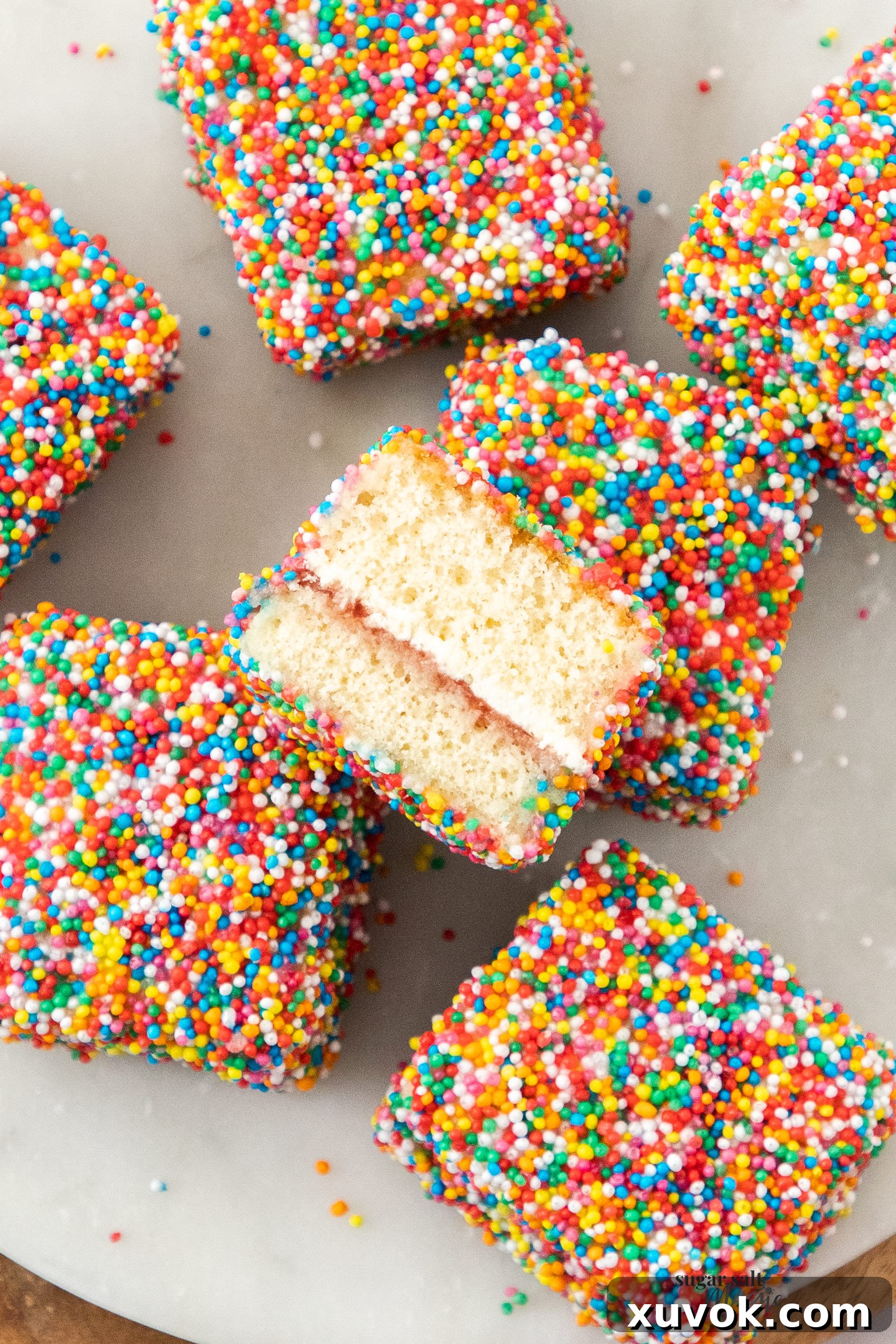
Table of contents
- What is Fairy Bread?
- The Iconic Australian Lamington
- Why You’ll Love These Fairy Bread Lamingtons
- Ingredients You’ll Need
- How to Make Fairy Bread Lamingtons (Step-by-Step)
- Expert Tips and Tricks for Success
- Yield and Storage
- More Recipes You’ll Love
Never Miss a Recipe!
Get the latest recipes straight to your inbox by subscribing to our newsletter!
What is Fairy Bread?
Fairy bread is a quintessential childhood treat cherished across Australia and New Zealand. It’s wonderfully simple, yet utterly delightful, typically comprising a slice of plain white bread spread generously with butter or margarine, then lavishly covered with “100’s and 1000’s” – the local term for small, colorful candy sprinkles. The magic of fairy bread lies in its contrasting textures: the soft bread and butter provide a comforting base, while the sprinkles add a playful crunch and burst of sweetness. It’s a staple at kids’ parties, school fetes, and casual gatherings, evoking nostalgia and joy for anyone who grew up with this vibrant snack.
For these Fairy Bread Lamingtons, we’ve taken the essence of this beloved Aussie kids’ snack and infused it into another classic: the lamington. While traditional lamingtons are typically coated in a chocolate glaze and desiccated coconut, this recipe offers a unique, colorful twist that captures the spirit of fairy bread in a more decadent dessert form. If you’re keen to explore the original, you can find my traditional lamington recipe here.
The Iconic Australian Lamington
Before diving into our sprinkle-laden creation, it’s worth understanding the roots of the lamington. The lamington is an iconic Australian cake, celebrated for its simple elegance and delicious flavor. It consists of squares of fluffy, vanilla-scented sponge cake, traditionally dipped in a thin chocolate sauce, and then rolled in desiccated coconut. This process creates a moist interior with a slightly crisp, textured exterior.
Legend has it that the lamington was named after Lord Lamington, a former Governor of Queensland, who reportedly stumbled upon the ingenious recipe by accident when his chef dipped stale sponge cake in chocolate and coconut to serve unexpected guests. Regardless of its true origin, the lamington quickly became a national favorite, often enjoyed with a cup of tea, at picnics, or as part of a classic afternoon tea spread. Over the years, variations have emerged, including fillings of jam and cream, which we incorporate into this fairy bread version for an extra layer of indulgence. Our Fairy Bread Lamingtons pay homage to this rich history while introducing a fun, modern twist that appeals to all ages.
Why You’ll Love These Fairy Bread Lamingtons
There’s a special kind of magic in combining two beloved treats, and these Fairy Bread Lamingtons are no exception. Here’s why this recipe is destined to become a new favorite in your kitchen:
- A Feast for the Eyes: The explosion of colorful sprinkles makes these lamingtons incredibly appealing, especially for parties and celebrations. They instantly elevate any dessert table with their cheerful, vibrant appearance.
- Irresistible Texture Contrast: You get the best of both worlds – a remarkably soft, tender, and moist sponge cake that yields easily, contrasted with the delightful, satisfying crunch of hundreds and thousands.
- Nostalgia in Every Bite: For many Australians and New Zealanders, both fairy bread and lamingtons evoke warm memories of childhood. This recipe combines those cherished sentiments into a single, delightful experience.
- Surprisingly Simple to Make: While they look impressive, the individual components are straightforward. Our detailed, step-by-step instructions ensure a smooth and enjoyable baking process, even for novice bakers.
- Perfect for Any Occasion: Whether it’s a birthday party, a casual get-together, a school event, or just a treat for the family, these lamingtons are versatile and always welcome. They’re a fantastic alternative to traditional birthday cake.
- Customizable Filling: While we suggest a delicious jam and cream filling, the sponge base is versatile. You can opt for a plain lamington, or experiment with different jam flavors or even a chocolate ganache filling if you prefer.
These Fairy Bread Lamingtons are more than just a dessert; they’re a celebration of Australian culinary tradition with a playful, modern twist that’s sure to bring smiles to everyone who tries them.
Ingredients You’ll Need
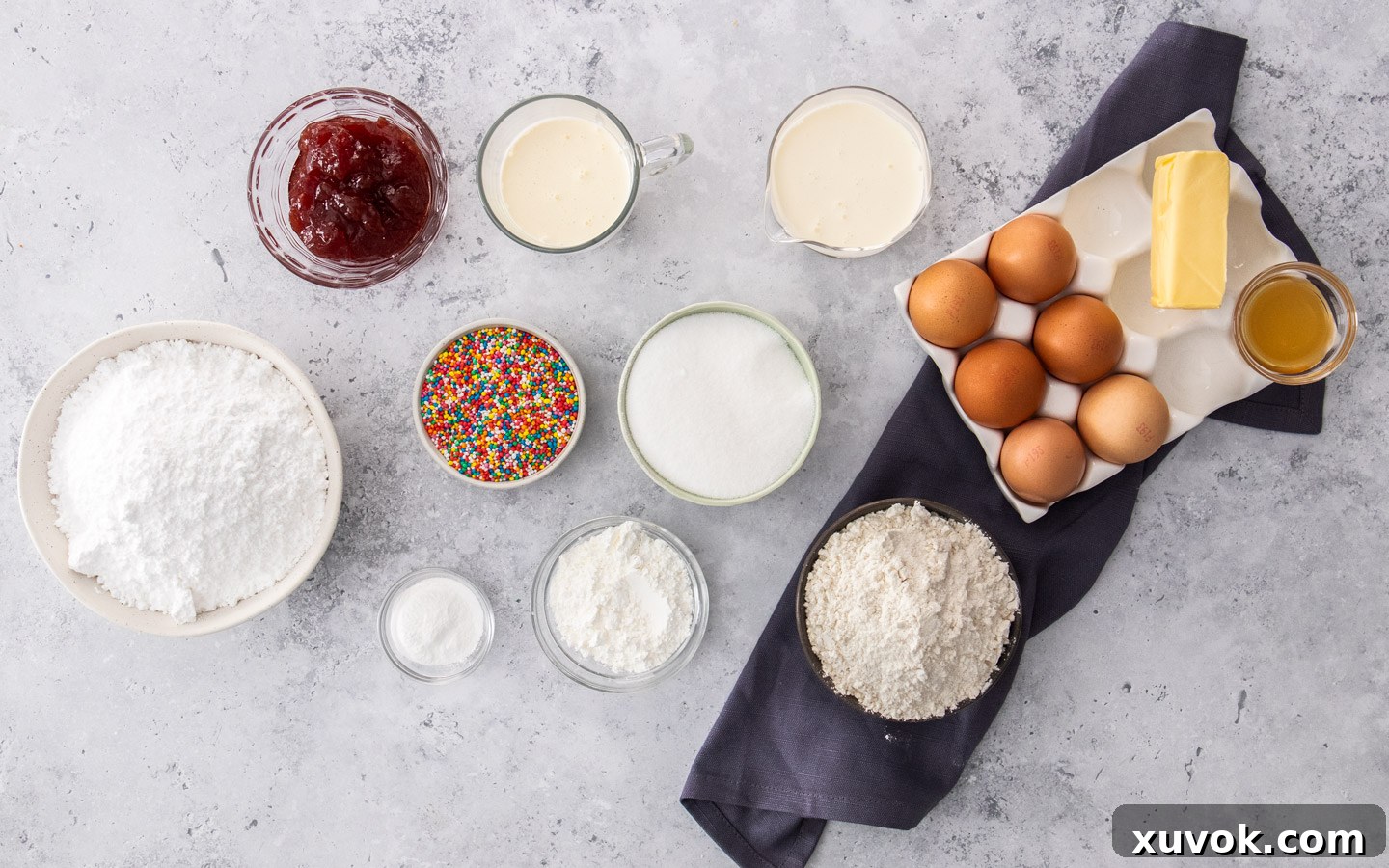
You’ll find detailed quantities and complete instructions in the recipe card below.
- Butter: For the sponge, unsalted butter is preferred as it allows you to control the salt content in the recipe. It adds richness and moisture to the cake.
- Milk: Whole milk (also known as full cream milk) is recommended for the best flavor and a richer, more tender texture in your sponge cake.
- Vanilla: Always opt for pure vanilla extract. Vanilla essence is typically a synthetic flavoring and won’t deliver the same depth and quality of flavor.
- Eggs: Use large, free-range eggs for optimal results. It’s crucial that your eggs are at room temperature, as this helps them emulsify better with other ingredients, leading to a more stable and airy batter.
- Flour: This recipe calls for a blend of two flours. You’ll need plain flour (also known as all-purpose flour) for structure, and cornflour (or cornstarch). The cornflour is key for achieving that characteristic soft, delicate crumb in your lamington sponge. While you can substitute both flours with cake flour, do not use one in place of the other individually.
- Baking Powder: Ensure you use baking powder, not baking soda. These leavening agents react differently, and baking powder is essential for the rise and texture of this sponge.
- Salt: A small pinch of salt, even in sweet recipes, is vital for balancing flavors and enhancing the overall sweetness of the cake.
- Sugar: Two types of sugar are used here. Caster sugar or white granulated sugar provides sweetness and structure to the sponge, while icing sugar (also known as powdered sugar or confectioners’ sugar) creates a smooth, melt-in-your-mouth glaze.
- Cream: For the delightful filling, use fluid whipping cream, thickened cream, or heavy cream with at least 35% milk fat. This ensures a stable and delicious whipped cream.
- Jam: Classic choices like raspberry jam or strawberry jam are perfect for spreading inside the lamingtons, adding a fruity burst and a touch of tang. Warm it slightly for easier spreading.
- 100’s and 1000’s: These are the star of the “fairy bread” aspect! “100’s and 1000’s” are a popular type of sprinkle in Australia and New Zealand. If you can’t find them, any small, colorful sprinkles or jimmies will work beautifully to achieve the same festive look and crunchy texture.
How to Make Fairy Bread Lamingtons (Step-by-Step)
Creating these magical Fairy Bread Lamingtons is a rewarding process, broken down into simple, manageable steps. Follow these instructions carefully for the best results, transforming basic ingredients into a stunning dessert.
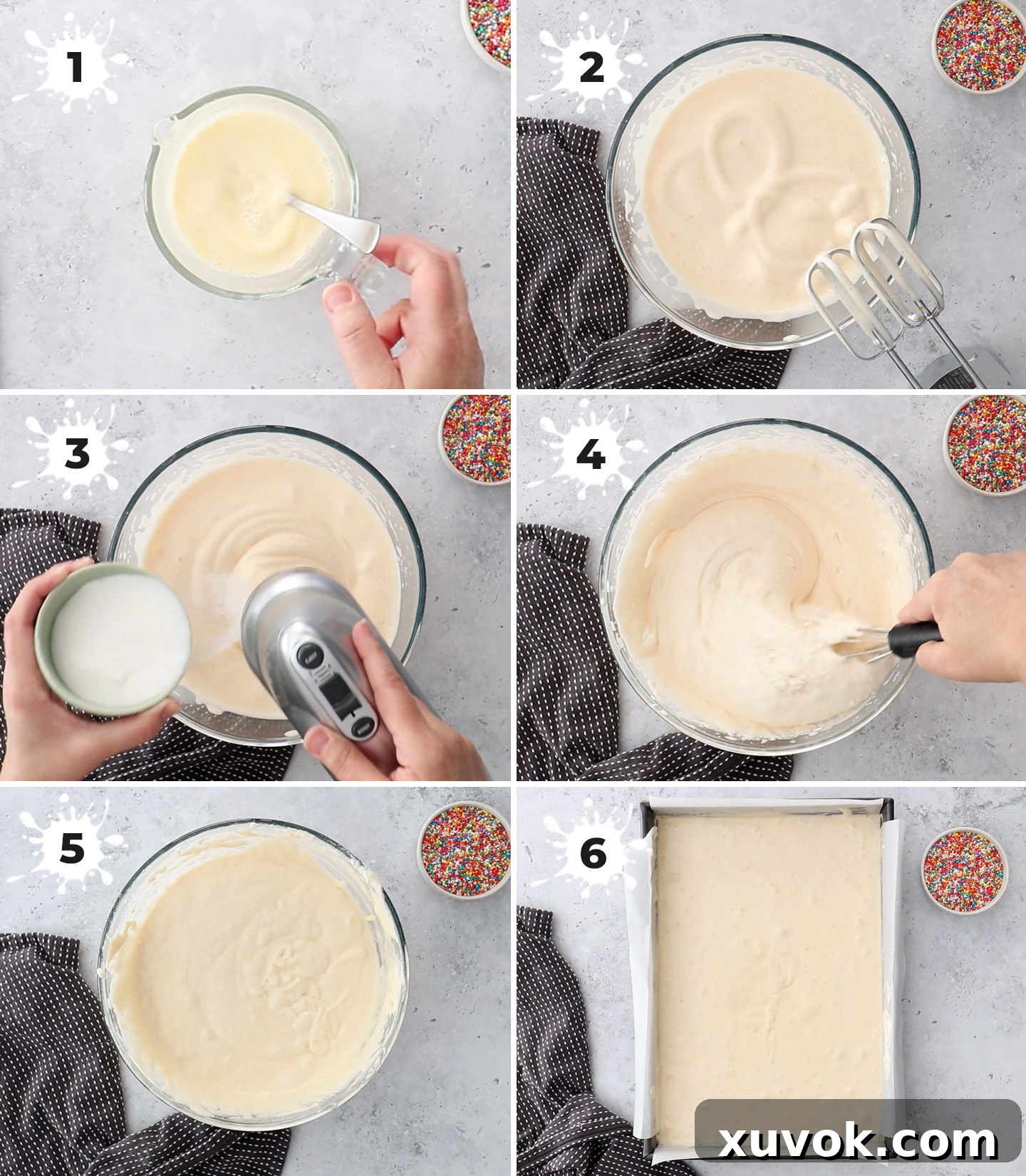
Detailed quantities and complete instructions are provided in the recipe card below.
1. Making the Perfect Sponge Cake
Begin by preparing your sponge cake base. In a large mixing bowl, using an electric mixer, beat the eggs and egg whites until they reach what’s known as the “ribbon stage.” This means the mixture will be very thick, pale, and fluffy, and when you lift the whisk, the batter will form a ribbon that holds its shape briefly on the surface (refer to photo 2). Gradually, and slowly, stream in the granulated sugar while continuing to beat on a low speed (photo 3), ensuring it’s fully incorporated. Next, gently fold in the sifted dry ingredients – plain flour, cornflour, baking powder, and salt – in two additions (photo 4). Be careful not to deflate the airy egg mixture. Finally, incorporate the melted butter, milk, and vanilla mixture (photos 1 & 5) with a light folding action until just combined. Pour this delicate batter into your prepared baking pan (photo 6) and bake until golden and a toothpick inserted into the center comes out clean. Allow the sponge to cool completely before moving to the next step.
2. Filling the Cooled Sponge
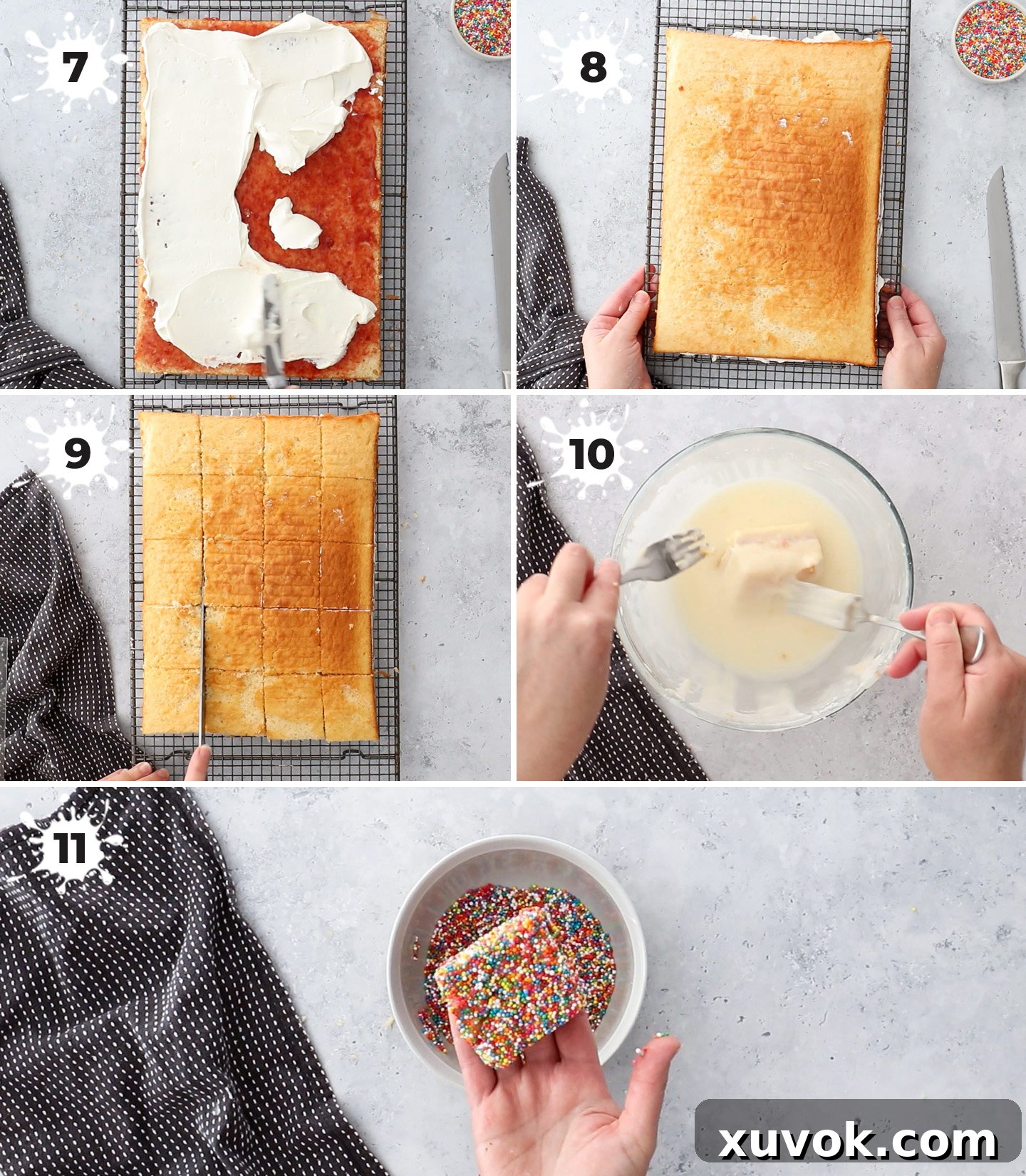
Once your sponge cake has completely cooled, carefully slice it in half horizontally using a large serrated knife. This creates two even layers. Spread a generous layer of warmed raspberry or strawberry jam evenly over the bottom half of the cake. Follow this with a layer of freshly whipped cream (photo 7). Gently place the top half of the sponge back over the cream and jam (photo 8). For easier handling and cleaner cuts, chill the assembled cake in the freezer for about 15 minutes. This firms up the filling and cake structure. After chilling, precisely cut the cake into 20 even cubes (photo 9), approximately 5cm (2 inches) each. While filling adds an extra layer of flavor and moisture, this step is entirely optional; traditional lamingtons are often served plain.
3. Preparing the Glaze
The glaze for these lamingtons is wonderfully simple yet essential. In a medium bowl, combine the icing sugar (powdered sugar), softened butter, and boiling water. Whisk these ingredients together until you achieve a perfectly smooth, thin pouring consistency. This glaze acts as the “glue” for your sprinkles, so its texture is important.
4. Assembling Your Fairy Bread Lamingtons
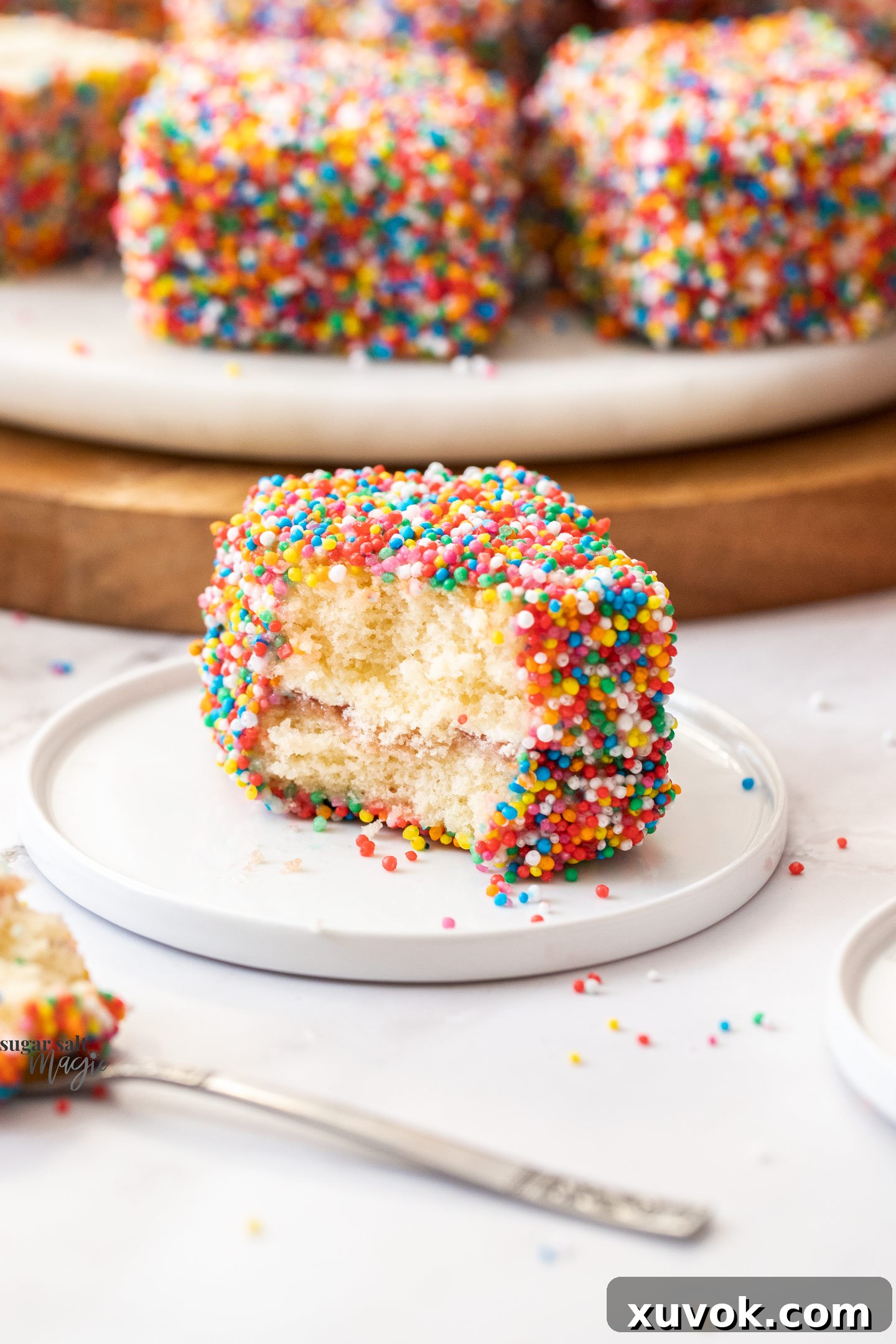
Now for the fun, and slightly messy, part! Set up your workstation by placing about a third of your 100’s and 1000’s into a shallow bowl. Place two wire racks over baking paper-lined trays to catch any drips and excess sprinkles. Using two forks, gently pick up one sponge cube and immerse it completely into the glaze, turning it carefully to ensure all sides are evenly coated (photo 10). Allow any excess glaze to drip off for a few seconds. Immediately transfer the glazed lamington to the bowl of sprinkles. Use the forks to gently roll and press the sprinkles onto all sides of the lamington (photo 11) until it’s beautifully covered. Place the finished lamington onto one of the clean wire racks to set. Repeat this process with the remaining sponge cubes, replenishing the sprinkles in your shallow bowl as needed. Once all lamingtons are coated, chill them in the refrigerator for at least 20 minutes to allow the glaze and sprinkles to set firmly. This ensures they hold their shape and stay perfectly coated.
Expert Tips and Tricks for Success
Crafting the perfect Fairy Bread Lamingtons is an art, but with these expert tips, you’ll achieve beautifully delicious results every time.
- Achieving the Perfect Ribbon Stage: This is a crucial step for a light, airy sponge. When beating eggs, whether with an electric hand beater or a stand mixer fitted with a whisk attachment, beat them continuously until they become incredibly thick, fluffy, and very pale yellow. To test if you’ve reached ribbon stage, lift the whisk; the batter that drips back into the bowl should form a distinct “ribbon” on the surface that slowly fades rather than immediately sinking in. This indicates sufficient aeration for a tender sponge.
- The Importance of Chilling: Working with a cold cake is significantly easier and yields cleaner results. Always chill your baked sponge cake thoroughly before attempting to slice it. After filling and cutting into squares, I recommend chilling the individual cubes again briefly before coating them in glaze and sprinkles. This firming-up prevents the cake from crumbling and makes handling much simpler.
- Minimizing the Mess Factor: Lamington making can indeed get a bit messy, but a few tricks can help.
- Use Two Forks: When dipping the sponge cubes into the glaze, use two forks to gently turn and maneuver them. This keeps your hands clean and allows for a more even coating.
- Elevate and Collect: Place your glazed cakes on a wire rack positioned over a large baking tray or a piece of baking paper. This setup effectively catches any excess glaze drips, keeping your workspace tidier.
- Clean Forks for Sprinkles: Once you’ve glazed 3-4 lamington cubes, use a fresh pair of forks to gently roll them in the sprinkles. This prevents glaze residue from contaminating your sprinkles and makes for a cleaner, more vibrant coating. Transfer the finished lamingtons to a separate clean tray to set.
- Weigh Your Ingredients: For baking precision, especially with flour and sugar, always use kitchen scales if possible. This eliminates inconsistencies that can arise from variations in how ingredients are scooped or packed. If scales aren’t available, use the “spoon and level” method for flour (spoon flour into the measuring cup, then level off with a straight edge) rather than scooping directly, which can compact the flour.
- Don’t Overmix: After adding the dry ingredients and then the milk mixture to the egg batter, fold gently until just combined. Overmixing will develop the gluten in the flour, resulting in a tough cake rather than a tender, fluffy sponge.
- Oven Variations: All ovens vary. Always start checking for doneness a few minutes before the recipe suggests. A toothpick inserted into the center should come out clean. Overbaking can lead to a dry sponge.
- Optional Filling: While our recipe includes a delicious jam and cream filling, traditional lamingtons are often enjoyed unfilled. Feel free to omit the jam and cream if you prefer a simpler, classic lamington experience.
Yield and Storage
This recipe is designed to yield a generous batch of approximately 20 delightful Fairy Bread Lamingtons, making it perfect for sharing at parties, family gatherings, or for enjoying as a week-long treat. Each lamington is a bite-sized piece of joy, and this quantity ensures there’s plenty to go around.
Once your Fairy Bread Lamingtons are assembled and set, they can be stored in an airtight container in the refrigerator for 2-3 days. The chilling helps maintain their freshness, keeps the cream filling stable, and prevents the glaze from becoming sticky. It’s best to consume them within this timeframe to enjoy their optimal texture and flavor, especially with the fresh cream filling.
For longer storage, the plain sponge cake itself can be frozen. It’s best to freeze the cake *before* it has been glazed and coated with sprinkles. If you wish to make a smaller batch of lamingtons, you can prepare 10-12 and freeze the remaining sponge cake for another occasion. Ensure the cake is well wrapped in plastic wrap, then placed in an airtight container or freezer bag to prevent freezer burn. When you’re ready to make more, simply thaw the frozen sponge in the refrigerator, then proceed with the filling, glazing, and sprinkling steps. Freezing the plain sponge offers wonderful flexibility, allowing you to enjoy these festive treats whenever a craving strikes.
More Recipes You’ll Love
If you’ve enjoyed the sweet simplicity and nostalgic charm of these Fairy Bread Lamingtons, you’ll be thrilled to explore more delightful recipes from our collection:
- Classic Australian Lamingtons: The traditional recipe that inspired this fairy bread twist, featuring chocolate and coconut.
- Rose and Strawberry Lamingtons: A delicate and elegant take on the lamington, perfect for a sophisticated tea party.
- Lamington Cupcakes: All the flavors of a lamington, conveniently packaged in individual cupcake form.
- Homemade 100’s and 1000’s Biscuits: A fun and easy cookie recipe loaded with colorful sprinkles, mirroring the fairy bread aesthetic.
- Confetti Cupcakes: Bright and festive cupcakes packed with sprinkles, guaranteed to bring joy to any occasion.
Did you try this Fairy Bread Lamingtons recipe?
Leaving a rating and comment below the recipe is so helpful!
Hungry for more? Subscribe to the newsletter for free recipes straight to your inbox. Also, follow along on Facebook, Pinterest and Instagram.
Fairy Bread Lamingtons
★
★
★
★
⭐Rate
📌Pin
Ingredients
FOR THE LAMINGTON SPONGE
- 57 g unsalted butter (¼ cup / ½ stick / 2oz)
- ¾ cup milk (180ml)
- 2 teaspoons vanilla extract
- 4 whole large eggs
- 2 egg whites from large eggs
- 225 g plain flour (all purpose flour) (1 ¾ cups / 8oz)
- 35 g cornflour (¼ cup / 1.2oz)
- 2 teaspoons baking powder
- Pinch of salt
- 200 g white granulated sugar (1 cup / 7oz)
FOR THE FILLING
- ½ cup fluid whipping cream (125ml)
- ½ cup strawberry or raspberry jam, warmed slightly (150g / 5.3oz)
FOR THE GLAZE AND COATING
- 3 cups icing powdered sugar (390g / 13.8oz)
- 2 tablespoons butter, softened (28g / 1oz)
- ⅓ cup + 1 tablespoon boiling water (100ml)
- 3 ½ cups 100’s and 1000’s (sprinkles)
For best results, always weigh ingredients where a weight is provided
Equipment
-
Lamington tin or 9×13 baking pan with high sides
-
Mixing bowls
-
Handheld electric beater or stand mixer with whisk attachment
-
Wire racks x2
-
Balloon whisk & spatula
Instructions
FOR THE LAMINGTON SPONGE
-
Preheat your oven to 180C (160C fan) / 350F. Line a lamington tin (approximately 22cm x 33cm or 9×13 inch with high sides) with baking paper, ensuring some overhang to help lift the cake later.
-
In a microwave-safe bowl, combine the butter and milk. Heat in 30-second intervals, stirring well after each, until the butter is completely melted and the mixture is warm. Stir in the vanilla extract and set aside to cool slightly.
-
In a separate medium bowl, sift together the plain flour, cornflour, baking powder, and salt. Whisk thoroughly to combine evenly. Set aside.
-
In a large bowl, using an electric beater or the whisk attachment of a stand mixer, beat the whole eggs and egg whites together until the mixture is very thick, pale, and forms a substantial “ribbon” when the whisk is lifted. This will take around 8 minutes.
-
While continuing to beat the egg mixture on a low speed, slowly pour in the granulated sugar. Continue beating for another minute until the sugar is fully dissolved and incorporated.
-
Using a balloon whisk or a spatula, gently fold in half of the sifted flour mixture into the egg mixture until just combined. Be careful not to deflate the air you’ve incorporated.
-
Pour in the milk and butter mixture, followed by the remaining half of the dry ingredients. Continue using a gentle folding action with your balloon whisk or spatula until no streaks of flour remain and the batter is lump-free. Avoid overmixing; the goal is to just combine the ingredients while retaining as much air as possible.
-
Pour the prepared batter evenly into your lined lamington tin. Gently tap the tin on your counter 3-4 times to release any large air bubbles, which helps create a uniform crumb.
-
Bake for 20-23 minutes, or until a wooden skewer or toothpick inserted into the center of the cake comes out clean. Do not open the oven door to check before 18 minutes. Be careful not to overbake, as this can dry out the sponge.
-
Let the cake cool in the pan for 10-15 minutes. Then, place a large baking tray or cutting board over the tin and carefully invert the cake. Remove the baking paper. Immediately repeat the flipping process using a wire cooling rack, so the cake is right side up and can cool completely.
-
Allow the sponge cake to cool down completely to room temperature before attempting to fill or cut it. This prevents the cake from breaking and the filling from melting.
FOR THE FILLING
-
In a small bowl, use an electric beater to whip the fluid cream until it forms firm peaks. Be careful not to over-whip, which can turn it grainy.
-
Using a large serrated knife, carefully slice the cooled cake horizontally into two equal layers. Gently lift the top layer off (you might need to slide your forearms underneath to support it and prevent breaking). Evenly spread the slightly warmed strawberry or raspberry jam over the bottom cake layer, followed by a layer of whipped cream.
-
Carefully place the top layer of cake back onto the filled bottom layer, aligning the edges as best as possible.
-
Chill the filled cake, ideally in the freezer, for about 15 minutes. This step is crucial for firming up the cream and making the cake easier to cut. After chilling, cut the cake into 20 even sponge cubes, approximately 5cm (2 inches) each. You can trim the edges of the cake if you desire a perfectly neat finish, but it’s not strictly necessary.
FOR THE GLAZE
-
In a medium bowl, combine the icing sugar and softened butter. Pour the boiling water over the top. Whisk vigorously until the butter has melted and all ingredients are smoothly combined into a thin, pourable glaze. If it’s too thick, add a tiny bit more boiling water; if too thin, add a teaspoon of icing sugar.
TO ASSEMBLE
-
Prepare your workstation: place about one-third of the 100’s and 1000’s sprinkles into a shallow bowl. Set up two wire racks over separate baking paper-lined trays – one for glazed lamingtons to drip, and another for finished lamingtons to set.
-
Using two forks, gently pick up one sponge cube and immerse it into the sugar glaze. Turn it carefully to ensure it’s fully coated on all sides. Lift it out and let any excess glaze drip off for a few seconds. Transfer the glazed square to the first wire rack. Repeat this process with two more squares.
-
Take the first glazed square (from the wire rack) and, using a fresh pair of clean forks, carefully roll it in the bowl of sprinkles until it is completely coated. Transfer this beautifully sprinkled lamington to the second clean tray (also lined with baking paper) to set. Repeat this step for the two other squares you just glazed.
-
Continue this cycle of glazing 3-4 squares, letting them drip, then coating them in sprinkles. Replenish the sprinkles in your shallow bowl as needed to ensure an even and vibrant coating for all lamingtons.
-
Once all lamingtons are assembled, place the trays in the refrigerator to chill for at least 20 minutes. This chilling time allows the glaze to set firmly and the sprinkles to adhere securely, giving you perfectly crisp and colorful lamingtons.
-
Please take a moment to leave a comment & rating below. Your feedback is greatly appreciated and very helpful!
Notes
- For best results, you should always weigh ingredients like flour and sugar, especially in baking. Kitchen scales are relatively inexpensive and provide far greater accuracy than volumetric measurements. If you don’t have scales, use the “spoon and level” method for dry ingredients (don’t scoop directly from the bag, which compacts the flour).
- All ovens vary significantly. Always test for doneness 1-2 minutes before the recipe suggests, using a toothpick inserted into the center of the cake.
- Ribbon stage: Beating eggs to ribbon stage means to beat them with an electric beater or a stand mixer with a whisk attachment until they are thick, fluffy, and pale. When you lift the whisk out, the dripping batter should be able to draw an “8” on the surface of the batter that holds its shape for a few seconds before sinking away. This indicates proper aeration.
- Chilling the cake: It’s much easier to work with this cake when it’s cold. I highly recommend chilling the whole cake before cutting it into squares, then chilling the individual squares a little bit more before coating them in the glaze and sprinkles. This prevents crumbling and makes for cleaner handling.
- Reducing the mess factor: Making lamingtons can indeed be messy. To minimize this, use two forks to gently turn the sponge cubes in the glaze. Place the newly glazed cakes on a wire rack positioned over a large baking tray to catch drips. Once you have 3-4 cakes glazed, use two *new, clean* forks to gently turn them in the sprinkles, then transfer them to a separate clean tray to set.
- Lamingtons are not always, and traditionally are not, filled. Feel free to leave out the jam and cream filling if you prefer a simpler version of the sponge cake.
EXPLORE MORE AUSSIE DESSERTS!