
Irresistibly Fluffy Baked Lemon Donuts with Homemade Lemon Curd
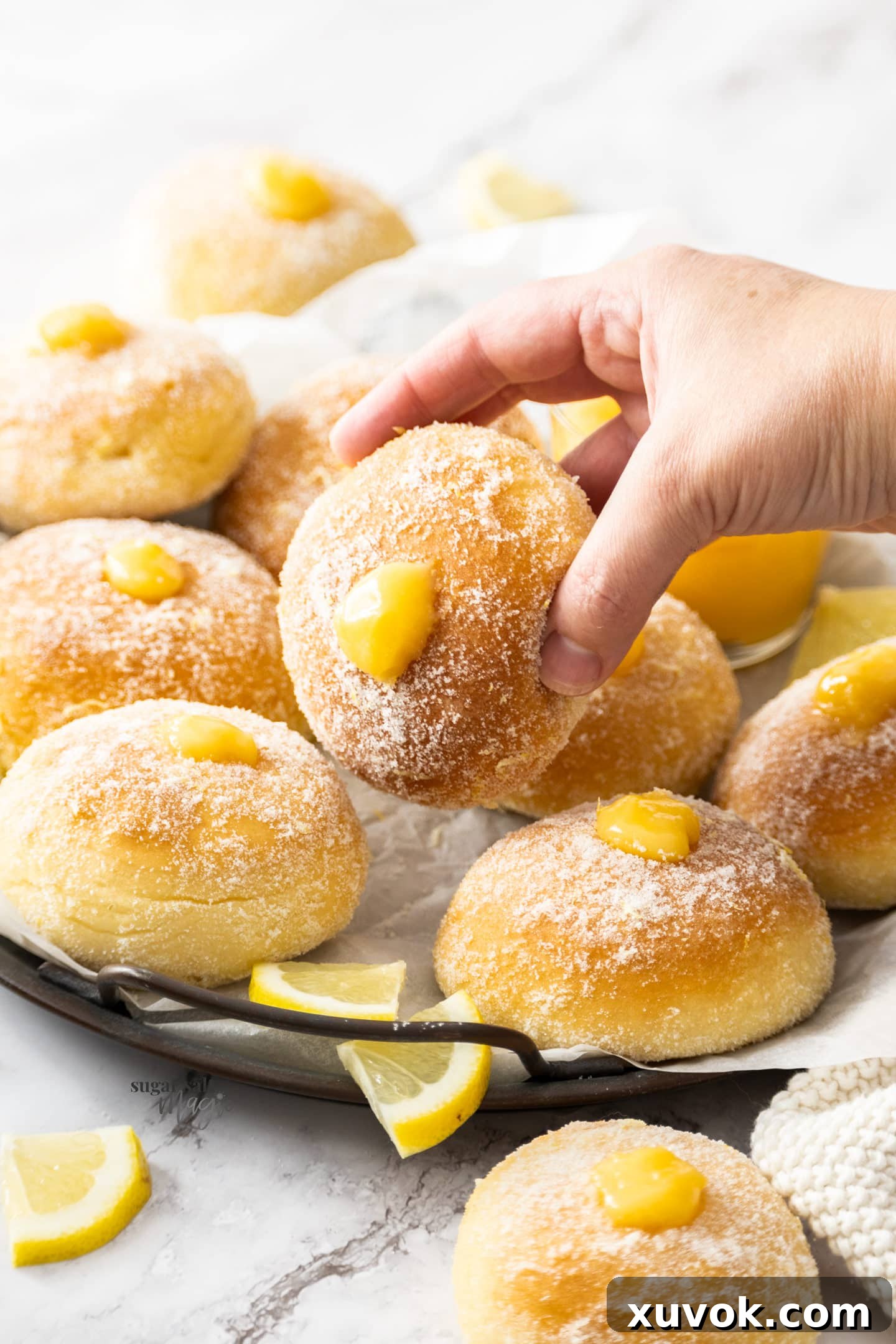
Get ready to indulge in the ultimate citrus delight! These fluffy, melt-in-your-mouth baked lemon donuts are an absolute dream for any lemon lover. Each bite offers a harmonious balance of sweet and tart, enveloped in a tender, chewy dough, and finished with a zesty lemon sugar coating. But what truly elevates these donuts is the luscious, homemade lemon curd filling that bursts with vibrant, fresh flavor. Forget messy deep-frying; these baked beauties offer all the classic donut charm with added convenience and a lighter texture. Here’s why these easy lemon donuts are about to become your new favorite treat:
- They deliver that classic, comforting perfect donut flavor, reminiscent of your favorite bakery.
- Experience a delightful chewy yet incredibly soft and tender texture that’s simply irresistible.
- Say goodbye to the hassle of heating vast amounts of oil and dealing with greasy splatters; these are baked, not fried, ensuring no mess and less fuss.
- Enjoy a lighter, non-greasy indulgence, making them a guilt-free pleasure.
- They’re remarkably quicker to make since all your donuts can bake simultaneously, eliminating the need for tedious batches.
Still need convincing? Not only are these lemon donuts recipe easier to prepare than classic cinnamon rolls, but the versatile dough recipe can also be adapted to create other beloved treats like these sweet jam doughnuts. The magic truly happens when you bite into the creamy, tangy center, filled with my personal favorite homemade lemon curd. I promise, once you try this vibrant, 15-minute lemon curd recipe, you’ll never reach for a store-bought version again. It’s perfect not just for these donuts, but also for cakes, tarts, or simply eaten by the spoonful – it’s that good!
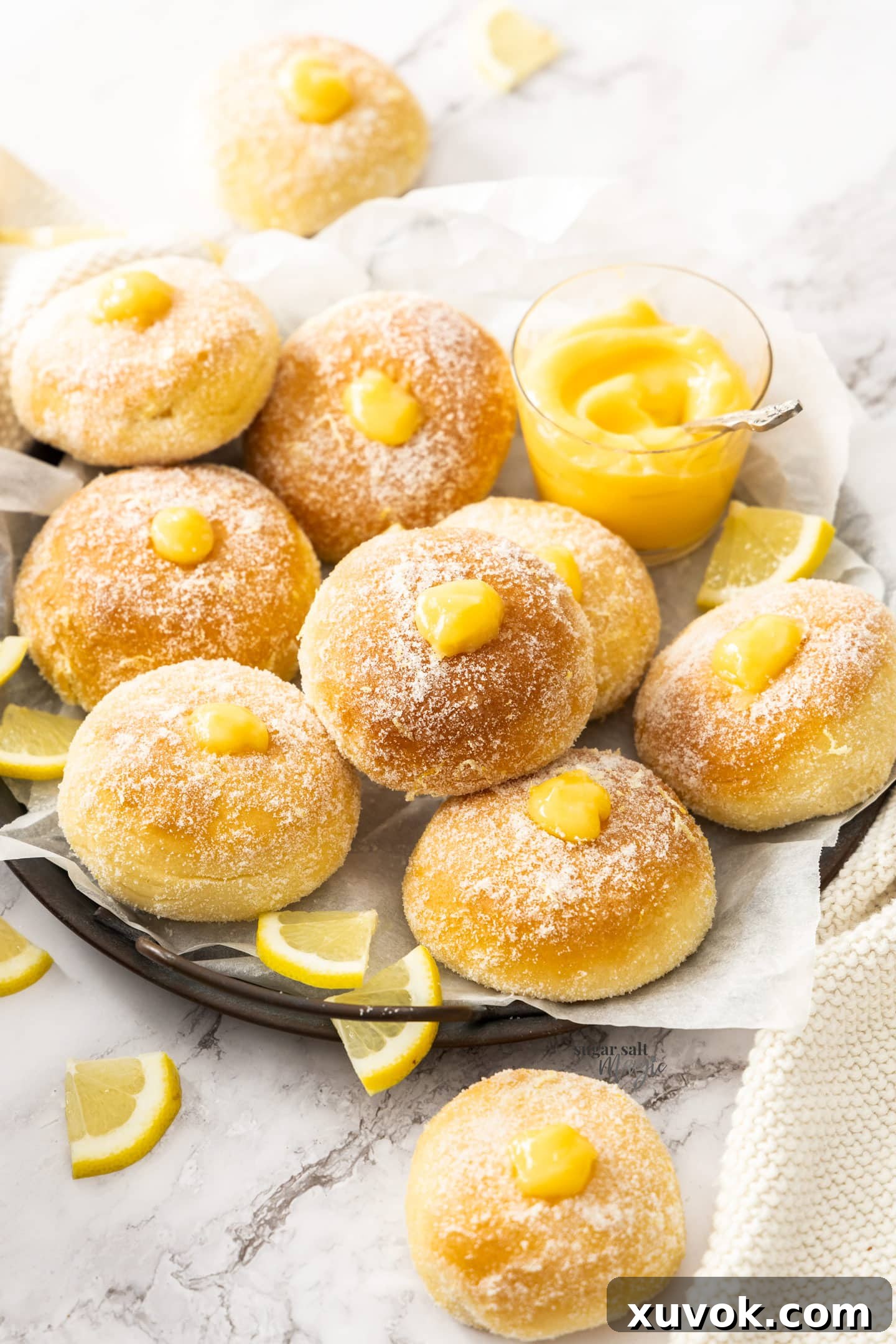
Table of Contents
- Ingredients You’ll Need for Perfect Baked Lemon Donuts
- How to Make Baked Lemon Donuts (Step-by-Step Guide)
- Crafting the Perfect Donut Dough
- The Zesty Lemon Filling and Coating
- Expert Tips and Tricks for Lemon Donut Success
- Delicious Variations on Your Lemon Donuts
- Yield and Storage Tips
- More Mouth-Watering Recipes You’ll Love
Never Miss a Recipe!
Stay updated with our latest delicious creations delivered straight to your inbox!
Sign up for our newsletter to get new recipes!
Ingredients You’ll Need for Perfect Baked Lemon Donuts
Crafting these delectable homemade lemon donuts requires a surprisingly short and simple list of ingredients. The foundation is a classic enriched dough, which means it’s made with butter and egg yolks. These additions introduce a rich, tender quality to the dough, creating that desirable fluffy texture. For the filling, if you opt for the homemade route (which I highly recommend!), you’ll only need a handful of everyday items. It’s a testament to how simple ingredients can create extraordinary flavors.
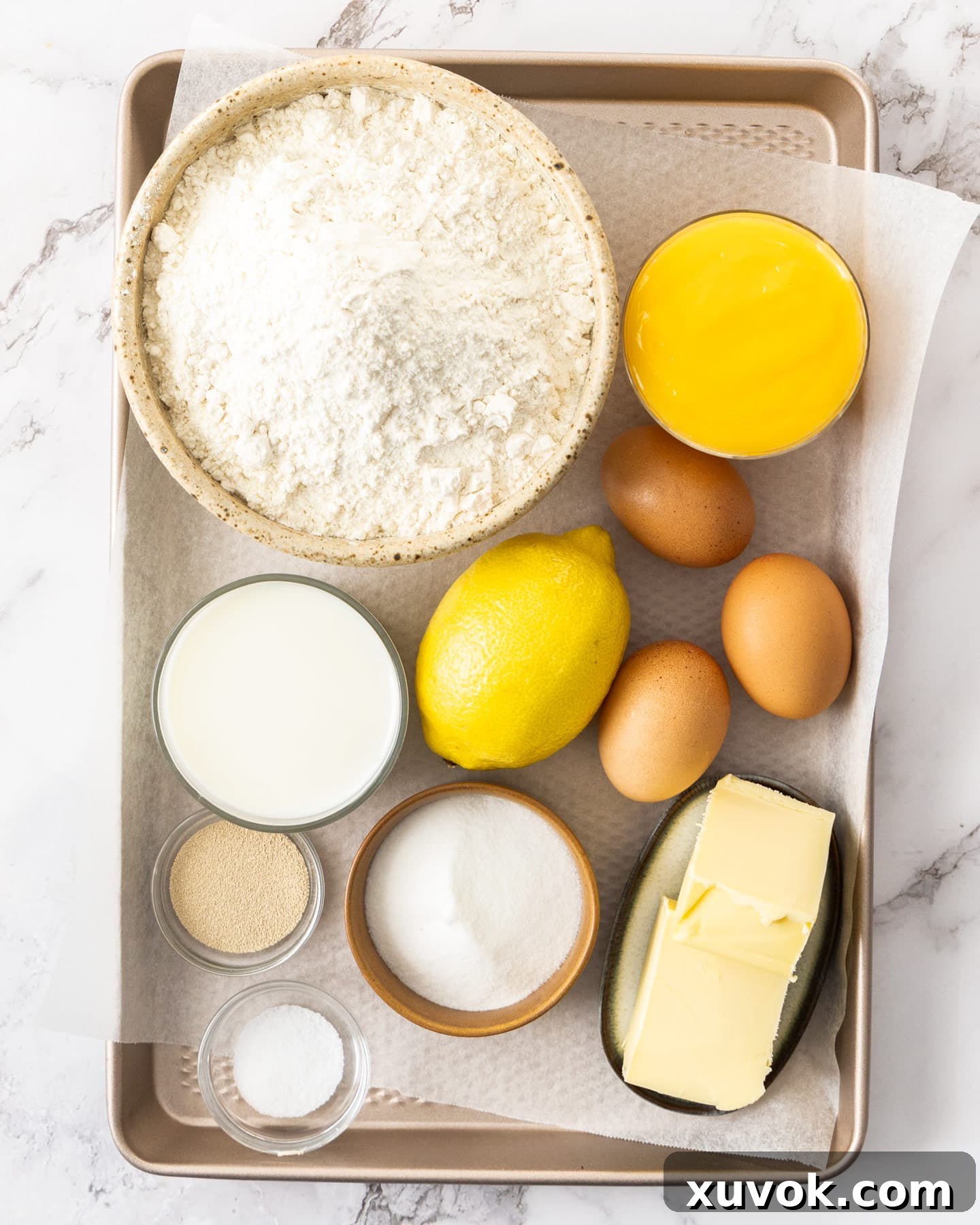
For a complete list of ingredients with precise measurements and detailed instructions, please jump straight to the recipe card below.
- Whole Milk: The base of our dough, full-fat milk is crucial for adding richness and moisture, contributing to the donuts’ soft, tender crumb. While you could substitute with a lighter milk or a plant-based alternative, be aware that this might slightly alter the richness and overall texture of the final product.
- Yeast: I primarily use instant yeast (or instant dried yeast) because of its convenience – it doesn’t require prior activation. However, the recipe is designed to activate the yeast upfront, ensuring it’s alive and ready to work, making it suitable for active-dry yeast users too. This crucial step guarantees a successful rise for your fluffy donuts.
- Sugar: Regular white granulated sugar is perfect for the dough, providing essential sweetness and aiding the yeast. For the irresistibly zesty coating, you’ll need superfine sugar, often called caster sugar. If you only have granulated sugar on hand, don’t worry! You can easily make your own caster sugar by processing granulated sugar in a food processor until the granules are much finer. This finer texture helps it adhere beautifully to the donuts and dissolve smoothly.
- Bread Flour: This is my secret weapon for achieving that signature chewy yet tender donut texture. Bread flour boasts a higher protein content compared to all-purpose flour, which develops more gluten, resulting in a wonderfully elastic dough. While you can substitute with plain (all-purpose) flour, expect a slightly different, less chewy texture.
- Egg Yolks: Three large egg yolks are incorporated into the dough to provide an incredible richness, a beautiful golden hue, and contribute significantly to the soft, cake-like consistency of these yeasted donuts. Using room temperature eggs helps them incorporate more easily into the dough.
- Unsalted Butter: A small amount of melted unsalted butter is folded into the dough for added richness and flavor. Beyond the dough, a touch of melted butter is brushed onto the baked donuts immediately after they come out of the oven. This creates the perfect sticky surface for the lemon sugar coating to adhere to, ensuring every bite is perfectly sweet and tangy, unlike fried donuts which absorb oil and come out naturally greased.
- Lemon Zest: The star of our lemon sugar coating! Fresh lemon zest is absolutely essential for imparting a bright, intense lemon flavor. Use a microplane or a very fine grater to remove only the yellow part of the lemon peel, avoiding the bitter white pith. Massaging this zest into the sugar truly unlocks its aromatic oils.
- Lemon Curd: The heart of these delicious donuts! While store-bought lemon curd is an option, I cannot stress enough how much better these donuts will be with homemade lemon curd. It’s surprisingly easy to make from scratch, requiring only fresh lemons (both zest and juice), sugar, butter, and eggs. The flavor is unparalleled – bright, tangy, and rich, far surpassing any commercial variety. Make it, and you’ll understand why it’s a game-changer!
It’s important to note that these are classic yeasted donuts, much like making bread, relying on yeast for their airy, fluffy texture. This stands in contrast to cake donuts, which are typically made in a donut pan, use baking powder or soda as leavening agents, and are mixed more like a cake batter. If you’re keen to explore the cake donut world, I have fantastic cake donut recipes you might enjoy.
How to Make Baked Lemon Donuts (Step-by-Step Guide)
While working with yeast dough does require a bit of time and patience, the reward of these pillowy, flavor-packed baked lemon doughnuts is absolutely worth every minute. The process is incredibly satisfying, and the end result is a truly remarkable treat.
My decision to bake these donuts, rather than deep-fry them, stems from a few key reasons:
- I’ve already perfected a fantastic fried donut recipe for those who prefer that method, so I wanted to offer an equally delicious baked alternative.
- More importantly, I find the process of deep-frying anything to be quite cumbersome. The sheer volume of oil needed, the inevitable splatters, and the constant struggle to maintain the ideal temperature can be a deterrent. Plus, deep-frying undeniably adds a significant amount of extra fat and calories.
Baking these fluffy donuts yields a lighter end result, not just in color but also in calories, without compromising any of the incredible flavor you crave. Furthermore, it’s a quicker and significantly cleaner method. Of course, if you have a strong preference for deep-fried donuts, you absolutely can adapt this recipe to fry them (see notes in the recipe card for instructions).
For a detailed breakdown of all ingredients and step-by-step instructions, please refer to the recipe card below.
Crafting the Perfect Donut Dough
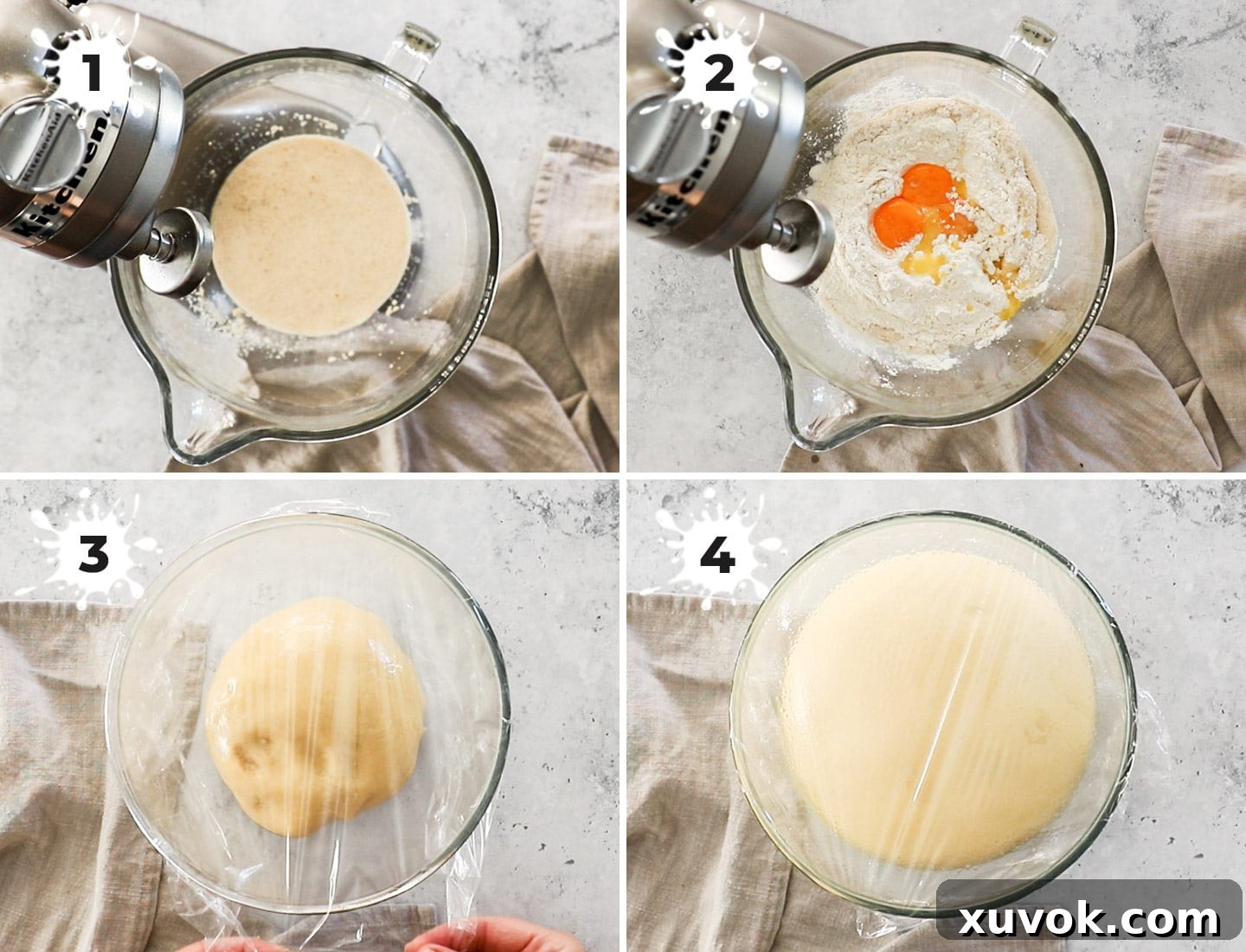
- Activate the Yeast (Your Dough’s Proof of Life): While instant yeast technically doesn’t require prior activation, I highly recommend this step. It serves as a crucial “proof of life” for your yeast, ensuring it’s active and viable before you commit all your other ingredients. If the yeast doesn’t froth up, you know it’s expired and can start over without wasting flour, butter, and eggs. This step also caters to those using active dry yeast, which *does* require activation. Simply combine the yeast with the sugar and warm milk (ensure the milk is warm, not hot, about 105-115°F or 40-46°C) and let it rest for 5-10 minutes. You should see a foamy, bubbly layer form on the surface – a clear sign your yeast is ready to work its magic! If it remains flat, your yeast is likely inactive, and you’ll need to use a fresh packet.
- Combine All Ingredients and Knead to Perfection: Once your yeast is active, add the remaining dough ingredients – flour, salt, egg yolks, and melted butter – to the yeast mixture. Give everything a rough mix to bring it together. Then, it’s time for kneading! If you’re using a stand mixer with a dough hook, this will take approximately 7-10 minutes on a low setting. The dough should transform from sticky to a smooth, elastic, and supple consistency that pulls away from the sides of the bowl. If kneading by hand, expect this process to take 12-15 minutes or even a little longer. Resist the urge to add too much extra flour during hand-kneading, as this can result in dry, dense donuts. A slightly sticky dough is normal, and it will become easier to handle as the gluten develops.
- The First Rise (Proofing for Fluffiness): Lightly grease a large bowl with a little oil, then transfer your beautifully kneaded dough into it, turning it once to coat the top with a thin layer of oil (this prevents a dry crust from forming). Cover the bowl tightly with plastic wrap or a damp kitchen towel to create a warm, humid environment. Place it in a warm spot – ideally around 75-80°F (24-27°C) – and allow it to rise until it has visibly doubled in size. This can take anywhere from 1 to 1.5 hours, depending on the warmth of your environment. Patience is key here; this first rise develops flavor and creates the airy texture we love in donuts.
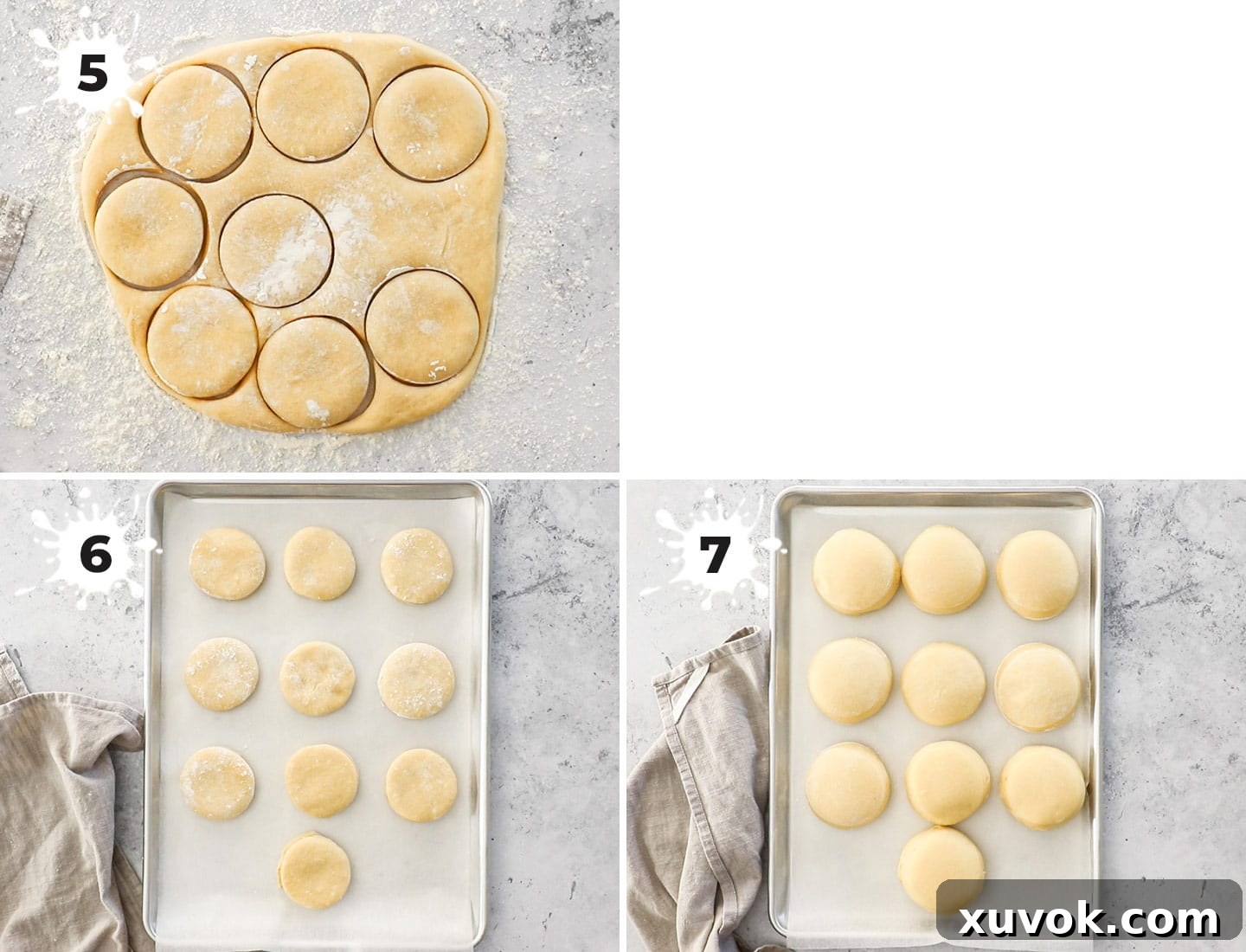
- Shape the Doughnuts with Precision: Once your dough has doubled, gently punch it down to release the air. Lightly flour your work surface and roll the dough out to an even thickness of about 1.5cm (just over ½ an inch). Dip a 7-7.5cm (2 ½ to 3 inch) round cookie cutter into flour before each cut to prevent sticking. Cut out as many rounds of dough as possible from the first roll to ensure consistency.
- The Second Rise (Puffing Up for the Oven): Carefully transfer your donut rounds onto a large baking sheet lined with parchment paper, leaving enough space between each for expansion. Cover them loosely with a clean kitchen towel and place them back in a warm spot for their second rise. This final proofing typically takes 45-60 minutes, during which the donuts should become noticeably puffy and nearly double in size. This crucial step is what gives them their light, airy texture after baking.
- Bake to Golden Perfection: While your donuts are undergoing their second rise, preheat your oven to 180°C (160°C fan forced) / 350°F. Once the donuts are gloriously puffy, simply slide the baking sheet into the preheated oven. Bake for approximately 10 minutes, rotating the tray halfway through to ensure even browning. The donuts will be lightly golden on top and bottom. To confirm doneness, you can insert an instant-read thermometer into the center of a donut; it should register 88°C (190°F). Transfer the baked donuts to a wire cooling rack to cool slightly before filling and coating. They should still be warm when you fill them, but not so hot that the curd becomes runny.
The Zesty Lemon Filling and Coating
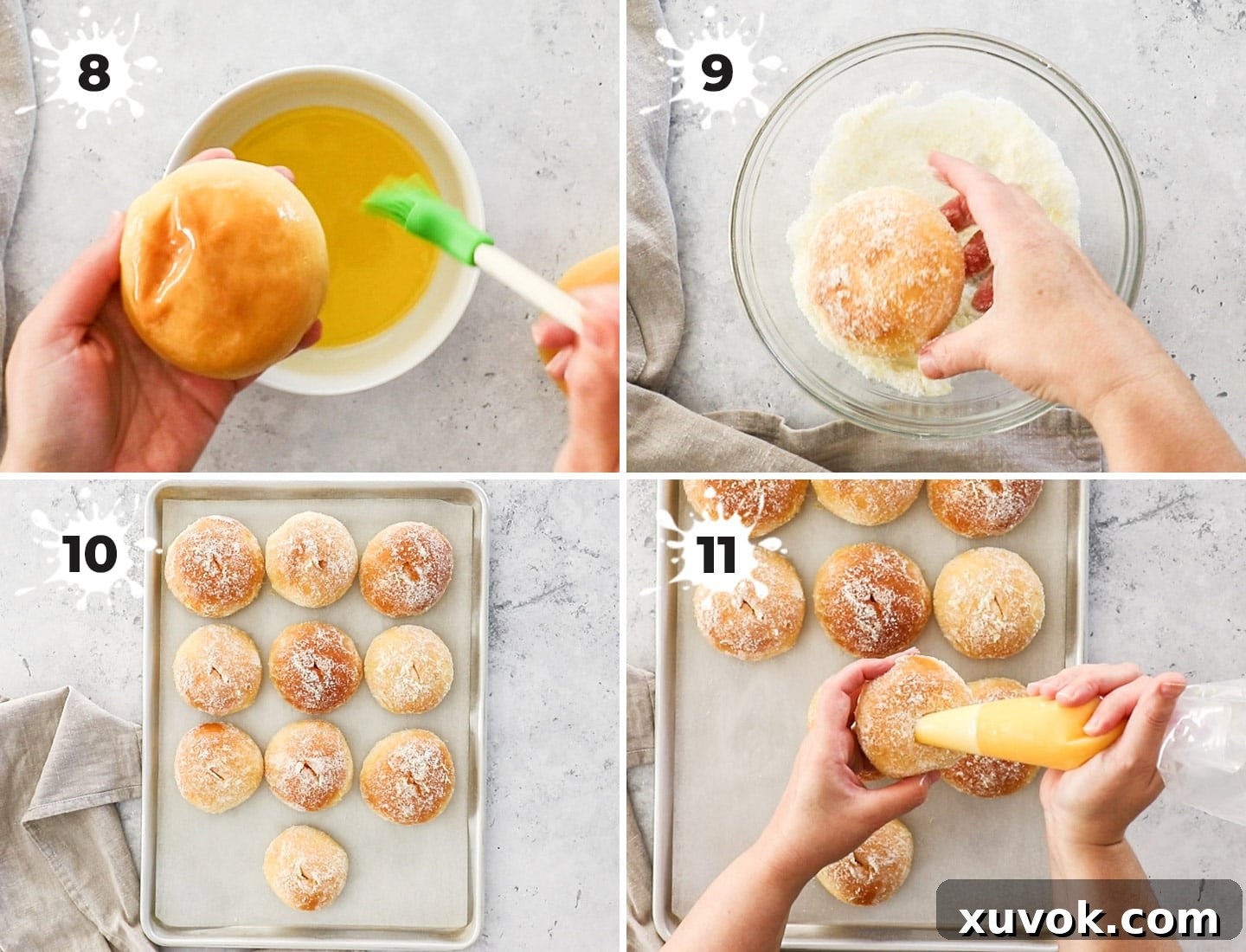
- Craft the Aromatic Lemon Sugar: The vibrant lemon sugar coating is remarkably simple yet incredibly impactful. In a medium bowl, combine the caster sugar (superfine sugar) and the finely grated lemon zest. Now, here’s the key: use your fingertips to vigorously massage the lemon zest into the sugar. This action releases the essential oils from the zest, intensifying the lemon flavor and ensuring it’s evenly distributed throughout the sugar. The sugar will become beautifully fragrant and slightly clumpy – a sign you’re doing it right!
- Butter and Coat the Donuts: Once the donuts have cooled slightly but are still warm, brush them liberally with melted unsalted butter. Ensure they are coated thoroughly all over, as this butter acts as the adhesive for our lemon sugar. Immediately after buttering, roll each donut generously in the prepared lemon sugar mixture. Use your hand to gently toss and roll them, ensuring every surface is completely covered in that sparkling, zesty coating. The warm butter helps the sugar stick perfectly.
- Fill with Luscious Lemon Curd: For the ultimate filling, I wholeheartedly recommend using your homemade lemon curd. It’s quick to prepare (you can even make it during the first dough rise or up to 2-3 days in advance) and needs to be cooled completely before filling to prevent it from becoming too runny inside the warm donuts. Transfer the cooled lemon curd to a piping bag fitted with a small (about 6-7mm or ¼ inch) round or long piping nozzle. Using the handle end of a teaspoon or a small knife, create a small incision or hole either in the side or top of each donut, gently wiggling it to create a pocket. Insert the piping nozzle into this hole and gently squeeze the bag, filling the donut until you feel a slight resistance or see the curd just starting to peek out.
Expert Tips and Tricks for Lemon Donut Success
Achieving perfectly fluffy and flavorful baked lemon donuts is easier than you think, especially with these helpful tips and tricks. Follow these guidelines to ensure your donut-making experience is smooth and successful, resulting in a batch of irresistible treats every time.
- Understanding Yeast Activation: Remember that yeast thrives in warmth. When activating your yeast, ensure the milk is warm to the touch, but not hot (ideally between 105-115°F or 40-46°C). If the liquid is too cold, the yeast won’t activate; if it’s too hot, it will kill the yeast. On a particularly chilly day, you might notice the froth isn’t as vigorous, but as long as you see even a slight puffiness or bubbling, your yeast is generally good to go. This initial test prevents wasted ingredients and ensures your dough will rise.
- Mastering the Kneading Process: I find a stand mixer with a dough hook to be a convenient tool for kneading, making the process effortless. However, kneading by hand is entirely possible and equally effective. When kneading by hand, the dough might initially feel quite sticky. Resist the urge to add excessive amounts of extra flour, as this can make your donuts dry and dense. Instead, lightly flour your hands and work surface as needed, and keep kneading; the dough will become smoother and less sticky as the gluten develops over 12-15 minutes.
- No Cookie Cutter? No Problem! Don’t fret if you don’t own a round cookie cutter. You can easily shape your donuts by rolling small, even balls of dough and then gently flattening them slightly into disc shapes. Aim for a consistent size to ensure even baking. Alternatively, use the rim of a drinking glass or a jar lid for cutting perfect rounds.
- Re-rolling the Dough: After cutting your initial rounds, you’ll have some dough scraps left. You can gently gather these scraps, lightly re-knead them into a smooth ball, and then let the dough rest for about 15-20 minutes. This resting period allows the gluten to relax, making the dough much easier to roll out again. Try to limit re-rolling to just once, as overworking the dough can make it tough.
- Choosing the Right Piping Nozzle: For filling your donuts with lemon curd, I recommend using a piping nozzle with an opening of approximately 6-7mm (¼ inch). A nozzle this size is pointy enough to comfortably insert into the donut without tearing a large hole, yet wide enough to allow the curd to flow smoothly without making a mess or getting clogged.
- Lighten Up Your Lemon Curd: If you prefer a slightly less intense lemon flavor or a creamier texture, you can fold a small amount of freshly whipped cream through your cooled lemon curd just before filling. This creates a wonderfully light and airy lemon cream that’s utterly delightful.
- Proofing Environment: A warm, draft-free environment is ideal for dough rising. If your kitchen is cool, you can create a makeshift proofing box by placing the covered bowl of dough in a slightly warm (but turned off) oven with just the oven light on, or near a sunny window.

Delicious Variations on Your Lemon Donuts
Once you’ve mastered this delightful baked lemon donut recipe, the possibilities for customization are endless! This versatile dough is a fantastic canvas for a myriad of flavors. Here are some inspiring donut filling and coating ideas to help you get creative and impress your taste buds:
- Lemon and Blueberry Dream: Keep that wonderfully zesty lemon sugar coating, but transform the filling! Instead of lemon curd, pipe in a rich, thick blueberry compote or your favorite blueberry jam. The pairing of bright lemon with sweet blueberries is a classic for a reason!
- Classic Jam Donut Reinvented: For a nostalgic treat, prepare the donuts as usual, but omit the lemon zest from the sugar coating. Instead, coat them simply in granulated sugar, then fill them generously with luscious strawberry jam. Pure, simple bliss.
- Warm Cinnamon and Caramel Indulgence: Swap the lemon sugar for a cozy cinnamon sugar coating. To do this, simply leave out the lemon zest and add about ½ teaspoon of ground cinnamon to your superfine sugar. Then, fill these aromatic donuts with creamy dulce de leche or a rich caramel filling. I’m particularly fond of Bonne Maman caramel for this.
- Explore Other Citrus Curds: Embrace the tangy goodness of other citrus fruits! Try filling your donuts with my vibrant lime curd or a cheerful blood orange curd. For a cohesive flavor profile, use the matching citrus zest (lime zest or orange zest) in your sugar coating.
- Simple Powdered Sugar Elegance: For a quick and elegant finish, skip the lemon sugar entirely. Once the donuts are slightly cooled, simply give them a generous dusting of icing sugar (also known as powdered sugar). This creates a delicate sweetness that lets the lemon curd truly shine.
- Light and Creamy Whipped Fillings: Allow the baked donuts to cool completely. Then, fill them with fluffy whipped cream – whether it’s classic Chantilly cream for a sophisticated touch, or plain whipped cream spiked with freeze-dried strawberry powder for a delightful strawberry cream filling.
- Rich Pastry Cream Delight: Channel your inner bakery with decadent pastry cream fillings. Create a Bavarian donut experience by filling them with rich vanilla pastry cream, or indulge your chocolate cravings with this luscious chocolate pastry cream.
- Glossy Lemon Glaze Finish: Instead of a sugar coating, opt for a vibrant lemon glaze. Whisk together fresh lemon juice and icing sugar (powdered sugar) until smooth. Dip the warm donuts into the glaze for a glossy, tangy finish.
- Decadent Chocolate Donuts: Completely change the profile by omitting the lemon zest and filling these soft donuts with a rich, silky chocolate cremeux. A true chocolate lover’s dream!
The culinary adventures don’t stop there! I’d absolutely love to hear about the innovative and delicious combinations you try or dream of trying with this versatile donut recipe.
Yield and Storage Tips
This recipe is designed to produce a generous batch of 10-12 delightful lemon donuts, though the exact number can vary slightly depending on the precise size of your cookie cutter. Whether you make 10 or 12, each one promises to be a bite of pure joy!
Much like their fried counterparts, these baked lemon donuts are at their absolute best when enjoyed fresh, ideally on the day they are baked. The yeast dough is wonderfully soft and fluffy when warm, and the lemon sugar coating provides that perfect crunch. If you find yourself with leftovers (a rare occurrence, I’m sure!), they can be stored in an airtight container at room temperature for up to 2 days. To revive their tender texture and bring back that fresh-baked feel, give them a quick zap in the microwave for about 8-10 seconds. This brief warming period won’t make them hot, but it will work wonders in softening and fluffing them up again, almost as if they just came out of the oven. Avoid refrigerating the donuts, as this tends to dry out yeast-leavened products and make them stale more quickly.
More Mouth-Watering Recipes You’ll Love
If you enjoyed making these baked lemon donuts, you’re in for a treat! Explore more of our delicious recipes for irresistible sweet baked goods and dessert ideas:
- Maritozzi (Italian cream buns): Light, sweet buns filled with fluffy whipped cream.
- Chocolate filled donuts: Indulgent donuts brimming with rich chocolate cream.
- Bavarian cream donuts: Classic donuts with a creamy, custard-like filling.
- Caramel doughnuts: Decadent fried donuts with a luscious brown sugar custard.
- Blueberry cake donuts with lemon icing: A delightful cake-style donut with bright fruity and citrus notes.
- Iced buns with coconut: Soft, sweet buns topped with a simple glaze and shredded coconut.
- Chocolate chouxnuts: A unique hybrid, combining choux pastry with donut deliciousness, often filled with chocolate.
Did you try this amazing lemon donut recipe?
We’d love to hear your thoughts! Leaving a rating and comment below the recipe is incredibly helpful and appreciated!
Hungry for more culinary inspiration? Subscribe to our newsletter for free, delicious recipes delivered straight to your inbox. Don’t forget to follow along on Facebook, Pinterest and Instagram for daily inspiration and behind-the-scenes glimpses!

Baked Lemon Donuts
Rate
Pin
Ingredients
FOR THE DOUGHNUTS
- ¾ cup whole milk
- 50 g white sugar (¼ cup / 1.8oz)
- 2 ½ teaspoons instant yeast (or active dry)
- 325 g bread flour (2 ½ cups / 11.5oz)
- ¼ teaspoon salt
- 3 egg yolks from large eggs, room temperature
- 42 g unsalted butter, melted (3 tablespoons / 1 ½ oz)
COATING AND FILLING
- ½ cup caster sugar (superfine sugar) (100g/3.5oz)
- 2 teaspoons lemon zest
- 2 tablespoons unsalted butter, melted (28g/1oz)
- ¾ cup lemon curd (180ml)
For best results, always weigh ingredients where a weight is provided
Equipment
-
Rolling Pin
-
7cm / 3inch circle cookie cutter
-
large baking sheet
-
squares of baking paper or parchment paper
Instructions
-
MAKE THE DOUGH:
Gently warm the whole milk for 25-30 seconds in the microwave if it’s cold from the fridge, or about 15 seconds if it’s at room temperature. The goal is for it to be slightly warmer than lukewarm to the touch (around 105-115°F or 40-46°C), but never hot, as excessive heat will kill the yeast.
-
Pour the warmed milk into the bowl of a stand mixer (or a large mixing bowl if kneading by hand). Add the granulated white sugar, then sprinkle the instant yeast evenly over the surface. Stir gently to combine. Let this mixture sit undisturbed for 5-10 minutes. During this time, you should observe a frothy, bubbly layer forming on top. This is a crucial step that confirms your yeast is active and alive, ensuring your donuts will rise beautifully. If no froth appears, your yeast may be expired, and you’ll need to start with a fresh batch.
-
Once the yeast is activated, add the bread flour, salt, room temperature egg yolks, and the melted unsalted butter to the bowl. Attach the dough hook (if using a stand mixer) or use a sturdy spoon to give the ingredients a preliminary mix until just combined and a shaggy dough forms.
-
Begin kneading the dough. With a stand mixer and dough hook, knead on a low-medium setting for about 7-10 minutes. The dough will gradually become smooth, elastic, and will pull cleanly away from the sides of the bowl. If kneading by hand, this process will take a bit longer, approximately 12-15 minutes. The dough will be somewhat sticky at first, but resist adding too much extra flour, as this can make your final donuts dry and dense. Continue kneading until it feels supple and elastic.
-
Lightly grease a large, clean bowl with a little neutral oil. Transfer the kneaded doughnut dough to this bowl, turning it once to ensure the top is also lightly coated in oil (this prevents a crust from forming during the rise). Cover the bowl tightly with plastic wrap or a clean, damp kitchen towel. Place it in a warm, draft-free spot (around 75-80°F or 24-27°C, like a turned-off oven with the light on) and allow it to rise for 1 to 1 ½ hours, or until it has visibly doubled in size. This first rise is crucial for developing flavor and creating a light texture.
-
SHAPE THE DOUGHNUTS:
While your dough is rising, prepare a large baking sheet by lining it with baking paper or parchment paper. This will be where your shaped donuts will undergo their second rise.
-
Once the dough has completed its first rise, gently punch it down to deflate the air. Transfer the dough to a lightly floured surface. Using a rolling pin, gently roll out the dough to an even thickness of approximately 1.5cm (just over ½ inch). Dip a 7.5cm (3 inch) round cookie cutter into flour before each cut to prevent sticking. Cut out as many rounds as possible from the first roll of dough to ensure uniformity. Carefully transfer each cut dough round onto the prepared baking sheet. Cover the rounds loosely with a clean tea towel and place them in a warm spot again to rise. This second proofing typically takes 45-60 minutes, and the donuts should become puffy and nearly doubled in size. This final rise contributes significantly to their ultimate fluffiness.
-
Any remaining dough scraps can be gently gathered and lightly re-kneaded into a smooth ball. Allow this dough to rest for about 15 minutes before rolling it out again and cutting additional donuts. Place these newly cut donuts on the baking sheet with the others to rise, ensuring they also become puffy. Try to limit re-rolling to just once to maintain a tender texture.
-
COOKING THE DOUGHNUTS:
Preheat your oven to 180°C (160°C fan forced) / 350°F. If you prefer to deep fry, please refer to the notes section for specific instructions on oil temperature and cooking times.
-
Carefully place the baking sheet with the risen donuts into the preheated oven. Bake for approximately 10 minutes, turning the sheet halfway through to ensure even baking and a beautiful, light golden color. To confirm that the donuts are properly cooked through, you can insert an instant-read thermometer into the center of one – it should register an internal temperature of 88°C (190°F).
-
Once baked, transfer the donuts immediately to a wire cooling rack. Allow them to cool slightly, but they should still be warm when you proceed to the coating and filling steps. If they are too hot, the lemon curd filling may become too runny.
-
FOR THE LEMON SUGAR COATING:
In a medium-sized bowl, combine the caster sugar (superfine sugar) with the lemon zest. This is where the magic happens for an intensely lemony coating: use your fingertips to vigorously massage and rub the lemon zest into the sugar. This action releases the fragrant oils from the zest, infusing the sugar with incredible lemon flavor and aroma, and ensuring an even distribution.
-
While the donuts are still warm, liberally brush each one all over with the remaining melted unsalted butter. You can use your hand to gently turn and coat them thoroughly. This butter layer is essential as it provides the perfect sticky surface for the lemon sugar to adhere to.
-
Immediately after buttering, take each donut, one at a time, and roll it through the prepared lemon sugar mixture. Use your dry hand to gently toss and roll the donut, ensuring it is completely coated in the sparkling, aromatic lemon sugar. The warm, buttered surface will pick up the sugar beautifully.
-
To prepare for filling, gently press the handle end of a teaspoon into the side or top of each donut. Wiggle it around a little to create a small cavity or pocket inside, making space for the delicious lemon curd filling. Be careful not to press too hard or poke all the way through.
-
FILLING THE DONUTS:
Ensure your lemon curd is completely cooled. Transfer the luscious lemon curd into a piping bag fitted with a 6-7mm (¼ inch) round or long piping nozzle.
-
Gently push the piping nozzle into the hole you created in each donut. Slowly and steadily squeeze the piping bag to fill the donut with lemon curd. You’ll feel a slight resistance as the donut fills. Stop squeezing when the lemon curd just begins to show at the opening or when the donut feels nicely weighted.
-
These homemade baked lemon donuts are truly best eaten fresh and slightly warm. Enjoy!
-
Please take a moment to leave a comment & rating if you tried this recipe. Your feedback is highly appreciated and incredibly helpful!
Notes
- For the most accurate and consistent baking results, it is always recommended to weigh ingredients like flour and sugar using a kitchen scale. Kitchen scales are an affordable investment that significantly improves baking precision. If a scale isn’t available, use the “spoon and level” method for measuring flour (spoon flour into the measuring cup, then level off with a straight edge) rather than scooping directly, which can compact the flour.
- This recipe yields between 10 to 12 delicious lemon donuts, depending on the exact size of the cookie cutter you use and how efficiently you cut the dough.
- For Deep Frying (Alternative Method): If you prefer to deep fry your donuts, heat 2 litres (quarts) of neutral-flavored oil (like vegetable or canola oil) in a large, heavy-bottomed saucepan or Dutch oven. Use a deep-fry thermometer to maintain the oil temperature precisely between 170°C-180°C (340°F-350°F). It’s crucial to keep the temperature as consistent as possible throughout the frying process. Carefully place 2-3 donuts into the hot oil using a slotted spoon – avoid overcrowding the pan, as this will lower the oil temperature. Fry for approximately 1 ½ – 2 minutes on each side, or until they are golden brown and puffed. Transfer the fried donuts to a wire rack placed over a baking sheet lined with paper towel to drain excess oil for a few minutes. You can test for doneness by inserting a thermometer into the center of a donut; it should reach an internal temperature of 88°C (190°F). Once drained, proceed with the butter coating and lemon sugar steps, followed by filling with lemon curd.
Calories from Fat 81
See the web story.