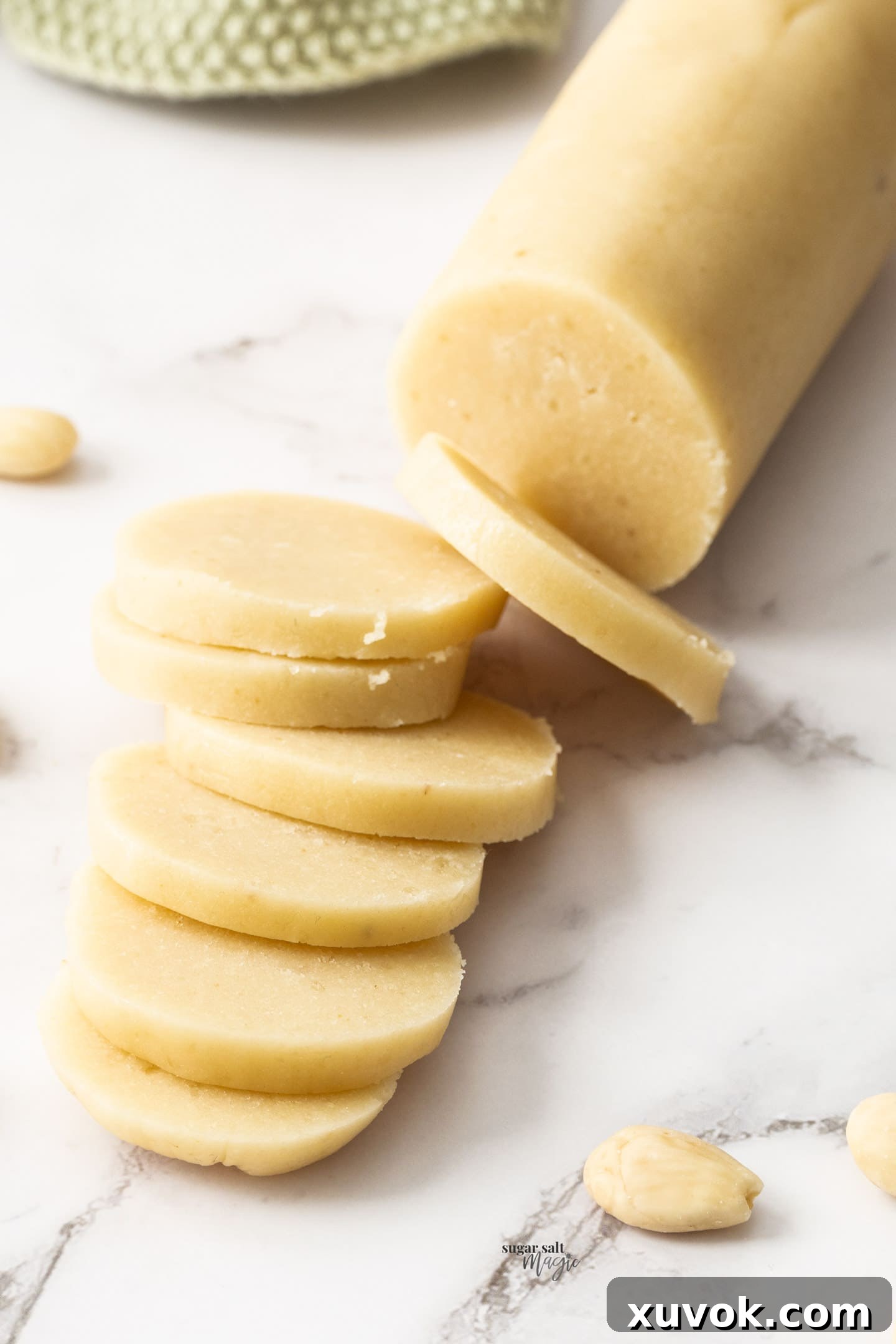
Delight in the simplicity of baking with this effortless homemade almond paste recipe. Perfect for both novice and experienced bakers, this versatile ingredient is a true kitchen staple, offering a rich, sweet, and subtly creamy almond flavor that elevates any confection. Its ease of preparation, requiring only five common ingredients and five minutes of your time, makes it an ideal choice for busy schedules. Best of all, it requires no cooking and can be prepared well in advance, stored for future use in the freezer.
- Experience an exceptionally rich almond flavor, perfectly balanced with sweetness and a creamy texture.
- Crafted from just 5 essential ingredients, easily found in any pantry.
- Ready in a mere 5 minutes, making it incredibly convenient.
- No baking or cooking required, simplifying your culinary process.
- Benefit from its make-ahead nature, allowing for stress-free preparation.
For anyone who truly appreciates the profound, nutty essence of almonds, this recipe is a must-try. The bold and authentic almond flavor of this homemade paste makes it a star ingredient in a wide array of baked goods. Imagine transforming your Danishes, croissants, cakes, and cookies into gourmet delights. Its ability to be made ahead of time and frozen is a game-changer, providing a convenient solution for when you crave a quick, delectable dessert without the last-minute fuss. It’s not just a time-saver; it’s a flavor enhancer that promises to impress.
This exquisite almond paste forms the heart of our beloved bear claw pastry. You might also explore its counterpart, the vibrant pistachio paste, for another unique flavor dimension. Furthermore, it serves as an excellent substitute for marzipan in our authentic Danish spandauer recipe, adding a distinct character to your traditional European pastries.
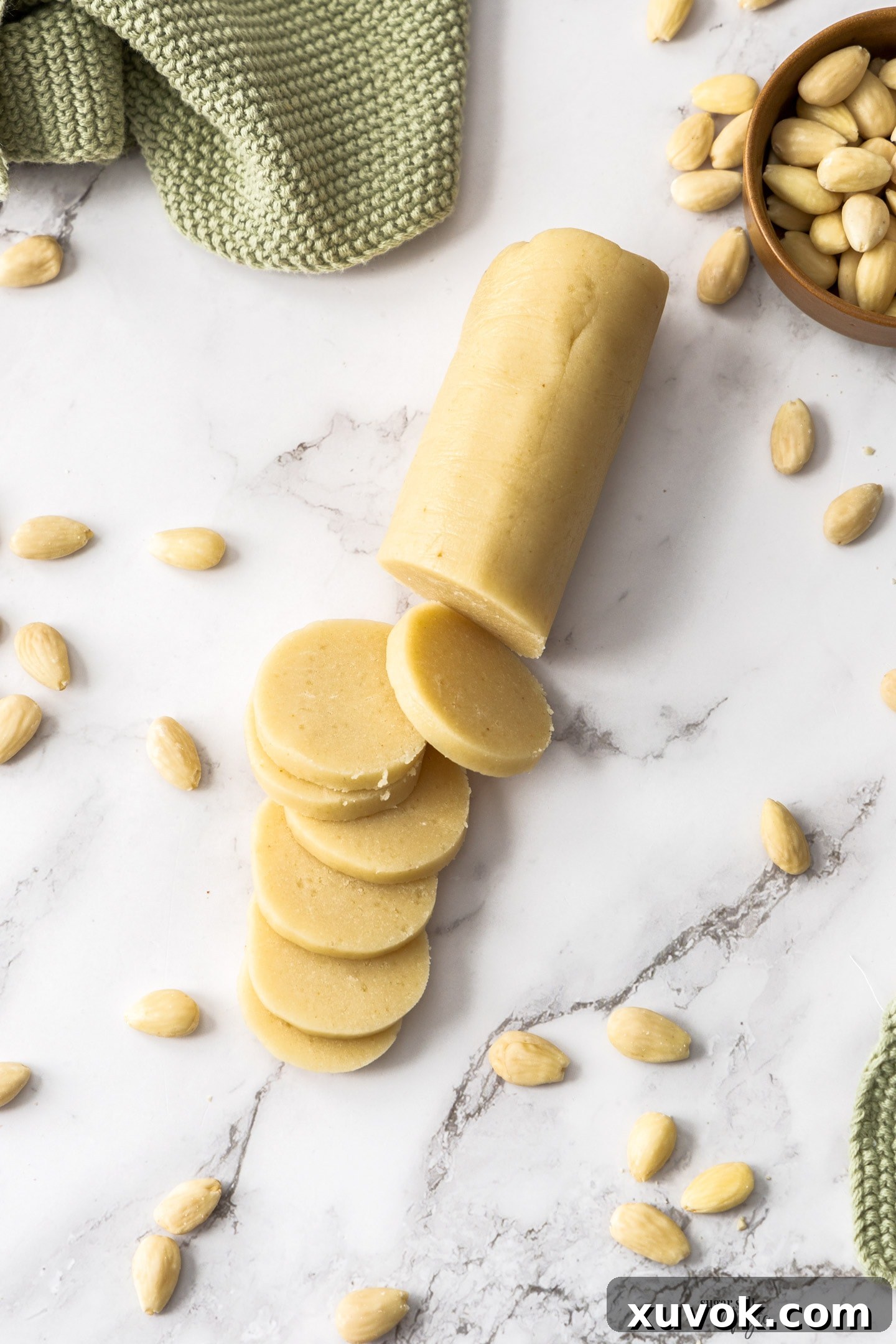
Table of contents
- What is Almond Paste?
- Almond Paste vs. Marzipan: A Detailed Comparison
- Essential Ingredients for Perfect Almond Paste
- How to Make Almond Paste (Step-by-Step Guide)
- Versatile Uses for Homemade Almond Paste
- Frequently Asked Questions (FAQs)
- Yield and Storage Tips for Almond Paste
- More Delicious Recipes You’ll Love
Never Miss a Recipe!
Get the latest recipes straight to your inbox by signing up for our newsletter!
Sign up here to receive delicious recipes and baking tips directly to your email.
What is Almond Paste?
Almond paste is a fundamental ingredient in various baking traditions worldwide, known for its rich, sweet, and distinctly nutty flavor. It’s essentially a pliable mixture predominantly made from finely ground blanched almonds and sugar, often enhanced with a touch of egg white or water and almond extract. Unlike some other nut preparations, almond paste boasts a slightly coarser texture, allowing the natural grit of the almonds to contribute to its unique mouthfeel. This characteristic texture makes it an excellent choice for fillings in pastries, cakes, and cookies, where it provides a delightful contrast to softer elements. Its versatility extends across numerous cuisines, from European tarts to Asian sweets, offering a robust almond essence that is both comforting and sophisticated.
Historically, almond paste has been a staple in European patisserie for centuries. Its presence in Danish pastries, French confections, and Italian baked goods speaks to its enduring appeal and adaptability. It acts not just as a flavor agent but also contributes moisture and structure to baked items, ensuring a tender crumb and a burst of almond goodness in every bite. Understanding almond paste means appreciating its role as a key player in creating memorable, almond-infused desserts that are both elegant and satisfying.
Almond Paste vs. Marzipan: A Detailed Comparison
While often confused, almond paste and marzipan are distinct entities, and understanding their differences is crucial for successful baking. They are not interchangeable in recipes due to fundamental variations in their composition, texture, and intended uses. Marzipan, a more refined and pliable confection, typically contains a higher sugar content than almond paste, often with added corn syrup or glucose. This increased sugar and different binders result in a much smoother, paler, and more elastic dough-like consistency, making it ideal for molding into decorative shapes, covering cakes, or creating candy-like treats. Marzipan’s primary role is often ornamental or as a sweet, standalone confection.
Almond paste, on the other hand, prioritizes a bolder, more intense almond flavor and a slightly coarser, less uniform texture. It has less sugar, allowing the natural nuttiness of the almonds to shine through more prominently. This distinct texture prevents it from being as easily molded as marzipan, rendering it unsuitable for intricate decorations. Instead, almond paste excels as a rich, flavorful filling. Imagine it baked into the center of a croissant, layered in a Danish pastry, or mixed into cake batters for added moisture and flavor. While it’s possible to transform almond paste into marzipan by adding more sugar and binders, the reverse is not true; marzipan cannot be converted into almond paste. Therefore, always adhere to your recipe’s specific call for either almond paste or marzipan to achieve the desired flavor and structural integrity in your culinary creations.
Essential Ingredients for Perfect Homemade Almond Paste
Crafting your own almond paste at home is surprisingly simple, primarily thanks to its short and straightforward ingredient list. With just five common items, you can create a rich, flavorful paste that surpasses many store-bought varieties. The quality of your ingredients directly impacts the final taste and texture, so selecting the best available is key to a superior homemade almond paste.
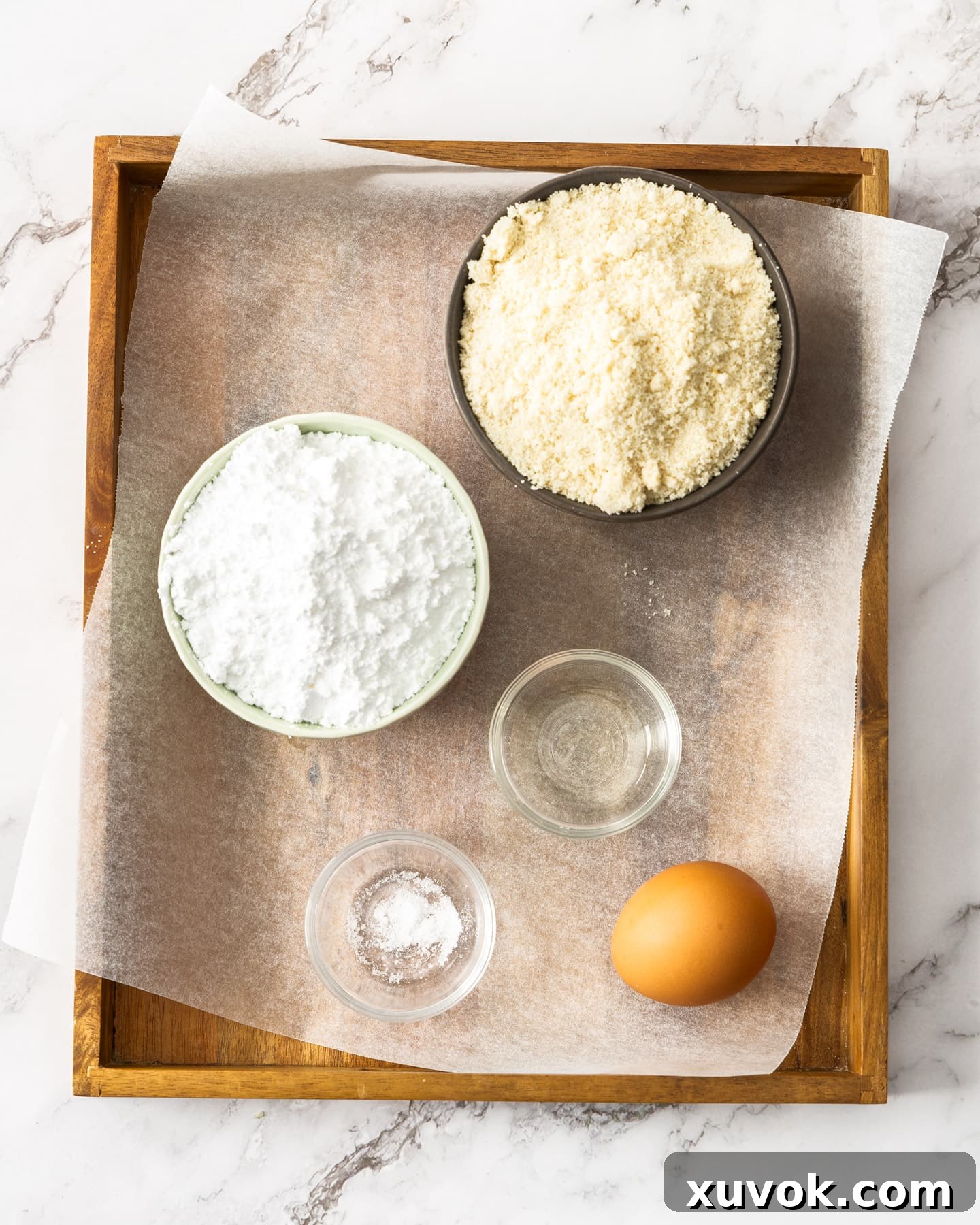
Jump to the recipe for a precise breakdown of quantities and comprehensive instructions.
- Almond Meal / Almond Flour: This is the cornerstone of your almond paste. You’re looking for blanched, finely ground almonds, which are essentially almonds processed after their skins have been removed. This results in a light-colored, flour-like consistency, free from the speckles that unblanched almonds would leave. While often called different names depending on your region, the key is the blanching and fine grind. If you have whole blanched almonds, you can make your own by processing them in a food processor, but be cautious and pulse in short bursts to avoid releasing the natural oils and turning it into almond butter. The goal is a coarse flour, not a creamy paste, at this stage.
- Icing Sugar (Powdered Sugar): Also known as confectioners’ sugar, this finely milled sugar dissolves easily, contributing to the smooth (yet still slightly coarse) texture of the paste and providing its essential sweetness. Using granulated sugar would result in a gritty texture that is undesirable for almond paste. Ensure it is sifted to remove any lumps before adding it to your mixture.
- Egg White: A fresh, cold, raw egg white acts as the primary binder for the paste, helping to bring all the ingredients together into a cohesive, pliable mass. The protein in the egg white helps to emulsify the mixture and achieve the desired consistency. If concerns about raw egg whites are an issue, you can opt for carton pasteurized egg whites, which are safe for consumption without cooking, where available.
- Almond Extract: To truly amplify that signature almond flavor, a high-quality almond extract is indispensable. It provides a concentrated boost that complements the natural almond meal. It’s crucial to use “extract,” which is derived from natural almond oils, rather than “essence,” which is typically synthetic and can have an artificial taste. A little goes a long way in deepening the flavor profile.
- Salt: Just a tiny pinch of salt might seem insignificant, but it plays a vital role. Salt is a flavor enhancer, balancing the sweetness and intensifying the nutty notes of the almonds. It prevents the paste from tasting one-dimensional and brings out the best in all the other ingredients, creating a more complex and satisfying flavor profile.
How to Make Almond Paste (Step-by-Step Guide)
Creating your own delicious almond paste is an incredibly straightforward process, requiring minimal effort and just one key piece of kitchen equipment: a food processor. This method ensures a consistent texture and integrates the ingredients perfectly, yielding a superior paste every time. Follow these simple steps to achieve a rich, homemade almond paste that’s ready to elevate your baking.
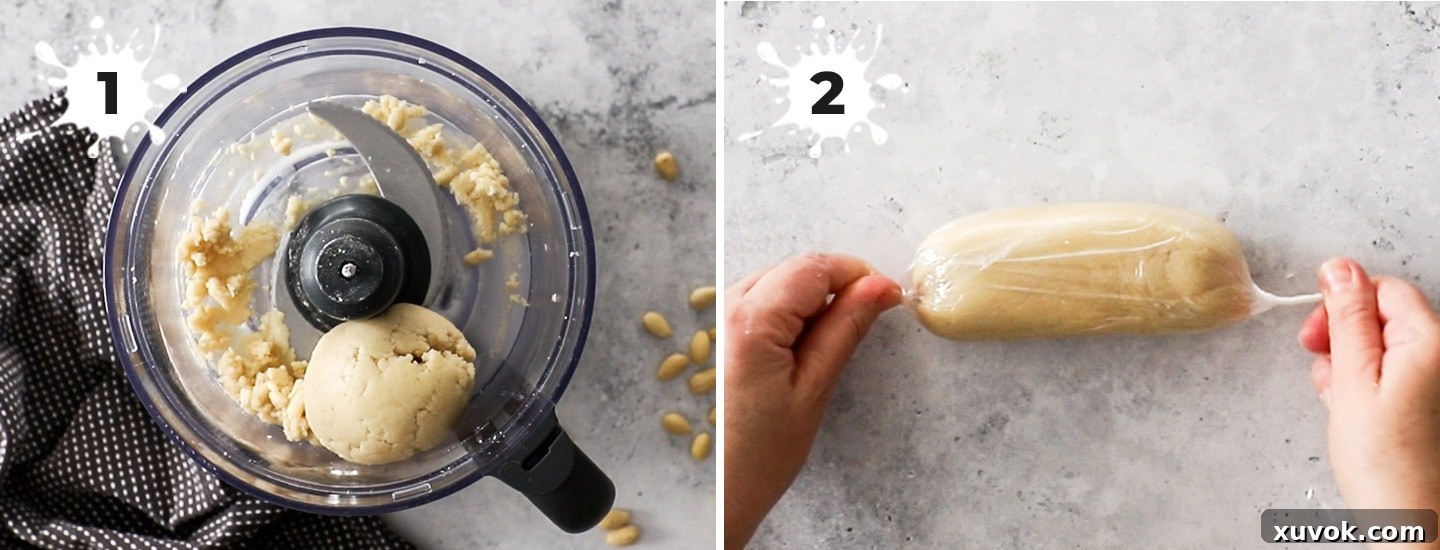
Jump to the full recipe card for exact measurements and detailed instructions.
- Combine All Ingredients in a Food Processor: Begin by adding your blanched almond meal (or almond flour), icing sugar, egg white, almond extract, and a pinch of salt directly into the bowl of your food processor. Ensure all ingredients are measured accurately for the best consistency. Using a food processor is essential here, as it quickly and efficiently grinds the ingredients together, creating a uniform paste without overworking it.
- Process Until the Mixture Forms Large Clumps: Secure the lid of your food processor and begin to pulse the mixture. Continue processing, scraping down the sides of the bowl periodically with a spatula, until the ingredients come together and start forming large, cohesive clumps. The mixture should appear well-combined and slightly sticky. It won’t form a completely smooth ball like dough, but rather distinct, soft clumps. If the mixture seems excessively sticky and hard to handle, you can gradually add a very small amount of additional icing sugar, a teaspoon at a time, until the stickiness is manageable. However, be cautious not to add too much, as this will result in an overly sweet paste and can alter its intended texture and flavor balance. A little stickiness is perfectly normal and desirable for almond paste.
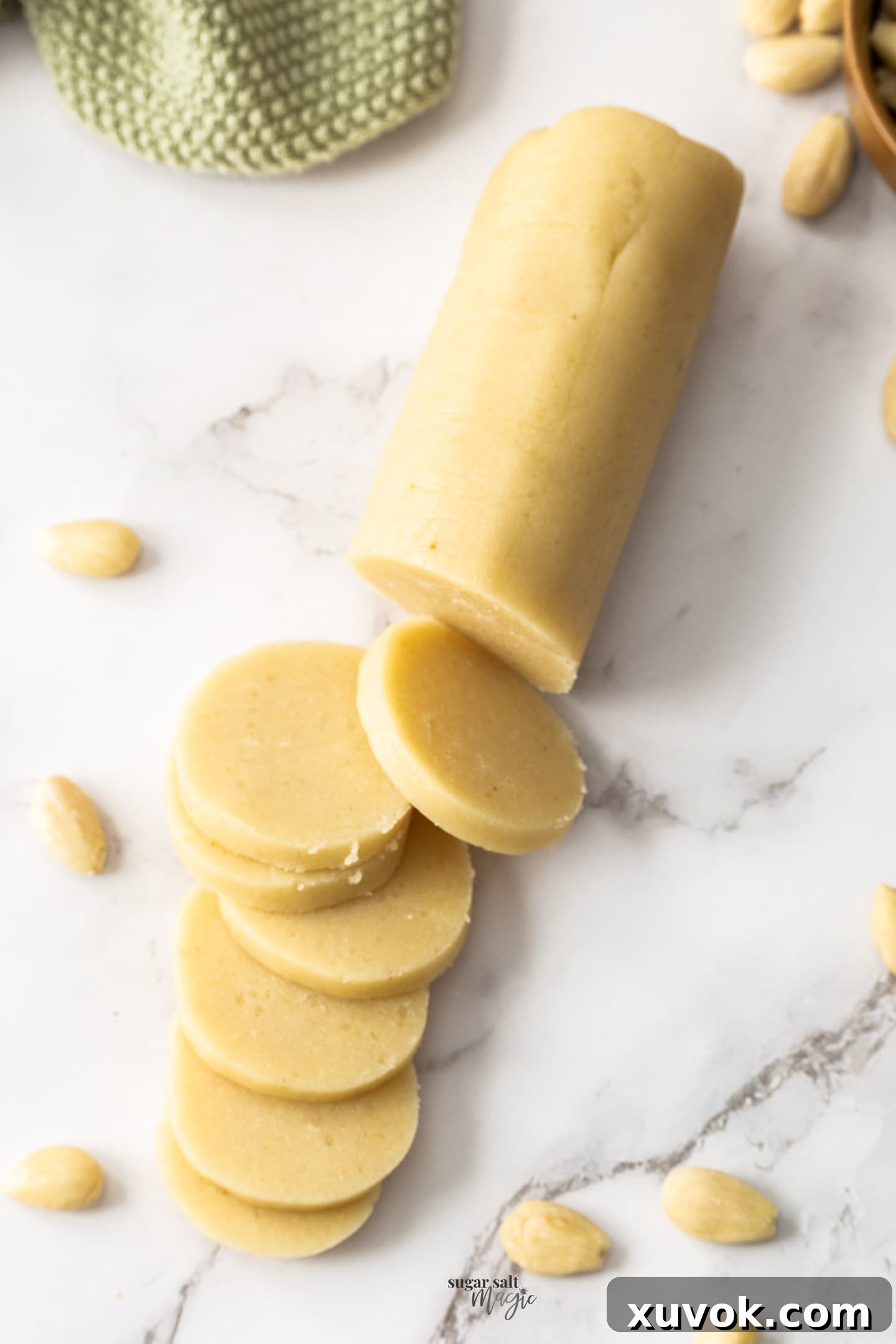
- Wrap and Store for Freshness: Once the almond paste has reached the desired clumpy consistency, remove it from the food processor. Gently shape it into a log or disk. Tightly wrap the paste in plastic wrap, ensuring no air can get to it, as exposure to air can cause it to dry out. Your homemade almond paste can be stored in the refrigerator for up to 7 days, allowing you to prepare it ahead of your baking projects. For longer storage, it freezes exceptionally well for up to 3 months. When ready to use, simply thaw it in the refrigerator overnight or at room temperature until pliable.
And there you have it! Five simple ingredients, a food processor, and three easy steps are all it takes to create a batch of incredibly flavorful, homemade almond paste. This quick preparation makes it an accessible ingredient for enhancing all your favorite almond-flavored desserts.
Versatile Uses for Homemade Almond Paste
Homemade almond paste is an incredibly versatile ingredient that can elevate a wide variety of sweet treats, imparting a rich, nutty flavor and a delightful texture. For optimal results, it’s generally best to use almond paste at room temperature, as it tends to be quite firm when chilled directly from the refrigerator. Allowing it to soften slightly makes it easier to work with, whether you’re spreading it, shaping it, or incorporating it into batters.
Its primary domain is in baking, where it shines in intricate projects like tarts, cakes, and cookies. The paste adds a dense, moist, and distinctly almond-flavored component that can transform ordinary baked goods into extraordinary delights. Here are some specific and popular applications where almond paste truly excels:
- Almond Croissants: A classic French bakery item, almond paste is typically spread or piped into flaky croissants, often topped with sliced almonds and a dusting of powdered sugar, creating a luxurious breakfast or dessert.
- French Pithivier: This elegant puff pastry cake features a rich almond paste filling, often flavored with citrus, baked between two rounds of pastry, creating a visually stunning and delicious treat for special occasions.
- Bear Claws: A beloved American pastry, bear claws traditionally feature a sweet almond paste filling tucked inside a yeast dough, then shaped and often topped with glaze and sliced almonds.
- Danish Kringle: A true Scandinavian delight, Kringle can be filled with a generous layer of almond paste, providing a moist and flavorful contrast to its often buttery and flaky pastry exterior.
- Italian Almond Cookies: Many traditional Italian cookies, such as Amaretti or Ricciarelli, rely on almond paste (or a similar almond base) for their distinctive chewy texture and intense almond flavor.
- Stuffed Cream Puffs or Profiteroles: Beyond classic pastry cream, almond paste can be used as a sophisticated filling for cream puffs or profiteroles, offering a rich, contrasting flavor that’s both unexpected and deeply satisfying.
- Cake Fillings and Batters: Incorporate softened almond paste directly into cake batters for a super moist, dense, and intensely almond-flavored cake. It also makes a wonderful filling when layered between cake sponges.
- Tarts and Galettes: Spread a layer of almond paste at the bottom of a tart crust before adding fruit, or mix it into a frangipane for an almond cream filling that bakes beautifully.
- Fruit Bakes: Pair almond paste with seasonal fruits like apples, pears, cherries, or apricots in crumbles, crisps, or baked fruit dishes for an added layer of flavor and moisture.
This soft, sweet almond filling brings an amazing almond nut taste to any dish, showcasing its incredible versatility. Experiment with it to discover your own favorite ways to incorporate this homemade delicacy into your baking repertoire.
Frequently Asked Questions (FAQs)
The primary difference lies in their sugar content and texture. Marzipan contains significantly more sugar, often with additional corn syrup or glucose, making it much sweeter, paler, and smoother. This allows marzipan to be easily molded and shaped for decorative purposes or used as a confectionery coating. Almond paste, in contrast, has a lower sugar content and a slightly coarser texture, delivering a more intense, authentic almond flavor. It is primarily used as a filling or an ingredient in baked goods rather than for molding.
Yes, almond paste is perishable and can go bad if not stored correctly. Due to its ingredients, especially the egg white, it requires proper refrigeration. Always store homemade almond paste tightly wrapped in plastic wrap in the refrigerator to prevent it from drying out or spoiling. For extended freshness, it can also be safely frozen.
No, marzipan cannot typically be substituted for almond paste in recipes. While both are almond-based, their differing sugar levels and textures mean they behave differently when baked. Almond paste provides a specific density and flavor concentration crucial for many recipes, which marzipan, with its higher sugar content and more pliable consistency, cannot replicate. Using marzipan instead of almond paste would likely result in an overly sweet product with an altered texture and structure.
Absolutely, genuine almond paste is made with a significant proportion of real almonds. Specifically, it uses blanched almonds, which means the almonds have had their skins removed. This process results in the paste’s characteristic light color and smooth texture, ensuring the pure flavor of almonds is the star of the show. Be wary of any product labeled “almond paste” that lists artificial flavorings or very little actual almond content.
While a food processor is highly recommended for achieving the finest and most consistent texture quickly, it is technically possible to make almond paste by hand using a mortar and pestle or by finely mincing the blanched almonds and working them with the other ingredients. However, this method is significantly more labor-intensive and may not result in as smooth or uniform a paste as a food processor would. For convenience and optimal results, the food processor is the preferred tool.
Yes, for those with egg allergies or who prefer an egg-free version, the egg white can often be replaced with a small amount of water, milk (dairy or non-dairy), or even a touch of corn syrup. You’ll need to add it gradually, a teaspoon at a time, until the mixture comes together into a pliable paste. The texture might be slightly different, but it will still provide a delicious almond flavor for your baking needs.
Yield and Storage Tips for Almond Paste
This simple recipe yields approximately 300g (or about 10.5 ounces) of fresh, homemade almond paste, providing a generous amount for several baking projects. The quantity can, of course, be easily scaled up or down depending on your specific needs, maintaining the same delightful flavor and texture.
Proper storage is essential to maintain the freshness and quality of your homemade almond paste. Once prepared, wrap the almond paste tightly in plastic wrap, pressing out any air to prevent it from drying out or absorbing odors from the refrigerator. Stored this way, it will remain fresh in the refrigerator for up to 7 days. This makes it an ideal component for meal prepping or preparing ahead of a busy baking session.
For longer-term storage, almond paste freezes exceptionally well. Again, wrap it very tightly in several layers of plastic wrap, then place it in an airtight freezer-safe bag or container. It can be kept in the freezer for up to 3 months without compromising its flavor or texture. When you’re ready to use your frozen almond paste, simply transfer it to the refrigerator to thaw overnight, or leave it at room temperature for a few hours until it becomes pliable enough to work with. Always ensure it’s fully thawed before using to ensure even incorporation into your recipes.
More Delicious Recipes You’ll Love
If you enjoyed making this versatile almond paste, you’ll love exploring these other delightful recipes from our collection, perfect for expanding your baking repertoire!
- Pistachio Paste: Another incredibly flavorful nut paste that opens up a world of green-hued desserts.
- Chocolate Pastry Cream: A rich and creamy chocolate filling, perfect for tarts, eclairs, and cakes.
- How to Make Pastry Cream (Crème Pâtissière): Master the basics of this essential baking cream.
- Maple Butter: A sweet, buttery spread with the irresistible flavor of maple.
- Homemade Chocolate Sauce: Simple to make, this rich sauce is perfect for sundaes, desserts, or hot drinks.
- Vanilla Bean Powder: An aromatic ingredient that adds intense vanilla flavor to anything you bake.
Did you try this almond paste recipe?
Leaving a rating and comment below the recipe is so helpful!
Hungry for more? Subscribe to our newsletter for free recipes straight to your inbox. Also, follow along on Facebook, Pinterest and Instagram for daily inspiration and updates.
Homemade Almond Paste
15
serves
5 minutes
0 minutes
5 minutes
Rate
Pin
Ingredients
-
1 ½
cups
almond meal / almond flour
150g -
1
cup
icing sugar
(powdered sugar) -
1
large egg white -
½
teaspoon
almond extract -
⅛
teaspoon
salt
For best results, always weigh ingredients where a weight is provided
Equipment
-
food processor
Instructions
-
To the bowl of a food processor, add the almond meal, icing sugar, egg white, almond extract, and salt.
-
Process until the mixture starts forming large clumps. Scrape down the sides of the bowl as needed to ensure all ingredients are incorporated.
-
Test the texture – if it feels excessively sticky and difficult to handle, add a very small amount (e.g., ½-1 teaspoon) more icing sugar and pulse briefly. Remember, a slight stickiness is normal for almond paste.
-
Remove the paste from the food processor and gently roll it into a log or shape it into a disk. Wrap it tightly in plastic wrap to prevent air exposure. Store in the fridge for up to 7 days or in the freezer for up to 3 months.
-
Please take a moment to leave a comment & rating below if you enjoyed this recipe. Your feedback is greatly appreciated and helps us!
Notes
EXPLORE MORE FROSTINGS & SPREADS!
96
kcal
Marie Roffey
Dessert
European
Have you tried this recipe?
Don’t forget to leave a rating and comment below and let me know how it was! I love hearing from you. Nutrition information is approximate and derived from an online calculator. The brands you use may cause variations.
Calories from Fat 54
9%
3%
1%
0%
3%
4%
9%
6%
2%
2%