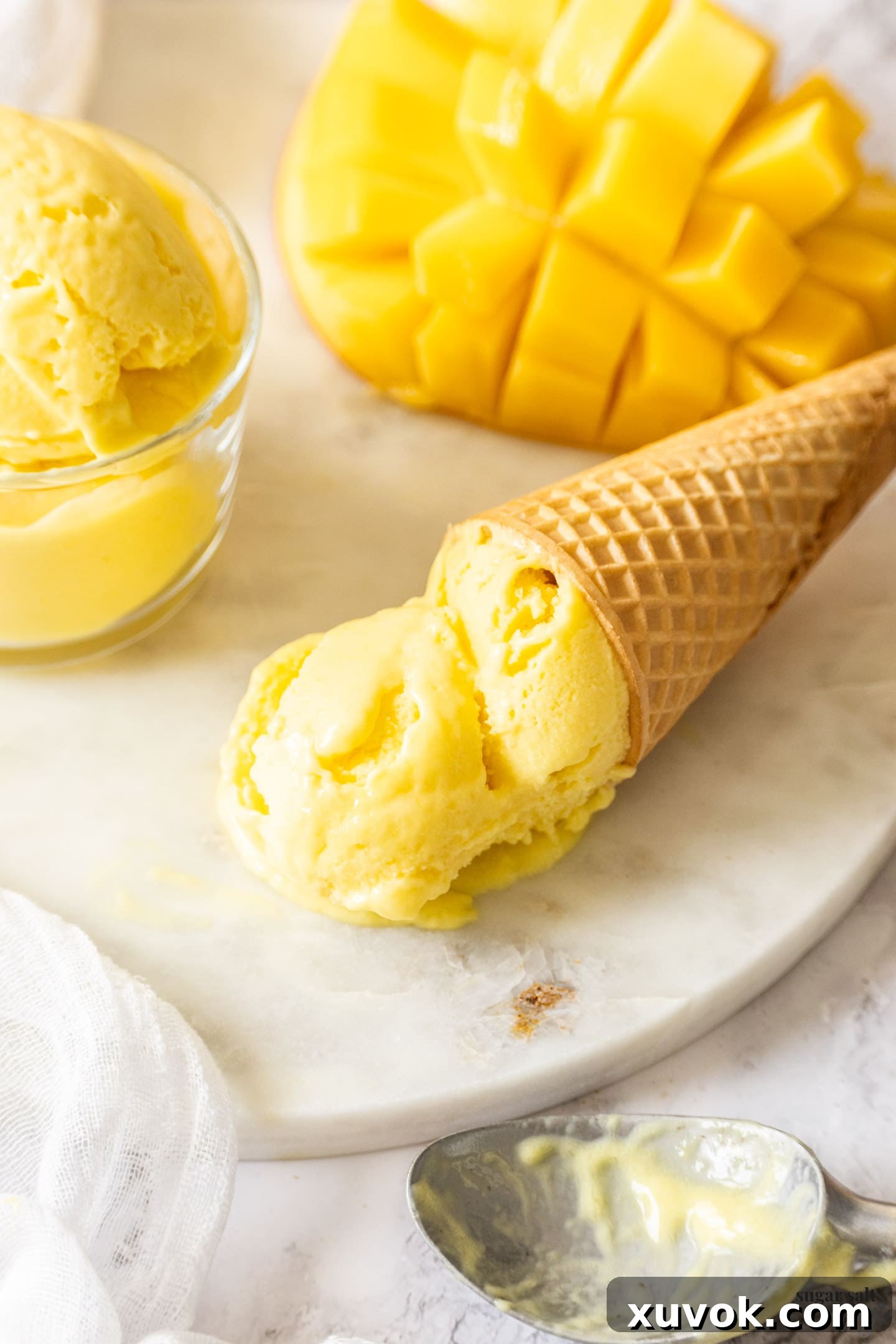
Indulge in Tropical Bliss: The Ultimate Homemade Mango Gelato Recipe
Are you ready to transport your taste buds to a sun-drenched paradise with every spoonful? Our homemade mango gelato recipe offers an unparalleled creamy, decadent experience, bursting with the intense, natural sweetness of ripe mangoes. Forget bland store-bought treats; by selecting the freshest, most luscious mangoes, you unlock a depth of flavor that transforms this simple fruit into an extraordinary frozen delight. This isn’t just a dessert; it’s a celebration of tropical flavors, meticulously crafted for maximum enjoyment.
There’s something uniquely satisfying about a refreshing frozen treat, especially one that captures the vibrant essence of the tropics. This rich, Italian-style ice cream, known for its smoother texture and profound flavor, is surprisingly easy to make right in your own kitchen. Whether you’re a seasoned dessert maker or a curious beginner, our comprehensive guide will walk you through each step, ensuring a perfect batch of mango gelato every time.
If you’re a true mango enthusiast, explore beyond gelato with our refreshing mango sorbet for another delightful tropical dessert option.
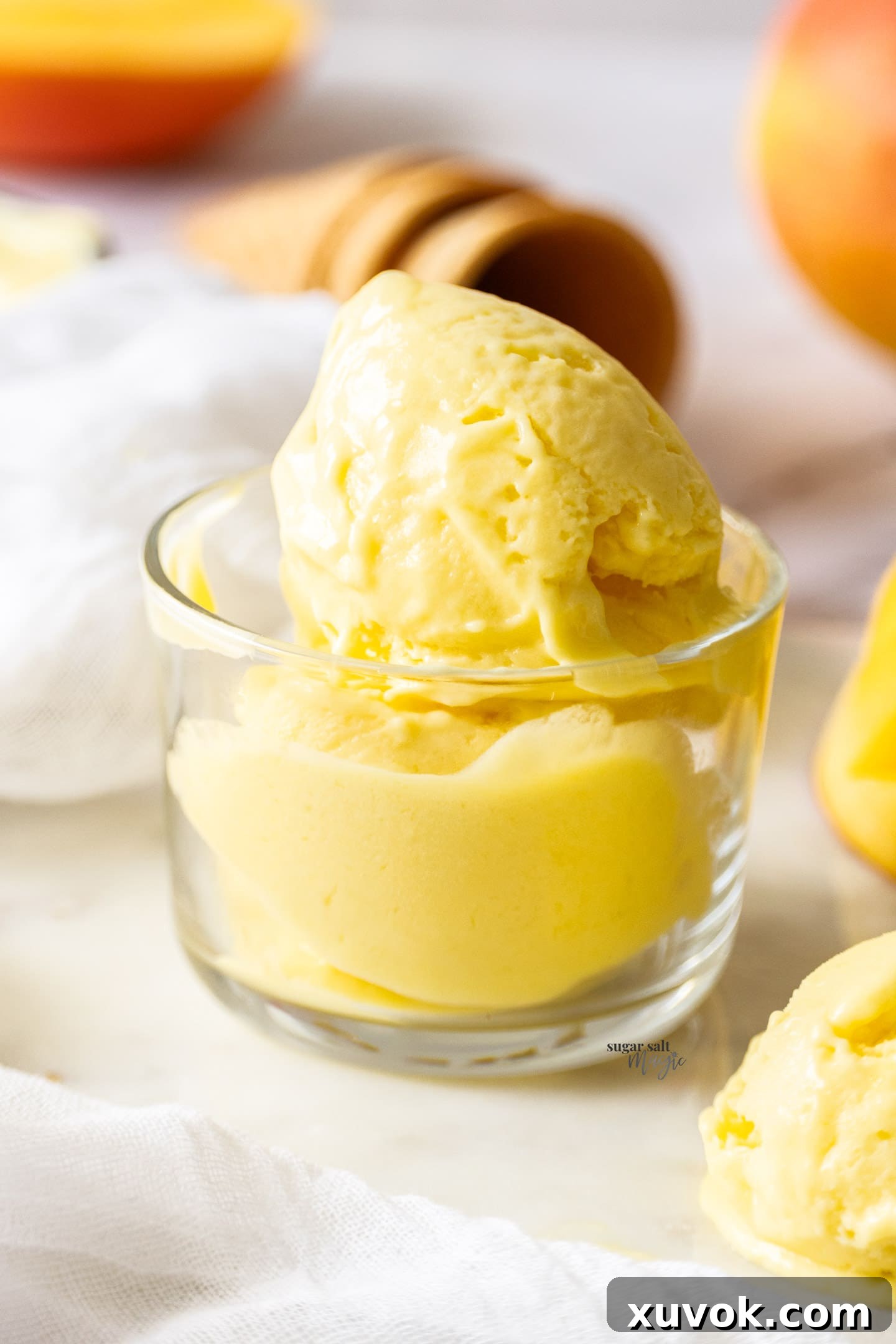
Table of Contents
- Why Homemade Mango Gelato Shines
- Gelato vs. Ice Cream: The Creamy Distinction
- Essential Ingredients for Perfect Mango Gelato
- How to Make Luscious Mango Gelato: Step-by-Step
- 1. Preparing the Mango Purée and Cornstarch Slurry
- 2. Combining Mango Mixture with Hot Dairy
- 3. Cooking to Custard Perfection
- 4. The Crucial Chill
- 5. Churning and Final Freezing
- Storing and Serving Your Mango Gelato
- More Tropical and Frozen Desserts You’ll Adore
Never Miss a Recipe!
Get the latest recipes straight to your inbox and elevate your dessert game!
Gelato vs. Ice Cream: The Creamy Distinction
Many people use the terms “gelato” and “ice cream” interchangeably, but these two frozen desserts, while similar, possess distinct characteristics that contribute to their unique textures and flavor profiles. Understanding these differences is key to appreciating the magic of homemade mango gelato.
At its core, gelato is an Italian frozen dessert that shares some ingredients with traditional ice cream, but its preparation methods set it apart. The primary distinctions lie in three critical areas: **fat content, churning speed, and serving temperature.**
- Lower Fat Content: Gelato typically contains less fat than ice cream. While ice cream often includes egg yolks and a higher proportion of heavy cream, gelato usually relies more on milk and less on cream, and often omits egg yolks entirely. Since fat can coat the palate and subtly mute flavors, this lower fat content allows the natural, vibrant taste of the mango to truly shine through, creating a more intense and pure fruit experience.
- Slower Churning Speed & Denser Texture: Gelato is churned at a much slower speed than ice cream. This gentle churning process incorporates significantly less air into the mixture. The amount of air (known as “overrun”) in ice cream can range from 50% to 100%, making it lighter and fluffier. Gelato, with its lower overrun (typically 20-35%), is much denser and more compact. This density means you get more concentrated flavor and a richer, more substantial mouthfeel with every spoonful.
- Warmer Serving Temperature: Gelato is traditionally served at a slightly warmer temperature than ice cream. Ice cream is often stored and served at temperatures as low as -18°C (0°F), making it very firm. Gelato, however, is typically served around -10°C (14°F). This warmer temperature isn’t just a serving preference; it actively enhances the flavor perception. Colder temperatures can dull the sensitivity of your taste buds, while a slightly warmer temperature allows the subtle nuances of the mango to be fully appreciated, delivering an explosive flavor burst.
So, when you enjoy mango gelato, you’re experiencing a dessert designed for maximum flavor impact: less fat, denser texture, and a serving temperature optimized to awaken your taste buds. It’s a truly sophisticated and indulgent tropical treat.
Essential Ingredients for Perfect Mango Gelato
Crafting exceptional mango gelato begins with selecting the right ingredients. Each component plays a vital role in achieving that creamy texture and intensely fruity flavor. Here’s a detailed look at what you’ll need and why:
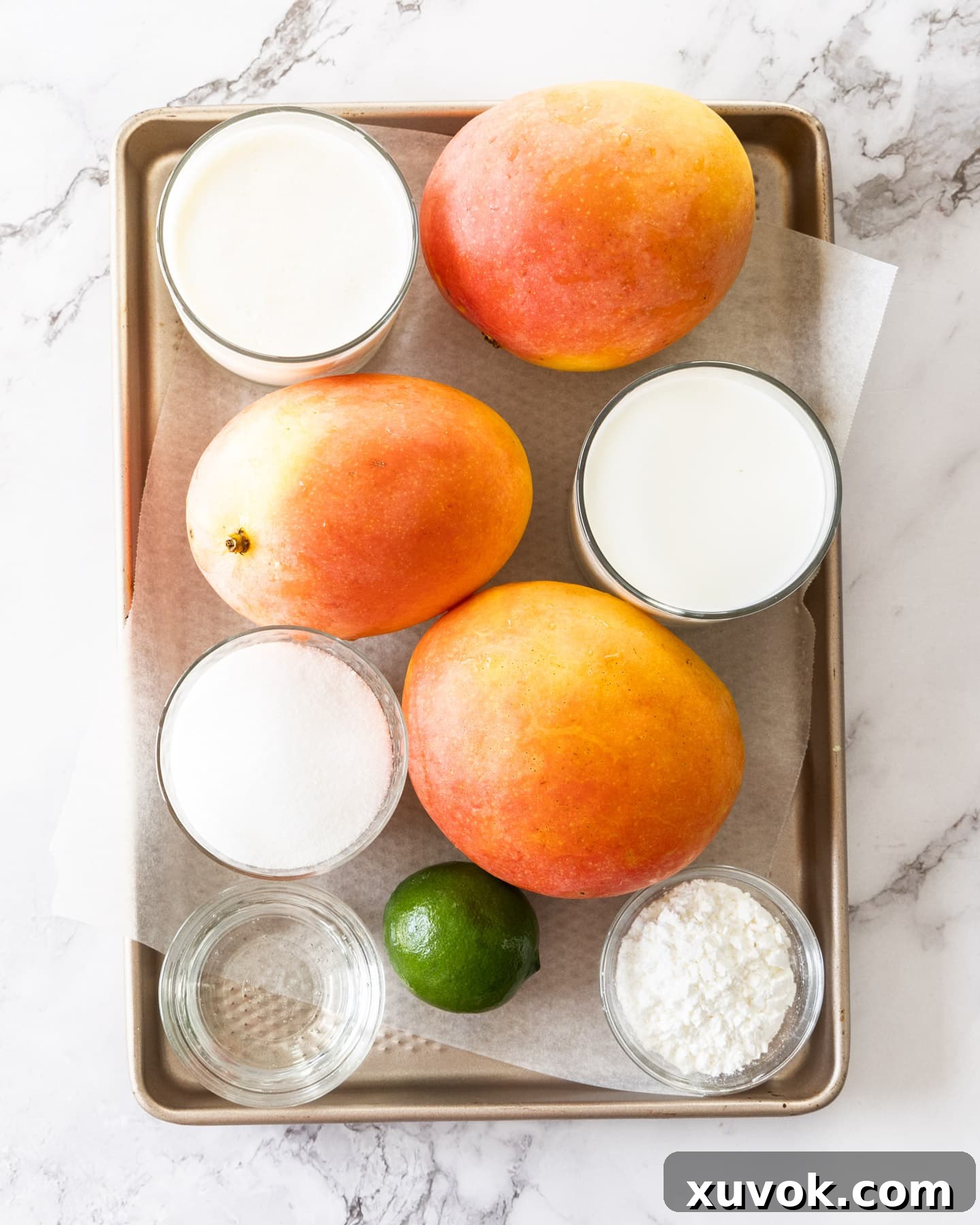
Jump to the full recipe card for precise measurements and detailed instructions.
Mangoes: The Heart of the Gelato
The quality of your mangoes directly dictates the flavor intensity of your gelato. Seek out the ripest, most fragrant mangoes you can find. A perfectly ripe mango will yield slightly to gentle pressure and emit a sweet, fruity aroma near the stem. Avoid overly fibrous varieties, as they can be challenging to blend into a perfectly smooth purée, impacting the gelato’s silky texture. Fresh mangoes are ideal, but you can also use thawed frozen mango chunks or even high-quality tinned mangoes (ensure they are in natural juice, not heavy syrup, and have excellent flavor).
Milk and Cream: The Creamy Foundation
To achieve the signature creamy texture of gelato, a blend of dairy is essential. Use whole milk for its richness and full-fat cream (such as thickened cream, heavy cream, or whipping cream). This combination provides the perfect balance of richness without excessive fat, which aligns with the gelato tradition of letting the fruit flavor dominate. For those exploring dairy-free options, plant-based alternatives like full-fat coconut milk and coconut cream can be experimented with, though the final texture and flavor will have a distinct coconut note.
Sugar: Sweetness and Structure
White granulated sugar not only sweetens the mango gelato but also plays a crucial role in its structure. Sugar lowers the freezing point of the mixture, contributing to a softer, scoopable texture and preventing it from becoming rock-hard. It also helps to enhance and intensify the natural mango flavor. Therefore, we highly recommend against reducing the sugar amount, as it can negatively impact both taste and texture.
Cornflour / Cornstarch: The Natural Thickener
This fine, flavorless starch powder acts as a stabilizer and thickener, creating a smooth, custard-like base for the gelato. Depending on your region, it may be labeled as “cornflour” (common in Australia and the UK) or “cornstarch” (common in the US and Canada). It’s instrumental in preventing ice crystal formation and ensuring a consistently creamy gelato.
Corn Syrup or Liquid Glucose: The Anti-Ice Agent
A small amount of liquid glucose or light corn syrup is a secret weapon in gelato making. Mangoes naturally contain water, which can lead to unwelcome iciness in frozen desserts. These liquid sugars are invert sugars that help to inhibit the formation of large ice crystals, resulting in a significantly smoother and more luxurious texture that stays creamy even after extended freezing. Either option works beautifully.
Lime Juice: The Flavor Brightener
A splash of fresh lime juice might seem counter-intuitive in a sweet dessert, but it is a game-changer. The acidity of lime juice cuts through the richness of the dairy and the sweetness of the mango, adding a bright, zesty counterpoint that balances the overall flavor profile. It prevents the gelato from tasting overly sweet and makes the mango flavor pop. Lemon juice can be used as an alternative if lime is unavailable.
How to Make Luscious Mango Gelato: Step-by-Step
Creating your own mango gelato at home is a rewarding process, and while it requires a little patience for chilling, the active preparation is straightforward. This recipe is designed for use with an ice cream maker. You don’t necessarily need a dedicated “gelato machine”—a standard ice cream machine will produce fantastic results, especially if it offers a slower churn setting.
For those without a machine, don’t despair! We offer a variety of incredible no-churn ice cream recipes, including decadent options like black forest ice cream and exotic passionfruit ice cream, among many others.
This recipe, as written, will yield a wonderfully creamy and flavorful gelato. However, for an even more intense mango flavor and to further minimize any potential iciness, you can incorporate an optional step: reducing the mango purée. By gently simmering the purée before mixing it with the dairy, you cook off excess water naturally present in the mango, concentrating its exquisite flavor and achieving a thicker, richer base. This extra step, while adding a little more time, elevates the gelato to an even higher level of perfection.
Jump to the full recipe card for precise measurements and detailed instructions.
1. Preparing the Mango Purée and Cornstarch Slurry
Begin by preparing your mango purée. Cut the flesh away from the skin and pit of your chosen ripe mangoes. Discard the skin and seed, then transfer the vibrant mango flesh into a blender or food processor. Process until you achieve a perfectly smooth, lump-free purée. Measure out the required amount into a medium bowl.
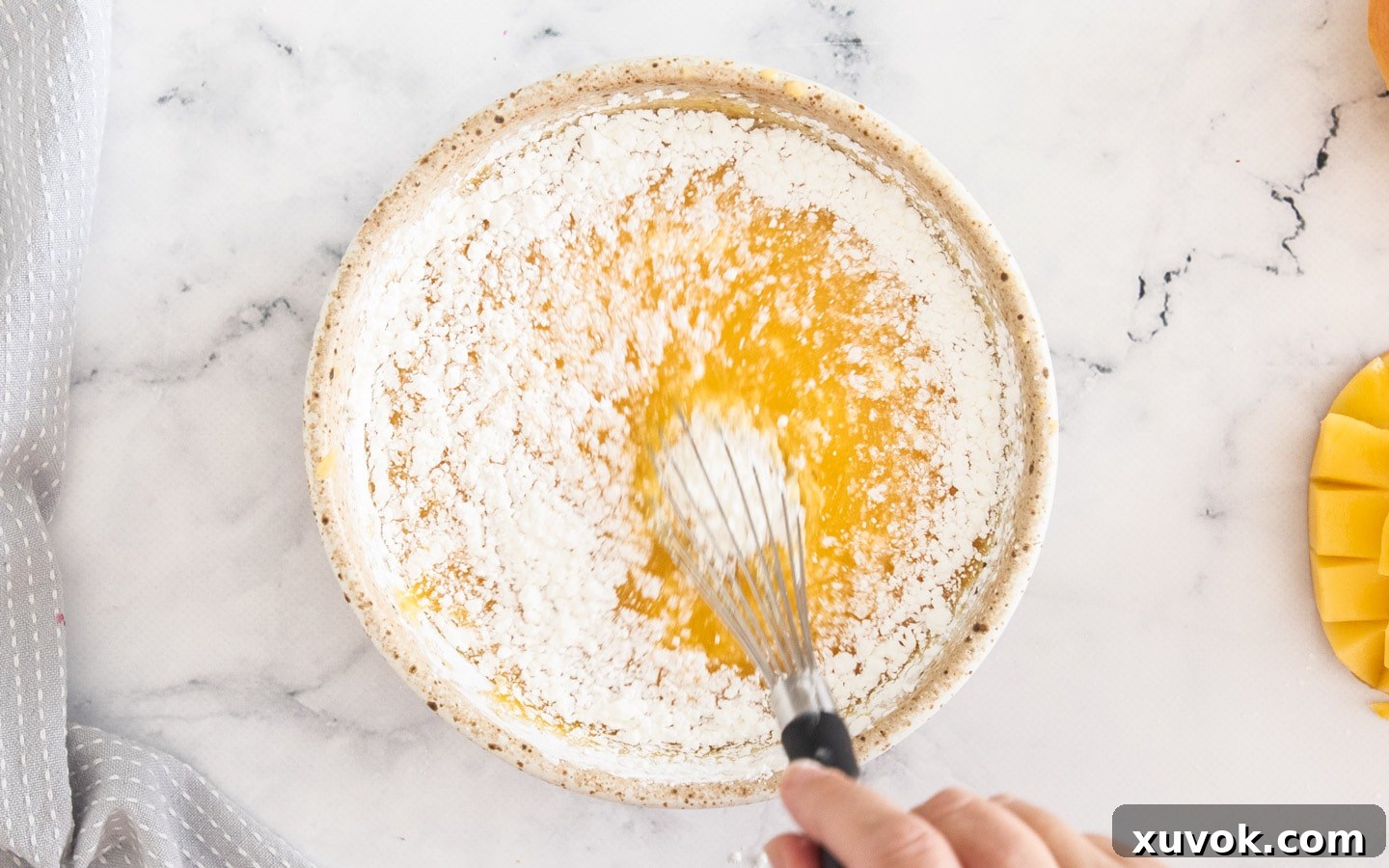
In a separate medium bowl, whisk together the measured mango purée and the cornflour (or cornstarch). This step creates a smooth slurry, preventing lumps when it’s added to the hot dairy mixture. Set this bowl aside while you prepare the dairy base.
2. Combining Mango Mixture with Hot Dairy
In a heavy-based medium saucepan, combine the whole milk, full-fat cream, granulated sugar, and liquid glucose or corn syrup. Place the saucepan over low-medium heat, stirring occasionally. Allow the mixture to gently heat until it just begins to simmer, with small bubbles forming around the edges of the pan.
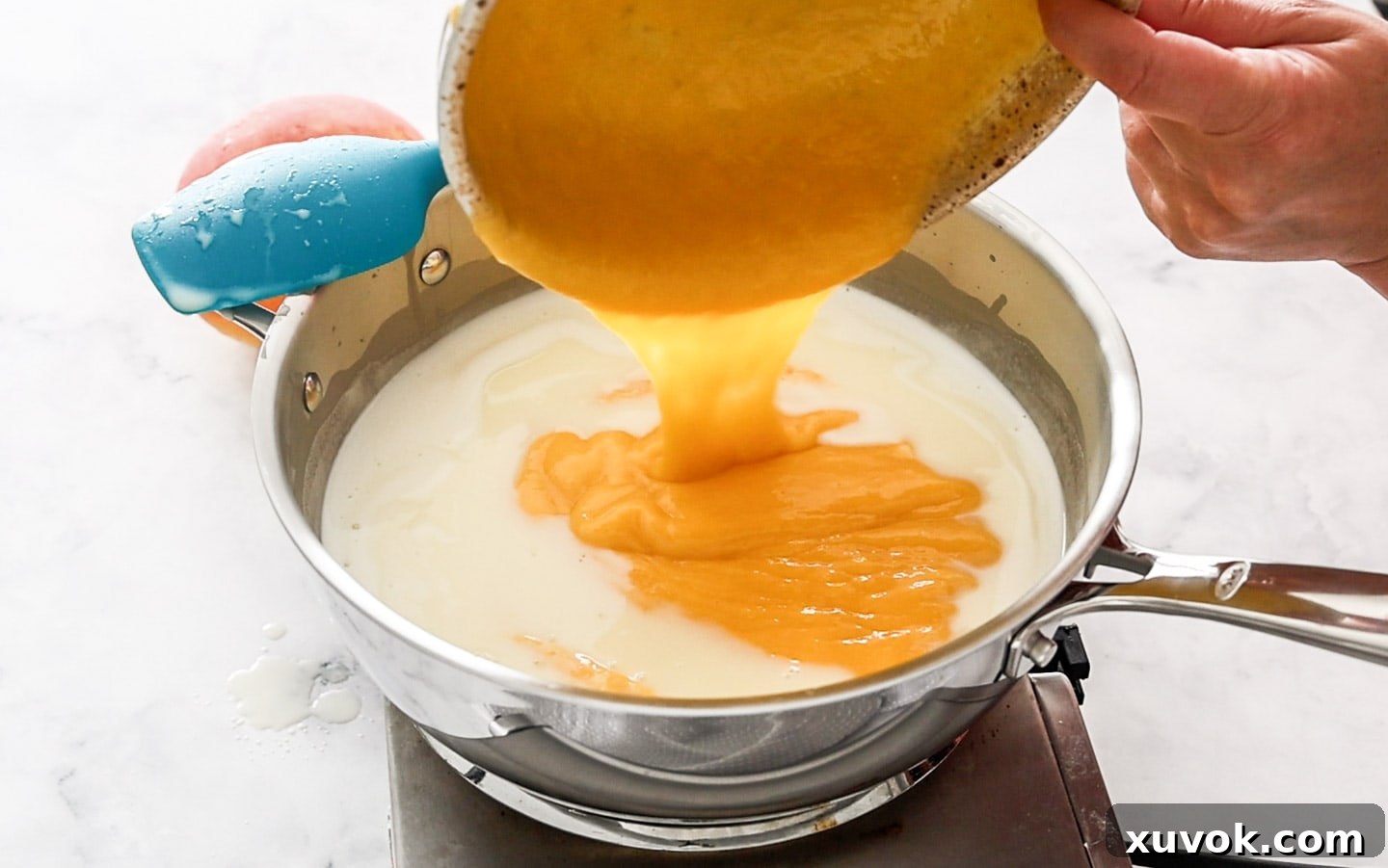
Once the dairy mixture is simmering, carefully and gradually whisk in the prepared mango and cornflour mixture. Continue to whisk gently until everything is thoroughly combined and smooth.
3. Cooking to Custard Perfection
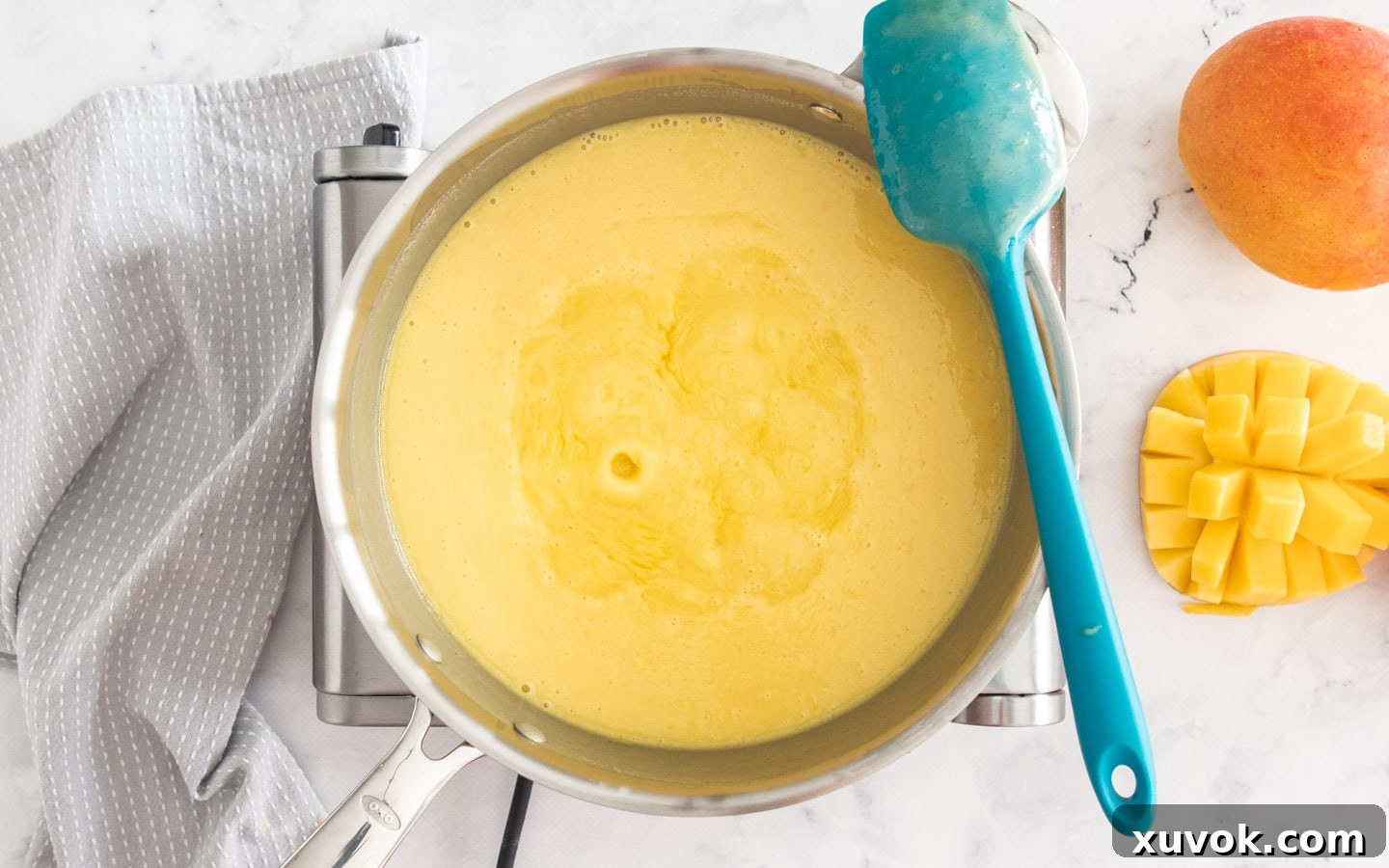
At this stage, you are essentially creating a luxurious mango custard base for your gelato. Return the saucepan with the combined mixture to medium heat. It’s crucial to stir constantly and thoroughly, ensuring the mixture doesn’t stick to the bottom of the pan and scorch.
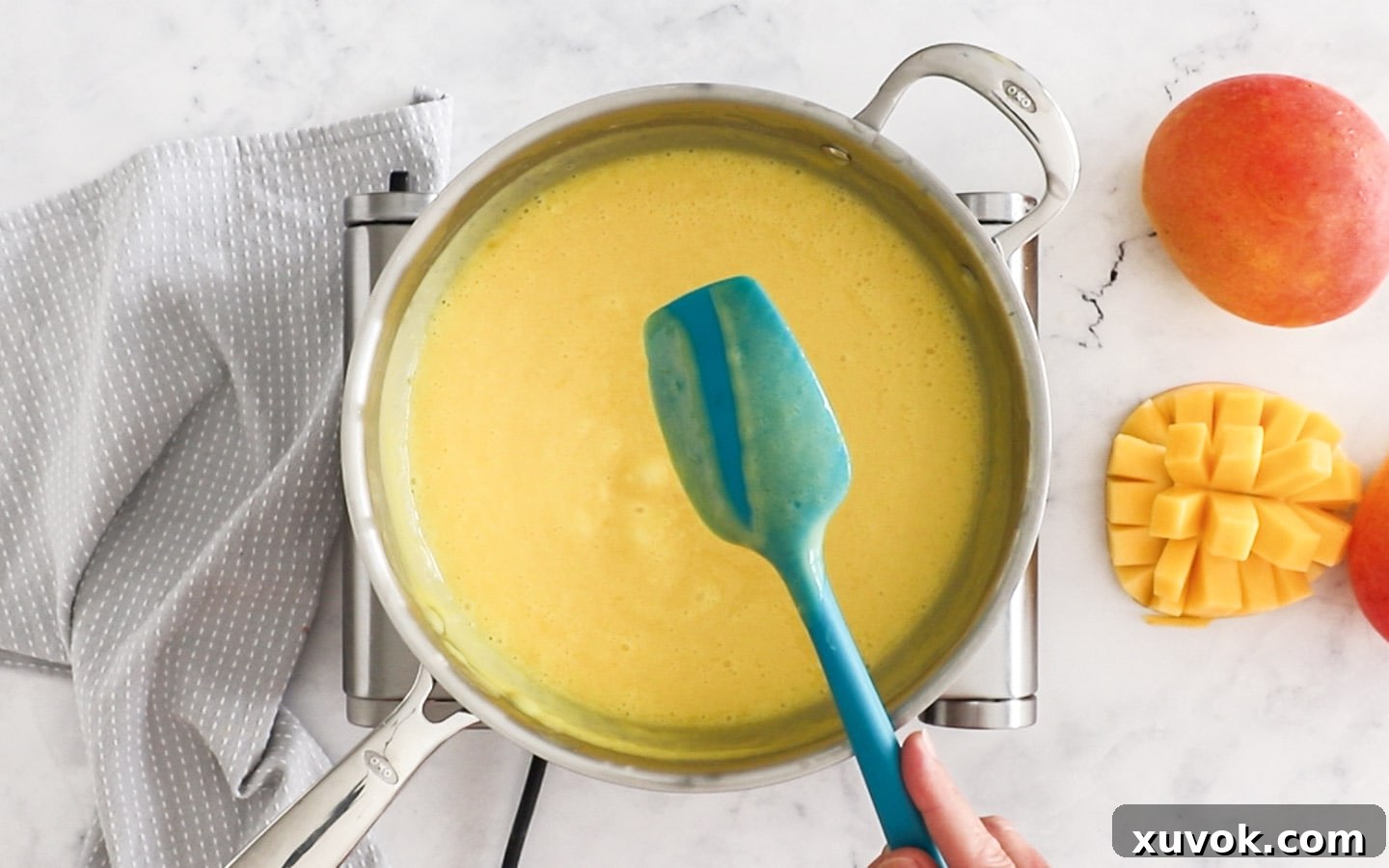
Allow the mixture to come to a full boil, then continue to cook for another minute or so, stirring continuously. The goal is for the mixture to thicken significantly. You’ll know it’s ready when it coats the back of a spoon so thickly that when you draw a line through it with your finger, the line holds and doesn’t run together. This ensures a stable and creamy base for your gelato.
4. The Crucial Chill
Once your mango custard has reached the desired thickness, remove it from the heat and stir in the fresh lime juice. The lime juice brightens the flavors and adds a perfect tangy balance. Immediately pour the hot custard into a clean bowl.
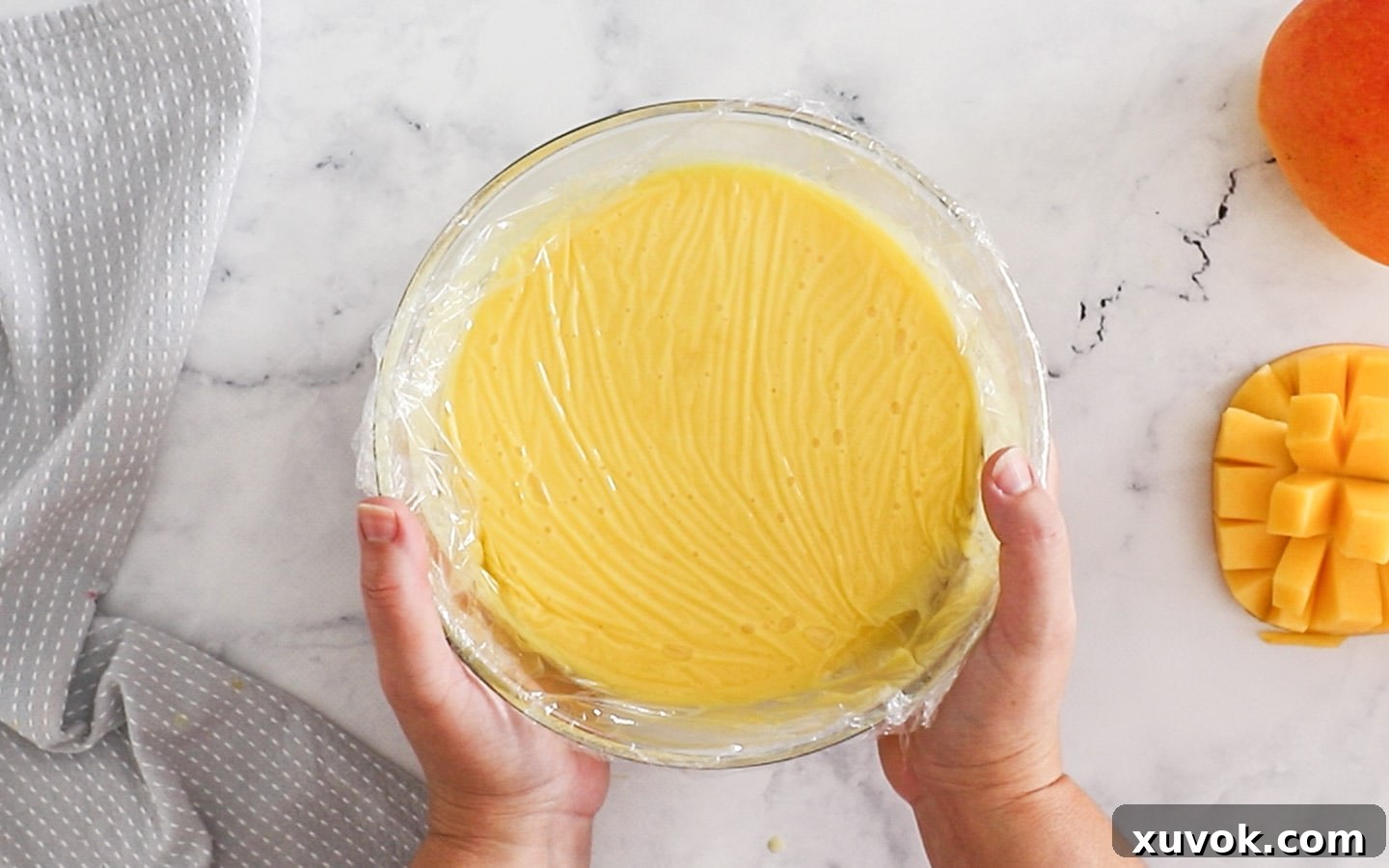
Cover the surface of the custard directly with plastic wrap, pressing it down so that no air can get between the wrap and the custard. This vital step prevents a skin from forming on the surface as it cools. Allow the custard to cool to room temperature on your counter, then transfer it to the refrigerator. Chill for a minimum of two hours, or ideally, overnight, until it is thoroughly cold. Proper chilling is essential for the ice cream machine to churn the gelato effectively, creating that smooth, creamy texture.
5. Churning and Final Freezing
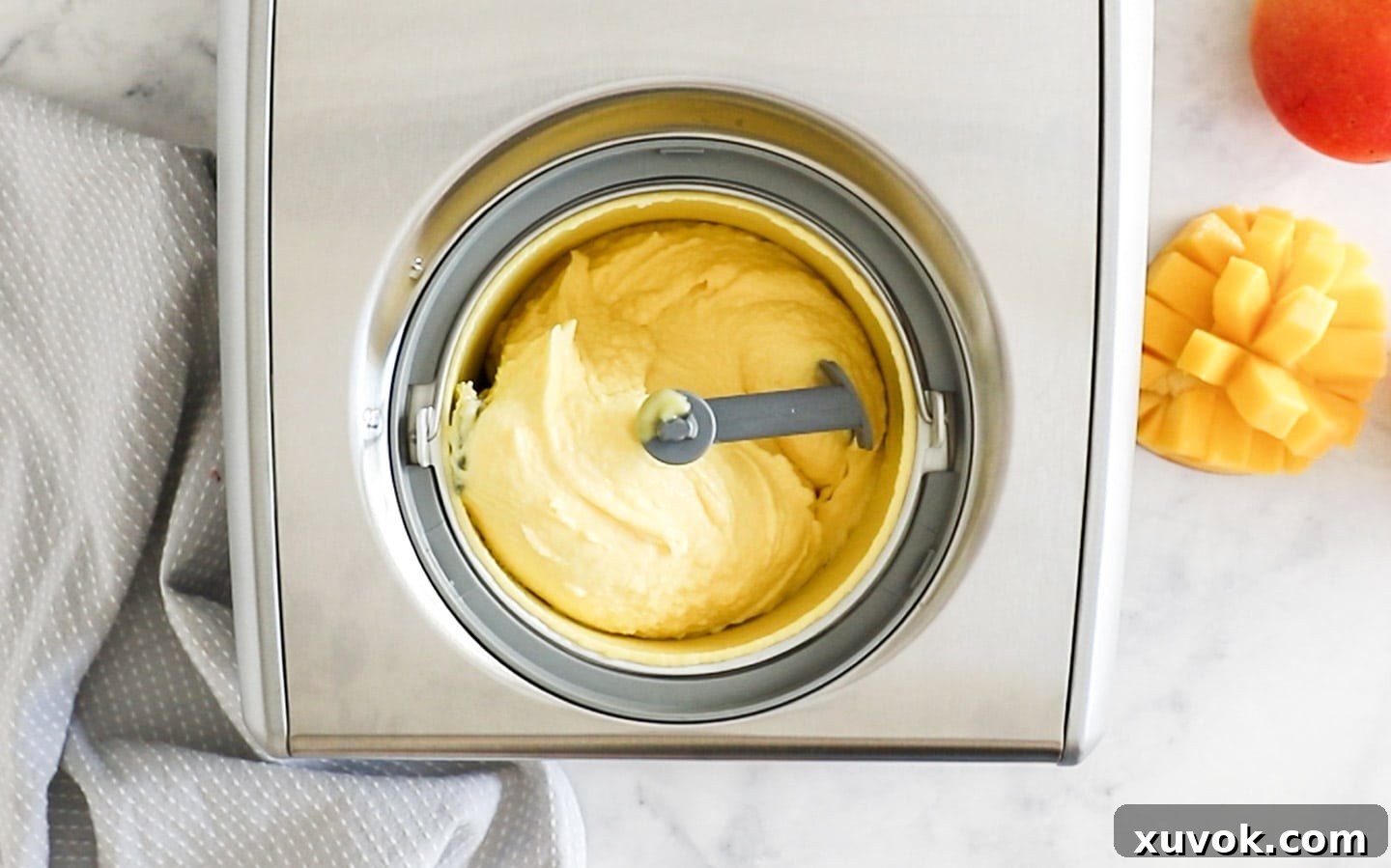
Once the mango custard is thoroughly chilled, it’s time for the magic of the ice cream machine. Pour the cold mango mixture into the bowl of your machine and churn according to the manufacturer’s instructions. Churning times vary depending on your specific model, but typically range from 20 to 40 minutes. For instance, in a Cuisinart Ice Cream Maker, 40 minutes often yields the perfect consistency.
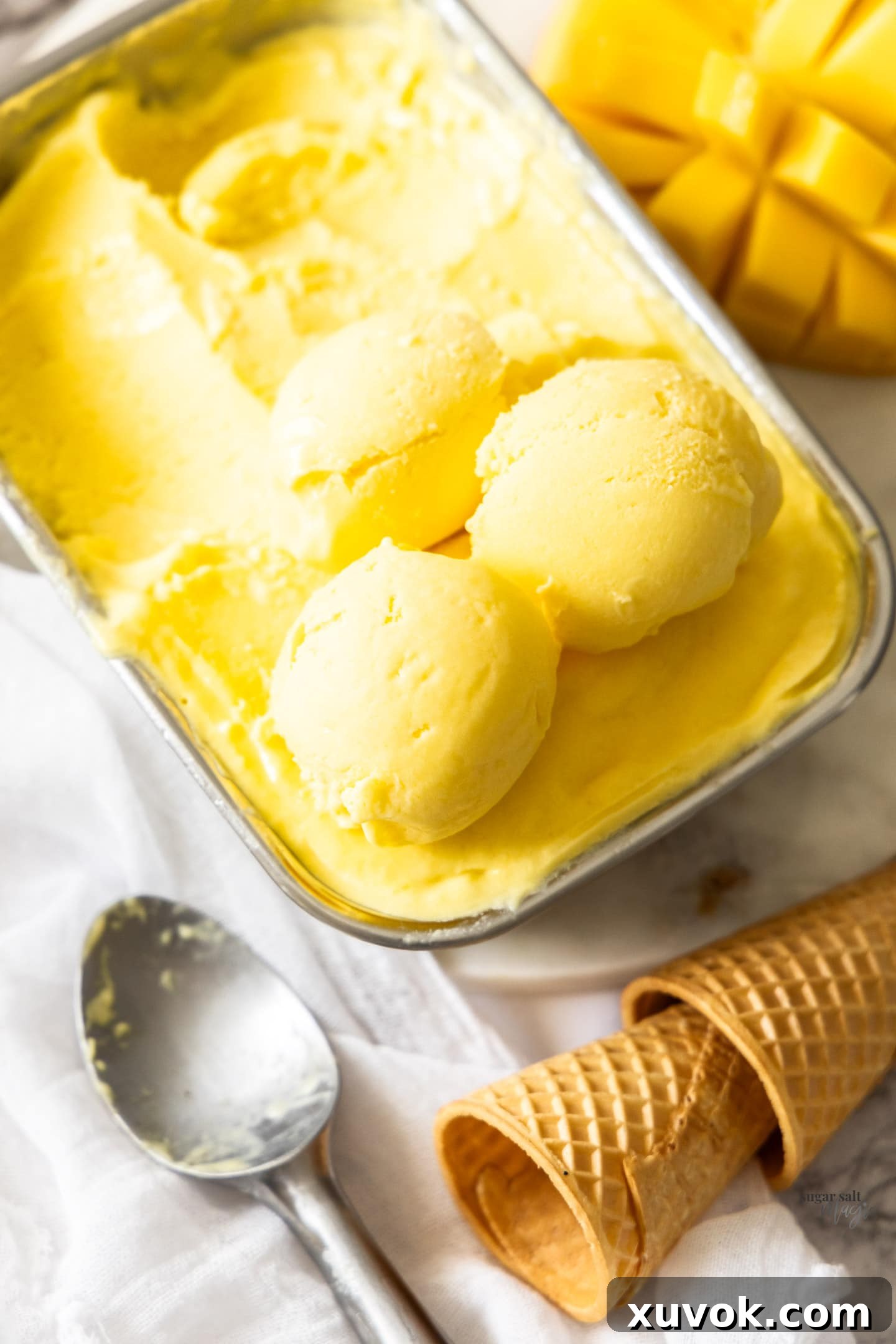
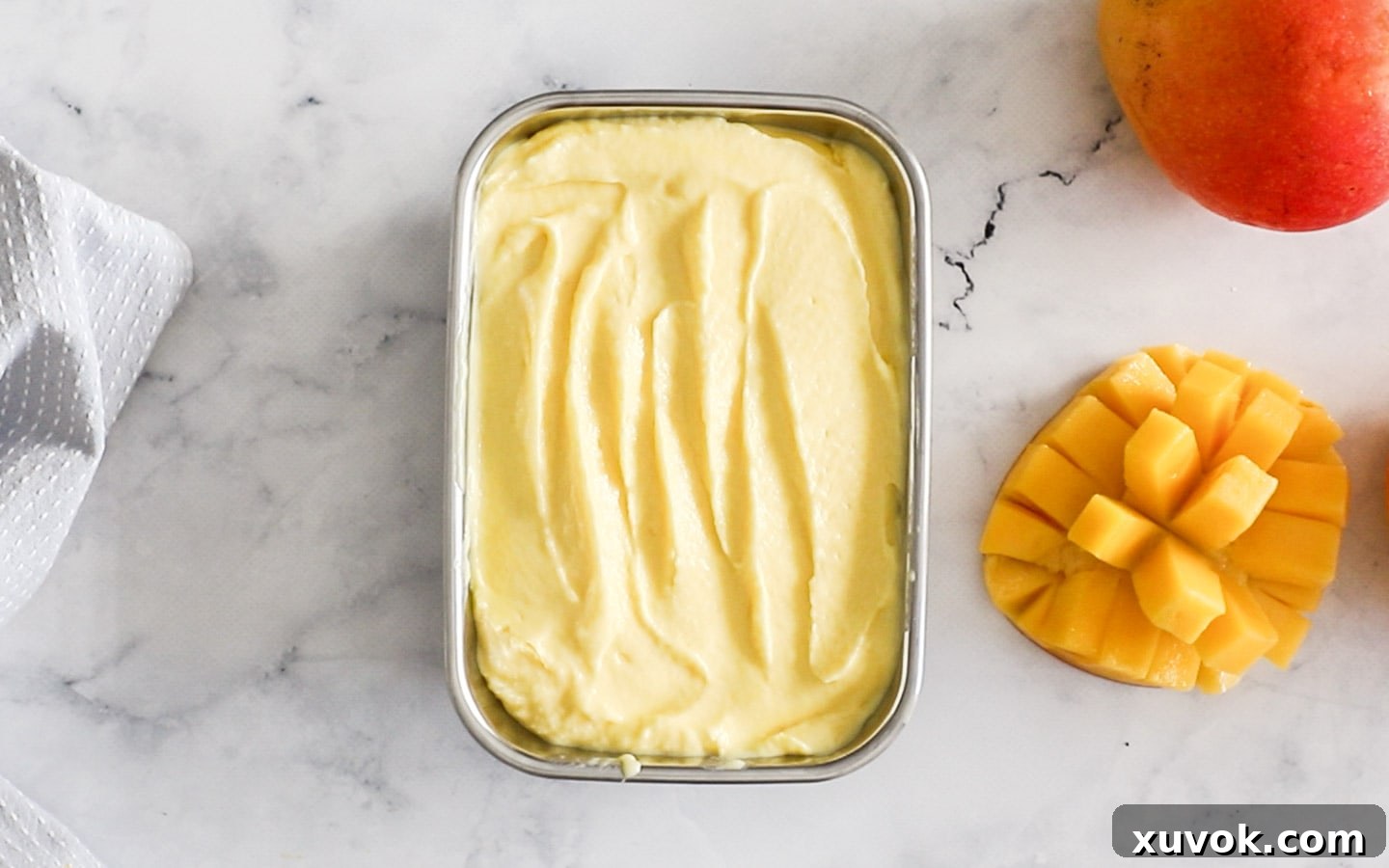
After churning, the gelato will have a soft-serve consistency. Transfer the freshly churned mango gelato into a freezer-safe container with a tight-fitting lid. This helps to prevent freezer burn and ice crystal formation. Place the container in the freezer and allow it to firm up for at least 4-6 hours, or ideally, overnight. This final freezing period allows the gelato to fully set and develop its exquisite, dense texture.
Storing and Serving Your Mango Gelato
The way you store and serve your homemade mango gelato can significantly impact its texture and flavor experience. Unlike regular ice cream, which is often best stored at the very back of the freezer where temperatures are coldest, gelato prefers a slightly less frigid environment.
- Storage Location: Store your gelato closer to the front of your freezer. This allows it to remain slightly softer, which is ideal for its traditional serving temperature.
- Airtight Container is Key: Always transfer your gelato to an airtight freezer-safe container immediately after churning and before its final freeze. This is crucial for preventing the formation of ice crystals on the surface, which can degrade the creamy texture. A tightly sealed container also locks in that intense mango flavor.
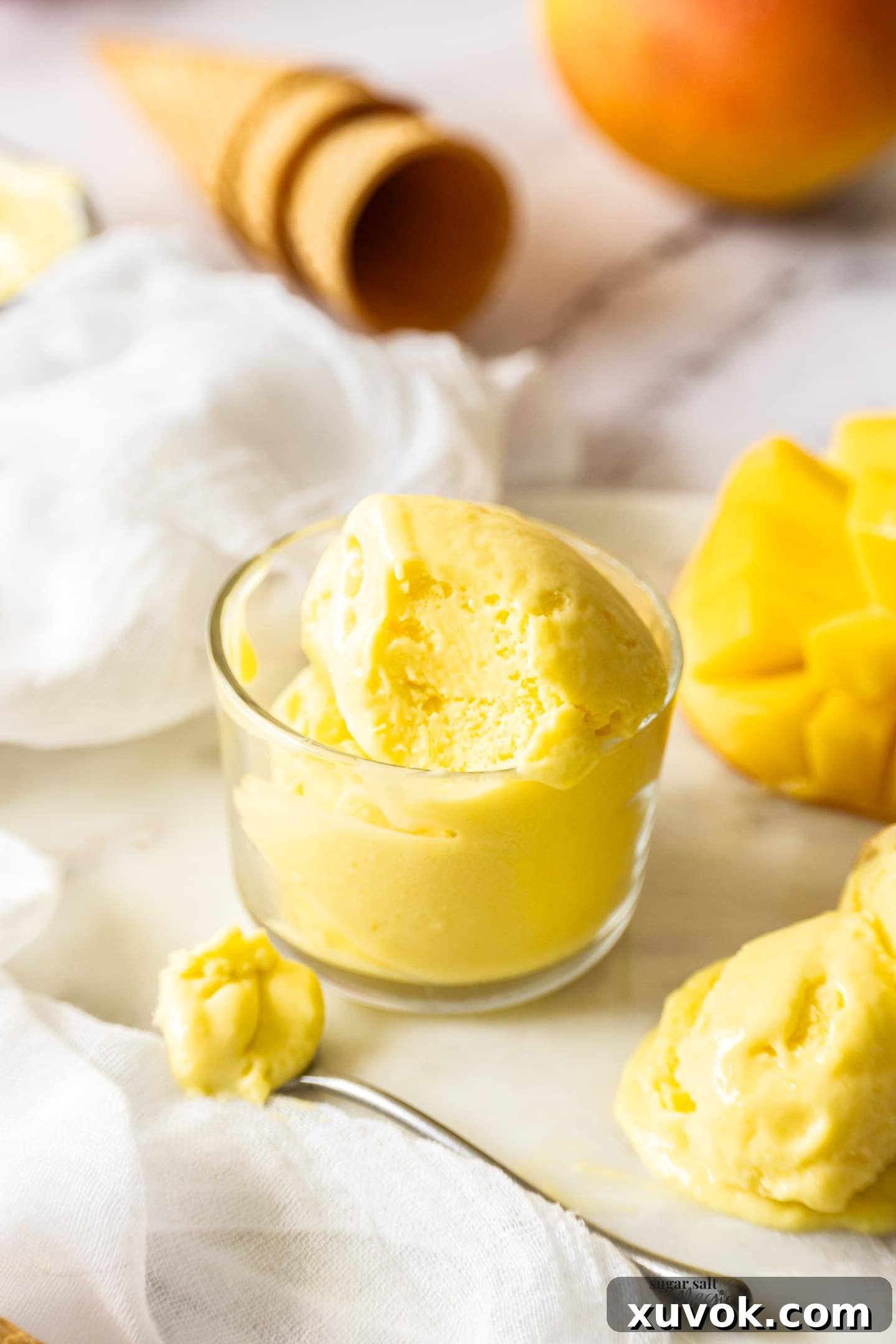
- Optimal Serving Temperature: Gelato is meant to be served softer and more pliable than ice cream, allowing its rich flavors to fully bloom on your palate. For the perfect scoopable consistency, take your mango gelato out of the freezer approximately 15-20 minutes before you plan to serve it. This short tempering period will soften it just enough to reveal its luscious, velvety texture and release its full aromatic profile.
Creative Serving Suggestions:
This exquisite mango gelato is absolutely divine served simply, in generous scoops in a bowl or nestled within crisp waffle cones. However, it also makes a fantastic base for more elaborate desserts:
- Tropical Drizzle: A light drizzle of fresh passionfruit pulp adds a delightful tart counterpoint and vibrant color.
- Berry Bliss: Pair it with a vibrant fruit sauce like our homemade raspberry sauce for a sweet and tangy combination that’s truly unforgettable.
- Coconut Flakes: Toasted coconut flakes can add a lovely texture and complement the tropical mango notes.
- Mint Garnish: A fresh sprig of mint provides a refreshing aroma and visual appeal.
- Dessert Affogato: For an adult twist, try a scoop of mango gelato with a shot of strong espresso poured over it. The contrast of hot and cold, bitter and sweet, is sublime.
More Tropical and Frozen Desserts You’ll Adore
If you’ve fallen in love with the luscious flavors of this mango gelato, we invite you to explore more of our delightful dessert creations. Here are some hand-picked recipes that celebrate vibrant fruits and frozen indulgence:
- Mango Sorbet: A lighter, dairy-free option for intense mango flavor.
- Black Forest Ice Cream: A rich, chocolatey, and cherry-filled no-churn ice cream.
- Passionfruit Ice Cream: Tangy and tropical, a truly refreshing frozen treat.
- Mango Mousse: Light, airy, and bursting with fresh mango goodness.
- Mango Curd: A silky, bright, and versatile spread to elevate many desserts.
⭐⭐⭐⭐⭐
Did you try this mango gelato recipe? Show it some love in the comments below.
Hungry for more? Subscribe to our newsletter for free recipes straight to your inbox. Also, follow along on Facebook, Pinterest and Instagram for daily inspiration.
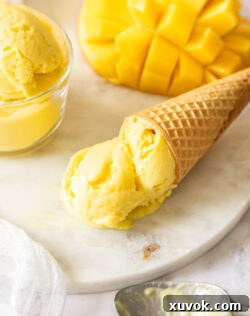
Mango Gelato
Rate
Pin
Ingredients
- 2 ½ cups mango purée, (2-3 large ripe mangoes)
- 1 cup whole milk
- 1 cup thickened cream (heavy cream)
- ⅔ cup white granulated sugar
- 2 tablespoons liquid glucose or light corn syrup
- 2 tablespoons cornflour (US cornstarch) (8 tsp, notes 1)
- 1 tablespoon lime juice (notes 1)
For best results, always weigh ingredients where a weight is provided
Equipment
-
medium saucepan
-
mixing bowl
-
ice cream machine
Instructions
-
To make the mango puree, carefully cut the flesh away from the skin and seed of 2-3 large ripe mangoes. Discard the skin and seed. Place the mango flesh into a blender and process until it forms a very smooth purée. Measure out 2 ½ cups of this smooth mango purée into a medium bowl.
-
In a heavy-based medium saucepan, combine the whole milk, thickened cream (or heavy cream), white granulated sugar, and liquid glucose or light corn syrup. Place the saucepan over low-medium heat and cook, stirring occasionally, until the mixture just comes to a gentle simmer.
-
Meanwhile, in a separate medium bowl, whisk together the measured mango purée and the cornflour (or cornstarch) until smooth.
-
Once the milk mixture is simmering, gradually whisk the mango and cornflour mixture into the hot dairy base until well combined.
-
Return the saucepan to medium heat and continue to cook, stirring frequently, until the mixture comes to a full boil. Let it gently boil for another minute or so, stirring constantly, until it thickens considerably and coats the back of a spoon. You should be able to draw a clear line through the mixture on the spoon with your finger without it running together.
-
Remove the saucepan from the heat and stir in the fresh lime juice. Pour the hot mango custard mixture into a clean bowl. Cover the surface directly with plastic wrap, ensuring it touches the entire surface to prevent a skin from forming. Allow to cool to room temperature, then chill in the refrigerator for at least 2 hours, or preferably overnight, until very cold.
-
Once the mango mixture is thoroughly chilled, pour it into the bowl of your ice cream machine. Churn according to the manufacturer’s instructions until it reaches the consistency of soft-serve ice cream. For reference, I churn in my Cuisinart machine for about 40 minutes.
-
Transfer the freshly churned mango gelato to a freezer-safe container with a tight-fitting lid. Freeze for a minimum of 4-6 hours, or ideally overnight, to allow the gelato to firm up and fully set.
-
Please take a moment to leave a comment & rating below if you enjoyed this recipe. Your feedback is greatly appreciated and incredibly helpful!
Notes
- Tablespoons: Please note that I use a standard Australian 20ml tablespoon (which is equivalent to 4 teaspoons). It’s always a good idea to check your local tablespoon measurement before proceeding with the recipe.
- For an even more intense mango flavor: If you desire a truly concentrated mango taste and an even smoother texture, consider simmering your mango purée separately until it thickens significantly before combining it with the cornflour. This process cooks off excess water from the fruit, intensifying the flavor and reducing the chance of ice crystals.
- Nutrition details are provided per cup (not per serve) and are approximate only. For full nutritional information, please refer to the section below the recipe card.
EXPLORE MORE FROZEN TREATS!
Calories from Fat 144