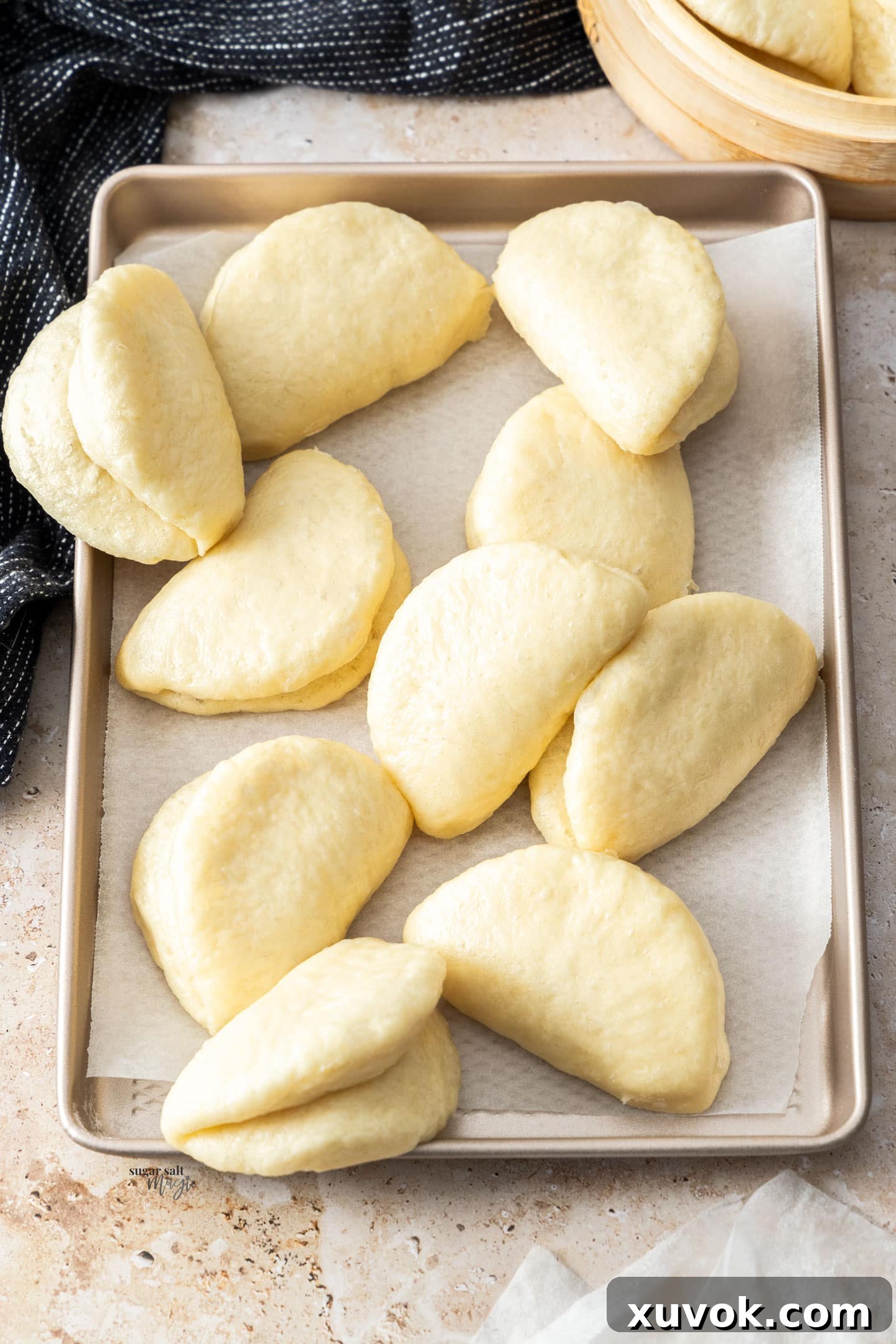
The Ultimate Guide to Homemade Bao Buns: Soft, Fluffy & Flavorful Steamed Delights
Embark on a culinary journey to create the most exquisite homemade bao buns, those irresistibly soft, pillowy steamed delights that have captured hearts (and stomachs) worldwide. Often referred to by their traditional name, “gua bao,” these charming Chinese buns resemble a taco in shape, perfect for cradling an endless array of savory or sweet fillings. While the term “bao buns” might seem redundant to purists—as “bao” itself translates to “bun” in Mandarin—it’s a widely recognized and beloved moniker in Western cuisine, signaling the universal appeal of this delightful dish.
Our comprehensive guide will demystify the art of making bao from scratch, revealing the secrets to achieving their signature fluffy texture and delightful chewiness. From understanding the fundamental ingredients to mastering the kneading and steaming techniques, you’ll gain the confidence to whip up a batch of these Asian culinary gems in your own kitchen. Prepare to impress your family and friends with a versatile staple that promises to elevate any meal into an unforgettable dining experience.
What Exactly are Bao Buns? Unveiling a Culinary Tradition
Bao buns are a marvel of Chinese culinary tradition, distinguished by their incredibly soft, airy, and slightly chewy texture, achieved through a unique steaming process. These delicate, yeasted dough pockets are far more than just bread; they are a blank canvas for vibrant flavors and a testament to centuries of gastronomic innovation. The most common style, known as “gua bao,” or ‘lotus leaf buns,’ takes on a folded, clam-shell shape, ideal for holding succulent fillings. The name “gua” literally means “to cut by drawing the knife around,” hinting at their distinctive appearance as if they’ve been gently sliced open.
Originating in the Fujian province of China, bao buns have transcended their regional roots to become a global phenomenon. From bustling street markets in Asia to Michelin-starred restaurants across the West, their popularity continues to soar. While classically filled with braised pork belly (char siu), the modern culinary landscape sees bao buns embracing an astonishing variety of fillings. Spicy chicken, crispy tofu, roasted duck, and even sweet dessert fillings now find a home within these fluffy envelopes. Their adaptability is a key reason for their enduring appeal, inviting endless creativity for both home cooks and professional chefs.
Beyond gua bao, the broader “bao” family includes other delightful variations. “Baozi” typically refers to smaller, round, often filled buns that resemble little sacks, bursting with either savory meats and vegetables or sweet pastes. “Mantou,” on the other hand, are plain, unfilled steamed buns, serving as a staple accompaniment to many Chinese meals. This article primarily focuses on the folded gua bao style, but the foundational dough recipe is remarkably versatile and can be adapted for these other forms, including even the sweet pineapple buns from Hong Kong, showcasing the incredible flexibility of this simple dough.
The Irresistible Charm of Bao Buns: A Delight for All Senses
There are countless reasons why bao buns have garnered such a devoted following. Firstly, it’s their unparalleled texture: a perfect harmony of ethereal softness and delightful fluffiness, akin to biting into a cloud, yet with a satisfying subtle chew that prevents them from being bland. This unique mouthfeel is a direct result of the steaming process, which keeps the dough incredibly moist and tender, unlike baked breads that develop a crust.
Secondly, bao buns are incredibly versatile. They serve as a perfect vehicle for a multitude of flavors, from rich, savory meats to fresh, vibrant vegetables, and even decadent sweet treats. This makes them suitable for any meal, whether you’re planning a light appetizer, a hearty lunch, or a creative dinner centerpiece. The possibilities for fillings are only limited by your imagination, encouraging culinary experimentation.
Finally, and perhaps most practically, these homemade bao buns are surprisingly easy to make and freeze beautifully. This last point is a game-changer for meal prep. Imagine having a batch of ready-to-steam bao buns in your freezer, waiting to be transformed into a quick, delicious weeknight dinner. The dough itself is straightforward to prepare, requiring minimal kneading, and the shaping process, though it might seem daunting at first, is remarkably intuitive once you get the hang of it. This guide aims to make that process as simple and enjoyable as possible, transforming you into a bao bun artisan in no time.
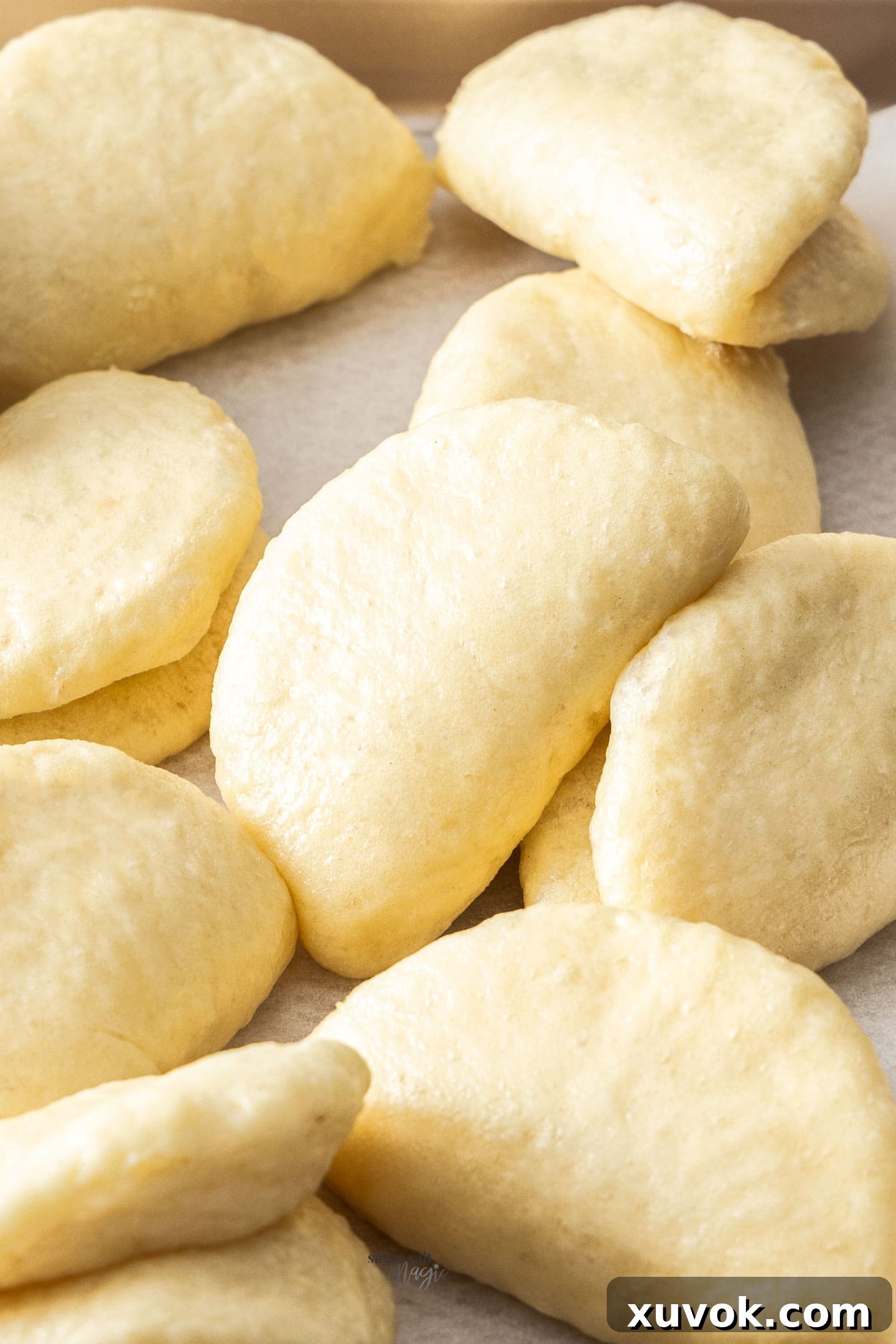
Table of Contents
- What Exactly are Bao Buns? Unveiling a Culinary Tradition
- The Irresistible Charm of Bao Buns: A Delight for All Senses
- Essential Ingredients for the Perfect Bao Dough
- How to Make Homemade Bao Buns (Step-by-Step Guide)
- Crafting the Ideal Bao Dough
- Mastering the Art of Shaping Bao Buns
- Steaming Your Bao Buns to Perfection
- Expert Tips and Tricks for Bao Bun Success
- What to Serve with Your Fluffy Bao Buns
- Creative Bao Bun Filling Ideas for Every Palate
- Yield, Storage, and Reheating Your Bao Buns
- How to Reheat Bao Buns for Freshness
- More Asian-Inspired Recipes You’ll Love
Never Miss a Recipe!
Get the latest recipes straight to your inbox!
Essential Ingredients for the Perfect Bao Dough
Crafting delectable bao buns begins with a concise list of humble ingredients, each playing a crucial role in achieving that signature fluffy and tender texture. Through extensive research and careful experimentation, this recipe has been refined to strike the perfect balance, ensuring a consistently delightful result every time. While many traditional recipes exist, some incorporating milk, others vinegar, and varying amounts of sugar, this streamlined approach simplifies the process without compromising on flavor or texture. Let’s delve into the purpose of each ingredient:
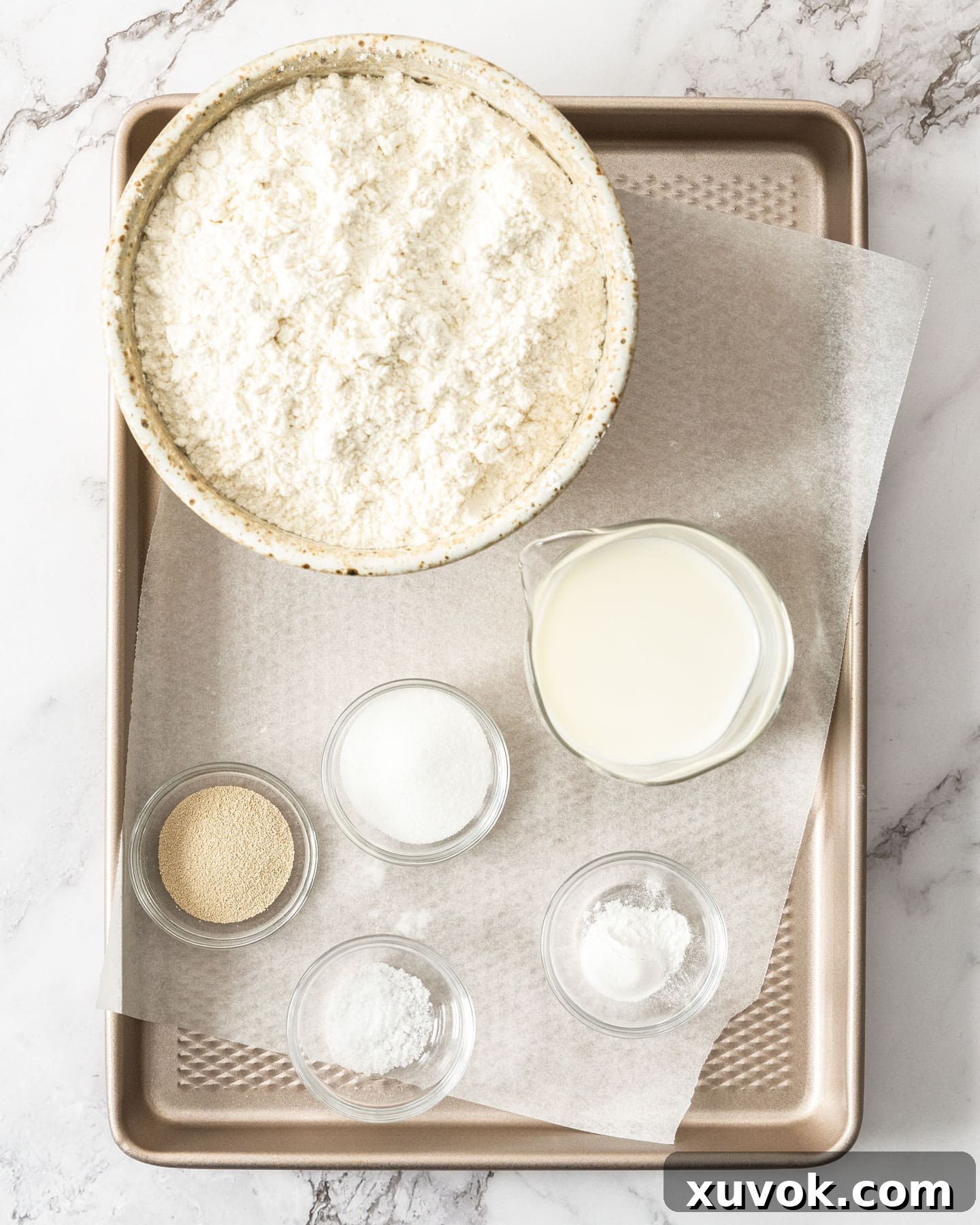
For the precise measurements and detailed instructions, please navigate to the recipe card below.
- Flour: The foundation of our bao. For the best bao buns, you’ll want to use white wheat flour with a low to medium gluten content. This helps achieve that desired soft, fluffy, and slightly chewy consistency without being overly bready or dense. Standard plain flour, also known as all-purpose flour, is perfectly suited for this task, making it accessible for most home cooks.
- Milk: Incorporating milk into the dough adds a wonderful richness and tenderness, contributing to the delicate texture of the buns. Unlike some other bread recipes, bao dough typically doesn’t contain other fats like eggs or oil directly in the dough itself (apart from a little brushing oil for shaping), so the milk provides that subtle enhancement. Ensure it’s warm, but not hot, to properly activate the yeast.
- Yeast: This is our primary leavening agent, responsible for the dough’s rise and the airy pockets within. This recipe calls for instant yeast (or instant dry yeast) due to its convenience, as it can be mixed directly with dry ingredients. However, active dry yeast can also be used; it simply requires initial activation in warm liquid before combining with other ingredients. Always check the expiration date of your yeast to ensure it’s potent and ready to work its magic.
- Baking Powder: A crucial secondary leavener for bao, baking powder works in conjunction with the yeast to achieve that exceptionally puffed-up, light, and fluffy interior. It helps create a finer, more open crumb structure, contributing significantly to the signature bao texture.
- Sugar: While not enough to make the buns overtly sweet, sugar serves multiple important functions. It provides essential food for the yeast, helping it to activate and multiply efficiently, leading to a robust rise. Additionally, a touch of sugar balances the flavors, enhancing the overall taste of the bao without making it dessert-like.
- Salt: Just a small amount of salt is added to the dough. Similar to sugar, its role is primarily for balance and flavor enhancement rather than making the buns salty. Salt also helps to control the yeast’s activity, ensuring a steady and even rise.
- Water: Simple warm water rounds out the liquid components, helping to bring the dough together to the correct consistency. Together with milk, it ensures the dough is hydrated perfectly for optimal softness and pliability.
Bao dough is incredibly versatile, forming the base for a myriad of delicious Asian snacks. While gua bao is known for its folded style, the same dough can create “baozi” or “mantou”—small, round buns, often filled with savory or sweet mixtures. This adaptability highlights the fundamental excellence of this simple, yet profound, dough.
How to Make Homemade Bao Buns (Step-by-Step Guide)
Creating your own homemade bao buns might seem like a gourmet endeavor, but this step-by-step guide breaks down the process into easily manageable stages. You’ll be surprised at how simple it is to achieve those perfectly soft and fluffy steamed buns right in your own kitchen.
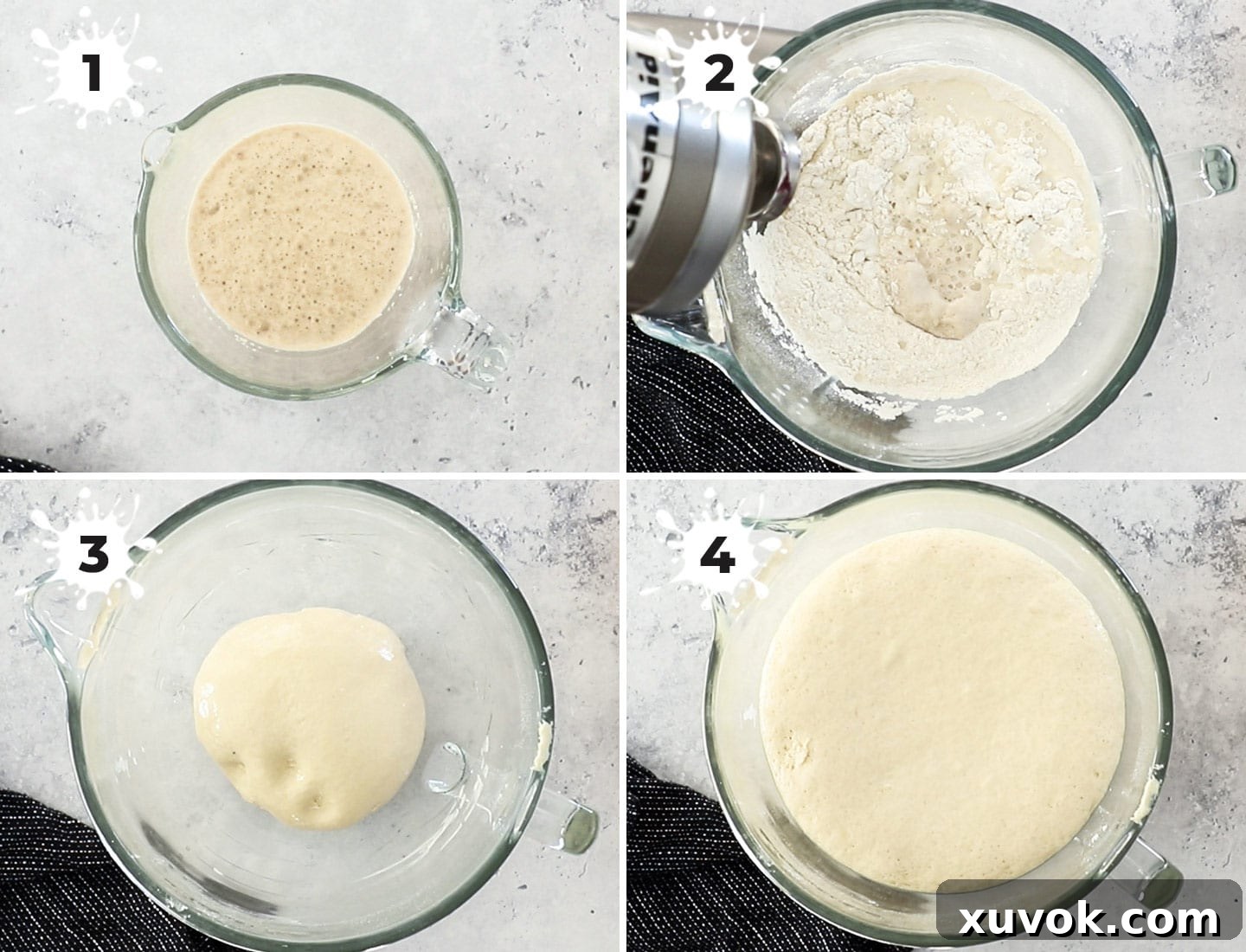
Refer to the comprehensive recipe card below for exact quantities and full details.
Crafting the Ideal Bao Dough
- Activate the Yeast: In a small bowl or jug, gently combine warm milk, a measured amount of sugar, and the yeast. Stir these ingredients together until well mixed. Allow this mixture to sit undisturbed for about 5 to 10 minutes. During this time, the yeast should begin to soften and become slightly frothy or puffed up on the surface. While this step is technically optional for instant yeast, it’s a highly recommended practice for both instant and active dry yeast. It serves as a crucial test to ensure your yeast is still viable. If no frothy bubbles appear, your yeast might be inactive, saving you from wasting other ingredients and valuable time on a dough that won’t rise.
- Prepare and Knead the Dough: In the bowl of a stand mixer fitted with a dough hook attachment, combine the flour, baking powder, and salt. Give these dry ingredients a quick mix to ensure they are evenly distributed. Next, pour the activated yeast mixture into the bowl, followed by the warm water. Begin kneading on a low speed for approximately 3-4 minutes. The goal is to achieve a smooth, elastic dough that is no longer sticky. While a stand mixer greatly simplifies this step, the dough can absolutely be kneaded by hand on a lightly floured surface until it reaches the same smooth consistency.
- First Rise (Proofing): Once your dough is smooth and cohesive, lightly oil the inside of the mixing bowl with a touch of vegetable oil. Place the dough ball back into the oiled bowl, ensuring it’s completely covered with plastic wrap or a damp tea towel. Position the covered bowl in a warm, draft-free environment to rise. The dough should double in size, which typically takes between 45 to 60 minutes, depending on the ambient temperature. Many modern ovens now feature a “dough proofing” setting, which can provide an ideal, consistently warm environment for a perfect rise. This stage is crucial for developing the bao’s light and airy texture.
An important note on proofing: while the dough is quite forgiving, aiming for a perfectly doubled size is ideal. Occasionally, one might accidentally let the dough over-proof, meaning it rises significantly beyond double its original volume. Although the resulting buns can still be quite pleasant, over-proofing can sometimes lead to a slightly coarser texture or a tendency for the buns to deflate during steaming. However, don’t despair if this happens; the resilience of bao dough often allows for a delicious outcome regardless!
Mastering the Art of Shaping Bao Buns
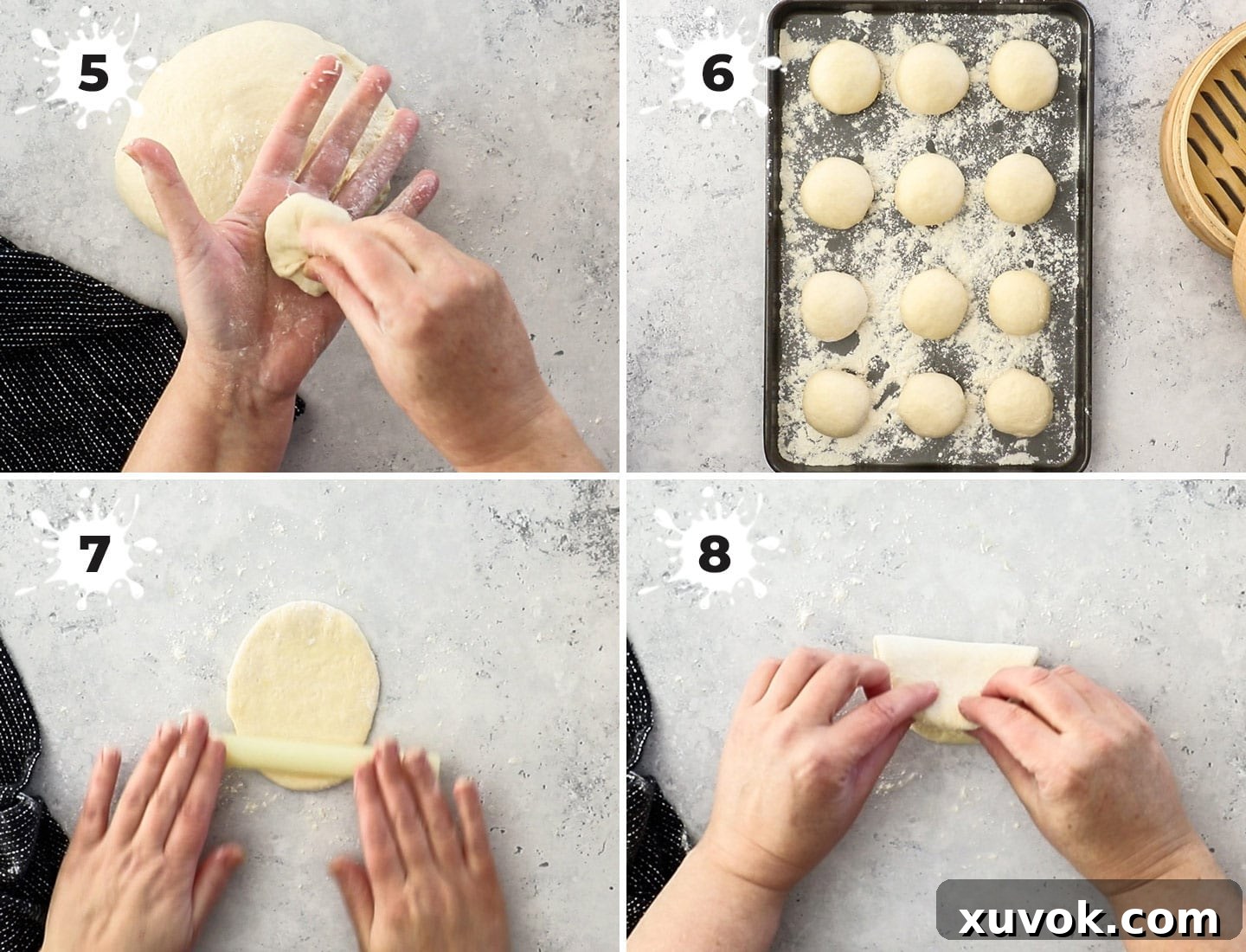
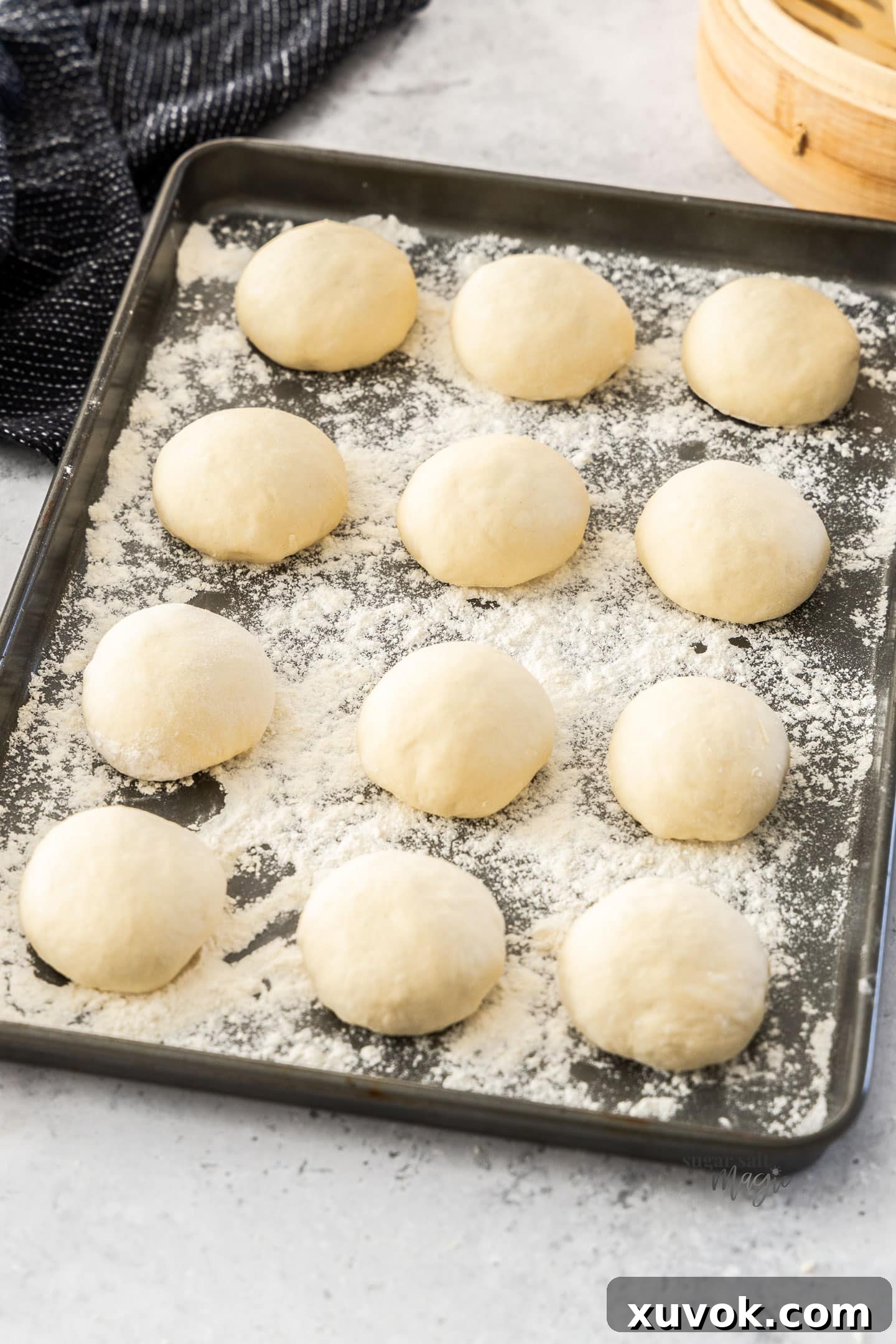
- Divide the Dough: After the dough has successfully doubled in size, gently punch it down to release the air. Transfer the dough to a clean, lightly floured surface. Now, divide the dough into 12 equal portions. For precision and consistency in cooking, it’s highly recommended to weigh the entire dough first, then divide that total weight by 12. Weigh each individual portion to ensure they are all the same size. This meticulous approach guarantees that all your bao buns will steam evenly and finish cooking at the same time, preventing any under or overcooked buns.
- Shape the Portions into Balls: Take one portion of dough and roll it into a smooth ball in the palm of your hand. If the dough feels a bit sticky, a light dusting of flour on your hands will help prevent sticking. The most effective technique involves placing the dough ball into the palm of your non-dominant hand. Then, use the fingers of your dominant hand to repeatedly pinch the sides of the dough towards its base, rotating the ball as you go. Continue this motion until the surface of the dough, particularly the part resting in your palm, becomes completely smooth. Repeat this process for all 12 portions, creating uniform, tight dough balls.
- Rest the Dough Balls: Arrange the newly shaped dough balls on a lightly floured baking tray, ensuring they are not touching each other. Cover them with a clean, dry tea towel and allow them to rest for a brief period of 15 minutes. This resting phase is crucial as it allows the gluten in the dough to relax, making the dough much easier to roll out evenly in the next step.
- Roll into Oval Shapes: Take one rested dough ball and, using a rolling pin, roll it out into an oval shape. Aim for a thickness of about 4-5mm. As you roll, try to make the central part of the oval slightly thinner than the top and bottom edges. This subtle variation in thickness will greatly assist in achieving the classic, perfectly folded bao bun shape, allowing it to puff up beautifully during steaming.
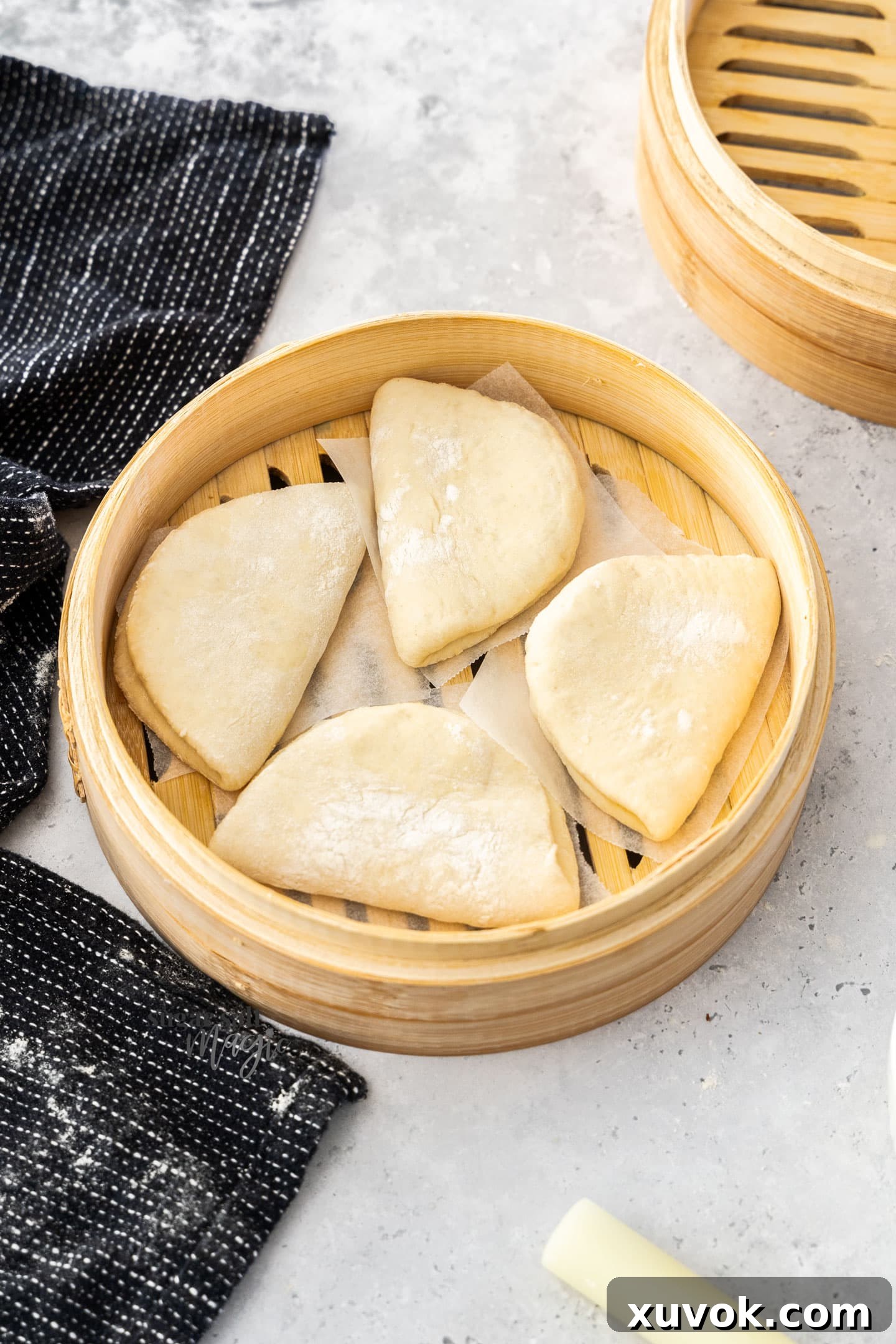
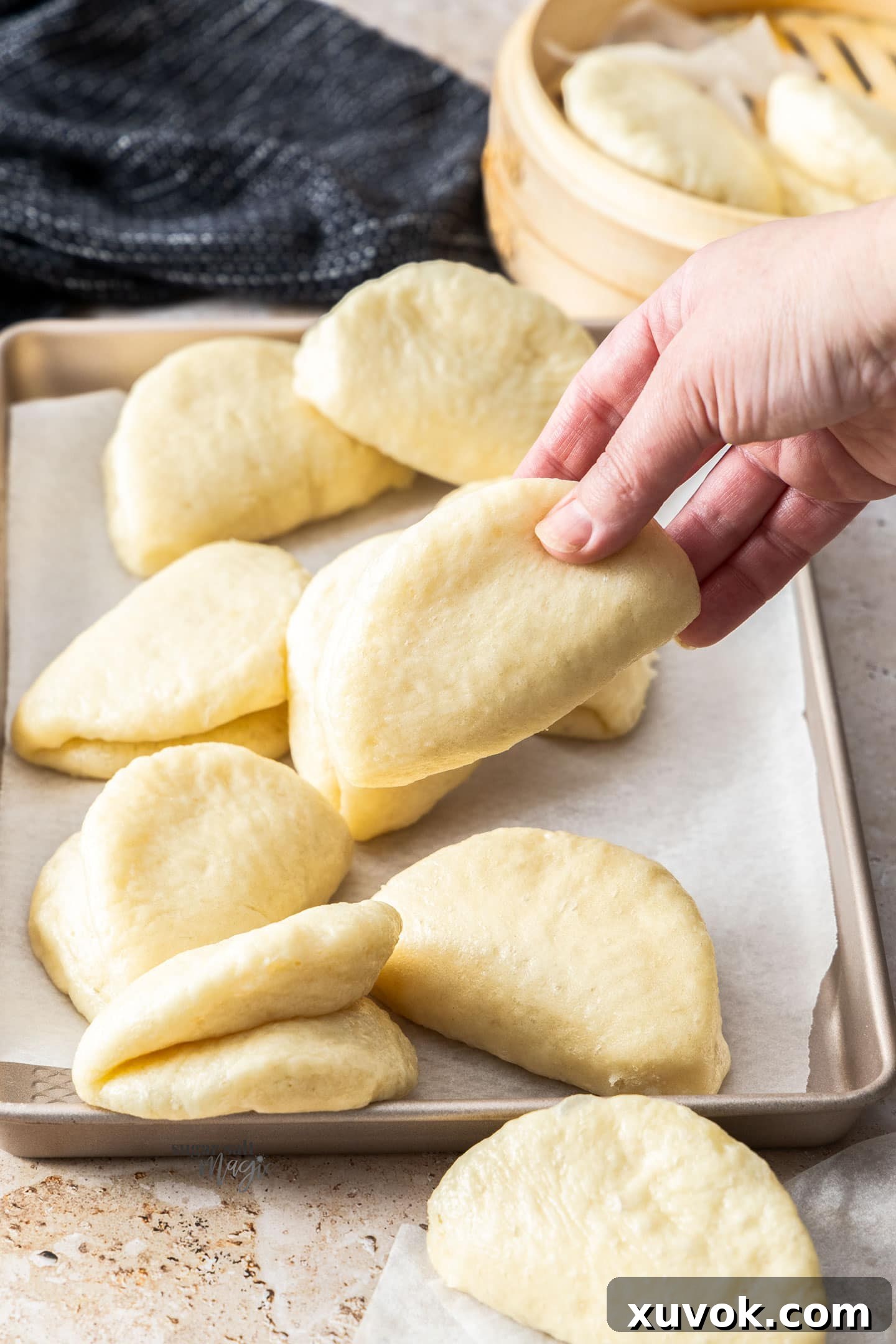
- Oil and Fold: Once rolled, lightly brush one side of the oval dough with a small amount of vegetable oil. This step is absolutely critical and should not be skipped. The oil acts as a barrier, preventing the two halves of the dough from sticking together when folded. After oiling, carefully fold the dough oval in half, creating that iconic clam-shell shape. Place each folded bao bun onto its own square of baking paper, which will prevent it from sticking to the steamer basket later. Repeat this process for all remaining dough portions.
Steaming Your Bao Buns to Perfection
Steaming is the quintessential cooking method for bao buns, transforming the raw dough into those incredibly soft, fluffy pillows. While a traditional bamboo steamer is highly recommended for its efficiency and aesthetic appeal (allowing you to stack multiple layers), various other steaming setups can work just as effectively. The basic principle involves creating a hot, moist environment without direct contact between the buns and the boiling water. You’ll need a large pot or wok for the water, and some form of steaming basket or apparatus with a tight-fitting lid. Even a metal colander placed within a saucepan, covered tightly with foil, can serve as an improvised steamer.
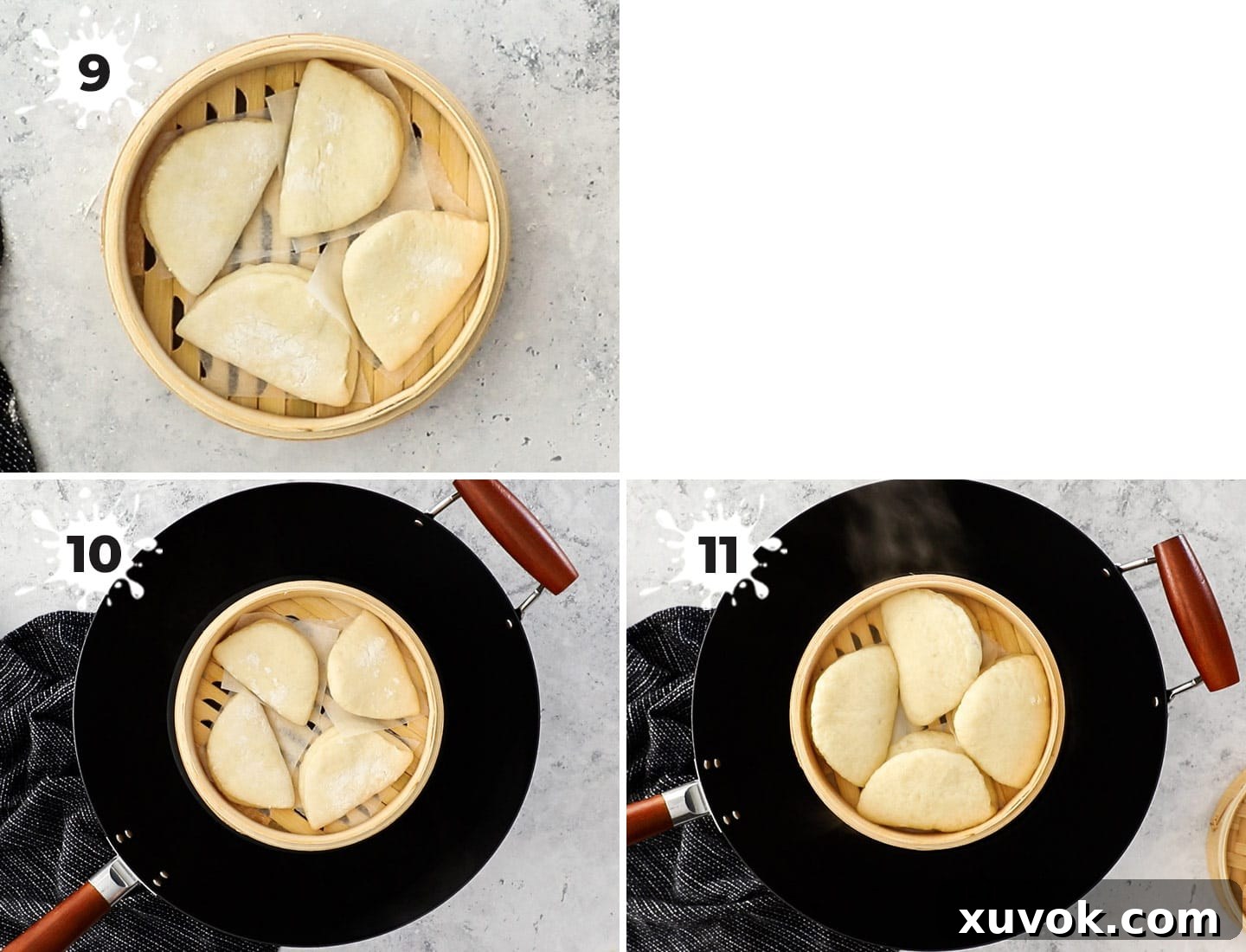
- Arrange in Steamer: Carefully place the prepared bao buns, each resting on its square of baking paper, into your steamer basket. Ensure there is adequate space between each bun—about 1 inch (2.5 cm) apart. This spacing is vital to allow them room to expand and puff up without sticking to each other during the steaming process. Overcrowding can lead to uneven cooking and misshapen buns.
- Setup for Steaming: Fill a large pot or wok with approximately 1 inch (2.5 cm) of water. Bring the water to a gentle simmer over medium heat. Once simmering, carefully place your steaming basket, containing the bao buns, over the pot of simmering water. The bottom of the steamer should not touch the water. Cover the steamer tightly with its lid. If your steamer doesn’t have a lid, or if using an improvised setup, ensure a tight seal by covering the top with aluminum foil to trap the steam effectively.
- Steam Until Fluffy: Maintain a low, steady simmer in the pot throughout the steaming duration. Steam the bao buns for precisely 8 minutes. During this time, the heat and moisture will work their magic, transforming the dough into soft, puffed-up, and gloriously fluffy buns. Once the time is up, carefully remove the lid, and behold your perfectly cooked, wonderfully cute bao buns! They are now ready to be filled and enjoyed immediately, or stored for later use.
Expert Tips and Tricks for Bao Bun Success
Achieving consistently perfect bao buns requires attention to a few key details. Here are some expert tips to ensure your homemade bao are nothing short of spectacular:
- The Essential Oil Brush: Never skip brushing the dough with a little oil before folding. This small step is paramount for preventing the two halves of the bao from fusing together during steaming. Without it, you’d end up with a solid, flat bun instead of the intended open pocket for fillings. A neutral-flavored vegetable oil works best.
- Parchment Paper is Your Best Friend: Always place your bao buns on individual squares of baking or parchment paper before putting them in the steamer. This simple trick ensures that the delicate, sticky dough does not adhere to the bottom of the steamer basket, allowing for easy removal without tearing or misshaping your beautiful buns.
- Maintain Constant Steam: Steaming requires a continuous supply of hot water. It’s a good habit to keep a kettle of hot water on hand. If the water in your pot begins to run low during the steaming process, you can quickly and safely replenish it with pre-heated water, ensuring the steam flow remains uninterrupted. This prevents temperature fluctuations that could affect the texture of your bao.
- Control the Heat: The key to perfectly steamed bao is a consistent, low simmer. As soon as the water in your pot begins to boil vigorously, reduce the heat to medium or low-medium. You want a steady, gentle simmer, not a rolling boil, throughout the entire 8-minute steaming period. Once the temperature is adjusted, carefully place your steamer basket with the bao buns over the pot and cover it tightly.
- Avoid Overcrowding: Give your bao buns ample space in the steamer. If they are packed too closely, they will expand and stick to each other, resulting in misshapen buns and potentially uneven cooking. Work in batches if necessary, ensuring each bun has about an inch of space around it.
- Do Not Lift the Lid Prematurely: Resist the urge to peek! Lifting the lid during the steaming process allows steam to escape, causing a sudden drop in temperature. This can lead to the bao buns deflating or becoming dense. Keep the lid on for the full 8 minutes.
- Cooling Gently: Once steamed, remove the bao buns from the steamer relatively quickly to prevent them from becoming waterlogged. Let them cool slightly on a wire rack if not serving immediately.
What to Serve with Your Fluffy Bao Buns
While bao buns are incredibly satisfying on their own, especially when generously filled, they often benefit from complementary side dishes to create a more complete and balanced meal. Unless you’re serving them as a light appetizer, considering some accompaniments will enhance your dining experience. The goal is to provide textural contrast, freshness, and additional layers of flavor that harmonize with the delicate buns and their rich fillings.
A simple yet effective choice is a fresh, crisp side salad, offering a refreshing counterpoint to the soft dough and savory fillings. For an Asian-inspired touch, a vibrant Asian slaw, typically made with shredded cabbage, carrots, and a tangy dressing, is a fantastic option. You can also lightly steam some fresh vegetables such as tender bok choy, crisp green beans, or sweet snow peas, seasoned simply to allow their natural flavors to shine. These add essential nutrients and a pleasant crunch.
For those who appreciate a bit more zest, simple pickled vegetables like kimchi, quick-pickled cucumbers, or daikon offer a delightful tang and umami boost that cuts through richer fillings. If you’re craving a more substantial, carby indulgence, a flavorful fried rice dish, perhaps with prawns or chicken, makes for a hearty accompaniment. Alternatively, a refreshing noodle salad, tossed with a light dressing and fresh herbs, can provide a satisfying textural and flavor contrast. The key is to select sides that complement your chosen bao fillings without overpowering them, creating a harmonious and delicious meal.
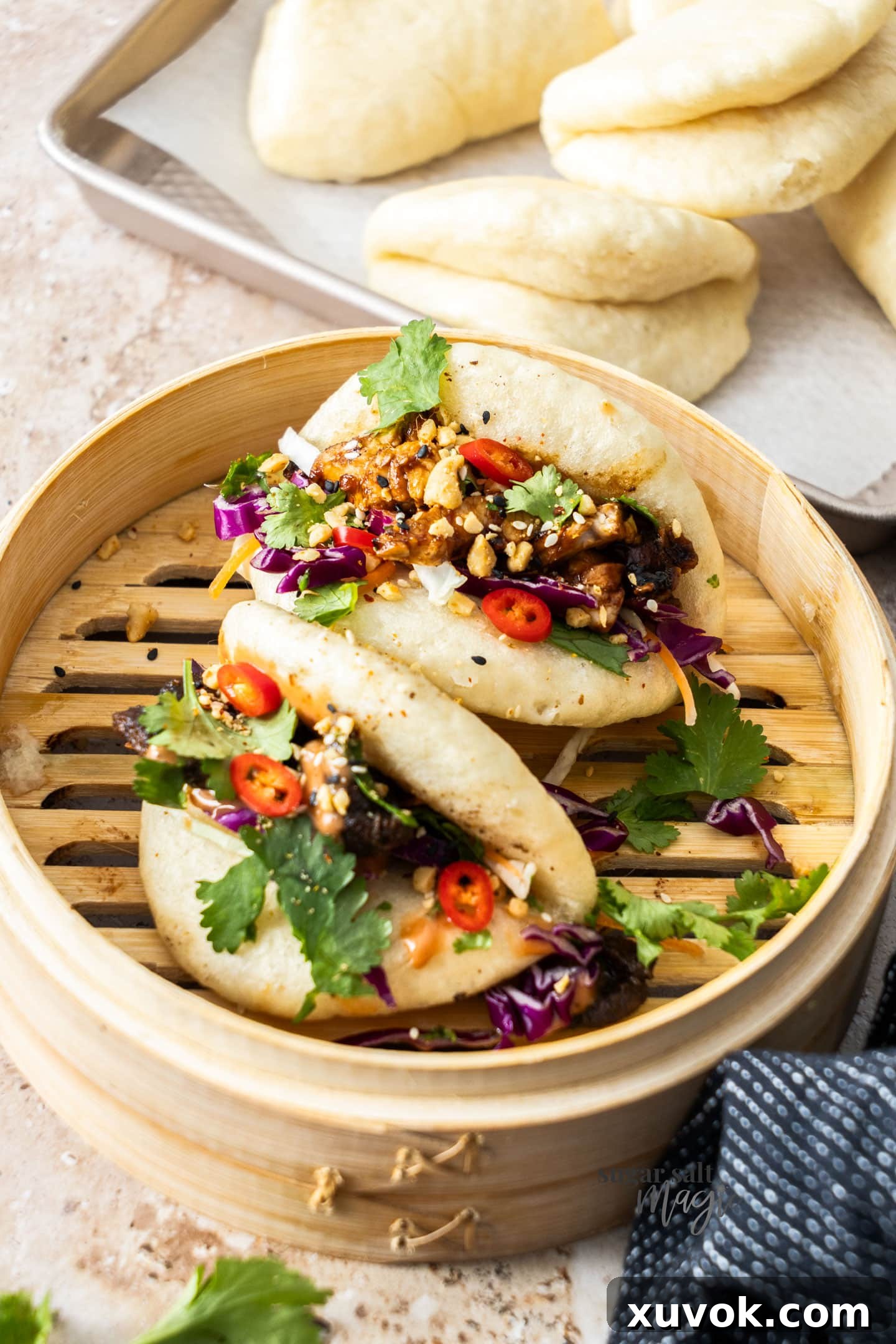
Creative Bao Bun Filling Ideas for Every Palate
The beauty of homemade bao buns lies in their incredible versatility, acting as a perfect canvas for an endless array of delicious fillings. Traditionally, gua bao are celebrated for their rich, succulent braised pork belly, a classic that remains a favorite for good reason. However, the world of bao fillings has expanded dramatically, inviting culinary creativity and catering to diverse tastes. Here are some inspiring ideas to get you started:
Classic & Meat-Forward Options:
- Braised Pork Belly: The quintessential filling, offering melt-in-your-mouth tenderness and a savory-sweet glaze.
- Roasted or Seared Duck: Luxuriously flavorful, reminiscent of Peking duck. Try preparing duck bao for an elevated experience.
- Spicy Chicken: Shredded chicken tossed in a fiery sauce, or crunchy Korean fried chicken for a textural contrast.
- Honey Pepper Pork: A sweet and savory delight, similar to this delectable honey pepper pork, which works wonderfully in bao.
- Beef Bulgogi: Thinly sliced marinated beef, offering a sweet and savory Korean twist.
Vegetarian & Plant-Based Choices:
- Seasoned & Fried Tofu: Cubed or sliced tofu, pan-fried until golden and seasoned with soy, ginger, and garlic, provides a hearty plant-based option.
- Mushrooms: Sautéed shiitake or oyster mushrooms with a rich umami sauce.
- Roasted Vegetables: Sweet potato, bell peppers, or eggplant, roasted and tossed with a savory glaze.
- Tempeh or Seitan: Marinated and grilled for a protein-packed, chewy filling.
Fresh Garnishes & Crunchy Toppings:
To add texture, freshness, and color, don’t forget the garnishes! These elevate your bao from good to extraordinary. Commonly used options include:
- Shredded cabbage or kale slaw
- Thinly sliced carrots
- Cool, crisp cucumber sticks
- Fresh coriander (cilantro) leaves
- Bean sprouts for a delicate crunch
- Crushed peanuts or a spicy peanut dukkah for added flavor and texture.
For instance, the bao buns pictured here are beautifully adorned with a vibrant kale slaw, fresh coriander, and a homemade spicy peanut dukkah, showcasing how simple additions can transform the dish.
Sauces to Drizzle & Dip:
No bao bun is complete without a luscious sauce to tie all the flavors together. Some highly recommended options include:
- Hoisin Sauce: A classic choice, offering a sweet, savory, and slightly tangy flavor profile.
- Sriracha Mayonnaise: A creamy and spicy kick.
- Kewpie Mayonnaise: Known for its rich, umami-packed flavor.
- Gochujang Mayo: This fiery Korean chili paste mayonnaise offers a fantastic depth of flavor and a gentle heat, a personal favorite that you can find the recipe for here.
- A combination of hoisin and Kewpie mayonnaise for a balanced, rich, and slightly sweet experience.
Mix and match these ideas to create your signature bao bun combinations, exploring the endless possibilities this incredible dish offers!
Yield, Storage, and Reheating Your Bao Buns
This recipe is designed to yield 12 perfectly sized homemade bao buns, making it ideal for a family meal or for entertaining guests. The generous yield also means you’ll likely have leftovers, which is excellent news because bao buns are incredibly freezer-friendly. Embracing the freezer is key to enjoying these delightful treats anytime the craving strikes, transforming them into a convenient option for easy weeknight dinners or impromptu snacks.
Freezing Bao Buns: To preserve the fresh taste and soft texture of your homemade bao, freezing them correctly is crucial. Once your bao buns have been steamed and have cooled completely to room temperature, arrange them in a single layer on a baking tray lined with baking paper. Place the tray into the freezer until the buns are completely solid. This flash-freezing technique prevents them from sticking together. Once frozen solid, transfer the individual bao buns into a heavy-duty freezer bag or an airtight container. They will maintain their quality in the freezer for up to 3 months. Always label your container with the date of freezing for easy tracking.
How to Reheat Bao Buns for Freshness
One of the best qualities of bao buns is how beautifully they reheat, returning to their original soft and fluffy state. There are a couple of excellent methods for reheating, depending on your preference and available equipment:
- Microwave Method (Quickest): For a speedy reheat, place the frozen or thawed bao buns in a single layer on a microwave-safe plate. To prevent them from drying out and to re-introduce moisture, cover the plate with a sheet of wet paper towel. Microwave on high for approximately 20-45 seconds. The exact timing will depend on the power of your microwave and how many buns you are reheating at once. Heat until they are thoroughly warm and soft to the touch.
- Steamer Method (Optimal): For the absolute best texture, reheating in a steamer is highly recommended. If reheating from frozen, it might take a bit longer. Place the frozen bao buns on parchment paper in a steamer basket over simmering water. Cover and steam for 5-7 minutes (or 2-3 minutes if thawed) until they are completely heated through and gloriously soft and fluffy again. This method truly brings them back to life.
With these storage and reheating tips, you can always have a stash of delicious bao buns at the ready, making impromptu Asian-inspired meals a breeze!
More Asian-Inspired Recipes You’ll Love
If you’ve enjoyed crafting these delicious bao buns, you’ll surely love exploring other vibrant and flavorful Asian-inspired recipes. Expand your culinary repertoire with these mouth-watering dishes:
- Duck Bao: Take your bao experience to the next level with succulent duck fillings.
- Korean Beef Tacos: A fusion favorite, combining tender marinated beef with fresh, zesty toppings.
- Spicy Korean Chicken Tacos: For those who love a kick, these tacos are packed with fiery, flavorful chicken.
- Thai Fish Cakes: Fragrant, savory, and perfectly spiced, these fish cakes are an authentic delight.
- Spring Rolls: Crispy, fresh, and versatile – a classic appetizer for any occasion.
- Turkey San Choy Bow: A light and flavorful lettuce wrap dish, perfect for a healthy and satisfying meal.
Did you try this homemade bao buns recipe?
Leaving a rating and comment below the recipe is so helpful!
Hungry for more? Subscribe to the newsletter for free recipes straight to your inbox. Also, follow along on Facebook, Pinterest and Instagram.
Bao Recipe (Chinese Steamed Buns)
These homemade bao buns are perfectly soft and fluffy plain steamed buns. Delicious and easy to make, they’re ready to be filled with any flavorful filling you like.
Rate
Pin
Ingredients
- ½ cup whole milk, warm (not hot)
- 3 teaspoons sugar
- 1 ½ teaspoon instant yeast (or active dry yeast)
- 390 g plain flour
- ½ teaspoon baking powder
- ¼ teaspoon salt
- ¾ cup water, warm (not hot)
- 2 teaspoons vegetable oil (for brushing)
For best results, always weigh ingredients where a weight is provided
Equipment
- Stand mixer – helpful but not absolutely necessary
- Rolling Pin
- Baking tray
- Bamboo steamer (notes) and large pot / wok
Instructions
-
MAKE THE DOUGH:
In a small bowl or jug, combine the warm milk, the sugar and the yeast. Mix well and set aside 5 minutes to activate the yeast (notes). -
In bowl of stand mixer (or by hand, see notes), combine the flour, baking powder and salt. Mix to combine.
-
Pour the yeast mixture into the bowl followed by the warm water.
-
Using the dough hook attachment, mix to a dough – knead for 3-4 minutes, until it looks smooth. Take it out and just pull it into a ball.
-
RISE:
Oil the bowl lightly with a little vegetable oil and place the dough back in. Cover with plastic wrap then rest in a warm, draft-free place for 1 hour or until doubled in size. If your oven has a dough-rise setting, use that. -
PORTION:
Once the dough has risen, divide it into 12 even portions (to make them perfectly even, weigh the dough and divide the amount evenly by 12, then weigh each individual portion). -
SHAPE:
Place a dough portion into the palm of your non-dominant hand. Use the fingers of your dominant hand to pinch the sides into the middle, turning it, over and over until you have a smooth little ball when you flip it over. Repeat with the rest. If you’re finding the dough too sticky, just dust your hands and fingertips with a little flour to help. -
REST:
Lightly dust a baking tray with flour, then sit the balls on the tray and cover with a clean tea towel for 15 minutes in a warm spot to rest. -
While they rest, tear off small squares of baking paper about 8cm/3in square – these will be for the prepared bao to rest on in the steamer so they don’t stick.
-
ROLL AND SHAPE:
With a rolling pin, roll the first ball out to about 4-5mm thick, slightly oval shape. Make the top and bottom points of the oval slightly thicker than the middle. -
Brush a little oil over then fold in half. Place onto one of your squares of paper. Repeat with remaining balls.
-
Place the bao buns on their paper squares into a steamer basket (notes) about 1 inch apart.
-
STEAM:
Heat a wok or large pot with 1 inch of water until simmering then turn the heat down to medium-low (you just want a low simmer the whole time they cook). Place the steamer basket with the bao inside over the water. Cover with a lid (or foil if you don’t have a lid) and steam for 8 minutes. -
Your bao can be used immediately or frozen for later (notes).
-
Please take a moment to leave a comment & rating. It’s appreciated and so helpful.
Notes
- YEAST: You can use instant yeast or active dry yeast. While instant yeast does not typically require activation, active dry yeast does. However, even when using instant yeast, step 1 (activating the yeast) is a beneficial practice. It serves as a quick test to confirm your yeast is active and potent. If it doesn’t show signs of puffing up, your yeast may be expired or inactive, preventing you from wasting other ingredients and time on a dough that won’t rise.
- BY HAND: If you don’t have a stand mixer, you can easily prepare the dough by hand. Simply use a sturdy spoon to mix all the ingredients together in a large mixing bowl until a shaggy dough forms. Then, turn the dough out onto a clean, lightly floured work surface and knead it vigorously for about 8-10 minutes until it becomes smooth, elastic, and no longer sticky.
- STEAMER BASKET: A traditional Chinese bamboo steamer is an excellent investment for bao buns. They are generally affordable, durable, and their stackable design allows you to steam multiple batches simultaneously. However, any steaming basket or setup will work. The most important thing is not to overcrowd the buns, ensuring they have enough room to expand and puff up without touching each other.
- FREEZING: While freshly steamed bao buns are best, they do tend to dry out and become stale after a couple of days in the refrigerator, much like other breads. Freezing is the superior method for long-term storage, as it effectively halts the staling process. When properly frozen, your bao buns will remain perfectly fresh and delicious for up to 3 months.
- REHEATING: Thawed or frozen bao buns can be easily reheated using either a microwave or a steamer. For microwave reheating, place the bao on a plate, cover with a damp, folded paper towel, and heat for 30-40 seconds (adjust time for more buns) until hot and soft. For steamer reheating, place them back into a steamer over simmering water for 2-3 minutes if thawed, or 5-7 minutes if frozen, until heated through and fluffy.
MORE ASIAN INSPIRED RECIPES!
Have you tried this recipe?
Don’t forget to leave a rating and comment below and let me know how it was! I love hearing from you. Nutrition information is approximate and derived from an online calculator. The brands you use may cause variations.
Calories from Fat 18