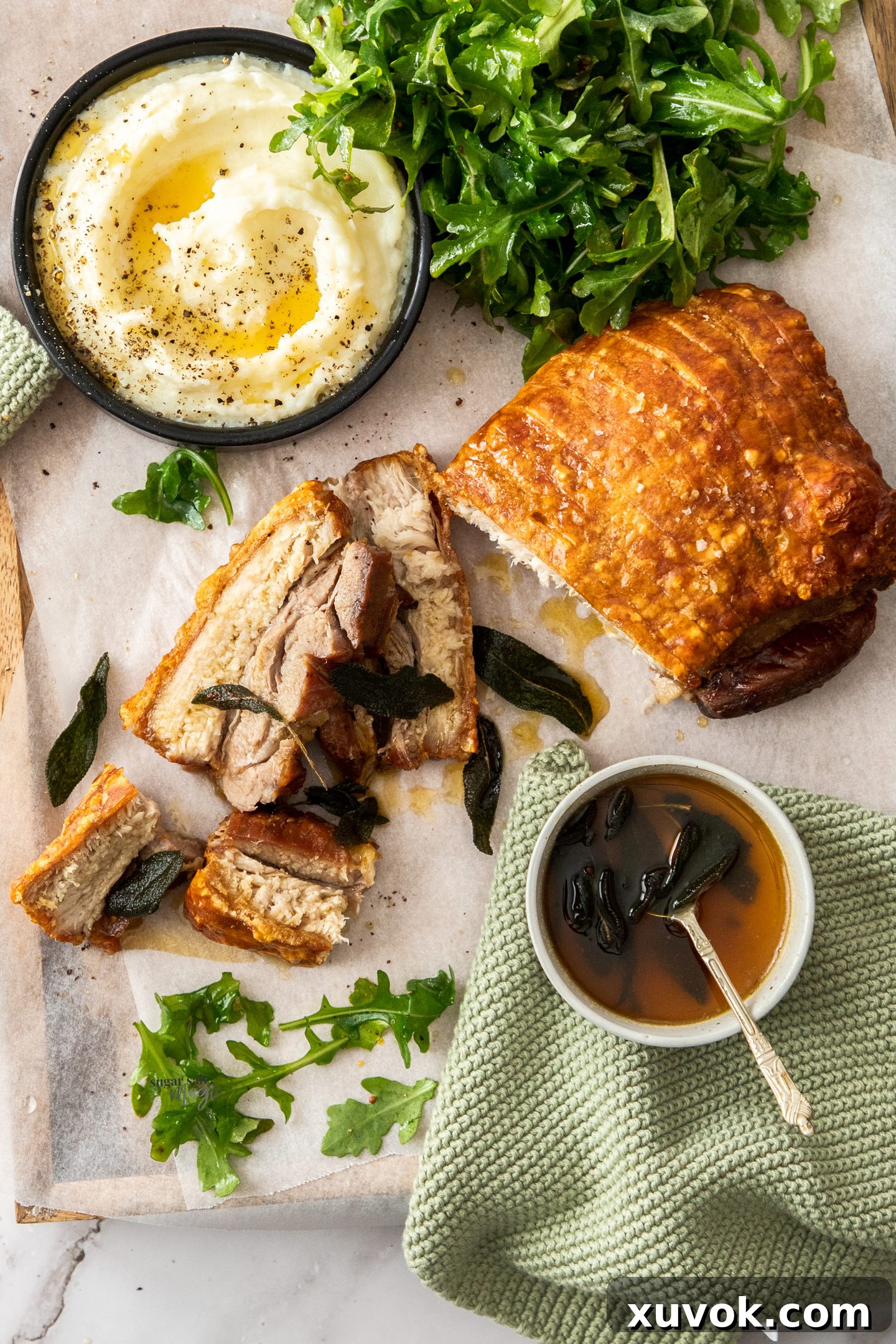
Unlock the secret to incredibly succulent pork belly crowned with an irresistible, shatteringly crispy crackling. This oven-roasted pork belly recipe is designed to be your ultimate guide, ensuring flawless results every single time. Prepare to impress with a dish that effortlessly combines tender, juicy meat with a golden, crunchy top layer.
- The meat remains astonishingly succulent, melting in your mouth.
- Achieve a flawless layer of unbelievably crunchy crackling, a texture sensation like no other.
- It’s surprisingly simple to prepare, even for novice cooks.
- Requires only 3 fundamental ingredients, highlighting the natural flavors of the pork.
Pork belly, in its essence, is a culinary delight, but its true glory shines through its perfectly crackled skin. The harmonious blend of these two contrasting textures – the rich, tender meat and the delicate, crisp crackling – creates an unforgettable eating experience. Our straightforward method demystifies the process, making this gourmet achievement easily attainable in your home kitchen.
Looking for more pork inspiration? Explore this flavorful stuffed pork tenderloin. To guarantee your roast pork is exceptionally juicy, consider brining it beforehand – a simple step that significantly enhances moisture and taste. And for a quick yet delicious pork meal, try our vibrant Chimichurri pork tenderloin.
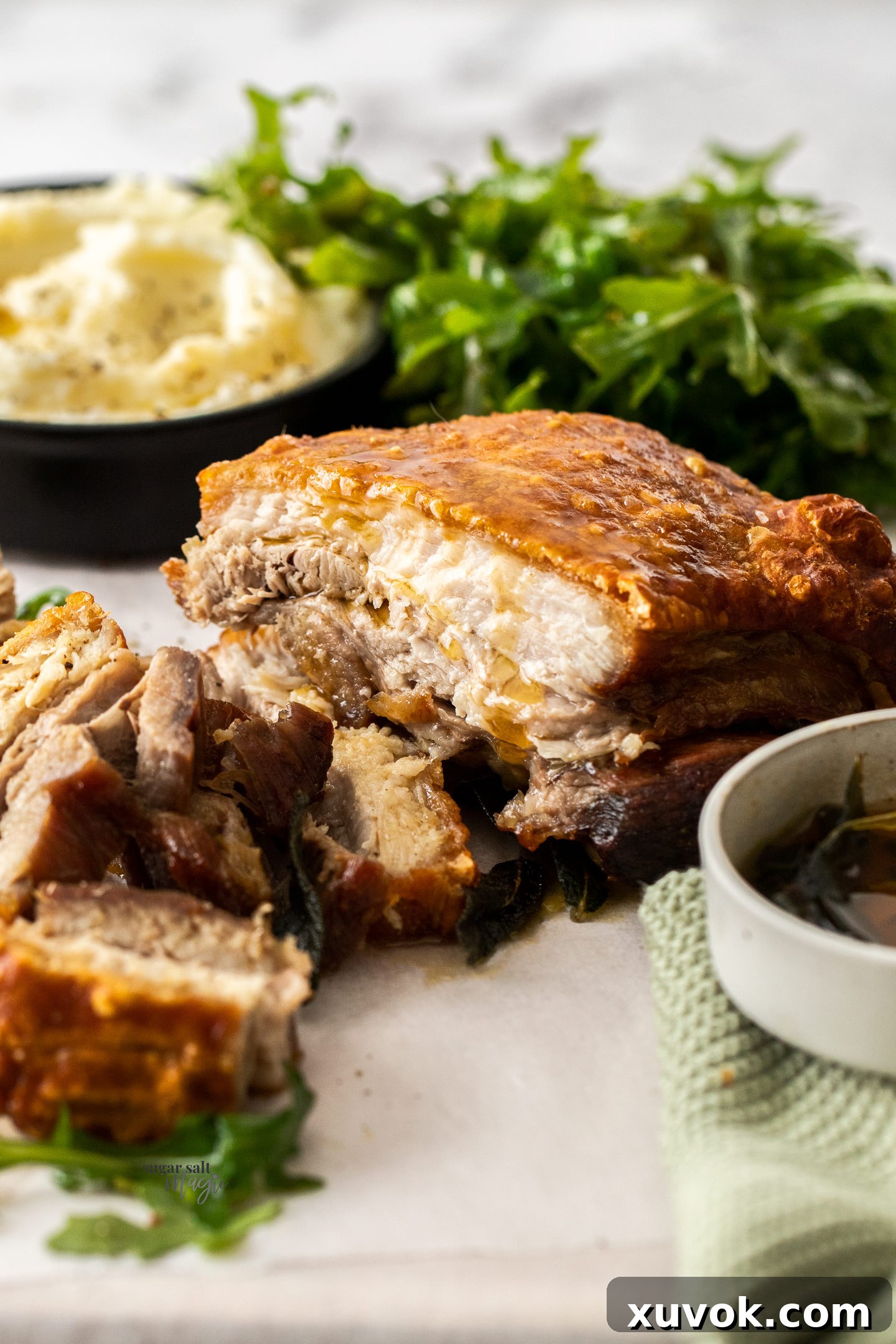
Table of Contents
- Ingredients You’ll Need
- How to Roast Pork Belly in the Oven (Step-by-Step)
- Expert Tips for Success
- What to Serve with Crispy Roast Pork Belly
- Yield and Storage Information
- More Recipes You’ll Love
Never Miss a Recipe!
Get the latest, most delicious recipes straight to your inbox by subscribing to our newsletter!
Essential Ingredients for Perfect Pork Belly
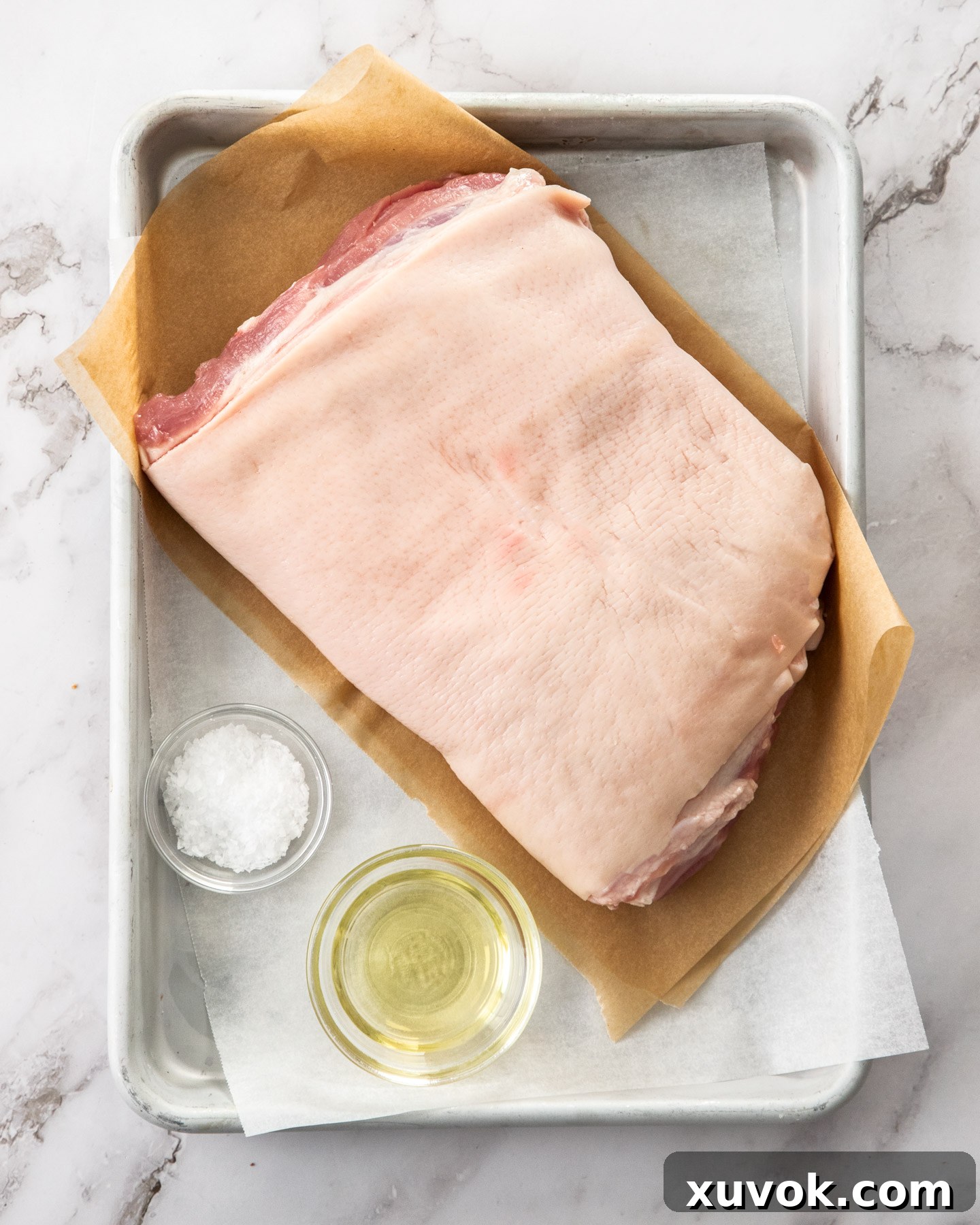
For precise quantities and step-by-step instructions, please refer to the comprehensive recipe card below.
The beauty of roasting pork belly lies in its elegant simplicity. With merely three core ingredients, you can achieve extraordinary results. All you need is a quality slab of pork belly, a touch of neutral oil, and a sprinkle of coarse sea salt. These humble components combine to create a dish of remarkable flavor and texture.
Understanding Pork Belly: The Cut and Its Qualities
Pork belly is a celebrated cut of meat sourced from the underside, or “belly,” of the pig. It’s famously the cut from which bacon is made when cured and smoked. In its whole form, pork belly presents as a rectangular slab of meat, topped with a thick layer of skin. Beneath the skin, a generous layer of rich fat contributes to its signature succulence, which is further interspersed within the meat itself, often creating several distinct layers of meat and fat. This marbling is what delivers such incredible flavor and moisture during cooking. While often sold as a whole slab, it can also be found pre-cut into strips, typically ranging from half an inch to one inch in thickness.
The Exquisite Flavor Profile of Roasted Pork Belly
When perfectly roasted, pork belly is an intensely rich and deeply savory experience, brimming with umami. The layers of rendered fat are not just for texture; they infuse the meat with profound flavor and incredible juiciness, making it one of the most succulent cuts available. The skin, when transformed into crackling, adds another dimension of flavor and an utterly delightful, shatteringly crunchy texture. Due to the inherent richness of pork belly, excessive seasoning is rarely needed. However, the judicious application of salt to the skin is transformative, elevating the crackling to an unparalleled level of deliciousness.
Selecting the Best Pork Belly for Roasting
Choosing the right piece of pork belly is crucial for achieving the best results. When at the butcher or supermarket, keep an eye out for a slab of meat that:
- Possesses a relatively even thickness throughout. A cut around 1 ½ inches thick is generally ideal for consistent cooking.
- Boasts two distinct, good layers of meat. While some prefer a thicker fat layer, a balanced meat-to-fat ratio often yields a more satisfying eating experience.
- Features smooth, flat skin (avoiding wrinkly sections) that appears dry and isn’t sitting in excess juices. Purchasing directly from a reputable butcher is often the best approach. If you opt for vacuum-packed pork from a supermarket, diligently adhering to the skin-drying steps (either overnight in the fridge or the boiling water method) is paramount to achieving crispy crackling.
An additional benefit of buying from a butcher is the assurance of higher quality meat. Some commercial producers might inject water into meat products to increase weight, which unfortunately compromises the meat’s integrity and can hinder the crisping process. This excess moisture will steam out during cooking, making it exceedingly difficult to achieve uniformly crispy skin.
How to Roast Pork Belly in the Oven: A Detailed Step-by-Step Guide
Roasting pork belly in your home oven is remarkably simple, yet a few strategic steps are key to transforming it into a spectacular culinary masterpiece. Follow these instructions carefully to guarantee tender meat and an enviable, crunchy crackling.
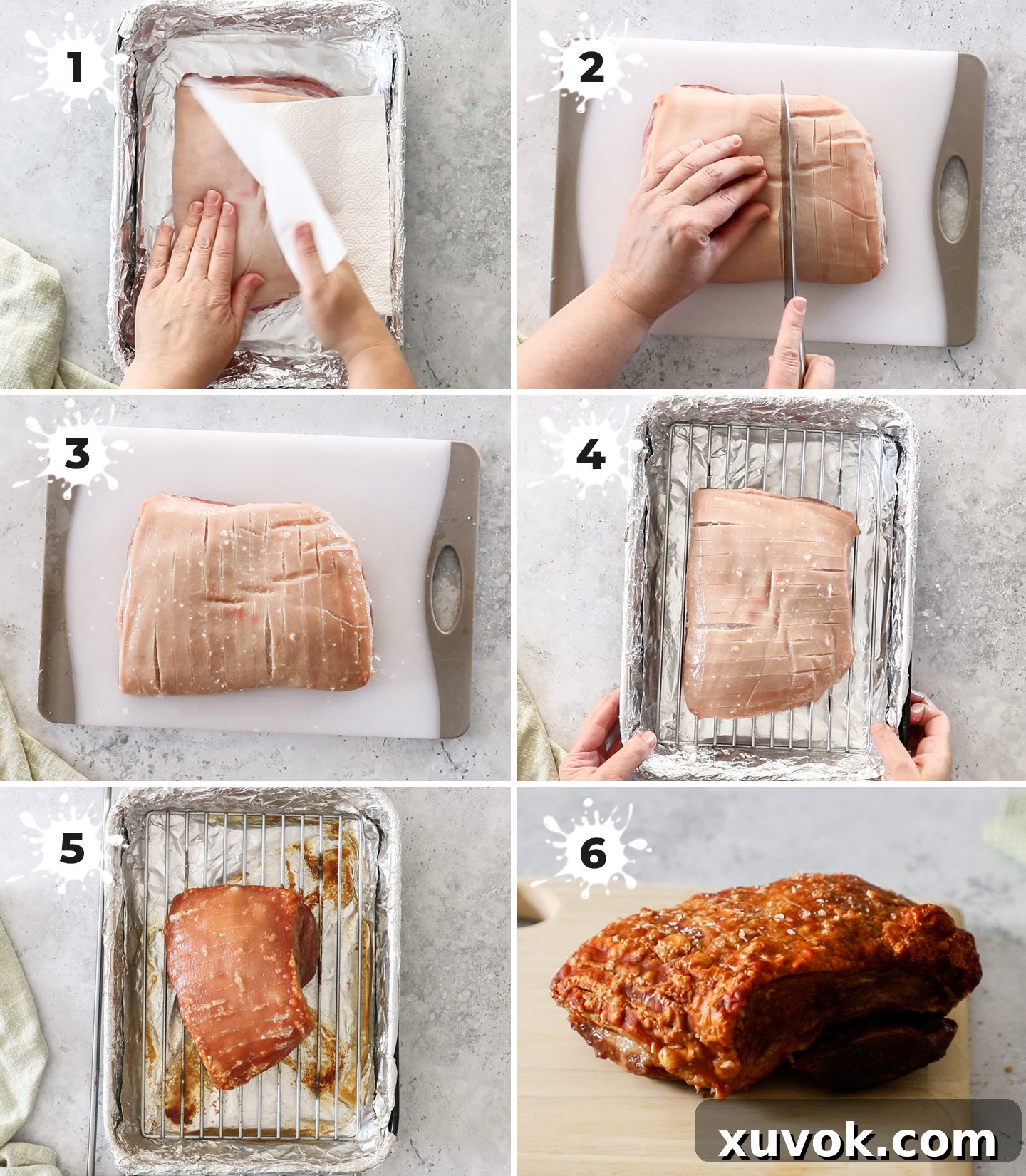
For exact measurements and complete instructions, consult the recipe card below.
- Thoroughly Dry the Skin: This is arguably the most crucial step for achieving crispy crackling. Begin by patting the entire surface of the pork belly, especially the skin, with several sheets of paper towel until it is as dry as possible. Then, place the pork belly, skin-side up and completely uncovered, in your refrigerator for a minimum of 6 hours, or ideally, overnight. Air circulation in the fridge will further dehydrate the skin, creating the perfect canvas for crisping.
- Precisely Score the Skin: Scoring the skin allows salt to penetrate deep into the fat layer beneath and facilitates even rendering of the fat, which is vital for maximum crispiness. Using a very sharp knife, carefully make shallow cuts across the skin, about 1cm (0.4 inches) apart. The key is to cut *only* through the skin and fat layer, ensuring you do not pierce the underlying meat. Cuts that are too deep can allow moisture from the meat to steam up, preventing crackling.
- Scald the Skin with Boiling Water (Highly Recommended): While this step might not be explicitly shown in all images, it is a technique I consistently employ for superior results. Carefully place the scored pork belly on a rack in your sink. Bring a kettle of water to a rolling boil, then slowly and evenly pour the boiling water over the entire surface of the pork skin. This process helps to tighten the skin and open its pores, further aiding in fat rendering and crisping. Immediately after scalding, pat the skin thoroughly dry again with paper towel until no moisture remains.
- Season with Oil and Salt: Drizzle a small amount of neutral cooking oil (like vegetable or canola oil) over the skin. Follow this with a generous sprinkle of coarse sea salt. If you enjoy a hint of spice, freshly cracked black pepper can also be added. Vigorously rub the oil and salt mixture over the entire skin, making sure to work it into all the score lines. With just the residue remaining on your hands, lightly rub the meat sections of the pork belly to impart a subtle seasoning.
- Prepare for Baking: Line a large, sturdy roasting tray with at least two, preferably three, layers of heavy-duty aluminum foil. This foresight will save you considerable cleaning effort later. Position a flat roasting rack inside the foil-lined tray. If you don’t have a rack, you can still proceed, but a rack promotes better air circulation, which helps crisp the bottom of the belly. Place the pork belly flat onto the roasting rack, skin-side up. It’s crucial that the skin surface is as level as possible for even crackling. Use small pieces of scrunched-up aluminum foil underneath any thinner sections of the pork to prop them up and ensure a uniform surface.
- Initial High-Heat Roast: Preheat your oven to a high temperature of 230°C (450°F). Once heated, place the prepared pork belly into the oven and roast for approximately 1 hour. During this initial high-heat phase, you should observe the skin beginning to bubble and crisp around the edges, forming the beginnings of that beautiful crackling.
- Lower-Temperature Finish: After the initial hour, reduce the oven temperature to 180°C (350°F). Continue roasting for another 1 to 1 ½ hours. The exact time will depend on the thickness of your pork belly and your oven, so keep an eye on it. Continue cooking until the entire skin surface is uniformly crunchy and golden brown, and the meat beneath is fork-tender.
- Crucial Resting Period: Once roasted to perfection, remove the pork belly from the oven and allow it to rest, uncovered, in the roasting pan for a minimum of 10 minutes before carving. This resting period is essential; it allows the meat’s juices to redistribute throughout the cut, resulting in a more tender and moist finished product.
- Expert Slicing Technique: Slicing through perfectly crispy crackling can be tricky. A serrated knife excels at sawing through the crunchy skin but can unfortunately tear the delicate, tender meat. Here’s my preferred method: use a serrated knife to carefully saw through the crackling in 1 to 1 ½ cm (0.4 to 0.6 inch) intervals, just until you break through the skin layer. Then, switch to a smooth-bladed, sharp chef’s knife to cleanly slice through the meat portion, creating beautifully presented pieces.
The Ideal Oven Temperature for Crispy Pork Belly
The secret to achieving that coveted shatteringly crispy skin while simultaneously keeping the underlying meat incredibly moist and tender lies in strategically adjusting your oven’s temperature. You’ll initiate the roasting process at a high temperature of 230°C (450°F) for the first hour. This intense heat provides the initial shock needed to puff up and crisp the skin rapidly. Following this, the oven temperature is reduced to a moderate 180°C (350°F) for an additional 1 to 1 ½ hours. This lower temperature allows the pork belly to cook through gently, rendering the fat and tenderizing the meat without burning the crackling. Continue cooking until the skin is uniformly crunchy and golden, a clear visual cue that it’s ready.
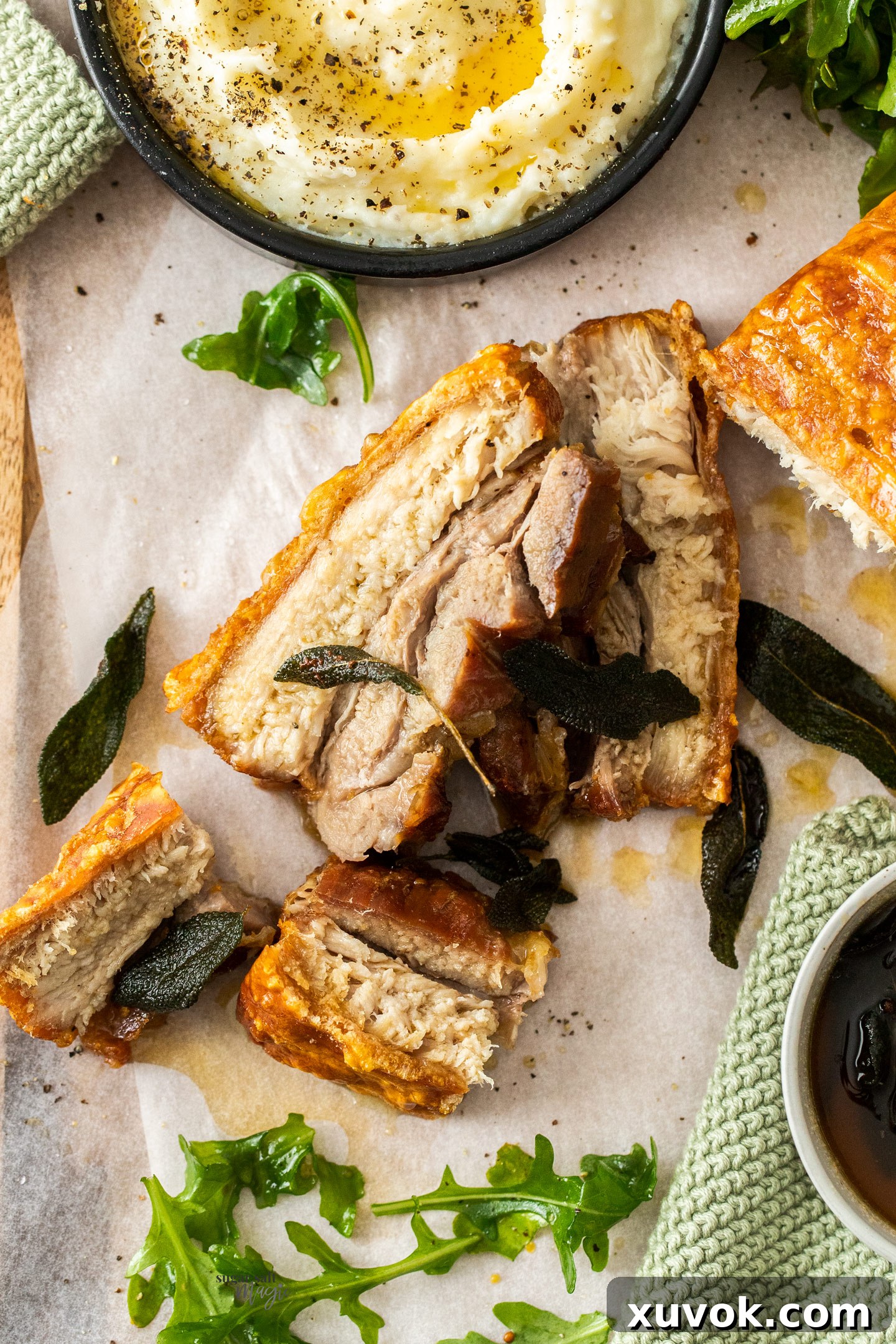
By diligently following these simple yet precise steps, you are virtually guaranteed to achieve perfect “porky” results every single time. The skin will be gloriously crunchy, the thick layer of fat beneath will have largely rendered away, and the meat itself will be wonderfully succulent, featuring only a small, tender layer of fat nestled between its lean sections. Most of the fat will melt and seep downwards, continually basting the meat and ensuring it remains unbelievably juicy and tender, with any excess dripping neatly into the prepared tray below.
Expert Tips for Success
Beyond the detailed steps outlined above, a few key insights can further elevate your pork belly roasting game:
- Precision in Scoring: As mentioned, when scoring the skin, it is absolutely paramount to use a sharp knife and, critically, do not cut through to the meat. This warning cannot be overstated. If the knife penetrates the meat, the natural moisture within will release as steam during cooking, rising upwards and making it exceedingly difficult, if not impossible, to achieve consistent, all-over crispy skin. Start with very light pressure, gradually increasing until you feel the blade just break through the tough skin layer, but no further. Even light, superficial scoring is effective.
- Embrace the Drying Process: The drying-out period in the refrigerator is non-negotiable for superior crackling. Don’t rush it. The drier the skin, the crisper the result.
- Maintain a Level Surface: Ensure the pork belly’s skin is perfectly flat in the roasting pan. Any unevenness will lead to inconsistent crackling, with some areas becoming overly crisp while others remain chewy. Aluminum foil props are your best friend here.
- Resist the Urge to Peek: During the high-heat cooking phase, try to avoid opening the oven door unnecessarily. Each time you open the door, the oven temperature drops, extending cooking time and potentially affecting the crackling process.
- Consider a Meat Thermometer: While visual cues for crackling are important, if you’re concerned about the meat’s doneness, an internal temperature of 71-77°C (160-170°F) is generally ideal for tender pork belly.
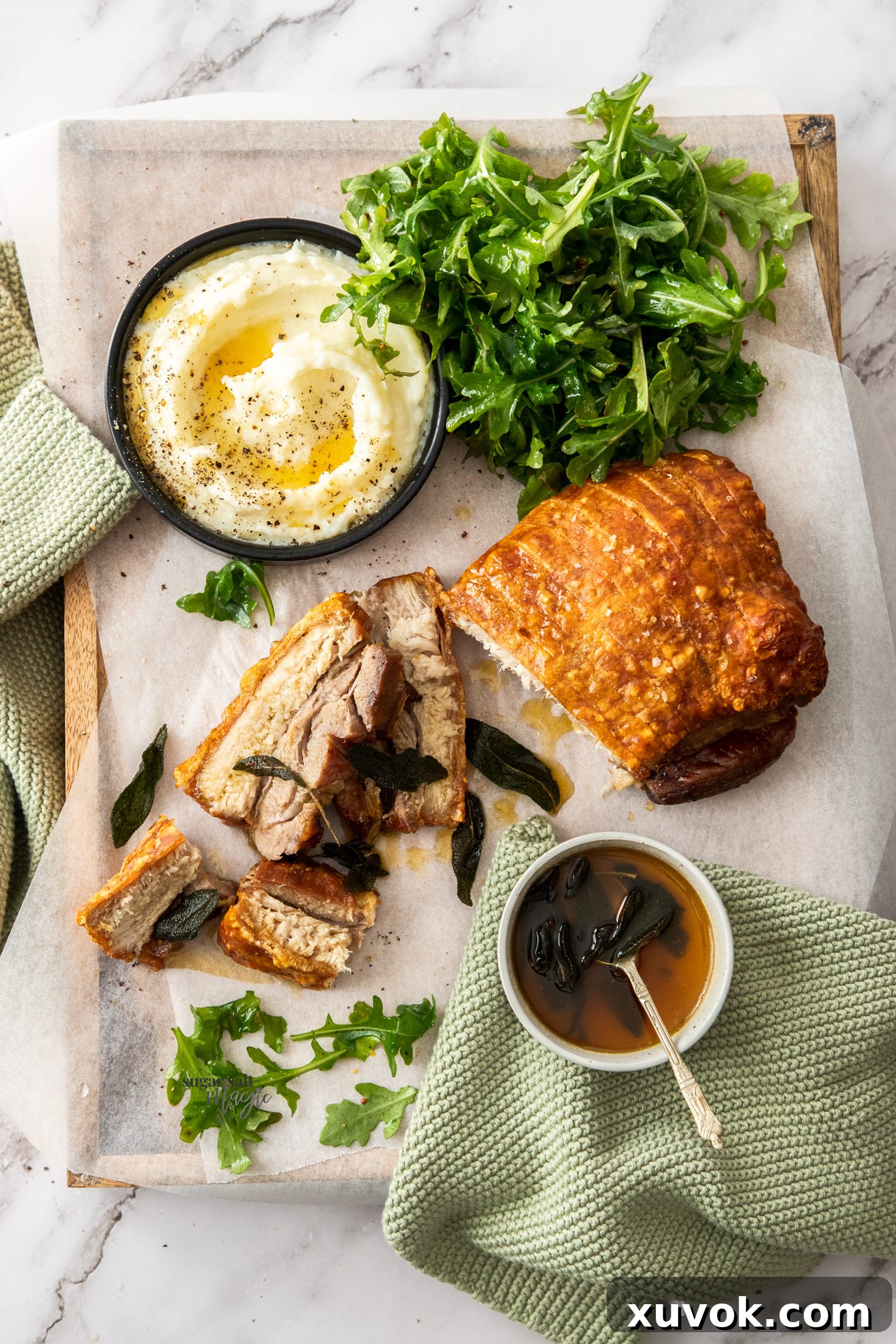
What to Serve with Crispy Roast Pork Belly
The rich, savory flavor and unique texture of crispy roast pork belly make it incredibly versatile. Here are some fantastic pairing ideas for side dishes and sauces to complete your meal.
Delectable Side Dishes
For side dishes, classic pairings often involve starchy elements and fresh greens to balance the richness. Creamy mashed potatoes or crispy roast potatoes are always a hit. These roasted mini potatoes with sage butter sauce offer an aromatic twist. I enjoyed this particular pork belly with my fresh rocket salad (omitting the parmesan for a simpler profile), but a bright and crunchy apple coleslaw or an Asian coleslaw would also be wonderful choices. Steamed green beans, peas, or broccoli provide a lovely hot vegetable component. For an extra indulgent touch, consider serving it alongside my creamy stovetop mac n cheese. And for a truly special accompaniment, don’t forget these tender roasted shallots.
To cut through the inherent richness of the fatty pork, a vibrant condiment like pickled red cabbage offers a delightful tangy balance.
Complementary Sauces
A good sauce can truly elevate your roast pork belly experience. While a classic gravy is always welcome, for this recipe, I opted for a delightful sage butter sauce – simply exquisite! Here are other fantastic sauce options to match your mood and palate:
- Chimichurri sauce: This herbaceous and vibrant South American sauce offers a fresh, tangy counterpoint that beautifully cuts through the richness of the pork.
- Mojo verde: Similar to chimichurri, this Spanish tangy herb sauce provides a burst of fresh flavor.
- Apple sauce: An enduring classic pairing with pork, a sweet and tart apple sauce alongside a savory gravy is always a winning combination.
- BBQ sauce: Infuse your pork belly with an American-inspired flair using a smoky, sweet, and tangy BBQ sauce. Refer to the sauce section within that recipe for details.
- Asian-inspired sauces: Transform your roast pork belly into an Asian delight. Consider using the savory-sweet sauce from these honey soy wings or the bold, spicy sauce from these Korean wings. For an adventurous twist, serve the sliced pork belly in fluffy bao buns!
- Peppercorn sauce: The creamy, peppery notes of this sauce perfectly complement the robust flavor of pork.
- Creamy mushroom sauce: Earthy and rich, this sauce is a sublime accompaniment to roasted pork.
- Nam jim dressing: This gorgeous, bold, and tangy Thai dressing works harmoniously with the fattiness of roast pork belly, offering a bright and zesty contrast.
Don’t forget, leftover roast pork belly can be cleverly repurposed into delicious meals like pork belly tacos or savory pork fried rice.
Yield and Storage Information
This versatile recipe is easily scalable to suit your needs. The specified amount of pork belly typically serves 8-10 people, making it perfect for family gatherings or entertaining. You can effortlessly adjust the quantity to roast a larger or smaller piece of pork belly as required.
Any leftover crispy pork belly should be stored in an airtight container in the refrigerator for up to 4 days. To reheat, you can use a microwave for convenience, but for best results and to re-crisp the crackling, gently reheat it in the oven. Place slices on a baking sheet in a moderate oven (around 150-160°C or 300-325°F) for 10-15 minutes, or until warmed through and the skin has regained its crunch.
More Delicious Recipes You’ll Love
- Herb Roasted Chicken
- Easy BBQ Pulled Pork
- Bacon-Wrapped Beef Tenderloin
- Flank Steak with Chimichurri
- Honey Garlic Ribs
- Oven Baked Pork Chops with Potatoes
- Slow-Cooked Pulled Lamb Shoulder
Did you try this recipe for roasted pork belly?
Leaving a rating and comment below the recipe is so helpful!
Hungry for more? Subscribe to the newsletter for free recipes straight to your inbox. Also, follow along on Facebook, Pinterest and Instagram.
Crispy Oven Roasted Pork Belly
8
– 10 serves
10 minutes
2 hours
30 minutes
6 hours
2 hours
40 minutes
5 ratings
For the absolute best crackling, ensure the pork chills, uncovered, in the fridge for at least 6 hours (or preferably overnight) before roasting.
Rate
Pin
Ingredients
-
1.2
kg
pork belly
(roughly 2 1/2 lb) -
2
teaspoons
vegetable oil -
3
teaspoons
fine sea salt
For best results, always weigh ingredients where a weight is provided
Equipment
-
large roasting pan / rimmed baking sheet / baking tray -
flat roasting rack -
serrated knife and smooth chefs knife
Instructions
-
Remove the pork belly from its packaging and pat it dry all over with paper towels. Place it on a plate, uncovered, in the refrigerator for at least 6 hours or ideally overnight to thoroughly dry the skin (see notes for tips on selection).
-
Preheat your oven to 230°C (450°F). Line a large roasting pan with aluminum foil for easier cleanup.
-
Take the pork belly out of the fridge about 30 minutes before you plan to cook it, allowing it to come closer to room temperature.
-
Carefully score *only* the skin of the pork at approximately 1cm (0.4 inch) intervals using a sharp knife. It’s crucial not to cut through to the meat layer. Use light pressure initially to gauge how much is needed to pierce the skin without going too deep.
-
Optional (but recommended for best results): Place the scored pork belly on a rack in the sink. Carefully pour a kettle full of boiling water over the entire surface of the skin. Immediately pat the pork skin thoroughly dry again with paper towels until it is completely moisture-free.
-
Transfer the pork to a chopping board. Rub the vegetable oil and sea salt generously all over the skin, ensuring the salt is worked into all the score lines. Then, with only the residual oil and salt on your hands, rub the meat portion of the pork belly lightly.
-
Place the pork belly back onto the roasting rack in your prepared pan, skin side up. Make sure the skin surface is as level as possible. If any parts are thinner, prop them up from underneath with small pieces of scrunched-up aluminum foil to ensure even crackling.
-
Roast in the preheated 230°C (450°F) oven for 1 hour, or until the skin starts to bubble and show signs of crisping around the edges but isn’t yet fully crunchy across the entire surface.
-
Reduce the oven temperature to 180°C (350°F) and continue to roast for a further 1 hour to 1 ½ hours. Cook until the skin is perfectly crunchy all over and the meat beneath is beautifully tender.
-
Remove the roasted pork belly from the oven and let it rest in the pan for 10 minutes before carving into 1 – 1 ½ cm (0.4 – 0.6 inch) slices. For the best cut, use a serrated knife to saw through the crispy crackling, then switch to a sharp chef’s knife to cleanly slice through the tender meat portion.
-
Refer to the blog post above for a variety of delicious side dish and sauce ideas to accompany your perfect pork belly.
-
Please take a moment to leave a comment & rating below. Your feedback is greatly appreciated and incredibly helpful!
Notes
- Always select a piece of pork belly with fairly even thickness and smooth, flat, unwrinkled skin for the best crackling results.
- Butcher-quality pork is often superior. If using vacuum-packed supermarket pork, strictly adhere to the skin-drying steps (Step 1 and Step 5, if boiling) for optimal crispiness.
- Drying the skin in the refrigerator overnight yields the most consistently crispy crackling.
- Lining your roasting pan with 2-3 layers of aluminum foil will significantly simplify cleanup – you might not even need to wash the pan!
- The pork belly slices shown here are served with a fresh rocket salad and creamy mashed potatoes.
- Feel free to enhance the flavor of the pork meat (not the skin) with additional spices such as garlic powder, ground fennel, paprika, or even your favorite taco seasoning.
- For a wide array of serving suggestions and sauce pairings, refer to the detailed sections within the blog post above.
DISCOVER MORE DELICIOUS DINNER RECIPES!
777
kcal
Marie Roffey
Dinner
Australian, British, World
Have you tried this recipe?
Don’t forget to leave a rating and comment below and let me know how it was! I love hearing from you. Nutrition information is approximate and derived from an online calculator. The brands you use may cause variations.