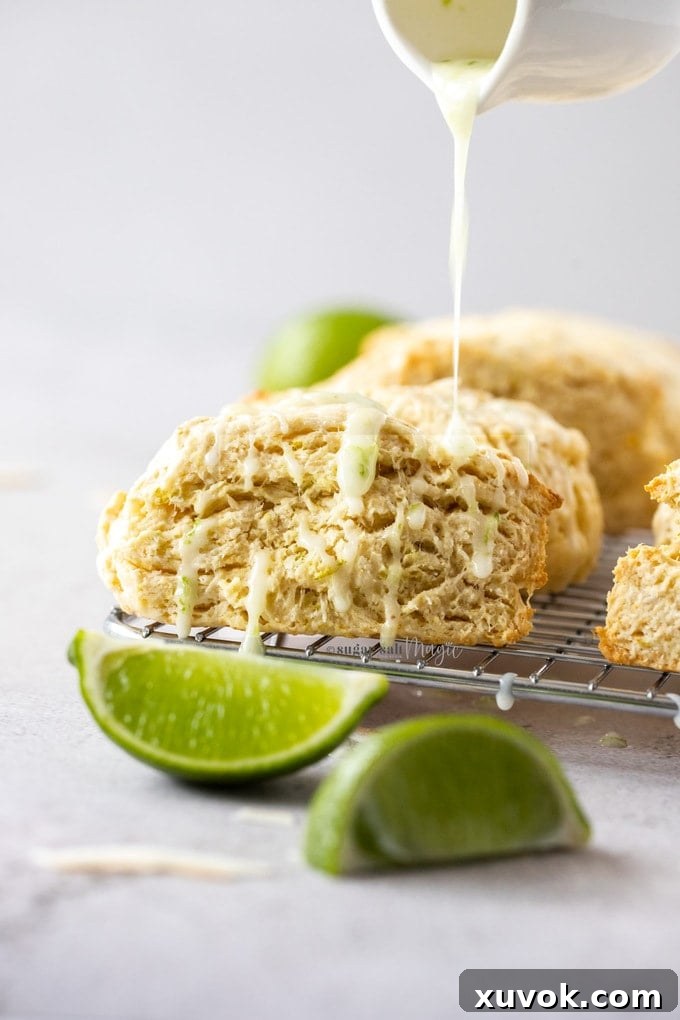
Irresistible Lime Coconut Scones: A Tropical Twist on a Classic
Prepare to be swept away to a tropical paradise with these utterly irresistible Lime Coconut Scones. Crafted to celebrate the rich, exotic flavor of coconut with every bite, these scones feature luscious coconut milk and finely desiccated coconut generously incorporated into the dough. A vibrant, zesty twist of fresh lime elevates them from delightful to truly extraordinary, making them an absolute dream for any coconut enthusiast.
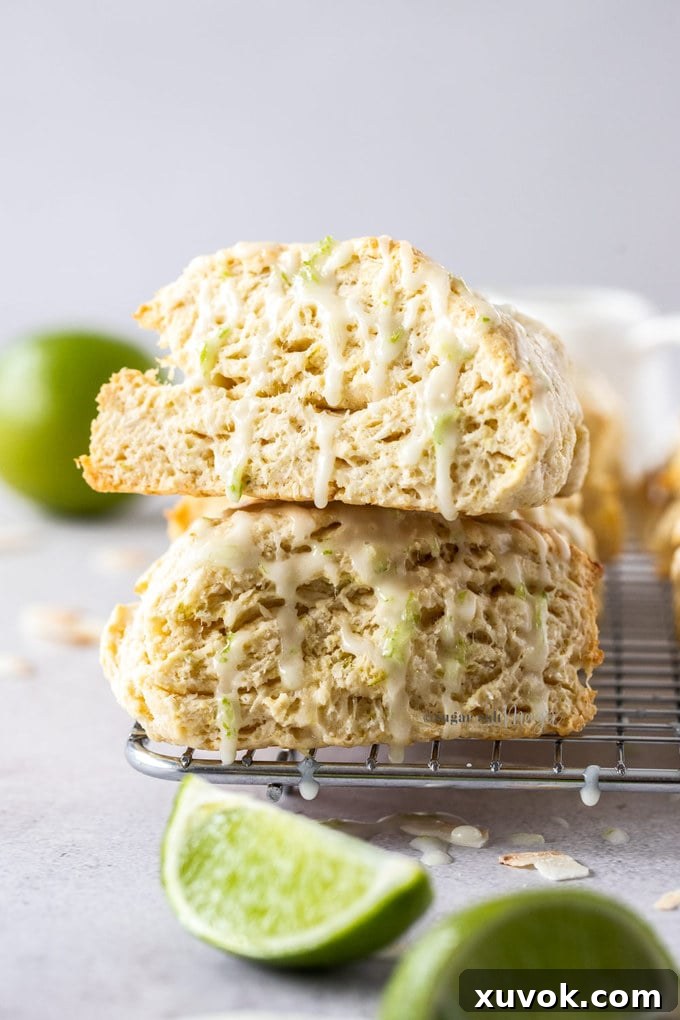
Beyond their spectacular flavor, these scones boast the perfect, coveted scone texture: wonderfully light and delicately crumbly, with a remarkably tender interior and a satisfyingly crisp exterior. This exquisite balance of textures ensures that each bite is a pure moment of bliss. Whether you’re planning a lavish breakfast, a leisurely brunch, an elegant morning tea, or a charming afternoon tea, these easy-to-make scones are guaranteed to be the star of any occasion. Their versatility and delectable taste will have you baking them again and again, eager to share their magic or simply savor them all to yourself.
If the enchanting combination of lime and coconut has captured your heart, you absolutely must explore our equally delightful lime and coconut cake. For those who adore the timeless charm of scones and wish to broaden their repertoire, don’t miss our festive cranberry white chocolate scones, offering a beautiful blend of tart and sweet. Or, for a savory departure, consider these incredibly flavorful cheese and herb scones, perfect for pairing with a warm bowl of soup or a refreshing cup of tea.
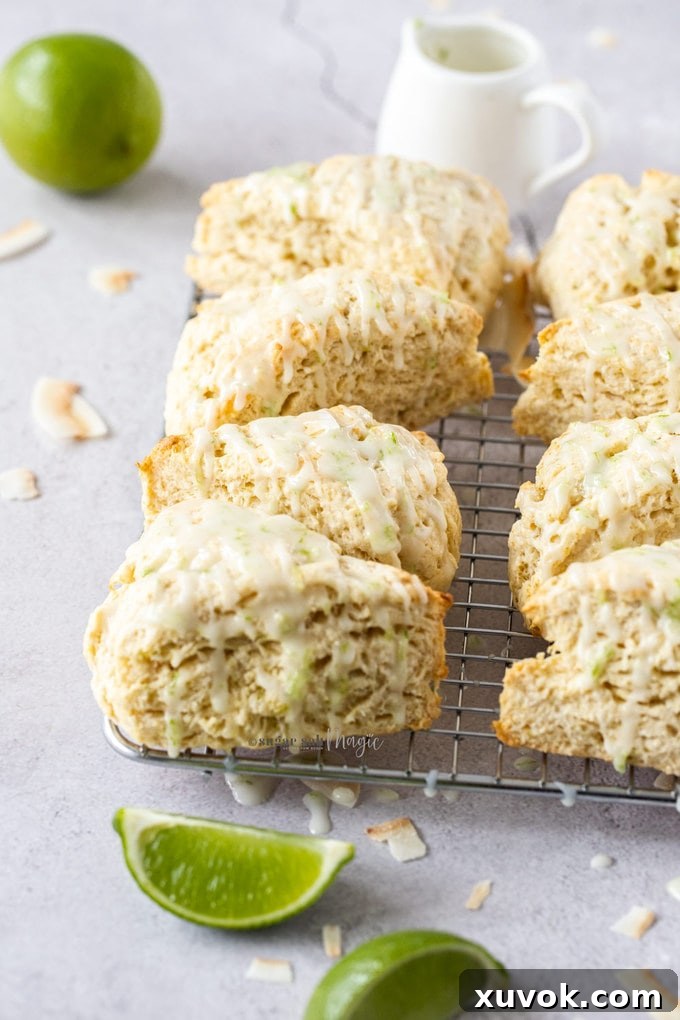
Table of Contents
- Scones vs. Biscuits: Understanding the Delicious Distinction
- How to Make Zesty Lime Coconut Scones
- Expert Tips and Tricks for Flawless Scones
- Creative Ways to Serve Your Tropical Scones
- Can You Freeze Scones? Best Practices for Storage
- More Scone and Breakfast Recipes You’ll Love
Never Miss a Recipe!
Stay updated with our latest delicious recipes delivered straight to your inbox. Join our community of home bakers and get inspired!
Scones vs. Biscuits: Understanding the Delicious Distinction
The culinary worlds often draw comparisons between scones and American biscuits, and while they share some foundational similarities, it’s crucial to understand that scones and biscuits are distinct in their preparation and textural characteristics. Both are beloved quick breads, but their differences are a testament to regional baking traditions and preferences.
The primary distinction lies in how the dough is handled and the resulting texture. Traditional American biscuit dough is typically folded multiple times, a technique that creates numerous flaky layers, yielding a soft, airy, and often rich interior. In contrast, scone dough is handled with a much lighter touch, gently pressed and brought together. While scones do develop layers, their texture is inherently more crumbly and tender than flaky. Scones are also traditionally crafted to be slightly less moist than biscuits, as they are meant to be generously adorned with rich accompaniments. They are classically enjoyed with generous lashings of fruit jam and thick clotted or whipped cream, perfectly paired with a comforting cup of tea. This drier, crumbly texture allows them to beautifully absorb and complement the moisture and flavor of these traditional toppings, creating a truly harmonious experience.
These unique lime coconut scones offer a delightful deviation from typical scone tradition. Instead of the conventional round cut, like our beloved blood orange scones and decadent chocolate scones, we’ve opted for elegant triangles. Furthermore, these tropical delights are finished with a vibrant lime glaze, a departure from the traditional plain scone. While not a classic British scone accompaniment, adding a sweet and tangy glaze lends a contemporary, often American-inspired, twist that perfectly complements the bright flavors of coconut and lime, making these scones uniquely appealing.
For those with dietary considerations, these scones are wonderfully adaptable and can be made completely vegan. Simply substitute the butter with an equal amount of solidified coconut oil for a rich, plant-based fat source. Additionally, replace the dairy milk in the recipe entirely with canned coconut milk, ensuring it’s well-shaken and cold. This simple adjustment allows everyone to enjoy the tropical delight of these light and airy scones without compromising on flavor or texture, making them a versatile treat for all to savor.
How to Make Zesty Lime Coconut Scones
Creating these delightful scones is surprisingly quick and straightforward, making them perfect for even novice bakers. With just a few basic ingredients and minimal hands-on time, you’ll be able to whip up a batch of these tropical treats in no time. The best part? Their rapid baking time means you can have these warm, fresh-from-the-oven beauties on your breakfast table in less than half an hour, filling your kitchen with an intoxicating aroma of coconut and lime. This recipe is designed for efficiency and maximum flavor payoff, ensuring a rewarding baking experience every time.
For a detailed list of all ingredients and complete step-by-step instructions, please scroll down to the full recipe card below.
- Prepare the Butter: Begin by grating your unsalted butter using the large holes of a box grater. Once grated, immediately transfer it to the freezer for 15-20 minutes. This critical step ensures the butter remains ultra-cold, which is essential for achieving a light, airy, and perfectly crumbly scone texture.
- Combine Dry Ingredients: In a large mixing bowl, thoroughly whisk together all the dry ingredients – flour, icing sugar (powdered sugar), baking powder, and salt – until they are uniformly combined. This ensures even distribution of the leavening agents and flavorings.
- Incorporate the Butter: Add the frozen grated butter to the flour mixture. Using only your fingertips, a pastry cutter, or two knives, quickly cut the butter into the flour. Work efficiently to avoid melting the butter with the warmth of your hands. Continue until the mixture resembles coarse meal with small, visible pieces of butter still present. These butter pieces will create steam pockets in the oven, resulting in a tender interior.
- Add Wet Ingredients: Pour in the cold lime juice, coconut milk, and dairy milk. Using a spoon, gently stir the mixture until just combined. The dough will be slightly sticky, which is perfectly normal. Avoid overmixing, as this can develop the gluten too much, leading to tough scones.
- Form the Dough: Tip the sticky dough out onto a sheet of baking paper. Resist the urge to add extra flour at this stage, as it can dry out the scones. Gently press the dough out with your hands or a rolling pin into a circular disk, approximately 1 inch (2.5 cm) high. Aim for an even thickness to ensure uniform baking.
- Cut the Scones: Using a sharp knife (flouring the blade between cuts helps prevent sticking), cut the disk into 8 equal triangles. This non-traditional shape adds a charming, rustic appeal. Carefully transfer these triangles to a baking sheet lined with parchment paper.
- Prepare for Baking: Lightly brush the tops of each scone with a little cream or milk. This helps create a beautifully golden exterior and promotes the signature scone crackle.
- Bake to Perfection: Bake in a preheated oven for 16 to 18 minutes. The scones are ready when their outsides appear dry, and distinct cracks extend from the bottom to the top along their sides. Be mindful that these coconut scones typically don’t develop a deep golden-brown top; a pale golden edge is usually sufficient. If they become too golden, they may be overbaked and dry.
Expert Tips and Tricks for Flawless Scones
Mastering the art of scone making becomes incredibly simple once you’re armed with these essential tips and tricks. Follow them closely to ensure your lime coconut scones turn out perfectly light, fluffy, and absolutely delicious every single time.
- Grate the Butter for Speed and Chill: Grating the butter before incorporating it into the flour is a game-changer. This technique maximizes the butter’s surface area, allowing it to be integrated much faster and more evenly into the dry ingredients. More importantly, it minimizes the time your warm hands are in contact with the butter, preventing it from melting prematurely. The large side of a box grater is ideal for this.
- The Colder, The Better: The temperature of your butter is paramount. Very cold butter is key to achieving that desirable flaky and light scone texture. Once grated, always place the butter in the freezer for a good 15-20 minutes to ensure it’s rock-solid and chilled through. This prevents it from melting too soon during mixing.
- Chill the Flour in Warm Weather: This might sound unconventional, but if you’re baking on a particularly hot day, consider placing your flour in the freezer alongside the butter. A chilled flour mixture helps maintain the butter’s cold temperature for longer, further ensuring light and airy scones.
- Minimal Handling is Non-Negotiable: Scone dough is not like bread dough – you absolutely should not knead it. Overworking the dough develops gluten, which leads to tough, chewy scones. Instead, lightly and quickly work the ingredients together until just combined. Gently press or pull the dough into a slab or disk. The goal is for the butter to melt in the oven, creating steam and pockets of air, not in your hands during preparation.
- Flour Your Cutting Utensil: When cutting your scone dough, whether you’re using a sharp knife or a biscuit cutter, make sure to dip it in flour before each cut. This prevents the dough from sticking to the cutter and ensures clean cuts. After each cut, wipe off any excess dough or flour to keep the edges pristine. Avoid twisting round cutters, as this can seal the edges and prevent those beautiful, characteristic scone cracks and layers from forming.
- Shape on Parchment Paper: To prevent the dough from absorbing too much extra flour, which can lead to dry scones, I highly recommend shaping these scones directly on a sheet of baking paper rather than a lightly floured surface. This helps maintain the perfect moisture balance in the dough.
Creative Ways to Serve Your Tropical Scones
Serving scones is an art in itself, blending tradition with personal preference. Conventionally, scones are gently broken in half by hand (never cut with a knife, to preserve their rustic charm) and then generously slathered with sweet fruit jam and rich clotted cream or freshly whipped cream. They are most commonly enjoyed at room temperature or just slightly warm, allowing their delicate flavors and textures to shine.
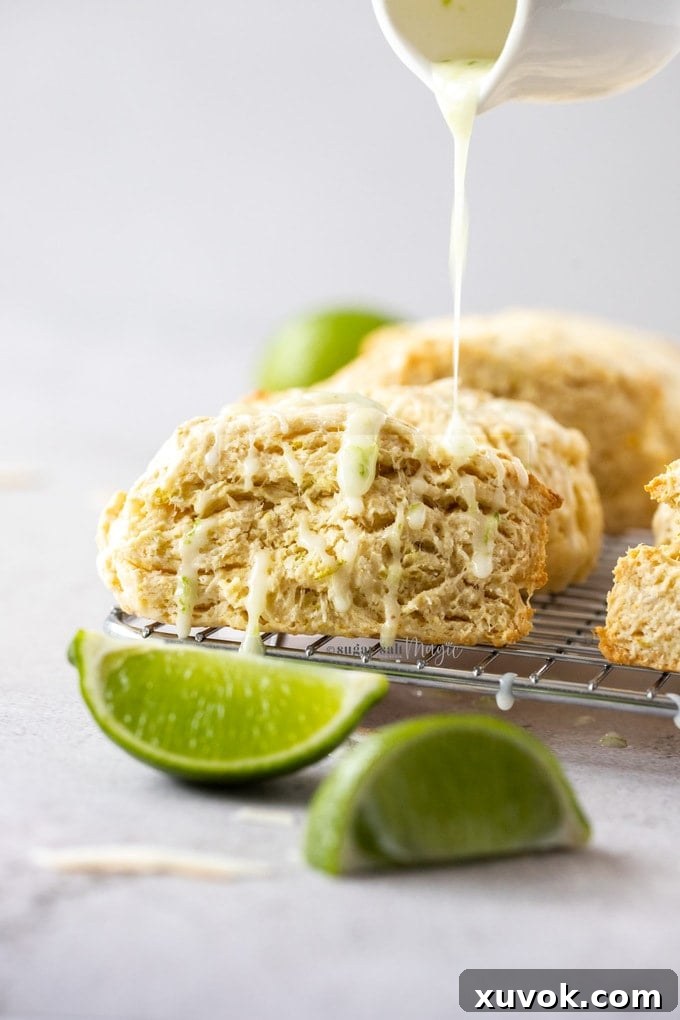
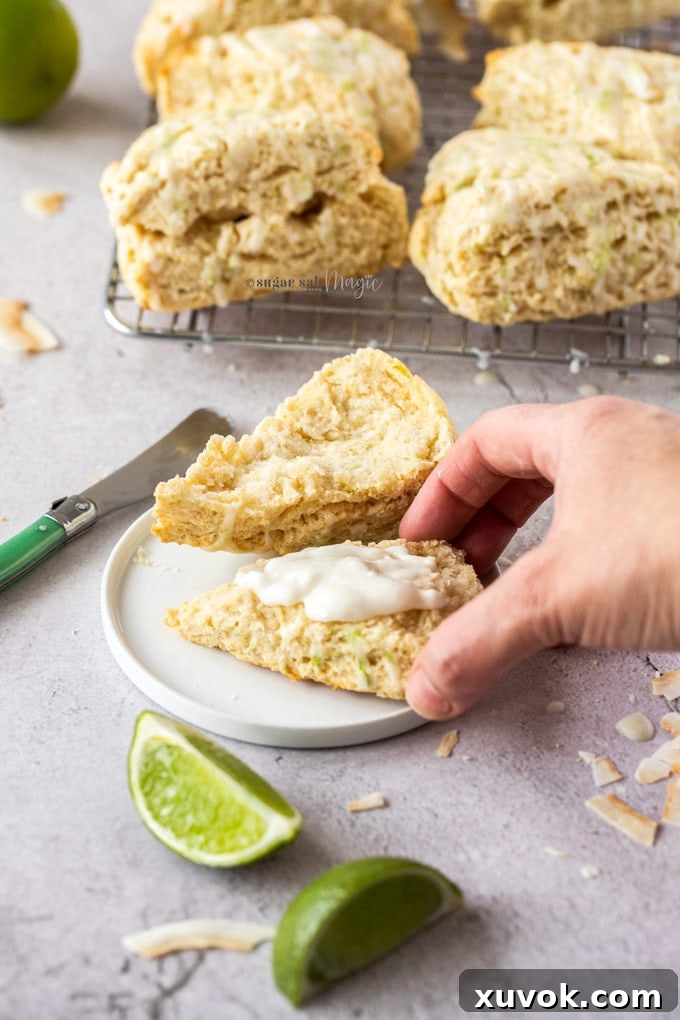
For these exquisite lime coconut scones, we suggest a delightful twist. After they’ve cooled slightly, we drizzle them with a simple yet absolutely amazing homemade lime glaze. This tangy, sweet glaze perfectly complements the tropical notes of coconut. Once glazed, break them apart and spread a thin layer of creamy coconut butter for an extra layer of coconut richness. Alternatively, a dollop of bright lime curd would provide an intense citrusy kick, or a generous swirl of regular or coconut whipped cream would add a luxurious, airy finish, making these scones a truly unforgettable treat.
Can You Freeze Scones? Best Practices for Storage
Yes, absolutely! Scones freeze exceptionally well, making them an ideal make-ahead treat for future breakfasts, brunches, or spontaneous tea times. To preserve their freshness and texture, it’s best to freeze them without any icing or glaze. Once completely cooled, wrap each scone individually in plastic wrap, ensuring an airtight seal to prevent freezer burn. Then, place the wrapped scones in a freezer-safe, airtight container or a heavy-duty freezer bag. Properly stored, they can maintain their quality for up to 2-3 months.
When you’re ready to enjoy them, simply remove the desired number of scones from the freezer and let them thaw completely at room temperature, typically for a few hours. For the best possible taste and texture, after thawing, give them a quick reheat in a preheated oven (around 300°F / 150°C for 5-10 minutes) or a brief zap in the microwave. This gentle warming will revive their tender interior and slightly crisp exterior, making them taste almost as good as freshly baked.
More Scone and Breakfast Recipes You’ll Love
If you’ve fallen in love with these lime coconut scones, you’ll be thrilled to discover more delightful baking inspiration. Explore these other fantastic recipes from our collection, perfect for any time of day:
- Blood Orange Scones
- Cherry Scones
- Chocolate Scones
- Blueberry White Chocolate Scones
- Earl Grey Scones
- Carrot Cake Muffins
- English Pancakes with Lemon & Sugar
⭐⭐⭐⭐⭐
Did you try this incredible coconut scones recipe? We’d love to hear from you! Share your thoughts and show it some love in the comments below!
Hungry for more culinary inspiration? Subscribe to our newsletter for free, exclusive recipes delivered straight to your inbox. Plus, connect with us and follow along on Facebook, Pinterest and Instagram for daily deliciousness and baking tips!
Coconut Scones with Lime Glaze
8
scones
10 minutes
25 minutes
0 minutes
35 minutes
Rate
Pin
Video
Watch the video here: Lime and Coconut Scones Video
Ingredients
For the Scones
-
360 g plain flour (all purpose flour) (2 ¾ cups / 12.7oz) -
¼ cup icing sugar (powdered sugar) (35g/1¼oz) -
4 teaspoons baking powder -
¼ teaspoon salt -
57 g unsalted butter grated & frozen, (2 oz / ½ stick) -
½ cup fine desiccated coconut (45g/~1 ½oz) -
1 teaspoon lime zest -
2 teaspoons lime juice -
⅔ cup canned coconut milk cold, shaken well (160ml) -
½ cup milk cold (125ml) -
2 teaspoons thickened cream (heavy cream)
For the Glaze
-
¾ cup icing sugar (powdered sugar) (95g / ~3½oz) -
3 teaspoons lime juice -
½ teaspoon lime zest
For the most accurate results, we always recommend weighing ingredients where a weight measurement is provided.
Instructions
-
Preheat your oven to 200°C (180°C fan forced) / 400°F. Line a large baking tray with parchment paper to prevent sticking and ensure easy cleanup.
-
In a large mixing bowl, combine the plain flour, icing sugar, desiccated coconut, baking powder, and salt. Use a whisk to ensure all the dry ingredients are thoroughly mixed and evenly distributed.
-
Add the cold, grated butter to the flour mixture. Using either your fingertips, a knife, or a pastry blender, gently work the butter into the flour until it resembles coarse crumbs with small, visible pieces of butter still present. Avoid overworking to keep the butter cold.
-
Now, add the lime zest, lime juice, cold canned coconut milk, and cold regular milk to the mixture. Stir with a spoon until a sticky dough just forms. Be careful not to overmix, as this will lead to tough scones.
-
Turn the sticky dough out onto your prepared sheet of baking paper. Gently press and shape it into a round disk, approximately 1 inch (2.5 cm) high. Ensure the thickness is even for consistent baking.
-
Using a sharp knife (dipped in flour between cuts to prevent sticking), cut the dough disk into 8 equal triangular portions.
-
Carefully transfer the cut scone triangles to the prepared baking tray. Lightly brush the tops of the scones with a little thickened cream (heavy cream) before baking to promote a golden finish and beautiful cracks.
-
Bake for 16-18 minutes, or until the scones appear dry on the outside and show small, delicate cracks along their sides, indicating they are cooked through. The tops of these coconut scones will not typically brown significantly. Once baked, transfer them to a wire rack to cool for about 15 minutes before applying the glaze.
-
FOR THE LIME GLAZE (optional but highly recommended):
In a small bowl, whisk together the icing sugar (powdered sugar), fresh lime juice, and lime zest until smooth and pourable. Once the scones have cooled sufficiently, generously spoon or drizzle the tangy lime glaze over their tops.
-
We truly appreciate your feedback! Please take a moment to leave a comment & rating on this recipe. Your valuable input is incredibly helpful to us and other home bakers.
Notes
- For consistently excellent baking results, it is always recommended to weigh ingredients, especially flour and sugar, where a weight measurement is provided. Accurate measurements are key to perfect textures. Affordable kitchen scales are a wise investment. If a scale isn’t available, use the “spoon and level” method for flour (gently spoon flour into the measuring cup and level off with a straight edge) rather than scooping directly, which can compact the flour and lead to incorrect amounts.
- The temperature of your ingredients is critical for scone success. Ensure both the butter and both types of milk (coconut and dairy) are very cold before you begin mixing. This helps create those desirable pockets of steam during baking, leading to a light and tender crumb.
- Avoid overprocessing the butter into the flour mixture. You should still see small, pea-sized lumps of butter throughout the flour. These cold butter pieces are essential for producing a flaky and tender scone.
- Handle the dough as minimally as possible. The warmth of your hands can melt the butter, which will negatively impact the scone’s texture. Work quickly and gently to bring the ingredients together.
- This recipe calls for unsweetened desiccated coconut, which is finely shredded. If you can only find shredded coconut that is larger or sweetened, you can pulse it briefly in a food processor to achieve a finer texture, similar to desiccated coconut. Just be careful not to over-process it into a paste.
DISCOVER MORE DELICIOUS BRUNCH IDEAS!
362
kcal
Marie Roffey
Afternoon Tea, Breakfast, Brunch, Morning Tea, Snack
American, British
Have you tried this recipe?
Don’t forget to leave a rating and comment below and let me know how it was! I love hearing from you. Nutrition information is approximate and derived from an online calculator. The brands you use may cause variations.
Calories from Fat 135