
Forget everything you thought you knew about a simple cheese and tomato quiche. This isn’t just any ordinary tart; it’s a culinary masterpiece featuring the delightful tang of goat cheese, the savory depth of Parmesan, and the burst of fresh tomatoes, all suspended in a creamy, ethereal egg custard. Encased in a gloriously flaky, buttery crust made from scratch, this quiche is an experience designed to tantalize your taste buds and elevate any meal. It’s robustly flavored yet beautifully balanced, deceptively simple to prepare, and incredibly versatile, making it a must-have in your recipe repertoire.
- Unforgettably Creamy and Rich: Experience a velvety texture that melts in your mouth, infused with gourmet cheeses.
- Harmonious Flavors: Delicate eggs perfectly complement savory tomatoes and the distinctive notes of goat and Parmesan cheese.
- Surprisingly Easy to Master: Even the prospect of homemade pastry becomes a joy with our straightforward, step-by-step guide.
- The Ultimate All-Occasion Dish: Whether it’s a hearty breakfast, an elegant brunch, a light lunch, a satisfying snack, or a comforting dinner, this quiche fits every bill.
- Effortlessly Portable & Make-Ahead Friendly: Ideal for meal prepping, packing into lunchboxes, or bringing to picnics and potlucks.
Quiche truly is one of the most adaptable recipes you can have in your culinary arsenal. Beyond its incredible flavor, its portability, ability to be enjoyed hot or cold, and remarkable versatility make it a kitchen superstar. And for those who love to plan, it even freezes beautifully, ensuring a delicious meal is always within reach. The exquisite combination of tangy goat cheese and sun-ripened tomatoes, harmoniously blended within that rich egg custard, delivers an umami-packed punch that is seriously addictive.
If you’re captivated by the charm of this savory tart, you’ll definitely want to explore these other fantastic quiche creations:
- Hearty Bacon and Potato Quiche
- Savory Bacon and Caramelised Onion Quiche
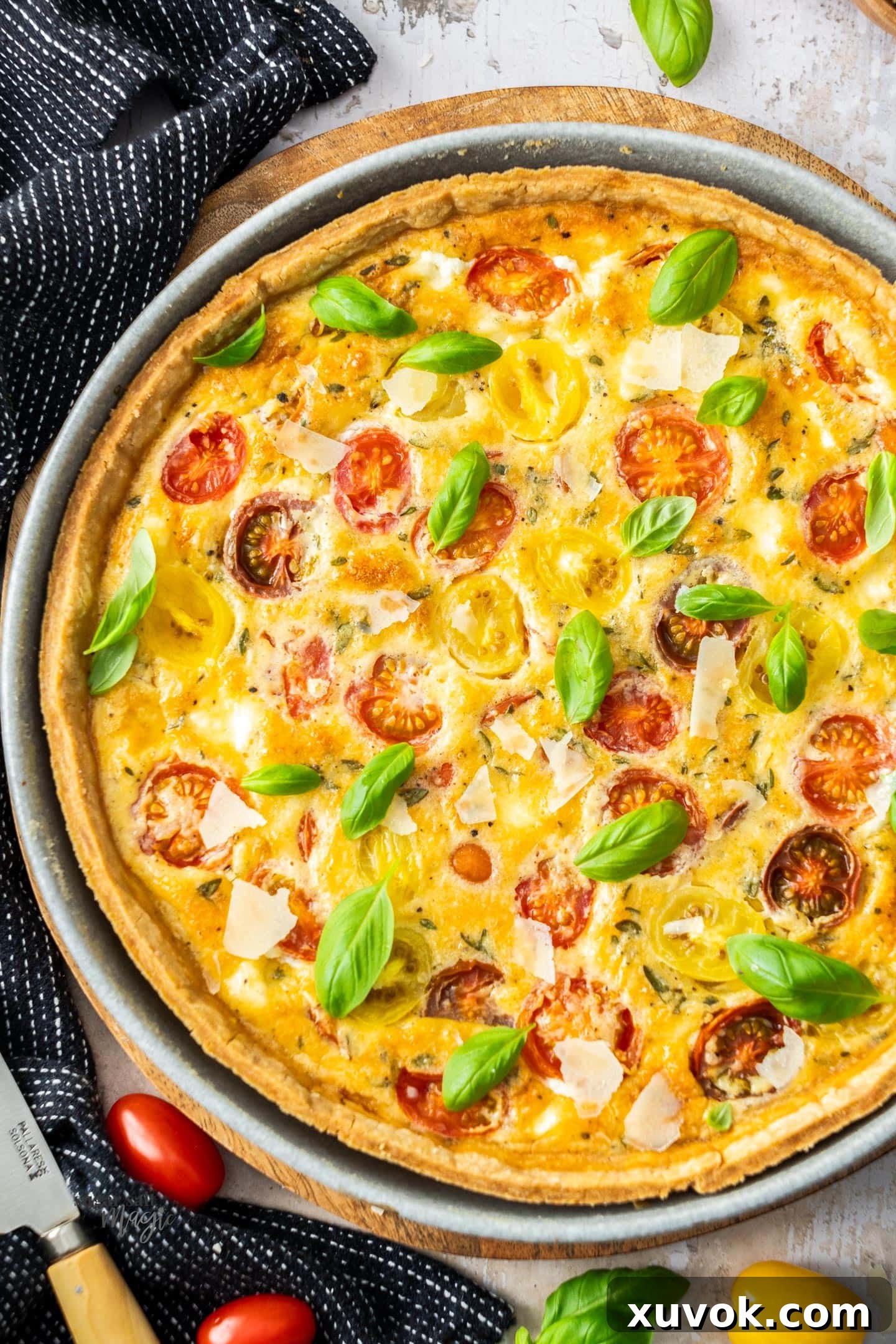
Table of Contents
- Quiche vs. Frittata: Understanding the Differences
- Essential Ingredients for Your Gourmet Quiche
- Choosing the Perfect Cheese
- Mastering Your Cheese and Tomato Quiche: A Step-by-Step Guide
- Crafting the Flaky Quiche Pastry Crust
- Preparing the Rich Cheese and Tomato Filling
- Pro Tips for Quiche Perfection
- Frequently Asked Questions About Quiche
- Yield, Storage, and Freezing Tips
- The Best Way to Reheat Quiche
- More Savory Recipes You’ll Adore
Never Miss a Recipe!
Get the latest recipes straight to your inbox and unlock a world of culinary delights!
Quiche vs. Frittata: Understanding the Differences
While often compared, quiche and frittata are distinct dishes with unique origins and characteristics. A quiche is a classic French tart featuring a rich, creamy egg custard baked within a savory pastry crust. It typically incorporates various fillings, from meats and cheeses to vegetables, offering a versatile canvas for flavor. The crust is a defining feature, providing a buttery, flaky base that distinguishes it from other egg dishes.
In contrast, a frittata is an Italian egg-based dish that closely resembles a crustless quiche. Prepared in an oven-safe skillet, a frittata also combines eggs with a variety of fillings, but it omits the pastry entirely. This makes it a lighter, often quicker alternative, frequently started on the stovetop and finished in the oven. So, the primary difference lies in the crust – a quiche has one, a frittata does not – and their respective French and Italian culinary heritages. Both are delightful, but offer different textural experiences.
Essential Ingredients for Your Gourmet Quiche
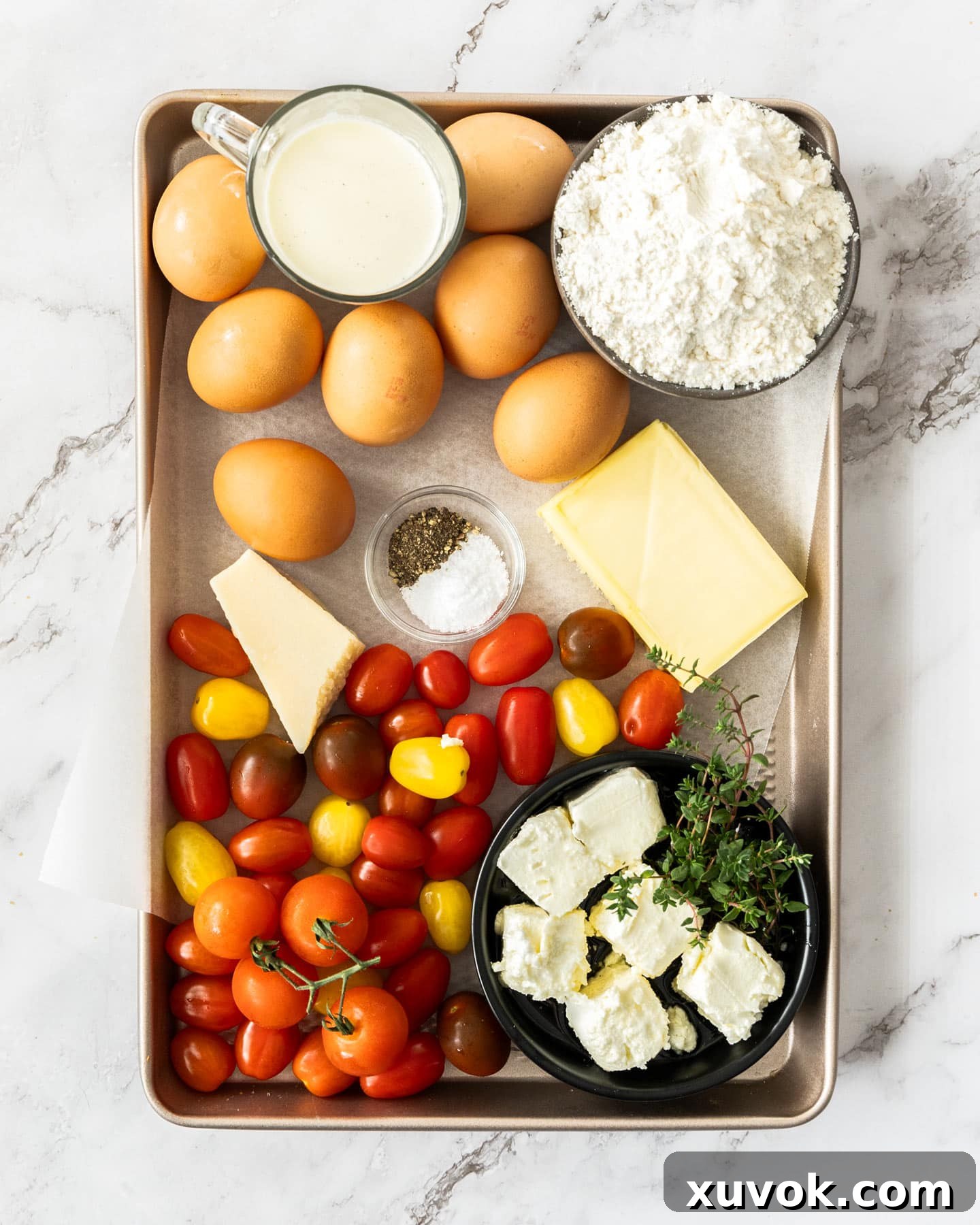
Crafting a truly exceptional cheese and tomato quiche begins with selecting the right ingredients. Our recipe calls for a homemade buttery and crisp quiche crust, combined with a filling bursting with rich and vibrant flavors. Each component plays a vital role in achieving that incredibly tasty and satisfying final result. Here’s a closer look at what you’ll need to create this culinary delight.
Jump to the full recipe card below for precise measurements and detailed instructions.
- The Quiche Pastry: Our homemade crust is created from a simple yet powerful combination of plain flour (all-purpose flour), cold butter, a large egg, and a touch of ice-cold water. This minimal ingredient list belies the incredible flaky, tender texture it achieves. While store-bought shortcrust pastry is an option for convenience, we passionately encourage you to try making your own at least once. The difference in flavor and texture—a truly rich, buttery, and light crust—is remarkable and worth the effort. It truly elevates the entire quiche experience!
- Eggs: The very foundation of any quiche, fresh large eggs are crucial for that perfect custard texture. They bind the filling together, providing structure and a rich, creamy consistency. We recommend using good quality, free-range eggs for the best flavor.
- Milk: For this recipe, we opt for whole milk to contribute a lovely creaminess without being overly heavy. Traditionally, many quiches call for thickened cream (or heavy cream) for an ultra-rich and decadent custard. If you prefer a more luxurious filling, feel free to substitute whole milk with an equal amount of heavy cream. However, whole milk still delivers a wonderfully savory and satisfying result.
- Cheeses: Our quiche features two distinct cheeses, each bringing its unique personality to the flavor profile, creating a complex and irresistible taste.
- Parmesan Cheese (Parmigiano Reggiano): Known for its robust, salty, nutty, and slightly sharp notes, Parmesan adds a deep layer of umami to the egg custard. A small amount goes a long way in flavoring the filling, and a few delicate shavings over the top just before serving add an elegant touch and a final burst of intense flavor.
- Soft Goat Cheese (Chèvre): This is the star cheese of our quiche! Soft goat cheese offers a delightful tangy, rich, and creamy texture with a subtle, earthy sweetness. Its distinctive flavor pairs incredibly well with the sweetness of ripe tomatoes and the freshness of herbs. Ensure you choose a soft variety (often labeled “chèvre” or “fresh goat cheese”) for the best melt-in-your-mouth experience.
- Tomatoes: A tomato quiche is the ideal way to celebrate the bounty of summer tomatoes, though it’s a wonderful dish to enjoy year-round. You have flexibility with the type of tomatoes you use. We love a mix of colorful cherry and grape tomatoes for visual appeal and varied texture, but regular slicing tomatoes, Roma tomatoes, or even heirloom varieties work beautifully. Important tip: If using slices of larger tomatoes, lay them on paper towel first for a few minutes. This helps draw out excess moisture, preventing a soggy crust.
- Thyme: This aromatic herb brings a wonderfully warming, slightly earthy, and peppery note that beautifully complements both tomatoes and goat cheese. Fresh thyme leaves are highly recommended for their vibrant flavor. If fresh is unavailable, you can substitute with dried thyme, but remember to reduce the quantity by half as dried herbs are more concentrated.
- Basil: Is there any combination more iconic than tomatoes and basil? This fresh herb adds a bright, slightly sweet, and aromatic finish to the quiche. While incorporated into the filling, a scattering of fresh basil leaves over the top just before serving not only enhances the flavor but also adds a stunning visual pop of color.
Choosing the Perfect Cheese
While goat cheese and tomatoes form an undeniably winning combination, the beauty of quiche lies in its adaptability. You can easily adjust the cheese selection to suit your personal taste preferences or whatever you happen to have on hand. For a Mediterranean twist, consider transforming this into a vibrant tomato and feta quiche by swapping the soft goat cheese for crumbled feta. Feta offers a saltier, tangier profile that is equally delicious with tomatoes.
If Parmesan isn’t available, or if you simply prefer a different flavor, it can be substituted with pecorino romano for a similar salty, sharp kick, or a good quality strong cheddar cheese for a more familiar, robust flavor. Experimenting with different cheeses can unlock new dimensions of flavor, allowing you to customize your quiche every time.
Mastering Your Cheese and Tomato Quiche: A Step-by-Step Guide
This cherry tomato and goat cheese quiche is not only incredibly satisfying and flavorful but also a feast for the eyes, with those vibrant tomatoes glistening like edible jewels on top. The best part? It’s remarkably easy to make, even if you’re venturing into homemade pastry for the first time. The key to a perfect, non-shrinking crust lies in adequate chilling time. If you choose to make your pastry from scratch (which we highly recommend for the ultimate flavor and texture), remember to allow it a minimum of 2 hours, or ideally up to 3 days, to chill properly. This crucial step relaxes the gluten and sets the butter, preventing excessive shrinking during baking and ensuring a crisp, tender shell.
Jump to the full recipe card below for precise measurements and detailed instructions.
Crafting the Flaky Quiche Pastry Crust
A homemade pastry crust is the secret to a truly outstanding quiche. Follow these steps for a flaky, golden base that perfectly complements the rich filling.
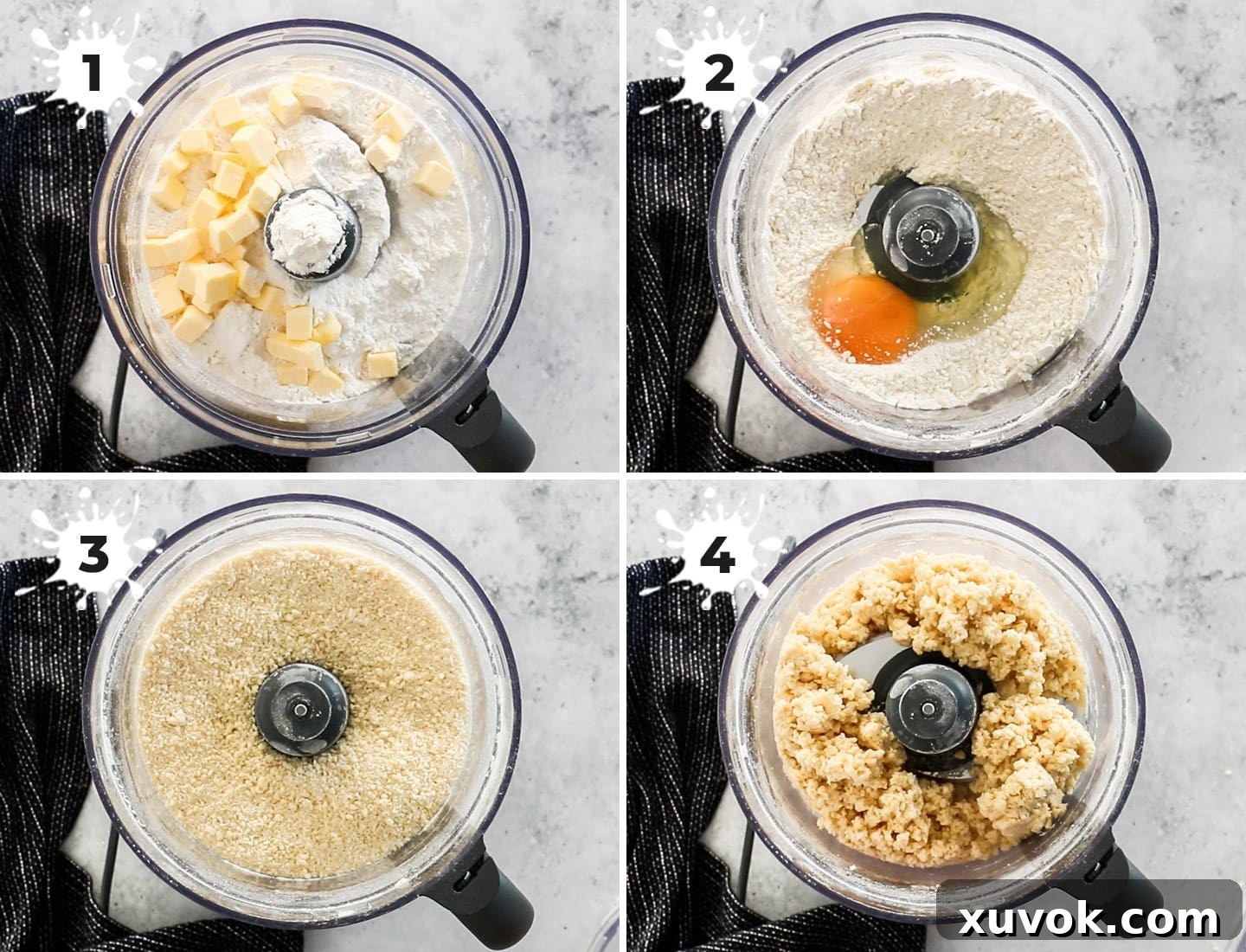
- Blend Butter and Flour: In a food processor, combine the cold plain flour and cubed, chilled salted butter. Pulse the mixture until the butter is broken down into tiny pieces, resembling small rice grains or coarse meal. It’s crucial not to over-process; small pieces of butter are key to a flaky crust.
- Incorporate the Egg: Add one large, cold egg to the flour-butter mixture. Process again briefly, just until the egg is combined and the mixture starts to look like coarse breadcrumbs. The egg adds richness and helps bind the dough.
- Add Water Gradually: With the food processor running on low speed, slowly drizzle in the cold water, about 1 ½ tablespoons, one teaspoon at a time. Watch the dough carefully; stop adding water as soon as it begins to clump together. The goal is to just barely bring the dough together, avoiding overmixing which can lead to a tough crust.
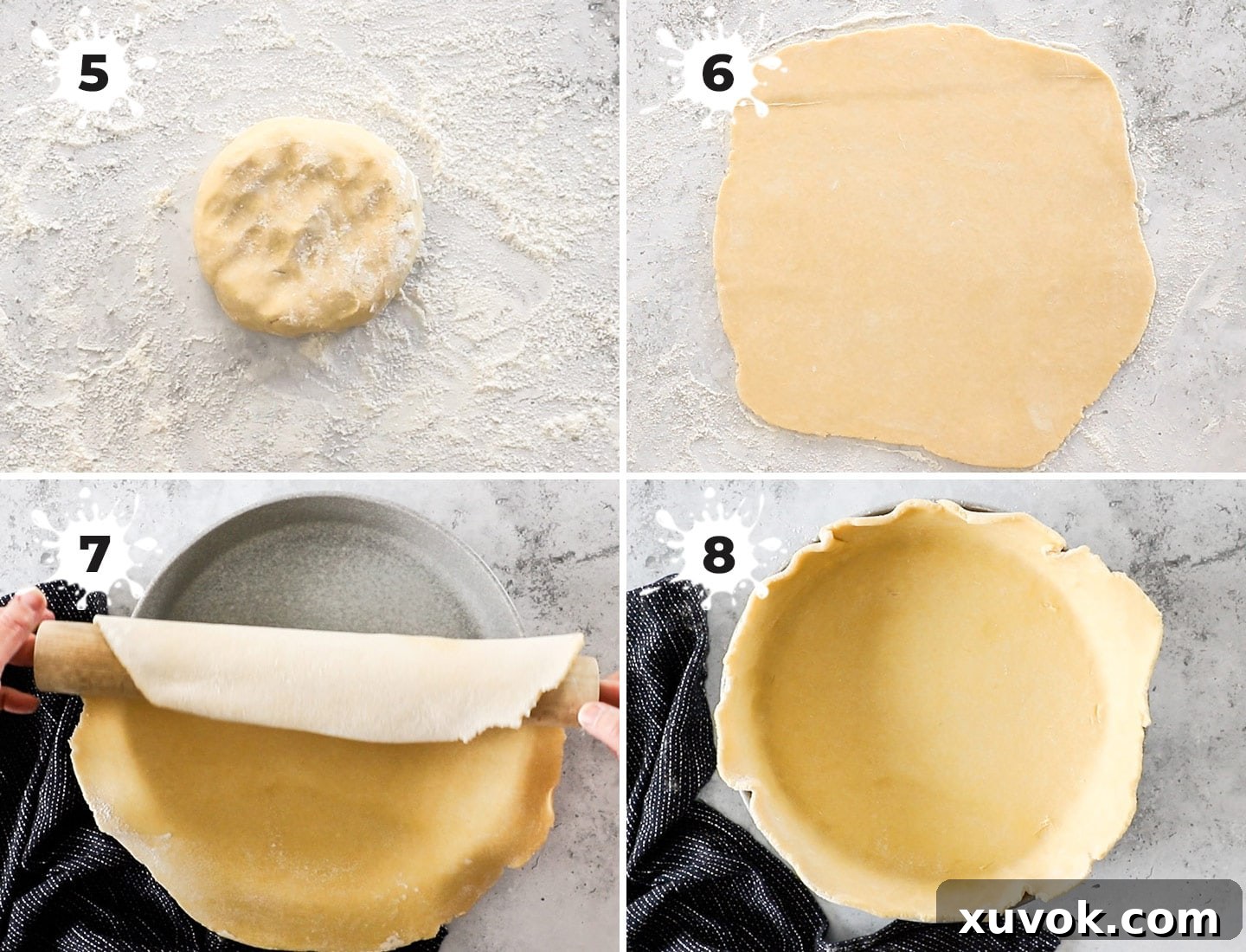
- Roll Out the Dough: Gently tip the shaggy dough out onto a lightly floured, clean work surface. Carefully bring the dough together with your hands, forming it into a smooth, flat disk. Avoid excessive handling. Using a rolling pin, roll the dough out to an even thickness of approximately 4-5 mm (about ⅙ inch) and a diameter of roughly 11 inches. To easily transfer the dough, lay your rolling pin in the middle of the rolled dough, fold one side over it, dust off any excess flour, then lift the rolling pin to drape the dough into your dish.
- Shape and Fit: Carefully transfer the rolled dough into a 9-inch quiche dish. Gently press the pastry into the corners and up the sides of the dish, ensuring it fits snugly without stretching. Allow a slight overhang over the rim. It’s better to press the sides down into the corners rather than stretching from the center outwards, as stretching can cause shrinkage.
- Crucial Chilling Step: Do not skip this step! Chilling the dough is essential for preventing shrinkage during baking and achieving a truly tender, flaky crust. Place the quiche shell (still in its dish) into the refrigerator for a minimum of 2 hours. For best results and ultimate convenience, you can even prepare the pastry shell up to 3 days in advance and keep it chilled. This allows the butter to firm up and the gluten to relax, ensuring a perfectly stable crust.
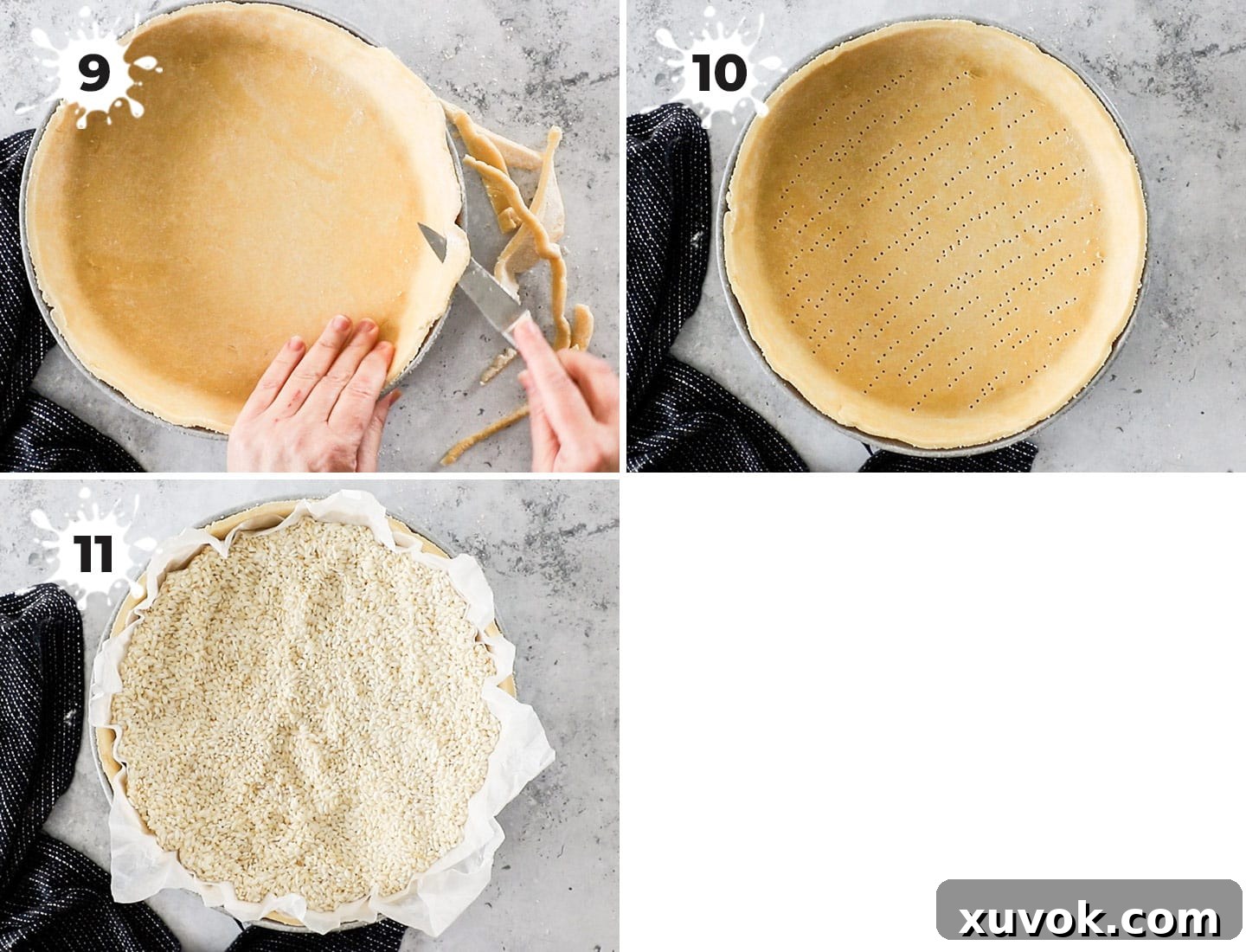
- Blind Baking for a Crisp Crust: When you’re ready to assemble and bake your quiche, preheat your oven to 180°C (160°C fan) / 350°F. Carefully prick the base of the chilled pastry shell all over with a fork (this technique is called “docking” and allows steam to escape, preventing the crust from puffing up). Line the pastry base with a piece of baking paper, then fill it with pie weights or dried rice. Bake for 20 minutes, then carefully remove the weights and baking paper. Return the crust to the oven for another 8 minutes, allowing it to become lightly golden and crisp. This crucial blind baking step prevents a soggy bottom and ensures your quiche has a perfectly cooked crust.
Your beautifully prepared quiche shell is now ready for its delectable filling.
Preparing the Rich Cheese and Tomato Filling
The filling for this quiche is remarkably straightforward, focusing on fresh ingredients and simple assembly. It’s essentially a matter of carefully chopping, layering, and pouring to create a harmonious blend of flavors and textures. Here’s a more detailed breakdown of how to prepare and assemble your creamy, savory filling.
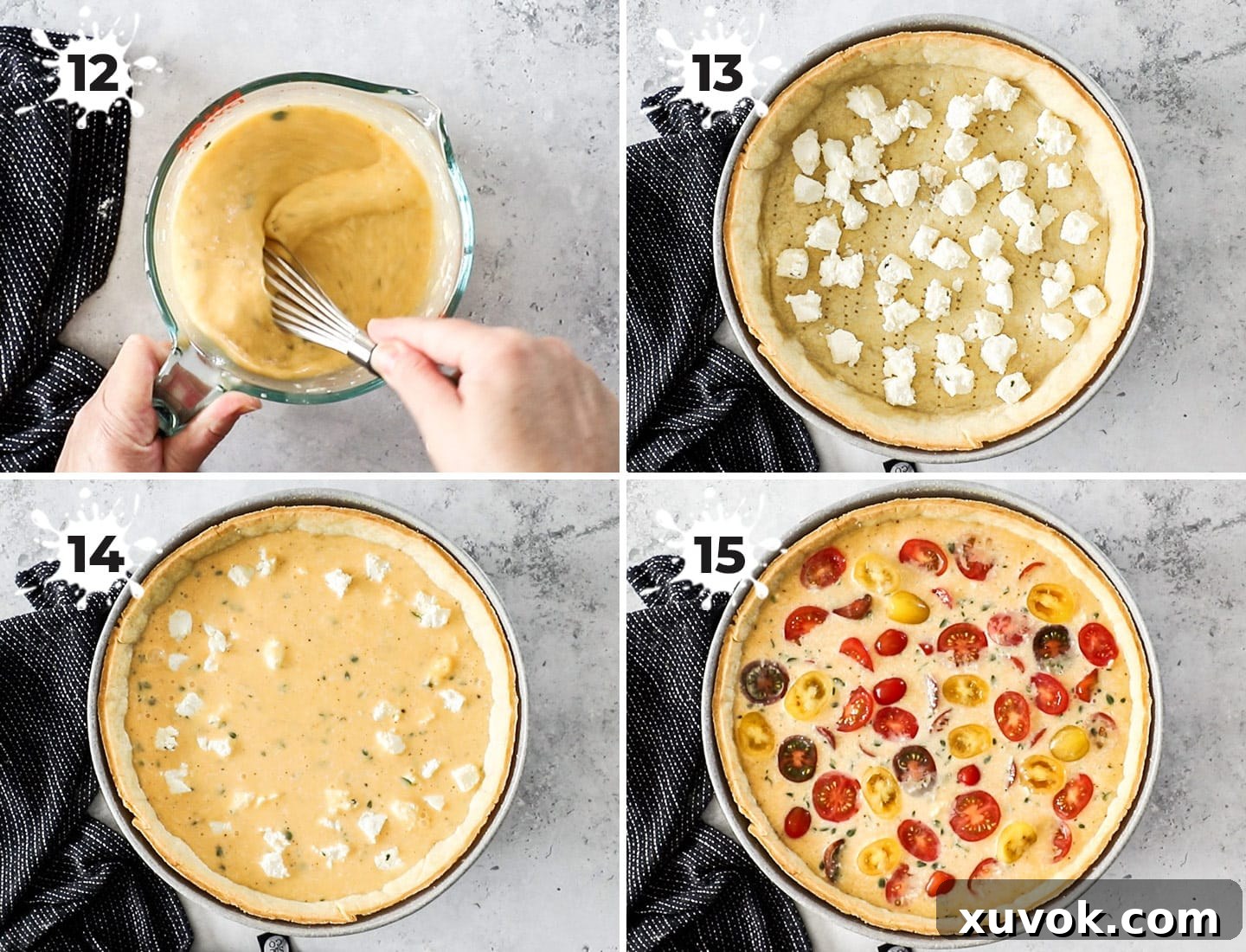
- Prepare the Goat Cheese: Take your soft goat cheese (chèvre) and either dice it into small cubes or gently crumble it. The goal is to have small, manageable pieces that will melt beautifully and distribute evenly throughout the quiche.
- Prepare the Tomatoes: Wash and thoroughly dry your cherry or grape tomatoes. For a lovely visual and textural variety, slice about half of them in half and leave the remaining smaller ones whole. If you are using larger tomatoes that you’ve sliced, remember to rest them on a layer of paper towel for a few minutes to absorb any excess moisture. This critical step prevents your quiche from becoming watery and keeps the crust crisp.
- Create the Egg Custard: In a large mixing bowl, combine the large eggs, whole milk, finely grated Parmesan cheese, fresh thyme leaves, salt, and freshly cracked black pepper. Whisk the mixture vigorously until all the ingredients are thoroughly combined and the egg whites are fully incorporated with no streaks. This ensures an even, smooth custard.
- Assemble the Quiche: Now it’s time to bring it all together! Scatter the prepared diced or crumbled goat cheese evenly over the base of your par-baked quiche crust. This creates a delicious cheesy layer at the bottom. Carefully pour the whisked egg custard mixture over the goat cheese. Finally, artfully arrange all those colorful tomatoes on top of the liquid filling, cut-side up, spreading them evenly across the entire surface.
- Bake to Perfection: Gently transfer the assembled quiche to your preheated oven. Bake for approximately 35-40 minutes. Halfway through the baking time, rotate the quiche 180 degrees to ensure even cooking and browning. The quiche is done when the top is beautifully golden brown, and a knife inserted into the center comes out mostly clean, indicating the egg custard is fully set. Allow it to cool slightly before slicing and serving.
Pro Tips for Quiche Perfection
Achieving a perfect quiche every time is easier than you think with a few expert tricks up your sleeve. These tips will help you navigate common pitfalls and ensure your quiche is always a showstopper.
- The Magic of Small Butter Bits: When making your pastry dough, resist the urge to completely blend the butter into the flour until it’s uniform. You want those small, distinct pieces of cold butter (about the size of rice grains or small peas). As the pastry bakes, these butter bits create pockets of steam that expand, resulting in a wonderfully flaky, tender, and airy crust. Over-blending the butter leads to a tougher, less flaky texture.
- Embrace the Chill: This is arguably the most critical step for a successful homemade pastry crust. Do not skip chilling the dough! While it requires a bit of foresight, it offers immense benefits. Chilling allows the gluten in the flour to relax, preventing the crust from shrinking excessively in the oven. It also firms up the butter, contributing to that desired flakiness. The good news is, you can make this dough up to 3 days in advance, storing it in the fridge, which makes meal prep a breeze and ensures a superior crust compared to most store-bought options. A minimum of 2 hours is good, but longer is often better.
- Preventing a Soggy Bottom: Beyond blind baking, ensure your filling ingredients aren’t introducing excess moisture. If using large, juicy tomatoes, place their cut sides up or gently blot them with paper towels before adding them to the quiche. Avoid overcrowding the quiche with too many wet ingredients.
- Don’t Overbake: Overbaking can lead to a rubbery custard. The quiche should be set but still have a slight jiggle in the center when gently shaken. It will continue to cook slightly as it cools.
- Cool Before Slicing: While tempting to dive in immediately, allow your quiche to cool for at least 10-15 minutes after baking. This allows the custard to fully set, making for cleaner slices and preventing the filling from spilling out.

Frequently Asked Questions About Quiche
The secret to a truly stellar quiche lies in two fundamental elements: the perfect egg-to-dairy ratio and proper seasoning. A well-balanced custard ensures a creamy, custardy texture that sets beautifully without being rubbery or too liquid. This recipe precisely balances 6 large eggs with ⅔ cup of whole milk, creating an ideal consistency. Furthermore, don’t underestimate the power of seasoning; a generous hand with salt and freshly cracked black pepper enhances all the flavors of your chosen fillings. Beyond these basics, the beauty of quiche is its versatility, allowing you to incorporate a wide array of ingredients, from savory meats to vibrant vegetables, making it endlessly adaptable.
Absolutely, you can and we often do! This recipe specifically calls for whole milk, proving that rich, delicious quiche doesn’t always require heavy cream. Cream will yield a slightly thicker, more decadent, and richer filling due to its higher fat content, but whole milk produces a wonderfully creamy and flavorful custard that is equally satisfying. The choice largely depends on your preference for richness. However, it’s worth noting that if you’re making a classic Quiche Lorraine, adhering to traditional recipes which typically include cream is essential to preserve its authentic character.
A soggy quiche crust is a common disappointment, but it’s easily avoided with the right techniques. The primary culprit is moisture. Since the custard filling begins as a liquid, it can seep into an unbaked crust. This is precisely why **blind baking your pastry shell is non-negotiable**. This initial bake dries out and crisps up the crust, creating a barrier against the wet filling. Another factor can be excessive liquid from fillings; for instance, very juicy vegetables like large sliced tomatoes can release moisture during baking. To combat this, place sliced tomatoes cut-side up or pat them dry with paper towels beforehand. Lastly, covering a quiche while it bakes can trap steam, causing condensation that makes the pastry edges damp and soft.
While all Quiche Lorraine is a quiche, not all quiches are Quiche Lorraine. Quiche Lorraine is a very specific type of quiche originating from the Lorraine region of France. Its traditional filling consists solely of eggs, cream (or milk), bacon (or lardons), and often Gruyère cheese, without any other added vegetables or herbs. The moment you introduce other ingredients, such as the tomatoes and goat cheese in this recipe, it transforms from a Quiche Lorraine into a general “quiche.” So, remember: Quiche Lorraine is a distinct classic, while “quiche” is the broader category for any savory egg custard tart.
Generally, no, you should not cover a quiche while it bakes. Covering it can trap steam, which will prevent your crust from becoming crisp and golden, potentially leading to a soggy pastry. Moreover, the goal is often to achieve a beautifully golden-brown top on the custard, which won’t happen if it’s covered. If you notice the edges of your crust browning too quickly, you can gently cover just the edges with foil for the latter part of the baking, but the center should remain uncovered to allow the custard to set and the top to achieve that perfect color.
Yield, Storage, and Freezing Tips
This delectable cheese and tomato quiche recipe is designed to serve 6 to 8 people, depending on your preferred portion sizes and whether it’s served as a main meal or a lighter accompaniment. It’s a generous dish perfect for family meals or entertaining.
For any delightful leftovers, allow the tomato and cheese quiche to cool completely to room temperature. Once cooled, wrap it tightly in plastic wrap or aluminum foil, or transfer slices to an airtight container. Store it in the refrigerator for up to 3-4 days, maintaining its delicious flavor and texture.
Quiche is also an excellent candidate for freezing, making it perfect for meal prepping. To freeze your quiche, we recommend cutting it into individual slices first. This allows for easy thawing and reheating of single portions. Place the slices into an airtight container or a large freezer-safe ziplock bag, ensuring they are well-protected from freezer burn. It can be stored in the freezer for up to 3 months. When you’re ready to enjoy, thaw frozen slices overnight in the refrigerator or use the defrost setting on your microwave for a quicker option.
The Best Way to Reheat Quiche
Reheating quiche effectively ensures you can enjoy its deliciousness without compromising its texture. While the microwave offers speed and convenience, it does tend to soften the pastry crust. A couple of minutes on high in the microwave will warm it through perfectly, but expect a slightly less crisp base.
For those who cherish a crispy tart shell, reheating in the oven is the superior method. Preheat your oven to 180°C (350°F). Place individual slices or the whole quiche (if reheating entirely) on a baking sheet. Reheat for 10-15 minutes, or until warmed through and the crust has regained its crispness. This method preserves the structural integrity and textural delight of your homemade quiche.
More Savory Recipes You’ll Adore
If you loved this cheese and tomato quiche, be sure to explore more of our savory delights that are perfect for any meal:
- Hearty Bacon and Potato Quiche
- Fluffy Herb and Cheddar Scones
- Rustic Bacon Potato Tart
- Baked Feta and Tomatoes: A Mediterranean Delight
- Quick Puff Pastry Breakfast Tart
- Elegant Ham and Cheese Tarte Soleil
Did you try this irresistible tomato and cheese quiche recipe?
We’d love to hear from you! Leaving a rating and comment below the recipe is incredibly helpful and appreciated!
Hungry for more culinary inspiration? Subscribe to our newsletter for free, delicious recipes delivered straight to your inbox. Also, follow along on Facebook, Pinterest, and Instagram for daily foodie delights!

Cheese and Tomato Quiche
8 serves
25 minutes
35 minutes
2 hours
3 hours
Rate
Pin
Ingredients
QUICHE CRUST (SEE NOTES FOR ALTERNATIVES)
- 225 g plain flour (all-purpose flour) (8oz / 1 ¾ cups)
- 115 g salted butter, cubed and chilled (4oz / 1 stick / ½ cup)
- 1 large egg, cold
- 1 ½ tablespoons cold water (see notes 1)
FILLING
- 6 large eggs
- ⅔ cup whole milk (see notes 3)
- 30 g finely grated Parmesan (or cheddar) (⅓ cup lightly packed)
- 2 teaspoons fresh thyme leaves, stems discarded, not packed
- 1 teaspoon salt
- ½ teaspoon freshly cracked black pepper
- 300 g cherry or grape tomatoes
- 150 g soft goat cheese, crumbled or diced
- Parmesan shavings to serve
- Fresh basil leaves to serve
For best results, always weigh ingredients where a weight is provided
Equipment
-
food processor, if making the pastry
-
Rolling Pin
-
23cm / 9inch quiche dish (internal base measurement)
Instructions
-
FOR THE HOMEMADE QUICHE CRUST:
To a food processor, add the flour and cold, cubed butter. Process in short pulses until the mixture resembles lumpy flour, with butter pieces about the size of a grain of rice. Avoid over-processing to ensure flakiness. -
Add the cold egg and blitz briefly until combined and the mixture resembles coarse breadcrumbs. With the food processor on low, slowly add the cold water, one teaspoon at a time, until the dough just starts to clump together. Refer to the post for step-by-step photos illustrating the correct consistency.
-
Tip the dough out onto a lightly floured surface. Gently bring it together with your hands to form a smooth, round disk. Handle the dough as little as possible to keep it tender.
-
Roll out the dough evenly to about 4mm (⅙ inch) thick and approximately 11 inches in diameter.
-
Lay your rolling pin in the middle of the dough and fold one side over the top. Dust off any excess flour, then lift the rolling pin to help you carefully transfer the pastry into a 23cm/9inch quiche dish (using the internal base measurement). Gently press the dough into the corners and up the sides of the dish, leaving an overhang. Chill the pastry in the dish for at least 2 hours, or up to 3 days. This crucial step prevents shrinkage during baking.
-
BLIND BAKE THE CRUST:
Preheat your oven to 180°C (160°C fan) / 350°F. -
Gently remove the quiche shell from the dish and place it on a plate back in the fridge to keep it cold. Leave the quiche dish out at room temperature for 15-20 minutes before baking. This step ensures the dish isn’t so cold that it might crack in the oven, while keeping the pastry shell perfectly chilled until ready to bake.
-
Return the chilled quiche pastry shell to the room temperature dish. Prick the base all over with a fork (docking). Carefully trim off any excess overhang pastry with a sharp knife.
-
Line the pastry case with a sheet of baking paper and fill it with pie weights or dried rice (see notes for more details on pie weights).
-
Bake the tart shell for 20 minutes. Carefully remove the paper and baking weights, then bake for a further 8 minutes until lightly golden.
-
PREPARE THE FILLING:
In a large bowl, whisk together the eggs, whole milk, Parmesan cheese, fresh thyme, salt, and black pepper until completely combined. Ensure all the egg whites are fully incorporated into the mixture. -
Slice the cherry or grape tomatoes in half, leaving a few of the smaller ones whole for visual variety.
-
If your goat cheese is stored in oil, remove it and let it drain on a plate for a couple of minutes to remove excess liquid.
-
ASSEMBLE THE QUICHE:
Crumble or dice the soft goat cheese and scatter it evenly over the base of the par-baked crust. -
Carefully pour the prepared egg mixture over the goat cheese in the crust.
-
Arrange the tomatoes on top of the egg mixture, cut-side up, spreading them evenly across the entire surface of the quiche for a beautiful presentation.
-
Bake for approximately 35 minutes, turning the quiche halfway through to ensure even cooking and browning. The quiche is done when the top is golden and a knife inserted into the center comes out mostly clean (without wet egg mixture).
-
Please take a moment to leave a comment & rating below. Your feedback is greatly appreciated and helpful to others!
Notes
- TABLESPOONS: This recipe uses an Australian standard 20ml tablespoon (equivalent to 4 US teaspoons). Many countries use a 15ml tablespoon, so please check your measuring spoons to ensure accurate results.
- QUICHE CRUST: For convenience, you can certainly use a good quality store-bought pie shell or pre-made pastry sheets. If using pastry sheets, simply press them into your quiche dish, trim any overhang, then prick the base all over with a fork. You can then proceed directly to the blind baking step (Instruction 8).
- MILK: While whole milk provides a lovely creamy texture, if you desire an even richer and more decadent egg filling, you can substitute the whole milk with an equal amount of thickened cream (heavy cream).
- PIE WEIGHTS: Pie weights are small ceramic or metal balls specifically designed to weigh down pastry during blind baking, preventing it from puffing up. As an excellent and reusable alternative, you can use dried rice or lentils. After baking, allow them to cool completely, then store them for future blind baking needs.
- TOMATOES: If you opt for regular-sized or larger slicing tomatoes instead of cherry or grape varieties, it’s crucial to prepare them correctly. Slice the tomatoes first, then arrange the slices on a layer of paper towel for at least 15-20 minutes. This draws out excess moisture, which is vital for preventing a soggy quiche crust.
346kcal
Have you tried this recipe?
Don’t forget to leave a rating and comment below and let me know how it was! I love hearing from you. Nutrition information is approximate and derived from an online calculator. The brands you use may cause variations.
Calories from Fat 189