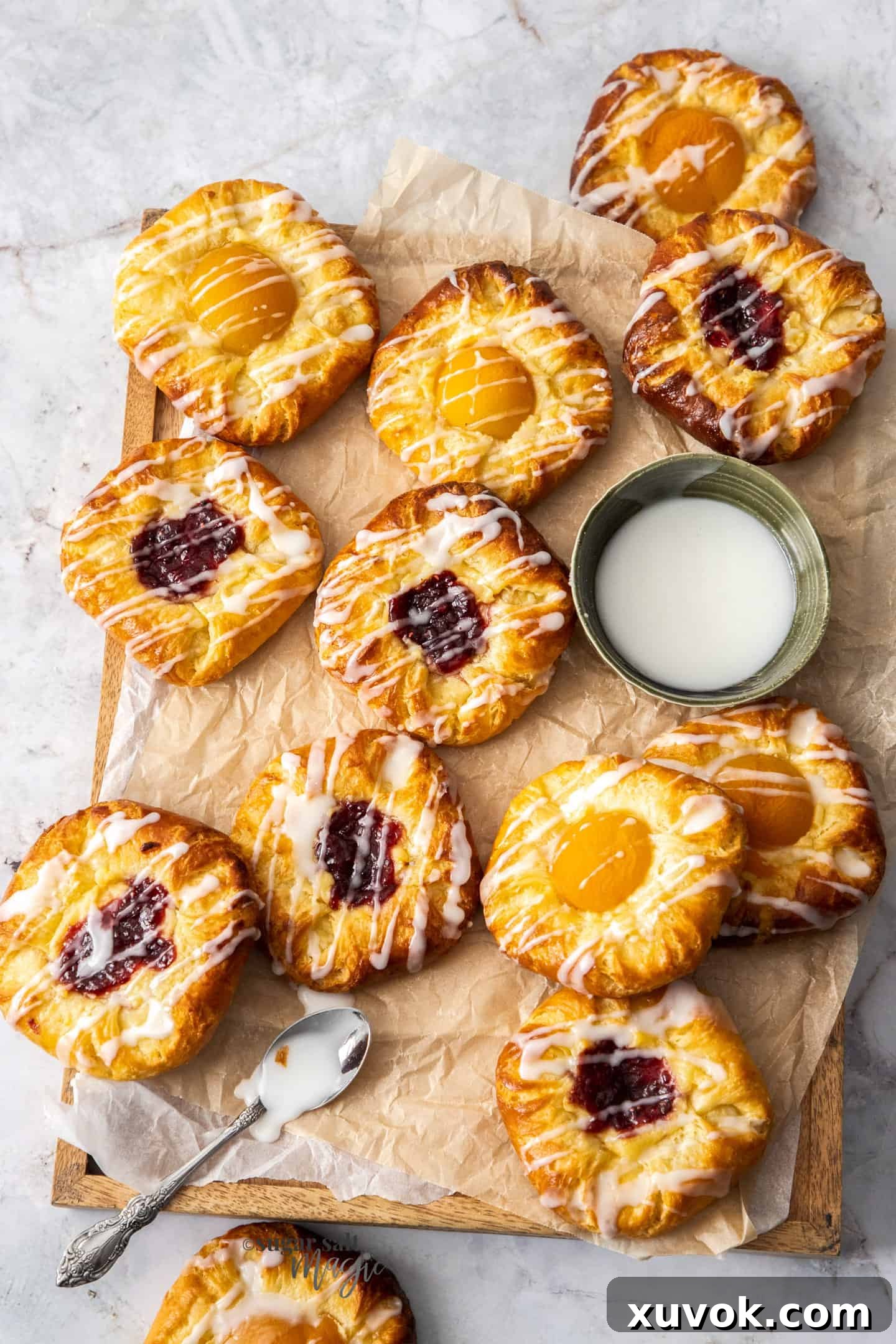
Effortless Homemade Danish Pastry: Your Guide to Flaky, Buttery Perfection
Ever dreamt of creating exquisite Danish pastries in your own kitchen, but felt daunted by the complexity? You’re not alone! This comprehensive guide reveals an incredibly simple Danish pastry dough recipe that demystifies the art of lamination. With just half an hour of active preparation time, and another 20 minutes to shape and bake, you’ll transform basic ingredients into golden, ethereal breakfast delights that rival any bakery.
Our unique method streamlines the traditional Danish dough process without compromising on that coveted texture and flavor. Prepare to impress your family and friends with pastries that are:
- Unmistakably Buttery and Flaky: Achieve a perfect, delicate layered texture that melts in your mouth with every bite, a hallmark of expertly made Danish pastry.
- Crispy on the Outside, Soft in the Middle: Experience the delightful contrast of a golden, crunchy exterior giving way to a tender, pillowy interior.
- Ideal for Make-Ahead Preparation: Plan your baking effortlessly! This dough can be prepared in advance, allowing you to enjoy freshly baked pastries whenever the craving strikes, even on busy mornings.
- Versatile for Any Shape and Filling: Unleash your creativity! Whether you desire classic squares, elegant braids, or simple rounds, this dough is your perfect canvas for various fillings like fruit, cream cheese, or nuts.
- Freezer-Friendly: Extend the shelf life of your homemade goodness. Freeze the dough as a slab for future use, or freeze already assembled pastries, ready to bake.
- Bakeable Straight from Frozen: No need to thaw! Simply transfer your frozen, assembled pastries directly to the oven for a quick and convenient warm treat.
This remarkable recipe is an adaptation from our beloved blueberry cinnamon roll dough, further refined to create this stunning Blueberry Danish braid. For those eager to explore more pastry variations, be sure to check out our bear claw pastry, which features a slightly different lamination approach (closer to croissant dough), and our indulgent Spandauer (Jam and Marzipan Danishes), boasting an even richer butter ratio.
Rave Review from Ed Anderson: “Ten stars! This was a HUGE success at the office. I’ve already been warned that they will be requested again and again and again. Bring it! This recipe is so easy that I won’t mind making them many times.” ⭐⭐⭐⭐⭐
This post is packed with valuable information and tips to help you master Danish pastry. Use the table of contents below to navigate to specific sections, or jump straight to the recipe using the button at the top.
Table of Contents
- What is Laminated Dough?
- What is Danish Pastry?
- Essential Ingredients for Danish Pastry
- Step-by-Step Guide: How to Make Danish Pastry Dough
- Transforming Dough into Delicious Breakfast Pastries
- Optimal Baking Temperature and Time
- Pro Tips and Expert Tricks for Success
- How to Prep Danish Pastry Ahead of Time
- Frequently Asked Questions (FAQs)
- More Sweet Breakfast Recipes You’ll Love
Never Miss a Recipe!
Get the latest recipes straight to your inbox and elevate your home baking!
What is Laminated Dough? Unveiling the Layers of Perfection
At its heart, laminated dough refers to a specialized baking technique where butter is meticulously folded and rolled into dough layers, creating an extraordinary structure. This iterative process of rolling, folding, and chilling is what gives pastries like puff pastry and Danish pastry their signature delicate, airy layers. As these layers bake, the butter melts and releases steam, which then puffs up the dough, separating each layer and resulting in that coveted flaky texture.
While traditional lamination often involves painstakingly incorporating a solid slab of butter directly into the dough, our recipe employs a wonderfully simplified method. We understand that not everyone has endless patience for complex techniques, which is why we’ve adapted a process that still delivers perfectly flaky, buttery Danish pastries with significantly less fuss. You’ll achieve professional-level results with a method designed for the home baker, proving that exceptional pastry doesn’t have to be intimidating.
What Exactly is Danish Pastry? A Sweet History and Delightful Texture
Danish pastry, or “wienerbrød” as it’s known in Denmark, is a truly iconic, rich, and buttery yeasted pastry celebrated for its many delicate layers. While deeply entrenched in Danish culinary tradition, its origins actually trace back to Austrian bakers in the 1840s, hence the name “Vienna Bread” in Danish (source).
Typically enjoyed as a sweet breakfast item or an indulgent dessert, Danish pastry is characterized by its exquisite dual texture: a crisp, golden-brown exterior giving way to a soft, tender, and incredibly flavorful interior. Unlike puff pastry which is crisp throughout, Danish pastry offers a delightful contrast that makes each bite a unique experience. Its versatility allows for a myriad of shapes and fillings, from fruit and cream cheese to marzipan and nuts, making it a beloved treat across the globe.
THE BUTTERY CRUST
Love Pastry? Discover a World of Delights!
Baking pastries shouldn’t be intimidating – it should be a joyful, approachable, and utterly achievable experience right in your home kitchen. If you share a passion for flaky crusts and sweet fillings, visit The Buttery Crust (our sister site) and sign up for our newsletter to unlock more delightful recipes and expert tips!
Essential Ingredients for Danish Pastry: Simple, Yet Powerful
One of the beauties of Danish pastry is that it requires a minimal number of ingredients, most of which you likely already have in your pantry if you’re accustomed to baking. Just seven core ingredients are needed to create this luxurious dough, proving that simplicity can lead to extraordinary results.
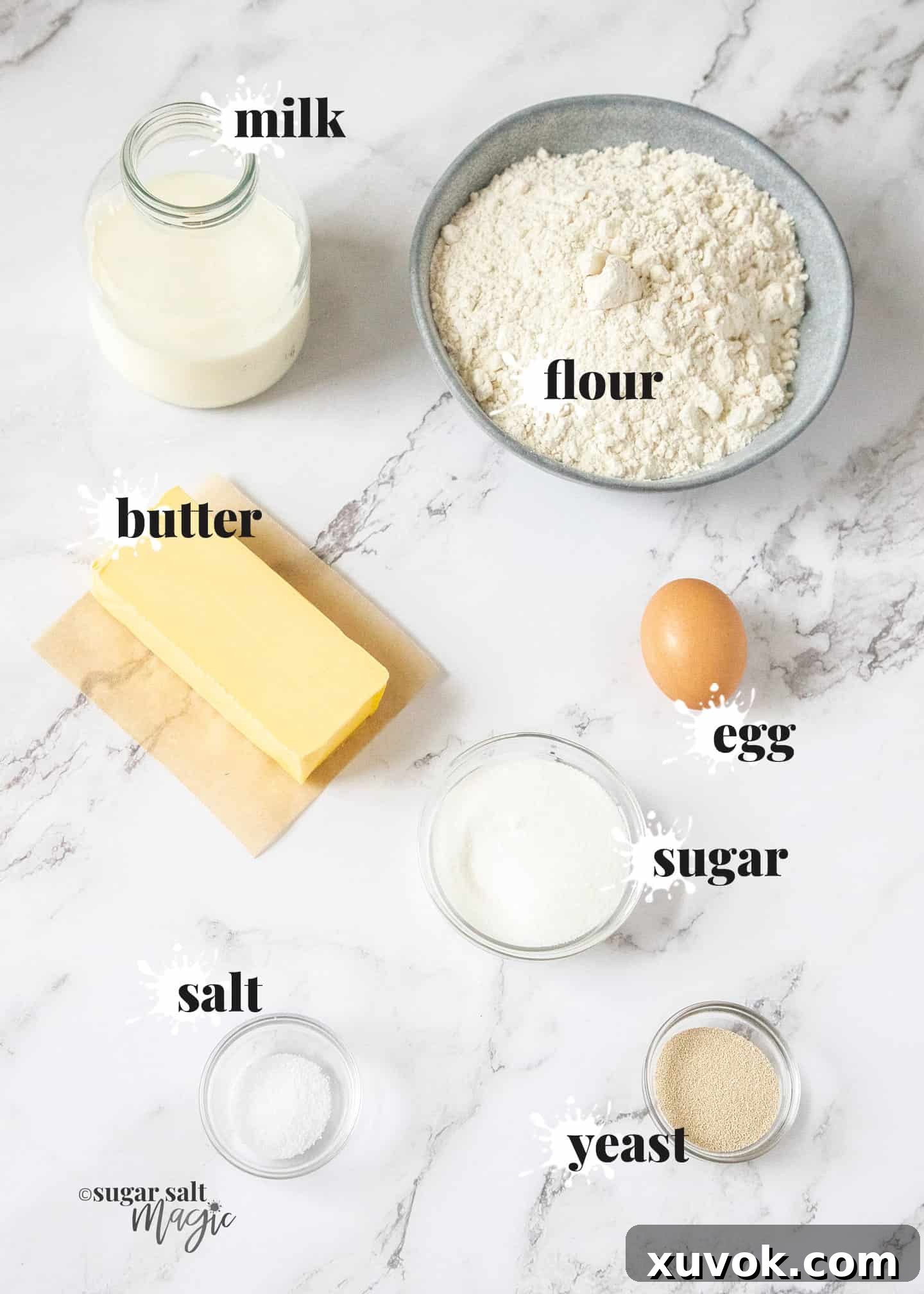
For precise measurements and detailed instructions, refer to the recipe card below.
- All-Purpose Flour: Simple plain flour (also known as all-purpose flour) is perfect for achieving the desired tenderness and structure in our Danish pastry. While bread flour can be used, it will result in a chewier texture due to its higher protein content.
- Yeast: Don’t let yeast intimidate you! It’s an easy ingredient to work with, and we’ll guide you through activating it to ensure your dough rises beautifully. This recipe is flexible, accommodating both instant yeast and active dry yeast.
- Whole Milk: For an enriched dough like Danish pastry, full-fat or whole milk is highly recommended. The extra fat content contributes to a richer flavor, a softer crumb, and a more tender texture.
- Unsalted Butter: Butter is a star ingredient in Danish pastry, playing a crucial role in both flavor and texture. Always opt for unsalted, full-fat butter. The quality of your butter will significantly impact the final taste and flakiness. Please note, this recipe has not been tested with alternative butter substitutes.
- Granulated Sugar: A touch of white granulated sugar is essential for a sweet Danish dough. It not only adds flavor but also helps to activate the yeast and promote beautiful browning during baking. The amount used is carefully balanced to ensure sweetness without overwhelming other flavors.
- Large Egg: As an enriched dough, an egg is included to provide additional richness, moisture, and structure. It contributes to the golden color and soft crumb that defines a delicious Danish pastry.
- Salt: A small amount of salt is crucial in any baking recipe. It enhances all the other flavors, balances the sweetness, and also helps to strengthen the gluten structure in the dough.
Step-by-Step Guide: How to Make Danish Pastry Dough with Ease
While this Danish pastry recipe is remarkably easy to follow and requires only about 30 minutes of hands-on time, it’s important to understand that the overall process involves necessary chilling and resting periods. This isn’t a “quick fix” recipe, but the passive time ensures exceptional results. Further down, you’ll find invaluable tips on how to effectively prepare this dough ahead of time, ensuring you can enjoy freshly baked pastries with minimal effort on the day you wish to serve them.
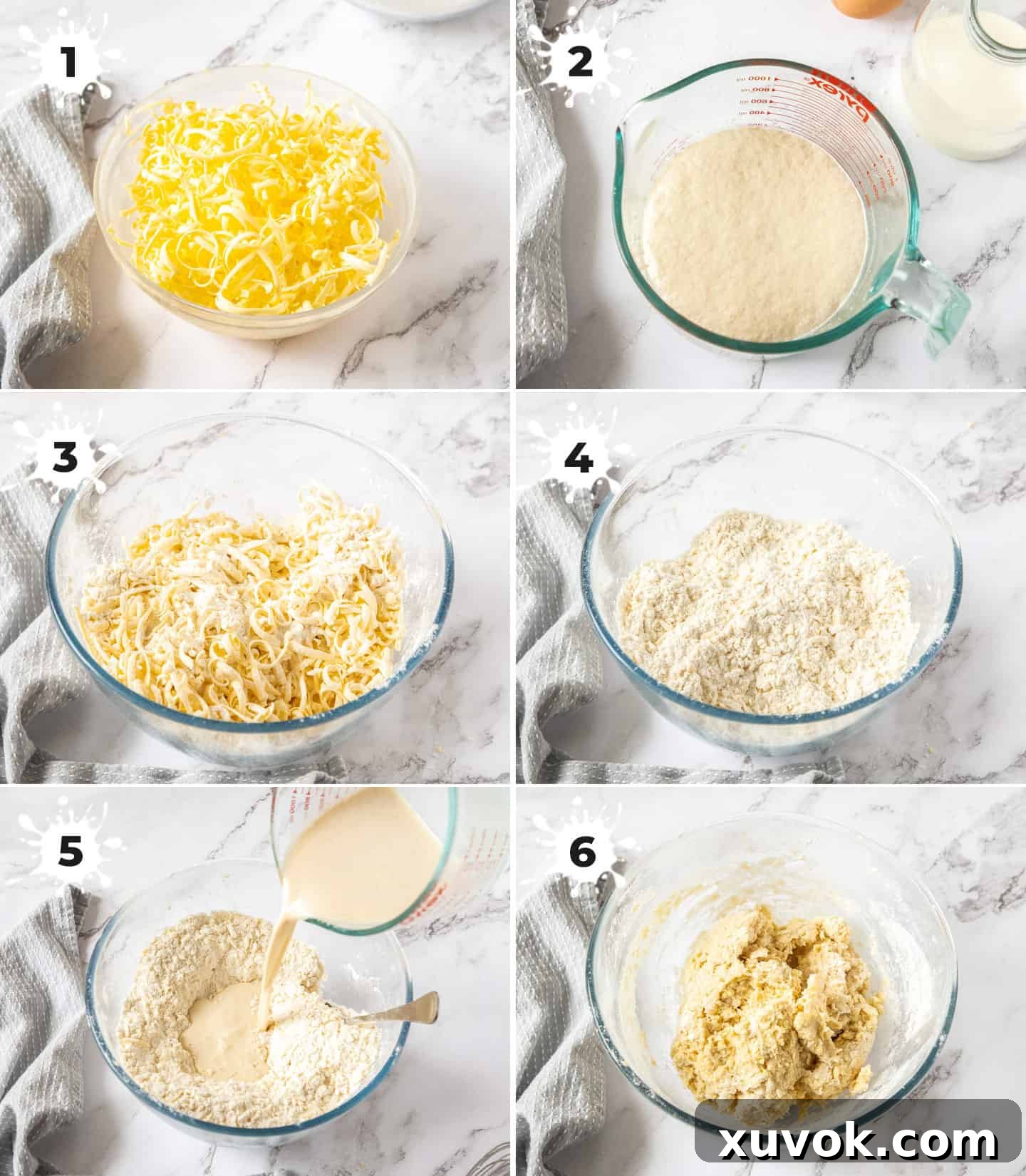
Refer to the recipe card below for exact measurements and a printable version.
- Grate the Butter and Chill: This ingenious step is key to simplifying our lamination process while still achieving that signature flakiness. Using a coarse grater, grate the very cold unsalted butter into a large bowl. Ensure the butter pieces remain loose and distinct – do not press them together. Place the bowl in the freezer for 5-10 minutes to ensure the butter is thoroughly chilled (photo 1). This prevents it from melting prematurely when mixed with the flour.
- Activate the Yeast: Gently warm ½ cup of milk until it’s just warm to the touch (around 40°C or 105°F), not hot. Too hot will kill the yeast, too cold will prevent activation. Stir in the yeast and 1 tablespoon of sugar. Let this mixture sit for 10 minutes. It should become visibly frothy, indicating the yeast is active and ready to work its magic (photo 2). If no froth appears, your yeast may be old or inactive, and it’s best to start with a fresh batch.
- Combine Butter and Dry Ingredients: Retrieve the grated butter from the freezer. Add the flour, remaining granulated sugar, and salt to the bowl. Lightly toss the ingredients together to coat the butter in flour (photo 3). Now, using a pastry cutter or your fingertips, gently work the butter into the flour mixture until it resembles small lentil-sized pieces (photo 4). The key here is to handle the mixture as little as possible to keep the butter cold and intact.
- Incorporate Wet Ingredients and Chill: Whisk the remaining ½ cup of milk and the egg into the frothy yeast mixture until well combined (photo 5). Pour this wet mixture into the bowl with the butter and dry ingredients. Use a spoon or spatula to stir everything together until a very rough and sticky dough forms – avoid overmixing (photo 6). Cover the bowl tightly with plastic wrap and refrigerate for a minimum of 8 hours, or ideally, overnight. This crucial chilling period allows the dough to hydrate, flavors to meld, and the butter to firm up, preparing it for lamination.
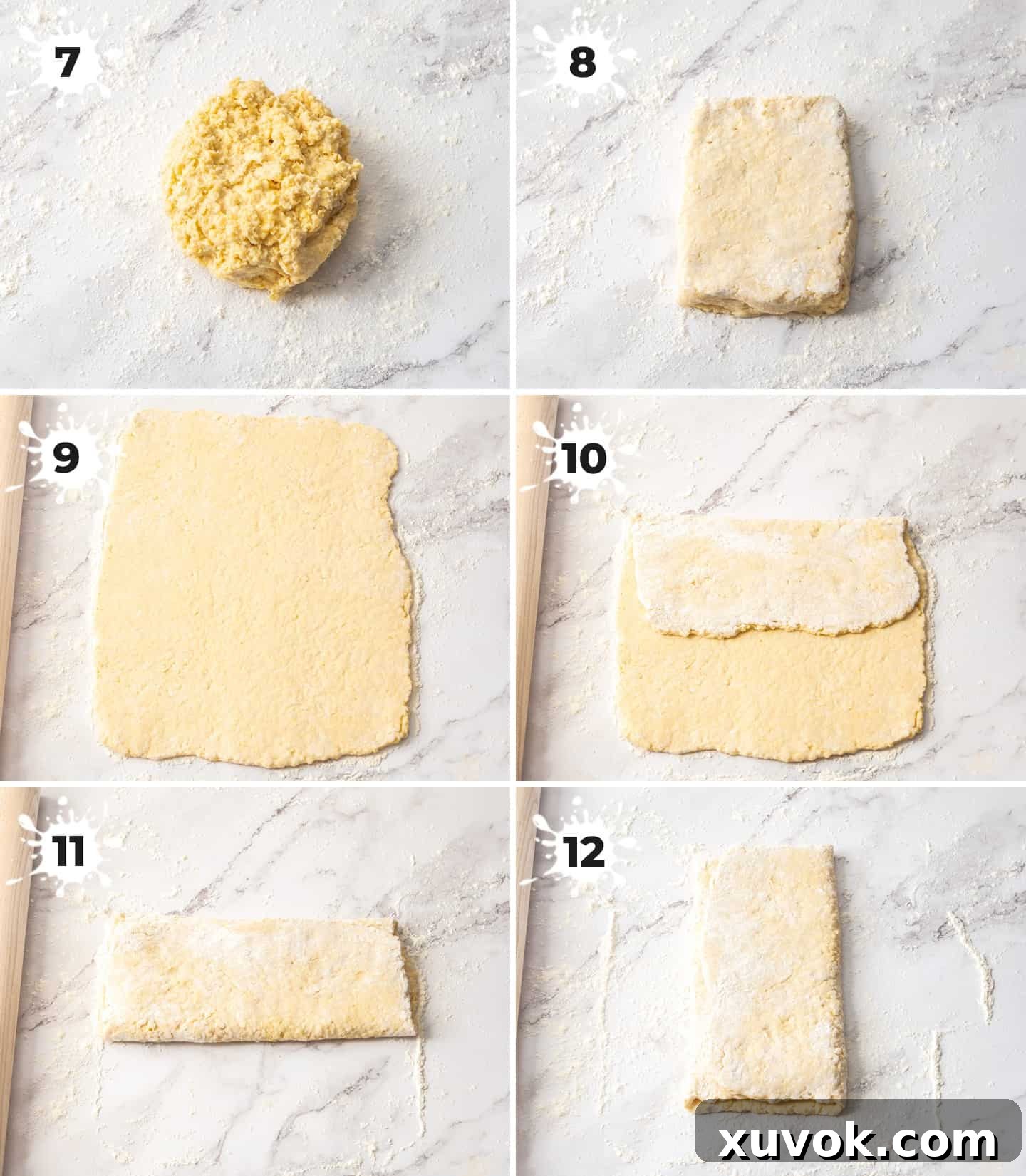
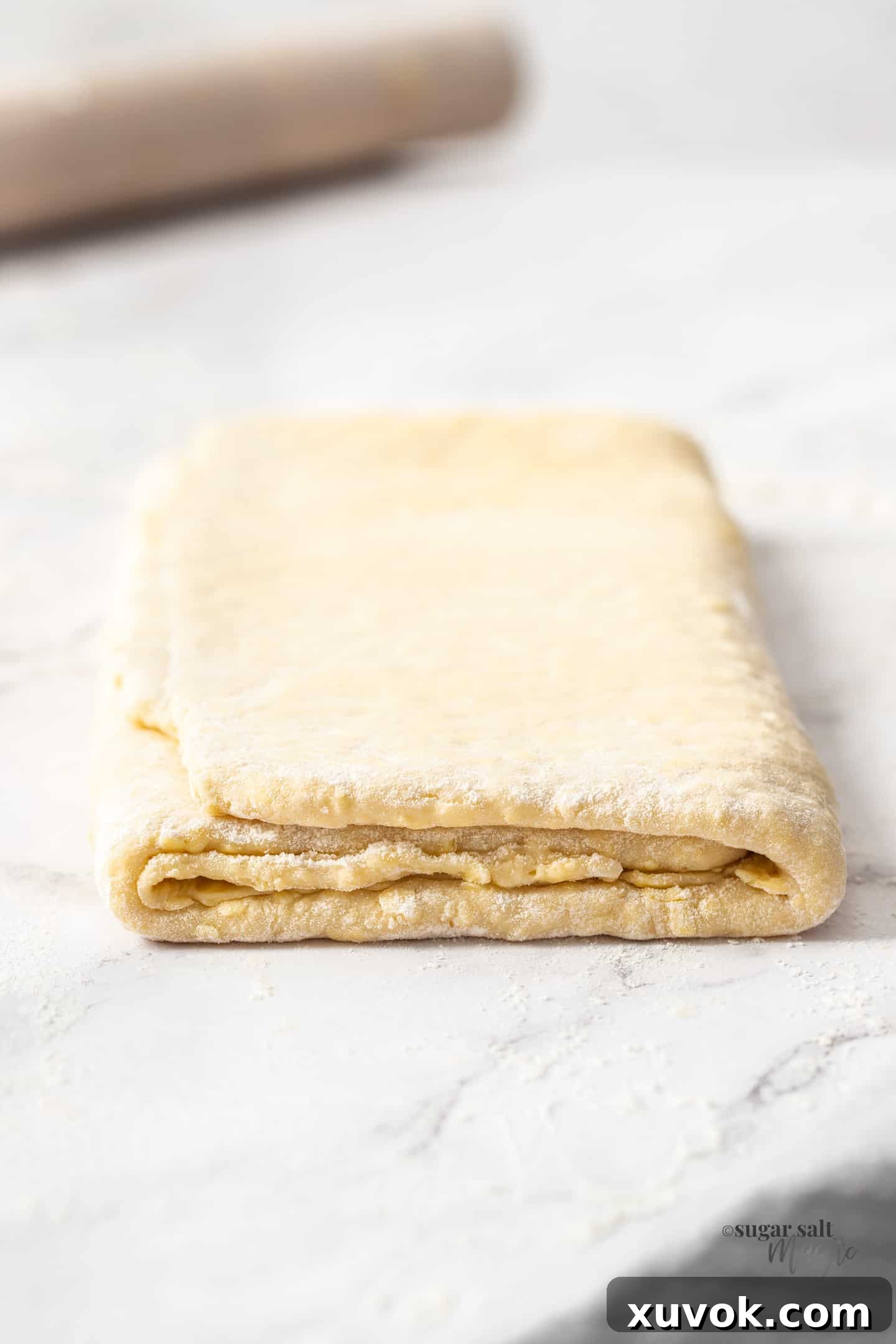
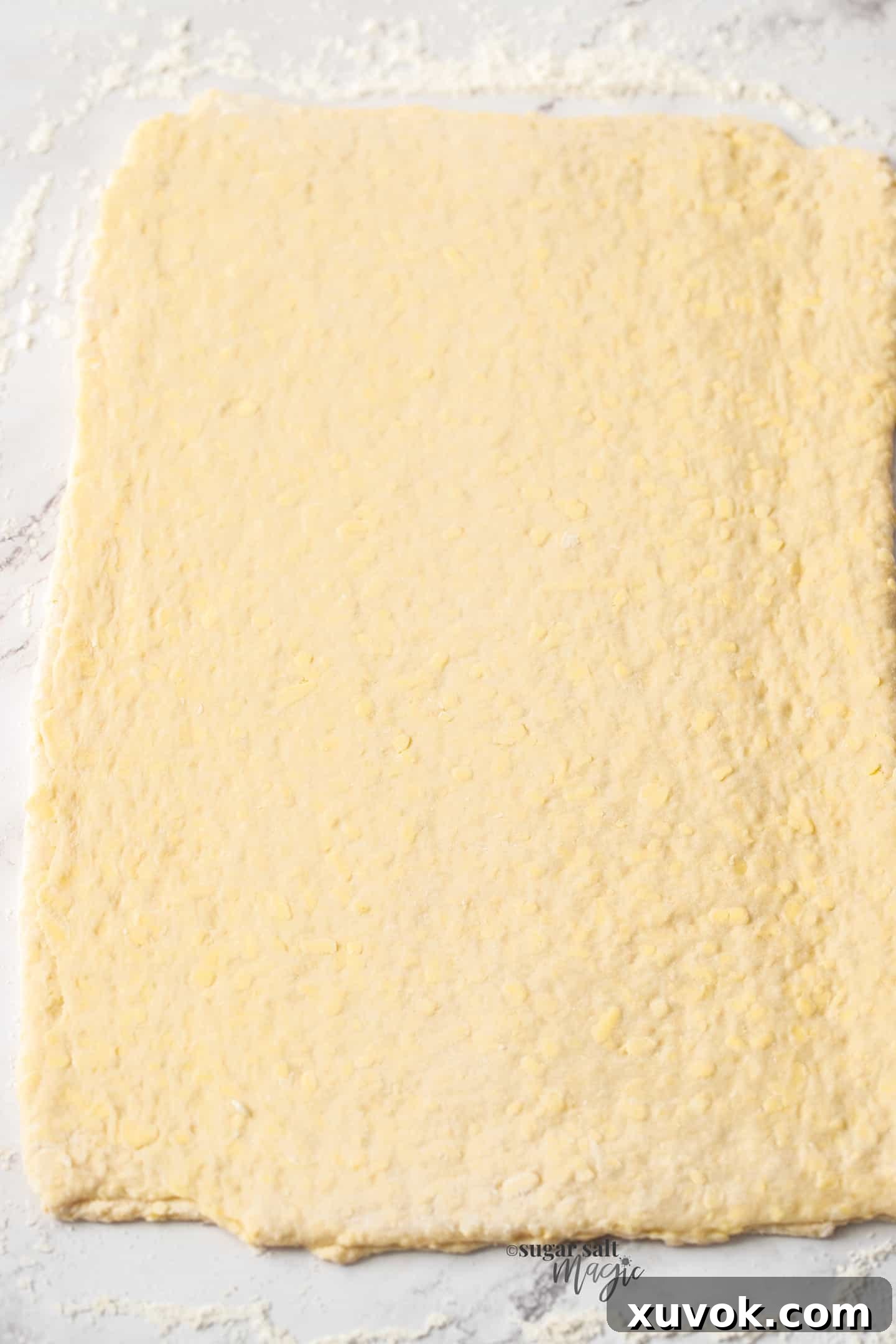
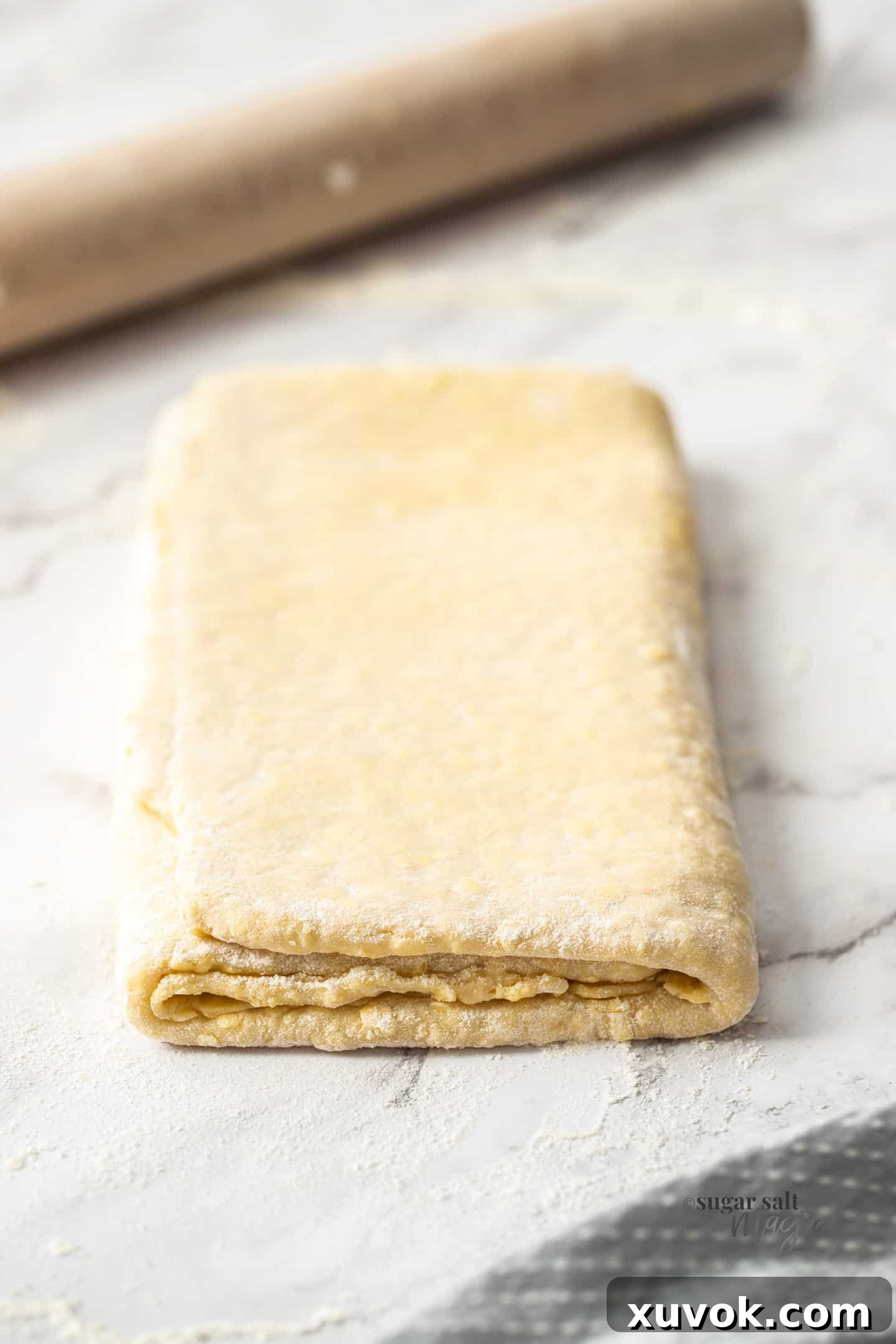
- Roll and Fold for Layers: Once chilled, turn the rough dough out onto a very lightly floured surface (photo 7). Resist the urge to add too much flour, as this can dry out your dough. Gently shape it into a neat rectangle with your hands (photo 8). Now, using a rolling pin, carefully roll the dough into a large rectangle, approximately ¼ inch (6mm) thick (photo 9). Perform a “letter fold” by folding the top third of the dough down over the middle third (photo 10), then fold the bottom third up over the top (photo 11). This completes one “turn.” Rotate the dough 90 degrees (photo 12), and repeat the rolling and folding process three more times, for a total of four turns. The dough will become noticeably smoother and tighter with each turn. If it resists rolling during the later turns, don’t force it; simply add a very light dusting of flour if sticking occurs. After the final fold, wrap the dough and chill for 1-2 hours to allow the gluten to relax and the butter to firm up again before shaping.
Transforming Dough into Delicious Breakfast Pastries: Endless Creativity
Once your homemade Danish dough has completed its final chill, the fun truly begins! The process of transforming this versatile dough into stunning breakfast pastries is surprisingly simple: roll, cut, fill, and bake. The possibilities for shapes and fillings are virtually endless, allowing you to customize your Danishes to your heart’s content.
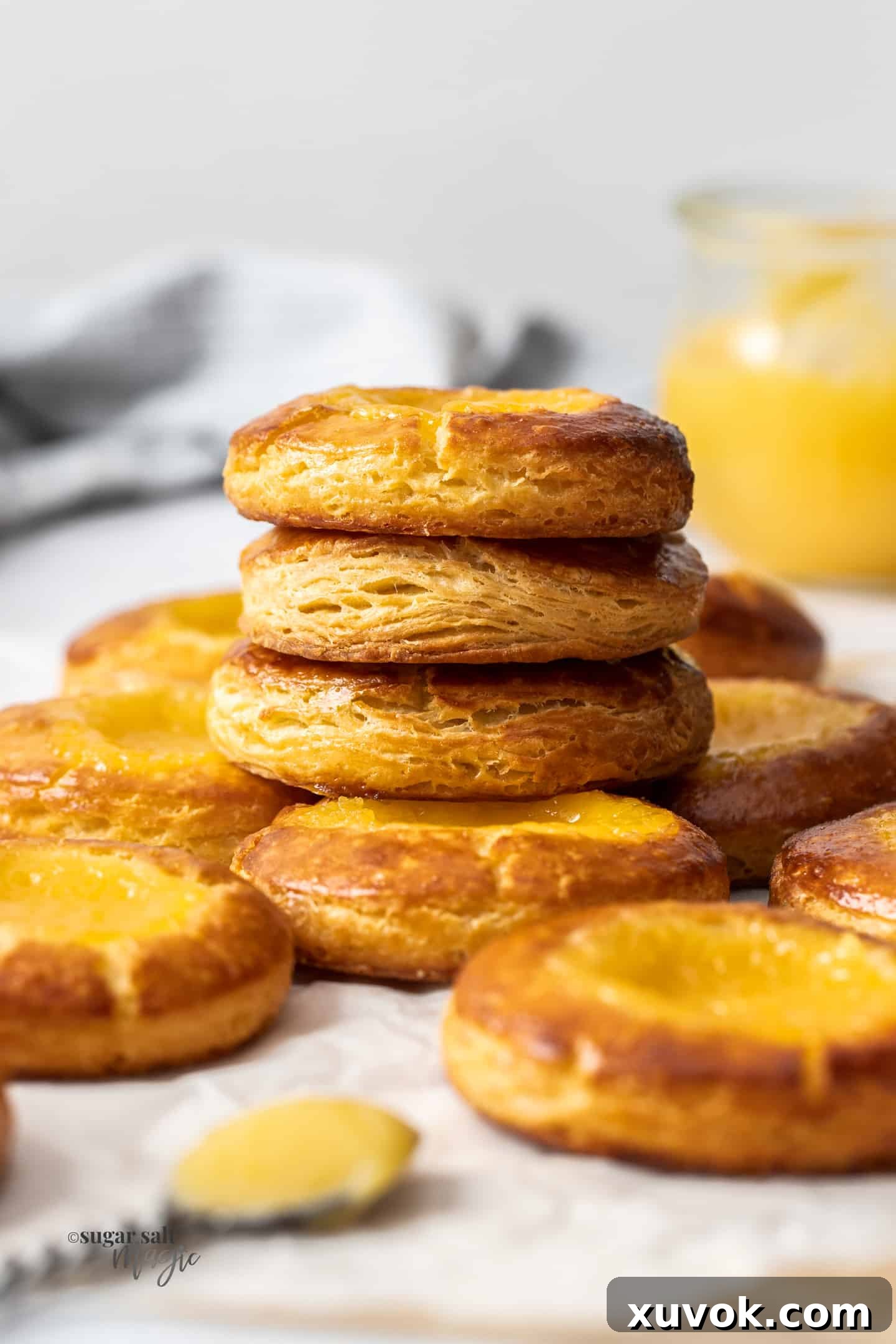
For a classic Danish look, simply create a square and pull the corners into the center, forming a delightful pocket for your filling. Alternatively, cut elegant rounds, as depicted in the image below, and add your favorite sweet creations. This dough is incredibly adaptable, inviting you to experiment with various designs.
Inspiring Ideas for Your Danish Pastries:
- Craft luscious Custard Danishes, a timeless and comforting classic.
- Brighten your morning with zesty Lemon Danish pastries, bursting with citrus flavor.
- Indulge in creamy Cream Cheese Strawberry Danishes, a perfect blend of sweet and tangy.
- Adapt the dough to make beautiful Peach Tarts, ideal for showcasing seasonal fruits.
- Even playful Nutella Twists can be made with this versatile dough, offering a quick and crowd-pleasing option.
Let your imagination be your guide! With this easy Danish dough, you’re just a few steps away from creating a bakery-worthy assortment of treats.
Optimal Baking Temperature and Time for Perfect Danishes
Achieving perfectly baked Danishes involves understanding that baking temperature and time are not one-size-fits-all. These parameters will largely depend on the size and thickness of your individual pastries, as well as the specific baking vessel or pan you choose. For example, a larger, family-sized Danish braid will require a different baking approach than smaller, palm-sized individual pastries or those baked in a muffin tin.
While this guide focuses on mastering the Danish pastry dough itself, we encourage you to consult the specific recipes linked in the section above for detailed guidance on baking temperatures and times tailored to various Danish pastry shapes and sizes. These resources will provide precise instructions to help you achieve beautifully golden, flaky, and fully cooked Danishes every time.
Pro Tips and Expert Tricks for Danish Pastry Success
Baking Danish pastry might seem intricate, but with these professional tips, you’ll achieve perfect results every time. These insights will help you navigate common challenges and ensure your homemade Danishes are truly exceptional:
- The Importance of Freezing the Butter: This step is non-negotiable for our simplified method. The goal is to get the butter incredibly cold so it remains solid and distinct as you work it into the flour. If the butter melts too much during this stage, you won’t get those crucial pockets that create the flaky layers when baked.
- Always Activate Your Yeast: Even when using instant yeast, which technically doesn’t require activation, taking this extra step is highly recommended. It serves as a vital “proof” to ensure your yeast is alive and active. There’s nothing more disheartening than investing time and ingredients into dough only to discover your yeast was inactive. Look for a frothy, bubbly surface as a sign of healthy yeast.
- Maintain a Cold Dough: Throughout the mixing and initial rolling process, strive to keep the dough as cold as possible. Excessive handling or warm kitchen temperatures can cause the butter to melt and blend into the dough, which will inhibit layer formation. Work efficiently, and if your kitchen is warm or the dough feels sticky, don’t hesitate to pop it back into the fridge for 10-15 minutes to firm up. Remember, distinct, small pieces of butter are the secret to flaky layers.
- Choose Your Tool for Incorporating Butter: You have options! You can use your fingertips for a tactile approach, or a pastry cutter to efficiently cut the butter into the flour. Whichever method you choose, remember to work quickly and lightly to avoid melting the butter with the warmth of your hands.
- Never Skip the Chilling Periods: Chilling is paramount for two critical reasons. Firstly, it keeps the butter pieces cold and distinct, which is essential for creating those beautiful, flaky layers during baking. Secondly, chilling allows the dough to relax. When dough is mixed or handled, the gluten in the flour tightens up. Resting it in the cold gives the gluten time to relax, making the dough easier to roll out and preventing it from shrinking back excessively. Skipping this step can lead to tough, difficult-to-work-with dough and less flaky pastries.
How to Prep Danish Pastry Ahead of Time: Smart Baking for Busy Schedules
While this recipe is genuinely easy to make, requiring no special equipment or advanced baking skills, it is important to acknowledge that it’s not a “super quick” recipe in terms of total time. The chilling and resting periods are absolutely vital for developing the flavor and achieving the correct texture. Thankfully, these periods are largely hands-off, making Danish pastry an excellent candidate for make-ahead preparation across three distinct stages:
- Stage 1: Initial Dough Rest (8-24 hours): After you’ve mixed the rough dough, a process that takes a mere 15 minutes, it needs to rest in the refrigerator for 8 hours or, ideally, overnight. While a minimum of 4 hours can work, you’ll find the results are far superior with at least an 8-hour chill. This initial rest is crucial for hydration and flavor development.
- Stage 2: Post-Lamination Rest (1-2 hours): Once you’ve completed the rolling and folding “turns” – another quick 15-minute hands-on task – the dough requires a further rest of 1 to 2 hours in the fridge. This allows the gluten to relax after handling and the butter layers to firm up once more.
- Stage 3: Assembled Pastry Rest (30-60 minutes): After you’ve rolled out the dough and cut it into your desired pastry shapes, they’re best rested for an additional 30 to 60 minutes before baking. This final proofing helps them puff up beautifully in the oven.
This sequence might sound lengthy, but rest assured, it’s entirely possible to have warm, flaky breakfast pastries in the oven first thing in the morning – pinky promise! Imagine waking up to the aroma of buttery, homemade Danish pastries, made from scratch and ready to enjoy. Here’s a smart schedule to achieve just that:
- 1-2 Days Before Baking: Prepare the rough dough first thing in the morning. This takes only about 15 minutes of your active time.
- Late Afternoon (Same Day): Perform all the rolling and folding turns. This also takes approximately 15 minutes.
- 1-2 Hours After Rolling and Folding, or First Thing the Morning You Want to Bake: Assemble your pastries.
Let’s illustrate with an example: On a Saturday morning, I dedicate 15 minutes to mixing the dough. I then go about my day. Around 4 PM, I return to do the rolling and folding, another 15 minutes. An hour later, I assemble my pastries, arrange them on baking trays, cover them, and place them in the fridge (this assembly takes about 20 minutes). When Sunday morning arrives, all I need to do is preheat the oven and bake! This allows for truly fresh, delectable Danish pastries for a sweet and delightful breakfast.
Moreover, Danish pastries offer even more flexibility: they can be baked directly from frozen. To do this, assemble your pastries as usual, then place them on a baking tray and freeze until solid. Once solid, wrap them meticulously in plastic wrap, then store them in an airtight container or freezer bag. When you’re ready to bake, simply unwrap them, place them on a baking tray, and bake from frozen, potentially adding an extra 3-5 minutes to the baking time.
Fancy trying choux pastry next? Give these delightful chocolate chouxnuts a whirl!
Frequently Asked Questions (FAQs) About Danish Pastry
Absolutely! Danish pastry dough is excellent for freezing. After the final rolling and folding steps (before shaping), form the dough into a smooth rectangle on a lightly floured surface. Wrap it tightly with 2-3 layers of plastic wrap to prevent freezer burn, and store it flat in the freezer for up to 2-3 months. This allows you to have fresh Danish dough ready whenever you desire.
If you’ve frozen the raw Danish pastry dough as a slab, it should be thawed overnight in the refrigerator. This slow thawing helps maintain its delicate structure. However, if you have already assembled your Danish pastries into their final shapes and then frozen them, you can often bake them directly from frozen. When baking from frozen, expect to add an extra 3-5 minutes to the recommended baking time to ensure they cook through evenly.
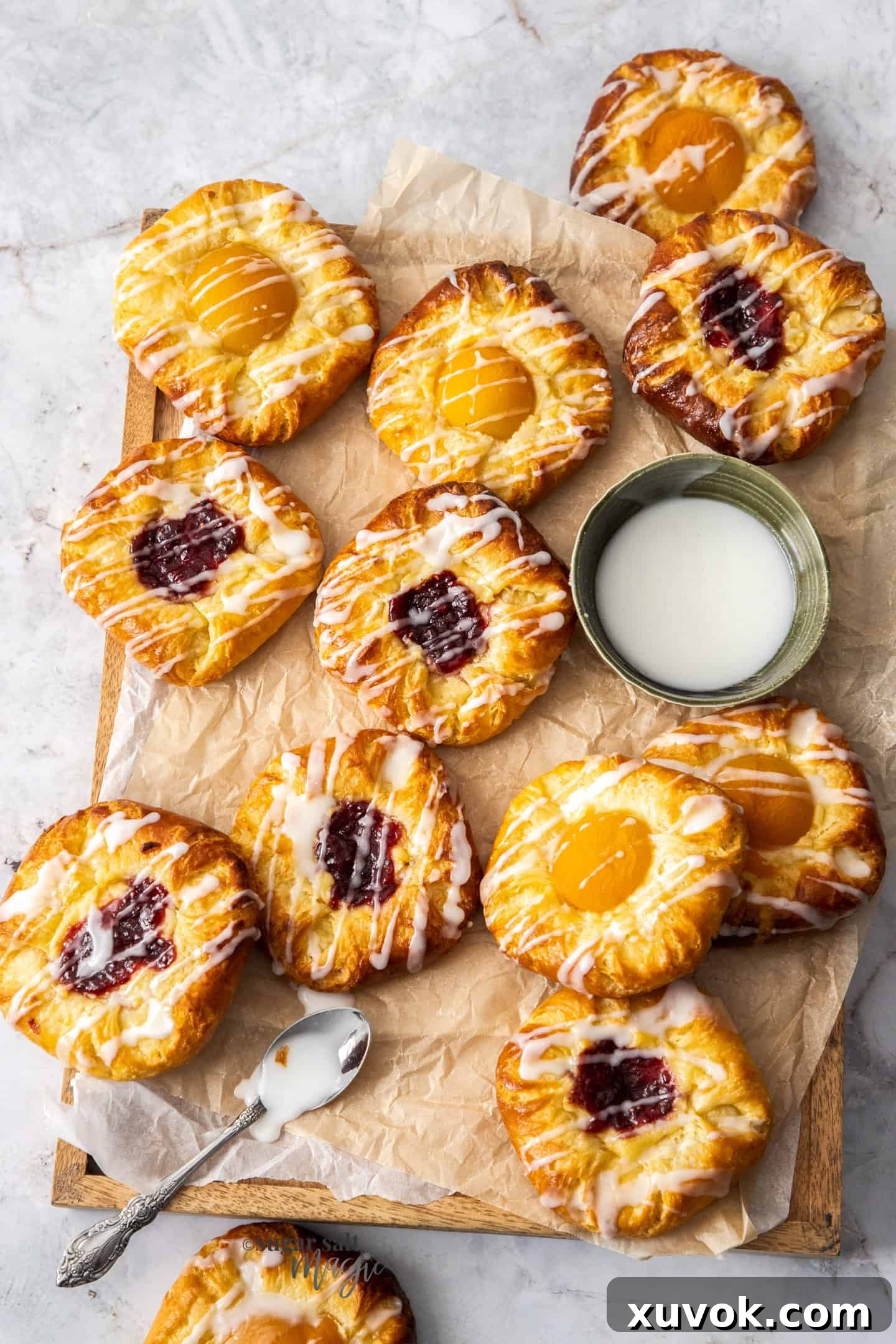
The world of Danish pastry folding is vast and creative! Many methods exist, ranging from incredibly simple to more intricate designs. A very basic approach is to forgo complex folds entirely: simply cut circles of dough, make a slight indent in the center, and add your chosen filling. Another straightforward method involves cutting squares of dough and folding the corners inward towards the center to create a classic look. More advanced techniques include elegant braids, decorative pinwheels, and various pockets. We’re planning a dedicated post in the near future that will showcase a wide array of Danish pastry shapes you can master with this versatile dough.
While both Danish pastry and puff pastry are types of laminated dough known for their flaky layers, their primary difference lies in the inclusion of yeast and egg. Danish pastry is a leavened dough, meaning it contains yeast, which gives it a soft, slightly bread-like interior crumb and a gentle rise. Additionally, Danish pastry dough typically includes egg, contributing to its richness and golden hue. Puff pastry, on the other hand, is unleavened and relies solely on steam from the butter to create its layers, resulting in a uniformly crisp texture throughout. Danish pastry is celebrated for its crisp exterior and soft interior, offering a delightful textural contrast that differentiates it from the all-over crispness of puff pastry.
More Sweet Breakfast Recipes You’ll Love
- Lemon Danish Pastry
- Spandauer (Jam and Marzipan Danishes)
- Cream Cheese Strawberry Danishes
- Strawberry Cream Puffs
- Bear Claw Pastry
- Blueberry Cinnamon Rolls
- Puff Pastry Blueberry Turnovers
- Croissant French Toast Casserole
If you try this homemade sweet Danish dough, please take a moment to leave a rating and comment below. I love hearing from you and your feedback helps other readers too! You can also snap a photo and tag @sugarsaltmagic on Instagram.
Hungry for more? Subscribe to the newsletter for free recipes straight to your inbox. Also, follow along on Facebook, Pinterest and Instagram.

How to make Danish Pastry
For the best results, we recommend starting this recipe the day before. This recipe yields a generous batch of 12-24 individual pastries, perfect for sharing or stocking your freezer.
Rate
Pin
Video
Ingredients
- 1 cup whole milk cold (250ml)
- 2 ¼ teaspoons instant or active dry yeast (1 sachet / 8g) (notes)
- 390 g plain flour (all purpose flour) (3 cups / ~13¾oz)
- ⅓ cup white granulated sugar (66g / ~2⅓oz)
- ½ teaspoon salt
- 226 g unsalted butter full fat, no light versions, coarsely grated and very cold (1 cup / 2 sticks / 8oz)
- 1 large egg
For best results, always weigh ingredients where a weight is provided
Equipment
-
Pastry cutter (optional)
-
Rolling Pin
Instructions
-
If you haven’t already, grate the butter using a coarse grater and place it in a large bowl. Ensure the grated butter remains loose and don’t press it down. Transfer the bowl to the freezer to chill for 10 minutes until very cold.
-
Gently warm ½ cup of the whole milk in the microwave or a small saucepan. It should be just warm to the touch (approximately 40°C or 105°F), not hot. If the milk is too hot, it will kill the yeast; if it’s too cold, the yeast won’t activate properly.
-
To the warmed milk, add 1 tablespoon of the granulated sugar and all of the yeast. Stir briefly to combine. Let this mixture sit undisturbed for 10 minutes. It should become frothy and bubbly on the surface; this indicates that the yeast is active and healthy. If it doesn’t froth, the yeast is likely expired or inactive, and you will need to start again with a fresh batch of yeast.
-
Take the large bowl of very cold grated butter from the freezer. Add the plain flour, the remaining granulated sugar, and the salt to the bowl. Give the mixture a light toss with your hands to evenly coat the butter in the dry ingredients. Now, very gently, using your fingertips or a pastry cutter, work the butter into the flour until the pieces of butter are roughly the size of lentils. Be extremely careful not to melt the butter with the warmth of your hands. If your kitchen is particularly warm, or the butter seems to be softening, place the bowl back into the fridge for a few minutes to cool down before continuing.
-
In a separate small bowl, whisk the remaining ½ cup of cold milk and the large egg into the frothy yeast mixture until all are thoroughly combined. Once smooth, pour this wet mixture into the large bowl containing the butter and dry ingredients.
-
Using a sturdy spoon or a rubber spatula, gently mix the ingredients together. Stir just until they are combined and form a very rough, shaggy, and sticky dough. It’s crucial not to overmix at this stage; a rough texture is desired.
-
Cover the bowl tightly with plastic wrap, ensuring it’s airtight, and place it in the refrigerator to chill for an extended period, preferably 8 to 24 hours (or overnight). This long chilling time is essential for the dough’s texture and flavor development.
-
After the dough has chilled sufficiently, turn it out onto a very lightly floured surface. You want to use minimal flour to avoid drying out the dough. Gently press and form the dough into a simple, cohesive rectangle with your hands.
-
ROLL AND FOLD (Lamination Process): Using a rolling pin, roll the dough out into a large rectangle, approximately 6mm (¼ inch) thick. Aim for dimensions of about 27cm x 45cm (11 x 18 inches). Once rolled, perform a “letter fold”: fold the top third of the dough down over the middle third, then fold the bottom third of the dough up over the previous fold. This completes one “turn.” Rotate the folded dough 90 degrees (quarter turn).
-
Repeat this rolling and folding process three more times, for a grand total of four turns. With each subsequent turn, the dough will become much smoother, more elastic, and firmer. During the final roll and fold, the dough might feel significantly tighter and more resistant. It’s perfectly normal if you can’t quite achieve the full 6mm (¼ inch) thickness this time. If you notice the dough sticking to your counter or rolling pin at any point, add only a touch of flour – avoid excessive flour, which can dry out the dough and impact flakiness.
-
After completing all four rolls and folds, wrap the dough tightly in plastic wrap and chill it in the refrigerator for another 1-2 hours. This resting period is crucial for the dough to relax and for the butter layers to firm up, making it easier to handle and shape into Danish pastries.
-
To transform your prepared Danish dough into baked pastries, you can refer to our detailed guides for Lemon Danish Pastries or Custard Danish Pastries as excellent starting points for shaping and filling ideas. For specific baking temperatures and times for your chosen pastry shapes and sizes, please consult the detailed notes in section 5 of this recipe card, and the advice within the linked posts.
Notes
- Yeast Type: This versatile recipe works beautifully with both instant yeast and active dry yeast. No need to adjust quantities.
- Start This Recipe Ahead: For optimal flavor and ease, we highly recommend starting this recipe the day before you plan to bake. You can mix the initial dough in about 15 minutes in the morning. Then, in the late afternoon, dedicate another 15 minutes to the rolling and folding process. After this, let it chill overnight. The following morning, you’ll only need approximately 20 minutes to assemble your pastries (plus a 30-minute rest for the assembled pastries) before baking them for a truly delicious breakfast or brunch.
- Two-Day Advance Prep: For even greater convenience, you can spread the preparation over two days. Prepare the initial dough on Day 1, perform the rolling and folding on Day 2, and then assemble and bake on Day 3.
- Freezing the Dough: This dough freezes exceptionally well. Once you’ve completed all the rolling and folding, wrap the dough tightly in 2-3 layers of plastic wrap. You can freeze it flat as a slab and thaw it overnight in the refrigerator before using.
- Baking Temperature and Time: Please note that the baking temperature and specific baking time for your Danishes will vary significantly. These factors depend on the size and shape of the pastries you create (e.g., individual Danishes versus a large Danish braid) and the type of tin or tray they are baked in. We strongly recommend referring to the individual recipes (linked in the main post) for guidance on your chosen Danish pastry creation.
IN THE POST
The following links will guide you to specific sections within this article. Just scroll down after clicking to return to the recipe card.
- How to Turn Dough into Breakfast Pastries
- Optimal Baking Temperature and Time
- Pro Tips and Expert Tricks
- How to Prep Danish Pastry Ahead of Time
- Frequently Asked Questions (FAQs)
EXPLORE MORE SWEET BREAKFAST RECIPES!
Calories from Fat 72
Jumbo Swedish Cinnamon Buns
Custard Danish Pastry