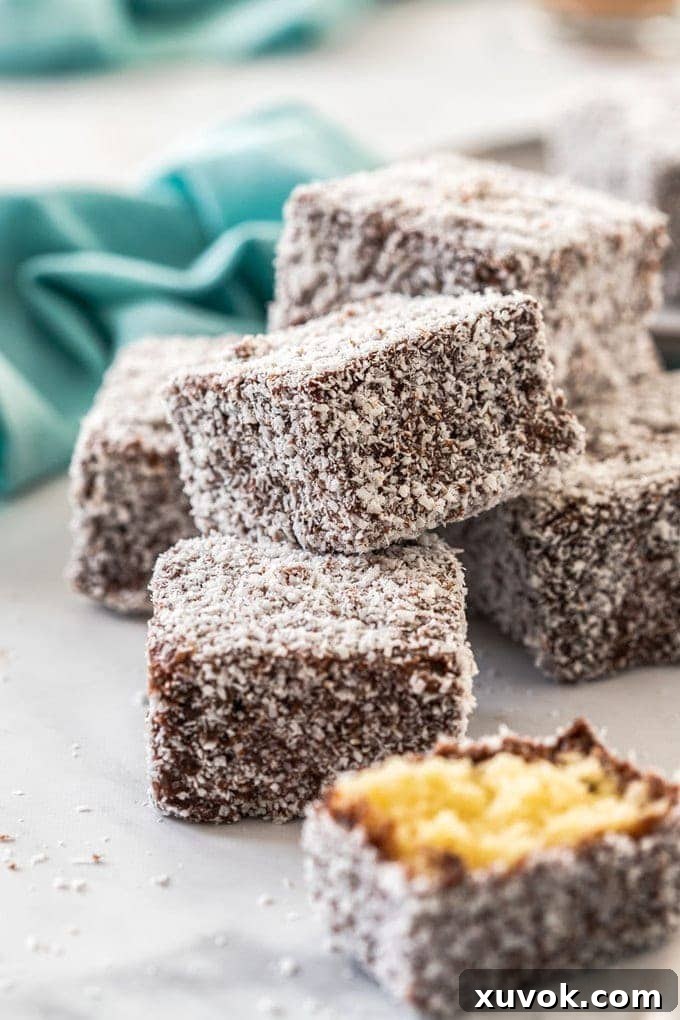
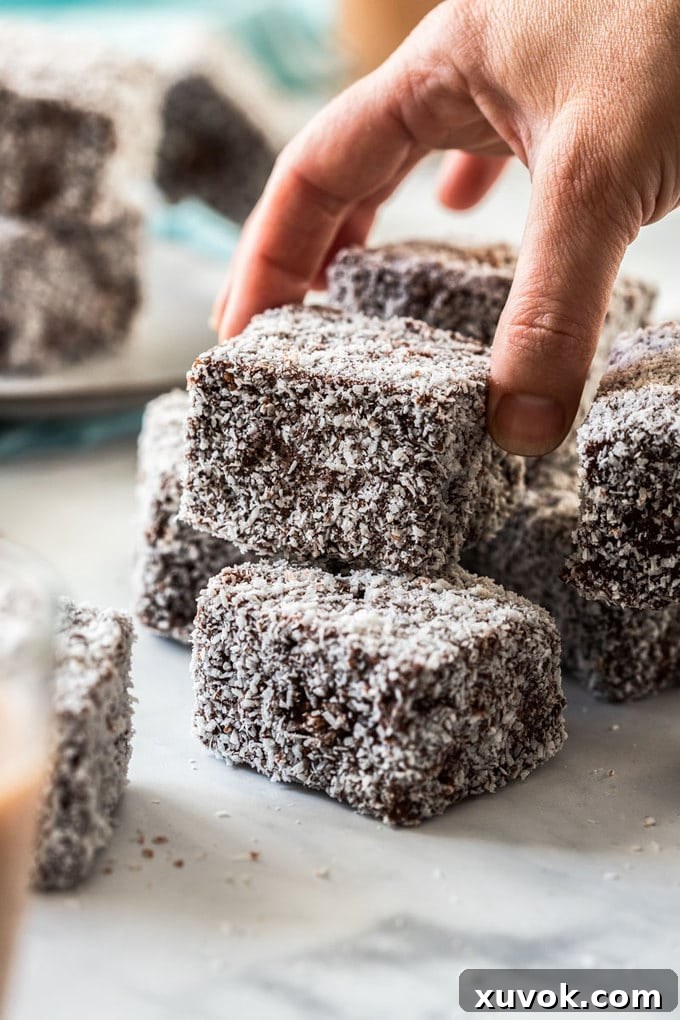
As celebrations like Australia Day draw near, there’s one sweet treat that consistently captures the hearts of Aussies across the globe: the Classic Australian Lamington. These delightful squares of sponge cake, coated in a rich chocolate glaze and rolled in fine desiccated coconut, are more than just a dessert – they’re a true national icon. If you’ve never had the pleasure of tasting a freshly made lamington, prepare to discover why this humble cake has earned its legendary status. Its simplicity belies a perfect harmony of flavors and textures, making it an undeniable favorite for morning tea, afternoon tea, or any special occasion.
While the traditional lamington holds a special place, its versatility has inspired wonderful variations. If you’re eager for a creative twist, you might enjoy exploring recipes like the Rose Strawberry Lamington or my Lamington Cupcakes. For those who love the classic flavors in a different format, this Coconut Chocolate Fudge Slice offers a brownie-like indulgence that tastes remarkably like a lamington. These variations prove that while the original is unbeatable, there’s always room for a little innovation.
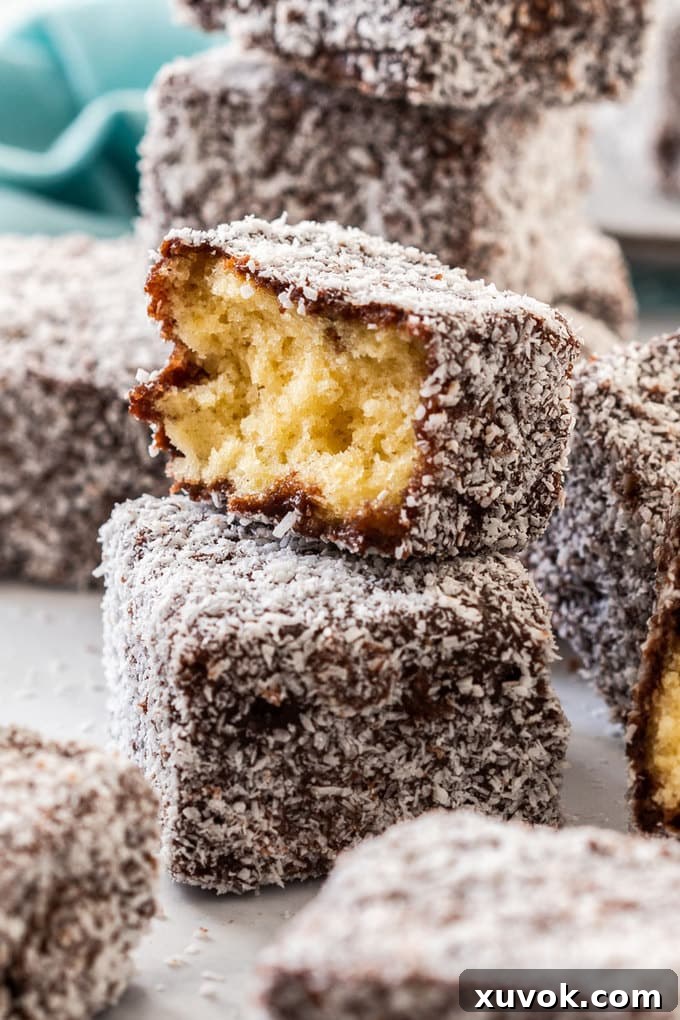
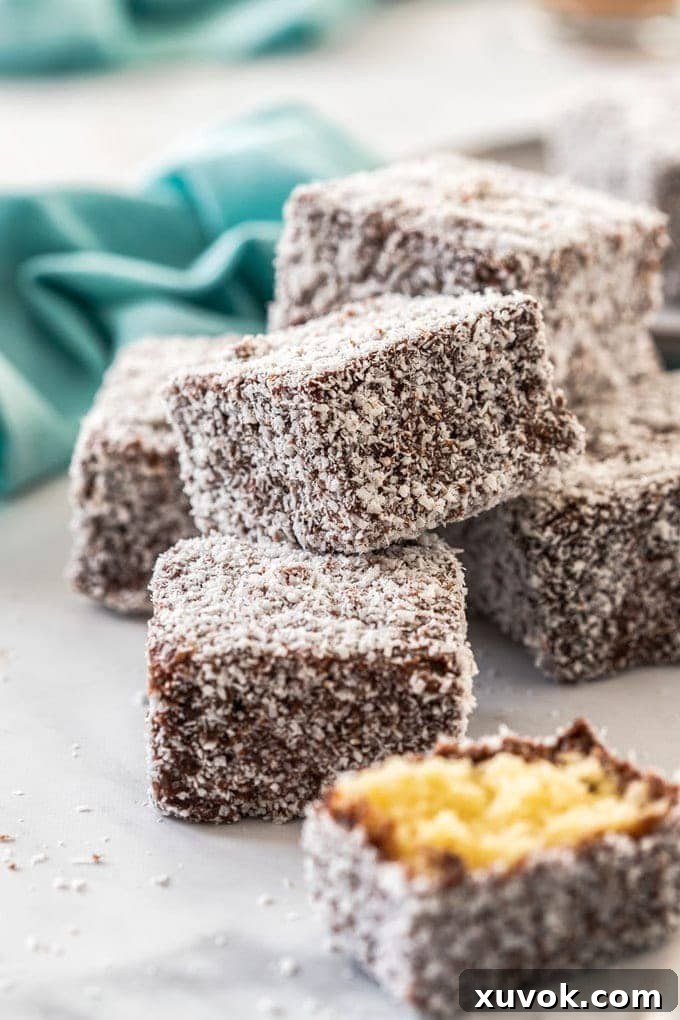
At its core, a perfect lamington begins with a simple, fluffy, and impeccably buttery sponge cake. This isn’t just any cake; it’s a light and airy base that serves as the ideal canvas for the signature coating. Once baked to golden perfection, the sponge is carefully cut into neat squares. Each square then undergoes a magical transformation, being generously coated in a silky, one-bowl chocolate glaze, before finally being rolled in sweet, fragrant desiccated coconut. This trifecta of flavors and textures – soft cake, smooth chocolate, and tender coconut – is truly a match made in culinary heaven, making lamingtons an absolute joy to prepare and even more delightful to devour.
The beauty of lamingtons lies in their harmonious blend of humble ingredients, coming together to create an irresistible treat. The process of making them is not only rewarding but also incredibly fun. For those who enjoy exploring more Australian-inspired delights, I highly recommend trying these vibrant Fairy Bread Lamingtons or the comforting Jam and Coconut Sponge.
Key Ingredients for Authentic Lamingtons
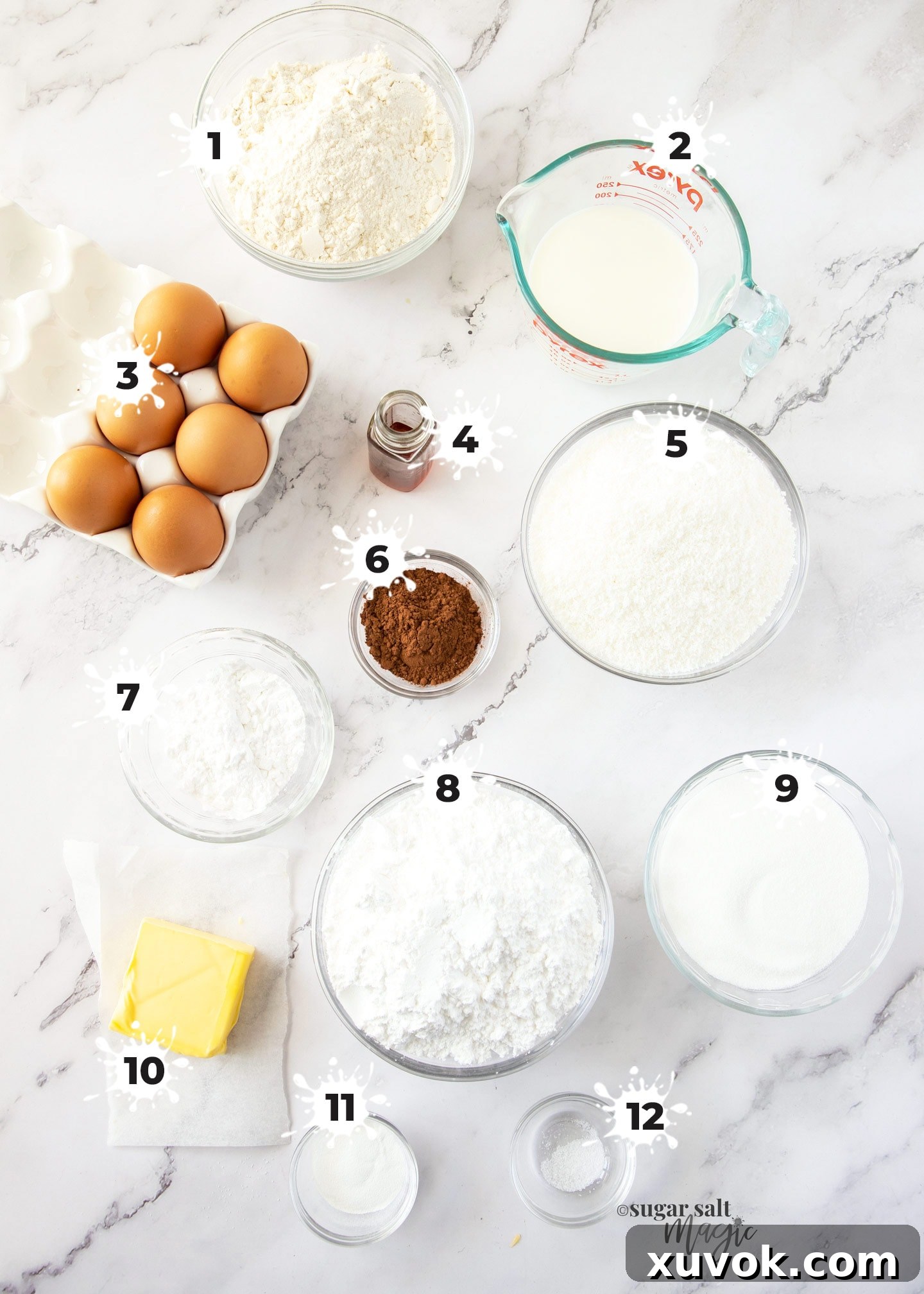
Creating these iconic Australian lamingtons requires nothing more than a few everyday items from your pantry and a handful of fresh ingredients. For the incredibly light and fluffy sponge cake, you’ll need essential pantry staples such as all-purpose flour, baking powder for lift, granulated sugar for sweetness, a touch of salt to balance the flavors, and pure vanilla extract for warmth. Complementing these dry ingredients are fresh components like quality unsalted butter, rich milk, and fresh eggs, which contribute to the cake’s tender crumb and moist texture. With these readily available ingredients, you’ll have everything necessary to embark on your lamington-making adventure and bake up a batch of pure delight.
Mastering the Art of Homemade Lamingtons
The journey to creating perfect lamingtons begins with baking a sublime butter sponge cake. This recipe is designed to be straightforward, yielding a sponge that is wonderfully fluffy, incredibly light, and so buttery it’s addictive even on its own. The quality of your sponge is paramount, as it forms the foundation of every excellent lamington. Achieving that signature texture involves careful preparation and attention to detail, ensuring a delicate crumb that readily absorbs the chocolate glaze.
Baking the Fluffy Lamington Sponge
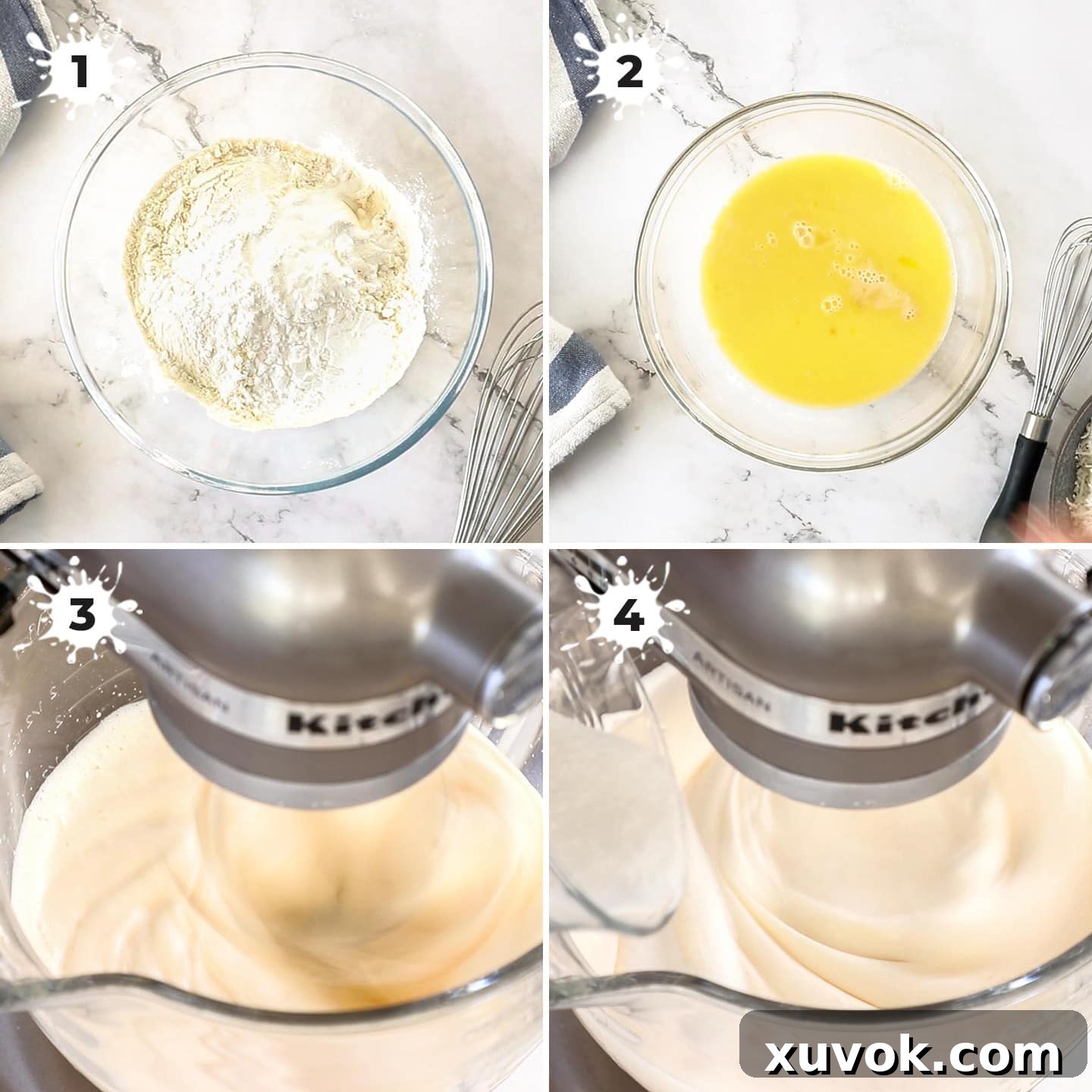
- To start, meticulously combine all the dry ingredients, ensuring they are well-sifted for an even texture and proper aeration (image 1). Simultaneously, gently melt the butter and milk together until just combined and warm, then stir in the vanilla extract (image 2).
- The key to a light sponge is perfectly whipped eggs. Beat the whole eggs and egg whites until they become very thick, pale, and form a beautiful ribbon when the whisk is lifted (image 3). This can take around 8 minutes, so be patient! Then, gradually introduce the caster sugar into the whisking eggs, beating until fully incorporated and the mixture is even more voluminous (image 4).
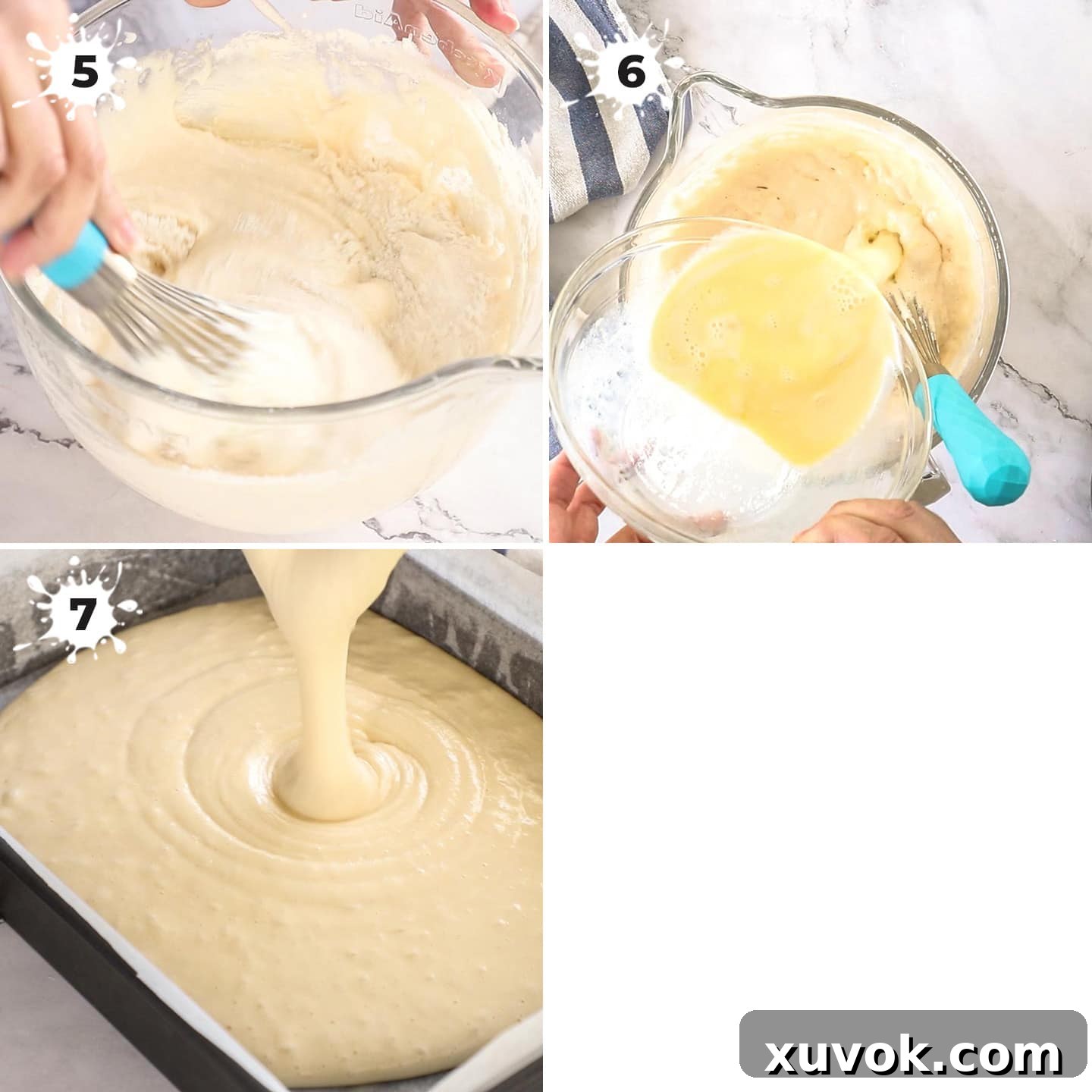
- Using a balloon whisk or a spatula and a gentle folding action, carefully incorporate half of the sifted dry ingredients into the egg mixture (image 5). Follow this by folding in the warm milk and butter mixture (image 6). Alternate adding the remaining dry ingredients and milk mixture, always folding gently to maintain the airiness of the batter. Avoid overmixing, as this can lead to a tough cake.
- Pour the finished batter into a prepared lamington tin – typically a rectangular cake tin with high sides, measuring approximately 23cmx34cm. A large 9×13 inch baking tin with high sides can serve as an excellent alternative (image 7).
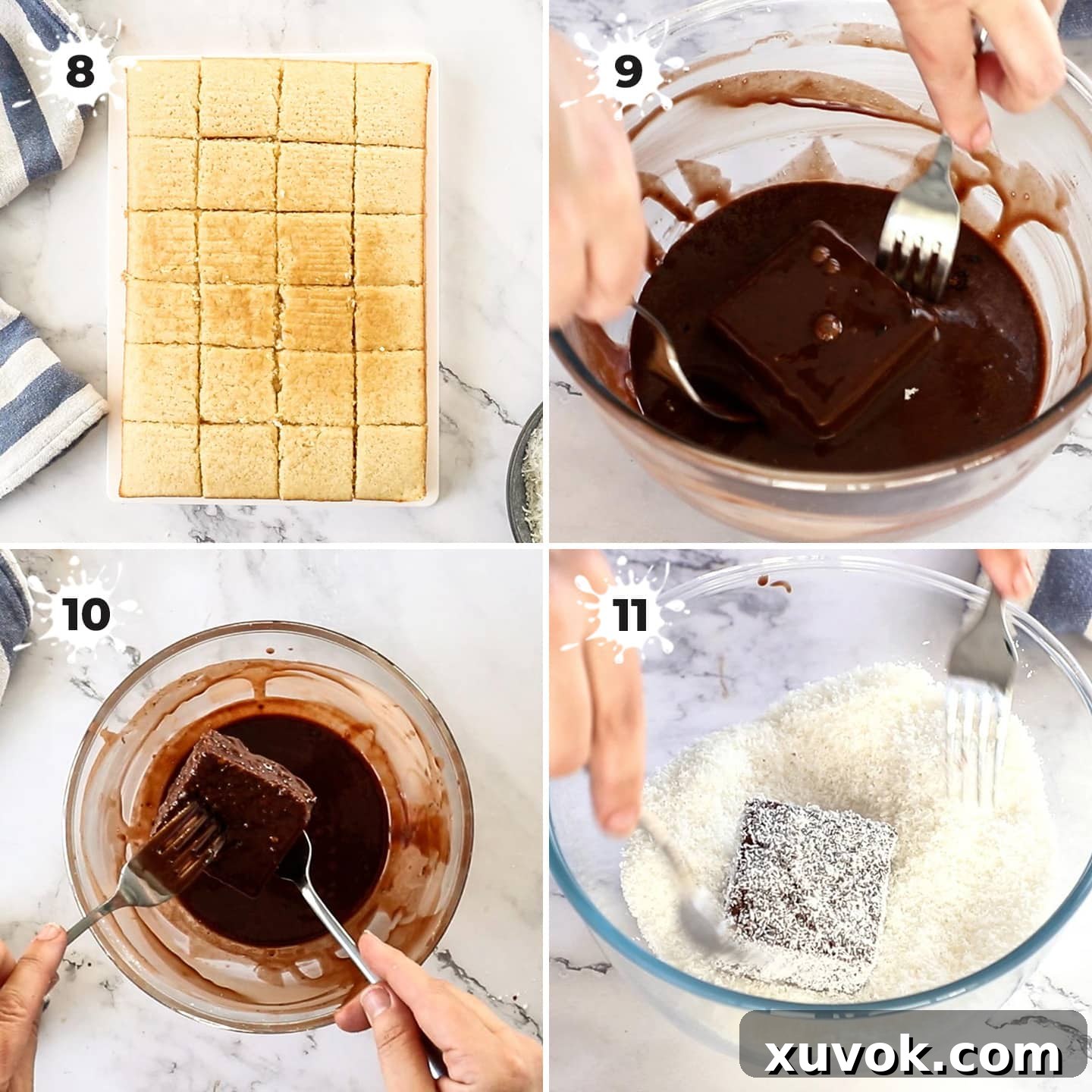
- Bake the sponge until a toothpick inserted into the center comes out clean, indicating it’s cooked through but not overbaked. Allow it to cool completely in the tin before carefully turning it out and cutting it into uniform squares (image 8). A well-cooled cake is much easier to cut cleanly and will hold its shape better during the coating process.
Once your beautifully baked sponge is cut into perfect squares, it’s time for the most iconic part of the lamington-making process: the coating. This is where those plain cake squares are transformed into the perfect little lamingtons we all know and love. The combination of the sweet chocolate glaze and the delicate coconut creates a truly irresistible outer layer that complements the soft cake within.
The Art of Glazing and Coating
- Begin by preparing the chocolate glaze. In a deep bowl, combine icing (powdered) sugar, unsweetened cocoa powder, and boiling water. Whisk these ingredients vigorously until the mixture is completely smooth and forms a luscious, syrupy consistency, free from any lumps. The depth of the bowl is crucial here to prevent mess during dipping.
- Now for the dipping: gently drop one square of cake into the prepared chocolate glaze (image 9). Using two forks, delicately turn the cake square to ensure it is thoroughly coated on all sides (image 10). Lift the coated square and allow any excess glaze to drain off for a few seconds before proceeding. This step helps prevent a soggy cake and ensures an even, thin layer of chocolate.
- Immediately after draining, transfer the chocolate-coated square to a bowl filled with desiccated coconut (image 11). Use your forks to gently roll the square until it’s completely covered in coconut. Once fully coated, place the lamington on a wire rack to allow the glaze to set. Repeat this process with the remaining cake squares, ensuring each lamington is perfectly coated and ready to be enjoyed.
Expert Tips for a Seamless Lamington Coating Process
Making lamingtons can certainly be a delightfully messy affair, which is part of their charm! However, with a few clever strategies, you can make the coating process run significantly more smoothly and with (slightly) less mess. These tips will help you achieve beautifully coated lamingtons while keeping your kitchen chaos to a minimum.
- Prepare Your Workstation: Begin by setting up two wire racks over baking paper-lined baking trays. The baking paper will catch any drips from the chocolate glaze, making cleanup a breeze. One rack is for initial draining, and the second is for the final setting of the coconut-coated lamingtons.
- Choose the Right Bowls: Use a deep bowl for your chocolate glaze. This provides ample space for dipping without overflowing and minimizes splatters. For the coconut, any regular bowl or even a shallow tin will work perfectly, as long as it’s wide enough for easy rolling.
- Manage Your Coconut Supply: Don’t pour all your desiccated coconut into the bowl at once. Instead, add only about 1/3 of the total coconut at a time. This prevents the entire batch from becoming clumpy, wet, and discolored with chocolate chunks, ensuring each lamington gets a fresh, white coating. Replenish as needed.
- Have Your Tools Ready: Keep two forks designated for the chocolate glaze bowl and another two separate forks specifically for the coconut bowl. Using separate sets prevents cross-contamination and makes the process much more efficient and less sticky.
- Work in Batches for Optimal Draining: Dip one cake square into the chocolate glaze, using the forks to turn and coat it completely. Lift it out and allow it to drain momentarily over the glaze bowl, letting the excess drip off. Place this semi-drained square onto the first wire rack. Repeat this process for two more squares, so you’re working with batches of three. This crucial step gives each cake square a little extra time for more glaze to drip off before it hits the coconut, preventing the coconut from becoming saturated with sticky chocolate clumps.
- Coconut Coating and Final Set: After the three squares have had a moment to drain on the first rack, take the first one and transfer it to the coconut bowl. Using the clean forks, roll it thoroughly in the coconut until it’s completely covered. Then, carefully move this finished lamington to the second wire rack to set. Repeat with the other two squares from your batch.
- Maintain Cleanliness: If you notice any chocolate clumps forming in your coconut bowl, promptly remove them. This keeps your coconut fresh and ensures a pristine finish for your lamingtons.
The Essential Classic Lamington Tin
This recipe is perfectly designed to be baked in a traditional lamington tin – which is essentially a rectangular cake tin characterized by its high sides, typically measuring around 23cm x 34cm. This dimension is equivalent to a high-sided 9×13 inch baking tin, a common size in many kitchens. Using the correct tin size is important not just for the volume of cake, but also to achieve the ideal height for your lamington squares. This specific tin size generally yields a generous batch of 20-22 individual lamingtons. However, if you, like me, prefer larger, more substantial lamingtons and are particular about cutting them into perfectly square, precise portions, you’ll likely end up with approximately 18 delightful treats.
For convenience and flexibility, I’ve also carefully developed this recipe so it’s exceptionally easy to halve. This allows you to effortlessly prepare a smaller batch in an 8×8 inch square baking tin. Alternatively, if you don’t possess a dedicated lamington tin but wish to make the full recipe, you can simply divide the batter between two square tins of this size. This ensures that everyone, regardless of their bakeware collection, can enjoy homemade lamingtons.
While a good Aussie lamington, in its pure form, needs nothing more to be truly delicious, some enthusiasts enjoy them cut in half and then generously sandwiched with a dollop of fruit jam and fresh cream. Personally, I prefer my lamingtons in their untouched, original state, just as the esteemed Lord Lamington (the real historical figure we have to thank for this culinary invention) reputedly suggested. However, culinary preferences are wonderfully diverse, and each to their own when it comes to enjoying these fantastic treats!
PIN IT: Click to Pin this recipe for later!
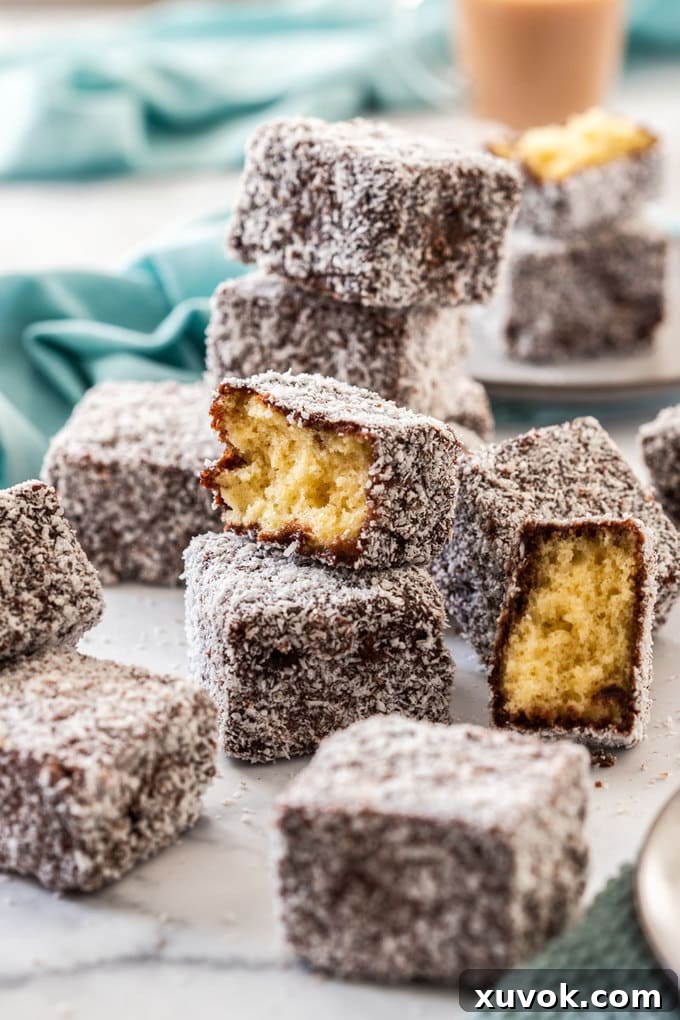
Whether you prefer your lamingtons classic and unadorned or filled with jam and cream, I am confident you’ll adore this straightforward and incredibly delicious recipe. What could possibly be better than these adorable, light sponge cakes, generously rolled in rich chocolate and delicate coconut? It’s how we Aussies lovingly prepare and enjoy our sweet treats!
Discover More Classic Australian Recipes
- Traditional Neenish Tarts
- Perfect Pavlova
- Luscious Lemon Vanilla Custard Slice
- Delightful Passionfruit Slice
- Easy Anzac Biscuits
- Homemade Kingston Biscuits
- The Best Homemade Sausage Rolls
- Explore More Aussie Desserts
Never Miss a Recipe!
Get the latest recipes straight to your inbox by subscribing to our newsletter!
Classic Australian Lamingtons
Rate
Pin
Ingredients
FOR THE LAMINGTON SPONGE
- 57 g unsalted butter (¼ cup / ½ stick / 2oz)
- ¾ cup milk (180ml)
- 2 teaspoons vanilla extract
- 4 large eggs
- 2 large egg whites
- 1 ¾ cups plain flour (225g / 8oz)
- ¼ cup cornflour (US cornstarch) (35g / 1.2oz)
- 2 teaspoons baking powder
- Pinch of salt
- 200 g caster sugar (1 cup / 7oz)
FOR THE GLAZE AND COATING
- 3 cups icing (powdered) sugar
- ¼ cup unsweetened cocoa powder (ensure good quality)
- ½ cup boiling water
- 2 cups fine desiccated coconut
For best results, always weigh ingredients where a weight is provided
Equipment
-
Lamington tin or 2 square baking tins.
Instructions
FOR THE LAMINGTON SPONGE
-
Preheat your oven to 180C / 350F / 160C fan forced. Line a lamington tin (approx. 22cm x 33cm) with baking paper, ensuring it overhangs slightly for easy removal.
-
In a microwave-safe bowl, combine the unsalted butter and milk. Heat in 30-second intervals, stirring well after each, until the butter is just melted and the mixture is warm (not hot). Stir in the vanilla extract and set aside.
-
Sift together the plain flour, cornflour (US cornstarch), baking powder, and salt into a medium bowl. Whisk gently to combine these dry ingredients thoroughly. Set aside.
-
In a large bowl or the bowl of a stand mixer, beat the whole eggs and egg whites together until the mixture is very thick, pale, and forms a distinct ribbon when lifted with the whisk. This crucial step will take approximately 8 minutes, so be patient and let the mixer do its work.
-
While continuing to beat the egg mixture on low speed, slowly pour in the caster sugar. Once all the sugar is added, beat for a further 2 minutes until fully incorporated and glossy.
-
Using a balloon whisk or a large spatula, gently fold in half of the sifted dry ingredients into the egg mixture until just combined. Use a delicate folding action to retain as much air as possible.
-
Next, carefully pour in the warm milk and butter mixture. Continue the gentle folding action with your balloon whisk or spatula until no lumps remain and the mixture is smooth. Avoid overmixing, and resist the urge to whisk forcefully – a gentle fold is all that’s needed to keep the batter light and airy. If the liquid seems resistant to mixing, switch to a spatula but maintain the folding technique.
-
Pour the prepared batter evenly into your lined lamington tin. Tap the tin lightly on your workbench 3-4 times to release any large air bubbles, ensuring a smooth cake top.
-
Bake for 20-23 minutes, or until a wooden toothpick inserted into the center of the cake comes out clean. Begin checking for doneness no earlier than 18 minutes. It is vital not to overbake, as this will result in a dry sponge.
-
Allow the cake to cool in its tin for 10-15 minutes. Then, place a large baking tray over the top of the tin and carefully flip the cake out onto it. Immediately repeat this process using a wire cooling rack, so the cake is now right side up on the rack.
-
Ensure the cake cools completely to room temperature on the wire rack before attempting to cut it into approximately 20 even squares. This complete cooling is essential for clean cuts and to prevent crumbling.
FOR THE GLAZE
-
In a deep bowl, combine the icing (powdered) sugar, unsweetened cocoa powder, and boiling water. Whisk vigorously until the mixture is completely smooth and reaches a uniform syrup consistency, free of any lumps.
TO ASSEMBLE
-
Place about ⅓ of the fine desiccated coconut into a separate, wide bowl. Prepare your workstation by setting two wire racks over baking paper-lined trays; one for draining and one for setting.
-
Using two forks, carefully dip one square of sponge cake into the chocolate glaze, turning it gently to ensure it’s thoroughly coated on all sides. Lift the square and allow any excess glaze to drip back into the bowl for a few seconds. Then, transfer it to the first wire rack for further draining. Repeat this step with two more squares, so you have three squares draining simultaneously.
-
Take the first drained square and transfer it to the bowl of coconut. Using clean forks, gently roll the square until it is completely coated in coconut. Once fully covered, move this finished lamington to the second wire rack, where it will set. Repeat this step for the remaining two squares from your batch.
-
Continue this process, working in small batches of three, until all the cake squares are transformed into beautiful lamingtons. Remember to replenish the coconut in its bowl as needed to ensure a fresh, even coating for every piece.
Notes
- For the most consistent and best results, it is always recommended to weigh dry ingredients like flour and sugar. Kitchen scales like these are relatively inexpensive. If you do not have access to a scale, use the “spoon and level” method for measuring flour (spoon flour into the measuring cup, then level off with a straight edge; do not scoop directly from the bag).
- This versatile recipe can be conveniently halved and baked in an 8×8 inch square baking tin for a smaller batch. Alternatively, if you do not own a traditional lamington tin, you can bake the full recipe across two 8×8 inch square tins.
For more delicious Aussie desserts, click here.
See the Lamingtons Web Story