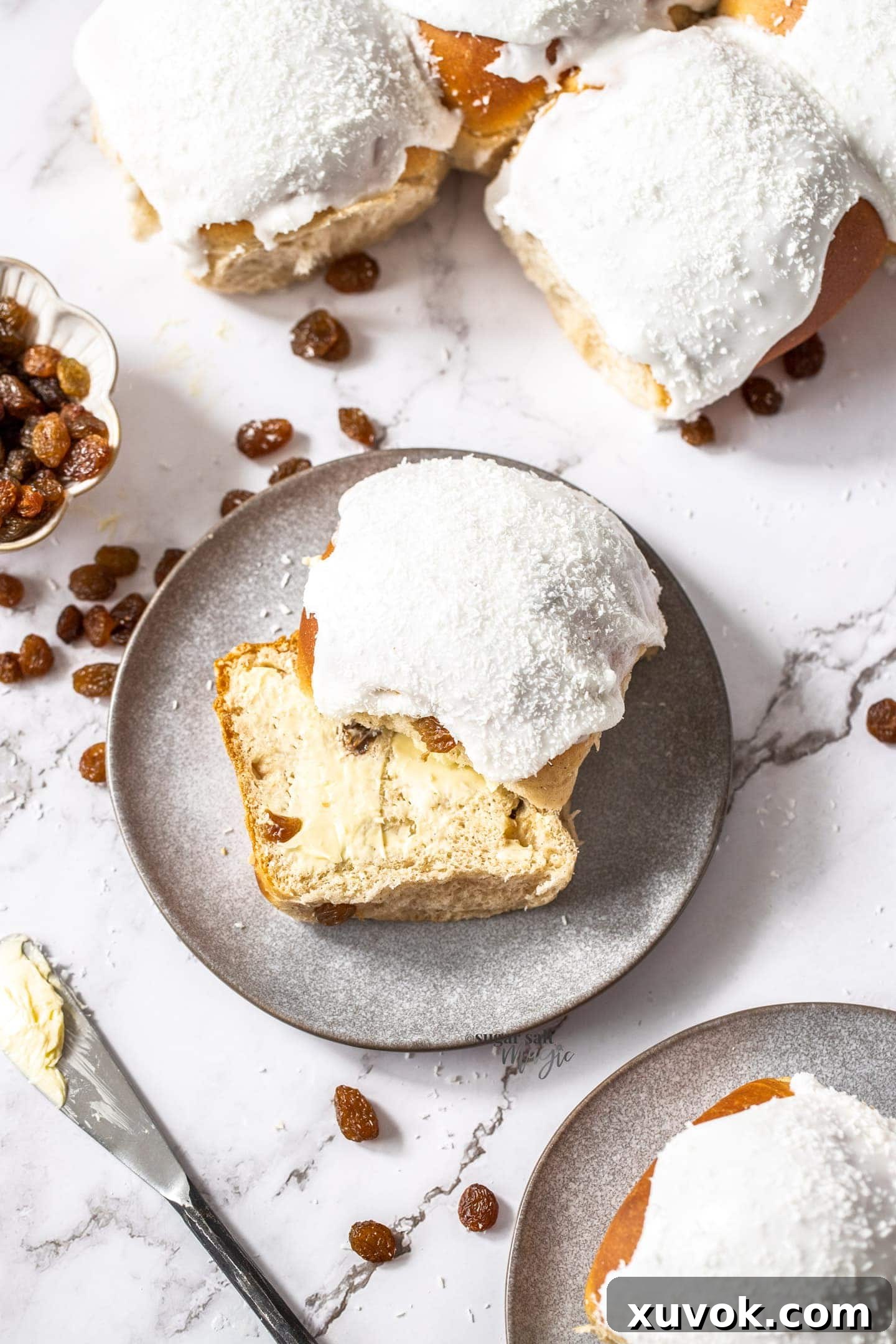
Step into any authentic Aussie bakery, and you’re sure to encounter a beloved classic: Iced Buns with a generous layer of sweet icing and a sprinkle of desiccated coconut. These soft, fluffy, and subtly spiced bread treats are an absolute delight, offering a comforting taste of home. They share a comforting kinship with the finger buns and iced fingers popular across the UK and in parts of Australia, and are often considered Australia’s delightful answer to the American cinnamon roll, albeit with their own unique charm.
If you’re already a fan of baking sweet bread, you’ll find the dough for these iced buns wonderfully familiar. It draws inspiration from the same soft base used in my hot cross bun recipe, promising a consistently tender crumb. For other tempting sweet bread creations, explore my cinnamon rolls or even the indulgent Choc Chip Hot Cross Buns. Each offers a unique twist on the comforting tradition of homemade sweet bread.
What Exactly Are Iced Buns? Unpacking an Aussie Classic
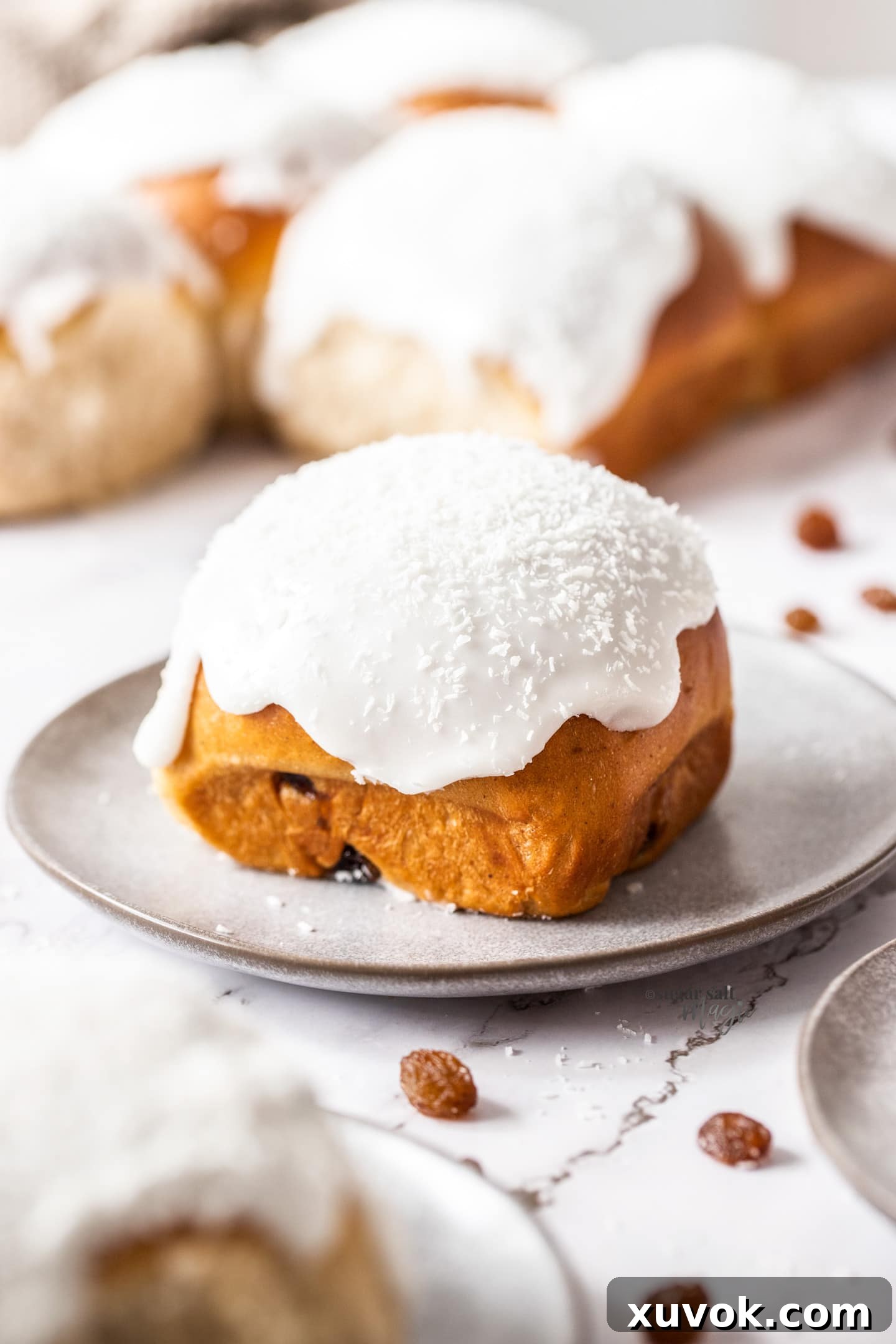
My recipe for iced buns is deeply rooted in the treats I cherished during my childhood in Australia. These iconic pastries are a ubiquitous sight in any Australian bakery, often found in variations that include fruit and warm spices, just like the ones we’re making today. However, it’s equally common to discover simpler versions without added fruit, showcasing the versatility of this beloved baked good.
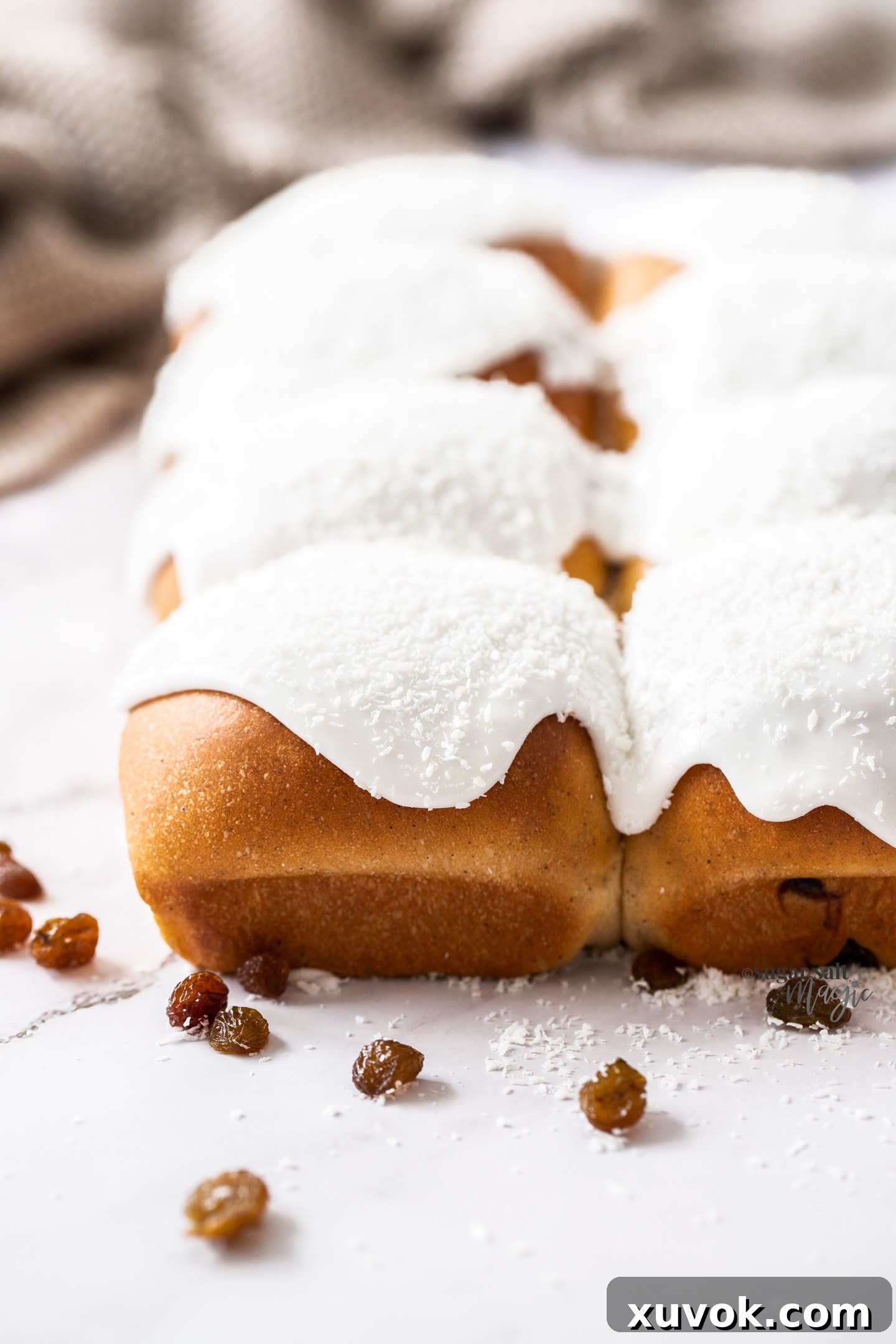
While often compared to finger buns or “iced fingers” popular in the UK (and some regions of Australia), classic Australian iced buns typically distinguish themselves with a round shape, as opposed to the elongated “finger” form. A defining characteristic, and arguably the most cherished, is the generous dusting of desiccated coconut over the thick, sweet icing. This addition not only provides a delightful textural contrast but also infuses a subtle, tropical aroma that makes them uniquely Australian.
Why You’ll Fall in Love with Making Homemade Iced Buns
There’s an undeniable joy in baking bread from scratch, and I find the process of kneading dough and watching it rise incredibly therapeutic. Embarking on a project like these homemade iced buns is the perfect way to spend a relaxed weekend, offering both a creative outlet and a truly rewarding culinary experience. Despite the perceived complexity of baking with yeast, these buns don’t demand excessive active time. The majority of the process involves waiting for the dough to rise, making them an ideal “set it and forget it” recipe while you attend to other tasks.
Beyond the meditative act of baking, there are countless reasons why you’ll adore these iced buns:
- Unbelievably Soft and Fluffy Bread: The carefully balanced dough yields a bun that is light, airy, and melts in your mouth with every bite.
- Customizable with or Without Fruit: Whether you prefer the classic spiced version with juicy sultanas or a simpler, plain sweet bun, they are absolutely delicious both ways, catering to all preferences.
- That Irresistible Thick, Sweet Icing: The crowning glory of these buns is the generous layer of smooth, sugary icing, perfectly complemented by the delicate crunch and flavor of desiccated coconut. It transforms a simple sweet bread into an utterly decadent treat.
- Perfect for Any Occasion: These buns are versatile. Enjoy them fresh from the oven, as a delightful morning tea accompaniment, an afternoon pick-me-up, a special lunchbox surprise, or even a comforting dessert.
- Freezer-Friendly Convenience: Life gets busy, but that doesn’t mean you have to miss out on homemade goodness. These buns freeze beautifully, allowing you to stock up and enjoy a delicious treat whenever the craving strikes, with minimal effort.
Essential Ingredients for Perfect Iced Buns
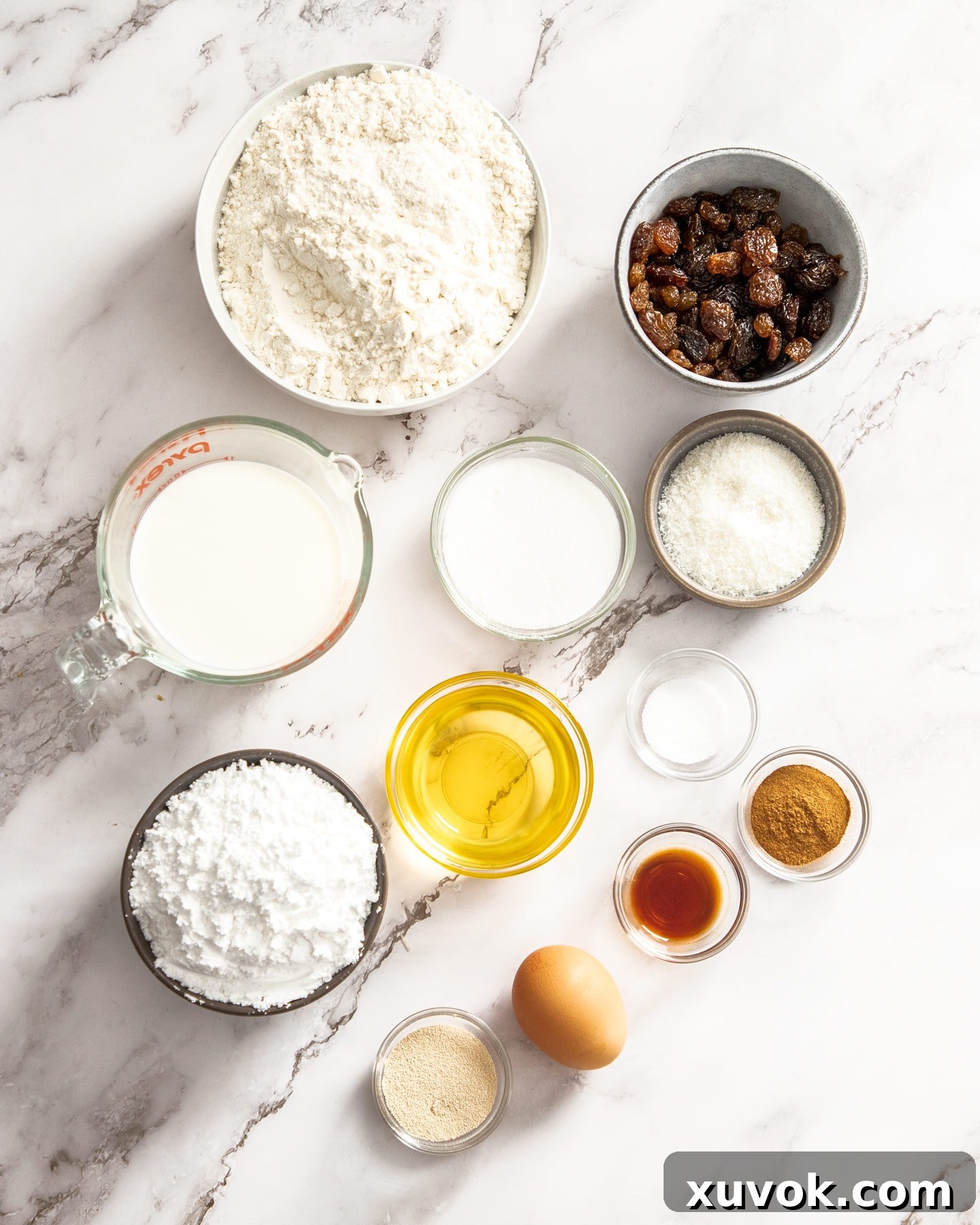
For detailed quantities and step-by-step instructions, please refer to the recipe card below.
- Flour: To achieve that ideal chewy yet tender bread texture, I highly recommend using strong white bread flour. Its higher protein content develops more gluten, which is crucial for a beautifully structured bun. However, if strong bread flour isn’t readily available, standard plain flour (all-purpose flour) will still yield good results, just with a slightly less chewy crumb.
- Sugar: Simple white granulated sugar is used to sweeten the dough, contributing to its tender texture and golden crust.
- Yeast: This recipe utilizes instant yeast (also known as fast-action yeast) for its convenience, as it doesn’t require prior activation. If you prefer to use active dry yeast, or if your instant yeast has been sitting in the pantry for a while, it’s wise to “proof” it first. Mix it into the warm milk and let it sit for about 5 minutes. If it becomes foamy and bubbly, your yeast is active and ready to work its magic!
- Ground Cinnamon: A touch of ground cinnamon provides a subtle, warm spice that is characteristic of these Australian iced buns. If you’re not a fan of spice or aiming for a more traditional UK finger bun, feel free to omit it entirely.
- Salt: A small amount of salt is essential for enhancing the overall flavor of the buns and balancing the sweetness. Be careful not to let the salt come into direct contact with the yeast during initial mixing, as it can inhibit yeast activity.
- Egg: A large egg adds richness, moisture, and helps with the structure of the dough, contributing to its soft and fluffy texture. Ensure it’s at room temperature for better incorporation into the dough.
- Milk: For the most luxurious and tender buns, full-fat or whole milk is recommended. The fat content contributes to a richer flavor and softer crumb. However, you can certainly use a lighter milk variety or even a plant-based milk substitute like soy or oat milk, though these may subtly alter the final flavor and texture.
- Oil: Vegetable oil is incorporated into the dough to keep the buns incredibly tender and moist, preventing them from drying out too quickly. This ensures they stay fresh and delicious for longer.
- Vanilla Extract: A splash of good quality vanilla extract adds a lovely aromatic depth to the sweet dough, complementing the other flavors beautifully. It’s a small addition that makes a big difference.
- Dried Fruit: I traditionally use sultanas (golden raisins) in these buns, but you can easily substitute them with regular raisins, currants, or even finely chopped larger dried fruits like apricots or cranberries. If you prefer your buns plain, simply leave the fruit out.
- Icing Sugar: Also known as powdered sugar or confectioners’ sugar, this finely milled sugar is the key to creating that smooth, decadent icing that generously tops each bun.
- Desiccated Coconut: This is a non-negotiable for authentic Australian iced buns! The finely shredded, dried coconut adds a unique texture and subtle tropical flavor that truly defines this classic treat. If you have an aversion to coconut, it can be omitted, but you’d be missing out on a signature element.
For those looking to recreate the simpler UK finger bun, simply omit the cinnamon, dried fruit, and desiccated coconut, focusing purely on the tender bread and sweet icing.
Essential Tools for Baking Beautiful Iced Buns
Having the right equipment can make your baking journey smoother and more enjoyable. Here’s a list of tools that will be helpful for crafting your homemade iced buns:
- A stand mixer fitted with a dough hook attachment is incredibly useful for kneading the dough. It saves a significant amount of effort and ensures a consistently smooth and elastic dough. However, it’s not strictly essential; a large, sturdy mixing bowl and a bit of elbow grease will work perfectly if you plan on kneading by hand.
- A baking tin or tray large enough to comfortably fit 8 hand-sized buns. I prefer using a tin where the buns can sit fairly close together. This allows them to rise upwards and gently touch each other as they bake, resulting in taller, softer-sided buns. A standard large sheet tray will also suffice, just space them a little more.
- A sharp knife or a dough scraper for easily dividing the dough into even pieces, ensuring uniform bun sizes and baking times.
- Kitchen scales are highly recommended if you aim for precision and perfectly uniform buns. Weighing each dough portion ensures every bun is the same size, which is great for consistent baking and presentation.
- A separate mixing bowl and a spatula or whisk for effortlessly preparing the smooth icing. Alternatively, a piping bag can be used for a neater, more controlled application of the icing, though a spoon or offset spatula works just as well.
Crafting Your Own Iced Buns: A Step-by-Step Guide
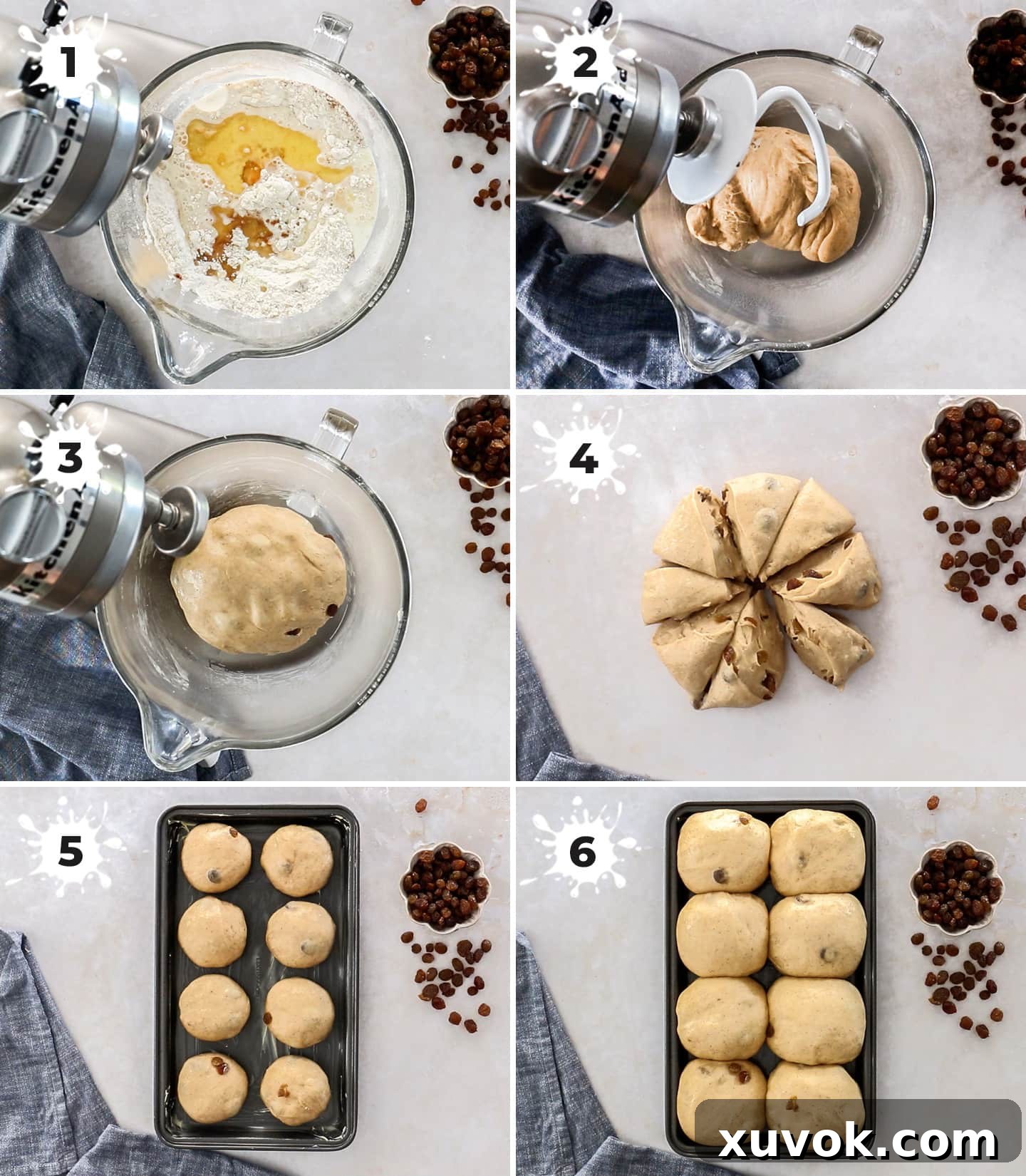
For detailed quantities and comprehensive instructions, please refer to the full recipe card below.
- Prepare the Dough: Begin by combining the dry ingredients – flour, sugar, yeast, cinnamon, and salt – in the bowl of your stand mixer. If you’re kneading by hand, use a large mixing bowl. Give them a quick whisk to ensure they’re well combined. Next, create a small well in the center and add the wet ingredients: the room-temperature egg, warm milk, oil, and vanilla extract. Begin kneading the dough. If using a stand mixer, knead on low-medium speed for 10-12 minutes. For hand kneading, aim for about 15 minutes. The goal is a smooth, elastic dough that feels slightly springy to the touch. Once the dough reaches this consistency, gently knead in your chosen dried fruit (if using) until evenly distributed.
- The First Rise (Bulk Fermentation): Lightly grease a clean bowl with a touch of oil. Transfer the kneaded dough to this bowl, turning it over once to ensure it’s lightly coated in oil. This prevents it from drying out. Cover the bowl securely with plastic wrap or a damp kitchen towel. Place it in a warm (but not hot) spot in your kitchen. This is crucial for yeast activation and optimal rising. Allow the dough to rise until it has visibly doubled in size, which typically takes between 1 to 1.5 hours, depending on your ambient temperature.
- Shape the Buns: Once the dough has completed its first rise, gently “punch it down” to release the air. Transfer the dough to a clean, lightly floured work surface. Using a sharp knife or dough scraper, divide the dough into 8 equal portions. For precise and uniform buns, weighing each portion with kitchen scales is highly recommended. To shape each piece into a smooth, round bun, simply take a portion and repeatedly pinch the base underneath itself until the top surface is taut and smooth, and the bottom is neatly sealed.
- The Second Rise (Proofing): Generously grease a baking tray with butter or line it with parchment paper. Arrange the shaped dough balls on the tray, leaving about 1-2 inches of space between them. This allows for expansion during their final rise. Loosely cover the tray with plastic wrap or a damp towel to prevent a skin from forming. Return the buns to a warm spot and let them rise for a second time, for approximately 45-60 minutes, or until they have doubled in size again and appear visibly puffy and soft.
- Bake to Golden Perfection: While your buns are completing their second rise, preheat your oven to 180°C (350°F or 160°C fan-forced). Once preheated and the buns are adequately risen, place the tray in the oven and bake for 20-22 minutes. Keep an eye on them, turning the tray halfway through baking to ensure even browning. The buns should emerge golden brown on top and sound hollow when lightly tapped on the bottom. Once baked, transfer them to a wire rack and allow them to cool almost completely to room temperature before attempting to ice them.
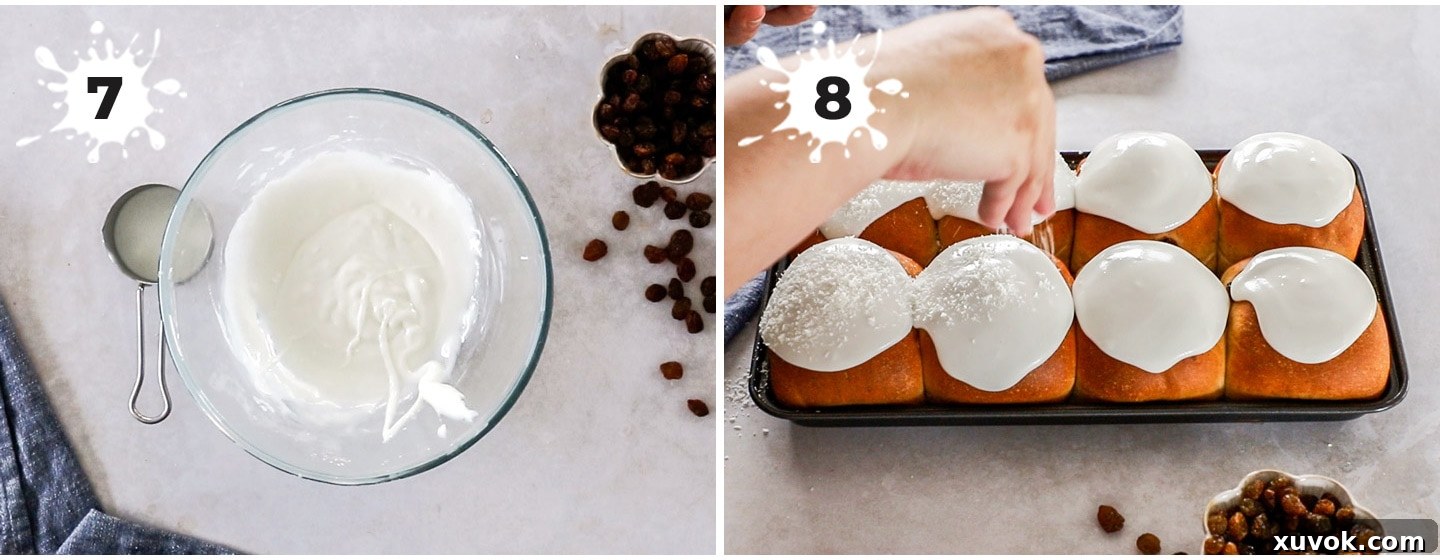
- Craft the Icing and Finish: Preparing the icing for these buns couldn’t be simpler. In a mixing bowl, combine the icing sugar with milk, adding the milk gradually, one tablespoon at a time. Whisk or stir until you achieve a thick, yet still pourable or spreadable consistency. You want it to be substantial enough to sit beautifully on top of the buns without dripping excessively, but fluid enough that it will smoothly level itself out within about 10 seconds. Once the buns are cool, spoon or pipe the luscious icing generously over each one. Immediately after icing, scatter a liberal amount of desiccated coconut over the top of each bun before the icing sets.
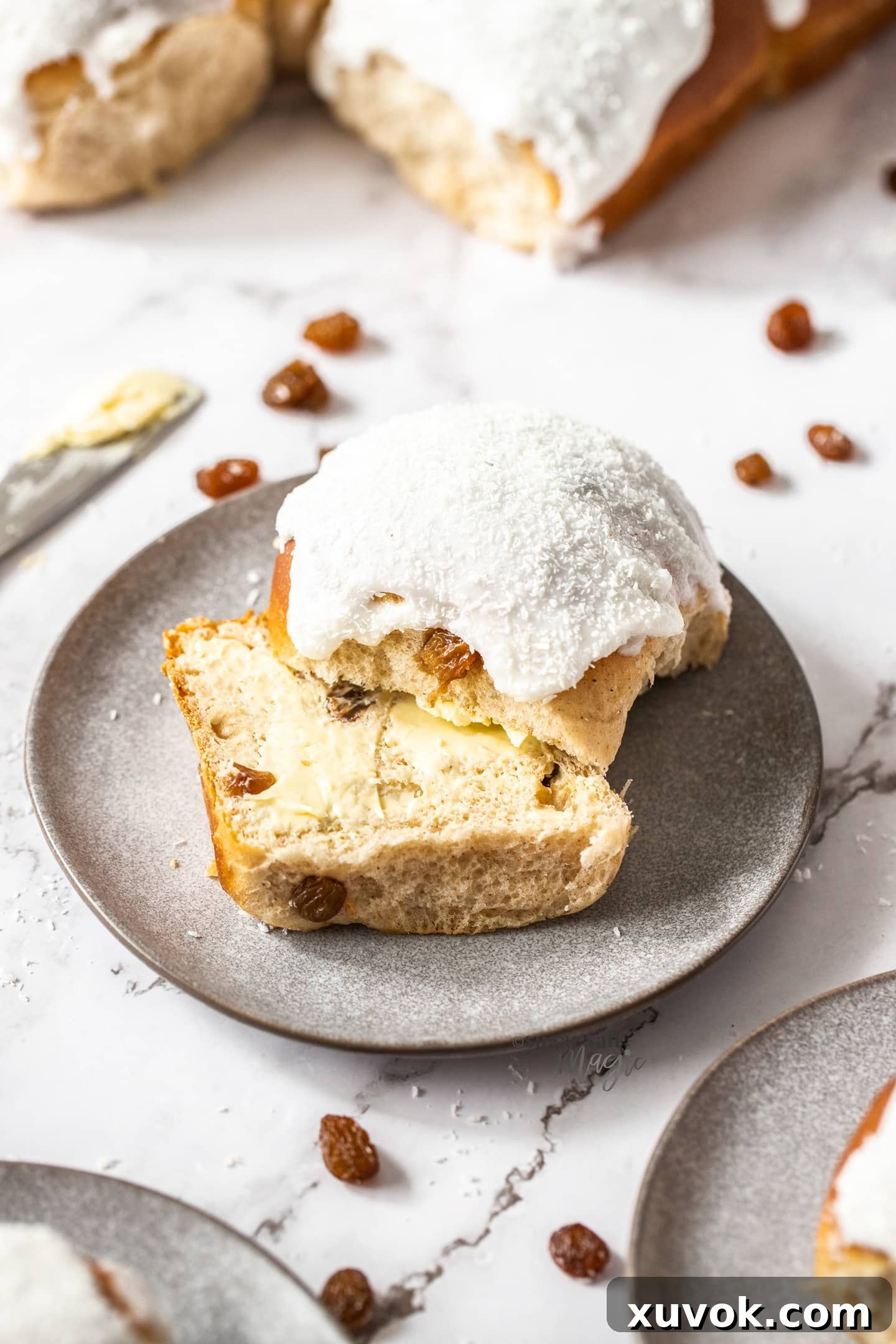
Whether you make them in the traditional round Aussie style or opt for the elongated UK finger bun shape, these delightful pastries are absolutely exquisite. A classic way to enjoy them is sliced horizontally, generously buttered, and devoured as is. The combination of the sweet bun and savory butter creates a truly satisfying experience.
For an extra layer of indulgence, particularly if you chose to make your dough without dried fruit, consider spreading a spoonful of your favorite jam inside the sliced bun. Strawberry, raspberry, or apricot jam would all be fantastic choices, adding another burst of fruity sweetness.
Expert Tips and Tricks for Baking Success
- Ensure Your Milk is Perfectly Warm: The temperature of your milk is paramount when working with yeast. It needs to be warm to activate the yeast effectively, but never hot, as excessive heat will kill the yeast. Aim for around 40°C (104°F) if you’re using a kitchen thermometer. If not, simply ensure it feels pleasantly warm to your finger – similar to a baby’s bathwater.
- Test Your Yeast’s Vitality: If your yeast has been sitting in the pantry for a while, it’s always a good idea to perform a quick test to ensure it’s still active. This step prevents wasting valuable ingredients on a batch of dough that won’t rise. To do this, simply mix the yeast into the warm milk (as described above) and let it sit undisturbed for 5-10 minutes. If you see a foamy, bubbly layer form on the surface, your yeast is alive and well, ready to make your buns beautifully airy. If there’s no activity, it’s time to replace your yeast.
- Activating Active Dry Yeast: If your recipe calls for active dry yeast instead of instant yeast, activation is a mandatory first step. Follow the same “test your yeast” method mentioned above. The warm liquid is essential to awaken active dry yeast before it’s combined with other dry ingredients.
- Don’t Rush the Rising Process: Patience is a virtue in yeast baking. Allow the dough ample time to rise in a warm, draft-free spot, covered to prevent drying. Resist the urge to shorten the rising times, as a proper rise (until doubled in size) is key to developing the dough’s flavor, texture, and light consistency. Rushing this step will result in dense, less flavorful buns.
- Handling Sticky Dough: During the kneading process, particularly if you’re working by hand, the dough might feel a little sticky. This is normal and often desired for a tender crumb. If, after about 3-5 minutes of kneading in a stand mixer or 7-10 minutes by hand, the dough is excessively sticky and difficult to handle or continuously clings to the sides of the bowl, you can add an extra tablespoon of flour. Do not add more than that, as too much flour can lead to a dry, tough bun.
- Achieving Even Baking: To ensure all your buns bake evenly and acquire a consistent golden hue, remember to rotate your baking tray halfway through the baking time. Ovens often have hot spots, and turning the tray ensures that all sides of the buns are exposed to the heat uniformly.
Delightful Ways to Enjoy Your Iced Buns
The beauty of homemade iced buns lies in their versatility and comforting simplicity. As crafted in this recipe, with their subtle spice and fruit, they are truly delightful when served sliced in half and generously spread with a knob of creamy butter. The slight saltiness of the butter beautifully contrasts the sweet icing and tender bread, creating a perfect balance of flavors.
For those who prefer the UK finger bun style – typically made without fruit and cinnamon – these buns become a canvas for even more indulgent toppings. They are frequently served with a dollop of freshly whipped cream and a spoonful of vibrant jam, such as strawberry or raspberry. This combination elevates the simple sweet bread into a truly decadent dessert experience.
Don’t limit yourself to just these suggestions! Enjoy them alongside your morning coffee or tea, as a sweet treat for an afternoon gathering, or even as a comforting late-night snack. They are perfect for sharing with family and friends or savoring solo.
Proper Storage for Lasting Freshness
To keep your freshly baked iced buns at their best, store them in an airtight container. They will remain wonderfully fresh and soft in your pantry for 2-3 days. While bread is always most delicious on the day it’s baked, these buns maintain their appeal quite well. If they start to feel a little firm, a quick 8-second zap in the microwave (even with the icing!) will work wonders, softening and fluffing them up to their original tender state.
Can you freeze iced buns? Absolutely! Freezing is an excellent option for extending their shelf life. Once completely cooled, place the iced buns in an airtight freezer-safe container or a heavy-duty freezer bag. They can be frozen for up to 3 months. When you’re ready to enjoy them, simply let them thaw completely at room temperature. For an extra touch of warmth and softness, you can gently warm them in the microwave or a low oven after thawing.
More Sweet Bread Recipes You’ll Adore
If you’ve fallen in love with baking these delightful iced buns, you’re in for a treat! There’s a whole world of sweet bread recipes waiting to be explored. Here are some more of my favorite recipes that I think you’ll truly enjoy:
- Raspberry Rolls
- Croissant French Toast Casserole
- Caramel Doughnuts with Brown Sugar Custard
- Jumbo Swedish Cinnamon Buns
- Strawberry Chocolate Cinnamon Rolls
- Chocolate Hot Cross Buns
- Maritozzi (Italian Cream Buns)
IF YOU TRY THIS iced bun recipe, please take a moment to leave a rating and comment below. I love hearing from you, and it helps other readers too!
Never Miss a Recipe!
Get the latest recipes straight to your inbox!
Iced Buns (with Coconut)
Rate
Pin
Ingredients
FOR THE BUNS
- 455 g strong white bread flour (3 ½ cups / 1lb)
- ⅓ cup white granulated sugar (66g / 2.3oz)
- 2 ¼ teaspoons instant yeast (or active dry yeast, notes) (1 sachet / 7g)
- 2 teaspoons ground cinnamon
- ½ teaspoon salt
- 1 large egg, room temp
- 1 cup whole milk (250ml)
- ⅓ cup vegetable oil (80ml)
- 2 teaspoons vanilla extract
- ½ cup sultanas or raisins (optional)
FOR THE ICING
- 2 ½ cups icing sugar (powdered / confectioners sugar ) (325g / 11.5oz)
- 2-3 tablespoons milk
- 1 tablespoon desiccated coconut
For best results, always weigh ingredients where a weight is provided
Equipment
-
stand mixer or large mixing bowl
-
Large baking tray
-
Sharp knife
Instructions
-
MAKE THE DOUGH: To the bowl of a stand mixer (with a dough hook attachment), add the flour, sugar, yeast, cinnamon, and salt. Whisk them briefly to ensure they are well combined.
-
Make a well in the center of the dry ingredients. Add the room-temperature egg, milk (ensuring it’s around 40C or warm to the touch, not hot), vegetable oil, and vanilla extract. Knead on low-medium speed for approximately 10-12 minutes, or about 15 minutes if kneading by hand, until the dough is smooth, supple, and elastic. You can test its elasticity by gently indenting it with a fingertip; it should slowly bounce back out.
-
If using sultanas or raisins, add them to the dough and knead them through until they are evenly distributed. This can be done briefly with the stand mixer’s dough hook or by hand.
-
Remove the dough from the bowl. Lightly brush the inside of the bowl with a little oil, then place the dough back in, flipping it over once to ensure it has a thin, even coating of oil all over. Cover the bowl securely with plastic wrap or a damp kitchen towel and let it sit in a warm, draft-free place for 1 to 1 ½ hours, or until the dough has clearly doubled in size.
-
ASSEMBLING THE BUNS: Generously grease a large baking tray with butter or line it with parchment paper.
-
Gently punch down the risen dough to deflate it and transfer it to a clean work surface. Using a sharp knife or dough scraper, divide the dough into 8 even pieces. For best uniformity, weigh each piece to ensure they are consistent.
-
Roll each individual piece of dough into a smooth, round bun. A simple method is to repeatedly pinch the edges of the dough underneath itself until the top surface is tight and smooth. Place the shaped buns on the prepared baking tray, leaving about 1-2 inches of space between them. Loosely cover the tray with plastic wrap or a damp towel and allow them to rest and rise for another 45-60 minutes, or until they have doubled in size and appear visibly puffy and soft.
-
Towards the end of the second rise, preheat your oven to 180°C (350°F / 160°C fan-forced).
-
BAKE: Bake the buns for approximately 20-22 minutes, ensuring you turn the tray at the halfway mark to promote even browning. They should be golden brown on top when ready.
-
Remove the baked buns from the oven and transfer them to a wire rack. It is crucial to let them cool almost to room temperature before applying the icing. If the buns are too warm, the icing will simply melt and run off.
-
ICE: In a clean mixing bowl, combine the icing sugar with milk, adding the milk a little at a time (2-3 tablespoons in total). Mix thoroughly with a whisk or spatula until you achieve a thick, yet still slightly runny consistency. The ideal consistency should be thick enough to sit nicely on the buns but loose enough to smooth itself out within about 10 seconds. Adjust by adding more icing sugar for a thicker icing or a few drops more milk to thin it.
-
Generously spoon or pipe the prepared icing onto the cooled tops of the buns. Immediately scatter the desiccated coconut over the wet icing, ensuring it adheres well before the icing sets.
-
Serve your freshly iced buns! They are truly lovely when cut in half and spread with a little butter, offering a perfect balance of sweet and savory.
-
Please take a moment to rate this recipe. Your feedback is greatly appreciated and helps me create more delicious recipes for you to enjoy.
Notes
- I use instant yeast for its ease of use and no-fuss approach. However, active dry yeast can be substituted. If using active dry yeast, or if your instant yeast is a little older, it’s best to proof it first. Mix it into the warm milk (around 40°C/104°F) and let it sit for 5-10 minutes. If it becomes foamy and active, it’s good to go. This ensures your yeast is alive and will perform its function.
- As mentioned above, active dry yeast *must* be activated before being added to the rest of the dough ingredients. Simply follow the instructions in note 1.
- A well-hydrated dough leads to tender buns. The dough should feel slightly sticky to the touch but still manageable and should pull away from the sides of the bowl during kneading. If, after the initial 3 minutes of machine kneading (or 5-7 minutes by hand), it remains excessively sticky and won’t form a cohesive mass, add just 1 tablespoon of flour at a time. Be very careful not to add too much, as over-flouring can result in dry and tough buns.
DISCOVER MORE BREAD RECIPES!