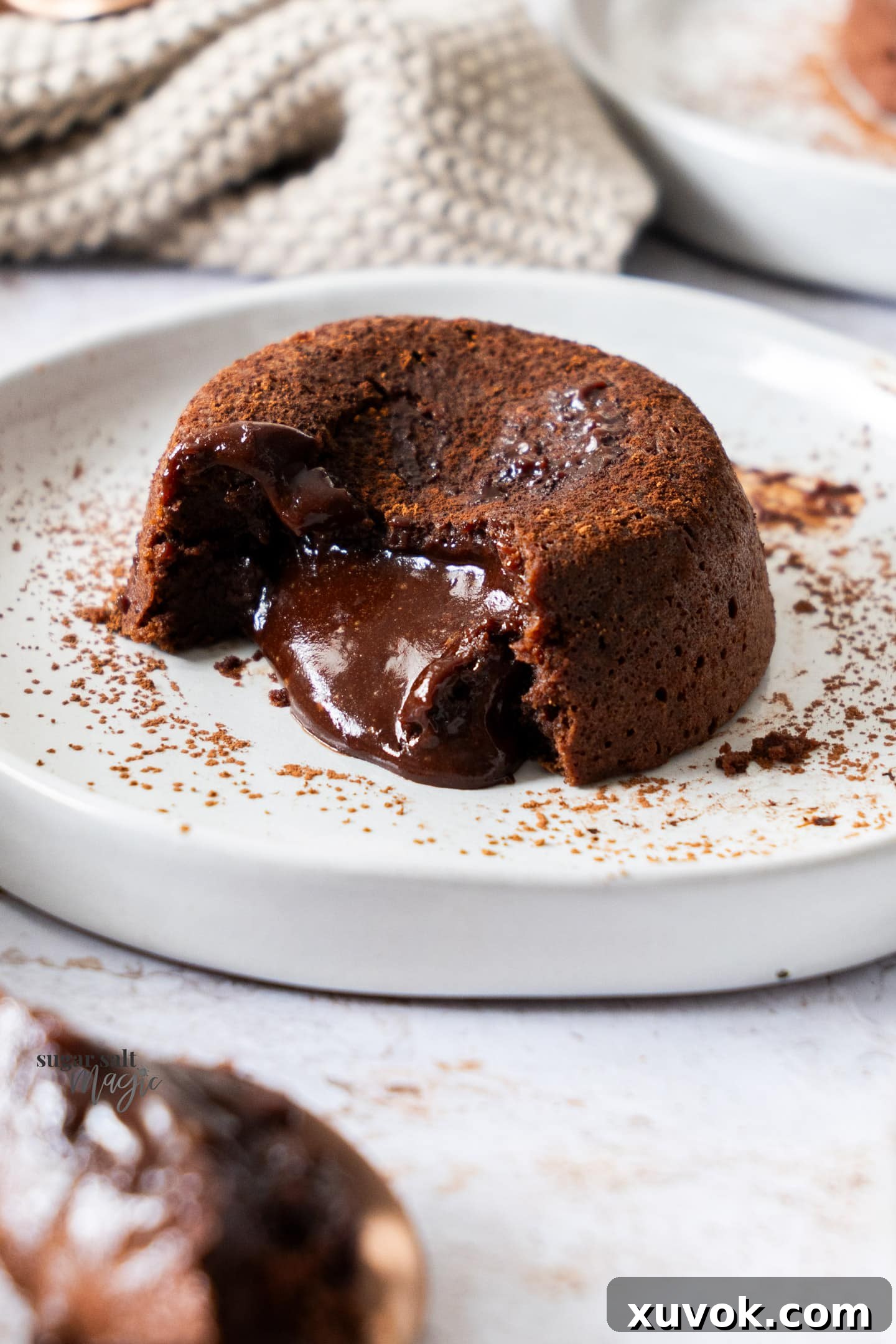
Indulge in Pure Bliss: The Ultimate Gooey Chocolate Fondant Recipe (Molten Lava Cakes)
Prepare to fall deeply in love with this exquisite chocolate fondant recipe, also widely known as molten lava cakes. Each bite promises a heavenly experience: a perfectly baked chocolate cake exterior that yields to an irresistibly gooey, molten chocolate center. This dessert isn’t just a treat; it’s an event, designed to impress and delight. What makes it truly special is its simplicity – bursting with rich chocolate flavor, it requires just six core ingredients and comes together with remarkable speed and ease, making it a perfect choice for both novice bakers and seasoned chefs alike.
Forget about needing an arsenal of specialized kitchen gadgets. For this recipe, the most specific equipment you’ll require are individual ramekins or dariole molds, which are widely available and versatile. The velvety chocolate fondant batter itself is effortlessly mixed using a simple whisk in a standard mixing bowl, proving that culinary magic doesn’t always demand complex tools. This accessibility ensures that anyone can create a gourmet dessert right in their own kitchen.
And if the sheer indulgence and ease of preparation haven’t convinced you yet, consider this: these decadent chocolate fondants can be prepared well in advance. You can chill the batter or even freeze the prepared cakes, allowing you to whip them out and bake fresh whenever a craving strikes or guests arrive. This make-ahead convenience makes them an ideal dessert for entertaining, freeing up your time to enjoy the company rather than being stuck in the kitchen.
Craving more sophisticated, make-ahead chocolate desserts? Explore other delightful options like these chocolate creme brulees for another unforgettable sweet experience.
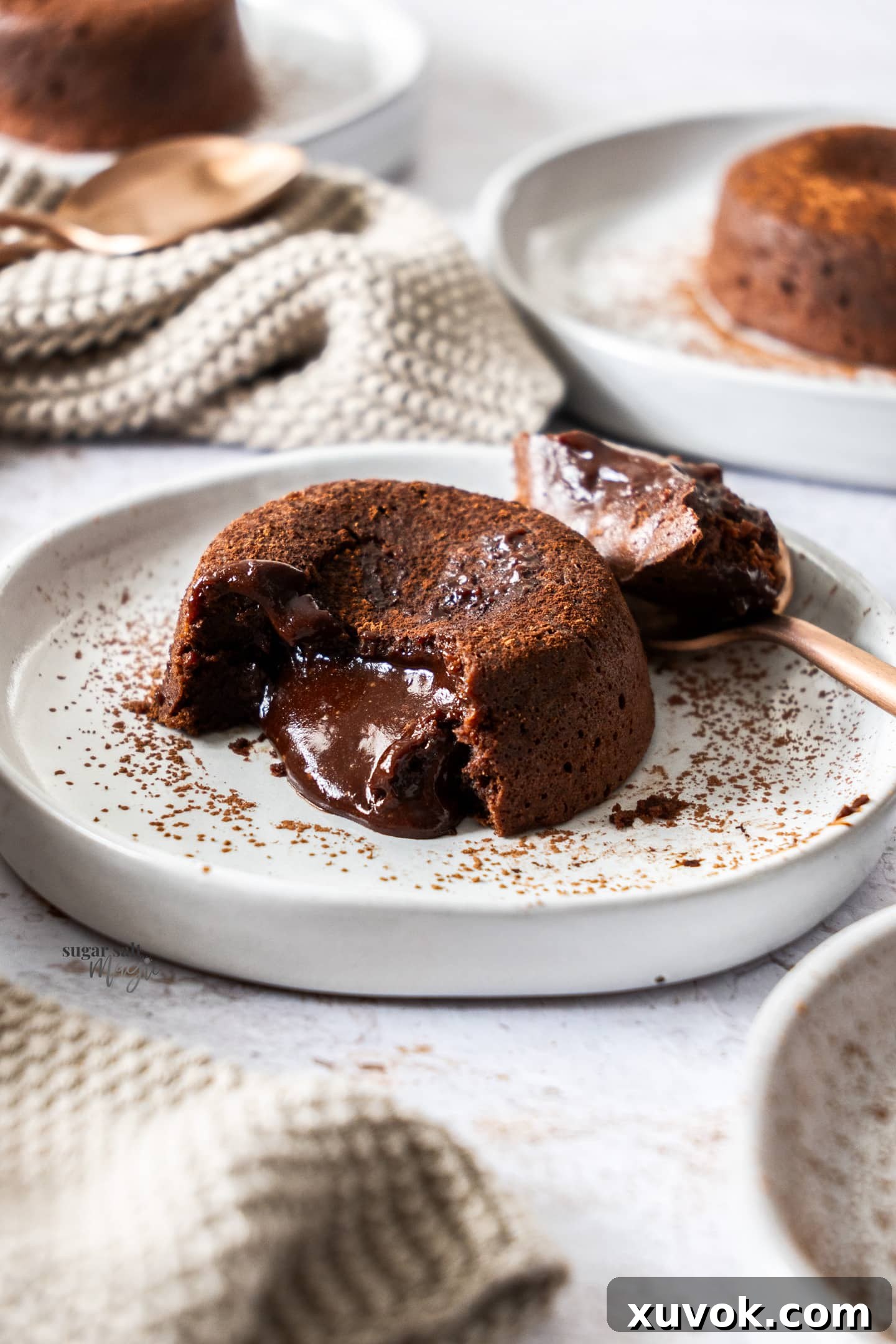
Table of Contents
- Why You’ll Adore This Recipe
- What Exactly is a Chocolate Fondant?
- Essential Ingredients You’ll Need
- Step-by-Step: How to Make Chocolate Fondant
- Expert Tips and Tricks for Perfection
- Storage and Make-Ahead Options
- Frequently Asked Questions (FAQ’s)
- More Irresistible Dessert Recipes You’ll Love
Never Miss a Recipe!
Get the latest, most delectable recipes straight to your inbox by subscribing to our newsletter!
Sign up to receive exclusive recipes and baking tips!
What Exactly is a Chocolate Fondant? Unraveling the Mystery of Molten Chocolate Cakes
The term “chocolate fondant” often conjures images of a magnificent dessert with a rich, molten core. In its native France, a *fondant au chocolat* typically describes a larger cake characterized by a soft, fudgy interior. Over the years, however, the name “chocolate fondant” has also become widely synonymous with what we in English-speaking countries often call chocolate lava cakes or molten chocolate cakes. The name itself is quite fitting, as “fondant” in French directly translates to “melting,” perfectly describing the dessert’s signature oozing center.
It’s fascinating how many monikers this beloved dessert has acquired across cultures and languages. In French culinary circles, you might encounter it as *fondants au chocolat*, *petit gâteau* (small cake), *moelleux au chocolat* (where *moelleux* means soft, referring to the texture), or *coulant au chocolat* (with *coulant* meaning flowing, highlighting the liquid center). In English, the variations are just as numerous: *chocolate fondants*, *chocolate lava cakes*, *molten chocolate cakes*, and even playful terms like *chocolate volcano cakes* are used to capture its dramatic eruption of chocolate.
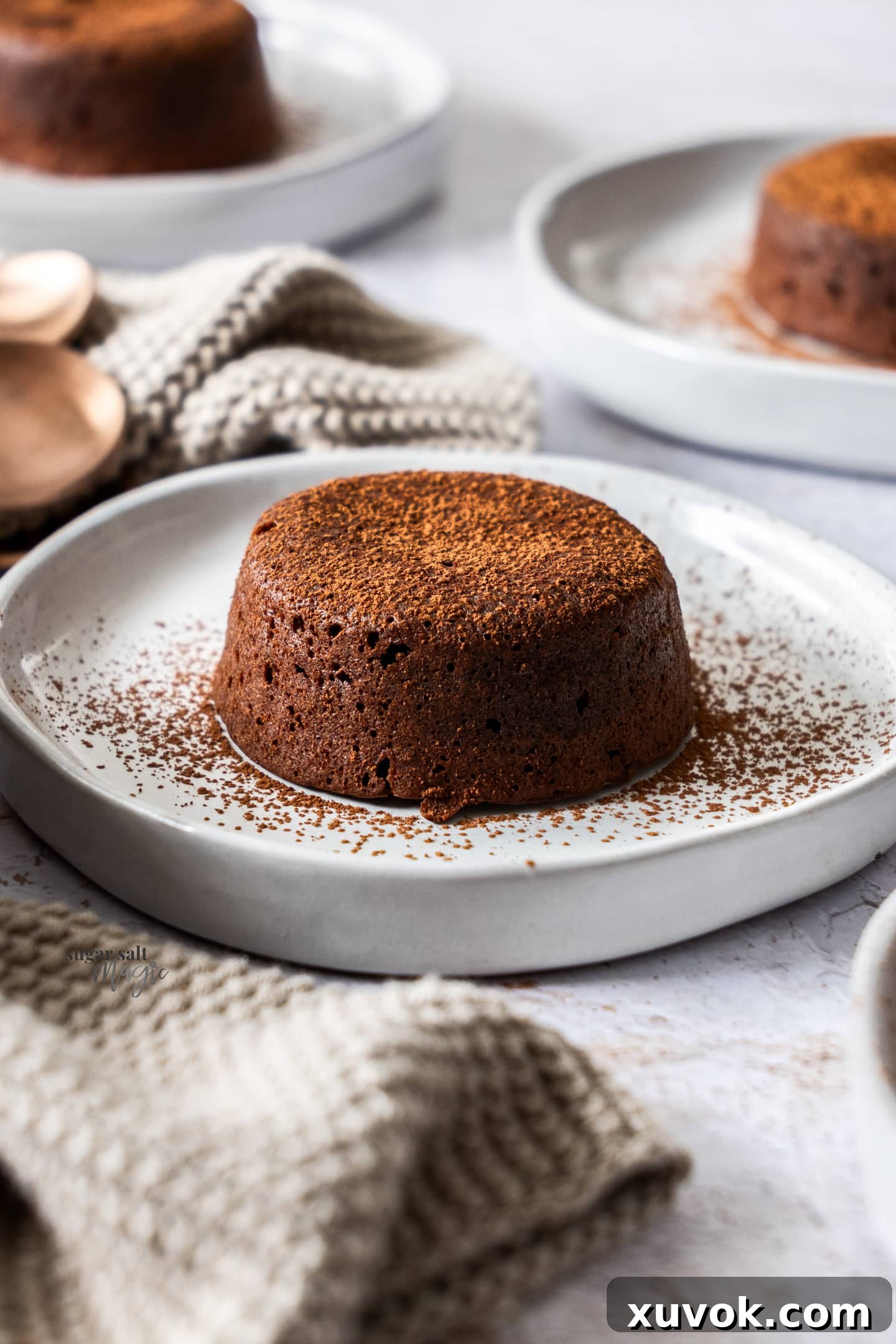
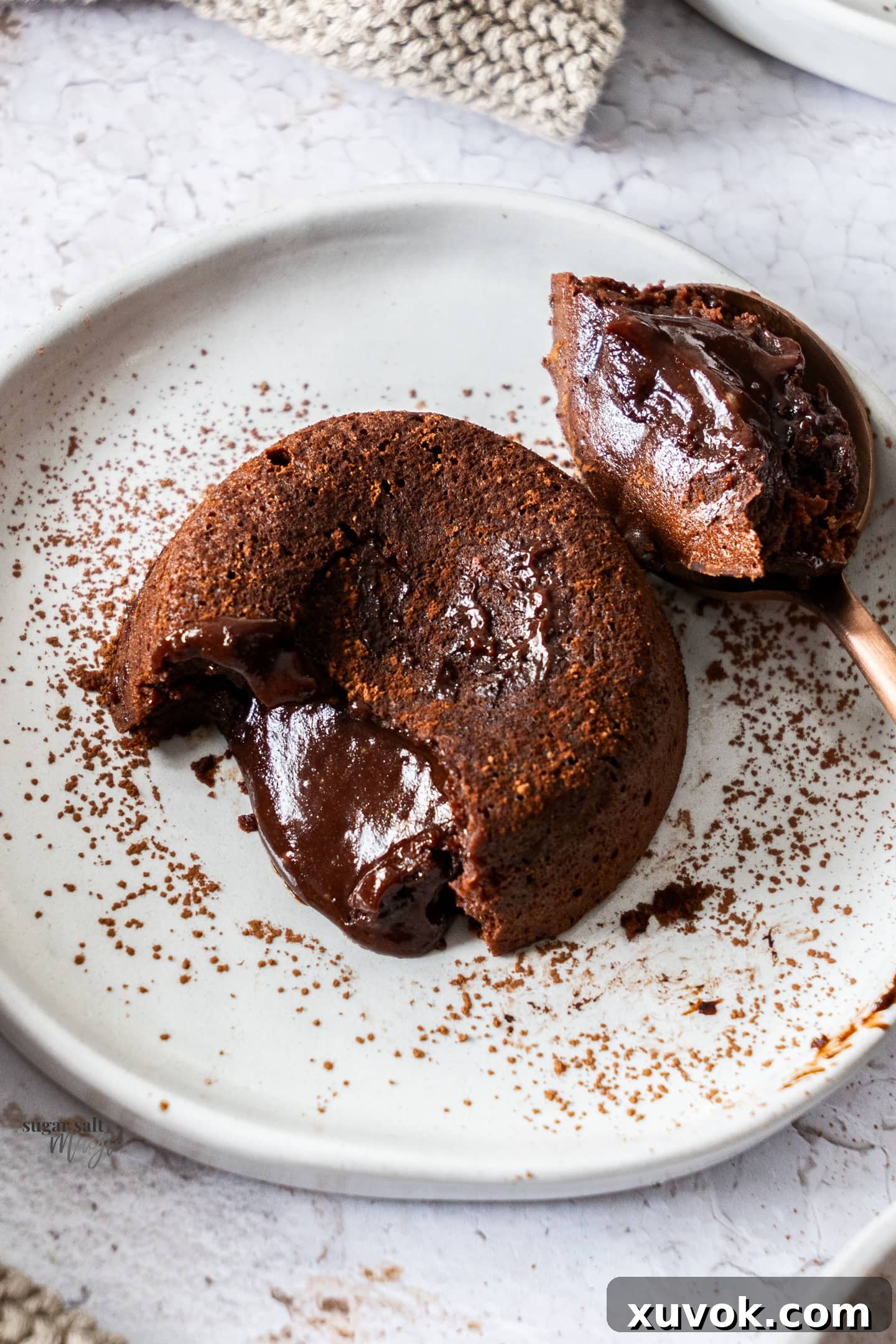
At the heart of this dessert’s appeal is its unique texture. The “gooey” or “molten” chocolate filling isn’t actually a separate filling that’s added; rather, it’s simply cake batter that hasn’t fully baked and set. The baking process heats the batter sufficiently to make it safe to eat, yet it’s removed from the oven just before it’s completely cooked through. This careful timing ensures that when you cut into the cake, that luscious, warm chocolate center gracefully oozes out, creating a truly irresistible contrast between the slightly firm exterior and the liquid interior. It’s this delicate balance that elevates the chocolate fondant from a mere cake to a sublime culinary experience.
Essential Ingredients You’ll Need for a Perfect Chocolate Fondant
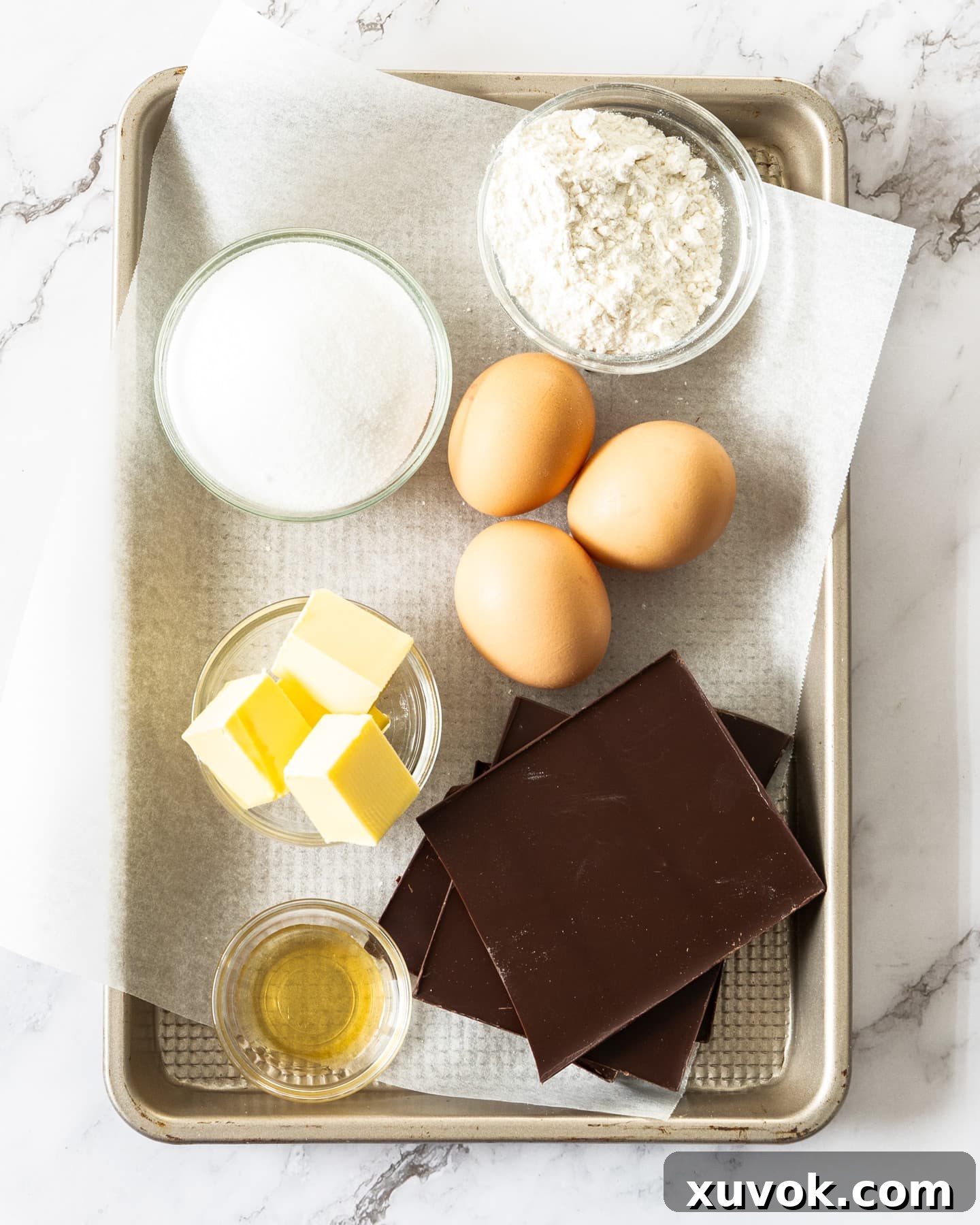
Creating an outstanding chocolate fondant starts with selecting high-quality ingredients. Each component plays a crucial role in achieving that perfect balance of rich flavor and decadent texture. For comprehensive instructions and exact measurements, you can jump to the full recipe card.
- Quality Dark Chocolate: This is arguably the most critical ingredient. Since there’s no cocoa powder in this recipe, the entire depth of chocolate flavor comes from the actual chocolate you use. I strongly recommend choosing a very good quality dark chocolate with a cocoa content of at least 70%. Using milk chocolate would result in a dessert that is excessively sweet and cloying, overwhelming the sophisticated decadence of a fondant. My personal preference is Lindt Smooth 70%, which consistently delivers superb results. Higher quality chocolate melts more smoothly and provides a richer, more complex flavor profile.
- Unsalted Butter: Stick to unsalted butter for this recipe. Butter contributes significantly to the fondant’s rich texture and helps carry the chocolate flavor. Using unsalted butter allows you to control the overall saltiness of the dessert. If you prefer a slight salty contrast to the sweetness, you can add a small pinch of fine salt directly to the batter later, but it’s best to start with unsalted butter.
- Large Eggs: Eggs are essential for both structure and richness. They emulsify the batter, helping to bind the ingredients together and create the characteristic cake-like exterior. For best results, ensure your eggs are at room temperature. This helps them incorporate more smoothly into the melted chocolate mixture, preventing the chocolate from seizing and creating a more homogeneous batter.
- Granulated Sugar (Caster Sugar): Simple white granulated sugar or superfine caster sugar works perfectly here. Sugar not only provides sweetness, balancing the bitterness of dark chocolate, but also contributes to the cake’s tender crumb and helps achieve a slightly crisp edge. It also aids in creating that beautiful, slightly caramelized crust.
- Vanilla Extract: While sometimes considered optional, a good quality vanilla extract actually intensifies and enhances the chocolate flavor, adding another layer of complexity to the dessert. Always opt for pure vanilla extract over imitation vanilla essence, as the latter can have an artificial taste that detracts from the overall quality.
- Plain Flour (All-Purpose Flour): You’ll only need a small amount of plain flour (also known as all-purpose flour) for this recipe. Its purpose is to provide just enough structure to the cake to hold its shape while still allowing the center to remain molten. It’s crucial not to overmix the flour once added, to keep the fondants tender.
Step-by-Step: Crafting Your Perfect Chocolate Fondant
It’s truly astonishing how a dessert that tastes so incredibly indulgent and looks so sophisticated can actually be so straightforward to prepare. You won’t need any complex machinery or advanced baking skills to achieve these restaurant-quality molten chocolate cakes. Beyond a few standard kitchen items, the only specialized equipment required are small ramekins or dariole molds. You won’t even need an electric mixer; a simple whisk does the job perfectly. I personally lean towards using my ceramic ramekins because I prefer the classic, elegant shape they give the baked chocolate lava cakes compared to dariole molds, but both options perform beautifully and deliver delicious results.
For a detailed ingredient list and precise instructions, be sure to jump to the full recipe card.
- Prepare Your Molds and Preheat the Oven: Achieving that perfect molten center hinges on a hot oven. It’s crucial to preheat your oven for at least 30 minutes before you even begin mixing the batter, as these fondants bake very quickly. Set it to 200°C (180°C fan forced) / 390°F. While the oven preheats, generously grease your ramekins or molds with softened butter. Ensuring every crevice is coated prevents sticking and guarantees a smooth release. For an extra non-stick layer and an added depth of chocolate flavor, you can lightly dust the greased molds with cocoa powder, though I often find thorough greasing is sufficient for easy unmolding.
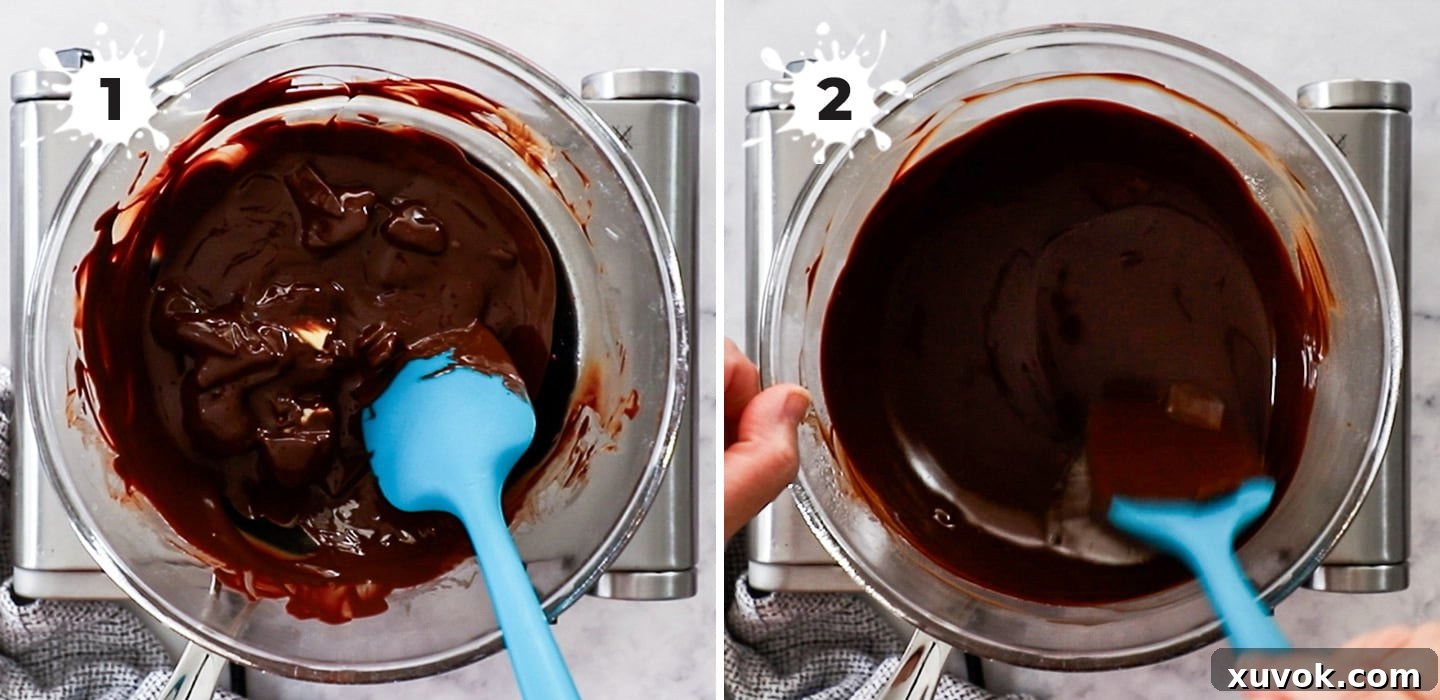
- Gently Melt the Chocolate and Butter: Combine your chosen dark chocolate and unsalted butter in a medium, heatproof mixing bowl. Place this bowl over a small saucepan containing about an inch or two of simmering water, creating a bain-marie or double boiler. Crucially, ensure the bottom of the mixing bowl does not touch the simmering water. The steam will gently and evenly melt the chocolate and butter, preventing scorching. Stir frequently until the mixture is completely smooth and glossy. Once melted, carefully remove the bowl from the saucepan and set it aside to cool for 5-10 minutes. This cooling period is vital; adding the eggs to a hot chocolate mixture could inadvertently cook them, ruining the texture of your batter. The mixture should be warm to the touch, not hot.
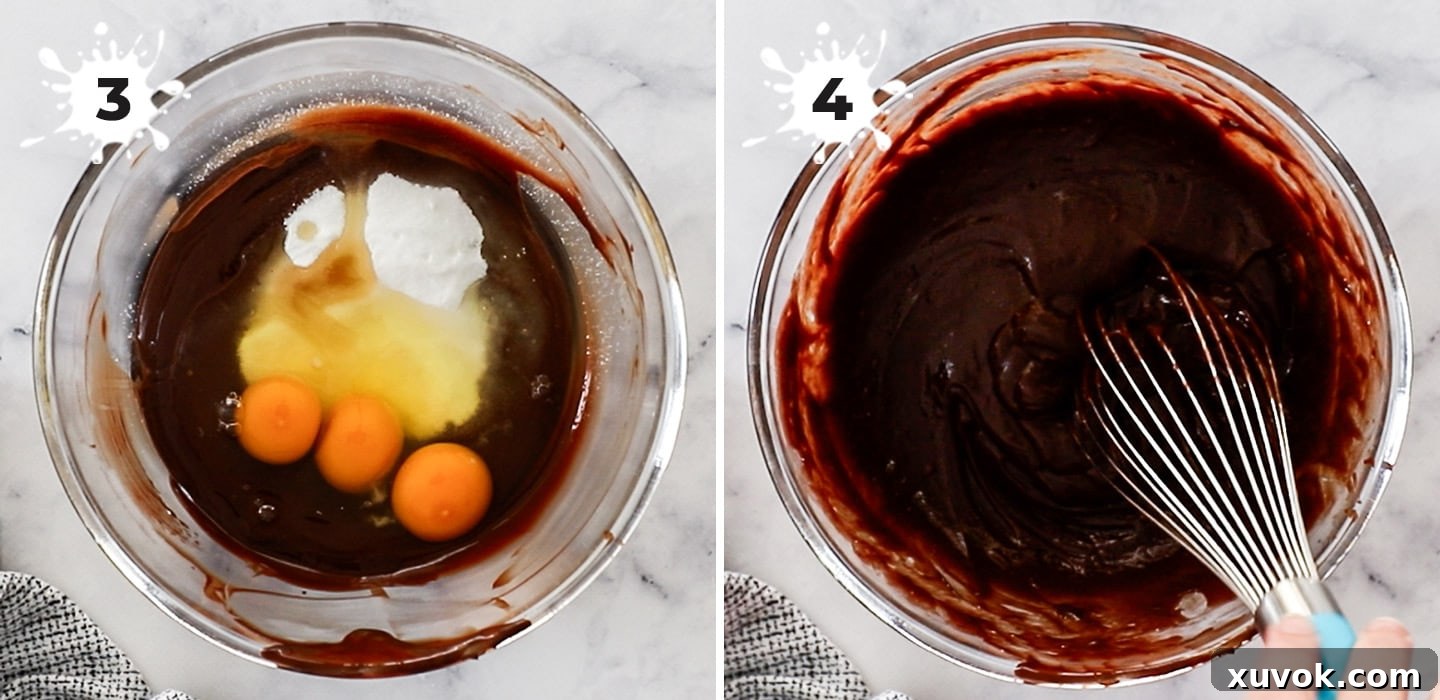
- Incorporate Eggs, Sugar, and Vanilla: Once the melted chocolate and butter mixture has cooled sufficiently, crack your room temperature eggs directly into the bowl. Add the granulated sugar and the vanilla extract. Using a whisk, gently combine all the ingredients. Whisk until the mixture is smooth, homogenous, and has a beautiful, glossy sheen. Avoid over-whisking at this stage; just mix until everything is thoroughly incorporated. The sugar will begin to dissolve, and the eggs will add richness and volume to the batter.
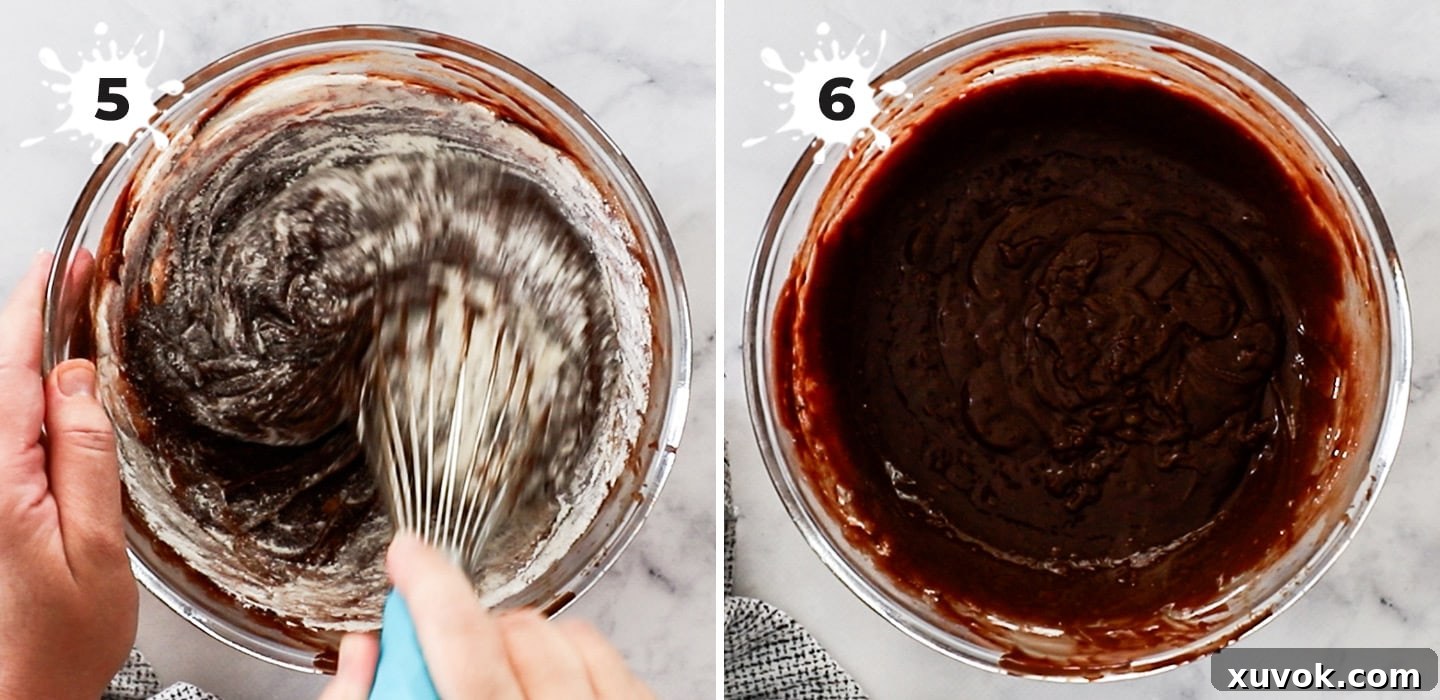
- Gently Fold in the Flour: Finally, add the plain (all-purpose) flour to the chocolate mixture. This step requires a light hand. Gently whisk or fold the flour in until it is *just* combined and no streaks of dry flour remain. Overmixing the flour will develop the gluten, which can lead to a tougher, chewier cake rather than the desired delicate, melt-in-your-mouth texture. The batter should still be smooth and relatively fluid.
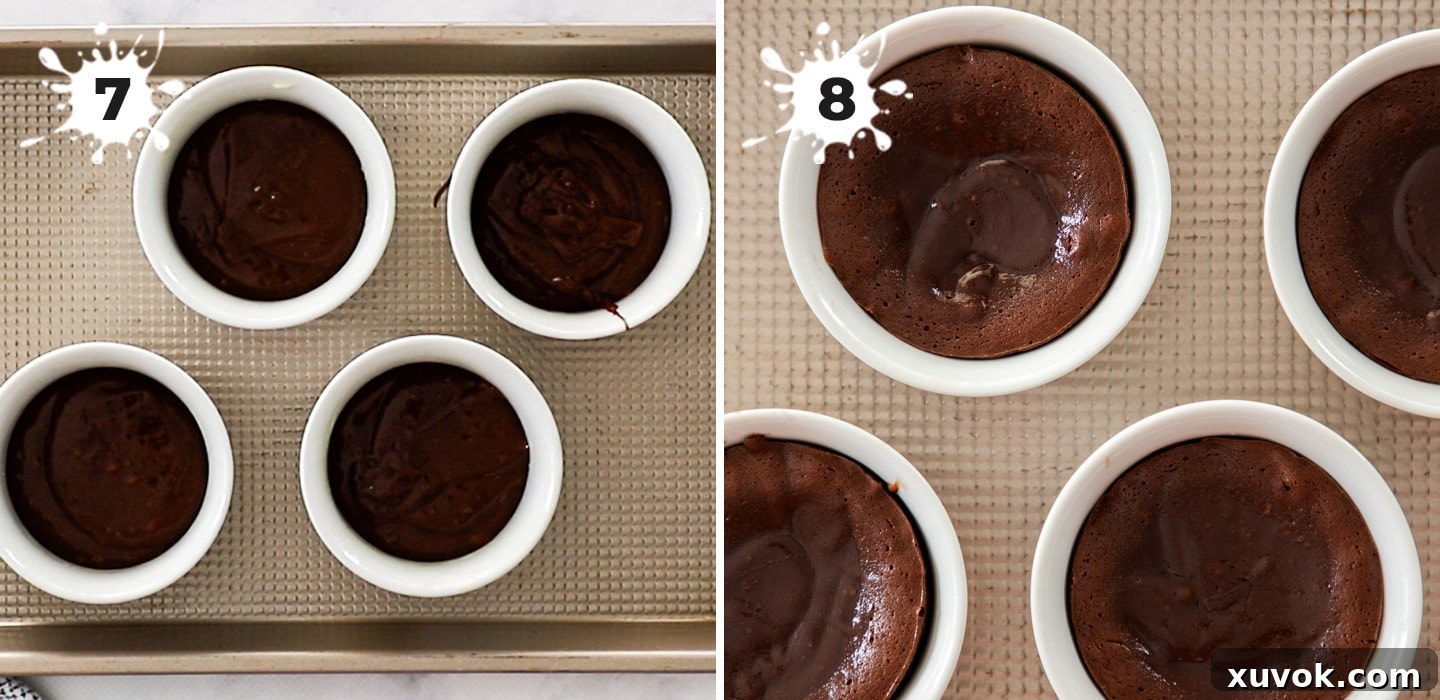
- Bake to Perfection: Carefully divide the molten chocolate cake batter evenly among your six prepared ramekins. You can use a ladle or an ice cream scoop for easy portioning. Place the filled ramekins on a baking sheet and transfer them to your preheated oven. Bake for approximately 10-11 minutes, or until the edges are set and a small, shiny patch, roughly 1 inch (2.5 cm) in diameter, is visible in the very center of each cake. This shiny patch indicates the perfectly gooey, still-molten core. The exact baking time can vary slightly depending on your oven’s calibration and the material/size of your ramekins, so keep a close eye on them.
This recipe is intentionally designed to yield six chocolate fondants for several practical reasons. Firstly, baking a “tester” fondant or two allows you to fine-tune the baking time for your specific oven and molds, ensuring perfect results for the rest. Secondly, any remaining fondants can be easily frozen for future indulgence, making impromptu dessert cravings a breeze to satisfy. The recipe is also readily scalable if you’re comfortable using a kitchen scale for precise measurements.
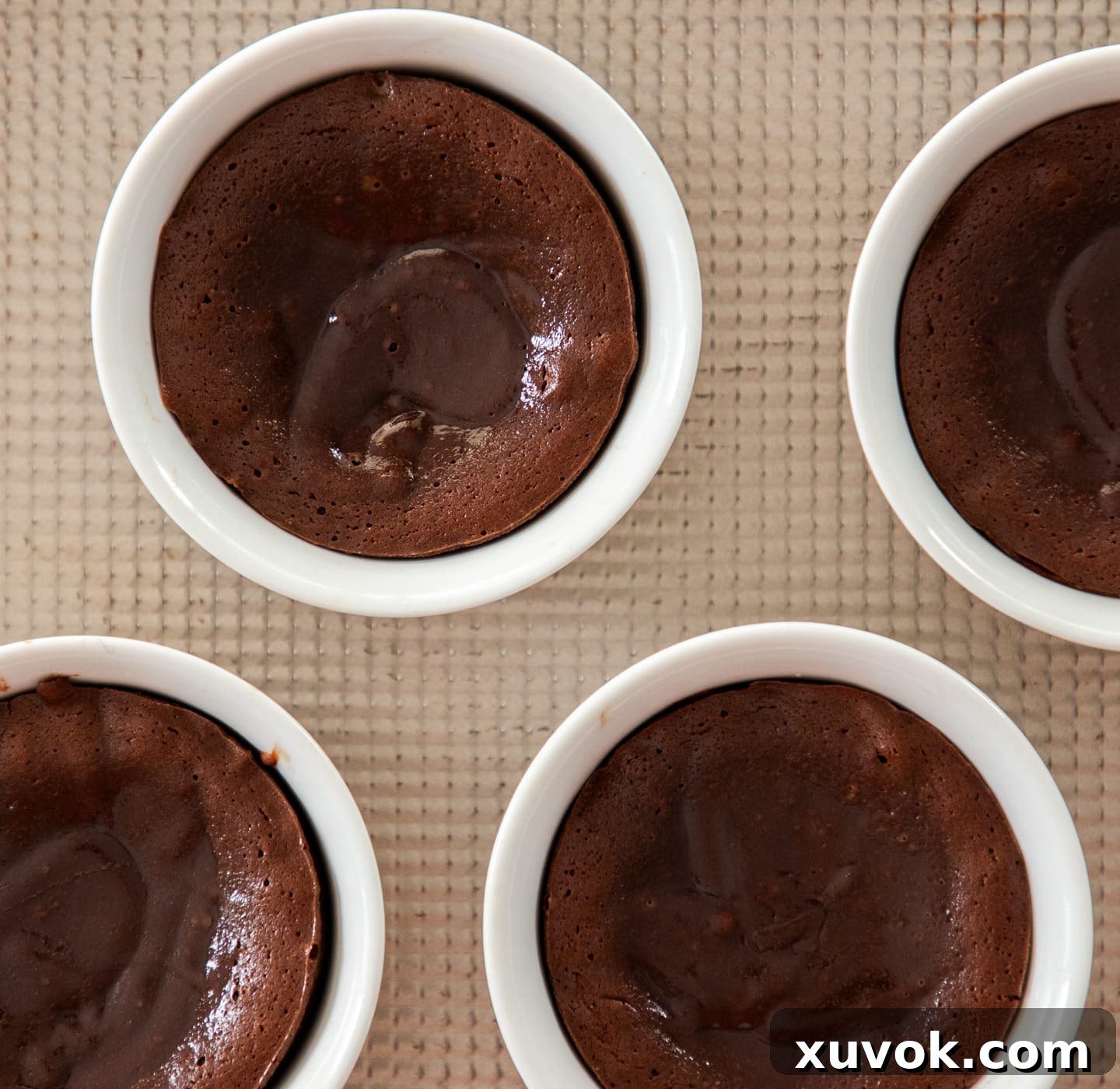
- Cool and Unmold for Serving: Once your fondants are ready, they will have a firm ring around the outside and that crucial small patch of shiny, slightly underbaked batter in the center. This center will be dry to the touch on top, but not fully baked through—this is exactly what creates the molten core. Allow the cakes to cool in their ramekins for just 2-3 minutes; this short cooling period helps them firm up slightly and makes unmolding easier. To unmold, place a dessert plate upside down over the ramekin. Using a tea towel or oven mitt to protect your hands (as the ramekin will still be hot), carefully flip the entire assembly over. The fondant should slip out smoothly onto the plate. Gently lift the ramekin away. If you prefer to serve them directly in the ramekins, you can bake them for an additional minute or two, but be cautious not to overbake, or you risk losing that glorious chocolate lava interior. Serve immediately for the best molten experience.
Expert Tips and Tricks for Perfection
Achieving a flawless chocolate fondant every time is easier than you think with these expert tips:
- Control the Bain-Marie Heat: When melting your chocolate and butter, ensure the water in the saucepan is simmering gently, not boiling vigorously. Rapidly boiling water can cause two main issues: first, it increases the risk of overheating your chocolate, which, while it might not drastically affect the final cake, will prolong the cooling time before you can add the eggs. More critically, boiling water produces a lot of steam, and if any moisture from this steam comes into contact with your melting chocolate, it can cause the chocolate to “seize” – turning it into a gritty, clumpy mess that is unusable.
- Accuracy with a Kitchen Scale: For baking, precision is paramount. Whenever possible, use a kitchen scale to weigh ingredients like flour and sugar. This method is far more accurate than volumetric cup measures and will consistently yield the best results for your fondants. If you don’t own a kitchen scale, avoid scooping flour or sugar directly from the container as this compacts the ingredient. Instead, spoon the flour or sugar into your measuring cup until it’s overflowing, then use the back of a knife or a straight edge to level off the top without packing it down.
- Room Temperature Eggs: Always bring your eggs to room temperature before incorporating them into the melted chocolate mixture. Room temperature eggs emulsify better with the fats, creating a smoother, more homogeneous batter. Cold eggs can cause the melted chocolate to seize and become lumpy.
- Make Them Ahead for Convenience: One of the greatest advantages of chocolate fondants is their make-ahead potential. Whether you’re planning a special family treat or preparing for a dinner party, the batter can be made in advance, poured into ramekins, and then chilled or even frozen until you’re ready to bake. This flexibility allows you to bake fresh, warm fondants on demand, minimizing stress and maximizing enjoyment.
- Always Do a Tester: Given that ovens can vary significantly in temperature calibration and ramekin materials (ceramic vs. metal) affect baking times, it’s highly recommended to bake a single “tester” fondant first. This small investment of time allows you to precisely determine the ideal baking duration for your specific setup, ensuring that the remaining fondants achieve that perfect molten core without being over or underbaked. Since fondants cook so quickly, a minute or two can make all the difference.
- Freeze Unused Fondants: If you’re not planning to serve all six lava cakes at once, you can easily freeze the unbaked fondants. This is a fantastic way to have a gourmet dessert ready at a moment’s notice. Follow the freezing instructions in the storage section below for best results.
- Serve Immediately: For the ultimate experience, chocolate fondants are best served piping hot, straight from the oven, when their centers are at their most liquid and gooey. Have your plates and garnishes ready to go!
- Don’t Overmix: After adding the flour, mix just until combined. Overmixing can develop the gluten in the flour, leading to a tougher cake rather than the delicate, tender crumb you want.
Storage and Make-Ahead Options: Enjoying Your Fondants Anytime
While chocolate fondant cakes are truly at their peak when baked fresh and served immediately, their incredible versatility makes them a perfect dessert for entertaining or simply enjoying over several days. The batter is remarkably stable and can be prepared well in advance, offering fantastic flexibility for your baking schedule.
- Refrigeration: To prepare ahead, simply divide your freshly made batter evenly among the ramekins. Once filled, you can either place the ramekins directly into an airtight container or arrange them on a plate and wrap them thoroughly with plastic wrap to prevent them from drying out or absorbing fridge odors. Unbaked chocolate lava cakes will keep beautifully in the refrigerator for 2-3 days. When you’re ready to bake, place them directly into the preheated oven from the fridge, adding an extra minute or two to the standard baking time to account for their chilled state.
- Freezing: For longer-term storage, chocolate fondants freeze exceptionally well. Fill your ramekins with batter, then wrap each individual ramekin tightly in plastic wrap. Place the wrapped ramekins into an airtight freezer-safe container to protect them, and they can be stored in the freezer for up to 3 months. Alternatively, once the individual fondants are frozen solid (after a few hours in the freezer), you can remove them from their ramekins, unwrap them, and stack them in a freezer-safe ziplock bag or container, making them even more compact. You can bake these straight from the freezer without thawing; just expect to add approximately 2-3 extra minutes to the baking time to ensure they heat through properly and achieve that molten center.
- Reheating Baked Fondants: While best enjoyed fresh, if you have leftover baked fondants, you can reheat them. Be aware that reheating may cause the interior to bake a little further, potentially reducing the molten effect. To reheat in the oven, place them in a preheated 180°C (350°F) oven for about 10-12 minutes. Alternatively, you can gently warm them in the microwave for a minute or two, being very careful not to overcook them and solidify the center.
Frequently Asked Questions (FAQ’s) About Chocolate Fondant
Chocolate fondant is made from a very simple cake batter typically consisting of dark chocolate, butter, eggs, sugar, and a small amount of flour. It’s the purity of these few ingredients that gives it such a rich flavor.
A chocolate fondant might collapse if the outer cake structure isn’t sufficiently baked to support the unbaked, gooey center. This can happen if it’s underbaked, or if the ratio of ingredients is slightly off. Flatter, wider ramekins generally tend to be more forgiving and foolproof than taller, narrower molds, as they provide a more stable base.
Unbaked chocolate fondants can be conveniently stored in the fridge for 2-3 days or frozen for up to 3 months. Ensure they are well-wrapped to prevent drying out. See the “Storage” section for detailed instructions.
While chocolate fondants are best enjoyed fresh from the oven, you can reheat them. Place them in a preheated 180°C (350°F) oven for 10-12 minutes. You can also carefully reheat them in the microwave for a few minutes, but be mindful not to overcook them, as this will cause the molten center to solidify.
Traditionally, and with this recipe, the decadent “filling” is not a separate ganache or caramel. It’s simply the same cake batter that has not fully baked and set. This undercooked center is perfectly safe to eat. Sometimes, for variation, bakers might insert other fillings like caramel, peanut butter, or chocolate candies before baking, but the classic lava cake relies on its intentionally underbaked core.
Chocolate lava cakes or fondants are incredibly versatile in how they can be served. A simple dusting of cocoa powder or powdered sugar offers an elegant touch. For a classic pairing, serve them alongside a scoop of high-quality vanilla bean ice cream. Fresh berries, such as raspberries or strawberries, add a lovely tart contrast. You can also drizzle them with a raspberry coulis, a warm caramel sauce, or a sprinkle of flaky sea salt to elevate the flavors.
If you don’t have ramekins, you can experiment with baking your chocolate fondants in a standard muffin tin. You will need to adjust the baking times, as muffin tins tend to heat differently. To unmold, allow them to cool slightly, then place a large baking tray upside down over the muffin pan. Carefully flip the entire assembly over, and the fondants should release onto the tray. Use an offset spatula to gently transfer them to individual dessert plates.
More Irresistible Dessert Recipes You’ll Love
If you’ve enjoyed the decadent simplicity of these chocolate fondants, you’re sure to find new favorites among our collection of exquisite dessert recipes. Explore these delightful options to satisfy your sweet cravings:
- Chocolate Creme Brulee: A classic French dessert with a rich chocolate custard base and a perfectly caramelized sugar crust.
- Easy Chocolate Pots (Pot de Crème): Velvety smooth and intensely chocolatey, these individual custards are incredibly simple to make and elegantly satisfying.
- Butterscotch Molten Lava Cakes: A delightful twist on the classic, featuring a warm, gooey butterscotch center.
- Coffee Panna Cotta: A silky smooth Italian dessert with a delicate coffee flavor, perfect for a light yet elegant finish.
- Easy Eggless Chocolate Mousse: A light, airy, and rich chocolate mousse that’s surprisingly simple to prepare without eggs.
- Tiramisu Cups: Individual portions of the beloved Italian classic, featuring layers of coffee-soaked ladyfingers and creamy mascarpone.
Did you try this chocolate fondant recipe?
We’d love to hear your thoughts! Leaving a rating and comment below the recipe is incredibly helpful and appreciated!
Hungry for more? Subscribe to our newsletter for free, delicious recipes delivered straight to your inbox. Also, connect with us and follow along on Facebook, Pinterest, and Instagram for daily inspiration!
Chocolate Fondant Recipe (Fondant au chocolat)
6
fondants
15
10
25
Rate
Pin
Ingredients
- 200 g dark chocolate (70% cocoa) (7oz)
- 57 g unsalted butter, plus extra for greasing (¼ cup / ½ stick / 2oz)
- 3 large eggs room temperature
- 105 g caster sugar (or white granulated sugar) (½ cup / 3 ½oz)
- 1 teaspoon vanilla extract
- 43 g plain flour (all-purpose flour) (1 ½ oz)
For best results, always weigh ingredients where a weight is provided
Equipment
- Small saucepan
- Medium mixing bowl
- Balloon whisk
- 6 ¾ cup ramekins
Instructions
-
Preheat the oven to 200°C (180°C fan forced) / 390°F. Ensure it’s fully preheated for optimal results.
-
Generously grease 6 small ramekins (approximately ¾ cup volume each) or dariole molds with softened butter. Set them aside.
-
Place the butter and chocolate in a medium mixing bowl and set it over a small saucepan of simmering water (creating a bain-marie), ensuring the bowl does not touch the water. Stir continuously until completely melted and smooth.
-
Carefully remove the bowl from the pan and allow it to cool for 5-10 minutes. This prevents the eggs from cooking when added.
-
Add the room temperature eggs, sugar, and vanilla extract to the cooled chocolate mixture. Whisk vigorously until all ingredients are thoroughly combined and the mixture is smooth and glossy.
-
Lastly, add the plain flour. Whisk gently until the flour is just incorporated and no dry streaks remain. Be careful not to overmix.
-
Evenly divide the batter among your greased molds. (At this stage, you have the option to chill them in the fridge for 2-3 days or freeze them for up to 3 months until needed.)
-
Bake for 10-11 minutes (refer to notes 1 below). The fondants are ready when a firm ring forms around the outside, and you can observe a small, shiny patch, approximately 2.5cm/1in in diameter, in the very center. For metal molds, this shiny patch may be slightly smaller due to their shape (see notes 2).
-
Allow the cakes to cool in their molds for 2-3 minutes before attempting to unmold them. Place a dessert plate upside down over the mold, then, using a tea towel or oven mitt to protect your hands (as the ramekin will still be hot), swiftly flip the entire assembly over. The cake should slide out onto the plate. Gently lift the ramekin away, using a spoon or knife to carefully loosen around the rim if necessary. Serve immediately.
-
We would love to hear from you! Please take a moment to leave a comment & rating below. Your feedback is truly appreciated and helps us improve.
Notes
- Baking time variations: The precise baking time can vary significantly based on your individual oven’s calibration, the specific material (ceramic vs. metal), and the size of your molds. It also depends on whether you bake the batter immediately, or if it has been chilled or frozen. For instance, in ceramic ramekins, freshly made batter typically takes 11 minutes in my oven. If baked straight from the fridge, allow around 12 minutes, and if baking directly from the freezer, it may take approximately 14 minutes. We highly recommend baking one “tester” fondant first to determine the exact optimal time for your setup, then adjust the baking of the remaining fondants accordingly.
- Mold types and appearance: I have tested this recipe using both ceramic ramekins and metal dariole molds of a similar volume. Both types generally require the same baking duration. However, the fondants baked in dariole molds often present a slightly smaller shiny patch in the center due to their different shape, compared to the wider surface area of ramekins.
- Nutrition Information: Please note that the nutrition details provided are approximate only and have been derived from an online calculator. The nutritional values can vary depending on the specific brands and types of ingredients you use.
EXPLORE MORE CAKE RECIPES!
399
kcal
Marie Roffey
Dessert
French
Have you tried this recipe?
Don’t forget to leave a rating and comment below and let me know how it was! I love hearing from you. Nutrition information is approximate and derived from an online calculator. The brands you use may cause variations.
Calories from Fat 216