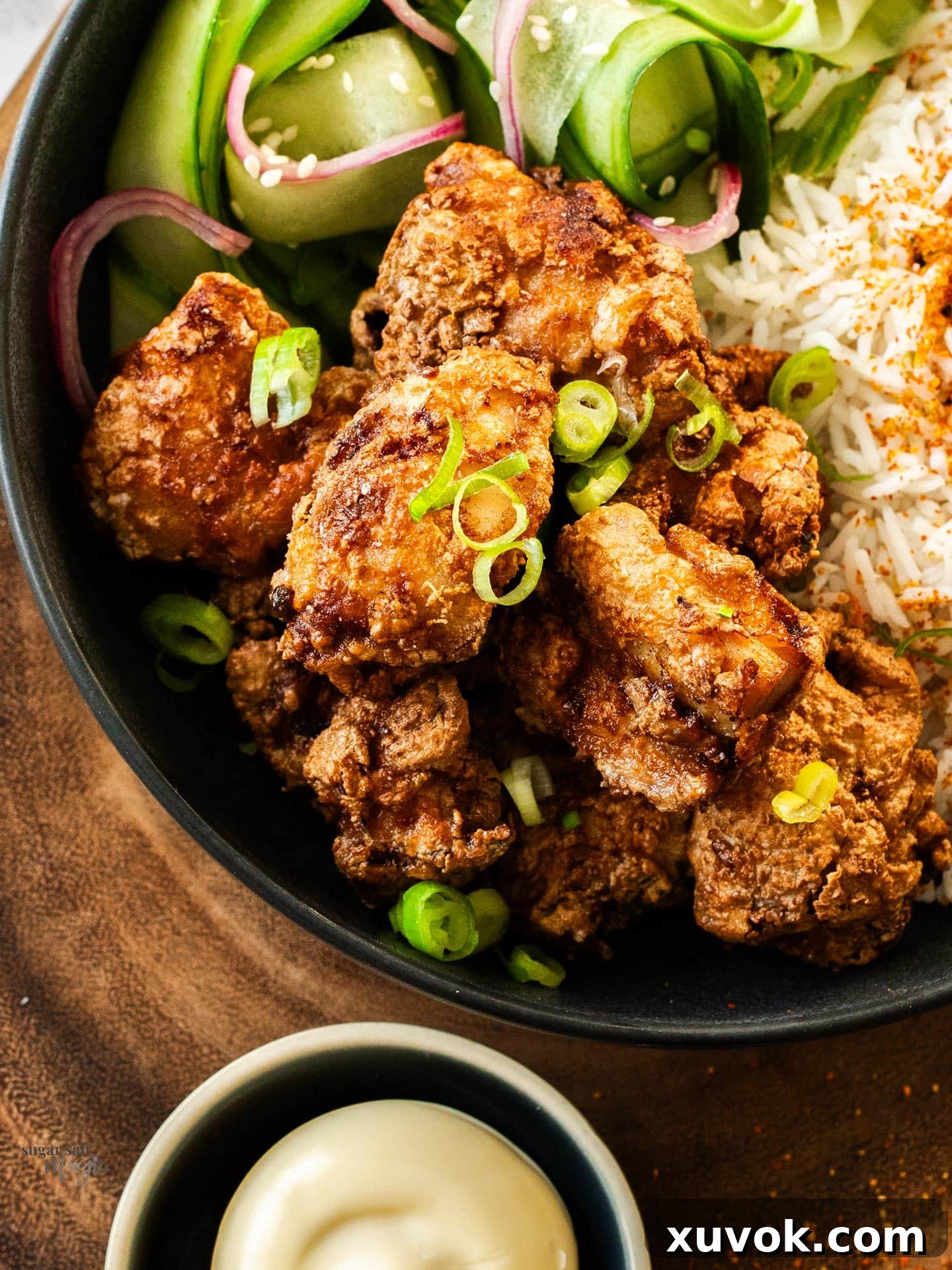
Karaage Chicken, the quintessential Japanese fried chicken, is an absolute culinary delight that transcends mere dinner status to become a family favorite, a crowd-pleasing appetizer, or the ultimate game-day snack. Imagine golden-brown, bite-sized pieces of chicken, twice-fried to achieve an unparalleled crispiness, each bursting with savory umami flavor. This isn’t just fried chicken; it’s an experience of tender, juicy meat encased in a delicate, feather-light crust that defies all expectations of greasy deep-fried foods.
Much like its cousin, the crispy Prawn Katsu, Karaage Chicken stands out for its surprising lightness. Despite being deep-fried, it’s remarkably non-greasy, making it a guilt-free indulgence. What’s more, this beloved dish is quick enough to whip up even on the busiest weeknights, proving that gourmet flavors don’t always require hours in the kitchen.
Our passion for Asian-inspired cuisine shines through many recipes on Sugar Salt Magic. If you love the vibrant flavors of Karaage, you’ll also adore our Crunchy Korean Fried Chicken Wings, which offer a different, yet equally satisfying, take on fried chicken. For something a little lighter but just as delicious, our Air Fryer Teriyaki Chicken Drumsticks are another absolute favorite in our home.
❤️ Why You’ll Adore This Karaage Chicken Recipe
- Effortlessly Quick & Easy: From prep to plate, you can have this delectable Japanese fried chicken ready in 30 minutes or less. It’s perfect for those busy evenings when you crave something special without the fuss.
- Explosion of Flavor: Each succulent piece is deeply infused with aromatic garlic, pungent ginger, and savory soy, creating a complex flavor profile that is utterly irresistible.
- Perfect Texture Harmony: Experience the satisfying contrast of a remarkably crunchy, airy exterior giving way to a wonderfully tender and incredibly juicy interior. It’s a textural masterpiece!
- Versatile Serving Options: Whether you serve it as an elegant appetizer for guests, a fun snack for game day, or a satisfying main meal alongside rice and vegetables, Karaage Chicken always impresses.
- Unquestionably Family-Friendly: Its delightful taste and appealing bite-sized form make it a hit with kids and adults alike, guaranteeing clean plates and happy faces at the dinner table.
This cherished recipe was first published on November 2nd, 2015, and has been lovingly updated with detailed step-by-step images and clearer instructions to ensure your success in the kitchen.
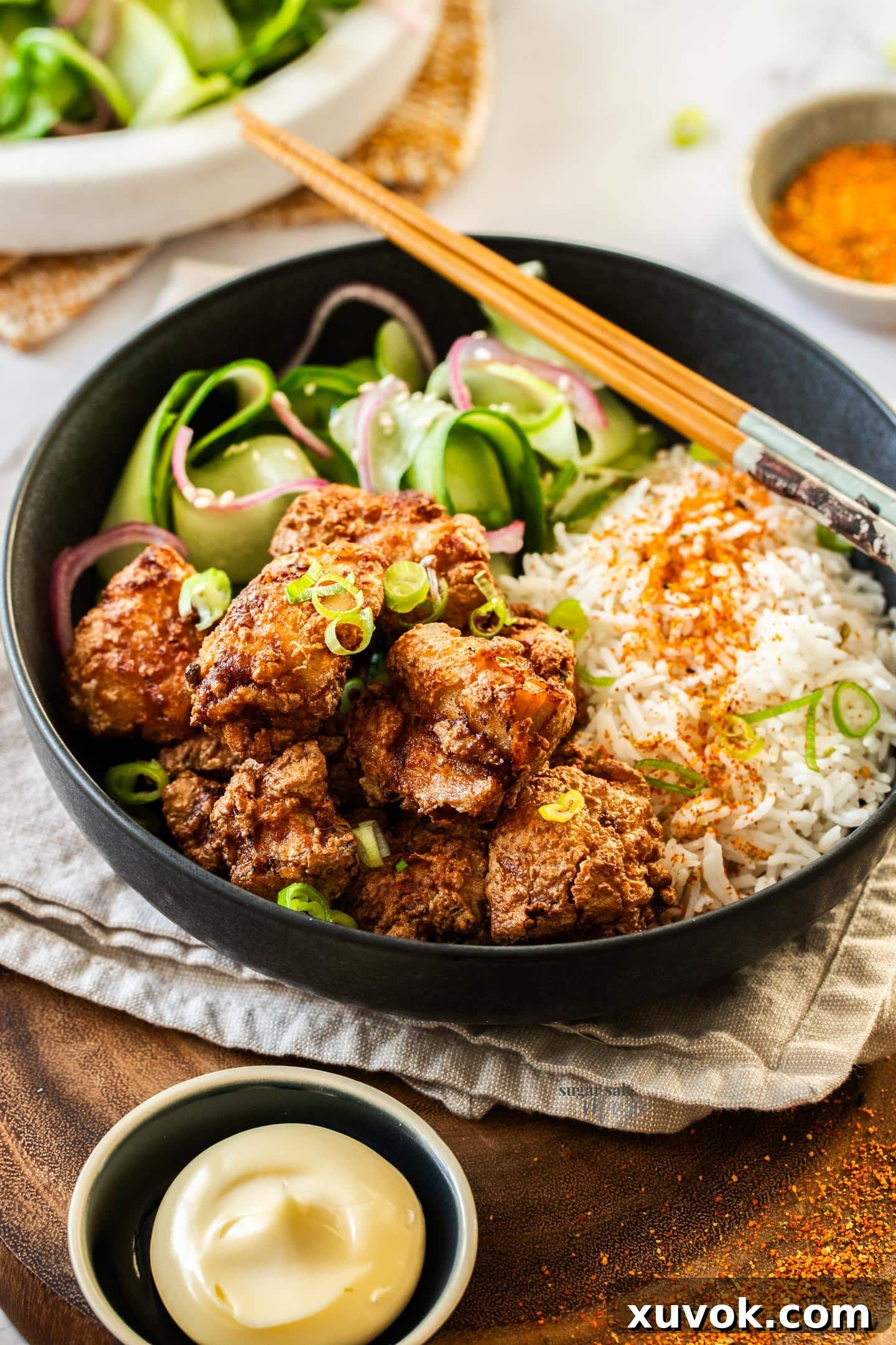
My journey with Karaage Chicken began during a memorable family “My Kitchen Rules” competition, where it quickly earned the affectionate nickname “garage chicken” in our household. Its popularity has only grown since, cementing its place as a staple dish we return to again and again.
“Awesome recipe. Absolutely delicious. Easy to follow and quick to make. Thank you so much!”
– Kylie Lynch, a delighted home cook.
Never Miss a Delicious Recipe!
Get the latest, most mouth-watering recipes delivered straight to your inbox. Join our community of food lovers today!
Sign up for our newsletter to receive exclusive recipes and cooking tips!
What Exactly is Karaage Chicken? (Japanese Fried Chicken Explained)
Pronounced ka-ra-a-geh, Karaage is essentially the celebrated Japanese answer to fried chicken, and arguably even more nuanced and delightful. It involves flavorful chunks of chicken thigh, meticulously marinated, then coated in a delicate layer of potato starch, and finally, deep-fried to golden perfection. This cooking technique, known as karaage, is a general Japanese term referring to deep-frying various ingredients, not exclusively chicken. This versatility means you might encounter “karaage” applied to fish, octopus, or even vegetables, all prepared with the same signature light, crispy coating.
Many are hesitant about deep-frying, but don’t let that deter you. Karaage is surprisingly easy to master and yields results that are far lighter and less greasy than traditional Western fried chicken. This popular dish, also known as tori karaage (which translates to “poultry fried”), is a staple at izakayas—Japan’s equivalent of a casual tapas bar where small, flavorful dishes are served alongside drinks. It’s often enjoyed simply on its own, allowing its unique flavor and texture to shine.
Karaage vs. Katsu: Understanding the Differences
While both are beloved Japanese fried dishes, Karaage and Katsu have distinct characteristics:
- Karaage: Features small, irregular pieces of meat (typically chicken thigh) that are marinated for flavor. The coating is a light dusting of potato starch (or cornstarch), which creates its signature airy crispiness. It’s usually served with Kewpie mayonnaise or a squeeze of lemon.
- Katsu: Involves a larger, flatter piece of meat (such as chicken or pork cutlets) that is breaded with panko (Japanese breadcrumbs) before frying. This creates a much coarser, flakier crust. Katsu is typically sliced after cooking and served with a rich, sweet, and savory tonkatsu sauce, often alongside shredded cabbage. Our Chicken Katsu recipe is a fantastic example if you wish to explore this style!
Key Ingredients for Authentic Karaage Chicken
You’ll be genuinely astonished by the incredible depth of flavor achieved with just a handful of simple ingredients in our Karaage Chicken recipe. The magic lies in the quality of these components and how they interact to create a truly memorable dish.
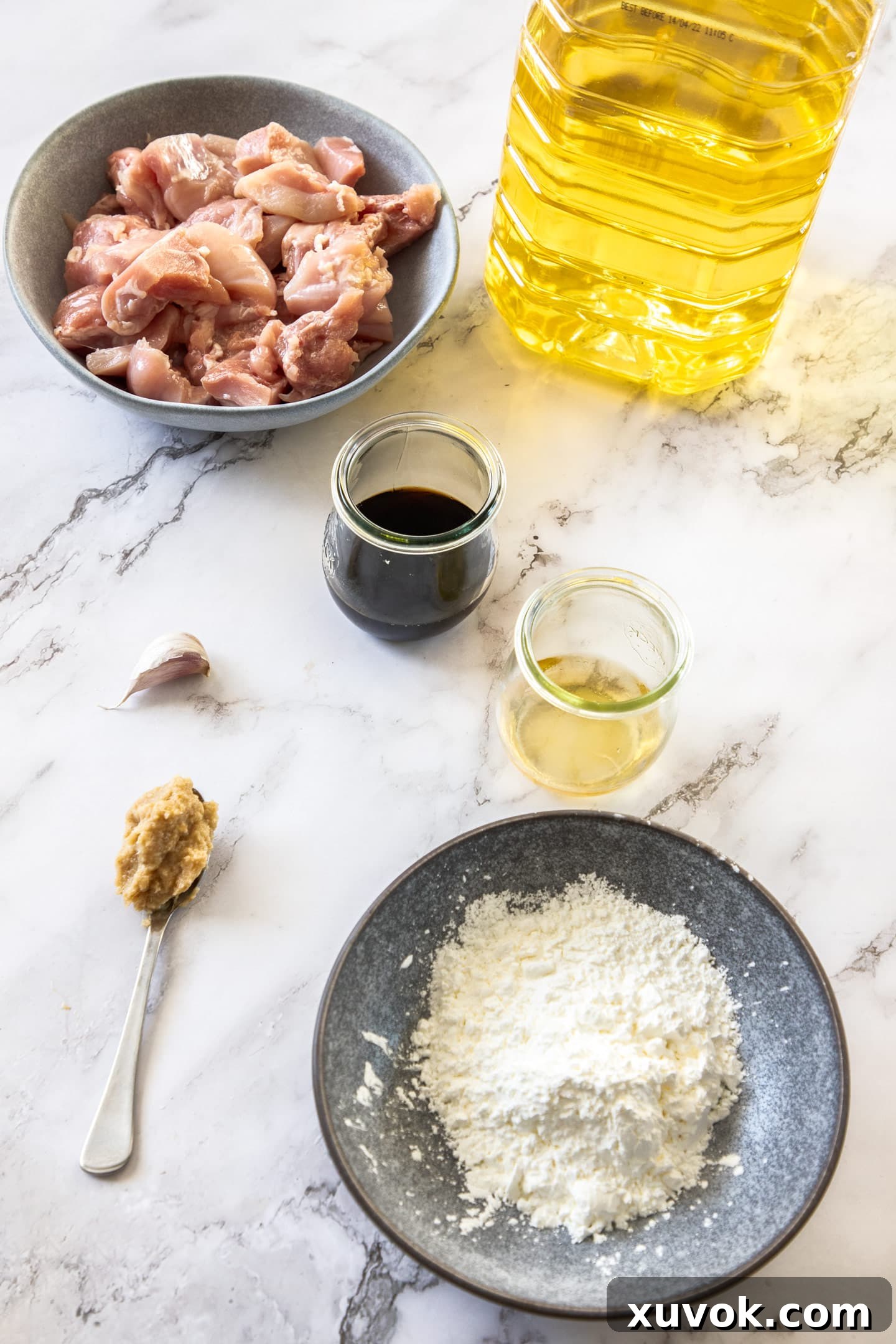
For detailed quantities and step-by-step instructions, please refer to the comprehensive recipe card further down this page.
- Chicken Thighs: For the most succulent, flavorful, and tender Karaage, boneless, skinless chicken thighs are undoubtedly the best choice. Their higher fat content ensures the chicken remains juicy even after double-frying. While chicken breast can be used, it tends to be drier.
- Soy Sauce: The cornerstone of our marinade, providing essential umami and saltiness. Opt for a good quality Japanese soy sauce (like Kikkoman) or a (Thai-style) light soy sauce. For a gluten-free version, simply substitute with tamari, which offers a similar rich flavor profile.
- Mirin: This sweet Japanese rice wine is a crucial element in the marinade, contributing a subtle sweetness, a touch of acidity, and a beautiful glaze to the chicken. It helps balance the savory notes of the soy sauce. Mirin is widely available in most major supermarkets or Asian grocery stores. If absolutely necessary, a dry sherry can be used as a substitute, but the flavor will be slightly different.
- Potato Starch: This is the traditional coating for authentic Karaage and is key to achieving that signature delicate, airy crispiness. Potato starch creates a lighter, crispier crust compared to flour. You can also use cornflour (known as cornstarch in the US) as a readily available and effective alternative. Both are naturally gluten-free, but always check cornflour packaging to confirm if dietary restrictions are a concern.
- Fresh Garlic & Ginger: These aromatic powerhouses are fundamental to Karaage’s distinctive flavor. When grated fresh, they infuse the chicken with an incredible depth of savory, slightly pungent, and warm notes that are surprisingly harmonious and never overpowering.
- Cooking Oil for Frying: Choose a neutral-flavored oil with a high smoke point, such as vegetable oil, sunflower oil, or canola oil. These oils are ideal for deep-frying as they can withstand the high temperatures required without imparting unwanted flavors or breaking down quickly.
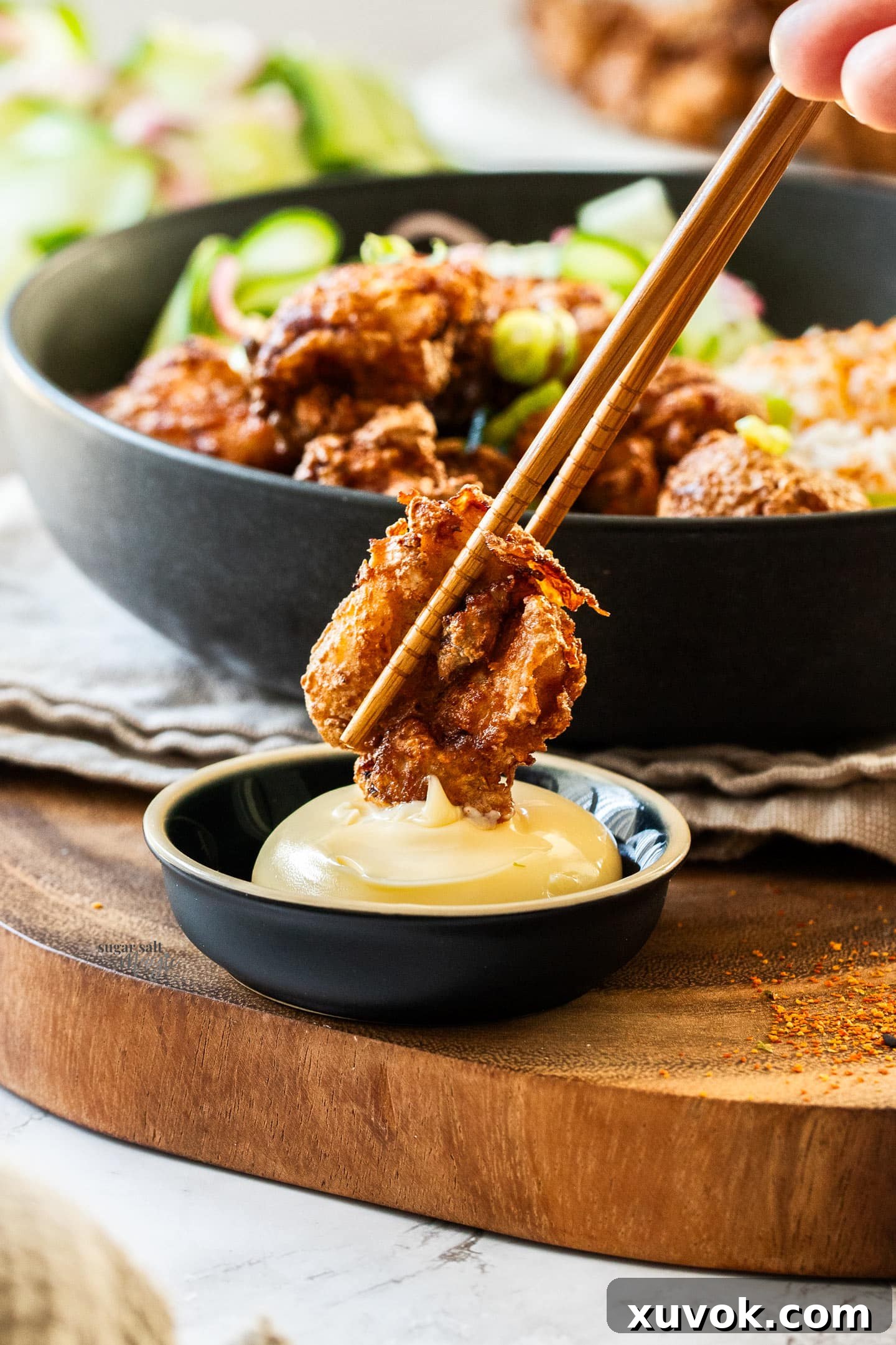
💡 Pro Tip for Serving: Elevate your Karaage experience by serving it with a sprinkle of shichimi togarashi spice, a fresh lemon wedge for a bright zesty counterpoint, and a generous dollop of creamy Kewpie mayonnaise for dipping. These additions transform a great dish into an unforgettable one! Other delightful accompaniments include toasted sesame seeds and furikake (Japanese rice seasoning). Feel free to customize with your favorites! For an extra kick, you can even mix some togarashi or a pinch of cayenne powder directly into the potato starch coating before frying.
Choosing the Best Chicken for Perfect Karaage
While Karaage can certainly be made with chicken breast, for an authentic and truly superior result, boneless, skinless chicken thighs are the undisputed champion. The inherent moisture and higher fat content of thigh meat ensure that each piece remains incredibly tender and juicy, even after undergoing the high heat of deep-frying. Chicken breast, being leaner, tends to dry out more easily and lacks the rich, savory depth of flavor that thighs provide.
When preparing your chicken thighs, you have the option to trim any excess fat if you prefer a slightly leaner bite. Each thigh should then be cut into uniform 4cm / 1 ½ inch pieces. Consistency in size is key to ensuring that all the chicken cooks evenly, preventing some pieces from being undercooked while others become overdone. Traditionally, Karaage is often fried with the skin on, which adds an extra layer of crispiness and flavor. However, I typically remove the skin to make the dish a little lighter – purely so I can enjoy more of it without feeling overly indulgent! Feel free to leave the skin on if you desire that extra textural dimension and richness.
Mastering the Art of Karaage Chicken: Step-by-Step Guide
The secret to achieving that beautifully golden, incredibly crispy exterior and moist, tender interior lies in one fundamental technique: the double fry. This method ensures maximum crunch without sacrificing the juiciness of the chicken. Some enthusiasts even opt for a triple fry for an even more intense crispness!
For precise measurements and detailed instructions, refer to the printable recipe card below. You can also watch a visual guide in the video section for a step-by-step demonstration.
Step 1: Preparing the Flavorful Karaage Chicken Marinade
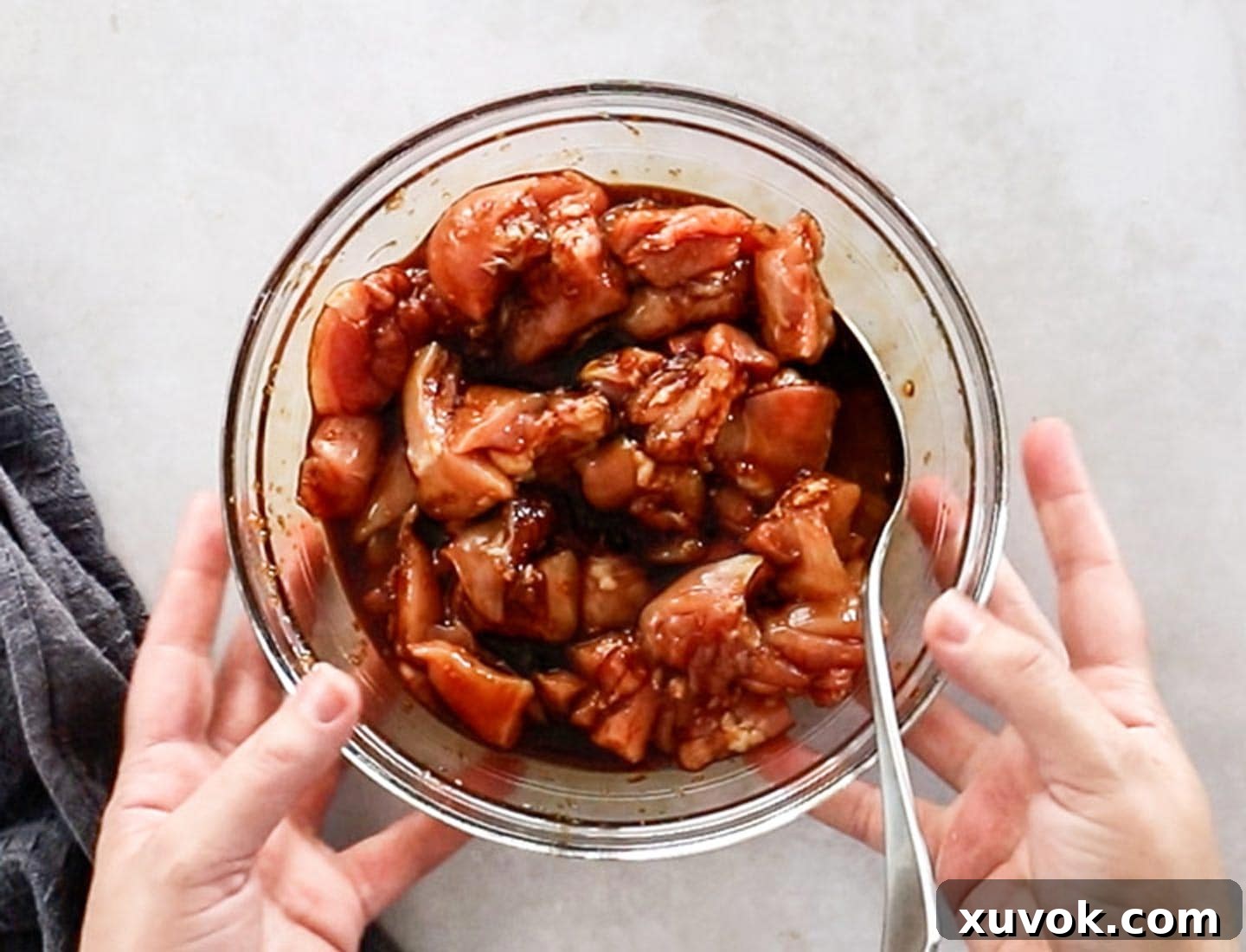
The marinade for our Karaage Chicken is deceptively simple yet packed with potent flavor. In a bowl, combine the freshly grated ginger, minced garlic, savory soy sauce, and sweet mirin. Whisk these ingredients together until well combined, then add your uniformly cut chicken pieces, ensuring each piece is thoroughly coated. Cover the bowl with plastic wrap and refrigerate for a brief 10-20 minutes. This short marination time is crucial for infusing flavor without making the chicken overly salty or changing its texture too much. During this brief waiting period, you can efficiently prepare your side dishes, such as a fresh salad, get your rice cooking, or set up your frying station.
Step 2: Coating the Chicken for Ultimate Crispiness
Once your frying oil is preheated and ready, it’s time to coat the marinated chicken. Place your potato starch (or cornstarch) in a shallow bowl. One by one, take each piece of marinated chicken and dredge it lightly in the starch, ensuring it’s evenly coated on all sides. Avoid pressing too much starch onto the chicken; a light, even dusting is all you need for that signature thin, crispy crust. It’s essential to only coat the chicken right before it goes into the hot oil. If you coat it too early, the moisture from the chicken will cause the starch to become gummy and gloopy, preventing it from crisping up properly during frying.
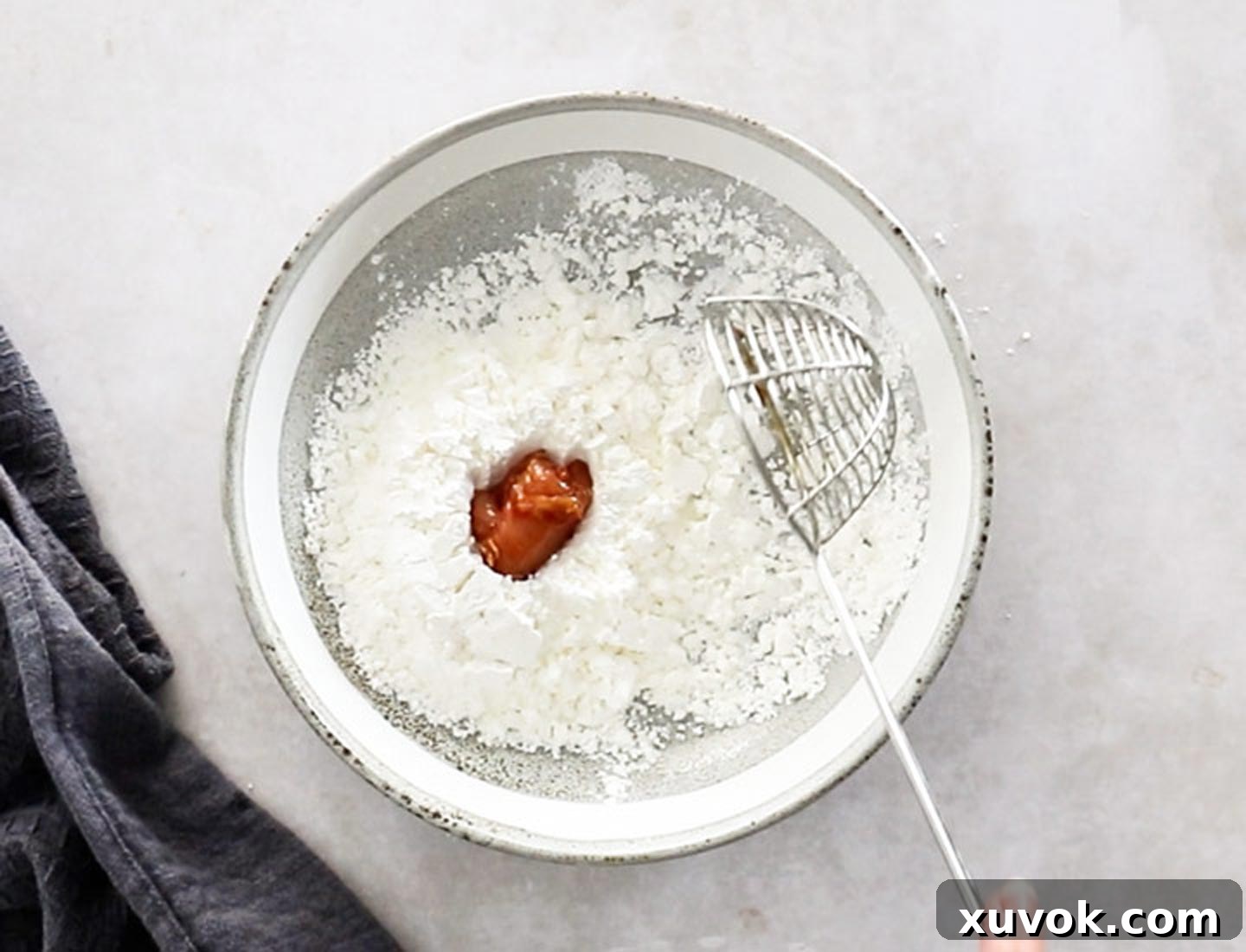
Step 3: The Essential Double-Fry Technique for Karaage
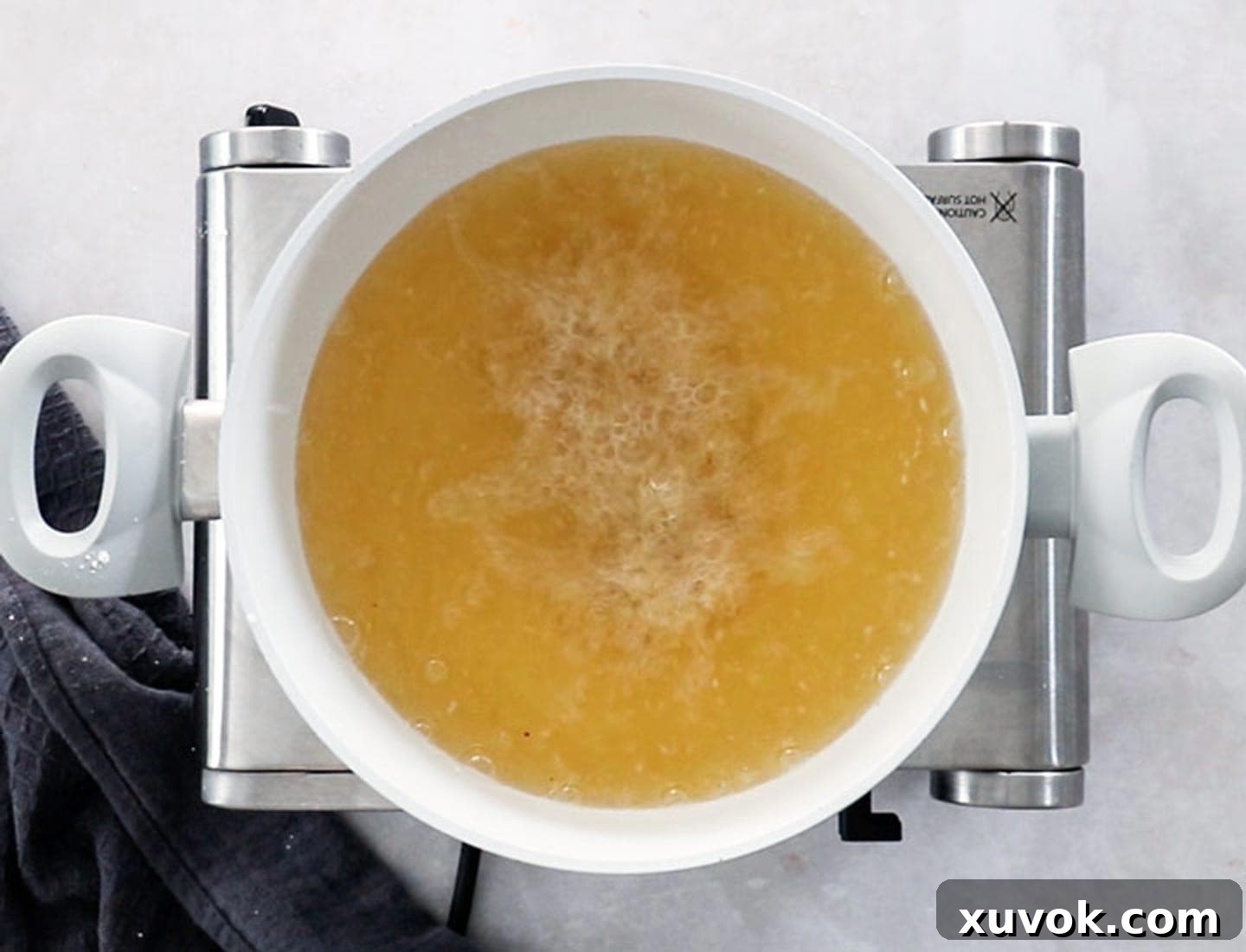
The double-fry is the cornerstone of truly exceptional Karaage Chicken. Heat your chosen neutral oil in a large, heavy-bottomed saucepan to a steady 180°C (350°F). Using a deep-frying thermometer is highly recommended to maintain this consistent temperature, which is critical for preventing greasy chicken and ensuring optimal crispness. Carefully add a few pieces of the coated chicken to the hot oil, making sure not to overcrowd the pan. Frying in small batches is crucial; overcrowding will drop the oil temperature significantly, leading to soggy, poorly cooked chicken. Fry each batch for approximately 90 seconds during this first fry.
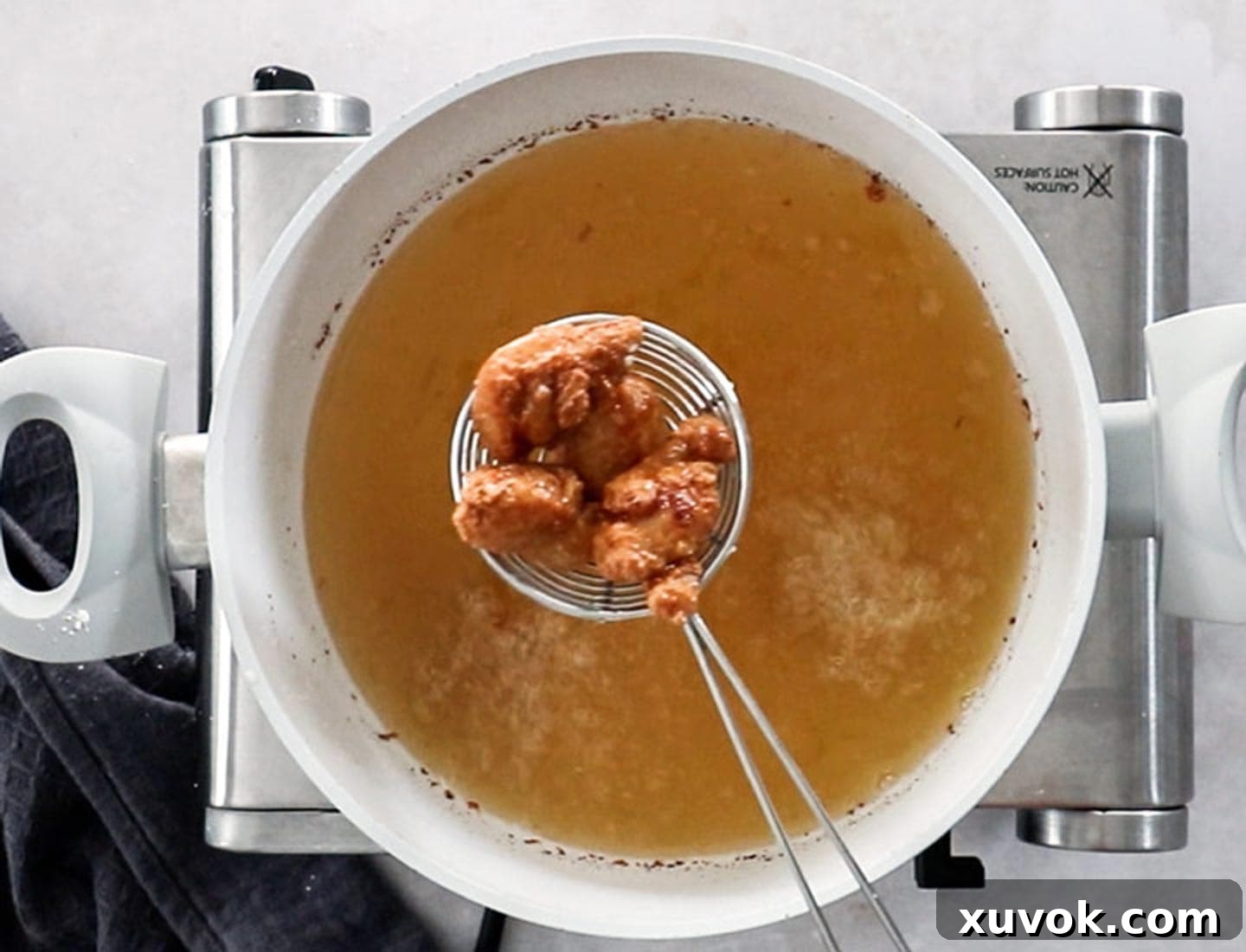
Once the first batch is lightly golden and par-cooked, remove the pieces with a slotted spoon or spider strainer and transfer them to a wire rack set over a paper towel-lined baking tray. This allows excess oil to drain away and prevents the chicken from steaming and losing its crispness. Repeat this process with the remaining chicken, always ensuring the oil returns to 180°C (350°F) before adding the next batch.
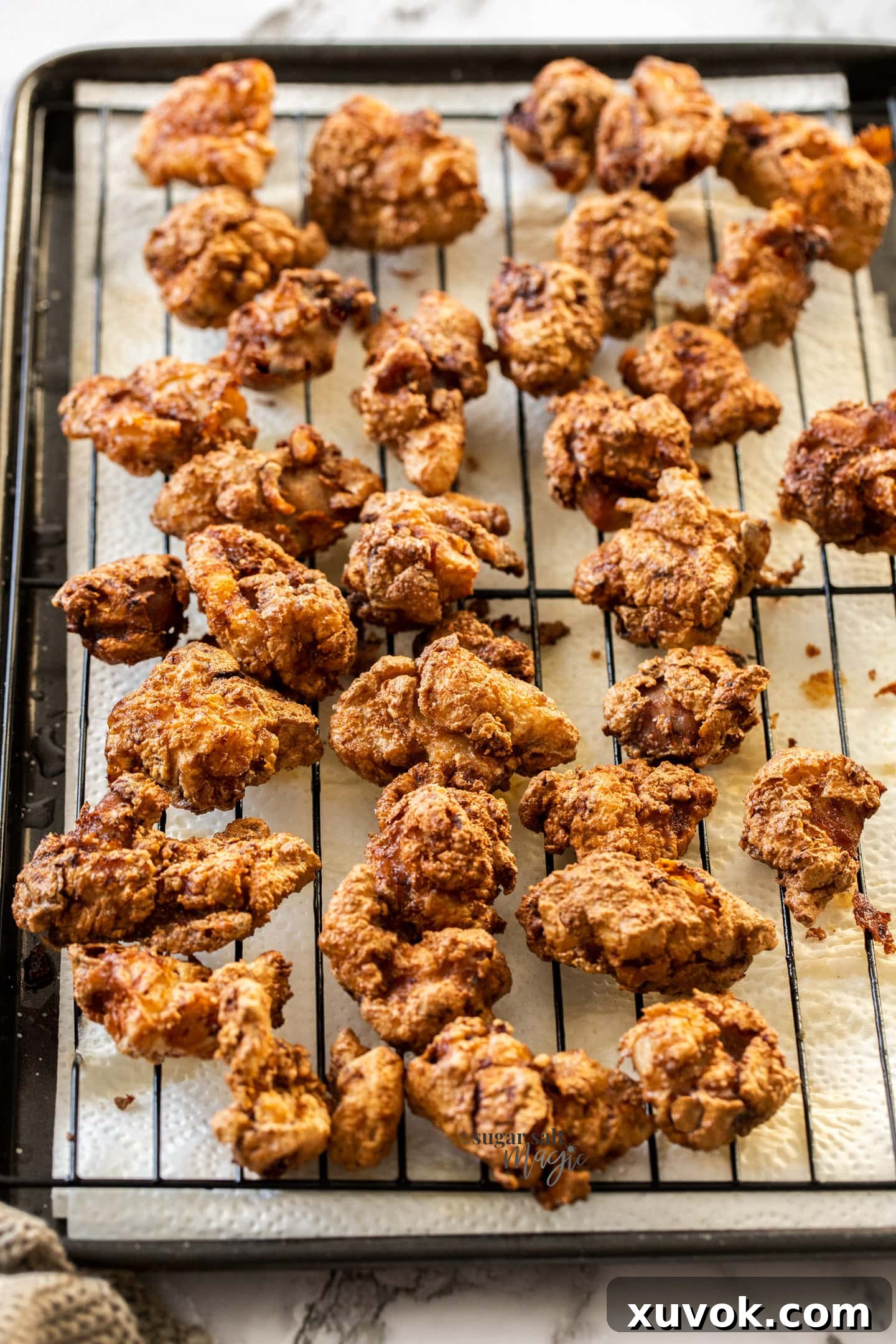
Now, for the transformative second fry! Once all the chicken has completed its initial fry and rested on the rack, it’s time to return them to the hot oil. Working with the same small batches, place the par-fried chicken back into the 180°C (350°F) oil and fry for another minute, or until they achieve a deep, golden brown color and are perfectly cooked through. This second fry is where the magic happens; it crisps up the coating to an extraordinary level while allowing the interior to remain wonderfully moist and tender.
The science behind the double-fry is simple yet brilliant: the first fry cooks the chicken almost entirely and sets the starch coating, creating a protective barrier that locks in moisture. The brief resting period allows residual heat to gently continue cooking the chicken, while the second, hotter fry rapidly removes any remaining surface moisture, resulting in that intensely crispy, non-greasy exterior that Karaage is famous for. This entire process is remarkably quick, ensuring your Japanese fried chicken is succulent on the inside and audibly crunchy on the outside.
Expert Tips & Tricks for the Best Karaage Chicken
- Uniform Chicken Pieces: Always cut your chicken thighs into pieces of roughly the same size (around 4cm / 1 ½ inches). This ensures consistent cooking, so all your Karaage bites are perfectly done at the same time.
- Mind the Marination Time: Do not marinate the chicken for longer than 20 minutes. A shorter marination is intentional for Karaage; it allows the flavors to penetrate without tenderizing the chicken too much, which could lead to a less desirable texture. My sweet spot is usually 15 minutes, which gives me just enough time to get my frying station ready and heat the oil.
- Set Up Your Frying Station: Before you even begin heating the oil, organize your workspace. Have a baking tray lined with several layers of paper towel and a wire rack placed over it, ready to receive the fried chicken. Next to it, have a small bowl filled with potato starch or cornstarch. This mise en place makes the frying process smooth and efficient.
- Coat Right Before Frying: This is a critical tip for ultimate crispness. Only coat your chicken pieces in the starch immediately before dropping them into the hot oil. If coated too early, the starch will absorb moisture from the chicken and become a gummy, unappetizing mess, preventing that desired crispy texture.
- Don’t Over-Coat: A light, even dusting is all that’s required. You don’t need to press heaps of starch onto the chicken. Too much coating can lead to a thick, floury crust rather than the delicate, airy crispness characteristic of authentic Karaage.
- Maintain Oil Temperature: Use a deep-frying thermometer to keep your oil at a consistent 180°C (350°F). If the oil is too cold, the chicken will absorb too much oil and become greasy. If it’s too hot, the exterior will burn before the interior cooks through.
- Fry in Batches: Never overcrowd your pot. Frying too many pieces at once will significantly drop the oil temperature, leading to less crispy results. Work in small batches, allowing the oil to recover its temperature between each batch.
Delicious Ways to Serve Karaage Chicken
Karaage Chicken is incredibly versatile, making it suitable for a variety of culinary occasions. While the section below delves into specific accompaniments, here are some inspiring ideas on how you can creatively serve this Japanese fried chicken:
- Appetizer or Game Day Snack: Karaage truly shines as a party appetizer or a delicious snack for game day. Simply arrange the hot, crispy pieces on a platter with some toothpicks or small skewers for easy grabbing. A small bowl of creamy Kewpie mayonnaise on the side for dipping, and watch it disappear in moments! It’s always a crowd-pleaser.
- Karaage Bao Buns: Transform this crispy Japanese chicken into mouth-watering bao. Stuff warm, fluffy steamed bao buns with Karaage, crisp lettuce, pickled vegetables, and a drizzle of spicy mayo for an unforgettable handheld treat.
- Karaage Burgers: Elevate your burger game by swapping out traditional patties for a generous serving of crispy Japanese fried chicken. Serve it on soft buns with fresh salad, a tangy sauce, and a hint of spicy mayonnaise for a truly satisfying meal.
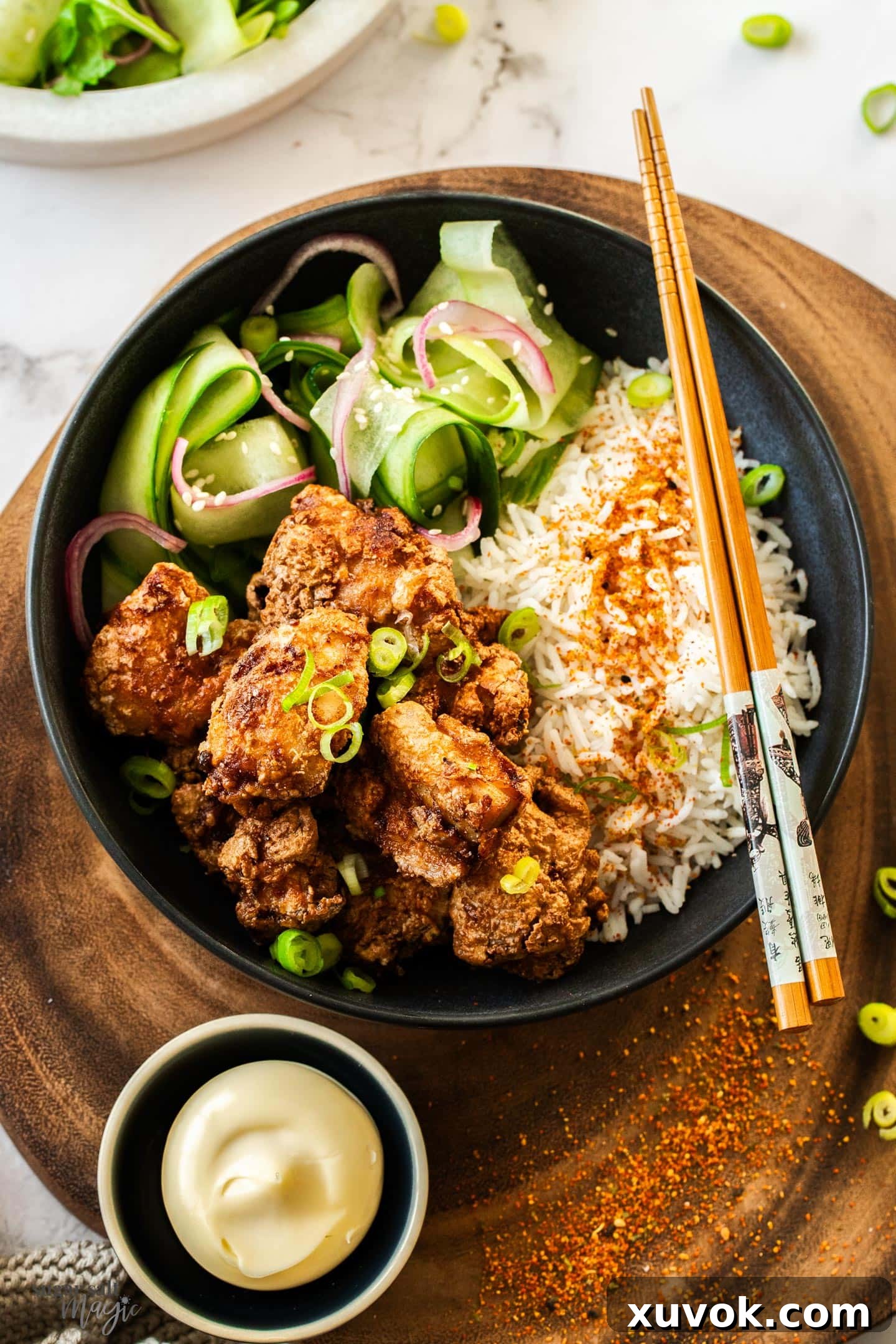
- Karaage Don (Rice Bowl): This is one of my personal favorite ways to enjoy Karaage as a complete meal. Arrange a bed of fluffy steamed rice in a bowl, top it generously with freshly fried Karaage pieces, and add a vibrant side salad or some quick-pickled vegetables. A generous dollop of Kewpie mayonnaise completes this hearty and delicious meal.
- Karaage Salad: For a lighter, yet equally satisfying option, create a vibrant Asian-inspired slaw. Dress it with a flavorful Japanese sesame dressing (Goma Dare) and top generously with crispy pieces of Karaage Chicken. The warm, crunchy chicken provides a fantastic contrast to the cool, crisp vegetables.
What to Serve with Your Karaage Chicken
Japanese fried chicken is wonderfully versatile and can be enjoyed as a delightful appetizer or transformed into a wholesome main meal. When serving it as the star of your dinner, I highly recommend these thoughtful accompaniments that perfectly complement its rich flavors and crispy texture:
- Steamed Rice: A foundation of fluffy, steamed white rice is the ideal partner. Its soft, comforting texture provides a beautiful contrast to the crispy chicken and helps to soak up any delicious juices or sauces. It transforms Karaage into a complete and satisfying meal.
- Fresh Cucumber: Sliced fresh cucumber offers a cool, refreshing counterpoint that cleanses the palate and adds a lovely crisp texture. Its light, delicate flavor doesn’t compete with the bold taste of the chicken. For an extra layer of flavor, try dressing your cucumber slices with a vibrant Japanese sesame sauce (Goma Dare), or for a spicy kick, our Korean spicy cucumber salad is an excellent choice.
- Pickled Vegetables: Bright, tangy pickled elements cut through the richness of the fried chicken. Homemade pink pickled onions are a fantastic option, or you can opt for traditional Japanese pickled vegetables (tsukemono) or even just a few slices of pickled ginger (gari) on the side. Their acidity is a welcome addition.
- Kewpie Mayonnaise: This iconic Japanese mayonnaise is non-negotiable for the ultimate Karaage experience. Known for its rich, umami-packed flavor and silky texture, it’s a revelation compared to regular mayo. You can find Kewpie in most major supermarkets or Asian grocery stores. Seriously, do not skip the Kewpie! If you desire a lighter, tangier dipping sauce, our zesty Nam Jim dressing also works exceptionally well with Karaage Chicken.
- Tonkatsu Sauce: Another excellent Japanese condiment, Tonkatsu sauce is a sweet, tangy, and savory sauce traditionally served with Katsu, but it pairs beautifully with Karaage as well. Its complex flavor profile adds another dimension to your meal.
- Shichimi Togarashi Spice: This Japanese seven-spice blend (often containing dried chili, orange peel, sesame seeds, poppy seeds, hemp seeds, and nori) adds a wonderful layer of warmth, citrus, and a subtle kick. While optional, I highly recommend a light sprinkle over your Karaage for an authentic and exciting flavor boost.
- Roasted Miso Mushrooms: For an incredible umami-rich side dish, these tender, savory mushroom bites are the perfect textural and flavor complement to crispy Karaage Chicken, elevating the entire meal.
This truly has to be one of the quickest and most rewarding fried chicken recipes to make, proving that exceptional flavor doesn’t have to be complicated or time-consuming. Imagine this: you can prep your chicken and heat your oil earlier in the day, then come evening, you’ll be serving up this flavor-packed Japanese delicacy in less than half an hour. It just keeps getting better and better, doesn’t it?
More Asian-Inspired Recipes You’ll Love
- Salt and Pepper Chicken Wings: Crispy, savory, and addictive.
- Golden Sesame Prawn Toast: A delightful appetizer with a rich, savory filling.
- Pork Gyoza (Japanese Pork Dumplings): Perfect pan-fried dumplings, bursting with flavor.
- Oven Baked Teriyaki Salmon: A healthy and flavorful weeknight meal.
- Crispy Asian Chilli Beef Mince: A versatile dish with incredible texture and spice.
- Spicy Korean Chicken Tacos: A fusion of flavors in a fun, handheld format.
- Chinese Fried Chicken Wings: Another fantastic fried chicken variation to explore.
⭐⭐⭐⭐⭐
Did you try this Karaage Chicken recipe?
Show it some love with a rating and comment below. Your feedback means the world to us!
Hungry for more? Subscribe to our newsletter for free recipes straight to your inbox. Also, follow along on Facebook, Pinterest and Instagram for daily inspiration!

Karaage Chicken (Japanese Fried Chicken) Recipe
4
serves
20
10
30
📍Pin Recipe
Recipe Video
A video demonstration for making Karaage Chicken would typically appear here.
Ingredients
-
500 g boneless chicken thighs cut into uniform 4cm / 1 ½ inch pieces -
1 tablespoon grated fresh ginger -
1 clove garlic crushed -
¼ cup soy sauce -
2 tablespoons mirin (Japanese sweet rice wine) -
1 cup potato starch or cornflour (US cornstarch) -
Vegetable oil for frying -
togarashi spice, lemon wedges, and Kewpie mayonnaise for serving
For the most accurate results, always weigh ingredients when a weight is provided.
Equipment
-
deep frying thermometer
-
large heavy based saucepan
-
wire rack and paper towel-lined tray
Instructions
-
In a medium bowl, combine the grated ginger, crushed garlic, soy sauce, and mirin. Add the cut chicken thigh pieces and toss thoroughly to ensure every piece is coated. Cover the bowl with plastic wrap and refrigerate for 10-20 minutes to allow the flavors to meld.
-
Prepare your frying station: Line a large plate or oven tray with several sheets of absorbent paper towel and place a wire rack over the top. Pour the potato starch (or cornflour) into a shallow bowl.
Heat your chosen vegetable oil in a large, heavy-sided saucepan over medium-high heat until it reaches a temperature of 180°C (350°F). A deep-frying thermometer is highly recommended for accuracy. -
Remove the marinated chicken from the fridge. Working in batches (typically 4-5 pieces at a time, depending on your saucepan size), take one piece of chicken, coat it lightly and evenly in the potato starch, shaking off any excess. Gently place the coated chicken into the hot oil.
– **Important:** Do not overcrowd the pot, as this will drastically lower the oil temperature and prevent the chicken from becoming crispy. Maintain the oil temperature between 170-180°C (340-350°F) for best results.
-
First Fry: Deep fry each batch for approximately 1 ½ minutes, or until lightly golden. Remove the par-fried chicken pieces with a slotted spoon and place them on the prepared wire rack to drain. Allow the oil to return to temperature before frying the next batch. Repeat until all chicken pieces have undergone the first fry.
-
Second Fry: Once all chicken has been par-fried, increase the oil temperature back to 180°C (350°F). Starting with your first batch of par-fried chicken, return the pieces to the hot oil. Deep fry a second time for another 1 minute, or until the chicken is a deep golden brown and perfectly crispy. This second fry is essential for achieving the ultimate crunch.
Remove the finished Karaage from the oil and place it back on the wire rack to drain any final excess oil. Continue with the remaining batches. -
Serve your Karaage Chicken immediately while still hot, ideally with a side of Kewpie mayonnaise for dipping, lemon wedges, and a sprinkle of togarashi spice if desired.
-
We love hearing from you! Please take a moment to leave a comment & rating below if you enjoyed this recipe. Your feedback is greatly appreciated and incredibly helpful.
Recipe Notes
- Tablespoon Measurement: Please note that I use a standard Australian 20ml tablespoon (equivalent to 4 teaspoons). Measurements can vary internationally, so it’s always a good idea to check your tablespoon size for consistent results.
- A deep frying thermometer is an invaluable tool for maintaining precise oil temperature, which is essential for crispy, non-greasy Karaage. It’s a relatively inexpensive investment that’s also useful for candy making and other deep-frying tasks.
- I frequently serve this delightful dish as a main meal, accompanied by perfectly steamed rice, thinly sliced refreshing cucumber, tangy homemade pink pickled onions, and a delicate sprinkle of togarashi for an added zing.
- While potato starch is the traditional choice for Karaage, cornflour (or cornstarch in the US) is an excellent and readily available substitute that yields similarly fantastic crispy results.
- Please remember that nutrition details are approximate only and derived from an online calculator. The specific brands and quantities of ingredients you use may cause variations in the final nutritional information.
SPECIALTY INGREDIENTS Deep Dive
- Mirin: This essential Japanese sweet rice cooking wine adds a subtle sweetness and a touch of umami to the marinade. It’s a pantry staple in Japanese cooking and keeps well, making it a valuable ingredient for dishes like sushi rice and various sauces.
- Shichimi Togarashi: A vibrant Japanese seven-spice blend. It typically includes dried chili, orange peel, sesame seeds (white and black), Japanese pepper (sansho), ginger, and nori. While optional, it provides a delightful aromatic and spicy kick that enhances the Karaage’s flavor profile.
- Kewpie Mayonnaise: This isn’t just any mayonnaise. Kewpie, with its distinctive umami-rich flavor derived from egg yolks (rather than whole eggs) and a blend of unique vinegars, is a game-changer. It’s creamy, tangy, and addictive, making it the absolute best dipping sauce for Karaage. It’s widely available in most grocery stores and Asian markets, and truly, **don’t skip the Kewpie** for an authentic experience!
EXPLORE MORE APPETIZERS AND FINGER FOOD RECIPES
334
kcal
Marie Roffey
Appetizer, Main Course, Snack, Tapas
Japanese
Have you tried this irresistible recipe?
Don’t forget to leave a rating and comment below and let us know how it turned out! Your culinary adventures inspire us. Please note: nutrition information is approximate and derived from an online calculator. Actual values may vary based on specific brands and ingredients used.
Calories from Fat 90
Frequently Asked Questions About Karaage Chicken (FAQs)
The unparalleled crispiness of Karaage Chicken is primarily attributed to the specialized double-frying technique. The first fry cooks the chicken and sets the light starch coating, while the second, hotter fry rapidly crisps the exterior to a golden perfection, sealing in the juices and creating that distinctive airy crunch.
Several factors can lead to soggy fried chicken. The most common culprits are insufficient oil temperature (the chicken absorbs oil instead of crisping), overcrowding the pan (which lowers the oil temperature), not frying long enough, or not allowing the chicken to properly drain on a wire rack after frying (which can cause steaming). Ensuring your oil is at a consistent high temperature and frying in small batches are key to success.
Traditionally, the coating for authentic Karaage is simply pure potato starch. This starch is prized for creating an exceptionally light, crisp, and delicate crust that isn’t heavy or doughy. However, cornstarch (known as cornflour in Australia and the UK) works just as effectively and is often easier to find in many regions, yielding similarly fantastic crispy results.
For deep-frying Karaage, it is best to use a neutral-flavored vegetable oil with a high smoke point. Excellent choices include vegetable oil, canola oil, sunflower oil, or peanut oil. These oils can withstand the high cooking temperatures required for frying without burning or imparting undesirable flavors to your delicious chicken.
Karaage is best enjoyed fresh, straight from the fryer, to experience its maximum crispiness. However, if you have leftovers, you can reheat them in an air fryer or oven at 180°C (350°F) for 8-10 minutes until heated through and crispy again. Microwave reheating is not recommended as it will result in soggy chicken.
By tradition, Karaage uses potato starch for its coating, which is naturally gluten-free. To ensure the entire dish is gluten-free, you would need to use tamari (gluten-free soy sauce) instead of regular soy sauce in the marinade. Always double-check ingredient labels for any hidden gluten if this is a dietary concern.
In conclusion, this Karaage Chicken recipe offers a quick, simple, and utterly delicious way to bring the authentic flavors of Japan into your home kitchen. Its irresistible combination of a crisp exterior and juicy interior, coupled with its ease of preparation, makes it a perfect choice for any occasion. Whether you’re a seasoned chef or a beginner, mastering this Japanese fried chicken is a rewarding culinary journey that promises to delight your taste buds and impress your family and friends. So gather your ingredients, follow our steps, and prepare to savor the best Karaage Chicken you’ve ever made!