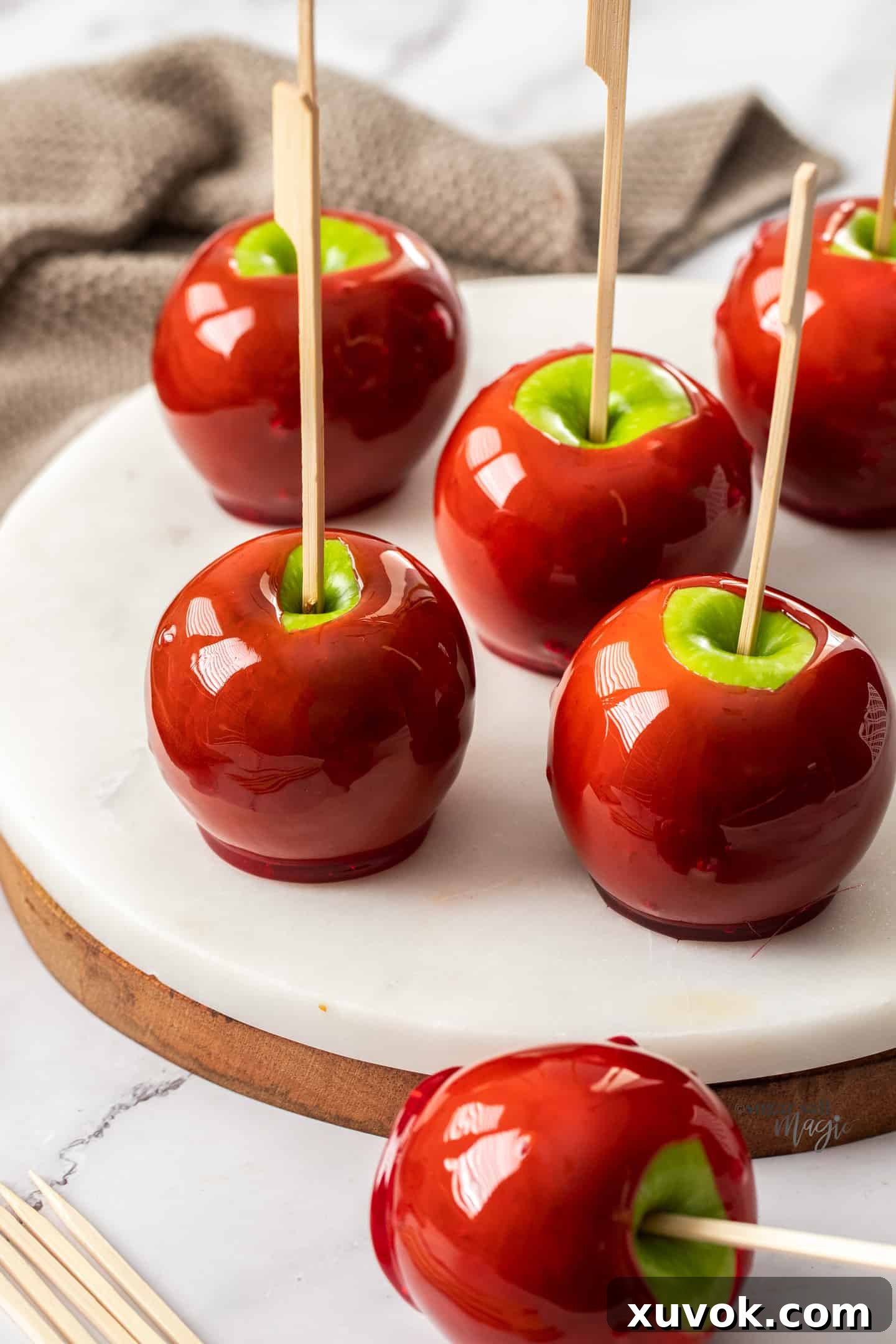
Homemade Toffee Apples: A Timeless Treat from Scratch
Remember the enchanting allure of a perfectly glossy, vibrant red toffee apple from your childhood? For many of us, these delightful confections evoke cherished memories of school fetes, autumn fairs, Halloween parties, and Bonfire Night celebrations. While they might seem like a nostalgic relic, the joy of biting into a crisp apple coated in a shatteringly crunchy toffee shell is an experience that truly never fades. And here’s a secret: making them from scratch is not only incredibly satisfying but also yields a treat far superior to any store-bought version. Pinky promise!
Our homemade recipe ensures:
- An irresistibly crunchy toffee coating that breaks with a satisfying snap.
- Sweet, crisp apples perfectly complementing the rich toffee.
- Just 6 simple ingredients, one of which is water, making it surprisingly accessible.
Diving into the world of homemade toffee apples grants you complete creative control. You get to decide the ideal thickness of your toffee coating, select your absolute favorite apple variety (Granny Smith apples are a classic for their tartness, but more on apple choices later!), and even experiment with a spectrum of colors beyond traditional red. For an extra festive touch, check out my Halloween Candy Apples recipe.
If you, like me, have a particular fondness for homemade candy, then you absolutely must try these vibrant orange marshmallows or the ever-popular salted caramel fudge. They’re perfect for satisfying that sweet tooth and expanding your confectionery repertoire!
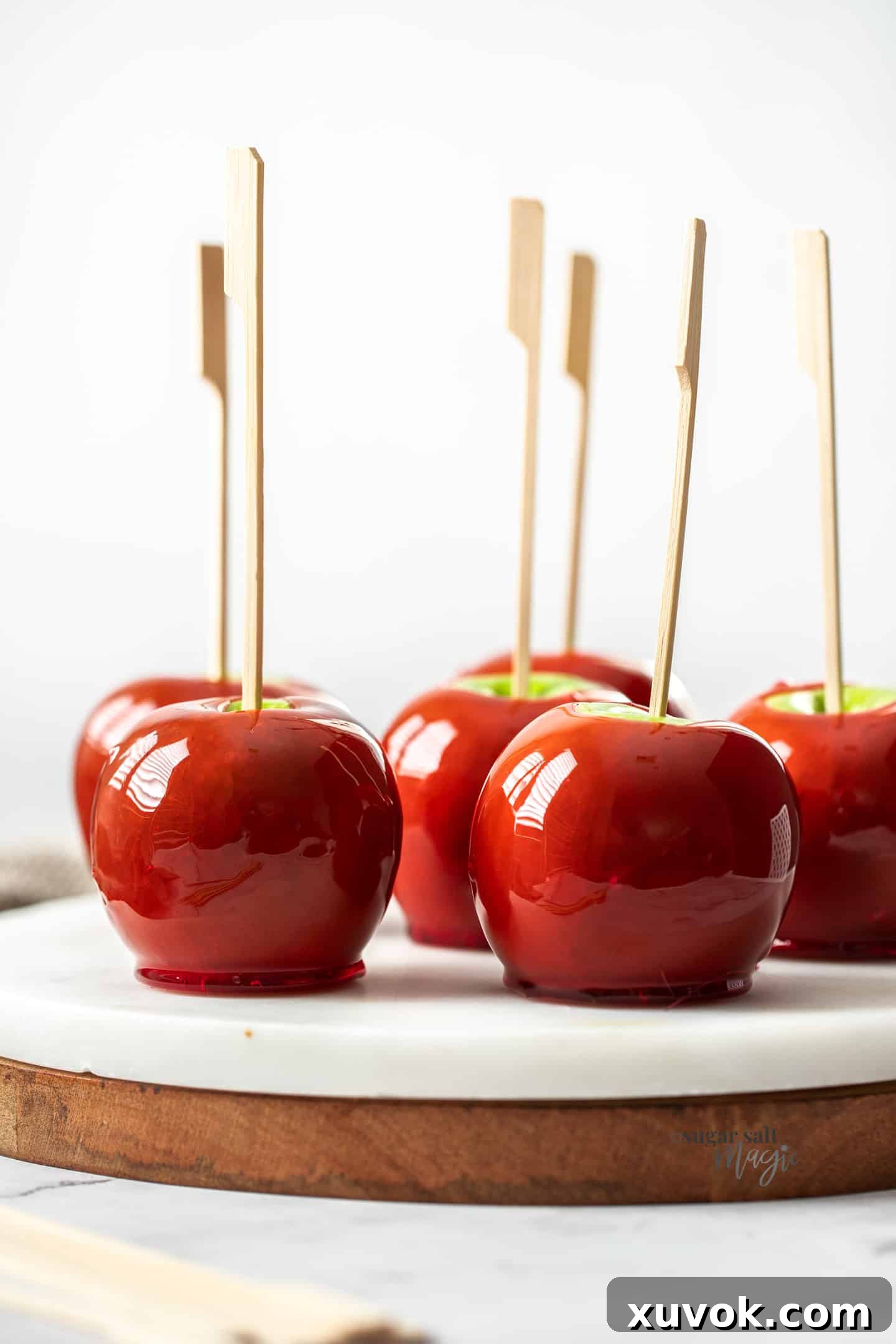
Table of Contents
- Why Make Homemade Toffee Apples?
- Toffee Apples vs Caramel Apples vs Candy Apples
- Essential Toffee Apple Ingredients
- Tools You’ll Need for Toffee Apple Success
- How to Make Perfect Homemade Toffee Apples: A Step-by-Step Guide
- The Science of Toffee: Understanding and Preventing Crystallisation
- Pro Tips for Flawless Toffee Apples
- How Long Do Homemade Toffee Apples Keep For?
- How to Store Toffee Apples for Maximum Crunch
- Frequently Asked Questions (FAQs)
- More Delicious Homemade Candy Recipes
Never Miss a Recipe!
Get the latest recipes straight to your inbox and be the first to discover new sweet and savory delights!
Why Make Homemade Toffee Apples?
There’s an undeniable charm to creating treats from scratch, and toffee apples are no exception. Beyond the nostalgic appeal, crafting your own offers several advantages that simply can’t be matched by store-bought alternatives:
- Unrivaled Freshness: You start with the freshest apples and combine them with newly made, still-warm toffee for an unparalleled taste and texture experience.
- Customization at Your Fingertips: From choosing the perfect apple variety to adjusting the toffee’s thickness and color, you have complete control. Want a super-thick, almost impenetrable toffee shell? Or a thinner, more delicate glaze? It’s entirely up to you.
- Quality Ingredients: You know exactly what goes into your toffee, avoiding artificial flavors or preservatives often found in commercial versions.
- A Fun Activity: Making toffee apples can be a delightful activity for families or a rewarding solo project. The process, while requiring care, is straightforward and yields impressive results.
Toffee Apples vs Caramel Apples vs Candy Apples
The world of apple-on-a-stick treats can sometimes be a little confusing, with terms often used interchangeably. Let’s clarify the delicious distinctions:
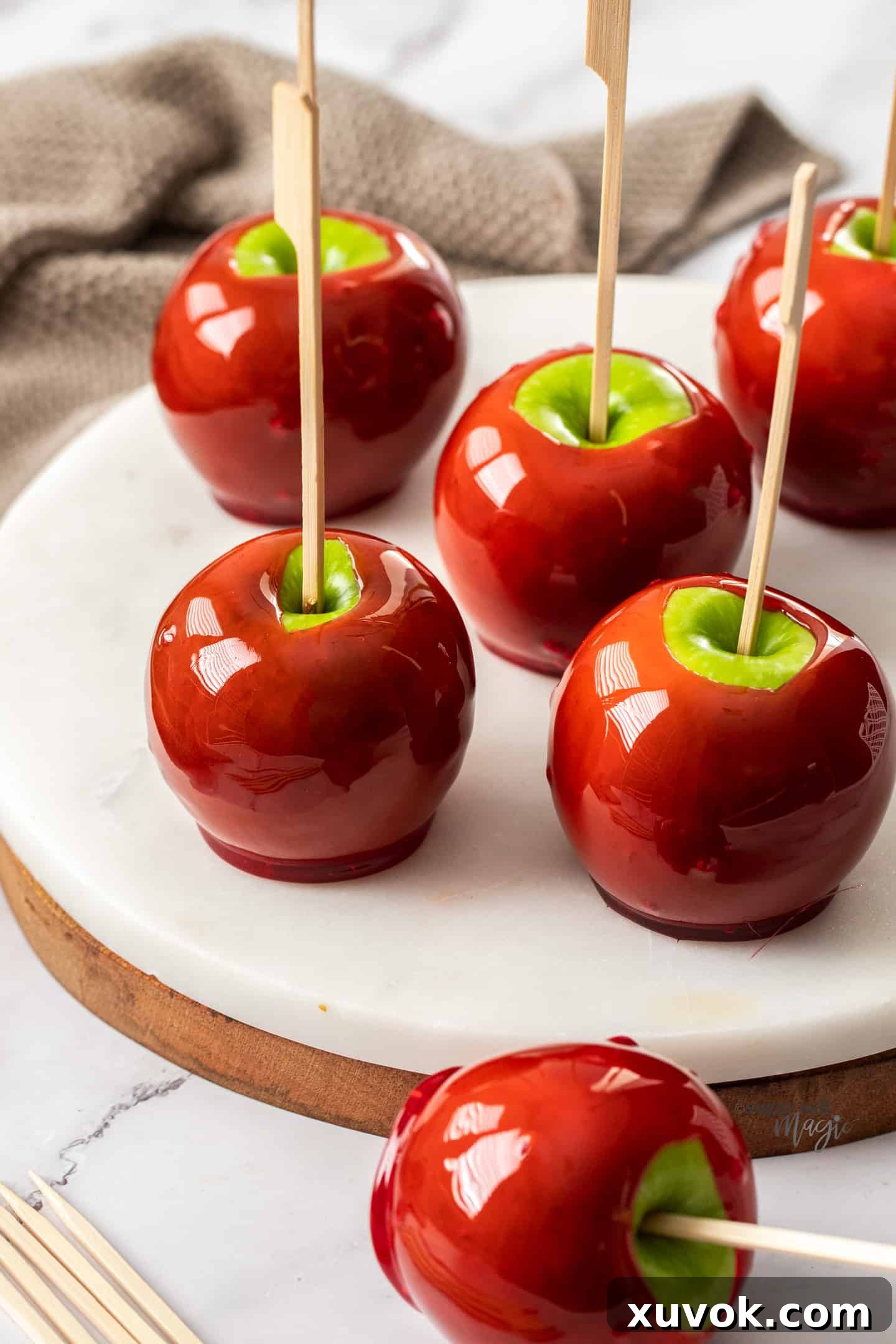
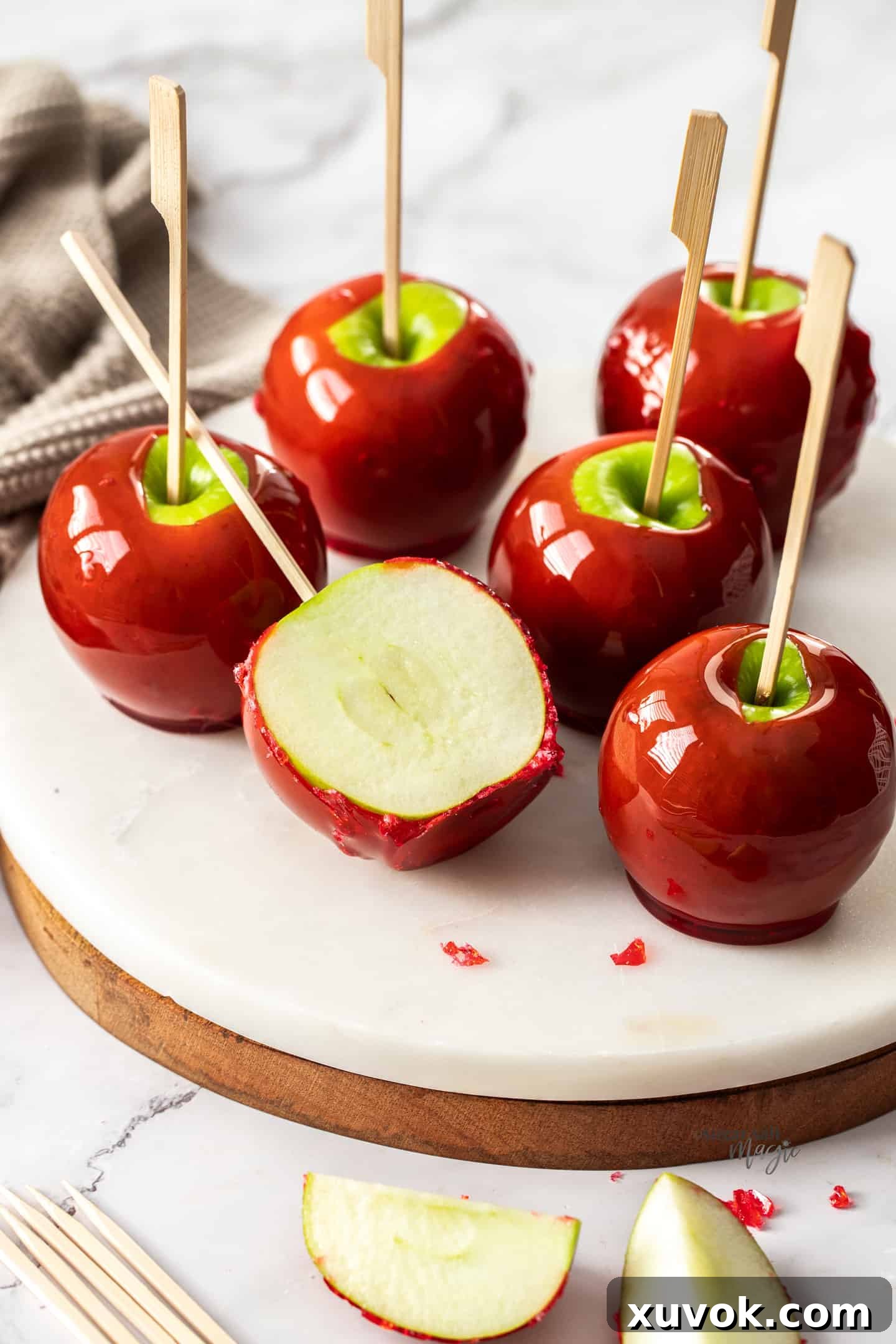
Toffee Apples and Candy Apples are, for all intents and purposes, the same thing. They feature an apple coated in a brilliant, often red, glass-like toffee shell. This coating is hard, crunchy, and shatters when bitten into, delivering a pure, sweet sugar flavor. These are the classic treats many of us grew up with, whether at a fairground or a local shop.
Caramel Apples, while also a type of candy-coated apple, are distinctly different. The coating is soft, chewy, and rich, primarily made with butter and cream, which gives it a decadent, buttery caramel flavor. Caramel apples are also much more commonly decorated with various toppings like chopped nuts, chocolate drizzles, sprinkles, or cookie crumbs, adding layers of texture and flavor.
While I didn’t consciously know it growing up, toffee apples are a quintessential Halloween and Bonfire Night treat in many parts of the world. For me, they were simply a year-round delight found at local shops or school fetes, proving their timeless appeal regardless of the season.
Essential Toffee Apple Ingredients
The beauty of homemade toffee apples lies in their simplicity. With just a handful of everyday ingredients, you can create these impressive treats. The most crucial decision you’ll make is selecting your favorite apple!
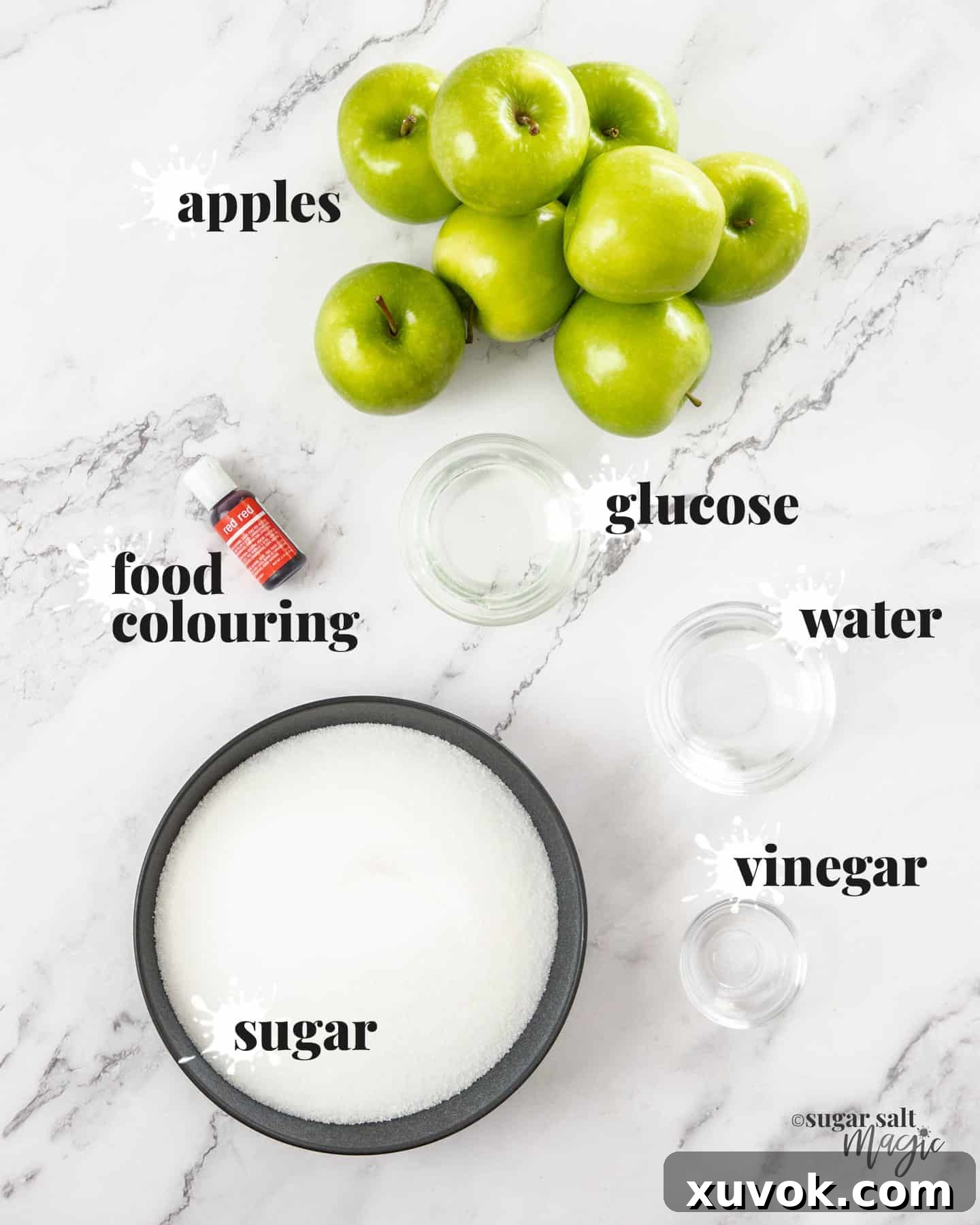
For detailed quantities and comprehensive directions, please refer to the complete recipe card below.
- Apples: Traditionally, Granny Smith apples are the star for toffee apples. Their firm, crisp texture and wonderfully tart edge provide a perfect counterpoint to the intensely sweet toffee coating. However, feel free to use your favorite firm, slightly tart apple. Honeycrisp, Fuji, Gala, or Braeburn are also excellent choices, offering great crunch and flavor. Whichever apple you choose, ensure they are thoroughly washed and dried, especially to remove any waxy coating that might prevent the toffee from adhering properly.
- Sugar: White sugar is essential for that clear, translucent toffee. Caster sugar (also known as superfine sugar) is highly recommended as its finer granules dissolve much quicker than granulated sugar, speeding up the process and reducing the risk of crystallization. While granulated sugar can be used, expect to spend a little more time stirring over low heat to ensure complete dissolution.
- Liquid Glucose (or Light Corn Syrup): This is a crucial ingredient for preventing crystallization, a common pitfall in sugar work. As an invert syrup, liquid glucose helps to keep the sugar molecules from bonding back into solid crystals, resulting in a perfectly smooth, clear, and crunchy toffee. It also adds a beautiful sheen to your finished apples.
- Vinegar: White vinegar plays a similar role to liquid glucose by adding a touch of acid to the sugar syrup. This acidity helps to inhibit crystallization, ensuring your toffee remains smooth and crackly. Don’t worry, the small amount used won’t impart a noticeable vinegar flavor to the final product.
- Food Colouring: A good quality red food coloring is key to achieving that iconic, vibrant red hue. Gel food colorings are generally preferred as they offer concentrated color without adding excess liquid, which could alter the toffee’s consistency. You may need to add a generous amount to achieve a deep, rich red. For a creative twist, I’ve also used black food coloring here to make spooky Halloween candy apples. The possibilities are endless – imagine themed colors for parties or events!
- Water: Simple yet vital, water helps dissolve the sugar and forms the base of your syrup before it’s boiled down to the hard crack stage.
Tools You’ll Need for Toffee Apple Success
Having the right equipment on hand will make the toffee apple-making process smoother and significantly increase your chances of success. Here’s what you’ll need:
- Heavy-Based Saucepan: This is non-negotiable. A heavy-based saucepan, preferably stainless steel, ensures even heat distribution, which is critical for preventing hot spots and burning your sugar. Absolutely avoid non-stick pans, as sugar can easily burn and stick, and the high temperatures can damage the non-stick coating.
- Popsicle Sticks or Thick Wooden Skewers: You’ll need sturdy sticks that can securely hold the apples and withstand the dipping process. Ensure they are long enough to provide a good handle.
- A Candy Thermometer: While it is possible to make toffee apples without one (and I’ll share tips below), a candy thermometer is an invaluable tool for precision. It accurately measures the sugar syrup’s temperature, guiding you to the exact “hard crack” stage required for perfect toffee. They are relatively inexpensive and indispensable for any candy making.
- Spoon or Spatula: For stirring the sugar syrup, particularly at the initial dissolving stage. A clean metal spoon or heat-resistant silicone spatula works well.
- Pastry Brush: A clean pastry brush (preferably silicone or natural bristle) is essential for brushing down any sugar crystals that form on the sides of the saucepan during boiling, preventing crystallization.
- Baking Tray Lined with Parchment Paper: You’ll need a surface to place your dipped apples on to cool and set. Parchment paper is crucial to prevent the toffee from sticking to the tray.
How to Make Perfect Homemade Toffee Apples: A Step-by-Step Guide
Creating beautiful, crunchy toffee apples is a rewarding process that involves just a few key steps. However, precision and caution are paramount, as boiling sugar reaches extremely high temperatures and can cause severe burns. Please proceed with care and attention to safety.
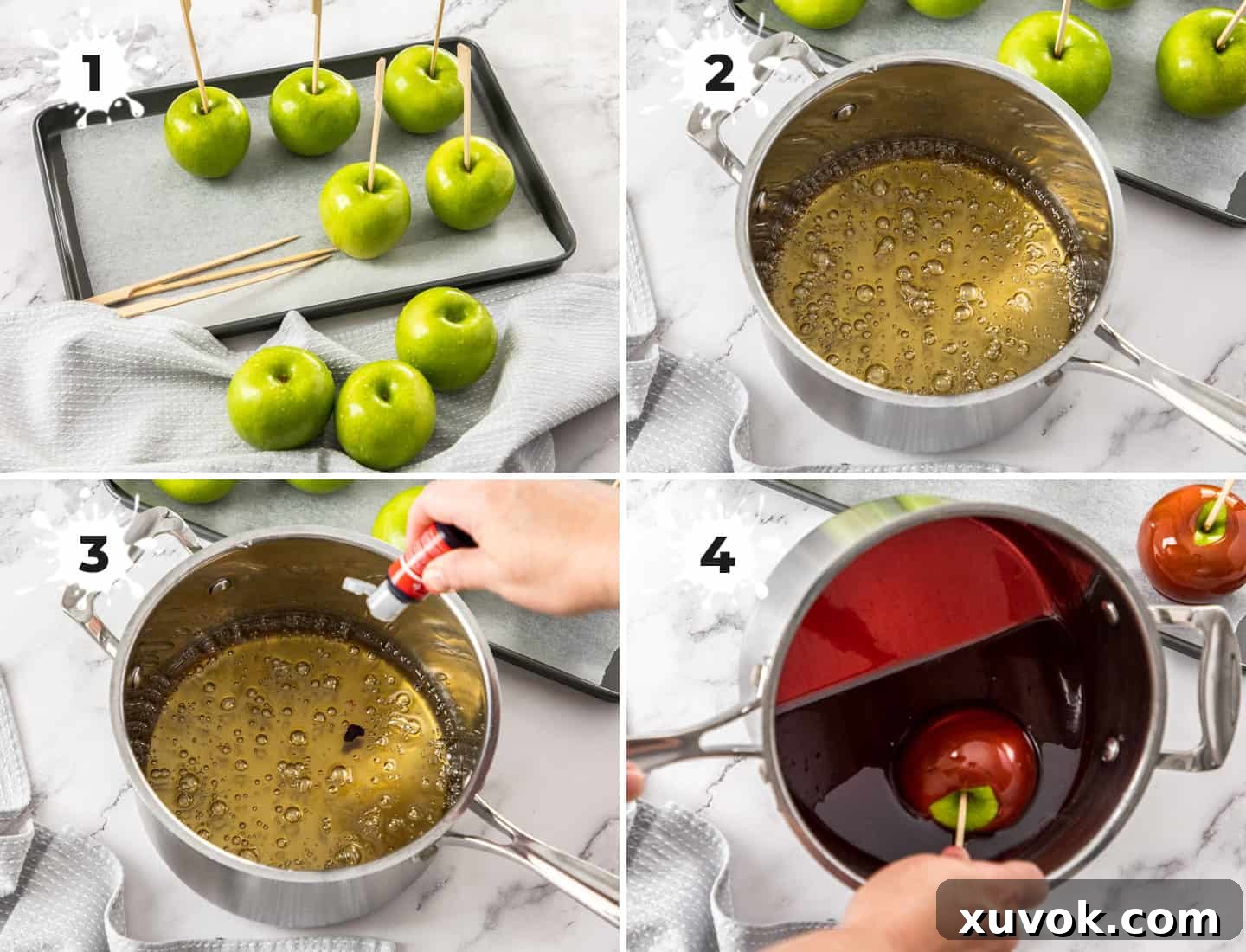
Refer to the recipe card below for the comprehensive recipe details and precise measurements.
- Prep the Apples: Begin by thoroughly washing and drying your chosen apples. This step is critical, especially if your apples have a waxy coating, as any residue can prevent the toffee from sticking. Remove the natural stalks, then firmly insert a popsicle stick or thick wooden skewer straight down into the center of each apple. You might need to use a gentle hammer tap to ensure it goes all the way through for stability. Once prepared, arrange your apples on a baking tray that has been lined with parchment paper. This will be their cooling station. (Refer to photo 1 in the collage).
- Master the Toffee: In your large, heavy-based saucepan, combine the sugar, water, liquid glucose (or light corn syrup), and white vinegar. Place the saucepan over a very low heat. Stir constantly but gently until all the sugar granules are completely dissolved. This patience is key for smooth, clear toffee. Once dissolved, increase the heat slightly and bring the mixture to a rolling boil without stirring. Insert your candy thermometer and continue boiling until the syrup reaches precisely 150°C (302°F), also known as the “hard crack” stage. During this boiling phase, occasionally use a wet pastry brush to gently brush down any sugar crystals that may splash onto the sides of the pan. The syrup will turn a beautiful golden color as it approaches the correct temperature. (Refer to photo 2).
- Color the Toffee: Immediately remove the saucepan from the heat once it reaches the target temperature. Carefully add a few drops of your chosen food coloring. Give the mixture a quick, gentle stir to incorporate the color evenly. Add more coloring if you desire a deeper, more vibrant hue. Allow the bubbles to subside for a moment before dipping, which helps create a smoother coating. (Refer to photo 3).
- Dip the Apples: Working quickly yet carefully, hold an apple by its skewer. Tilt the saucepan to an angle to create a deeper pool of toffee. Dip and roll the apple in the hot toffee, ensuring it’s completely coated. Lift the apple above the saucepan and let any excess toffee drip off for about 15-20 seconds. This prevents puddles at the base. Then, place the coated apple back onto your parchment-lined tray to set. The toffee will begin to harden almost immediately. (Refer to photo 4).
The toffee sets remarkably quickly from this point. In less than 20 minutes after dipping, your toffee apples will be cool and perfectly hard, ready to be enjoyed.
If you’re planning to create a batch with multiple colors, such as the striking red and black combination I used for my black Halloween toffee apples, dip the first color batch completely, then add the second food coloring (e.g., black) to the remaining hot toffee. You’ll need to work with a bit more urgency to ensure the toffee doesn’t cool too much before you finish the second batch, as attempting to reheat the toffee after coloring has been added can cause it to seize and become unusable.
The Science of Toffee: Understanding and Preventing Crystallisation
Cooking sugar to create toffee or caramel is a fascinating process that borders on chemistry. One of the most common challenges home cooks face is crystallization, which occurs when the sugar, having been dissolved into a syrup, starts to revert back to its solid, crystalline state. Even a minuscule speck of grease, a stray sugar grain, or excessive agitation can trigger this chain reaction, ruining an entire batch.
You’ll notice crystallization as grainy, opaque bits forming on the surface of the boiling syrup or clinging to the sides of the pan. If your sugar syrup crystallizes, it will result in a gritty, sugary texture instead of the desired clear, smooth, and crunchy toffee. It simply won’t have the desired hard crack consistency for coating apples.
But fear not, all is not necessarily lost! If you catch crystallization beginning before the syrup has started to color, you can often salvage your batch. I’ve found that adding a small amount of water (around a tablespoon) and giving the syrup a quick, gentle stir can sometimes re-dissolve the rogue crystals. Then, allow the mixture to return to a boil, carefully continuing to monitor its temperature and progress.
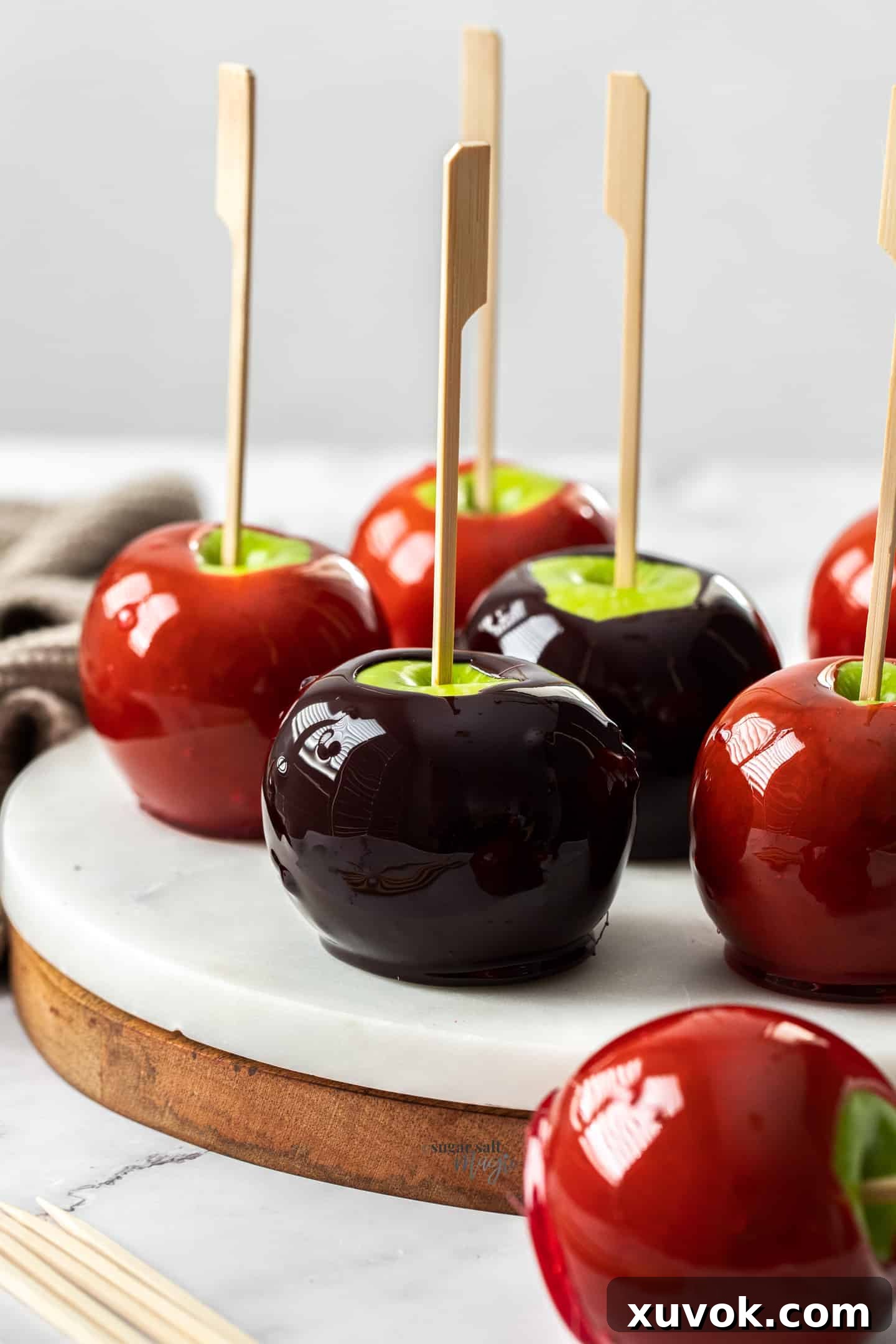
While the classic toffee apple is famously colored red, embracing creativity can lead to stunning results. For an extra touch of spooky elegance, I decided to transform a couple of these into a striking black – truly the perfect sinful Halloween treat that adds a dramatic flair to any autumnal gathering.
Pro Tips for Flawless Toffee Apples
Achieving perfectly smooth, crunchy toffee apples requires a little attention to detail. Follow these expert tips for the best results every time:
- Meticulously Clean Your Equipment: Even the tiniest speck of grease or food residue can initiate crystallization. Before you begin, thoroughly clean your saucepan, spoon, and candy thermometer. A great trick is to rub a little white vinegar over all your equipment, then rinse it off. There’s no need to dry it, as the residual water won’t harm the syrup.
- Combatting Side-Clinging Sugar: As your sugar syrup boils, tiny sugar crystals can splash onto the sides of the saucepan, where they don’t dissolve. These can act as ‘seeds’ for crystallization. Use a clean pastry brush dipped in a little plain water to gently brush down any sugar grains from the pan’s sides back into the syrup. Do this without stirring the main syrup.
- Patience is a Virtue When Dissolving Sugar: For that perfectly smooth, clear toffee, you must ensure all the sugar is completely dissolved before the syrup comes to a rolling boil. Keep the heat low and stir constantly but gently until you no longer feel any gritty sugar on the bottom of the pan with your spoon. This step might take 10-15 minutes, but rushing it will result in grainy, dull toffee.
- Work Swiftly and Strategically: Once the toffee reaches temperature and you’ve added coloring, it will begin to cool and thicken quickly. Have all your apples prepped and your cooling tray ready. Dip efficiently to ensure all apples are coated before the toffee becomes too thick to work with. If making multiple colors, dip the first color batch completely before adding the next color to avoid seizing.
- Safety First: Handle with Extreme Care! Remember, boiling sugar syrup is exceptionally hot – far hotter than boiling water – and can cause severe burns akin to molten lava. Always be cautious. Do not allow the syrup to splash onto your skin, and never dip your fingers into it. Keep children and pets away from the stovetop while working.
- Effortless Pan Cleanup: Don’t fret about the hardened toffee residue in your saucepan. Once you’re finished dipping, simply fill the pan with water and let it sit for about half an hour (or even overnight). The residual toffee will gradually dissolve, making cleanup a breeze. Then, wash as normal.
- Humidity Matters: High humidity can affect how quickly and firmly your toffee sets, and can even make it sticky. Try to make toffee apples on a dry day if possible.
If you’re anything like me, the most challenging part of this recipe is exercising patience during the initial sugar dissolving phase. It truly does take 10-15 minutes, but this crucial step ensures you achieve that gorgeous, crackling toffee that makes these apples so special.
How Long Do Homemade Toffee Apples Keep For?
The crunchy, glass-like coating on toffee apples is one of their most appealing features. However, over time, this toffee will naturally begin to soften. This occurs because the inherent moisture within the apple slowly leaches out, gradually dissolving the sugar coating. For that perfect, satisfying toffee crack, they are best enjoyed within a day or two of being made.
While still perfectly delicious if the toffee has softened slightly, the ultimate experience comes from that immediate hard crunch. Therefore, for optimal texture, plan to make your homemade toffee apples as close to serving time as possible.
How to Store Toffee Apples for Maximum Crunch
Proper storage is key to preserving the desired crunchiness of your homemade toffee apples. To keep them as crisp as possible, ensure each apple is wrapped tightly and individually in cellophane or plastic wrap. This creates a barrier against moisture and air.
Store your wrapped toffee apples in a cool, dry place, such as your pantry – never in the fridge. The moisture and condensation in a refrigerator will cause the toffee to become sticky and soft much faster. Stored correctly, they will maintain their best quality for 3-5 days, though as mentioned, they are truly at their peak in the first 1-2 days.
Frequently Asked Questions (FAQs)
Yes, it is possible to make toffee apples without a thermometer, but it requires a bit more experience and a keen eye. A candy thermometer offers precise temperature control, making the process much easier and more consistent. If you frequently make candy, investing in one is highly recommended as they are inexpensive and incredibly valuable.
To test the syrup without a thermometer, have a small bowl of ice-cold water ready. Once the syrup turns a pale golden color and appears thick, drop a tiny amount of the hot syrup into the cold water. If it immediately hardens into brittle threads that snap cleanly when bent, it has reached the hard crack stage (150°C / 302°F). If it’s still soft or pliable, continue boiling and testing every 30 seconds or so.
This is a common issue, and it’s usually due to a waxy coating on the apples. Many commercially grown apples are coated with a natural or edible wax to preserve freshness and shine. This wax creates a barrier that prevents the toffee from adhering properly.
To resolve this, ensure you thoroughly wash and scrub your apples before skewering them. For stubborn wax, you can dip the apples in warm water for a few seconds or gently wipe them with a cloth moistened with a little white vinegar. Make sure the apples are completely dry before dipping, as any moisture will also repel the toffee.
Absolutely! While classic toffee apples are often left plain, decorating them adds a wonderful touch, similar to how caramel apples are adorned. The key is to have all your decorations prepared and within reach *before* you start dipping, as the toffee sets very quickly.
Once you’ve dipped an apple in toffee and allowed the excess to drip off, immediately roll or dip it into your chosen decorations. Great ideas include mini chocolate chips, colorful sprinkles, crushed M&M’s, cookie crumbs (like crushed Oreos or Biscoff), or finely chopped nuts (peanuts, walnuts, pecans). For Halloween, consider adding edible candy eyes to create spooky characters! Once the toffee has fully set, you could also drizzle melted white or dark chocolate over them for an elegant finish.
Sticky toffee usually means the sugar syrup didn’t reach a high enough temperature. To achieve the hard, brittle texture, the syrup must reach the “hard crack” stage (150°C / 302°F). If it only reaches the “soft crack” or “hard ball” stage, it will remain chewy or sticky. Ensure your candy thermometer is accurate and that you let the syrup boil long enough. High humidity can also contribute to stickiness, as sugar absorbs moisture from the air.
Grainy toffee is a clear sign of crystallization. Refer back to the “The Science of Toffee: Understanding and Preventing Crystallisation” section above for detailed tips. The main culprits are undissolved sugar crystals, impurities (grease), or excessive stirring once the syrup begins to boil. Meticulously clean equipment, brushing down sugar crystals from the sides of the pan with a wet pastry brush, and using liquid glucose/vinegar are your best defenses.
More Delicious Homemade Candy Recipes
If you’ve enjoyed making these classic toffee apples, you might be ready to explore more delightful homemade candy creations. Here are some other fantastic recipes to satisfy your sweet cravings and impress your friends and family:
- Spooky Halloween Candy Apples
- Easy Biscoff Fudge
- Decadent Toffee Pecan Chocolate Truffles
- Classic Homemade Almond Roca (Buttercrunch)
- Quick & Easy Rocky Road
- Luxurious Hazelnut Praline Chocolate Truffles
If you try this delightful homemade toffee apple recipe, please take a moment to leave a rating and comment below. Your feedback is truly valuable, helping both me and other readers discover wonderful new treats!
Hungry for more? Subscribe to our newsletter for free recipes delivered straight to your inbox. Also, connect with us and stay inspired on Facebook, Pinterest, and Instagram!

Homemade Toffee Apples (Candy Apples)
Rate
Pin
Ingredients
- 8 large Granny Smith apples
- 3 cups caster sugar (superfine sugar) (600g / 1 ⅓ pounds) (notes)
- ⅓ cup water (80ml)
- ¼ cup liquid glucose (or light corn syrup) (60ml)
- 1 teaspoon white vinegar
- red food colouring (notes)
For best results, always weigh ingredients where a weight is provided
Equipment
-
Heavy based saucepan – stainless steel best and definitely not a non-stick pan.
-
Popsicle sticks or thick wooden skewers
-
A candy thermometer – I’ll give tips below on how you can make it without one but It’s definitely easier with.
-
Spoon or spatula
-
Pastry brush
Instructions
-
Line a large baking sheet with baking paper and set aside.
-
Give the apples a wash, making sure if they’re waxed to remove all the wax. Remove the stems and dry well. Push in a thick skewer or popsicle stick firmly.
-
Add the sugar, water, glucose, and vinegar to a large heavy-based saucepan (stainless steel is best), over very low heat. Stir constantly until the sugar completely dissolves. This may take 10-15 minutes.
-
Bring the syrup to a boil and sit a candy thermometer on the side of the pan (see note 4 below if you don’t have one). Boil without stirring until the mixture reaches the hard crack stage – 150°C / 302°F. Use a pastry brush wet with a little water, to brush down any sugar crystals that form on the sides of the pan.
-
Take the pan off the heat and mix the food coloring through, then let the bubbles subside for a moment to ensure a smooth coating.
-
Carefully, tip the saucepan on an angle and dip the apples one by one, turning them a few times to coat well all over. Lift, let excess drip off for 15-20 seconds, then place on the lined baking sheet.
-
Please take a moment to leave a comment & rating. It’s appreciated and so helpful.
Notes
- Ensure all your equipment is perfectly clean before you start to minimize the risk of crystallization. Rub vinegar over each piece, then rinse off. No need to dry.
- You can use white granulated sugar, but be aware it will take longer to dissolve due to the larger size of the sugar crystals.
- You can also use black food coloring for some dramatically spooky Halloween toffee apples!
- If you don’t have a candy thermometer, you can test for the hard crack stage by dropping a small amount of the toffee into cold water. It should immediately form brittle threads that snap when bent.
- If the mixture appears to be crystallizing before it has changed color, it can sometimes be saved. Add a tablespoon of water into the syrup, give it a good stir, then allow it to return to the boil again.
- Do not add the food coloring while the toffee is on the heat – this can cause it to seize. Similarly, reheating toffee that has already had coloring added may also cause it to seize.
- This recipe can easily be halved if you wish to make a smaller batch.
DISCOVER MORE CANDY RECIPES!