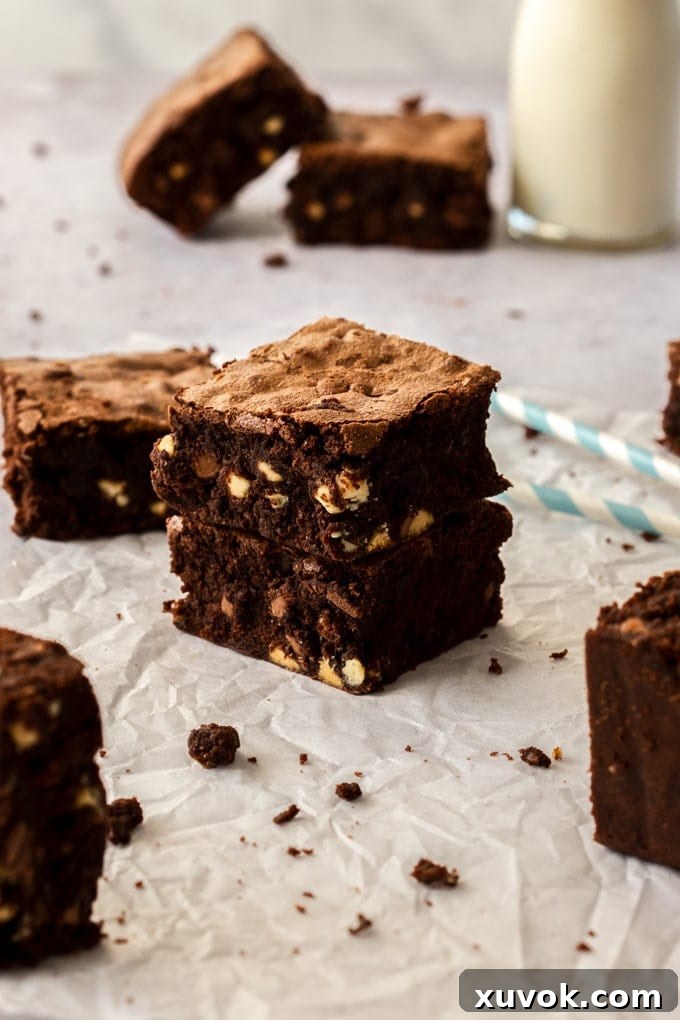
Have you ever spent precious time baking a batch of brownies, only to pull them from the oven and find they’re not quite right? Perhaps they’re too dry and cakey, or overly gooey and undercooked. Maybe the chocolate flavor just doesn’t pop, or that coveted, irresistible crackly top is missing. You’re not alone! Achieving that ideal brownie texture and flavor can feel like a baking enigma. But fear not, because mastering the art of perfect brownies is more straightforward than you think.
This comprehensive guide will equip you with expert tips and insights to transform your brownie baking experience. We’ll delve into everything from choosing the right ingredients to crucial baking techniques, ensuring your next batch of homemade brownies is exactly what you’ve been dreaming of – whether you crave a dense, fudgy bite or a lighter, chewier square with that iconic crackly crust.
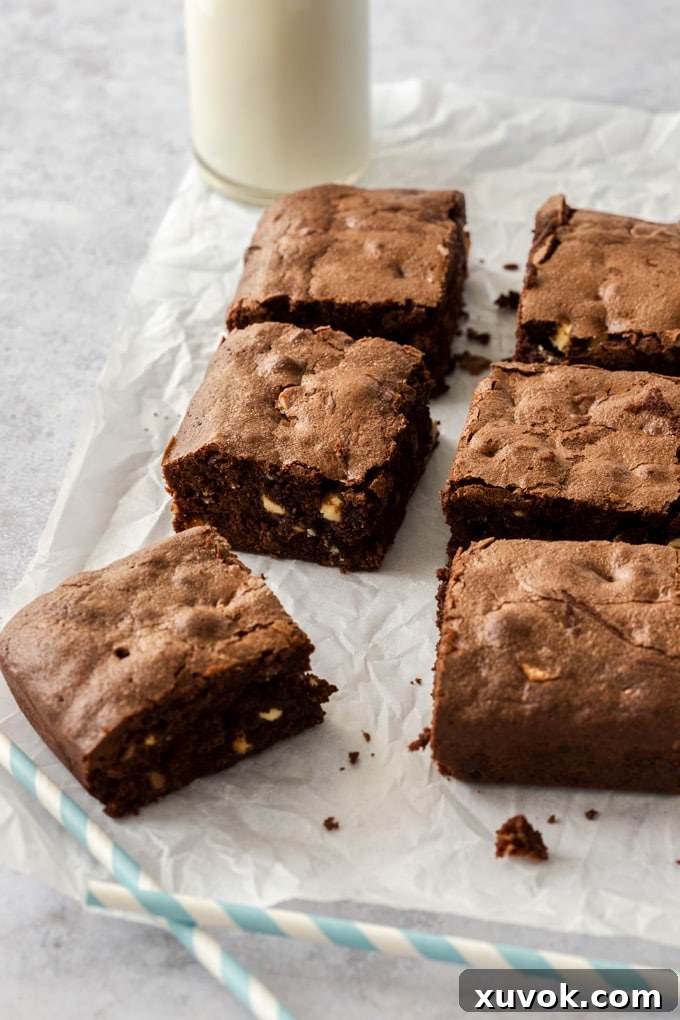
Define Your Perfect Brownie: Fudgy, Cakey, or Something in Between?
Before you even preheat your oven, the first step to baking your ideal brownies is to define what “perfect” means to *you*. Everyone has a preference, and understanding yours will guide your ingredient choices and baking method. Do you lean towards a specific style?
- Are you a loyal fan of rich, incredibly fudgy brownies that melt in your mouth, or do you prefer the lighter, more airy texture of cakey brownies?
- Do you dream of a delicate, glossy crackly brownie top that shatters with each bite, or are you planning to smother them with a creamy frosting anyway?
- Are you a purist who enjoys the unadulterated goodness of a classic brownie, or do you love the textural contrast and added flavor from delicious add-ins like nuts, chocolate chips, or caramel swirls?
Answering these questions will set you on the right path to selecting the perfect recipe and making crucial adjustments to achieve your desired outcome. This foundational understanding is key to unlocking truly personalized and satisfying homemade brownies.
The Foundation of Flavor: Good Quality Ingredients
Brownies are deceptively simple, often relying on just a handful of core ingredients. This means the quality of each component significantly impacts the final taste and texture. Investing in the best ingredients you can afford will elevate your brownies from good to truly exceptional.
- Premium Chocolate: This is where most of the magic happens. Opt for dark chocolate with a high cocoa content (60-75%) for the richest, most intense chocolate flavor. High-quality chocolate bars (not baking chips or compound chocolate, which often contain less cocoa butter and more sugar/fillers) will provide superior flavor and a luxuriously fudgy texture as the chocolate sets upon cooling. The darker the chocolate, the deeper and more complex the flavor, contributing to a truly indulgent experience.
- Quality Cocoa Powder: While many recipes use melted chocolate, cocoa powder adds another layer of deep chocolate flavor. If possible, use Dutch-processed cocoa powder. It has been treated with an alkali to neutralize its acidity, resulting in a smoother, less bitter, and often darker-colored brownie. This creates a beautiful contrast and a more mellow chocolate profile. However, for certain recipes like Red Velvet Brownies, natural unsweetened cocoa powder (which is acidic) is essential to react with baking soda and achieve the desired rise and red hue.
- Fresh Eggs: Often overlooked, eggs play a vital role in structure, moisture, and emulsification. Always use fresh, large free-range eggs for the best flavor and performance. Room temperature eggs are also crucial as they emulsify more easily with other ingredients, creating a smoother, more uniform batter and contributing to that coveted crackly top.
- Real Butter – No Margarine: This is a non-negotiable for superior brownies. Butter provides unparalleled flavor, richness, and contributes significantly to the brownie’s tender crumb and fudgy texture. Margarine, with its different fat composition and water content, simply cannot replicate the delicate balance and depth that butter imparts. Unsalted butter is usually preferred so you can control the salt content in your recipe precisely.
Generally, fudgy brownies often utilize a generous amount of melted chocolate combined with cocoa powder, while cakey brownies tend to rely more heavily on just cocoa powder and less fat.
The Sweet Science: Which Sugar is Best for Brownies?
The type and combination of sugars you use will profoundly influence both the texture and the coveted crackly top of your brownies.
Granulated sugar (white sugar) is your secret weapon for that elusive, shiny, crackly crust. Its fine crystals dissolve readily into the egg mixture, creating a stable meringue-like structure when beaten vigorously. As the brownies bake, this sugary layer caramelizes and hardens, forming the signature crisp top. It also contributes to a slightly chewier texture.
Brown sugar, on the other hand, brings moisture and a distinct flavor profile due to its molasses content. This moisture results in a softer, chewier, and wonderfully moist brownie. The molasses adds a subtle caramel note, enhancing the overall richness. However, that extra moisture from brown sugar can sometimes inhibit the formation of a pronounced crackly top.
For the best of both worlds – a moist, chewy interior with a beautiful crackly crust – many recipes, including our irresistible Chocolate Caramel Brownies, expertly use a combination of white granulated sugar and brown sugar. Experimenting with different ratios can help you fine-tune your ideal brownie texture and achieve that perfect balance of chewiness, moisture, and a glorious crackle.
Amplify the Aroma: Intensify the Chocolate Flavor
Even with high-quality chocolate and cocoa, there are clever tricks to make your brownies taste even more intensely chocolatey, without simply adding more chocolate. These simple additions enhance and deepen the existing flavors.
- A Pinch of Salt: This might seem counterintuitive, but a little salt is a game-changer in chocolate desserts. Salt doesn’t just make things salty; it’s a flavor enhancer. In brownies, it balances the sweetness, cuts through the richness, and most importantly, amplifies the inherent chocolate notes, making them taste bolder and more complex. Use fine sea salt or kosher salt for even distribution.
- The Espresso Secret: One of the oldest and most effective tricks in a baker’s arsenal for chocolate recipes is adding a touch of coffee or espresso. Coffee doesn’t make your brownies taste like coffee; instead, it remarkably deepens and intensifies the chocolate flavor, making it richer and more robust. Just a teaspoon of instant espresso powder dissolved in a tiny bit of hot water or a tablespoon of strong brewed espresso added to your wet ingredients is usually enough to achieve this magical effect.
- Pure Vanilla Extract: While not explicitly mentioned, vanilla is a classic companion to chocolate. A good quality pure vanilla extract (not imitation) rounds out the flavors, adding a fragrant warmth and enhancing the overall complexity of the chocolate profile.
- A Hint of Spice (Optional): For an even deeper, more sophisticated chocolate experience, consider a tiny pinch of unexpected spices like cinnamon, chili powder, or even a dash of cardamom. These spices can add a subtle warmth and intrigue that complements the chocolate beautifully without overpowering it.
The Elusive Top: How to Get a Crackly Top on Your Brownies
That beautiful, shiny, crackly crust is the hallmark of a truly well-made brownie for many bakers. Achieving it is a combination of specific ingredients and precise technique:
Firstly, the type and proportion of sugar are paramount. To get that signature crackle, prioritize white granulated sugar. Aim for a higher proportion of white sugar to brown sugar; a 3:1 ratio of white to brown sugar is an excellent starting point when striving for this desired effect.
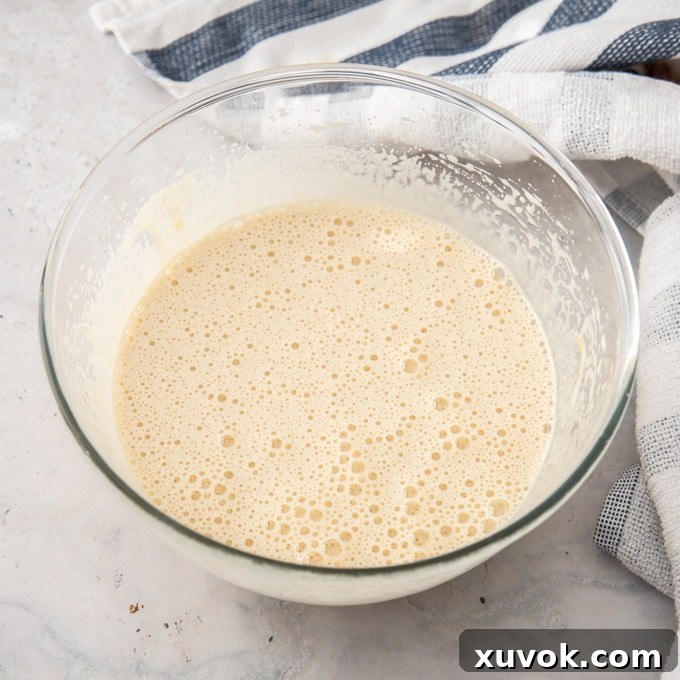
Secondly, the method of incorporating the sugar and eggs is crucial. Begin by vigorously beating the granulated sugar with the eggs until the mixture transforms into a pale, thick, and frothy consistency. This isn’t just about mixing; it’s about dissolving the sugar crystals and incorporating a significant amount of air, creating a stable emulsion. The mixture should fall in a thick ribbon when the beaters are lifted. This vigorous beating creates a meringue-like layer on top of the batter. As the brownies bake, this aerated, sugary layer sets and caramelizes, resulting in the desired delicate, crisp, and crackly surface. Ensure your eggs are at room temperature, as they will emulsify better and incorporate more air.
To Leaven or Not to Leaven: Why Some Brownie Recipes Have Baking Powder
Baking powder is a chemical leavening agent commonly used in baked goods to help them rise and achieve a lighter, airier texture. In the context of brownies, its inclusion directly influences the final consistency.
The more baking powder you incorporate into your brownie batter, the more lift and expansion the brownies will experience during baking. This results in a texture that is closer to cake – lighter, softer, and more crumbly. If your preference is for a truly cakey brownie, then a small amount of baking powder is appropriate.
However, for those who crave dense, chewy, and intensely fudgy brownies, the general rule is to use very little to no baking powder at all. The structure and slight rise needed for fudgy brownies typically come from the air incorporated when beating the eggs and sugar properly, and from the steam created during baking. Relying on this natural aeration ensures your brownies retain their desired dense, moist, and chewy characteristics without becoming overly cake-like.
Smooth Batter, Perfect Bake: Sift in the Dry Ingredients
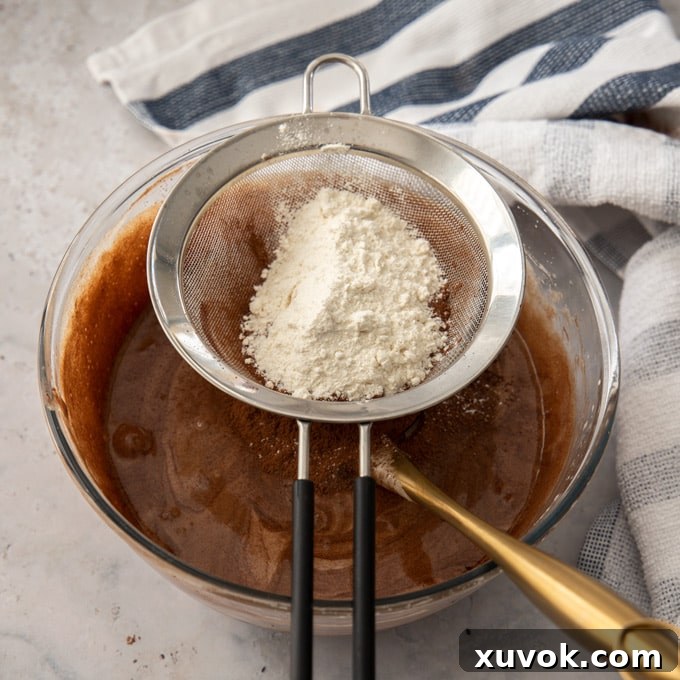
The step of sifting your dry ingredients might seem minor, but it plays a significant role in achieving a smooth, lump-free brownie batter and an evenly textured final product.
When you sift flour, cocoa powder, and any other dry ingredients directly into your wet mixture, you accomplish several important things:
- Removes Lumps: Sifting breaks up any clumps of flour or cocoa powder, ensuring a uniform distribution throughout the batter. This prevents pockets of unmixed dry ingredients in your baked brownies.
- Aerates Ingredients: Sifting introduces a bit of air into the dry ingredients, making them lighter and easier to fold into the wet mixture. This helps maintain the volume you’ve already created by beating eggs and sugar, contributing to a better texture.
- Prevents Overmixing: Because sifted ingredients combine more easily, you’ll need to mix the batter less. Overmixing the flour activates too much gluten, which can lead to tough, chewy (in a bad way) brownies rather than tender and fudgy ones. Gentle folding after sifting is key to maintaining a delicate structure.
Preparation is Key: Always Line Your Baking Tin
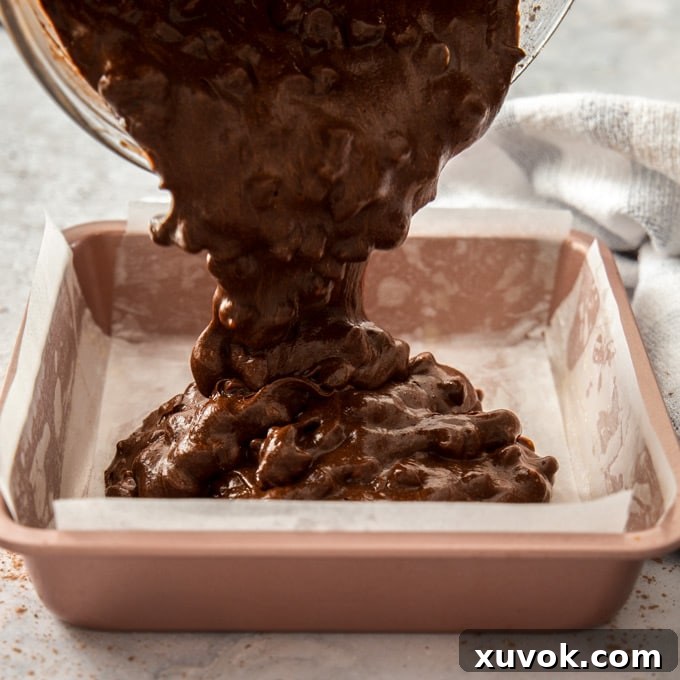
A simple step that saves a lot of hassle and ensures beautifully presented brownies is properly lining your baking tin. Skipping this can lead to frustration when trying to remove your baked brownies.
The best practice is to always line your tin with baking paper or parchment paper. This creates a non-stick barrier, allowing your brownies to be easily lifted out of the tin once cooled, preventing them from sticking to the sides or bottom. For optimal results, first lightly grease your baking tin, then lay the parchment paper inside, pressing it firmly against the greased sides and bottom. You can leave an overhang of paper on two opposite sides to create “slings” or “handles” that make lifting the entire slab of brownies out incredibly simple. This greasing technique also ensures the paper stays put when you pour in your thick brownie batter, preventing it from shifting around.
Consider the type of tin as well: metal pans conduct heat more quickly and result in crispier edges, while glass or ceramic dishes bake more slowly and retain heat longer, often producing softer edges and a slightly longer baking time.
The Critical Moment: Check Them Before It’s Time
Baking times provided in recipes are always guidelines, not strict rules. Oven temperatures can vary significantly, even within the same brand, and different baking vessels conduct heat differently. Therefore, it’s crucial to start checking your brownies a few minutes before the recipe’s suggested minimum baking time.
For instance, if a recipe suggests 25-30 minutes, begin testing at 20-22 minutes. Brownies baked in glass or ceramic dishes will generally take longer to cook through than those in metal tins, as these materials retain heat differently. If you are developing your own brownie recipe, a good starting point for cooking time is approximately 9-10 minutes per 3/4 cup of batter.
How to know when brownies are done? The classic toothpick test is your most reliable indicator. Insert a wooden skewer or toothpick into the center of the brownies:
- If it comes out with wet batter clinging to it, they are definitely not ready.
- If it comes out with a few moist, sticky crumbs attached, they are perfectly done. This is the sweet spot for fudgy brownies, as they will continue to cook slightly from residual heat once removed from the oven (this is called carryover cooking).
- If the toothpick comes out completely clean, your brownies are likely overbaked and will result in a drier, more cakey texture.
It is always better to slightly undercook brownies than to overcook them, especially if you’re aiming for a fudgy texture. Undercooked brownies will firm up as they cool, while overcooked brownies will remain dry and crumbly.
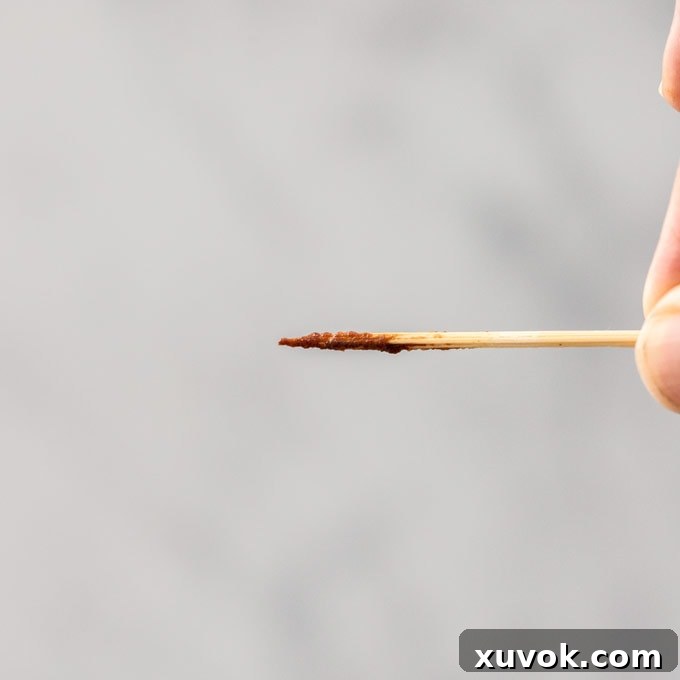
Toothpick has wet batter on it – not ready yet
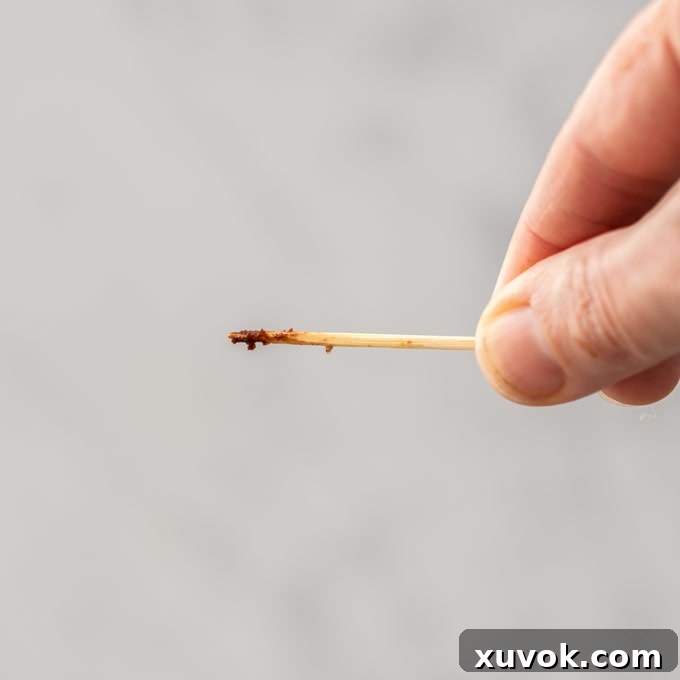
Toothpick has a few sticky, moist crumbs – they’re ready to take out of the oven
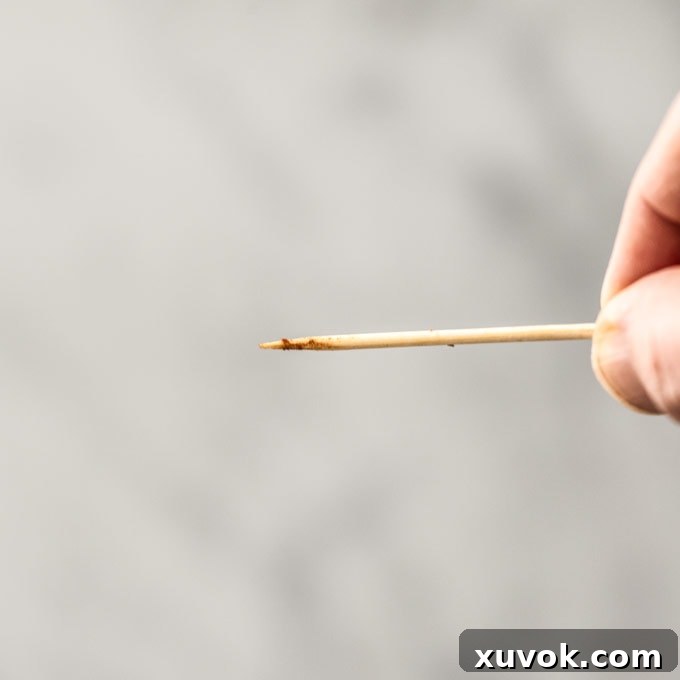
Toothpick has nothing sticking to it – overbaked.
A Second Chance: What If I’ve Overcooked My Brownies?
While there’s unfortunately no going back once brownies are overbaked, all hope is not lost! Even a slightly dry brownie can still be enjoyed with a little creativity. To reintroduce moisture and make them more palatable, try serving them warm with a generous scoop of vanilla ice cream, which will melt and soften them. Alternatively, poke small holes across the surface of the brownies and pour over a rich chocolate syrup, a warm ganache, or a simple milk glaze. This allows the liquid to soak in, restoring some much-needed moisture and transforming them into a decadent treat. You can also crumble them up to use as a topping for sundaes, mix-ins for milkshakes, or even form them into brownie truffles.
Patience is a Virtue: Let Them Cool in the Tin
Resist the temptation to immediately remove your brownies from the hot baking tin. Allowing them to cool gradually in the tin is a crucial step that contributes to their final texture and structure.
As brownies cool, they continue to set, firm up, and redistribute moisture. Removing them too soon can cause them to fall apart, crumble, or lose their fudginess. During this cooling period, it’s perfectly normal for them to deflate a little; this is a natural part of the setting process. Let them cool in the tin until they are at least at room temperature before attempting to remove them using the parchment paper sling. For truly fudgy brownies, chilling them completely before cutting is even better.
The Perfect Slice: When to Cut Brownies
For neat, clean-cut brownies that hold their shape beautifully, patience is key. It’s imperative to wait until your brownies have cooled completely before you attempt to cut them. This allows the fats (butter, chocolate) and sugars to fully solidify and set, ensuring a stable structure.
For the absolute cleanest cuts, especially with rich, fudgy brownies, consider refrigerating them for an hour or two (or even overnight) until they are thoroughly cold. This firms them up considerably, making them much easier to slice into perfect squares without sticking or crumbling. Use a sharp, non-serrated knife, wiping the blade clean between each cut for the crispest edges.
Click here to Pin this post for later!
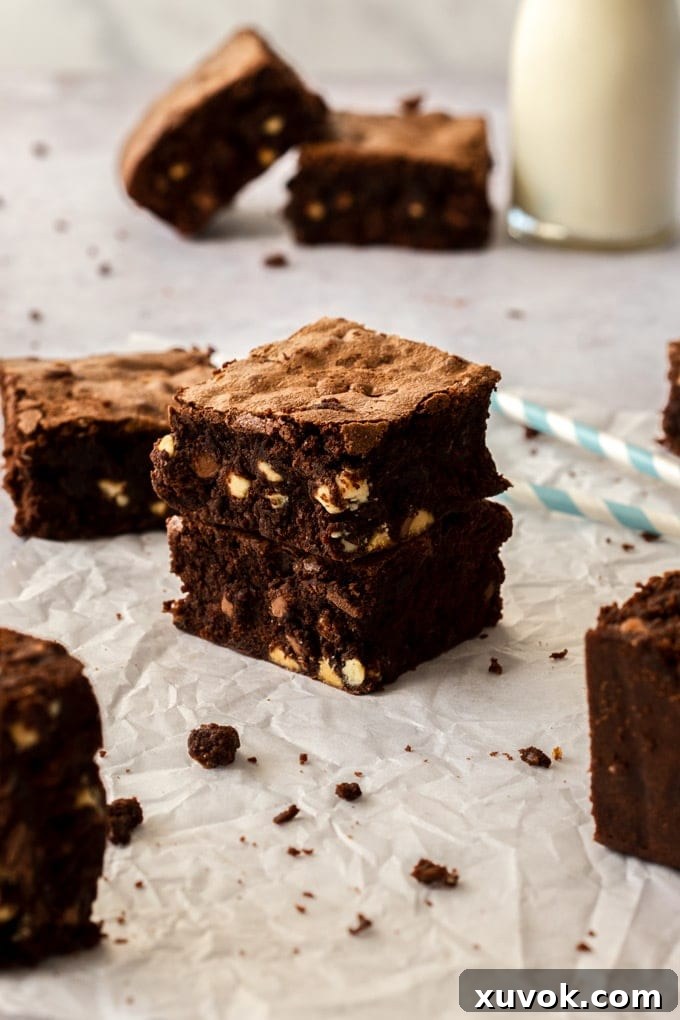
Achieving Perfection: How to Make Fudgy Brownies
If you dream of dense, rich, and incredibly moist brownies that melt in your mouth, follow these essential tips:
- Embrace Melted Chocolate: Use a significant amount of high-quality melted chocolate (dark chocolate works best) in your recipe. This contributes to the dense, gooey texture upon cooling.
- Minimize or Omit Leavening: For true fudginess, avoid using baking powder or use a very minimal amount. The goal is density, not rise.
- Increase Fat Content: More fat, typically from extra chocolate and butter, enhances the richness and contributes to that signature fudgy consistency.
- Slightly Undercook: Pull your brownies from the oven when a toothpick inserted into the center comes out with moist crumbs, not wet batter, but definitely not clean. They will continue to set as they cool.
Crafting the Classic: How to Make Cakey Brownies
For those who prefer a lighter, more crumbly, and slightly drier brownie that resembles a rich chocolate cake, consider these adjustments:
- Include Baking Powder: Incorporate a small amount of baking powder into your dry ingredients. This will provide the necessary lift and aeration for a cake-like texture.
- Extend Baking Time Slightly: Bake them a little longer than you would for fudgy brownies, ensuring a toothpick comes out almost clean (but still with a few moist crumbs to prevent excessive dryness).
- Reduce Fat and Rely on Cocoa: To achieve a less dense, more cakey texture, some recipes use less fat and rely solely on cocoa powder for the chocolate flavor, often omitting melted chocolate.
Explore Our Amazing Brownie Recipes
Ready to put your newfound knowledge to the test? Dive into our collection of irresistible brownie recipes, each designed to bring you a unique and delightful chocolate experience:
- Fudgy Marshmallow Brownies
- Chocolate Coconut Brownies
- Red Velvet Brownies
- Ferrero Rocher Brownies
- Thick Fudgy Chocolate Chip Brownies
- Chocolate Caramel Brownies
- Biscoff Brownies