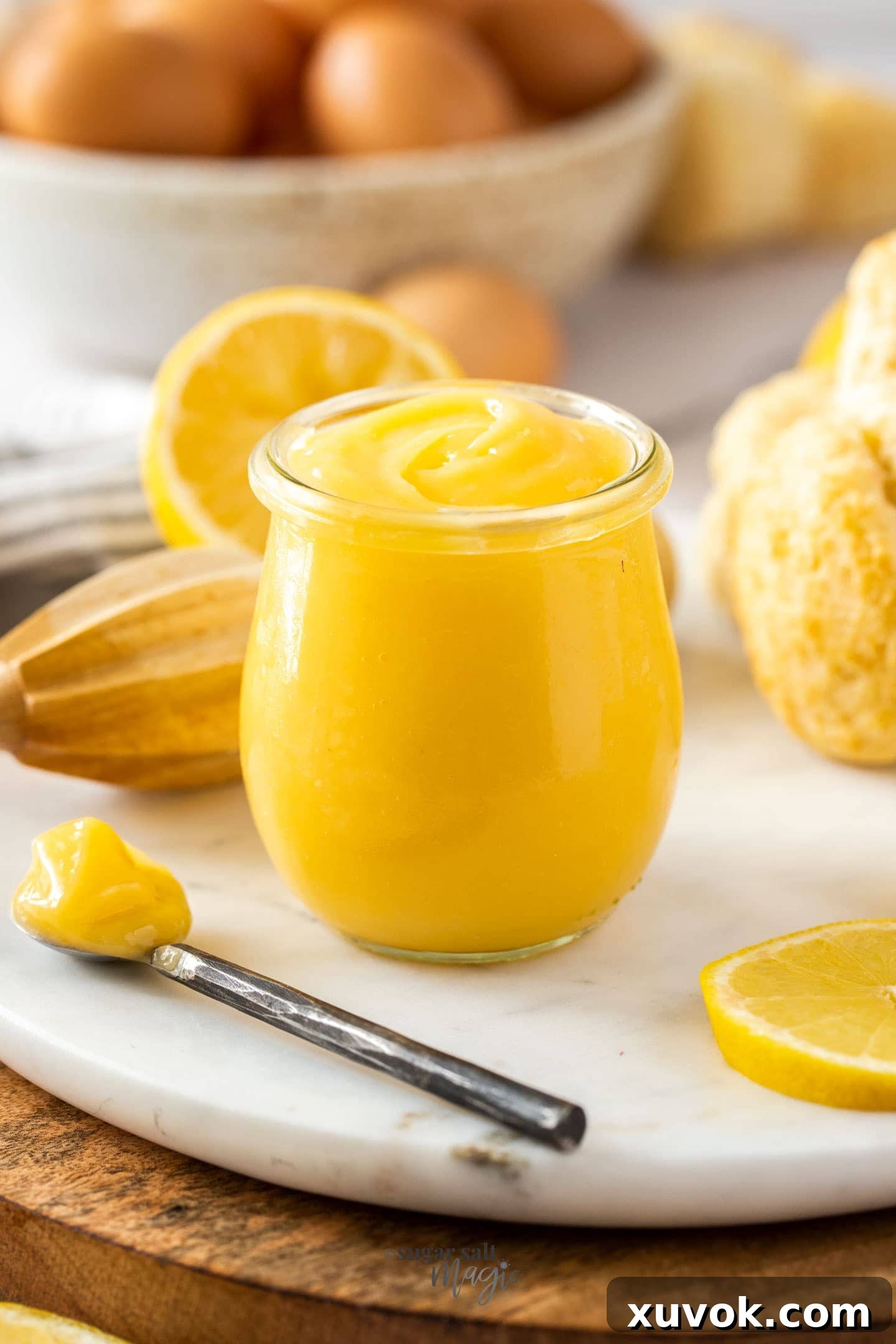
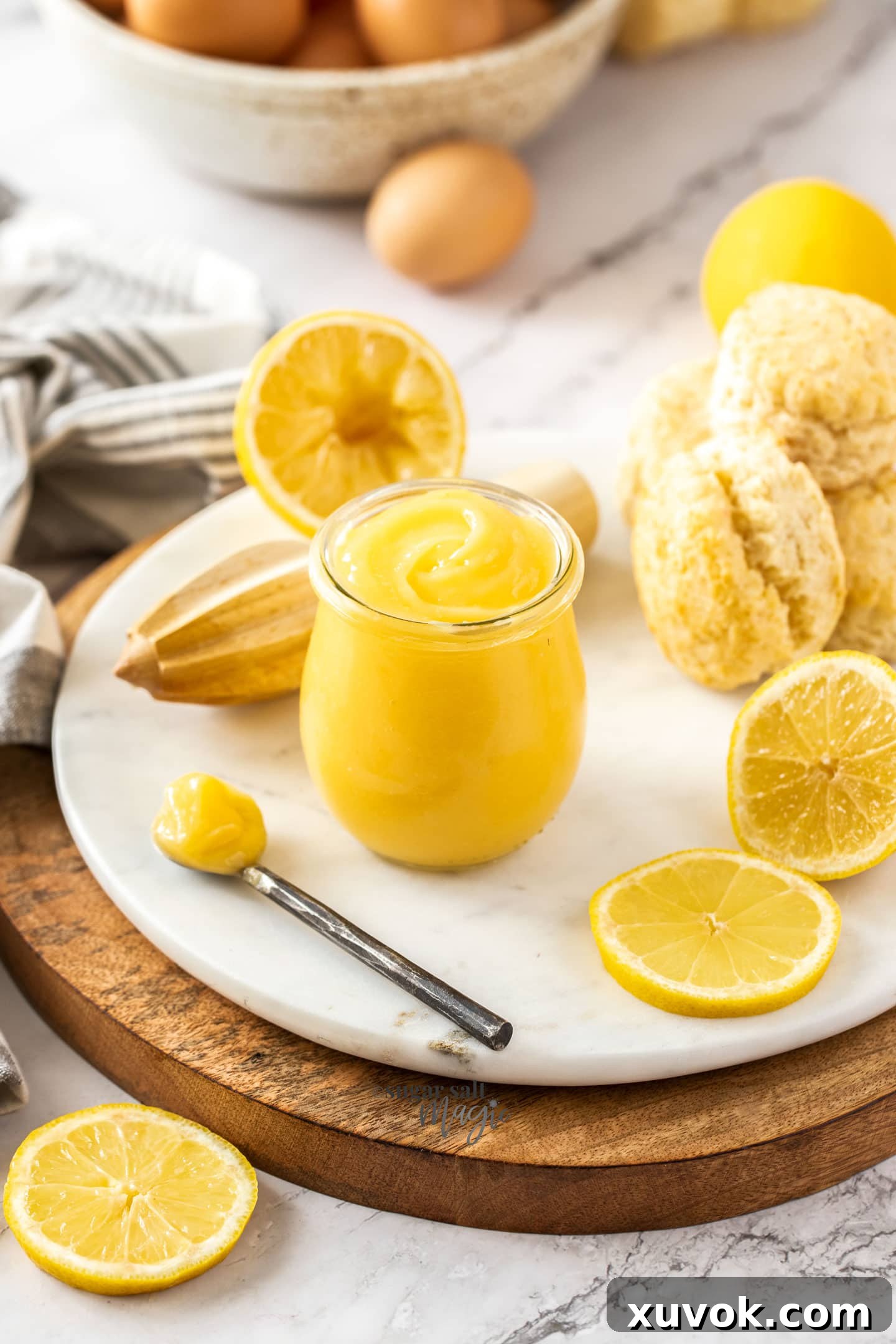
Experience the ultimate indulgence with this incredibly easy homemade lemon curd recipe. Imagine a luxuriously creamy, perfectly buttery, and delightfully sweet spread with a vibrant, tangy lemon flavor that simply melts in your mouth. This isn’t just a recipe; it’s a gateway to elevating your everyday breakfasts and dazzling your dessert creations. Best of all, it’s a simple culinary adventure you can complete in mere minutes, transforming basic ingredients into something truly extraordinary.
If the thought of a decadent lemon crumble slice, an elegant lemon meringue pie, or a light and airy lemon curd mousse makes your taste buds tingle, then stopping everything to make this luscious lemon curd is an absolute must. Prepare to be amazed by the freshness and depth of flavor that only homemade can offer.
❤️ Why You’ll Adore This Easy Lemon Curd Recipe
This lemon curd isn’t just a treat to eat; it’s a joy to make. Here’s why this recipe will become your new favorite:
- It takes just 10 minutes of active cooking time, allowing you to whip up a fresh batch whenever a craving strikes without hassle.
- You’ll only need one pot – no complicated double boiler setup required, which means fewer dishes and less fuss.
- It’s made with a mere 4 simple ingredients, likely staples you already have in your pantry and fridge.
- Completely free from preservatives, artificial colors, or artificial flavors, this curd is **all natural** and bursting with authentic lemon goodness.
- The taste is simply unparalleled – it’s a million times better than any shop-bought version. Expect a silky smooth texture combined with a perfect balance of tangy and sweet.
- This recipe is genuinely the easiest and arguably the best you’ll find. We stand by this bold claim once you taste it for yourself.
- Its versatility knows no bounds; use it in magnificent cakes, delicate cookies, show-stopping pies, or simply spread it generously on toast, scones, or pancakes.
- Includes a comprehensive troubleshooting guide, ensuring your lemon curd turns out perfectly every single time, even if you’re a beginner.
This recipe was first published here on 29th October 2018 and has been updated with new information, a comprehensive troubleshooting guide, and fresh images to inspire your baking.
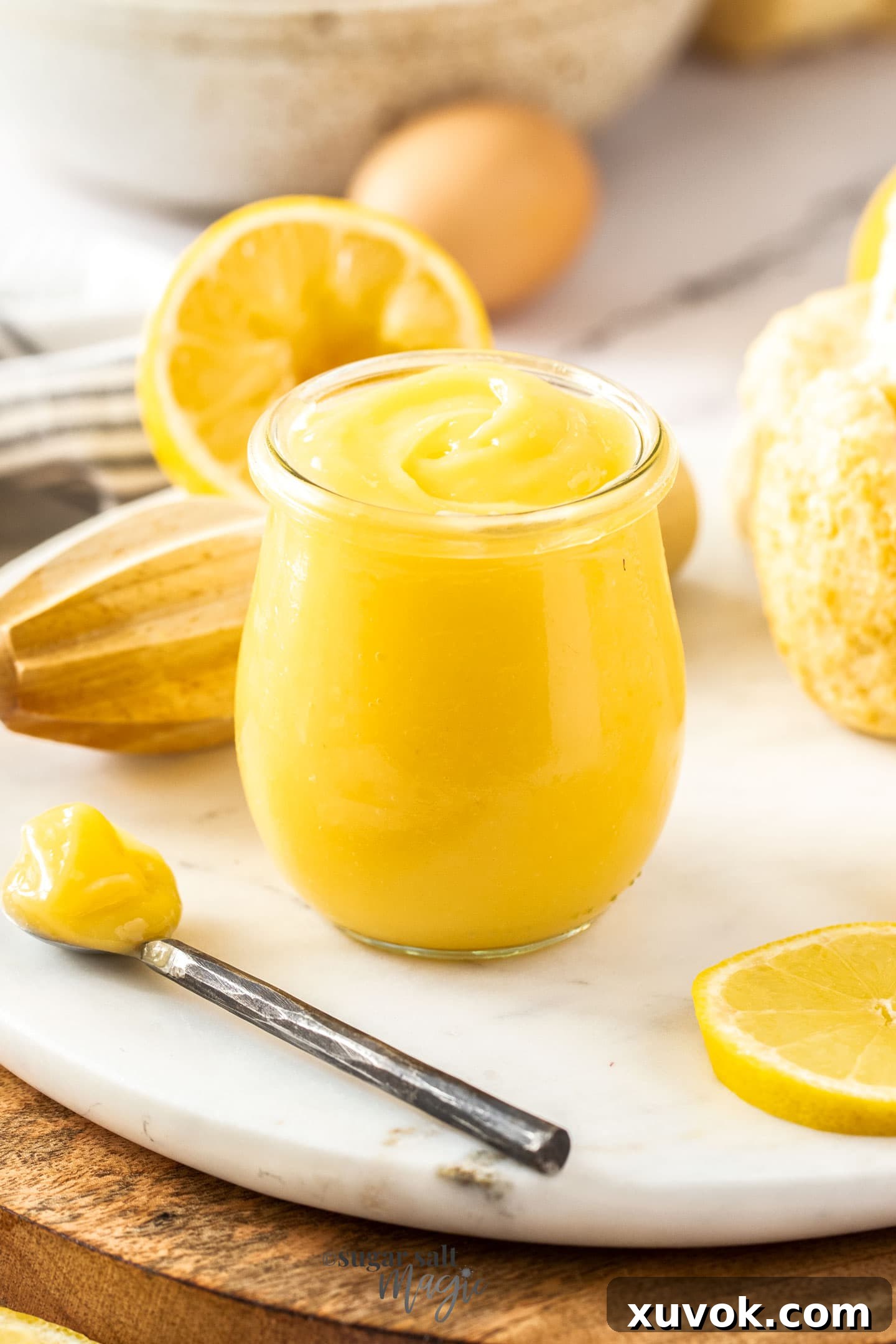
Table of Contents
Toggle
Never Miss a Recipe!
Get the latest delicious recipes straight to your inbox!
Sign up to our newsletter for free recipes!
What is Lemon Curd? A Delightful History and Definition
At its heart, lemon curd is a velvety, intensely flavored spread made from just four core ingredients: fresh lemons, rich butter, granulated sugar, and eggs. Originating in England, this bright and zesty concoction began as a way to preserve the vibrant flavor of lemons, initially served with bread or scones during afternoon tea.
Unlike traditional custards, which rely heavily on milk or cream for their base, lemon curd achieves its luxurious thickness and creamy texture through the emulsification of egg yolks and butter, combined with the thickening properties of whole eggs, all while being infused with an intense lemon flavor. The result is a smooth, spreadable consistency that makes it perfect for topping everything from a simple slice of toast to fluffy pancakes, or serving as an exquisite filling for pies, tarts, and cakes. Its unique balance of tartness and sweetness sets it apart, offering a refreshing and rich experience in every spoonful.
Essential Ingredients for Perfect Lemon Curd
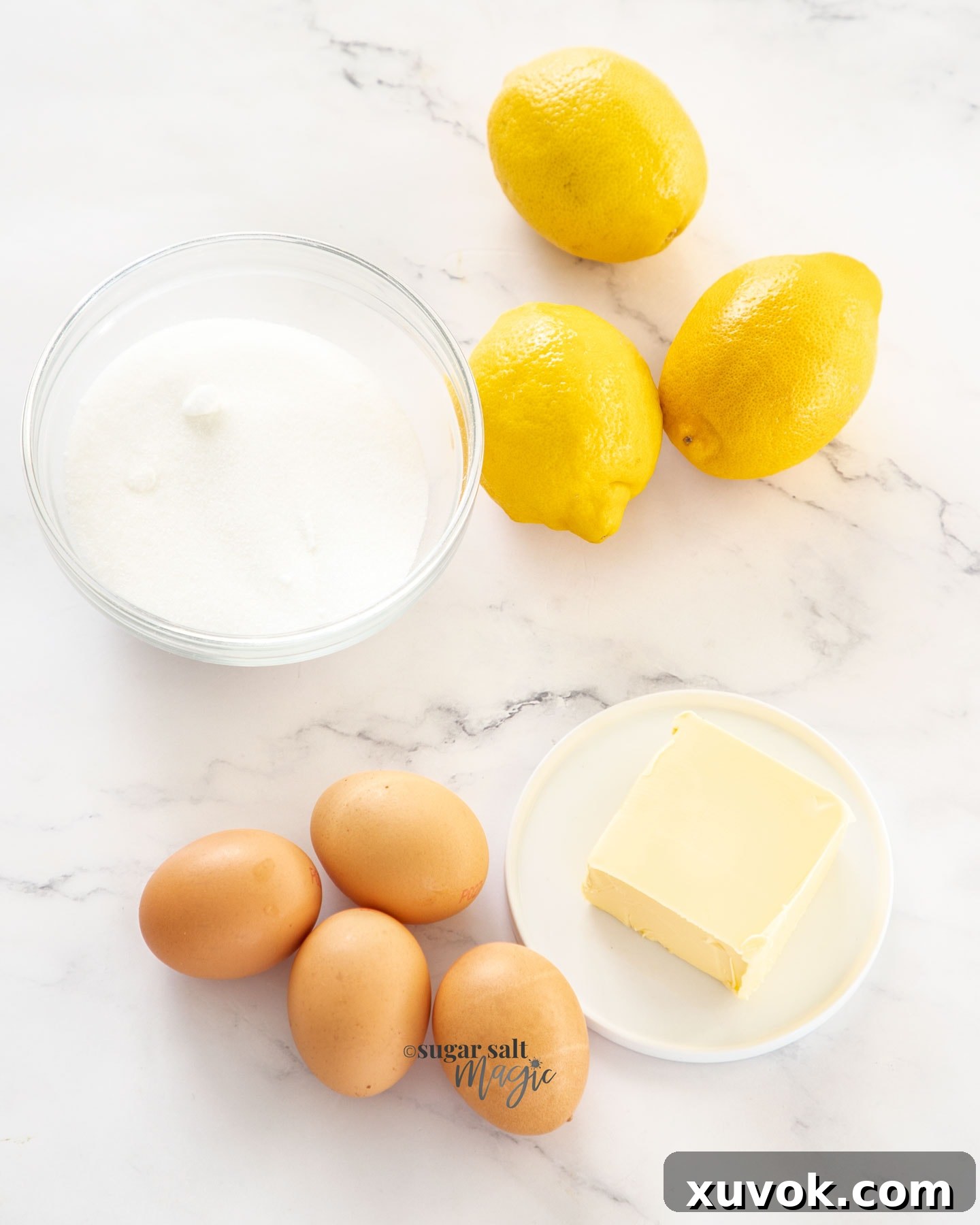
Creating this irresistible lemon curd is surprisingly simple, primarily because it relies on a handful of high-quality ingredients. You’ll only need four kitchen staples to achieve this culinary magic:
- Lemons: The star of the show! Freshly squeezed lemon juice and finely grated lemon zest are non-negotiable for that bright, intense, and authentic lemon flavor. Avoid bottled lemon juice, as it lacks the vibrant aroma and taste of fresh lemons. Choose firm, heavy lemons with smooth, bright yellow skin for the best zest.
- Butter: Unsalted butter is crucial for controlling the overall saltiness of your curd. Cold, cubed butter is incorporated gradually, contributing to the curd’s rich, smooth texture and helping to create a stable emulsion.
- Sugar: Caster sugar (also known as superfine sugar) is ideal here as its fine crystals dissolve quickly and smoothly, preventing any graininess in the final product. It balances the tartness of the lemons, creating a harmonious sweet-tart profile.
- Eggs: Both large whole eggs and egg yolks are used in this recipe. The egg yolks provide richness and contribute significantly to the curd’s luxurious, thick consistency, while the whole eggs help with the overall structure and set.
For precise quantities and detailed instructions, please refer to the comprehensive recipe card below.
Step-by-Step Guide: How to Make Lemon Curd
The truly wonderful aspect of this easy lemon curd, besides its vibrant and intense flavor, is just how quick and effortless it is to create. Forget complicated methods; this recipe is designed for maximum flavor with minimal fuss.
For detailed quantities and step-by-step instructions with exact measurements, please refer to the recipe card below.
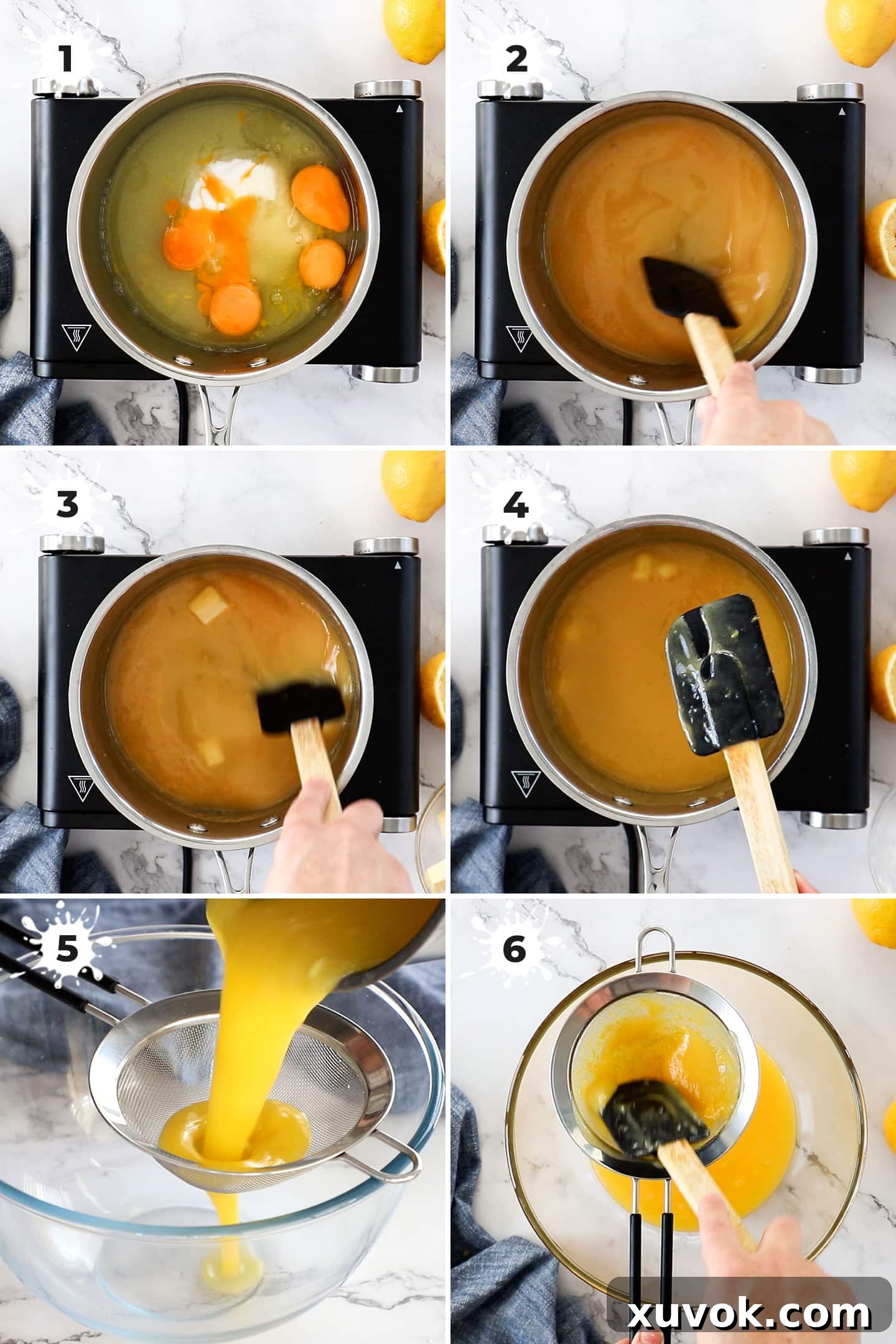
- Begin by whisking together your eggs, sugar, fresh lemon juice, and aromatic lemon zest in a small, heavy-based saucepan. Cook this mixture gently over low heat, continuously stirring until the sugar has completely dissolved. This initial step ensures a smooth base and prevents the eggs from scrambling prematurely.
- Next, gradually add the cold, cubed butter, a small amount at a time. Stir continuously after each addition until the butter is fully melted and incorporated into the mixture before adding more. This gradual process is key to creating a stable and smooth emulsion, resulting in a perfectly creamy curd.
- Continue cooking the curd for an additional 3-4 minutes, still over low heat and with constant stirring. The curd is ready when it thickens to a point where it thickly coats the back of a spoon. You should be able to draw a clear line through the curd on the spoon with your finger without it running back together. Alternatively, if you tip your saucepan to the side and then back again, a thick coating should remain on the side of the pan.
- Once thickened, immediately remove the saucepan from the heat. To achieve the ultimate silky-smooth texture, strain the hot lemon curd through a fine-mesh sieve into a clean bowl. This step effectively removes any bits of cooked egg that may have formed and, importantly, separates out the lemon zest, leaving you with a flawless, luscious curd.
- Transfer the warm curd into clean, sterilized jars, cool at room temperature, then seal and refrigerate to allow it to fully set and achieve its perfect spreadable consistency.
Expert Tips for Silky Smooth Lemon Curd
Achieving the perfect creamy, smooth, and vibrant lemon curd is simple when you follow a few key tips:
- Maintain Low Heat: There’s absolutely no need for a fussy double-boiler setup with this recipe. You can cook the curd directly in a saucepan, but it’s crucial to use a heavy-based saucepan and keep the heat very low. High heat is the enemy of perfect curd, as it can quickly scramble the eggs, leading to a lumpy texture. Overheating can also cause the curd to turn grainy once it sets in the fridge. Patience with low heat ensures a gentle thickening process.
- Don’t Stop Stirring: This is a short process, only about 10 minutes (or even less!), and constant stirring is key. You don’t need to stir vigorously, but keep the mixture gently moving. This ensures even heating throughout the curd, preventing hot spots that can cook the eggs too quickly and cause lumps or sticking to the bottom of the pan.
- Add Butter Gradually: When incorporating the butter, add it a few cubes at a time, allowing each addition to fully melt and integrate before adding more. This gradual process is vital for proper emulsification, which is the blending of the fat (butter) and the liquid (lemon juice and egg). Adding butter too quickly can shock the mixture and cause the fats to split, leading to a greasy or separated curd.
- Always Strain It: After cooking, always pour your lemon curd through a fine-mesh sieve. This step might seem optional, but it’s essential for a truly luxurious, silky-smooth finish. It removes any minuscule bits of cooked egg that may have formed, as well as the lemon zest, ensuring a flawlessly smooth consistency.
- Use a Heavy-Bottomed Saucepan: As mentioned, a heavy-based saucepan is beneficial. Its thick bottom distributes heat more evenly than a thin pan, significantly reducing the risk of scorching the bottom of your curd or scrambling the eggs.
Common Lemon Curd Problems & Solutions
Even with the simplest recipes, challenges can arise. During my extensive research and testing for this recipe, I frequently encountered common issues such as “My curd is too runny,” “My curd is not thickening,” or “Why is my curd grainy?” To ensure your success and alleviate any frustration, I’ve compiled a practical troubleshooting guide to address these specific concerns.
Curd too runny
If your lemon curd turns out too runny, there are typically two main culprits. Firstly, you might have inadvertently added too much liquid; however, if you adhere strictly to the precise ratios provided in this recipe, this shouldn’t be an issue. More commonly, the problem lies in not cooking the curd for quite long enough to reach the correct consistency. The excellent news is that this is easily fixable! Simply return the curd to the stove and cook it gently over low heat for a few more minutes. Continue stirring until it thickly coats the back of a spoon, and you can confidently draw a distinct line through it with your finger that doesn’t immediately run back together.
Curd is not thickening
It’s important to remember that lemon curd is designed to be thick and spreadable, but not as firm as a fully set custard or pudding. If you find your curd isn’t thickening sufficiently, it’s most likely due to insufficient cooking time (refer to the solution for “Curd too runny” above). Ensure you’re reaching the right visual cues for thickness. If, after proper cooking, you still desire a thicker consistency, you can try whisking in an additional egg yolk at the end of the cooking process, ensuring it’s thoroughly cooked through as per the standard instructions to prevent any raw egg taste.
Why is my curd grainy?
In my research, I encountered many home cooks lamenting that their beautiful curd turned grainy after refrigeration, and frustratingly, often received the unhelpful advice of “sounds like your eggs scrambled.” Let’s clear this up.
My answer to this? Not necessarily true at all. You will absolutely know if your eggs have scrambled during cooking – you would clearly see distinct cooked egg bits in the warm curd as you pour it into your jars. Eggs do not spontaneously scramble themselves in the fridge overnight!
The scientific reason: Graininess that appears after cooling is most likely caused by a breakdown of the emulsification. This means the fats (butter) and the liquids (lemon juice, egg whites) in the curd have not properly blended or have separated after setting. This can occur if the mixture wasn’t whisked and agitated sufficiently during cooking, or if it was overheated, or sometimes a combination of both factors. The good news? I’ve tested this extensively, and a grainy curd can often be successfully rescued! Yay!
How to Rescue Grainy Lemon Curd:
Don’t despair if your lemon curd turns out grainy! Here’s a proven method to bring it back to its smooth, luscious glory:
- In a clean, small saucepan, whisk together one additional egg yolk and 1 tablespoon of fresh lemon juice until thoroughly combined. This creates a new base for re-emulsification.
- Place the saucepan over the lowest possible heat setting.
- Add just one tablespoon of your cold, grainy curd back into this new egg yolk and juice mixture. Whisk it in very well until fully incorporated.
- Continue adding the grainy curd back to the saucepan, one tablespoon at a time, whisking vigorously after each addition until it’s smoothly blended. This slow, gradual reintroduction is crucial for rebuilding the emulsion.
- Once all the grainy curd has been added back, gently heat the entire mixture to approximately 75°C / 170°F on a reliable thermometer. Alternatively, cook it until it once again coats the back of a spoon, and you can draw a clear, non-running line through it. Keep the heat very low and stir constantly to prevent scrambling.
- Immediately pour the rescued curd through a fine-mesh sieve into clean jars. Refrigerate again until fully set. You’ll be delighted to find your curd is now smooth and perfectly creamy!
Delightful Ways to Enjoy Your Homemade Lemon Curd
With its bold, bright lemon flavor and wonderfully spreadable consistency, homemade lemon curd is a truly magical ingredient. It’s incredibly versatile and can elevate any number of recipes or simply serve as a divine topping for countless treats. Here are some inspiring ways to enjoy your delicious creation:
- Breakfast & Brunch Enhancer:
- Drizzle generously over fluffy pancakes, crisp waffles, or warm crumpets for a zesty start to your day.
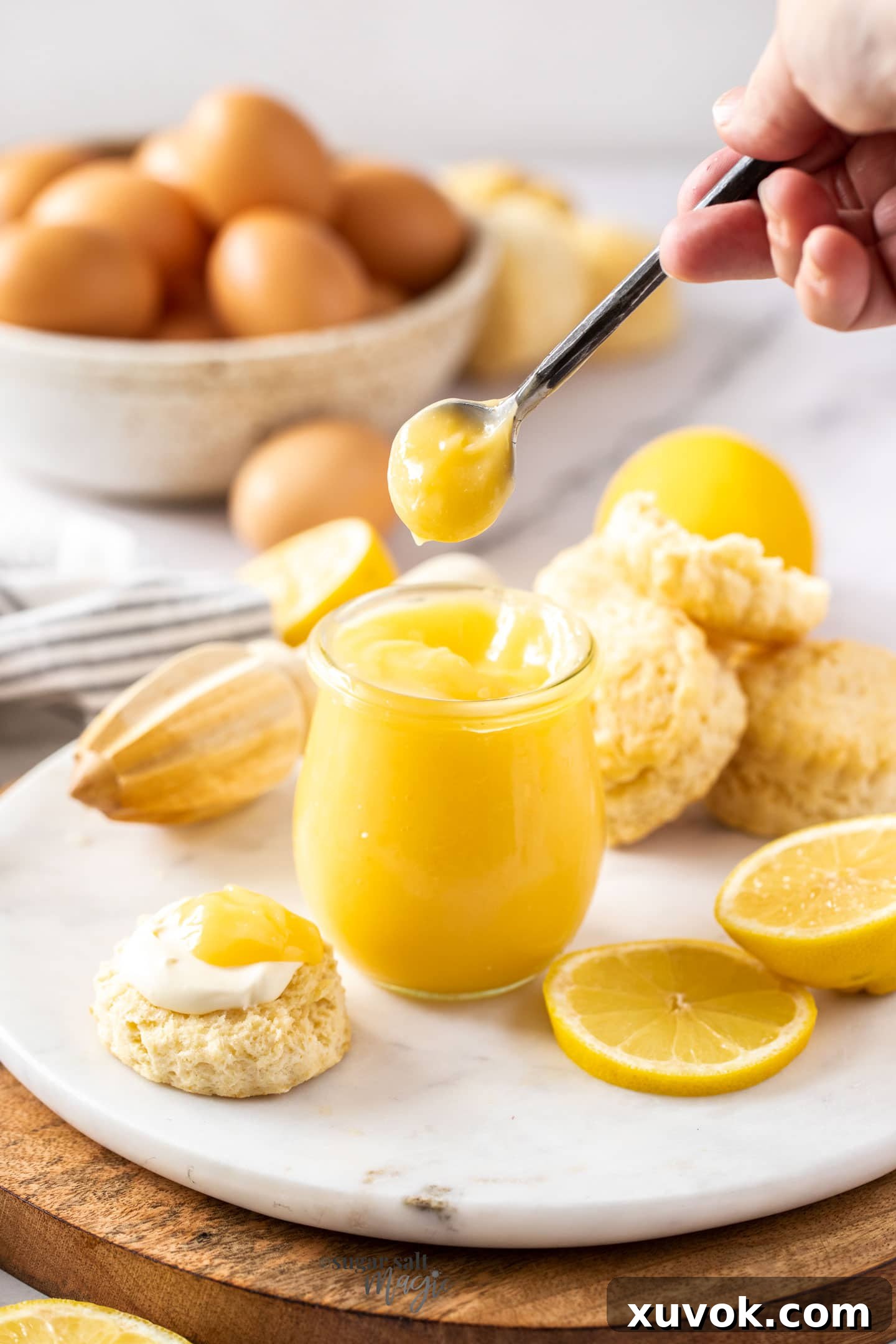
- Spread it on freshly baked scones with a dollop of clotted cream for a classic British treat.
- Fill delicate crepes with lemon curd for an elegant dessert or breakfast.
- Elevate your toast with a thick layer of bright, tangy lemon curd.
- Baking & Dessert Fillings:
- As a vibrant filling in classic pies, individual tartlets, or sweet tarts.
- Layer it between sponges in a magnificent lemon meringue cake or fill charming cupcakes for a burst of citrus.
- Bake it into the center of cakes or swirled into brownies for a delightful surprise.
- Use it as a luscious filling for cookies, delicate macarons, or indulgent profiteroles.
- Pipe it into fluffy donuts for a sweet and tangy center.
- Top some beautiful danish pastry for a truly irresistible treat.
- Creative Culinary Uses:
- Stir a spoonful into plain yogurt, cream cheese, cottage cheese, or ricotta for an instant flavor upgrade.
- Swirl it through homemade ice cream or use it as a topping for vanilla ice cream.
- Combine with whipped cream for a simple, elegant mousse.
Storing Your Fresh Lemon Curd
Proper storage is key to enjoying your delicious homemade lemon curd for as long as possible. This easy recipe yields approximately 1 ½ cups of vibrant curd, ready to be stored.
For refrigeration, ensure your lemon curd is stored in a clean, sterilized, airtight jar. Unopened, it will maintain its freshness and quality in the refrigerator for up to 3 weeks. Once you break the seal and open the jar, aim to consume it within 7-10 days for the best flavor and texture. Small jars, such as these small Weck jars, are ideal for portioning and ensuring freshness.
To sterilize your jars, you have two simple options. You can boil them in a saucepan of boiling water for 10 minutes, then carefully remove them and let them drain, dry, and cool completely. Alternatively, wash the jars thoroughly with soapy water, rinse well, and then place them in an oven preheated to 120°C / 250°F for about 10 minutes. Allow them to cool before filling.
Lemon curd is also remarkably freezer-friendly, allowing you to enjoy its sunny flavor for up to 3 months. For convenient portioning, you can freeze it in ice cube trays until solid, then transfer the frozen cubes to an airtight freezer-safe container or bag. This method means you can defrost just the right amount whenever you need a burst of lemon goodness, preventing waste and ensuring freshness.
Explore More Zesty Curd Recipes
If you’ve fallen in love with the vibrant flavors of homemade curds, you’re in for a treat! Discover more delightful recipes to expand your repertoire:
- Zesty Lime Curd
- Creamy Easy Pineapple Curd
- Exotic Homemade Passionfruit Curd
- Rich Homemade Blackberry Curd
- Vibrant Blood Orange Curd
- Individual Lemon Tartlets
⭐⭐⭐⭐⭐
Did you try this easy lemon curd recipe?
We’d love to hear your thoughts! Leaving a rating and comment below the recipe is incredibly helpful and much appreciated!
Hungry for more culinary inspiration? Subscribe to our newsletter for free, delicious recipes delivered straight to your inbox. You can also follow along on Facebook, Pinterest, and Instagram for daily updates and behind-the-scenes glimpses!

Easy Lemon Curd Recipe
Rate
Pin
Video
Ingredients
MAKES ABOUT 1 1/2 CUPS
- 2 large eggs
- 2 egg yolks
- 150 g caster (superfine) sugar (¾ cup / 5.3oz)
- ½ cup fresh lemon juice
- 1 tablespoon lemon zest (notes 1)
- 115 g unsalted butter, cubed and cold (½ cup / 1 stick / 4oz)
For best results, always weigh ingredients where a weight is provided
Equipment
-
A silicone spatula
-
A heavy based saucepan
-
Fine-mesh sieve / strainer and bowl
-
preserving jars like these small Weck jars
Instructions
-
Beat together the eggs, egg yolks, sugar, zest and juice. Pour into a small saucepan and stir over low-medium heat until the sugar has dissolved.
-
Add the cold butter a couple of pieces at a time, stirring until each addition is melted and incorporated. Make sure not to let the curd come to a bubble at any time.
-
Continue cooking the mixture another few minutes until it is thickened and coats the back of a spoon or leaves a thick coating on the side of the pan when you tilt it.
-
Pour the mixture through a fine-mesh strainer into a clean bowl to remove any bits of egg that may not have mixed through.
-
Pour into sterilised conserve jars and cool at room temperature for 30 minutes. Seal the jars and store in the fridge. See notes for how long to keep.
-
Please take a moment to leave a comment & rating. It’s appreciated and so helpful.
Notes
- I use a standard Australian 20ml tablespoon (equal to 4 teaspoons).
- This recipe makes approximately 1 1/2 cups of curd.
- Cool the curd for half an hour at room temperature, then seal your sterilized jars and place them in the fridge.
- This homemade curd will keep for up to 3 weeks in the fridge if unopened. Once opened, ensure it’s used within a week. It also freezes exceptionally well for longer storage.
- To sterilize your jars, you can either boil them in a saucepan of water for 10 minutes and then drain and cool, or wash them thoroughly with soapy water, rinse, and place them in an oven at 120C / 250F for 10 minutes before letting them cool.
- If you prefer to make this curd dairy-free, you can easily swap the unsalted butter for a high-quality vegetable-based spread.
For more delightful sauces, frostings, and spreads, click here!
Calories from Fat 50