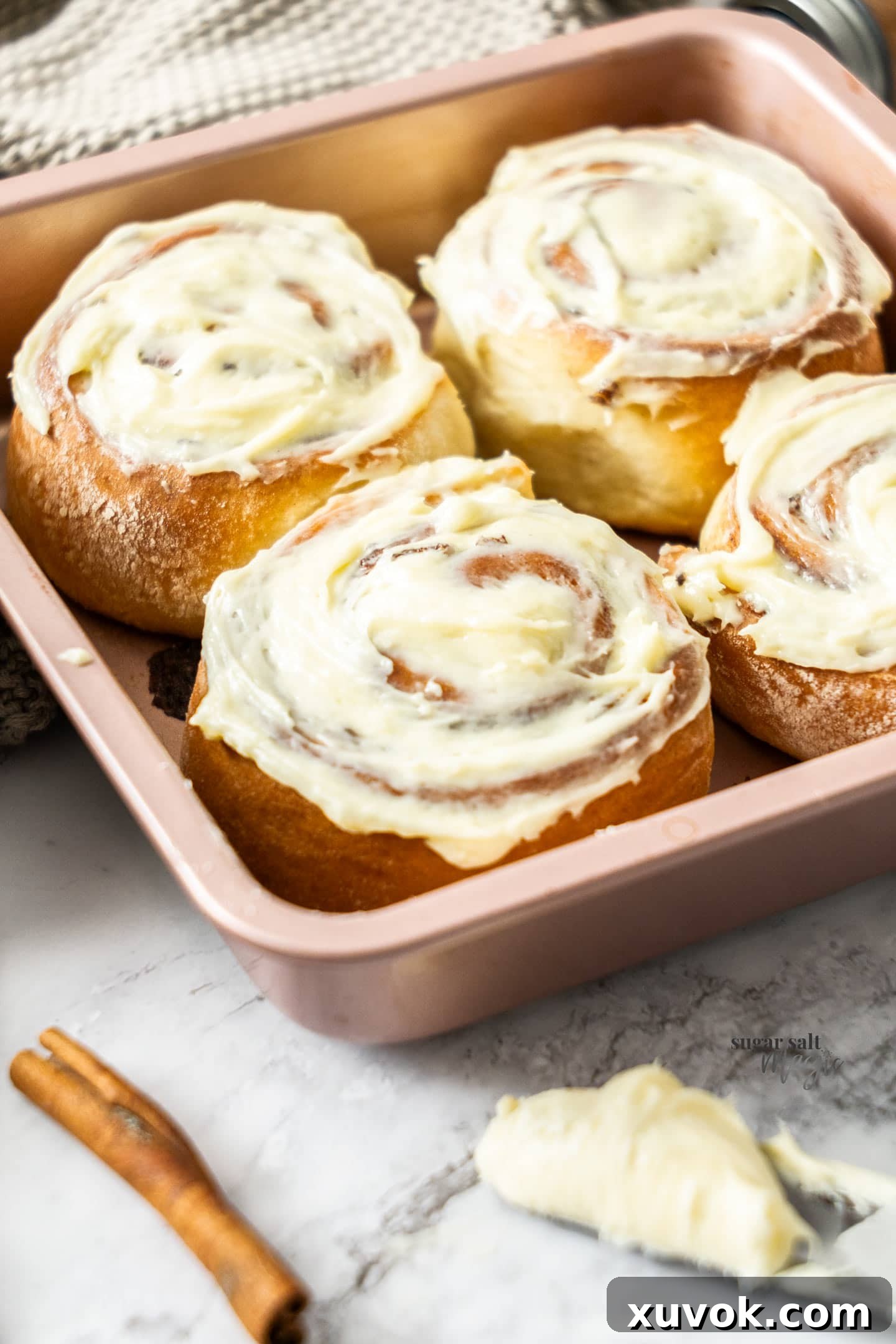
Irresistible Small Batch Cinnamon Rolls with Cream Cheese Frosting
Imagine waking up to the delightful aroma of freshly baked cinnamon rolls, warm and gooey, topped with a luscious sweet and tangy cream cheese frosting. Now, imagine achieving this perfect morning indulgence without the overwhelming task of baking a huge batch. This easy small batch cinnamon rolls recipe makes just four perfect rolls, ideal for a cozy breakfast for two or a delightful treat for a small family gathering. Say goodbye to struggling with large amounts of dough and the pressure of finishing a dozen rolls in one day!
There’s truly nothing quite like beginning your day with a comforting cup of coffee and a warm, fluffy cinnamon roll, pulled straight from the oven. These rolls are designed to be effortlessly delicious, bringing bakery-quality taste right into your kitchen with minimal fuss.
If you’re feeling adventurous and want to explore other delightful variations, be sure to check out our blueberry cinnamon rolls for a fruity twist or dive into the decadence of this giant chocolate scroll. For festive occasions, our Cinnamon Star Bread offers a beautiful and delicious centerpiece.
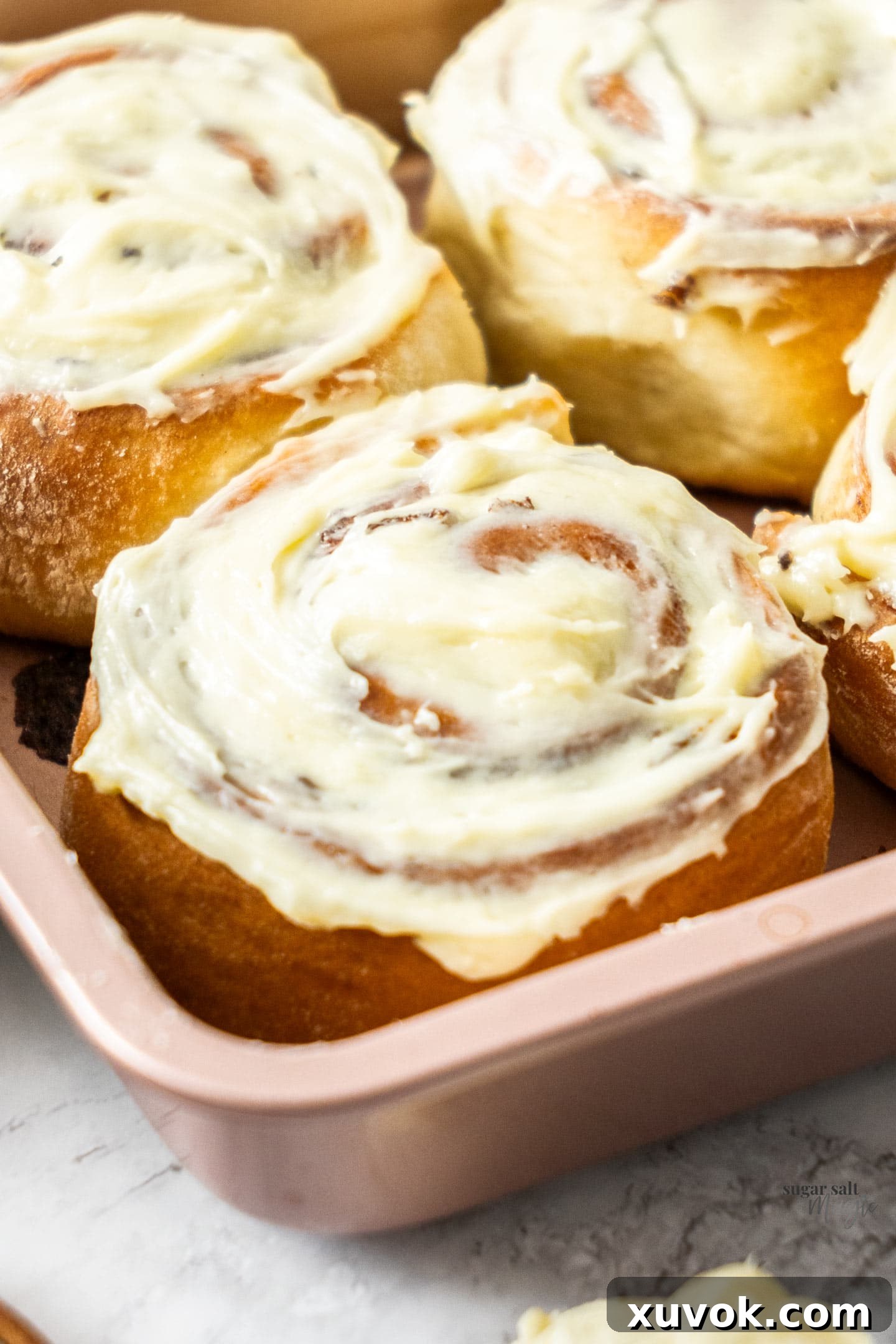
Table of Contents
- Why Choose Small Batch Cinnamon Rolls?
- Essential Ingredients for Perfect Cinnamon Rolls
- Step-by-Step Guide: How to Make Cinnamon Rolls
- Crafting the Soft Cinnamon Roll Dough
- The First Rise: Building Flavor and Texture
- Expert Tips for Shaping Your Cinnamon Rolls
- The Second Rise: For Ultimate Fluffiness
- Luscious Cream Cheese Frosting: The Perfect Topping
- Baking Secrets and Pro Tips
- Prepare Ahead: Overnight Cinnamon Rolls
- Storage and Reheating Tips
- More Delightful Recipes to Explore
Never Miss a Recipe!
Get the latest recipes straight to your inbox by subscribing to our newsletter!
Sign up to receive our best recipes directly to your email.
Why Choose Small Batch Cinnamon Rolls?
The beauty of a small batch recipe lies in its simplicity and versatility. For many home bakers, the thought of preparing a large quantity of dough and rolls can be daunting, often leading to wasted ingredients or an abundance of leftovers. This small batch cinnamon roll recipe removes that pressure. It’s perfectly scaled for 2-4 people, making it ideal for:
- Intimate Brunches: Perfect for a romantic breakfast or a cozy weekend treat with a friend.
- Beginner Bakers: Less dough means it’s easier to handle and less intimidating for those new to yeast baking.
- Spontaneous Cravings: When you suddenly crave warm, homemade cinnamon rolls, this recipe lets you whip them up without a huge commitment.
- Portion Control: Enjoy a fresh, decadent treat without feeling obligated to eat more than you should.
The reduced scale doesn’t compromise on flavor or texture. You still get those wonderfully soft, fluffy, and undeniably gooey cinnamon rolls every single time.
Essential Ingredients for Perfect Cinnamon Rolls
Crafting exceptional cinnamon rolls starts with quality ingredients. Each component plays a vital role in achieving that signature fluffy texture, rich flavor, and irresistible aroma. Below is a detailed look at what you’ll need to create these small batch wonders.
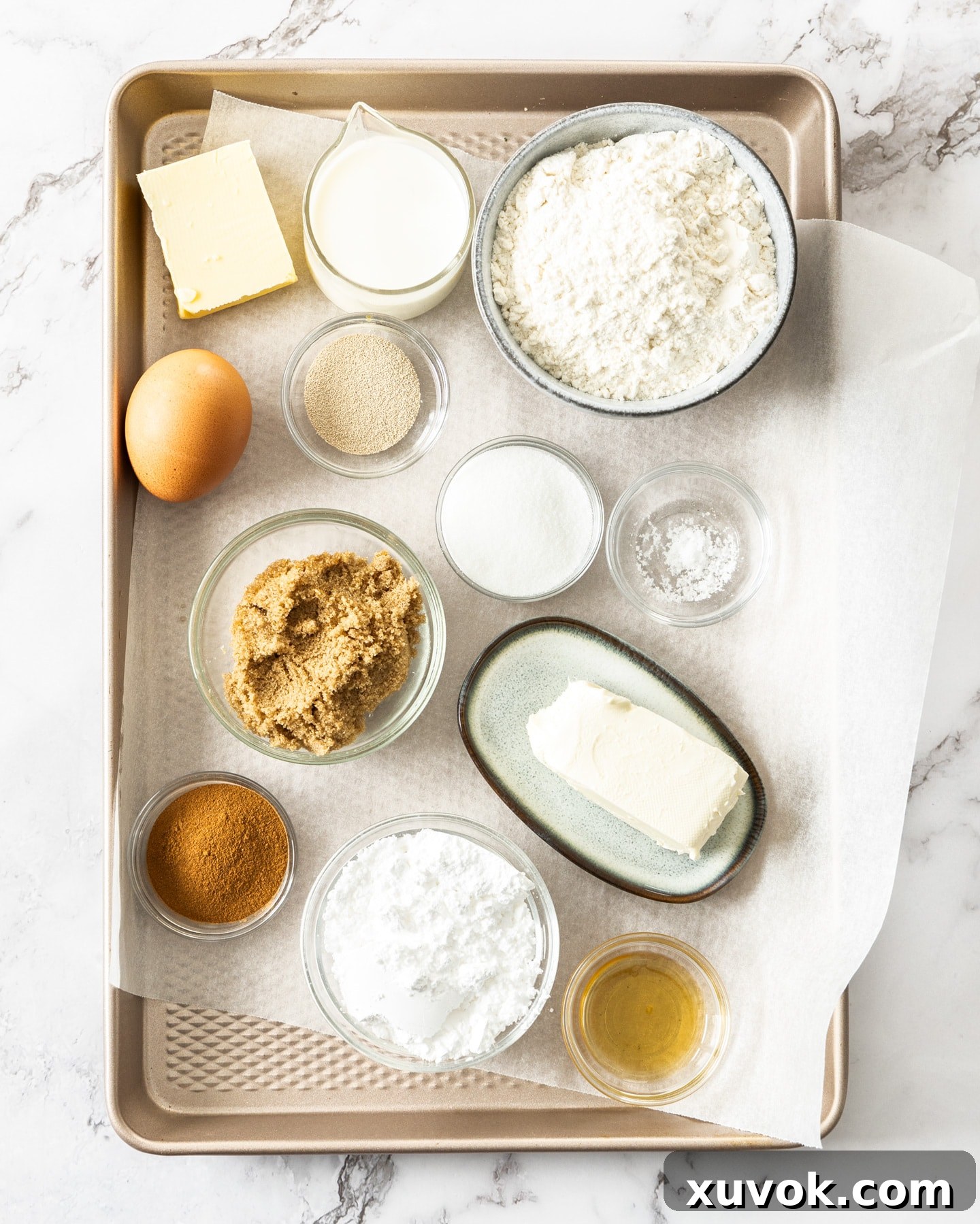
For precise measurements and detailed instructions, please jump to the full recipe card.
- Milk: Opt for whole milk in this recipe. Its higher fat content contributes significantly to the tenderness and richness of the dough, resulting in the softest, most flavorful cinnamon rolls. Warm milk is crucial for activating the yeast properly, so ensure it’s between 105-115°F (40-46°C).
- Yeast: You can successfully use either instant dry yeast or active dry yeast. While instant yeast typically doesn’t require blooming, I still recommend this step for both types. It’s a simple way to verify your yeast is active and hasn’t expired, saving you from a failed batch. Look for frothy bubbles on the surface after a few minutes, which signals healthy yeast.
- Sugar: This recipe utilizes three distinct types of sugar, each serving a specific purpose. White granulated sugar provides sweetness and aids yeast activation in the dough. Light brown sugar in the filling offers a deeper, molasses-rich sweetness and creates that irresistible gooey texture. Finally, icing sugar (also known as powdered sugar or confectioners’ sugar) gives the cream cheese frosting its smooth, melt-in-your-mouth consistency.
- Flour: I recommend using plain flour (all-purpose flour) for a tender crumb. However, if you prefer a slightly chewier texture, you can substitute it with bread flour. Always measure your flour by weight using a kitchen scale for the most accurate results, as cup measurements can vary significantly.
- Butter: Use unsalted butter for both the dough and the filling. This allows you to control the overall salt content of your rolls. For the dough and filling, you’ll need melted butter, but for the cream cheese frosting, ensure your butter is softened to room temperature for a smooth, lump-free frosting.
- Egg Yolk: Only one large egg yolk is needed for the dough. The yolk adds richness, color, and tenderness without making the dough too dense or dry. Don’t discard the egg white! You can freeze egg whites for up to 3 months and save them for other recipes like meringues or omelets.
- Ground Cinnamon: A generous amount of high-quality ground cinnamon is the star of the filling. For an extra layer of warmth and complexity, consider adding a tiny sprinkle of freshly grated nutmeg alongside the cinnamon.
- Cream Cheese: For the best flavor and texture in your frosting, use a full-fat block cream cheese, softened to room temperature. While light cream cheese can be used, full-fat varieties deliver a richer, more luxurious taste and a sturdier frosting consistency.
- Pure Vanilla Extract: Always opt for pure vanilla extract over vanilla essence. Pure extract is made from real vanilla beans and offers a far superior, more complex flavor compared to synthetic vanilla essence.
- Fine Sea Salt: A small amount of salt balances the sweetness and enhances the flavors in the dough.
Step-by-Step Guide: How to Make Cinnamon Rolls
Creating these delightful small batch cinnamon rolls is a straightforward process, made even more manageable by the smaller amount of dough. It follows the same fundamental steps as a full dozen recipe, but with less hassle. Let’s walk through each stage to ensure your baking success.
For a complete list of ingredients and detailed instructions, refer to the recipe card at the bottom of this page.
Crafting the Soft Cinnamon Roll Dough
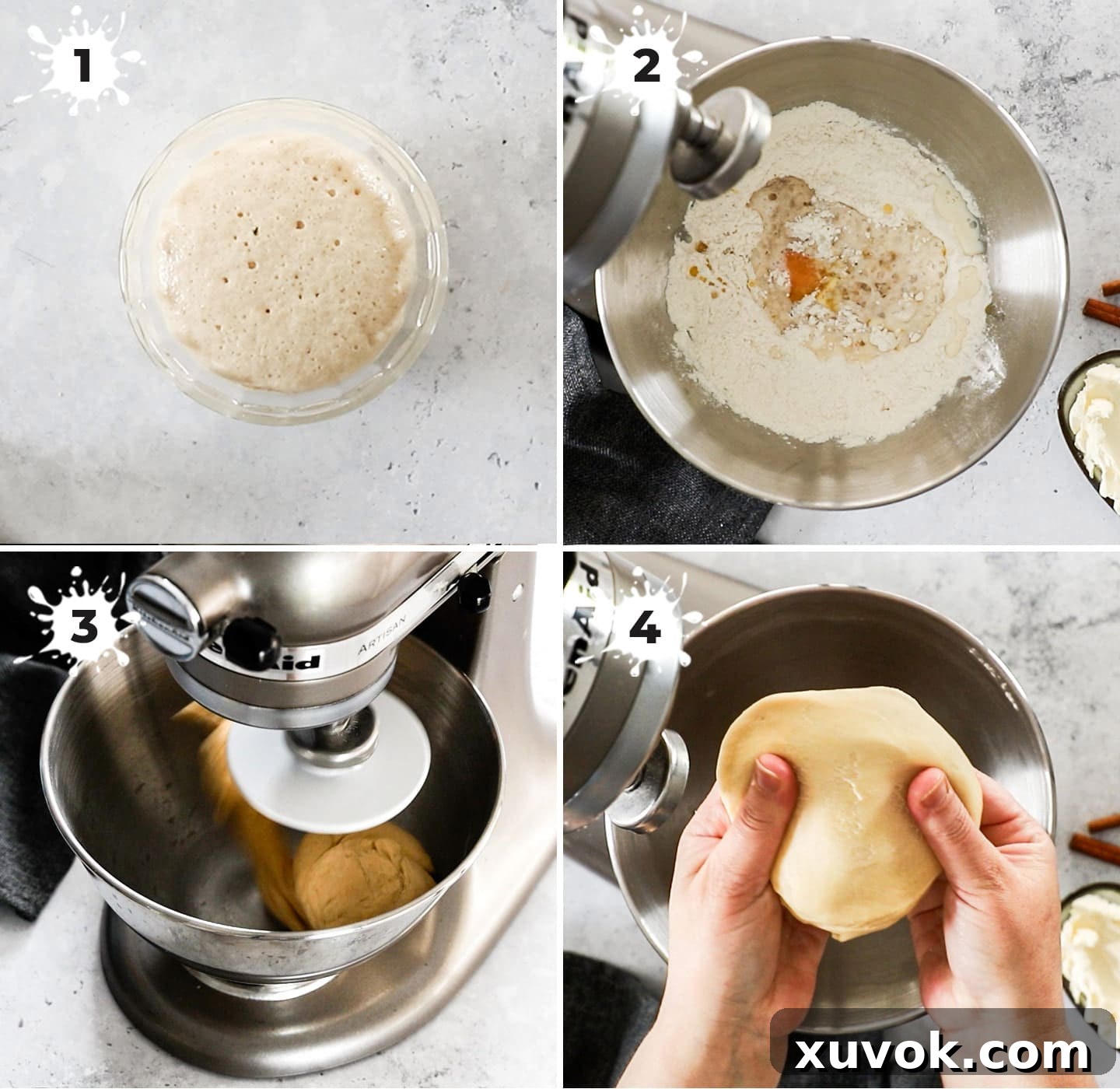
- Bloom the Yeast: This initial step is essential for confirming your yeast is active, regardless of whether you’re using instant or active dry yeast. Combine the warm milk, yeast, and a small amount of sugar in a small bowl. Let it sit for 5-10 minutes. You’re looking for a foamy, puffy layer to form on top, which indicates the yeast is alive and ready to work its magic (photo 1). If nothing happens, your yeast might be expired, and it’s best to start with a fresh packet.
- Combine and Knead: In the bowl of a stand mixer (fitted with a dough hook), add the flour, remaining sugar, salt, melted butter, egg yolk, and the bloomed yeast mixture (photo 2). Mix on low speed until the ingredients just come together. Increase the speed to low-medium and knead for approximately 10 minutes. The dough should transform into a smooth, elastic ball that pulls away from the sides of the bowl (photo 3 & 4). To check for proper kneading, perform a “windowpane test”: pinch off a small piece of dough and gently stretch it. If you can stretch it thin enough to see light through it without tearing, it’s perfectly kneaded. While a stand mixer makes this much easier, you can also knead by hand on a lightly floured surface for about 15-20 minutes until smooth and elastic.
The First Rise: Building Flavor and Texture
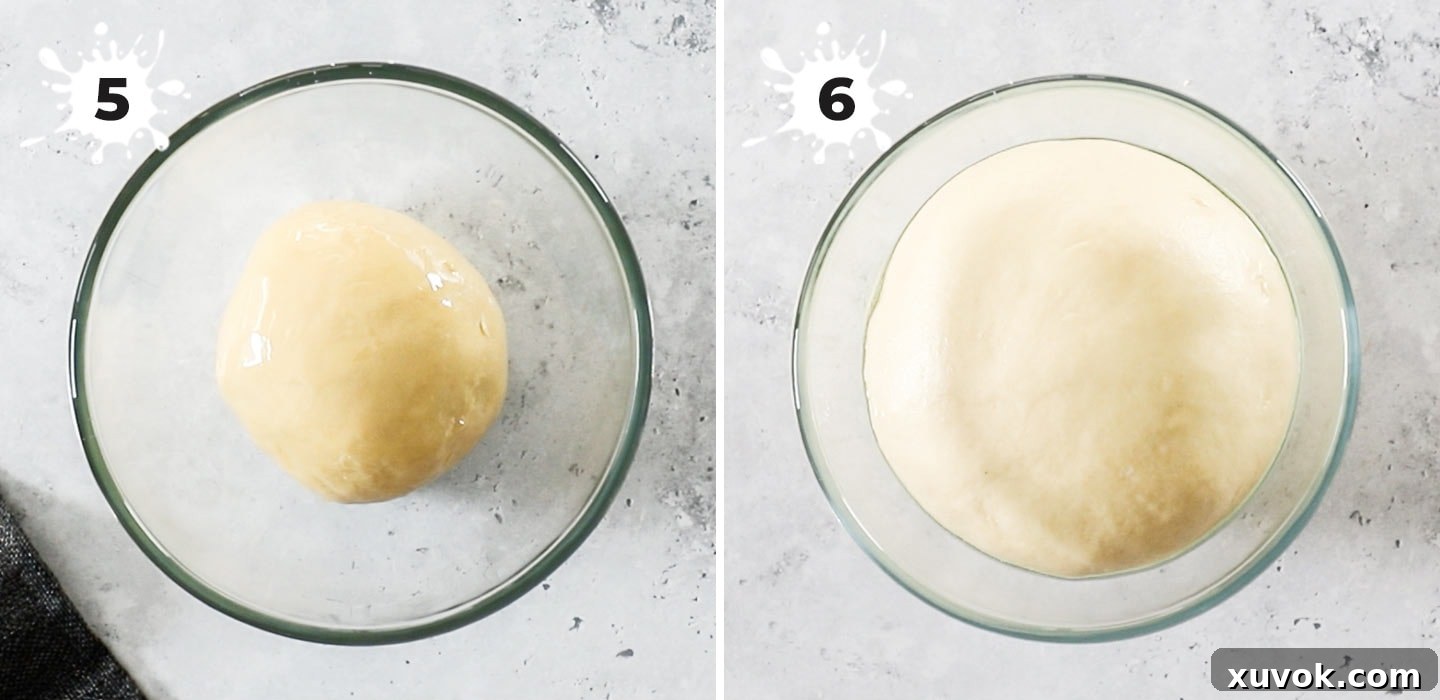
- First Proof: Lightly oil a clean medium bowl. Transfer the kneaded dough to this bowl, turning it once to coat all sides with oil. This prevents the dough from sticking and drying out during the rise. Cover the bowl tightly with plastic wrap or a damp kitchen towel. Place it in a warm, draft-free spot to rise for 45-60 minutes, or until the dough has visibly doubled in size (photo 5 & 6). The ideal temperature for rising dough is around 75-80°F (24-27°C). A slightly warmer environment will quicken the rise, while a cooler one will slow it down but can also develop more complex flavors.
Expert Tips for Shaping Your Cinnamon Rolls
Shaping is where your rolls start to take their iconic form. A little care here ensures beautiful, even spirals.
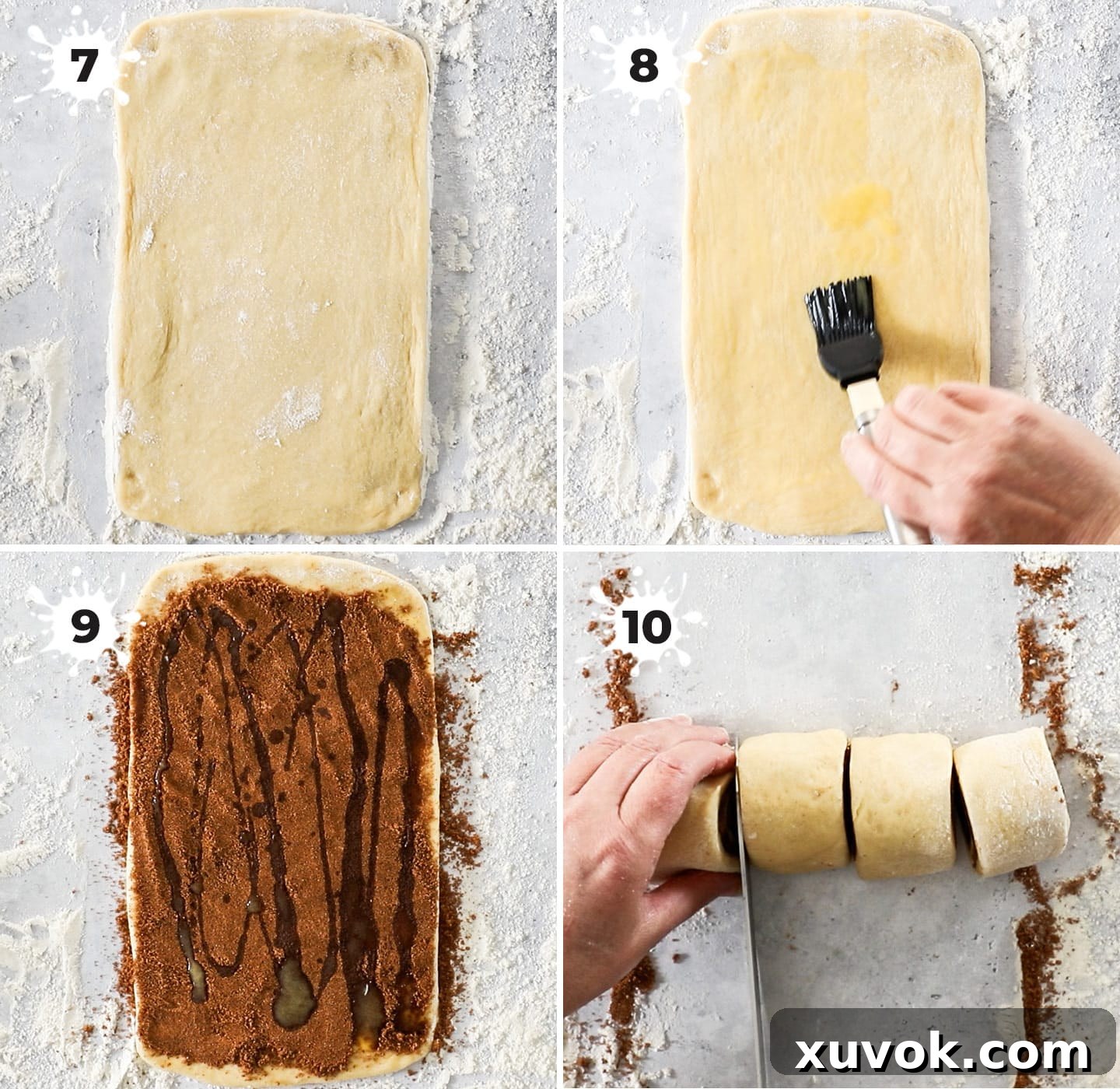
- Roll Out the Dough: Gently punch down the risen dough to release the air. Transfer it to a lightly floured surface. Using a rolling pin, roll the dough into a rectangle, aiming for a thickness of about 5-6mm (approximately ¼ inch). The dimensions should be roughly 16cm x 32cm (6 x 12 inches) (photo 7). Take your time to achieve a relatively even rectangle, gently pulling and stretching the corners as needed, which will help in cutting uniformly sized rolls later.
- Apply the Filling: Keep the shorter side of the rectangle facing you. Brush the surface of the dough evenly with most of the melted butter (photo 8). In a separate small bowl, combine the brown sugar and ground cinnamon, then sprinkle this mixture evenly over the buttered dough, extending it almost to the very top edge. Drizzle any remaining melted butter over the cinnamon sugar for extra moisture and flavor (photo 9).
- Roll and Slice: Starting from the short side closest to you, tightly roll the dough into a log. A tight roll is key to achieving those beautiful, distinct spirals. Once rolled, use a very sharp knife, unflavored dental floss, or a piece of cotton string to slice the log into 4 even pieces (photo 10). Dental floss often gives the cleanest cuts: simply slide it under the log, cross the ends over the top, and pull firmly.
The Second Rise: For Ultimate Fluffiness
The second rise, or proofing, is crucial for developing the rolls’ light and airy texture.
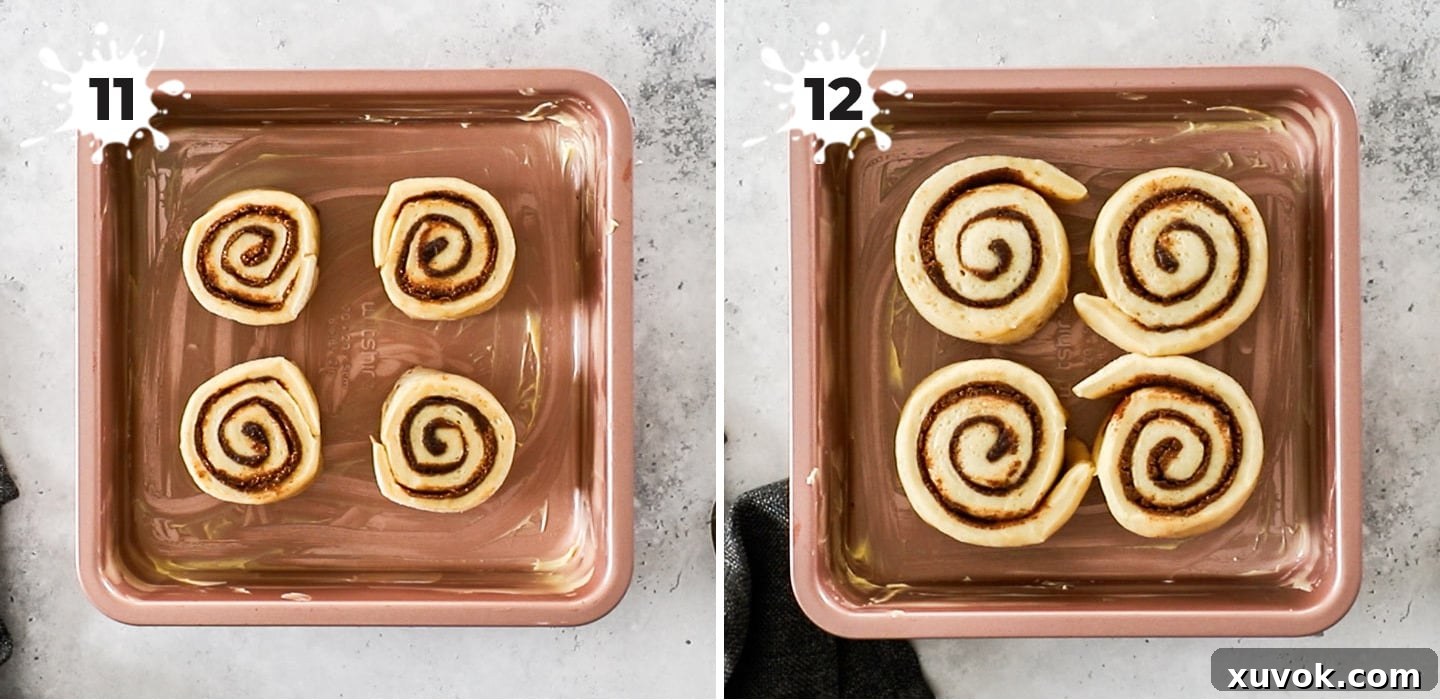
- Second Proof: Arrange the sliced cinnamon rolls, cut-side up, into a lightly greased baking pan (photo 11). Leave a little space between each roll, as they will expand. Cover the pan loosely with plastic wrap or a clean kitchen towel and place it in a warm, draft-free spot. Allow them to rise for another 45 minutes to 1 hour, or until they have nearly doubled in size again and appear puffy (photo 12). This ensures a wonderfully tender and fluffy final product.
- Bake: While the rolls are completing their second rise, preheat your oven to 180°C (160°C fan forced) / 350°F. Bake the rolls for approximately 18 minutes, rotating the pan halfway through for even baking. They should be pale golden brown on top and baked through. For precision, an internal temperature of 88°C (190°F) in the center of a roll indicates perfect doneness. Avoid over-baking, which can lead to dry rolls.
Luscious Cream Cheese Frosting: The Perfect Topping
No cinnamon roll is complete without a generous slathering of tangy, sweet cream cheese frosting. This recipe delivers an incredibly easy and delicious version.
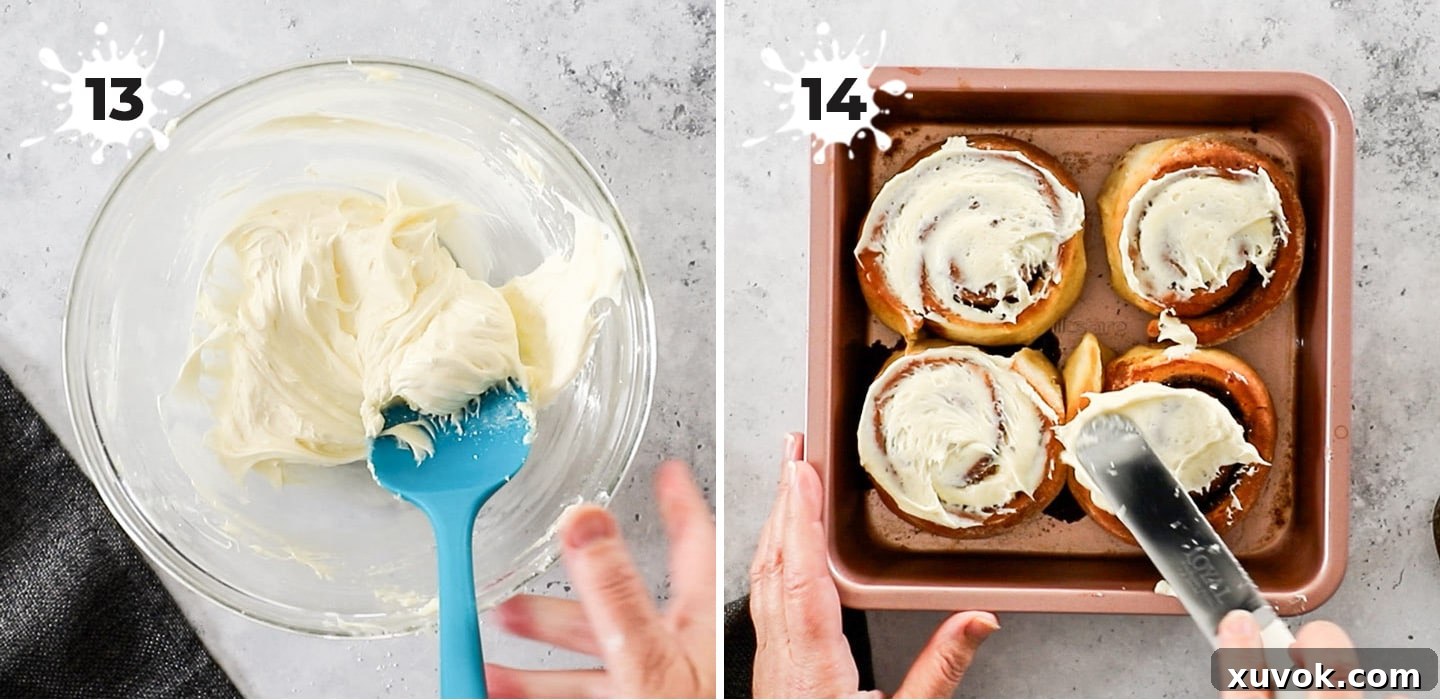
- Prepare the Frosting: While your cinnamon rolls are baking, prepare the frosting. In a medium mixing bowl, combine the softened cream cheese, softened unsalted butter, icing sugar, and pure vanilla extract. Using a handheld mixer (or a sturdy wooden spoon with a bit of elbow grease), beat the ingredients together until the mixture is completely smooth, light, and fluffy (photo 13). Ensure there are no lumps of cream cheese or butter remaining.
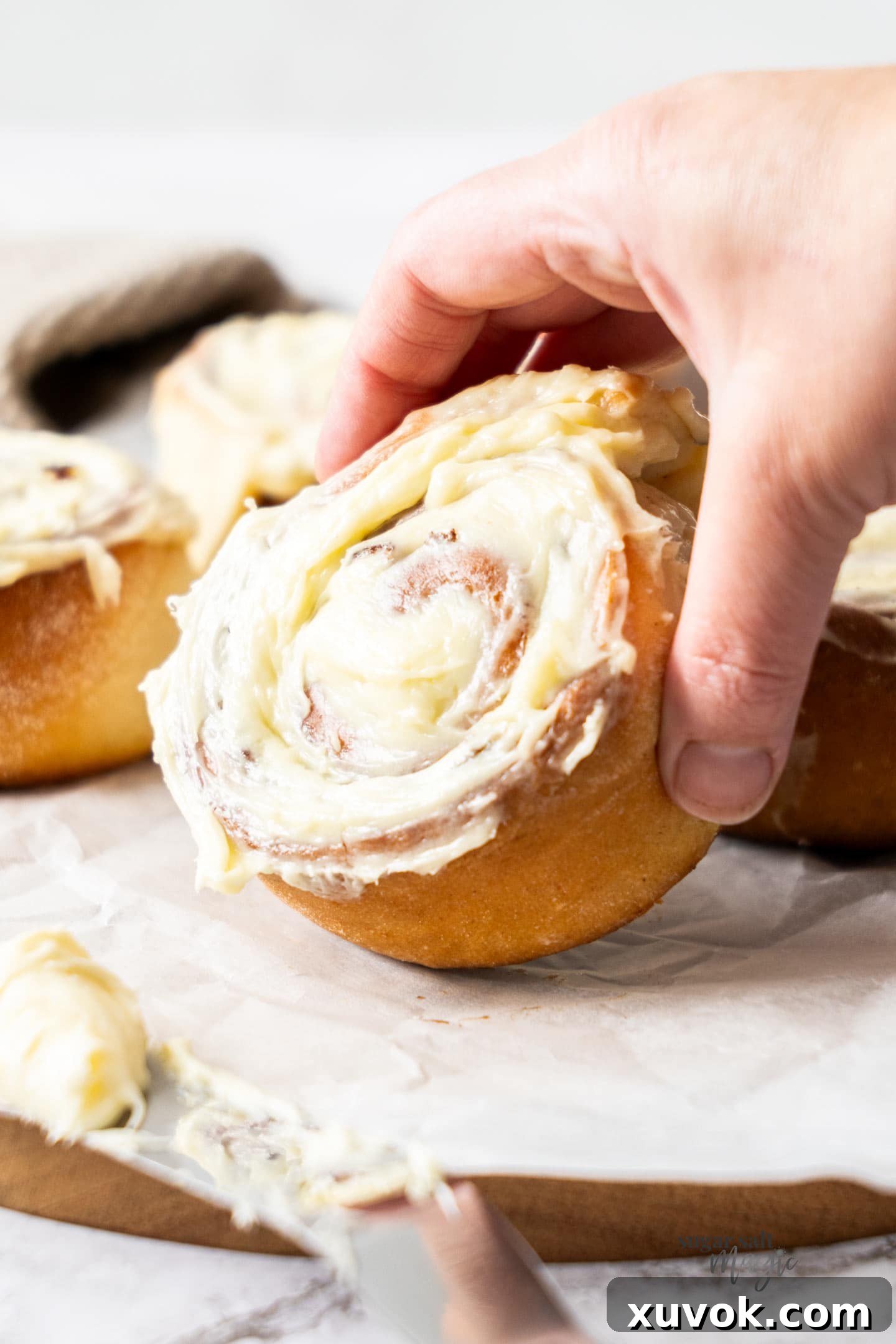
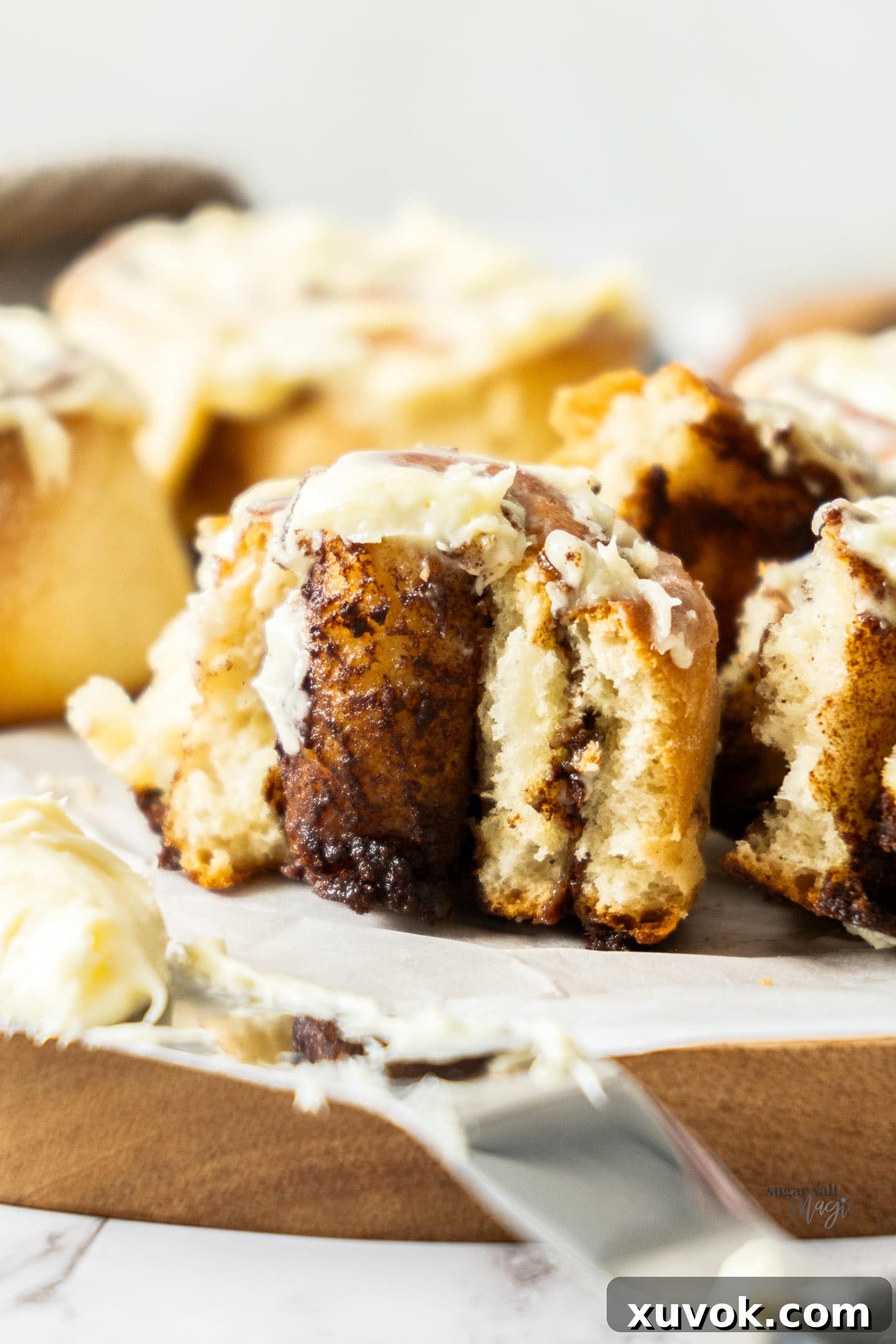
- Frost and Serve: As soon as the cinnamon rolls come out of the oven, allow them to cool for just a couple of minutes – they should still be warm. Immediately spread the luscious cream cheese frosting generously over the warm cinnamon buns (photo 14). The warmth of the rolls will slightly melt the frosting, allowing it to seep into every crevice, creating an incredibly gooey and irresistible experience. Serve them immediately and savor every bite!
Baking Secrets and Pro Tips
Even though this is a small batch recipe, a few expert tips can elevate your cinnamon roll game to perfection:
- Accuracy with Weighing Ingredients: For consistent and professional results, always weigh your ingredients, especially flour, using a kitchen scale. While cup measures are provided, they can vary widely. Weighing helps prevent adding too much flour, which is a common cause of dry, dense rolls.
- Precision Slicing Techniques: Achieving beautifully uniform cinnamon roll spirals is easier with the right technique. A very sharp chef’s knife will work, but for truly clean cuts, consider using unflavored dental floss or a thin cotton string. Slide a length of floss underneath the dough log, cross it over the top where you want to cut, and pull the ends away from each other firmly. This method prevents the dough from squishing and preserves those beautiful spirals.
- The Handy Bench Scraper: A bench scraper is an invaluable tool. It’s excellent for gathering dough, dividing it, and especially for cleaning up sticky residue from your countertop after kneading or rolling.
- Understand Your Oven: Baking times are always approximate. Every oven is different and can have hot spots or vary in temperature. Monitor your rolls closely, especially towards the end of the suggested baking time. Glass or ceramic baking dishes typically require slightly longer baking times than metal pans, so adjust accordingly.
- Optimal Dough Rising Environment: A warm, draft-free spot is crucial for proper dough rising. If your oven has a “dough rise” setting or a “proving drawer,” definitely use it! Otherwise, good alternatives include:
- Placing the bowl on a dining chair in front of a sunny window during cooler months.
- Inside a slightly warm (but turned off) oven with the light on.
- Near the lights of your range hood, which often emit enough warmth.
- Any room temperature spot in hotter climates, as long as there’s no strong draft.
- Avoid Over-proofing: While rising is essential, over-proofing can lead to rolls that collapse in the oven or have a coarse texture. Look for dough that has doubled in size and springs back slowly when gently poked, rather than shrinking completely or staying indented.
- Don’t Overcrowd the Pan: Give your rolls space to expand during the second rise and baking. If they are packed too tightly, they may not cook evenly and won’t achieve that perfect fluffy texture.
Prepare Ahead: Overnight Cinnamon Rolls
One of the best features of this small batch cinnamon rolls recipe is its flexibility for making ahead. Transform them into convenient overnight cinnamon rolls with minimal effort, perfect for a stress-free morning treat.
To prepare them ahead: follow the recipe instructions up to the point where you’ve rolled and sliced the cinnamon rolls and placed them into your baking pan. Instead of letting them undergo their second rise, cover the pan tightly with plastic wrap and chill it in the refrigerator overnight. The cold temperature will significantly slow down the yeast activity, allowing the dough to slowly develop flavor.
The next morning, simply remove the pan from the fridge. Place it in a warm spot (as described in the “Dough Rising Environment” tips above) to allow the rolls to finish rising for about 1 to 1.5 hours, or until visibly puffy and almost doubled in size. Once risen, bake as directed. This method allows you to enjoy warm, freshly baked cinnamon rolls with much less morning prep time.
You can also freeze unbaked rolls! After shaping and placing them in the baking pan, wrap them very tightly in plastic wrap, then foil, and freeze for up to 2-3 weeks. When ready to bake, transfer them to the fridge overnight to thaw, then let them rise in a warm spot for about 2-3 hours before baking.
Storage and Reheating Tips
While these small batch cinnamon rolls are best enjoyed fresh and warm from the oven, you might find yourself with a leftover roll or two (though it’s unlikely!). Here’s how to keep them delicious:
- Short-Term Storage: Any leftover frosted rolls should be stored in an airtight container with a very tight-fitting lid. Place them in the refrigerator for up to 2-3 days. This prevents them from drying out and keeps the frosting fresh.
- Long-Term Storage (Baked): If you want to keep baked (but unfrosted) rolls for longer, let them cool completely. Wrap each roll individually in plastic wrap, then place them in a freezer-safe bag or container. Freeze for up to 1 month. Thaw at room temperature or gently reheat.
- Reheating: To revive refrigerated or thawed rolls, the microwave is your best friend. Warm them for 20-30 seconds on high. They will emerge perfectly soft, fluffy, and gooey again, almost as good as fresh. For unfrosted frozen rolls, you can also gently reheat them in a preheated oven at 150°C (300°F) for about 10-15 minutes, or until warmed through. Add frosting after reheating.
More Delightful Recipes to Explore
If you’ve fallen in love with these small batch cinnamon rolls, you’ll be thrilled to discover other wonderful sweet bread and roll recipes:
- Strawberry Cinnamon Rolls: A delightful fruity twist on the classic.
- Caramel Apple Cinnamon Rolls: Perfect for autumn or any time you crave warm apple and caramel flavors.
- Finger Buns: A nostalgic, elongated sweet bun often topped with icing and sprinkles.
- Jumbo Swedish Cinnamon Buns: Larger, aromatic buns spiced with cardamom.
- Pecan Cinnamon Rolls with Coffee Icing: A nutty variation with a rich coffee-infused glaze.
- Oreo Cinnamon Rolls: An indulgent, chocolatey take for cookie lovers.
Did you try this small batch cinnamon rolls recipe?
Leaving a rating and comment below the recipe is so helpful!
Hungry for more? Subscribe to the newsletter for free recipes straight to your inbox. Also, follow along on Facebook, Pinterest and Instagram.

Small Batch Cinnamon Rolls
4
rolls
20
minutes
18
minutes
2
hours
2
hours
38
minutes
Rate
Pin
Ingredients
FOR THE DOUGH
- ⅓ cup whole milk, warm (80ml)
- 1 teaspoon instant yeast or active dry yeast
- 1 ½ tablespoons white granulated sugar (25g/6tsp) (notes 1)
- 165 g plain flour (all-purpose flour) (1 ¼ cups / 5.8oz)
- ⅛ teaspoon fine sea salt
- 21 g unsalted butter, melted (1 ½ tablespoons / ¾ oz)
- 1 large egg yolk
FOR THE FILLING
- ⅓ cup packed brown sugar (67g / 2 ½oz)
- 3 teaspoons ground cinnamon
- 21 g unsalted butter, melted (1 ½ tablespoons / ¾ oz)
FOR THE CREAM CHEESE ICING
- 57 g full-fat block cream cheese, softened (2oz)
- 1 tablespoon unsalted butter, softened (14g / ½ oz)
- ⅓ cup icing sugar (powdered sugar)
- ½ teaspoon vanilla extract
For best results, always weigh ingredients where a weight is provided
Equipment
-
stand mixer
-
Rolling Pin
-
8×8 square baking pan
Instructions
-
Bloom the yeast:
Add the warm milk, yeast and 1 tablespoon of sugar to a small bowl and let it sit for 5 minutes until it looks puffy.
-
To the bowl of a stand mixer, add the flour, remaining sugar, salt, melted butter, egg yolk and finally the bloomed yeast. Use the dough hook attachment just to give it a stir and bring the ingredients together roughly.
-
Knead:
Knead on low-medium speed (I use setting 2 on the KitchenAid mixer) for around 10 minutes until the dough is looking smooth and elastic.
-
1st Rise:
Add a splash of oil to a clean medium bowl and rub it around the sides. Drop in the cinnamon roll dough and flip it over so it’s covered in oil.
-
Cover the bowl with plastic wrap and allow to rise in a warm spot for 1 hour or until doubled in size. If you have a proving drawer or dough rising setting on your oven, use that.
-
Assembling the cinnamon rolls:
Roll the dough out: Roll the dough out on a lightly floured surface to a rectangle, about 5-6mm thick and about 16cm wide and 32cm long (roughly 6x12inches). Try to get it as close to a perfect rectangle as possible by gently pulling out the corners so that you are able to cut evenly sized rolls.
-
In a small bowl, mix together the brown sugar and cinnamon.
-
Brush most of the melted butter evenly over the dough then scatter over the cinnamon sugar, right to the edges, leaving just the top short edge clear. Drizzle any remaining butter over the top.
-
Roll the dough up (from one short side to other) into a log. Trim the very ends off if the roll isn’t even thickness all the way across, then slice into 4 even pieces.
-
Place the rolls evenly spaced onto the baking tray cut side up. At this point you can cover with plastic wrap and chill in the fridge overnight.
-
2nd rise: To bake the same day, let them rest and rise for another 45 minutes until roughly doubled in size again.
-
Preheat the oven to 180C (160C fan forced) / 350F and grease an 8×8 inch square baking tin.
-
Bake: Bake for around 18 minutes, turning the tray at the halfway mark, until pale golden brown and baked through (if you have a digital thermometer handy, they should reach 88C/190F).
-
While they bake, make the cream cheese frosting:
Combine the cream cheese, butter, icing sugar and vanilla in a medium bowl and mix until soft and fluffy or around 1 minute with a handheld mixer.
-
Let the cinnamon rolls cool just a couple of minutes before spreading the frosting over the top.
-
Please take a moment to leave a comment & rating. It’s appreciated and so helpful.
Notes
- Tablespoons: I use a standard Australian 20ml tablespoon (equal to 4 teaspoons). Check yours before measuring.
- For best results, you should always weigh ingredients where a weight is the first measurement given. Kitchen scales are relatively cheap but if you can’t weigh the ingredients, use the spoon and level method (don’t scoop).
- All ovens vary – test for doneness 1-3 minutes before the recipe suggests.
- Yeast: You can use instant or active dry yeast. If you use rapid rise, your dough may double in size quicker. If using active dry, add it to the milk mixture and let it sit for 5-10 minutes until it’s nice and frothy before proceeding.
- Make ahead: The recipe can be made ahead up to the point that the individual rolls have been placed in the baking tin. Cover the tin with plastic wrap and keep in the fridge overnight. Let them rise for 1-1/2 hours in a warm spot before baking.
- Baking times will vary depending on your oven and also on your baking vessel. If using metal, you’ll find they cook much quicker than if using a glass or ceramic baking dish.
- Where to rise the dough: Check if your oven has a dough rise setting or a proving drawer which makes rising dough a breeze. If not, choose a warm (not hot) spot that’s draft-free. In the cooler months, I sit the dough bowl on a dining chair in front of a warm window. In the hotter months, if the AC isn’t up too high, just about anywhere is fine. I find the lights on my rangehood emit warmth too and that’s a spot you could try.
- Nutrition details are approximate only – scroll below the recipe to find the full nutritional information.
MORE BREAKFAST AND BRUNCH IDEAS!
467
kcal
Marie Roffey
Breakfast
American
Have you tried this recipe?
Don’t forget to leave a rating and comment below and let me know how it was! I love hearing from you. Nutrition information is approximate and derived from an online calculator. The brands you use may cause variations.
Calories from Fat 171