Homemade Turkish Flatbread (Bazlama): Your Guide to Fluffy Perfection
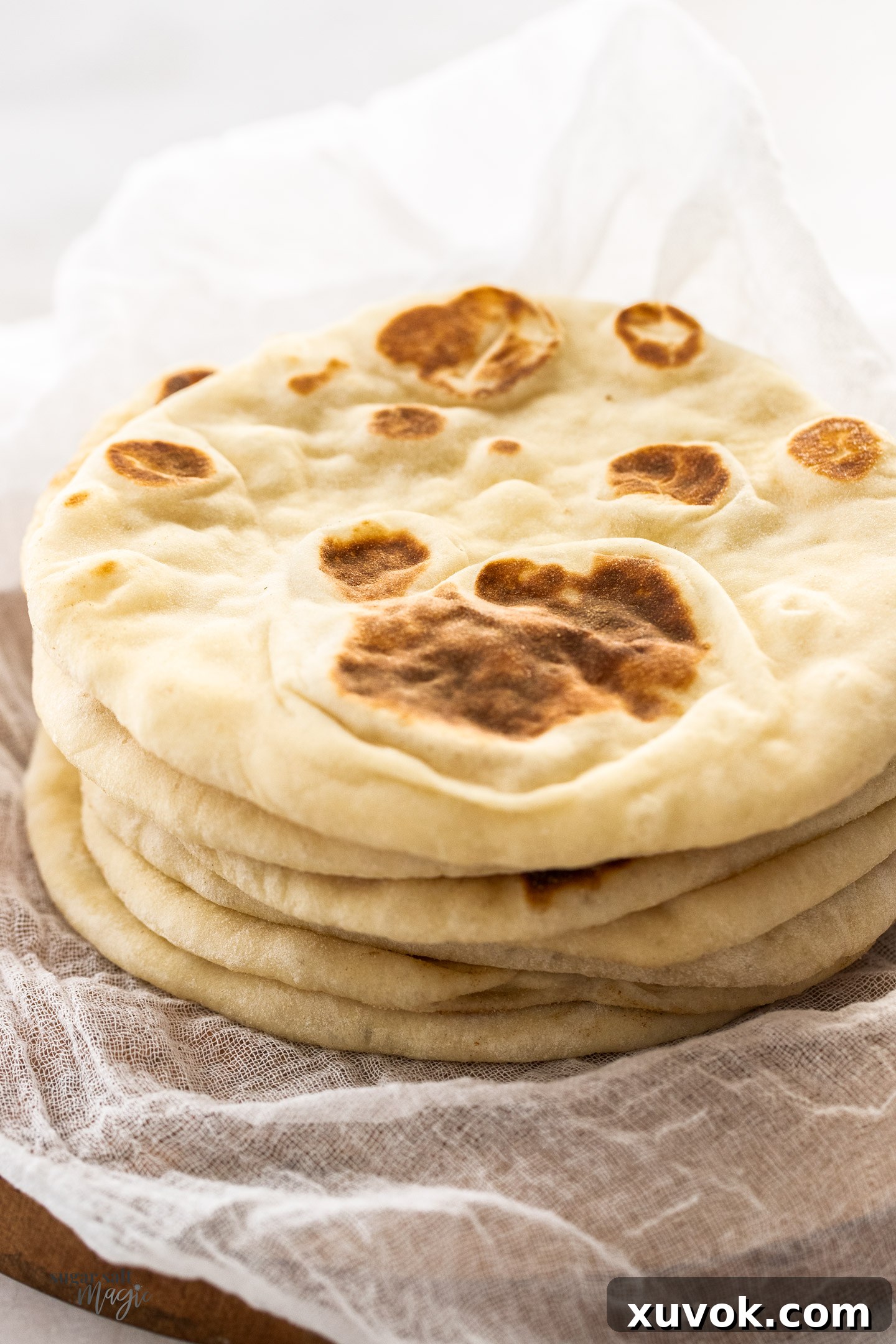
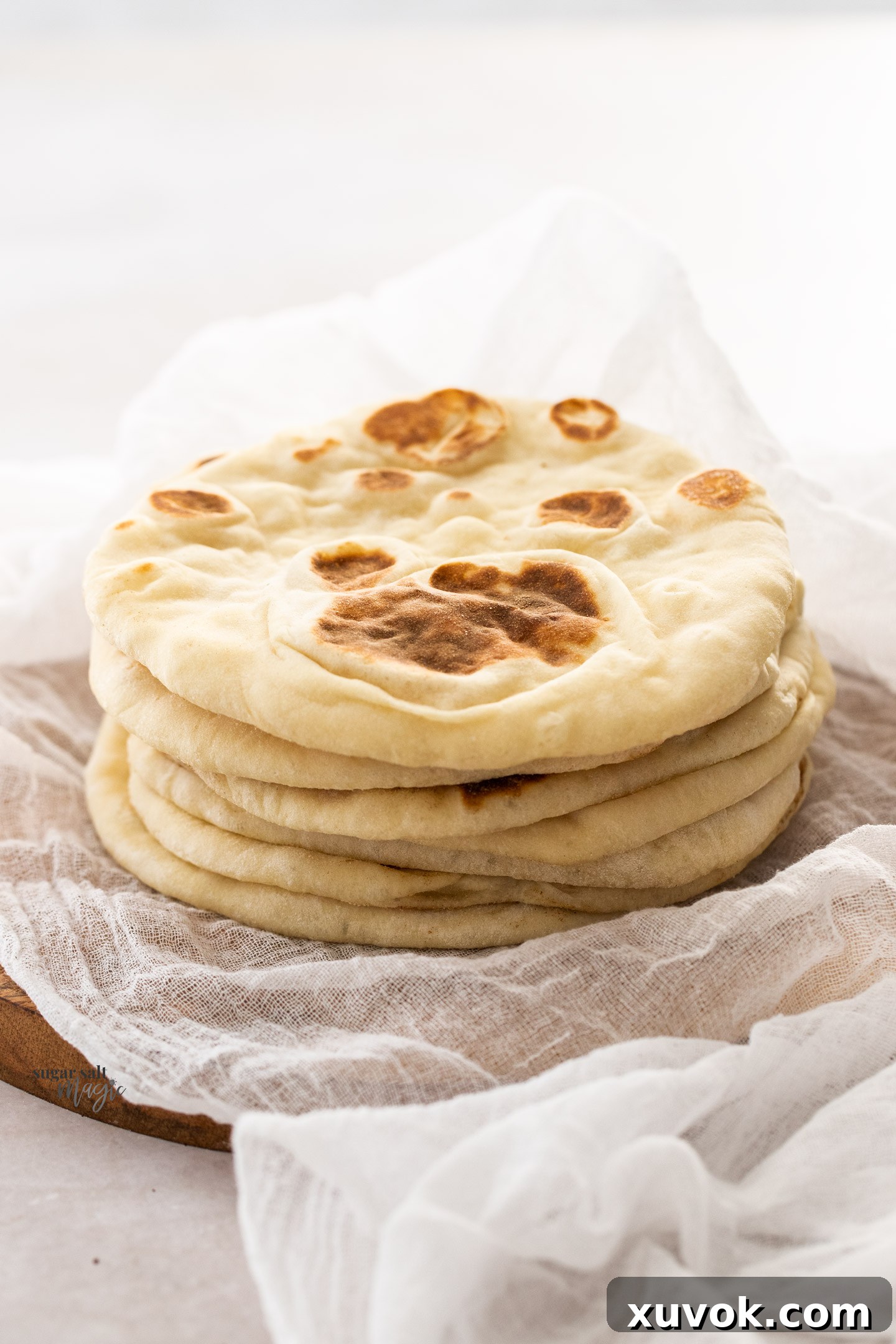
There’s nothing quite as satisfying as warm, freshly baked bread, and this homemade **Turkish flatbread, known as bazlama**, delivers an unparalleled experience. Forget dry, store-bought options; these are the ultimate thick, soft, and incredibly fluffy flatbreads you’ve been dreaming of. Cooking them in a pan is a delightful spectacle – watching them bubble and puff up is a simple joy that truly never gets old.
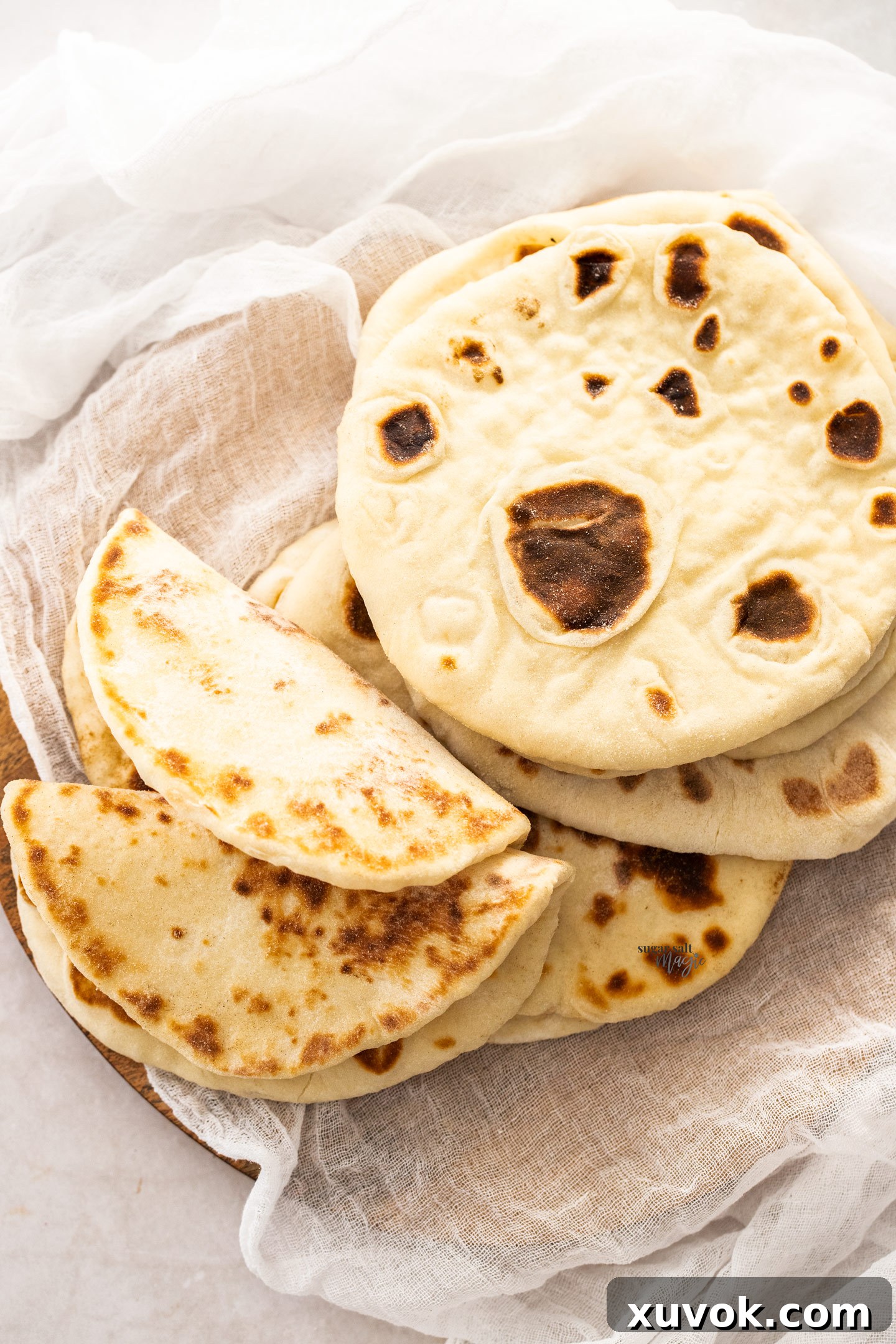
Each bite offers a sublime combination of a **soft, fluffy, and wonderfully chewy interior** complemented by a **delicately crisp outer crust**. Served straight from the pan, fresh and warm, bazlama will quickly become a staple in your kitchen. It strikes a perfect balance, sitting deliciously between the richness of a naan and the pocket-like structure of a pita. The secret to its remarkable tenderness and a subtle, delightful tang? A generous addition of Greek yogurt.
For too long, I searched for a reliable recipe to create truly fluffy flatbreads from scratch. This quest has finally culminated in this perfect recipe! This pliable, versatile, and utterly delicious bread is ideal for wrapping around succulent roasted or grilled meats and vibrant vegetables, much like I do with these flavorful **lamb souvlaki** skewers.
If you’re in a hurry and need an even quicker flatbread solution, you might enjoy my **3 ingredient flatbread** recipe. But for an authentic, deeply satisfying experience, stick with this incredible bazlama.
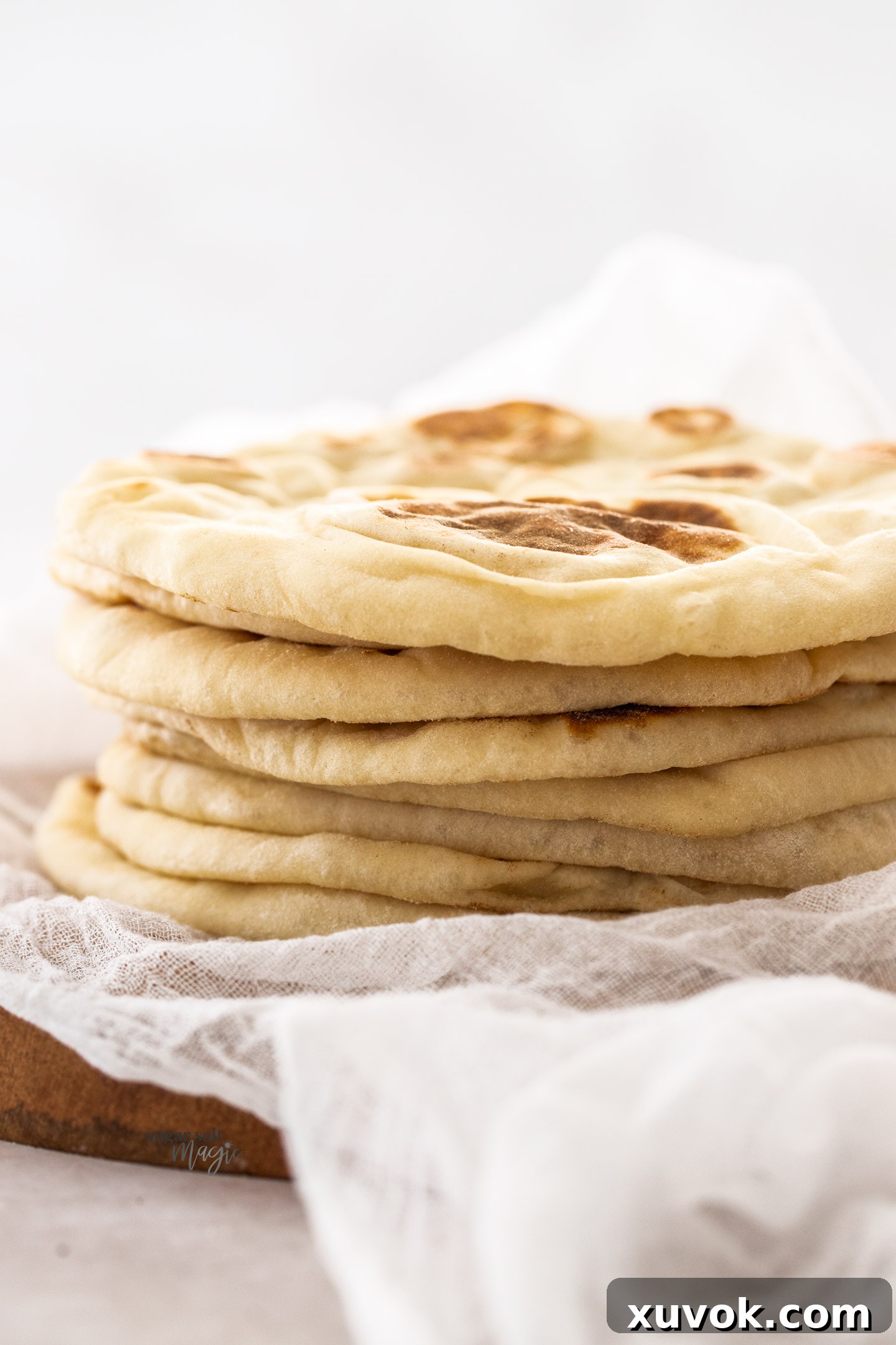
Table of Contents
- What is Bazlama? Understanding Turkish Flatbread
- Essential Ingredients for Perfect Bazlama
- How to Make Turkish Flatbread (Step-by-Step Guide)
- Tips for Bazlama Success
- Delicious Ways to Serve Your Turkish Flatbread
- Frequently Asked Questions About Bazlama
- Yield and Storage Tips for Bazlama
- More Flatbread & Bread Recipes You’ll Love
Never Miss a Recipe!
Get the latest recipes straight to your inbox and discover more culinary magic!
What is Bazlama? Understanding Turkish Flatbread
**Bazlama**, often affectionately referred to as “village bread” in Turkish culture, is a delightful yeasted yogurt flatbread that holds a special place in Turkish cuisine. While it shares some similarities with other popular flatbreads like Indian naan or Middle Eastern pita, bazlama possesses distinct characteristics that set it apart. Its signature tenderness and subtle tangy flavor come from the inclusion of Greek yogurt, while active yeast ensures a truly fluffy, almost pillow-like texture that is simply irresistible.
Traditionally, bazlama is prepared and cooked in outdoor wood-fired ovens, lending it a unique smoky flavor and rustic charm. However, for home cooks, achieving delicious bazlama on a simple stovetop pan is not only entirely possible but also incredibly rewarding. This adaptability makes it a perfect candidate for everyday meals.
In Turkey, bazlama is most commonly enjoyed fresh and warm, often as part of a hearty breakfast spread. It’s incredibly versatile, served in numerous ways: brushed simply with melted butter and fresh herbs, used to scoop up flavorful dips and spreads, or even as a base for savory fillings of roasted meats and vegetables. Personally, I find it absolutely perfect for soaking up the rich sauces of a fragrant curry – a truly heavenly combination!
My journey to creating this particular Turkish flatbread recipe began with a keen desire to master the art of the fluffiest homemade flatbreads. Inspired by excellent resources like The Tortilla Channel, I embarked on developing my own version. While my recipe maintains the spirit and core elements of a traditional bazlama, I’ve made a couple of thoughtful adjustments to make it even more accessible and delightfully puffy for the modern home kitchen. I incorporate a small amount of baking powder for an extra boost of lightness, and I’ve opted for a shorter fermentation period compared to the hours-long traditional method. These tweaks ensure a fantastic result without compromising the authentic taste and texture that make bazlama so beloved.
Essential Ingredients for Perfect Bazlama
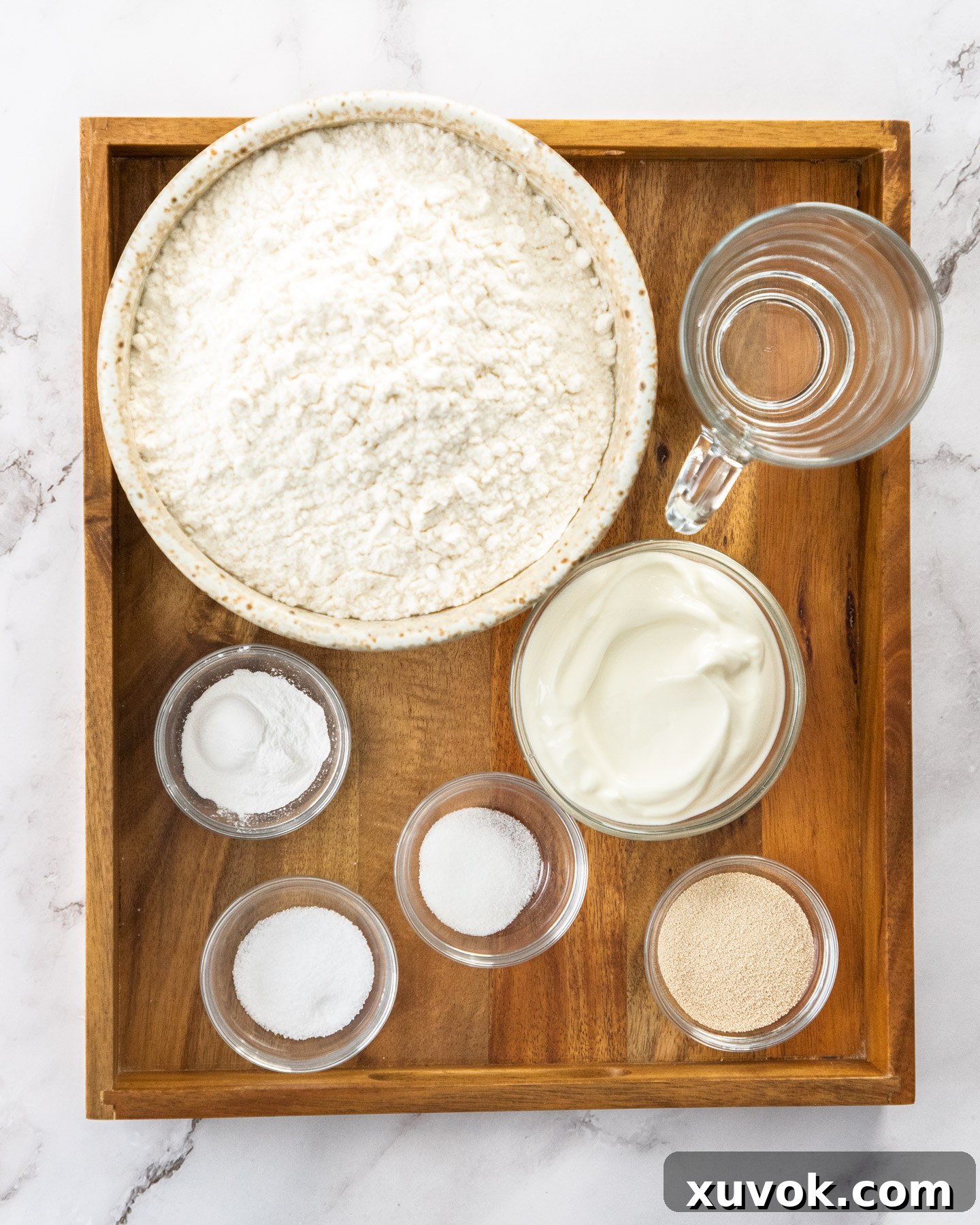
You’ll find detailed quantities and precise instructions in the complete recipe card below.
- Instant Dry Yeast: This is the crucial leavening agent that gives our bazlama its characteristic rise and soft, airy texture. Instant dry yeast is incredibly user-friendly, making this recipe approachable even if you’re new to baking bread. The key to successful yeast activation is using water that’s warm, but not hot enough to kill the yeast, and ensuring your yeast is fresh and within its expiry date.
- Sugar: Just a small amount of granulated sugar (or brown sugar, if preferred) is needed. This acts as food for the yeast, helping to activate it and encourage a robust rise, while also contributing to the bread’s golden crust.
- Plain Flour (All-Purpose Flour): This forms the primary structure of our flatbread. Using good quality plain or all-purpose flour will yield the best results for texture and elasticity.
- Greek Yogurt: This ingredient is a game-changer for bazlama. Full-fat Greek yogurt is highly recommended as it contributes significantly to the bread’s incredible tenderness, moistness, and imparts that signature subtle tang that elevates the flavor profile.
- Salt: Essential for seasoning the dough, salt enhances all the other flavors and balances the sweetness from the sugar and the tang from the yogurt. Don’t skip it!
- Baking Powder (Optional but Recommended): While not traditionally found in all bazlama recipes, I’ve found that a touch of baking powder provides an extra boost of puffiness, especially when opting for a shorter fermentation time. It helps ensure a consistent rise and an even more delightful texture, making it a valuable addition for modern home baking.
- Olive Oil: Used for greasing the bowl during the dough’s rise and for lightly oiling the pan during cooking. A good quality olive oil can also add a subtle flavor.
How to Make Turkish Flatbread (Step-by-Step Guide)
Creating this delicious Turkish flatbread involves a few simple stages of kneading and resting, but the process is surprisingly easy and enjoyable. For convenience and consistent results, **I often use a stand mixer**. This allows me to multitask while the dough is being worked, and it effectively prevents the temptation to add excessive flour if the dough feels a bit sticky – over-flouring can lead to a dry, dense flatbread, which is exactly what we want to avoid.
However, if you prefer a more hands-on approach, you can absolutely knead the dough by hand, just as it would be done traditionally. It can be a wonderfully therapeutic experience! Just be prepared for a slightly sticky dough and remember that **patience is key**. Allow the dough ample time to develop its elasticity and become smooth, resisting the urge to incorporate too much extra flour. If you’re hand-kneading, a dough scraper can be incredibly helpful for managing the dough and lifting it from your work surface.
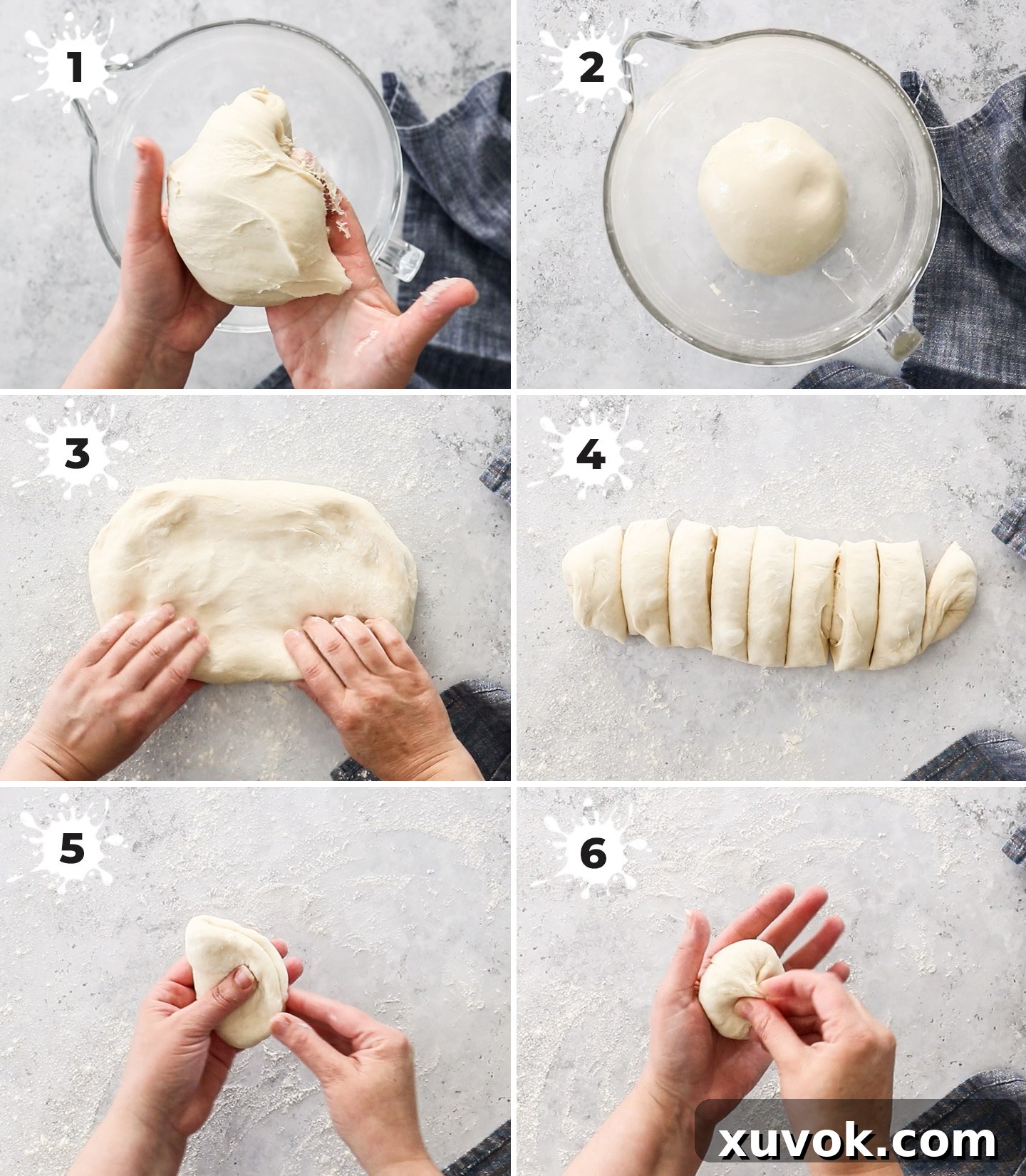
For precise measurements and detailed timings, please refer to the full recipe card below.
- Activate the Yeast: While instant dry yeast doesn’t strictly require activation, I always perform this step as a quick and easy way to verify its freshness. This prevents wasting all your ingredients and time only to find your dough isn’t rising. Simply mix the yeast with warm water and a pinch of sugar, then let it sit for 5-10 minutes. It should become visibly frothy on the surface, indicating active yeast.
- Combine the Ingredients: In a large mixing bowl (or the bowl of your stand mixer), combine the flour, Greek yogurt, salt, baking powder (if using), and the activated yeast mixture. Give them a quick initial mix to bring everything together into a shaggy dough (as shown in photo 1).
- Knead the Dough: If using a stand mixer, knead on low speed for 7-10 minutes. If kneading by hand, work the dough for about 10-15 minutes. The goal is to achieve a dough that looks smooth, elastic, and less sticky (still slightly tacky is fine, as seen in photo 1). It should spring back slowly when poked.
- First Rest (Proofing): Lightly oil a clean bowl. Transfer the kneaded dough to this bowl, turning it over once or twice to coat it evenly in oil. Cover the bowl with plastic wrap or a clean kitchen towel to protect it from drafts and prevent drying. Place it in a warm (but not hot) spot. Allow the dough to rise until it has approximately doubled in size, which usually takes about 1 hour. This initial rise develops flavor and creates that signature airy texture (refer to photo 2).
- Fold the Dough (Optional, for structure): Gently lift the risen dough from the bowl onto a lightly floured surface, avoiding deflating it too much. Shape it into a loose rectangle (as in photo 3). Fold the bottom third of the dough over the middle, then fold the top third down over that, much like folding a letter. Alternatively, you can simply roll it up into a log. This step helps build internal structure and a more even texture.
- Cut and Shape: Divide the dough into 9 equal pieces (see photo 4). Take one piece and gently flatten it slightly. Then, holding it in the palm of one hand, use your other hand to pinch the sides together towards the center, creating tension on the top surface. Continue this motion until the underside is smooth and you have a neat, round ball (as depicted in photos 5 & 6). Repeat for all pieces.
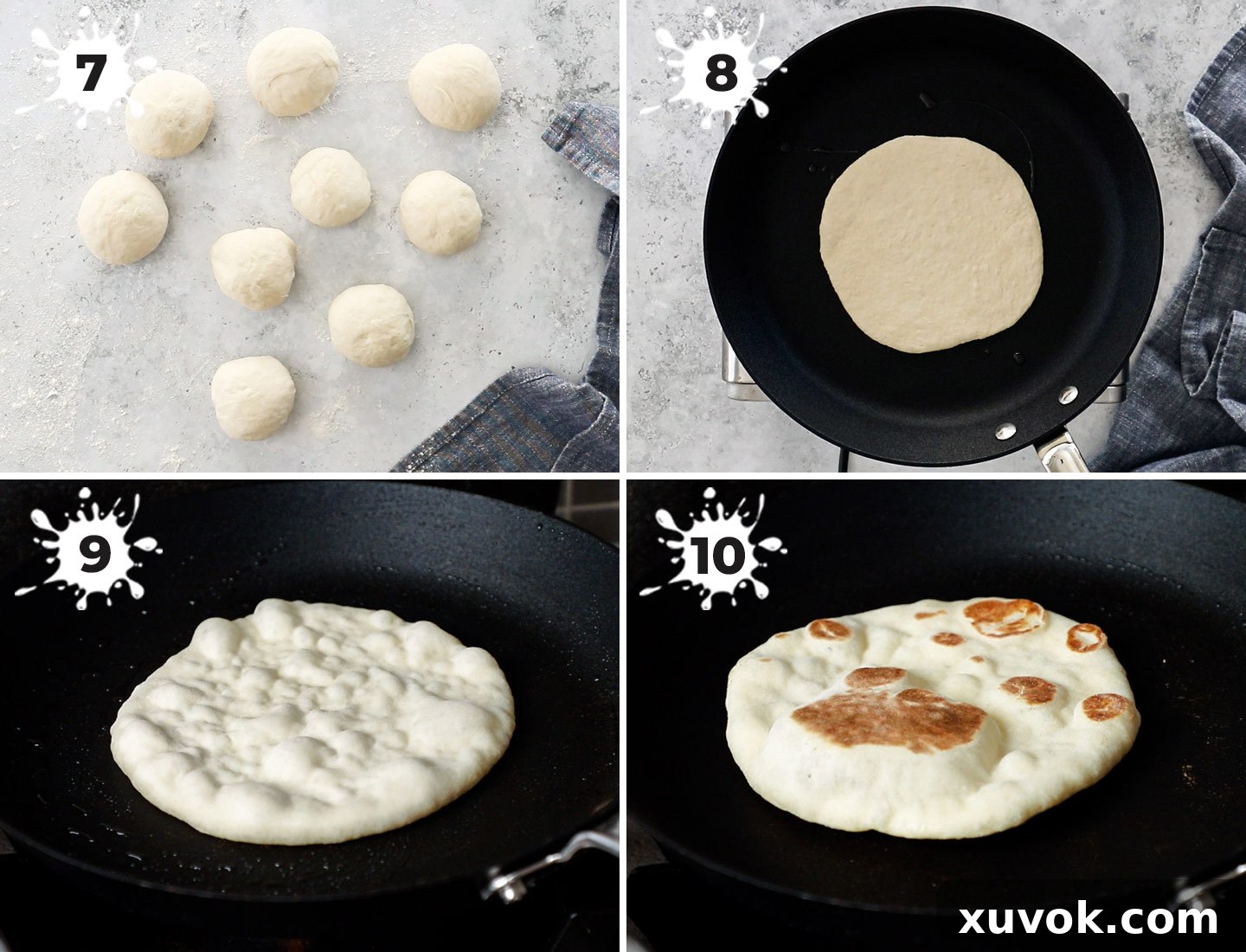
- Second Rest: Arrange the shaped dough balls (photo 7) on a lightly floured surface or baking sheet, ensuring they have a little space between them. Cover them with a clean kitchen towel and let them rest for another 15-20 minutes. This short rest allows the gluten to relax, making the dough easier to roll and contributes to the final fluffiness.
- Roll and Prepare Pan: While the dough balls are resting, heat a large skillet or frying pan over medium-high heat. Add a tiny drizzle of olive oil, then use a paper towel to wipe out the excess, leaving only a very light, almost imperceptible, smear of oil. This prevents sticking without deep-frying. Lightly flour your work surface. Take one dough ball and roll it out into a circle approximately 7 inches (18cm) in diameter and about 3-4mm (⅛ inch) thick. Set it aside, and roll out two more dough balls.
- Cook the Flatbread: Once your pan is hot, take the first rolled flatbread and give it one final, gentle roll to ensure it’s still about 7 inches. Dust off any excess flour, then carefully place it into the hot pan (as shown in photo 8). Cook for about 1 minute, or until you see numerous bubbles appearing all over the surface (this is the magic happening! photo 9). Flip the flatbread and cook for another 45 seconds. You should now observe it beautifully puffing up like a small bread balloon (photo 10). Flip it one last time and cook for just 10 more seconds to lightly brown the other side. Immediately transfer the cooked bazlama to a plate and cover it with a clean tea towel to keep it warm and soft.
To keep the cooking process efficient, you can continue rolling out new dough balls while one is cooking. This way, you’ll always have 2-3 flatbreads ready to go, ensuring each one gets its chance to rest briefly before hitting the pan. For the truly ambitious, you can even use two pans simultaneously, though it’s often easier to manage the timing and consistency with just one until you’re very comfortable.
For a truly authentic flavor experience, you can omit the baking powder and allow the dough to undergo a longer fermentation. Instead of the 1-hour rise, let the dough ferment for 3 hours, or even overnight in the refrigerator (bring to room temperature before shaping). This extended fermentation process significantly enhances the depth of flavor and introduces a more pronounced, delightful tang to the finished flatbread.
Tips for Bazlama Success
Achieving perfectly fluffy and delicious bazlama every time is easier than you think with these expert tips:
- Don’t Over-Flour: While a lightly floured surface is necessary for rolling, resist the urge to add too much extra flour to the dough during kneading or shaping. Excess flour will make your bazlama dry and tough. The dough should be slightly tacky, not sticky.
- Warm Environment for Rising: Yeast loves warmth. Find a cozy spot for your dough to rise – a slightly warm oven (turned off, with just the light on), a sunny windowsill, or even near a heater (but not directly on it). Avoid cold drafts.
- Patience with Kneading: Whether by hand or mixer, ensure your dough is properly kneaded until it’s smooth and elastic. This develops the gluten, which is crucial for the bread’s structure and ability to puff.
- Proper Pan Temperature: A hot pan is essential for the bazlama to puff up quickly and develop a good crust. If the pan isn’t hot enough, the bread will dry out before it gets a chance to puff. Conversely, if it’s too hot, it might burn before cooking through. Medium-high heat is usually perfect.
- Don’t Overcrowd the Pan: Cook one flatbread at a time, or two if your pan is very large and you can manage the flipping. Overcrowding reduces the pan’s temperature and can prevent the flatbreads from puffing properly.
- Keep Warm: As each bazlama cooks, stack it on a plate and immediately cover it with a clean tea towel. This traps the steam, keeping the flatbreads soft and warm until serving.
Delicious Ways to Serve Your Turkish Flatbread
The beauty of homemade Turkish flatbread lies in its incredible versatility. Use bazlama in much the same way you would enjoy naan bread, pita bread, or even a thicker tortilla. Here are some delectable serving suggestions:
- Dipping Delight: Bazlama is exceptional for soaking up rich sauces. Use it to sop up savory stews, aromatic curry sauces, or creamy labneh. It’s also fantastic for dipping into olive oil infused with spices like dukkah, or classic Mediterranean dips such as hummus, baba ghanoush, or spicy ezme.
- Perfect Wraps & Sandwiches: Its soft, pliable nature makes it ideal for wrapping. Fill your bazlama with succulent roasted meats like chicken or lamb, grilled vegetables, fresh salads, or even a simple cheese and herb combination for a satisfying meal. Think of it as a gourmet base for your favorite sandwich fillings.
- Garlic Bread Reinvented: For a delightful appetizer, brush warm bazlama generously with homemade garlic butter (minced garlic, melted butter, fresh parsley) and toast it lightly under a broiler or on an overhead grill until golden and fragrant.
- Stuffed Pockets: Since bazlama often forms a natural pocket when it puffs, you can gently open it and fill it with your favorite cheese (like mozzarella or feta), herbs, or even seasoned minced meat. Cook it on a griddle pan until the filling is warm and melty.
- Mini Pizzas: Leftover bazlama transforms beautifully into quick and easy mini pizzas. Top them with your favorite pizza sauce, cheese, and desired toppings, then bake in the oven at 180C/350F for about 15 minutes, or for a faster option, cook in an air fryer at the same temperature for 8 minutes until the cheese is bubbly and crust golden. These can even be frozen for future quick meals!
- Breakfast Companion: In Turkey, bazlama is a breakfast staple. Serve it warm with butter, honey, jam, olives, and an assortment of cheeses for a traditional Turkish breakfast experience.
Frequently Asked Questions About Bazlama
While “bazlama” is a specific and popular type of Turkish flatbread, the term “Turkish flatbread” can actually refer to several different varieties. **Bazlama** is a thick, yeasted, yogurt-enriched flatbread. Other notable types include **Turkish pide**, which is a fluffier, often boat-shaped bread, similar to focaccia, and can be topped with various ingredients. **Yufka** is a very thin, unleavened flatbread, commonly used for wrapping, or for making savory pastries like gozleme and borek. Lastly, **lavash** is another very thin, sometimes crisp, flatbread, often topped with nigella seeds, popular throughout the Middle East and Caucasus region.
No, bazlama and pita bread are distinct, though they share some functional similarities. The primary difference lies in their ingredients and texture. Bazlama typically includes Greek yogurt, which imparts a unique tenderness, moistness, and a slight tang, giving it a softer, chewier texture. Pita bread, on the other hand, generally does not contain yogurt and tends to be thinner and often forms a more pronounced internal pocket when cooked. While both are excellent for wraps and dipping, their flavor profiles and mouthfeel are different.
Yes, absolutely! For added convenience, you can prepare the bazlama dough and let it undergo its first rise in the refrigerator. After kneading, place the dough in an oiled bowl, cover it tightly with plastic wrap, and refrigerate for up to 24 hours. When you’re ready to cook, bring the dough to room temperature for about 30-60 minutes before proceeding with the folding, cutting, and shaping steps. This slow fermentation can also enhance the flavor of the flatbread.
Several factors can prevent your bazlama from puffing. The most common reasons include inactive yeast (check its expiry date and ensure your water isn’t too hot), insufficient kneading (the dough needs well-developed gluten to trap steam), not enough rest time for the dough, or a pan that isn’t hot enough. Make sure your pan is heated to medium-high before placing the dough, and don’t overcrowd it. Rolling the dough too thick or too thin can also affect puffing – aim for about ⅛ inch (3-4mm).
Yield and Storage Tips for Bazlama
This recipe, as written, is designed to yield 9 wonderfully fluffy Turkish flatbreads. However, you have complete flexibility to adjust the size according to your preference. You can easily make smaller or even larger flatbreads; just ensure you roll them out to a consistent thickness of approximately 3-4mm (or about ⅛ inch). Maintaining this thickness will ensure the cooking time remains fairly consistent, regardless of the diameter.
Bazlama is undoubtedly at its peak when enjoyed fresh and warm, straight from the pan. The soft, fluffy texture and subtle crispiness are best experienced immediately. However, if you find yourself with delightful leftovers, proper storage will help maintain their quality.
Storing Leftovers:
To store leftover bazlama, wrap them individually or stack them with parchment paper in between, then place them in an airtight container or a large ziplock bag. Store them at **room temperature** for up to 2-3 days. Avoid storing bazlama in the refrigerator, as the cold environment tends to dry out yeast breads much faster, making them tough and less enjoyable.
Reheating Bazlama:
Bringing leftover bazlama back to life is simple:
- Microwave Method: For a quick reheat, splash a very small amount of water on top of the flatbread (just a few drops), then microwave for about 20 seconds. This helps create steam and re-soften the bread.
- Oven Method: For a more even reheat, scrunch up a piece of baking paper and run it under cold water. Squeeze out any excess water so the paper is damp, then wrap up to 4 flatbreads in the damp paper. Bake in a preheated oven at 180C/350F for 5-6 minutes. The damp paper helps steam the bread, restoring its tenderness.
Freezing Bazlama:
Turkish flatbread freezes exceptionally well, making it perfect for meal prep or having homemade bread on hand at a moment’s notice. To freeze, allow the cooked bazlama to cool completely. Then, place a sheet of baking paper between each flatbread to prevent them from sticking together. Stack them and store them in a large freezer-safe ziplock bag or an airtight container. They can be kept frozen for up to 2-3 months. Thaw at room temperature or reheat directly from frozen using the oven or microwave methods mentioned above, adding a minute or two to the cooking time.
More Flatbread & Bread Recipes You’ll Love
- 3 Ingredient Flatbread
- Focaccia di Recco
- Easy Homemade Pizza Dough
- Pesto Turkey Flatbread
- Sizzler Cheese Toast
- No Knead Rosemary Parmesan Bread
Did you try this recipe for Turkish flatbread?
Leaving a rating and comment below the recipe is so helpful!
Hungry for more? Subscribe to the newsletter for free recipes straight to your inbox. Also, follow along on Facebook, Pinterest and Instagram.
Turkish Flatbread (Bazlama)
Rate
Pin
Ingredients
- ¾ cup warm water + 1 tablespoon, if needed (180ml+20ml)
- 3 teaspoons instant dry yeast
- ¾ teaspoon sugar
- 390 g plain flour (all purpose flour) (3 cups/13.8oz)
- ½ cup full fat Greek yogurt (125ml)
- 1 ½ teaspoons salt
- 1 ½ teaspoons baking powder, optional
- Olive oil for greasing
For best results, always weigh ingredients where a weight is provided
Equipment
-
stand mixer (optional)
-
Rolling Pin
-
Frying pan or cast iron skillet
Instructions
-
Combine ¾ cup of warm water, yeast, and sugar in a cup or small bowl. Stir gently to combine. Allow this mixture to sit undisturbed for 5 minutes. You should observe a frothy layer forming on the surface, which indicates that your yeast is active and ready to work its magic.
-
In the large bowl of a stand mixer fitted with a dough hook attachment (or a large mixing bowl if kneading by hand), add the measured flour, Greek yogurt, salt, baking powder (if using), and the activated yeast mixture. Begin to mix them together.
-
Turn the stand mixer on low speed. After approximately 1 minute, observe the dough: if it has completely pulled away from the bottom of the bowl and seems too stiff, add the extra tablespoon of warm water. If the dough is still sticking slightly to the bottom but is otherwise pulling away from the sides, you likely won’t need the additional water. Continue kneading on low speed for about 5-6 minutes until the dough transforms into a smooth, elastic consistency. For hand kneading, continue for 10-15 minutes, until the dough feels supple and smooth.
-
Lightly dust a clean worktop with a minimal amount of flour. Transfer the dough from the mixer bowl and quickly knead it by hand for just about 30 seconds to further smooth it out. Lightly grease the stand mixer bowl (or a clean bowl) with a little olive oil. Place the dough into the oiled bowl, turning it over a couple of times to ensure it’s evenly coated in oil. Cover the bowl securely with a plate or plastic wrap to protect the dough from drying out and drafts. Allow it to rise in a warm place for about 1 hour, or until it has visibly doubled in size.
-
Without punching down or excessively deflating the dough, gently lift it out of the bowl and lightly nudge it into a small rectangular shape on a clean, lightly floured surface. To enhance structure, fold the bottom third of the rectangle up over the middle section, then fold the top third down over the folded part (like folding a letter). Alternatively, you can simply roll the dough up into a log. Once folded or rolled, use a sharp knife or dough scraper to cut the dough into 9 even pieces.
-
Take one of the cut dough pieces and hold it in the palm of your hand. Gently fold it in half, then begin to pinch the sides of the dough inwards towards the center with your other hand. Continue this motion until the side resting in your palm is smooth and taut, forming a small, neat round ball. Repeat this process for all the remaining dough pieces. Arrange the newly shaped dough balls on a clean surface or baking sheet, leaving some space between them. Cover them with a clean tea towel and allow them to rest for a further 15 minutes. This second rest is crucial for relaxing the gluten, making the dough easier to roll and ensuring a soft, fluffy texture.
-
Heat a non-stick frying pan or a large cast iron skillet over medium-high heat. Drizzle a very small amount of olive oil into the pan. Use a piece of paper towel to lightly wipe out the oil, leaving just a thin, almost invisible smear to prevent sticking. This ensures a beautifully cooked crust without excess oiliness.
-
Lightly flour a clean work surface. Take one of the rested dough balls and, using a rolling pin, roll it out into a circle approximately 18cm (7 inches) wide and about 3-4mm (⅛ inch) thick. Once rolled, push it gently aside. Repeat this process for two more dough balls, so you have three rolled flatbreads ready.
-
Once the pan is hot and lightly oiled, take the first rolled flatbread and give it a quick, gentle roll again to ensure it’s still at the desired 18cm (7 inches) diameter. Lightly brush off any excess flour, then carefully lift it and place it into the hot pan. Cook the flatbread for exactly 1 minute, during which you should observe numerous small bubbles appearing all over the surface. Flip the flatbread to the other side and cook for a further 45 seconds. At this point, you should see the flatbread magically puff up like a balloon. Flip it one final time and cook for just 10 more seconds to achieve a light golden hue. Immediately remove the cooked bazlama from the pan and transfer it to a plate, covering it with a clean tea towel to keep it warm and soft.
-
Continue this cooking process for each of the remaining dough balls. To maintain efficiency, roll out another ball of dough while one is cooking in the pan. This strategy ensures you always have three rolled flatbreads prepared and one actively cooking, keeping your production line smooth until all of your delicious homemade bazlama are complete.
-
Please take a moment to leave a comment & rating below if you tried this recipe. Your feedback is greatly appreciated and incredibly helpful!
Notes
- For the most accurate and consistent results in baking, it is strongly recommended that you always weigh ingredients such as flour and sugar, especially when a weight is provided in the recipe. Kitchen scales are affordable and an invaluable tool for precision. If you do not have access to a scale, use the spoon and level method for measuring flour (spoon flour into the measuring cup, then level off with a straight edge; do not scoop directly from the bag).
More Information
These links will navigate you up to the relevant sections of the post – simply scroll down to return to the recipe card.
- Step-by-step photos
- How to serve Turkish flatbread
- FAQs
- Yield and storage
Calories from Fat 9