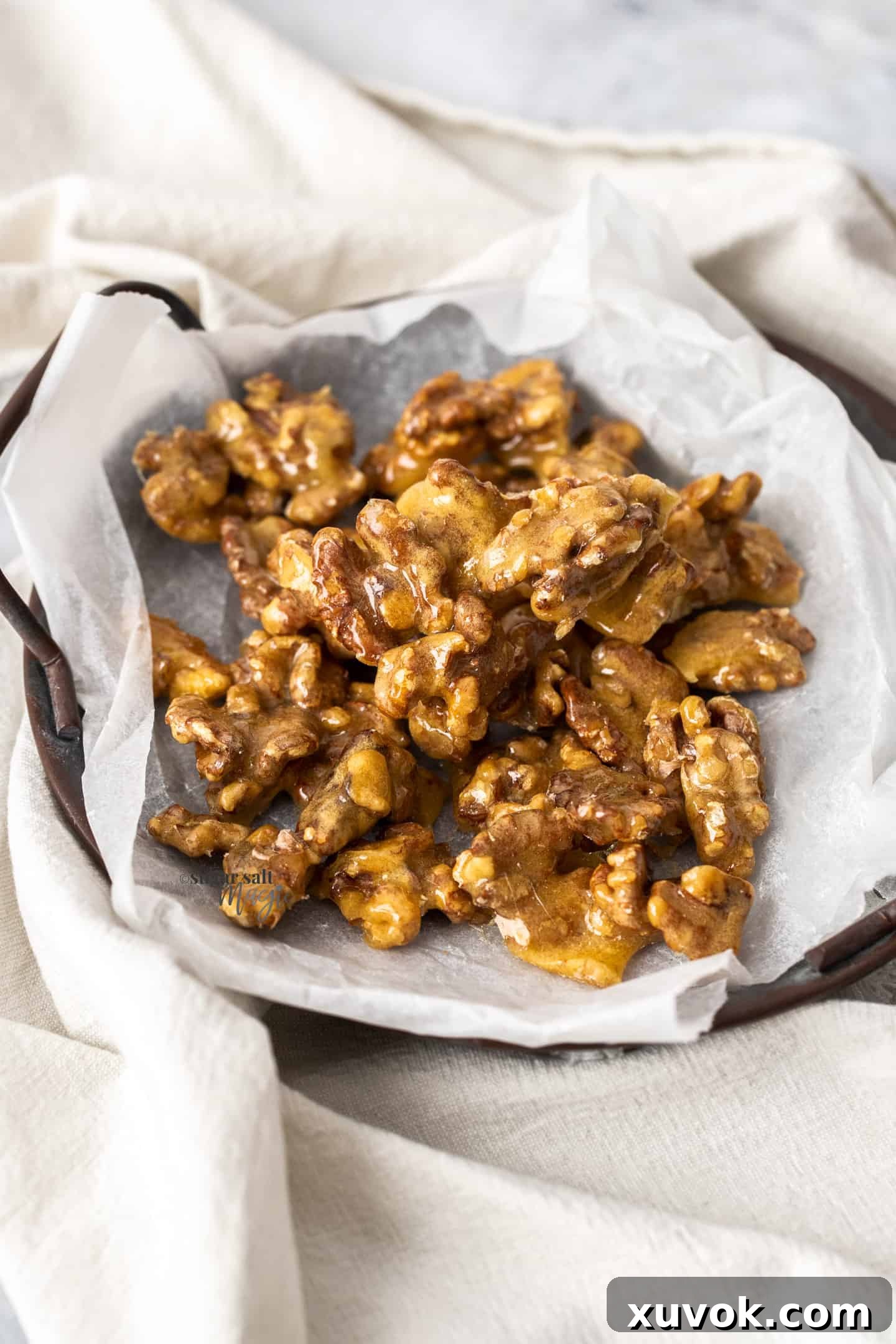
Discover the delightful simplicity of crafting a classic **French-style walnut praline** with just **three basic ingredients**. This recipe is not only incredibly quick and **easy to make**, but it also results in a truly luxurious treat. These candied walnuts are exquisitely crunchy, intensely flavorful, and remarkably versatile, making them ideal for personal indulgence, elegant gifting, or enhancing a wide array of desserts.
Creating your own praline at home brings an unmatched sense of satisfaction, and with minimal effort, you can transform simple walnuts and sugar into a gourmet confectionery. Whether you’re a seasoned candy maker or a kitchen novice, this recipe is designed for success.
- Minimum Ingredients: Requires only 3 essential components.
- Effortless Preparation: Ready with just about 15 minutes of active work.
- Highly Scalable: Easily adjust quantities to make a small batch or a large volume for events.
- Nut Versatility: Works beautifully with virtually any type of nut.
- Perfect for Gifting: An impressive homemade present, or a fantastic staple for topping cakes, ice cream, and more.
While walnuts are a fantastic choice, don’t limit your creativity. Experiment with other nuts to create diverse flavor profiles. For instance, the rich, buttery notes of pecans shine in these toffee pecan chocolate truffles, offering a different depth of flavor. Similarly, hazelnuts transform into an aromatic delight in hazelnut praline chocolate truffles, proving the adaptable nature of this sweet confection. Each nut brings its unique character to the caramel, promising endless delicious possibilities.
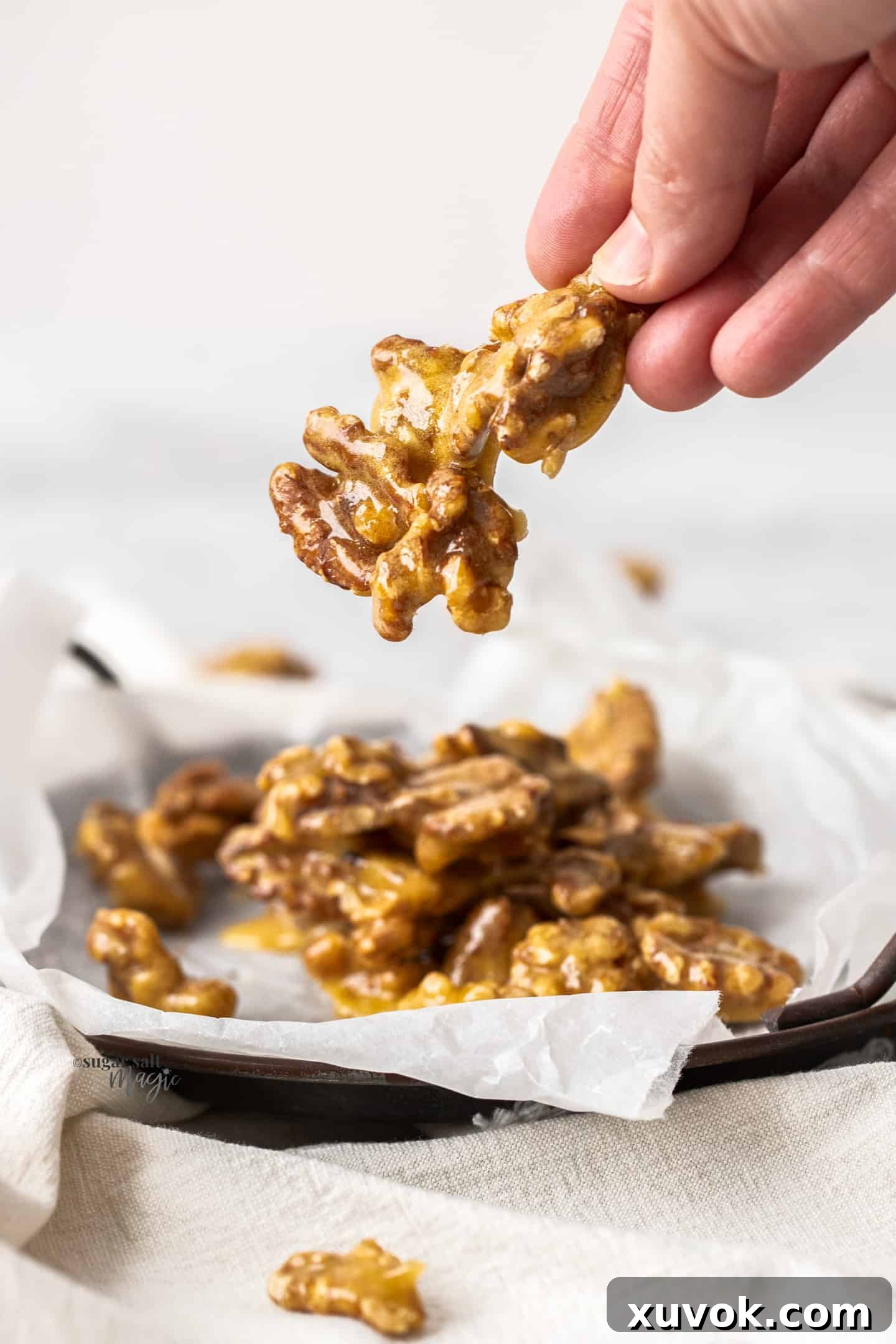
Table of Contents
- What is Praline? A Culinary Exploration
- Essential Tools for Perfect Praline
- Key Ingredients for Irresistible Walnut Praline
- Beyond Walnuts: Exploring Other Nut Varieties for Praline
- Step-by-Step Guide to Making Homemade Praline
- Troubleshooting Common Toffee Issues
- Praline Not Setting? Here’s Why
- Creative Ways to Enjoy Walnut Praline
- Storing Your Homemade Walnut Praline
- More Delectable Candy Recipes You’ll Adore
Never Miss a Recipe!
Get the latest, most irresistible recipes straight to your inbox – be the first to know!
What is Praline? A Culinary Exploration
Praline, at its heart, is a delightful confectionery built around the harmonious blend of nuts and caramelized sugar. However, its exact interpretation varies significantly across different culinary traditions, each offering a unique textural and flavor experience.
The Elegance of French Praline
This recipe focuses on the classic **French-style praline**, which is perhaps the simplest and most fundamental form. It consists solely of sugar and nuts, transformed through a precise caramelization process. The sugar is cooked into a rich, golden toffee, which then coats the nuts, yielding intensely crunchy, sweet morsels. These are often referred to as candied nuts or specifically, candied walnuts in this case. In French patisserie, these candied nuts are frequently ground into a fine powder or a smooth paste (known as *praliné*) and utilized as a foundational ingredient in exquisite cakes, tarts, and a variety of sophisticated desserts. Its deep, caramelized nut flavor adds an unparalleled depth to creations like Paris-Brest or opera cakes. Beyond baking, the delicate crunch and rich flavor make it a perfect addition to homemade truffles, providing a textural contrast and a burst of nutty sweetness.
The Creamy Allure of American Praline
In contrast, the **American style of praline**, particularly prominent in the Southern United States, introduces a richer, creamier dimension. This version typically includes the addition of cream and/or butter to the sugar and nuts, resulting in a slightly softer, fudge-like consistency with a smoother, melt-in-your-mouth quality. While still featuring the delightful crunch of nuts, the added dairy creates a more decadent and often chewier texture. American pralines are frequently enjoyed as individual candies, sometimes enrobed in chocolate, and are a beloved regional treat.
The Secret to a Crispier Crunch: Baking Soda
A subtle yet impactful addition to our walnut praline is a touch of baking soda. When introduced to the hot, molten toffee, baking soda reacts, releasing tiny carbon dioxide bubbles. This aeration process makes the toffee puff up slightly and develop a crisper, more delicate crunch, rather than a dense, hard one. This is the same principle that gives honeycomb its characteristic airy texture. While it significantly enhances the textural experience, baking soda is entirely optional. If you prefer a harder, glass-like toffee crunch or simply don’t have it on hand, you can confidently omit it without compromising the delicious flavor.
Essential Tools for Perfect Praline
Crafting flawless praline requires just a couple of key pieces of kitchen equipment. Ensuring you have the right tools will make the process smoother and more successful:
- A baking tray or cookie sheet: Essential for toasting your walnuts evenly and, more importantly, for quickly spreading and cooling the hot praline. Lining it with parchment paper is crucial to prevent sticking and ensure easy removal.
- A heavy-based saucepan: A good quality, heavy-bottomed saucepan, ideally stainless steel, is vital for caramel making. Its thick base ensures even heat distribution, preventing the sugar from burning in spots while remaining undissolved in others. Stainless steel is preferred as it allows you to clearly see the color of the caramel as it develops, which is a key indicator of readiness. Avoid non-stick pans for caramel, as they can sometimes interfere with the sugar’s crystallization process.
- Parchment Paper or Silicone Mat: Absolutely critical for lining your baking sheet. This prevents the incredibly sticky caramel from adhering to the tray, allowing for easy removal and cleanup once the praline has set.
Key Ingredients for Irresistible Walnut Praline
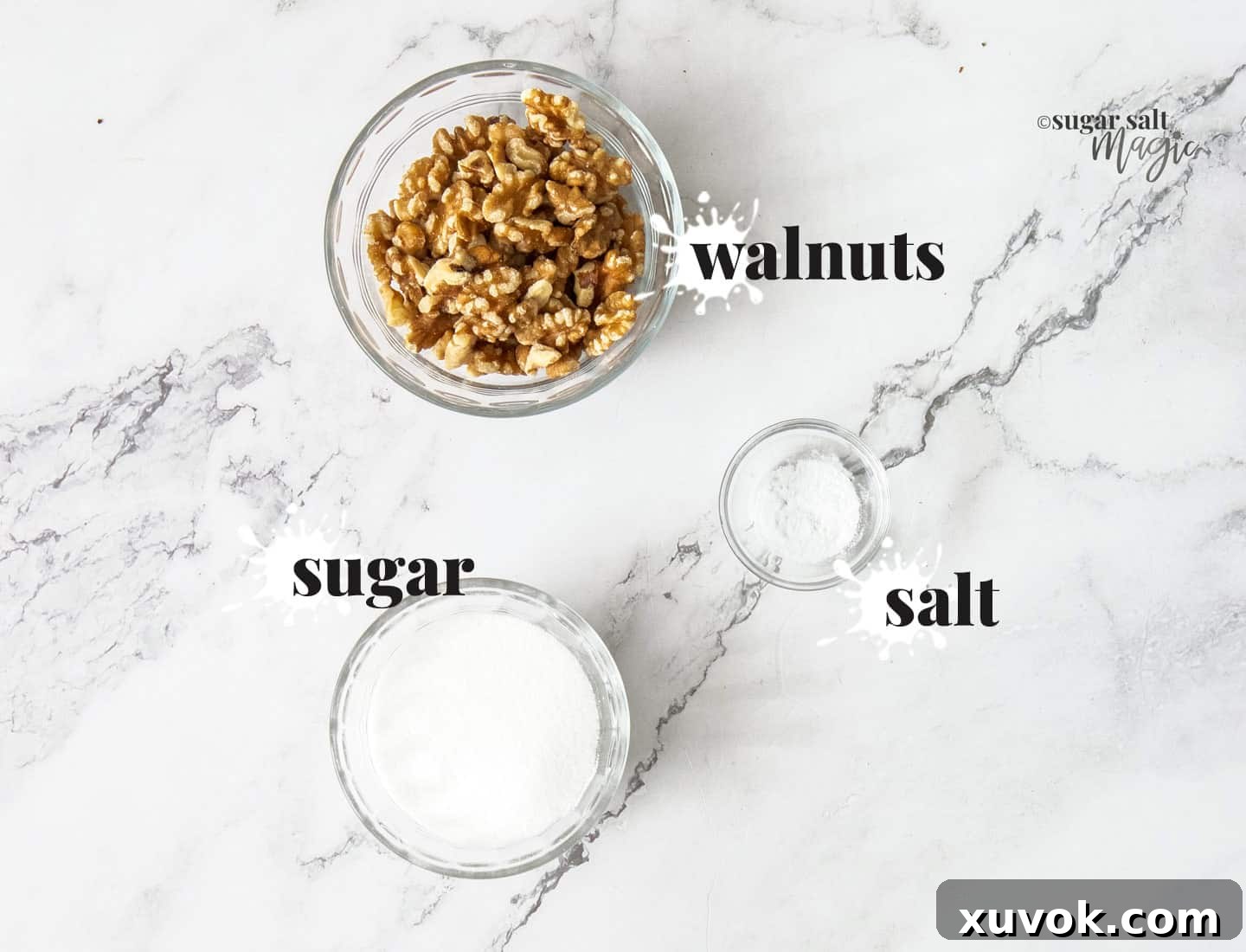
For precise measurements and detailed cooking steps, please refer to the recipe card below.
- Walnut Halves: The star of our praline! The quality of your walnuts profoundly impacts the final flavor. Always opt for fresh, plump walnut halves. Old walnuts can develop a bitter, rancid taste, which will be magnified once caramelized. Toasting them briefly before adding to the caramel enhances their natural nutty aroma and flavor, contributing to a more complex and satisfying praline. Remember, this recipe is incredibly versatile, so feel free to substitute with other favorites, much like our delectable almond praline.
- Sugar: Simplicity is key here; plain white sugar is all you need for caramelization. While white granulated sugar works perfectly well, I personally prefer caster sugar (also known as superfine sugar). Its finer crystals dissolve more quickly and evenly, reducing the risk of crystallization during the caramel-making process. Crucially, avoid using icing sugar or powdered sugar, as these contain cornstarch or other anti-caking agents that will interfere with proper caramelization, resulting in a cloudy or gummy texture.
- Baking Soda: This ingredient is optional, but highly recommended for achieving a lighter, more delicate crunch. When added to hot toffee, baking soda releases carbon dioxide, creating tiny air pockets that give the praline a crispier, almost aerated texture, rather than a solid, hard snap. It’s a fantastic way to elevate the mouthfeel of your candied walnuts. Both versions are delicious, so it truly comes down to personal preference.
Flavor Enhancements for Your Praline
Beyond the core ingredients, you can personalize your walnut praline with various flavor additions:
- Spices: Introduce warmth and aromatic complexity with a pinch of cinnamon, nutmeg, allspice, pumpkin spice, or cardamom. Add these spices to the sugar and water mixture at the very beginning, allowing their flavors to infuse into the caramel as it cooks.
- Sweeteners & Extracts: For an extra layer of flavor, consider adding just a tablespoon of maple syrup or honey along with the water. A few drops of vanilla extract, almond extract, or even a hint of orange zest can also dramatically alter and enhance the praline’s character, creating a truly bespoke treat. Add extracts after removing the toffee from heat and just before adding the nuts.
Beyond Walnuts: Exploring Other Nut Varieties for Praline
One of the most exciting aspects of this praline recipe is its remarkable adaptability. While walnuts offer a classic and robust flavor, you are absolutely encouraged to experiment with a wide array of nuts to create unique and equally delicious variations. Each nut brings its own distinct texture and flavor profile to the caramelized sugar, allowing for endless culinary exploration.
Consider these delightful alternatives:
- Almonds: A very popular choice, almonds create a wonderfully crisp praline with a slightly milder, more buttery flavor than walnuts. Blanching and skinning them beforehand can result in a smoother finish.
- Pecans: Known for their rich, buttery flavor and soft texture, pecans create a praline that is both crunchy and melts in your mouth. Their natural sweetness pairs beautifully with the caramelized sugar.
- Peanuts: For a classic, comforting flavor reminiscent of peanut brittle, use roasted peanuts. The salty-sweet combination is incredibly addictive.
- Cashews: These offer a creamy, delicate crunch and a subtle sweetness that makes for an exceptionally smooth praline.
- Hazelnuts: With their distinct earthy and toasted flavor, hazelnuts (especially when lightly roasted and peeled) create an incredibly aromatic praline, perfect for European-inspired desserts.
- Macadamias: For a truly decadent and luxurious praline, macadamias are divine. Their high fat content gives them an incredibly rich, buttery taste and a tender crunch that stands out beautifully when coated in caramel.
- Pistachios: For a vibrant color and unique, slightly floral flavor, pistachios make an elegant praline.
Regardless of the nut you choose, ensure they are fresh and, for best results, lightly toasted to enhance their natural flavors before incorporating them into the hot toffee. This simple step elevates the praline from good to truly exceptional.
Step-by-Step Guide to Making Homemade Praline
While the concept of making praline from scratch seems intimidating, especially when dealing with hot sugar, it’s actually quite straightforward. The key to success lies in understanding a few critical precautions to prevent crystallization and ensure your toffee turns out perfectly smooth and clear. Follow these steps carefully, and you’ll be enjoying homemade walnut praline in no time. Always prioritize safety when working with hot sugar; it reaches very high temperatures and can cause severe burns.
For a complete list of ingredients and precise measurements, please refer to the recipe card below.
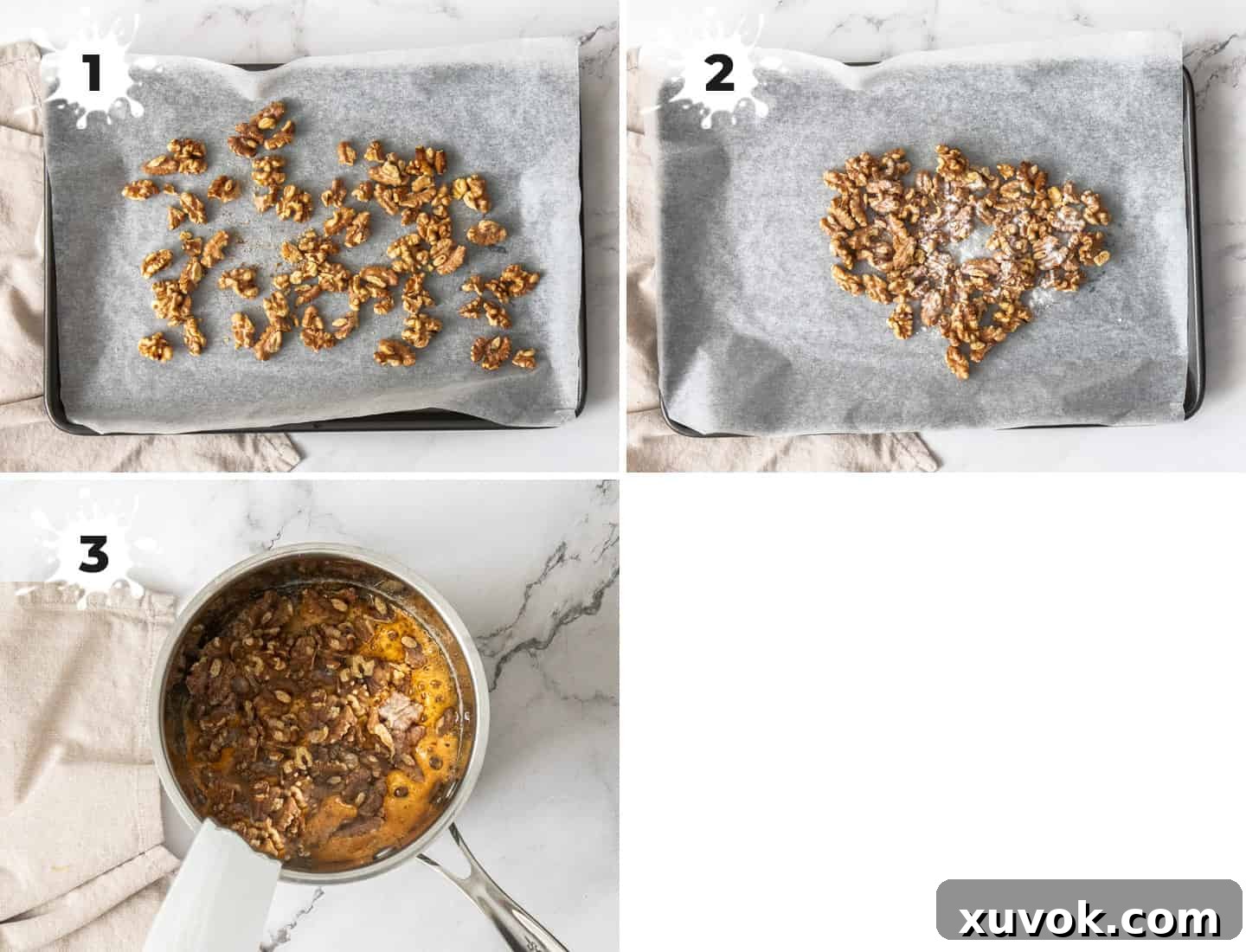
- Prepare and Toast the Walnuts: Begin by preheating your oven to 180°C / 350°F (160°C fan-forced). Line a baking sheet with baking paper or a silicone mat. Scatter the walnut halves in a single layer across the prepared sheet (photo 1). Toast them in the preheated oven for approximately 8-10 minutes, or until they are fragrant and lightly golden. Toasting significantly enhances their nutty flavor and ensures they are perfectly crisp. Once toasted, remove them from the oven and set aside to cool slightly.
- Clean Your Saucepan Meticulously: Before you even think about adding sugar, ensure your heavy-based saucepan is impeccably clean. Any residual grease or food particles can act as “seed crystals” and initiate crystallization, turning your smooth caramel into grainy sugar. A common trick is to wipe the inside of the saucepan thoroughly with a paper towel dampened with a touch of vinegar or lemon juice, then rinse it well with water. There’s no need to dry it; a little water remaining won’t harm the process.
- Combine Sugar and Water: Add the precise amount of sugar to your cleaned saucepan. Give the pan a gentle shake to spread the sugar evenly across the bottom. Then, slowly and carefully drizzle the specified amount of water all over the sugar, ensuring that as many sugar crystals as possible are moistened. Let this mixture sit undisturbed for a minute or two; this allows the sugar to absorb the water, which helps in dissolving it more uniformly once heat is applied.
- Caramelize the Sugar with Patience: Place the saucepan over **very low heat** on your stove. This is a critical step where patience is paramount. Do not stir the mixture once it’s on the heat. Allow the sugar to slowly dissolve in the water, creating a clear syrup, and then gradually come to a boil. As it boils, the water will evaporate, and the sugar will begin to caramelize. Continue cooking, still without stirring, until the syrup transforms into a beautiful golden amber color. This deep amber hue indicates the sugar has reached the perfect caramelization stage. Immediately remove the pan from the heat once this color is achieved to prevent burning.
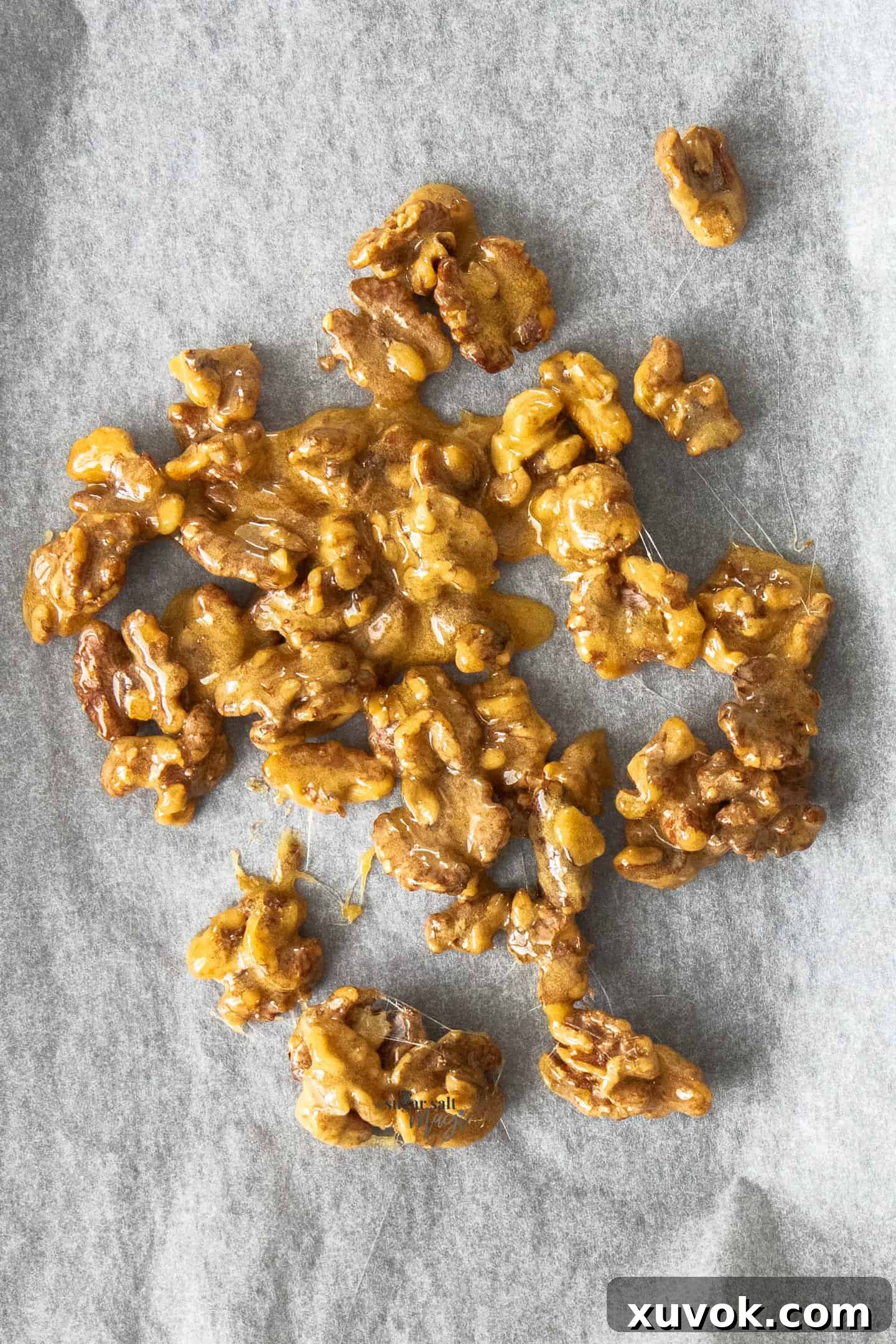
- Incorporate Baking Soda and Walnuts: While the sugar is caramelizing, ensure your toasted walnuts are ready. Sprinkle the optional baking soda evenly over the walnuts (photo 2). Once your caramel has reached the amber stage and is off the heat, immediately gather the sides of the baking paper containing the walnuts like a funnel and carefully pour them into the hot toffee in the saucepan (photo 3). This needs to be done swiftly.
- Stir and Set the Praline: Working quickly, use a heatproof spatula or spoon to give the mixture a good, thorough stir, ensuring every walnut is completely coated in the hot toffee and the baking soda is evenly distributed. The mixture will start to aerate and change texture. Immediately place the baking paper back onto the baking sheet and pour the hot praline mixture onto it. Use your spoon to spread it out as thinly and evenly as possible. It will begin to set very rapidly. Allow it to cool completely and undisturbed at room temperature. Once entirely cool, the praline will be hard and brittle, ready to be broken into pieces and enjoyed.
Troubleshooting Common Toffee Issues
While making walnut praline is fundamentally simple, the process of caramelizing sugar can sometimes be temperamental. The most common pitfall is **crystallization**, where the smooth, clear toffee inexplicably turns grainy and opaque. This happens when sugar reverts back to its crystalline state, often due to small “seed crystals” forming or being introduced into the syrup.
Understanding and Preventing Crystallization:
Crystallization occurs when undissolved sugar crystals or foreign particles come into contact with the boiling sugar syrup. Even microscopic dust or a tiny splash of syrup on the side of the pan that dries can trigger a chain reaction, causing the entire batch to crystallize. Here are the main culprits and how to avoid them:
- Impurities and Grease: Any trace amounts of grease or food residue in your saucepan or on your utensils can act as seed crystals. Always start with a scrupulously clean pan. As mentioned, wiping the pan with lemon juice or vinegar before starting helps ensure it’s free of any residues.
- Premature or Excessive Stirring: Once the sugar and water mixture starts boiling, resist the urge to stir it. Stirring at this stage can splash undissolved sugar crystals onto the sides of the pan, where they can dry and fall back into the syrup, initiating crystallization.
- Sudden Temperature Changes: Rapid fluctuations in temperature can also encourage crystallization. Maintain a consistent low heat during the initial dissolving phase and avoid removing the pan from heat until the caramelization is complete.
- High Humidity: Humidity is the bane of candy makers. In a humid environment, sugar readily absorbs moisture from the air, making it difficult for the syrup to reach the correct consistency and increasing the likelihood of crystallization. If your environment is particularly humid, it might be best to postpone candy making to a drier day.
- Undissolved Sugar on Pan Sides: As the sugar syrup boils, tiny splashes can stick to the sides of the pan above the liquid line. These often crystallize and can fall back into the syrup. To prevent this, periodically brush down the sides of the pan with a clean pastry brush dipped in warm water, gently washing down any clinging crystals.
For an even more in-depth guide to achieving perfect caramel and troubleshooting, I highly recommend checking out the dedicated section in my post on caramel apple muffins. It provides comprehensive tips and tricks that apply directly to making flawless toffee for your praline.
Praline Not Setting? Here’s Why
The hallmark of a perfect praline is its firm, brittle crunch once cooled. If your praline remains sticky, gooey, or too soft, it usually indicates that the sugar syrup didn’t reach the critical “hard crack stage” during cooking. The beautiful amber gold color of the caramel is a fantastic visual indicator that your syrup is approaching this stage, but it’s not foolproof.
Understanding the Hard Crack Stage:
The hard crack stage is a specific point in candy making where the sugar concentration is at its highest, typically between 150-155°C (300-310°F). At this temperature, the sugar contains less than 1% moisture. When a small amount of this syrup is dropped into cold water, it will form hard, brittle threads that snap easily. If your syrup doesn’t reach this temperature, it will retain too much moisture and will simply not set hard and crunchy.
The Importance of a Candy Thermometer:
To eliminate guesswork and ensure consistent results, especially if you’re new to candy making, using a candy thermometer is highly recommended. It provides an accurate reading of your syrup’s temperature, guaranteeing it reaches the required 150-155°C / 300-310°F. Clip it to the side of your saucepan, ensuring the tip is submerged in the syrup but not touching the bottom of the pan.
The Impact of Humidity:
As mentioned in troubleshooting, humidity is a significant factor in candy making. Sugar is hygroscopic, meaning it readily absorbs moisture from the air. High humidity can prevent your sugar syrup from evaporating enough water to reach the hard crack stage, or it can cause already-set praline to become sticky and soft over time. For instance, living in certain climates means avoiding candy-making entirely during the most humid summer months. If you suspect humidity is an issue:
- Avoid making praline on rainy or very humid days.
- Store your praline immediately in an airtight container once completely cool to protect it from ambient moisture.
- In extremely humid conditions, a small amount of cream of tartar (about ¼ teaspoon per cup of sugar) can act as an anti-crystallization agent, though it doesn’t solve setting issues if the temperature isn’t reached.
By monitoring the temperature and being mindful of environmental conditions, you can ensure your praline achieves that perfect, satisfying snap every time.
Creative Ways to Enjoy Walnut Praline
Walnut praline isn’t just a delicious standalone treat; its crunchy texture and rich caramelized flavor make it an incredibly versatile ingredient in the kitchen. Here are some of the most delectable ways to incorporate your homemade praline:
- Simply Indulge: The most straightforward way to enjoy praline is to eat it as it is! Break it into bite-sized pieces and savor the sweet, nutty crunch. It makes for an elegant homemade gift when wrapped in small bags or airtight cellophane.
- Elevate Desserts:
- Ice Cream Topping: Crush the praline into coarse pieces using a mortar and pestle or a food processor. Sprinkle generously over vanilla, coffee, or even chocolate ice cream for an incredible textural and flavor contrast. You can also mix crushed praline directly into softened ice cream for a praline crunch ice cream.
- Cake & Cupcake Decoration: Use crushed praline as a sophisticated topping for cakes, cupcakes, or cheesecakes. It adds both visual appeal and a delightful crunch. For an extra special touch, incorporate finer praline powder into cake batter or frosting for an infused flavor.
- Cheesecake Perfection: A sprinkle of crushed praline over a creamy cheesecake base provides a much-needed textural counterpoint and a boost of flavor.
- Baked Goods Booster:
- Praline Cookies: Fold finely crushed praline into your favorite cookie dough (e.g., shortbread, chocolate chip, or oatmeal cookies) before baking for an unexpected crunch and caramelized flavor.
- Muffins and Scones: Add a spoonful of crushed praline to muffin or scone batter for a sweet, nutty surprise.
- Chocolate Lover’s Dream:
- Chocolate-Coated Praline: For a truly decadent treat, dip larger pieces of praline in melted dark, milk, or white chocolate. Allow them to set, and you have gourmet chocolate-covered candied nuts perfect for gifting or a special occasion.
- Chocolate Truffles: Incorporate finely ground praline (praliné paste) into homemade chocolate truffles for an intense nutty flavor and a delicate crunch.
- Breakfast & Brunch Enhancement: Sprinkle crushed praline over yogurt parfaits, oatmeal, or even French toast for an elevated breakfast experience.
The possibilities are truly endless, limited only by your imagination. Keep a batch of walnut praline on hand, and you’ll always have a secret weapon to elevate your sweet creations.
Storing Your Homemade Walnut Praline
One of the many benefits of homemade walnut praline is its excellent shelf life, making it a fantastic candidate for meal prepping ahead of holidays or for thoughtful gifting. Proper storage is crucial to maintain its crisp texture and prevent it from becoming sticky or soft.
To ensure your praline stays fresh and delicious:
- Airtight Container is Key: Always store your cooled praline in an airtight container. Exposure to air, especially humid air, is the primary enemy of crunchy candy. A well-sealed container will protect it from moisture absorption, which can cause the praline to soften and become sticky.
- Cool, Dry Place: The ideal storage location is a cool, dry place, such as your kitchen pantry or a cupboard away from direct sunlight and heat sources. Room temperature is generally perfect for praline.
- Avoid the Refrigerator: Resist the temptation to store praline in the fridge. While it might seem logical to keep food cool, the refrigerator is often a humid environment. When cold praline is brought out into a warmer room, condensation can form on its surface, leading to stickiness and a loss of its crisp texture.
Stored correctly, homemade walnut praline will maintain its quality for several weeks, if not months. It truly never “goes off” in the sense of spoiling quickly, though its texture might very gradually change over an extended period. However, given how utterly delicious it is, it’s highly doubtful it will last long enough for you to notice any significant changes! This impressive longevity makes it a perfect sweet treat to prepare in advance for holiday seasons or as a delightful homemade gift for friends and family.
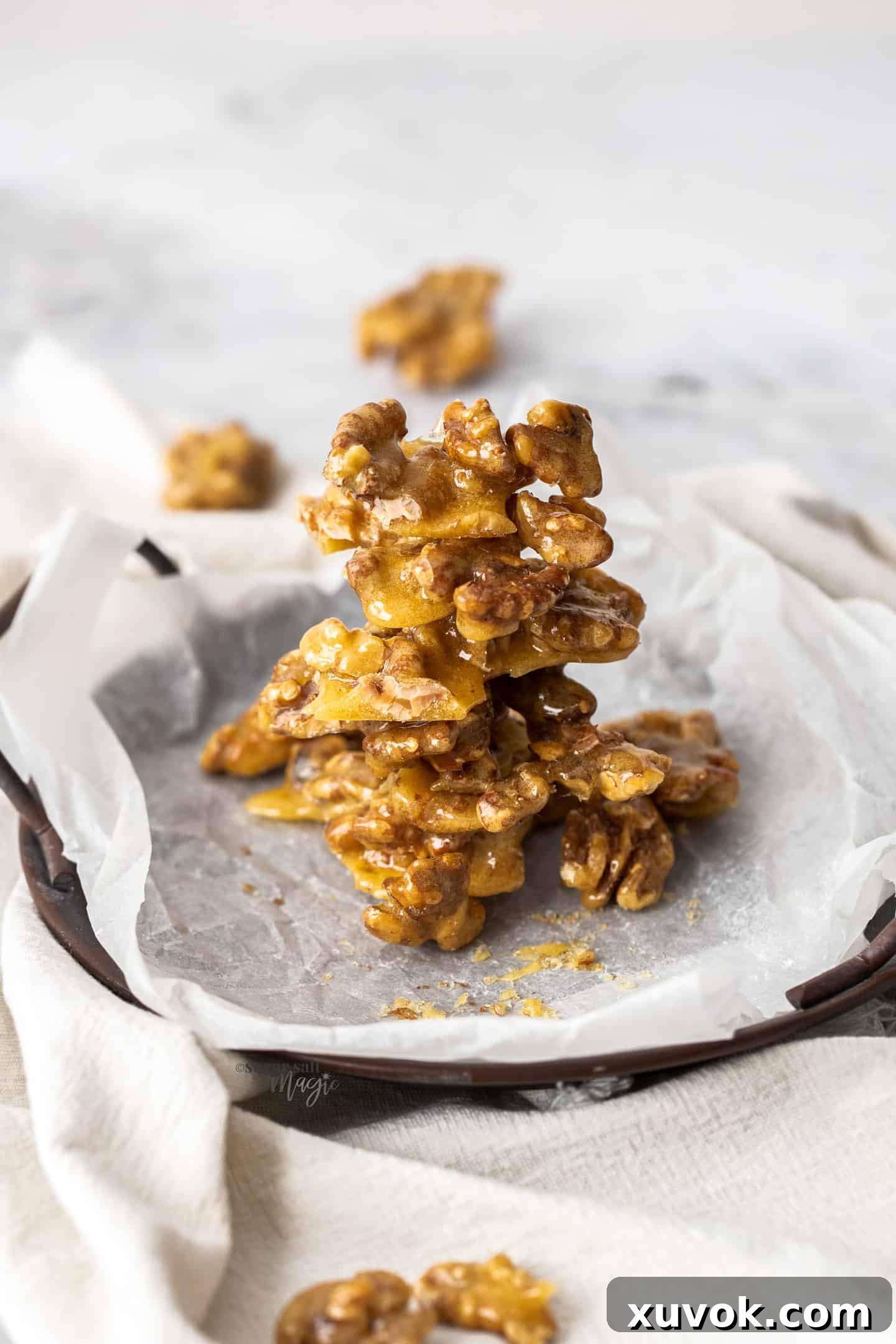
These toffee-glazed walnuts are truly a special treat, offering a burst of caramelized nutty flavor in every crunchy bite. They are an exceptional choice for gifting to friends and family, especially during the festive season, or simply as an indulgent snack for yourself. Their rich taste and satisfying texture are sure to impress everyone who tries them. Just be sure to make enough for yourself, as they tend to disappear quickly!
More Delectable Candy Recipes You’ll Adore
If you’ve enjoyed making this walnut praline, you’ll love exploring these other irresistible homemade candy recipes. Each one offers a unique flavor and texture, perfect for satisfying your sweet tooth or creating more thoughtful food gifts.
- Homemade Toffee Apples (Candy Apples): A nostalgic, crispy, and sweet classic perfect for fall.
- Pretzel Christmas Crack: An incredibly addictive salty-sweet treat that’s ridiculously easy to make.
- Homemade Almond Roca (Buttercrunch Toffee): A rich, buttery toffee studded with almonds and coated in chocolate.
- Caramel White Chocolate Rocky Road: A delightful blend of sweet caramel, creamy white chocolate, and varied textures.
- Pecan Butterscotch Fudge: A smooth, melt-in-your-mouth fudge with the distinct flavor of butterscotch and pecans.
- Almond Praline: Another fantastic variation of this recipe, showcasing the delightful crunch and flavor of caramelized almonds.
If you try this walnut praline recipe, please take a moment to leave a rating and comment below. I love hearing from you and it helps other readers too! You can also take a photo and tag @sugarsaltmagic on Instagram.
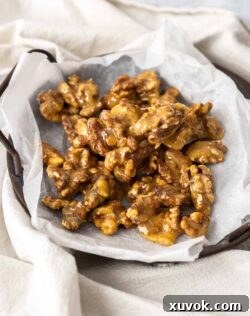
Walnut Praline (Candied Walnuts)
1
cup
5 minutes
20 minutes
0 minutes
25 minutes
Rate
Pin
Ingredients
-
1
cup
walnut halves
(110g / 4oz) -
½
cup
caster (superfine) sugar
(100g / 3.5oz) -
1
tablespoon
water -
¼
teaspoon
baking soda, optional
For best results, always weigh ingredients where a weight is provided
Equipment
-
A baking tray or cookie sheet -
A heavy based saucepan – stainless steel is best
Instructions
-
Preheat the oven to 180C / 350F / 160C fan-forced. Line a large baking tray with baking paper.
-
Spread the walnuts out in a single layer on the prepared baking tray and bake for 10 minutes. Set aside to cool.
-
Tip the sugar into a small-medium stainless steel saucepan and give it a shake to level it out. Slowly drizzle the water all around the sugar. Let it sit for a minute to soak.
-
You can do this step while the sugar is boiling in the next step. Sprinkle the baking soda over the cooled walnuts.
-
Turn the heat on very low and let the sugar come to a boil without touching or moving it. Let it continue boiling until it’s amber in colour. Remove from heat.
-
Grab the sides of the baking paper and tip the walnuts and baking soda into the toffee. Stir it through immediately.
-
Place the baking paper back on the tray, then tip the praline out onto the tray. Spread out with your spoon and let it cool completely to set.
Notes
- Be patient with the toffee. Don’t rush it or you risk the sugar not dissolving before it starts to boil, causing it to crystallise.
MORE FUDGE AND CANDY IDEAS!
260
kcal
Marie Roffey
Dessert, Food Gifts
French
Have you tried this recipe?
Don’t forget to leave a rating and comment below and let me know how it was! I love hearing from you. Nutrition information is approximate and derived from an online calculator. The brands you use may cause variations.