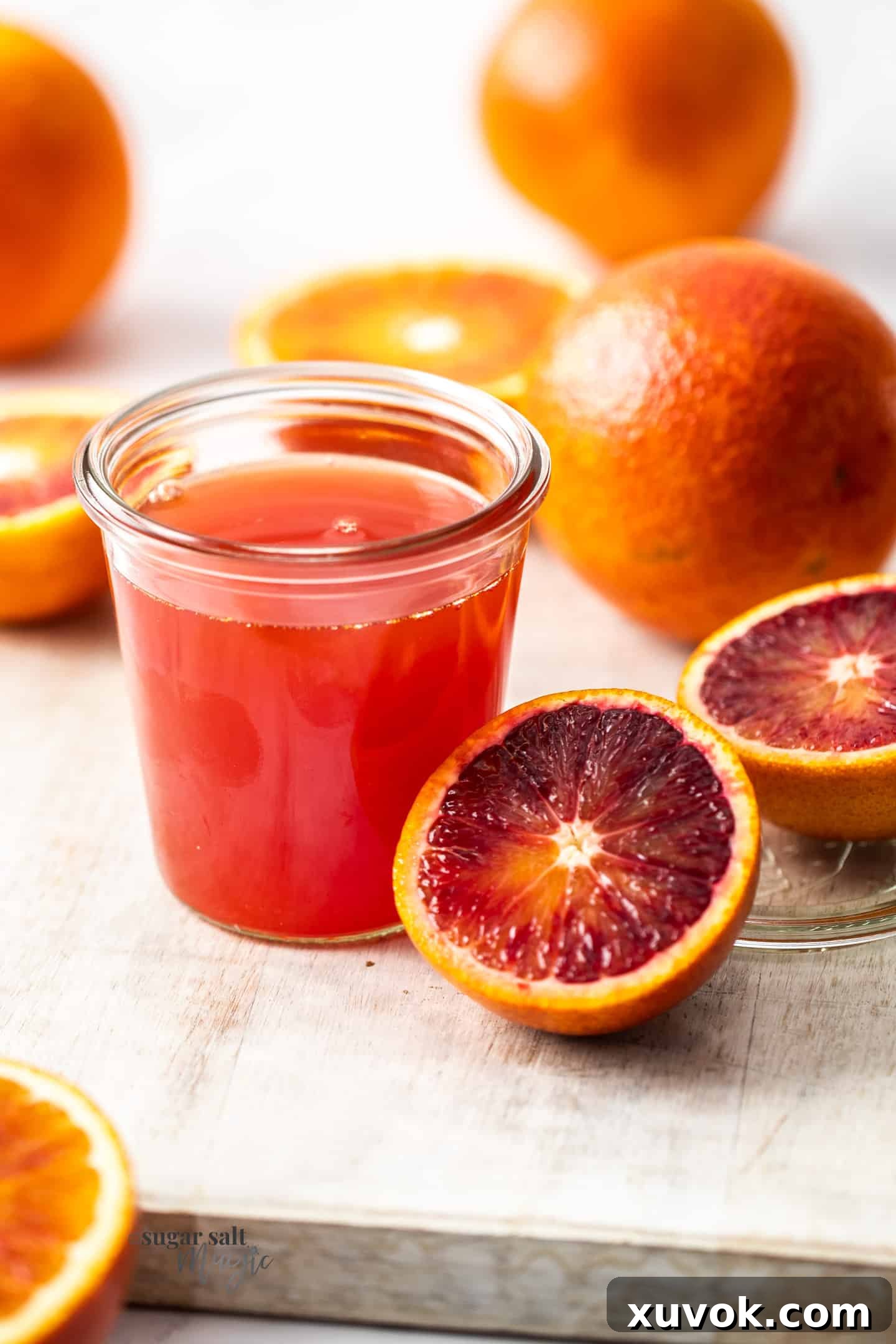
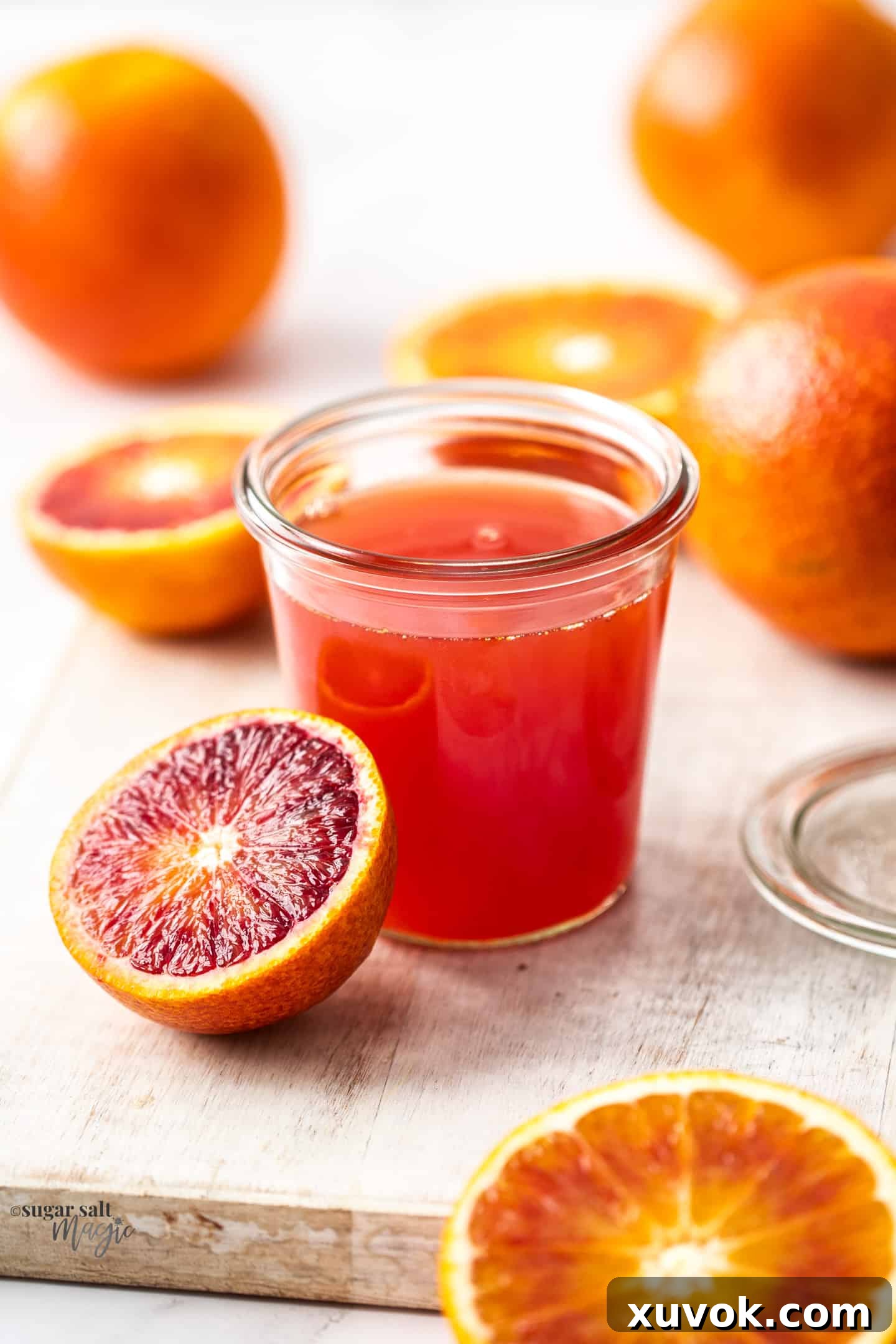
Unlock a world of vibrant flavor and effortless sweetness with this incredible homemade orange simple syrup. Incredibly easy to make, this versatile syrup is your secret weapon for enhancing everything from refreshing iced teas and sophisticated cocktails to delectable salad dressings and moist, flavorful cakes. While we adore the stunning hue and distinct taste of blood oranges for this recipe, remember that any variety of orange will yield fantastic results. Its simplicity and delightful aroma make it a must-have in any kitchen.
If you’re a fan of citrus, you’ll also adore our equally simple lemon simple syrup. In fact, the fundamental principles of these recipes can be applied to virtually any citrus fruit, opening up a realm of custom flavor possibilities.
Why You’ll Love This Easy Orange Simple Syrup
There are countless reasons to add this delightful orange simple syrup to your culinary repertoire. It’s more than just a sweetener; it’s a flavor enhancer that brings a touch of brightness to any dish or drink. Here’s why you’ll find yourself making it again and again:
- Effortlessly Quick to Prepare: Forget complicated recipes. This syrup comes together in minutes, perfect for impromptu cocktail nights or last-minute dessert preparations.
- Minimal Time Commitment: You’ll spend no more than 10 minutes of active effort in the kitchen. The rest is just cooling time.
- Just Two Simple Ingredients: That’s right – all you need are oranges and sugar. It’s a testament to how incredible natural flavors can be.
- Excellent Shelf Life: Once prepared, your homemade orange simple syrup keeps wonderfully in the fridge for a month or even longer, ensuring you always have a fresh burst of citrus flavor on hand.
- Unbeatable Versatility: From sweetening beverages to moistening cakes and dressing salads, its uses are truly endless.
- Customizable Flavor: Easily adjust the intensity of the orange flavor by adding more zest or reducing the syrup further.
What Exactly is Simple Syrup?
Simple syrup is a fundamental ingredient in both mixology and baking, prized for its ability to seamlessly integrate sweetness into liquids and baked goods. At its core, simple syrup is a harmonious blend of sugar and liquid, typically in a 1:1 ratio by volume (though bakers often use a 2:1 ratio for richer syrups), gently heated until the sugar crystals fully dissolve, resulting in a clear, smooth syrup. Unlike granulated sugar, which struggles to dissolve in cold liquids, simple syrup effortlessly disperses, ensuring an even sweetness in everything from iced coffees and teas to intricate cocktails.
In the world of baking, simple syrup is a secret weapon for maintaining moisture in cakes. A quick brush over cake layers not only prevents dryness but also infuses them with additional flavor. This orange simple syrup takes the classic concept a step further, infusing every drop with the bright, zesty essence of fresh oranges. While we’ve chosen blood oranges for their captivating color and nuanced flavor in this particular recipe, the beauty of simple syrup lies in its adaptability. You can confidently use any type of orange you prefer, knowing that the 1:1 ratio of juice to sugar will consistently deliver a clear, intensely flavored syrup.
Essential Ingredients for Your Orange Simple Syrup
You’ll truly appreciate a recipe that delivers such immense flavor with so little fuss. This orange simple syrup requires only two star ingredients, showcasing that sometimes, less is indeed more.
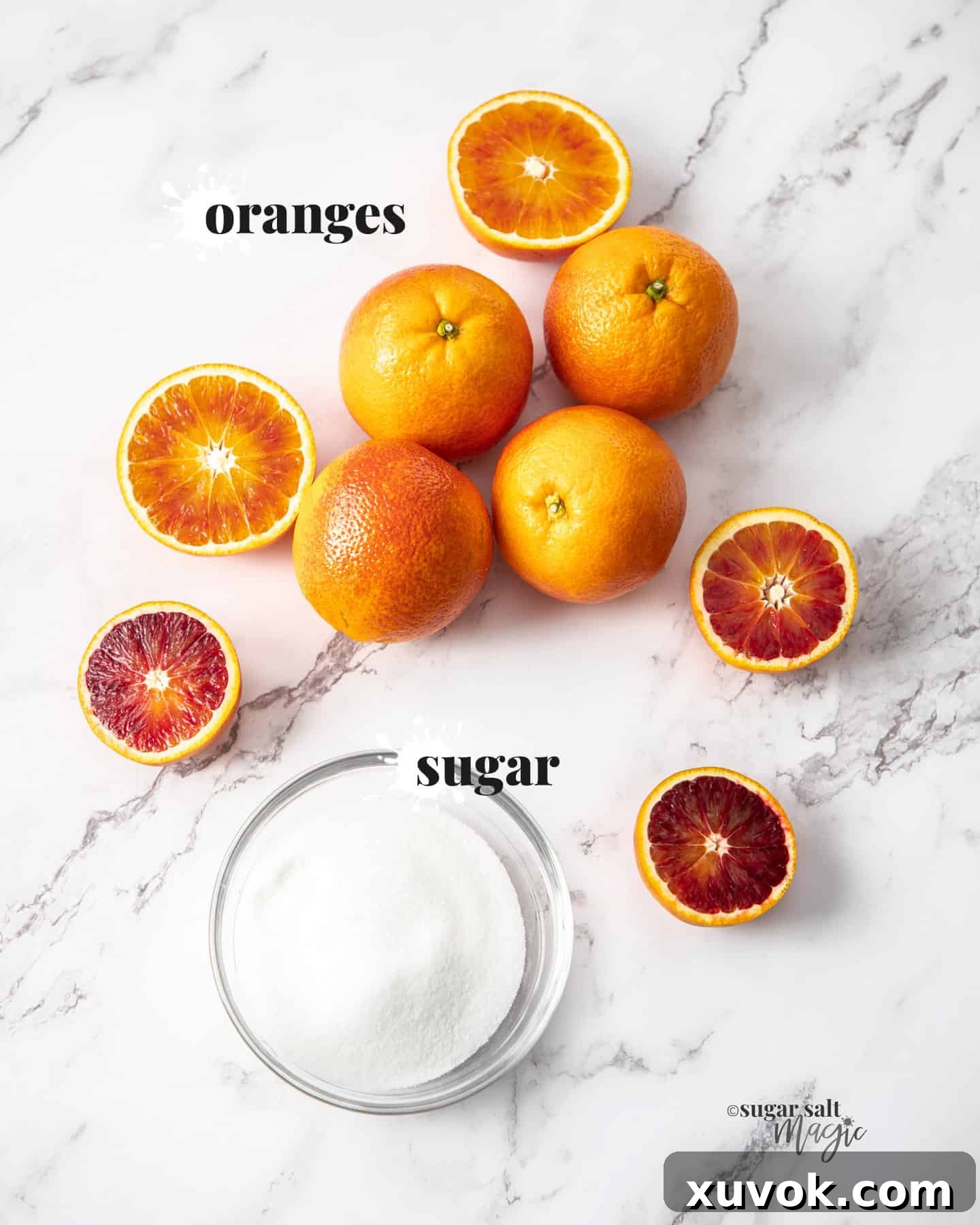
Detailed quantities and comprehensive directions can be found in the full recipe card at the conclusion of this article.
- Oranges: The star of our syrup! For this guide, we’ve utilized beautiful blood oranges, which impart a stunning ruby hue and a slightly berry-like undertone. However, don’t feel limited. Any orange variety will work perfectly – think navel, Valencia, cara cara, or even smaller citrus like mandarins and tangelos. Choose what’s fresh, in season, or simply your personal favorite. The key is fresh, high-quality juice.
- Sugar: For a clear, bright syrup that truly lets the orange flavor shine, plain white granulated sugar is your best bet. Caster sugar (also known as superfine sugar) is another excellent choice, as its finer crystals dissolve even more quickly, making the process a breeze. Avoid brown sugar or unrefined sugars, as they can add molasses notes that might overpower the delicate orange essence and create a darker, cloudier syrup.
The Right Tools for the Job
Making orange simple syrup is straightforward, but having the right tools can make the process even smoother and more efficient. Here’s what you’ll need to gather:
- A citrus juicer or a citrus reamer: Essential for extracting every last drop of delicious orange juice. A good juicer will save you time and effort.
- A fine-mesh strainer: Crucial for ensuring your syrup is perfectly smooth and free of any pulp, seeds, or zest particles after juicing. This contributes to the syrup’s appealing clarity.
- A nonreactive heavy-based saucepan: A heavy bottom ensures even heat distribution, preventing the sugar from scorching and sticking to the bottom, which is vital for a clear, perfectly cooked syrup.
- Preserving jars or airtight bottles: For storing your finished syrup safely and hygienically in the refrigerator. We recommend high-quality glass jars with good seals, such as Weck preserving jars, to maximize shelf life.
Understanding Non-Reactive Cookware
When cooking with acidic ingredients like citrus juice, the type of saucepan you use truly matters. A “nonreactive” saucepan is specifically designed from materials that **will not chemically interact with acidic foods**. This is critical because reactive materials can leach metallic flavors into your syrup, potentially altering its taste and color, or even damaging the cookware itself over time.
Stainless steel and cast-iron (when properly seasoned) are excellent examples of non-reactive materials. These materials remain stable when exposed to acids, making them ideal for syrups, tomato sauces, and vinegary concoctions. In contrast, copper and aluminum are considered reactive. While many modern pots and pans incorporate aluminum or copper for their excellent heat conductivity, they are often clad or lined with stainless steel on the cooking surface to prevent direct contact with food. As long as the cooking surface itself is non-reactive, the pan is safe to use for acidic recipes. Always check the manufacturer’s specifications if you’re unsure about your cookware’s material.
How to Master Making Orange Simple Syrup
Crafting this vibrant blood orange syrup is astonishingly simple, proving that exceptional flavor doesn’t require complex techniques. Follow these steps for a perfect batch every time:
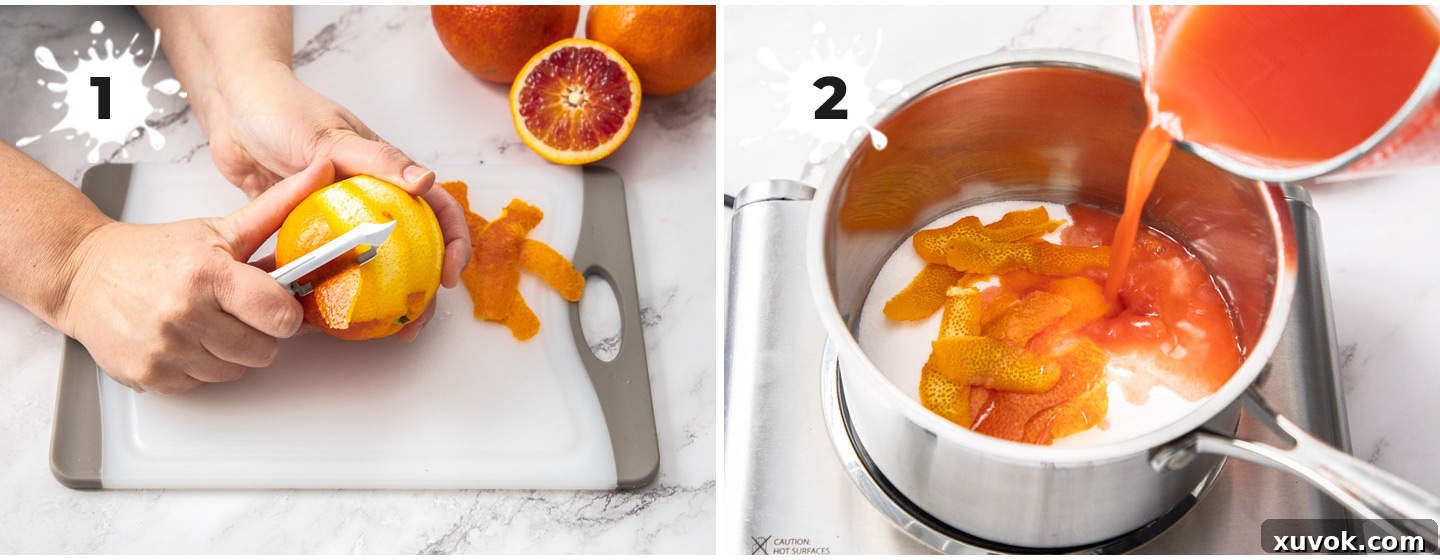
Refer to the detailed recipe card below for precise measurements and comprehensive instructions.
- Prepare the Orange Zest and Juice: Carefully remove the bright orange peel from one orange using a peeler, taking care to leave behind the bitter white pith. This zest will infuse our syrup with incredible aroma. Next, juice enough oranges to yield one cup of strained orange juice. Using a fine-mesh strainer while juicing will catch any pulp or seeds, ensuring a smooth syrup.
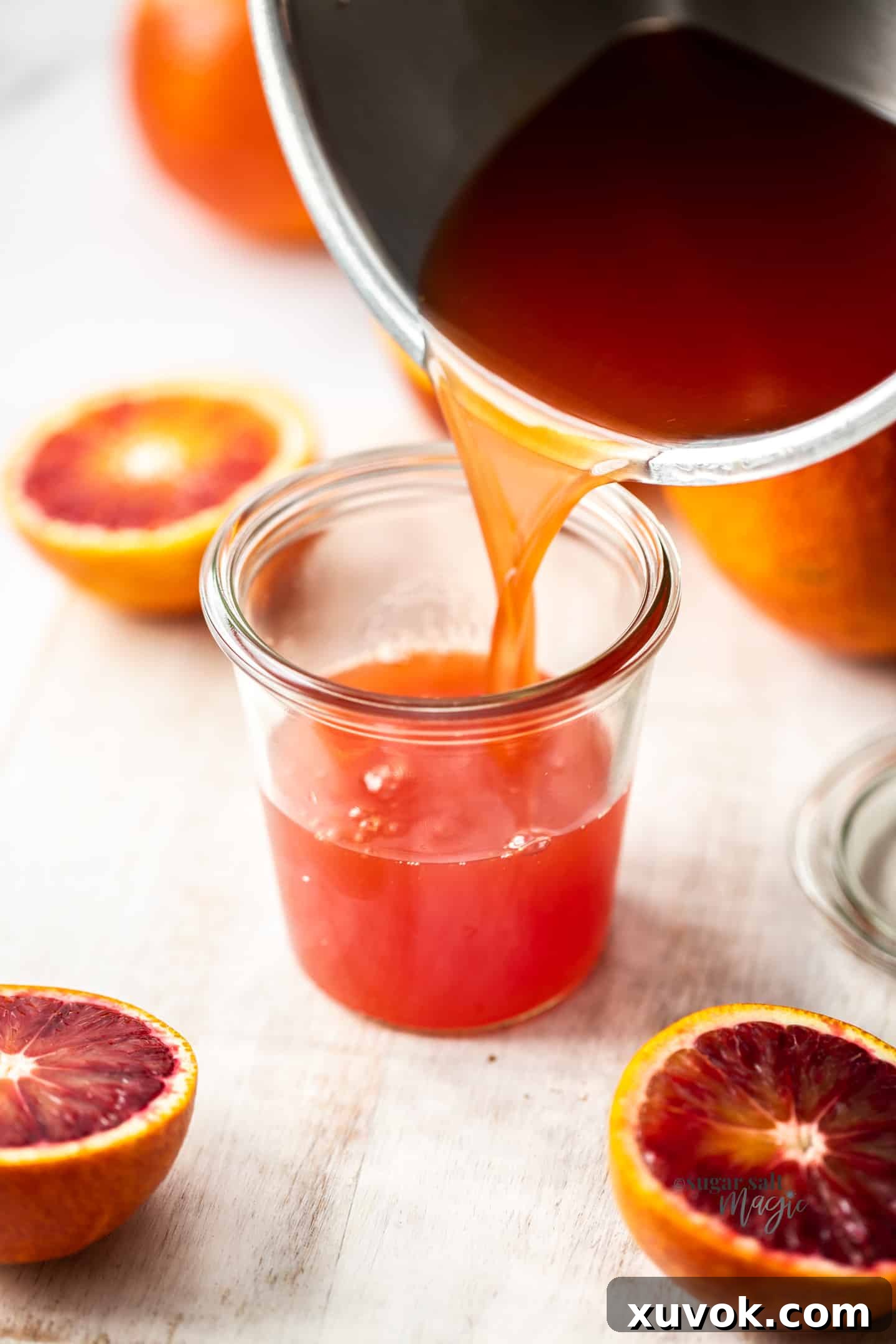
- Combine and Heat: Transfer the prepared orange peel, the strained orange juice, and the granulated sugar into your chosen nonreactive saucepan. Place the saucepan over medium heat. Gently cook the mixture, swirling occasionally, until all the sugar crystals have completely dissolved. Once dissolved, bring the mixture to a gentle boil, then immediately remove it from the heat.
- Cool and Store: Allow the syrup to cool completely to room temperature. This cooling process is crucial for the syrup to thicken slightly and for the flavors to meld beautifully. Once cooled, strain the syrup one final time to remove the orange peel (which has now imparted its delicious essence). Decant the finished syrup into clean, airtight preserving jars or bottles. Store your homemade orange simple syrup in the refrigerator. We particularly love using glass preserving jars with a rubber seal for optimal freshness.
This recipe is designed to produce a **rich, intensely orange-flavored syrup**. For those who prefer a more subtle citrus note, you could experiment by using water in place of some of the orange juice, and then boiling a few cut-up oranges along with it. However, we wholeheartedly recommend sticking with the pure orange juice method for that truly vibrant, unforgettable flavor that sets this syrup apart.
Crafting Simple Syrup for Perfectly Moist Cakes
For bakers, a good simple syrup is an indispensable tool, and this orange simple syrup offers a delightful dual benefit: it adds both moisture and an incredible depth of flavor to your baked goods. Brushing cooled simple syrup over cake layers is a time-honored technique to ensure your cakes remain tender, moist, and flavorful for days, preventing them from drying out.
To prepare this orange simple syrup specifically for cakes, adhere to the basic recipe outlined above: a 1:1 ratio of strained orange juice to granulated sugar, cooked just until the sugar has fully dissolved and the liquid is clear. There’s no need to reduce it further for cake applications, as a thinner consistency allows for better absorption. Once the syrup has completely cooled, generously brush it over each cake layer using a pastry brush before frosting or assembling your cake. The subtle tang and sweetness of the orange will beautifully complement vanilla, chocolate, and spice cakes, adding an unexpected layer of gourmet flavor.
Elevating Desserts with Thickened Orange Syrup
While our basic orange simple syrup is fantastic for drinks and cakes, you can take it a step further to create a luxurious, thicker orange syrup, perfect for drizzling over a variety of desserts. This concentrated version offers an even bolder burst of citrus and a more decadent texture.
To transform this blood orange syrup into a rich dessert topping, simply continue boiling the mixture after the sugar has dissolved. Allow it to simmer gently over medium-low heat, stirring occasionally, until the liquid reduces significantly. You’re aiming for a consistency similar to maple syrup – thick enough to coat the back of a spoon. This reduction process intensifies the orange flavor and creates a wonderfully viscous syrup. Once it reaches your desired consistency, remove it from the heat and allow it to cool completely before use. It will thicken further as it cools.
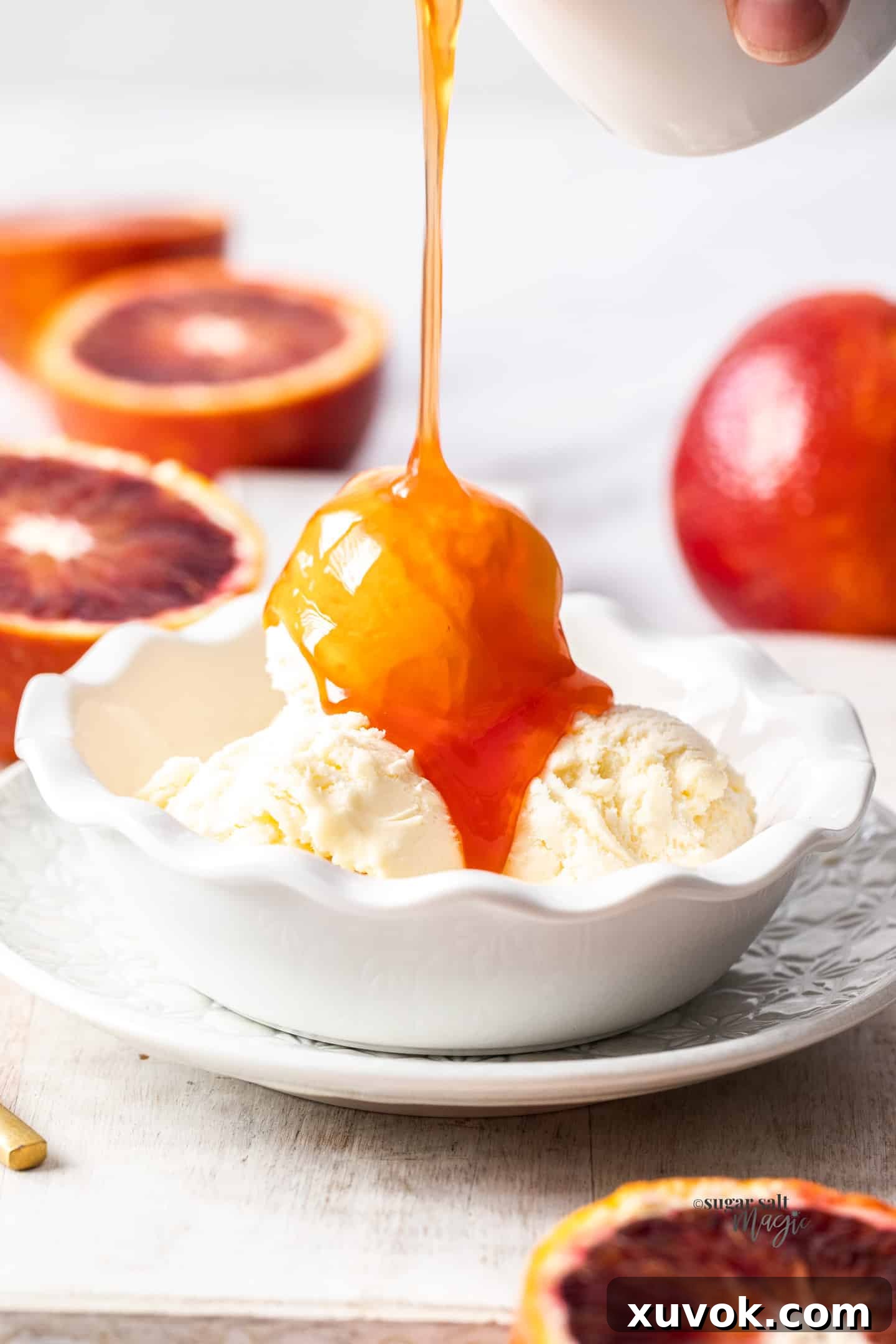
The resulting flavor is wonderfully bold and intensely aromatic, making it an exquisite accompaniment. Imagine it lovingly poured over fluffy waffles, delicate pancakes, creamy ice cream, or even used as a glaze for roasted fruits. The possibilities for this heightened orange syrup are truly limitless, bounded only by your culinary imagination.
Endless Uses for Your Homemade Orange Simple Syrup
The beauty of homemade simple syrup, especially one as flavorful as this orange rendition, lies in its incredible versatility. Once you have a batch on hand, you’ll discover countless ways to incorporate its sweet, zesty essence into your daily meals and special occasions.
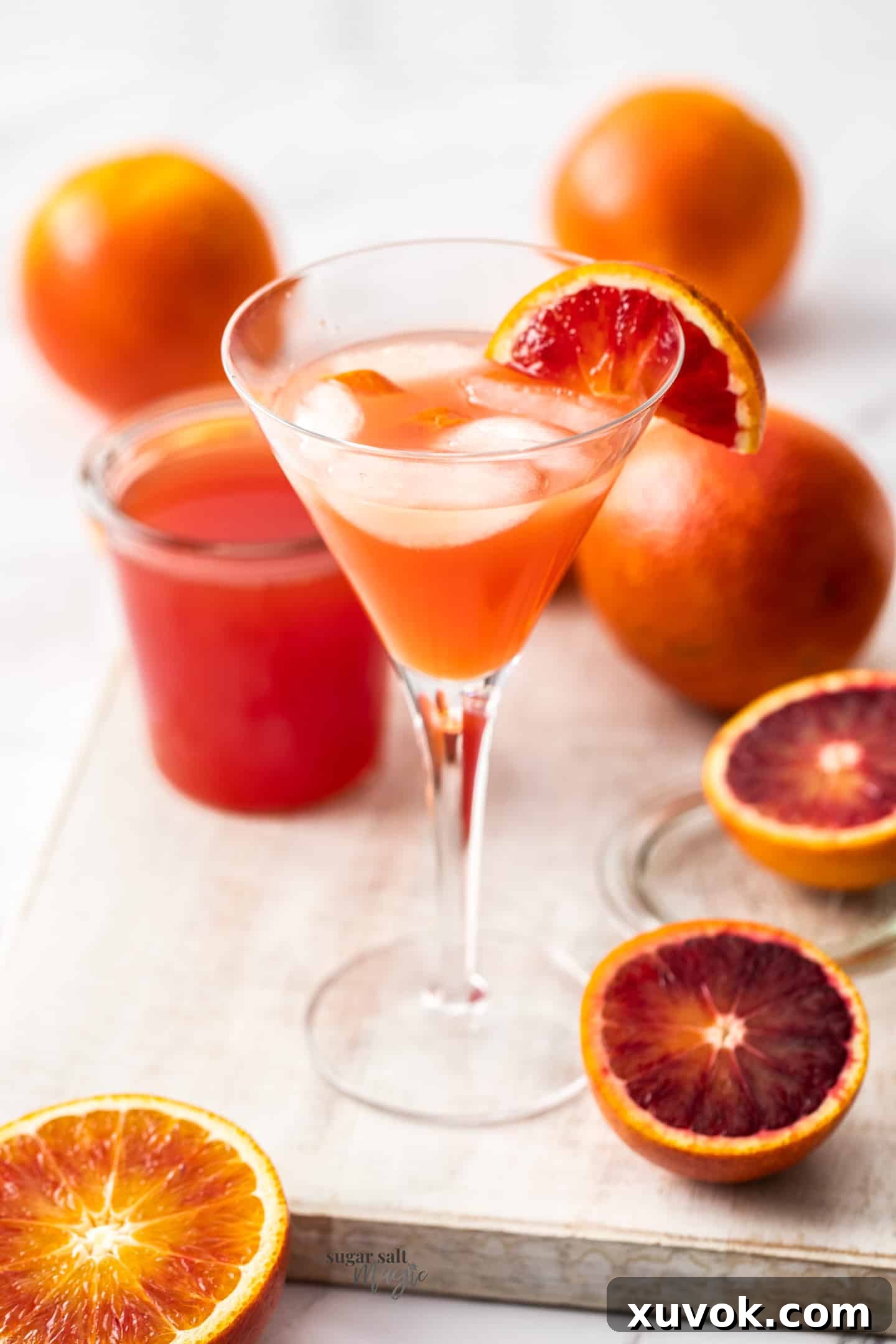
- Refreshing Drinks: This is arguably the most common use. Simple syrup is ideal for sweetening and flavoring cold beverages where granulated sugar might not dissolve properly. Stir it into iced tea, iced coffee, lemonades, mocktails, and cocktails like margaritas, spritzes, or an Old Fashioned with a citrus twist. It’s also surprisingly delightful swirled into hot black tea for a subtle sweetness and aromatic lift.
- Flavorful Ice Cubes: For a subtly flavored and wonderfully refreshing drink, pour the cooled simple syrup into ice cube trays and freeze. Add these citrus-infused ice cubes to plain water, sparkling water, or tonic water for a light and invigorating beverage that slowly releases flavor as it melts.
- Moistening Cakes: As discussed, brush the cooled syrup generously over each layer of a cake (before frosting) using a pastry brush. This technique adds essential moisture, prevents dryness, and infuses the cake with a delicate orange flavor, making it incredibly tender and luscious. It’s perfect for sponge cakes, pound cakes, or any cake that could use an extra boost of moisture and flavor.
- Bright Salad Dressings: The harmonious balance of sweetness and citrus tang in this orange simple syrup makes it a fantastic addition to salad dressings. Whisk it into vinaigrettes for green salads, or drizzle it over a vibrant fruit salad to enhance the natural sweetness and add a zesty kick. It pairs beautifully with ingredients like balsamic vinegar, olive oil, and herbs.
- Decadent Dessert Topping: Utilize the thickened version of this syrup (as described in the “Elevating Desserts” section) to create a luxurious topping. Pour it warm or at room temperature over pancakes, crepes, waffles, French toast, or a scoop of vanilla ice cream. It also makes a fantastic glaze for tarts, fruit galettes, or roasted stone fruits.
How to Store Your Homemade Simple Syrup for Maximum Freshness
Proper storage is key to extending the life of your homemade orange simple syrup, allowing you to enjoy its delightful flavor for weeks to come. With a few simple steps, you can ensure your syrup remains fresh and delicious.
You can store your freshly made syrup for up to one month (and often even longer) when kept in an airtight container or a clean preserving jar in the refrigerator. We highly recommend using good quality glass preserving jars or bottles with tight-fitting lids or rubber seals, as these create an optimal environment for preserving freshness and preventing air exposure. Before storing, ensure your chosen containers are thoroughly cleaned and sterilized to prevent bacterial growth that could shorten the syrup’s shelf life.
To determine if your syrup has gone bad, rely on your senses. Look for signs of mold growth, which might appear as fuzzy spots on the surface. Check for any cloudiness or discoloration that wasn’t present initially. Most importantly, give it a sniff – any “off” or yeasty smell indicates that the syrup has spoiled and should be discarded. When a bottle is opened, aim to use the syrup within a couple of weeks for the best quality.
For the basic, thinner version of simple syrup (1:1 ratio), freezing is an excellent option for long-term storage. Pour the cooled syrup into ice cube trays and freeze until solid. Once frozen, transfer the syrup cubes to a freezer-safe bag or container. This allows you to thaw individual portions as needed. However, the thicker, dessert-style syrup (which has a higher sugar concentration due to reduction) may not freeze as effectively or might become too viscous to use easily after thawing. It’s best to stick to refrigeration for the thickened version.
Frequently Asked Questions About Orange Simple Syrup
Can I use oranges that are past their prime for simple syrup?
It’s best to use fresh, ripe oranges for the best flavor. While slightly soft oranges might be fine for juicing, avoid any with mold or a sour smell, as this will negatively impact the syrup’s taste.
What’s the difference between simple syrup and regular syrup?
Simple syrup typically refers to a plain mixture of sugar and water (or juice, in this case) in a 1:1 or 2:1 ratio, cooked until the sugar dissolves. “Regular syrup” can be a broader term encompassing things like maple syrup, corn syrup, or flavored syrups that might contain additional ingredients, thickeners, or artificial flavors. Simple syrup is primarily a base for adding sweetness and flavor.
Can I add spices or herbs to my orange simple syrup?
Absolutely! This is a fantastic way to customize your syrup. Try adding a cinnamon stick, a few cloves, a sprig of rosemary, or a piece of fresh ginger to the saucepan while the syrup is simmering. Strain them out before storing. This allows for endless flavor combinations!
What if my orange simple syrup crystallizes?
Crystallization can occur if the sugar doesn’t fully dissolve initially, or if there are sugar crystals on the side of the pan. If your syrup crystallizes, you can try gently reheating it with a tablespoon or two of water, stirring until dissolved. Prevent it by ensuring all sugar is dissolved before boiling and avoiding scraping the sides of the pan during cooking.
How long does the orange zest need to steep in the syrup for optimal flavor?
The zest imparts its flavor quite quickly during the heating process. Once the syrup comes to a boil and is removed from the heat, the residual warmth will continue to extract flavor. You can strain it after it cools, but some prefer to leave the zest in the syrup during storage for an even more intense aroma, removing it just before use.
If you take the time to create this delightful orange simple syrup, we would be absolutely thrilled if you would **take a moment to leave a rating and comment below**. Your feedback is incredibly valuable to us and helps other readers discover and enjoy this recipe too! Don’t forget, you can also snap a photo and tag @sugarsaltmagic on Instagram to share your delicious creations.
More Delicious Recipes You’ll Love
Explore more sweet and flavorful creations from our kitchen:
- Homemade Mango Syrup
- Exotic Passionfruit Syrup
- Bright Lemon Simple Syrup
- Rich Blood Orange Curd
- Refreshing Mango Daiquiri
- Frozen Moscato Strawberry Daiquiri
- Classic Homemade Strawberry Sauce
Never Miss a Recipe!
Get the latest recipes straight to your inbox – subscribe today for culinary inspiration delivered right to you!
Orange Simple Syrup (Blood Orange Syrup)
With just 2 ingredients and 10 minutes of active time, you can craft your very own vibrant orange simple syrup at home. Featured here using stunning blood oranges, this adaptable recipe works beautifully with any orange variety. It’s the perfect versatile sweetener, ideal for enhancing everything from cakes and desserts to cocktails and mocktails.
Pin Recipe
Ingredients
- 6-8 blood oranges (or any orange variety), to yield 1 cup of juice
- 1 cup white granulated sugar (or superfine/caster sugar)
For best results, always weigh ingredients where a weight is provided.
Instructions
- Use a vegetable peeler or microplane to carefully peel just the orange part of the skin from one orange, making sure to avoid the bitter white pith. This zest will infuse the syrup with a beautiful aroma.
- Juice enough oranges to achieve one cup of strained orange juice. Using a fine-mesh strainer will ensure your juice is smooth and pulp-free.
- Combine the orange peel, the one cup of strained orange juice, and the sugar in a large, heavy-based nonreactive saucepan. Place the saucepan over medium heat.
- Bring the mixture slowly to a gentle boil, stirring continuously until the sugar has completely dissolved and the liquid appears clear. Once boiling, remove from heat.
- For drinks, dressings, cakes, or ice cubes: Proceed directly to the final step. If you wish to thicken the syrup into a dessert topping: Continue boiling the mixture over medium-low heat, stirring occasionally, until it has reduced to approximately 1 cup of a thicker, maple syrup-like consistency.
- Remove the saucepan from the heat. Strain the syrup to remove the orange peel. Allow the syrup to cool completely to room temperature. Once cooled, decant it into clean, airtight preserving jars or bottles and store it in the refrigerator.
Notes
- The white pith found beneath the orange peel is quite bitter. To ensure the best flavor for your syrup, try to peel only the vibrant orange portion of the skin.
- A nonreactive pan, such as one made from stainless steel or properly seasoned cast iron, is essential for this recipe. Avoid using copper or aluminum pans, as these can react with the acidic orange juice and impart an undesirable metallic taste or discoloration to your syrup.
- While this recipe only calls for the peel of one orange, you can certainly zest all your oranges using a microplane or fine zester. The leftover zest can be frozen for future use in other dishes, such as stuffing the cavity of a roast chicken for extra aroma, or adding a bright zing to other cakes and baked goods.
- When stored in sterilized, airtight bottles or jars in the refrigerator, this orange simple syrup will keep well for at least 1 month, and often longer. However, once a bottle has been opened, we recommend using the syrup within a couple of weeks for optimal freshness and flavor.
- Do not use the syrup immediately after removing it from the stove; it needs to cool first. It can be served at room temperature or chilled, depending on its application.
EXPLORE MORE SAUCES AND SPREADS!
DISCOVER MORE DELICIOUS DRINK RECIPES!
Have you tried this recipe?
Don’t forget to leave a rating and comment below and let me know how it was! I love hearing from you. Nutrition information is approximate and derived from an online calculator. The brands you use may cause variations.