Irresistible Apple and Plum Cobbler: Your Go-To Comfort Dessert
There’s something inherently comforting about a warm, bubbling fruit dessert, and this Apple and Plum Cobbler perfectly encapsulates that feeling. If you’re a fan of effortless, fruit-filled treats like a classic mixed berry crumble or a simple yet satisfying apple crumble, then prepare to fall in love with this cobbler. It’s a delightful twist on familiar flavors, bringing together the sweet tang of plums and the crispness of apples under a golden, tender biscuit topping.
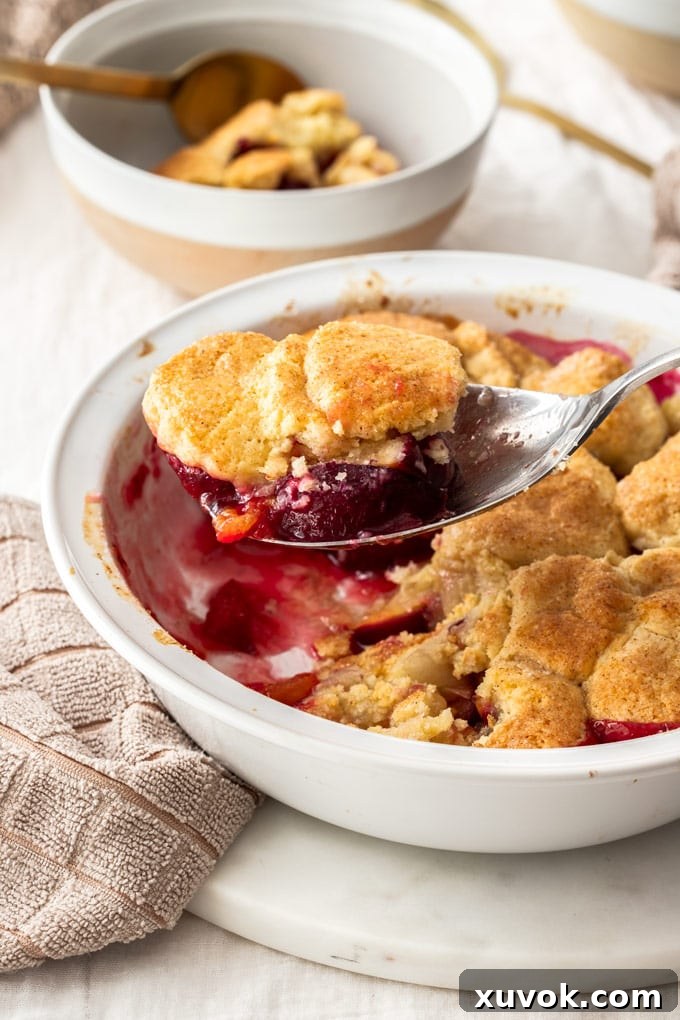
This exquisite dessert features a luscious, warm fruit filling crafted from a harmonious blend of fresh plums and apples. These fruits are gently stewed until they reach a perfect softness, releasing their sweet, syrupy juices. Nestled above this fruit medley is a beautifully golden, crunchy biscuit topping. This isn’t just any topping; it’s an incredibly rich dough, generously enriched with cream, which gives it a uniquely tender texture beneath its crisp exterior. For another delectable option that celebrates stone fruits, you might also adore this Raspberry Peach Cobbler.
What makes this Apple and Plum Cobbler truly special is the thoughtful addition of spices. A subtle hint of aromatic cardamom and a whisper of warm nutmeg infuse the fruit, elevating those comforting flavors and making every bite an experience. It’s the kind of dessert that fills your home with an inviting aroma, promising a cozy and insanely delicious treat that practically begs for a generous scoop of vanilla ice cream.
Let’s savor what makes this Apple and Plum Cobbler a must-try:
- Soft, Warm, and Syrupy Fruit: A vibrant blend of apples and plums that cook down into a perfectly sweet and tangy filling.
- Rich, Melt-in-the-Mouth Biscuit Topping: A tender, cream-enriched dough that bakes up crunchy on top and soft underneath.
- A Hint of Cardamom and Nutmeg: These warm spices provide a comforting depth of flavor that perfectly complements the fruit.
- Unrivaled Comfort Food: A truly cozy and incredibly delicious dessert, ideal for any season or occasion.
- The Perfect Companion: Designed to be savored with a melting scoop of ice cream, a dollop of fresh cream, or warm custard.
This dessert isn’t just a treat for your taste buds; it’s an experience that combines simplicity with gourmet appeal. The preparation is straightforward, making it an excellent choice for both novice bakers and seasoned chefs looking for a quick yet impressive dessert.
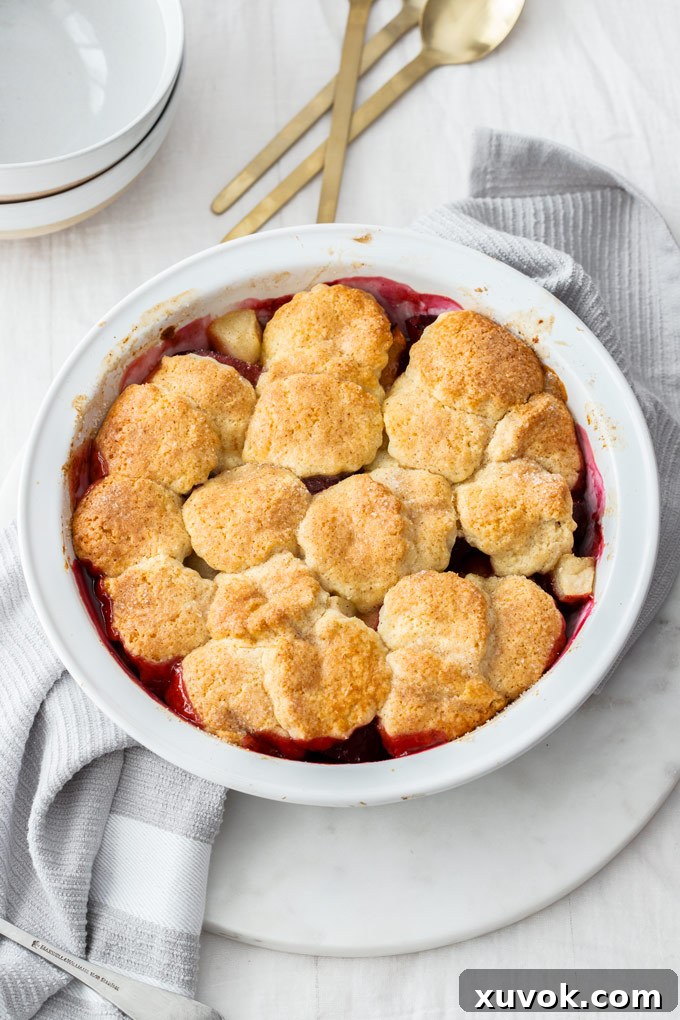
Table of Contents
- What Exactly is a Cobbler?
- Mastering the Art of Making Cobbler
- Expert Tips & Frequently Asked Questions
- Serving Your Apple and Plum Cobbler
- Versatile Substitutions for Your Cobbler
- More Fruit Dessert Recipes You’ll Love
Never Miss a Delicious Recipe!
Stay updated with our latest culinary creations and seasonal delights delivered directly to your inbox!
Sign up to our newsletter for exclusive recipes and baking tips!
What Exactly is a Cobbler?
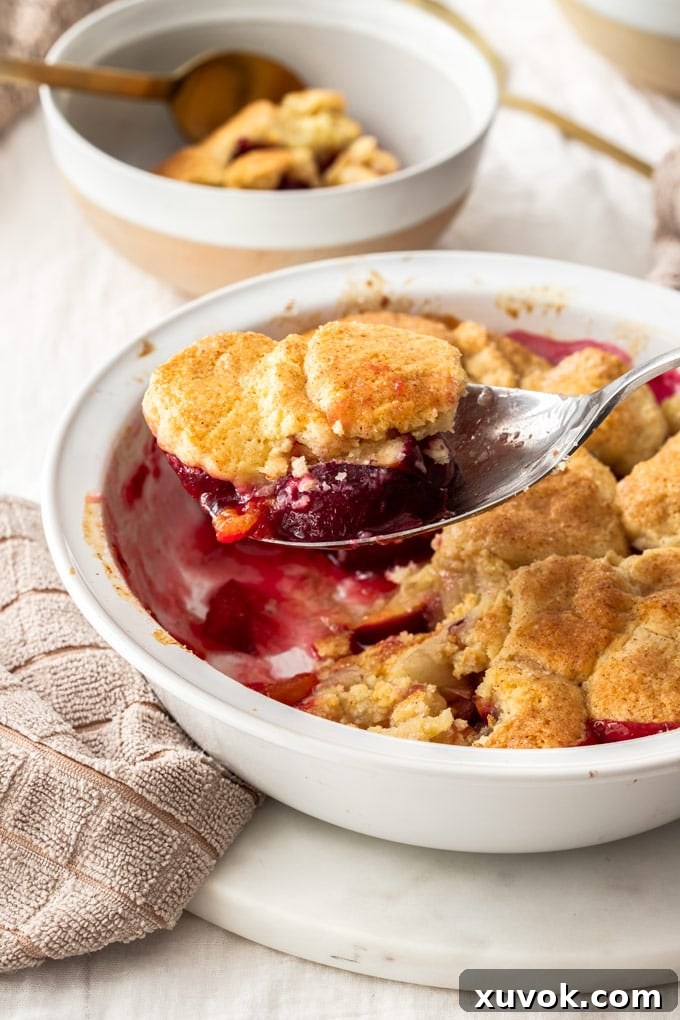
At its heart, a cobbler is a comforting fruit dessert characterized by a layer of fresh or frozen fruit, often sweetened and spiced, topped with a biscuit or scone-like dough. As it bakes, the fruit simmers and releases its delectable juices, which then bubble up through the gaps and cracks in the biscuit topping. This process creates a beautifully irregular, rustic appearance and a tantalizing contrast of textures.
The distinctive, somewhat haphazard topping is indeed what gives this dessert its charming name. Legend has it that the rough, uneven clumps of dough resemble old cobblestones, hence the name “cobbler.” This humble dessert traces its origins back to early American settlers who, lacking traditional pudding ingredients, improvised with available fruits and a simple biscuit dough, creating a dish that quickly became a staple of comfort food.
While often grouped with crumbles and crisps, a cobbler stands out due to its unique topping. Crumbles typically feature a streusel-like topping made from flour, sugar, butter, and sometimes oats, resulting in a sandy, crumbly texture. Crisps are similar but almost always include oats in their topping, which crisps up beautifully during baking. Cobblers, however, distinguish themselves with a distinct biscuit or scone-like dough, which puffs up in fluffy, golden patches, offering a softer, more substantial bite that perfectly complements the tender fruit underneath. This makes for a more textural and often richer experience than its crumbly cousins.
This particular Apple and Plum Cobbler celebrates the essence of what makes cobblers so beloved: simplicity, wholesome ingredients, and an incredibly satisfying outcome. The rich, creamy biscuit topping we use here is a hallmark of truly exceptional cobblers, promising a tender interior and a wonderfully crisp surface.
Mastering the Art of Making Cobbler
One of the most appealing aspects of making a cobbler is its inherent simplicity and the minimal effort required for such a rewarding outcome. This Apple and Plum Cobbler comes together in less than 20 minutes of active prep time, then bakes to perfection in a single pie dish, making cleanup a breeze. The process is divided into two main components: preparing the vibrant fruit filling and crafting the luxurious biscuit topping. Each step is designed for ease and maximum flavor.
For precise quantities and detailed instructions, please refer to the complete recipe card further down.
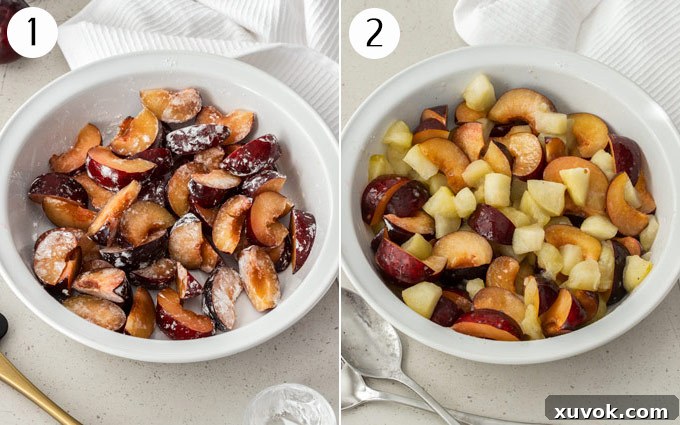
- Prepare the Plums: Begin by carefully removing the stones from your fresh plums. Once pitted, cut each plum into eight segments. Transfer these plum pieces to your chosen pie dish and gently toss them with a few teaspoons of corn flour (or cornstarch). The corn flour acts as a thickener, ensuring your plum juices achieve the perfect syrupy consistency rather than being watery.
- Prepare the Apples: Next, peel and core your apples, then dice them into uniform pieces. To give them a head start and ensure they are perfectly tender in the final cobbler, gently soften them in a saucepan over low-medium heat. Add a little sugar, a pinch of warming cardamom, and a dash of water to help them along. Cook for about 7-8 minutes, stirring occasionally, until the apples are slightly yielding but still hold their shape. This pre-cooking step is crucial for achieving an even texture between the softer plums and firmer apples. Once softened, carefully mix the apple mixture into the plums in the pie dish, distributing the fruit evenly.
- Craft the Dough: The biscuit topping is where the magic truly happens. While a food processor makes this step incredibly quick and simple, you can absolutely achieve fantastic results by hand. In your food processor or a large mixing bowl, combine the dry ingredients: flour, sugar, and baking powder. Give them a quick pulse or a whisk to ensure they are well combined.
- Cut in the Butter: Add your cold, cubed butter to the dry ingredients. If using a food processor, pulse in short bursts until the largest pieces of butter are roughly the size of a grain of barley or a small lentil. This technique, known as “cutting in the butter,” is fundamental for a flaky, tender biscuit. The small pieces of cold butter will melt during baking, creating pockets of steam that result in a light and airy texture. If working by hand, use a pastry blender, two knives, or even your fingertips to incorporate the butter, being careful not to overwork the dough or allow the butter to melt from the heat of your hands.
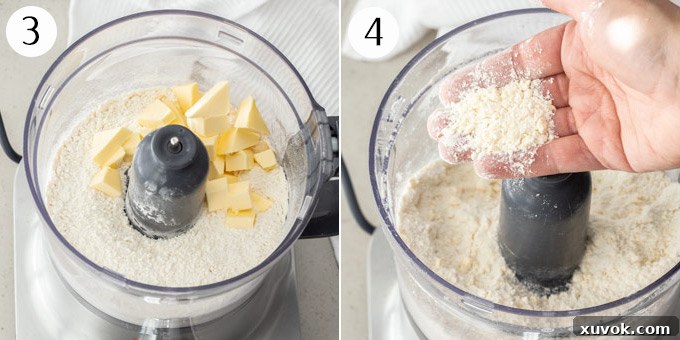
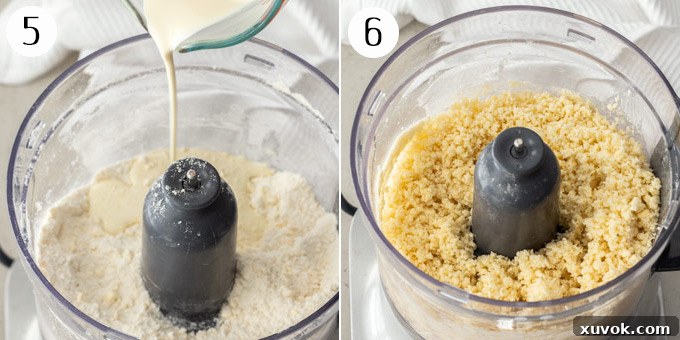
- Add Cream: This particular cobbler dough is an “enriched” dough, meaning it’s enhanced with rich ingredients that contribute to its luxurious texture. After incorporating the butter, pour in the thickened (heavy) cream. The cream adds moisture, richness, and helps bind the dough together, contributing to its tender crumb.
- Avoid Over-Processing: Whether using a food processor or mixing by hand, it’s crucial not to overmix the dough once the cream is added. You only want to process or mix until the cream is just evenly distributed and the dough resembles chunky, wet sand. Overmixing develops the gluten in the flour, which can lead to a tough biscuit. A light hand ensures a tender, fluffy topping.
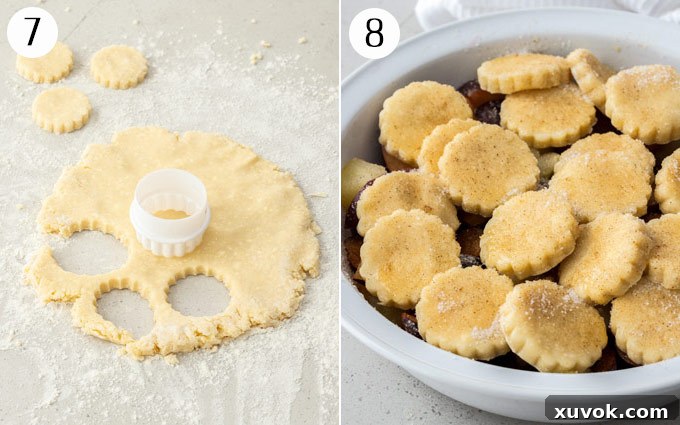
- Shape the Dough: Gently tip the dough out onto a lightly floured surface. Use your hands to very lightly pull the dough together into a cohesive mass, being careful not to knead. Then, press it out evenly to just under 1 centimeter (approximately ⅓ inch) thick. For a classic look, use a round cookie cutter (a 5cm or 2-inch cutter works well) to cut out individual biscuit shapes. If you prefer a rustic charm, you can simply cut squares with a knife or even break off random clumps of dough with your hands.
- Top the Fruit and Bake: Arrange the little disks or clumps of biscuit dough randomly over the prepared fruit filling in the pie dish. Don’t worry about perfect placement; the charm of a cobbler lies in its informal appearance. Leave some small gaps to allow the fruit juices to bubble through, creating those inviting caramelised edges. For a beautiful golden finish and added crunch, lightly brush the tops of the dough with a little beaten egg. Finally, generously sprinkle over your prepared sugar topping, a mixture of granulated sugar, nutmeg, and cardamom. This adds an extra layer of sweetness and spice, creating a delightful sugary crust.
Now, with anticipation building, simply bake your cobbler until golden brown and bubbling, and patiently wait for it to cool slightly, ice cream scoop at the ready! The aroma filling your kitchen will be pure bliss.
Expert Tips & Frequently Asked Questions
Absolutely not! While a food processor streamlines the process and ensures consistent results, it’s by no means essential. You can easily cut in the butter using a pastry cutter, two knives, or even your very light fingertips. My mother, to this day, expertly uses a knife to cut butter into flour by hand. The secret to a perfect cobbler topping lies not in the tool, but in the technique: the key is to keep the butter cold and to avoid over-mixing it into a fine paste. You want small lumps of butter to remain in the dough. These tiny pockets of butter will create steam as the dough bakes, which in turn leads to a wonderfully light, flaky, and fluffy biscuit topping. If the butter melts or is too finely incorporated, your topping might be dense rather than airy.
There’s no need to reach for a cookie cutter if you don’t have one or prefer a more rustic aesthetic. If you do use one, choose a simple shape, as the dough will expand and puff up during baking, and intricate designs won’t hold perfectly. For an authentic homemade feel, you can simply use a knife to cut the dough into squares, similar to this example. Alternatively, for the ultimate in ease and rustic charm, just break the dough up with your hands and drop random clumps directly over the fruit. The irregular shapes add to the charm of a homemade cobbler!
The pie dish featured in these photographs is approximately 8 inches (20cm) wide and 2 inches (5cm) deep. This size provides ample space for the fruit filling and allows the biscuit topping to cook evenly and puff up beautifully. If you don’t have a pie dish of this specific size, a standard casserole dish (around 9×13 inches) will also work wonderfully, though your cobbler might be slightly shallower. Just ensure your dish has high enough sides to contain the bubbling fruit juices.
Leftover cobbler should be covered tightly with plastic wrap or aluminum foil and stored in the refrigerator for up to 3-4 days. For reheating, you can warm individual portions in the microwave until heated through, though the topping might lose some of its crispness. For best results, reheat the entire cobbler (or larger portions) in an oven preheated to 160°C (325°F) for about 15-20 minutes, or until warm and bubbly, which will help restore the crisp texture of the topping.
Yes, you can certainly do some prep in advance! You can prepare the fruit filling and store it covered in the refrigerator for up to 24 hours. The cobbler dough can also be made ahead; store it wrapped tightly in plastic wrap in the refrigerator for up to 2 days. When ready to bake, assemble the cobbler as directed and add a few extra minutes to the baking time if starting with cold components. You can also assemble the entire cobbler (fruit and uncooked topping) and refrigerate it for a few hours before baking. This is a great strategy for entertaining!
Serving Your Apple and Plum Cobbler
The beauty of this Apple and Plum Cobbler lies in its versatility, making it a perfect dessert for any time of year. Its warmth and spiced fruit provide a comforting embrace on a chilly evening, making it wonderfully cozy in Winter. Yet, the fresh, bright flavors of the fruit also make it surprisingly light and refreshing in Summer, especially when paired with the right accompaniments.
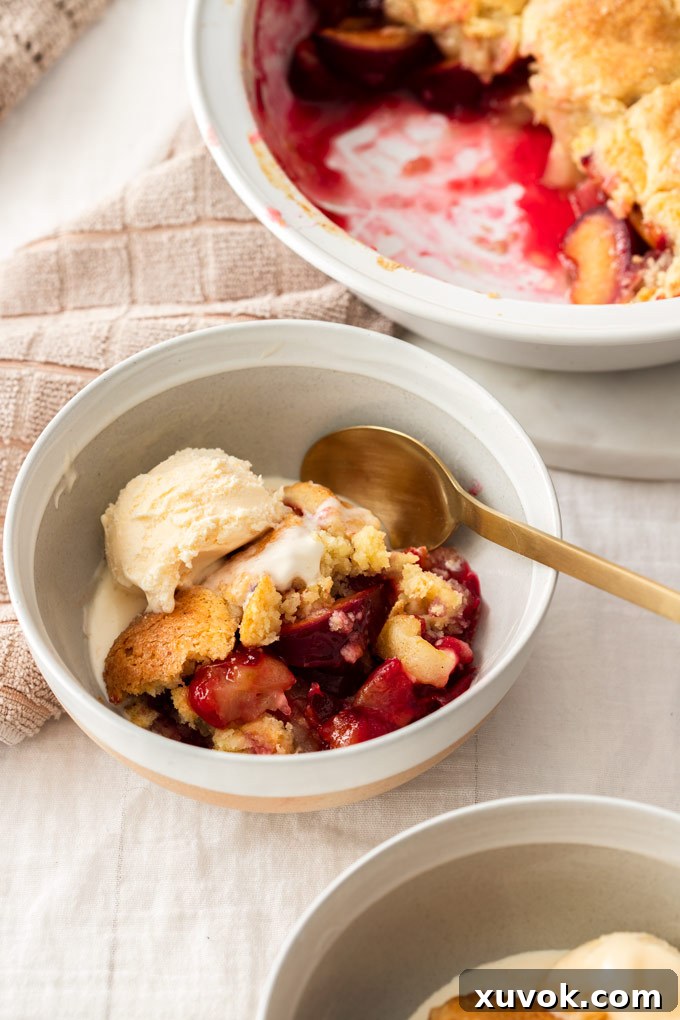
From countless experiences, I can confidently tell you that this cobbler is absolutely divine when served warm with a generous scoop of classic vanilla ice cream. The cold, melting ice cream creates a magnificent contrast with the warm, sweet fruit and crunchy topping. Alternatively, a simple dash of rich heavy cream poured over the top adds a decadent touch without overpowering the fruit’s natural flavors. However, to truly transport me back to my childhood and evoke those nostalgic memories, I recommend serving this cobbler with a silky, warm custard, such as a traditional crème anglaise. The smooth, creamy custard perfectly complements the textures and flavors of the fruit and biscuit, creating an unforgettable dessert experience. Don’t hesitate to experiment with different ice cream flavors like cinnamon, caramel, or even a berry sorbet for a lighter touch.
Versatile Substitutions for Your Cobbler
This Apple and Plum Cobbler recipe is wonderfully adaptable, allowing you to tailor it to your preferences or what you have on hand. Feel free to get creative with your fruit choices and other ingredients!
- Plums and Apples: You can easily swap out either the plums or apples and use just one type of fruit if you prefer. For instance, an all-apple cobbler is a timeless classic. If you decide to use only apples, you might find there’s no need for the corn flour (or cornstarch), as apples naturally release less liquid than plums during baking.
- Other Fruit Options: The possibilities are nearly endless! You can use a variety of other fruits, either individually or in combinations, to create your perfect cobbler. Consider sweet peaches, juicy nectarines, vibrant berries (strawberries, blueberries, raspberries, blackberries), or tender pears. For very juicy fruits like berries or peaches, you might want to slightly increase the amount of corn flour to ensure the filling thickens properly. For firmer fruits like pears, a brief pre-cooking step similar to the apples will ensure they are perfectly tender in the final dish.
- Spice Variations: While cardamom and nutmeg offer a classic warm spice profile, feel free to experiment with other spices. A pinch of cinnamon, allspice, or even a touch of ginger could add a lovely dimension to your fruit filling and sugar topping.
- Dairy-Free Topping: To make the cobbler topping dairy-free, substitute the unsalted butter with a high-quality vegan butter substitute and replace the heavy cream with full-fat coconut cream or a dairy-free whipping cream alternative. Ensure these are well chilled.
- Gluten-Free Flour: For a gluten-free version, you can experiment with a 1:1 gluten-free all-purpose flour blend in the topping. Results may vary slightly, but many blends work well for biscuit-style toppings.
I genuinely adore this Apple and Plum Cobbler. From the tender, warmly spiced fruit filling that yields to every spoonful, to that perfectly crunchy, rich biscuit topping, this dessert truly screams comfort and pure indulgence. With all the wholesome fruit it contains, it also stands as a satisfyingly “healthier” dessert choice, allowing you to enjoy a sweet treat with a little less guilt. It’s a recipe you’ll return to again and again!
More Fruit Dessert Recipes You’ll Love
If you’ve enjoyed this Apple and Plum Cobbler, you’re in for a treat with these other comforting fruit-based desserts:
- Blueberry and Pear Crumble: A delightful combination of sweet blueberries and tender pears under a crisp, buttery topping.
- Caramel Apple Bars with Easy Crumble Topping: Chewy, sweet, and bursting with apple-caramel goodness, finished with a simple crumble.
- Sautéed Cinnamon Apples: A quick and versatile side dish or dessert topping, rich with warm cinnamon.
- Fresh Pear Cobbler: A gentle and aromatic dessert highlighting the subtle sweetness of fresh pears.
- Yogurt Plum Cake: A moist and tender cake featuring juicy plums, perfect for breakfast or dessert.
Did you try this plum cobbler recipe?
Leaving a rating and comment below the recipe is so helpful! We love hearing from you!
Hungry for more? Subscribe to our newsletter for free recipes straight to your inbox. Also, follow along with our culinary adventures on Facebook, Pinterest and Instagram.
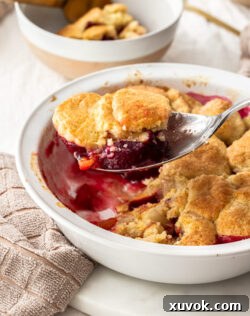
Apple and Plum Cobbler
Rate
Pin
Ingredients
FOR THE FRUIT FILLING
- 2 large Granny Smith apples, peeled, cored and diced
- ¼ cup caster sugar (or white granulated)
- ½ teaspoon ground cardamom
- 1 tablespoon water
- 6 small plums, pitted and cut into 8ths
- 2 teaspoons cornflour (cornstarch)
FOR THE SUGAR TOPPING
- 3 teaspoons white granulated sugar
- ¼ teaspoon ground nutmeg
- ¼ teaspoon ground cardamom
FOR THE COBBLER TOPPING
- 130 g plain flour (all-purpose flour) (1 cup / 4.5oz)
- ¼ cup caster sugar (or white granulated)
- 1 teaspoon baking powder
- 57 g unsalted butter, cubed and chilled (¼ cup / ½ stick / 2oz)
- ⅓ cup thickened (heavy) cream
- 1 egg, lightly beaten (for brushing)
For best results, always weigh ingredients where a weight is provided.
Instructions
FOR THE FRUIT FILLING
-
Preheat your oven to 180°C (350°F) or 160°C fan-forced. Prepare a casserole or pie dish (approximately 8-9 inches in diameter or similar volume) by lightly greasing it. See notes below for dish size recommendations.
-
In a small saucepan, combine the diced apples, ¼ cup sugar, ½ teaspoon ground cardamom, and 1 tablespoon water. Place the saucepan over low-medium heat and cook, stirring occasionally, for 7-8 minutes or until the apples are slightly softened but still retain some bite. This step ensures the apples will be tender when the cobbler is baked.
-
In your prepared pie dish, sprinkle the 2 teaspoons of cornflour (cornstarch) over the pitted and segmented plums. Mix gently to ensure the plums are evenly coated; this will help thicken the plum juices. Add the softened apple mixture to the plums in the dish and mix well to combine both fruits. Spread the fruit mixture evenly across the bottom of the dish.
FOR THE SUGAR TOPPING
-
In a small bowl, combine the 3 teaspoons of white granulated sugar, ¼ teaspoon ground nutmeg, and ¼ teaspoon ground cardamom. Stir these ingredients together until well mixed, then set aside. This mixture will be sprinkled over the cobbler topping before baking for an extra layer of sweetness and spice.
FOR THE COBBLER TOPPING
-
Into the bowl of a food processor, add the 130g (1 cup) plain flour, ¼ cup caster sugar, and 1 teaspoon baking powder. Pulse a few times to thoroughly combine these dry ingredients.
-
Add the 57g (¼ cup) cubed and chilled unsalted butter to the flour mixture. Process in short pulses until the butter is cut into the flour and resembles small pieces, roughly the size of a grain of barley or small peas. It’s crucial not to over-process; some visible lumps of butter are desirable for a flaky texture. See notes if you don’t have a food processor.
-
Pour in the ⅓ cup thickened (heavy) cream. Pulse just until the cream is evenly incorporated and the mixture forms a coarse, wet, chunky sand-like texture. Again, avoid over-mixing. Turn the dough out onto a lightly floured surface. Gently press the dough together with your hands, then roll or press it out to a thickness of just under 1cm (about ⅓ inch). Use a circle cookie cutter (a 5cm/2-inch cutter is ideal) to cut out individual shapes. Refer to notes for alternative shaping methods.
-
Arrange the cut dough circles randomly over the fruit filling in your pie dish. Overlap a few here and there, but ensure there are still some small gaps and holes. These openings allow the delicious fruit juices to bubble up and caramelize, creating beautiful pockets of flavor and texture.
-
Lightly brush the tops of the biscuit dough with the beaten egg. This egg wash will give the topping a lovely golden sheen and a slightly crisp finish. Immediately scatter the prepared sugar topping mixture evenly over the egg-washed dough.
-
Bake in the preheated oven for approximately 45-50 minutes, or until the cobbler topping appears beautifully golden brown and crunchy, and the fruit filling is visibly bubbling around the edges. The fruit should be tender and the juices thick and syrupy.
-
Remove from the oven and let it cool for at least 10-15 minutes before serving. This allows the fruit filling to set slightly. Serve warm with your choice of heavy cream, a scoop of vanilla ice cream, or a warm crème anglaise (custard).
-
Please take a moment to leave a comment & rating below if you tried this recipe. Your feedback is truly appreciated and incredibly helpful!
Notes
- For the most accurate and consistent baking results, it is highly recommended to weigh ingredients like flour and sugar using a kitchen scale. Kitchen scales are relatively inexpensive and make a significant difference. If you must use cup measures and cannot weigh the ingredients, employ the “spoon and level” method: gently spoon the flour into your measuring cup until it overflows, then level it off with the back of a knife. Avoid scooping directly with the cup, as this can compact the flour and result in too much flour.
- The pie dish shown in the recipe photos is an 8-inch (20cm) pie dish that is approximately 2 inches (5cm) deep. This size is ideal for the quantities specified in this recipe. A similar sized casserole dish would also work.
- No food processor? No problem! You can easily cut the cold butter into the flour mixture by hand. Use a pastry cutter, two knives (scissor-fashion), or even your fingertips. The key is to work quickly to prevent the butter from melting, aiming for small, pea-sized pieces to remain within the flour mixture.
- When shaping the dough, after rolling it out, you can use a 5cm / 2 inch fluted cookie cutter (as used here) for a decorative edge, a plain round cutter, or simply cut the dough into rustic squares or strips with a knife. For a truly organic, “cobblestone” effect, you can even use your fingers to break off random chunks of dough and drop them directly over the fruit filling. The beauty of a cobbler is its charmingly imperfect appearance!
EXPLORE MORE COBBLERS, CRISPS, AND CRUMBLES!