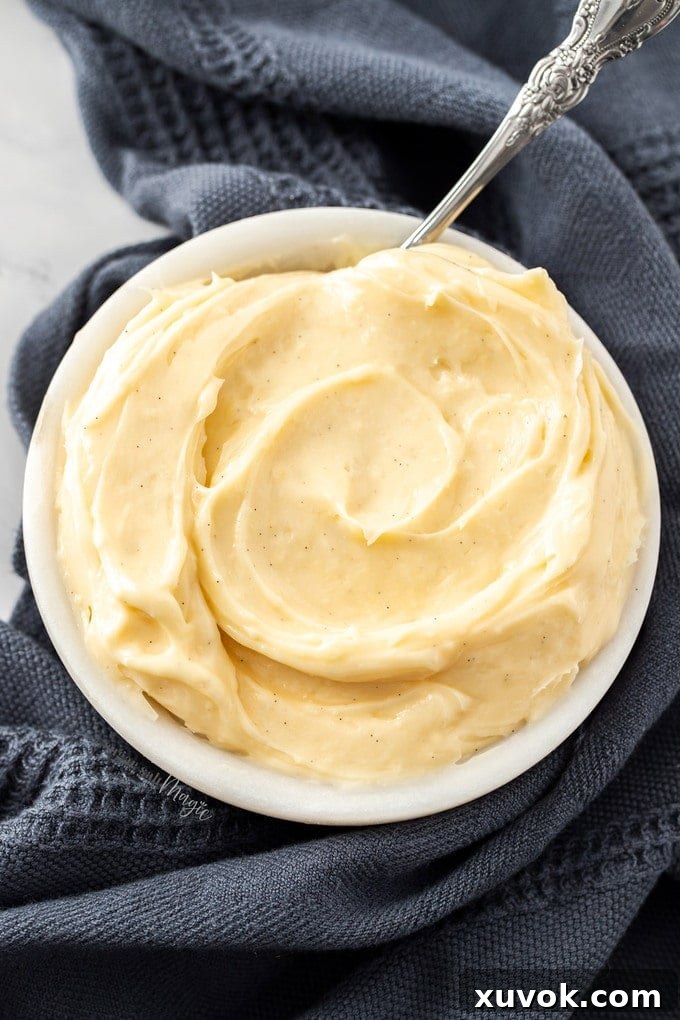
Unlock the secrets to crafting perfect pastry cream from scratch, a fundamental skill for any home baker. This comprehensive guide provides expert tips, essential tricks, and countless ways to utilize this versatile custard in your favorite desserts.
If you’re a devoted chocolate enthusiast, you absolutely must explore our decadent chocolate pastry cream recipe. For a lighter, airier texture, consider blending this classic vanilla pastry cream with a delicate Chantilly cream for an exquisite dessert experience.
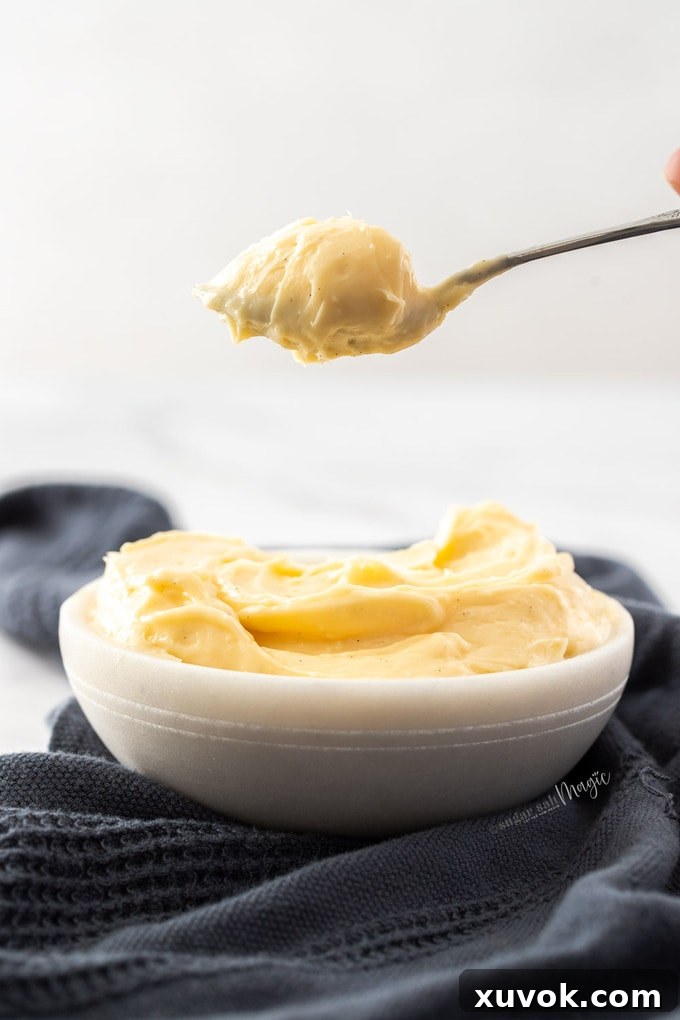
Table of Contents
- What is Pastry Cream (Crème Pâtissière)?
- Why Master Homemade Pastry Cream?
- Essential Ingredients for Crème Pâtissière
- How to Make Pastry Cream (Crème Pâtissière) – Step-by-Step Guide
- Step 1: Prepare the Milk Mixture
- Step 2: Combine Eggs, Milk, and Cornstarch
- Step 3: Temper the Egg Mixture
- Step 4: Cook to Perfection
- Step 5: Strain for Silkiness
- Step 6: Cool and Chill
- Different Types of Custard Explained
- What is Crème Pâtissière Used For?
- Expert Tips and Tricks for Perfect Pastry Cream
- How to Store Pastry Cream Effectively
- Frequently Asked Questions About Pastry Cream
- More Delicious Custard Recipes
What is Pastry Cream (Crème Pâtissière)?
Crème Pâtissière, or French pastry cream, is a luxurious, vanilla-flavored custard that serves as a cornerstone in countless dessert traditions worldwide. Made from a harmonious blend of just five core ingredients – milk, sugar, egg yolks, cornstarch, and vanilla – it transforms into a thick, silken delight that is both subtly sweet and intensely creamy. Often recognized as the rich filling in classic French pastries like profiteroles, eclairs, and custard horns, its versatility extends far beyond these familiar applications. This very same exquisite cream forms the delicious heart of elegant fruit tarts and even provides the essential base for the uniquely stable and velvety German Buttercream, a favorite among professional bakers for its smooth texture and less cloying sweetness. Its silky-smooth consistency and delicate sweetness make it an ideal canvas for various flavor infusions, but it shines brightest when infused with classic vanilla, allowing its inherent richness to truly stand out.
Why Master Homemade Pastry Cream?
While store-bought alternatives exist, nothing quite compares to the sublime taste and texture of freshly made, homemade pastry cream. The process, often perceived as daunting, is surprisingly straightforward and incredibly rewarding. By making your own, you gain complete control over the quality of ingredients, allowing you to choose fresh, high-grade milk and eggs, and pure vanilla extract, which collectively elevate the flavor profile to an unparalleled degree. Moreover, the ability to customize its sweetness and richness means you can tailor it perfectly to complement any dessert. Once you experience the unparalleled smoothness and depth of flavor of a homemade crème pâtissière, you’ll likely find yourself wondering why you ever settled for anything less. It’s a foundational skill that opens up a world of sophisticated baking possibilities, transforming humble ingredients into something truly extraordinary.
Essential Ingredients for Crème Pâtissière
The beauty of pastry cream lies in its simplicity, utilizing basic kitchen staples to create a gourmet filling. Each ingredient plays a crucial role in achieving that perfect balance of flavor, richness, and stability:
- Whole Milk: The base of our custard, whole milk provides essential fat for a rich, creamy mouthfeel. While you can use lower-fat milk, whole milk delivers the most luxurious texture and flavor.
- Granulated Sugar: Sweetness is key, balancing the richness of the egg yolks and the subtle bitterness of vanilla. Granulated sugar dissolves easily and contributes to the cream’s smooth consistency.
- Vanilla Extract (or Vanilla Bean/Paste): The quintessential flavoring for classic pastry cream. High-quality vanilla extract is a must, but for an even more intense and authentic flavor, consider using a vanilla bean (split and scraped) or vanilla bean paste.
- Cornstarch (Cornflour): This is the secret to pastry cream’s signature thick, stable, and pudding-like consistency. Unlike crème anglaise which relies solely on egg yolks for thickening, cornstarch acts as a crucial stabilizer, preventing the eggs from curdling and allowing the cream to reach a denser texture perfect for piping and filling.
- Egg Yolks: Providing richness, color, and additional thickening, egg yolks are vital for pastry cream. They contribute to the custard’s characteristic golden hue and luxurious texture. Ensure your eggs are fresh for the best results.
Using quality ingredients makes a noticeable difference in the final product, so choose the best you can find.
How to Make Pastry Cream (Crème Pâtissière) – Step-by-Step Guide
Creating this classic French custard is an approachable process when broken down into clear steps. Follow this detailed guide to achieve a perfectly smooth and rich pastry cream every time.
Step 1: Prepare the Milk Mixture
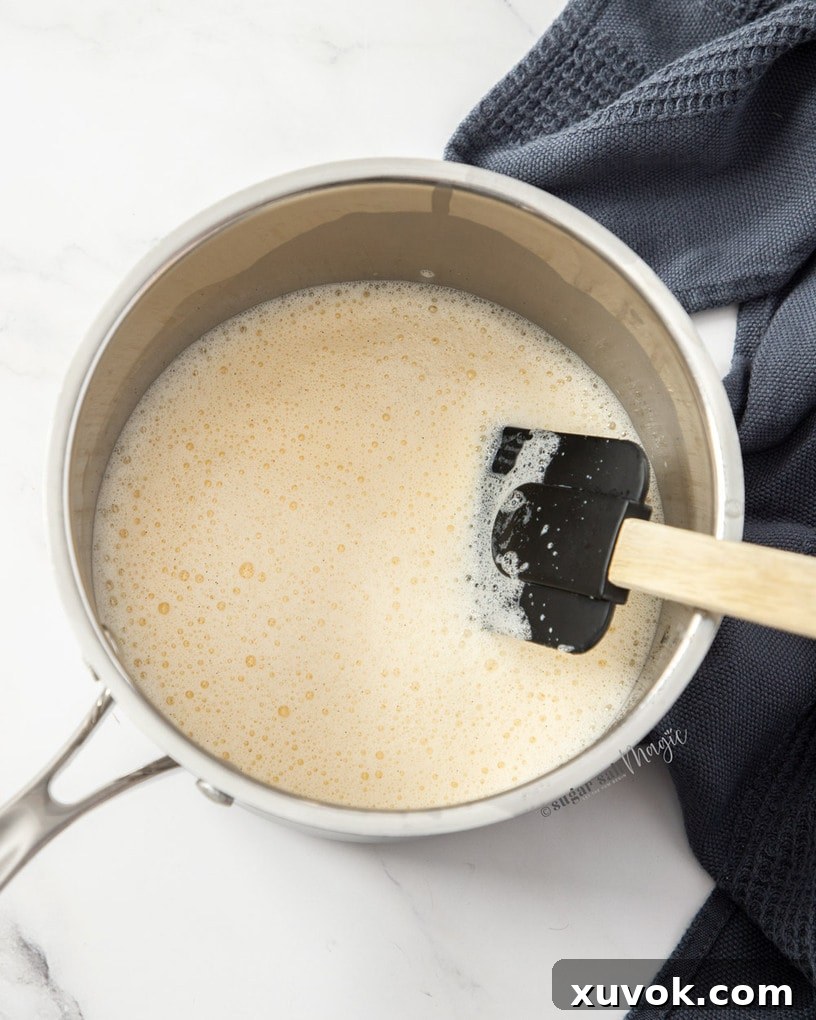
Begin by pouring 1 ¼ cups of whole milk into a sturdy, heavy-based saucepan. Add the granulated sugar and the fragrant vanilla extract (or a scraped vanilla bean for an even deeper flavor). Place the saucepan over low to medium heat, stirring regularly. Your goal is to heat the milk until it’s steaming gently, but not boiling rapidly. The gentle heat helps the sugar dissolve completely, preventing any grittiness in your final cream. Once steaming, remove it from the heat.
Step 2: Combine Eggs, Milk, and Cornstarch
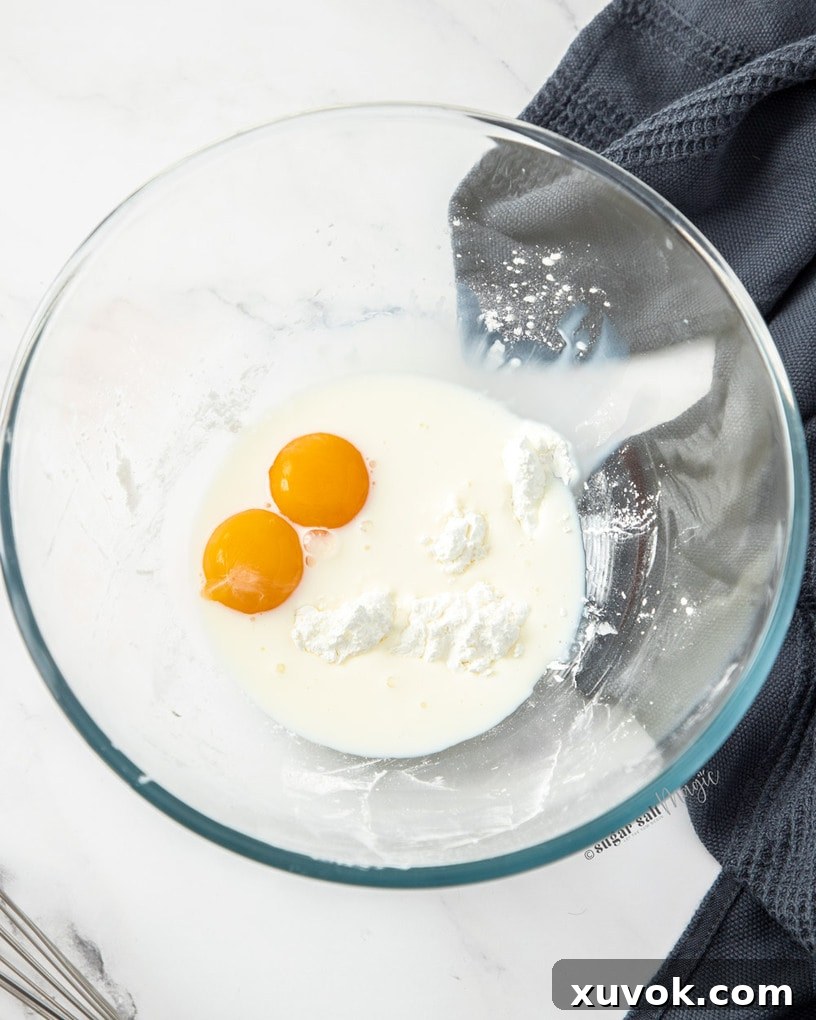
In a separate large mixing bowl, combine the remaining ¼ cup of cold milk with the two large egg yolks and the cornstarch. Whisk these ingredients together vigorously until the mixture is completely smooth and uniform, with no visible lumps of cornstarch. This slurry is crucial for thickening the pastry cream and needs to be lump-free to ensure a silky final product. The cold milk helps prevent the cornstarch from clumping immediately.
Step 3: Temper the Egg Mixture
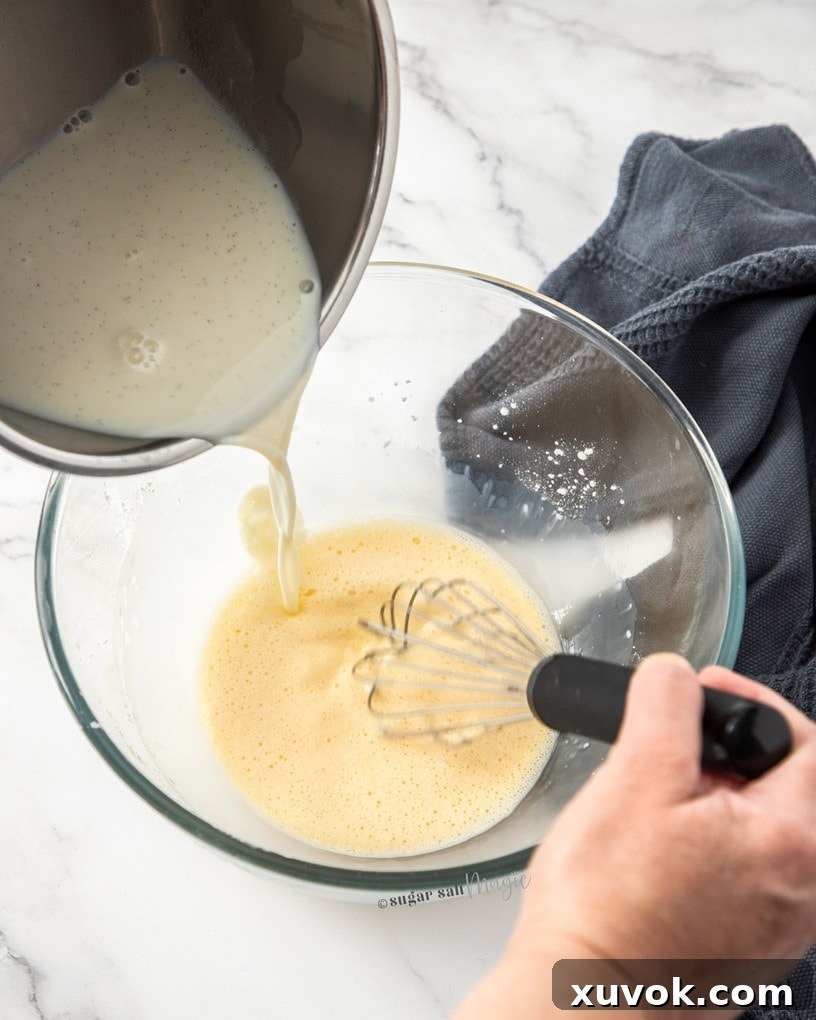
This is a critical step to prevent the egg yolks from scrambling. While continuously whisking the egg mixture in the large bowl, very slowly and in a thin, steady stream, pour the hot milk mixture into the egg mixture. The goal is to gradually raise the temperature of the eggs without cooking them. If you pour the hot milk too quickly, the sudden heat will scramble the egg yolks, resulting in a lumpy, unappealing custard. Take your time, pouring slowly and whisking constantly, until all the hot milk is incorporated into the egg mixture.
Step 4: Cook to Perfection
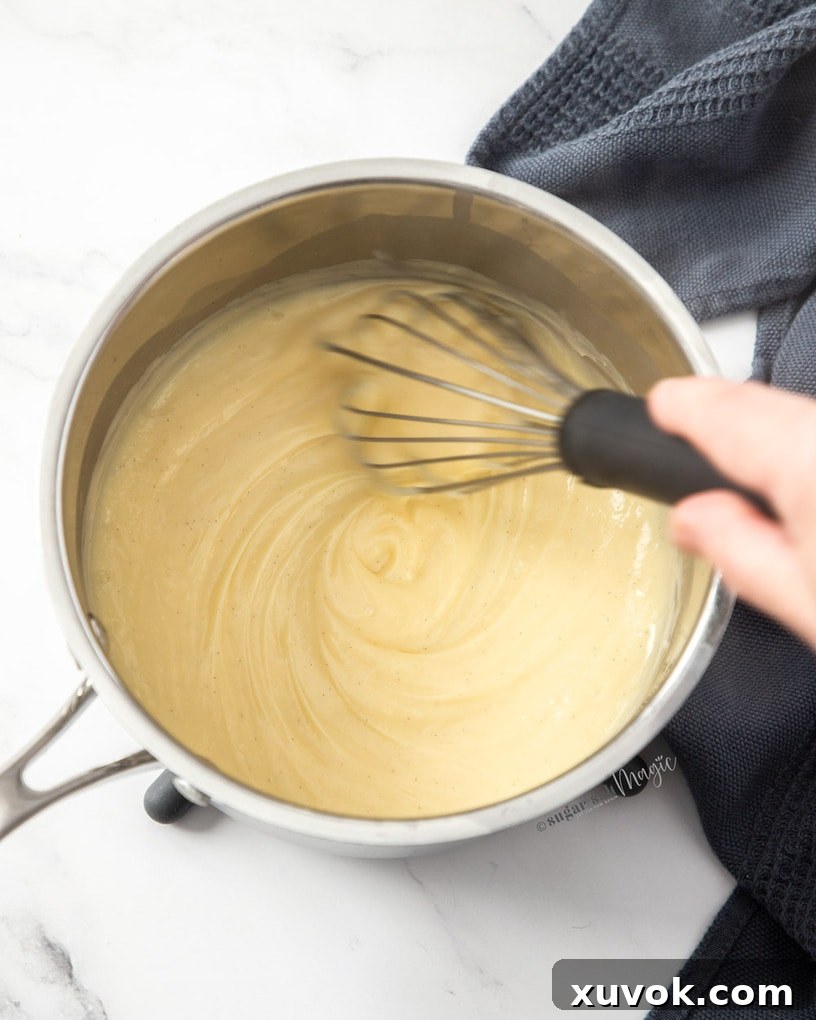
Once everything is thoroughly combined, pour the entire mixture back into the heavy-based saucepan. Return the saucepan to medium heat. Now, the key is constant vigilance: whisk the mixture continuously. As it heats, you will notice it gradually thickening. This process usually takes about 5-7 minutes. It’s essential to keep whisking, especially as it starts to become very thick and pudding-like. The moment it thickens to the point where it no longer immediately settles when you stop whisking, and you can see the bottom of the pan briefly, it’s done. Continued whisking prevents lumps from forming and ensures an even cook. Don’t stop whisking prematurely, or you’ll end up with a lumpy, uneven custard.
Step 5: Strain for Silkiness
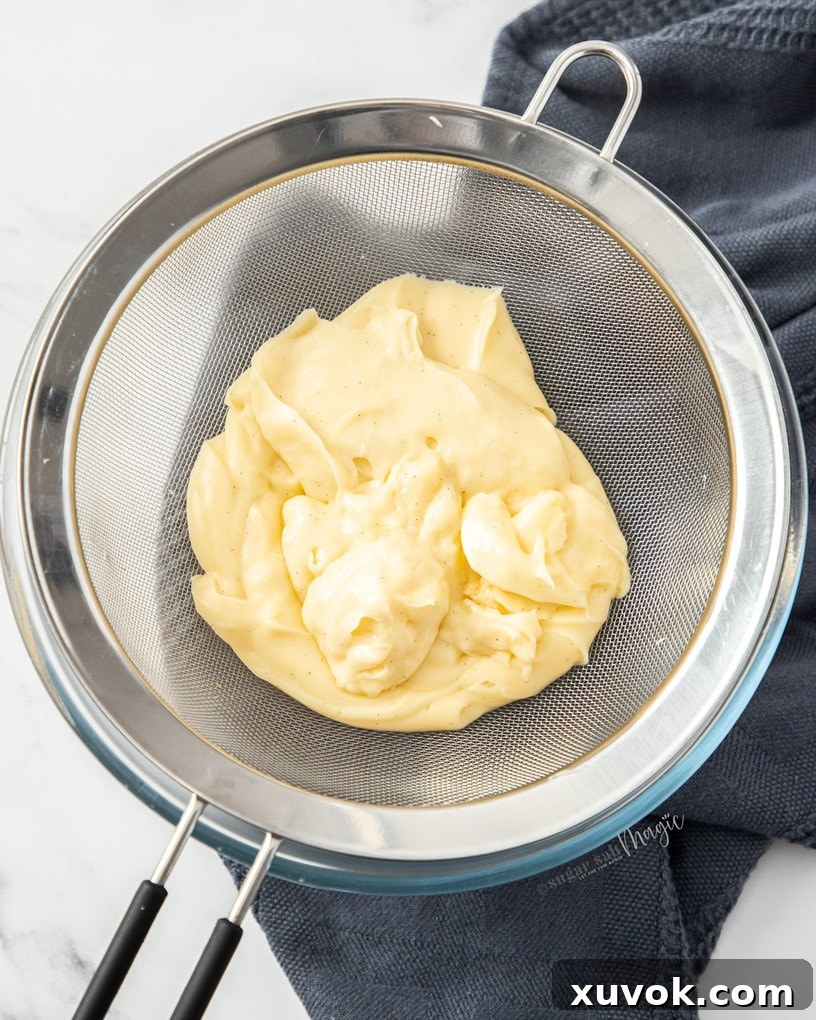
Once your pastry cream has reached the desired thickness, immediately remove it from the heat. For the ultimate silky-smooth texture, press the hot custard through a fine-mesh strainer into a clean bowl, using a silicone spatula to help it along. This step is highly recommended as it catches any tiny lumps of cooked egg or cornstarch that might have formed, ensuring a truly homogenous and luxurious cream. While not strictly mandatory if you’ve whisked flawlessly, it’s a simple step that guarantees professional results.
Step 6: Cool and Chill
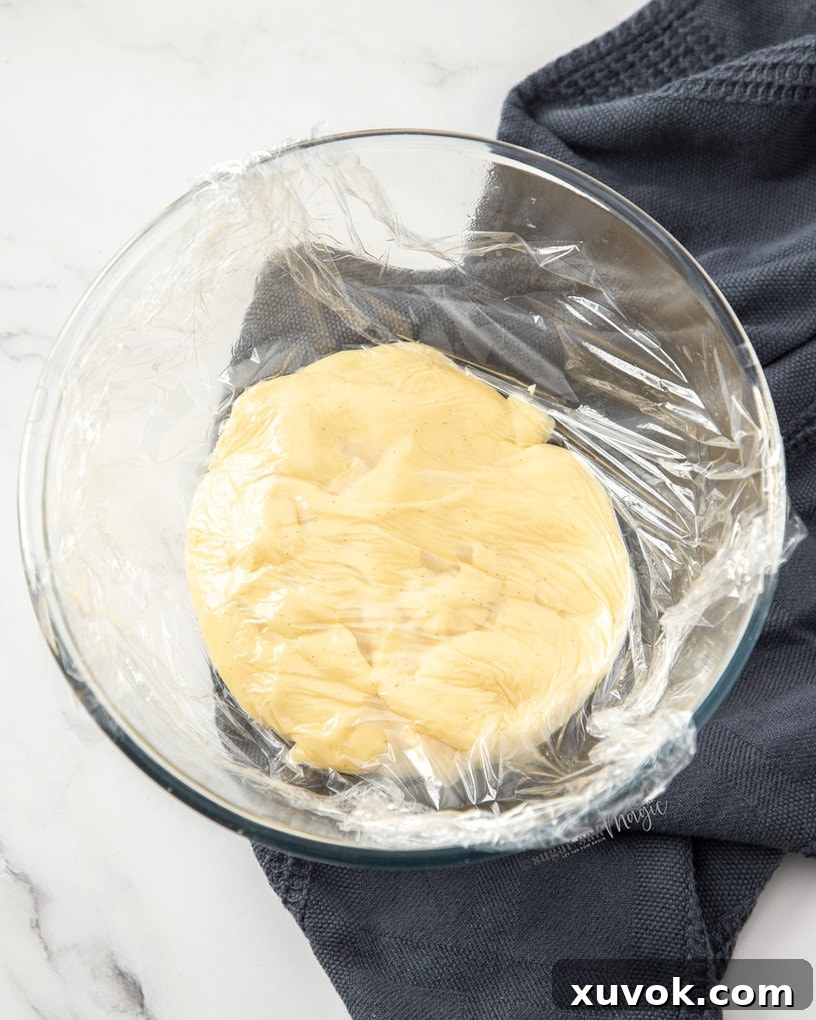
Transfer the strained pastry cream to a clean bowl. To prevent a “skin” from forming on the surface (which can lead to wasted deliciousness!), immediately press a piece of plastic wrap directly onto the surface of the hot cream. Ensure there are no air bubbles between the wrap and the cream. Allow it to cool completely to room temperature, then transfer it to the refrigerator for at least 2-3 hours, or preferably overnight, to chill thoroughly and firm up. Chilling is crucial for the pastry cream to set properly and develop its full flavor and consistency.
Different Types of Custard Explained
Custards are a broad category of culinary delights, all bound by their reliance on eggs or egg yolks as a primary thickening agent. However, their consistency and applications vary significantly. Understanding these differences will help you appreciate the unique qualities of pastry cream:
- Crème Anglaise (Custard Sauce): This is a rich, pourable custard sauce, often used as an accompaniment to desserts like fruit crumbles, cakes, or puddings. It is primarily thickened with egg yolks, resulting in a smooth, creamy, yet flowing consistency. It does not contain starch, which keeps it fluid.
- Crème Pâtissière (Pastry Cream): As we’re exploring, this is the thicker, more set version of crème anglaise. The key differentiator is the addition of a starch, typically cornflour (cornstarch), alongside the egg yolks. This starch provides extra stability and allows the custard to become firm enough to hold its shape, making it ideal for fillings and piping.
- Baked Custard: True to its name, baked custard is cooked in an oven, often in a water bath to ensure gentle, even cooking. It relies solely on eggs (no starch) for thickening and sets into a delicate, spoonable consistency. Examples include Pots De Crème and the famous Crème Brûlée, known for its crackly caramelized sugar topping.
- Custard Powder: This is a commercially prepared, shelf-stable powdered mixture, primarily cornstarch, often flavored and colored. When mixed with milk and sugar, it creates a quick and easy pourable custard. While typically served pourable like crème anglaise, starch is the primary thickener, giving it stability without fresh eggs for long shelf life.
Each form of custard offers unique textural and culinary possibilities, forming the base for a multitude of desserts, from classic crème caramel to blancmange, showcasing the incredible versatility of this humble preparation.
What is Crème Pâtissière Used For?
Once you’ve mastered the art of making crème pâtissière, a world of dessert possibilities opens up. Its creamy, stable texture makes it an indispensable filling for countless sweet treats. Here are just a few ways you can utilize your homemade pastry cream:
- Elegant Tarts: The quintessential filling for fresh fruit tarts, providing a smooth base that perfectly complements berries, kiwi, or peaches. It can also be flavored for indulgent chocolate custard tarts.
- Classic French Pastries: It’s the essential core for light-as-air profiteroles, delicate cream puffs, intricate chouxnuts, glossy eclairs, and crispy custard horns.
- Custard Slices: The creamy center of a beloved custard slice, offering a delightful contrast to crisp puff pastry.
- Donut Fillings: Inject it into freshly fried donuts for a gourmet touch, like our delicious brown sugar custard donuts.
- Cakes and Cupcakes: The traditional filling for Boston cream pie and a fantastic way to elevate cupcakes with a luscious, creamy surprise.
- Mille Feuille: The famous French dessert, also known as Napoleon, relies on layers of flaky puff pastry alternating with rich crème pâtissière.
- Pudding Base: It forms the basis of luxurious puddings, such as a rich chocolate pudding or the delightful butterscotch pudding found in a festive trifle.
- German Buttercream: Transform your pastry cream into the silkiest, most stable buttercream you’ll ever taste by using it as the base for German Buttercream, perfect for piping and decorating.
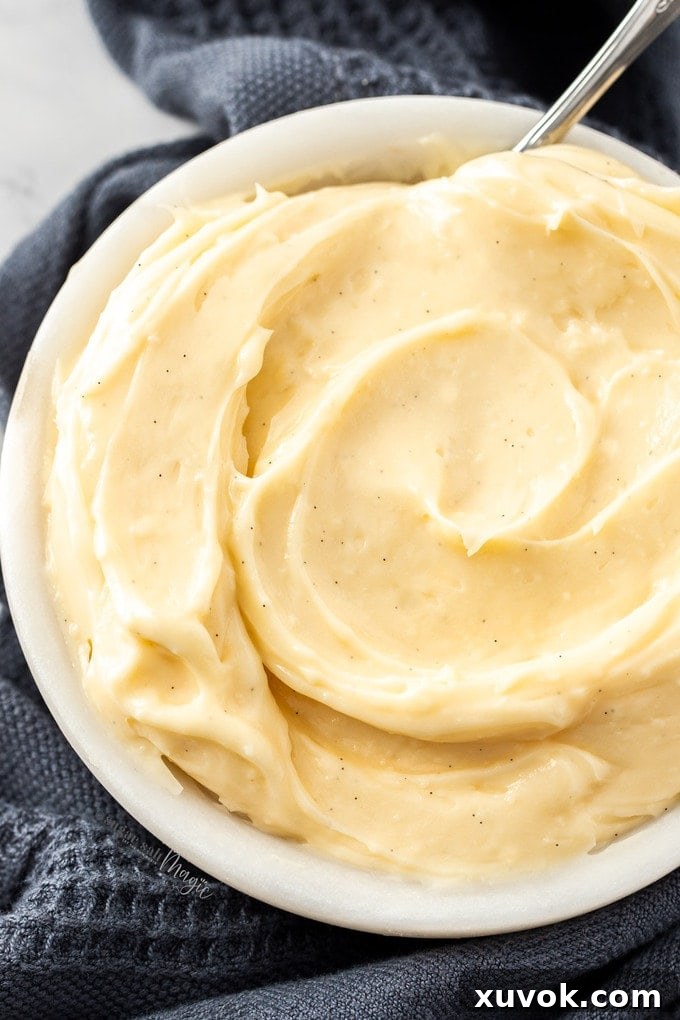
Expert Tips and Tricks for Perfect Pastry Cream
This vanilla pastry cream recipe is surprisingly simple to master at home, and once you do, you’ll be endlessly seeking new desserts to fill. Here are some invaluable notes and pro tips to ensure your crème pâtissière turns out perfectly every time:
- Proper Cornstarch Measurement: For accuracy, fluff your cornflour (cornstarch) first, then lightly scoop it into your measuring cup. Level off the top with a straight edge or knife rather than packing it down. This ensures you get the correct amount for proper thickening.
- Boost the Richness: For an even more luxurious and decadent pastry cream, consider adding an extra egg yolk to the mixture. This will enhance its color and creamy mouthfeel significantly.
- Avoid Boiling the Milk: When heating the milk, it only needs to be hot enough to steam gently and dissolve the sugar. A rolling boil is unnecessary and can make the milk too hot, increasing the risk of scrambling the eggs during tempering.
- Mastering Tempering: The most crucial step! When incorporating the hot milk into the egg mixture, pour it in a very slow, continuous stream while whisking the eggs constantly and vigorously. This gradual introduction of heat is called tempering and prevents the egg yolks from cooking too quickly and turning into scrambled eggs. Patience here pays off.
- Cook Until It Boils (Just!): Many traditional crème pâtissière recipes insist on bringing the mixture to a boil. This is because cornstarch typically achieves its maximum thickening power at boiling point. While it will thicken before reaching a full boil, allowing it to bubble gently for about 30-60 seconds after it has visibly thickened ensures the starch fully activates and the raw starch taste is cooked out, resulting in a stable and velvety cream. Keep whisking!
- Constant Whisking is Key: From the moment the mixture goes back into the saucepan until it’s perfectly thick, do not stop whisking. Constant agitation prevents the custard from sticking to the bottom of the pan and burning, and it ensures a consistently smooth texture, free from lumps. Increase intensity as it thickens.
- Straining for Ultimate Smoothness: While diligent whisking can minimize lumps, straining the pastry cream through a fine-mesh sieve after cooking is a foolproof method to achieve the silkiest, most refined texture possible. It catches any stray lumps or overcooked egg particles.
- Preventing a Skin: Immediately after cooking and straining, press plastic wrap directly onto the surface of the hot pastry cream. This creates an airtight seal that prevents a thick, undesirable skin from forming as it cools. If a skin forms, you’ll have to discard it, wasting precious cream.
- Chill Thoroughly: Pastry cream needs ample time to chill and firm up in the refrigerator. Resist the urge to use it before it’s completely cold, as it won’t have the proper set texture for fillings or piping.
- Flavor Variations: Don’t limit yourself to vanilla! Infuse your milk with citrus zest (lemon, orange), spices (cinnamon stick, star anise), or even coffee beans during heating for exciting flavor twists. Just remember to strain them out before tempering.
How to Store Pastry Cream Effectively
Proper storage is essential to maintain the freshness and quality of your homemade pastry cream. Follow these guidelines:
- Refrigeration: Store the pastry cream in an airtight container or bowl with plastic wrap pressed directly onto the surface (as mentioned above) to prevent a skin from forming and to keep it fresh. It will last beautifully in the refrigerator for 3-4 days.
- Reactivating Before Use: Once refrigerated, pastry cream will set quite firm due to the cornstarch. Before using it as a filling or in a recipe, bring it to room temperature for about 15-30 minutes. Then, whisk it vigorously with a clean whisk until it is smooth and pliable again. This re-emulsifies the cream and restores its creamy consistency.
- Freezing is Not Recommended: Pastry cream, particularly due to the cornstarch and egg yolks, does not freeze well. Upon thawing, it tends to separate and become watery or grainy, losing its characteristic smooth texture. It’s best to enjoy it fresh or within the recommended refrigeration period.
PIN IT:
Click to pin this recipe for later!
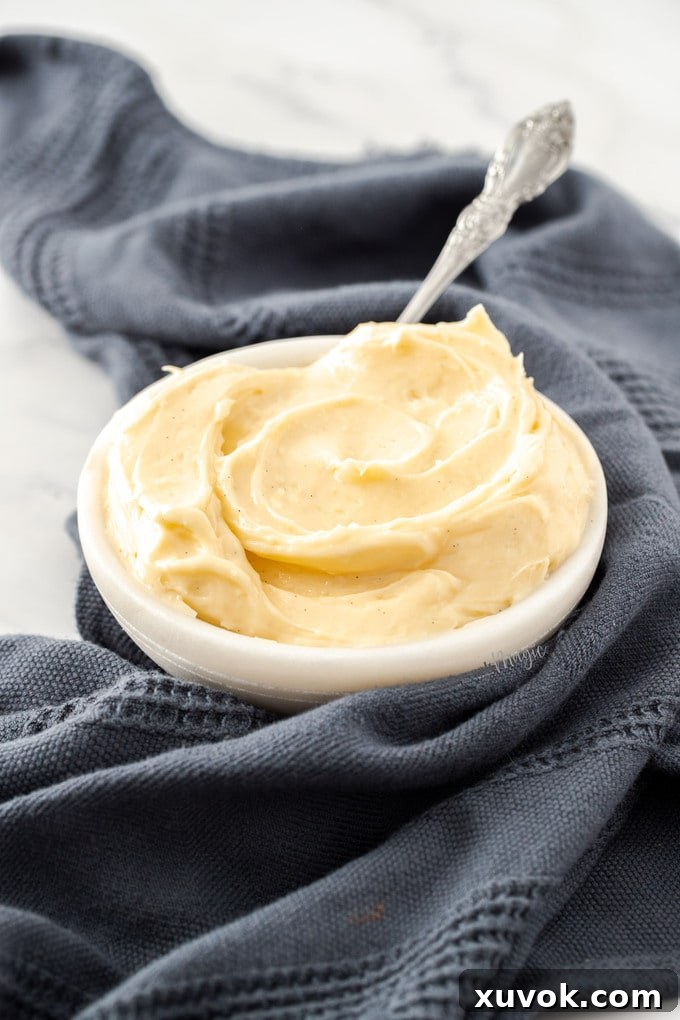
If you’ve never ventured into making your own pastry cream, I wholeheartedly encourage you to give it a try. You’ll be amazed at how simple it is to achieve professional-level results at home! Just try not to succumb to the temptation of eating it all by the spoonful before it makes its way into your chosen dessert. Also, stay tuned for an upcoming delicious buttercream recipe that utilizes this very pastry cream – it’s a game-changer!
Frequently Asked Questions About Pastry Cream
Here are some common questions bakers have about making and using crème pâtissière:
- My pastry cream is lumpy, what went wrong? This usually happens due to insufficient whisking during cooking or when tempering the eggs too quickly. Ensure you whisk constantly and vigorously when heating the custard, and pour the hot milk very slowly into the eggs. Straining can often save a slightly lumpy batch.
- Why is my pastry cream too thin? This could be because it wasn’t cooked long enough, or the cornstarch wasn’t properly activated (didn’t reach a sufficient temperature). It might also be due to inaccurate measurement of cornstarch or egg yolks. Return it to the heat and whisk vigorously until it thickens further.
- Can I make pastry cream ahead of time? Absolutely! Pastry cream is ideal for making 1-3 days in advance. Just remember to store it properly in the refrigerator with plastic wrap pressed directly to the surface, and whisk it smooth before use.
- What can I do with leftover egg whites? Since this recipe only uses egg yolks, you’ll have leftover whites. Don’t waste them! They’re perfect for making meringues, macarons, angel food cake, or an egg white omelet.
- Can I use a different thickener instead of cornstarch? While cornstarch is common, tapioca starch or all-purpose flour can also be used, though they may yield slightly different textures. For example, flour-thickened pastry cream can be a bit heavier, while tapioca starch creates a very clear, glossy finish. Stick to cornstarch for the classic texture described here.
More Delicious Custard Recipes
If you love the rich, creamy texture of custards, you’ll want to explore these other fantastic recipes:
- Chocolate Pastry Cream
- Salted Caramel Pots De Crème
- Chocolate Crème Brûlée
- Lemon Vanilla Custard Slice
- Caramel Doughnuts with Brown Sugar Custard
- Mini Chocolate Tart Recipe
- How to Make Custard Powder
- Vanilla Cupcakes with Custard Buttercream (German Buttercream)
Never Miss a Recipe!
Get the latest recipes straight to your inbox by subscribing to our newsletter!
Enter your email address to receive new recipes and baking tips:
How to Make Pastry Cream (Crème Pâtissière)
Yield: 10 serves
Prep Time: 5 minutes
Cook Time: 10 minutes
Total Time: 15 minutes
Rated 5 out of 5 stars by 4 readers
Vanilla pastry cream, also known as crème pâtissière, is a thick French custard base that is essential for many desserts. It’s rich, smooth, and pudding-like in texture, perfect as a filling for tarts, eclairs, profiteroles, and can even be used to make luxurious buttercream. This easy recipe will guide you through making the perfect homemade pastry cream.
Rate Recipe
Pin Recipe
Ingredients
- 1 ½ cups whole milk
- ⅓ cup white granulated sugar (or caster sugar)
- 1 teaspoon vanilla extract
- ¼ cup cornflour (cornstarch)
- 2 egg yolks from large eggs
For best results, always weigh ingredients where a weight is provided
Instructions
- Pour 1 ¼ cups of milk into a heavy-based saucepan. Add sugar and vanilla, then heat on low-medium heat until steaming, stirring regularly to dissolve the sugar. Remove from heat.
- In a large bowl, whisk together the remaining ¼ cup milk, egg yolks, and cornflour until smooth and fully combined.
- While whisking, very slowly pour the hot milk mixture into the egg mixture in a slow but steady stream. Do not pour it too quickly or the heat will scramble the eggs.
- Once everything is combined, return the mixture to the saucepan. Heat over medium heat, stirring with a whisk constantly, until it gets very thick and no longer settles into itself when you move it around. This will happen quite quickly after about 5 minutes, so it’s important to keep gently whisking, increasing intensity as it gets very thick. You will end up with lumpy custard if you don’t.
- Swap to a silicone spatula and pass the custard through a strainer into a clean bowl, then press plastic wrap directly to the surface and allow to cool completely to room temperature before chilling.
Notes
- Store the pastry cream in a container or bowl with plastic wrap pressed to the surface for 3-4 days in the refrigerator.
- Once stored in the fridge, it will set quite firm. To use it, bring it to room temperature, then whisk until smooth before use.
- Pastry cream does not freeze well and is not recommended for freezing.
Want more frostings and sauces? Click here
Calories: 72 kcal (per serving)
Author: Marie Roffey
Course: Dessert
Cuisine: French
Have you tried this recipe?
Don’t forget to leave a rating and comment below and let me know how it was! I love hearing from you. Nutrition information is approximate and derived from an online calculator. The brands you use may cause variations.