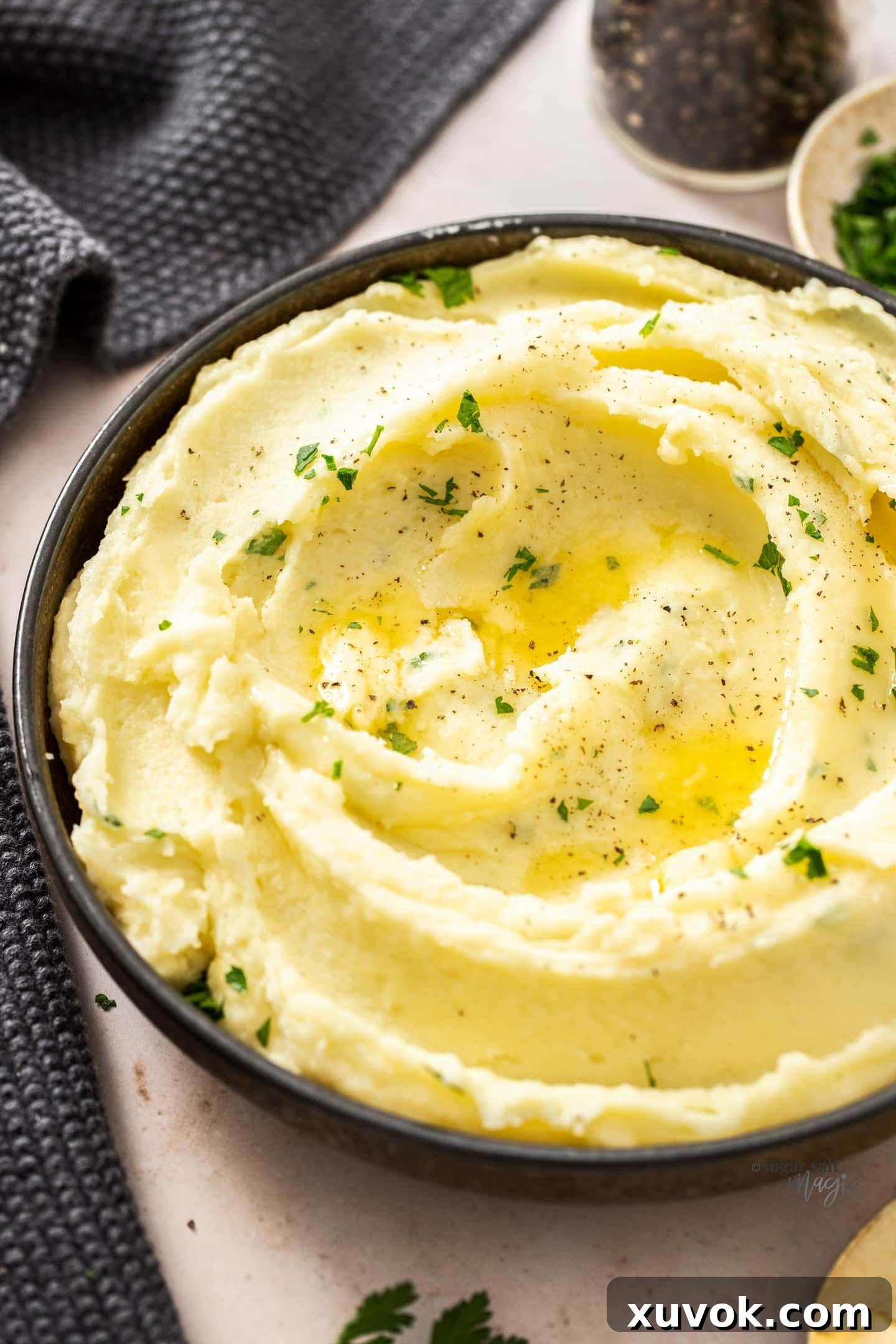
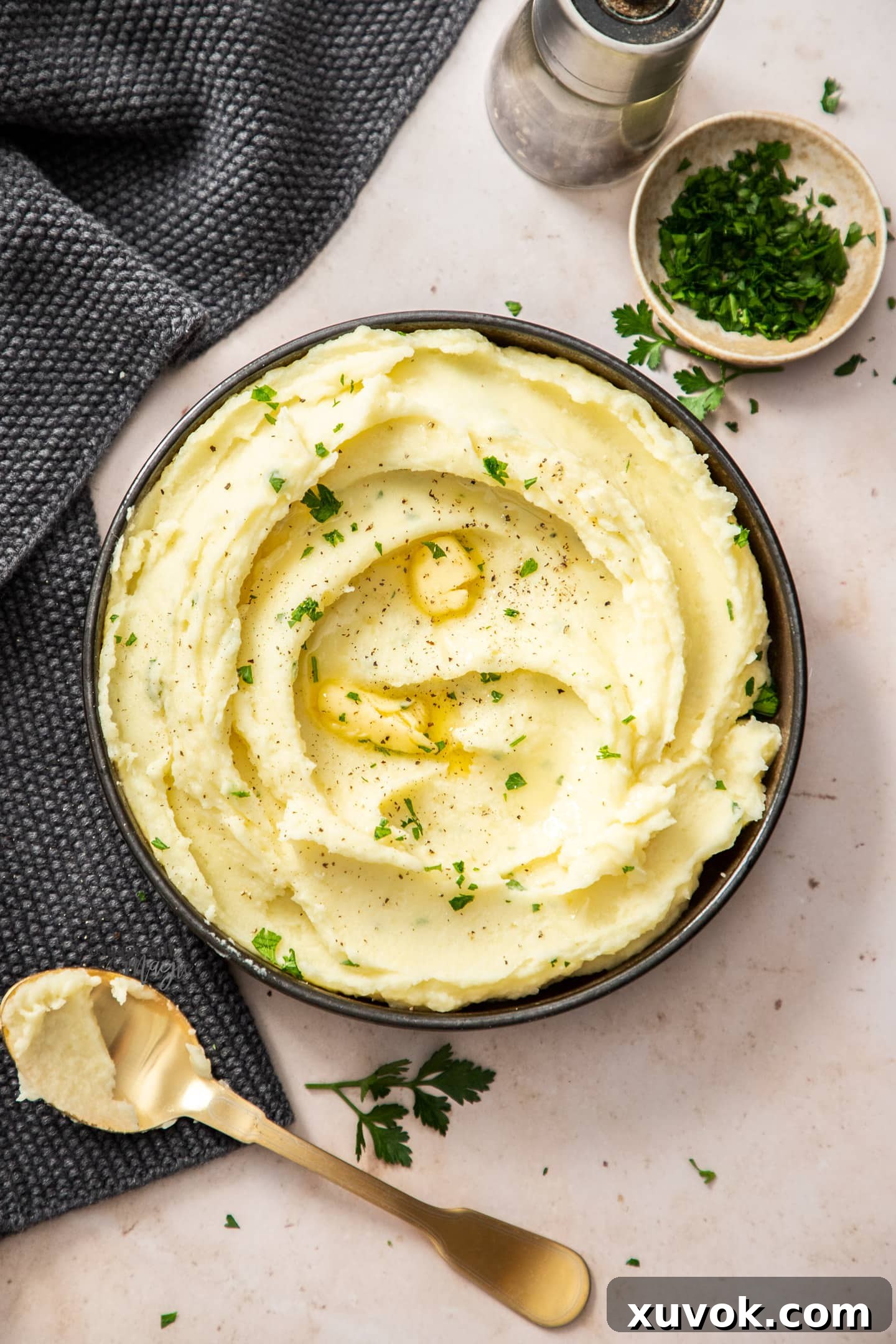
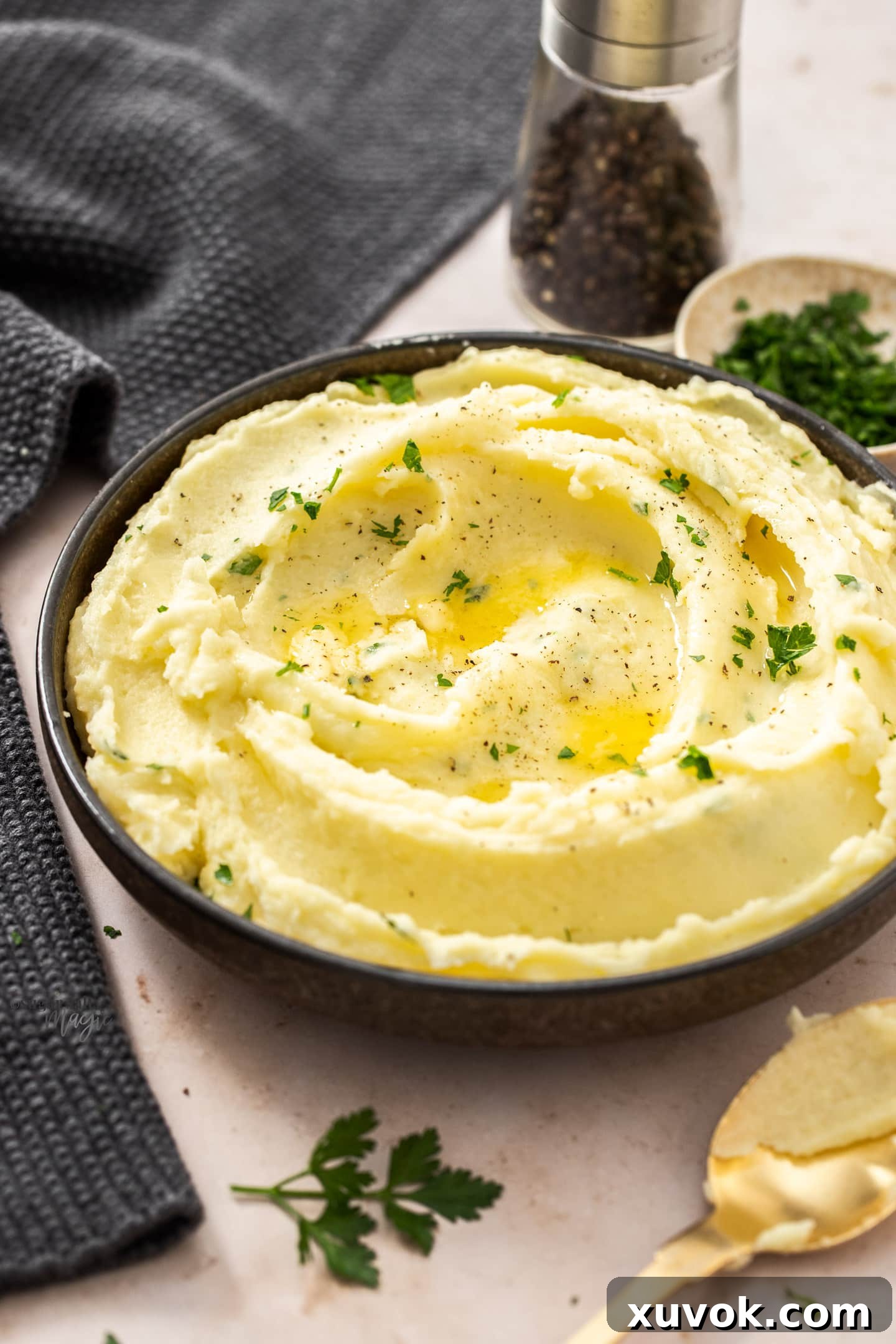
Achieving perfectly fluffy, incredibly creamy mashed potatoes is not only possible but surprisingly easy. Forget about lumpy, gluey disappointments; this comprehensive guide reveals all the essential tips and an effortless recipe for creating a flawless, lump-free mash every single time. Elevate your side dish game with this ultimate comfort food that promises to be a family favorite.
Once you master this classic, you’ll undoubtedly want to explore other potato delights. Be sure to try these ultimate crunchy roast potatoes for a crispy counterpoint, or indulge in the decadent richness of my cheesy mashed potatoes for an extra layer of flavor.
Why You’ll Adore These Fluffy Mashed Potatoes
If the quest for perfectly smooth and airy mashed potatoes has often left you frustrated, then your search ends here. We’ve distilled the art of making the best mashed potatoes into simple, actionable tips, using only a handful of common ingredients and no specialized equipment that you don’t already own. Prepare to be amazed by the transformation of humble potatoes into a truly magnificent side dish.
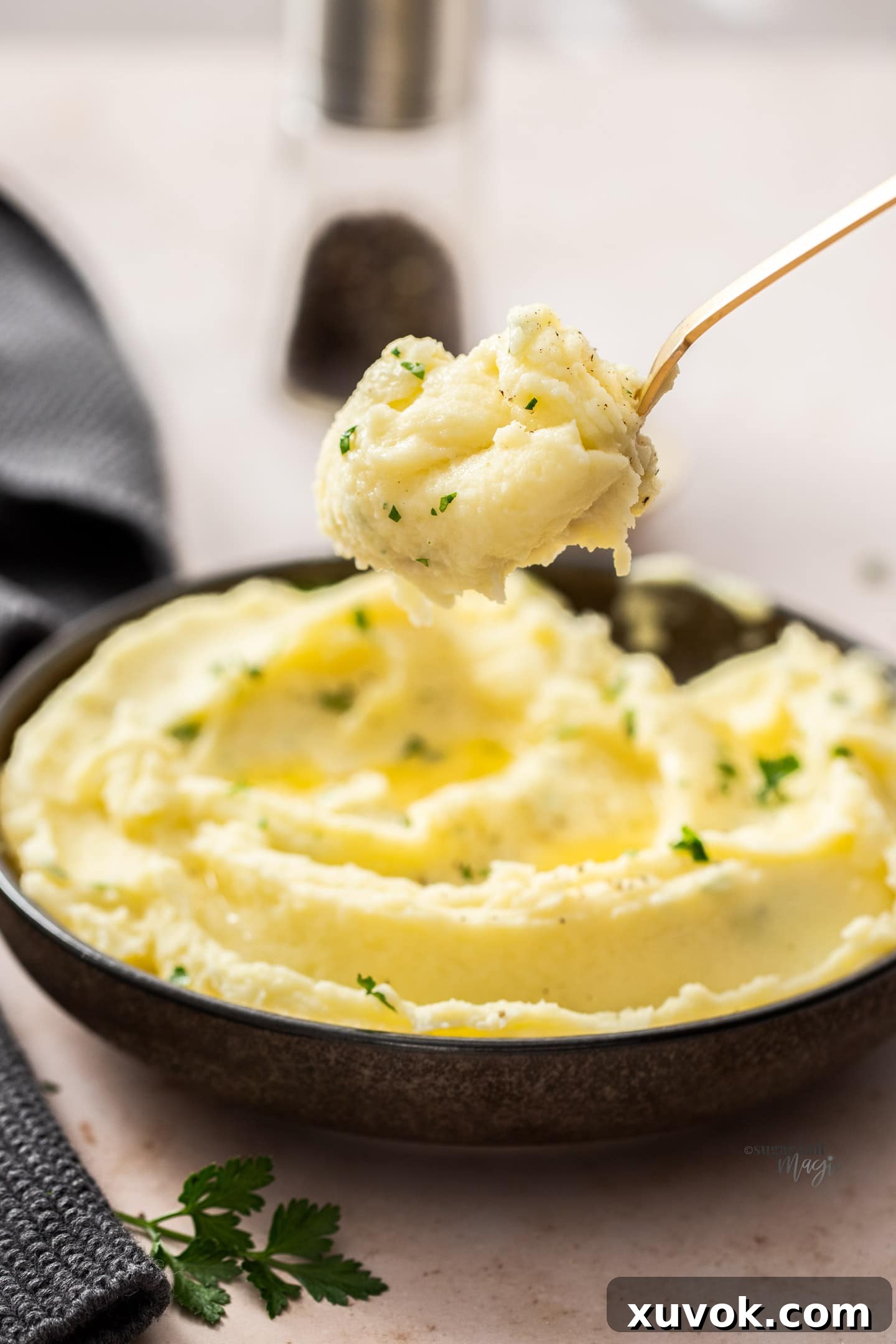
- Unbeatable Texture: Our goal is a mashed potato that is silky smooth, utterly melt-in-your-mouth, and remarkably fluffy. Imagine a consistency so light it almost feels like a spread, yet holds its own beautifully without being dense or gummy. If you prefer a looser, creamier texture, a mere splash of additional warm milk is all it takes to adjust it to your liking. The secret lies in carefully managing starch and moisture, ensuring each spoonful is pure bliss.
- Rich & Indulgent Flavor: We’re talking about rich, buttery, and deeply creamy flavor here. This is not a minimalist approach to taste. The natural sweetness of the potatoes is enhanced by high-quality butter and whole milk, creating a foundation that can stand alone or serve as the perfect canvas for your favorite additions. Smother these fluffy potatoes in rich gravy, and you instantly have the ultimate comforting side dish, ideal for any meal from holiday feasts to weeknight dinners.
- Effortless Preparation: Don’t let the quest for perfection intimidate you. Homemade mashed potatoes are surprisingly easy when you understand a few fundamental techniques. While some recipes might suggest adding unconventional ingredients like eggs, baking powder, or baking soda for “fluffiness,” we firmly believe these are entirely unnecessary. Our recipe keeps things refreshingly simple with just four core ingredients, delivering the creamiest, most buttery mashed potatoes you’ve ever tasted, without any fuss.
These exquisite mashed potatoes are the ideal accompaniment to a wide range of main courses. Imagine them served gloriously alongside my succulent stuffed pork tenderloin or as a velvety complement to my crispy oven roasted pork belly. Their versatility makes them a star at any dining table.
Table of contents
- Why You’ll Adore These Fluffy Mashed Potatoes
- Essential Ingredients for Perfect Mashed Potatoes
- Choosing the Best Potatoes for Mashing
- Beyond Potatoes: Key Flavor Enhancers
- Tools You’ll Need for Silky Smooth Mash
- How to Make The Most Fluffy Mashed Potatoes (Step-by-Step)
- Expert Tips and Tricks for Ultimate Fluffiness
- Potato Ricer vs. Masher vs. Food Processor: Which is Best?
- Delicious Ideas for Leftover Mashed Potatoes
- Frequently Asked Questions About Mashed Potatoes
- Storage & Reheating Tips
- More Delicious Recipes You’ll Love
Essential Ingredients for Perfect Mashed Potatoes
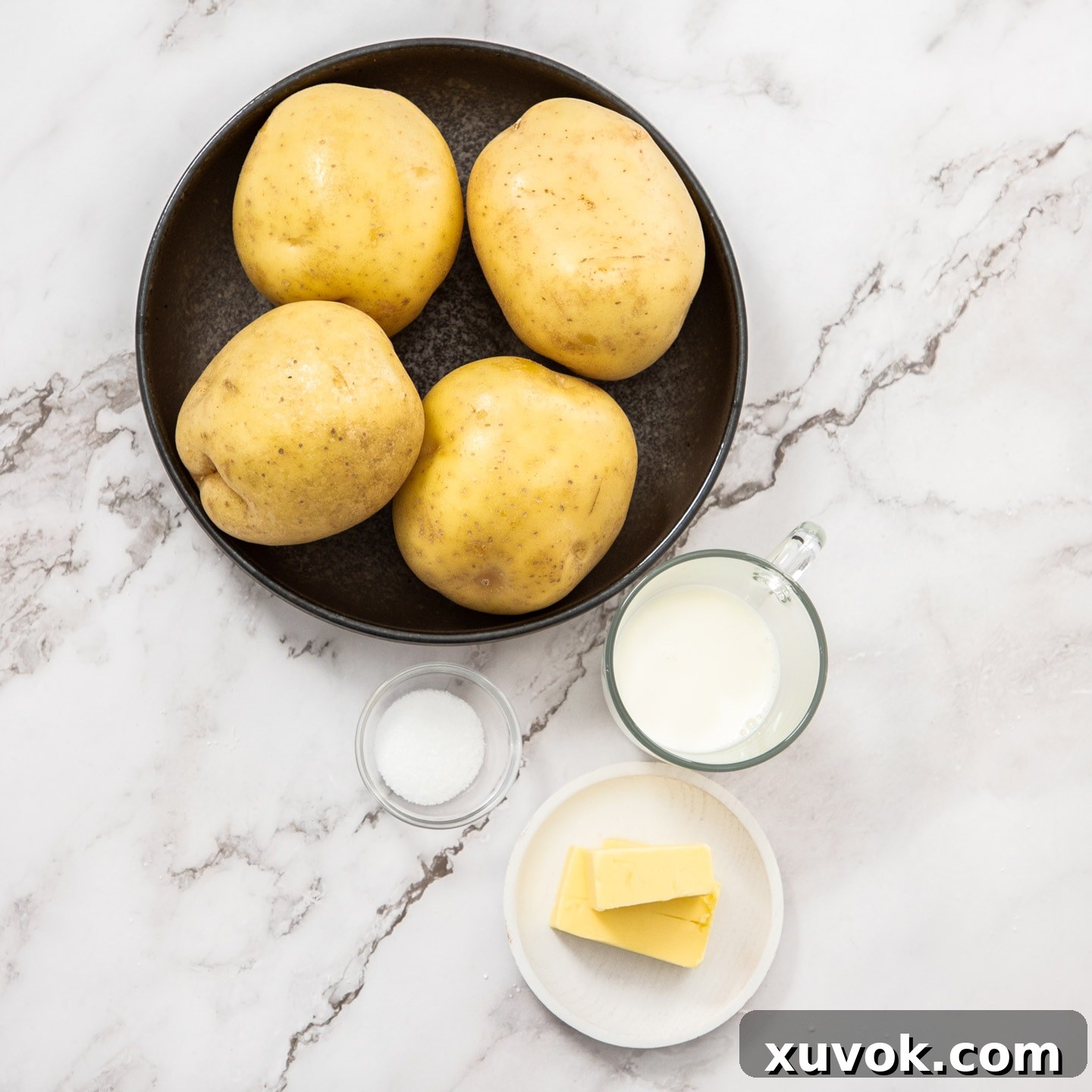
For precise quantities and detailed instructions, please refer to the comprehensive recipe card below.
Choosing the Best Potatoes for Mashing
The foundation of truly incredible mashed potatoes begins with selecting the right variety of potato. For that sought-after smooth and fluffy texture, prioritize floury or starchy potatoes over waxy ones. The reason is simple science: floury potatoes contain a higher starch content and a lower moisture content, which allows them to break down more easily and absorb dairy without becoming gummy. They cook quicker and result in that signature fluffy consistency we’re aiming for.
Here’s a guide to the best choices, wherever you are in the world:
- In Australia: My top recommendation is Royal Blue potatoes – they possess a wonderfully floury texture and a naturally buttery flavor. Nadine potatoes are also excellent and are frequently found as ‘white potatoes’ in major supermarkets. If available, Nicola or Sebago varieties will also yield fantastic results.
- In the US: Russet potatoes (also known as Idaho potatoes) are universally acclaimed as the king of mashing potatoes due to their high starch content. Yukon Gold Potatoes are another superb choice, offering a slightly creamier texture and a rich, buttery flavor, though they are a bit less starchy than Russets.
- In the UK: Keep an eye out for Maris Piper and King Edward potatoes. Both are renowned for their floury texture and ability to produce exceptionally fluffy and flavorful mash.
Understanding Floury vs. Waxy Potatoes: While you can technically make mash from almost any potato, the floury types consistently deliver the best outcome. It all comes down to their starch structure. Floury potatoes have starch molecules that separate easily when cooked, contributing to their light and airy nature. Waxy potatoes, conversely, have sturdier starch molecules that resist breaking down, leading to a denser, sometimes gummy result. A crucial tip to prevent your mash from becoming gluey, especially with starchy varieties, is to rinse your chopped potatoes thoroughly under cold running water before boiling. This removes excess surface starch.
Beyond Potatoes: Key Flavor Enhancers
While the potato is the star, the supporting cast of ingredients is equally vital in crafting truly memorable mashed potatoes. Our recipe focuses on simplicity and quality:
- Butter: Use good quality unsalted butter. It’s the primary flavor enhancer, adding unparalleled richness and a silky mouthfeel. For the best flavor, allow your butter to come to room temperature before adding it to the hot potatoes.
- Whole Milk: This provides moisture, creaminess, and a subtle dairy flavor. Warming the milk before adding it is a small but impactful step that keeps your mash hot and prevents it from stiffening prematurely. For an even richer, more luxurious result, you can substitute whole milk with an equal amount of heavy cream or half-and-half.
- Salt: Essential for seasoning and bringing out the natural flavors of the potato. We recommend using table salt for consistency, but you can also use fine sea salt. Always taste and adjust seasoning at the end.
Optional Additions for Extra Indulgence:
- Cream Cheese: For an unbelievably creamy texture and a subtle tang, a dollop of softened cream cheese can add a bucket load of richness and a unique flavor dimension.
- Garlic: Roast a head of garlic until soft and squeeze the cloves into your mash for a sweet, aromatic garlic flavor without the harshness of raw garlic.
- Herbs: Fresh chives, parsley, or thyme, finely chopped, can add a burst of freshness and color.
- Cheese: A sprinkle of freshly grated Parmesan, Gruyere, or sharp cheddar can transform your mash into a cheesy delight.
- Sour Cream or Crème Fraîche: These additions lend a lovely tang and extra creaminess, cutting through the richness beautifully.
Tools You’ll Need for Silky Smooth Mash
You don’t need a professional kitchen setup to create perfectly fluffy mashed potatoes. The essential tools are likely already in your kitchen, making this recipe incredibly accessible:
- A sturdy chopping board and a sharp knife for efficient potato preparation.
- A spacious colander for rinsing and draining your potatoes effectively.
- A large saucepan or a Dutch oven, ensuring ample space for the potatoes to boil evenly.
- And, most importantly, a handheld potato masher. While a potato ricer can be a fantastic tool for achieving a light, airy texture (and I do use one occasionally), it’s by no means essential. You can achieve wonderfully smooth mashed potatoes with just a good old-fashioned masher. Don’t feel obligated to invest in a ricer if you don’t already own one.
How to Make The Most Fluffy Mashed Potatoes (Step-by-Step)
Get ready to create the perfect mashed potatoes with these not-so-secret, easy-to-follow steps. This section provides the “how-to,” while the subsequent “Tips and Tricks” section explains the “why,” giving you a complete understanding for consistent success.
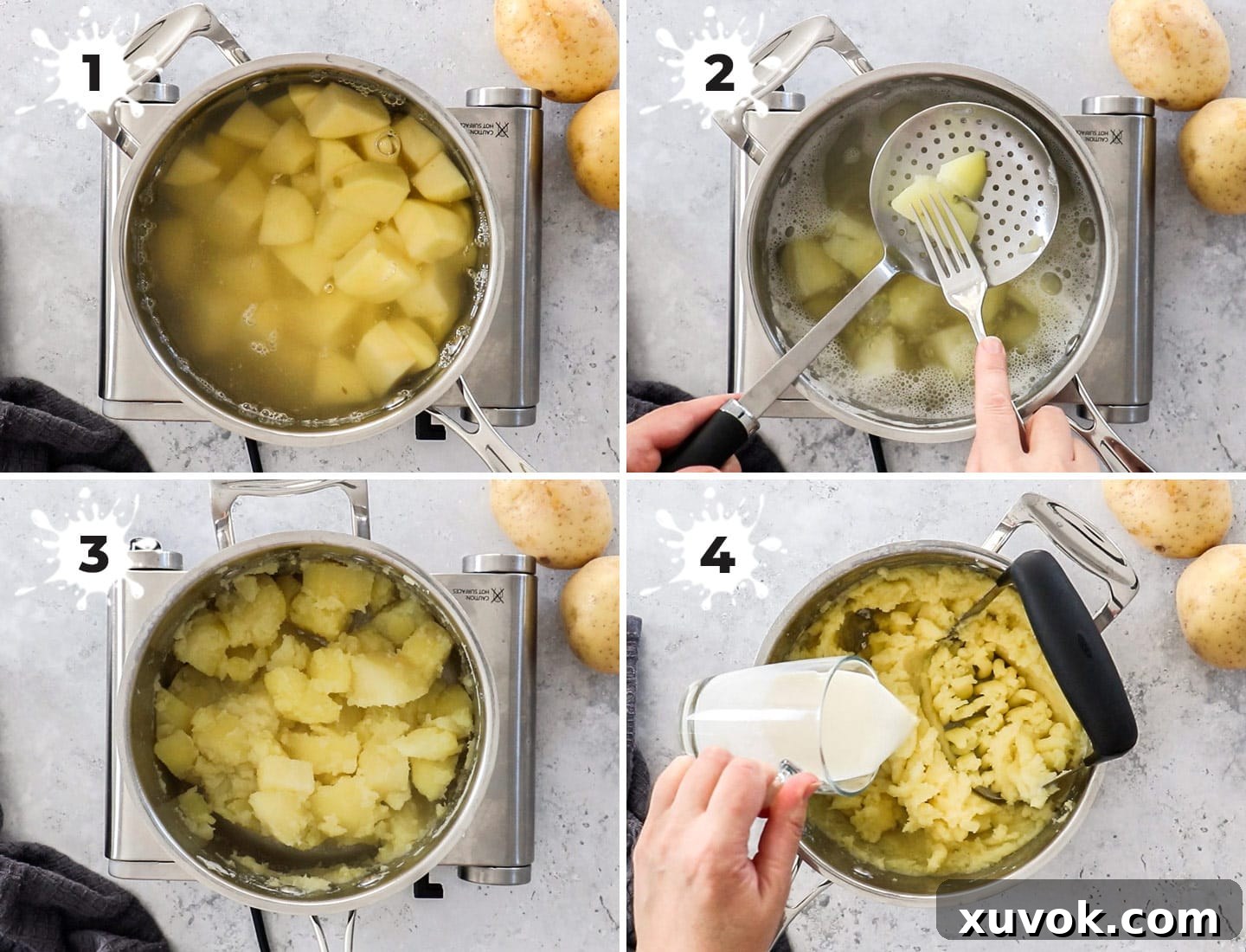
For exact measurements and detailed instructions, refer to the full recipe card below.
- Proper Potato Preparation is Key: To achieve that coveted smooth, lump-free mash, begin by meticulously peeling your chosen potatoes. Once peeled, cut them into uniformly sized pieces, roughly 1 ½ inches each. Consistency in size is crucial for even cooking. Immediately after cutting, place the potatoes in a colander and rinse them thoroughly under cold running water. This essential step washes away excess surface starch, which is the culprit behind gluey mashed potatoes.
- Cook from Cold for Evenness: Transfer the rinsed potato pieces into a large saucepan or Dutch oven. Cover them generously with cold water – never hot or boiling water. Starting with cold water allows the potatoes to heat up gradually and cook evenly from the outside to the center. Bring the water to a rolling boil over high heat, then reduce the heat slightly to maintain a gentle boil. Cook for approximately 15-18 minutes, or until the potatoes are extremely tender. They should practically fall apart when pierced with a fork, much softer than you’d cook them for roasting.
- Crucial Drain and Dry Step: Once cooked to perfection, drain the potatoes completely using your colander. Immediately return the drained potatoes to the empty saucepan. Place the saucepan back over medium heat for 30-45 seconds, gently shaking the pan constantly. This ‘drying out’ step allows any residual moisture to evaporate, ensuring your mash is fluffy and not watery or dense. This is a non-negotiable step for achieving truly fluffy mashed potatoes. Remove from heat promptly.
- Initial Gentle Mash: Using your trusty potato masher (or a potato ricer if preferred at this stage), begin mashing the dry potatoes for about a minute or so. The goal here is just to break them down roughly and release some steam, preparing them for the additions.
- Incorporate Butter and Warm Milk: Add the softened butter to the roughly mashed potatoes. Continue mashing, allowing the butter to melt and begin incorporating into the hot potatoes. Once mostly mixed, add half of the warmed whole milk (or cream/half-and-half) and mash it through. Repeat with the remaining milk. Continue mashing with steady, even strokes until the potatoes transform into a smooth, creamy, and gloriously fluffy consistency. Don’t be afraid to add a touch more warm milk if you desire an even looser, more luxurious consistency.
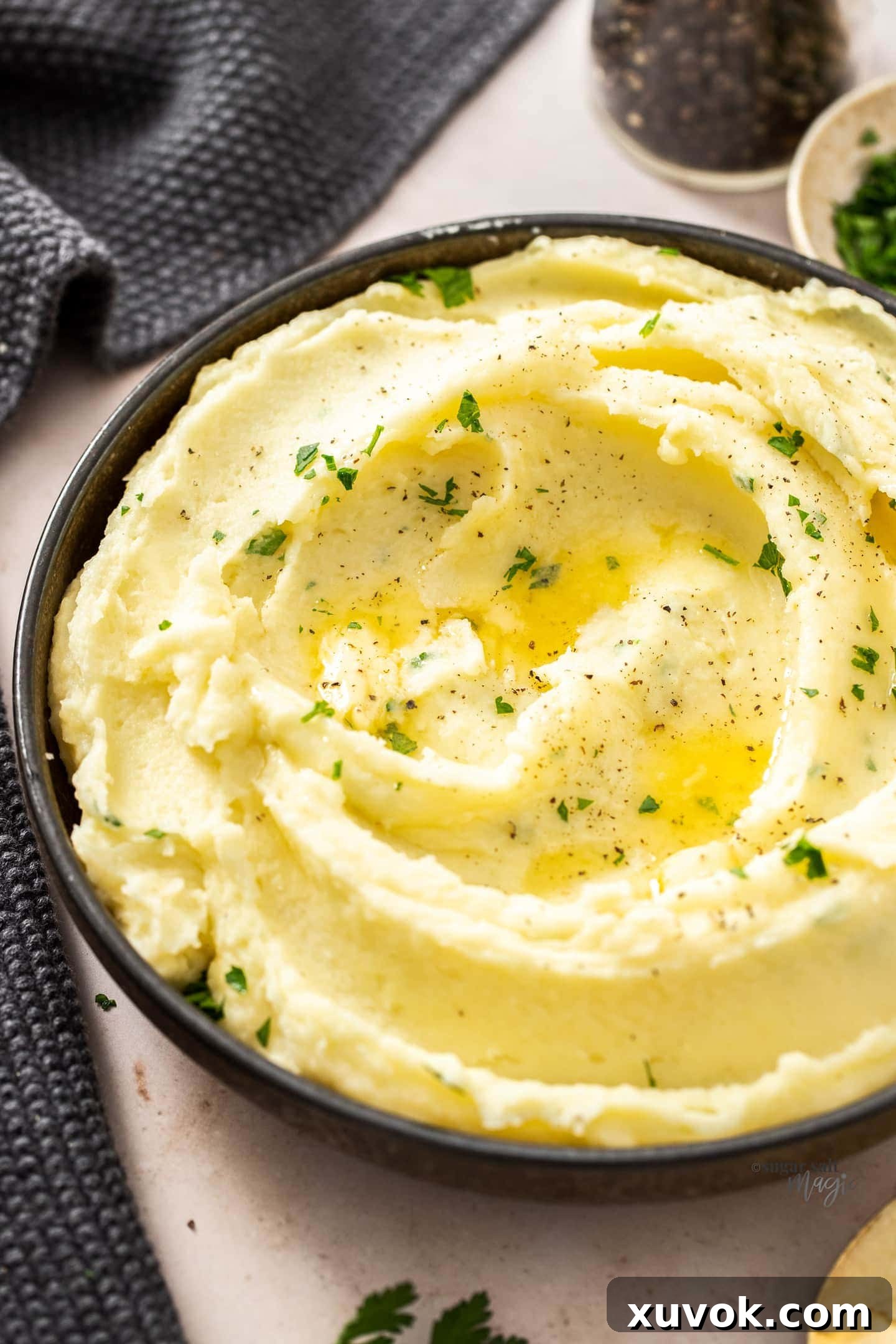
- Season and Serve Immediately: Finally, stir in the table salt with a wooden spoon. Taste and adjust the seasoning as needed; potatoes require a good amount of salt to shine. For an extra layer of flavor, consider a grind of black pepper or a sprinkle of fresh chopped chives. Your perfect fluffy mashed potatoes are now complete! Serve them immediately, whether you prefer them with an extra pat of melting butter or lovingly bathed in rich, savory gravy.
Expert Tips and Tricks for Ultimate Fluffiness
Mastering fluffy mashed potatoes is all about understanding a few key principles. These expert tips will help you avoid common pitfalls and ensure a perfect result every time:
- Uniform Potato Cutting: Always cut your potatoes into pieces of roughly the same size (approximately 1 ½ inches). This ensures they cook evenly, preventing some pieces from being undercooked while others turn mushy. Also, resist the urge to cut them too small; surprisingly, very small pieces can sometimes take longer to soften due to a chemical reaction that causes the starch to firm up initially.
- The Power of Rinsing: While some recipes suggest rinsing potatoes both before and after boiling, I find a single, thorough rinse before cooking is sufficient. This step is crucial for washing away excess surface starch, which, if left on, can contribute to a gluey or sticky texture in your final mash. It’s a simple step that makes a big difference in achieving smooth, creamy results.
- Start with Cold Water: Think of potatoes as the opposite of pasta. When boiling potatoes, always place them in a pot of cold water and then bring it to a boil. If you drop potatoes directly into already boiling water, the outside will cook and soften too quickly, while the center remains firm. Starting cold allows the heat to penetrate evenly, resulting in potatoes that are perfectly tender all the way through.
- Thoroughly Dry Them Out: This might be the most underestimated step in making truly fluffy mashed potatoes. After draining the cooked potatoes, return them to the hot, empty pot over medium heat for 30-45 seconds, shaking the pan frequently. This steams off any residual surface moisture. Excess water is the enemy of fluffy mash, leading to a soupy or sloppy consistency. Don’t skip this!
- Always Warm Your Milk (or Cream): Before adding your dairy, gently warm the milk (or cream/half-and-half) either in the microwave or on the stovetop. Adding cold milk straight from the fridge will rapidly cool down your hot potatoes, causing the starch to stiffen and making your mash dense and less receptive to further mashing. Warm milk helps maintain the temperature and the desired fluffy texture. If your mash does cool down during the process, you can gently rewarm it over very low heat on the stove, stirring continuously.
- Boiling for Speed: Boiling is generally the quickest and most common method for cooking potatoes for mashing. However, for a different depth of flavor, you can also bake your potatoes until very tender and then scoop out the flesh for mashing. Baked potatoes tend to be drier, which can sometimes result in an even fluffier mash, but it does add to the overall preparation time.
- Avoid Over-Mashing: While you want your mash smooth, overworking the potatoes can activate too much starch, leading to a gluey, unappetizing texture. Mash until just smooth and fluffy, then stop.
- Taste and Adjust Seasoning: Potatoes are notorious for needing a generous amount of salt. Always taste your mash before serving and adjust the salt content. A pinch of freshly ground black pepper can also enhance the flavor profile.
Potato Ricer vs. Masher vs. Food Processor: Which is Best?
The choice of tool for mashing your potatoes can significantly impact the final texture of your dish. Both the potato ricer and the traditional masher require a bit of effort, so neither offers a significant time-saving advantage over the other. The best tool depends on your desired outcome:
- The Potato Ricer: This specialized tool can produce an exceptionally light and airy mashed potato. While often praised for creating a “smoother” mash, in my experience, this isn’t always strictly true. The holes in ricers can vary in size, and while they efficiently separate the potato cells without overworking them (preventing glueiness), they don’t necessarily eliminate every tiny lump. What they excel at is creating a beautifully fluffy, almost ethereal consistency. However, ricers can be a bit cumbersome to wash up due to their design.
- The Traditional Potato Masher: A simple, classic potato masher might yield a slightly denser mash compared to a ricer, but I often find it easier to achieve a truly smooth result with consistent effort. You can work the potatoes more directly, ensuring all pieces are broken down. While it might not deliver the same light and airy quality as a ricer, it’s a reliable tool for creamy, satisfying mashed potatoes. For the best of both worlds, I sometimes start by ricings my potatoes for fluffiness, then finish with a masher to ensure ultimate smoothness.
- The Food Processor (A Big No!): Under no circumstances should you use a food processor to make mashed potatoes. The blades of a food processor rotate at high speeds, overworking the starch molecules in the potatoes. This intense friction and cellular damage will break down the starch too finely, releasing excessive amounts of sticky amylopectin and resulting in an utterly gluey, claggy, and unpleasant texture. In short: just don’t do it.
- Hand Mixer or Stand Mixer (Use with Caution): For an incredibly creamy (though not necessarily fluffy) mashed potato, you can use a hand mixer or stand mixer with the paddle attachment. The key is to beat them for only a very short time, just until smooth, and always on a low speed. Over-beating will lead to gluey potatoes, much like a food processor.
Delicious Ideas for Leftover Mashed Potatoes
Having leftover mashed potatoes is a delightful opportunity to create even more delicious dishes! Their versatility makes them perfect for a second life in a variety of comforting meals:
- Crispy Croquettes, Patties, or Fish Cakes: Leftover mash is the perfect binder and base for these savory treats. Simply mix with some cheese, herbs, cooked meat or fish, form into shapes, bread, and pan-fry or bake until golden brown and crispy. Try these flavorful Pork and Fennel Potato Croquettes.
- Traditional Bubble and Squeak: A classic British dish, leftover mashed potatoes are fried with chopped cabbage or other vegetables until browned and crispy on the outside. It’s an incredibly satisfying breakfast or side dish.
- Enrich Homemade Bread: Incorporate mashed potatoes into your bread dough for an incredibly soft, moist, and flavorful loaf. It adds a wonderful texture and helps keep the bread fresh longer.
- The Quintessential Topping for Pies: Mashed potatoes are the iconic, golden-brown topping for hearty shepherd’s pie (lamb) and cottage pie (beef), providing a comforting and delicious crust to savory meat fillings.
- Mashed Potato Bombs: Mix with cheese, bacon bits, and chives, roll into balls, and bake or deep-fry for an irresistible appetizer.
- Homemade Gnocchi: Transform your leftover mash into delicate, pillowy homemade gnocchi – a fantastic way to elevate a simple ingredient into an elegant Italian pasta.
- Cheesy Potato Casserole: Layer mashed potatoes with cheese, cream, and perhaps some cooked vegetables or protein, then bake until bubbly and golden.
- And for an exciting future recipe, I’m currently developing a method to turn them into crispy potato fries – stay tuned!
Frequently Asked Questions About Mashed Potatoes
Absolutely! Our homemade mashed potatoes, made with fresh potatoes, butter, milk, and salt, are naturally gluten-free. It’s important to note that some other mashed potato recipes might incorporate gluten-containing ingredients (like flour in a roux), and instant potato flakes can sometimes contain additives, so always check labels if you’re using pre-packaged products.
The “healthiness” of mashed potatoes can be subjective and depends on individual dietary needs and preferences. However, they are not inherently unhealthy when consumed as part of a balanced diet.
Potatoes themselves are a fantastic source of various vitamins and minerals, including a significant amount of folate, potassium, and vitamins B6 and C. They are naturally high in carbohydrates, which provide energy – not a negative unless you are specifically following a low-carb diet. Potatoes do have a high glycemic index (GI), which means they can cause a quicker rise in blood sugar, making them less suitable for individuals managing diabetes.
By adding butter, you introduce saturated fat and calories. While butter should be consumed in moderation, the amount in this recipe is distributed among 4-6 servings, making it a reasonable indulgence. You can opt for various margarine or butter substitutes if you prefer, but be mindful of their own nutritional profiles. Milk is a lower-fat option compared to heavy cream or half-and-half. While I wouldn’t recommend consuming mashed potatoes daily, they are perfectly fine as a comforting and nutritious component of a well-rounded diet.
Tips for a “Healthier” Mash: To lighten your mashed potatoes, consider using low-fat milk, reducing the butter slightly, or incorporating healthy additions like steamed cauliflower (mixed with potatoes) or plenty of fresh herbs for flavor without added fat.
Storage & Reheating Tips
Proper storage and reheating ensure your delicious mashed potatoes can be enjoyed long after they’re first made, reducing waste and providing convenient meal options.
Refrigerator Storage: Leftover mashed potatoes can be stored in an airtight container in the refrigerator for 2-3 days. To reheat, you’ll need to reintroduce some moisture and fat to restore their creamy texture. Place the cold mash in an oven-safe dish, add a splash of milk (or cream) and a pat of butter, then bake at 180°C / 350°F until heated through and creamy. Alternatively, you can reheat them gently in a saucepan over medium-low heat, stirring frequently and adding milk and butter as needed, until hot and smooth.
Freezing Mashed Potatoes: Yes, you can freeze mashed potatoes! For best results, allow the mash to cool completely. Use a small ice cream scoop or cup to measure out individual portions, then arrange them on a baking tray and freeze until solid. Once frozen, transfer the portions to a ziplock bag or an airtight freezer-safe container. They will keep well in the freezer for 2-3 months. A key factor in how well mashed potatoes freeze and reheat is their fat content: the more butter and milk or cream you’ve incorporated, the better they tend to hold their texture and flavor after thawing.
More Delicious Recipes You’ll Love
If you’re a potato enthusiast or simply looking for more fantastic side dishes to complement your meals, explore these other incredible recipes:
- Crispy Potato Fritters: A delightful way to use up leftover potatoes or enjoy them in a new form.
- How to Make Crunchy Roast Potatoes: The ultimate guide to achieving perfectly golden and crunchy roast potatoes.
- Garlic Butter Potatoes with Crispy Prosciutto: An indulgent side dish packed with flavor and texture.
- Roasted Garlic Parmesan Potatoes: Simple yet elegant, these potatoes are a flavor sensation.
- Simple Potato Salad: A classic, refreshing side perfect for picnics and barbecues.
- Potato and Bacon Tart: A savory tart that makes for a fantastic appetizer or light meal.
IF YOU TRY THIS fluffy mashed potatoes recipe, please take a moment to leave a rating and comment below. I love hearing from you, and it helps other readers too!
Never Miss a Recipe!
Get the latest recipes straight to your inbox!
Fluffy Mashed Potatoes
Rate
Pin
Ingredients
- 1.25 kg floury potatoes (e.g., Royal Blue, Nadine, Russet, Maris Piper) (approx. 2 ½ lb)
- ⅓ cup whole milk, warmed
- ¼ cup unsalted butter, softened
- 1 teaspoon table salt (or to taste)
For best results, always weigh ingredients where a weight is provided
Equipment
-
Chopping board, vegetable peeler and sharp knife
-
Large colander
-
Large saucepan or Dutch oven
-
Potato masher (or a potato ricer for extra airiness)
Instructions
-
Peel the potatoes and cut them into uniform pieces, approximately 1 ½ inches each.
-
Place the chopped potatoes in a colander and rinse thoroughly under cold running water to remove excess starch.
-
Transfer the rinsed potatoes to a large pot or Dutch oven, then cover them completely with cold water.
-
Bring the water to a rolling boil over high heat, then reduce heat and boil gently for 15-18 minutes. Cook until the potatoes are extremely tender and break apart easily when pressed with a fork. Cooking time may vary based on potato type and size.
-
Drain the potatoes completely through a colander. Return the drained potatoes to the empty pot and place over medium heat for 30-45 seconds, shaking frequently to dry them out and evaporate any excess moisture. Remove from heat.
-
Using a potato masher (or ricer), mash the potatoes roughly for about a minute to break them down.
-
Add the softened butter and continue mashing until it melts and begins to incorporate. Then, add half of the warmed milk and mash until combined. Repeat with the remaining half of the milk.
-
Continue mashing until the potatoes are smooth, creamy, and gloriously fluffy. Scrape the bottom and sides of the pan periodically and clean the masher as you go. Add a touch more warm milk if a looser consistency is desired.
-
Stir in the salt using a wooden spoon. Taste and adjust seasoning as necessary.
-
If the mashed potatoes have cooled too much, return the saucepan to low heat, stirring constantly with a wooden spoon until hot and fluffy again.
-
Serve your perfect fluffy mashed potatoes immediately, with extra butter or smothered in gravy.
-
Please take a moment to leave a ratingand comment below. Your feedback is greatly appreciated and helps other readers discover this recipe!
Notes
- For truly lump-free mashed potatoes, ensure that all the potato pieces, especially the largest ones, are cooked until they are extremely tender and crush easily with a fork.
- The type of potato is crucial for texture. Opt for floury varieties like Royal Blue, Nadine, Sebago, Nicola, Russet, Maris Piper, or King Edward for the best fluffy results.
- Always use warmed milk (or cream) to prevent cooling and stiffening of your mash. Cold dairy can dramatically affect the final texture.
- Enhance the flavor profile by adding finely ground black pepper, a pinch of garlic powder, or topping with fresh herbs such as chives or parsley after mashing.
EXPLORE MORE DELICIOUS SIDE DISH RECIPES!