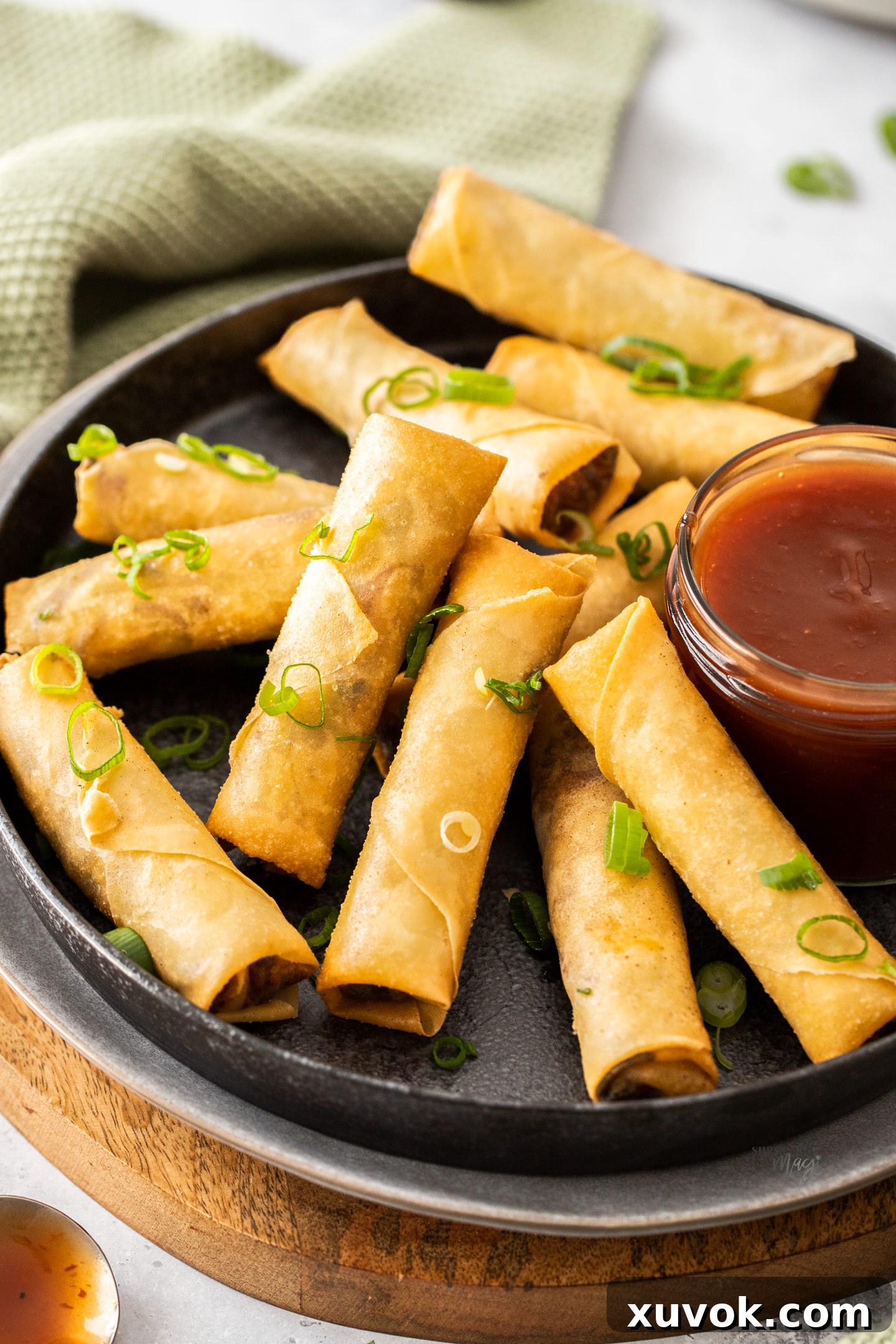
Irresistible Homemade Chinese Spring Rolls: Your Guide to Crispy Perfection
There’s nothing quite like the satisfying crunch of a perfectly fried Chinese spring roll. These beloved appetizers, with their savory fillings encased in shatteringly crisp wrappers, are a staple of Chinese cuisine and a favorite around the world. Forget greasy takeout; this comprehensive guide will empower you to create authentic, restaurant-quality **homemade Chinese spring rolls** in your own kitchen. Whether you’re a seasoned chef or a culinary novice, our easy-to-follow recipe will transform you into a spring roll pro in no time.
Why this homemade spring roll recipe is a must-try:
- Unforgettable Umami Flavor: Each bite delivers a rich, savory experience that is truly addictive.
- Superior Texture Contrast: Enjoy the delightful crispness of the exterior perfectly complementing the tender, flavorful filling.
- Surprisingly Simple to Make: Don’t be intimidated; these are remarkably easy to prepare, even for beginners.
- Endlessly Customizable: Adapt the filling to your taste and dietary preferences with our diverse ideas.
- The Ultimate Appetizer: Perfect for parties, game days, or simply as a delicious starter to any meal.
Our classic recipe features a delectable pork mince filling, enhanced with finely shredded cabbage, crisp carrots, fresh spring onions, and a harmonious blend of traditional Chinese sauces. However, the beauty of spring rolls lies in their versatility. You can effortlessly substitute the pork with chicken mince, succulent prawns, or even go entirely vegetarian with tofu or an extra helping of your favorite vegetables. The possibilities are boundless!
If you’re a fan of these crispy delights, you’ll also adore our Prawn Spring Rolls and the luxurious Golden Sesame Prawn Toast. Explore more Asian-inspired appetizers on our site!
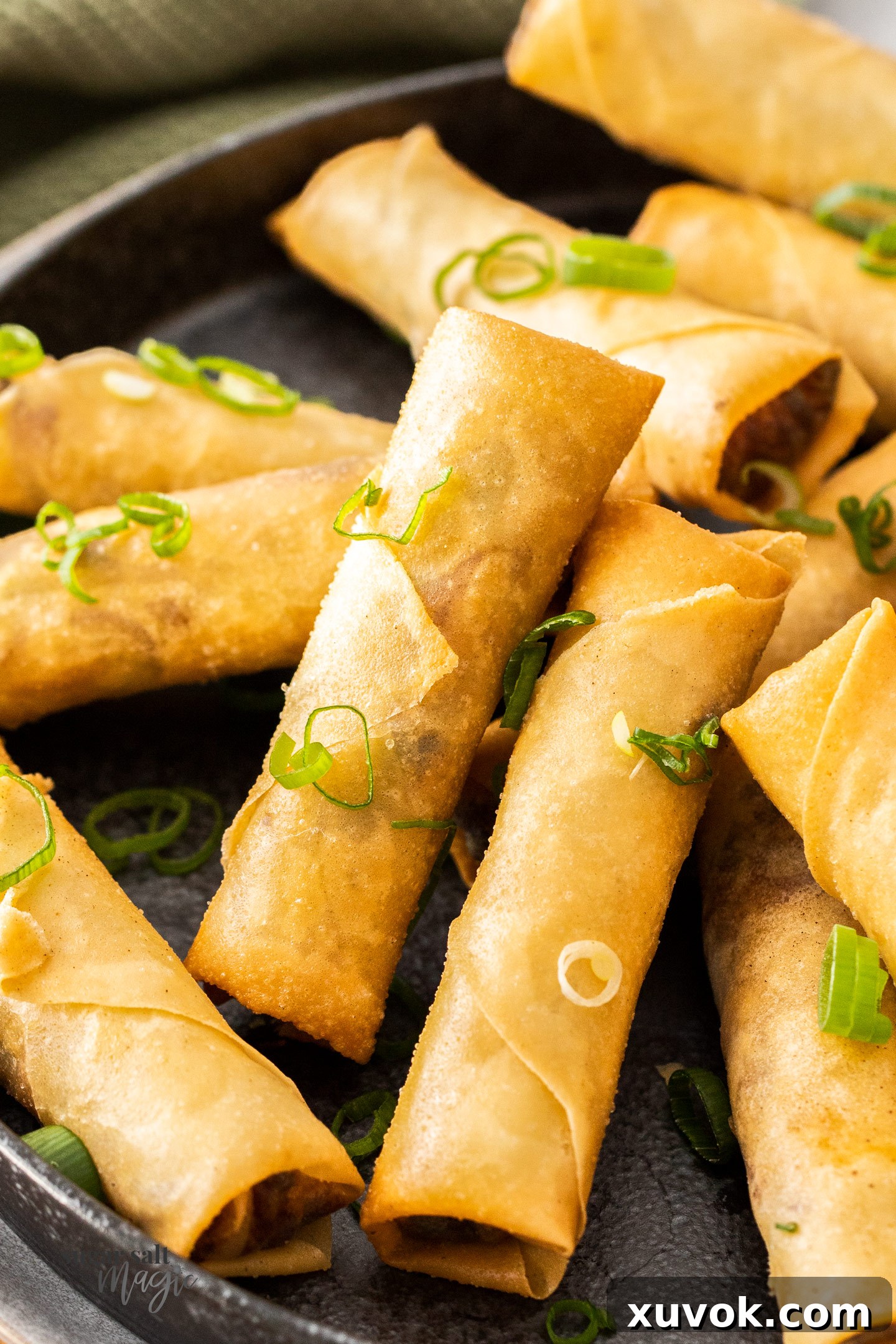
Table of Contents
- The Essence of Chinese Spring Rolls
- Essential Ingredients for Perfect Spring Rolls
- Filling Variations and Substitutions
- Step-by-Step Guide to Making Spring Rolls
- Preparing the Flavorful Filling
- Mastering the Art of Rolling Spring Rolls
- Cooking Your Crispy Spring Rolls to Perfection
- Elevate Your Spring Rolls with Dipping Sauces
- Spring Rolls vs. Egg Rolls vs. Summer Rolls: What’s the Difference?
- Frequently Asked Questions About Spring Rolls
- Yield, Storage, and Reheating Tips
- More Delicious Asian Appetizer Recipes You’ll Love
Never Miss a Recipe!
Get the latest, most delectable recipes delivered straight to your inbox. Join our community of food lovers today!
Sign up to our newsletter for exclusive recipes and cooking tips!
The Essence of Chinese Spring Rolls
Chinese spring rolls are a celebrated part of dim sum and Chinese cuisine, traditionally enjoyed during the Spring Festival, symbolizing new beginnings and prosperity. Their irresistible allure comes from the simple yet powerful combination of a crisp exterior and a tender, savory interior. While the concept remains consistent, the beauty of spring rolls lies in the endless possibilities for fillings. There isn’t a single “correct” recipe, allowing for creative exploration and personal touches. Our recipe provides a fantastic foundation, balancing texture and flavor with a mix of vibrant vegetables and savory pork mince, offering a truly satisfying experience.
Essential Ingredients for Perfect Spring Rolls
Crafting delicious homemade spring rolls begins with selecting quality ingredients. While flexibility is key, certain components form the backbone of a classic Chinese spring roll. Below, we detail the core ingredients used in this recipe, along with important considerations and tips for optimal flavor and texture.
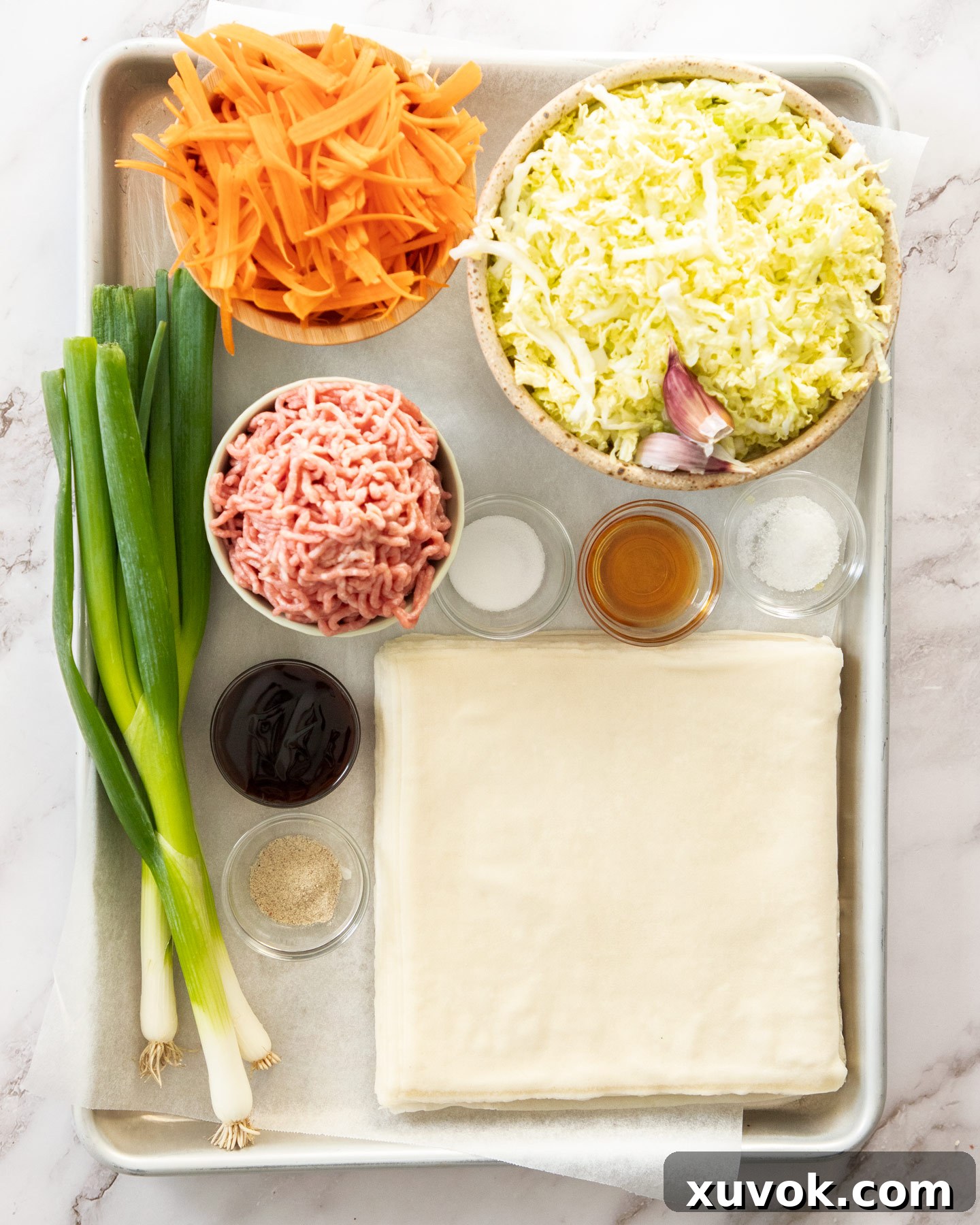
For precise quantities and detailed instructions, please refer to the recipe card below.
- Pork Mince (Ground Pork): This is a popular and traditional choice for spring rolls, offering a rich, savory base. We recommend using a good quality mince with a balanced fat content for maximum flavor and juiciness. However, its versatility means it can be easily swapped for other proteins.
- Fresh Vegetables: Our go-to combination includes crisp cabbage, vibrant carrots, and pungent spring onions (scallions). This trio provides a delightful textural contrast and a fresh, earthy flavor profile. The cabbage adds a subtle sweetness and bulk, carrots contribute a slight crunch and sweetness, while spring onions bring a mild oniony bite. Ensure all vegetables are finely shredded or julienned for even cooking and easy rolling.
- Aromatic Garlic: Freshly minced garlic is indispensable for adding a powerful, aromatic foundation to the filling, infusing it with depth and authentic Asian flavor.
- The Perfect Sauce Blend: The magic of the filling largely comes from its seasoning. Our sauce combines sesame oil for its nutty aroma, oyster sauce for its umami richness, a touch of sugar to balance the savory notes, white pepper for its distinctive warmth, and a pinch of salt to enhance all the flavors. This creates a harmonious and deeply savory profile.
- High-Quality Spring Roll Wrappers: The wrapper is critical for achieving that signature crispiness. We highly recommend TYJ spring roll pastry, widely available in most supermarkets or Asian grocery stores. These thin, delicate wrappers fry up incredibly crisp and golden. Ensure they are properly thawed if frozen, and kept covered with a damp cloth while rolling to prevent them from drying out and cracking.
Filling Variations and Substitutions
One of the most exciting aspects of making spring rolls at home is the ability to customize the filling to your heart’s content. Here are some fantastic ideas for protein and vegetable swaps:
- Protein Alternatives: Beyond pork, consider chicken mince or ground turkey for a leaner option. Shredded duck, leftover roast chicken, or even succulent prawns (shrimp) make excellent additions. For a delicious vegetarian or vegan spring roll, omit the meat entirely and increase the vegetable content, or add crumbled firm tofu, rehydrated shiitake mushrooms, or vermicelli rice noodles (pre-soaked and drained).
- Vegetable Enhancements: Broaden your vegetable horizons with additions like earthy bean sprouts for extra crunch, vibrant capsicum (bell pepper) for a touch of sweetness, or various types of mushrooms (especially umami-rich shiitake). Tinned bamboo shoots, julienned and thoroughly drained, also add a delightful texture and authentic flavor. Experiment with what’s in season for the freshest taste.
Step-by-Step Guide to Making Spring Rolls
Creating crispy, flavorful spring rolls from scratch is surprisingly straightforward and incredibly rewarding. Many find the deep-frying process for spring rolls less daunting than with other dishes, as their compact shape helps maintain even cooking. Follow these detailed steps for guaranteed success.
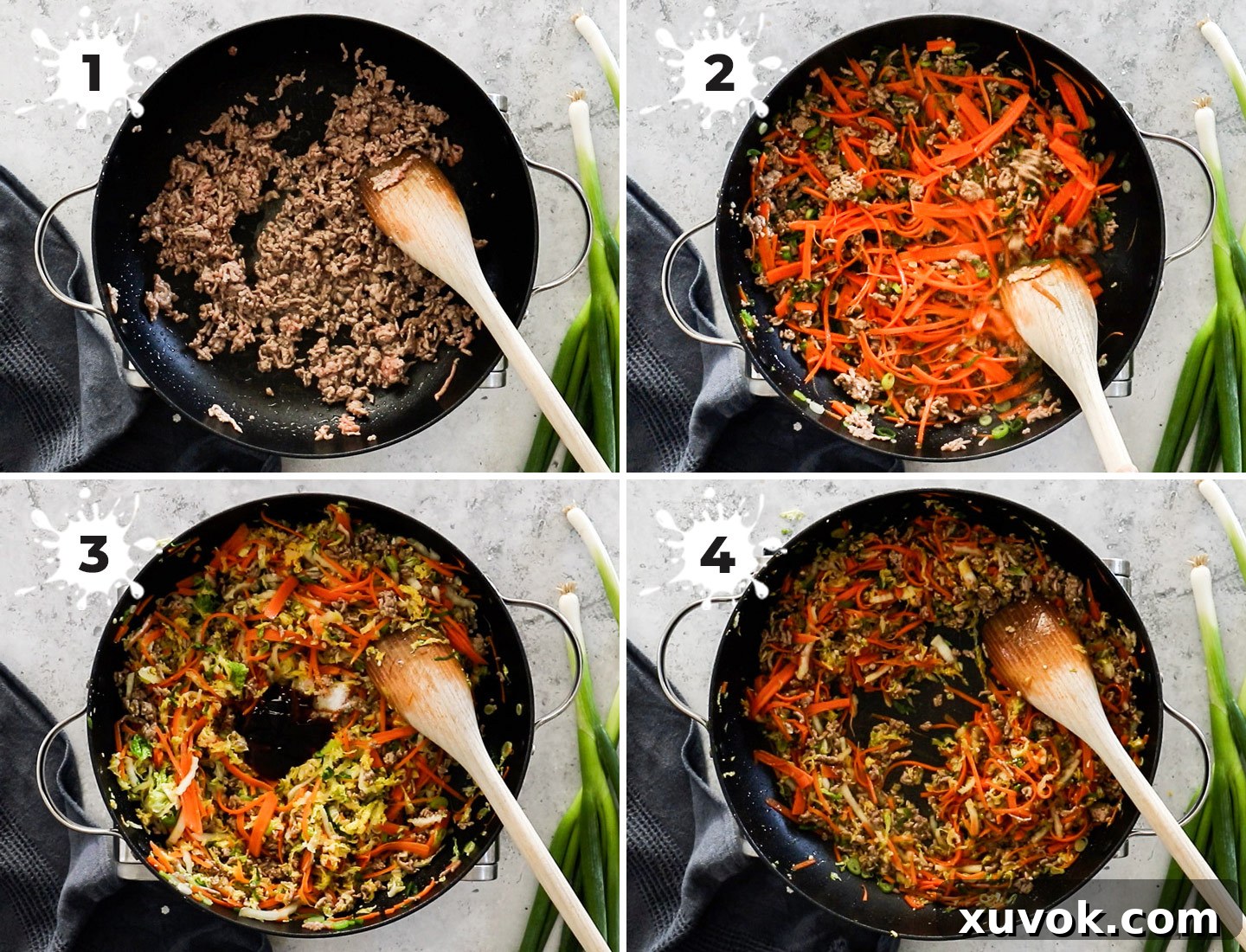
For precise quantities and detailed instructions, please refer to the recipe card below.
Preparing the Flavorful Filling
- Step 1: Mise en Place (Prep Everything First). The key to efficient cooking is to have all your ingredients prepped and ready before you start. Finely chop your cabbage, julienne your carrots, slice your spring onions, and mince your garlic. This ensures a smooth and quick cooking process for the filling.
- Step 2: Cook the Filling Components. Heat a small amount of oil in a large pan or wok over medium-high heat. Add the pork mince, breaking it up with a spoon, and stir-fry until it’s fully browned and cooked through. Ensure no pink remains. Next, add the harder vegetables first: introduce the julienned carrots and minced garlic, stir-frying for a couple of minutes until slightly softened. Then, add the shredded cabbage and spring onions, continuing to stir-fry until the cabbage wilts and softens. Finally, pour in your prepared sauce blend – sesame oil, oyster sauce, sugar, white pepper, and salt. Mix thoroughly, ensuring all ingredients are evenly coated. Continue to cook, stirring frequently, until any liquid released by the vegetables has mostly evaporated, leaving a relatively dry mixture. This prevents soggy spring rolls.
- Step 3: Cool Completely. This step is crucial! Transfer the cooked filling to a clean plate or shallow dish and spread it out. Allow it to cool completely to room temperature, or even chill it in the refrigerator. A cold filling is much easier to work with when wrapping and prevents the wrappers from becoming prematurely soft or tearing.
Mastering the Art of Rolling Spring Rolls
Wrapping spring rolls might seem intricate, but it’s a simple technique that becomes second nature after a few tries. Proper rolling ensures your spring rolls are sealed tightly, preventing the filling from escaping during frying and contributing to that desirable crispy texture.
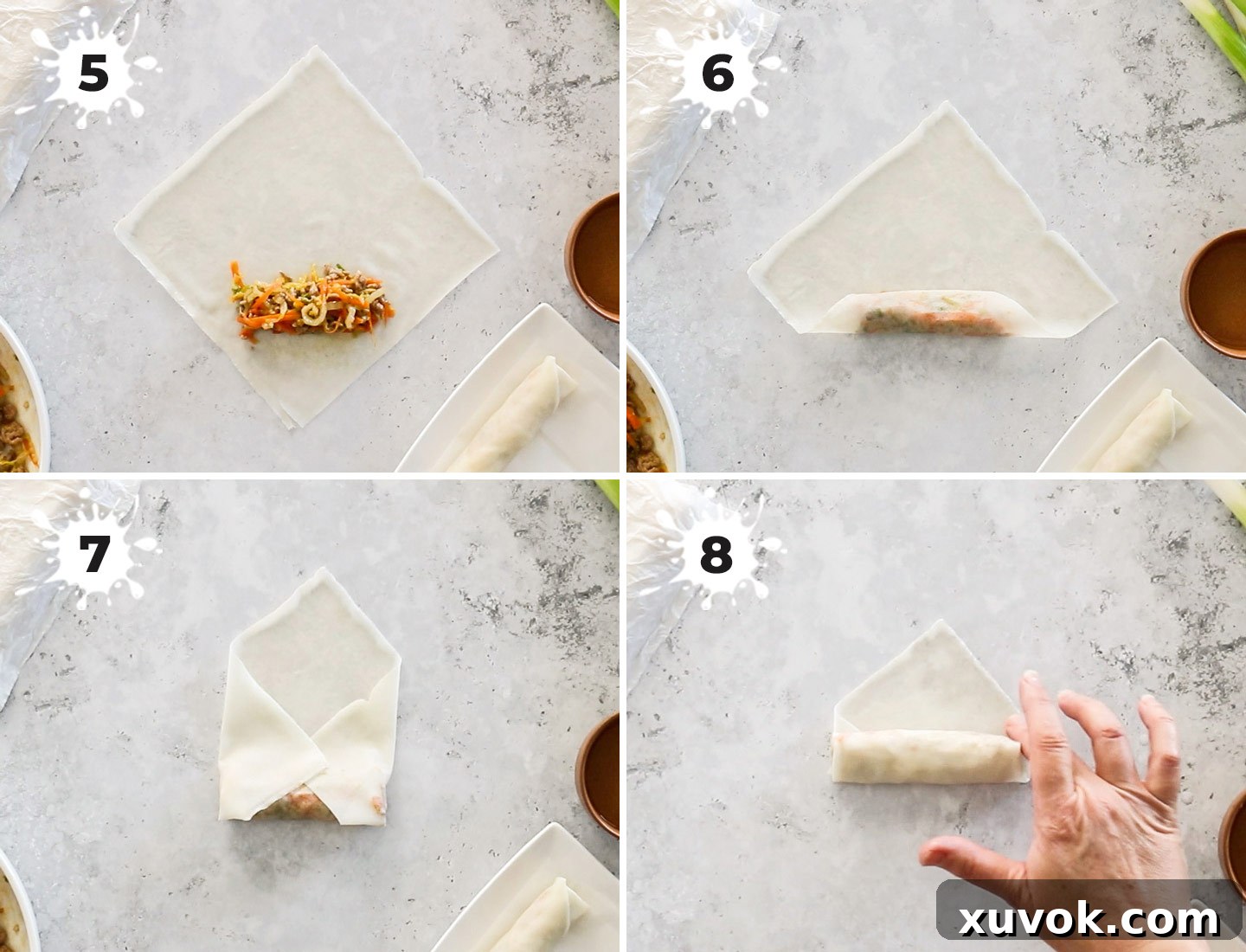
- Prepare Your Wrapper: Lay a single spring roll wrapper flat on a clean, dry surface, orienting it like a diamond with one corner pointing directly towards you. Keep the remaining wrappers covered with a damp cloth to prevent them from drying out and becoming brittle.
- Position the Filling: Place a heaped dessert spoonful of your cooled filling onto the wrapper, about 2-3 inches in from the corner closest to you. Don’t overfill, as this makes rolling difficult and can lead to bursting during frying.
- Initial Fold and Roll: Take the corner closest to you and fold it tightly over the filling, tucking it in snugly. Roll the wrapper away from you just once, ensuring the filling is compacted. Aim for tightness, but be careful not to roll so tightly that the delicate wrapper tears.
- Fold in the Sides: Now, fold in the left and right corners of the wrapper towards the center. This creates a neat, rectangular package. Your spring roll should now be roughly 10cm (4 inches) in length.
- Continue Rolling: Continue rolling the partially wrapped spring roll upwards, away from you, almost all the way to the top corner.
- Seal the Deal: Lightly moisten the remaining top corner with a little water using your finger. This acts as a natural glue.
- Final Roll and Seal: Complete the roll, pressing gently to seal the final flap securely. Place the finished spring roll seam-side down on a plate. Repeat this process with the remaining wrappers and filling, arranging the finished rolls in a single layer to prevent sticking.
Cooking Your Crispy Spring Rolls to Perfection
Deep frying is the classic method for achieving that signature golden, crisp exterior. Maintaining the correct oil temperature is crucial for preventing soggy or burnt spring rolls.
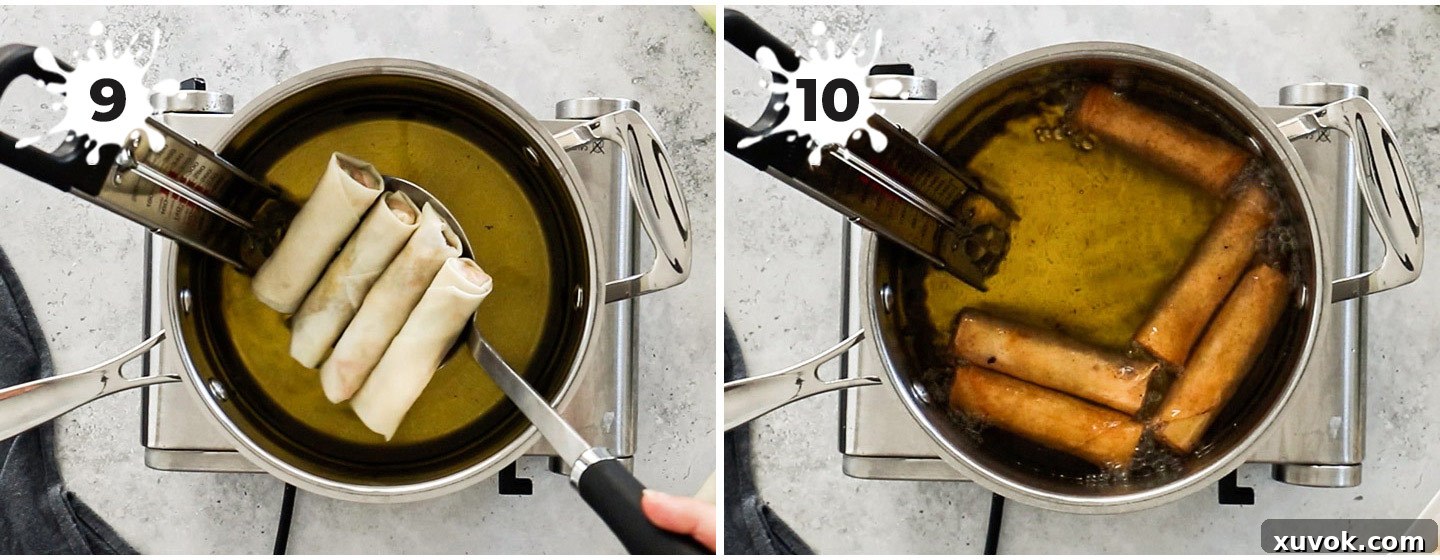
- Heat the Oil: Pour about 2 inches of vegetable oil into a large, heavy-bottomed saucepan or Dutch oven. Attach a deep-fry thermometer to the side of the pan. Heat the oil over medium-high heat until it reaches 180°C (350°F). It’s vital to maintain this temperature as consistently as possible throughout the frying process; adjust your heat as needed.
- Fry in Batches: Carefully lower 5-6 spring rolls into the hot oil. Avoid overcrowding the pan, as this will lower the oil temperature and result in greasy spring rolls. Fry for approximately 5-7 minutes, turning them frequently with a slotted spoon or tongs to ensure even browning and crispness on all sides. They should turn a beautiful golden-brown.
- Drain and Rest: Once golden and crisp, carefully remove the spring rolls from the oil using a slotted spoon and transfer them to a plate lined with paper towels to drain any excess oil. Fried spring rolls retain their heat exceptionally well, so you can comfortably cook the remaining batches without worrying about the first ones getting cold. Serve immediately for the best texture!
Alternative Cooking Methods: If you prefer not to deep-fry, spring rolls can also be made in an air fryer for a healthier, less oily option, or baked in an oven.
Air Fryer: Lightly brush the spring rolls with oil. Air fry at 190°C (375°F) for 12-15 minutes, flipping halfway, until golden and crispy.
Oven: Preheat oven to 200°C (400°F). Place spring rolls on a baking sheet, brush with a little oil, and bake for 20-25 minutes, flipping halfway, until golden and crisp.
Elevate Your Spring Rolls with Dipping Sauces
A delicious dipping sauce is the perfect accompaniment to crispy Chinese spring rolls, adding an extra layer of flavor and moisture. While they are delightful on their own, the right sauce can truly elevate the experience.
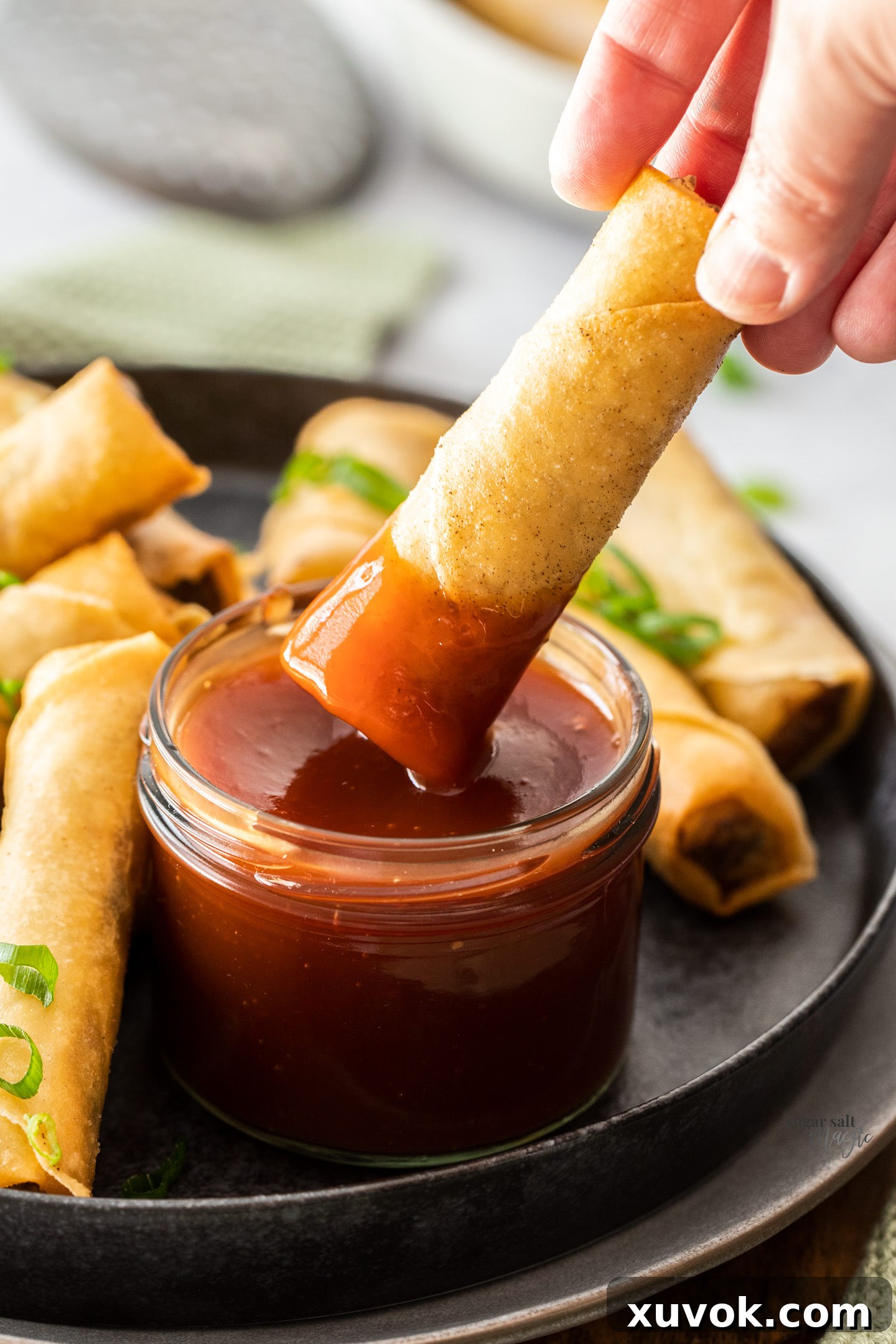
- Classic Sweet and Sour: The most common pairing, this tangy and sweet sauce is a takeout staple for a reason. Its vibrant flavor cuts through the richness of the fried roll beautifully. Our homemade Sweet and Sour Dipping Sauce is simply irresistible.
- Sweet Chili Sauce: For a touch of heat and a different kind of sweetness, sweet chili sauce is an excellent choice. It’s readily available and provides a wonderful balance of sweet and spicy.
- Tangy, Sweet, and Savory: If you’re looking for something with more complex layers, a Nam Jim Dressing offers a fantastic blend of sour, sweet, salty, and spicy notes, making it an amazing partner for fried spring rolls.
- Soy-Ginger Dip: A simple mix of soy sauce, rice vinegar, fresh ginger, and a hint of sugar creates a light, savory, and aromatic dip.
- Peanut Dipping Sauce: For a creamy, rich experience, a savory peanut sauce (often found with satay) can add a delightful depth of flavor.
Experiment with different sauces to find your perfect pairing!
Spring Rolls vs. Egg Rolls vs. Summer Rolls: What’s the Difference?
The world of Asian appetizers features a delightful array of rolled dishes, each with its unique characteristics. While often confused, spring rolls, egg rolls, and summer rolls are distinct culinary creations:
- Chinese Spring Rolls: These are the crispy, golden delights we’re focusing on. They are typically filled with a mix of finely shredded vegetables and often ground meat (like pork or chicken). The key identifier is their thin, delicate flour-based wrapper, which fries up incredibly light, crispy, and sometimes even a little flaky, with a relatively smooth surface. They are almost always deep-fried.
- Egg Rolls: An American-Chinese invention, egg rolls are a variation on the spring roll. Despite the name, they don’t necessarily contain egg in the filling, but their wrappers often include egg, which gives them a thicker, chewier texture and a more noticeably bubbly, craggy, and slightly darker golden-brown appearance when fried. The fillings tend to be heartier and coarser than spring rolls, often featuring cabbage and pork, and are also typically deep-fried.
- Summer Rolls (Vietnamese Fresh Spring Rolls / Gỏi Cuốn): These are entirely different as they are not fried at all! Hailing from Vietnam, summer rolls consist of fresh, uncooked ingredients like cooked shrimp or pork, vermicelli noodles, fresh herbs (mint, cilantro), and crisp lettuce, all tightly wrapped in translucent, rehydrated rice paper. They are served cold or at room temperature, making them a refreshing and healthy alternative to their fried counterparts.
Understanding these differences enhances your appreciation for the rich diversity of Asian culinary traditions.
Frequently Asked Questions About Spring Rolls
Traditional spring rolls are filled with a delicious combination of finely shredded vegetables such as cabbage, carrots, and bean sprouts, often paired with savory ground meat like pork or chicken. However, the beauty of spring rolls lies in their adaptability, allowing for easy customization to suit individual tastes and dietary preferences.
While often associated with Chinese cuisine, various forms of spring rolls exist across almost every Asian country. Each nation boasts its own unique take: Thailand has its ‘Paw Pia Tod,’ Vietnam features both its refreshing summer rolls (Gỏi Cuốn) and the fried ‘Chả Giò,’ and Japan has ‘Harumaki.’ While fillings and sauce flavors vary, they all share the common characteristic of being a delicious, often fried, tubular appetizer bursting with flavor.
Absolutely! This recipe can easily be adapted for a vegan diet. Simply omit the meat and replace it with additional vegetables, crumbled firm tofu, or 100g of rehydrated vermicelli noodles for a satisfying texture. Ensure you swap out the oyster sauce for a vegan-friendly alternative (such as mushroom-based vegetarian oyster sauce). Additionally, while most spring roll wrappers are inherently vegan (made from flour and water), it’s always wise to double-check the ingredient list on the packaging to confirm.
For deep frying, choose an oil with a high smoke point and a neutral flavor. Vegetable oil, canola oil, peanut oil, or sunflower oil are all excellent choices. These oils can reach the high temperatures needed to create a crispy exterior without imparting unwanted flavors to your spring rolls.
There are a few common reasons for non-crispy spring rolls. Firstly, ensure your oil is at the correct temperature (180°C/350°F). If the oil is not hot enough, the spring rolls will absorb too much oil and become greasy and soggy. Secondly, avoid overcrowding the pan, as this significantly drops the oil temperature. Fry in small batches to maintain consistent heat. Lastly, ensure the filling is cooled completely and relatively dry before wrapping, as excess moisture can lead to a less crispy result.
Yield, Storage, and Reheating Tips
This recipe yields approximately 17 delicious spring rolls, perfect for serving a small gathering or enjoying over a few days. Proper storage and reheating ensure your homemade spring rolls remain just as enjoyable as when they were first made.
- Refrigerator Storage: Leftover cooked spring rolls can be stored in an airtight container in the refrigerator for up to 4 days. To prevent them from becoming soggy, you might place a paper towel at the bottom of the container.
- Reheating for Crispness: To bring them back to their optimal crispiness, reheat spring rolls in a preheated oven at 180°C (350°F) for 10-15 minutes, or in an air fryer at 170°C (340°F) for 5-8 minutes, until they are hot through and the wrappers are once again shatteringly crisp. Avoid reheating in a microwave, as this will make them soft and chewy.
- Freezing Instructions: Spring rolls freeze exceptionally well, both cooked and uncooked.
- Cooked: Allow cooked spring rolls to cool completely, then arrange them in a single layer on a baking sheet and freeze until solid. Transfer to a freezer-safe bag or container, separating layers with parchment paper. Freeze for up to 2-3 months. Reheat directly from frozen in the oven or air fryer as described above, adding a few extra minutes to the cooking time.
- Uncooked: After rolling, arrange uncooked spring rolls in a single layer on a baking sheet lined with parchment paper and freeze until solid. Once frozen, transfer them to a freezer-safe bag or container, separating layers with parchment paper. Freeze for up to 1 month. You can deep-fry them directly from frozen, adding a few extra minutes to the frying time and ensuring the oil temperature remains consistent.
Having a stash of homemade spring rolls in the freezer is perfect for impromptu appetizers or quick snacks!
More Delicious Asian Appetizer Recipes You’ll Love
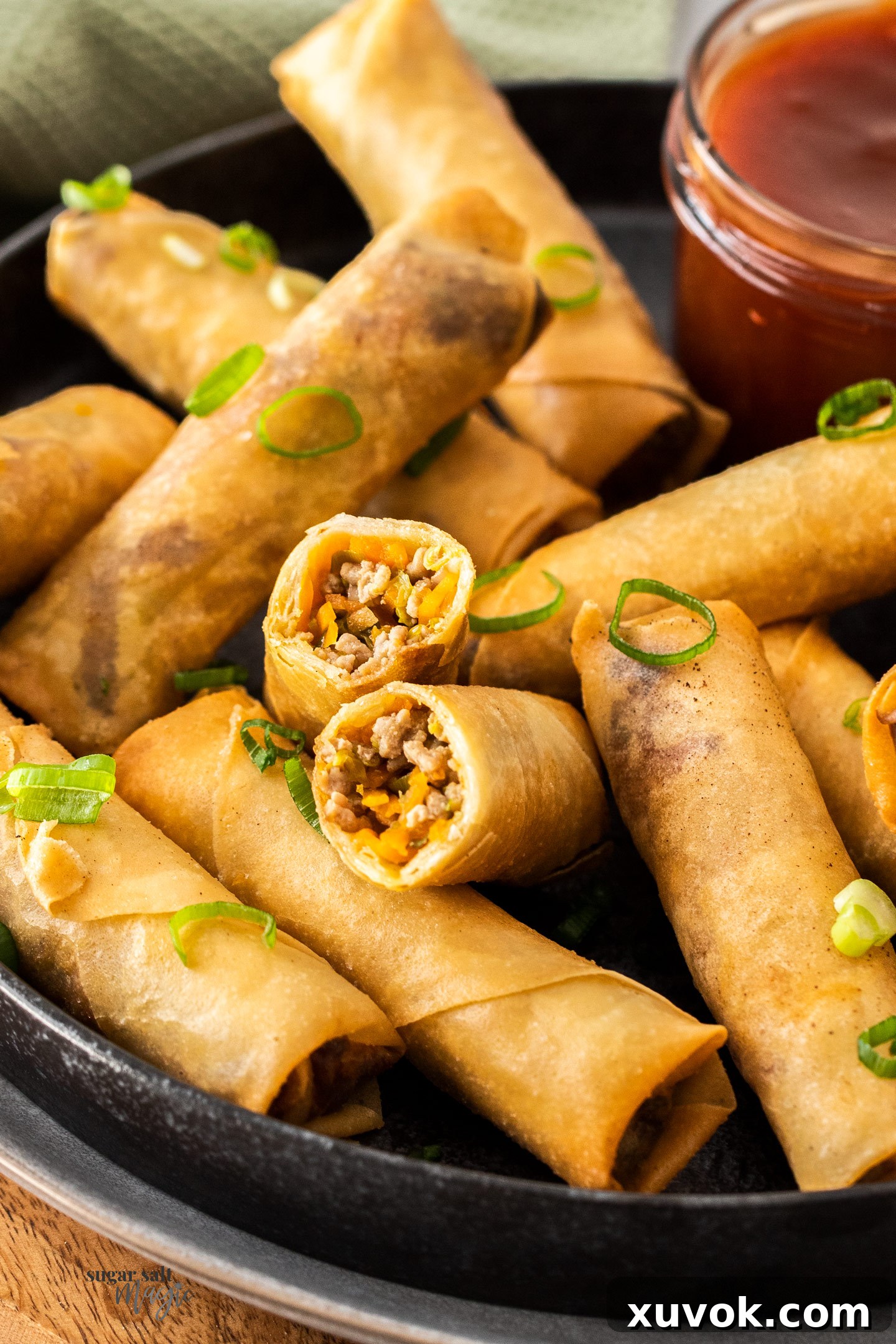
If you enjoyed making these Chinese spring rolls, be sure to explore our other fantastic Asian-inspired appetizers that are perfect for sharing or enjoying solo:
- Pork Gyoza (Japanese Dumplings): Savory and juicy, a delightful bite-sized treat.
- Bao Buns (Chinese Steamed Buns): Soft, fluffy, and endlessly versatile.
- Prawn Spring Rolls: A lighter, seafood-focused crispy favorite.
- Thai Fish Cakes: Aromatic and subtly spicy, great with a sweet chili dip.
- Crunchy Korean Fried Chicken Wings: The ultimate crispy, flavorful chicken experience.
- Sticky Honey Soy Chicken Wings: Sweet, savory, and incredibly addictive.
Did you try this Chinese spring rolls recipe?
Leaving a rating and comment below the recipe is so helpful!
Hungry for more? Subscribe to our newsletter for free recipes straight to your inbox. Also, follow along on Facebook, Pinterest and Instagram for daily inspiration.
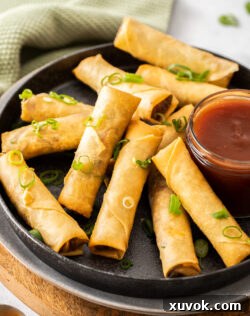
Classic Crispy Chinese Spring Rolls
17
spring rolls
30
minutes
20
minutes
10
minutes
1
hour
Rate
Pin
Ingredients
- 250 g pork mince (ground pork) (8.8oz, or approx. ½ lb – see notes)
- 1 ½ cups julienned carrot (130g / 4.6oz)
- 3 spring onions (green onion/scallions), finely chopped (⅔ cup chopped)
- 3 cloves garlic, minced
- 3 cups finely shredded Chinese cabbage (200g / 7oz)
- ¾ teaspoon salt
- ½ teaspoon sugar
- ½ teaspoon ground white pepper
- 2 ½ tablespoons oyster sauce
- 2 teaspoons sesame oil
- 18 spring roll wrappers
- vegetable oil for deep frying
For best results, always weigh ingredients where a weight is provided
Equipment
-
chopping board and sharp knife
-
Large skillet / frypan
-
Large saucepan & slotted spoon
-
Deep-fry thermometer
Instructions
-
If your spring roll wrappers are frozen, ensure they are thawed thoroughly before use. You can thaw them at room temperature (keeping them wrapped) for about an hour, or overnight in the refrigerator. This ensures they are pliable and won’t crack when rolling.
-
Heat 2 teaspoons of vegetable oil in a large skillet or frying pan over medium-high heat. Ensure the pan is hot before adding ingredients.
-
Add the pork mince to the hot skillet. Break it up with a spoon and stir-fry until it’s completely browned and cooked through, with no pink remaining.
-
Stir in the julienned carrots, chopped spring onions, and minced garlic. Continue to stir-fry for approximately 2 minutes, allowing the aromatics to become fragrant and the carrots to slightly soften.
-
Add the finely shredded Chinese cabbage to the pan. Cook for a further 2 minutes, stirring frequently, until the cabbage begins to wilt and soften.
-
Finally, incorporate the seasoning: add the salt, sugar, ground white pepper, oyster sauce, and sesame oil. Stir vigorously to ensure all ingredients are thoroughly coated with the sauce. Continue cooking for another minute or so, or until all visible liquid in the pan has evaporated. It’s crucial for the filling to be relatively dry to ensure crispy spring rolls. If you notice any liquid, continue frying to evaporate it until the mixture looks mostly dry.
-
Transfer the cooked pork and vegetable mixture to a clean, shallow dish and spread it out evenly. Allow it to cool completely to room temperature, or even chill it in the refrigerator. This step is vital for easy handling and preventing the wrappers from tearing.
-
To begin rolling, carefully separate one spring roll wrapper from the stack and lay it flat on your work surface, with one corner pointing towards you (like a diamond). Keep the remaining wrappers covered with a damp paper towel or clean kitchen towel to prevent them from drying out.
-
Place a heaped dessert spoon of the cooled filling onto the wrapper, about 2 inches in from the corner closest to you. Fold the bottom corner over the filling, tucking it in snugly. Then, roll the wrapper once away from you, creating a tight initial cylinder around the filling.
-
Fold in the left and right side corners towards the center, creating an open envelope shape. Then, continue rolling the spring roll almost all the way up, leaving the top corner exposed. Dab a small amount of water over this top edge and corner with your finger – this will act as a natural sealant. Finally, roll the spring roll completely, pressing gently to seal the seam securely underneath. If your seam isn’t sticking well, a paste made from a little flour or cornflour mixed with water can be used as a stronger “glue.” Repeat for all remaining filling and wrappers.
-
For frying, pour about 2 inches of vegetable oil into a large, heavy-bottomed saucepan or Dutch oven. Attach a deep-fry thermometer to the side. Heat the oil over medium-high heat until it reaches 180°C (350°F). Strive to maintain this temperature throughout the frying process, adjusting the heat as necessary to prevent the oil from getting too hot or too cold.
-
Carefully place 5-6 spring rolls into the hot oil, ensuring not to overcrowd the pan, which can lower the oil temperature. Fry them for about 6-8 minutes, turning frequently with a slotted spoon or tongs, until they are beautifully golden brown and shatteringly crisp on all sides.
-
Once cooked, transfer the spring rolls using a slotted spoon to a plate lined with paper towels to drain any excess oil. Allow them to rest and drain while you continue frying the remaining batches. Serve these homemade Chinese spring rolls immediately while they are hot and at their crispiest!
-
Serve your freshly fried Chinese spring rolls with your favorite dipping sauce, such as sweet chili sauce or classic sweet and sour sauce. Enjoy!
-
Please take a moment to leave a comment & rating below after trying this recipe. Your feedback is greatly appreciated and incredibly helpful to other home cooks!
Notes
- Tablespoons: This recipe uses an Australian standard 20ml tablespoon (equivalent to 4 teaspoons). Please check the volume of your measuring spoons if you are in a different region, as standard tablespoons can vary (e.g., US standard is 15ml).
- Pork Mince: While the recipe calls for 250g, approximately 8oz or ½ lb will work perfectly fine if that’s more convenient for your measurements. Feel free to swap pork mince for other ground meats like chicken or turkey, or even cooked and shredded chicken or prawns.
- Nutritional Values: The provided nutritional values are approximate, calculated using an online calculator based on each individual ingredient. We’ve accounted for oil absorption by measuring the quantity of oil before and after cooking. Please note that if your frying oil isn’t hot enough, the spring rolls may absorb more oil, which can affect the final nutritional content. The specific brands of ingredients you use may also cause variations.
More Information
The links embedded throughout this post will take you to relevant sections or external resources for further reading. You can scroll back up to the main article body for more details, or return to this recipe card for quick reference.
EXPLORE MORE APPETIZER RECIPES!
191
kcal
Marie Roffey
Appetizer
Chinese
Have you tried this recipe?
Don’t forget to leave a rating and comment below and let me know how it was! I love hearing from you. Nutrition information is approximate and derived from an online calculator. The brands you use may cause variations.
Calories from Fat 81