Irresistible Homemade Blueberry Danish Braid with Crunchy Streusel
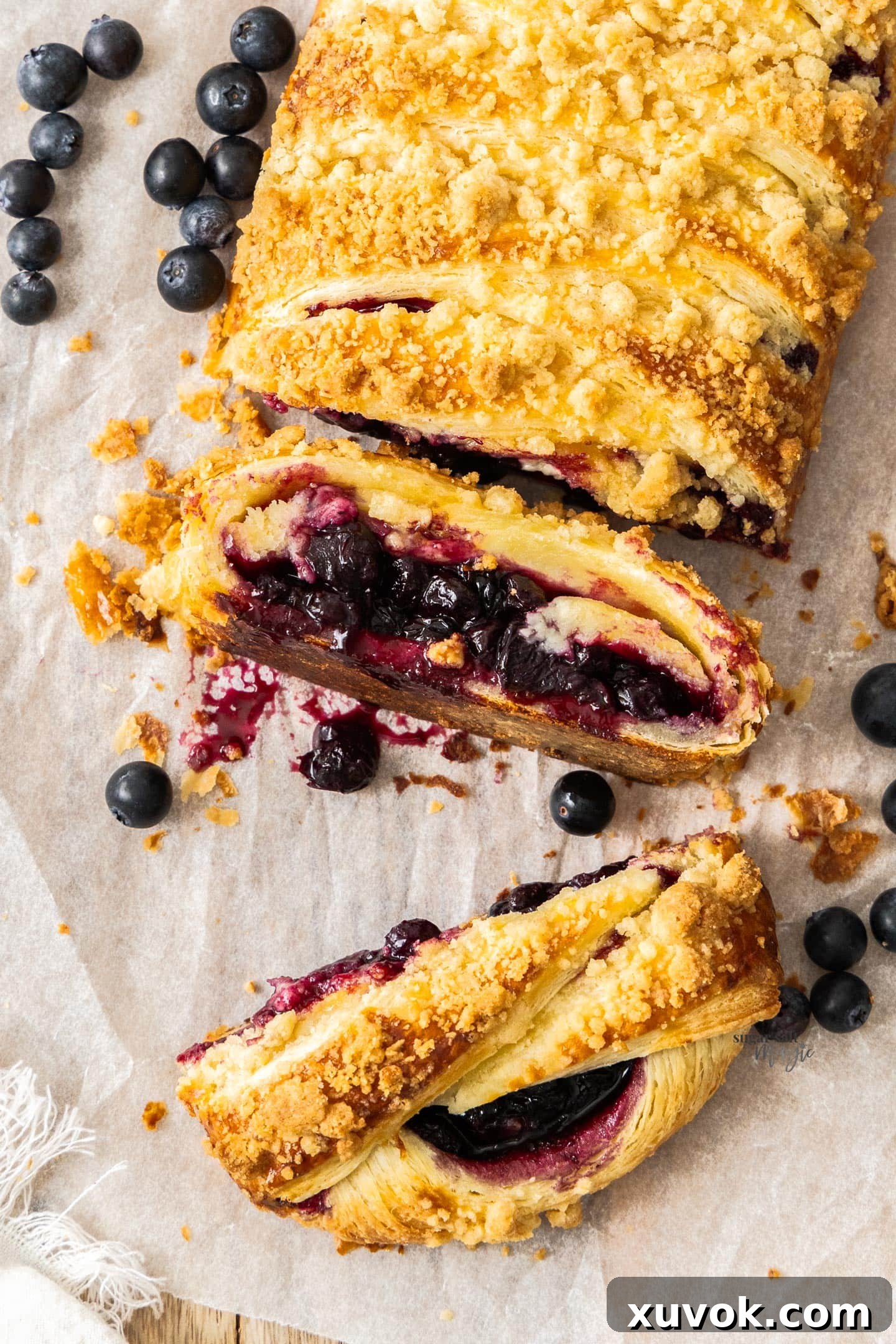
Prepare to be enchanted by this utterly irresistible **Blueberry Danish Braid**! Imagine delicate, buttery, and spectacularly flaky homemade Danish pastry, generously filled with a vibrant, sweet, and tangy blueberry compote. To elevate this breakfast or brunch masterpiece even further, it’s crowned with a delectable, crunchy streusel topping that adds an incredible textural contrast. Every bite is a symphony of flavors and textures, making this a truly unforgettable treat.
Creating this stunning Danish pastry is a rewarding weekend project. While it does involve a few resting periods for the dough, the actual hands-on effort is surprisingly minimal. The anticipation of those perfectly laminated layers emerging from your oven makes every moment worthwhile. For those days when time is of the essence, a high-quality store-bought puff pastry can be a fantastic shortcut, offering a different, yet still delightful, crispy texture.
The star of the show, beyond the pastry itself, is the blueberry filling. This divine compote requires just four simple ingredients and comes together with remarkable ease. And let’s not forget the streusel! This crunchy, sweet topping adds that extra special twist, transforming a wonderful Danish into an extraordinary one. The harmonious blend of soft, fruity, and crisp elements ensures that this Blueberry Danish Braid will quickly become a cherished recipe in your baking repertoire.
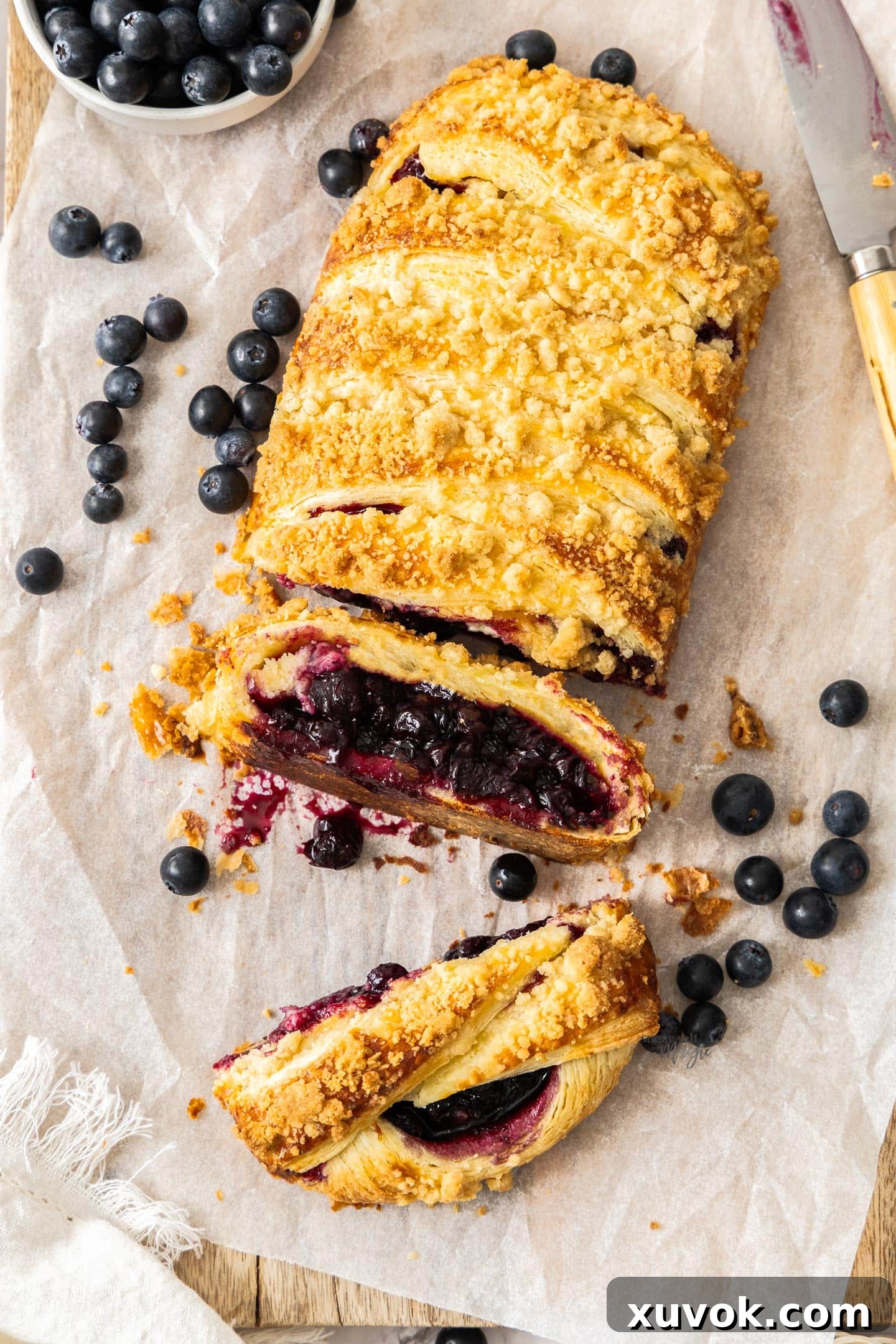
Table of Contents
- Why You’ll Love This Blueberry Danish Braid
- Essential Ingredients for Your Blueberry Danish
- The Art of Making Homemade Blueberry Danish
- Pro Tips for a Perfect Danish
- Storage and Make-Ahead Options
- Frequently Asked Questions
- More Recipes You’ll Love
Never Miss a Recipe!
Get the latest, most delicious recipes straight to your inbox and elevate your baking!
Why You’ll Love This Blueberry Danish Braid
This isn’t just any pastry; it’s a culinary journey that rewards you with something truly spectacular. Here’s why this **homemade Blueberry Danish Braid** deserves a spot in your heart and kitchen:
- **Unmatched Flakiness:** The homemade Danish pastry dough is meticulously crafted to produce hundreds of thin, buttery layers that practically melt in your mouth. This ethereal texture is something store-bought pastries can rarely replicate.
- **Vibrant Blueberry Filling:** A simple yet intensely flavorful blueberry compote provides a burst of sweet and tangy goodness. Whether you use fresh summer blueberries or convenient frozen ones, the result is consistently delicious.
- **Crunchy Streusel Topping:** The addition of a sweet, crumbly streusel topping provides a delightful textural contrast to the soft pastry and fruity filling, making each bite even more exciting.
- **Rewarding Baking Project:** While it requires some patience due to resting times, the process of creating Danish pastry from scratch is incredibly satisfying. It’s a perfect activity for a leisurely weekend.
- **Impressive Presentation:** The elegant braided shape makes this Danish a showstopper, ideal for special breakfasts, brunches, or even as a sophisticated dessert.
- **Versatile and Customizable:** Once you master the Danish dough, you can experiment with various fillings and toppings, opening up a world of possibilities for future baking adventures.
Essential Ingredients for Your Blueberry Danish
Jump directly to the full recipe card for precise measurements and detailed instructions.
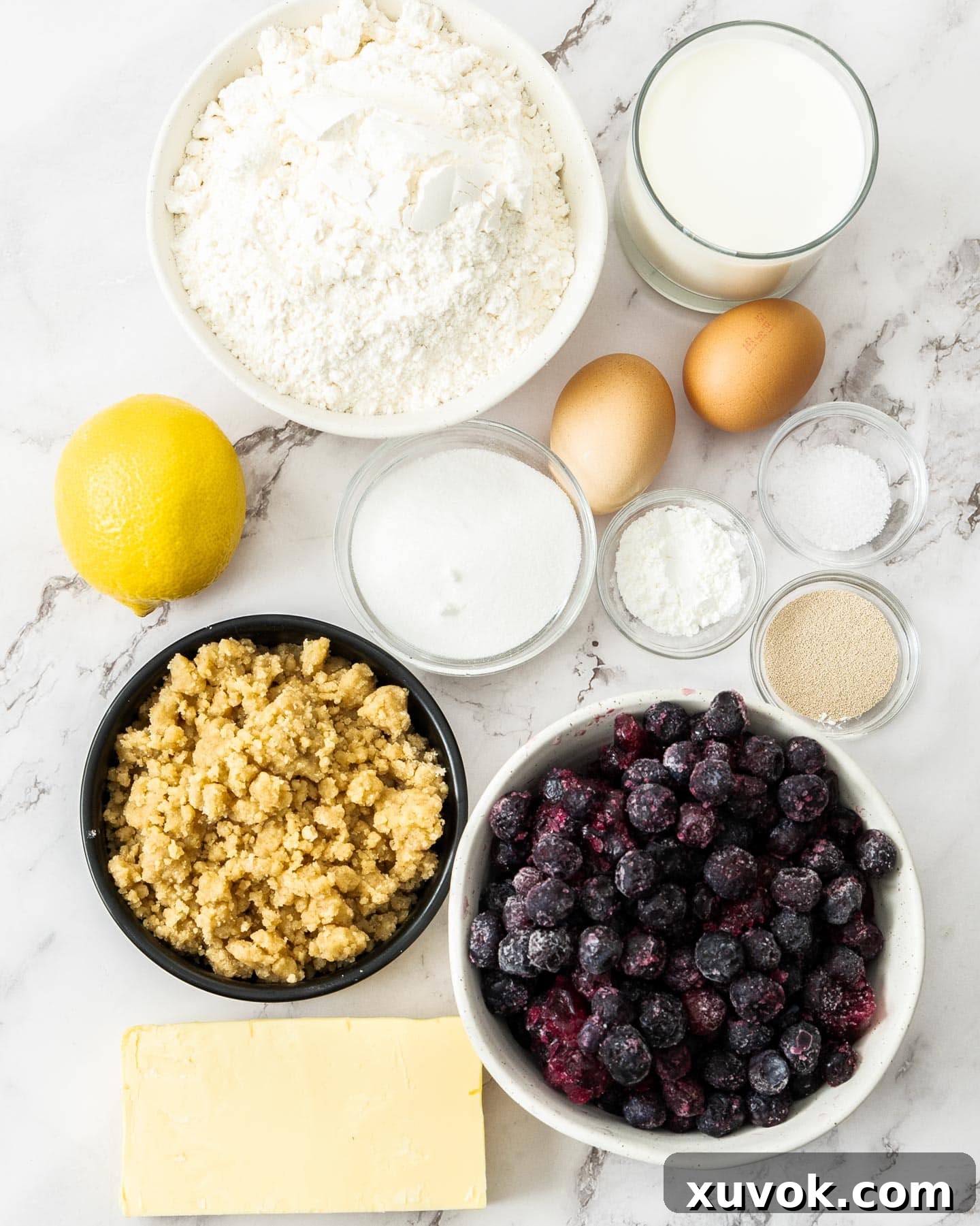
- Milk: For the richest and most tender Danish pastry, whole milk is highly recommended. Its fat content contributes significantly to both the texture and flavor.
- Yeast: This recipe is versatile and works beautifully with both instant yeast and active dry yeast. If using active dry yeast, remember to activate it first by blooming it in warm milk. This crucial step ensures your dough rises beautifully.
- Flour: Standard plain flour, also known as all-purpose flour, is perfect for the Danish pastry. Its balanced protein content allows for the necessary elasticity and structure without making the dough too tough.
- Sugar: You’ll need white granulated sugar (or caster sugar) for both the pastry dough and the luscious blueberry filling. It provides sweetness and aids in yeast activation and browning.
- Eggs: Large eggs are used to enrich the pastry dough, adding moisture, flavor, and contributing to a beautiful golden color when baked. An egg wash also ensures a shiny, appealing crust.
- Butter: Unsalted butter is key for the Danish pastry, allowing you to control the overall saltiness of your bake. It’s the secret to those incredible flaky layers, so ensure it’s kept very cold.
- Blueberries: Feel free to use either fresh or frozen blueberries, or a combination of both, for the filling. If opting for frozen berries, there’s no need to thaw them beforehand, making this recipe incredibly convenient year-round.
- Cornflour / Cornstarch: Referred to as cornflour in some regions and cornstarch in others, this fine powder is essential for thickening the blueberry filling. It gives the compote a perfect jam-like consistency.
- Lemon: Both the zest and juice of an unwaxed lemon are vital for adding a bright, tangy counterpoint to the sweet blueberries. The lemon truly makes the berry flavor pop.
- Streusel Topping: The streusel topping is a simple yet impactful addition, providing a delightful crunch and extra sweetness. While highly recommended for its texture, if you’re short on time, a sprinkle of demerara sugar (or turbinado sugar) over the pastry before baking will also yield a lovely caramelized crunch.
This Danish pastry dough is a cherished adaptation of my original **easy Danish dough recipe**. This enhanced version boasts even more layers, yet remains remarkably straightforward to prepare. I’ve successfully used this versatile dough for classic **Spandauer** (the quintessential Danish pastry) and, of course, for this magnificent **Blueberry Danish Braid**.
If the idea of crafting Danish pastry from scratch feels daunting, or if you simply don’t have the necessary resting time, a good quality store-bought puff pastry can be a convenient alternative. While it will result in a slightly different, crisper texture compared to the traditional Danish, it still yields a wonderfully delicious and impressive pastry.
The Art of Making Homemade Blueberry Danish
Creating this **Blueberry Danish Braid** is a truly rewarding experience, transforming simple ingredients into a masterpiece of texture and flavor. While the Danish dough requires significant resting time, this also makes it an excellent make-ahead component. You can even prepare the dough well in advance and freeze it for up to three months, making future baking sessions a breeze. Despite the resting periods, the hands-on work involved is surprisingly minimal—it’s mostly a matter of mixing, rolling, and folding a few times.
The delightful blueberry filling for this Danish braid is incredibly quick and easy to prepare, and it too can be made ahead of time. I’ve included an abundance of step-by-step photos throughout this guide, not because the recipe is overly complicated, but because visual aids are invaluable for mastering technical baking processes like Danish pastry. Seeing each stage helps demystify the technique far better than just reading the instructions alone.
You can jump straight to the recipe card for a concise overview of the instructions.
1. Prepare and Bloom the Yeast
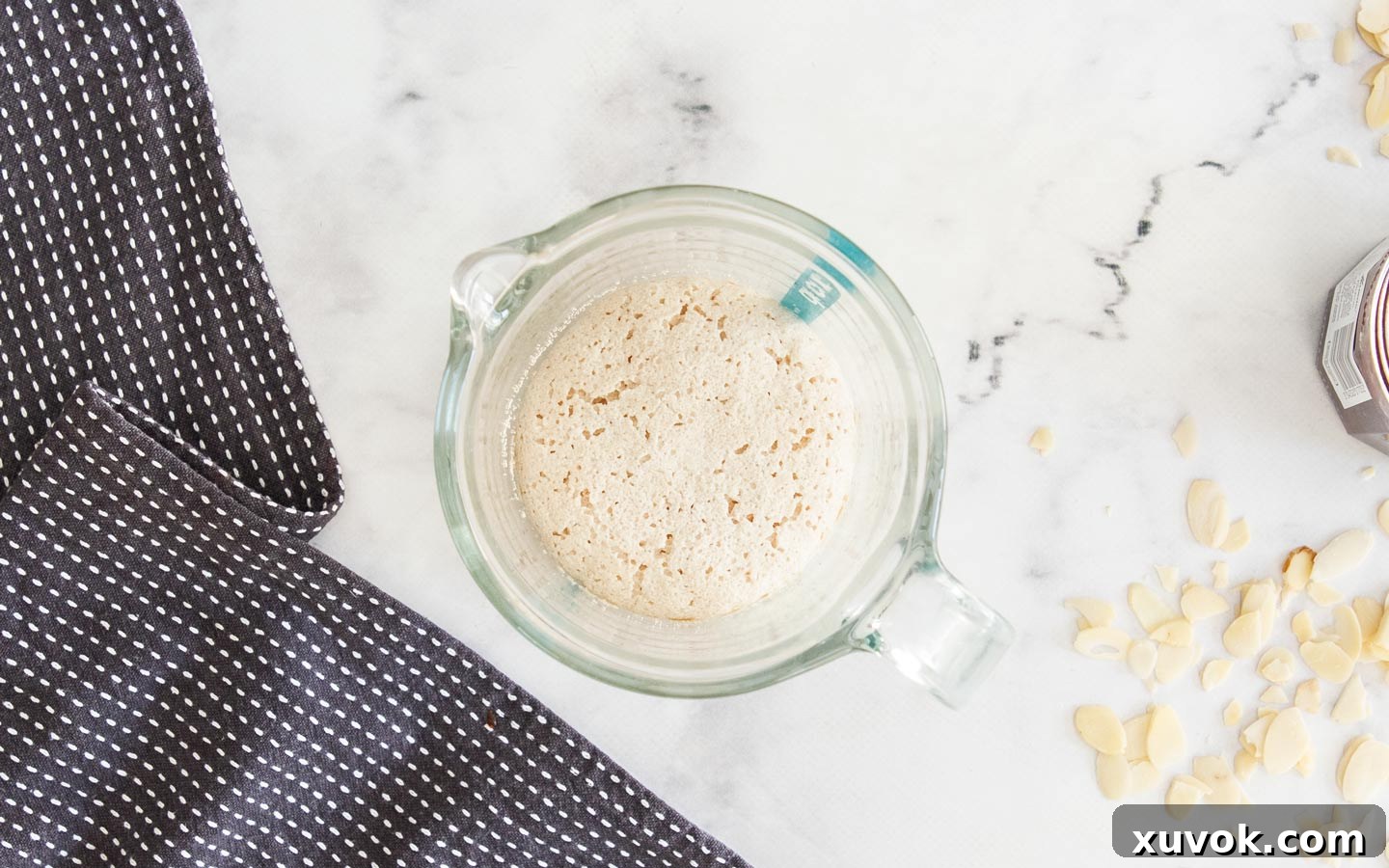
Begin by activating your yeast. In a small bowl or jug, combine a portion of the warm milk (ensure it’s warm to the touch, about 40°C/104°F, but not hot enough to kill the yeast), a tablespoon of sugar, and the yeast. Allow this mixture to sit undisturbed for 5-10 minutes. During this time, the yeast should become visibly frothy and puffy, indicating it’s active and ready to work its magic. Even if using instant yeast, this step serves as a great quality check, preventing wasted ingredients if your yeast isn’t viable.
2. Form the Initial Dough and Rest
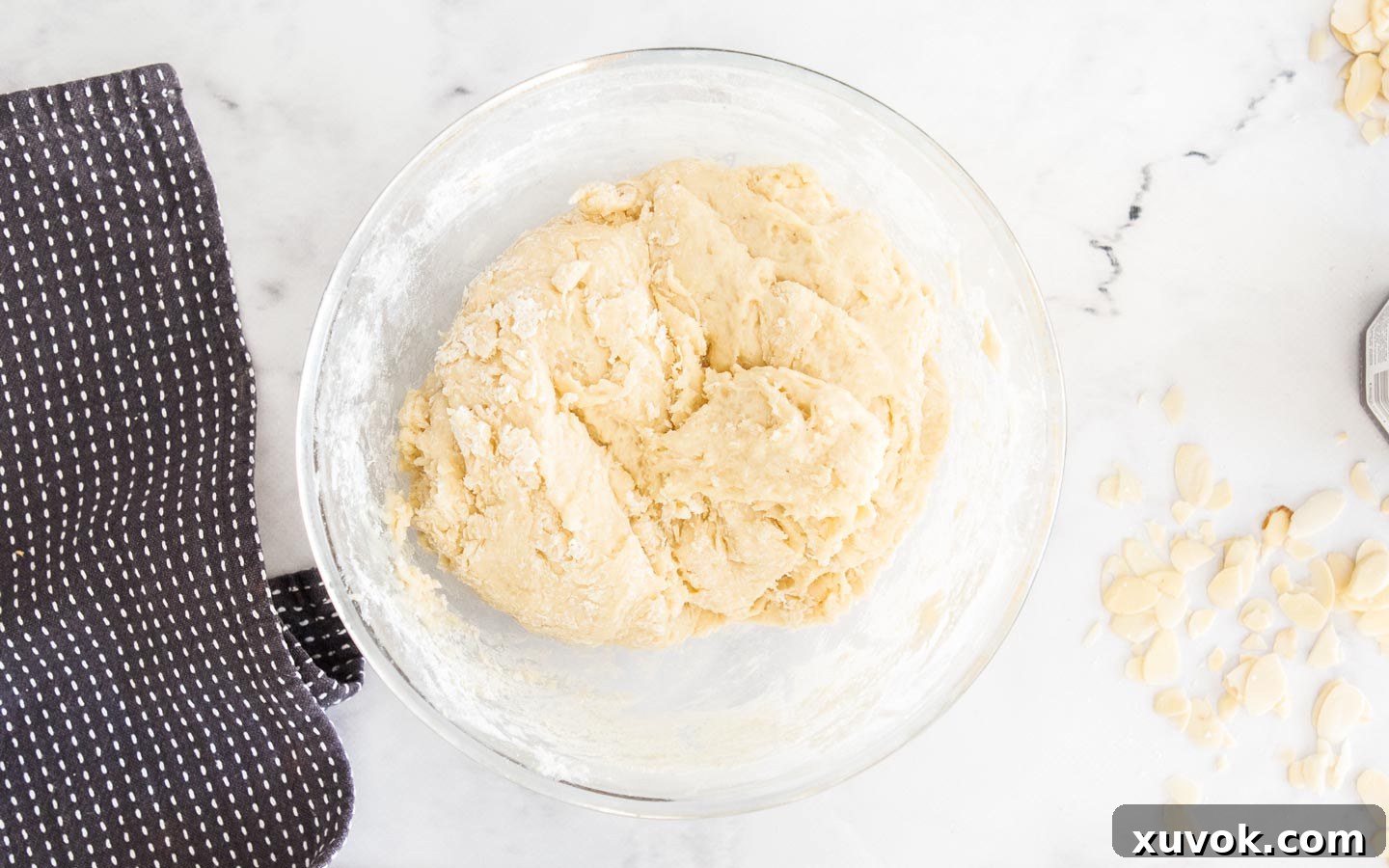
Once your yeast is active, combine the remaining dough ingredients (excluding the cold butter) to form a shaggy, rough dough. The goal here isn’t a perfectly smooth ball, but rather a cohesive mixture. Cover the bowl with plastic wrap and let it rest for a crucial 20 minutes. This resting period allows the flour to fully hydrate and the gluten to begin relaxing, which will make the subsequent rolling and folding steps much easier to manage.
3. The First Butter Incorporation and Fold
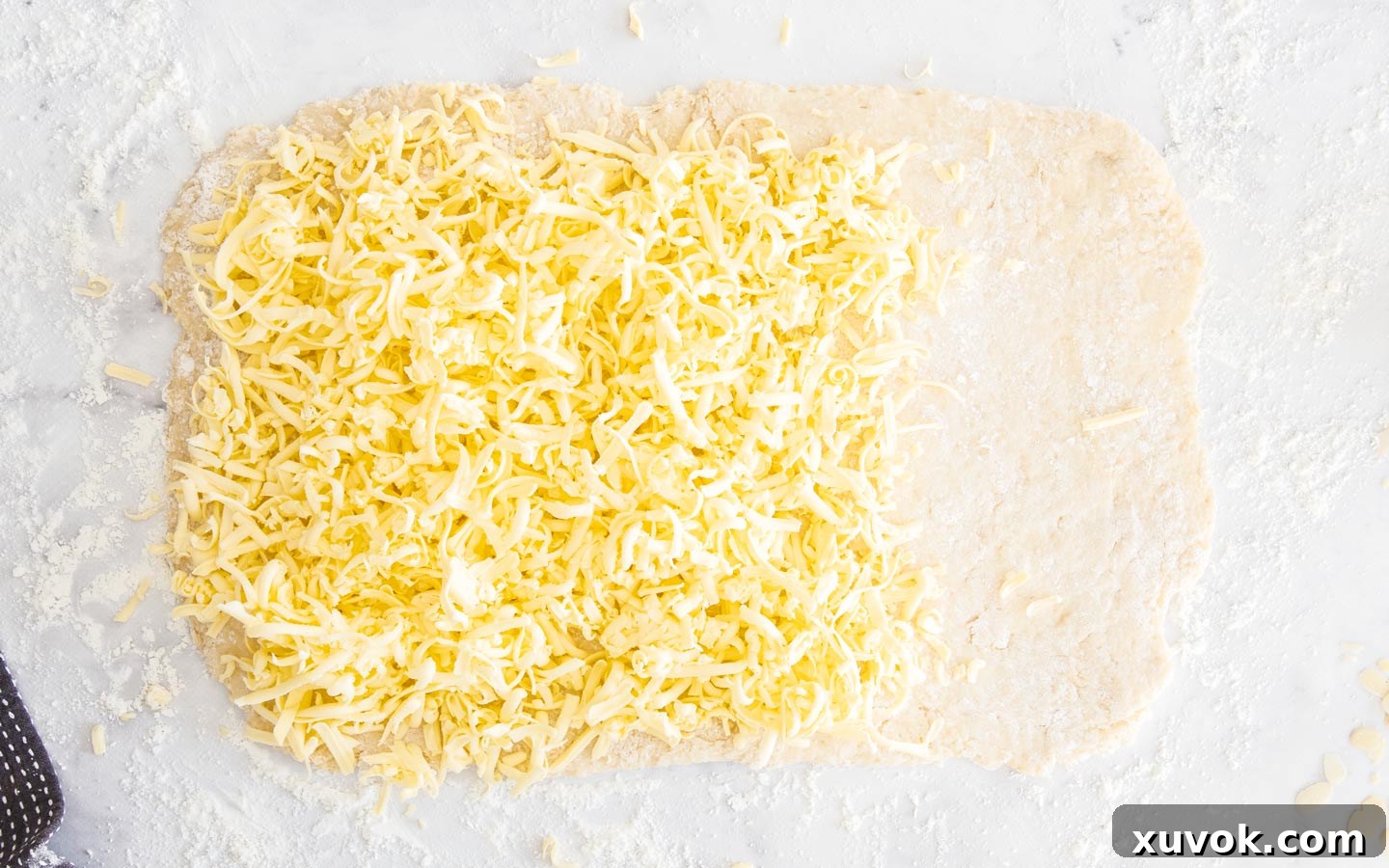
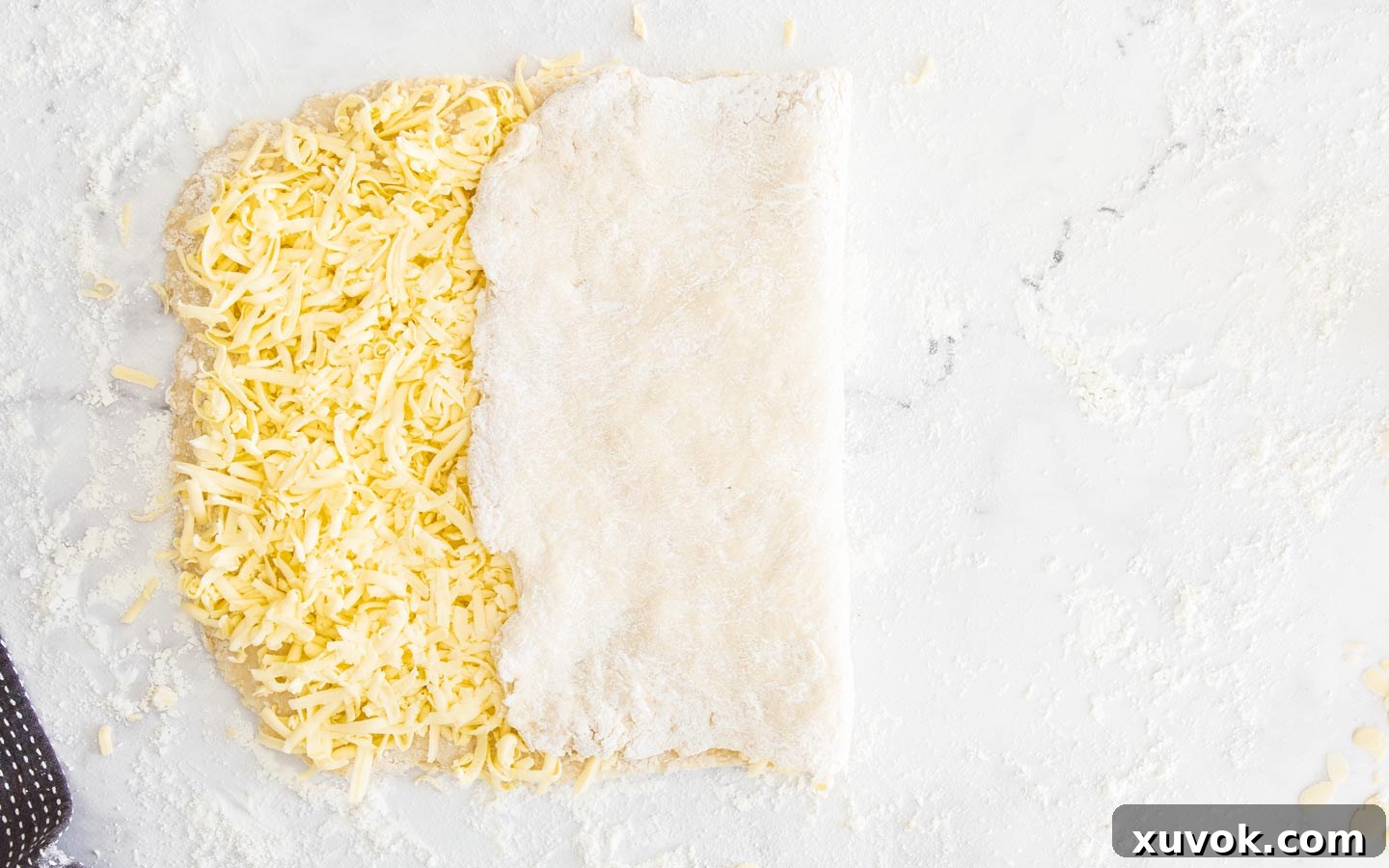
Now, the magical process of creating those signature flaky layers begins! On a lightly floured surface, roll your rested dough into a large rectangle. The trick here is to evenly distribute cold, grated butter over precisely two-thirds of the dough’s surface. Grating the butter ensures small, even pieces that will melt slowly and create distinct layers, rather than clumping together. Carefully fold the bare third of the dough over the middle section, then fold the remaining butter-covered side over that. This “letter fold” traps the butter within the dough, setting the stage for lamination.
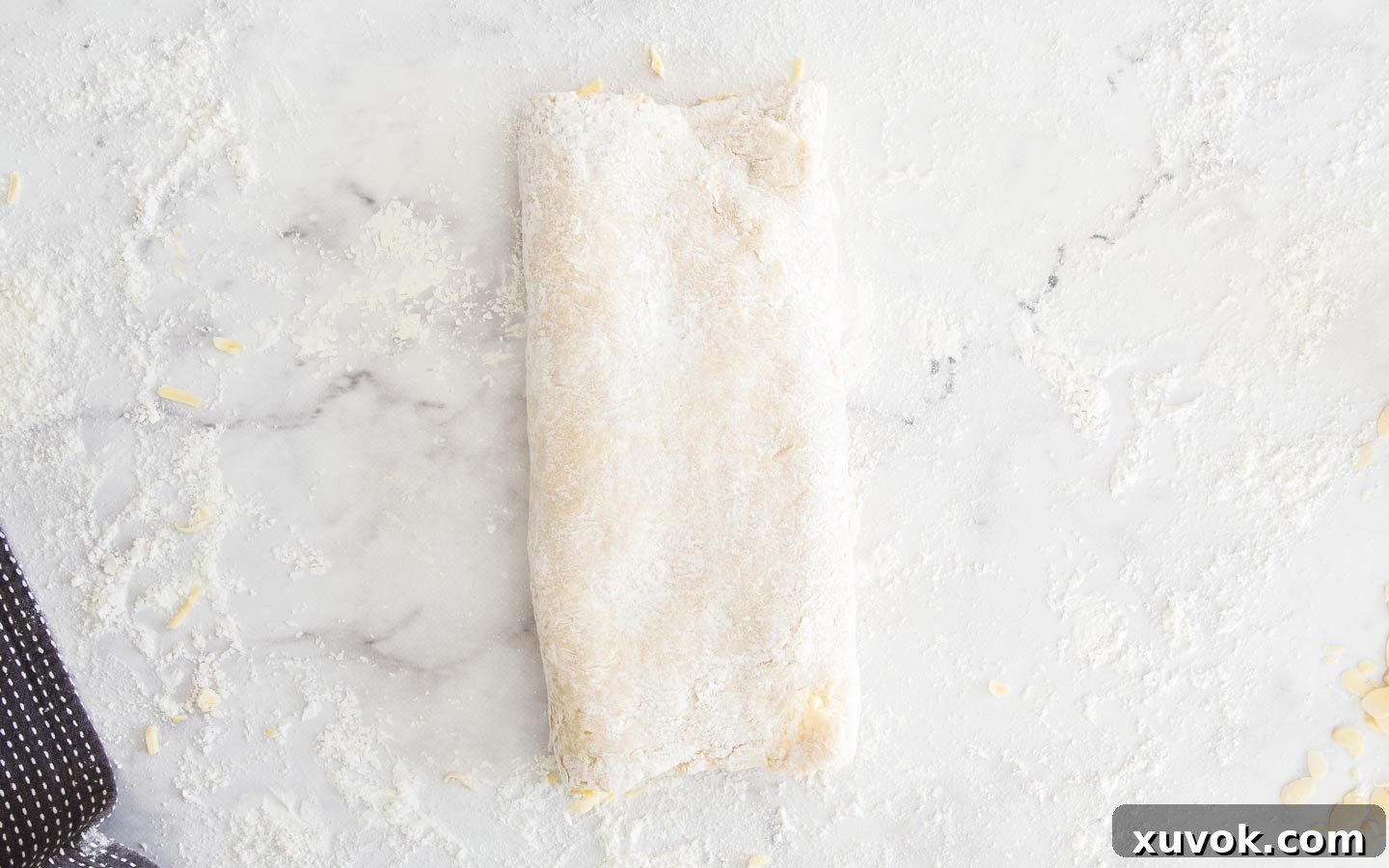
4. Subsequent Roll and Folds for Maximum Layers
The key to exceptionally flaky Danish pastry lies in repeating the rolling and folding process. You will repeat the roll-and-fold (the letter-style fold in three) four more times. Each successive fold further distributes the butter into thinner layers, developing the incredible texture. The dough will become progressively smoother but also tighter and more resistant to rolling. If it feels too stiff, allow it to rest for 5-15 minutes at room temperature to relax before continuing. For an even more astonishing number of layers, consider an optional step: after the initial four folds, chill the dough for about 30 minutes, then perform two more roll and folds. This extra effort results in an unparalleled flakiness.
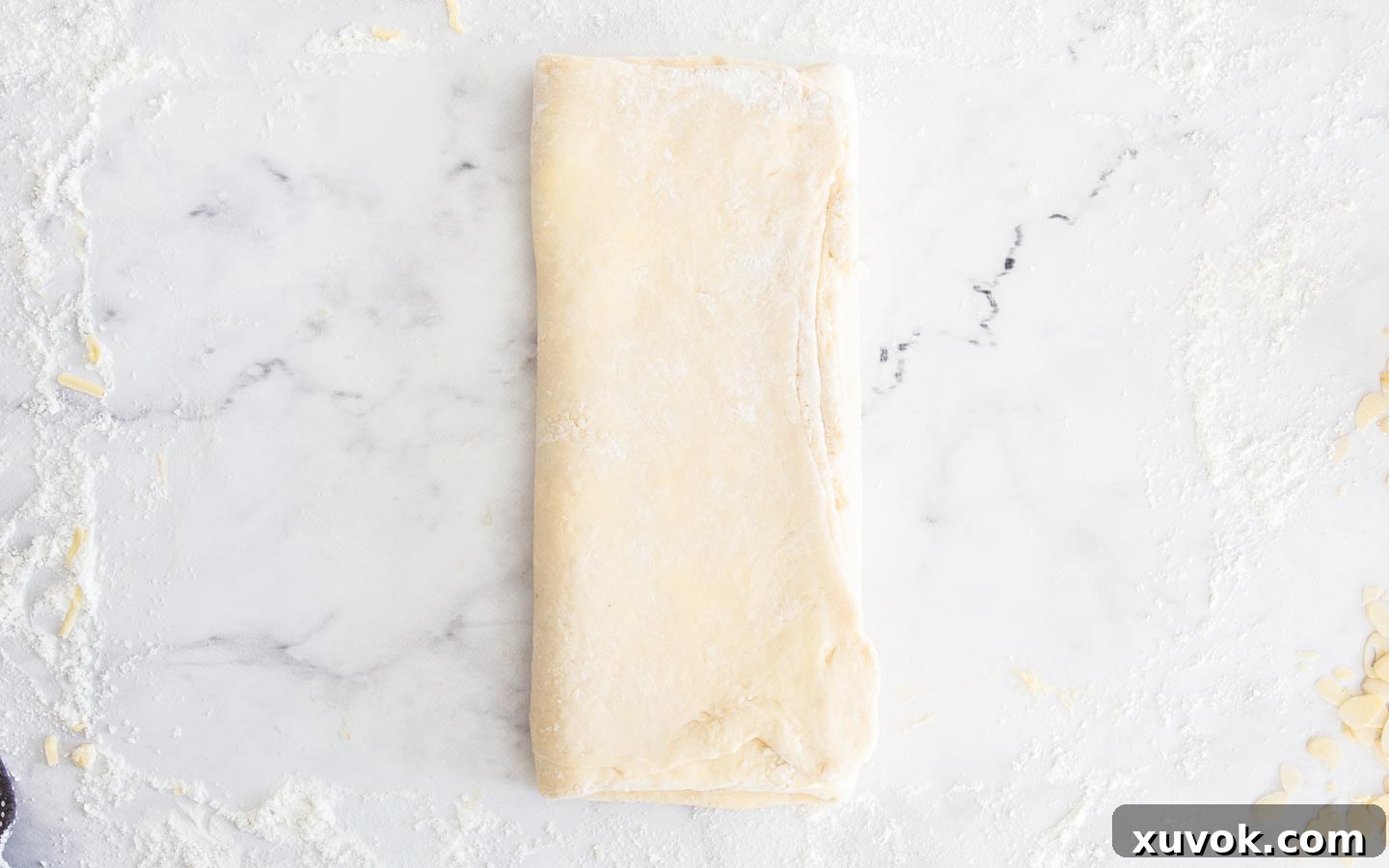
Up to this point, the active preparation time, including the initial 20-minute dough rest, has taken approximately 45 minutes of your time. The magic of lamination is well underway!
5. The Crucial Chill for Danish Dough
After all the rolling and folding, the dough needs a significant chill. Place the dough in the refrigerator for 4 to 24 hours. While 4 hours is sufficient, allowing it to chill for a full 24 hours will yield the absolute best results, allowing the butter to firm up completely and the gluten to relax thoroughly. When you’re ready to transform it into a magnificent **Blueberry Danish Braid**, cut the dough in half and take a moment to admire the beautiful, intricate layers you’ve created – a testament to your careful work!
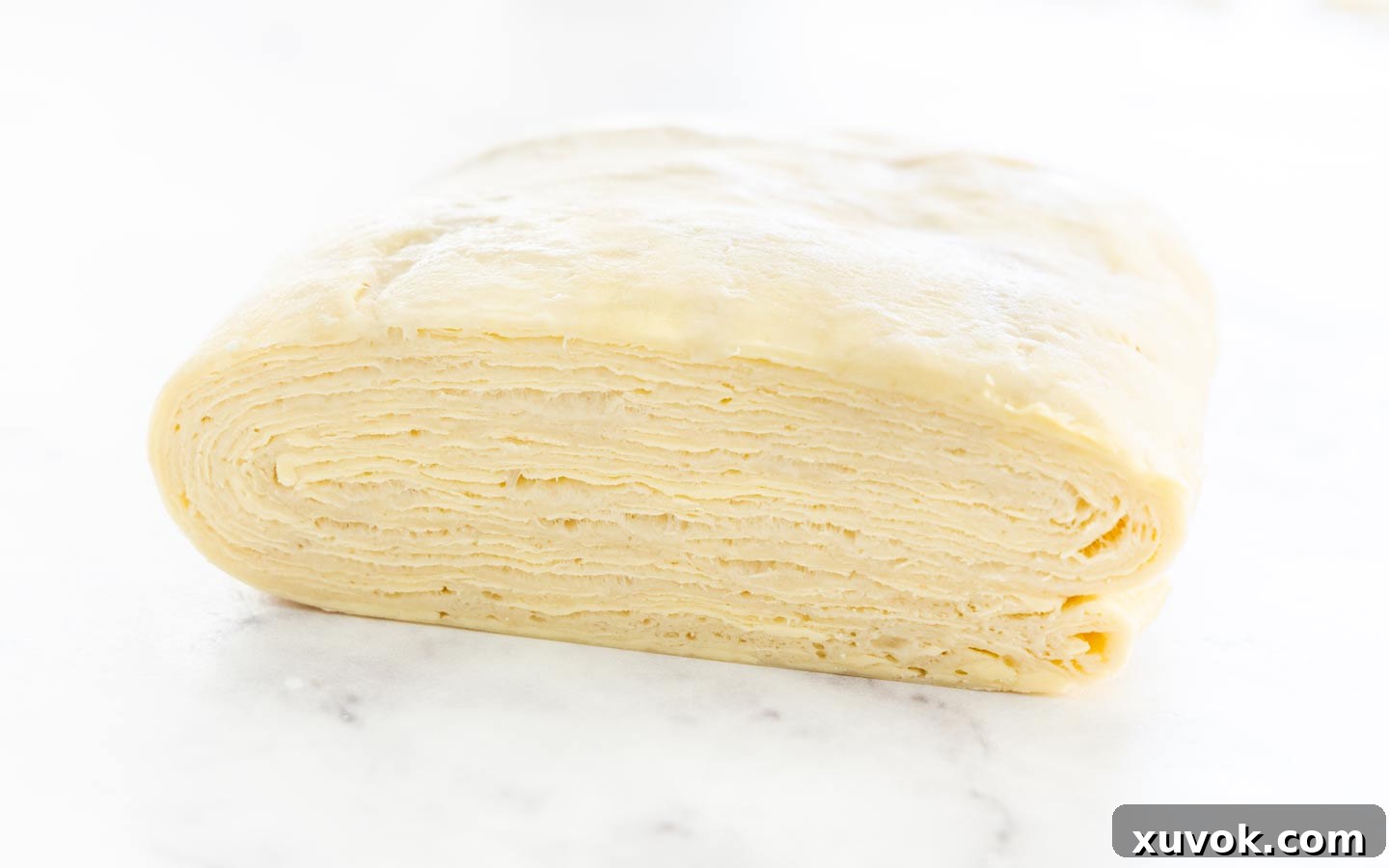
Don’t stress too much about the exact chilling time. I’ve personally left the dough in the fridge for up to 48 hours, and it still performs beautifully. In fact, the very Blueberry Danish Braid featured in these photographs was made with dough that had chilled for 48 hours, then was frozen for a month, and finally thawed overnight in the refrigerator—proof of its incredible resilience!
6. Crafting the Luscious Blueberry Filling
The blueberry filling for this Danish is essentially a vibrant **blueberry compote**. All the filling ingredients are combined in a single pan and gently cooked for 15-20 minutes. You don’t need to babysit it constantly, but occasional stirring will prevent sticking. The blueberries will release their juices, which will then reduce and thicken into a glorious, almost jam-like consistency. Once it’s significantly thickened, pour the compote through a strainer into a separate bowl to gently separate the luscious fruit from any excess syrup. Chill this compote thoroughly until it’s completely cold before incorporating it into your pastry. The leftover blueberry syrup is too delicious to waste! Save it for drizzling over pancakes, waffles, or even over the finished Danish for an extra burst of flavor.
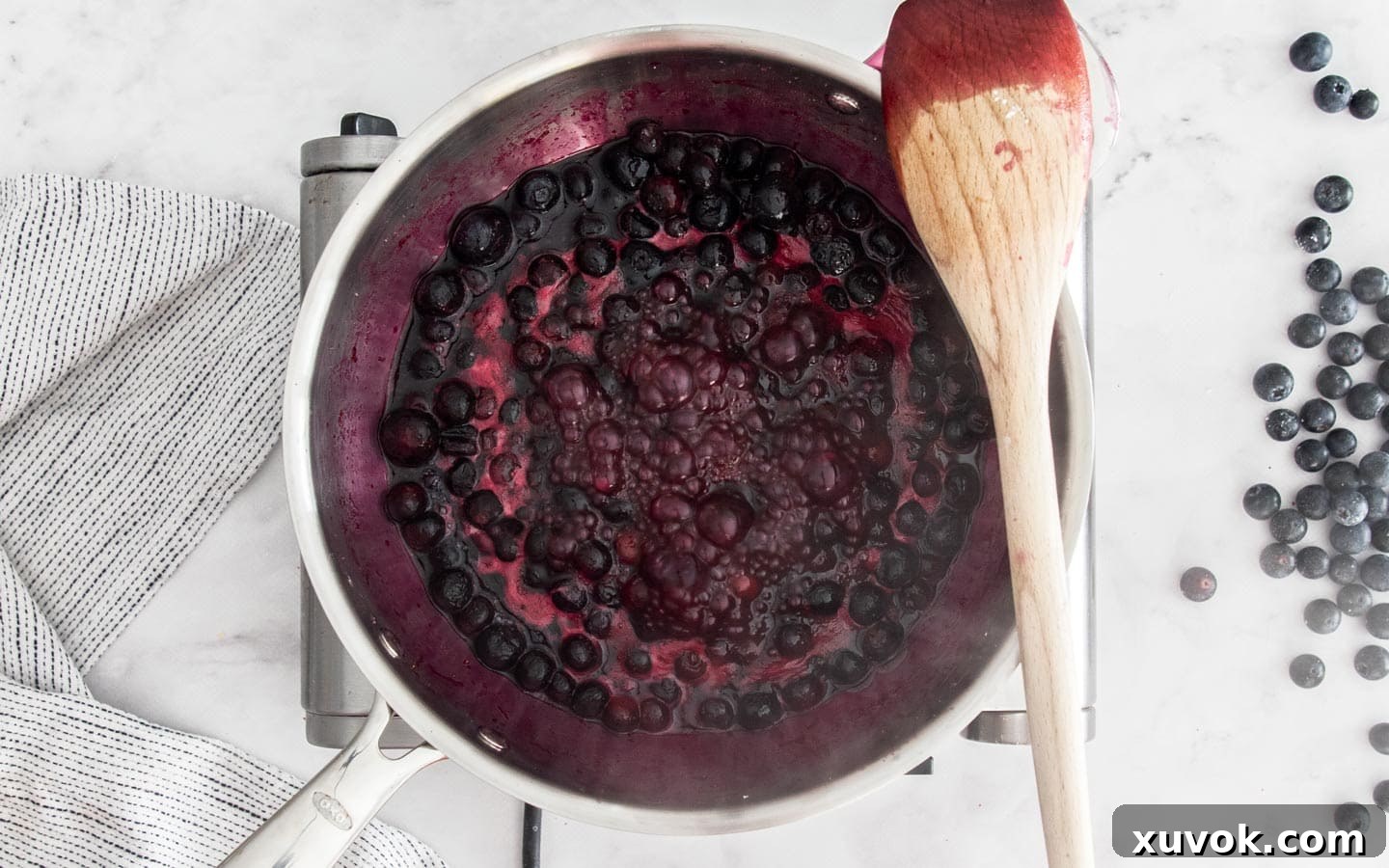
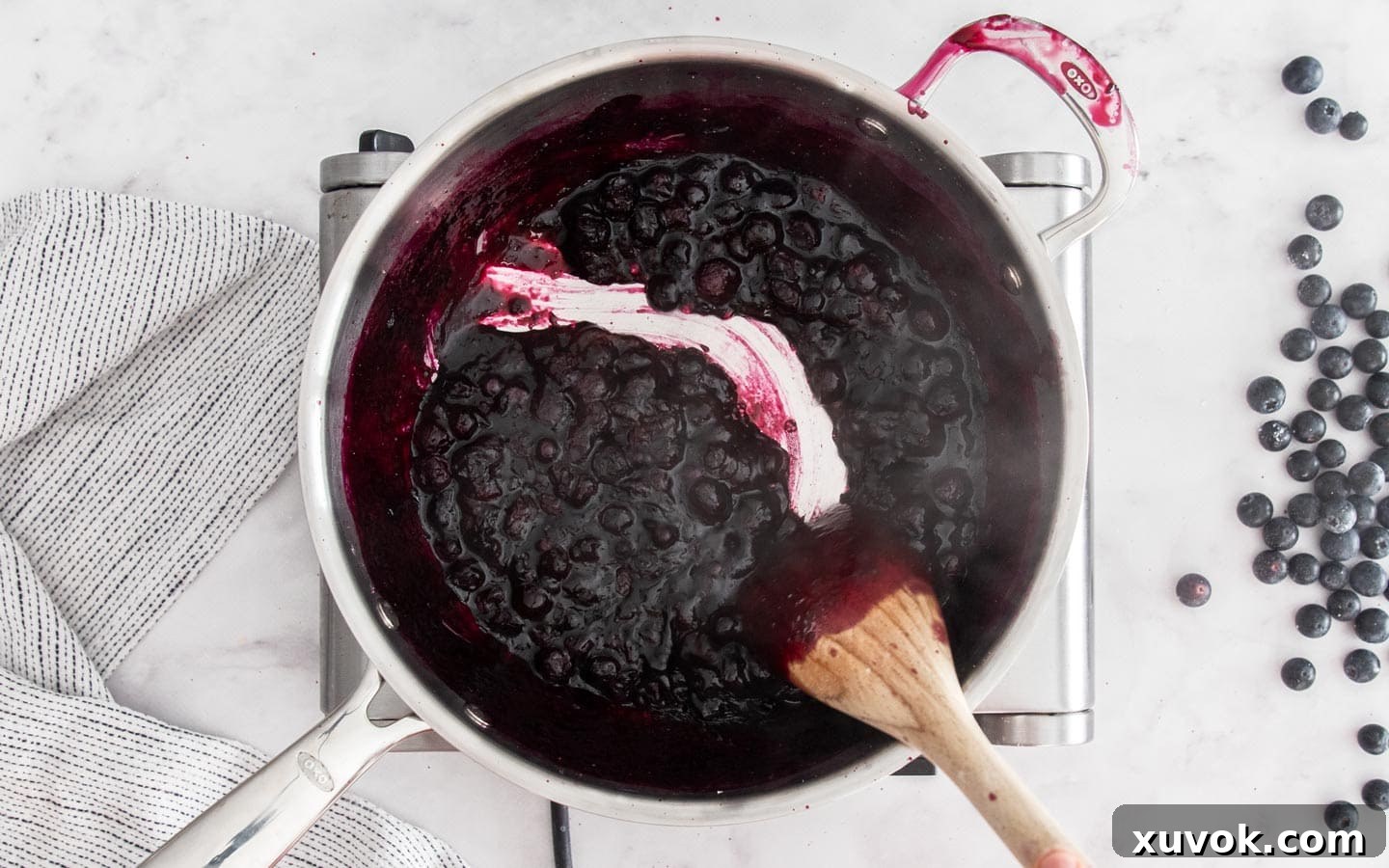
7. Assembling Your Magnificent Blueberry Danish
With your perfectly chilled compote ready, it’s time to bring this beautiful **Blueberry Danish Braid** to life! This recipe yields two impressive Danishes, so you’ll have one to enjoy now and perhaps another to share or freeze for later. Pay close attention to the accompanying images in this post, as they are invaluable for guiding the precise cutting and braiding technique. Start by rolling out one half of your chilled Danish dough into a uniform rectangle, approximately 5mm (⅕ inch) thick. Visualize this rectangle divided into three equal vertical sections. Using a sharp knife or pizza cutter, carefully cut angled strips into the two outer thirds, leaving the central third intact. I find it helpful to lightly score faint lines to mark the three sections before cutting, ensuring your strips begin about 5mm (⅕ inch) away from the central portion.
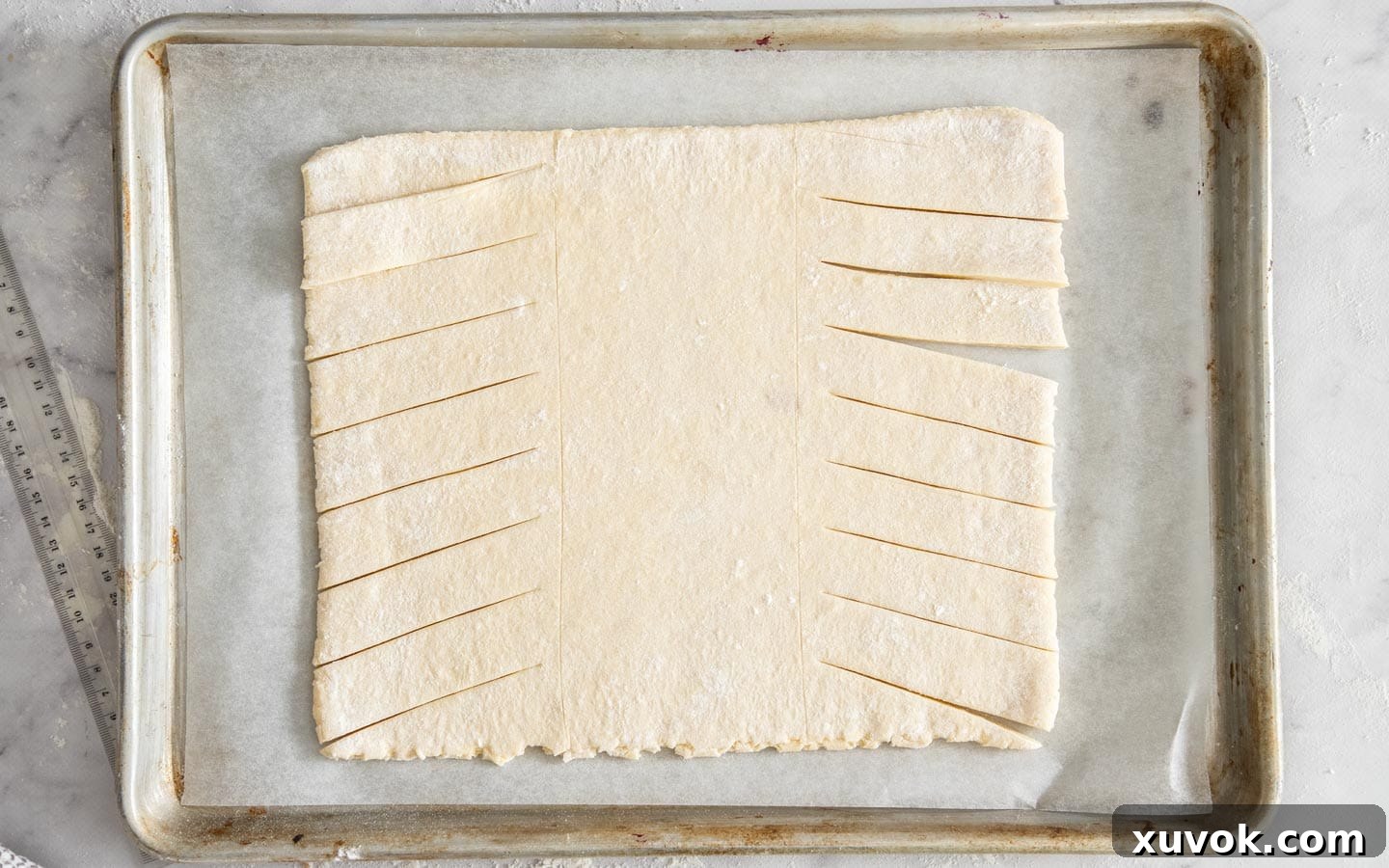
Once your strips are cut, gently remove the two strips from the very top and two from the very bottom of the outer sections. This creates a clean edge for your braid and helps in shaping the ends of the Danish.
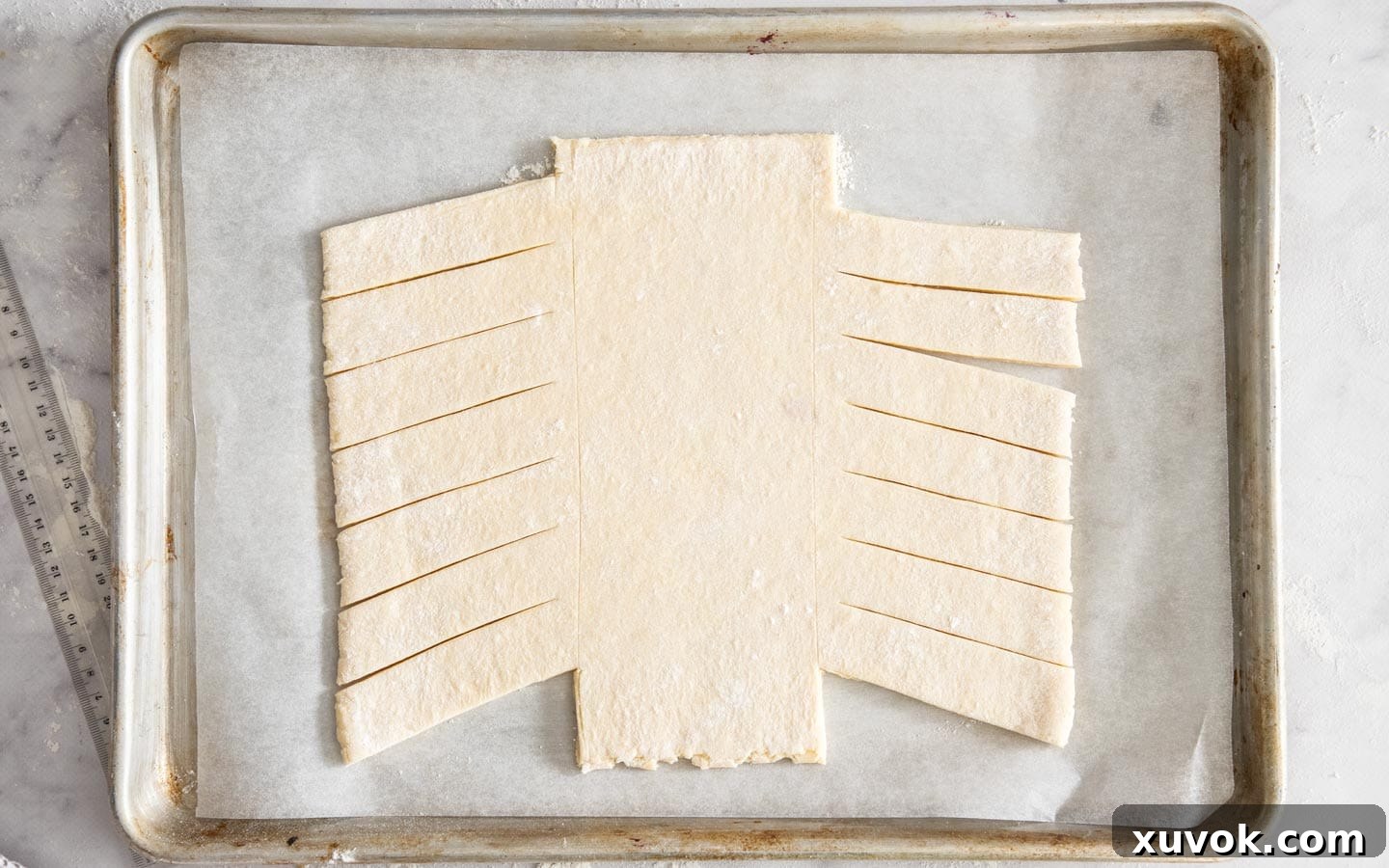
Now, generously pile the cold blueberry filling down the central portion of the dough, making sure to leave about an inch of clear dough at both the top and bottom edges. This margin is crucial for properly sealing the braid. Drizzle just a couple of teaspoons of the thick reserved blueberry syrup over the top of the fruit. Be careful not to add too much syrup, as this can make the pastry soggy. Remember, any leftover syrup can be saved for delicious drizzling later!
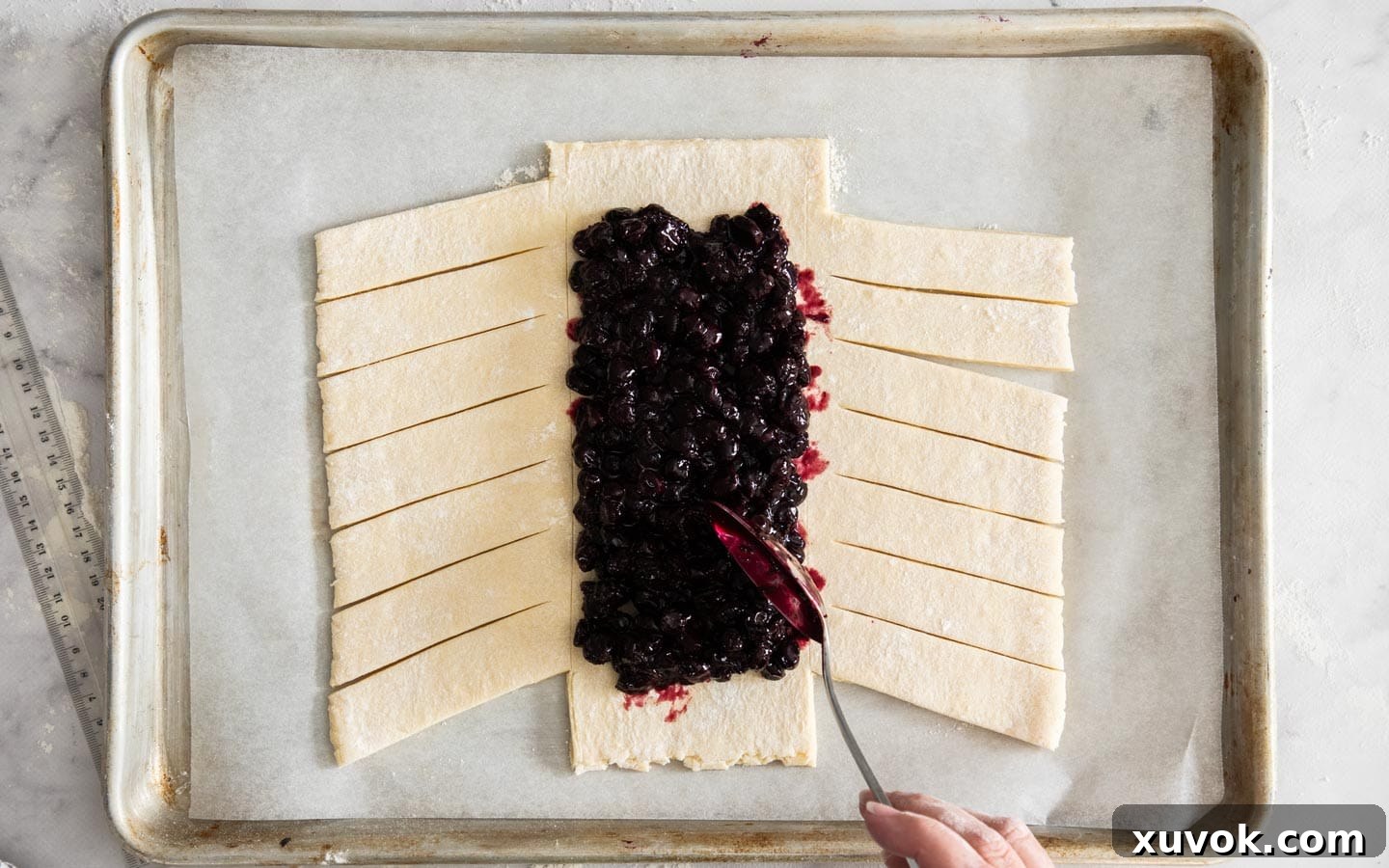
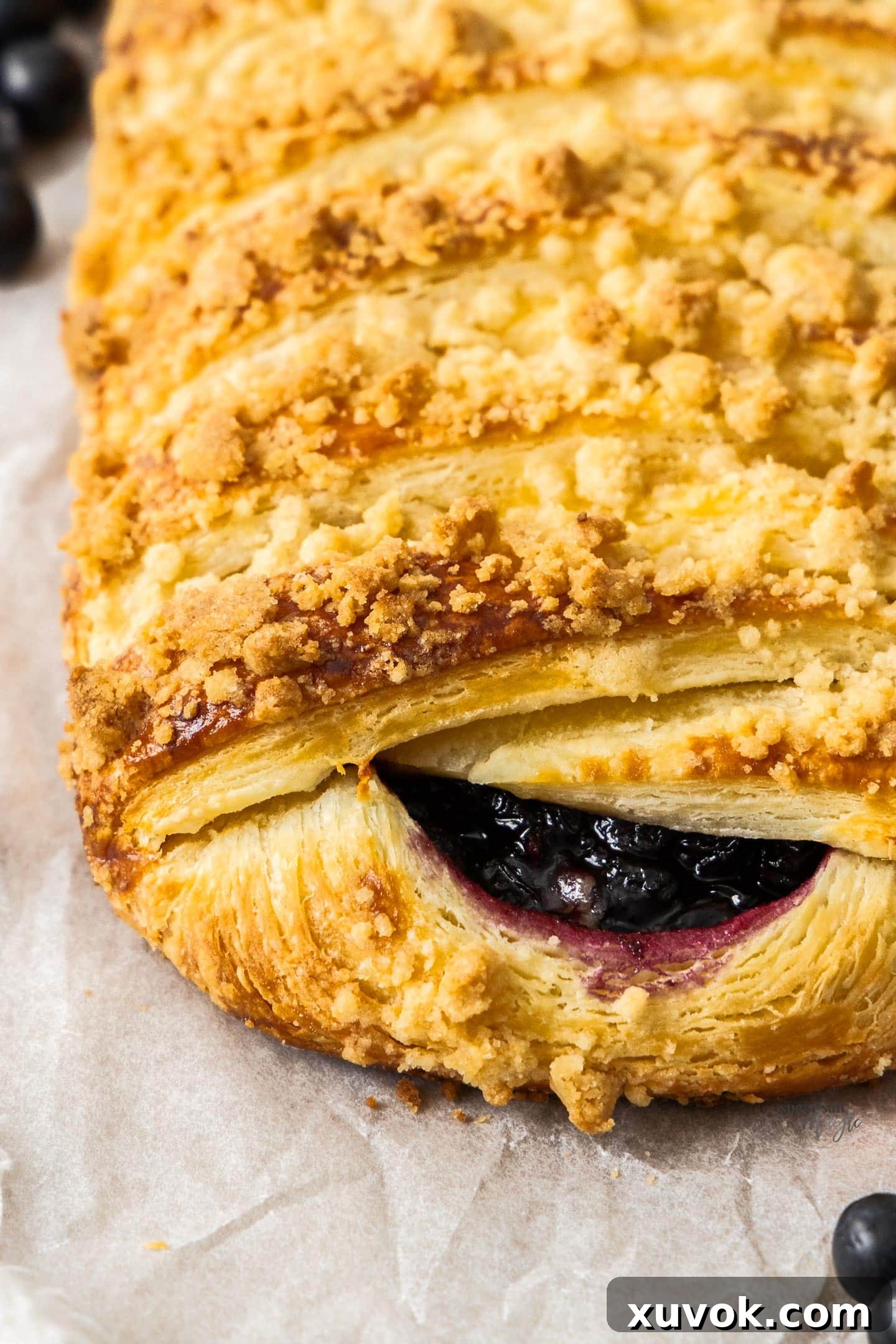
Begin the braiding process: First, take the top-middle section of the dough (the portion you left clear) and fold it upwards and over the blueberry compote, pressing the edges firmly against the base of the first side strips. Next, take one of the side strips (either left or right) and fold it diagonally over the filling, pressing its end down securely at the base of the next strip on the opposite side. This creates a neat, sealed enclosure for the filling.
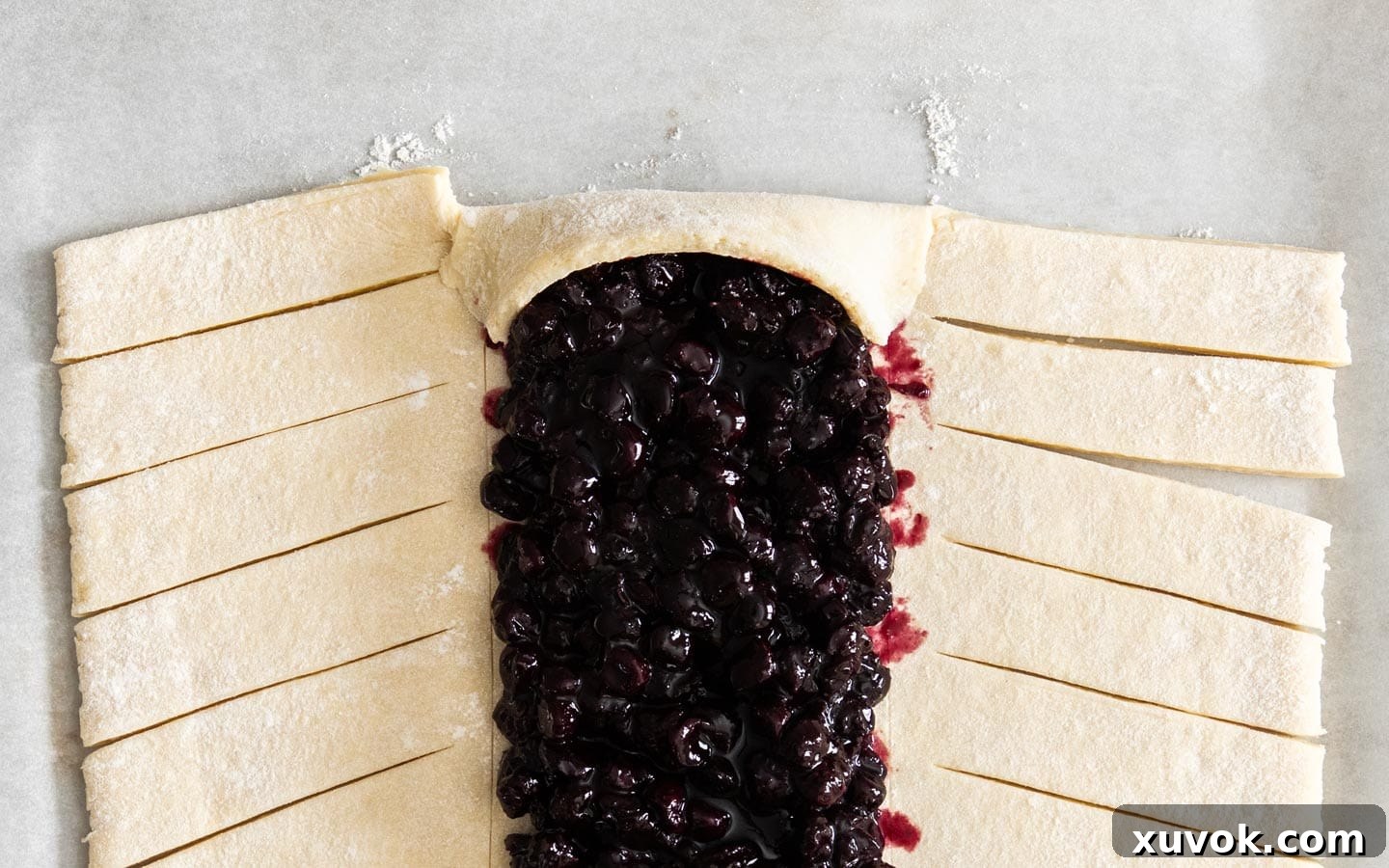
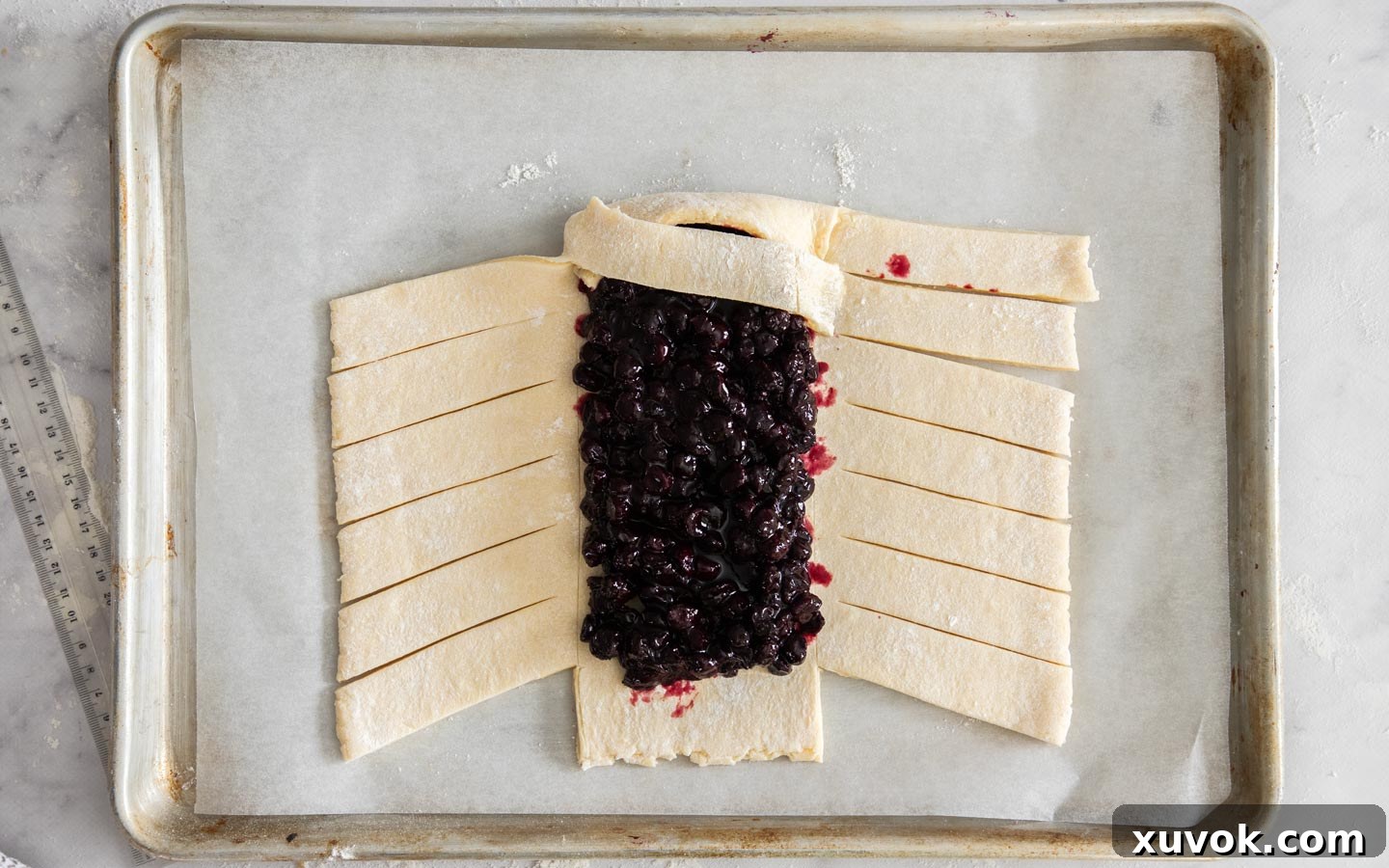
Continue to “braid” by alternating left and right strips, folding each one over the end of the previous strip. Ensure you press each strip down gently but firmly on the opposite side of the filling, at the base of the next available strip. This overlapping technique creates the beautiful braided pattern and keeps the filling perfectly enclosed. Maintain consistent tension to achieve an even and attractive braid.
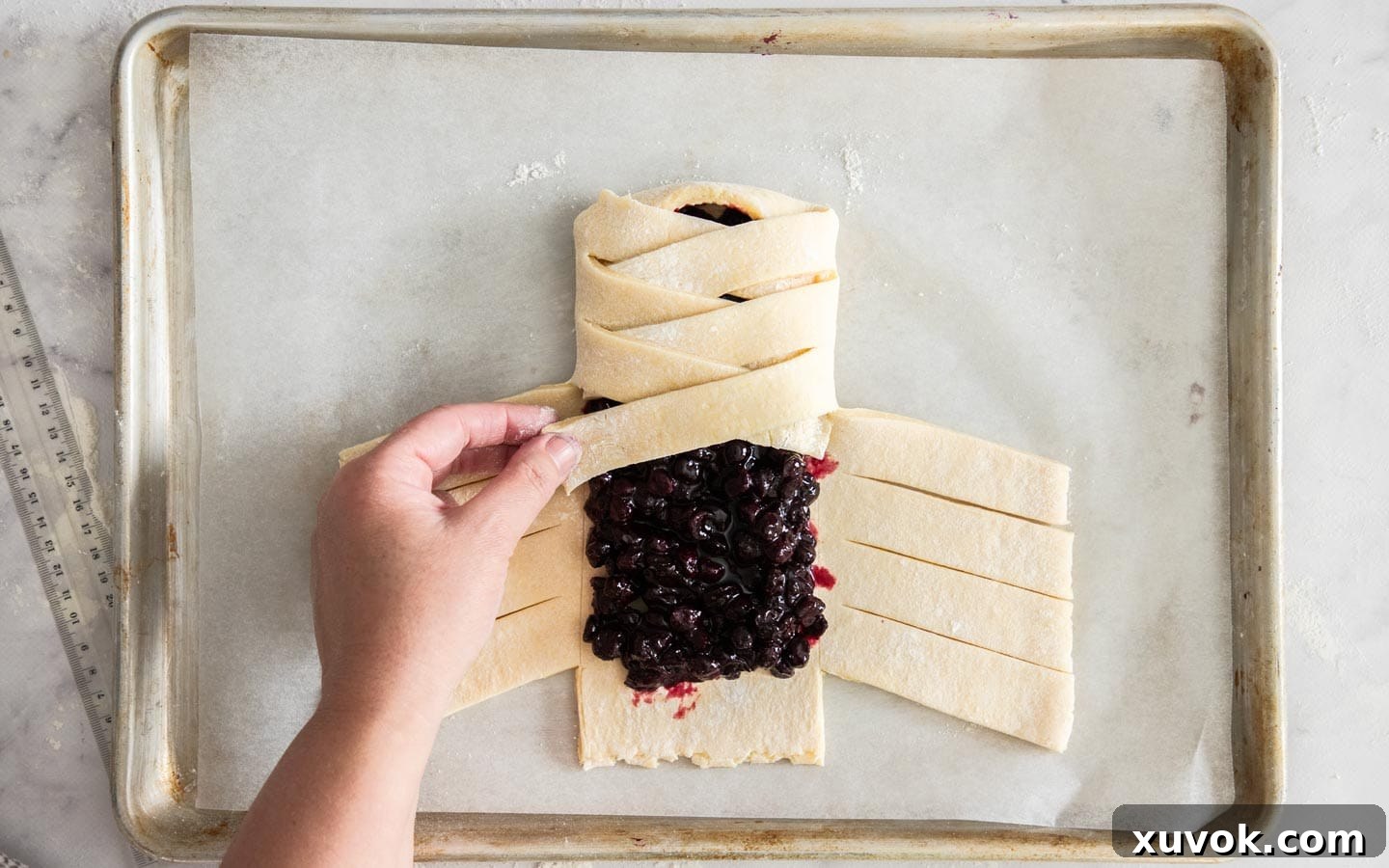
As you approach the end, with only the last two side strips remaining, first fold the bottom-middle section upwards over the filling. Then, fold the next side strip over that to help secure it. For the very final strip, don’t just fold it straight over; instead, try to wrap it slightly around the base of the bottom folded piece. Lightly dampen the end of this last strip with a touch of water, then tuck it underneath the braid on the opposite side. This technique helps to tightly seal the bottom of the Danish, ensuring none of that delicious blueberry filling escapes during baking.
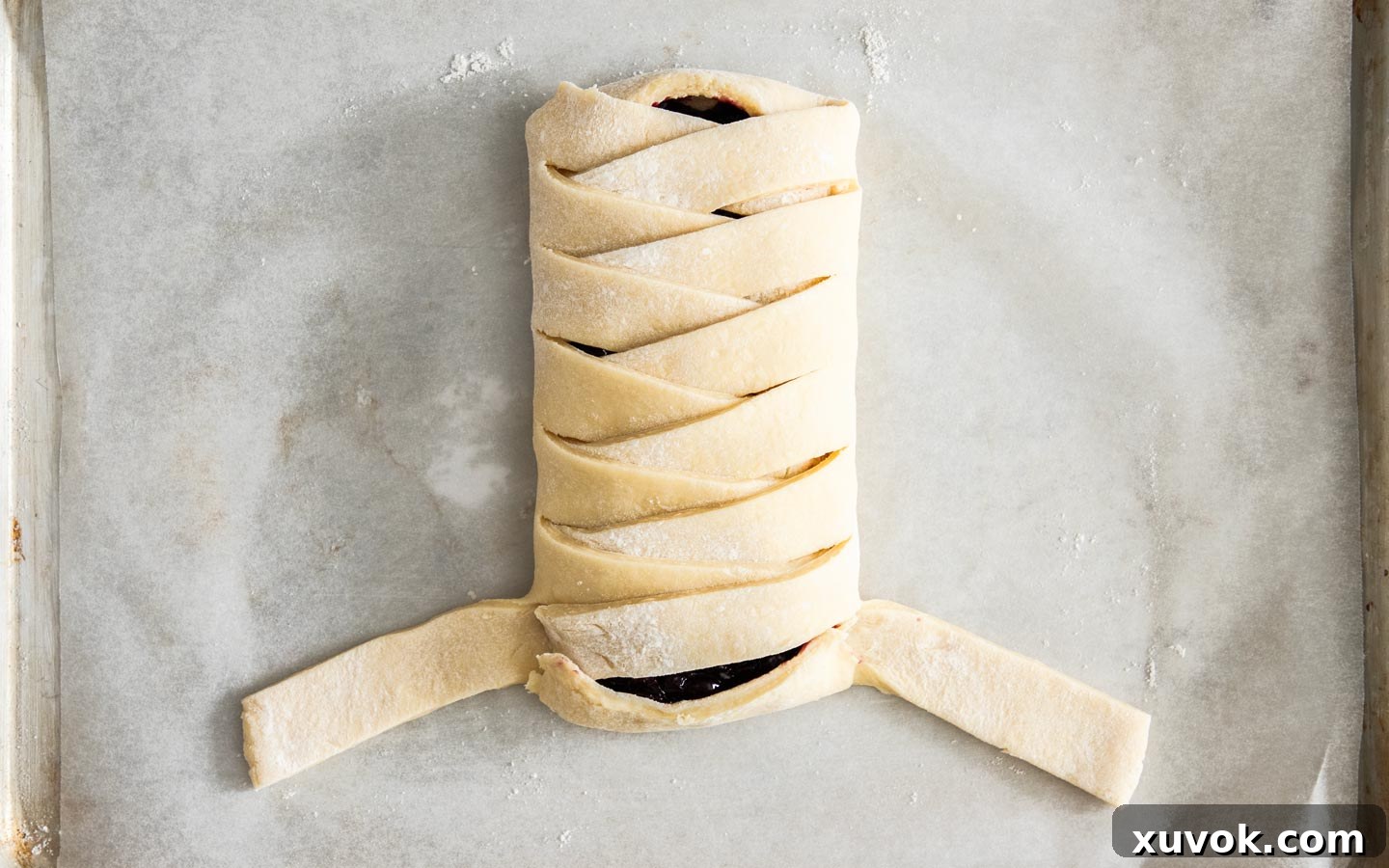
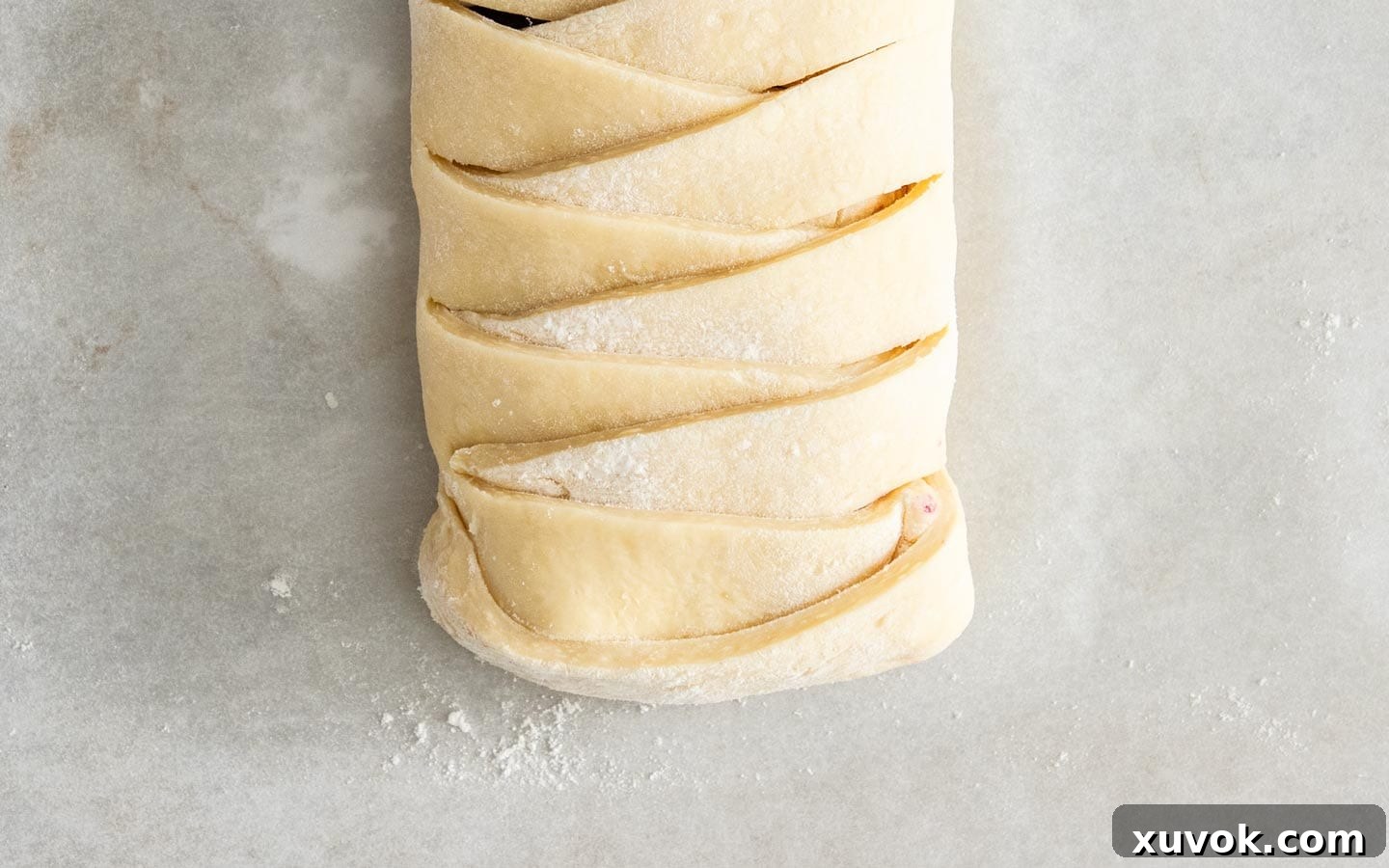
8. Topping and Baking to Golden Perfection
Almost there! Brush the entire surface of your beautifully braided Danish with an egg wash. This will give it a gorgeous golden sheen and help the streusel adhere. Next, scatter a generous amount of your unbaked streusel mix over the top. If you haven’t made the streusel yet, don’t worry—it comes together in mere minutes. Alternatively, a simple sprinkle of demerara or turbinado sugar will add a lovely crunch and sparkle. If time permits, chill the assembled Danish for another 30 minutes. This extra chill helps the pastry hold its shape better during baking, resulting in a cleaner, more defined braid. Finally, bake it until it’s deep golden brown and the pastry is cooked through, usually around 25-30 minutes. Allow it to cool for about 5 minutes before slicing, as the filling will be piping hot.
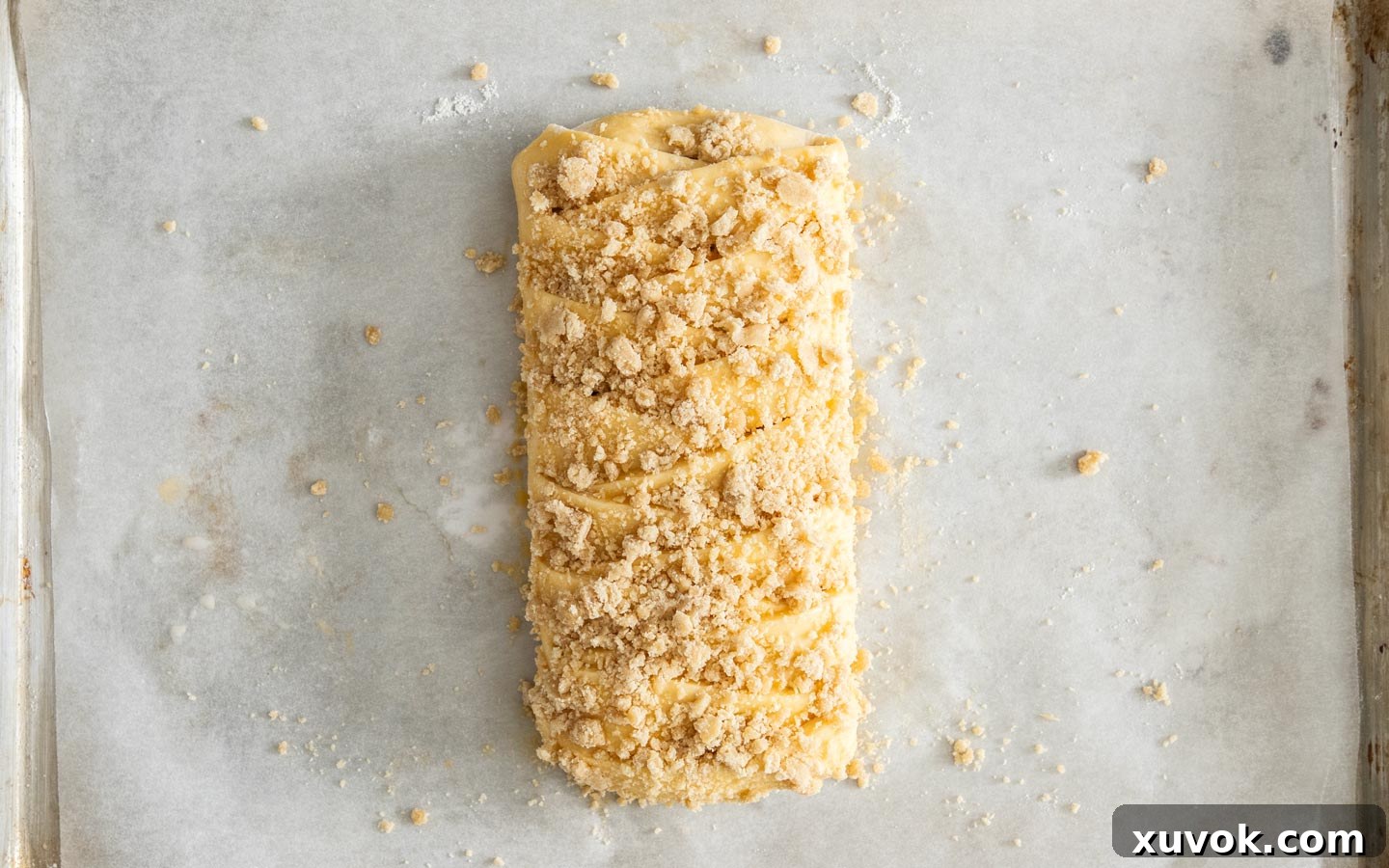
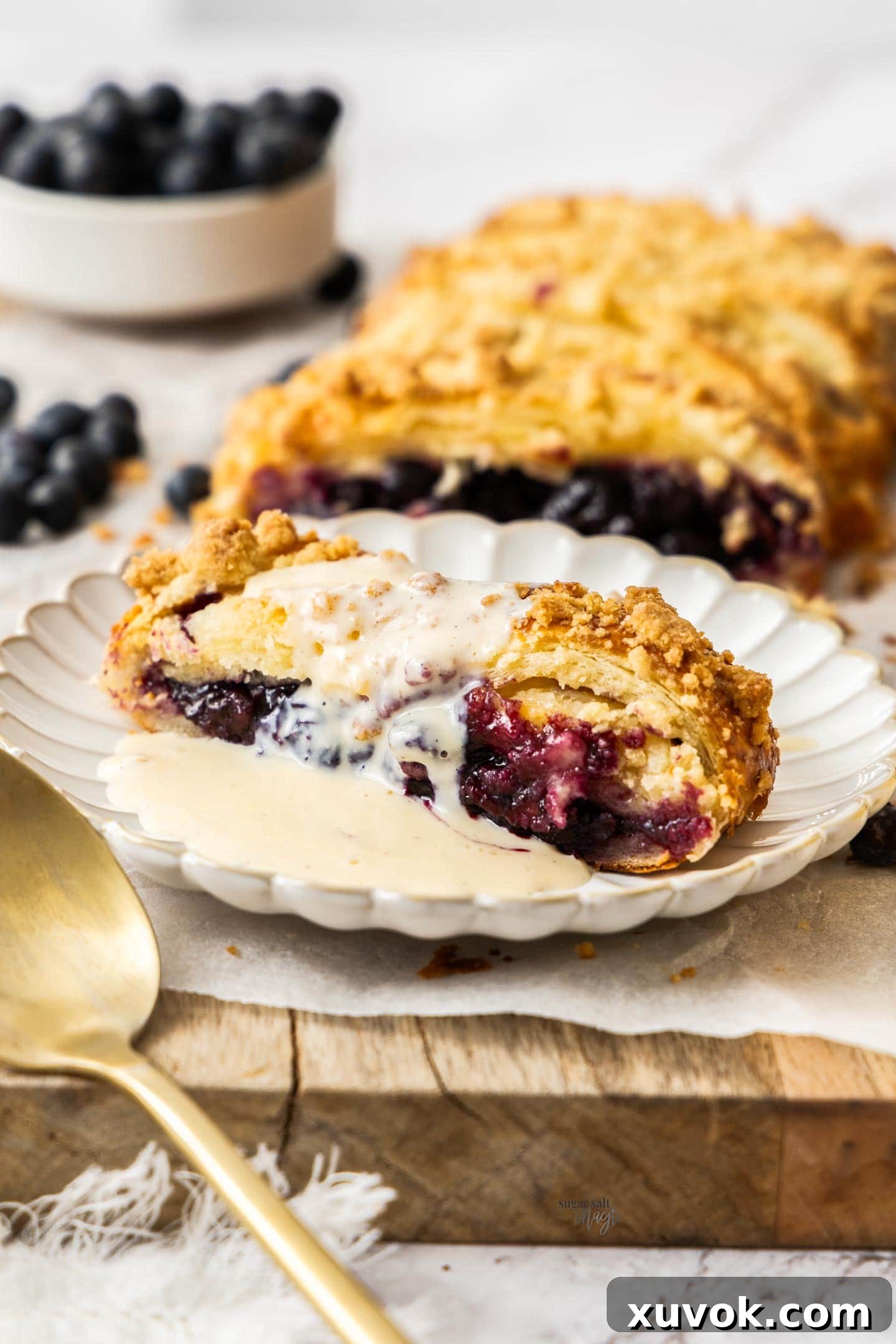
To truly elevate this **Blueberry Danish Braid**, I adore serving it with a delicate drizzle of homemade **crème anglaise** (custard sauce). A scoop of premium vanilla ice cream or a dollop of light and airy **Chantilly cream** also makes for a delightful accompaniment, turning your Danish into an indulgent dessert.
Pro Tips for a Perfect Danish
- **Plan Ahead for the Dough:** The Danish pastry dough can be prepared well in advance. For optimal results, aim to chill it in the refrigerator for at least 24 hours. For longer storage, it freezes beautifully for up to 3 months.
- **Ensure Cold Filling:** It is absolutely critical that your blueberry filling is completely cold before you add it to the pastry. Warm filling will cause the butter in the dough to soften prematurely, leading to a less flaky result and potential leakage during baking.
- **Mind the Syrup:** When spooning the blueberry filling into the pastry, resist the urge to add all the reserved syrup. Too much liquid will make your pastry soggy. The compote itself provides plenty of moisture and flavor, and you can always drizzle extra syrup over the baked Danish if desired.
- **Boost Flakiness with Extra Folds:** For an incredibly flaky Danish, after completing the initial four roll and folds, chill the dough for 30 minutes, then perform an additional two roll and folds. This extra lamination significantly increases the number of buttery layers.
- **Yield and Versatility:** This recipe generously makes two **Blueberry Danish Braids**. You have the option to bake both, freeze one unbaked for a future craving, or even use the second half of the dough for a different pastry creation entirely.
- **Keep Ingredients Cold:** Throughout the dough-making process, especially when incorporating the butter, strive to keep all your ingredients, tools, and even your workspace as cold as possible. This prevents the butter from melting and ensures crisp, distinct layers.
- **Don’t Overwork the Dough:** Handle the dough gently, especially during rolling. Overworking can develop too much gluten, resulting in a tough pastry rather than a tender, flaky one.
Storage and Make-Ahead Options
This **Blueberry Danish Braid** recipe is wonderfully flexible, offering several options for preparing components in advance and storing them for later enjoyment:
Danish Dough Storage:
The prepared Danish dough should be chilled for a minimum of 4 hours, and ideally for up to 24 hours, before you use it. For longer-term planning, wrap the dough tightly in three layers of plastic wrap and freeze it for up to 3 months. To make things even more convenient, consider dividing the dough into two portions before freezing, so you only need to thaw what you need. The best way to thaw frozen Danish dough is overnight in the refrigerator.
Blueberry Filling Storage:
The luscious blueberry filling takes approximately 15-20 minutes to cook and can be prepared up to 3 days in advance. Store it in an airtight container in the refrigerator until ready to use, ensuring it is completely cold before assembly.
Streusel Topping Storage:
The streusel topping should remain unbaked until you’re ready to add it to the Danish. It can be made 3-4 days ahead of time and kept in an airtight container in the refrigerator.
Assembled (Unbaked) Danish Storage:
Once assembled and braided, you can either bake your Danish immediately or freeze it for later. An unbaked Danish braid can be frozen for up to 3 months. To bake from frozen, you can either thaw it overnight in the fridge first or bake it directly from frozen, though it may require an additional 10-15 minutes of baking time.
Baked Danish Storage:
Fully baked Danish braids are best enjoyed fresh on the day they are made, but leftovers can be stored at room temperature in an airtight container for 1-2 days, or in the refrigerator for up to 3-4 days. For optimal freshness, gently reheat slices in a toaster oven before serving.
Frequently Asked Questions
Can I use store-bought puff pastry instead of homemade Danish dough?
Yes, you absolutely can! If you’re short on time or prefer a simpler approach, a good quality store-bought puff pastry will work. The texture will be different—more crispy and less tender than traditional Danish pastry—but it will still be delicious and beautiful.
What can I do with the leftover blueberry syrup?
Don’t let it go to waste! The leftover blueberry syrup is fantastic drizzled over pancakes, waffles, yogurt, ice cream, or even over your baked Danish for an extra fruity kick.
Can I make the Danish dough ahead of time?
Definitely! The Danish dough can be made up to 24 hours in advance and stored in the refrigerator. For longer storage, it can be frozen for up to 3 months. This makes it perfect for planning ahead for special occasions.
How do I know my yeast is active?
When you bloom the yeast in warm milk and sugar, it should become frothy and puffy within 5-10 minutes. If it doesn’t foam, your yeast may be old or inactive, and you’ll need to start with a fresh batch.
Any tips for getting really flaky layers?
The key is to keep your butter and dough cold throughout the lamination process. Don’t overwork the dough, and if it becomes too warm or resistant, chill it briefly. An extra couple of roll-and-folds after a 30-minute chill can also enhance flakiness.
More Recipes You’ll Love
- Cream Cheese Strawberry Danish
- Lemon Danish Pastry
- Custard Danish Pastry
- Mixed Berry Crumble
- Homemade Blueberry Pop Tarts
⭐⭐⭐⭐⭐
Did you try this incredible Blueberry Danish Braid recipe? Your feedback is invaluable! Please consider leaving a rating and comment below the recipe card to share your experience.
Hungry for more delicious creations? Subscribe to our newsletter for free recipes delivered straight to your inbox. Also, follow along with our culinary adventures on Facebook, Pinterest, and Instagram!
Blueberry Danish Braid
Rate
Pin
Ingredients
FOR THE DANISH PASTRY
- 1 cup whole milk cold (250ml)
- 2 ½ teaspoons instant or active dry yeast
- 425 g plain flour (all-purpose flour) (3 ¼ cups / 15oz)
- ⅓ cup white granulated sugar (66g / 2.3oz)
- ½ teaspoon salt
- 1 large egg
- 283 g unsalted butter cold (1 ¼ cup / 10oz)
FOR THE BLUEBERRY FILLING
- 1 kg fresh or frozen blueberries (~2lb)
- ⅔ cup white granulated sugar (66g / ~2 ½oz)
- 1 tablespoon cornflour (US cornstarch)
- 2 teaspoons lemon zest
- 1 tablespoon lemon juice (see Notes 1)
TO FINISH (Optional)
- 1 egg yolk mixed with 1 teaspoon milk (for egg wash)
- ¼ batch raw streusel topping optional, see Notes
For best results, always weigh ingredients where a weight is provided.
Equipment
-
Mixing bowls
-
Rolling Pin
-
Box grater
-
Sharp knife and ruler
-
2 Baking sheets
Instructions
-
MAKE THE DANISH DOUGH:
**Prep the yeast:** In a small bowl or jug, warm ½ cup of the milk until it’s just warm to the touch (approx. 40°C/104°F). Stir in 1 tablespoon of sugar and all the yeast. Let it sit for 5-10 minutes until frothy. If it doesn’t puff up, your yeast is likely inactive.
-
**Combine dough ingredients:** In a medium bowl, whisk together the flour, remaining ¼ cup of sugar, and salt.
-
Whisk the remaining ½ cup milk and the egg into the activated yeast mixture. Pour this wet mixture into the dry ingredients and mix with a spoon or spatula until a rough, sticky dough forms.
-
**Rest the dough:** Cover the bowl with plastic wrap and let the dough rest for 30 minutes.
-
While the dough rests, grate the cold butter using the large side of a box grater. Return the grated butter to the fridge to keep it cold. Handle carefully with fingertips to avoid melting.
-
Turn the dough onto a lightly floured surface and gently shape it into a rough rectangle. Add minimal flour to the worktop if needed to prevent sticking.
-
**Add the butter and first fold:** Roll the dough into a large rectangle, about 25x35cm (10×14 inches). Scatter the grated butter evenly over two-thirds of the dough, starting from a short side. Press it down lightly. Fold the unbuttered end over the middle section, then fold the opposite end over the top (letter fold).
-
**Perform roll and folds:** Roll the Danish dough out again into a large rectangle, using minimal flour if necessary. Perform another letter fold.
-
Repeat the roll and fold process four more times. Each time, brush off any excess flour. The dough will become tighter; if too resistant, let it rest for 5-15 minutes before continuing.
-
**Chill the Danish dough:** Place the folded dough onto a plate, cover loosely with plastic wrap, and refrigerate for 4 to 24 hours.
-
MAKE THE BLUEBERRY FILLING:
In a medium saucepan over medium heat, combine blueberries, sugar, cornflour (cornstarch), lemon zest, and lemon juice. Stir well.
-
Cook, stirring regularly, for 15-20 minutes until the blueberries release their moisture and the mixture thickens to a jam-like consistency. The liquid should almost entirely disappear.
-
Remove from heat. Strain the compote into a bowl to separate the fruit from excess syrup, then chill completely before use.
-
If using, prepare the streusel topping now.
-
ASSEMBLE THE DANISH:
Cut the chilled dough into two equal squares. You can freeze one portion for later or make two braids.
-
Roll one square of dough into a 30x25cm (12×10 inches) rectangle, about 5mm (⅕ inch) thick. Trim edges if needed for a neat rectangle. Transfer to a prepared baking sheet. Repeat for the second dough portion on a separate sheet.
-
**Shape the Danish (refer to post photos for visuals):** With the longest side of the dough facing you, lightly score two lines 10cm (4 inches) in from each side, dividing the dough into three sections (left, middle, right).
-
On the left and right sections, use a sharp knife or pizza cutter to cut 1-inch thick, angled strips, starting 5mm (⅕ inch) from the scored line towards the outer edge. Remove the two top and two bottom strips from each side section. You should have roughly 7 strips per side.
-
Spoon half of the cold blueberry filling down the central portion, leaving at least 1 inch clear at the top and bottom. Drizzle about 2 teaspoons of the thick syrup over the blueberries.
-
Fold the top-middle portion of dough up and over the filling, pressing its edges against the first side strips. Then, pull a strip from one side diagonally over the filling, pressing its end down at the base of the next strip on the opposite side. Continue alternating left and right strips, overlapping each one slightly and pressing down securely, until you reach the last two strips. Fold the bottom-middle portion up, then fold the next side strip over it. For the very last strip, wrap it slightly around the bottom piece, dampen its end with water, and tuck it underneath to seal.
-
Repeat the assembly process with the other piece of Danish dough, or freeze it for another time.
-
Brush the entire Danish braid with the egg wash, then scatter half of the streusel mix over the top, crumbling it gently and pressing lightly.
-
Chill the assembled Danish for 30-60 minutes to help it maintain its shape during baking.
-
BAKE THE DANISH:
Preheat oven to 200°C (180°C fan forced) / 395°F. Line a large baking sheet with baking paper.
-
Bake for 25-30 minutes, or until the Danish is deep golden brown and the pastry is cooked through. Let cool for 5 minutes before serving, as the filling will be extremely hot.
-
For a final touch (optional), mix icing sugar with a tiny amount of milk to create a glaze, then drizzle over the cooled Danish.
-
Please take a moment to leave a comment & rating. Your feedback is truly appreciated and incredibly helpful!
Notes
- Tablespoons: This recipe uses a standard Australian 20ml tablespoon (equivalent to 4 teaspoons). Please check your measuring spoons to ensure accurate results.
- This recipe yields two generous Danish braids.
- **Pastry Thickness is Key:** Rolling the dough to no thicker than 5mm (⅕ inch) is crucial for the pastry to bake through properly and achieve maximum flakiness. A slightly thinner dough is acceptable; simply trim the sides to maintain the rectangular dimensions specified.
- Nutrition details provided are approximate only and have been derived from an online calculator. Variations may occur depending on the specific brands and ingredients you use.
EXPLORE MORE PASTRY RECIPES!
Calories from Fat 198