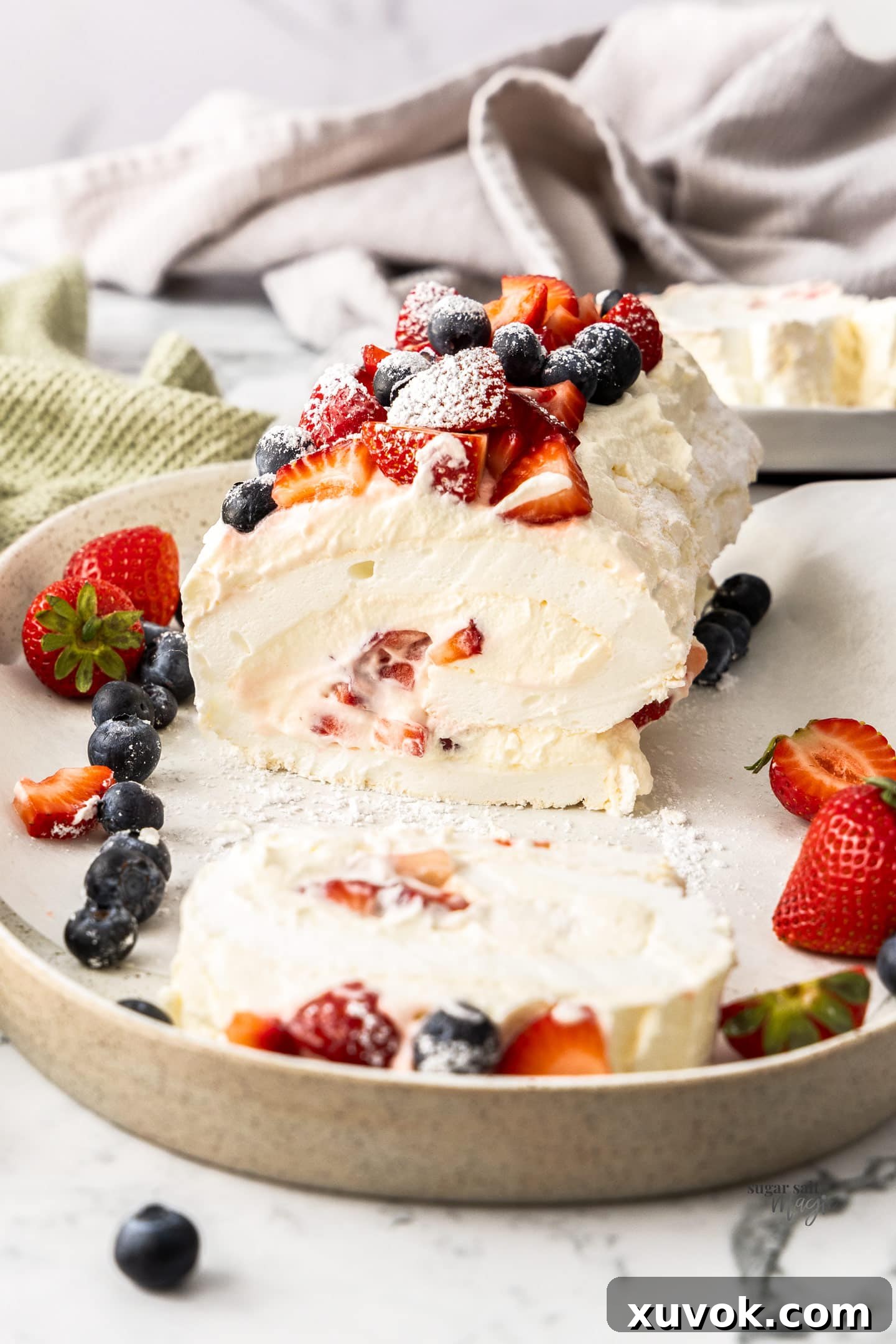
Indulge in the Cloud-Like Delicacy: The Ultimate Pavlova Roll (Meringue Roulade) Recipe
Welcome to the world of the Pavlova Roll – a dessert that effortlessly combines elegance with incredible flavor and ease of preparation. If you’re searching for a show-stopping yet remarkably simple sweet treat, your quest ends here. This meringue roulade is a fantastic twist on the classic pavlova, offering all the marshmallow-soft delight without the lengthy baking time.
Why You’ll Adore This Pavlova Roll
This pavlova roll is nothing short of a culinary dream come true, especially when you desire a dessert that is light, sweet, and visually stunning for any special occasion. Imagine presenting a dessert that looks like it took hours, but can actually be on your table within an hour of starting! It’s an ideal choice when you need a fantastic pavlova-style treat on short notice, bypassing the slow, low-temperature bake of its traditional counterpart.
Crafted in a sheet pan, the meringue cooks much faster than a large, mounded pavlova, yet it retains that signature soft, marshmallow-like interior – the very essence of a perfect pavlova. This elegant dessert, also known as meringue roulade, is then delicately rolled up with a luscious Chantilly cream (a lightly sweetened vanilla whipped cream) and an abundance of fresh, vibrant berries. It truly is the epitome of a quick-yet-beautiful summer dessert, guaranteed to impress your guests with its ease and undeniable charm. It’s not just quick and easy; it’s genuinely impressive, making it a staple for your entertaining repertoire.
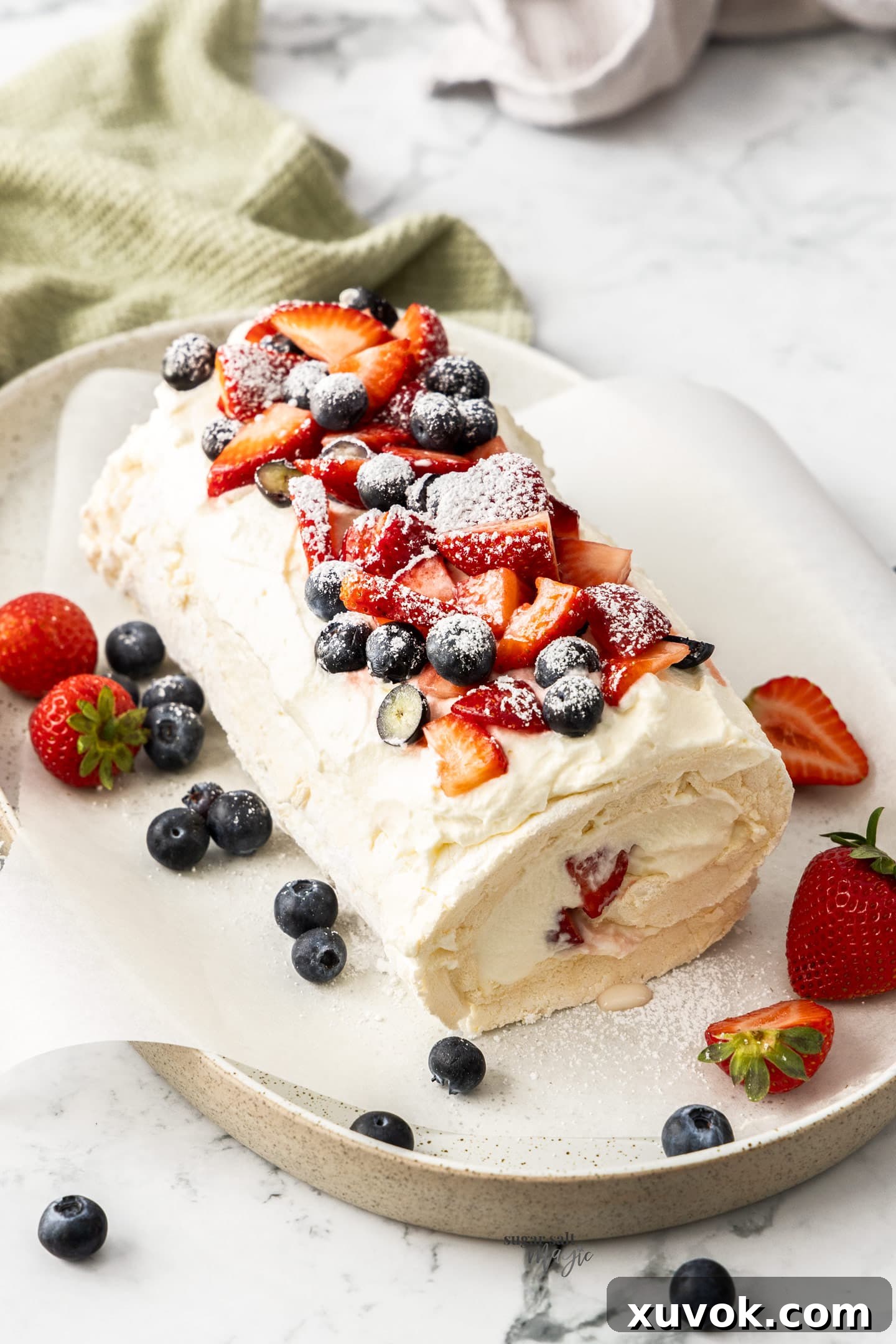
Table of Contents
- Why You’ll Adore This Pavlova Roll
- What Exactly is a Pavlova Roll?
- Essential Ingredients for Pavlova Roulade
- Step-by-Step: How to Make a Pavlova Roll
- Crafting the Perfect Meringue for Roulade
- Flipping the Meringue Flawlessly
- Generously Filling Your Pavlova Roll
- Mastering the Roll
- Understanding Why Your Roulade Might Crack
- Pro Tips and Clever Tricks for Success
- Frequently Asked Questions (FAQs)
- Storage Guidelines for Freshness
- More Irresistible Recipes You’ll Love
Never Miss a Recipe!
Get the latest recipes straight to your inbox and discover new culinary delights!
What Exactly is a Pavlova Roll?
Often referred to as a meringue roulade or a pavlova roulade, a pavlova roll is a magnificent dessert composed of a delicate, soft, and melt-in-your-mouth meringue sheet. This cloud-like meringue is generously filled with luscious cream and fresh berries, then carefully rolled up, much like a classic Swiss roll. Particularly cherished in Australia and New Zealand, this dessert is a creative adaptation of the more traditional pavlova.
The primary distinction between a pavlova roll and its traditional counterpart lies in its texture: a pavlova roll lacks the crisp outer shell that defines a classic pavlova. Instead, it offers a consistent, pillowy-soft texture throughout, mirroring the delightful marshmallow-like interior of a conventional pavlova. This makes it incredibly easy to slice and serve.
While this meringue roulade is truly delightful at any time of year, it shines brightest during the warmer months. Served chilled and adorned with an abundance of fresh, seasonal berries, it’s the quintessential summer treat. However, its versatility extends beyond summer; you can absolutely adapt it for winter with seasonal fruits like gently poached pears infused with warm spices, or caramelized cinnamon apples. Just remember, to maintain its structural integrity and the freshness of the cream, the roulade itself should always be served cool, never warm.
Essential Ingredients for Pavlova Roulade
The beauty of a pavlova roll lies in its simplicity, utilizing many of the same humble yet transformative ingredients found in a traditional pavlova. The light-as-air meringue is crafted from a base of egg whites, sugar, a touch of vinegar, and cornflour (known as cornstarch in some regions). For the most stable and impressive meringue roulade, always ensure you’re using fresh, high-quality egg whites.
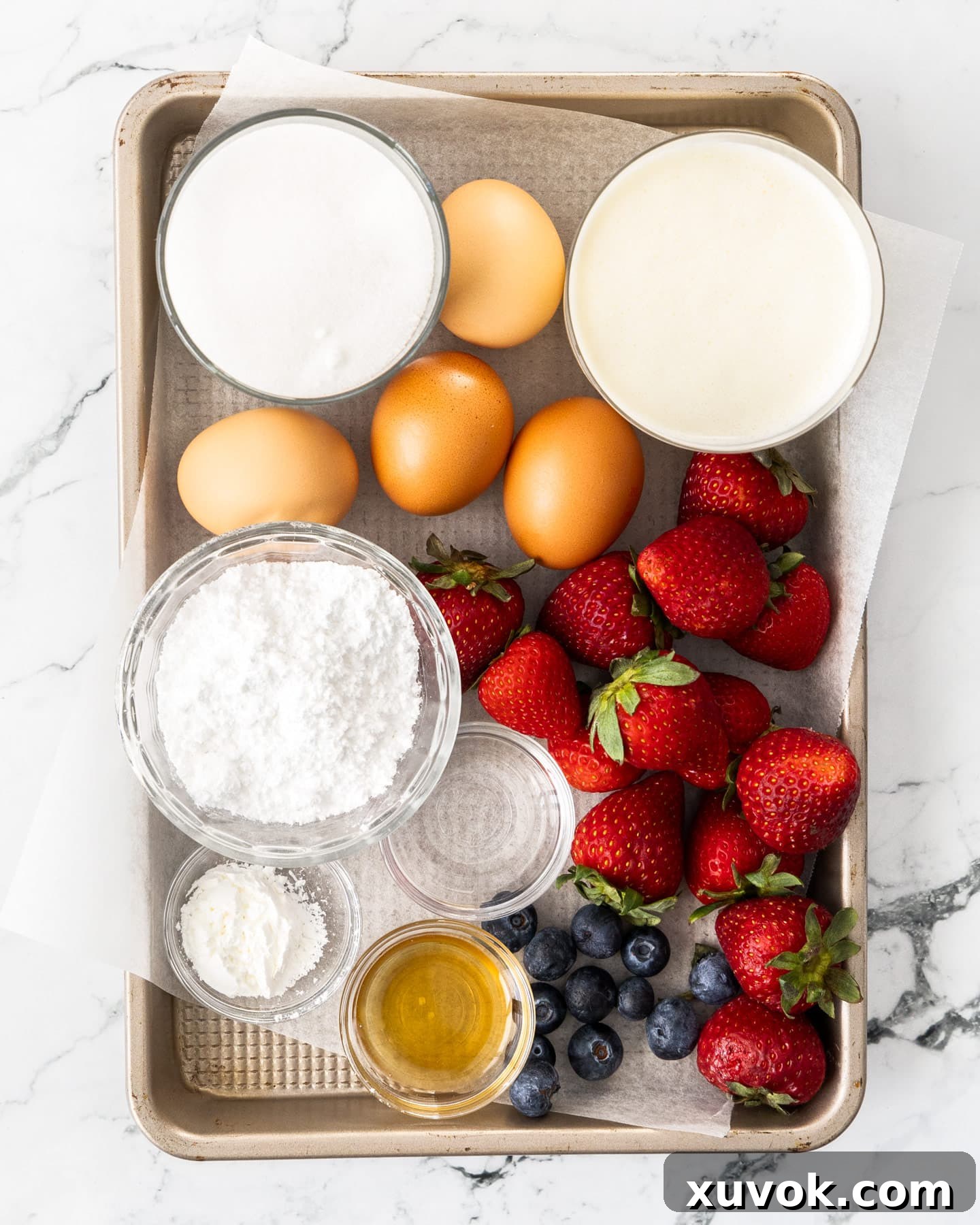
Jump to the recipe for precise measurements and detailed instructions.
Egg Whites: The foundation of any great meringue. Use large, fresh egg whites that are at room temperature. Fresh eggs contribute to a more stable meringue that is crucial for rolling without excessive cracking. When separating eggs, exercise extreme caution to prevent any yolk from mixing with the whites, as even a tiny speck of fat can hinder them from whipping up properly. If yolk gets in, it’s best to start over with new eggs.
Caster Sugar (Superfine Sugar): This is the ideal sugar for meringue. Its fine granules dissolve quickly into the egg whites, ensuring a smooth, glossy meringue without the risk of overbeating the egg whites before the sugar fully integrates. If superfine sugar isn’t readily available, you can easily create your own by pulsing regular granulated sugar in your food processor until it reaches a very fine consistency. Avoid using icing sugar or powdered sugar in the meringue itself, as it can contain cornstarch that may affect the texture.
Vinegar: A small amount of white vinegar plays a vital role in stabilizing the meringue structure, contributing to its chewiness and preventing it from collapsing. For an equally effective alternative, you can substitute lemon juice.
Cornflour / Cornstarch: This fine, white starch is a secret weapon in pavlova, known for creating that distinctive soft, chewy, melt-in-the-mouth marshmallow texture. It’s often used as a thickening agent in sauces but performs a magical transformation in meringue.
Vanilla Extract: While I typically avoid adding flavorings directly to the meringue itself, as it can sometimes cause discoloration, vanilla extract is absolutely essential for flavoring the whipped cream filling. Always opt for pure vanilla extract over synthetic vanilla essence for a superior and more authentic flavor profile.
Cream: The perfect filling calls for a rich, full-fat cream. Whether you call it thickened cream, whipping cream, heavy cream, or heavy whipping cream, you’re looking for a product with at least 35% milk fat. This ensures it will whip up beautifully into a light, airy, and stable consistency. In this recipe, the cream is transformed into a delightful Chantilly cream with the addition of sugar and vanilla.
Fresh Fruit: Pavlova roll is traditionally celebrated with a generous scattering of fresh berries, such as strawberries and blueberries, both folded into the cream and artfully arranged on top. Feel free to explore other berry varieties like raspberries or blackberries, or get creative with a mix of your favorite seasonal fruits. Consider sweet mango, juicy peaches, dark cherries, or vibrant kiwi fruit for a burst of color and flavor. The key is to choose fruits that are fresh, ripe, and complement the sweet meringue and cream.
Step-by-Step: How to Make a Pavlova Roll
Making a pavlova roll, or meringue roulade, is a surprisingly straightforward and rewarding process – often considered even easier and quicker than preparing a traditional pavlova. Utilizing a stand mixer makes the meringue whipping almost entirely hands-off, allowing you to multitask or simply enjoy a moment of peace (perhaps with a cuppa!).
For this pavlova roulade recipe, I highly recommend macerating the strawberries, as it enhances their flavor and creates a lovely light syrup perfect for serving. However, if you’re short on time, you can certainly skip this step and use fresh strawberries directly.
Jump to the recipe for complete ingredient quantities and full instructions.
Crafting the Perfect Meringue for Roulade
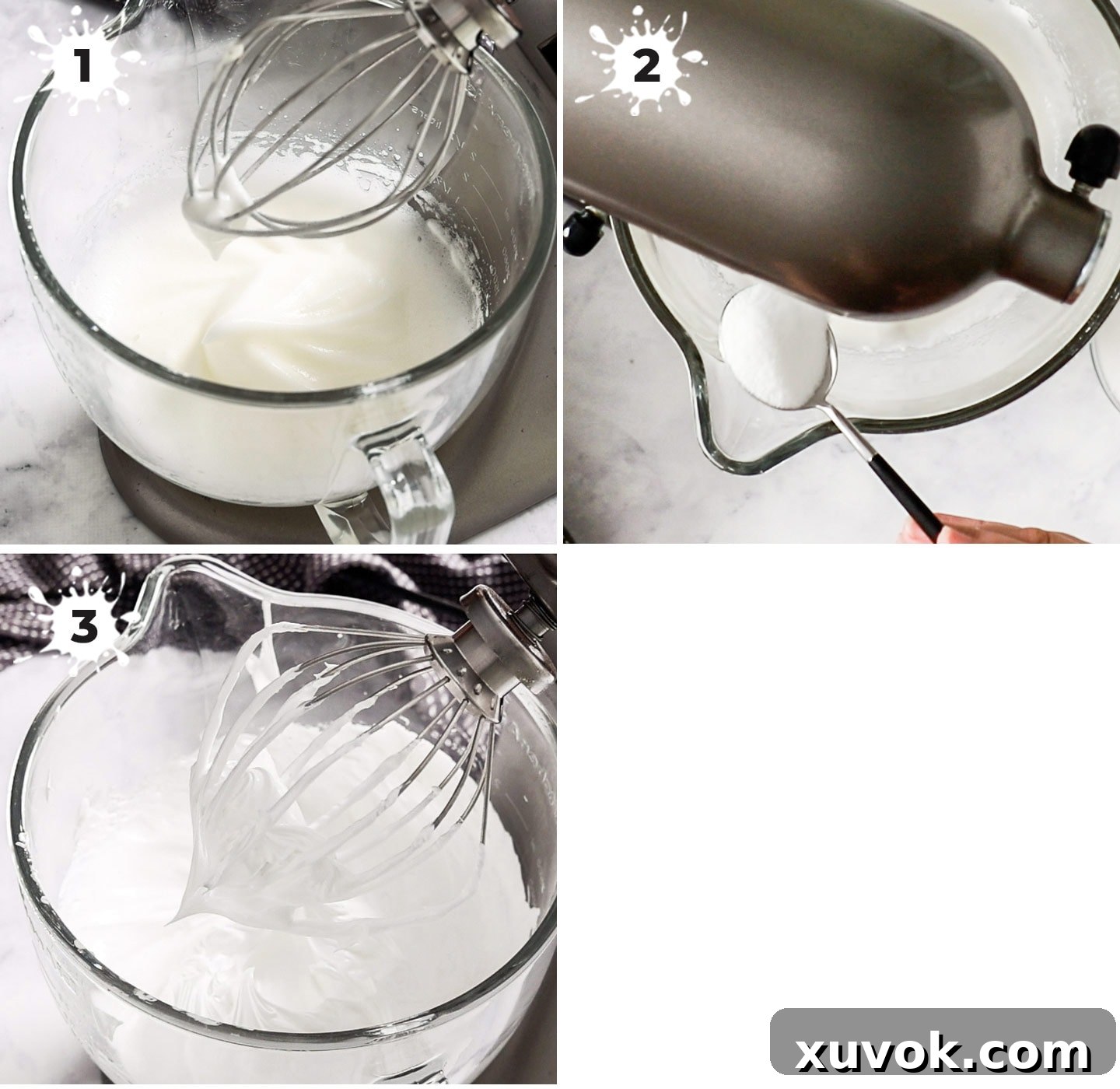
- Begin by whipping your room-temperature egg whites in a clean, grease-free bowl on medium-high speed. Continue until they reach the soft peak stage (photo 1). At this point, the meringue will hold its shape but the tip will gently flop over. It’s perfectly fine if you reach stiff peaks, but be careful not to overbeat past this point.
- Now, reduce the mixer speed to low-medium. Gradually add the caster sugar, one tablespoon at a time, allowing approximately 10 seconds between each addition (photo 2). This slow and steady incorporation is crucial; it ensures the sugar fully dissolves and prevents the meringue from losing the precious air you’ve just whipped in.
- Once all the sugar is added, increase the speed to medium-high (avoiding the highest setting) and continue to beat the meringue. You’re looking for a mixture that is thick, brilliantly white, and glossy, forming stiff peaks (photo 3). To check for dissolved sugar, rub a tiny bit of meringue between your fingers – it should feel completely smooth, not grainy. Finally, sift in the cornflour and gently beat it in along with the vinegar for about 30 seconds to fully incorporate.
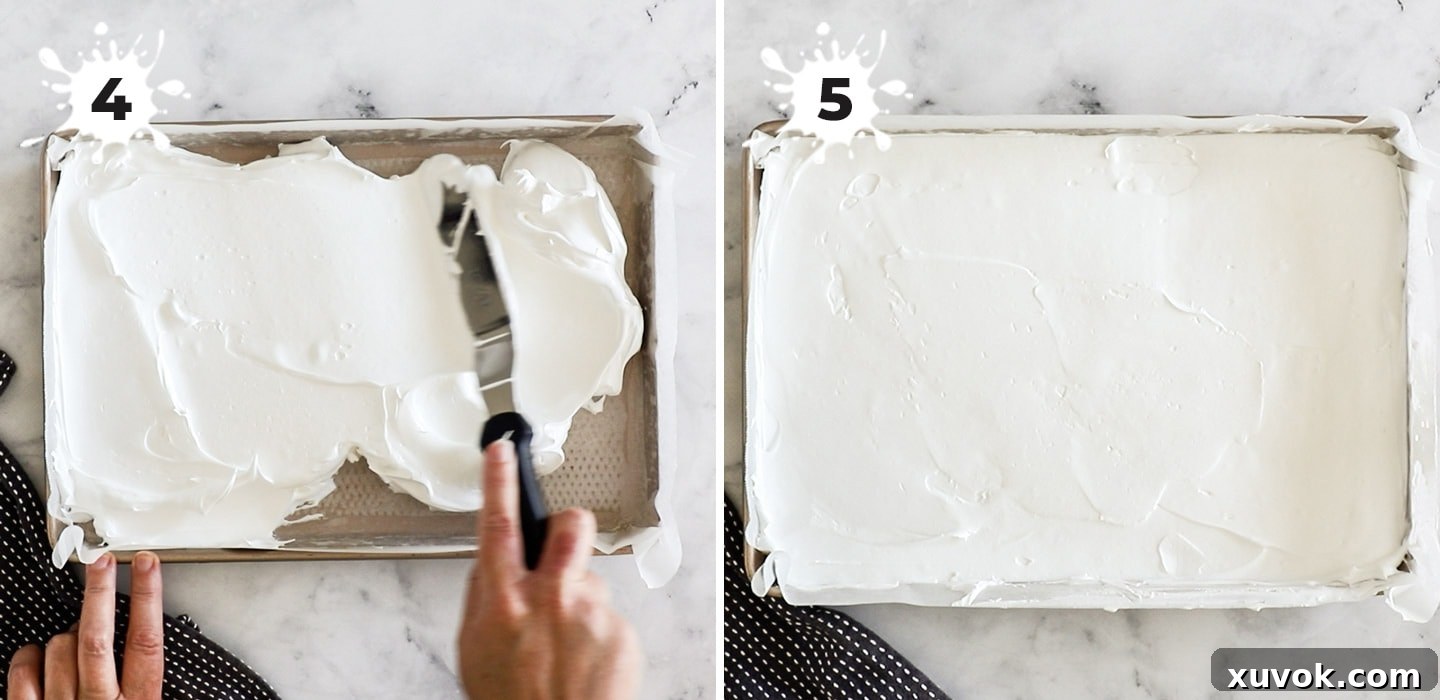
- Carefully spread the prepared meringue evenly into your lined baking tray (photo 4). Ensure it reaches all the way to the edges, creating a flat and level surface (photo 5). This uniform thickness is key for even baking and easy rolling.
- Bake the meringue in your preheated oven at 160C/320F for approximately 15 minutes. It should be just set and begin to take on a very subtle golden hue on top, indicating it’s perfectly cooked without being over-crisped.
While your meringue bakes to perfection, take this opportune moment to wash and neatly slice your chosen berries! Also, gather all the necessary items for the crucial next step: flipping the meringue.
Flipping the Meringue Flawlessly
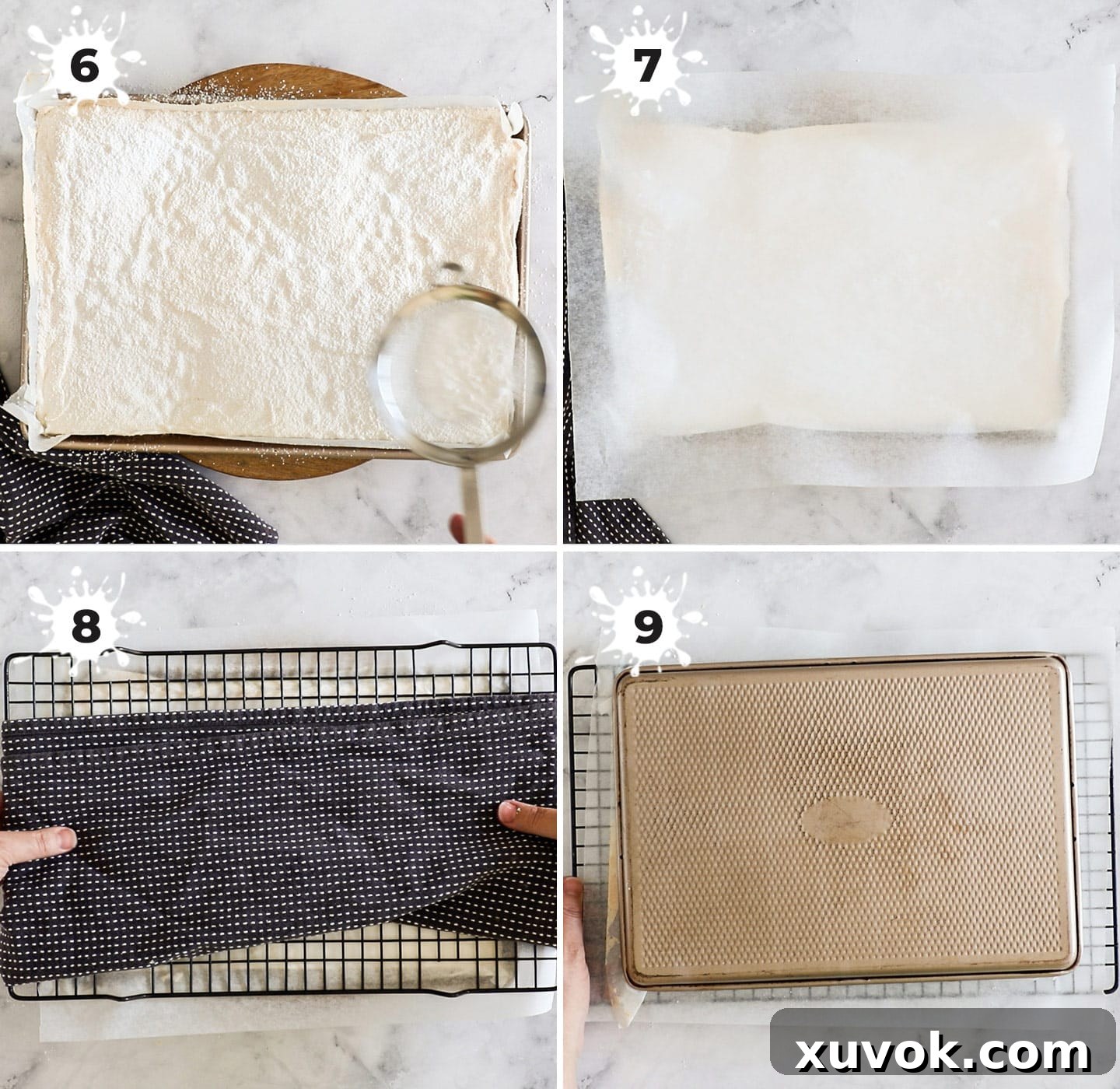
- As soon as the hot meringue emerges from the oven, dust its entire surface generously with icing sugar (photo 6). This helps prevent sticking and adds a lovely finish.
- Immediately lay a fresh sheet of baking paper over the top of the sugared meringue (photo 7), ensuring it covers the entire surface.
- Place a wire cooling rack directly on top of the baking paper. Position it upside down, so the flat side rests against the paper and the feet point upwards.
- Now, gather the entire assembly – the baking tray, meringue, baking paper, and cooling rack – firmly with a tea towel or oven mitts to protect your hands from the heat (photo 8). With a swift, confident motion, flip the whole stack over so that the baking tray is now on top (photo 9).
- Carefully remove the inverted baking tray, then gently peel back the original layer of baking paper from the bottom of the meringue.
Allow the meringue to cool completely for at least 20-30 minutes. It must be at room temperature before you add the cream filling to prevent melting. While you wait, whip your cream and, if desired, macerate your strawberries.
Generously Filling Your Pavlova Roll
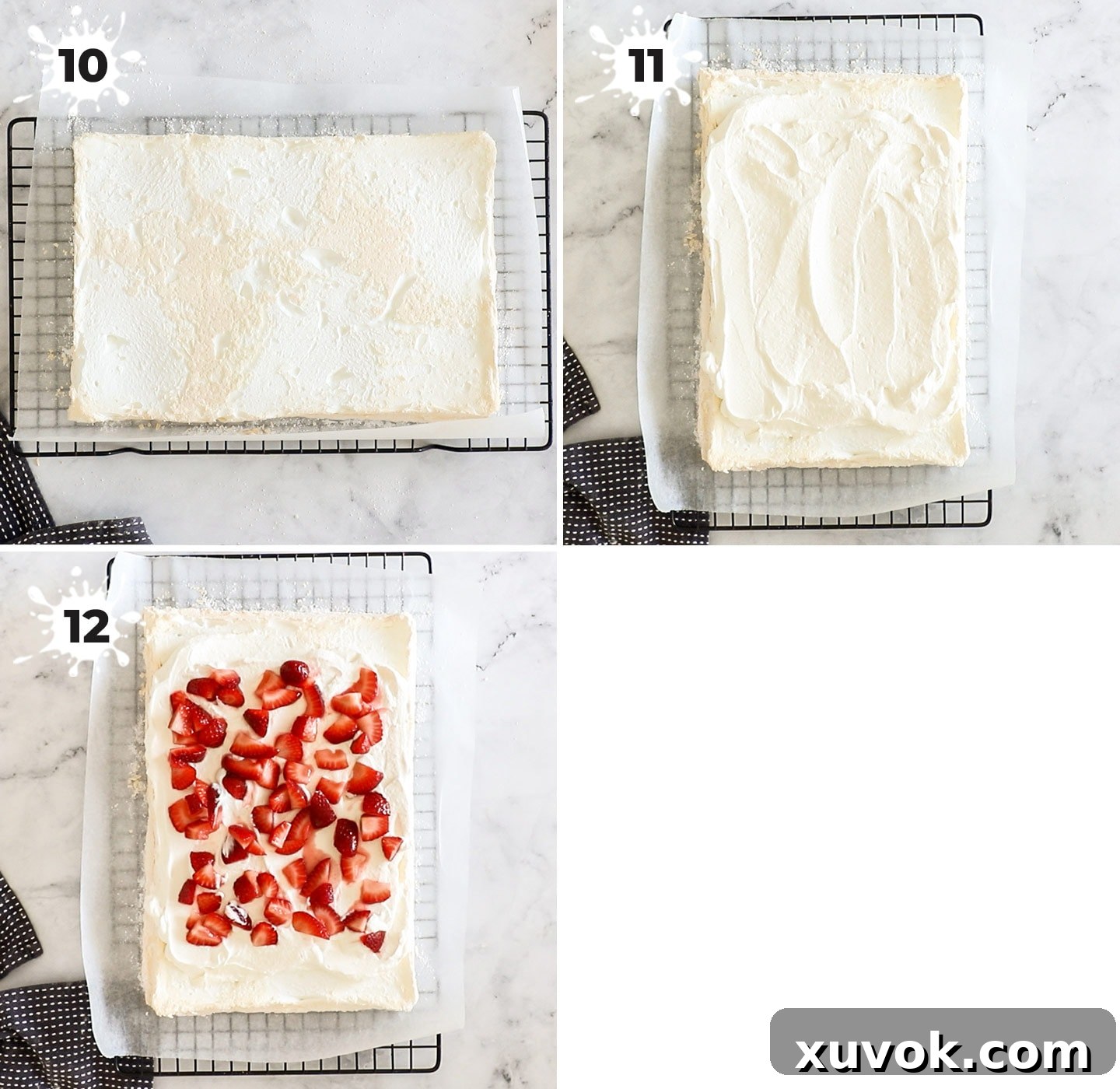
- Once the meringue has cooled completely, it’s time for the delicious filling. Spread about three-quarters of your prepared Chantilly cream (simply your whipping cream beaten with sugar and vanilla) evenly over the entire surface of the meringue. It’s important to leave approximately one inch clear at each short end of the meringue (photo 11); this small margin will make the rolling process significantly easier and prevent the cream from squeezing out excessively.
- Next, liberally scatter two-thirds of your fresh (or macerated) strawberries over the cream-laden meringue (photo 12). If you’ve macerated the strawberries, be sure to hold back any syrup that has collected; this flavorful liquid is best reserved for drizzling over the finished roulade just before serving.
Mastering the Roll
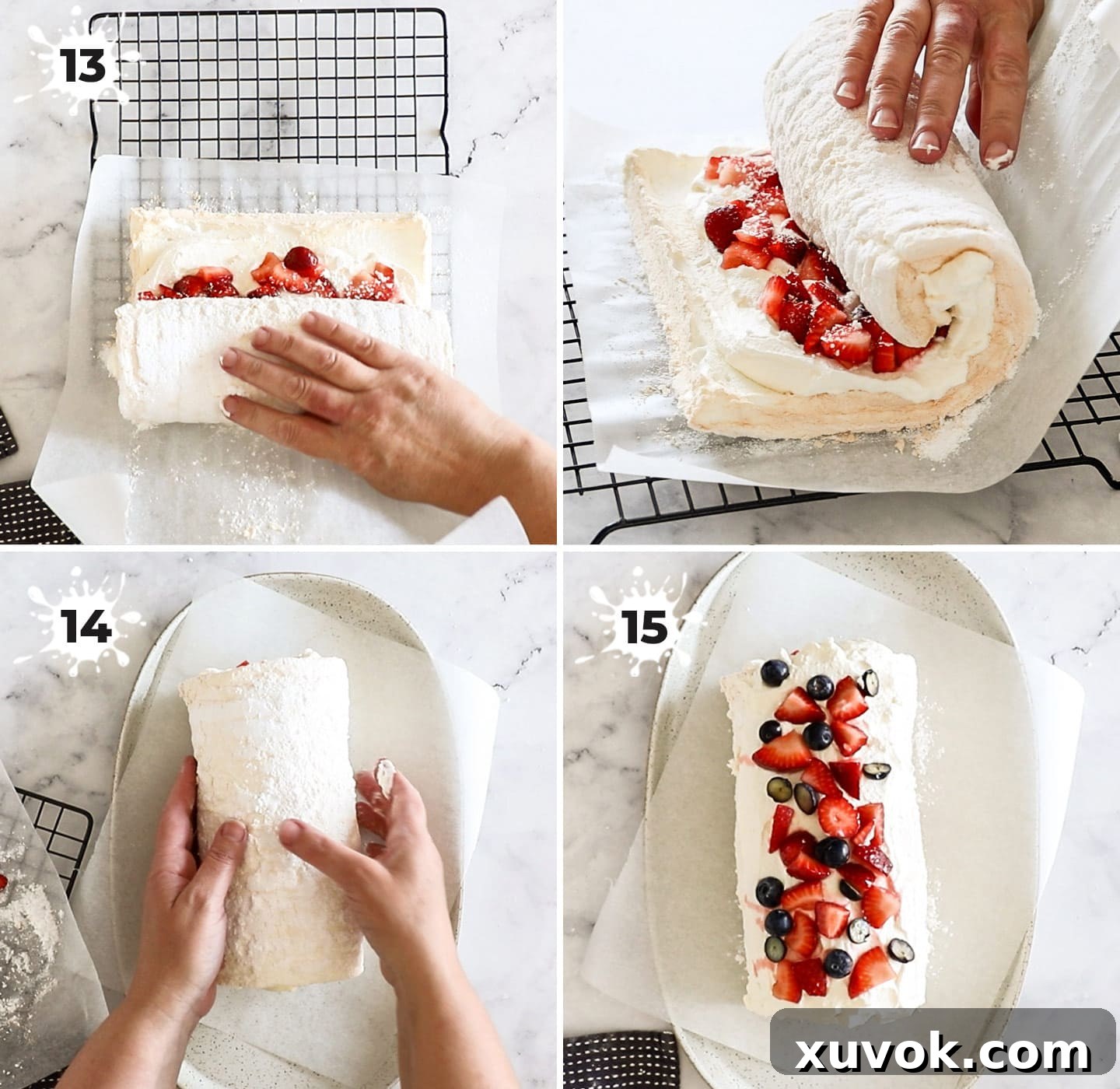
- To begin the roll, use the edge of the baking paper at the short end closest to you. Gently lift and fold the meringue over itself to start the roll. Then, use a combination of both the paper and your hands to carefully and confidently roll the meringue all the way up (photos 13). The key is to be gentle yet firm, guiding the meringue into a tight, consistent spiral. Don’t worry if a few small cracks appear – they’re part of its rustic charm and can be easily concealed with toppings.
- Once rolled, delicately lift the pavlova roll. It should be firm and stable enough to handle with two hands. Carefully transfer it to your chosen serving platter (photo 14), positioning it seam-side down.
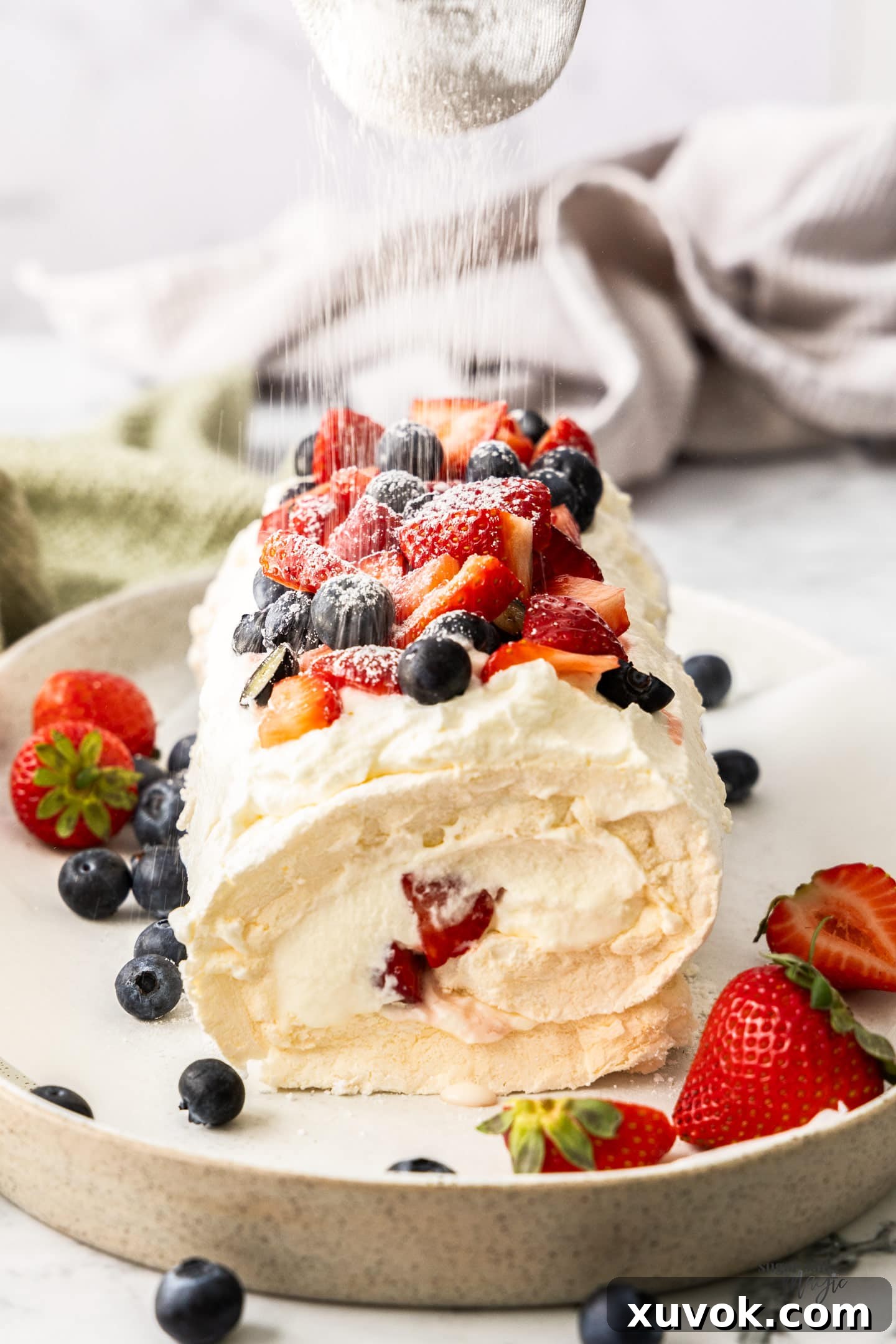
- Finally, garnish your beautiful pavlova roulade with the remaining Chantilly cream, the rest of the strawberries, and a scattering of fresh blueberries (photo 15). Remember to hold back any strawberry syrup until the very moment of serving.
- For the absolute best taste and texture, serve your pavlova roll immediately after assembly.
If you’re not planning to serve the pavlova roll immediately, it’s best to hold off on adding the final cream and berry toppings. Instead, wrap the plain roll well in plastic wrap and store it in the refrigerator for up to 4-5 hours. Add the toppings just before serving for optimal presentation and freshness.
Understanding Why Your Roulade Might Crack
It’s quite common for meringue roulades to develop cracks during the rolling process, so don’t be disheartened if yours isn’t perfectly smooth! The delicate nature of meringue makes it prone to fracturing, but rest assured, these cracks do not affect the delicious taste or soft texture of your dessert. In fact, they often add to its charming, rustic appeal.
While cracking can sometimes be a result of overbaking, which makes the meringue too brittle, it’s not the only culprit. Another common reason is insufficient filling; the cream actually provides crucial structural support to the delicate meringue as it’s rolled. Therefore, don’t be shy with the Chantilly cream! Other factors can include the meringue cooling too rapidly, making it less pliable, or using older egg whites that yield a less stable meringue. Ensuring your meringue is perfectly whipped to stiff, glossy peaks and allowed to cool gradually will help minimize cracking, though a few small fissures are entirely normal and part of the pavlova roll experience.
Pro Tips and Clever Tricks for Success
- Immaculate Equipment is Key: Any trace of fat or egg yolk in your mixing bowl or on your whisk can severely impede the egg whites from whipping properly. Ensure all your equipment is sparkling clean and completely grease-free. While egg whites might still whip with some contamination, they won’t reach the stable, stiff peak stage essential for a perfect meringue.
- Achieve the Perfect Meringue Consistency: Avoid both under-whipping and over-whipping. You want your meringue to be perfectly smooth and thick, not grainy, before it goes into the pan. If it reaches stiff peaks but still feels grainy when rubbed between your fingers, continue beating on medium speed until it’s smooth. Adding the vinegar at the very end can also help smooth out any lingering graininess.
- Embrace Seasonal Fruits: While berries are classic, feel free to experiment with any fruits you love or whatever is in season. For a delightful winter variation, try warm poached pears, spiced cinnamon apples, or even roasted figs. Just ensure the fruit isn’t overly watery.
- Serve Promptly for Best Results: The pavlova roll is at its absolute peak when served within a few hours of assembly. Over time, the meringue can dry out slightly, which might lead to more pronounced cracking. The cream filling also softens the meringue, contributing to its unique texture.
- If Cracks Appear, Embrace Them: Should your meringue crack more than anticipated, don’t despair! Simply break it into pieces, mix with cream and fruit, and serve it “Eton Mess” style in individual dishes. It will be just as delicious and beautiful.
- Precision Slicing: To achieve clean, elegant slices without squishing out the creamy filling, use a sharp, thin knife. Wiping the blade clean between each cut can also help.
- Creative Uses for Leftover Yolks: Don’t waste those extra egg yolks! They are perfect for making rich pastry cream (crème pâtissière), tangy lemon curd, or even a luxurious hollandaise sauce.
- Parchment Paper Overhang: When lining your baking pan, ensure the parchment paper extends over the short sides. This overhang creates “handles” that will be incredibly helpful when flipping the meringue out of the pan.
- Even Spreading: An offset spatula is your best friend for spreading the meringue evenly into the pan. It allows for smooth, controlled movements to achieve a consistent thickness.
- Oven Temperature Accuracy: Ovens can vary significantly. An oven thermometer is a worthwhile investment to ensure your oven is truly at the temperature you set, preventing over- or under-baking.
Frequently Asked Questions (FAQs)
The core difference lies in their form and cooking method. A traditional pavlova is characterized by meringue piled into a mound or nest, then baked slowly at a low temperature to achieve a distinctively crisp exterior and a soft, marshmallow-like interior. A roulade, on the other hand, uses the same basic meringue mixture but is baked as a thin, flat sheet. This sheet is then filled and rolled up, resulting in a dessert that maintains the uniform soft, chewy texture found in the interior of a pavlova, without the crispy outer shell. Essentially, a pavlova roll offers that beloved soft pavlova experience in a delightful rolled format.
An ‘eggy’ flavor in your pavlova is most commonly due to the sugar not being fully dissolved and incorporated into the meringue, or from reducing the amount of sugar specified in the recipe. If sugar crystals remain undissolved, they won’t properly bind with the egg whites, leading to an imbalance in flavor. Similarly, if you cut down on the sugar, you decrease the sweetness that balances the natural flavor of the egg whites, making it more pronounced. Ensuring you use superfine (caster) sugar and beating the meringue until it’s completely smooth and glossy will help prevent an eggy taste, creating a perfectly balanced sweet treat.
While it’s technically possible to prepare the pavlova roll a day in advance (without the final toppings), I strongly recommend serving it within a few hours of making it for the freshest taste and best texture. When stored overnight, the cream filling can sometimes lose a bit of its airiness and moisture, which might cause the meringue roll to slightly sag, soften excessively, or even develop more cracks. However, if you must make it ahead, wrap the unadorned roll very well in plastic wrap to minimize air exposure and store it in the refrigerator overnight. Just remember to add the fresh cream and berries just before serving. If it does happen to lose its perfect shape, you can always transform it into a delicious deconstructed pavlova, like an Eton mess, which is equally delightful!
Freezing a fully assembled pavlova roll is generally not recommended. The meringue can become very brittle and sticky upon thawing, and the whipped cream filling may lose its texture and become watery. However, you can bake the meringue sheet in advance and freeze it plain, wrapped tightly in plastic wrap and then foil, for up to 2-3 weeks. Thaw it at room temperature before filling and rolling. It’s best to prepare the fresh cream and fruit on the day of serving.
A 9×13 inch (22x33cm) jelly roll pan or Swiss roll tin is ideal for this recipe. Its shallow sides and rectangular shape are perfect for baking the thin, even sheet of meringue required for rolling. Make sure to line it generously with parchment paper, leaving an overhang on the short sides to help with the flipping process.
Storage Guidelines for Freshness
While this delightful pavlova roll is undoubtedly at its best when served fresh, ideally within a few hours of assembly, it can be stored in the refrigerator. If you anticipate leftovers or need to prepare it slightly ahead, ensure it’s covered very well with plastic wrap to prevent the meringue from drying out or absorbing refrigerator odors. As mentioned in the FAQs, the main risk with longer storage (e.g., overnight) is that the cream filling might begin to loosen or weep over time, potentially causing the pavlova roll to sag, become overly soft, or develop more cracks. The delicate nature of the meringue combined with the moisture from the cream means it’s best enjoyed soon after creation.
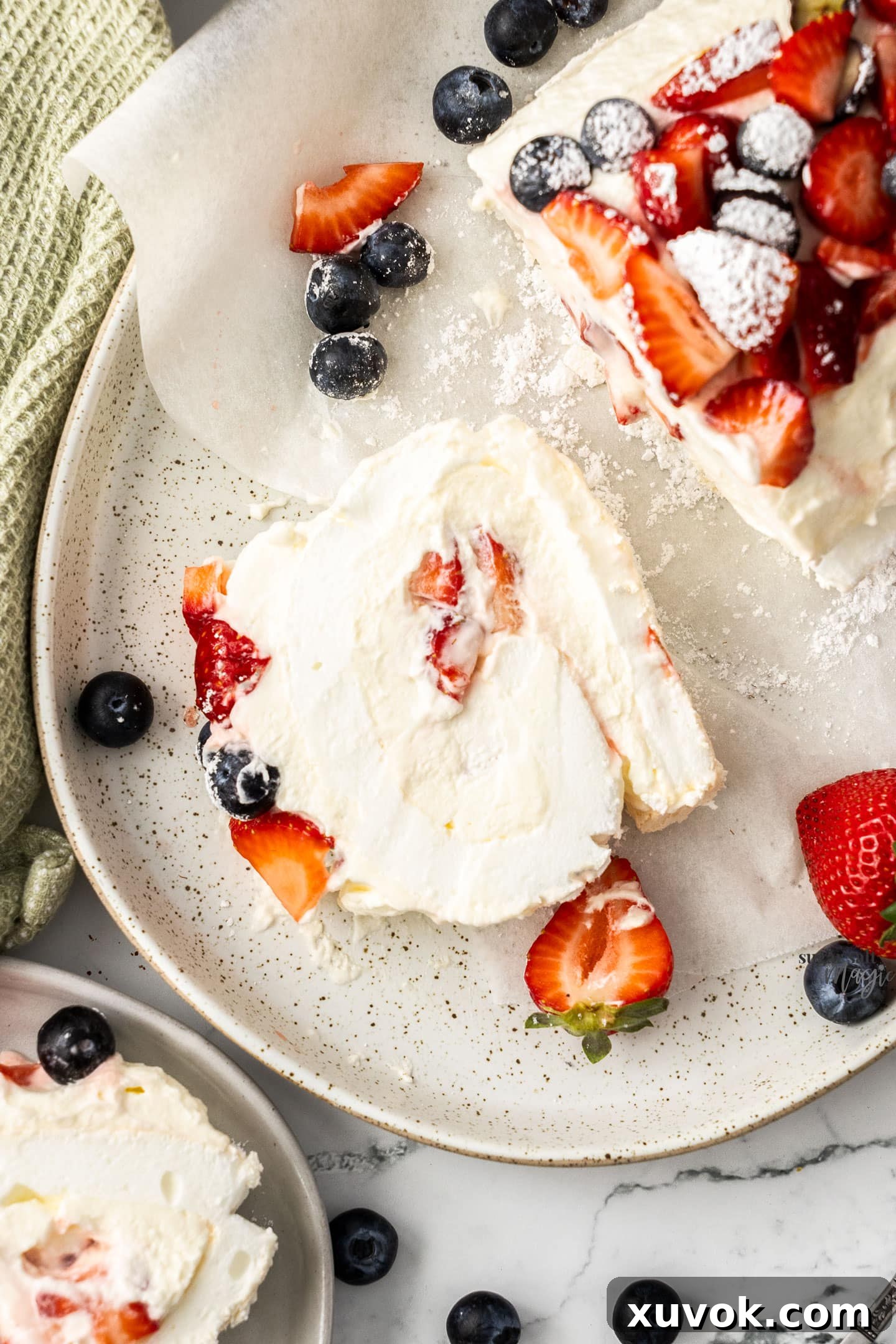
Any remaining slices or portions of the pavlova roll can be stored in an airtight container in the fridge. This will help maintain its texture and freshness for up to 1-2 days. However, for the ultimate experience of its cloud-like meringue and vibrant fruit, fresh is always superior.
More Irresistible Recipes You’ll Love
If you’ve fallen in love with the magic of meringue and pavlova, explore these other fantastic recipes:
- How to make perfect pavlova: Master the classic, with a crisp shell and soft interior.
- Mango pavlova: A tropical twist on the beloved dessert, perfect for summer.
- Chocolate swirl pavlova: Indulge in rich chocolate flavors swirled through a classic meringue.
- Pavlova wreath: A festive and beautiful presentation, ideal for holiday gatherings.
- Pavlova grazing board: A fun, interactive way to serve pavlova with various toppings.
- Chocolate meringue cake: Layers of decadent chocolate and airy meringue.
Did you try this pavlova roll recipe?
Leaving a rating and comment below the recipe is so helpful!
Hungry for more? Subscribe to the newsletter for free recipes straight to your inbox. Also, follow along on Facebook, Pinterest and Instagram.
Pavlova Roll (Meringue Roulade)
Rate
Pin
Ingredients
- 4 egg whites (from large eggs), room temperature
- 1 cup caster sugar (superfine sugar) (200g / 7oz)
- 2 teaspoons cornflour (US cornstarch)
- 1 teaspoon white vinegar
- ⅓ cup icing sugar (powdered sugar), divided in two halves (43g / 1 ½oz)
- 250 g fresh strawberries, hulled and sliced (~9oz)
- 1 tablespoon caster sugar, extra (optional) (notes 1)
- 300 ml whipping cream (heavy whipping cream), cold (1 ¼ cups)
- 2 teaspoons vanilla extract
- a handful blueberries
For best results, always weigh ingredients where a weight is provided
Equipment
-
9×13 baking pan (22x33cm)
-
Stand mixer / handheld mixer
Instructions
-
Make the meringue:
Grease and line a 9×13 inch pan (jelly roll pan / swiss roll tin) with parchment paper, ensuring the ends of the paper stick up to create “handles”. Preheat your oven to 160C (140C fan forced) / 320F.
-
In the clean, dry bowl of a stand mixer fitted with the whisk attachment (or using a handheld electric beater), beat the egg whites on medium speed until soft peaks form, typically around 5 minutes. The meringue should hold its shape but the tip should gently curl.
-
Reduce the mixer speed to low-medium. Gradually begin adding the 1 cup of caster sugar, one tablespoon at a time, counting to 10 slowly between each addition. This ensures the sugar dissolves fully without deflating the egg whites. Once all the sugar has been incorporated, increase the speed to medium-high (avoiding the absolute highest setting) and continue to whisk until the egg whites are thick, glossy, and form firm, stiff peaks (this usually takes about 10 minutes).
-
To verify the meringue mixture is ready, rub a small amount between your finger and thumb. It should feel completely smooth, indicating all the sugar has dissolved. If it still feels grainy, continue beating on medium speed until it is smooth to the touch.
-
Sift the cornflour directly over the meringue and add the white vinegar. Whisk briefly for just 30 seconds to gently incorporate these final ingredients.
-
Using a spatula, carefully scoop the meringue onto the center of your lined baking pan. Employ an offset spatula to gently and evenly spread the meringue all the way to the corners, ensuring the top surface is flat and perfectly level for consistent baking.
-
Bake in the preheated oven for 15 minutes, or until the meringue is just beginning to turn a very slight golden color on top. It should feel set but remain soft and pliable.
-
While the meringue bakes, prepare for the next critical step. Have ready a new sheet of baking paper (larger than your meringue pan), a small sieve, half of the icing sugar, and a sturdy wire cooling rack.
-
As soon as you take the meringue out of the oven, immediately and generously sift 2 tablespoons of icing sugar evenly over its entire surface. Promptly lay the prepared fresh sheet of baking paper over the sugared meringue, followed by the wire cooling rack placed upside down on top of the paper. Using oven mitts or a thick tea towel to protect your hands, confidently flip the entire assembly over, so the cooling rack is now on the bottom and the original baking pan is on top. Gently lift away the empty baking pan, then carefully peel the original baking paper off the meringue.
-
Allow the meringue sheet to cool completely on the wire rack for 20-30 minutes, or until it reaches room temperature. This cooling period is vital for pliability.
-
Macerate the strawberries (optional, but recommended):
In a medium bowl, gently combine the sliced strawberries with the extra 1 tablespoon of caster sugar. Set them aside, giving them a gentle stir every so often. This process draws out their natural juices, creating a lovely syrup and intensifying their flavor.
-
In a separate medium bowl, using an electric mixer or a sturdy balloon whisk, beat the cold whipping cream together with the remaining icing sugar and vanilla extract until it forms stiff, yet airy, peaks. Be careful not to overbeat, as it can quickly become grainy.
-
Carefully spread three-quarters of the freshly whipped cream evenly over the completely cooled meringue sheet. Ensure you leave a clear border of about 1 inch along each of the short ends. Then, dot about two-thirds of the strawberries over the cream, making sure to leave behind any accumulated strawberry syrup – this will be used for serving later to prevent the roulade from becoming soggy.
-
Now, for the roll! Starting from one short edge closest to you, quickly and confidently roll the meringue. Use the underlying parchment paper to assist you in lifting and guiding the roll. Transfer the finished roll to your desired serving platter, placing it seam-side down for a neat presentation.
-
Crown your pavlova roulade with the remaining whipped cream, the rest of the strawberries, and a vibrant scattering of fresh blueberries. If you macerated the strawberries, remember to save that delicious strawberry syrup to pour over individual slices just before serving.
-
Please take a moment to leave a comment & rating. It’s appreciated and so helpful.
Notes
- Tablespoons: Please note that I use a standard Australian 20ml tablespoon in my recipes, which is equivalent to 4 teaspoons. It’s always a good idea to check your measuring spoons to ensure accuracy.
- Oven Temperature Consistency: All ovens have their unique characteristics and can vary in temperature. If you notice your meringue browning too quickly, your oven might have hot spots or run hotter than its setting. Keeping an oven thermometer in your oven at all times is an excellent way to ensure precise baking temperatures.
- Importance of Fresh Egg Whites: Using fresh egg whites will consistently yield a superior result compared to older eggs. Fresh egg whites create a more stable meringue that is also more pliable and less prone to cracking when it’s time to roll.
- Sugar Type for Meringue: For the meringue itself, strictly use caster sugar (superfine sugar). Avoid icing sugar (powdered sugar), granulated sugar, or brown sugar, as their varying granule sizes or additives can prevent the sugar from dissolving properly, leading to a grainy or unstable meringue.
- Versatile Topping Ideas: The topping possibilities for a pavlova roll are endless! While strawberries, kiwi fruit, passion fruit, and mango are classic pavlova toppings, feel free to get creative with other seasonal fruits like blueberries, blackberries, or even a zesty touch of lemon or lime zest, or thin slices of citrus.
- Nutrition Information Disclaimer: The nutrition details provided are approximate and have been derived from an online calculator. Please be aware that the specific brands and types of ingredients you use may cause variations in the final nutritional values.
EXPLORE MORE AUSSIE DESSERTS!
Calories from Fat 126