Mastering Leek Preparation: Your Essential Guide to Perfectly Clean Leeks
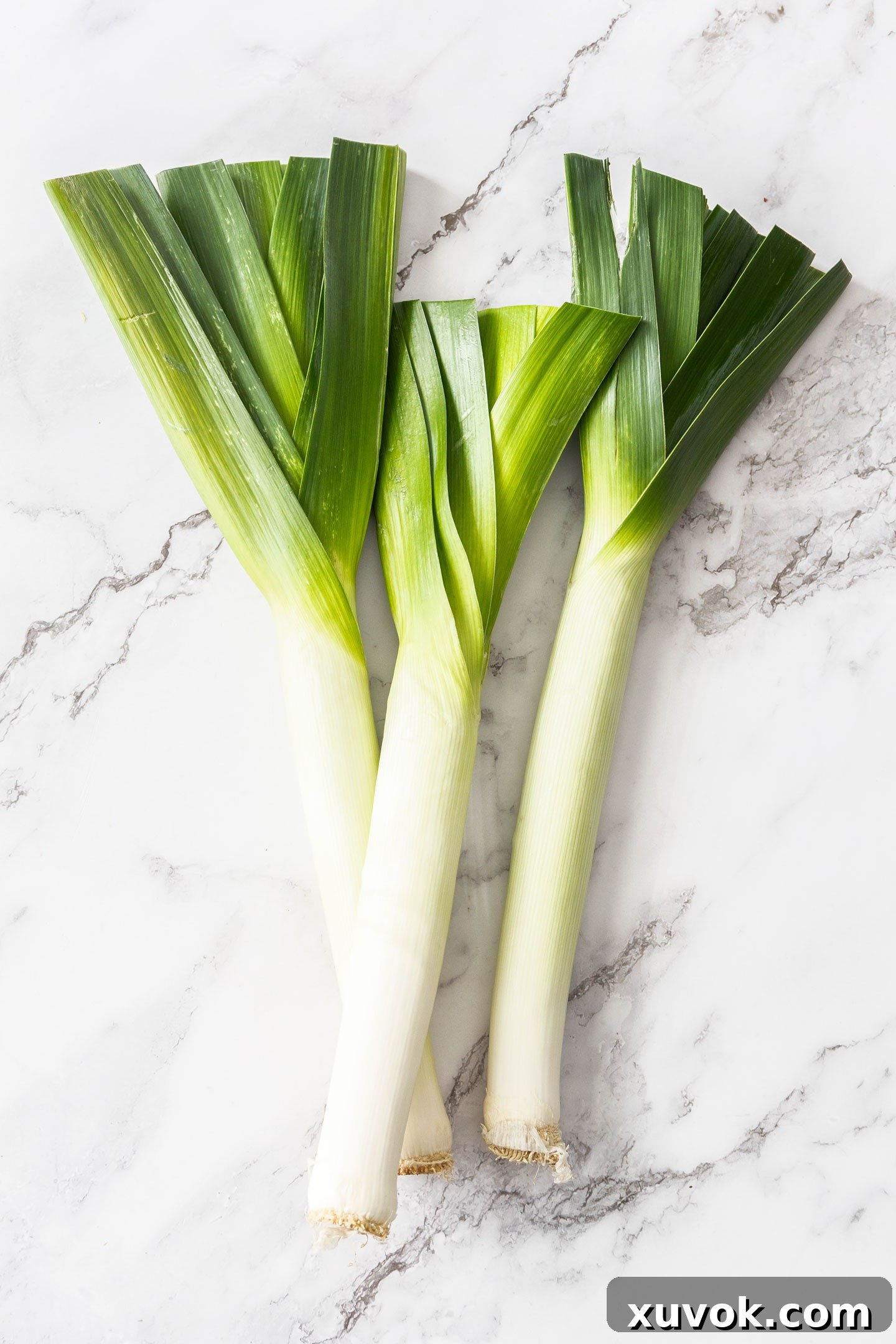
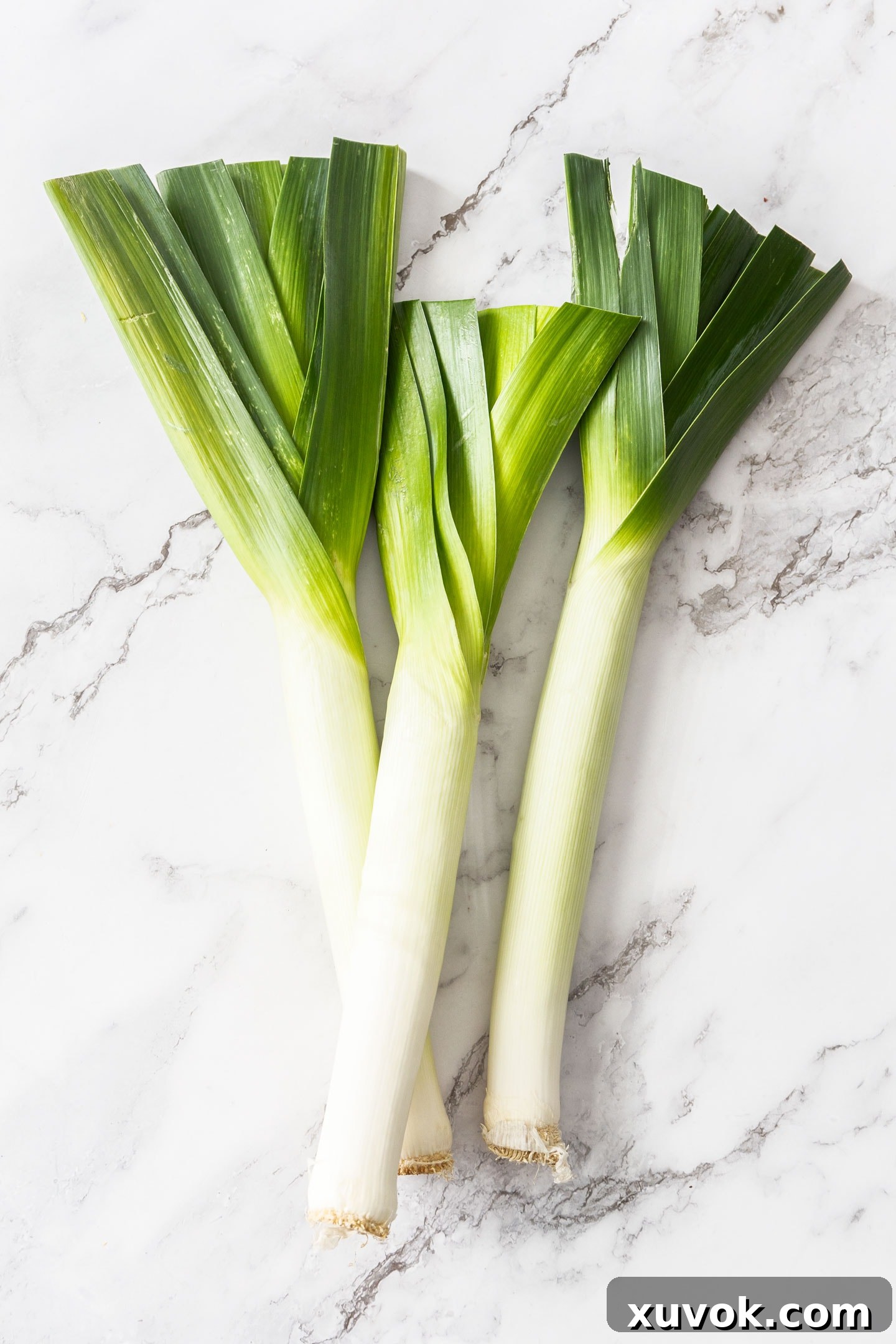
Leeks, with their distinctively sweet and subtly onion-like flavor, are a culinary delight that can elevate a wide array of dishes, from hearty soups and comforting stews to elegant quiches and flavorful stir-fries. As a proud member of the Allium family, alongside onions, garlic, and chives, leeks offer a milder, more delicate taste compared to their pungent relatives, and happily, they won’t bring tears to your eyes during preparation. While their appearance might suggest an oversized spring onion or scallion, leeks boast a more robust flavor profile and thicker, more substantial leaves that require proper cooking to become tender and enjoyable.
However, the unique way leeks grow presents a common challenge for home cooks and professional chefs alike. As these elongated vegetables mature, layers of tightly packed leaves extend upwards through the soil, inevitably trapping grit, sand, and dirt deep within their folds. This means that thorough cleaning isn’t just a recommendation; it’s an absolute necessity for ensuring a delightful culinary experience. Neglecting this crucial step can lead to an unwelcome gritty texture in your final dish, overshadowing the leek’s wonderful flavor.
The good news is that cleaning leeks is a straightforward process, though the most effective method depends largely on how you plan to use them in your recipe. Whether you’re roasting them whole, braising them in large pieces, or slicing them thinly for a sauté or soup, tailoring your washing technique is key to success. This comprehensive guide will walk you through various cleaning methods, offering practical tips and insights to help you prepare leeks perfectly every time, ensuring they are free from dirt and ready to shine in your kitchen.
Unlock More Culinary Secrets!
Ready to elevate your cooking? Subscribe to our newsletter for exclusive recipes, expert tips, and fresh inspiration delivered straight to your inbox!
Subscribe Now
Method 1: Cleaning Whole Leeks or Large Chunks for Roasting and Braising
When your recipe calls for leeks to be kept whole or cut into substantial large pieces – perfect for show-stopping roasted leeks, elegant braised sides, or hearty additions to pot roasts – a specific cleaning approach is required. This method allows you to remove embedded dirt without compromising the integrity of the leek’s structure, ensuring that each bite is clean and delicious. While these larger pieces might seem less prone to dirt retention, the layered growth of leeks means careful attention is still needed to flush out any hidden grit.
The key here is to expose the inner layers to water without completely separating them, maintaining the leek’s form. This technique is particularly effective because the pressure of running water can dislodge trapped soil more efficiently when the leek is mostly intact. Follow these steps for perfectly clean, whole, or large-cut leeks, ready for your most impressive dishes.
Step 1: Preparing the Leek with an Initial Incision
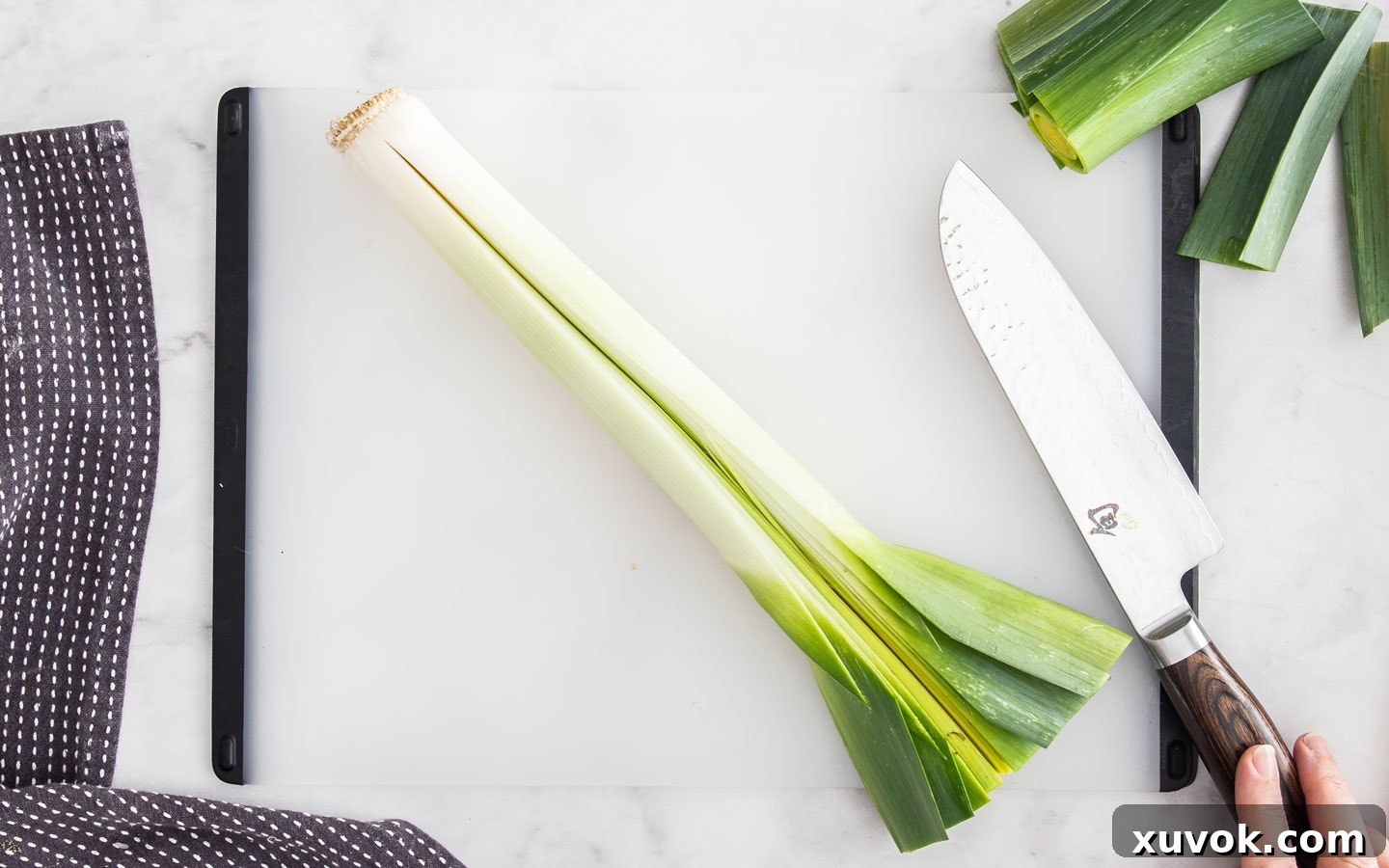
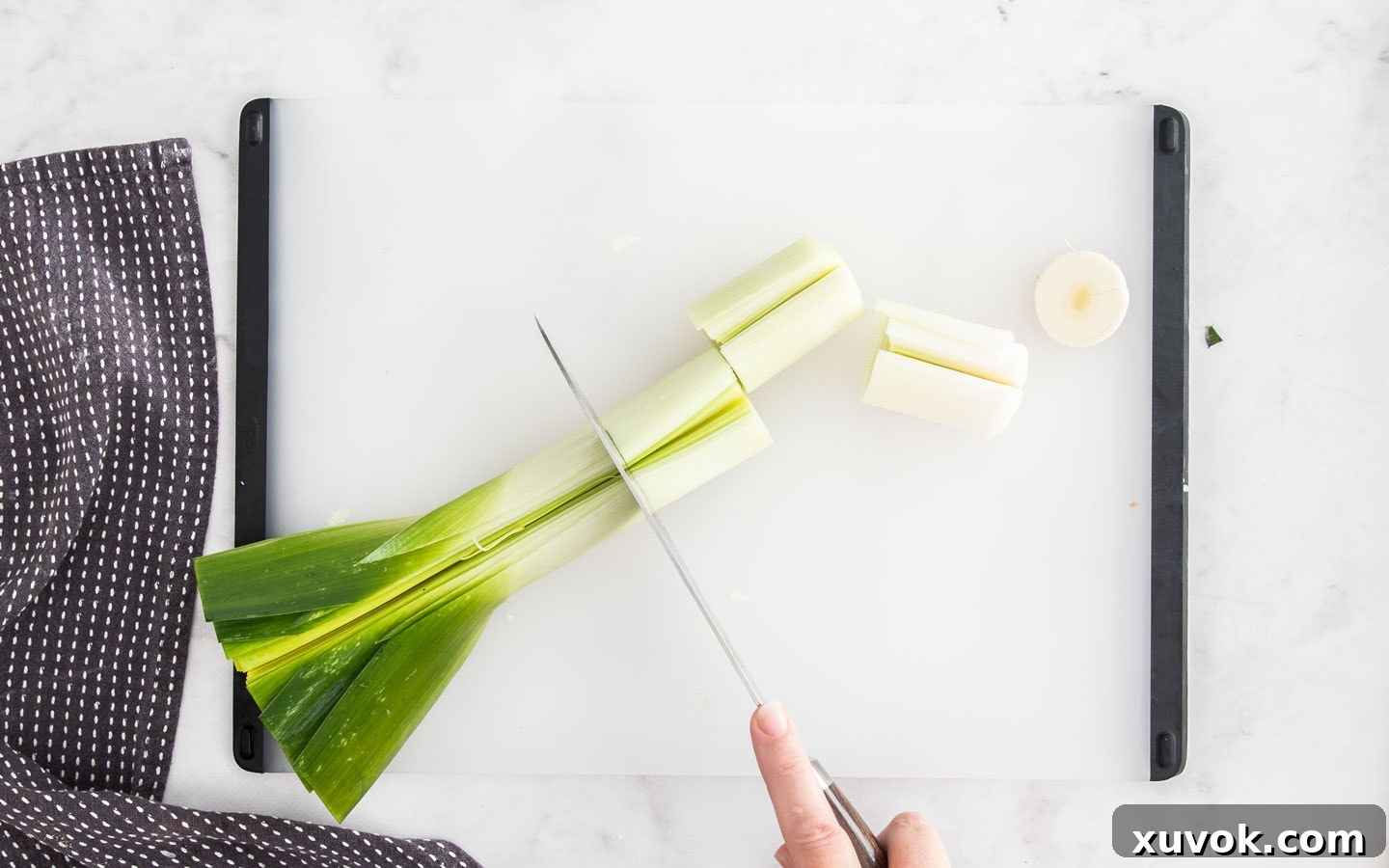
Begin by selecting a firm, fresh leek. Lay it flat on a clean cutting board. With a sharp knife, make a precise cut starting from just above the root end and extending about halfway up the length of the leek, slicing it lengthwise down the center. It’s crucial to leave the root end completely intact. This ingenious trick keeps all the layers connected at the base, preventing the leek from falling apart during the washing process while allowing you to gently fan out the individual leaves. This partial cut creates the necessary access for water to penetrate the dirt-prone inner layers without sacrificing the leek’s structural integrity, which is vital for whole or large-piece cooking applications.
Step 2: Thorough Rinsing Under Running Water
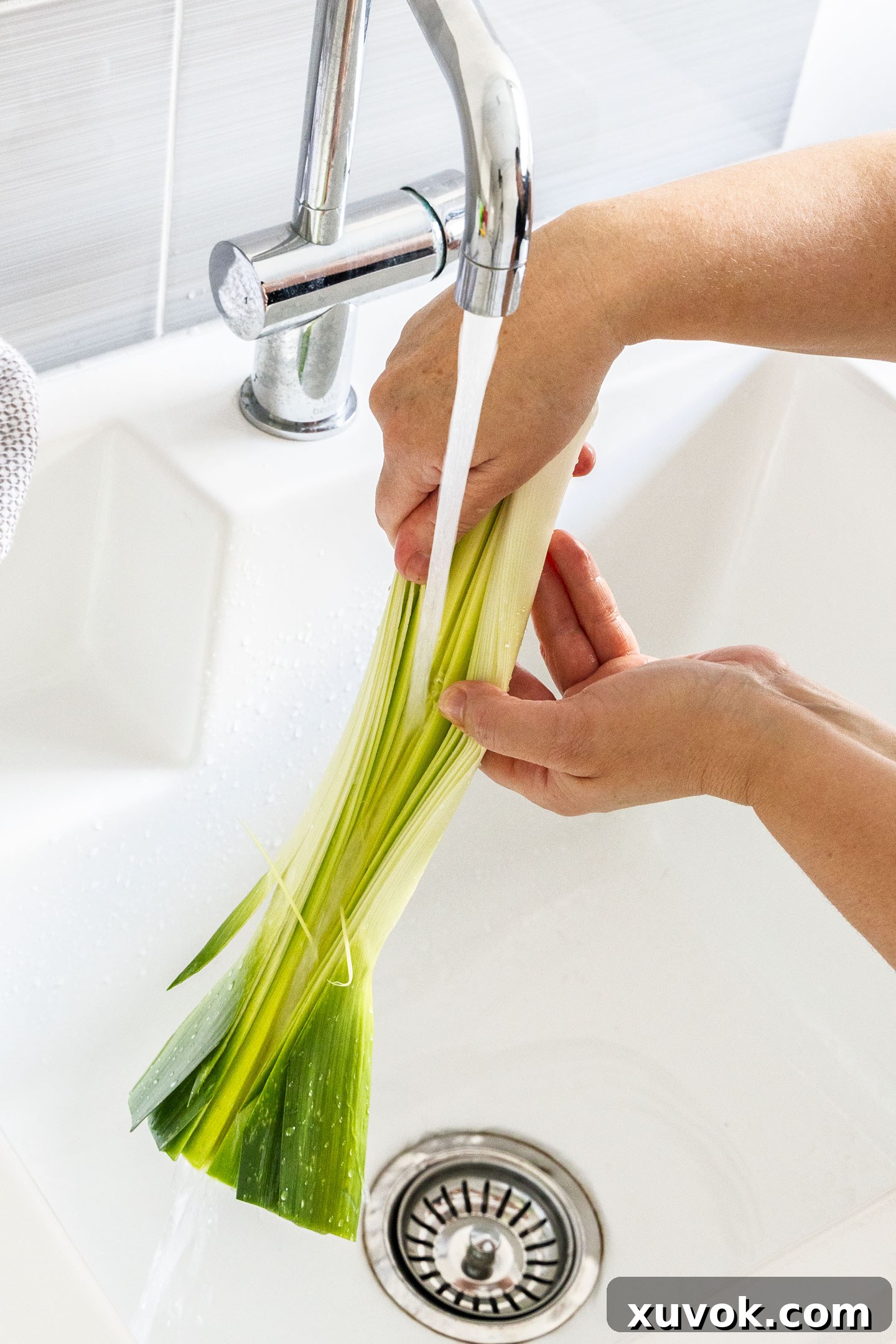
Once the leek is partially sliced, hold it under cool, running tap water. Position the leek with the root end pointing upwards and the green, fanned-out leaves pointing downwards. Allow the water to flow directly into the cut, cascading down from the root through the layers. As the water runs, gently fan open the individual leaves with your fingers, working from the top down. This action helps to loosen and flush out any stubborn dirt, sand, or grit that might be lodged between the layers. Continue rinsing and fanning until the water runs completely clear and you can visibly see that all traces of soil have been washed away. Pay particular attention to the area where the white part transitions into the pale green, as this is often where the most dirt accumulates. This thorough rinsing ensures a pristine leek, free from any earthy interruptions to your dish.
Step 3: Trimming and Preparing for Cooking
With your leek now thoroughly cleaned, it’s time to prepare it for your recipe. First, trim away the very dark green parts of the leaves. These sections tend to be quite fibrous and tough, making them less palatable for most dishes, though they are excellent for stock (more on that later!). Next, slice off and discard the root end. The white and pale green sections are the most tender and flavorful parts of the leek, ideal for eating. At this point, you can either leave the leek whole for impressive roasting or braising, or cut it into large, uniform chunks, typically 1 to 3 inches in length, depending on your recipe’s requirements. Ensure all pieces are similar in size to promote even cooking. Pat the cleaned and cut leeks dry with a clean kitchen towel before cooking, as excess moisture can hinder browning and affect the texture of your dish.
Method 2: Cleaning Sliced Leeks for Soups, Sautéing, and Stir-fries
When preparing leeks for dishes where they will be thinly sliced – such as comforting potato and leek soup, delicate sautés, vibrant stir-fries, or tender fillings for quiches – a different cleaning technique is often more effective and helps preserve their delicate flavor. Running water directly over already sliced leeks can, paradoxically, wash away some of their essence along with the dirt, and potentially even splash dirt onto other surfaces. The gentle basin method described here ensures that dirt is effectively separated and removed, while the leek slices remain flavorful and pristine.
This approach involves submerging the sliced leeks in cold water, allowing any grit to naturally sink to the bottom of the bowl. It’s a less aggressive but highly efficient way to achieve sparkling clean leek rounds, perfect for dishes where consistency in texture and flavor is paramount. Follow these steps to ensure your thinly sliced leeks are impeccably clean and ready to impart their mild, sweet notes to your culinary creations.
Step 1: Initial Trim and Slicing
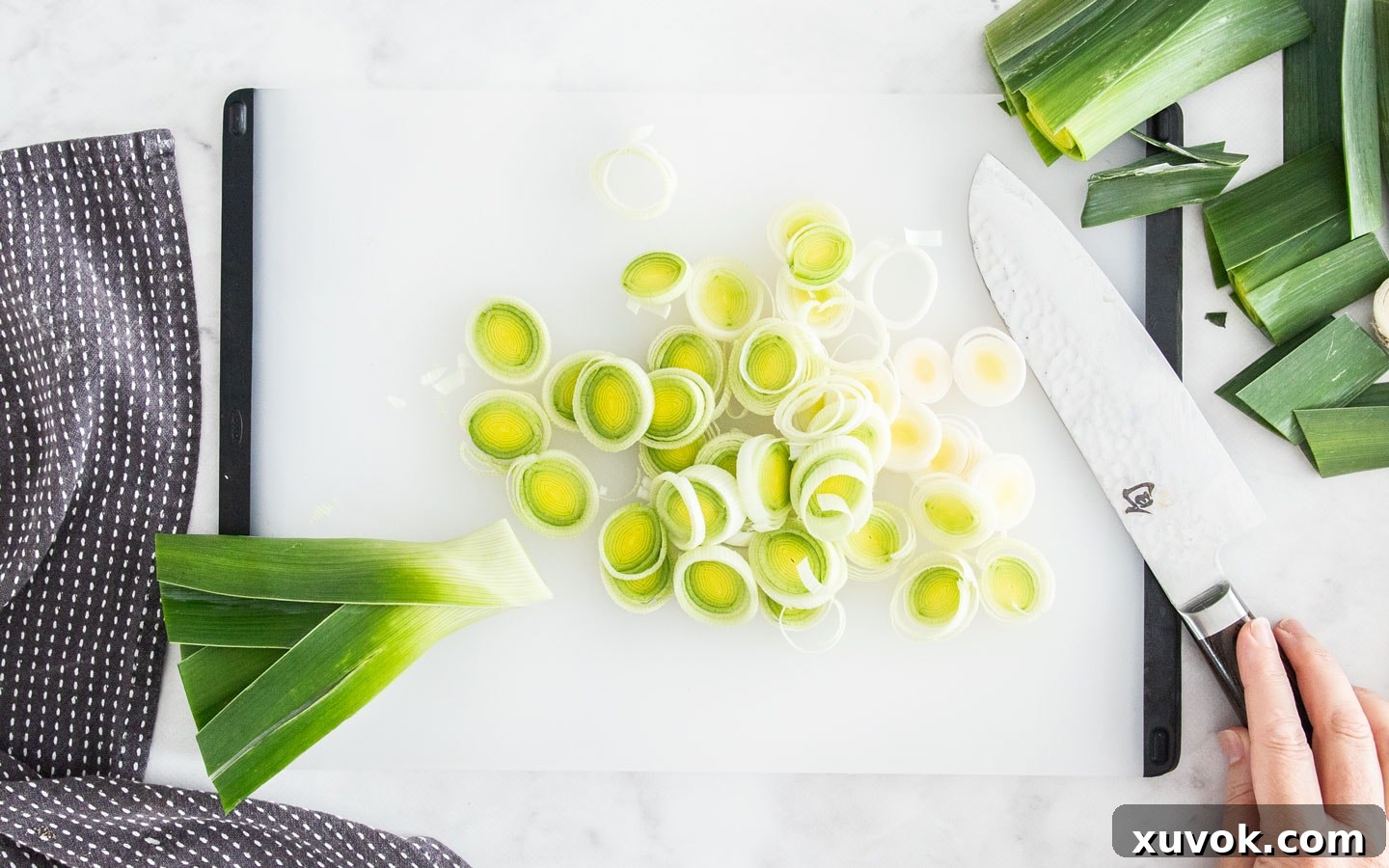
Before washing, perform the initial trimming and slicing. Begin by cutting off the very root end of the leek. Next, trim away the dark green parts of the leek. While the pale green and white sections are tender and delicious, the darker green leaves tend to be quite fibrous and tough, making them less enjoyable for direct consumption in most recipes. However, don’t discard them! They are packed with flavor and make an excellent addition to homemade vegetable or chicken stock. Once trimmed, slice the remaining white and pale green parts of the leek into thin, uniform rounds, typically 1/4 to 1/2 inch thick, depending on your recipe’s preference. This initial slicing before washing allows the water to reach all surfaces of the leek segments more easily in the subsequent cleaning step.
Step 2: Submerging and Agitating in Cold Water
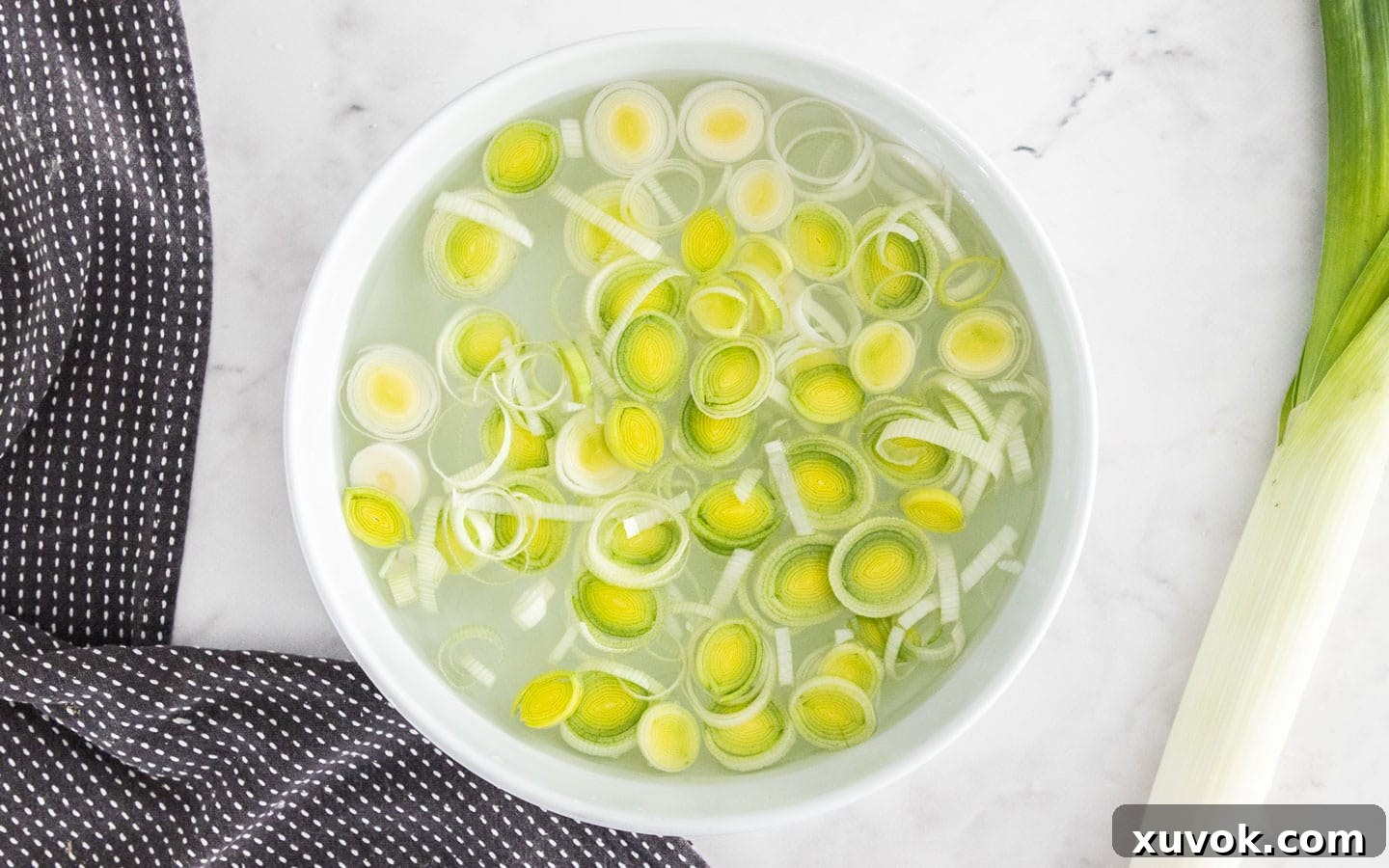
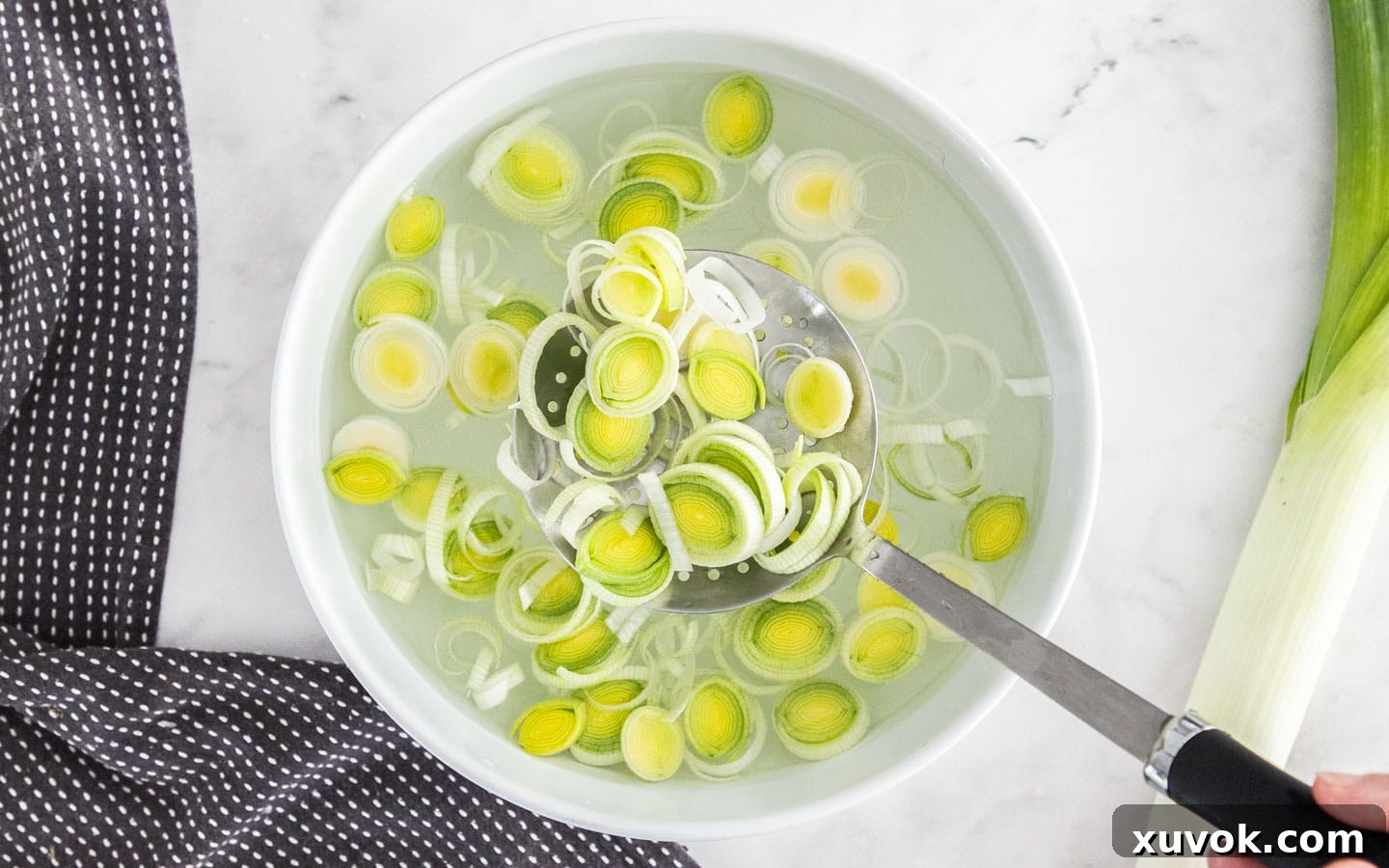
For sliced leeks, the most effective cleaning method is a gentle soak. Fill a large, clean basin, bowl, or even your kitchen sink with plenty of cold water. Take your thinly sliced leek rounds and gently drop them into the water. Using your hands, gently toss and agitate the leek slices in the water for a minute or two. This action helps to loosen any trapped dirt particles from between the layers. The beauty of this method is that the dirt, being heavier than the leek pieces, will sink to the bottom of the basin, leaving the clean leek slices floating freely on top. Allow the leeks to sit in the water for a few moments after agitating to ensure all sediment has settled. This passive but highly effective technique prevents flavor loss and ensures all grit is completely separated from your delicate leek slices.
Step 3: Drying Thoroughly for Best Results
Once the dirt has settled, it’s crucial to retrieve your clean leeks carefully. Using a slotted spoon or a fine-mesh skimmer, gently scoop the leek slices out of the water, leaving the settled dirt behind. Resist the urge to simply tip the entire bowl into a colander, as this would pour all the separated dirt right back over your freshly cleaned leeks, undoing all your hard work! Transfer the scooped leeks onto a clean, dry kitchen towel or several layers of paper towels. Gently pat them dry, ensuring as much moisture as possible is removed. Thoroughly drying your leeks is an often-overlooked but vital step. Excess water can steam the leeks instead of allowing them to sauté or roast properly, preventing them from caramelizing and achieving that delicious, tender texture. Once dry, your perfectly clean and prepared leek slices are ready to be incorporated into your favorite recipes.
Don’t Waste a Bit: Utilizing the Dark Green Leek Tops
Often, the dark green tops of leeks are discarded, perceived as too tough or fibrous for culinary use. While it’s true that these outer, darker leaves are less tender than the white and pale green parts, it’s a mistake to simply toss them away! In the spirit of no-waste cooking and maximizing flavor, these robust greens offer incredible culinary potential. They are packed with a concentrated leek flavor that can be harnessed in various creative ways, adding depth and aroma to your cooking.
Before using, remember that these outer layers are often the sandiest part of the entire leek. Therefore, regardless of how you plan to utilize them, a thorough cleaning is absolutely essential to remove any hidden grit. Fan them out under running water as described in Method 1, or give them a good soak and agitate them in a bowl of cold water, just like the sliced leeks. Ensure they are meticulously clean before proceeding with any of the following ideas.
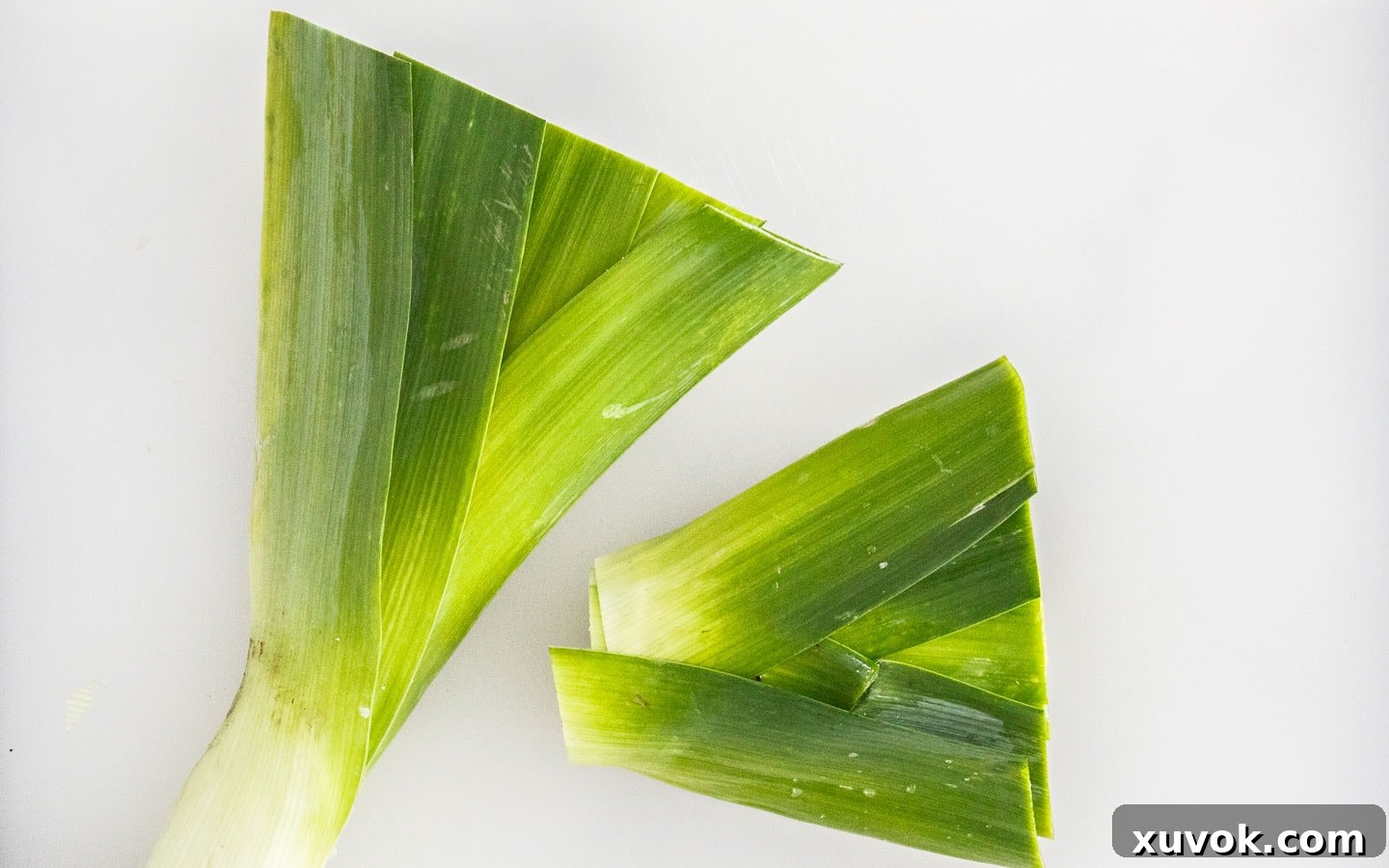
Here are some fantastic ways to give these flavorful green tops a second life:
- Homemade Stocks and Broths: This is arguably their best use! The fibrous nature of the dark green leaves isn’t an issue when making stock, as they will be strained out later. They impart a wonderful, subtle oniony depth to vegetable, chicken, or beef stock, often alongside carrots, celery, and onions. Simply add them to your stock pot and simmer.
- Pureed Soups: For creamy leek soups or other pureed vegetable soups, the green tops can be cooked down until very tender and then blended seamlessly into the mixture. Their robust flavor will shine through, and any fibrous texture will be eliminated by the blending process.
- Leek Green Pesto: Get creative! Blanch the cleaned green leaves briefly, then blend them with olive oil, garlic, nuts (like walnuts or almonds), and Parmesan cheese for a unique, savory pesto. It’s a fantastic way to add a different dimension to pasta, sandwiches, or roasted vegetables.
- Flavor Infusions: You can tie several cleaned green leaves together with kitchen twine and use them as an aromatic bouquet garni in stews, casseroles, or poaching liquids. Remove them before serving.
- Sautéed & Finely Sliced: If you’re feeling ambitious, slice the dark greens extremely thinly (almost shredded) and sauté them for a longer period with a little garlic and olive oil until very tender. While still having more chew than the white parts, they can be a flavorful addition to rustic pasta dishes or frittatas.
To make the most of your leek greens, you can store them. After cleaning, chop them into manageable pieces and freeze them in a freezer-safe bag or container. This way, you’ll always have a flavor booster on hand for your next batch of stock or soup, ensuring nothing goes to waste and every part of this versatile vegetable is utilized to its full potential.
Choosing and Storing Leeks for Optimal Freshness
Starting with high-quality leeks and storing them correctly are just as important as proper cleaning for achieving delicious results in your cooking. Freshness directly impacts flavor and texture, so knowing what to look for at the market and how to keep them vibrant at home is key.
How to Select the Best Leeks at the Market
When you’re at the grocery store or farmer’s market, pay attention to these indicators to ensure you pick the freshest leeks:
- Firmness: Choose leeks that feel firm to the touch along their entire length. Avoid any that feel soft, slimy, or withered.
- Color: Look for leeks with vibrant, dark green tops and crisp, unblemished white and pale green shafts. Yellowing, browning, or wilting leaves are signs of age.
- Size: While size doesn’t necessarily dictate quality, medium-sized leeks (about 1 to 1.5 inches in diameter) are often the most tender. Very large leeks can sometimes be tougher and more fibrous, requiring longer cooking times.
- Root End: The root end should be clean and intact, not dried out or mushy.
Proper Storage Techniques for Whole and Cut Leeks
Once you bring your leeks home, how you store them will determine their longevity and freshness:
- Whole Leeks: For unwashed, whole leeks, the best way to store them is in the crisper drawer of your refrigerator. Wrap them loosely in a plastic bag or damp paper towel to prevent them from drying out. Stored this way, they can last for up to 1 to 2 weeks. Do not wash them before storing, as moisture can encourage spoilage.
- Cut Leeks: If you’ve already trimmed and cut your leeks, they won’t last as long. Place them in an airtight container or a sealed plastic bag and refrigerate. Try to use them within 2-3 days, as their flavor and texture will start to degrade.
- Freezing Leeks: For longer-term storage, leeks can be frozen. First, clean and slice them as desired (rounds or half-moons). You can blanch them briefly (1-2 minutes in boiling water, then an ice bath) to help preserve their texture and color, though it’s not strictly necessary if using for soups or stocks. Drain and dry thoroughly, then spread them in a single layer on a baking sheet to flash freeze. Once frozen, transfer them to a freezer-safe bag or container, removing as much air as possible. Frozen leeks can last for several months and are perfect for adding directly to cooked dishes like soups, stews, or casseroles.
Common Leek Cleaning Mistakes to Avoid
Even with the best intentions, it’s easy to fall into common traps when cleaning leeks. Being aware of these pitfalls can save you time, effort, and ensure your dishes are perfectly clean and flavorful:
- Not Cleaning Thoroughly Enough: The number one mistake is underestimating how much dirt can be lodged between the layers. A quick rinse on the outside is rarely sufficient. Always take the time to fan out layers or soak slices to ensure all grit is removed.
- Tipping Sliced Leeks into a Colander: As mentioned in Method 2, pouring water and sliced leeks into a colander allows the settled dirt to wash right back over the clean leeks. Always scoop them out.
- Over-Trimming the White Part: While the dark green leaves are fibrous, sometimes people cut off too much of the pale green or even white part, discarding perfectly edible and tender sections. Learn where the tough part begins and trim precisely.
- Washing Whole Leeks Without Cutting: Attempting to wash a whole, uncut leek under running water is largely ineffective. The water won’t penetrate the tightly packed layers, leaving much of the dirt untouched. The lengthwise cut is essential.
- Not Drying Leeks Properly: For dishes where you want sautéed or roasted leeks to caramelize and develop flavor, excess moisture is the enemy. Wet leeks will steam instead of brown. Always pat them thoroughly dry before cooking.
- Discarding the Dark Green Tops Entirely: As discussed, these flavorful parts are excellent for stocks and soups. Throwing them away is a missed opportunity for adding depth to your cooking and reduces your kitchen’s sustainability.
By avoiding these common mistakes, you’ll ensure that your leeks are not only impeccably clean but also prepared in a way that maximizes their culinary potential, leading to more delicious and satisfying meals.
Beyond Cleaning: Culinary Versatility of Leeks
Once you’ve mastered the art of cleaning leeks, a world of culinary possibilities opens up. Their mild, sweet, and slightly earthy flavor makes them incredibly versatile, capable of complementing both delicate and robust ingredients. Don’t limit leeks to just soups; explore their full potential in your kitchen:
- Roasted Leeks: Halve whole, cleaned leeks lengthwise, drizzle with olive oil, salt, and pepper, then roast until tender and slightly caramelized. A fantastic simple side dish.
- Braised Leeks: Slowly braise leeks in a flavorful broth or wine until meltingly tender. They make an elegant accompaniment to fish or poultry.
- Leek and Potato Soup: A classic for a reason. Sautéed leeks form the aromatic base for this creamy, comforting soup.
- Quiches and Tarts: Sautéed leeks add a sweet, savory depth to egg-based quiches and savory tarts, often paired with cheese or bacon.
- Stir-fries: Thinly sliced leeks can be added to stir-fries, offering a milder onion flavor than traditional onions.
- Risotto: Incorporate finely chopped leeks into risotto for a creamy, flavorful dish that’s both comforting and sophisticated.
- Gratins: Layer sliced leeks with potatoes or other vegetables in a creamy sauce, top with cheese, and bake until bubbly and golden.
- Sautéed Side Dish: Simply sauté sliced leeks in butter until soft and slightly caramelized. A simple yet delicious side for almost any meal.
- Leek and Mushroom Dishes: The flavors of leeks and mushrooms are a match made in heaven. Combine them in pasta dishes, omelets, or as a side.
Embrace the leek as more than just a supporting actor. With proper cleaning and creative cooking, it can truly be the star of your next meal.
Frequently Asked Questions About Leeks
Let’s address some common queries about leeks to further enhance your understanding and confidence in preparing this delightful vegetable.
Can you eat leeks raw?
Yes, you can eat leeks raw, particularly the white and pale green parts. When eaten raw, leeks have a much sharper, more pungent flavor than cooked leeks, similar to a strong spring onion. They can be finely sliced or minced and added to salads, salsas, or as a garnish. However, due to their potential for grit, raw leeks *must* be meticulously cleaned. Many people prefer the milder, sweeter flavor that develops when leeks are cooked.
What’s the difference between leeks and green onions/scallions?
While both are members of the Allium family and share a somewhat similar appearance, leeks and green onions (also known as scallions) are distinct. Green onions are much smaller, have a thinner white base, and more delicate green tops. They are generally milder and often eaten raw or lightly cooked. Leeks are significantly larger, with a thick white base and broader, tougher green leaves. Their flavor is milder and sweeter than green onions when cooked, and they typically require more thorough cleaning due to their layered growth habit in the soil.
How much of a leek is edible?
The most commonly eaten and tender parts of a leek are the white base and the pale green sections. The dark green leaves, while edible, are generally tougher and more fibrous, making them less palatable for direct consumption in many dishes. However, as discussed, these dark green tops are excellent for flavoring stocks, soups, and broths, making them entirely usable in a zero-waste kitchen.
Why do leeks get so dirty?
Leeks grow with their lower white shaft buried in the soil. As the leek matures, new leaves grow from the inside, pushing outwards and upwards through the soil. The loose nature of the soil allows fine particles of dirt and sand to easily work their way in between these concentric layers. This unique growth pattern is precisely why leeks are notoriously sandy and require thorough cleaning methods.
Hungry for more? Subscribe to the newsletter for free recipes straight to your inbox. Also, follow along on Facebook, Pinterest and Instagram.
More Leek-Inspired & Delicious Recipes You’ll Love