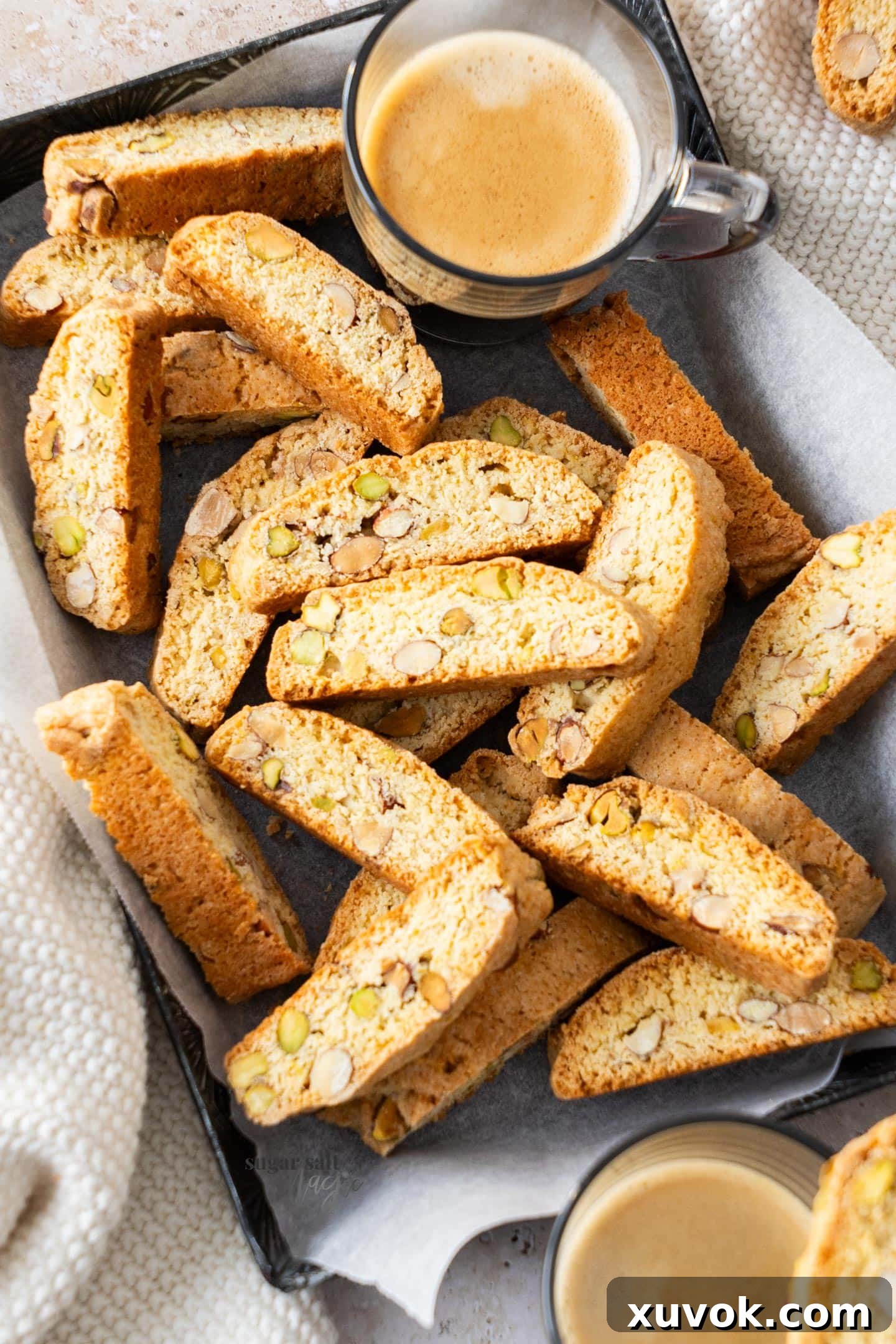
Irresistible Lemon Biscotti: Your Guide to Perfect Italian Crunch
Discover the delightful world of homemade biscotti with our exquisite Lemon Biscotti recipe. These crunchy Italian cookies, also known as Cantucci, offer a perfect blend of traditional flavor with a bright, refreshing hint of lemon. Baked to golden perfection and generously studded with almonds and pistachios (or your favorite nuts!), they are incredibly easy to make and guaranteed to become a household favorite.
The subtle, aromatic lemon in these classic biscotti beautifully complements their crisp texture and the rich nutty undertones. For those who crave an extra burst of citrus, a touch of lemon extract can elevate the flavor even further. Whether you’re a seasoned baker or new to the kitchen, this easy lemon biscotti recipe promises a big reward for minimal effort.
Lemon almond biscotti are not just a treat for your taste buds; they’re incredibly versatile. They keep exceptionally well, making them ideal to have on hand for unexpected guests, delightful picnic additions, or as thoughtful, homemade food gifts. Imagine presenting a beautiful jar filled with these elegant, crunchy cookies – a gift that truly speaks volumes!
If you enjoy the harmonious flavors of lemon, almond, and coconut, you’ll also adore our almond coconut cookies.
This beloved recipe was originally published on April 17th, 2018, and has been lovingly updated with fresh photos and clearer, more detailed instructions to enhance your baking experience.
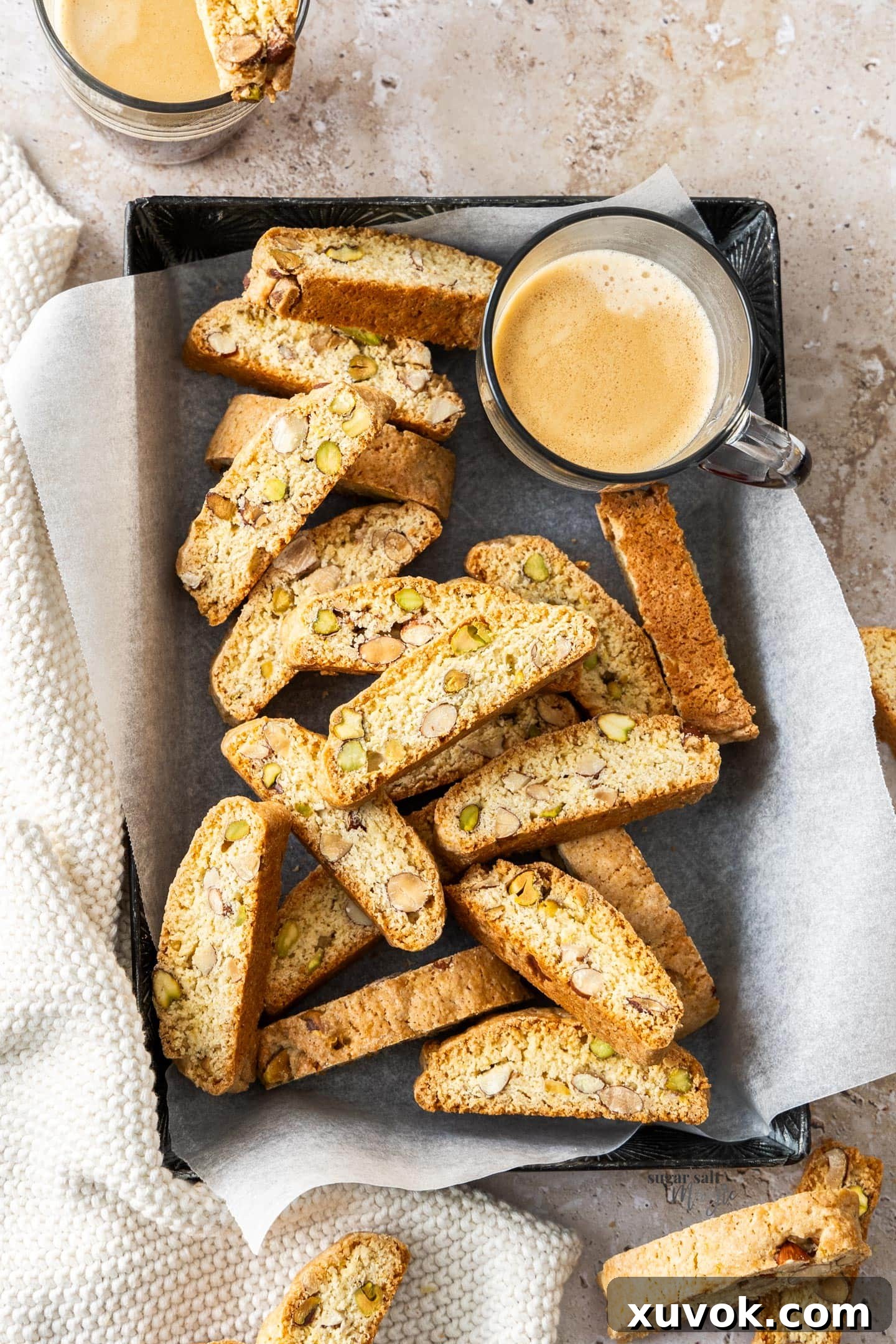
Table of Contents
- Why You’ll Love These Lemon Biscotti
- What Exactly Is Biscotti?
- Why the Twice-Baked Method?
- The Perfect Biscotti Texture: Hard and Crunchy
- Essential Ingredients for Your Lemon Biscotti
- Step-by-Step: How to Make Lemon Biscotti
- Pro Tips for Perfect Biscotti Every Time
- Delicious Variations to Try
- Serving Suggestions for Lemon Biscotti
- How to Store Your Lemon Almond Biscotti
- Lemon Biscotti FAQs
- More Delightful Cookie Recipes
Never Miss a Recipe!
Get the latest recipes straight to your inbox and elevate your baking!
What Exactly Is Biscotti?
Biscotti, often referred to as “cantucci” or “cantuccini” in their native Italy, are a quintessential Italian biscuit or cookie with a rich history rooted in Prato, Tuscany. The term “biscotti” itself is derived from the Latin “bis coctus,” meaning “twice-baked,” a name that perfectly describes their unique preparation process and signature crunchy texture. This ancient baking method ensured the cookies were dry and durable, perfect for long journeys and extended storage, even by Roman legions!
The creation of biscotti involves a two-stage baking process. First, the dough is formed into logs and par-baked until firm. These logs are then cooled slightly, sliced into individual oblong biscuits, and baked a second time at a lower temperature. This secondary bake is crucial, as it removes any remaining moisture, resulting in the characteristic dry, crunchy consistency that makes biscotti so beloved, especially when paired with a dipping beverage.
While “biscotti” is the generic Italian word for any type of cookie, the specific, twice-baked, almond-studded variety we know and love is more accurately called Cantucci. Traditionally, these delightful biscuits are enjoyed at the end of a meal, dipped into Vin Santo, a sweet Tuscan dessert wine. However, their versatility means they are equally perfect alongside a robust espresso or a comforting cup of tea.
Why the Twice-Baked Method? The Secret to Authentic Biscotti Crunch
The “twice-baked” method is not just a tradition; it’s the fundamental secret to authentic Italian biscotti. This unique process is what gives these cookies their distinctive dry, crisp, and robust texture, which stands up beautifully to dipping without becoming soggy too quickly. The first bake sets the dough, allowing it to firm up and cook through as a whole log. This initial baking stage ensures that the entire mass is evenly cooked and develops a foundational structure.
After the first bake, the logs are carefully sliced. This slicing exposes the moist interior of the dough, which is then subjected to the second bake. During this crucial second stage, the lower temperature allows the moisture to slowly evaporate, toasting the slices to a golden-brown perfection. This drying process is what creates the characteristic hard, crunchy texture that biscotti are famous for. It’s a method perfected over centuries, originally to preserve the cookies for long periods, and today, it continues to deliver that satisfying snap and melt-in-your-mouth experience when dipped.
The Perfect Biscotti Texture: Hard and Crunchy
Authentic Italian biscotti are indeed meant to be dry and wonderfully crunchy. This distinct texture is not a flaw but a hallmark of their traditional preparation, specifically designed for dunking. In Italy, these crisp delights are typically served with a dessert wine like Vin Santo, where a quick dip softens them just enough to be enjoyed without turning mushy. Our lemon biscotti, with their exquisite crunch and bright flavor, are absolutely divine when softened slightly in a warm cup of coffee or tea, transforming a simple moment into a luxurious indulgence.
Essential Ingredients for Your Lemon Biscotti
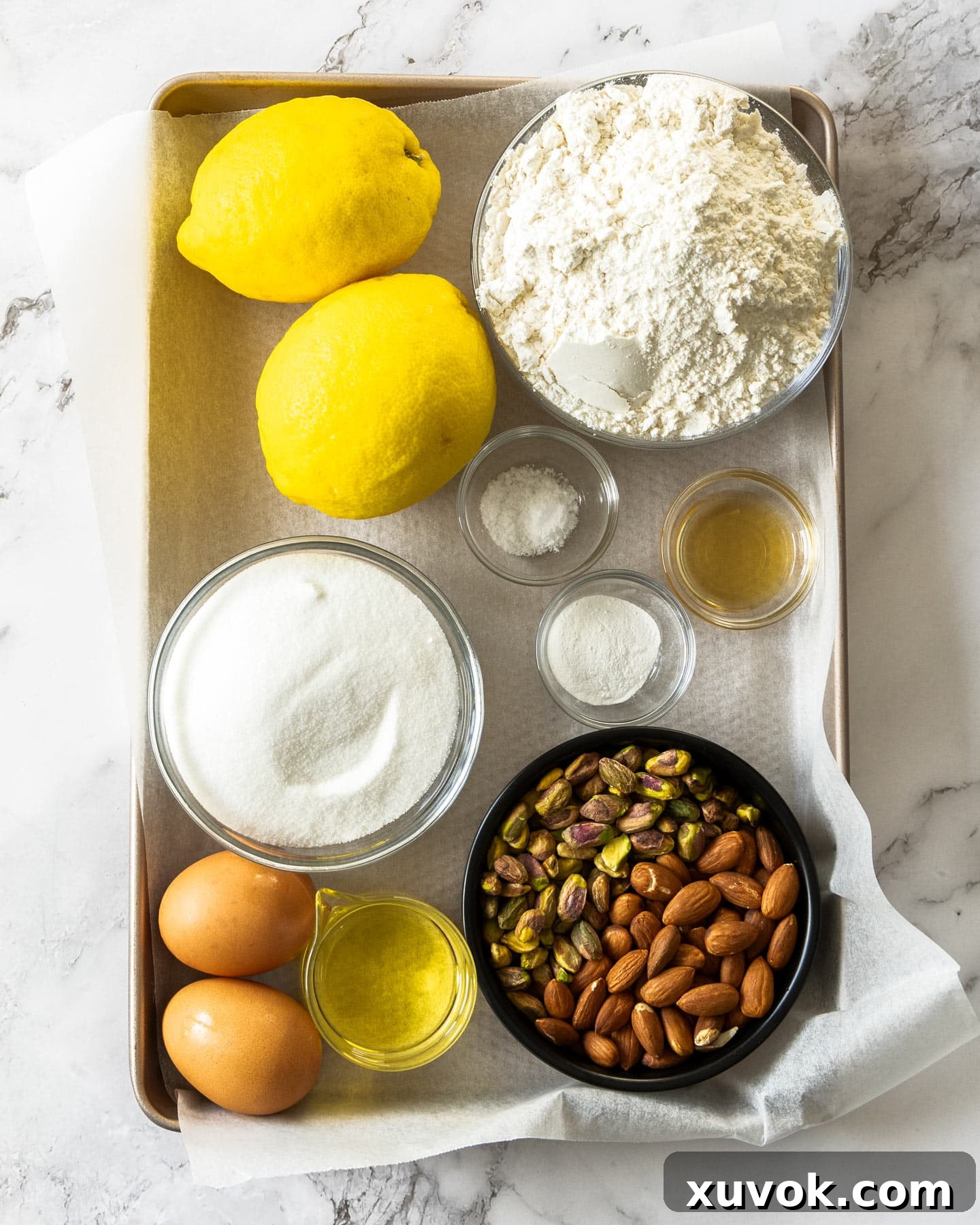
For a complete list of ingredients and detailed measurements, please refer to the full recipe card below.
- Nuts: While almonds and pistachios are the quintessential nuts in traditional Italian biscotti, feel free to experiment with your favorites! Pine nuts and hazelnuts are also commonly used, or try cashews, pecans, walnuts, or even macadamias for a gourmet twist. Toasting your nuts lightly beforehand can significantly enhance their flavor and aroma, adding depth to your lemon biscotti.
- Sugar: Biscotti are sweet, but not overly so, allowing the other flavors to shine. We use classic white granulated sugar here, which provides the perfect sweetness and contributes to that desirable crisp texture.
- Fresh Lemons: The star of our lemon biscotti! You’ll need about three large, fresh lemons, but only the zest. Using a microplane or a fine zester is key to getting tiny, potent strands of zest, which distribute evenly and infuse the cookies with intense lemon flavor without any bitterness. Avoid using lemon juice, as the added liquid and acidity can alter the dough’s consistency and the final texture of your crunchy biscotti.
- Flour: Simple plain flour (all-purpose flour) is all that’s required for this recipe. It provides the necessary structure for these twice-baked cookies.
- Baking Powder: A touch of baking powder acts as a leavening agent, giving the biscotti a slight lift and helping to achieve that perfect, airy-yet-dense crunch.
- Eggs: Regular large eggs bind the ingredients together, adding richness and moisture to the dough before its double-bake transformation.
- Olive Oil: Opt for a light-flavored olive oil or a neutral vegetable oil. This adds a subtle richness and helps create a tender crumb before the cookies crisp up.
- Vanilla Extract: A dash of good quality vanilla extract is a must! It beautifully rounds out the flavors, adding a warm, aromatic note that enhances both the lemon and the nuts in your Italian biscotti.
These almond and pistachio lemon biscotti offer a delicate, ‘just-there’ lemon flavor, rather than an overwhelming intensity. However, if you crave a more pronounced citrus punch, feel free to enhance it with an additional teaspoon of lemon extract.
Step-by-Step: How to Make Lemon Biscotti
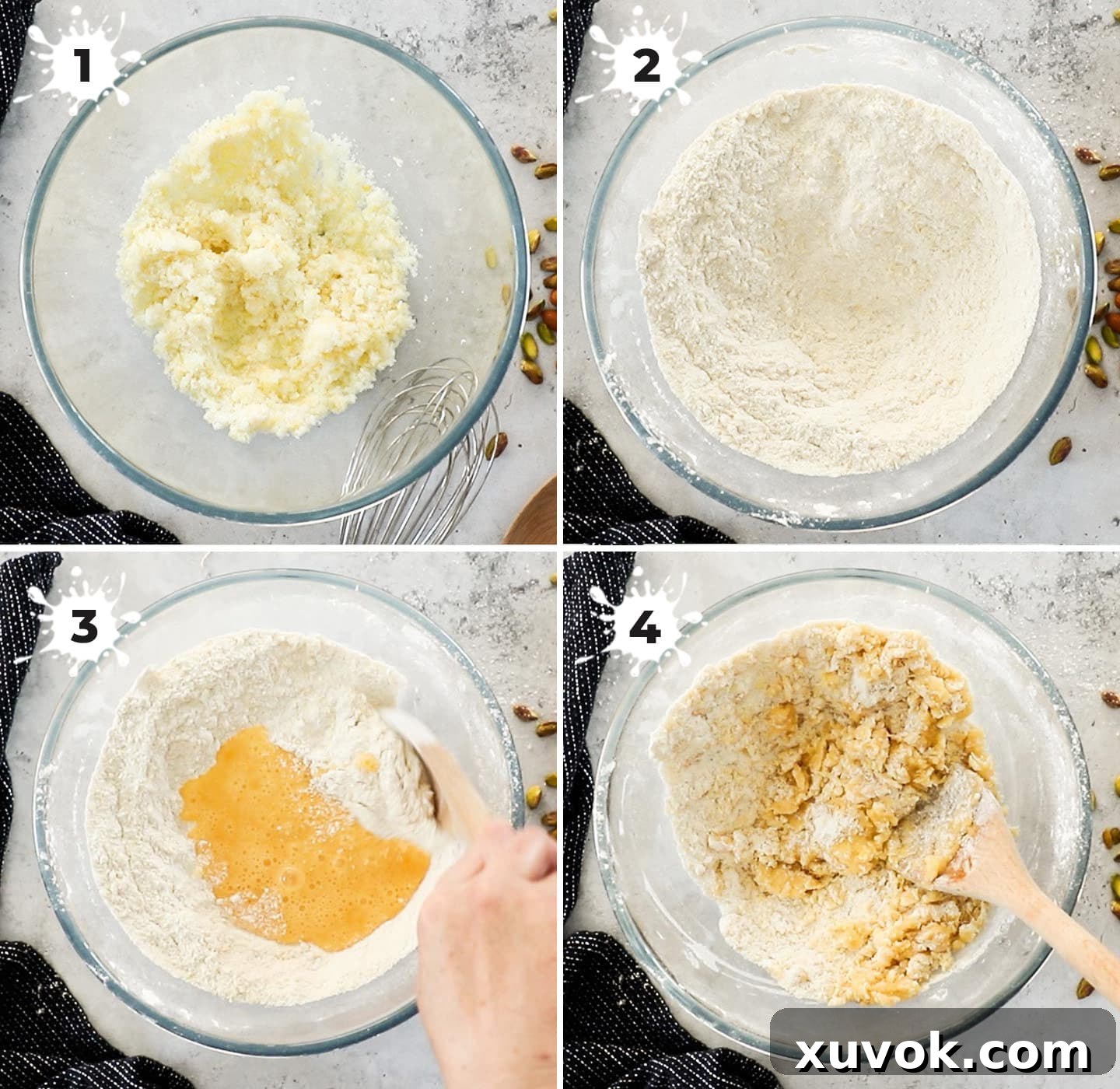
For the full recipe details, including precise measurements and timings, please scroll down to the recipe card.
- **Infuse the Lemon Flavor (Photo 1):** Begin by thoroughly massaging the fresh lemon zest into the granulated sugar in a large bowl. This crucial step releases the essential lemon oils, intensifying the citrus aroma and flavor that will permeate your entire batch of lemon biscotti.
- **Combine Dry Ingredients (Photo 2):** Add the remaining dry ingredients – sifted flour, baking powder, and salt – to the lemon-infused sugar. Whisk them together thoroughly to ensure they are well combined and evenly distributed.
- **Incorporate Wet Ingredients (Photo 3 & 4):** In a separate bowl, lightly whisk the eggs, then mix in the olive oil and vanilla extract. Create a well in the center of your dry ingredients and pour in the wet mixture. Using a wooden spoon or rubber spatula, stir until the ingredients are about 80% combined. Don’t overmix at this stage; a few streaks of flour are fine.
A microplane is truly the best tool for zesting your lemons. It yields incredibly fine zest, ensuring a smooth distribution of flavor throughout your biscotti without introducing any large, potentially bitter pieces. This fine texture also aids in releasing more aromatic oils during the massaging step, resulting in a more fragrant and flavorful lemon biscotti.
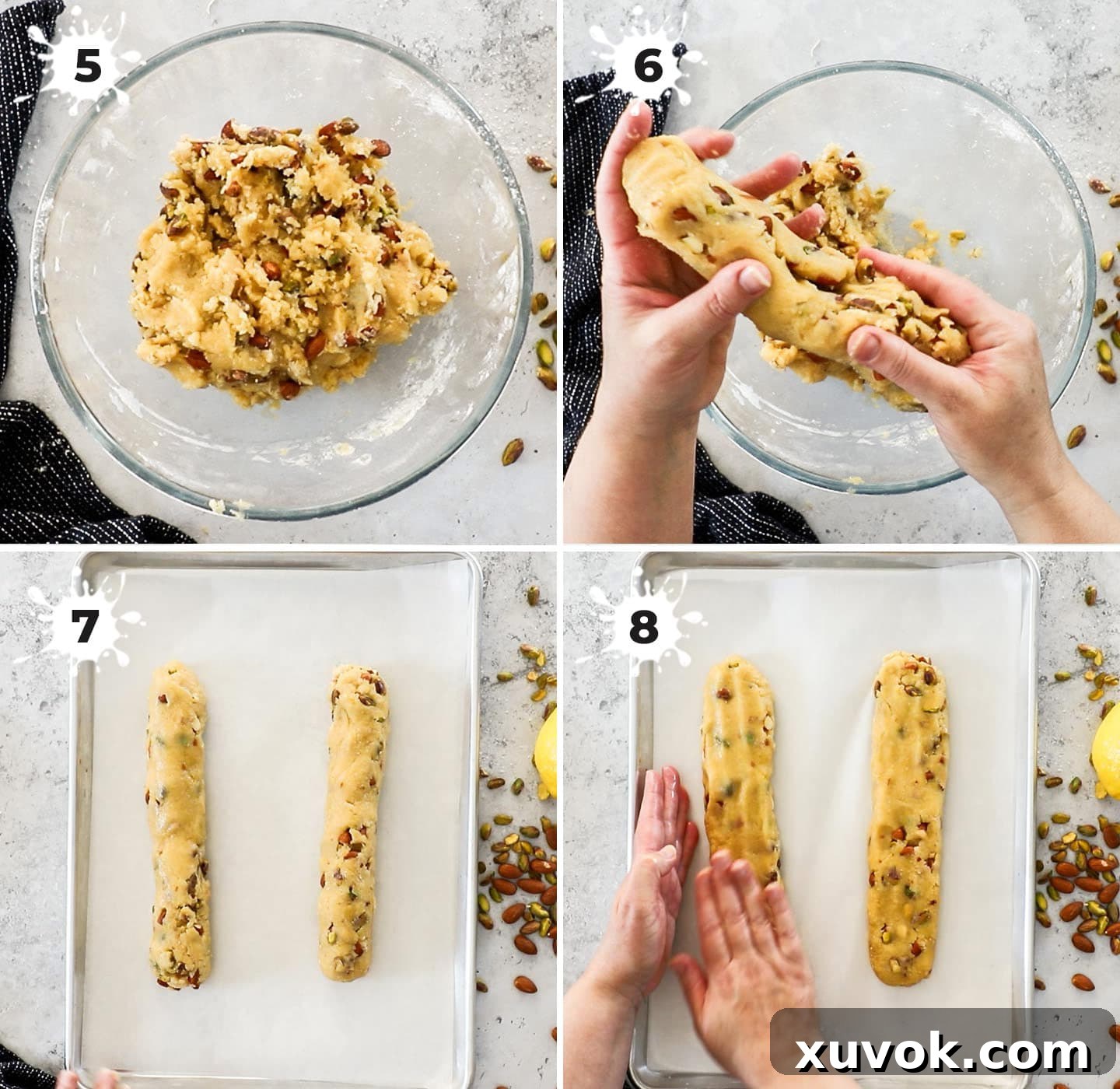
- **Fold in the Nuts (Photo 5):** Add your chopped almonds and whole pistachios (or chosen nuts) to the dough. At this point, the dough might be a bit stiff, so using your hands to gently fold and combine the nuts is often easiest and most effective. Ensure the nuts are evenly distributed throughout the dough.
- **Shape the Dough Logs (Photo 6):** Divide the dough into two equal portions. On a lightly floured surface, roll each portion into a log about 2 inches (5 cm) thick and roughly the length of your baking sheet.
- **First Bake Preparation (Photo 7 & 8):** Carefully transfer the dough logs to a baking sheet lined with parchment paper. Gently flatten each log slightly with your palms to about ¾ inch (2 cm) thick. This creates a broader surface for slicing later.
- **First Bake:** Bake the logs in a preheated oven (160C / 140C fan forced / 320F) for approximately 30 minutes, or until they are golden brown at the edges and feel firm to the touch. This initial bake sets the structure of your biscotti.
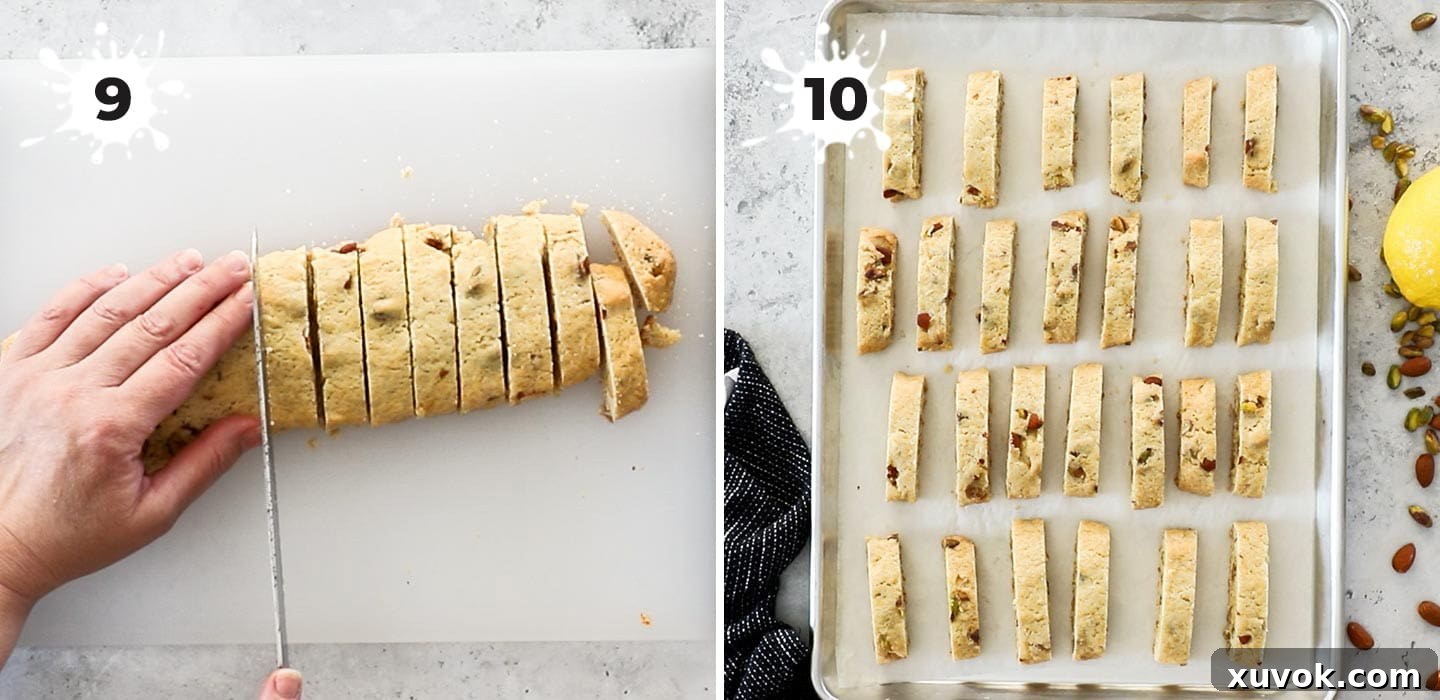
- **Slice the Logs (Photo 9):** Remove the par-baked logs from the oven and let them cool on the baking sheet for only 5-10 minutes. It’s crucial not to let them cool completely, as cutting warm biscotti is much easier, especially with embedded nuts. Using a sharp serrated knife, slice the logs into 1cm (approximately ½ inch) thick slices. Use gentle, short strokes to avoid crumbling.
- **Second Bake (Photo 10):** Arrange the sliced biscotti back on the same baking sheet, standing them upright on their cut edges. Return them to the oven for another 15-20 minutes, or until they are uniformly golden brown and thoroughly crisp. This second bake is what gives your lemon biscotti their signature crunch.
- **Cool Completely:** Once baked, transfer the finished biscotti to a wire rack to cool completely. They will crisp up further as they cool.
Pro Tips for Perfect Biscotti Every Time
- **The Double Bake is Key:** Remember, the unique texture of biscotti comes from being baked twice at different temperatures. The first bake cooks the dough through and allows you to slice it cleanly, while the second bake, at a lower temperature, dries out the slices, giving them their characteristic crispness.
- **Timing Your Slice:** Don’t let the logs cool completely after the first bake! Slicing them while still warm (after about 5-10 minutes of cooling) is much easier, especially when cutting through whole nuts. This prevents excessive crumbling.
- **The Right Knife:** A sharp serrated knife is your best friend for slicing biscotti. Use a sawing motion with short, gentle strokes. Once you’ve cut about a third of the way through, you can apply a bit more pressure to finish the cut cleanly.
- **Stand Them Up:** For thicker biscotti like these lemon almond delights, standing the slices on their cut edges during the second bake ensures even browning and crisping on all sides.
- **For Thinner, Crispier Biscotti:** If you prefer a very thin and extra-crispy style of biscotti, you can lay the slices flat on the baking sheet for the second bake. Adjust the baking time down, perhaps to 10-15 minutes, watching them closely until they reach your desired golden hue.
- **Don’t Rush the Cooling:** Allow your biscotti to cool completely on a wire rack. They will continue to crisp up as they cool, achieving that perfect, satisfying crunch.
Delicious Variations to Try
Italian Biscotti is an incredibly versatile cookie, allowing for endless creativity with flavors and add-ins. Here are some fantastic variations to inspire your next batch:
- Citrus Swaps: While lemon biscotti are divine, try swapping the lemon zest for orange or even lime zest for a different bright, zesty flavor profile. Each citrus fruit brings its own unique aromatic notes.
- Add a Glaze: Though not strictly traditional, a simple citrus glaze can add an extra layer of sweetness and visual appeal. Whisk together icing sugar (powdered sugar) with a small amount of lemon or orange juice until you achieve a smooth, drizzly consistency. Drizzle it over the cooled biscotti for an elegant finish.
- Nutty Adventures: Beyond almonds and pistachios, nearly any nut can shine in biscotti. Experiment with walnuts, pecans, cashews, hazelnuts, or pine nuts. You can also combine different nuts for a complex flavor. Lightly toasting them before adding to the dough will amplify their natural taste.
- Chocolate Indulgence: Chocolate is always a welcome addition! Incorporate chocolate chips (dark, milk, or white) into the dough, or drizzle melted chocolate over the cooled biscotti. For a full chocolate experience, try our dedicated chocolate pistachio biscotti recipe.
- Dried Fruit Delights: Add chopped dried cranberries, cherries, apricots, or figs to your dough for bursts of fruity sweetness and a chewy contrast to the crunchy texture.
- Spiced Biscotti: Introduce warm spices like cinnamon, nutmeg, cardamom, or ginger for a cozy, aromatic twist, especially appealing during cooler months.
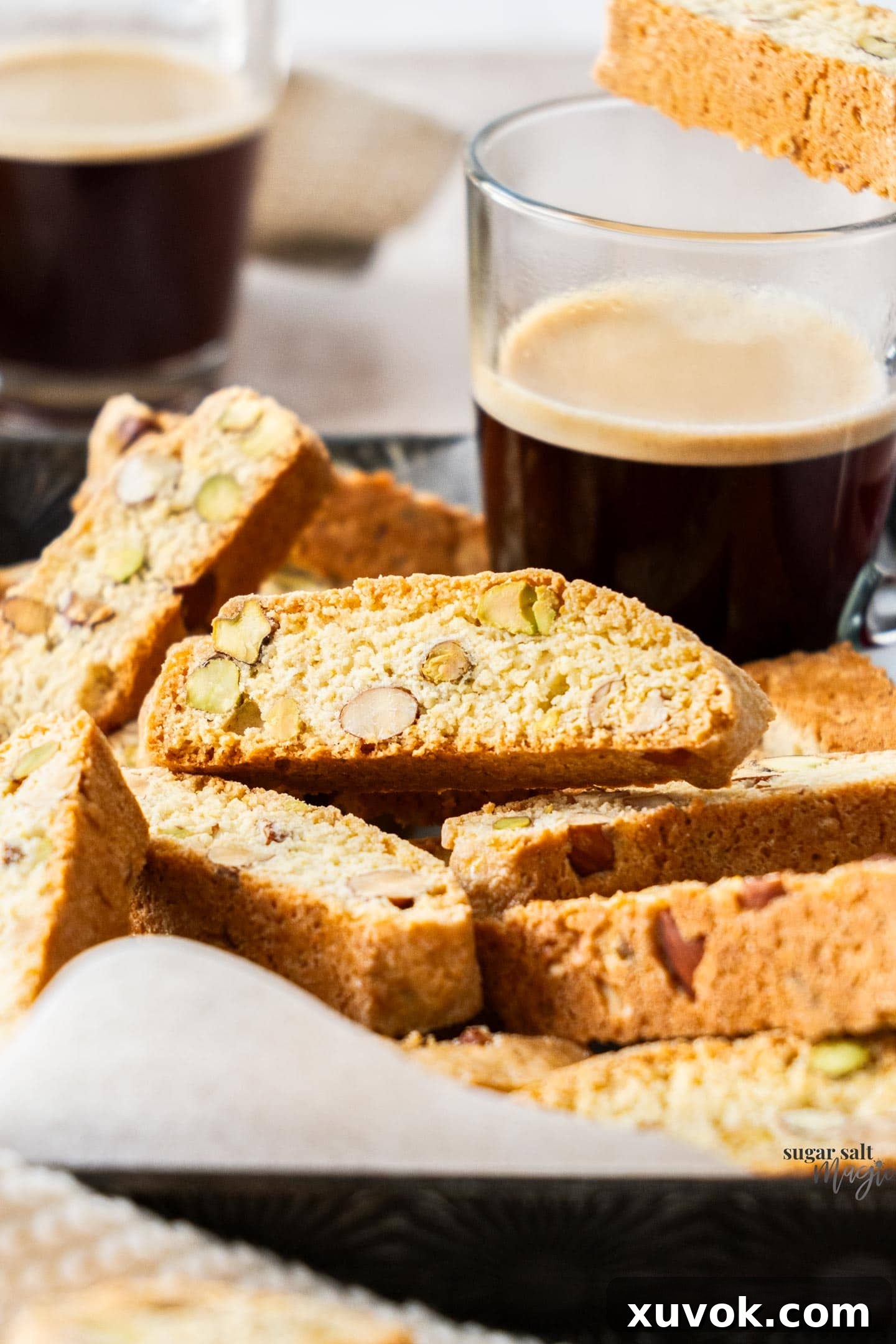
Serving Suggestions for Lemon Biscotti
While traditionally enjoyed with Vin Santo or coffee, these lemon biscotti are incredibly versatile and can elevate many moments. Pair them with your morning espresso, a creamy cappuccino, or a soothing herbal tea for a perfect start or mid-day break. They are also fantastic crumbled over vanilla ice cream, used as a crunchy garnish for creamy desserts, or simply enjoyed on their own as a light, satisfying snack. For a special touch, serve them on a dessert platter with fresh berries and a dollop of mascarpone. Their bright lemon flavor makes them particularly delightful alongside other fruity or creamy treats.
How to Store Your Lemon Almond Biscotti
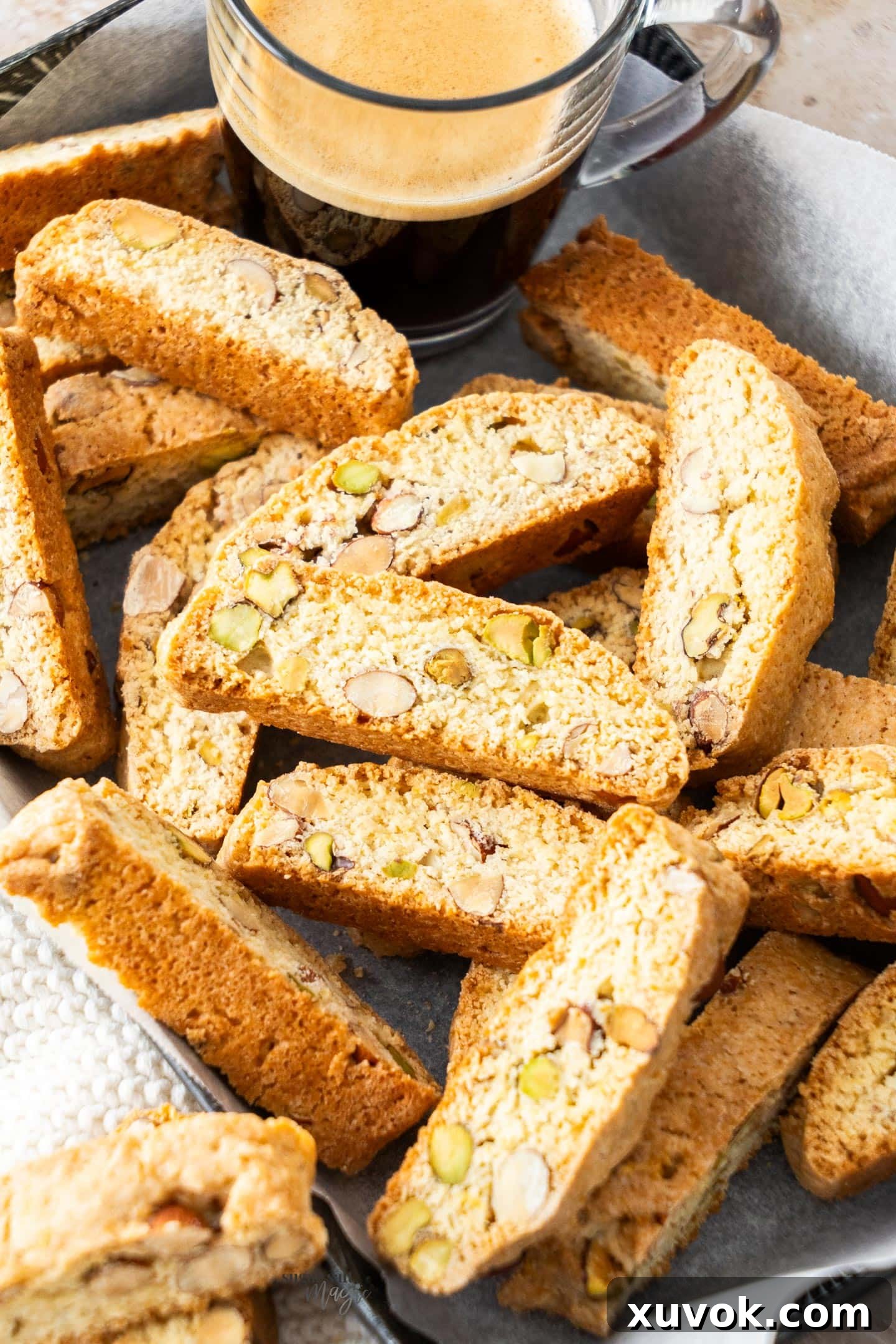
One of the many charms of biscotti is their excellent shelf life, making them a fantastic make-ahead treat. Once completely cooled, store your lemon almond biscotti in an airtight container at room temperature. They will remain fresh and wonderfully crunchy for 2-3 weeks. For even longer storage, you can freeze baked biscotti for up to 3 months. Thaw them at room temperature, and if they lose a bit of their crispness, a quick 5-10 minute refresh in a low oven (around 250°F or 120°C) will bring back their perfect crunch.
Their impressive shelf stability also makes them an ideal candidate for thoughtful food gifts. Package a batch of these homemade lemon biscotti in a beautiful glass jar, tie it with a ribbon, and you have a perfect present for birthdays, holidays, or as a host gift. They’re a delicious and impressive homemade treat that recipients will truly appreciate.
Lemon Biscotti FAQs
Biscotti are a type of cookie, and like most cookies, they contain standard baking ingredients such as flour, sugar, and fat. While their dry texture might make them seem lighter, they are not inherently “healthier” than other types of cookies. Their nutritional content largely depends on the specific ingredients and portion size. They are best enjoyed as an occasional treat!
Authentic Italian biscotti are traditionally hard and crunchy. This characteristic texture comes from their “twice-baked” preparation, which was originally developed for preservation. They are designed to be dipped into a beverage like coffee or Vin Santo, which softens them to a delightful, edible consistency. If you prefer a slightly less hard biscotti, you can reduce the time of the second bake slightly, as noted in our recipe tips.
Yes, biscotti are indeed meant to be dry. This dryness is a direct result of the twice-baked process, which removes most of the moisture, ensuring a long shelf life and the signature crisp snap. It’s this dryness that makes them perfectly suited for dunking into your favorite warm drink, allowing them to absorb flavor and soften gently without falling apart.
When biscotti are first removed from the oven after their second bake, they will still have a slight touch of warmth and minimal give. However, as they cool completely on a wire rack, they will firm up significantly, developing their characteristic hard and crunchy texture.
In Italian, “biscotti” is a general term that refers to any type of cookie or biscuit. However, the specific, twice-baked, hard, oblong cookies often studded with almonds that are popular worldwide are more accurately and traditionally known as “cantucci” (or “cantuccini”) in Italy, particularly in their region of origin, Tuscany. So, while all cantucci are biscotti, not all biscotti are cantucci.
Absolutely! With Tuscany being the birthplace of cantucci (the specific type of biscotti featured here), these delicious cookies are a deeply cherished part of Italian culinary tradition. You’ll find them in bakeries, cafes, and homes across Italy, particularly in their traditional pairing with Vin Santo.
While olive oil is traditional for many Italian biscotti recipes and contributes to a unique texture and flavor, you can substitute it with unsalted melted butter. Keep in mind that butter may change the subtle flavor profile and slightly alter the crumb, but it can still yield delicious results.
Yes, you can often adapt biscotti recipes to be gluten-free by using a good quality gluten-free all-purpose flour blend that contains xanthan gum. The twice-baked method works well with many gluten-free flours, but you might need to adjust liquid slightly and pay close attention to the dough consistency. Always check the specific recommendations for your chosen gluten-free flour blend.
More Delightful Cookie Recipes
If you loved making these lemon biscotti, explore more delicious cookie recipes from our collection:
- Pistachio Chocolate Biscotti: A rich, nutty, and chocolatey twist on the classic.
- Baci Di Dama: Elegant Italian “lady’s kisses” cookies with a delicate hazelnut flavor.
- Massive Chocolate Swirl Meringues: Light, airy, and beautifully marbled meringues.
- Almond Coconut Cookies: Chewy, sweet, and tropical-inspired delights.
- Lemon Biscuits (lemon glazed sugar cookies): Soft sugar cookies topped with a vibrant lemon glaze.
Did you try this Italian lemon biscotti recipe?
Leaving a rating and comment below the recipe is so helpful!
Hungry for more? Subscribe to the newsletter for free recipes straight to your inbox. Also, follow along on Facebook, Pinterest and Instagram.
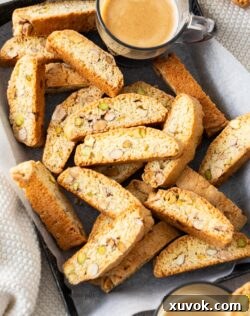
Lemon Biscotti
Rate
Pin
Ingredients
- 1 cup whole almonds & pistachios, mixed or just one (150g)
- 1 cup white granulated sugar (200g / 7oz)
- 3 large lemons, zest only, finely grated
- 325 g plain flour (all purp flour) (2 ½ cups / 11.5oz)
- 1 teaspoon baking powder
- ½ teaspoon salt
- 2 extra large eggs
- ¼ cup light flavoured olive oil
- 1 teaspoon vanilla extract
For best results, always weigh ingredients where a weight is provided
Equipment
- Large and medium mixing bowl
- Balloon whisk
- Wooden spoon or rubber spatula
- large baking sheet
Instructions
-
Preheat the oven to 160C (140C fan forced) / 320F. Line a large baking tray with baking paper.
-
Place the almonds on a baking tray lined with baking paper and toast in the oven for 10 minutes. Let them cool. Leave the oven at the same temperature.
-
In a large bowl, massage together the sugar and lemon zest to release the lemon oils and amazing aroma.
-
Sift the flour, baking powder, and salt into the same bowl. Whisk until well combined.
-
In a separate bowl, lightly whisk the eggs to break them up, then add the oil and vanilla extract. Whisk well to combine.
-
Make a well in the center of the dry ingredients and add the wet ingredients. Stir together with a wooden spoon or rubber spatula until about 80% combined.
-
Give the almonds a rough chop, making sure they’re still quite big pieces, and mix them along with the whole pistachios into the biscotti batter. You might find it easier to bring it together with your hands at this point.
-
Divide the dough into 2 pieces and shape into long logs about 5cm / 2 inches wide. Place the logs on the baking sheet, lightly wet your hands, and flatten the dough out to about 2cm / ¾ inch thick.
-
Bake for 30 minutes until starting to turn golden on the edges.
-
Remove from the oven and let the logs cool for 5 minutes (no more than 10 minutes) before using a serrated knife to cut them into 1cm / ~½ inch thick slices. Use very gentle, short strokes; once you get ⅓ of the way through, just press down.
-
Now stand the biscotti on their edges back on the same baking tray and bake for a further 15-20 minutes until they are golden brown and crisp on the outside.
-
Cool completely on a wire rack.
-
Please take a moment to leave a comment & rating. It’s appreciated and so helpful.
Notes
- These cookies have a subtle lemon flavor, they aren’t meant to have an intense flavor, but if you want more lemon, feel free to add a teaspoon of lemon extract too.
- While not traditional, you can also drizzle a lemon icing over them after they’ve finished baking. Just combine icing sugar (powdered sugar) with some lemon juice until it’s the desired consistency.
- Biscotti are meant to be dry, hard, and crunchy. They’re traditionally dipped in Vin Santo or coffee to eat them. If you want them to be a little softer in the center, just cook the second time around for 10-15 minutes.
- Nutrition details are approximate only – scroll below the recipe to find the full nutritional information.
Calories from Fat 45
More Italian Recipes (Sweet)
- Vanilla Panna Cotta with Orange Syrup
- Pistachio Chocolate Biscotti
- Baci Di Dama
- Massive Chocolate Swirl Meringues
More Italian Recipes (Savoury)
- Venetian Crab Linguine
- Mini Lasagna Cupcakes
- Focaccia Di Recco
- The Best Spaghetti Bolognese
- Chicken Saltimbocca Schnitzel
- Easy Homemade Pizza Dough
- Pesto Chicken Calzone
- Easy Sundried Tomato Pesto
- Fresh Basil Pesto