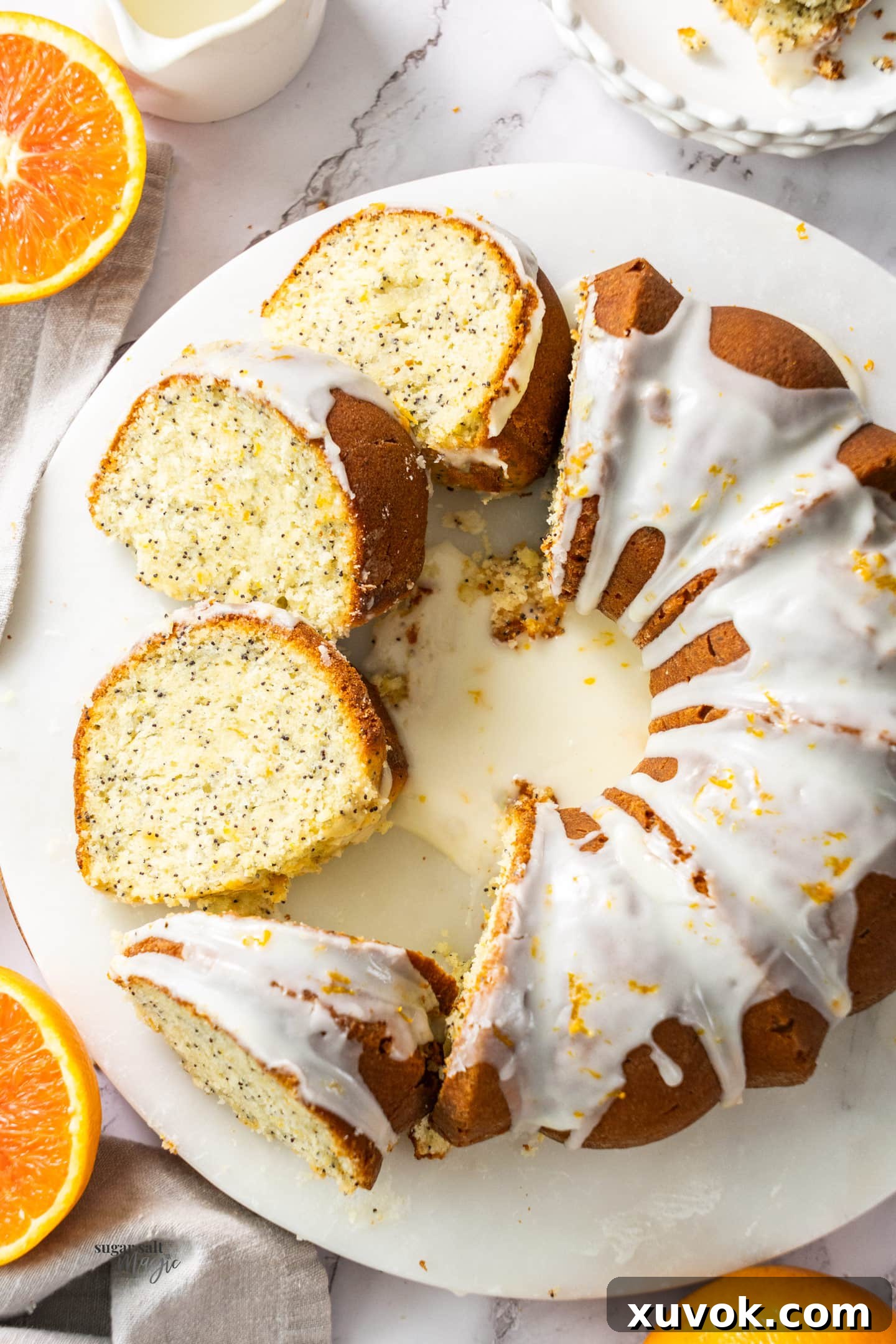
The Ultimate Zesty Orange and Poppy Seed Bundt Cake: A Moist & Flavorful Delight
Prepare to fall in love with a cake that’s as beautiful as it is delicious: our vibrant Orange and Poppy Seed Bundt Cake. This recipe masterfully combines the bright, invigorating zest and juice of fresh oranges with the subtle, earthy sweetness and delightful crunch of poppy seeds. It’s a truly captivating dessert that promises a burst of sunshine in every bite, perfectly complemented by a warm cup of tea or coffee.
Beyond its striking appearance, this bundt cake is renowned for its irresistibly tender, soft, and moist crumb. We’ve meticulously crafted the recipe to ensure maximum flavor and optimal texture, creating a baking experience that’s both rewarding and surprisingly simple. Whether you’re a seasoned baker or just starting your culinary journey, this recipe offers a straightforward path to a stunning, bakery-quality cake.
Why This Orange Poppy Seed Cake Will Become Your Go-To Recipe
- Intense Orange Flavor: Experience an unmistakable, vibrant citrus hit derived from both the fresh juice and finely grated zest of oranges. This dual approach ensures a deep, aromatic orange essence infused throughout the cake, not just on the surface.
- Perfectly Tender & Moist Crumb: The cake boasts a wonderfully tight yet tender, soft, and incredibly moist texture that melts in your mouth. This isn’t a dry cake; it’s designed to stay succulent for days, thanks to a thoughtful combination of ingredients and proper mixing techniques.
- Effortlessly Elegant Bundt Design: As a bundt cake, it offers an inherently beautiful and sophisticated presentation without requiring complex decorating skills. Its single-layer nature also means it’s much easier to prepare than multi-tiered cakes, making it ideal for both casual gatherings and special occasions.
- Quick & Easy 2-Ingredient Orange Glaze: A simple, zesty glaze comes together in mere minutes, adding a glossy finish and an extra layer of bright orange flavor that perfectly complements the cake. It’s the crowning touch that elevates this dessert from great to extraordinary.
- Exceptional Moisture Retention: This cake is designed to stay perfectly moist and fresh for 3-4 days when stored correctly, making it an excellent option for make-ahead entertaining or enjoying leisurely over several days.
My passion for baking is as strong as my love for cooking, which means my kitchen is a constant hub of delicious experimentation. Yet, I always gravitate towards simplicity, finding immense joy in single-layer cakes with easy icings, like this delightful bundt creation. For another citrusy treat, be sure to explore my much-loved Greek orange semolina cake, a true Mediterranean gem.
This Orange and Poppy Seed Bundt Cake has quickly become my latest baking obsession. It’s truly versatile – perfect for serving at a relaxed morning tea, an elegant afternoon gathering, or even as the star dessert at a special celebration. Its charming beauty and irresistible flavor are sure to impress every time.
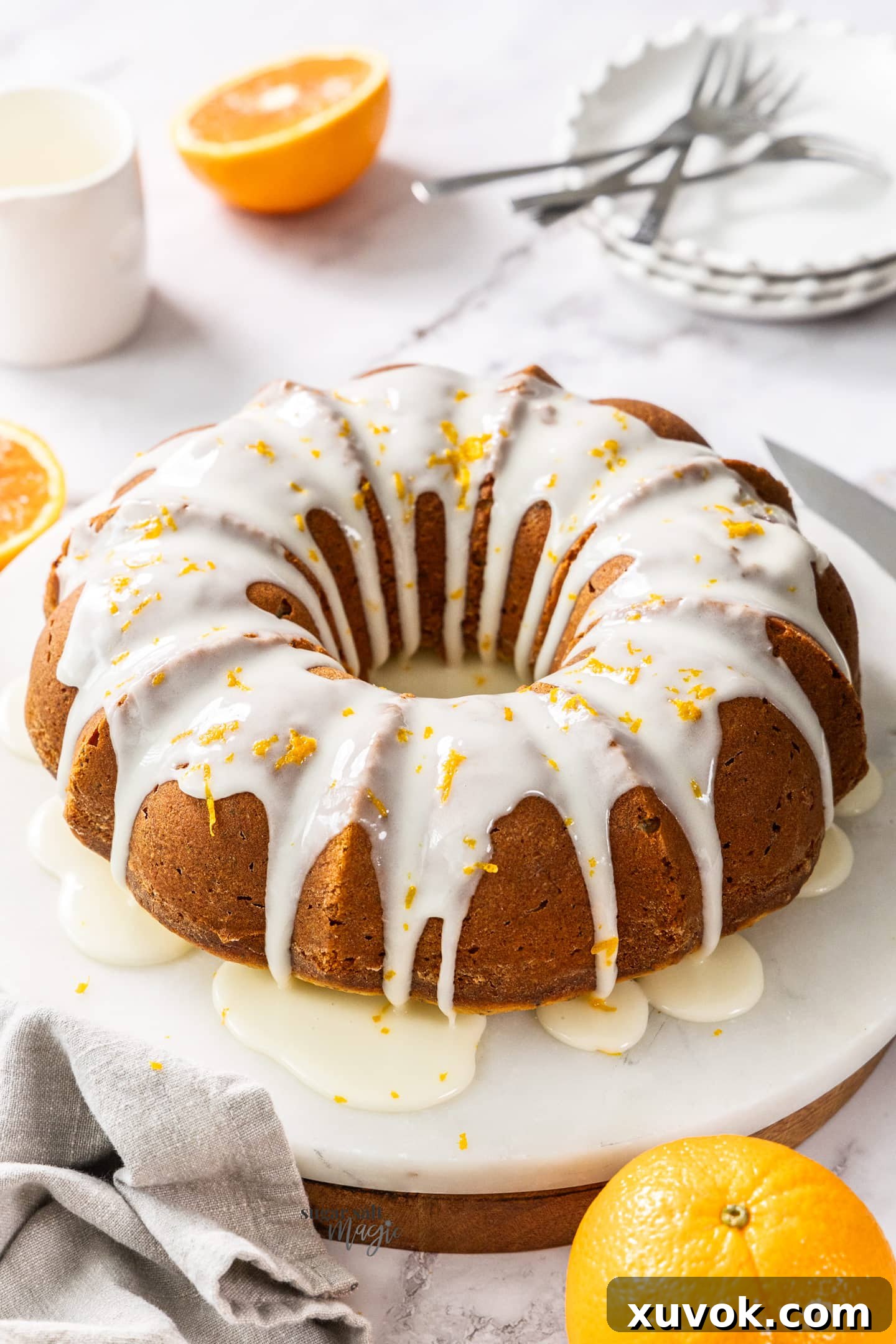
Table of Contents
- Essential Ingredients for Your Cake
- Step-by-Step Guide: Crafting Your Orange Poppy Seed Bundt Cake
- Expert Baking Tips and Tricks
- Frequently Asked Questions About This Recipe
- Storage & Freezing Instructions
- Serving Suggestions & Variations
- More Citrus-Inspired Recipes You’ll Adore
Never Miss a Delicious Recipe!
Stay updated with our latest culinary creations and baking adventures. Get the freshest recipes delivered straight to your inbox by subscribing to our newsletter!
(Email subscription form placeholder)
Essential Ingredients for Your Orange and Poppy Seed Bundt Cake
Crafting a truly exceptional cake begins with quality ingredients. Here’s what you’ll need for this delightful orange and poppy seed bundt cake, along with tips for best results. Detailed quantities can be found in the recipe card below.
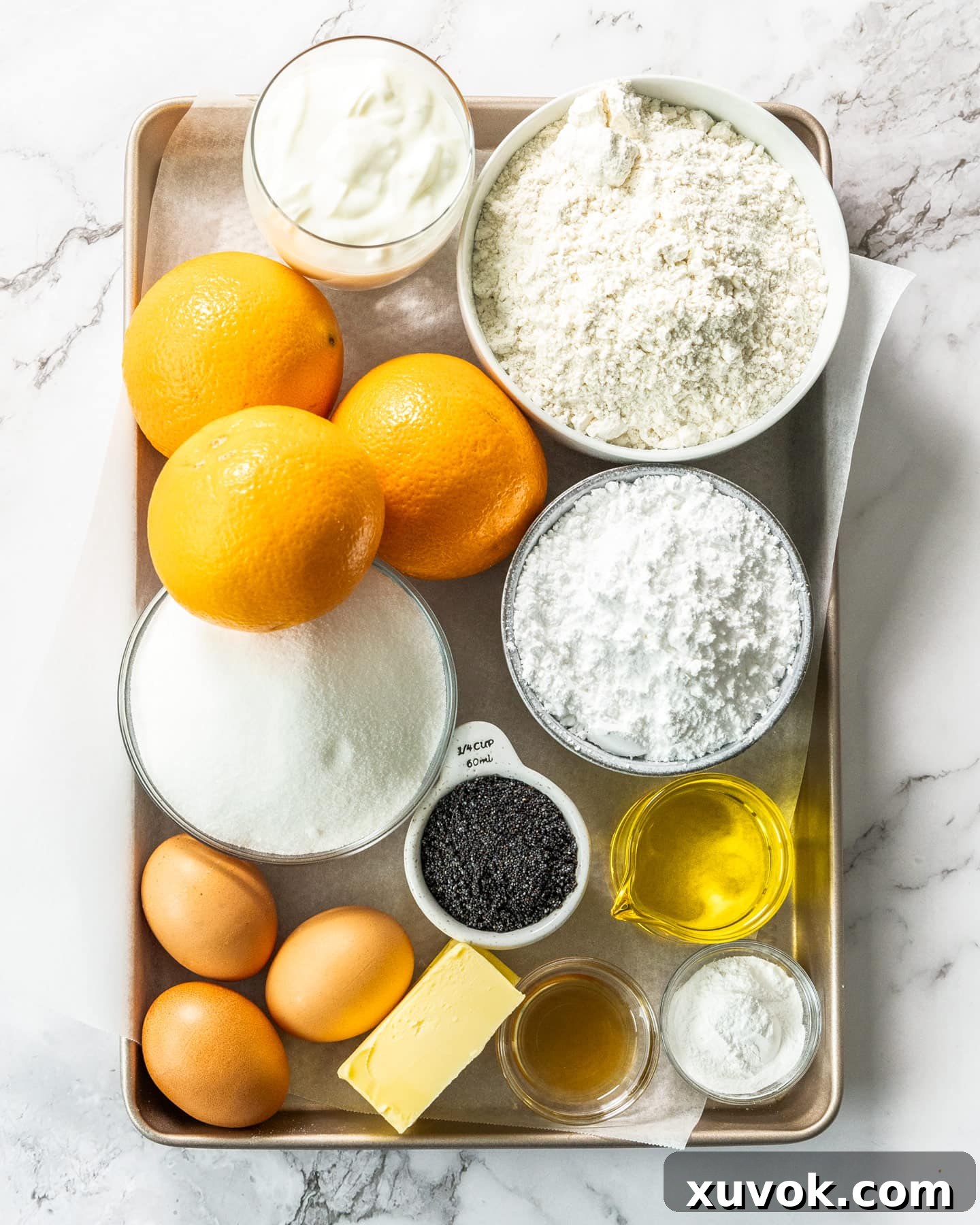
- Oranges: The star of the show! You’ll need about 3 medium-sized, room-temperature oranges for both the intensely aromatic zest and the bright, tangy juice. The zest is crucial for releasing essential oils that provide a deep citrus perfume, while the juice adds moisture and tang. For an intriguing visual and flavor twist, consider using blood oranges when they are in season, though you may need a few more as they tend to be smaller.
- Plain Yogurt: Essential for a tender and moist crumb. Ensure your yogurt is at room temperature before incorporating it into the batter, as this helps it blend seamlessly and prevents the mixture from seizing. Full-fat Greek yogurt can also be used for an even richer texture.
- Vanilla Extract: A teaspoon of quality vanilla extract adds a beautiful warmth and subtle earthy undertone, perfectly balancing the bright citrus notes of the orange. It’s a classic flavor enhancer that truly rounds out the cake’s profile.
- All-Purpose Flour: Also known as plain flour. This provides the foundational structure for your cake. For those requiring a gluten-free option, your preferred gluten-free baking blend can be substituted, typically in a 1:1 ratio. Remember to weigh your flour for accuracy, as volumetric measurements can vary significantly.
- Baking Powder: Our primary leavening agent, ensuring your orange cake achieves a beautiful rise and a light, airy texture. Always check the expiration date to guarantee its efficacy.
- Poppy Seeds: These tiny powerhouses contribute a wonderful, delicate crunch and a mildly nutty, subtly sweet flavor that beautifully complements the orange. They also add visual intrigue, scattering tiny dark specks throughout the bright yellow crumb. If you’re not a fan, you can easily omit them, and you’ll still have a magnificent orange bundt cake.
- Salted Butter: I prefer using salted butter in this recipe as it inherently balances the flavors and negates the need for additional salt in the batter. If you only have unsalted butter on hand, simply add ¼ teaspoon of fine sea salt to the dry ingredients. Ensure your butter is softened to room temperature for optimal creaming.
- Vegetable Oil: Incorporating a neutral-flavored vegetable oil, such as canola oil or rice bran oil, is key to achieving and maintaining the cake’s incredible moistness. Oil contributes a different kind of moisture than butter, helping the cake stay tender for longer.
- Eggs: You’ll need 3 large eggs, also at room temperature. Eggs provide structure, richness, and help with emulsification, contributing to the cake’s overall texture and stability. Room temperature eggs blend more easily into the batter, preventing curdling.
- Sugar: We use two types of sugar in this recipe. Granulated white sugar sweetens the cake batter, creating that perfect balance against the citrus. For the glaze, we use icing sugar (also known as confectioners’ sugar or powdered sugar), which dissolves easily to create a smooth, pourable finish.
Always remember that exact quantities and step-by-step instructions are available in the recipe card below.
How to Make Orange and Poppy Seed Bundt Cake (Step-by-Step Guide)
Creating this stunning orange and poppy seed bundt cake is a joyful process, and with these clear instructions, you’ll achieve a perfect result every time. Remember, the details are key to a beautifully moist and flavorful cake.
- Prepare Your Oranges and Wet Mix: Begin by zesting your oranges. I highly recommend using a microplane zester for this step, as it allows you to capture all the fragrant zest without grating any of the bitter white pith beneath. Once you have approximately 2 tablespoons of finely grated zest, transfer it to a small jug or bowl and set it aside. Next, juice the oranges until you yield a total of ⅔ cup of fresh orange juice. Add ½ cup of this juice to the jug with the orange zest, reserving the remaining juice for your simple glaze. Finally, add the room-temperature vanilla extract and plain yogurt to the orange zest and juice mixture in the jug. Whisk everything together gently until well combined, then set this aromatic wet mixture aside.
- Combine the Dry Ingredients: In a separate medium-sized bowl, whisk together your all-purpose flour, baking powder, and poppy seeds. Whisking ensures these ingredients are thoroughly combined and helps to aerate the flour, which contributes to a lighter cake texture. Set this bowl aside for later use.
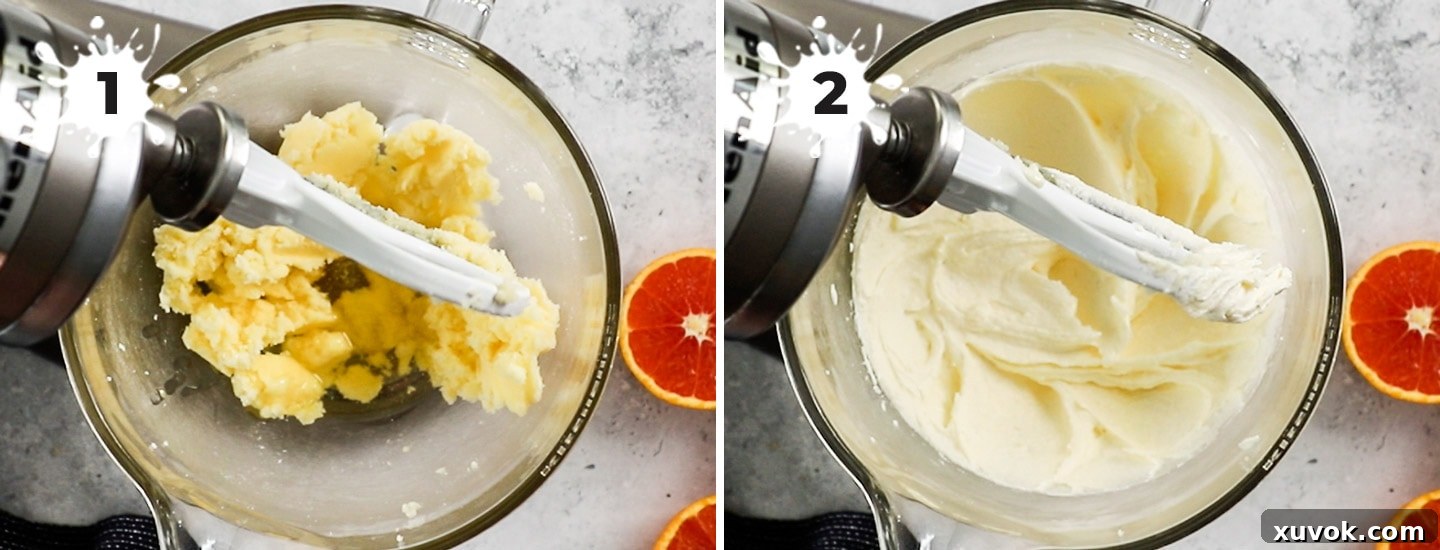
- Cream the Butter and Sugar: In the bowl of a stand mixer fitted with a paddle attachment (or using a handheld electric mixer and a large bowl), combine the softened salted butter and granulated sugar. Beat them together on medium speed for about 1 minute until they are nicely blended and starting to look cohesive, as shown in Photo 1.
- Incorporate the Oil: Now, pour in the vegetable oil. Continue beating the mixture on medium speed for another few minutes. This is a crucial step: the mixture should transform into a noticeably very pale and fluffy consistency, indicating that air has been incorporated, which is essential for a light cake. Refer to Photo 2 for the desired appearance. Scrape down the sides of the bowl as needed to ensure everything is evenly mixed.
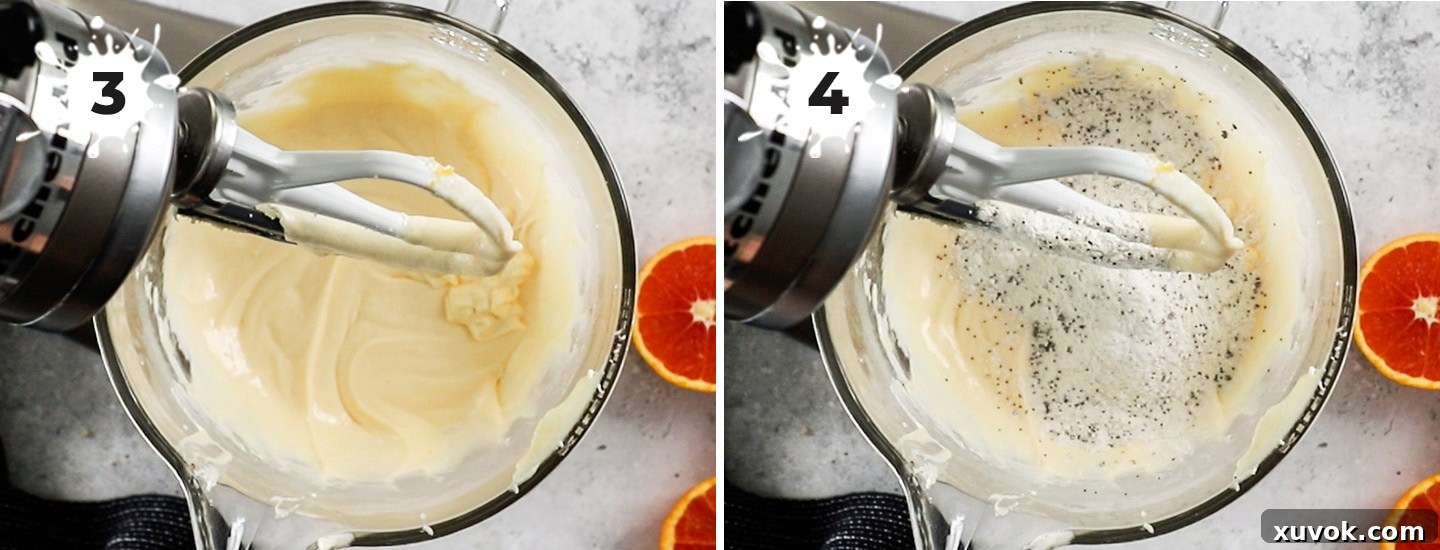
- Add the Eggs Gradually: Reduce your mixer speed to low. Add the room-temperature eggs one at a time, ensuring you mix thoroughly after each addition until just combined before adding the next. This allows each egg to fully emulsify into the batter, creating a smoother texture and preventing the mixture from curdling. Don’t forget to scrape down the sides of the bowl occasionally to ensure all ingredients are incorporated evenly (refer to Photo 3 from original, though not displayed here, the image would show eggs being added).
- Begin Incorporating Dry Ingredients: With the mixer still on low speed, add approximately one-third of your whisked dry flour mixture to the bowl. Mix just until it’s almost fully combined – you should still see a few streaks of flour. Overmixing at this stage can develop too much gluten, resulting in a tough cake. This step is depicted in Photo 4.
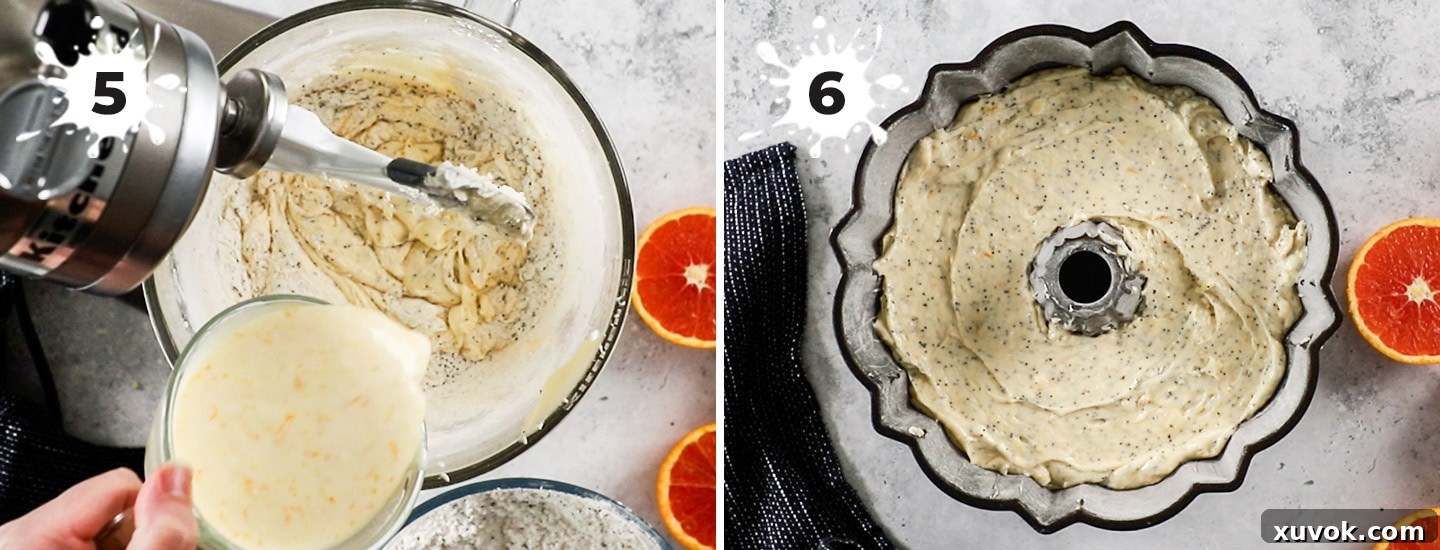
- Alternate Wet and Dry Mixtures: Now, pour in about half of the prepared orange zest, juice, and yogurt mixture into the batter. Beat again on low speed until it is just combined. Repeat this alternating process: add half of the remaining flour mixture, mix until almost combined, then add the rest of the orange-yogurt mixture, mixing until almost combined. Finally, use a rubber spatula to gently fold in the very last portion of the flour mixture by hand. This gentle folding ensures you don’t overmix the batter, which is critical for a tender cake. Overmixing can lead to a dense or tough texture. (Photo 5, which would show the batter consistency, is relevant here.)
- Transfer to Bundt Pan: Once your batter is perfectly mixed, gently pour it into your meticulously prepared bundt tin. Distribute the batter evenly around the pan. (See Photo 6 for visual guidance on filling the pan.)
- Bake to Perfection: Place your bundt cake in the preheated oven and bake for approximately 35-40 minutes. Baking times can vary depending on your oven, so start checking for doneness around the 30-minute mark. The cake is ready when a wooden skewer or toothpick inserted into the thickest part comes out with only a few moist crumbs attached, not wet batter. Avoid overbaking, as this can dry out the cake.
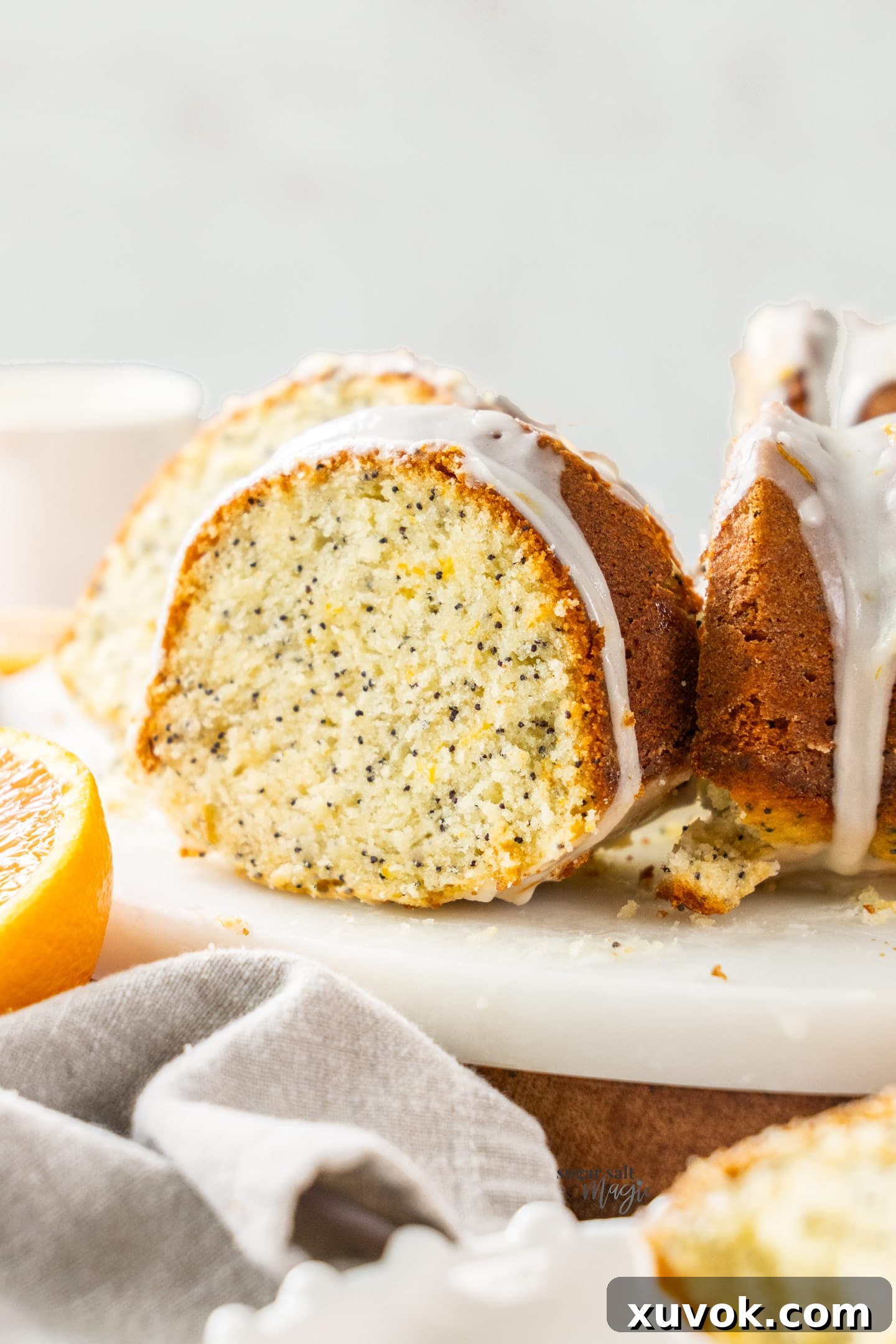
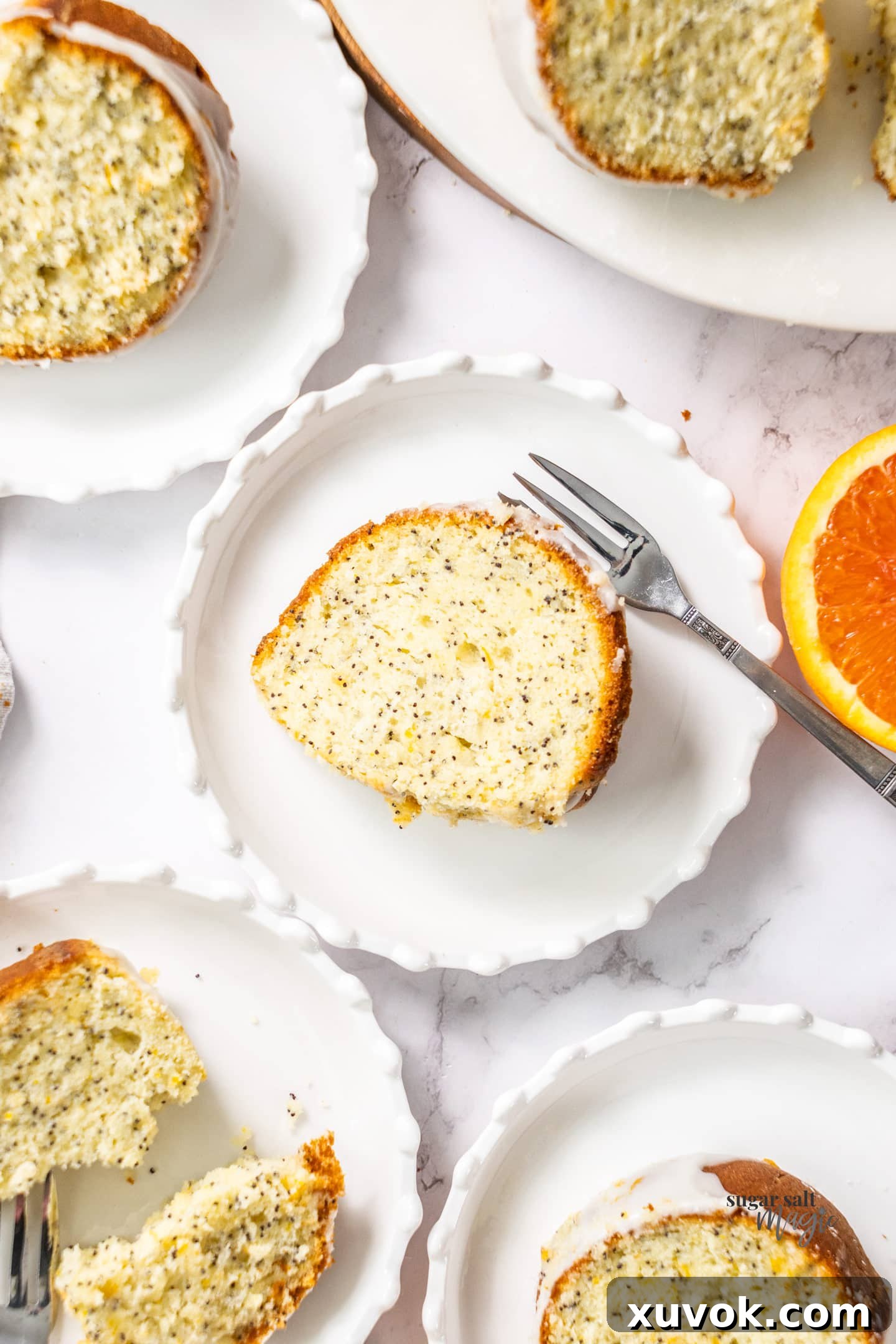
- Cool and Glaze: Once baked, remove the cake from the oven and let it cool in the bundt tin for 5-10 minutes. This short cooling period allows the cake to set and prevents it from sticking. After this initial cooling, carefully invert the bundt tin onto a wire rack, allowing the cake to cool completely to room temperature. While it cools, prepare your simple glaze: whisk together the icing sugar (powdered sugar) with the reserved orange juice until smooth and pourable. Once the cake is completely cool, drizzle the bright orange glaze generously over the top, letting it drip down the sides. For an extra touch of elegance and flavor, garnish with a sprinkle of fresh orange zest. Slice, serve, and enjoy this delightful creation!
Expert Baking Tips and Tricks for a Perfect Bundt Cake
Achieving a bakery-perfect bundt cake is all about attention to detail. Here are some essential tips to ensure your Orange and Poppy Seed Bundt Cake turns out beautifully every time:
- Weigh Your Ingredients for Accuracy: For the most consistent and best baking results, always weigh dry ingredients like flour and sugar using a digital kitchen scale. Volumetric measurements (cups) can vary greatly depending on how ingredients are scooped. If you don’t have a scale, use the “spoon and level” method: gently spoon flour into your measuring cup until it overflows, then level off the excess with a straight edge. Never scoop directly from the container, as this compacts the flour and adds too much.
- Thoroughly Grease Your Bundt Pan: A well-greased bundt tin is paramount for a clean release. Use softened, almost melted butter (or a high-quality baking spray) and a pastry brush to get into every nook, cranny, and groove of the pan. After greasing, lightly flour the pan, rotating it to coat evenly, then tap out any excess flour. This creates a non-stick barrier. Avoid using regular cooking sprays, as they can sometimes leave a sticky residue or even damage the non-stick coating of your pan over time.
- Know Your Oven Temperature: Every oven is different, and the temperature displayed on your oven’s dial can often be inaccurate compared to its actual internal temperature. To ensure precise baking and prevent under or overcooking, I highly recommend keeping a separate, reliable oven thermometer inside your oven. This allows you to monitor and adjust the temperature as needed, ensuring your cake bakes at the ideal heat.
- Avoid Overbaking: Bundt pans conduct heat from both the exterior and the central tube, which means cakes can bake more quickly than in traditional round pans. Begin checking for doneness a few minutes before the recipe suggests. Your orange and poppy seed cake is perfectly baked when a wooden skewer or toothpick inserted into the thickest part comes out with just a few moist crumbs clinging to it, not wet batter. If it comes out clean, it might be slightly overbaked.
- Proper Cooling is Crucial: Do not cool your bundt cake completely in the tin. The residual heat in the pan will continue to bake the cake, leading to dryness. Instead, allow the cake to cool in the pan for only 5-10 minutes. This short period allows the cake to firm up slightly. Then, carefully invert the cake onto a wire cooling rack to cool completely to room temperature. This airflow prevents condensation and keeps the bottom from becoming soggy.
- Room Temperature Ingredients: Always use room temperature butter, eggs, and yogurt unless otherwise specified. Ingredients at room temperature emulsify better, creating a smoother, more uniform batter and a finer crumb in the finished cake. Cold ingredients can cause the batter to curdle and prevent proper air incorporation.
- Don’t Overmix the Batter: Once you start adding the flour, mix only until the ingredients are just combined. Overmixing develops the gluten in the flour, which can lead to a tough, dense, and chewy cake. A few small streaks of flour are fine; they will disappear during baking.
Frequently Asked Questions About Orange & Poppy Seed Bundt Cake
Got questions? We’ve got answers to help you perfect your orange and poppy seed bundt cake!
Absolutely! While poppy seeds add a wonderful textural element and subtle nutty flavor, you can certainly omit them if you’re not a fan or don’t have them on hand. You’ll still end up with a beautifully moist, zesty, and utterly delicious plain orange bundt cake.
For most baking applications, including this recipe, it’s generally not necessary to soak poppy seeds. They can be safely and deliciously eaten without any pre-soaking. Some people choose to soak them to soften their hard outer shell, which can potentially aid digestion or slightly alter their texture. However, for the delightful crunch and subtle flavor we’re aiming for in this bundt cake, I personally prefer not to bother with pre-soaking them before baking.
Poppy seeds contribute a very mild, slightly nutty, and subtly sweet flavor to baked goods. Their primary contribution, however, is their unique texture – they add a delightful and distinctive crunch that makes each bite more interesting.
Yes, absolutely! While the bundt tin provides that gorgeous, elegant presentation that I adore, this versatile orange and poppy seed cake batter can be baked in various other pans. You could use a standard 9×13-inch (approx. 23×33 cm) rectangle baking dish, a 9-inch (approx. 23 cm) round cake pan, or even a large loaf pan (or two smaller ones). Just be mindful that baking times will need to be adjusted significantly to prevent over or undercooking. Always use the toothpick test to determine doneness.
Bundt cakes often stick due to insufficient greasing and flouring, or not allowing the cake to cool slightly before inverting. Ensure you thoroughly grease every crevice of your pan with softened butter and then flour it meticulously. Also, let the cake cool in the pan for 5-10 minutes (no more!) before inverting it onto a wire rack. This allows the cake to firm up and pull away from the pan sides naturally.
Certainly! This recipe is incredibly adaptable to other citrus flavors. You could use lemons for a lemon and poppy seed bundt cake, limes for a zesty lime version, or even a mix of citrus for a more complex flavor profile. Adjust the sweetness of the glaze if using very tart fruits.
Storage & Freezing Instructions for Your Cake
One of the many joys of this Orange and Poppy Seed Bundt Cake is how well it keeps, allowing you to savor its delightful flavors over several days.
Storage at Room Temperature: Leftovers will remain wonderfully fresh and moist for 3-4 days when stored in an airtight container at room temperature. It’s crucial to use an airtight container to prevent the cake from drying out. I generally advise against storing this cake in the refrigerator, as the cool, dry environment of a fridge tends to accelerate the staling process and can dry out cakes quickly. If you live in a very humid climate, you might consider refrigeration, but bring it to room temperature before serving for the best texture.
Freezing Instructions: For longer storage, this orange and poppy seed cake freezes beautifully. You can freeze the whole cake (unglazed, wrapped tightly in plastic wrap and then foil) or individual slices. It will keep well in the freezer for up to 3 months. When you’re ready to enjoy it, simply transfer the cake or slices to the refrigerator to thaw overnight, then bring to room temperature before serving. If you froze it unglazed, you can whip up a fresh batch of glaze for a perfect finish.
Serving Suggestions & Variations
This Orange and Poppy Seed Bundt Cake is a standalone star, but a few simple additions can elevate the experience even further.
How to Serve:
- Classic Pairing: Enjoy a slice with a warm cup of coffee or a fragrant herbal tea for the ultimate comfort.
- Creamy Accents: Serve alongside a dollop of freshly whipped cream, a scoop of vanilla bean ice cream, or a spoonful of crème fraîche to balance the citrus zing.
- Fruit Garnish: Enhance its fresh appeal with thinly sliced oranges, candied orange peel, or a scattering of fresh berries like raspberries or blueberries.
- Brunch Favorite: It makes a fantastic addition to a brunch spread, alongside fresh fruit salads and other pastries.
Delicious Variations:
- Lemon & Poppy Seed: Substitute oranges for lemons for a tangier, equally delightful lemon poppy seed bundt cake.
- Almond Extract Boost: Add ½ teaspoon of almond extract to the batter alongside the vanilla for a lovely complementary flavor.
- Nutty Addition: Fold in ½ cup of finely chopped toasted almonds or pistachios with the dry ingredients for extra crunch and flavor.
- Spiced Orange: A pinch of ground cardamom or cinnamon can add a subtle warmth to the orange flavor profile.
- Blood Orange Twist: If blood oranges are in season, use them for a stunning pinkish hue and a slightly different, often berry-like, orange flavor. Adjust the glaze to use blood orange juice as well.
More Citrus-Inspired Recipes You’ll Adore
If you love the bright, fresh flavors of citrus as much as we do, you’ll definitely want to try these other delightful recipes:
- Buttermilk Panna Cotta with Blood Orange Jelly
- Orange Almond Crescent Cookies
- Fluffy Homemade Orange Marshmallows
- Elegant Blood Orange Loaf Cake
- Baked Orange Donuts with Pomegranate Icing
Did you try this amazing orange and poppy seed bundt cake recipe?
Leaving a rating and comment below the recipe is so incredibly helpful and appreciated!
Hungry for more? Subscribe to our newsletter for free recipes delivered straight to your inbox. Also, follow along on Facebook, Pinterest and Instagram for daily inspiration!

Orange and Poppy Seed Bundt Cake
10
serves
20
minutes
37
minutes
52
minutes
Rate
Pin
Ingredients
- 3 medium oranges, room temperature
- 1 cup plain yoghurt, room temperature (250ml)
- 1 teaspoon vanilla extract
- 390 g plain flour (all-purpose flour) (3 cups / 14oz)
- 3 teaspoons baking powder
- ¼ cup poppy seeds
- 113 g salted butter, softened (½ cup / 1 stick / 4oz)
- ½ cup vegetable oil (like canola oil or rice bran oil) (125ml)
- 1 ½ cups white granulated sugar (300g / 10 ½oz)
- 3 large eggs, room temperature
- 1 ½ cups icing sugar (confectioners’ / powdered sugar) (195g / 7oz)
For best results, always weigh ingredients where a weight is provided.
Equipment
-
10-12 cup capacity bundt pan
-
stand mixer or hand mixer with mixing bowls
-
rubber spatula
-
microplane zester
-
oven thermometer
-
wire cooling rack
Instructions
-
Preheat your oven to 180°C (160°C fan-forced) / 350°F. Thoroughly grease your bundt tin using very soft butter, making sure to get into all the intricate grooves and corners. Once greased, lightly flour the entire bundt tin, rotating it to ensure an even coating, then tap out any excess flour. This crucial step helps prevent the cake from sticking.
-
PREP THE ORANGES & WET MIX:
Start by carefully zesting your oranges until you have roughly 2 tablespoons of fragrant zest. Place this zest into a small jug or bowl and set aside.
-
Juice the oranges until you collect ⅔ cup of fresh orange juice. Add ½ a cup of this orange juice to the orange zest in the jug. The remaining juice will be reserved and used later for the vibrant orange glaze.
-
Now, add the room-temperature plain yogurt and vanilla extract to the orange juice and zest mixture in the jug. Give it a good whisk until all components are well combined. Set this fragrant wet mix aside.
-
FOR THE CAKE BATTER:
In a separate medium-sized bowl, whisk together the plain flour, baking powder, and poppy seeds. Whisking helps to evenly disperse the leavening agent and aerate the flour, contributing to a lighter cake. Set this bowl of dry ingredients aside.
-
In a large mixing bowl or the bowl of a stand mixer fitted with a paddle attachment, beat together the softened salted butter and white granulated sugar on medium speed for approximately 1 minute, until they are nicely blended and look cohesive. Next, add the vegetable oil and continue beating for another 1-2 minutes until the mixture becomes very pale and delightfully fluffy, indicating proper aeration.
-
Reduce the mixer speed to low. Add the large eggs one at a time, beating just until each egg is combined before adding the next. This ensures proper emulsification. Remember to scrape down the sides and bottom of the bowl a few times throughout this process to ensure all ingredients are incorporated evenly.
-
Add about one-third of the whisked flour mixture to the wet batter. Mix on low speed only until it’s about 80% combined – you should still see a few streaks of flour. Avoid overmixing at this stage.
-
Now, pour in half of the prepared orange zest and yogurt mixture. Beat on low speed again until it’s nearly combined. Repeat this layering process: add the remaining half of the flour mixture, mix until almost combined, then add the rest of the orange yogurt mixture, again mixing until nearly combined. Finally, with a rubber spatula, gently fold in the very last portion of the flour mixture by hand until just combined. Be careful not to overmix the batter at any point to ensure a tender cake.
-
Carefully spoon the thick cake batter into your meticulously prepared bundt tin. Use the back of the spatula to roughly level the batter out, ensuring it’s evenly distributed in the pan.
-
BAKE:
Bake the bundt cake for 35-40 minutes, or until a wooden skewer or toothpick inserted into the thickest part comes out with just a crumb or two attached. Start checking for doneness a few minutes early, as oven temperatures can vary.
-
Once baked, remove the cake from the oven and let it cool in the tin for 5-10 minutes. This allows the cake to set and firm up slightly before unmolding. After this initial cooling, place a wire cooling rack on top of the cake tin, then carefully flip the entire thing over to release the cake. Allow it to cool completely to room temperature on the wire rack before proceeding with the icing.
-
ICING:
When your orange poppy seed cake has completely cooled down, prepare the glaze. In a small bowl, mix the icing sugar (confectioners’ sugar) with the reserved orange juice until you achieve a thick but pourable consistency. Drizzle this vibrant glaze generously over the cooled cake, allowing it to cascade down the elegant bundt ridges. For a beautiful finishing touch, you can garnish with a little extra fresh orange zest. Slice and enjoy your magnificent creation!
-
Please take a moment to leave a comment & rating if you tried this recipe. Your feedback is greatly appreciated and incredibly helpful!
Notes
- Tablespoons: Please note that I use a standard Australian 20ml tablespoon in my recipes, which is equivalent to 4 teaspoons. It’s always a good idea to check your own measuring spoons to ensure accuracy, as tablespoon sizes can vary internationally.
- Ingredient Measurement: For the most precise and consistent baking results, you should always weigh ingredients like flour and sugar, especially when a weight is provided in the recipe. Kitchen scales are relatively inexpensive and an invaluable tool for baking. If you do not have a scale, use the “spoon and level” method for flour (spoon flour into the cup and level off with a straight edge) rather than scooping directly from the container, which can compact the flour and lead to incorrect amounts.
- Oven Variations: All ovens vary in temperature and performance. The baking time provided (35-40 minutes) is a general guideline. To avoid over or underbaking, I recommend starting to test for doneness 2-3 minutes before the suggested minimum baking time. Keep an oven thermometer inside your oven for true temperature readings.
- Orange Juice Tip: If your oranges feel particularly firm and you’re having trouble getting enough juice, a quick trick is to microwave them for about 20 seconds on high power. This helps to soften them and release more juice. If you find you still don’t have quite enough juice to reach the ⅔ cup required from your fresh oranges, you can top up the difference with a splash of store-bought orange juice, a little lemon juice for extra tang, or even just a small amount of water without significantly impacting the flavor.
EXPLORE MORE DELICIOUS CAKE RECIPES!
575
kcal
Marie Roffey
Dessert, Snack, Tea Time
American, Australian, European
Have you tried this recipe?
Don’t forget to leave a rating and comment below and let me know how it was! I love hearing from you. Nutrition information is approximate and derived from an online calculator. The brands you use and specific serving sizes may cause variations.
Calories from Fat 216