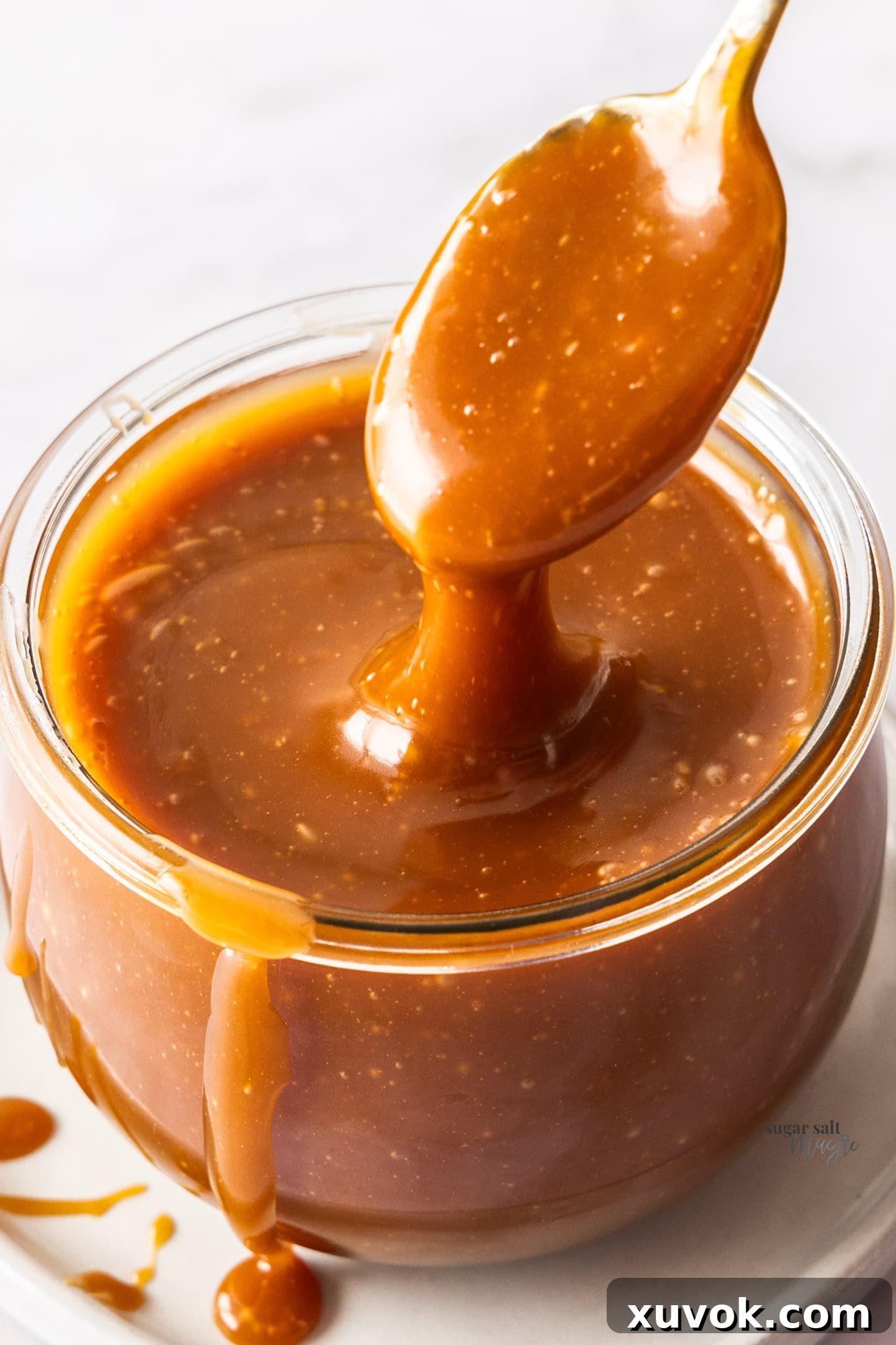
The Ultimate Homemade Caramel Sauce: A No-Thermometer Recipe
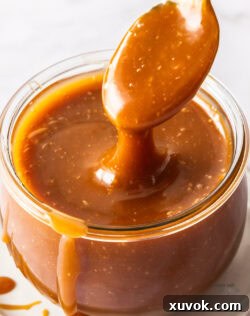
Imagine a sauce so rich, so buttery, and so irresistibly sweet that it could transform any ordinary dessert into an extraordinary indulgence. That’s the magic of homemade caramel sauce. Often perceived as a daunting task reserved for professional pastry chefs, making caramel from scratch is surprisingly straightforward. With just a few simple ingredients and our foolproof, no-thermometer method, you’ll be drizzling this liquid gold over everything in sight.
This luscious caramel sauce brings a delightful blend of sweetness and a hint of salt that dances on your palate. It’s truly a versatile confection, elevating everything from a scoop of vanilla ice cream to a warm apple pie. While candy making can sometimes be intimidating, this recipe simplifies the process, relying on visual cues rather than precise temperature readings. Forget the candy thermometer – we’ll guide you through each stage, ensuring a perfect, velvety smooth caramel every single time.
Caramel holds a special place in many hearts, and you’ll find it featured prominently in a variety of decadent treats, from creamy salted caramel cheesecakes and rich caramel brownies to elegant desserts like this apple crostata. Once you master this basic recipe, a world of caramel-infused creations awaits!
This recipe was originally published on May 17th, 2022, and has been updated with enhanced step-by-step photos and detailed method instructions for an even better baking experience.
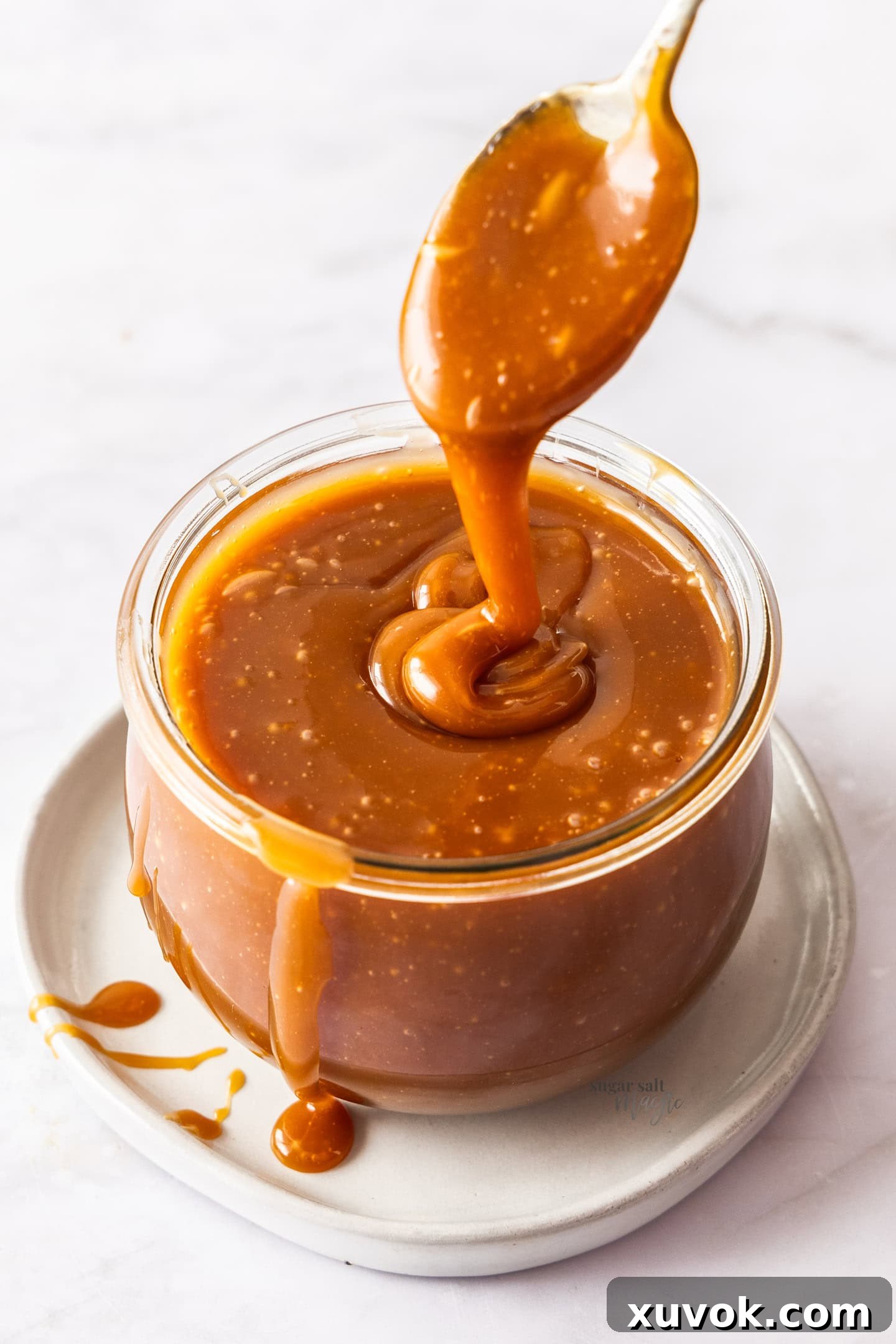
Table of Contents: Your Guide to Perfect Caramel
- Essential Ingredients for Homemade Caramel Sauce
- Tools You’ll Need (and What You Won’t)
- Step-by-Step: How to Make Caramel Sauce
- Expert Tips for Caramel Making Success
- Delicious Caramel Sauce Variations
- Understanding Caramel Texture
- Creative Ways to Use Your Caramel Sauce
- Storing Your Homemade Caramel Sauce
- Caramel Troubleshooting Guide
- More Irresistible Caramel Recipes
Never Miss a Delicious Recipe!
Get the latest and greatest recipes delivered straight to your inbox and elevate your home cooking game.
Join our newsletter for exclusive recipes and baking tips!
Essential Ingredients for Homemade Caramel Sauce
Crafting the perfect caramel sauce requires only a handful of common ingredients. The quality of these basic components significantly impacts the final taste and texture, so choose wisely!
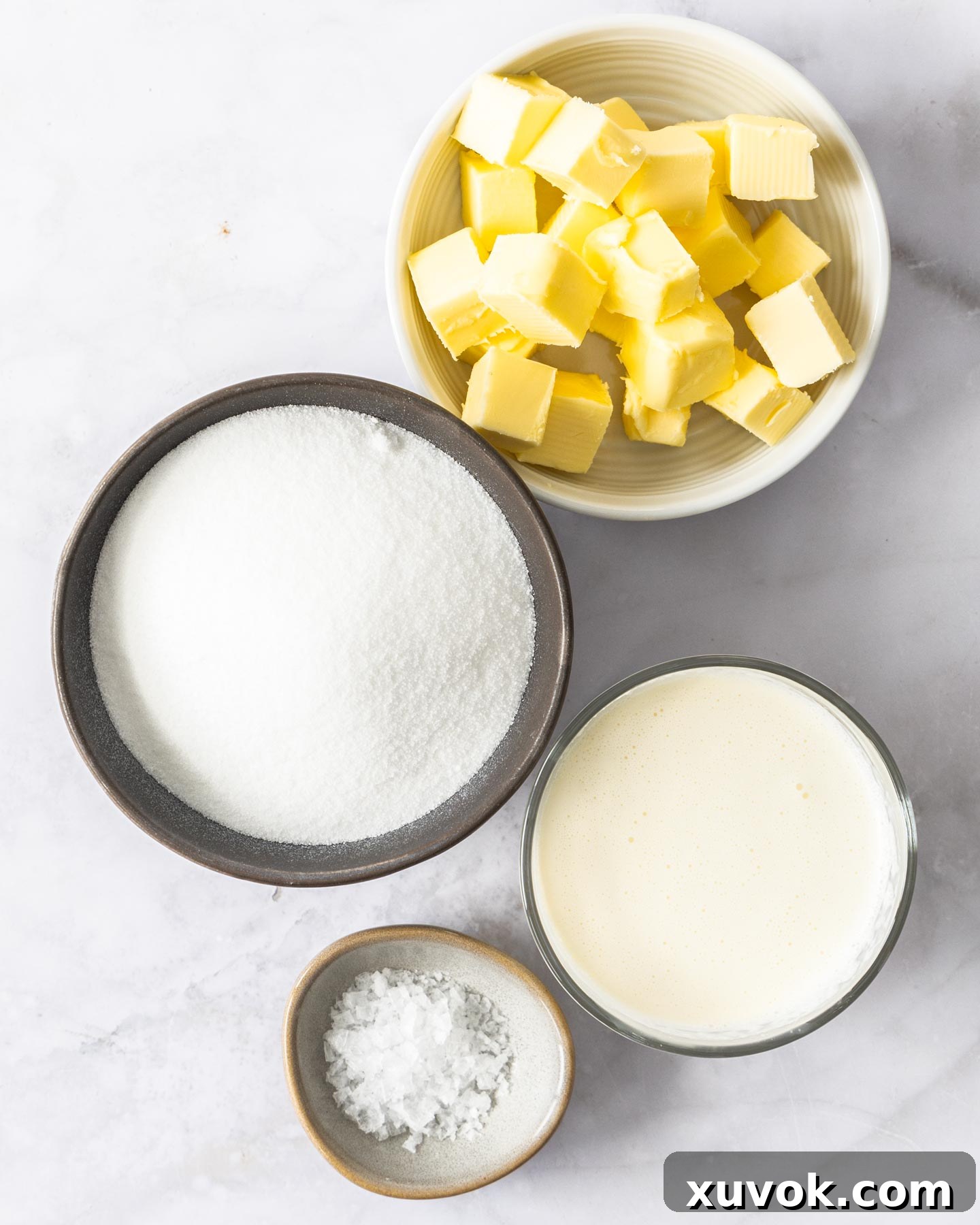
For precise measurements and detailed instructions, refer to the recipe card below.
- Sugar: For the quickest and easiest melting, superfine or caster sugar is highly recommended. Its smaller granules dissolve rapidly and evenly. Granulated sugar can also be used, but it might take a bit longer to melt completely. Avoid using icing sugar (powdered sugar) as it contains cornstarch, which will prevent the sugar from caramelizing properly.
- Cream: Opt for a full-fat, pourable cream such as thickened cream, heavy cream, or heavy whipping cream. Ensure it’s not already whipped. The high fat content in these creams provides the characteristic richness and smooth texture of caramel sauce. Bringing your cream to room temperature or warming it slightly before adding can help prevent seizing.
- Butter: High-quality unsalted butter is key here. Using unsalted butter gives you complete control over the salt content, allowing you to perfectly balance the sweetness and achieve your desired level of saltiness. Cut it into cubes for faster melting.
- Sea Salt Flakes: Flaky sea salt offers the most superior flavor and a delightful textural contrast. Its larger crystals dissolve slowly, imparting a nuanced saltiness that beautifully cuts through the richness of the caramel. While table salt can be used in a pinch (use half the amount), sea salt flakes truly elevate the sauce. Even if you’re not aiming for a distinct “salted caramel,” a small pinch of salt is crucial to enhance the overall flavor profile and prevent it from tasting overly sweet.
Caramel vs. Butterscotch: What’s the Difference?
While both caramel and butterscotch are delightful, rich sauces, their primary distinction lies in the type of sugar used as their base. Caramel sauce, like the one we’re making today, is traditionally made with white granulated or caster sugar, which is cooked until it caramelizes and turns a golden amber color. Butterscotch, on the other hand, is made with brown sugar, which already contains molasses, giving it a deeper, more complex flavor profile and often a slightly darker hue. Butterscotch also frequently includes vanilla extract, further differentiating its taste from classic caramel.
Tools for Success: What You Will (and Won’t) Need
The right tools can make all the difference when making caramel. Here’s a breakdown of what to have on hand, and what you can safely leave in the drawer.
- A Medium Heavy-Based Stainless Steel Saucepan: This is an absolute must-have. A heavy-based pan ensures even heat distribution, preventing hot spots that can burn your sugar. Stainless steel is preferred because its light color allows you to accurately monitor the sugar’s changing color as it caramelizes. Avoid pans that are too large, as the sugar can color unevenly before fully dissolving. Conversely, a pan that’s too small will cause sugar to stick to the sides, hindering proper melting. Never use a non-stick pan for caramel; the non-stick coating can interfere with sugar crystallization and often leads to a grainy, unusable caramel.
- Silicone Spatula and Balloon Whisk: You’ll start with a silicone spatula to gently stir the sugar as it melts. Once the butter and cream are added, a balloon whisk becomes invaluable for smoothly incorporating the ingredients and preventing lumps. Silicone is ideal because it’s non-reactive and heat-resistant. It’s best to avoid wooden spoons for caramel making, as wood can absorb fats and residues from previous cooking, which can introduce impurities and cause the sugar to crystallize.
- Heatproof Jar or Jug for Storage: Have a clean, heatproof preserving jar (like a mason jar) or a sturdy glass jug ready to pour your finished caramel into. This makes storage simple and safe.
- What You Won’t Need: Many caramel recipes suggest using a candy thermometer or a wet pastry brush to prevent crystallization. However, for this simplified method, these tools are unnecessary. We’ll rely on visual cues for temperature, and our specific technique minimizes the risk of sugar crystals forming on the pan’s sides, keeping the process stress-free and accessible.
How to Make Homemade Caramel Sauce: A Foolproof Guide
Homemade caramel sauce often carries a reputation for being finicky, but by following these precise steps and understanding the visual transformations, you’ll achieve a perfect, smooth sauce with ease. It’s crucial to resist the urge to add water to your sugar to try and dissolve it faster; this common mistake almost always leads to sugar crystallization, ruining your caramel.
Detailed quantities, timings, and instructions can be found in the comprehensive recipe card below.
1. Dissolve the Sugar to a Golden Amber
Begin by placing your sugar in a medium heavy-based stainless steel saucepan over medium heat on a medium-sized burner. Crucially, stir the sugar constantly with your silicone spatula. As the sugar heats, it will first clump together, resembling wet sand. Continue stirring, and these clumps will begin to melt, forming pockets of liquid sugar. Adjust the heat as needed – if you notice the sugar coloring too quickly before fully melting, reduce the temperature to medium-low or even low heat.
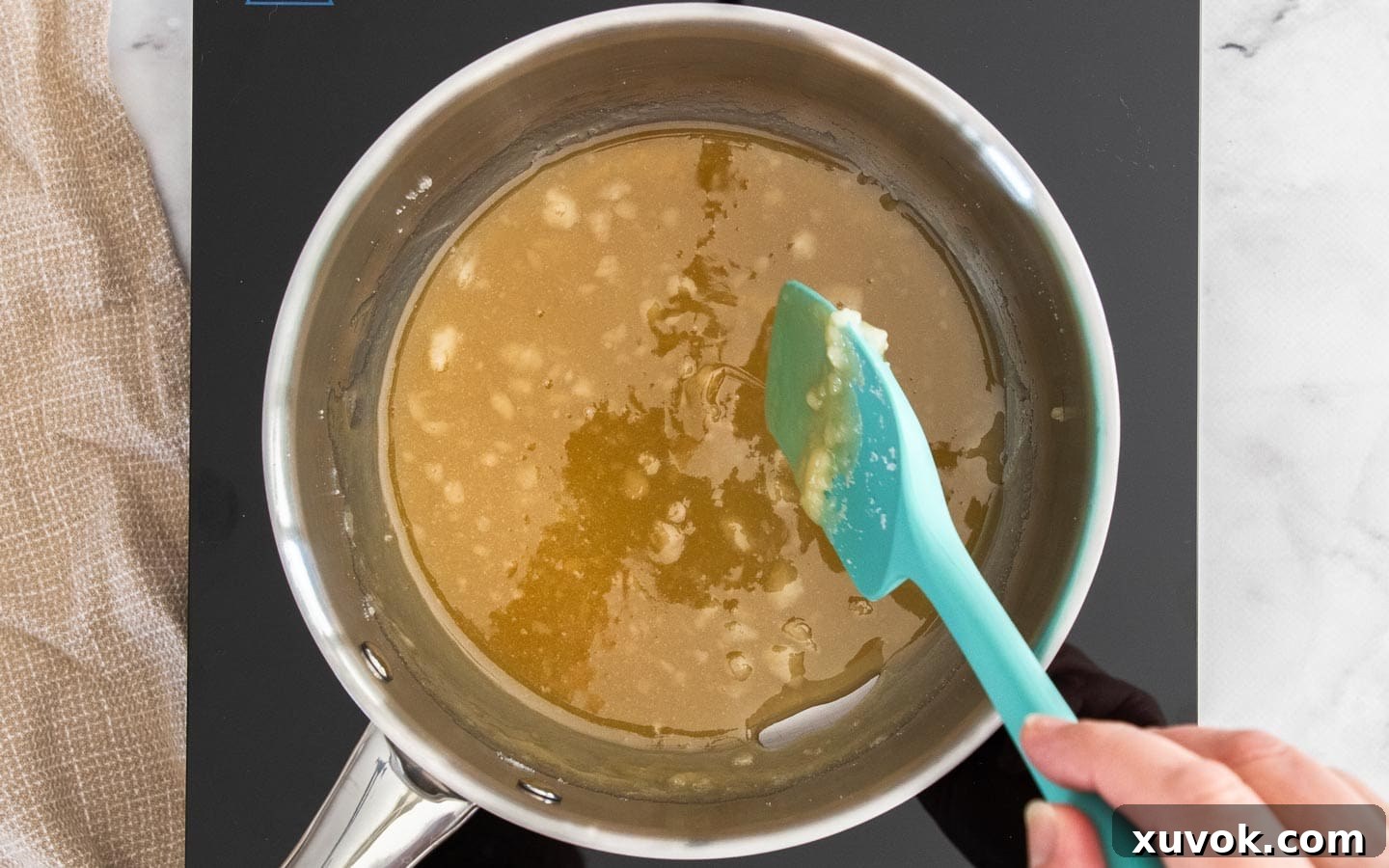
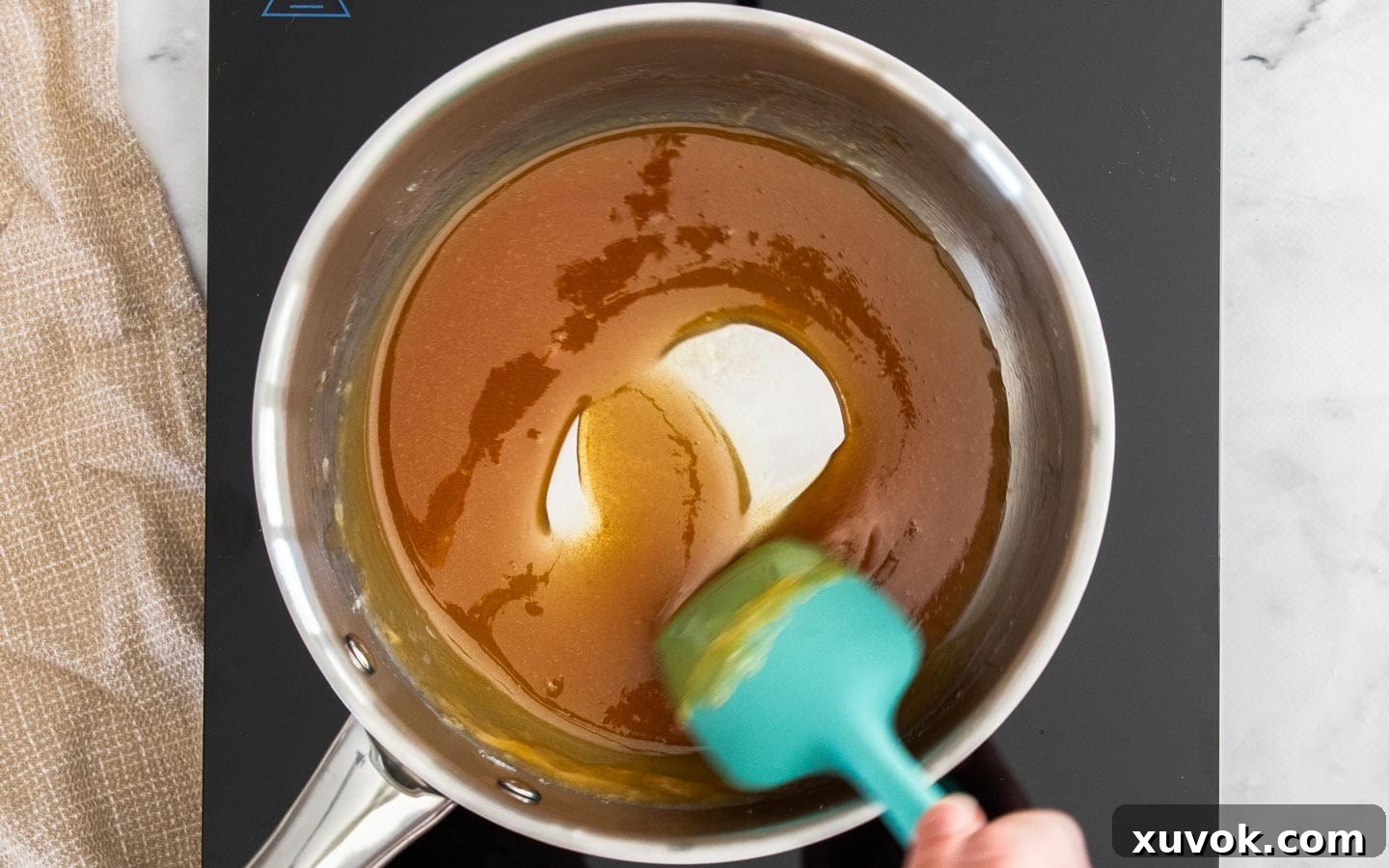
Maintain constant stirring, gently pressing down on any larger sugar clumps to help them dissolve. The goal is to achieve an even, amber-gold liquid. This transformative process typically takes between 7 to 10 minutes. The five images below illustrate the key stages your sugar will undergo during this critical step, guiding you to the perfect color and consistency before adding other ingredients.
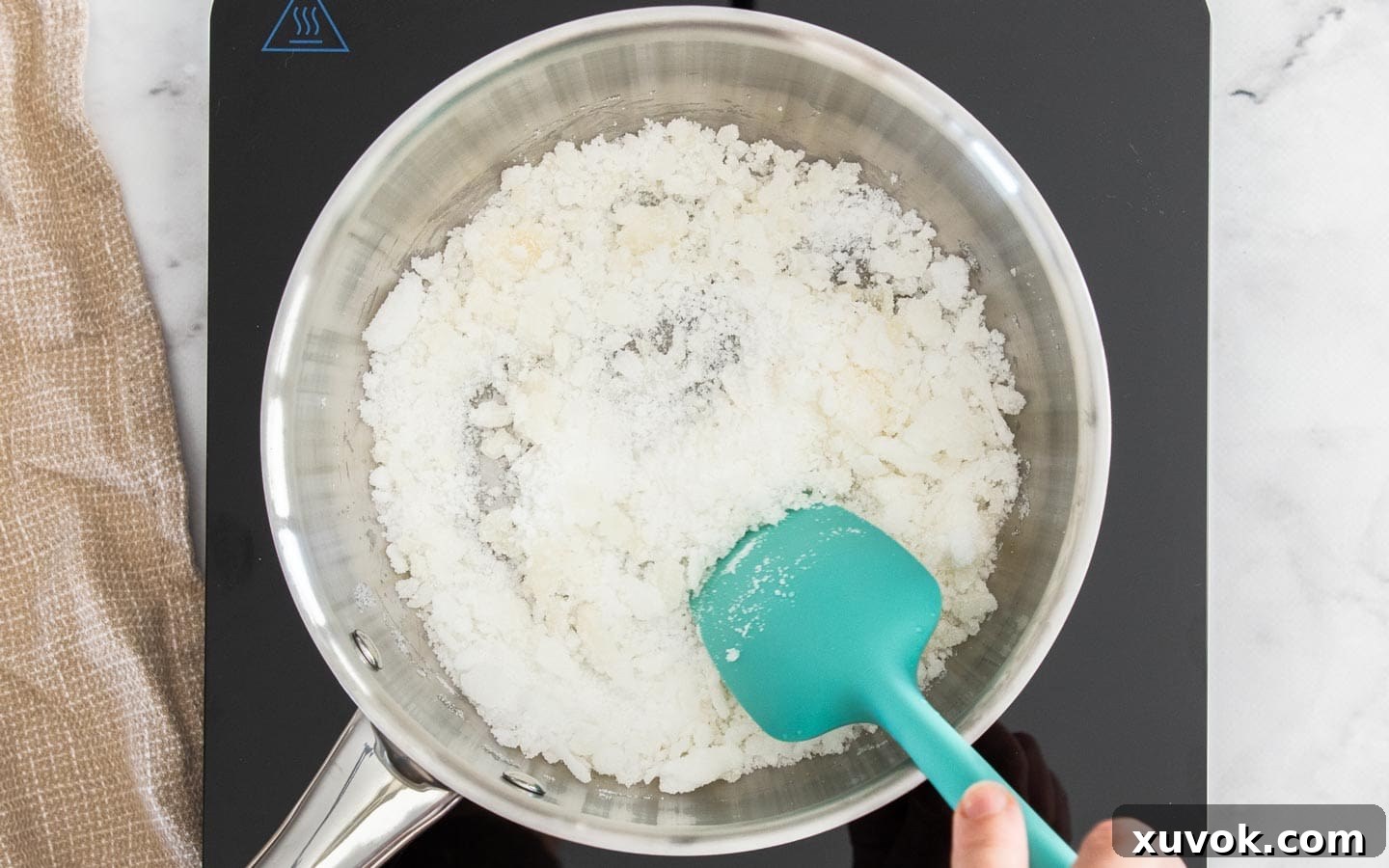
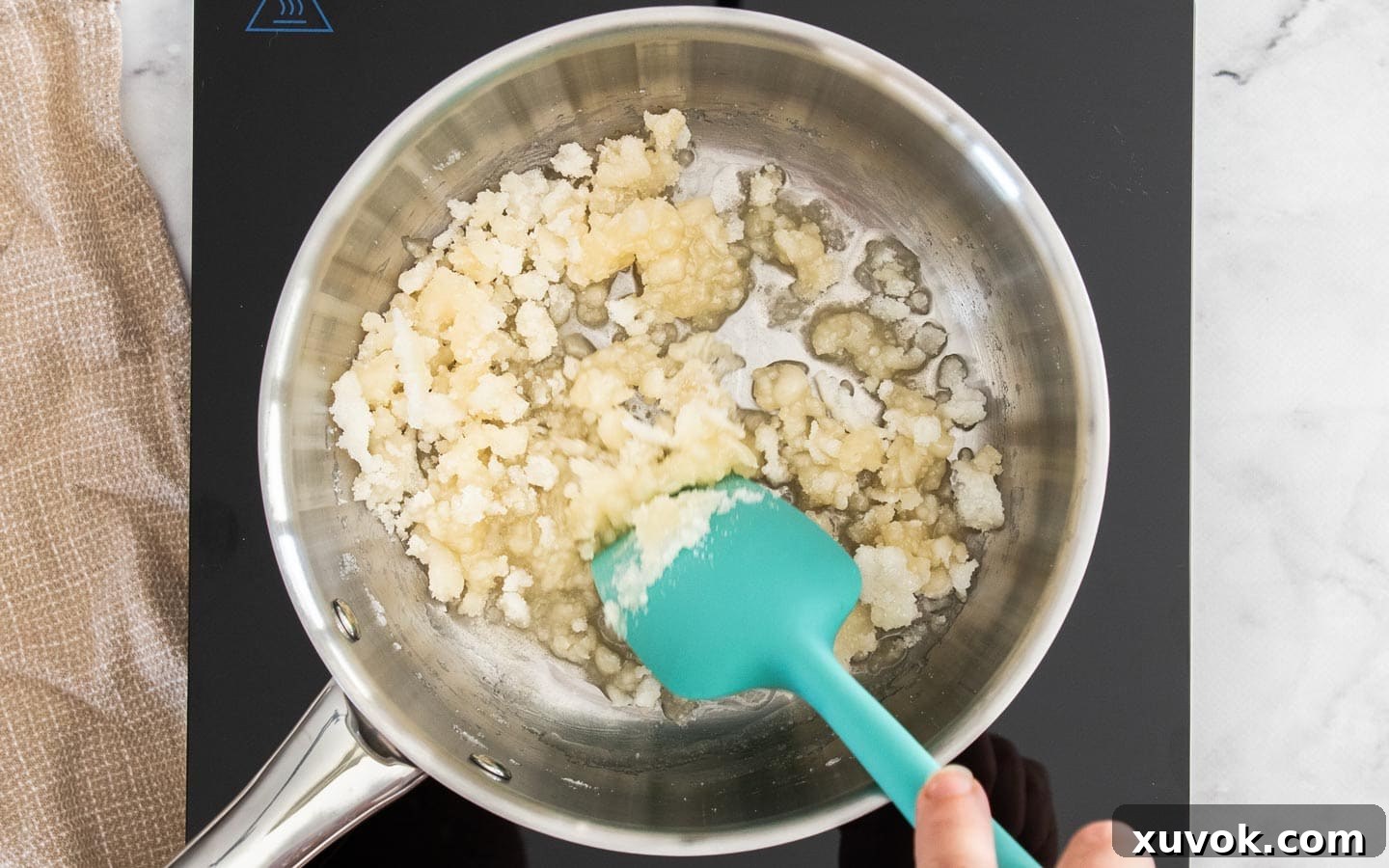
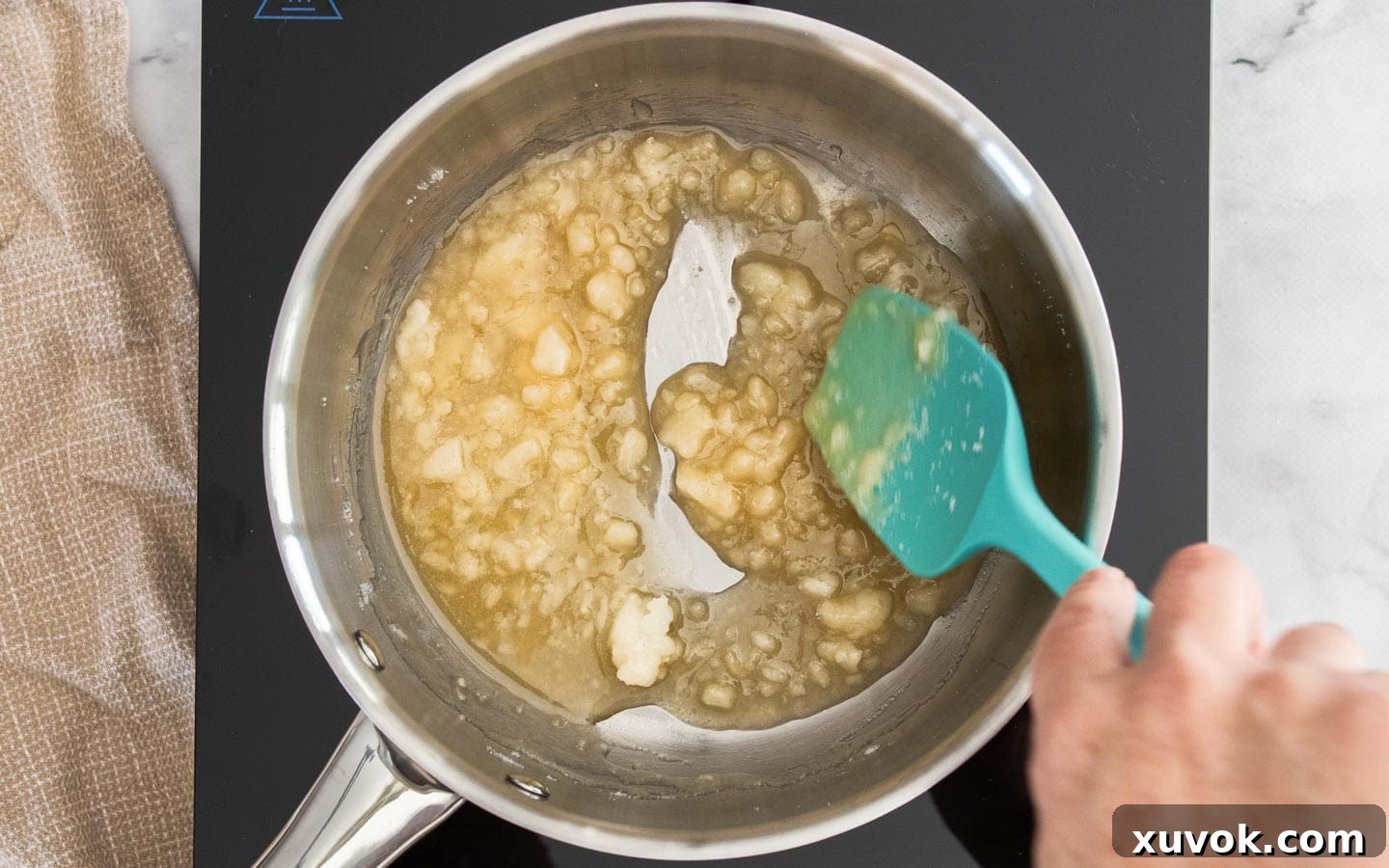
It’s crucial to watch your caramel closely. If you observe the caramel coloring faster than the sugar is melting, immediately turn the stove down to a medium-low or even low heat. This prevents the sugar from burning before it fully dissolves, which would result in a bitter taste.
2. Incorporate the Butter
Once your sugar has reached a beautiful, uniform amber gold, immediately remove the pan from the heat. This is a crucial step to prevent further caramelization and potential burning. Now, carefully add the cubed unsalted butter to the hot sugar. You can switch from your spatula to a balloon whisk at this point; it often makes it easier to combine the butter into the intensely hot sugar mixture. Whisk very gently, as the butter will melt rapidly and the mixture will become extremely hot and bubbly. Splashing can cause burns, so maintain a safe distance and use caution. Continue whisking until the butter is fully incorporated, forming a smooth, golden, and slightly emulsified caramel base. It may look a bit separated at first, but keep whisking gently until it comes together beautifully.
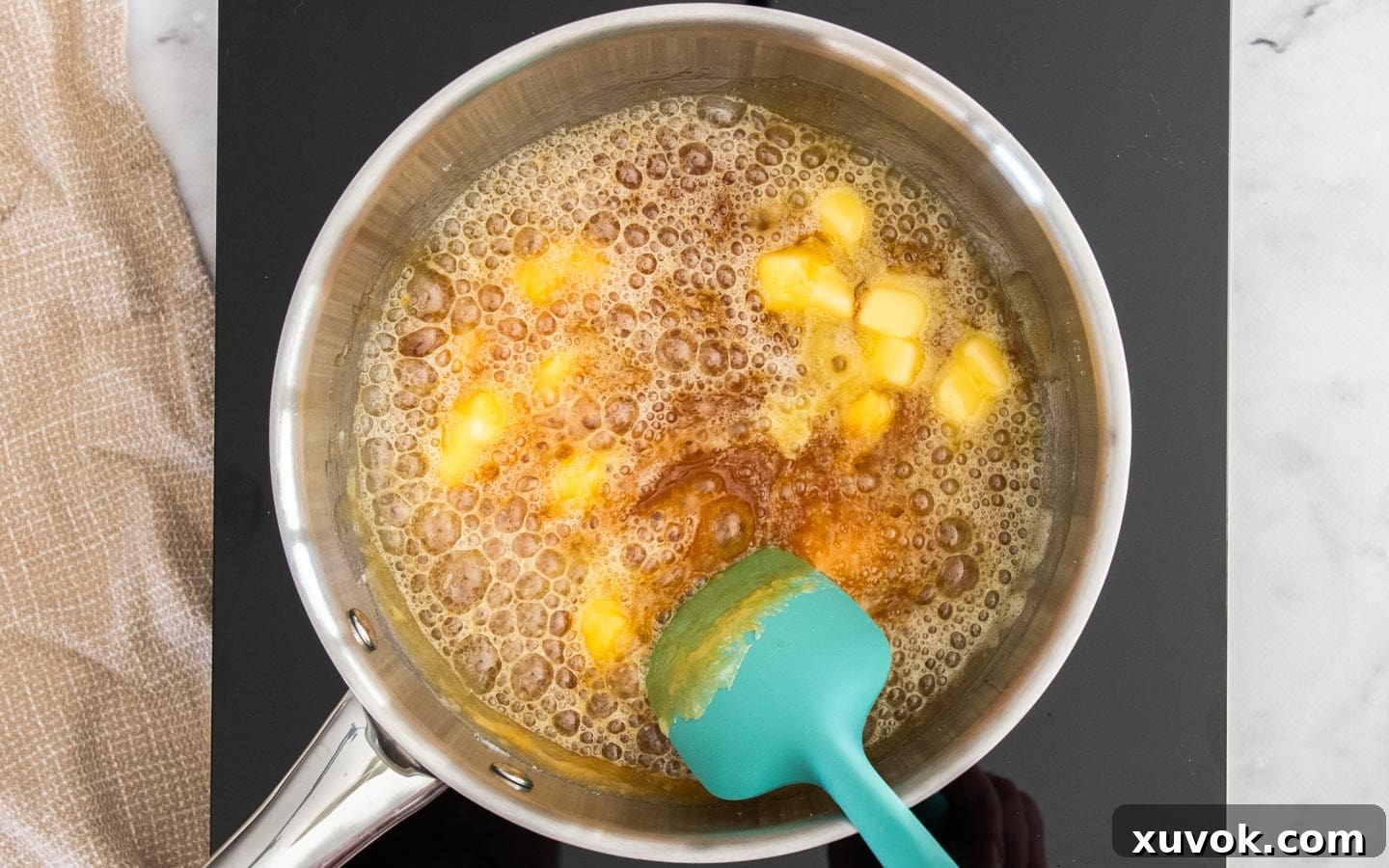
3. Gently Stir in the Cream for Smoothness
With the butter fully incorporated, slowly and carefully pour the cream into the pot while continuously stirring or whisking gently. The mixture will immediately react to the cooler cream, bubbling up vigorously and expanding in the saucepan. This is completely normal and expected! Do not be alarmed. Continue to stir patiently until the bubbling subsides and all the cream is fully integrated, creating a homogenous, rich sauce. Return the pan to very low heat, and cook for another 30 seconds to a minute, just until the sauce reaches a deep, inviting amber color. It should not be dark brown; if it becomes too dark, it indicates burning, and the caramel will taste bitter. The goal is a rich, golden-brown hue reminiscent of caramel candies.
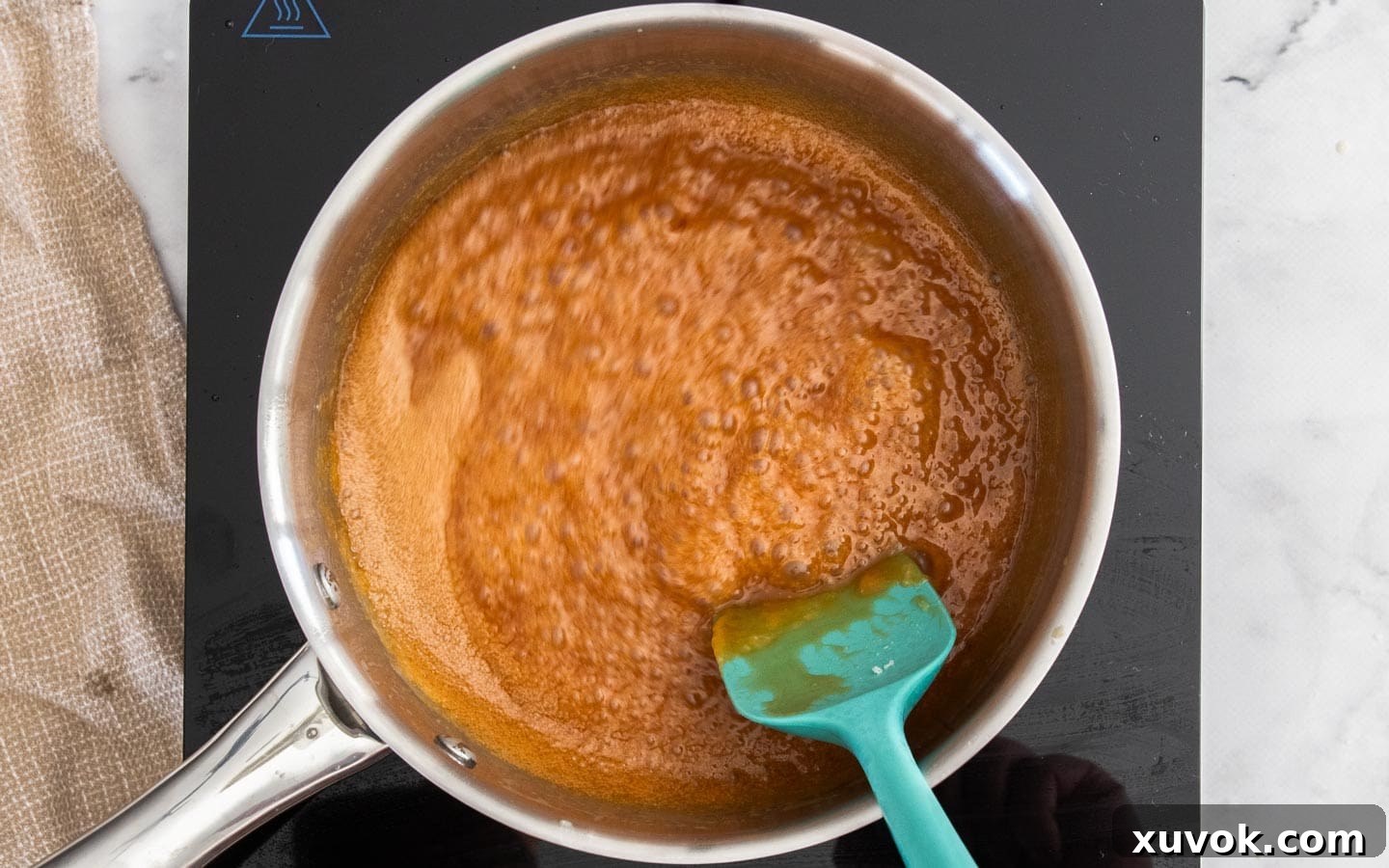
4. Finish with a Pinch of Salt
Once your caramel has reached the desired rich amber color, immediately remove it from the heat. Add the sea salt flakes (or fine sea salt) and stir for a good minute or so. This extended stirring helps the salt dissolve completely into the hot caramel and also aids in cooling the sauce slightly. The salt is crucial for balancing the intense sweetness of the caramel, enhancing its depth of flavor, and preventing it from being cloyingly sweet. For a distinct “salted caramel” flavor, you can add an additional ½ to 1 teaspoon of flaky sea salt, tasting carefully as you go.
Expert Tips for Caramel Making Success
Mastering homemade caramel is all about attention to detail. Follow these expert tips for a consistently perfect, smooth, and delicious sauce.
- Meticulously Prepare Your Equipment: The primary challenge in homemade caramel is the risk of crystallization, where the sugar reverts to its granular state after melting, resulting in a gritty sauce. To prevent this, ensure all your equipment — particularly your saucepan, silicone spatula, and whisk — is impeccably clean and free of any residual fat or debris. Even a tiny speck can act as a seed for crystallization. A simple trick is to rub the inside of your saucepan and your utensils with a small amount of vinegar or lemon juice, then rinse them thoroughly with water. There’s no need to dry them; the residual water helps create a barrier against crystallization as the sugar melts.
- Monitor the Color Diligently – Avoid Burning: The color of your caramel is your best indicator of doneness. A very dark caramel is a burnt caramel, which will have an unpleasantly bitter taste. Refer closely to the provided photos for visual cues. Initially, when the sugar is still clumping and only partially melted, it should be a pale gold. As the sugar fully dissolves, it will deepen to a rich amber gold. Once you add the butter and it’s thoroughly mixed in, the color should resemble a creamy caramel fudge. After incorporating the cream and cooking for just a short additional period, the sauce should transform into a deep, luxurious golden-amber brown. This rich color signifies perfect caramelization without bitterness.
- Patience is a Virtue (and Key to Safety): Once your glorious homemade caramel sauce is complete, remember that it is incredibly hot – akin to molten lava. It’s absolutely essential to let it cool down before attempting to taste it. Caramel will naturally firm up as it cools to room temperature, and when chilled in the refrigerator, it will solidify to a very thick, scoopable consistency. To return it to a pourable state, gently re-warm it. You can do this in the microwave in 15-30 second intervals, stirring in between, or in a saucepan over very low heat until it’s warm and flowing again (do not let it boil). Once it reaches your desired consistency, drizzle it generously over all your favorite desserts.
Delicious Caramel Sauce Variations
This basic homemade caramel sauce is a fantastic foundation for a variety of exciting flavor profiles. Get creative and customize your caramel!
- Salted Caramel Sauce: To transform this into a truly salted caramel sauce with a more pronounced savory note, simply add an extra ½ to 1 teaspoon of flaky sea salt, or ¼ to ½ teaspoon of fine sea salt, adjusting to your personal taste. Ensure you stir it thoroughly into the hot sauce until dissolved. Always allow the sauce to cool slightly before tasting to accurately gauge the saltiness.
- Peppermint Caramel Sauce: For a refreshing twist, add 1-2 teaspoons of peppermint extract to the sauce. It’s best to incorporate this as the caramel begins to cool slightly. Start with one teaspoon, stir it in, taste (after allowing it to cool!), and then add more if desired until you reach your preferred peppermint intensity. This is especially delightful during the holidays.
- Coffee Caramel Sauce: Infuse your caramel with a rich coffee flavor by stirring in 1 to 1½ tablespoons of instant coffee powder. This is most effective when added while the caramel is still hot, ensuring the coffee dissolves completely. Again, take a small amount on a spoon, blow on it well to cool it down, and then taste before adding more to achieve the perfect balance. This variation is fantastic over coffee-flavored desserts or stirred into your morning brew.
- Bourbon or Whiskey Caramel: For an adult-friendly treat, add 1-2 tablespoons of your favorite bourbon or whiskey after removing the caramel from the heat. The alcohol will cook off, leaving a beautiful, complex flavor.
- Spiced Caramel: Incorporate warm spices like ½ teaspoon of ground cinnamon, ¼ teaspoon of nutmeg, or a pinch of ground ginger along with the butter for a cozy, autumnal caramel.
Understanding Caramel Texture: From Drizzle to Delight
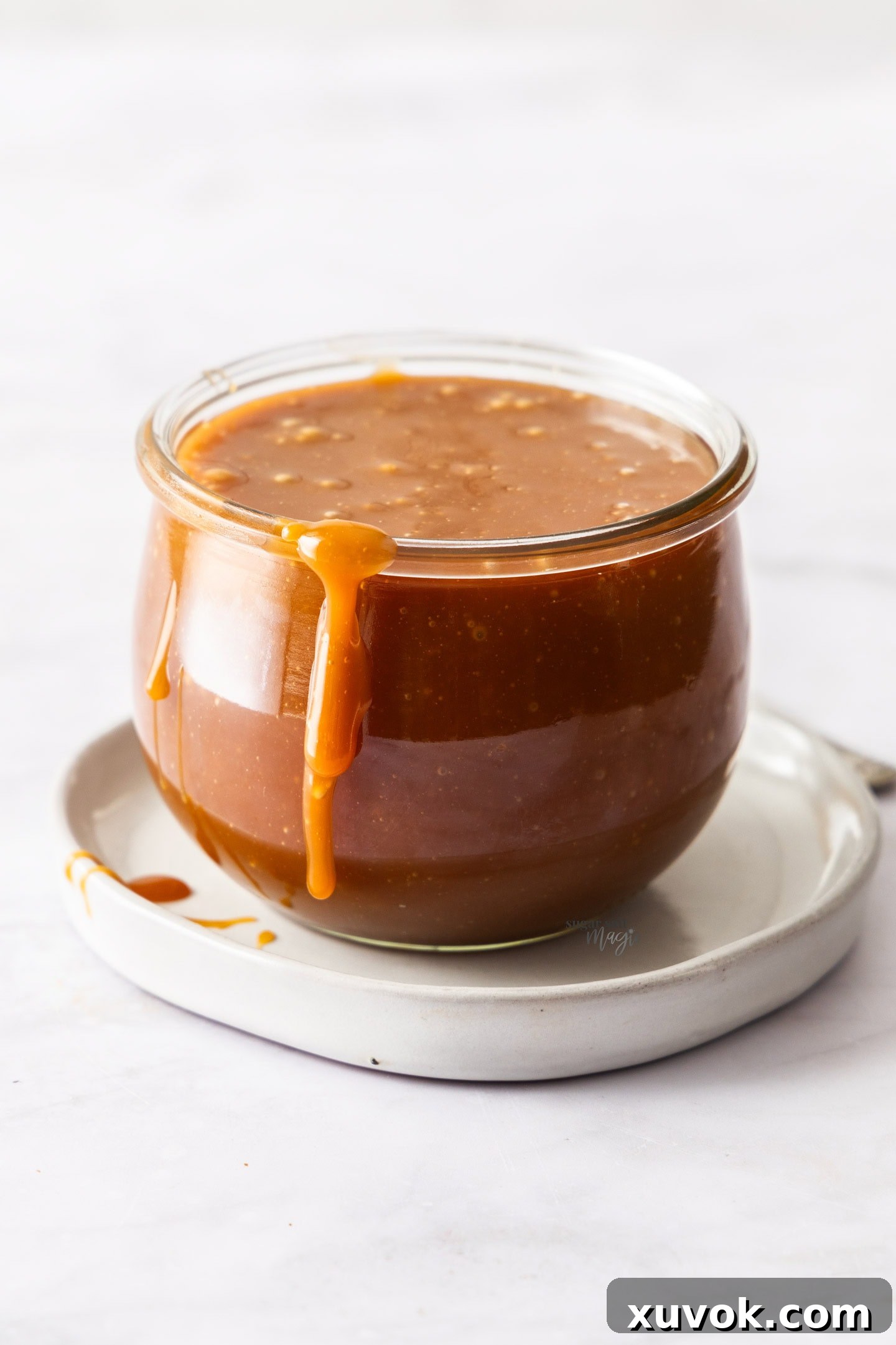
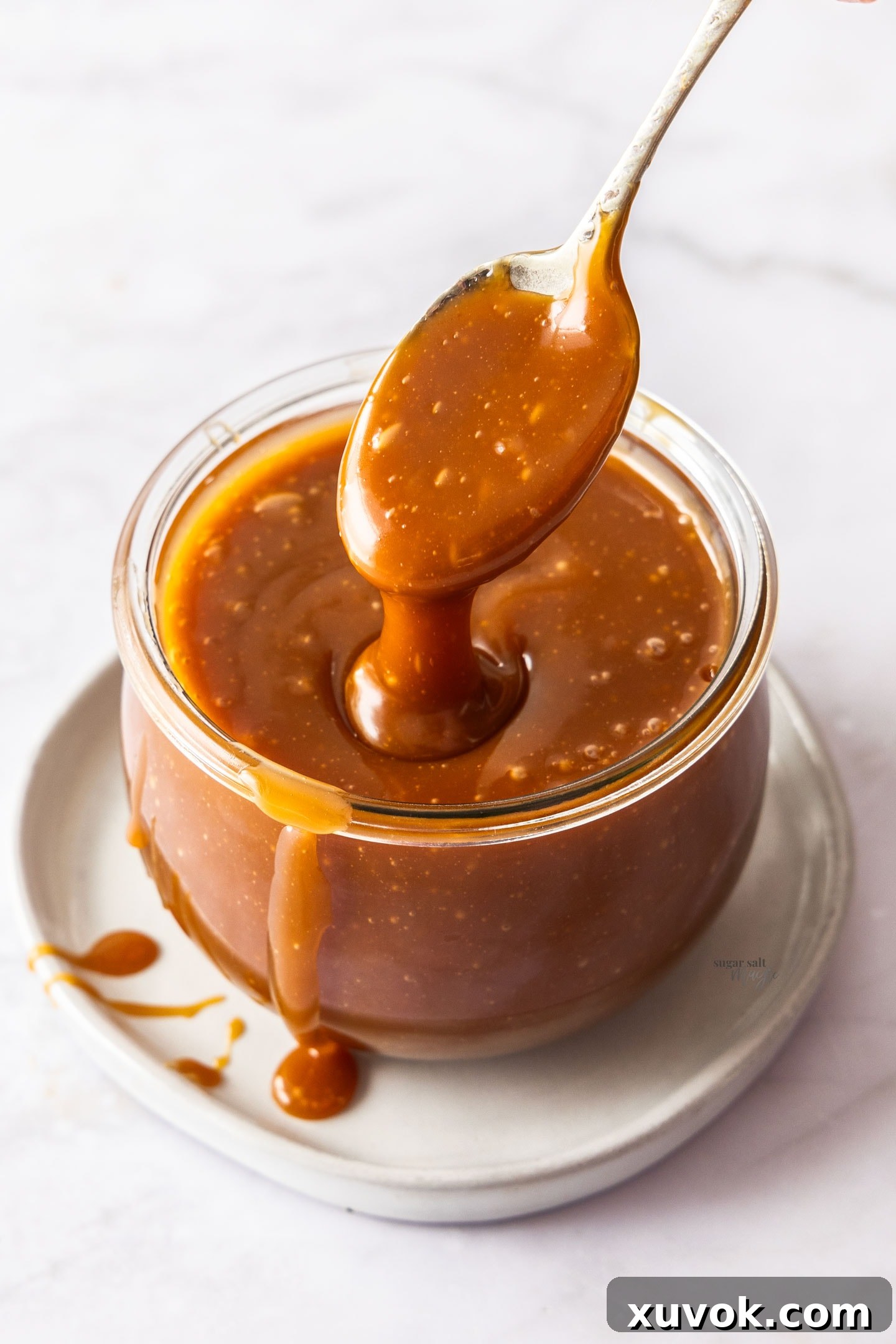
The texture of homemade caramel sauce is wonderfully dynamic and changes significantly with temperature. Immediately after it finishes cooking, your caramel will be a smooth, thick, yet pourable liquid, reminiscent of warm honey. As it gradually cools to room temperature, it will naturally thicken further, becoming more luscious and less runny. Once chilled in the refrigerator, the caramel will firm up considerably, transforming into a thick, spoonable consistency, similar to a soft fudge or spread. This firm texture is perfect for filling tarts or spreading on cakes.
However, if you desire that beautiful, flowing drizzle again, a quick reheat is all it takes. Gently warm the chilled caramel in the microwave for short bursts (15-30 seconds) or in a small saucepan over very low heat until it returns to its liquid state. Be careful not to bring it to a boil. If you prefer a caramel that remains liquid at room temperature, simply stir in an additional couple of tablespoons of warm cream, one tablespoon at a time, until you achieve your desired flowing consistency.
Creative Ways to Use Your Irresistible Homemade Caramel Sauce
Once you’ve made this incredible homemade caramel sauce, the possibilities for indulging are endless! Its rich, buttery flavor pairs perfectly with an array of sweet treats.
- Dessert Topping Extraordinaire: Drizzle it generously over scoops of vanilla ice cream, warm brownies, or rich cheesecakes. It’s also heavenly over a classic apple pie, enhancing the fruit’s natural sweetness.
- Breakfast & Brunch Enhancer: Elevate your morning pancakes, waffles, or French toast with a generous pour of warm caramel. It’s also a fantastic addition to fluffy cinnamon rolls or moist apple muffins.
- Dipping Delight: Serve it alongside fresh apple slices, pear slices, or churros for a delicious dipping experience.
- Baking & Filling: This thick caramel sauce is a foundational ingredient for many recipes. I use it to create my decadent Caramel Buttercream. You can also use it as a filling for cakes, cupcakes, or even in homemade candy bars.
- DIY Caramel Candies: For a delightful homemade treat, pour the caramel into ice cube trays and freeze until solid. Once frozen, pop them out and coat them in melted chocolate for quick and easy chocolate-covered caramel candies. Store these delightful treasures in the fridge for a sneaky sweet treat whenever the craving strikes.
- Coffee & Drink Sweetener: Stir a tablespoon into your coffee, latte, or hot chocolate for a gourmet twist.
- Nutty Combinations: Mix in chopped pecans, walnuts, or almonds for a textured and flavorful nut caramel sauce.
Storing Your Homemade Caramel Sauce for Maximum Freshness
Proper storage ensures your delicious homemade caramel sauce stays fresh and ready to use whenever a craving strikes. Store it in a clean, airtight preserving jar (such as a mason jar) in the refrigerator. This method will keep your caramel sauce fresh and delightful for up to 1 month. For longer storage, caramel sauce freezes beautifully. Transfer it to a freezer-safe container or even freeze individual portions in an ice cube tray, then transfer the frozen cubes to a freezer bag. It can be frozen for up to 2 months. When ready to use, simply thaw in the refrigerator overnight and then gently re-warm as needed.
Caramel Troubleshooting: Solving Common Issues
While making caramel can sometimes feel like a delicate art, most common problems are easily remedied or prevented. Stick closely to the recipe, and you’ll navigate these challenges like a pro.
- Caramel Seizing (Hardening): If your butter and/or cream are very cold when added to the hot sugar, the sudden temperature shock can cause the caramel to seize up and become a solid, lumpy mass. Don’t panic! Simply remove the saucepan from the heat and continue to stir diligently. The residual heat from the pan and the sugar will gradually melt the seized caramel back into a smooth sauce. If it’s particularly stubborn, you can return it to very low heat while stirring continuously. As a last resort, add 1-2 tablespoons of hot water, one at a time, stirring until it comes back together, then continue with the recipe. To prevent this, ensure your cream and butter are at room temperature or slightly warmed (e.g., microwave the cream for 30 seconds) before adding them.
- Crystallization (Grainy Caramel): Caramel is prone to crystallization because sugar naturally wants to revert to its solid, crystalline state. Even a tiny sugar crystal can act as a seed, turning your smooth sauce grainy. The best defense is prevention:
- Impeccably Clean Equipment: Before you start, thoroughly clean all your equipment. Use lemon juice or vinegar to wipe down the inside of your saucepan, silicone spatula, and whisk, then rinse them completely. You don’t need to dry them; a little moisture won’t hurt.
- Avoid Wooden Utensils: I prefer using a silicone spatula or rubber spatula over a wooden spoon because wood can absorb moisture or fat residues from other cooking, which can then transfer to your caramel and encourage crystallization.
- No Stirring Until Melted: While our recipe calls for constant stirring during the initial melting phase to ensure even heating and prevent burning, some methods advise against stirring at all. If you find crystallization to be a recurring issue, try adding a tablespoon or two of water to the sugar initially to create a syrup, and then avoid stirring until the sugar starts to color.
- Sudden Temperature Changes: Rapid or significant temperature changes can also contribute to seizing or crystallization. Always use a heavy-based, stainless steel saucepan that distributes heat evenly. Try to maintain a consistent heat level during the sugar melting process and avoid dramatic fluctuations. When adding butter and cream, do so gradually and carefully.
More Irresistible Caramel Recipes You’ll Adore
If you’re as enamored with caramel as we are, you’re in for a treat! Explore more delicious caramel-infused recipes from our collection:
- Decadent Caramel Mud Cake
- No-Bake Chocolate Salted Caramel Tart
- Elegant Salted Caramel Tartlets
- Indulgent Salted Caramel Chocolate Cupcakes
- Chewy Caramel Chocolate Chip Cookie Bars
- Caramel Apple Cheesecake Bars
- Caramel Apple Streusel Muffins
⭐⭐⭐⭐⭐
Did you try this homemade caramel sauce recipe? We’d love to hear from you! Please share your thoughts and show it some love in the comments below.
Hungry for more culinary inspiration? Subscribe to our newsletter for a steady stream of free recipes delivered straight to your inbox. Don’t forget to follow along with us on Facebook, Pinterest, and Instagram for daily doses of deliciousness!
Homemade Caramel Sauce
1
cup
5 minutes
15 minutes
0 minutes
20 minutes
5 ratings
Rate
Pin
Video
Watch our video guide to making perfect homemade caramel sauce!
Ingredients
-
1
cup
caster sugar (superfine sugar)
(or granulated sugar), (200g/7oz) -
⅔
cup
thickened cream (heavy cream)
room temp, (160ml) -
85
g
unsalted butter
room temp (3 oz) -
1
teaspoon
sea salt flakes (or ½ teaspoon fine sea salt)
For best results, always weigh ingredients where a weight is provided
Equipment
-
Medium heavy-based stainless steel saucepan -
silicone spatula -
Balloon whisk -
A preserving jar/mason jar or a heat proof jug to store it.
Instructions
-
Have all your ingredients and equipment ready and at arm’s reach before you begin. Once you start melting the sugar, the process moves quickly, so you won’t have time to gather items. Ensure your butter, cream, and salt are prepared, and have your silicone spatula and balloon whisk close by. For best results and to prevent seizing, gently warm the cream in the microwave for about 30 seconds until it’s lukewarm.
-
To prevent crystallization, lightly rub some vinegar or lemon juice around the inside of your medium heavy-based stainless steel saucepan and over your silicone spatula. Rinse them both with water afterwards; there’s no need to dry them, as the moisture can help prevent sugar crystals from forming.
-
Add the sugar to the saucepan over low-medium heat. Stir constantly with your silicone spatula. The sugar will first appear to harden and clump together, then gradually begin to melt into a liquid. As more sugar becomes liquid, use your spatula to gently press down on any remaining larger clumps to encourage them to dissolve quickly and evenly. Continue stirring until all the sugar is fully melted and has transformed into a beautiful, clear amber color. This process typically takes around 7-10 minutes.
-
Immediately remove the saucepan from the heat. Add the cubed butter and switch to your balloon whisk. The mixture will fizz and bubble quite vigorously as the butter melts into the hot sugar. Whisk gently but continuously to ensure the butter is fully amalgamated into the sugar. It might appear to separate initially, but keep whisking patiently until it comes together into a smooth, golden, emulsified mixture.
-
Gradually pour in the warmed cream, adding it slowly as you continue to whisk gently. Again, the mixture will bubble up significantly. Continue stirring steadily until the cream is fully combined and the bubbling subsides, resulting in a smooth, creamy caramel sauce. Return the pan to very low heat and cook for another 30 seconds to 1 minute, or until the sauce reaches a lovely, deep caramel color. Be very careful not to let it get too dark, as this will lead to a bitter, burnt flavor.
-
Remove the saucepan from the heat completely. Stir in the sea salt flakes for about a minute or so. This step not only helps the salt dissolve evenly but also begins to cool the caramel slightly, making it safer to handle and taste.
-
Once your delicious homemade caramel sauce is complete, please take a moment to leave a comment & rating. Your feedback is greatly appreciated and incredibly helpful to us!
Notes
- Yield: This recipe consistently produces just over 1 cup (approximately 250ml) of rich homemade caramel sauce.
- Safety First: Please exercise extreme caution when working with hot caramel. It reaches incredibly high temperatures and can cause severe burns if it touches your skin. Always stand back from the saucepan, avoid peering directly into the bubbling mixture, and consider wearing oven mitts or heat-resistant gloves for added protection.
- Reheating Chilled Caramel: Caramel sauce will firm up considerably when stored in the refrigerator. To restore its pourable consistency, gently warm it. You can do this in the microwave in 15-30 second intervals, stirring well after each, or in a small saucepan over very low heat until warm and fluid. Avoid boiling the caramel.
- Adjusting for Salted Caramel: While this recipe includes salt primarily for flavor balance, it yields a caramel with a subtle background saltiness. For a classic, more pronounced salted caramel sauce, increase the salt by adding an extra ½ teaspoon of sea salt flakes or ¼ teaspoon of fine sea salt, adjusting to your taste. Remember to let it cool slightly before tasting.
- Cream Temperature: Using cream that is at room temperature or slightly warmed (e.g., microwaved for 30 seconds) is highly recommended. Cold cream can cause the caramel to splatter more vigorously and increase the risk of seizing.
- Sugar Type Matters: For the best results, use pure cane sugar (caster or granulated). Do not use powdered sugar (icing sugar) or brown sugar for this specific caramel recipe, as they will not caramelize correctly.
- Not for Caramel Apples: This caramel sauce has a wonderfully thick and luscious consistency, perfect for drizzling and dipping. However, it is not formulated to be firm enough for coating whole caramel apples. It is ideal for dipping apple slices, though!
- Vanilla Extract Option: While not traditionally included in classic caramel sauce, adding 1 teaspoon of good quality vanilla extract at the very end can impart a lovely aroma and a flavor reminiscent of butterscotch.
- Dealing with Seizing: If your butter and/or cream are very cold, the sudden temperature change can cause the caramel to seize and clump. To fix this, simply remove the pan from the heat and stir constantly until the caramel melts back together. If it’s stubborn, return it to very low heat while stirring.
- Preventing Crystallization: Caramel is naturally prone to crystallization. To minimize this, ensure all your equipment is impeccably clean before you start. Wiping down the saucepan and utensils with lemon juice or vinegar, then rinsing them, can help prevent sugar crystals from forming. A silicone spatula is preferred over a wooden one, as wood can retain moisture or fat residues that can promote crystallization.
- Temperature Stability: Sudden, drastic temperature changes are a common culprit for seizing or crystallization. Always use a heavy-based, stainless steel saucepan for even heat distribution, and try to adjust the heat gradually rather than abruptly.
DISCOVER MORE DELICIOUS SAUCES AND FROSTINGS!
99
kcal
Marie Roffey
Dessert
French, World
Have you tried this recipe?
Don’t forget to leave a rating and comment below and let me know how it was! I love hearing from you. Nutrition information is approximate and derived from an online calculator. The brands you use may cause variations.
Calories from Fat 54
9%
25%
6%
5%
0%
4%
12%
1%
5%
0%
1%
0%