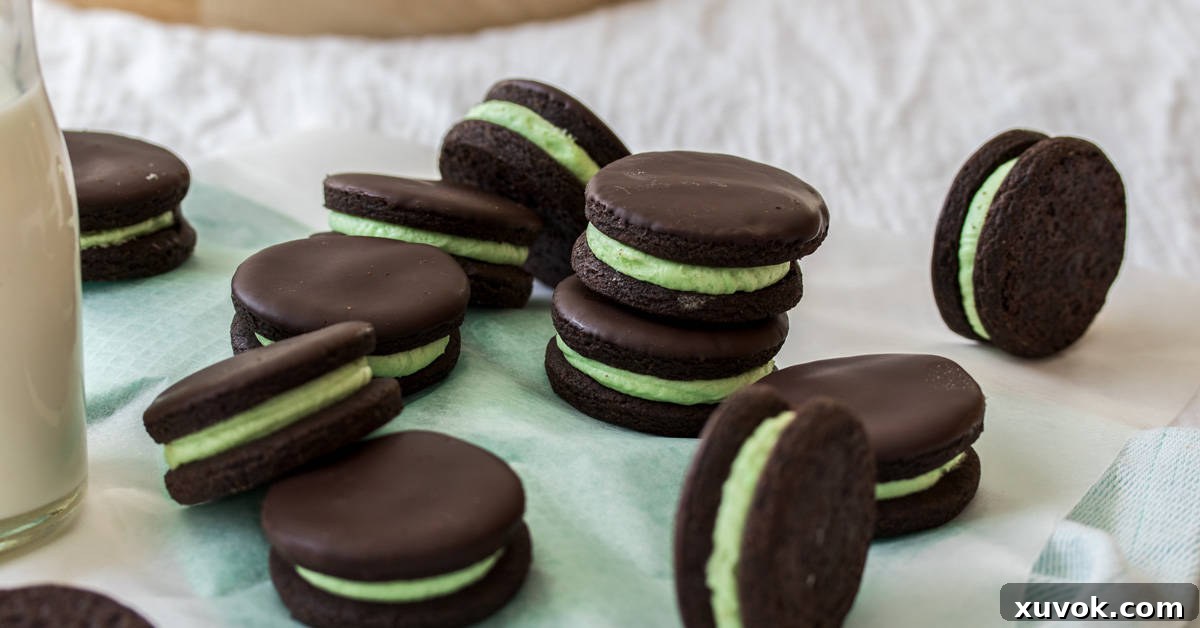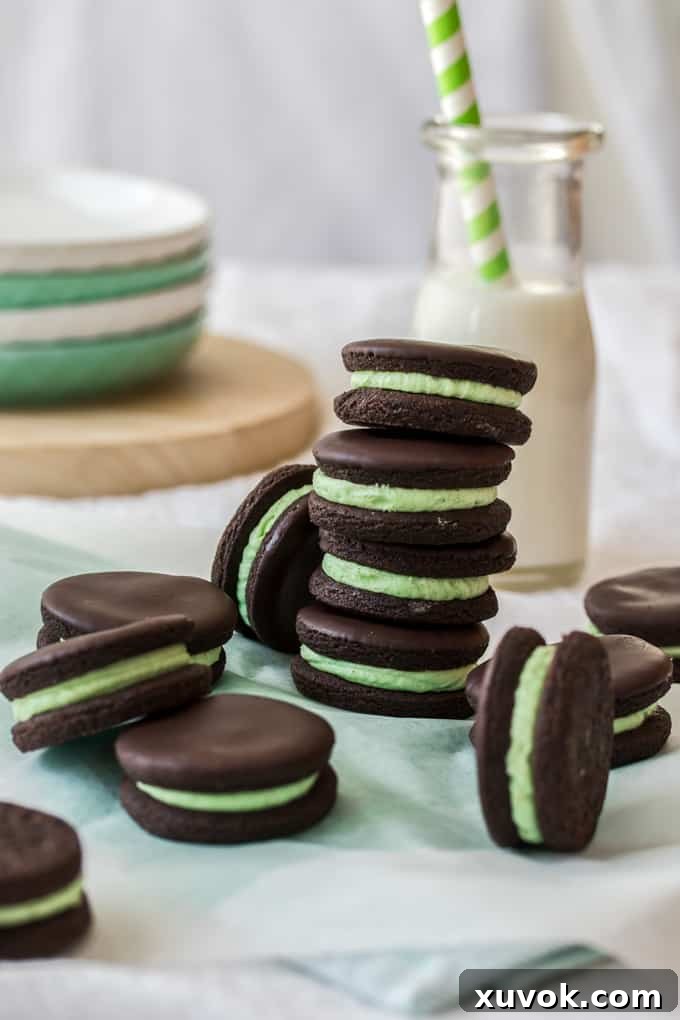
The aroma of fresh-baked chocolate cookies, coupled with a hint of invigorating peppermint, is a truly magical combination. For a long time, the idea of crafting my own version of a beloved chocolate sandwich cookie, but with a vibrant peppermint twist, lingered in my mind. Now, after much anticipation, I’m thrilled to share this recipe for delightful Chocolate Peppermint Cookies. You might notice their striking resemblance to a certain iconic chocolate cookie, and you’d be absolutely right! My aim was to create the ultimate homemade Oreo with a refreshing peppermint filling, and these delicious treats are the culmination of that vision. Consider them your new favorite Homemade Peppermint Oreos, ready to enchant your taste buds.
If you love chocolate cookies, you’ll also adore these chocolate sugar cookies, which are simply perfect for decorating any time of year.
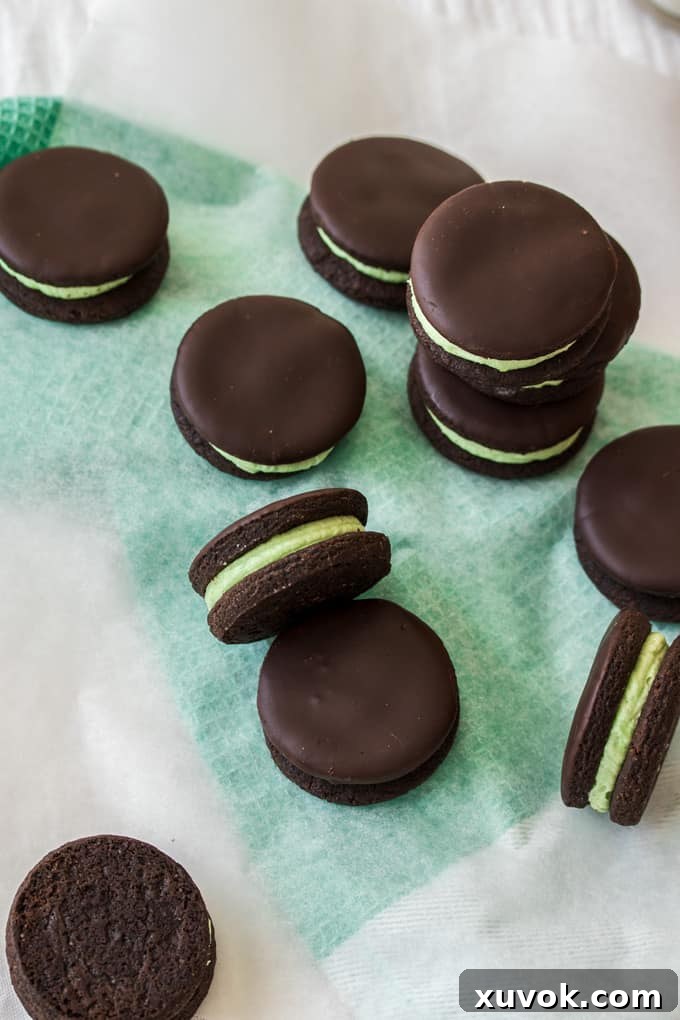
Crafting the Perfect Dark Chocolate Peppermint Cookie Base
The dark, almost black hue of the chocolate cookie is a signature element that truly makes these cookies special. While I’ve previously used a similar cookie base for my Chocolate Cookies and Cream Cupcakes, there’s a subtle yet impactful difference here. To achieve that truly intense, deep shade reminiscent of store-bought sandwich cookies, I incorporate a tiny touch of black gel food coloring. This step is entirely optional; it doesn’t alter the incredible taste or texture of the cookies, but it certainly enhances their visual appeal, giving them that unmistakably dark, almost black finish. The result is a stunning contrast with the bright peppermint filling, making these Chocolate Peppermint Cookies as beautiful as they are delicious.
The Secret to Deeply Colored Chocolate Cookies: Dutch Process Cocoa
Achieving that iconic, rich dark chocolate cookie color isn’t just about food coloring; it primarily comes down to the type of cocoa powder used. The secret ingredient behind the deep color and mellow flavor of many commercial chocolate sandwich cookies, including my homemade version, is Dutch processed cocoa powder. It’s one of my absolute favorite ingredients to work with in baking, and for good reason.
So, what exactly is Dutch process cocoa? This cocoa powder undergoes an alkalization process, where it’s washed in a potassium carbonate solution. This process neutralizes the cocoa’s natural acidity, making it less acidic than natural cocoa powder. The result is a cocoa with a milder, less bitter, and more mellow chocolate flavor. It also boasts a darker color, ranging from a rich reddish-brown to an almost black shade, depending on the level of processing. This makes it ideal for recipes where you desire a deep, sophisticated chocolate flavor without excessive bitterness, and a striking dark color. While both natural and Dutch process cocoas have their unique applications in baking, I often gravitate towards the Dutch processed variety for recipes like my favorite chocolate cupcake recipe, and of course, these amazing Chocolate Peppermint Cookies.
It’s worth noting that not all Dutch process cocoas are created equal. Different grades exist, and while most Dutch processed cocoas are darker than natural cocoa, some are specifically processed to be “black cocoa” for an even more intense color. The key takeaway is that the alkalization process not only darkens the cocoa but also mellows its flavor, making it smoother and richer. This deepens the overall chocolate experience in your baked goods, ensuring these homemade peppermint sandwich cookies truly stand out.
Dutch Process vs. Natural Cocoa: Understanding the Differences in Baking
A common question arises when discussing cocoa powder: Can I simply substitute regular unsweetened cocoa (natural cocoa) for Dutch processed cocoa? The answer, unfortunately, is often no, or at least, not without careful consideration. The fundamental difference in acidity between natural and Dutch process cocoa directly impacts how they react with leavening agents in a recipe.
Natural cocoa powder is acidic. When used in baking, its acidity reacts with baking soda (bicarbonate of soda), which is an alkaline leavening agent. This reaction creates carbon dioxide gas, which helps cakes and cookies rise and achieve a light, airy texture. Conversely, Dutch processed cocoa powder, having been neutralized, is not acidic enough to react with baking soda. Therefore, recipes calling for Dutch process cocoa typically rely on baking powder, which contains its own acidic component, to provide the necessary lift.
This scientific distinction means that the two types of cocoa are generally not interchangeable in every recipe. Swapping one for the other without adjusting the leavening agent can lead to vastly different, often undesirable, results in terms of texture and rise. As a general rule of thumb, it’s always best to adhere to the type of cocoa specified in a recipe. However, in this specific recipe for Chocolate Peppermint Cookies, there’s good news! Because we’re aiming for a crisp, flatter cookie rather than a significant rise, you have more flexibility. For these cookies, you are welcome to use either Dutch process cocoa or natural cocoa, even though the recipe uses baking soda. The focus here is on flavor and color, and while Dutch process cocoa will give you that iconic dark hue, natural cocoa will still yield delicious results. So, feel free to choose based on availability and your desired cookie color!
Simple Steps to Irresistible Chocolate Peppermint Cookies
Creating these delightful Chocolate Peppermint Cookies is a surprisingly quick and straightforward process, meaning you’ll be enjoying these decadent treats in no time. Let’s walk through the simple steps to achieve perfect crispy chocolate cookies filled with luscious peppermint buttercream.
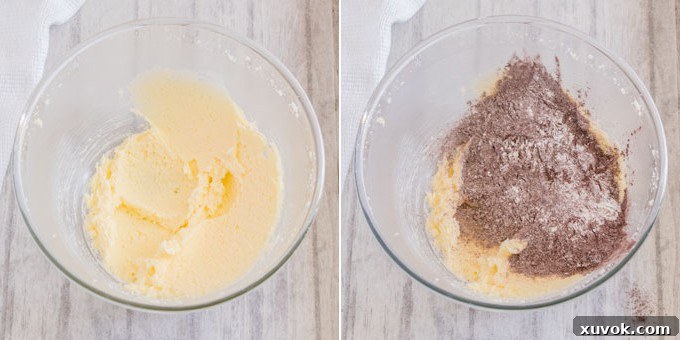
- Cream Butter and Sugar: Begin by beating together softened butter and granulated sugar until the mixture is light, fluffy, and pale in color. A stand mixer makes this task effortless, but you can certainly achieve excellent results with a handheld electric mixer or even by hand with a sturdy whisk and a bit of elbow grease. This step is crucial for incorporating air and achieving a tender cookie texture.
- Combine Dry Ingredients: In a separate bowl, whisk together the dry ingredients: flour, cornflour (cornstarch), cocoa powder, and baking soda. This ensures all ingredients are evenly distributed, preventing pockets of leavening or flour in the final dough.
- Mix Wet and Dry: Gradually add the dry ingredient mixture to the creamed butter and sugar. If you desire a super dark cookie, this is when you’d also incorporate a few drops of black gel food coloring. Mix on low speed until the dough just begins to come together in large clumps. Avoid overmixing, as this can develop the gluten in the flour, leading to tough cookies.
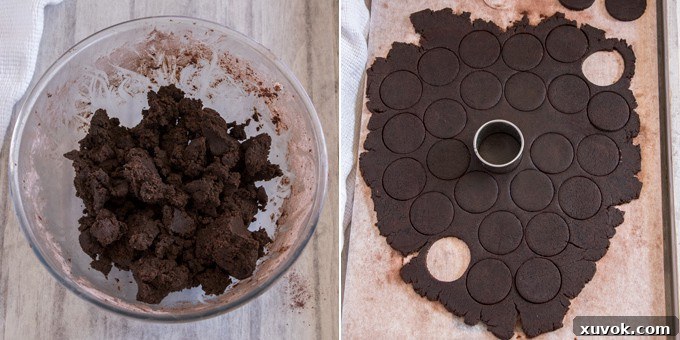
- Roll and Cut the Dough: Gather the dough with your hands and gently press it into a cohesive ball. Lightly dust your work surface (or a sheet of baking paper) with a little extra cocoa powder to prevent sticking. Roll out the dough evenly to about 3-4mm thickness. Using a round cookie cutter (I recommend about 3-4cm in diameter for a classic sandwich cookie size), cut out your cookie shapes. Re-roll any scraps gently, cut more cookies, and repeat until all the dough is used.
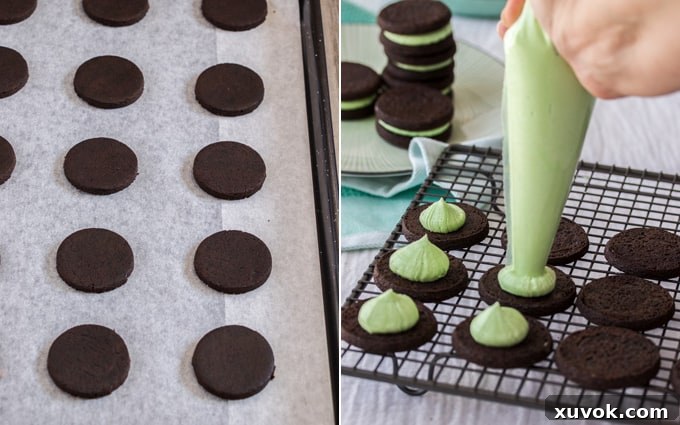
- Bake to Perfection: Arrange your cut-out cookies on prepared baking trays, leaving a small space between each. Bake them in a preheated oven for approximately 10 minutes. This relatively short baking time is key to achieving that wonderfully crisp texture that makes these sandwich cookies so satisfying.
- Prepare the Peppermint Filling: While the cookies are cooling, whip up the quick and easy peppermint buttercream. Combine softened butter, icing sugar (powdered/confectioners sugar), peppermint extract, and a touch of green gel food coloring (optional, for that signature minty look) in a bowl. Beat until the mixture is light, creamy, and wonderfully smooth. Remember to taste and adjust the peppermint extract to your preference, as its potency can vary.
- Assemble and Finish: Once the cookies are completely cool, pipe or spread a generous dollop of peppermint buttercream onto the flat side of half of the cookies. Top with another chocolate cookie to create your sandwich. For an extra touch of decadence, you can dip the tops of the assembled cookies into a little melted dark chocolate and allow it to set. This step is entirely optional but adds a lovely glossy finish and an additional layer of chocolatey goodness.
Expert Tips for Making and Storing Your Chocolate Peppermint Cookies
To ensure your Chocolate Peppermint Cookies turn out perfectly every time, here are a few expert tips and tricks to keep in mind, covering everything from dough consistency to maintaining that delightful crispness.
Mixing the Dough for Ideal Texture
- Don’t Overmix: When combining the dry ingredients with the creamed butter and sugar, mix just until the dough starts to form large clumps. At this point, stop the mixer and gently bring the dough together with your hands. Overmixing can develop the gluten in the flour, resulting in tougher, less tender cookies. A light hand ensures a delicate, crisp crumb.
- Peppermint Power: For the buttercream, I recommend starting with 1/2 teaspoon of pure peppermint extract (not essence, which often has a weaker flavor). Peppermint extract can be quite potent, so add it gradually and taste as you go, adjusting to your desired level of minty freshness.
Keeping Your Cookies Crisp: The Ultimate Storage Secret
One of the most satisfying aspects of these chocolate peppermint cookies is their delightful crispness. However, crisp cookies can sometimes soften over time, especially after being filled with buttercream. Here’s a simple, yet incredibly effective trick to keep them crunchy longer:
- Before Adding Buttercream: If you’re baking the cookies in advance and plan to fill them later, store the plain chocolate cookies in an airtight container along with a small, open dish containing a couple of tablespoons of baking soda (bicarbonate of soda). Baking soda is a natural moisture absorber, and it will help to absorb any ambient humidity, keeping your cookies wonderfully crisp.
- After Adding Buttercream: Once filled, the cookies will naturally be exposed to the moisture content of the buttercream, which can cause them to soften more quickly. While you won’t be able to prevent them from softening entirely, you can still extend their crispness by storing them in an airtight container with the baking soda trick. For optimal freshness and to maintain firmness, store the assembled cookies in the refrigerator and allow them to come to room temperature for a few minutes before serving for the best texture and flavor.
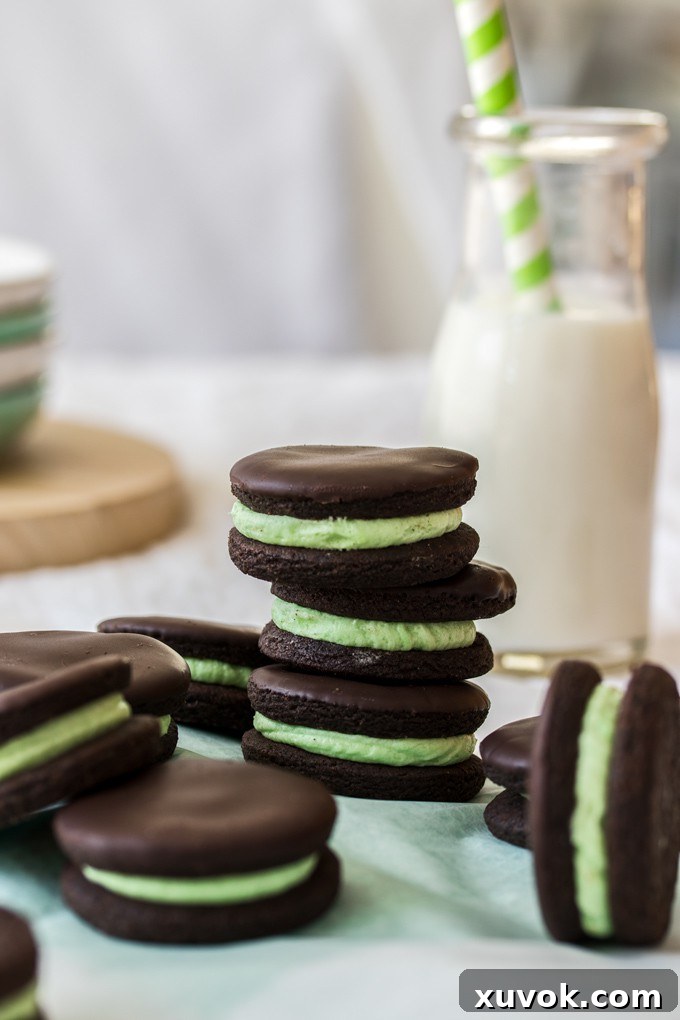
Can You Freeze Chocolate Peppermint Cookies?
Absolutely! If you find yourself with a surplus of these delightful Chocolate Peppermint Cookies – a rare but welcome occurrence! – freezing them is an excellent option to extend their shelf life and enjoy them later. This is particularly useful for holiday baking or simply having a delicious treat on hand whenever a craving strikes.
To freeze baked and filled cookies, arrange them in a single layer on a baking sheet and flash freeze them for about 30 minutes to an hour until firm. This prevents them from sticking together. Once firm, transfer the cookies to an airtight freezer-safe container. For added protection against freezer burn and absorbing any freezer odors, you can individually wrap each cookie in plastic wrap or place them in a zip-top freezer bag before putting them in the container. When you’re ready to enjoy, simply remove them from the freezer and let them thaw at room temperature for about 30 minutes to an hour.
You can also freeze the unbaked cookie dough. Simply roll out the dough, cut out shapes, and arrange them on a baking sheet. Flash freeze until solid, then transfer the frozen dough cut-outs to a freezer bag or airtight container. You can bake them directly from frozen, adding a couple of extra minutes to the baking time. However, since this cookie dough is so quick to make fresh, freezing the unbaked dough isn’t strictly necessary, but it’s a convenient option if you like to prepare ahead for spontaneous baking sessions.
Creative Substitutions and Flavor Variations
While the classic chocolate and peppermint combination is undeniably fantastic, these cookies offer a versatile base for creative experimentation. Feel free to customize them to your taste or for different occasions:
- Festive Christmas Peppermint Cookies: Transform your peppermint buttercream into a festive red and white swirl! Simply omit the green food coloring. Divide the buttercream into two portions, leaving one white and mixing red gel food coloring into the other. Load both colors side-by-side into a single piping bag, then pipe as usual for a beautiful marbled effect perfect for the holiday season.
- Explore New Buttercream Flavors: Don’t limit yourself to peppermint! The chocolate cookie base pairs wonderfully with a variety of fillings. Consider adding a little dissolved espresso powder to your buttercream for a mocha-mint twist, or try a vibrant raspberry buttercream, much like the one found in these delightful Melting Moments cookies. Other delicious options include a classic vanilla bean, a rich chocolate ganache, or even a zesty orange buttercream for a chocolate-orange delight.
Click here to Pin this recipe for later!
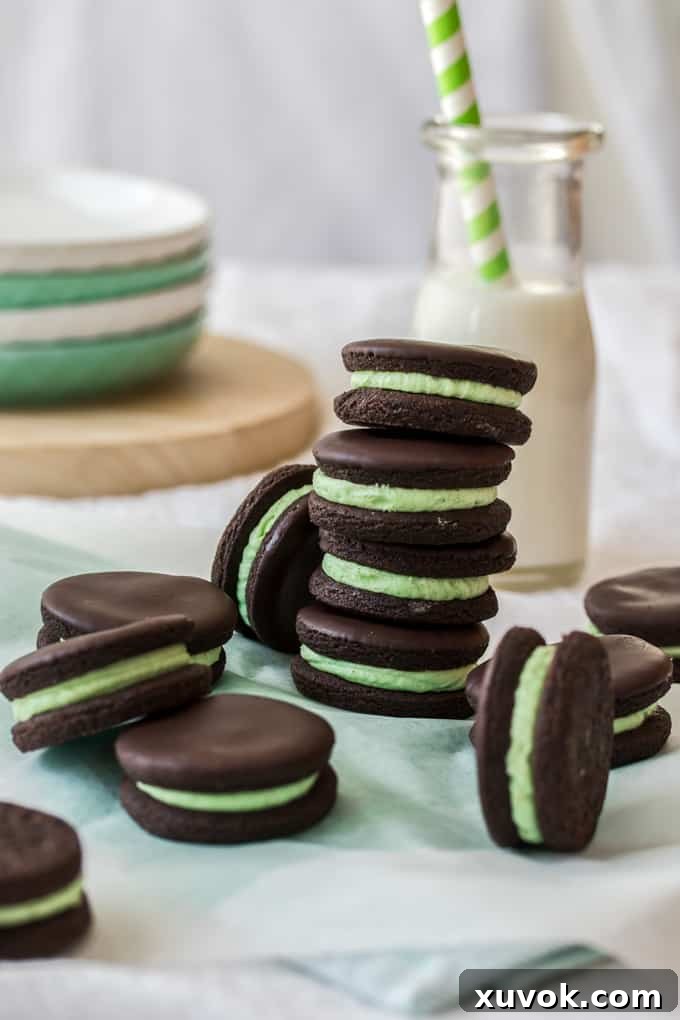
Seriously, if you’re looking for an easy, impressive, and utterly delicious treat, you need to make these Chocolate Peppermint Cookies. They are incredibly simple to prepare, making them a fantastic baking project to involve the kids. In just two bites, these perfectly crisp, mint-filled chocolate cookies make for an ideal afternoon snack, a delightful dessert, or a charming addition to any cookie platter. Their festive colors and invigorating flavor are guaranteed to bring a smile to anyone’s face!
Discover More Irresistible Cookie Recipes:
- Nutella Chocolate Sandwich Cookies
- Chocolate Pistachio Cookies
- Chocolate Candy Cane Cookies
- Homemade Oreo Cookies
- Birthday Cake Cookies

Chocolate Peppermint Cookies
Rate
Pin
Ingredients
FOR THE COOKIES:
- 130 g (1 cup / 4.6oz) plain (all-purpose) flour
- 35 g (1/4 cup / 1.2oz) corn flour (cornstarch)
- 1/3 cup (35g / 1.2oz) dutch processed cocoa
- 1/2 teaspoon baking soda (bicarbonate of soda)
- 135 g (2/3 cup / 4.8oz) granulated sugar
- 95 g (3.4oz) unsalted butter, softened (notes)
- 1 tablespoon milk (notes)
- 1-2 drops black gel food coloring (optional)
FOR THE QUICK PEPPERMINT BUTTERCREAM:
- 113 g (1/2 cup / 1 stick) unsalted butter, softened
- 1 1/2 cups (195g / 6.9oz) icing (powdered / confectioners) sugar
- 1/2 teaspoon peppermint extract (or to taste)
- 1-2 drops green gel food coloring (optional)
- 80 g dark (70%) chocolate for topping (optional)
For best results, always weigh ingredients where a weight is provided
Instructions
FOR THE COOKIES
-
Preheat oven to 180C / 350F / 160C fan forced. Line 2 large baking trays with baking paper.
-
Sift together the flour, cornflour, cocoa, and baking soda. Whisk thoroughly to combine.
-
In a separate bowl, beat together the softened butter and granulated sugar until the mixture is lightened in color and fluffy.
-
Scrape down the sides of the bowl. Add half of the flour mix to the butter mixture and beat until just combined. Incorporate the milk and black food coloring (if using), then add the remaining flour. Mix until the dough just starts to clump together.
-
Gently bring the dough together with your hands. Lightly dust a sheet of baking paper with cocoa powder, then place the dough on top. Roll the dough out to an even thickness of about 3-4mm. Use a circle cookie cutter (approximately 3-4cm or just under 2 inches round) to cut out individual cookies. Re-roll any dough scraps as needed to cut more cookies.
-
Place the cut-out cookies on the prepared baking trays, ensuring they are about an inch apart. Bake for approximately 10 minutes, rotating the trays halfway through for even baking.
-
Allow the cookies to cool on the baking trays for a few minutes to set before carefully transferring them to a wire cooling rack using a spatula. As they cool completely, they will firm up and become crispy throughout (see notes for crispness tips).
FOR THE QUICK PEPPERMINT BUTTERCREAM
-
In a bowl, combine the softened butter, icing sugar, milk, peppermint extract, and green food coloring (if using). Beat with a handheld mixer (or a stand mixer) until the buttercream is pale, creamy, and smooth. Scrape down the sides of the bowl as necessary to ensure everything is well combined.
-
Once the cookies are completely cool, spread or pipe a generous amount of peppermint buttercream onto the flat side of half of the cookies. Top with another chocolate cookie to form a sandwich.
-
Melt the dark chocolate in the microwave in 30-second intervals, stirring well after each interval, until just melted and smooth (this typically takes no longer than 2 minutes). Dip the tops of each assembled cookie into the melted chocolate. Turn them upright and allow the chocolate to set completely before serving. This step is optional but adds a lovely finish.
Notes
-
Please note that I use a standard Australian 20ml tablespoon, which is equivalent to 4 teaspoons worldwide.
-
For the most accurate baking results, it is highly recommended that you always weigh ingredients such as flour and sugar. Kitchen scales are an affordable and invaluable tool for baking precision. If you do not have scales, use the spoon and level method for measuring dry ingredients (spoon flour into the measuring cup, then level off with a straight edge; do not scoop directly from the bag). This prevents compaction and inaccurate measurements.
-
I frequently incorporate cornstarch into my baking. In Australia, cake flour, which is a blend of all-purpose flour and cornstarch, is not always readily available. Therefore, I often use this combination of plain flour and cornstarch in my recipes to achieve similar tender results to cake flour.
-
To maintain the crispness of your individual cookies, store them in an airtight container. Place a small, open bowl filled with a couple of tablespoons of baking soda (bicarbonate of soda) inside the container alongside the cookies. This will absorb excess moisture. Store the cookies in the fridge and allow them to come to room temperature for optimal texture before serving.
-
If you don’t have kitchen scales, the butter quantity in this recipe is equal to 1 stick less 4 teaspoons.
ESSENTIAL TOOLS FOR THIS RECIPE
- Basic cookie baking trays
- A stand mixer or handheld electric mixer is highly recommended, though not strictly essential.
- A reliable set of round cookie cutters.
SEARCHING FOR MORE DELICIOUS COOKIE RECIPES? CLICK HERE