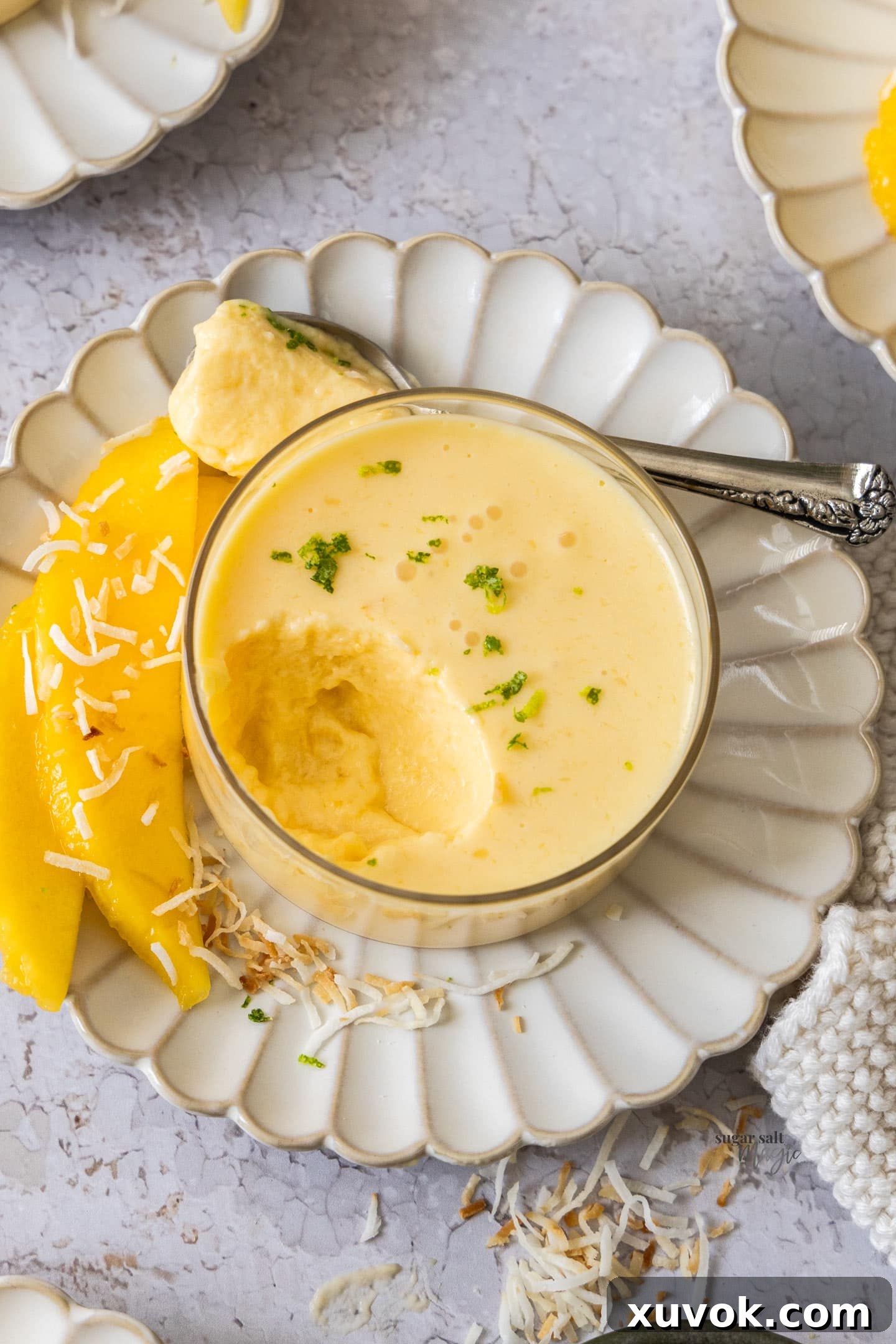
Luxurious Mango Panna Cotta: Your Easy Guide to a Tropical Delight
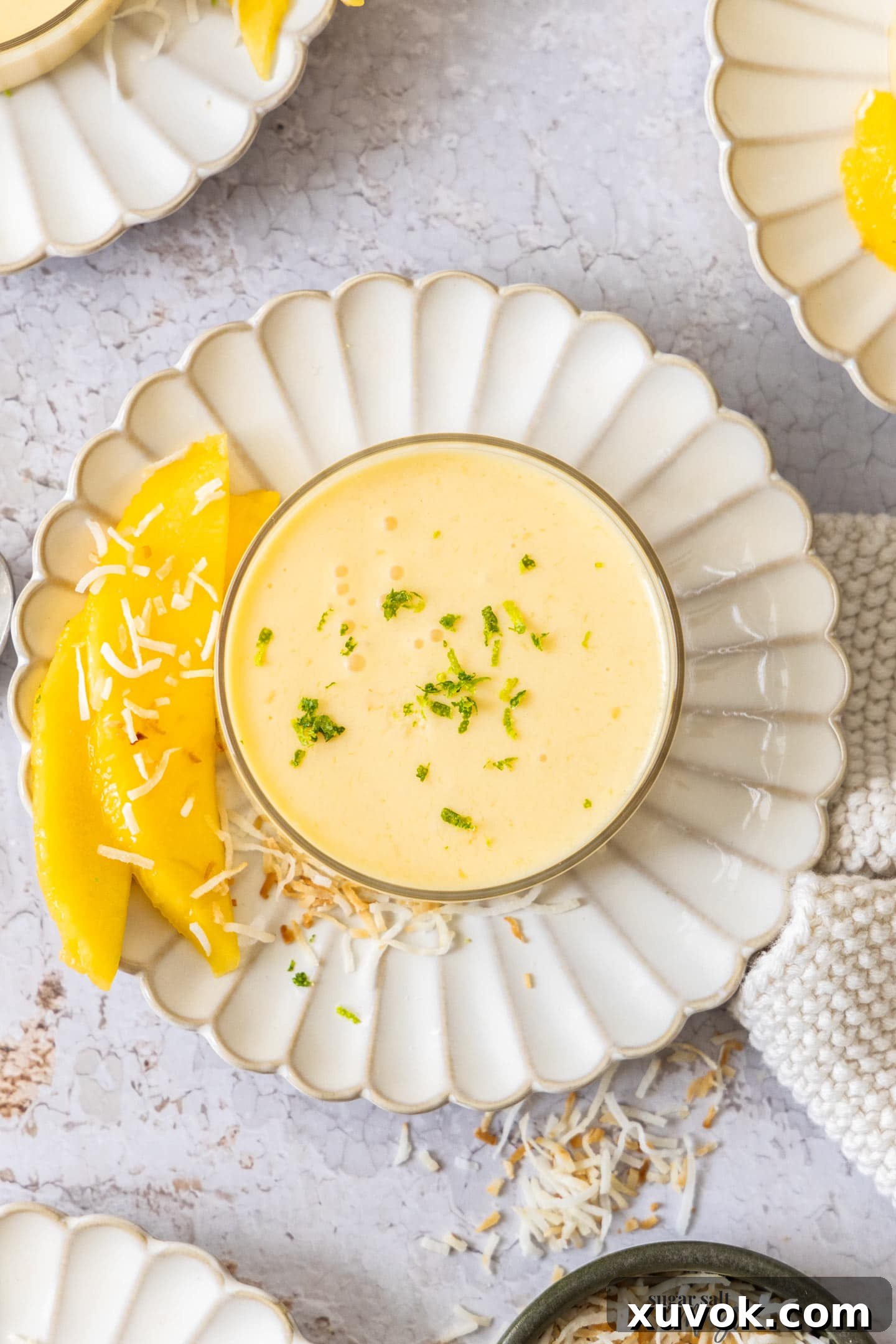
Indulge in the silky smooth, irresistibly creamy texture and vibrant tropical flavor of this exquisite mango panna cotta. This elegant dessert boasts the perfect delicate wobble and a rich, light profile that will transport your taste buds to a sunny paradise. It’s a delightful treat that proves gourmet desserts can be incredibly simple to create, making it ideal for any occasion.
Panna cotta, an Italian classic, is renowned for its sophisticated appearance and surprisingly straightforward preparation. This recipe harnesses the luscious sweetness of fresh, ripe mangoes, but its versatility extends to frozen mangoes as well, allowing you to whip up this little pot of sunshine no matter the season. Whether you’re a seasoned chef or a beginner baker, you’ll find joy in crafting this beautiful dessert.
While mango is undeniably delicious on its own, it truly shines when transformed into special treats. Explore other delightful mango creations like this airy mango mousse, a comforting mango coconut crumble, or even a gorgeous, buttery homemade mango curd. Each recipe highlights the incredible versatility and vibrant flavor of this beloved tropical fruit.
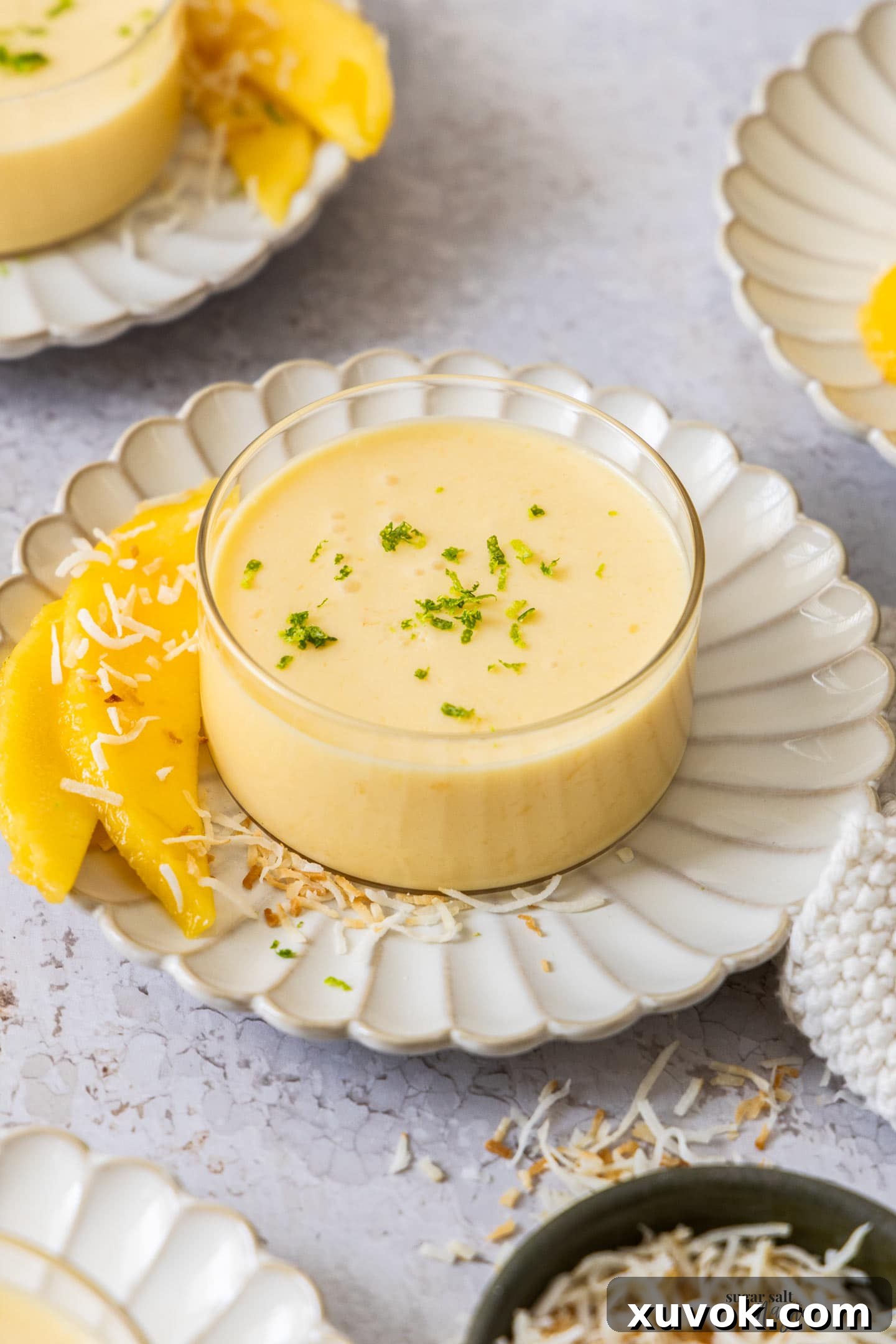
Table of Contents
- Why You Will Love This Recipe
- The Essence of Panna Cotta
- Ingredients for Perfect Mango Panna Cotta
- How to Make Mango Panna Cotta: Step-by-Step
- Choosing the Right Molds and Serving Styles
- Essential Tips and Tricks for Panna Cotta Success
- Storage and Make-Ahead Guide
- Frequently Asked Questions
- More Panna Cotta Recipes to Explore
- Printable Recipe Card
Never Miss a Recipe!
Get the latest recipes straight to your inbox by signing up for our newsletter!
[Newsletter Signup Form Placeholder]
Why You Will Love This Recipe
This Mango Panna Cotta isn’t just a dessert; it’s an experience. Here’s why it will quickly become a favorite in your recipe collection:
- Effortless Elegance: Despite its sophisticated appearance, this panna cotta is incredibly easy to make, requiring minimal active time. It’s the perfect dessert to impress guests without breaking a sweat.
- Tropical Bliss: The intense, natural sweetness and vibrant flavor of fresh mangoes infuse every spoonful, offering a delightful escape to a tropical paradise.
- Velvety Smooth Texture: Achieving that signature panna cotta “wobble” and a melt-in-your-mouth creaminess is simple with our precise ingredient ratios and clear instructions.
- Only 6 Ingredients: You won’t need a long list of obscure items. With just six common ingredients (and one of them is water!), you’re well on your way to dessert heaven.
- Quick Preparation: Active prep and cook time combined is a mere 10 minutes, leaving more time for chilling and enjoying.
- Versatile for All Seasons: While fresh, ripe mangoes are preferred, frozen mangoes work beautifully, ensuring you can savor this dessert year-round.
- Make-Ahead Friendly: Panna cotta is an excellent make-ahead dessert, freeing up your time on the day of serving.
The Essence of Panna Cotta
Panna Cotta, literally meaning “cooked cream” in Italian, is a classic dessert that originated in the Piedmont region of Italy. It’s a luscious, dairy-based pudding thickened with gelatin and typically molded and served chilled. What sets a truly great panna cotta apart is its signature texture: it should be incredibly smooth and creamy, rich yet light, and possess a gentle “wobble” when nudged – a sign of perfectly balanced setting.
Unlike custards that rely on eggs for thickening, panna cotta’s simplicity lies in gelatin, which gives it a unique melt-in-your-mouth quality without any eggy flavor. This makes it a fantastic canvas for a myriad of flavors, and mango is an exceptional choice. The sweet, fragrant notes of mango complement the creamy base beautifully, creating a harmonious blend that is both refreshing and indulgent. This recipe embraces the traditional techniques while infusing it with a vibrant, tropical twist.
Ingredients for Perfect Mango Panna Cotta
Just 6 simple ingredients are all you need to create this captivating dessert, proving that sometimes, less is truly more. Let’s delve into what makes each component crucial:
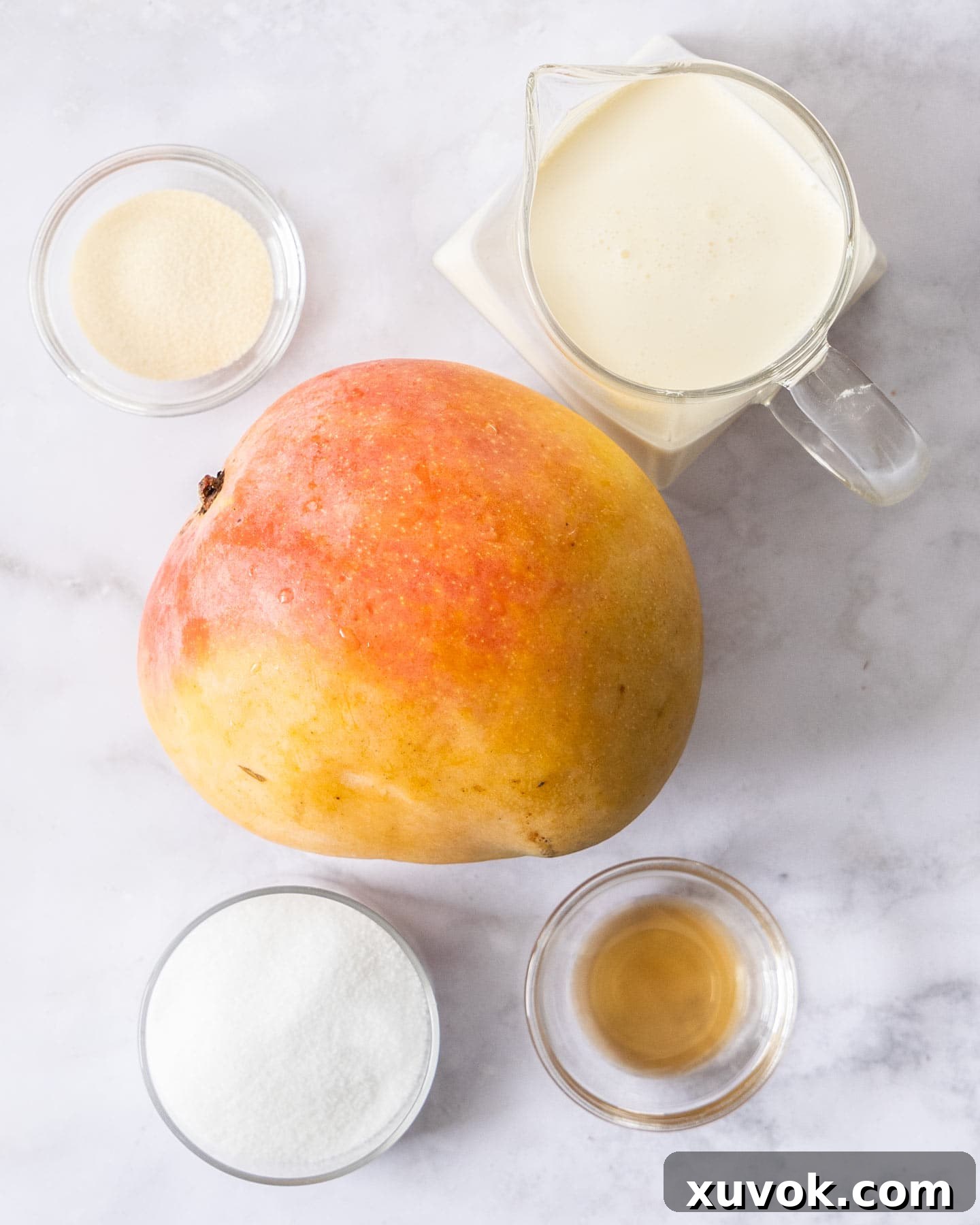
Jump to the recipe card for exact quantities and detailed instructions.
- Mango: The star of the show! For the most intense and authentic flavor, I highly recommend using ripe, fresh mangoes when they are in season. Look for mangoes that are slightly soft to the touch and have a fragrant aroma. Different varieties like Ataulfo (honey mangoes), Tommy Atkins, or Alphonso will yield slightly different nuances in flavor and color, all delicious. If fresh mangoes aren’t available, high-quality frozen mango chunks are an excellent substitute. Thaw them completely before pureeing. This recipe packs a generous amount of mango puree, ensuring the fruit’s vibrant flavor isn’t lost amidst the creaminess.
- Cream: The base of any good panna cotta. You’ll want to use thickened cream or heavy cream (often labeled as whipping cream, even if not whipped) with a fat content of at least 35%. This ensures a rich, luxurious texture that sets beautifully. Avoid low-fat creams as they may not set correctly or deliver the desired velvety mouthfeel.
- Gelatine Powder: This is the gelling agent that gives panna cotta its structure and famous wobble. I exclusively use powdered gelatin in my set desserts for its reliability and ease of use. If you prefer to use gelatin leaves, please consult a conversion chart, as the quantity and preparation method differ. For a vegetarian option, agar-agar is a fantastic alternative, though it requires a slightly different process and ratio (typically half the amount of agar-agar compared to gelatin, and it needs to be brought to a boil for 1-2 minutes to activate).
- Sugar: Caster sugar (also known as superfine sugar) is my preference as its fine granules dissolve quickly and smoothly, preventing any graininess in the final product. However, regular white granulated sugar works perfectly well too; just ensure it’s fully dissolved before moving on to the next steps. The amount of sugar can be adjusted slightly based on the sweetness of your mangoes and personal preference.
- Vanilla: A touch of pure vanilla extract is a secret weapon here. It doesn’t just add its own lovely aroma; it subtly enhances and intensifies the natural sweetness and tropical notes of the mango, adding a layer of warmth and complexity to the dessert.
- Water: Used to “bloom” the gelatin, allowing it to soften and hydrate before being gently heated. This step is crucial for preventing a lumpy or improperly set panna cotta.
How to Make Mango Panna Cotta: Step-by-Step
Creating this delightful mango pudding is genuinely simple and quick. The active preparation time is incredibly short – just about 10 minutes! The most challenging part is patiently waiting for it to chill and set to perfection in the refrigerator. Here’s a detailed guide to walk you through each step:
Jump to the recipe card for full ingredients and instructions.
1. Prepare the Mango Puree
Before you begin assembling, ensure your mango puree is ready. If you’re using fresh mangoes, carefully scoop the flesh from the ripe fruit and blend it in a food processor or blender until it’s completely smooth and free of any fibrous bits. If using frozen mangoes, thaw them completely first, then puree. Aim for a consistently smooth consistency, as any chunks will affect the panna cotta’s texture. Set this vibrant puree aside.
2. Bloom the Gelatin
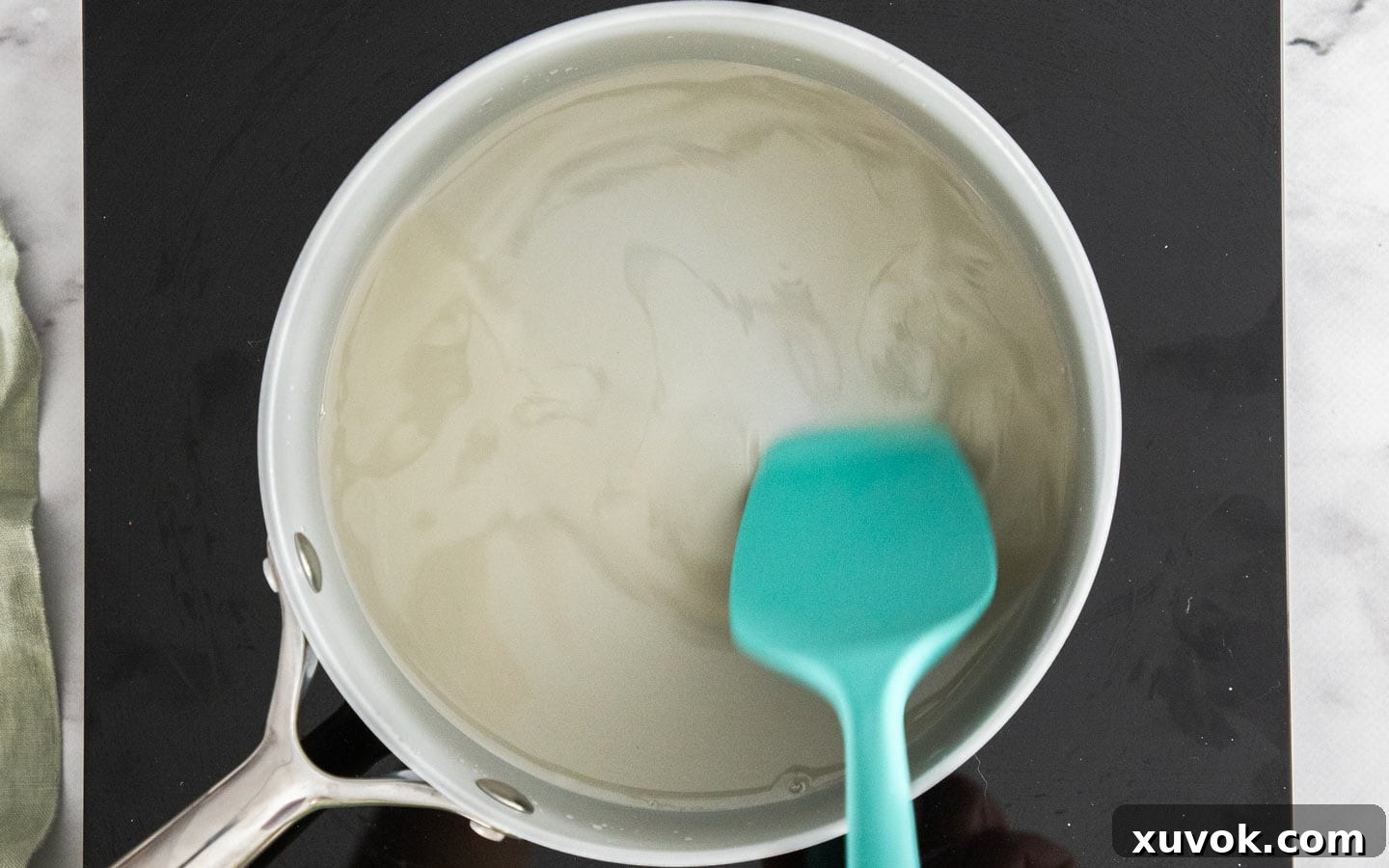
Pour the measured water into a small, heavy-bottomed saucepan. Evenly sprinkle the powdered gelatin over the surface of the water. Do not stir it in immediately. Instead, let it sit undisturbed for about 3 minutes. This crucial step, known as “blooming,” allows the gelatin granules to absorb the water and soften, preventing clumping and ensuring a smooth dissolution later. You’ll notice it will look wrinkly and expand slightly, becoming more translucent.
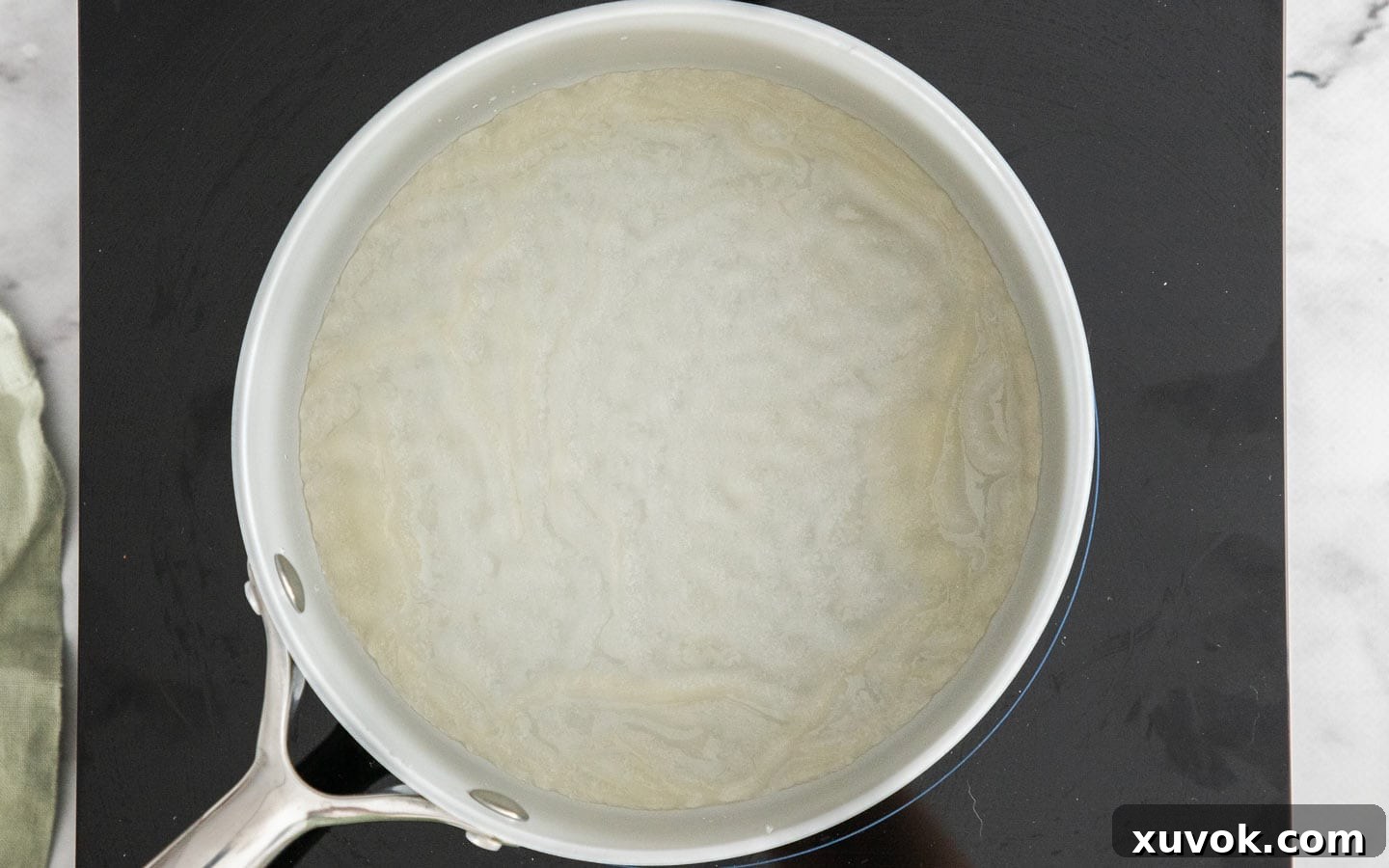
3. Gently Dissolve Gelatin and Sugar
Place the saucepan with the bloomed gelatin over very low-medium heat. Gently stir with a silicone spatula or whisk until the gelatin completely dissolves. This should only take about 1 to 2 minutes. The key is to avoid boiling the mixture; it should barely even feel hot to the touch once dissolved. Boiling gelatin can compromise its setting power, resulting in a dessert that won’t set properly. Once the gelatin is fully dissolved, add the sugar to the saucepan. Continue stirring gently over the low heat until the sugar crystals are completely melted into the mixture. Again, ensure the mixture does not come to a boil.
4. Stir in the Remaining Ingredients
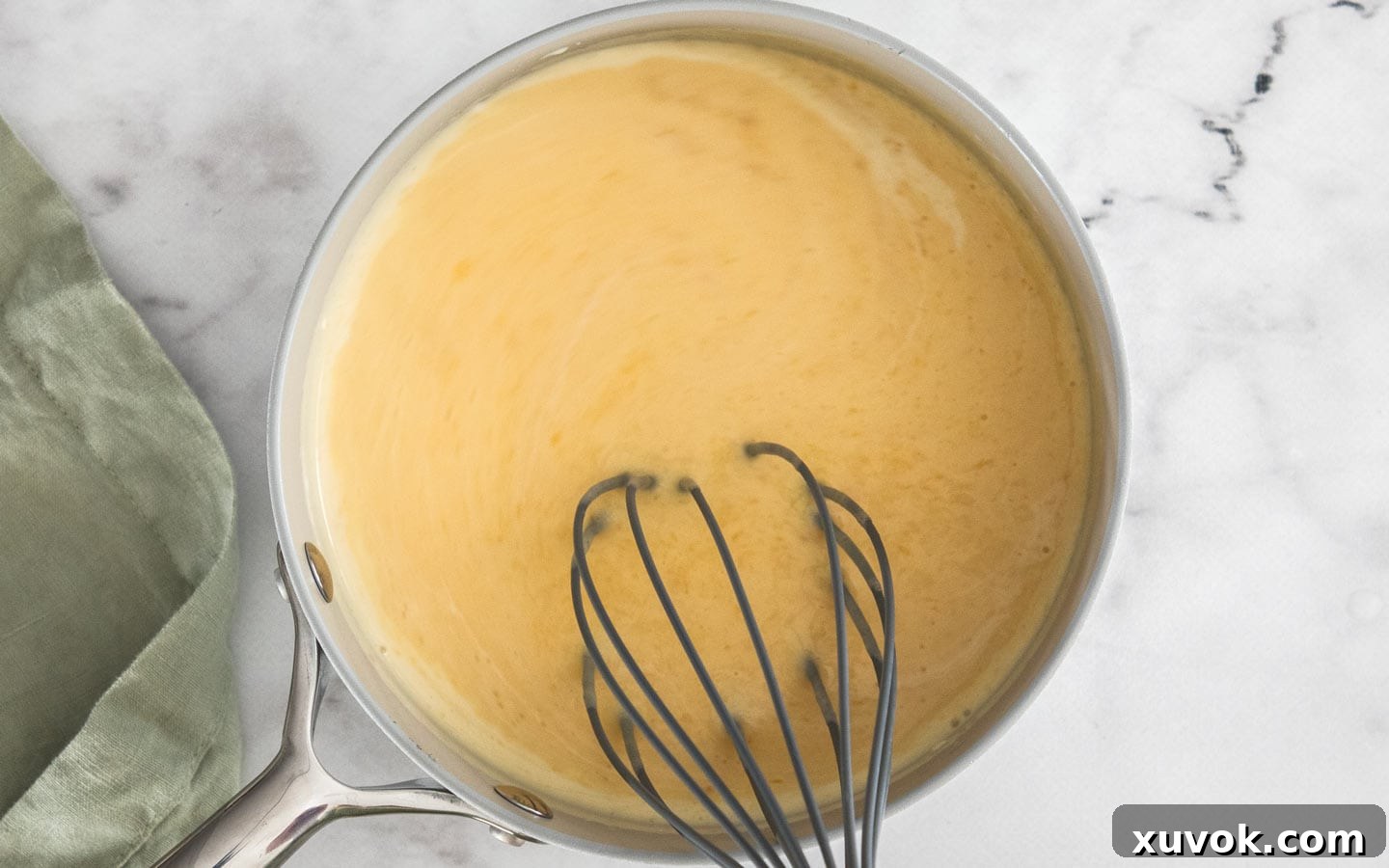
Once the gelatin and sugar are fully dissolved, remove the saucepan from the heat. Now, stir in the prepared mango puree, heavy cream, and vanilla extract. Use a whisk to gently combine everything until the mixture is perfectly smooth and homogenous. Be careful not to aggressively whisk or incorporate too much air, as this can lead to an undesirable frothy layer on top of your panna cotta. A gentle, steady whisking motion is all that’s needed.
5. Portion and Chill to Set
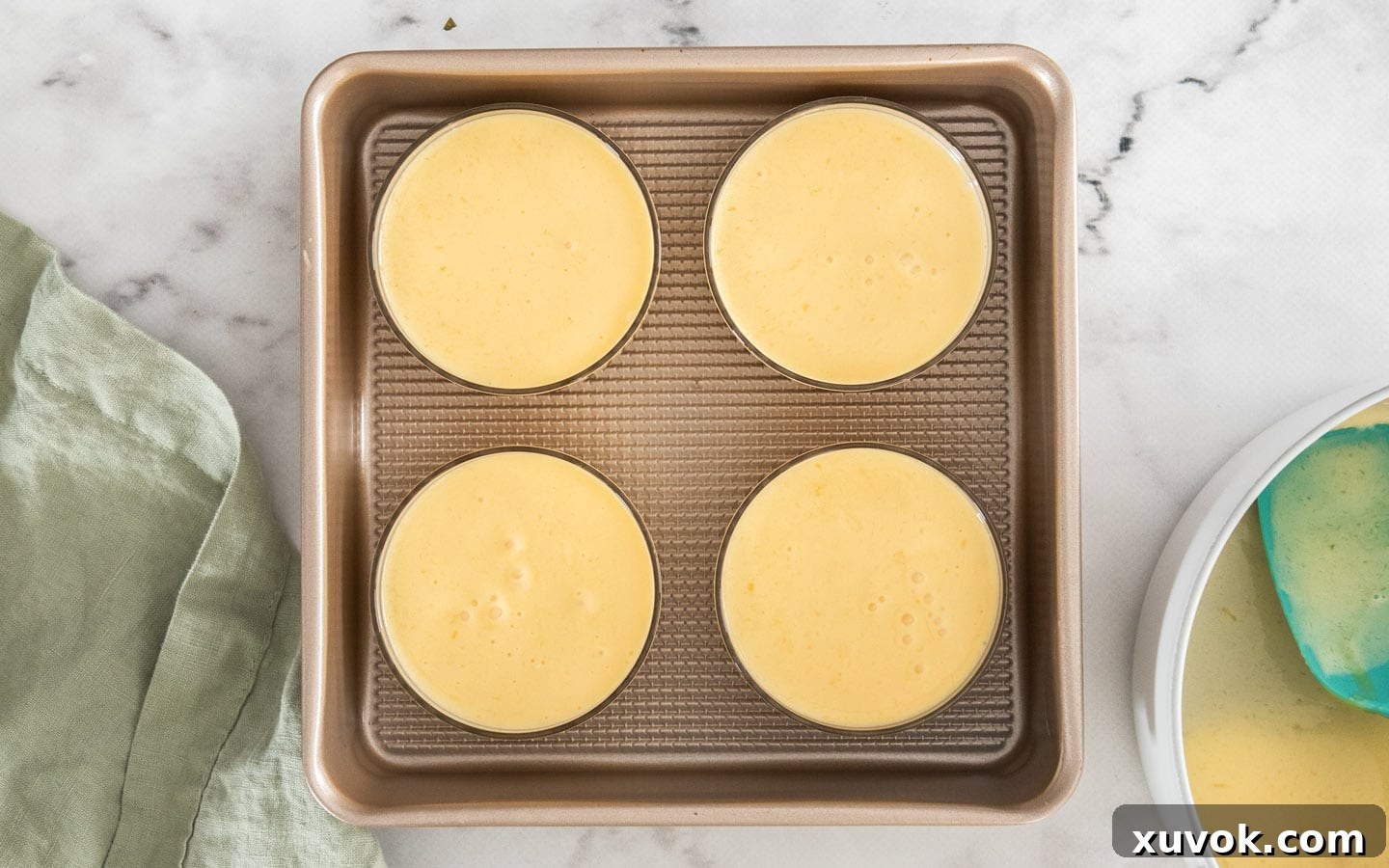
After less than 10 minutes of active work, your panna cotta mixture is ready for its final step! Carefully pour the creamy mango mixture into your chosen ramekins, small glasses, or dessert dishes. Ensure even distribution among your serving vessels. Once poured, transfer the dishes to the refrigerator and chill for a minimum of 3 hours, or until completely set. For best results and the firmest wobble, chilling overnight is often recommended. The waiting might be the hardest part, but it’s essential for achieving that perfect panna cotta texture!
Choosing the Right Molds and Serving Styles
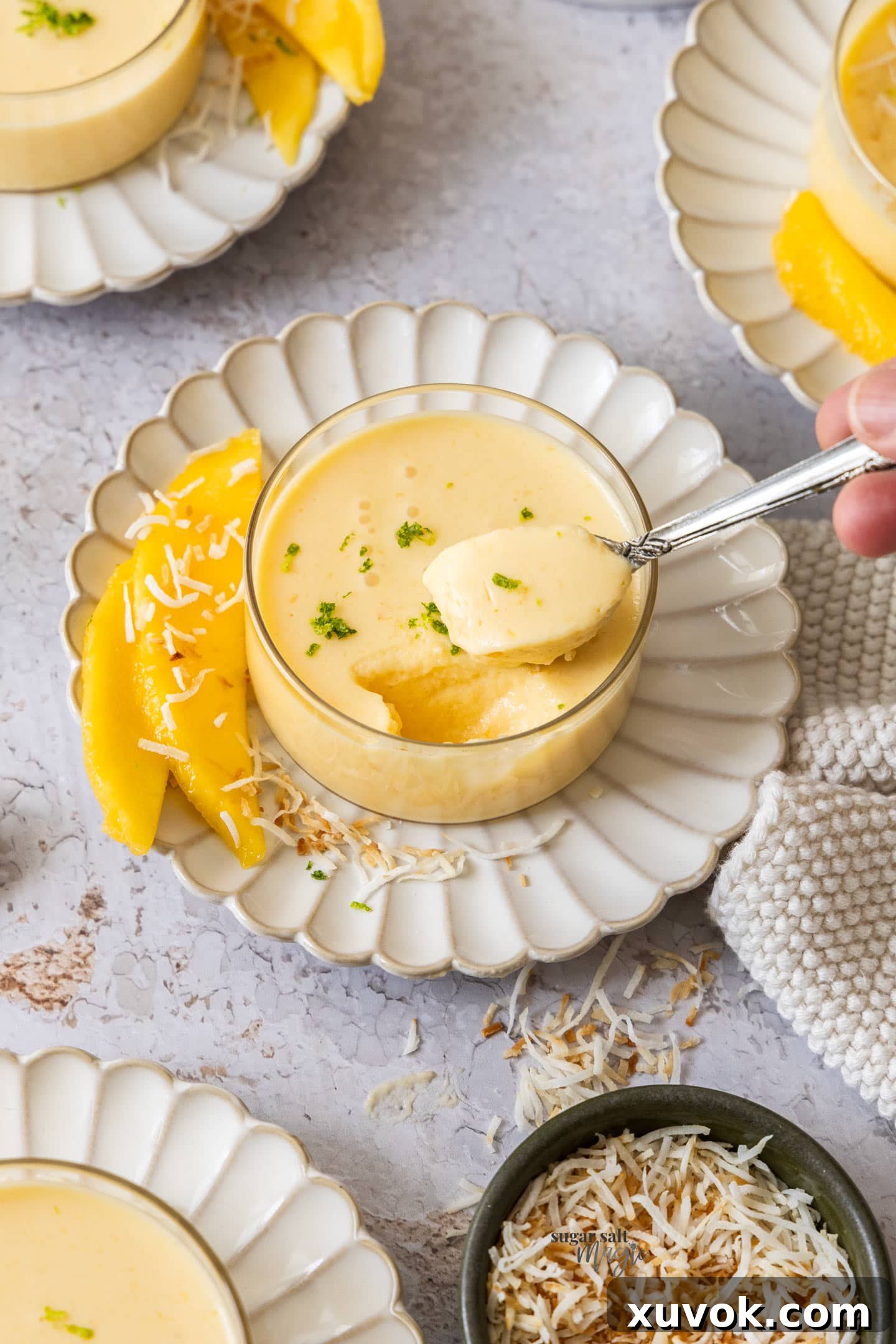
One of the beauties of panna cotta is its adaptability to various serving vessels. You can use almost anything to present your beautiful tropical dessert! For a classic look, I often use glass ramekins, which beautifully showcase the vibrant color of the mango. However, traditional ceramic ramekins, elegant wine glasses, mini jam jars, or even small teacups can work wonderfully.
Any shape will do, but aim for dishes that hold approximately ¾ cup (about 180ml) if you’re planning for 4 generous servings. For smaller, more delicate portions, you can use smaller molds and yield more servings. Keep in mind that if your dishes are too large and shallow, the panna cotta will form a thin layer at the bottom, which might not be as visually appealing or have the desired depth of texture.
For a grander presentation, you can also serve panna cotta “family-style” or “sharing-style.” Pour the entire mixture into a decorative quiche dish or a pie dish, similar to this strawberry panna cotta with pistachio meringues. Guests can then scoop their desired amount into individual dessert plates. This creates a relaxed yet elegant dessert experience.
If you desire to unmold your panna cotta onto dessert plates for a more formal presentation, a little preparation goes a long way. Before pouring the mixture, very lightly grease the inside of your molds with a neutral-flavored oil (like vegetable oil or a tiny bit of non-stick spray). You only need the thinnest, almost invisible layer – certainly not enough for it to drip or pool at the bottom. This minimal greasing will help the panna cotta release cleanly once set, allowing you to achieve that perfect, freestanding shape. To unmold, briefly dip the bottom of the ramekin in warm water, then invert onto a plate.
Essential Tips and Tricks for Panna Cotta Success
While mango panna cotta is remarkably simple, a few key tips can elevate your dessert from good to absolutely perfect:
- Never Boil Gelatin: This is arguably the most crucial rule for gelatin-based desserts. Boiling or even simmering the gelatin mixture can break down its protein structure, rendering it ineffective. Always dissolve gelatin over low heat, stirring gently until just melted, ensuring the mixture remains below a simmer. If using agar-agar, the rule is reversed; you’ll need to bring it to a boil for 1-2 minutes to activate its gelling properties.
- Thorough Dissolution of Gelatin and Sugar: Ensure both the gelatin and sugar are completely dissolved. Undissolved gelatin can lead to a grainy texture or pockets of un-set liquid, while undissolved sugar can result in a gritty mouthfeel. Rub a tiny bit of the liquid between your fingers to check for grit.
- Perfect Mango Ripeness: The sweetness and flavor of your panna cotta heavily depend on the mangoes. Use ripe mangoes that yield slightly to pressure and have a strong, sweet aroma. Under-ripe mangoes will lack flavor, and over-ripe ones might be fibrous.
- Prevent Air Bubbles: When stirring in the mango puree and cream, do so gently. Aggressive whisking can incorporate too much air, creating a frothy top layer that separates or spoils the smooth appearance. If you do get bubbles, gently skim them off or lightly tap the ramekins on the counter after pouring to release them.
- Chill Thoroughly: Patience is key! Panna cotta needs ample time to set properly. While 3 hours is a minimum, chilling overnight is ideal for a firm, perfectly wobbly texture. Rushing this step will result in a dessert that’s too soft or liquidy.
- Temperature Control: Ensure all ingredients are at room temperature or slightly warmed (except for the cream and mango puree, which can be chilled) before combining to prevent premature setting of the gelatin mixture.
- Unmolding (Optional): If you plan to unmold, lightly oil your ramekins before pouring. To unmold, dip the bottom of the mold in warm water for 10-15 seconds (don’t let water get into the panna cotta), then invert onto a chilled plate. A quick run of a thin knife around the edge can also help, but be careful not to damage the panna cotta.
Storage and Make-Ahead Guide
Panna cotta is the quintessential make-ahead dessert, perfect for entertaining or simply enjoying throughout the week. Planning ahead allows the flavors to meld and the texture to fully develop.
- Refrigerator Storage: Once your mango panna cotta has fully set, cover each individual ramekin tightly with plastic wrap to prevent it from absorbing odors from the refrigerator and to keep it fresh. For easier transport in and out of the fridge, you can place the ramekins on a larger tray or a baking sheet.
- How Long Will It Last? When stored properly, mango panna cotta will keep beautifully in the refrigerator for up to 3 days. Always refer to the “use-by” date on your cream carton, and for optimal freshness after opening, aim to consume within a few days of preparation. Making it 1-2 days in advance of serving is ideal, ensuring peak flavor and texture.
- Freezing: While technically possible, freezing panna cotta is generally not recommended as it can alter the delicate texture. The cream can sometimes separate, and the gelatin can become less stable, resulting in a grainy or watery dessert upon thawing. It’s best enjoyed fresh and chilled from the refrigerator.
Frequently Asked Questions
Q: Can I use fresh or frozen mangoes?
A: Yes, you can use both! Fresh, ripe mangoes will give the most intense flavor. If using frozen mangoes, make sure to thaw them completely before pureeing for the best texture and flavor incorporation.
Q: My panna cotta didn’t set. What went wrong?
A: The most common reason for panna cotta not setting is boiling the gelatin mixture. Boiling breaks down the gelatin’s gelling properties. Ensure you dissolve the gelatin over very low heat and never let it simmer or boil. Also, ensure you used the correct amount of gelatin and allowed sufficient chilling time.
Q: Can I make this dairy-free?
A: To make this dairy-free, you could experiment with full-fat coconut cream (the thick part from a can of refrigerated coconut milk) instead of heavy cream. The flavor profile will shift slightly towards coconut, but it can still be a delicious tropical dessert. Ensure your gelatin is animal-based or use agar-agar for a vegan option.
Q: How can I unmold panna cotta successfully?
A: Lightly grease your molds with a neutral oil before pouring. Once set, dip the bottom of the mold in warm water for about 10-15 seconds (without getting water into the dessert), then invert onto a chilled plate. A thin knife run carefully around the edge can also help release it.
Q: Can I add other fruits?
A: Absolutely! While mango is fantastic, panna cotta is very versatile. You could try layering with a berry compote, a passionfruit drizzle, or even a different fruit puree. Ensure any added fruit toppings are added just before serving or are well-chilled to prevent melting or premature setting issues.
More Panna Cotta Recipes You’ll Love
If you’ve fallen in love with the simple elegance of panna cotta, there’s a world of flavors to explore. Here are some other delightful panna cotta recipes to inspire your next dessert adventure:
- Coffee Panna Cotta: A rich, aromatic treat for coffee lovers.
- Buttermilk Panna Cotta with Blood Orange Jelly: A refreshing and tangy dessert with a beautiful citrus layer.
- Passionfruit Panna Cotta: Bursting with exotic and tangy passionfruit flavor.
- Coconut Panna Cotta with Raspberry Sauce: A tropical twist enhanced with a vibrant berry topping.
- Honey Panna Cotta: A naturally sweet and subtly nutty panna cotta.
⭐⭐⭐⭐⭐
Did you try this mango panna cotta recipe? Show it some love in the comments below! Your feedback is invaluable.
Hungry for more? Subscribe to the newsletter for free recipes straight to your inbox. Also, follow along on Facebook, Pinterest and Instagram for daily inspiration!
Mango Panna Cotta
Yield: 4 serves
Rated 5 out of 5 stars by 4 readers.
Mango Panna Cotta is a delightful creamy, tropical treat. With just 6 ingredients and 10 minutes effort, it’s so easy to make.
Rate This Recipe
Pin Recipe
Ingredients
- ½ cup water (125ml)
- 1 ½ teaspoons powdered gelatine
- ¼ cup sugar (50g/1.8oz)
- 1 ¼ cups mango purée (310ml)
- ¾ cup thickened cream (heavy cream) (180ml)
- ½ teaspoon vanilla extract
For best results, always weigh ingredients where a weight is provided.
Equipment
- Small saucepan
- Silicone spatula
- Glass ramekins, dariole molds or mini jam jars (so many ways to serve panna cotta!)
Instructions
- If you haven’t already, scoop the flesh from the mango and puree it in a blender or food processor until perfectly smooth. Set aside.
- Pour the water into a small saucepan, then sprinkle the gelatine in an even layer over the top. Let it sit undisturbed for 3 minutes to soften (bloom).
- Place the saucepan over low heat and stir gently until the gelatine completely dissolves. Ensure the mixture does not bubble or boil, as this can affect the efficacy of the gelatine.
- Add the sugar to the saucepan and continue stirring over low heat until it completely dissolves. Again, avoid boiling.
- Remove from heat. Add the prepared mango puree, cream, and vanilla extract. Stir well with a whisk until all ingredients are smoothly combined and homogenous. Be careful not to incorporate too much air.
- Carefully pour the panna cotta mixture into your chosen dessert glasses or ramekins.
- Chill in the refrigerator for at least 3 hours, or ideally up to 2 days, before serving, until fully set and firm to the touch.
- Enjoy! Don’t forget to leave a comment & rating if you tried this recipe. It’s truly appreciated and so helpful for others!
Notes
- Yield: This recipe yields approximately 2⅓ cups of mango panna cotta. I typically serve just over ½ cup per portion, resulting in 4 servings. You can also make smaller portions to get 6 serves.
- Mango Quantity: You should be able to get enough puree from one very large, ripe mango. Always use mango that is ripe and in season for the best flavor.
- Nutrition details provided are approximate only and derived from an online calculator. Ingredient brands and precise measurements may cause variations.
EXPLORE MORE DELICIOUS PUDDINGS!
Don’t forget to leave a rating and comment below and let me know how it was! I love hearing from you. Nutrition information is approximate and derived from an online calculator. The brands you use may cause variations.
Calories from Fat 144