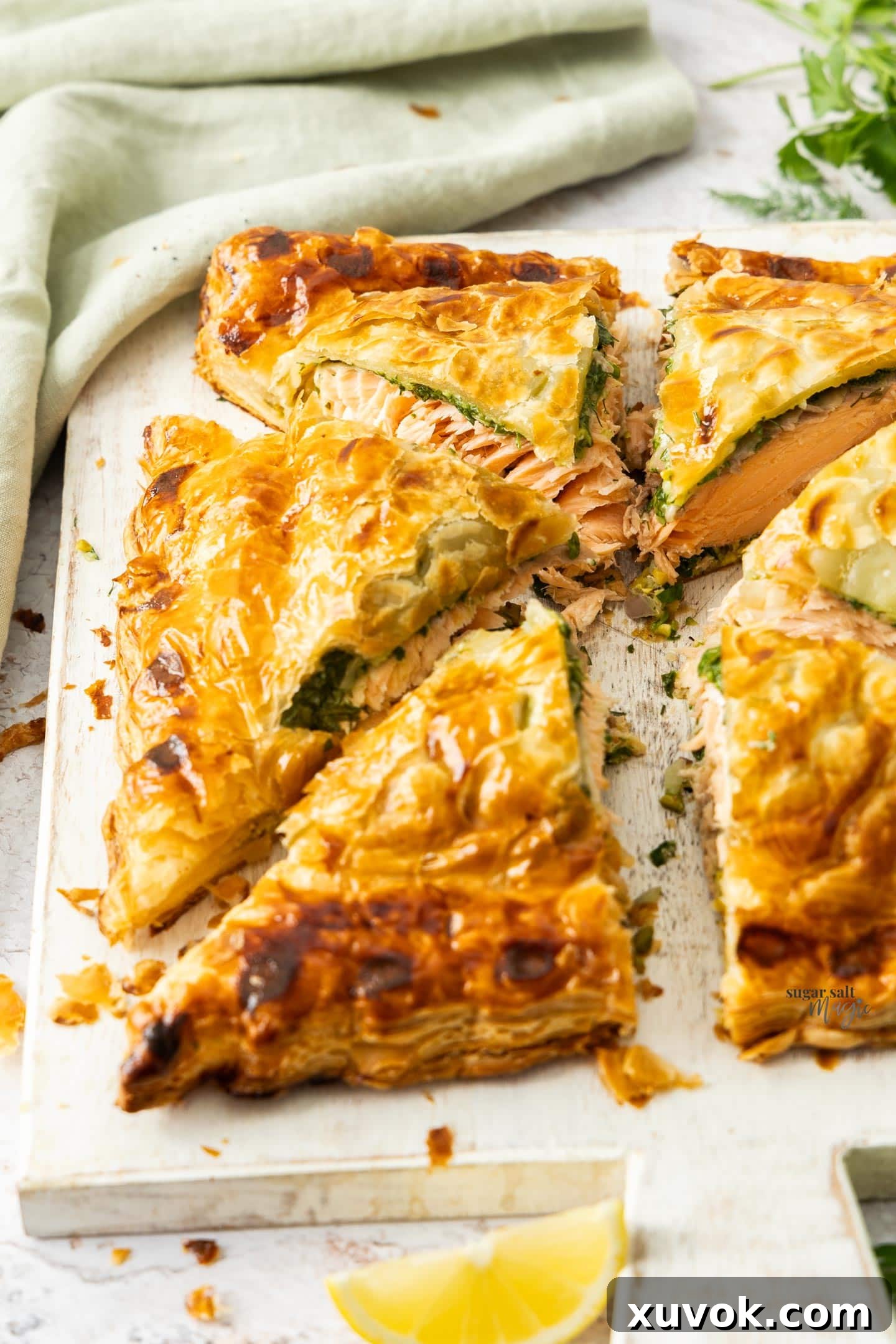
Elevate your next dinner party or family meal with an exquisite dish that effortlessly combines elegance with incredible flavor: Salmon Wellington. This impressive culinary creation features perfectly baked, flaky salmon nestled within a rich, herbaceous spread and enveloped in layers of golden, buttery puff pastry. It’s a true showstopper that promises to delight every palate and leave a lasting impression.
Salmon inherently possesses an aura of sophistication, whether presented as individual fillets, a grand side of salmon, or even a whole fish. However, this Salmon Wellington, also widely known as Salmon en Croute, transcends ordinary presentations. It’s not just beautiful to behold; it is genuinely as delicious as it is visually stunning. Much like preparing a perfectly baked teriyaki salmon, utilizing a full side of salmon in this recipe simplifies the cooking process while ensuring a generous and visually appealing dish.
Imagine serving this magnificent creation at your next gathering. Your guests will be captivated by its appearance and utterly charmed by its taste. Once you experience the delightful combination of tender fish, vibrant herbs, and crisp pastry, you’ll understand why this dish is an instant classic that you’ll want to recreate time and again.
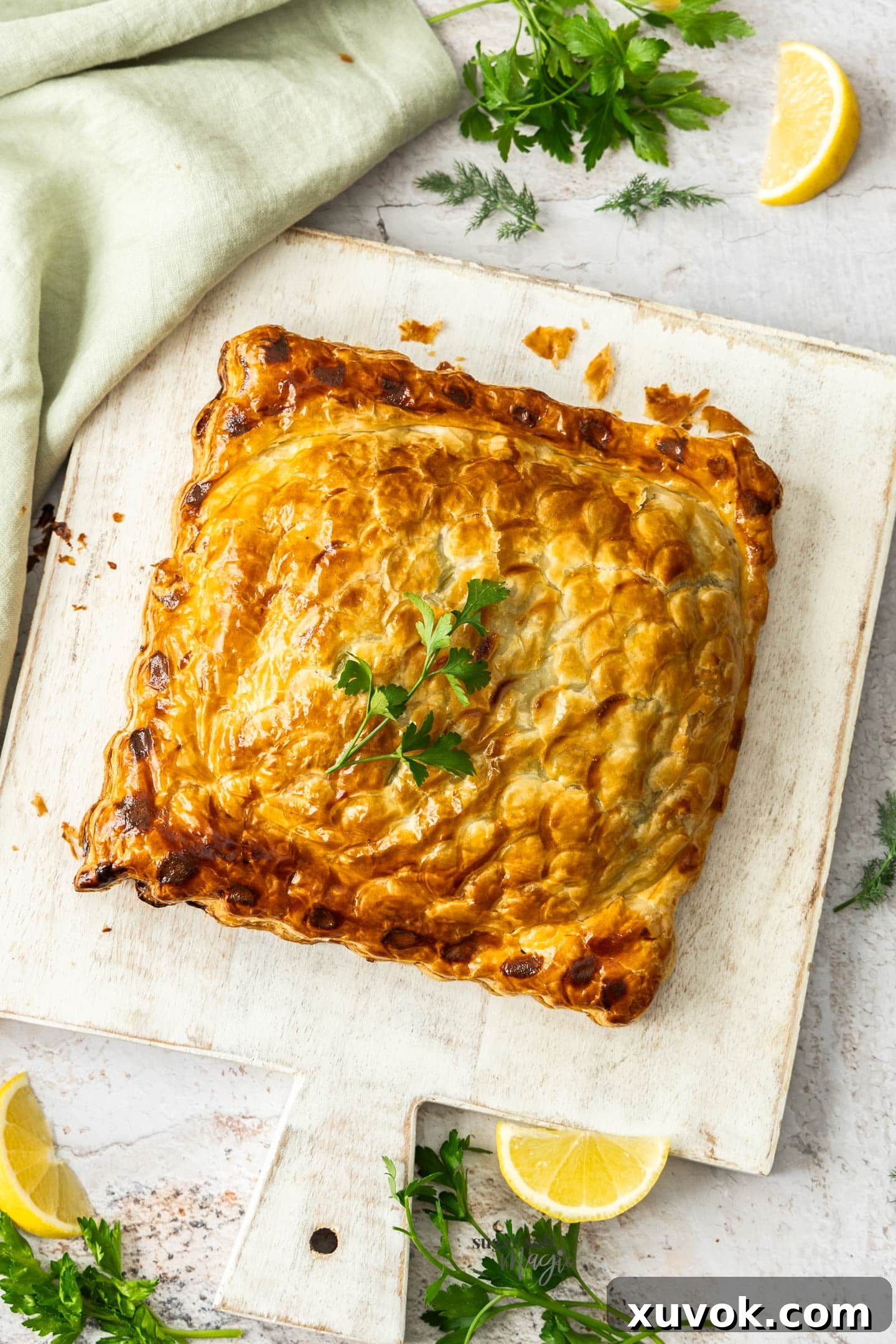
Table of Contents
- What is Salmon Wellington?
- Why You’ll Love This Recipe
- Essential Ingredients for Salmon Wellington
- Step-by-Step Guide: How to Make Salmon Wellington
- What to Serve with Salmon Wellington
- Expert Tips and Tricks for Perfect Salmon Wellington
- Storage and Reheating Leftovers
- Frequently Asked Questions About Salmon en Croute
- More Delicious Salmon Recipes You’ll Adore
Never Miss a Recipe!
Get the latest, most exciting recipes straight to your inbox and elevate your home cooking experience!
What is Salmon Wellington?
Salmon Wellington, often referred to by its elegant French name, Salmon en Croute, is a sophisticated dish that showcases a salmon fillet enveloped in a delicate, buttery, and supremely flaky puff pastry. This culinary masterpiece draws its inspiration from the classic Beef Wellington, offering a delightful and lighter seafood-centric alternative that is equally impressive.
At its heart, a typical Salmon Wellington features a generous portion of fresh salmon, often prepared with a flavorful layer between the fish and the pastry. This intermediate layer usually consists of a rich, creamy mixture—such as sautéed spinach, aromatic herbs, shallots, and sometimes cheese or a decadent sauce. This not only adds depth and moisture to the dish but also acts as a protective barrier, preventing the pastry from becoming soggy. The entire parcel is then meticulously sealed and baked to golden perfection in the oven, ensuring the salmon is cooked through to a tender, succulent finish while the pastry achieves an irresistible crispness.
The term “en croute” is a French culinary phrase meaning “in crust,” which perfectly encapsulates the essence of this dish. It signifies that the primary ingredient—in this case, salmon—is baked within a protective and flavorful pastry crust, making every bite a harmonious blend of textures and tastes. Whether you call it Salmon Wellington or Salmon en Croute, this dish is guaranteed to impress both visually and gastronomically.
Why You’ll Love This Recipe
This Salmon Wellington recipe isn’t just another fish dish; it’s an experience. Here’s why it will become a cherished addition to your recipe collection:
- Impressive Elegance: It looks incredibly sophisticated, making it ideal for special occasions, holidays, or any time you want to truly wow your guests with minimal stress.
- Gourmet Flavor, Approachable Process: Despite its fancy appearance, the steps are straightforward and easy to follow, even for novice cooks. The result is a dish that tastes like it came from a high-end restaurant.
- Perfect Texture Harmony: Enjoy the contrast between the moist, tender salmon, the creamy, herbaceous filling, and the utterly crispy, golden-brown puff pastry.
- Versatile & Customizable: While our herb-mascarpone filling is divine, you can easily adapt the flavors to your preference, perhaps adding different vegetables or spices.
- Wholesome & Satisfying: Salmon is packed with omega-3 fatty acids, making this a delicious and healthy meal choice that is also incredibly satisfying.
Essential Ingredients for Salmon Wellington
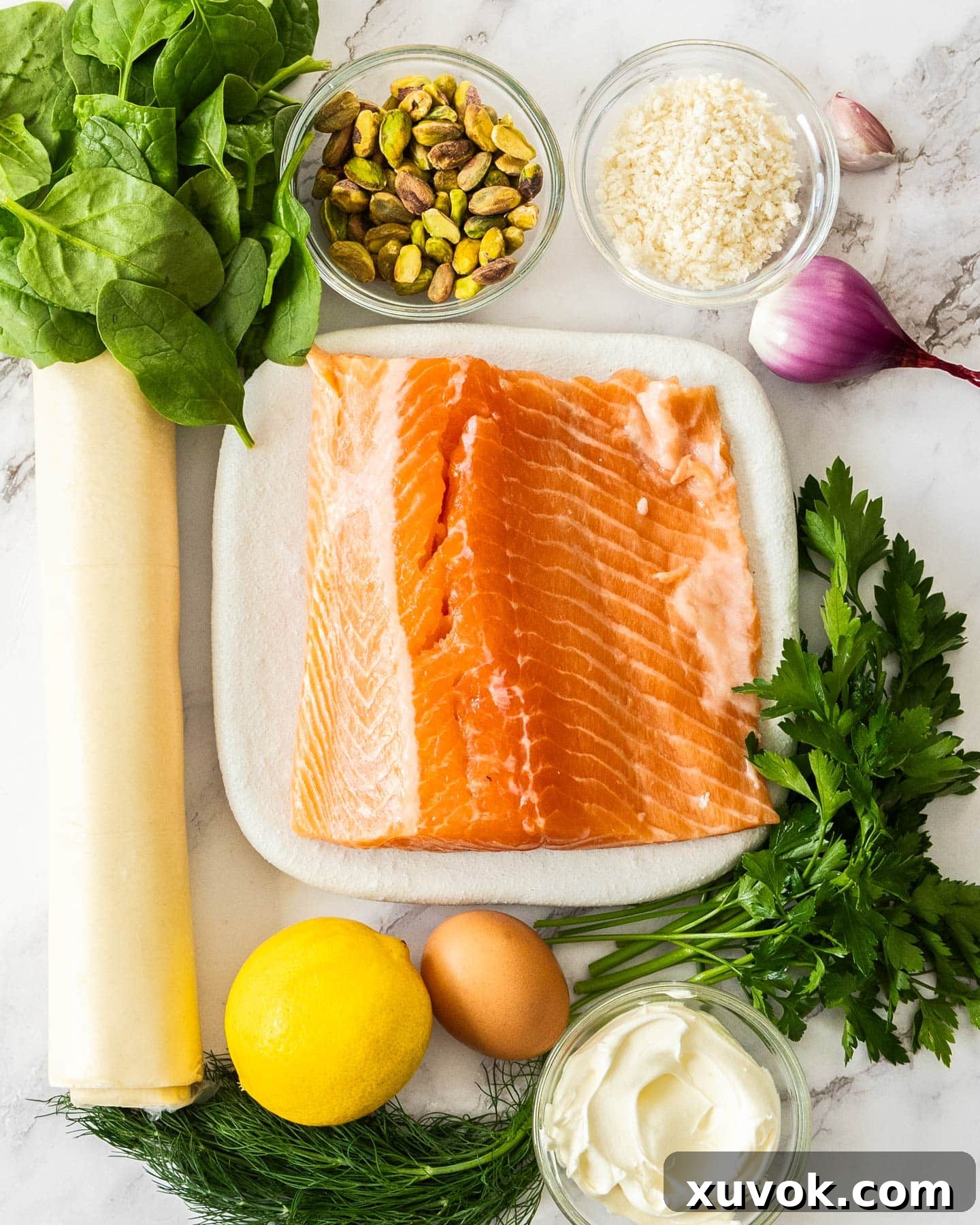
For detailed measurements and comprehensive instructions, please refer to the full recipe card below.
- Salmon: The star of our dish! We recommend using a high-quality, skinless, and boneless salmon fillet or a side of salmon. This ensures ease of preparation and a smooth eating experience. If you’re using frozen salmon, it is absolutely crucial to thaw it completely overnight in the refrigerator. Before assembly, gently pat the salmon dry with paper towels to remove any excess moisture, which helps prevent a soggy pastry crust and ensures even cooking.
- Mascarpone Filling: This luscious, flavorful filling is what truly elevates our Salmon Wellington. It’s a delightful blend of creamy mascarpone cheese, fresh baby spinach (finely chopped for better distribution), aromatic fresh parsley, bright fresh dill, finely minced shallot, pungent garlic, and a hint of zesty lemon zest. Each of these fresh ingredients contributes a layer of bright, herbaceous flavor that perfectly complements the rich salmon. For the best results, resist the temptation to substitute dried herbs, as they lack the vibrant freshness essential to this filling. Should you desire an even richer flavor profile, you can swap the mascarpone for full-fat cream cheese, which offers a tangier, denser texture.
- Puff Pastry: The golden, flaky crust is just as important as the filling. Opt for the highest quality puff pastry you can find. An all-butter pastry, while sometimes a bit more delicate to work with, will yield the most superior flavor and flakiness. You will need two sheets of thawed but still cold puff pastry for this recipe. Keeping the pastry cold is key to achieving that desirable puffed texture.
- Pistachios & Breadcrumbs: These two ingredients play a vital role in preventing the bottom layer of puff pastry from becoming soggy. The pistachios, beyond their structural benefit, lend a wonderful subtle nutty flavor that pairs exceptionally well with salmon. We highly recommend using panko breadcrumbs for their superior crispiness and ability to absorb moisture effectively, creating a delightful texture contrast.
- Egg Wash: This simple yet essential mixture provides that beautiful, glossy, golden-brown finish to your puff pastry crust. To prepare, simply whisk together one large egg yolk with a small dash of cream or milk. This mixture not only enhances the appearance but also aids in crisping the pastry.
- Salt & Pepper: Essential for seasoning the salmon and enhancing all the other flavors.
Step-by-Step Guide: How to Make Salmon Wellington
Creating this gourmet Salmon Wellington is simpler than you might think, especially with these detailed instructions. The key to a perfect puff pastry is keeping it cold throughout the process. Puff pastry works best when chilled, as the cold fat layers are what create that incredible flaky texture when baked. If at any point your pastry becomes too warm and soft, don’t hesitate to return it to the refrigerator or even the freezer for a few minutes until it’s firm and manageable again. It is always better to work with firmer pastry than overly soft pastry to achieve optimal puff and crispness.
Begin by thawing your puff pastry in the refrigerator overnight. Once thawed, keep it chilled until you are ready to use it. If your pastry comes in rolls, carefully unroll one sheet onto a sheet of baking paper placed on a chopping board or clean work surface. For an extra crisp result, and if you have the space, you can even chill the unrolled pastry in the freezer for 10-15 minutes before assembly.
For precise ingredient quantities and a full breakdown of instructions, please refer to the complete recipe card found at the end of this article.
1. Prepare the Filling and Preheat Oven
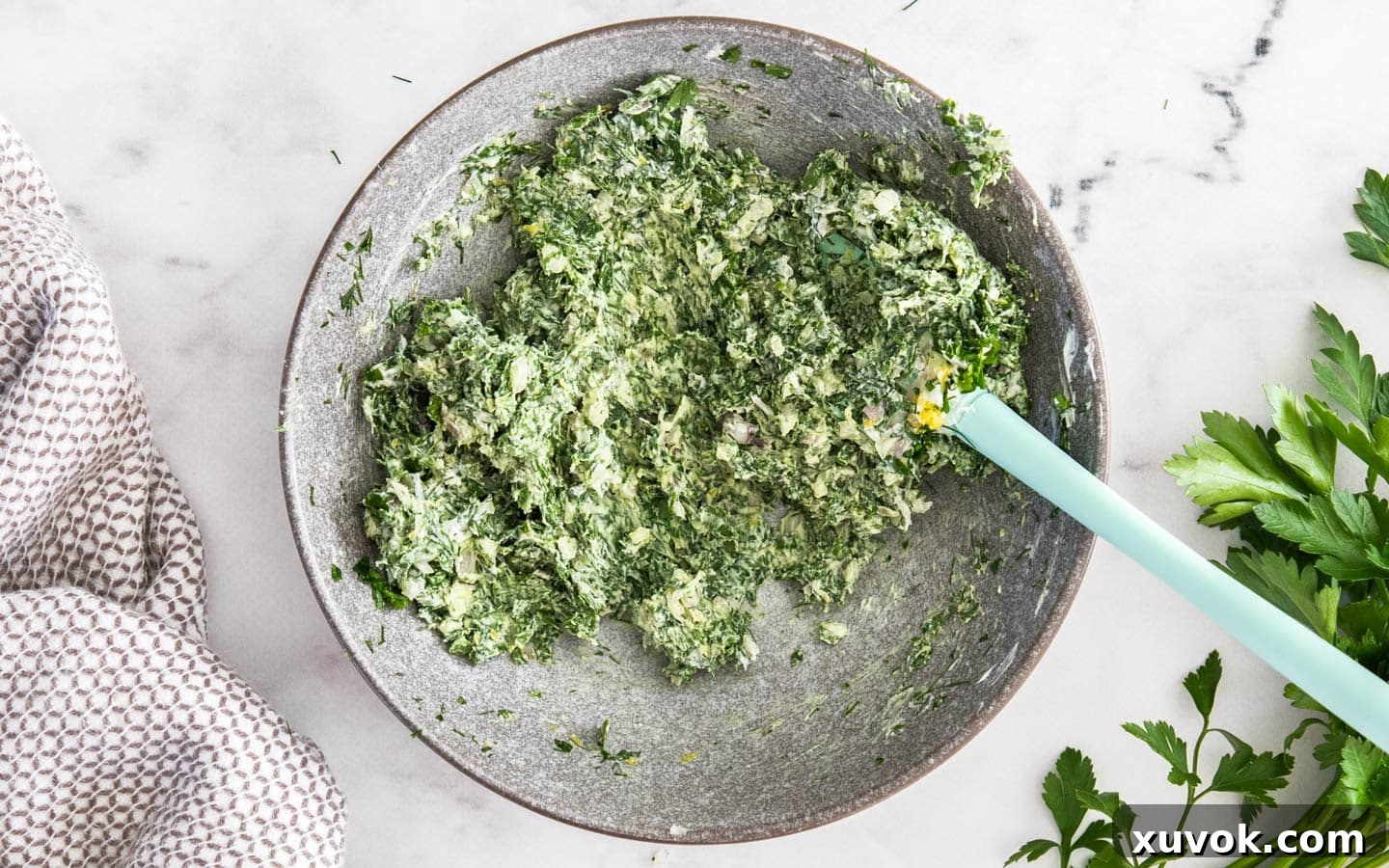
Start by preheating your oven to 220°C (430°F). Ensuring your oven is fully preheated is crucial for the pastry to puff up properly and for the salmon to cook evenly. While the oven preheats, prepare the vibrant mascarpone filling. In a medium-sized bowl, combine the mascarpone cheese, finely chopped baby spinach, fresh parsley, fresh dill, minced shallot, minced garlic, and bright lemon zest. Mix these ingredients thoroughly until well combined and aromatic. Set this flavorful mixture aside as you prepare your salmon.
2. Prepare the Salmon Fillet
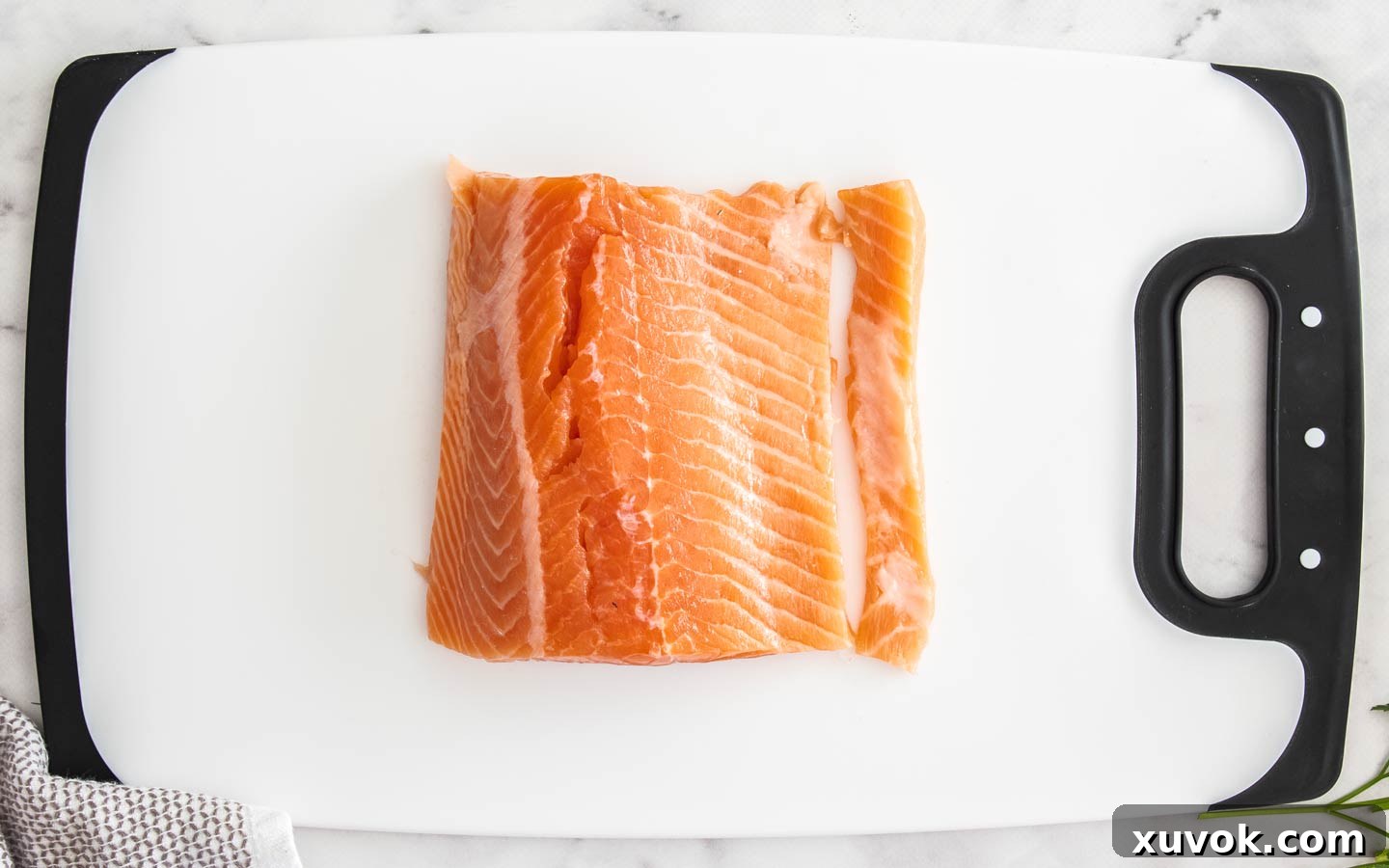
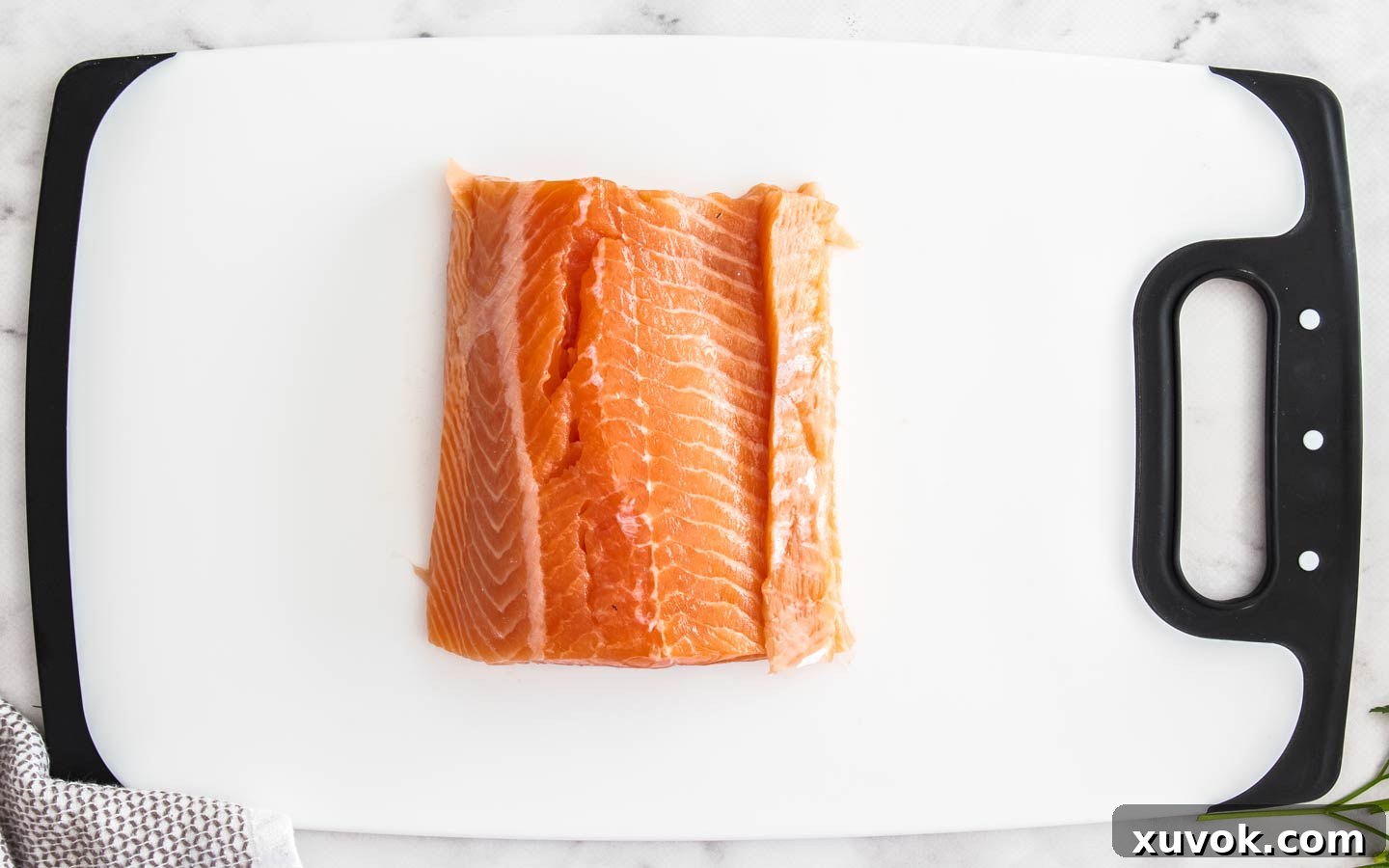
Achieving an evenly cooked salmon is paramount. Salmon fillets often have varying thicknesses, with one end being thinner than the other. To ensure the fish cooks uniformly, carefully slice a thin strip off the thinner side of the salmon, as demonstrated in the first image below. This strip will then be stacked on top of the thinner section, effectively evening out the overall thickness of the fillet, matching it closer to the thicker end (refer to the second image for a clear visual). This simple step prevents the thinner part from overcooking and drying out while the thicker part finishes.
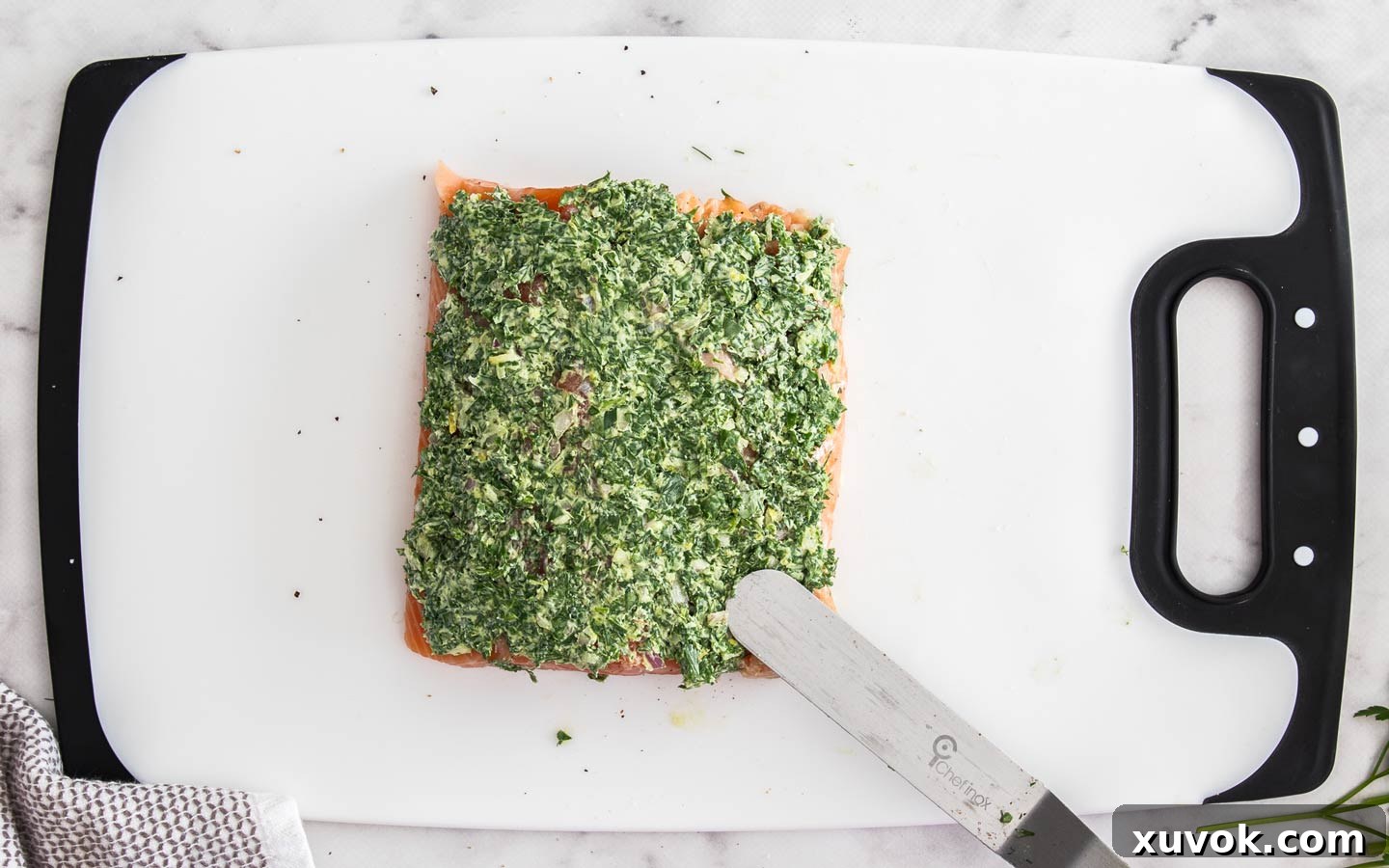
Once the salmon’s thickness is even, season both sides generously with salt and freshly ground black pepper. Then, take half of your prepared herb and spinach mascarpone mixture and spread it evenly over one flat side of the salmon fillet. This forms the flavorful base for our Wellington. Set the prepped salmon aside momentarily.
3. Assemble the Wellington Layers
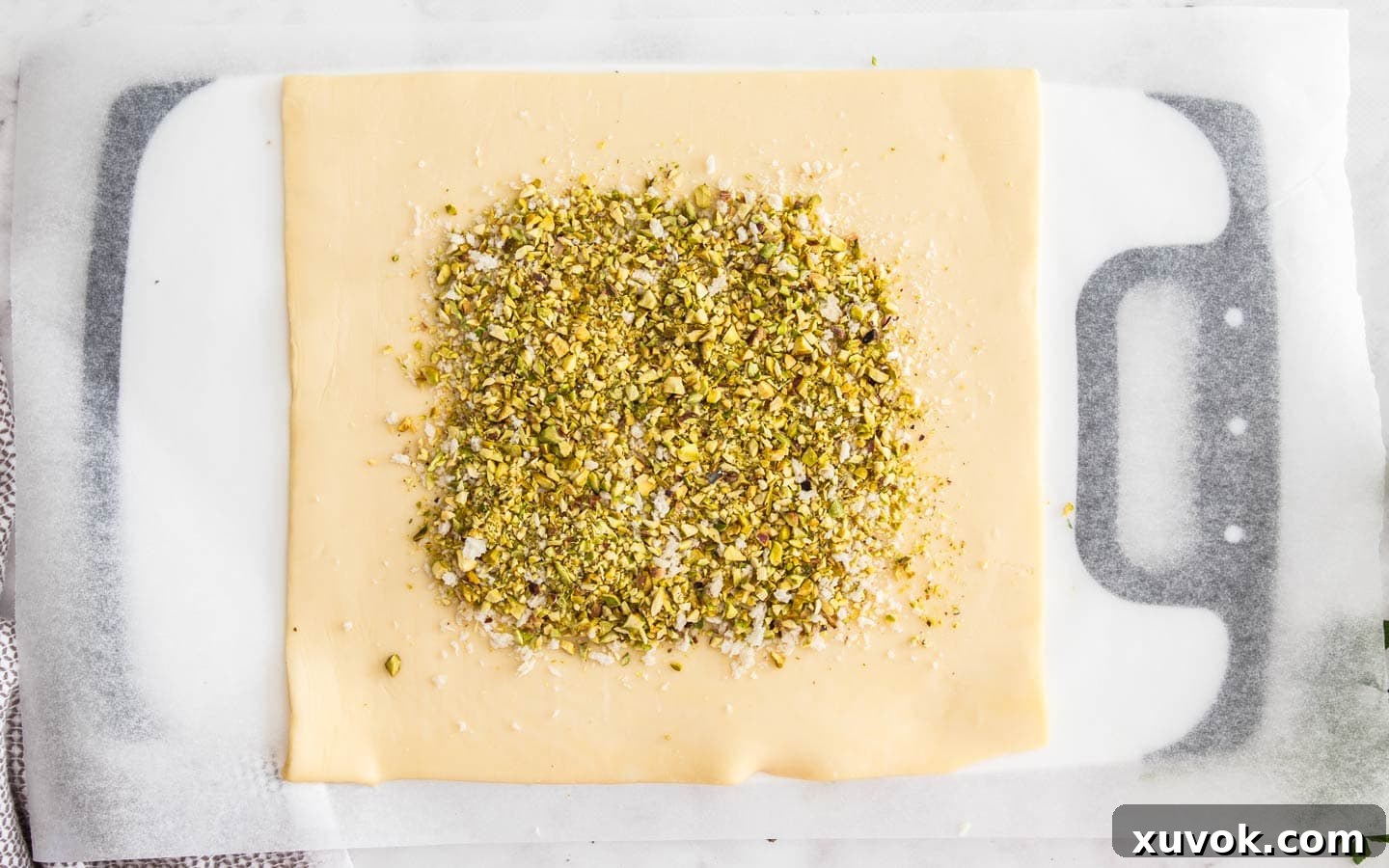
Now, it’s time to build your spectacular Salmon Wellington. Lay one sheet of puff pastry dough onto a sheet of baking paper. This paper will make transferring the finished Wellington to the baking sheet much easier. In the center of the pastry, sprinkle an even layer of panko breadcrumbs and finely chopped pistachios. Aim to create a rectangle roughly the same size as your salmon fillet. This crucial layer absorbs moisture from the salmon during baking, preventing the bottom pastry from becoming soggy and ensuring a crisp crust.
Carefully place the mascarpone-covered salmon fillet, herb-side down, directly onto the bed of breadcrumbs and pistachios. Season the exposed top side of the salmon with another sprinkle of salt and pepper. Now, take the thin offcut of salmon you prepared earlier and position it precisely on top of the thinner side of the main salmon fillet. While it may require a little patience to carefully spread the remaining half of the mascarpone mixture evenly over this stacked salmon, this step is truly worth the effort. It guarantees that your salmon will cook through consistently, preventing any dry spots and ensuring every slice is perfectly moist and tender.
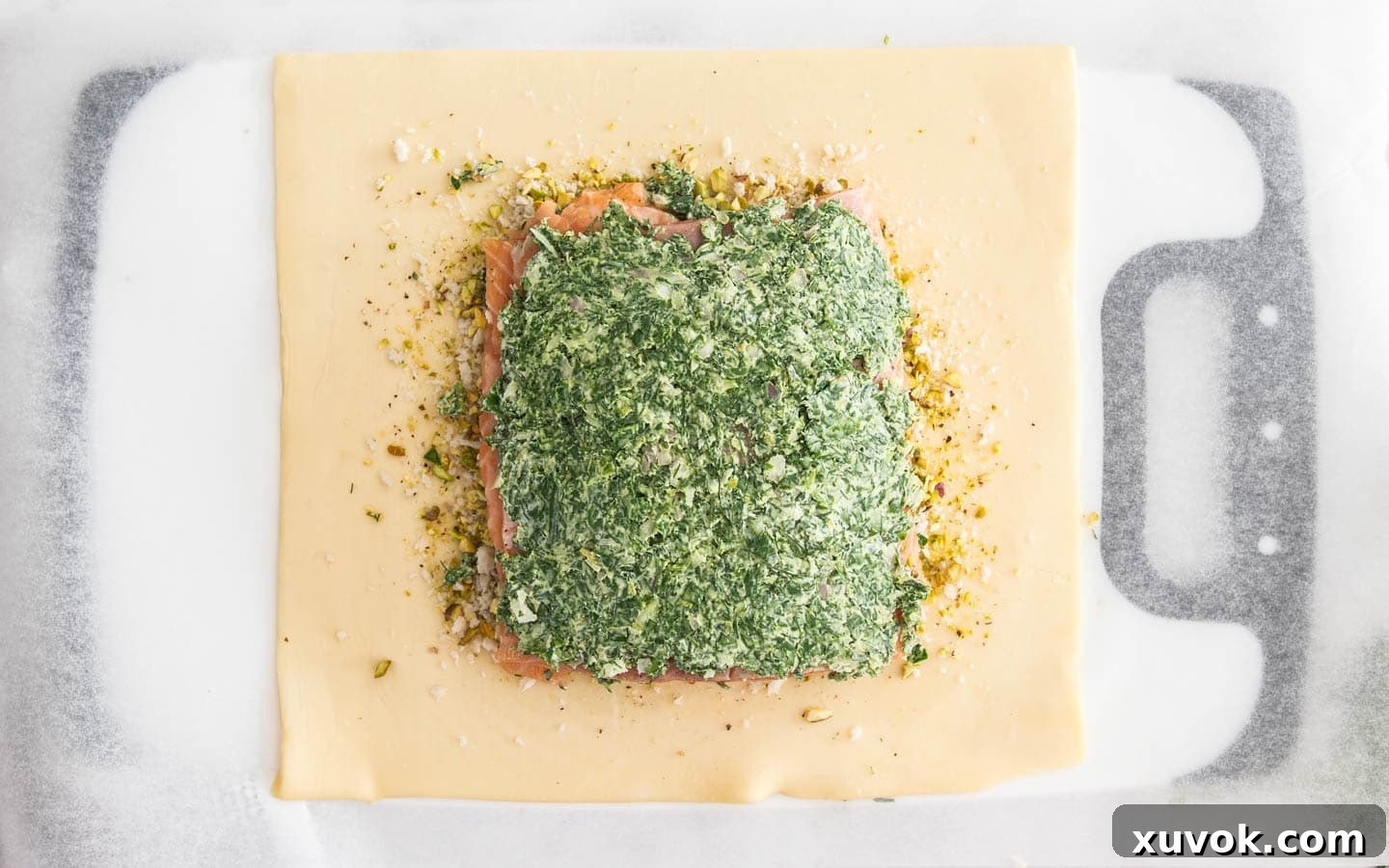
4. Seal and Decorate the Pastry
Gently place the second sheet of puff pastry directly over the salmon and its filling. Carefully press down around the edges of the salmon to remove any trapped air. This ensures a tight seal and helps the pastry adhere properly. Using a sharp knife or a pastry wheel, trim the excess pastry, leaving a neat 2cm (approximately ¾ inch) border all the way around the salmon. This border will allow you to create a beautiful, decorative edge. With your index fingers and thumb, crimp the edges of the puff pastry firmly, creating a sealed, attractive border that will hold its shape during baking.
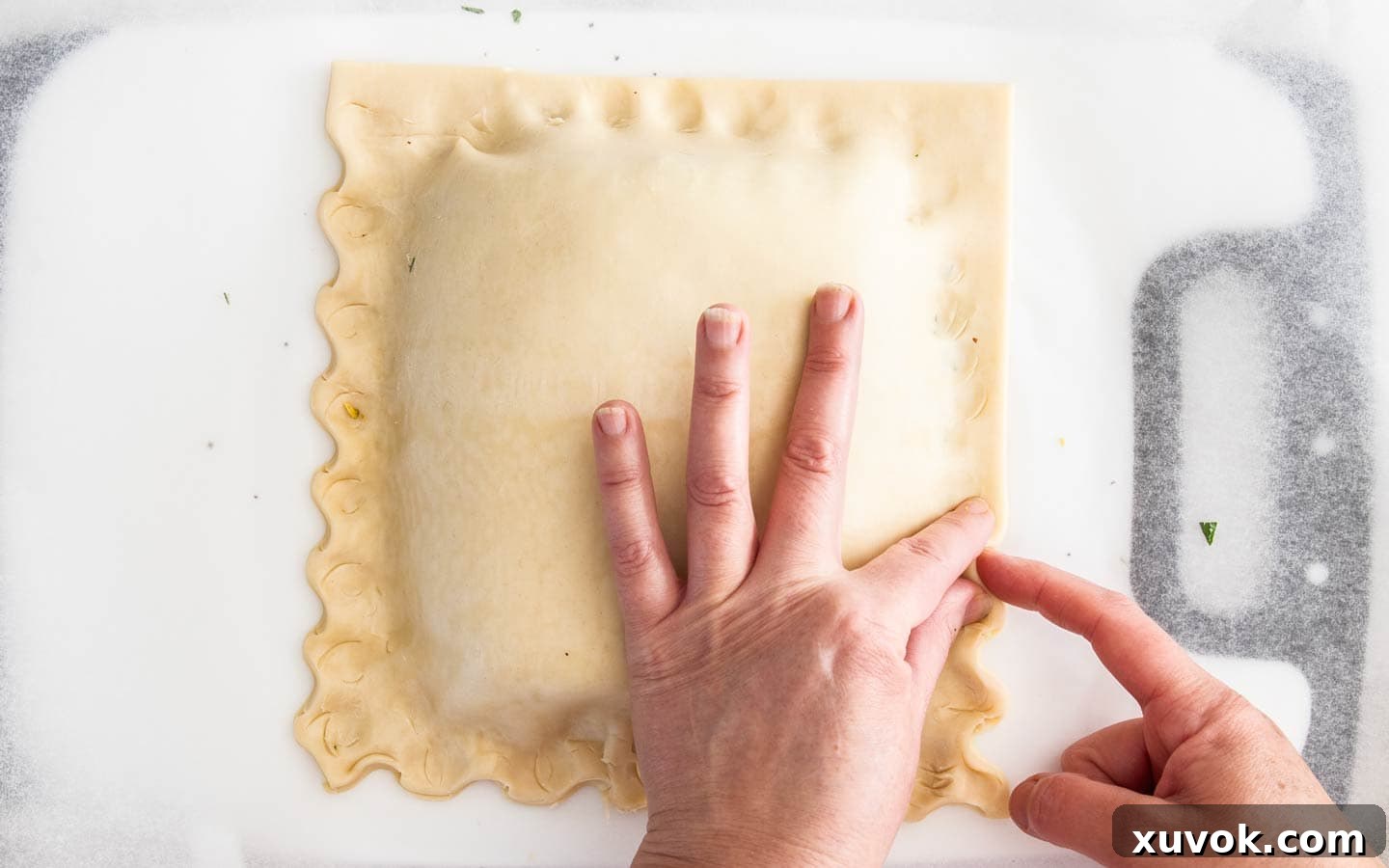
For an extra touch of visual flair, use the rounded tip of a teaspoon to gently press a fish scale pattern all over the top surface of the pastry. This simple technique adds an elegant, artisanal look to your Wellington. Finally, remember to poke 4-5 small holes into the top of the pastry using the tip of a knife or a skewer. These vent holes are essential; they allow steam to escape during baking, preventing the pastry from becoming soggy and ensuring it remains light and flaky.
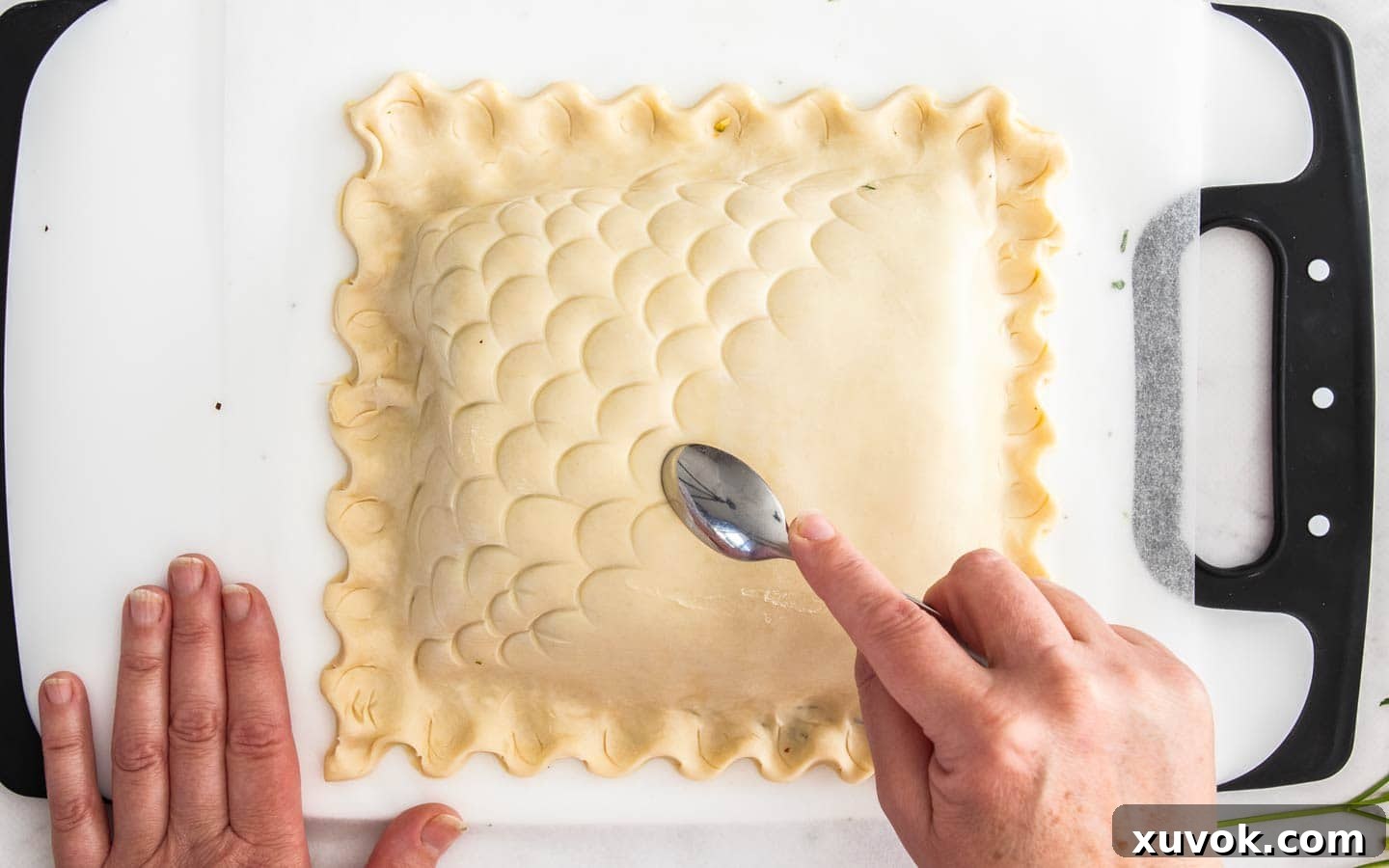
5. Bake to Golden Perfection
Before baking, generously brush the entire top surface of the puff pastry with your prepared egg wash. This egg wash is what will give your Wellington that irresistible deep golden-brown color and a beautiful sheen. Carefully transfer the assembled Wellington, still on its baking paper, to a large baking sheet. Using the baking paper to lift it prevents distortion of the delicate pastry.
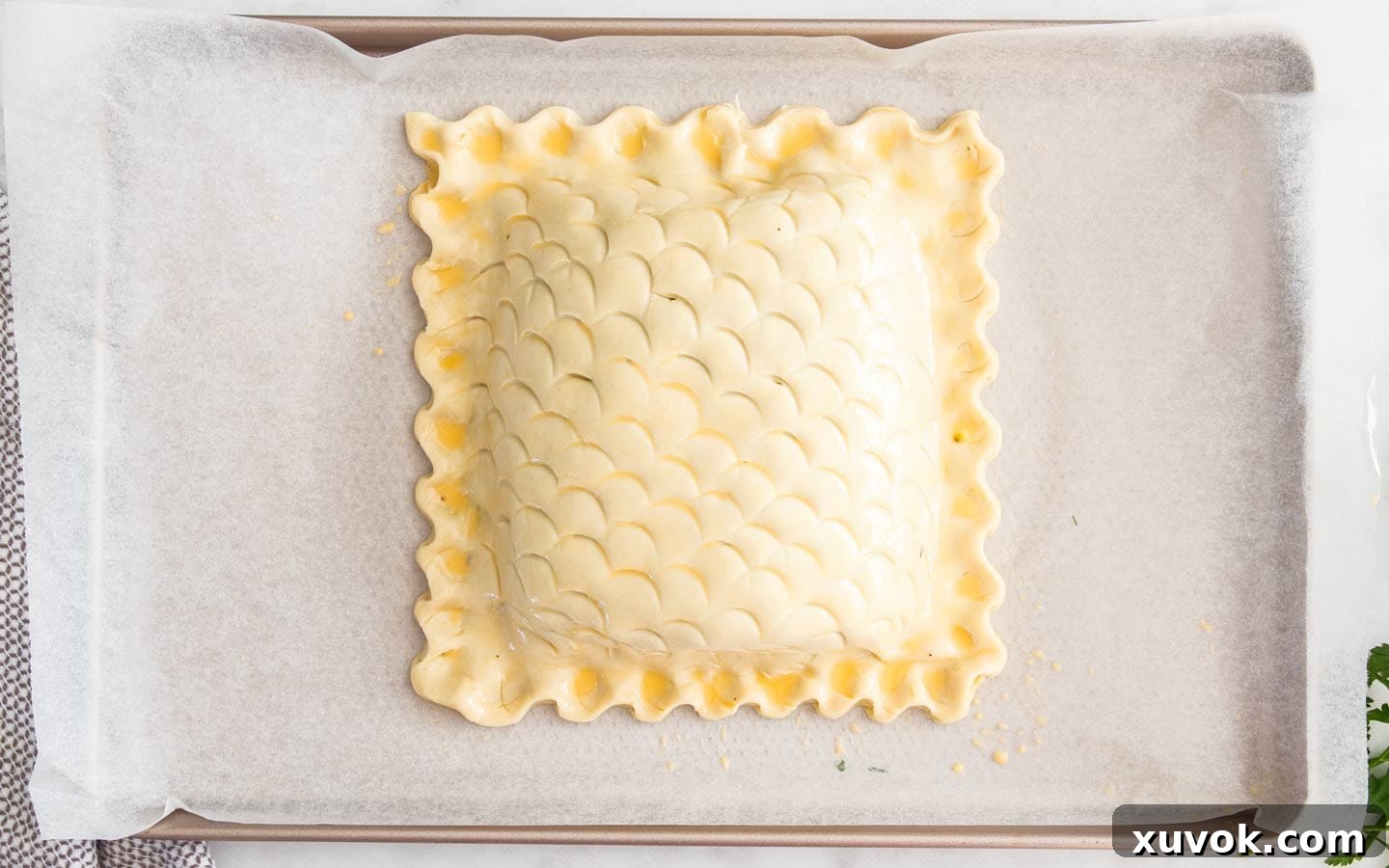
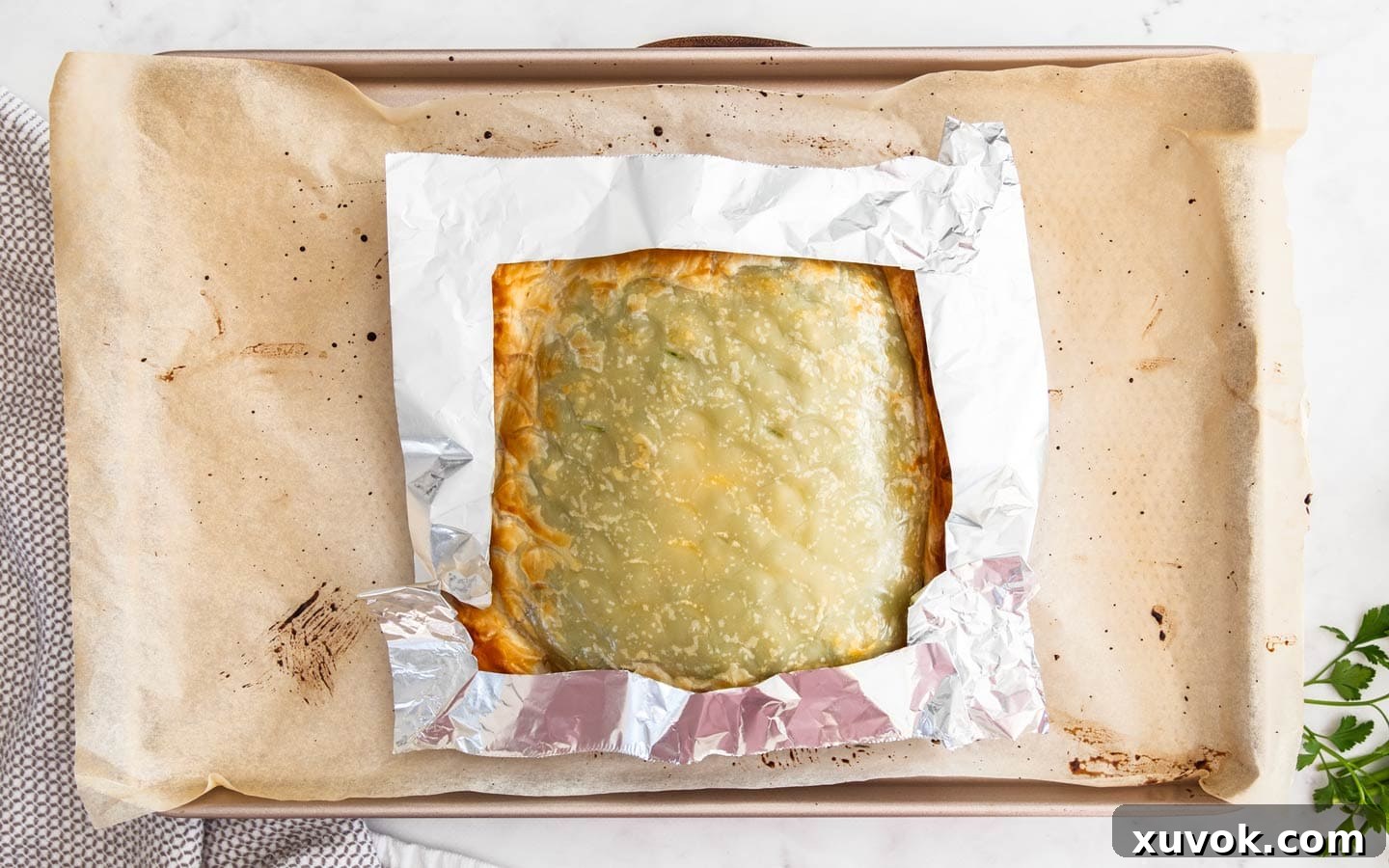
Bake for approximately 30-35 minutes, or until an instant-read thermometer inserted into the thickest part of the salmon registers 63°C (145°F). Keep a close eye on the pastry; the edges tend to brown more quickly than the center. To prevent over-browning or burning the edges, check the Wellington after about 12-15 minutes. If the edges are significantly more golden than the center, carefully remove the tray from the oven and cover just the edges of the pastry with strips of aluminum foil before returning it to bake. An even simpler method is to place the salmon on a larger piece of foil right from the start, then simply fold the edges of the foil over the pastry’s edges as needed during baking. This technique ensures a perfectly golden, evenly baked crust without any burnt spots. Once baked, remove from the oven and let it rest for 5-10 minutes before slicing and serving. This resting period allows the juices in the salmon to redistribute, resulting in a more succulent fish.
What to Serve with Salmon Wellington
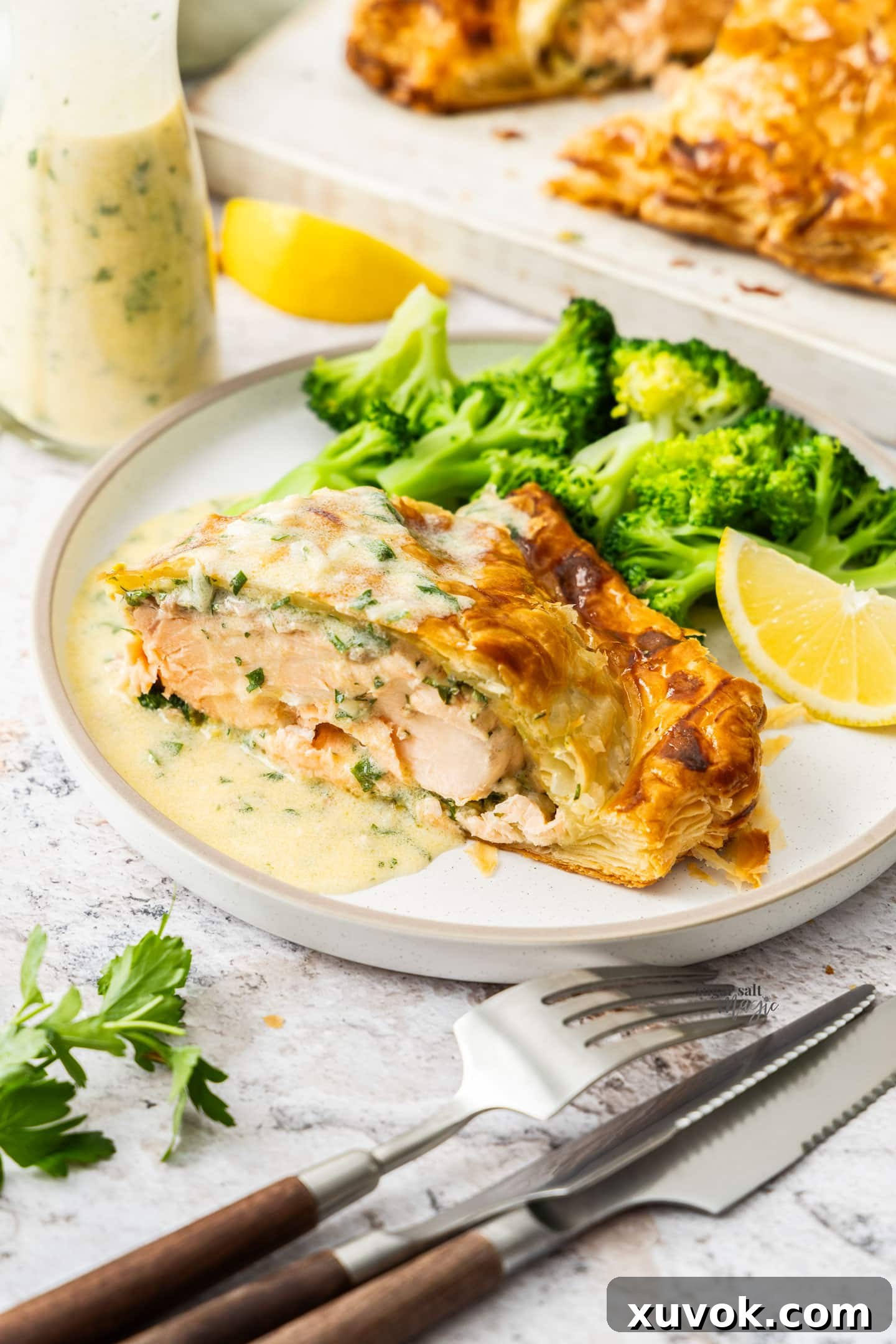
Our Salmon Wellington is inherently rich and bursting with flavor, thanks to the buttery pastry and herbaceous filling. Therefore, the best side dishes are those that complement its richness without overpowering it, offering balance and freshness to the meal.
When it comes to starches, both roasted potatoes (perhaps tossed with herbs like rosemary or sage) and creamy mashed potatoes are classic and comforting choices that pair wonderfully. For a more sophisticated option, consider a delicate rice pilaf or even an indulgent creamy risotto, though be mindful of overall richness. If you’re looking to combine starch and vegetable, this delightful warm potato asparagus salad perfectly ticks both boxes, offering tender potatoes and crisp asparagus in one delicious bite.
For fresh vegetable accompaniments, vibrant steamed or roasted asparagus is always an excellent choice, adding a touch of green and a pleasant crispness. Other great options include tender green beans, lightly sautéed broccoli, or a simple yet elegant green salad with a light vinaigrette. The freshness and slight acidity of a salad can beautifully cut through the richness of the Wellington, creating a perfectly balanced plate.
While the Wellington is incredibly flavorful on its own, a complementary sauce can elevate the dining experience further. Some classic choices for salmon include a bright and zesty lemon dill sauce, which highlights the fish’s natural flavors. A luxurious creamy white wine sauce adds another layer of indulgence and sophistication. For those who enjoy a richer accompaniment, a classic hollandaise sauce or even a simple beurre blanc would be divine. Choose a sauce that aligns with your preferred flavor profile to make this meal truly unforgettable.
Expert Tips and Tricks for Perfect Salmon Wellington
- Planning Ahead for Assembly: While assembling your Salmon Wellington requires a little bit of time and careful attention, you can certainly prepare parts of it in advance. The key is to pat your salmon fillet thoroughly dry before you begin layering. Once assembled, the Wellington can be loosely covered and chilled in the refrigerator for up to 2 hours. However, it’s important not to leave it much longer than this, as the salt used for seasoning the salmon may start to draw moisture out of the fish, which could lead to a soggy pastry. Aim to bake it soon after assembly for the best results.
- Oven Temperature is Critical: Achieving perfectly cooked, moist salmon encased in a wonderfully crisp pastry relies heavily on the correct oven temperature. Always make sure to preheat your oven for a good 20-30 minutes before placing the Salmon Wellington inside. A hot oven ensures that the puff pastry immediately begins to rise and crisp, preventing it from becoming heavy or greasy.
- Embrace or Simplify the Fish Scale Design: The charming fish scale pattern, a clever tip inspired by Rick Stein’s At Home cookbook, adds an exquisite touch of elegance and visual interest to your Salmon Wellington. It truly makes the dish look more impressive and artisanal. While beautiful, this decorative step is entirely optional. If you prefer a simpler approach or are short on time, you can easily omit it. Alternatively, you could lightly score some subtle diagonal lines across the top of the pastry with a sharp knife for a more understated yet still attractive finish.
- Customizing Portion Sizes: This recipe is incredibly versatile and can be adapted to suit different serving needs. Instead of one large Wellington, you can easily create smaller individual portions, which are perfect for a more elegant dinner party setting. Imagine presenting each guest with their own perfectly portioned mini salmon en croute – it’s guaranteed to be a memorable and highly impressive offering! Simply adjust the amount of salmon and puff pastry accordingly, and bake time might need a slight reduction.
- Don’t Skimp on Quality Ingredients: Since this dish highlights salmon and puff pastry, using the best quality you can afford will significantly impact the final flavor and texture. High-quality butter puff pastry makes all the difference!
- Pat Salmon Dry: This cannot be stressed enough. Excess moisture from the salmon is the enemy of a crisp pastry. Always ensure your salmon is thoroughly patted dry with paper towels before seasoning and layering.
Storage and Reheating Leftovers
Salmon en Croute is truly at its peak when served fresh, straight from the oven, allowing you to enjoy the ultimate crispness of the pastry and the succulence of the salmon. However, if you find yourself with delightful leftovers, they can be stored and reheated.
To store, allow any leftover Salmon Wellington to cool completely to room temperature. Then, transfer it to an airtight container and refrigerate for up to 2 days. For longer storage, you can freeze individual slices or the entire remaining portion (if it fits) in an airtight, freezer-safe container or wrapped tightly in foil and then freezer wrap for up to 3 months. When freezing, it’s advisable to label with the date.
For reheating, the oven is your best friend to help revive some of the pastry’s crispness. Preheat your oven to a moderate temperature, around 160°C (325°F). Place the Salmon Wellington (thawed if frozen) on a baking sheet and reheat gently for about 15-25 minutes, or until it’s heated through to your desired temperature. Be aware that the pastry, while still delicious, may not achieve the exact same level of crispness as it had when freshly baked. Additionally, there’s a slight chance the salmon can dry out a little more upon reheating, which is precisely why it’s always best enjoyed immediately after its initial bake.
Frequently Asked Questions About Salmon en Croute
While you technically can use frozen salmon for Salmon Wellington, fresh salmon is definitely the preferred choice for optimal texture and flavor. Frozen salmon, when cooked, can sometimes become drier and flakier in a less desirable way, losing some of its natural moisture and richness. If fresh salmon isn’t available, and you must use frozen, it is absolutely essential to thaw it thoroughly overnight in the refrigerator. Once thawed, pat the salmon extremely dry with paper towels to remove all surface moisture. This critical step helps prevent a soggy pastry crust. After thawing and drying, proceed with the recipe as written, ensuring the salmon is as dry as possible before assembly.
Preventing a soggy bottom crust is key to a perfect Salmon en Croute. Our recipe incorporates several effective techniques to ensure your pastry remains crisp. Firstly, we strategically add a layer of finely chopped pistachios and panko breadcrumbs directly onto the bottom puff pastry sheet before placing the salmon. This layer acts as a barrier, absorbing any moisture released by the salmon during baking. Secondly, thoroughly drying the salmon fillet with paper towels before seasoning and layering is crucial. Any surface moisture on the fish will turn to steam and make the pastry soggy. Thirdly, don’t skip the egg wash on the top pastry – it not only creates a beautiful golden sheen but also helps crisp the pastry. Finally, ensuring your oven is fully preheated to the specified high temperature before baking helps the pastry cook rapidly and achieve its flaky texture before the salmon has a chance to release too much moisture. These combined steps work together to deliver an irresistibly crisp crust.
The best sauce for Salmon Wellington truly comes down to personal preference, as several options beautifully complement its rich flavors. A bright and tangy lemon dill sauce is a fantastic choice, as the citrus and fresh herbs cut through the richness of the salmon and pastry, offering a refreshing contrast. Another highly popular and indulgent option is a creamy white wine cream sauce, which adds a layer of luxuriousness and sophistication. Some also adore a classic hollandaise for its rich, buttery texture. I often find myself going back and forth between the crispness of a lemon dill sauce and the creamy decadence of a white wine sauce. My advice is to try a few different sauces over time to discover your absolute favorite accompaniment for this magnificent dish. Each will offer a slightly different, yet equally delightful, culinary experience!
More Delicious Salmon Recipes You’ll Adore
If you loved this Salmon Wellington, explore these other fantastic salmon recipes that are sure to become new favorites:
- Honey Mustard Salmon: A quick and flavorful weeknight meal.
- Furikake Salmon: An easy, umami-rich dish with Japanese-inspired flavors.
- Baked Salmon Pasta: Comforting pasta baked with tender salmon.
- Salmon Pesto Pasta: A vibrant and fresh pasta dish perfect for any season.
- Crispy Salmon Bites: Perfect as an appetizer or a fun main course.
⭐⭐⭐⭐⭐
Did you try this recipe for Salmon Wellington? Show it some love in the comments below!
Hungry for more? Subscribe to our newsletter for free recipes straight to your inbox. Also, follow along on Facebook, Pinterest and Instagram for daily inspiration!

Salmon Wellington
6
serves
20 minutes
35 minutes
55 minutes
Rate
Pin
Ingredients
-
⅓
cup
mascarpone cream
(85g/3oz) -
½
cup
finely chopped baby spinach
(25g/~1oz) -
¼
cup
finely chopped fresh parsley
(15g/~½ oz) -
2
tablespoons
finely chopped fresh dill sprigs
(8g/~¼ oz) -
1
small shallot
finely chopped (¼ cup/ 30g/~1oz prepped) -
1
clove
garlic
minced -
2
teaspoons
lemon zest -
2
square sheets frozen butter puff pastry
thawed but cold -
⅓
cup
finely chopped pistachios
(43g/1 ½oz) -
¼
cup
panko breadcrumbs
(15g/~½oz) -
600
g
skinless boneless salmon
(~21oz) -
1
large
egg yolk
mixed with a dash of cream or milk
For best results, always weigh ingredients where a weight is provided
Equipment
-
chopping board -
large
baking sheet
Instructions
-
Preheat your oven to 220°C (200°C fan forced) / 430°F. Ensure it’s fully preheated for best pastry results.
-
In a bowl, combine the mascarpone, spinach, parsley, dill, shallot, garlic, and lemon zest. Mix thoroughly to create your flavorful filling.
-
Lay one sheet of puff pastry onto a sheet of baking paper. In the center, scatter the breadcrumbs and pistachios, forming a rectangle roughly the size of your salmon.
-
To ensure even cooking, identify the thinner side of your salmon. Slice a thin strip off this side so that you can stack it on top, making its thickness similar to the thicker end (refer to step-by-step images if needed).
-
Season the flat side of the salmon with salt and pepper, then spread half of the mascarpone mixture over it. Carefully lay the salmon, mascarpone side down, onto the breadcrumb mixture on the pastry.
-
Sprinkle the top of the salmon with salt and pepper. Place the thin offcut on top of the thinner side of the salmon. Spread the remaining mascarpone mixture evenly over the top, including the offcut piece. This helps ensure uniform moisture and flavor throughout.
-
Place the second sheet of puff pastry over the salmon, gently pressing out any air as you join the edges. Trim the pastry, leaving a 2cm border all around. Crimp these edges firmly with your index fingers and thumb to seal.
-
For a decorative touch, use the rounded tip of a teaspoon to press a fish scale pattern all over the top. Then, poke 4-5 small holes in the top of the pastry with a sharp knife to allow steam to escape during baking.
-
Brush the egg wash generously over the entire top surface of the pastry. Carefully transfer the Wellington, using the baking paper for support, to a large baking sheet.
-
Bake for 30-35 minutes, or until an internal thermometer inserted into the thickest part of the salmon reaches 63°C (145°F) and the pastry is golden brown. The edges tend to brown faster; after 12-15 minutes, if needed, cover the edges with strips of foil or fold the initial baking paper over the edges to prevent burning, then return to the oven, turning the tray for even cooking.
-
Please take a moment to leave a comment & rating below after trying this recipe. Your feedback is greatly appreciated and helpful to others!
Notes
- Tablespoons: This recipe uses a standard Australian 20ml tablespoon (equivalent to 4 teaspoons). Please check the capacity of your measuring spoons to ensure accuracy.
- Foil Trick for Edges: Covering the edges with single strips of aluminum foil can be fiddly. An easier method is to take a square of foil, fold it diagonally to form a triangle, then cut out the center triangle, leaving a 1-2 inch thick border on two sides. Unfold this, and you’ll have a square-shaped foil piece with a cutout center that can be placed over the salmon, allowing you to easily fold it as needed to cover just the pastry edges.
- Nutritional Information: The nutrition details provided are approximate and derived from an online calculator. Please be aware that variations may occur depending on the specific brands and exact quantities of ingredients you use.
583
kcal
Marie Roffey
Dinner
French
Have you tried this recipe?
Don’t forget to leave a rating and comment below and let me know how it was! I love hearing from you. Nutrition information is approximate and derived from an online calculator. The brands you use may cause variations.
Calories from Fat 342
58%
69%
33%
10%
19%
11%
8%
2%
54%
15%
7%
6%
17%