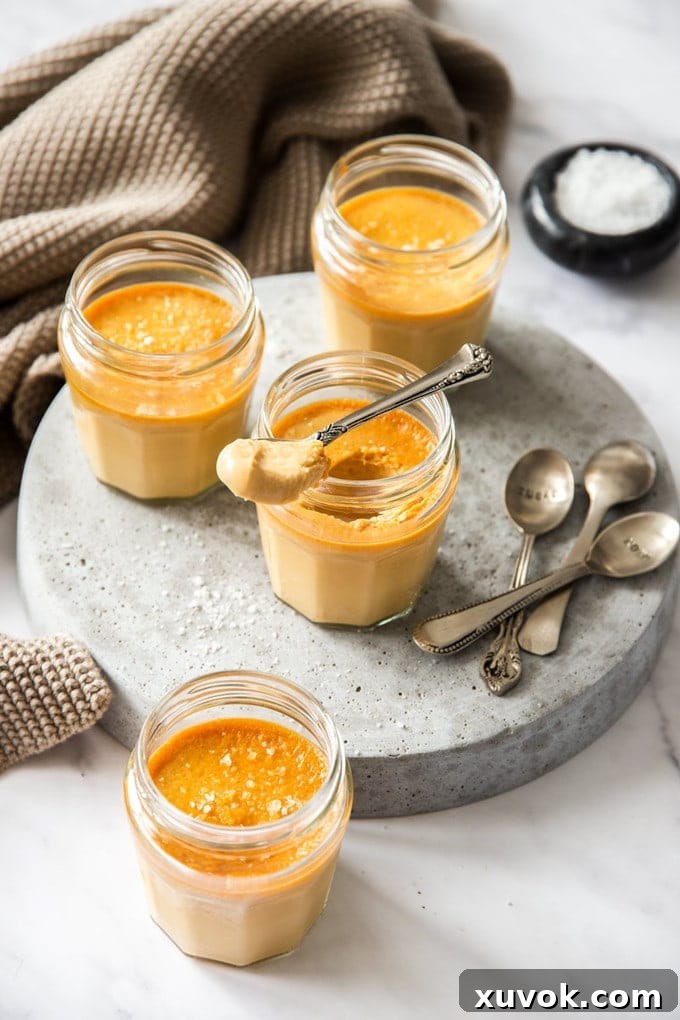
Indulge in a dessert that marries sophisticated flavor with effortless preparation: **Salted Caramel Pots De Crème**. This exquisite French custard is more than just a sweet treat; it’s a velvety, rich, and utterly addictive experience that will captivate your senses. Boasting the perfect balance of sweet caramel and a hint of sea salt, these individual pots are so delightfully simple yet incredibly impressive, they might just become your new favorite dessert to create. In fact, their irresistible charm even inspired our beloved Caramel Crème Brûlée Tart, showcasing the versatility of this incredible flavor profile.
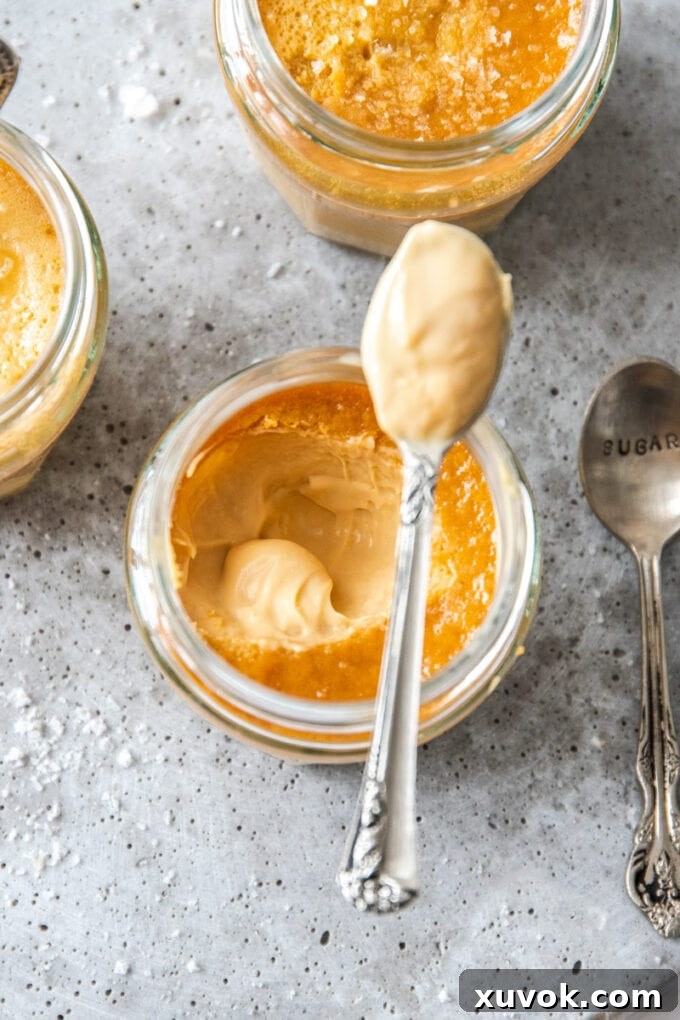
What Makes Salted Caramel Pots De Crème a Must-Try?
These Salted Caramel Pots De Crème aren’t just a dessert; they’re an experience waiting to happen. Here’s why this recipe deserves a prime spot in your culinary repertoire:
- Minimal Ingredients, Maximum Flavor: You only need 5 core ingredients (and one is water!) to create a dessert that tastes incredibly complex and luxurious. This simplicity makes it approachable for even novice bakers.
- Unforgettable Silky-Smooth Texture: Each spoonful delivers a creamy, melt-in-your-mouth custard that glides over your tongue, leaving a delicate, rich sensation. It’s a texture often associated with high-end patisseries, now easily achievable in your own kitchen.
- Rich, Authentic Salted Caramel from Scratch: Forget store-bought syrups. This recipe guides you through making a deep, golden salted caramel from the ground up, ensuring a flavor that’s truly unparalleled and utterly addictive. The homemade difference is palpable.
- The Ultimate Make-Ahead Dessert: Planning a dinner party or just want to have a decadent treat ready for later? These pots de crème can be prepared up to two days in advance, allowing you to focus on other tasks and enjoy a stress-free dessert presentation.
- Perfect for Any Season: While their comforting richness makes them ideal for a cozy winter evening, their chilled serving temperature also renders them a refreshingly elegant dessert perfect for summer entertaining.
- Scalable for Any Occasion: This recipe yields 4 delightful servings, making it perfect for an intimate family treat. However, the quantities are incredibly easy to adjust, allowing you to effortlessly scale up the recipe to cater to a larger gathering or special event without compromising on quality or effort.
The make-ahead aspect is particularly appealing. Imagine hosting guests and simply pulling these perfectly set, chilled custards from the refrigerator just before serving. It’s the epitome of elegant, relaxed entertaining, ensuring you get to enjoy your own party.
Understanding Pots De Crème: A French Culinary Gem
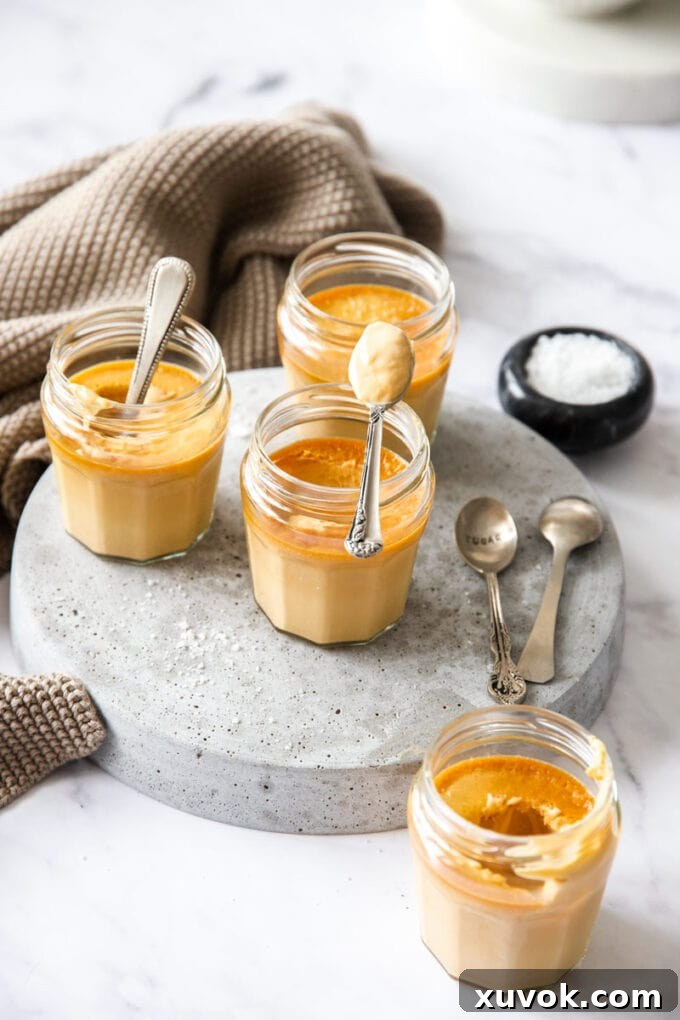
Originating from France, “Pots De Crème” literally translates to “pots of cream,” a name that perfectly describes this classic dessert. It is a luxurious custard typically prepared with a base of sugar, heavy cream (and sometimes milk), and egg yolks. These simple, yet rich, ingredients are gently cooked in a bain-marie (water bath) at a low temperature until they set into a wonderfully smooth, creamy, and delicate consistency. Historically, it was a dessert enjoyed by royalty and has remained a staple in French cuisine due to its understated elegance and profound flavor.
Unlike many other custards, pots de crème are often baked in individual ceramic or glass ramekins, enhancing their charm and making them ideal for single servings. The slow baking process in a water bath is crucial, as it ensures an even, gentle heat distribution, preventing the custard from curdling and promoting that signature velvety texture that defines a perfect pot de crème. This method creates a dessert that is rich without being overly heavy, with a delicate wobble that signals perfection.
Pots De Crème vs. Crème Brûlée: Unpacking the Differences
While often compared, Pots De Crème and Crème Brûlée, both beloved baked custards, possess distinct characteristics that set them apart. Both desserts share a fundamental base of cream, sugar, and egg yolks, but their preparation and final presentation lead to unique experiences.
- The Topping: The most obvious distinction lies in the topping. Crème Brûlée is famously crowned with a layer of granulated sugar that is caramelized, typically with a kitchen torch, to form a crisp, brittle “glass” shell. This crackling topping provides a delightful textural contrast to the smooth custard beneath. Pots de Crème, on the other hand, are traditionally served without such a topping, allowing the pure, unadulterated flavor and silky texture of the custard to shine.
- Ingredient Ratios and Texture: While both are custards, traditional Pots De Crème recipes often incorporate a mix of milk and cream, sometimes alongside more egg yolks, to achieve its specific density and richness. Crème Brûlée typically relies solely on heavy cream, resulting in an even richer, slightly firmer custard that can better support its caramelized sugar crust. In my preferred method, I often use all cream for both, as I find it delivers a creamier, less “eggy” flavor profile that is simply divine.
- Baking Method Nuances: Both are baked in a water bath, but the exact oven temperature and baking time can vary slightly to achieve their respective desired consistencies. The goal for pots de crème is often a slightly softer, more “wiggly” set compared to the firmer crème brûlée.
Interestingly, the versatility of these custards means you can easily transform this Salted Caramel Pot De Crème into a delightful Salted Caramel Crème Brûlée. Simply sprinkle a thin, even layer of granulated sugar over the chilled custard and torch it until it forms a gorgeous, amber, crackling crust. This simple step adds another layer of texture and a touch of drama to an already exceptional dessert. You can explore more variations with our Easy Dark Chocolate Pots De Crème, another no-bake delight, though I must confess, this salted caramel version remains my absolute favorite, a recipe perfected after making Salted Caramel Crème Brûlée for the Oh Sweet Basil blog.
Mastering Homemade Caramel: Your Guide to Liquid Gold
There’s a magic to homemade caramel that simply cannot be replicated by store-bought alternatives. The depth of flavor, the rich amber hue, and the smooth, luxurious texture are unparalleled. While the idea of making caramel from scratch might seem intimidating, it’s surprisingly simple and doesn’t even require a candy thermometer. With just a few golden rules and a little patience, you can create perfectly rich, smooth caramel every single time. Here are my essential tips:
- Choose Your Weapon: A Stainless Steel Saucepan: While some people claim success with non-stick, I’ve found stainless steel pans to be far superior for caramel making. Non-stick coatings can sometimes heat unevenly or prevent the sugar from caramelizing properly, leading to inconsistent results. Stainless steel ensures even heat distribution and allows you to clearly monitor the color changes, which is crucial for perfect caramel.
- Spotlessly Clean is Key: Prevent Crystallization: This is perhaps the most vital tip. Any tiny trace of fat, food residue, or stray sugar crystal in your saucepan can act as a seed, causing the entire batch of caramel to crystallize and turn grainy. To ensure a perfectly clean pan, rinse it thoroughly, then rub the inside with half a cut lemon, rinse again, and immediately add your sugar and water. There’s no need to dry the pan completely; a little residual water is fine. The lemon helps to remove any invisible residues and creates a pristine surface.
- Swirl, Don’t Stir: Once the sugar and water are in the pan, resist the urge to stir! Stirring can introduce air bubbles and create sugar crystals along the sides of the pan, which can then fall back into the melting sugar and initiate crystallization. Instead, gently swirl the pan occasionally to help the sugar dissolve evenly. This technique allows the sugar to melt undisturbed and transform into a beautiful, clear syrup.
- Ensure All Sugar Dissolves Before Bubbling: Before the mixture reaches a vigorous boil and starts to caramelize, make sure all the granulated sugar has completely dissolved into the water. Heating too quickly with undissolved sugar crystals can lead to a grainy caramel. Keep the heat low initially and swirl frequently until the syrup is clear. Once all the sugar is dissolved, you can increase the heat slightly to encourage caramelization.
- Safety First: Hot Sugar is Serious Business: Caramel gets incredibly hot, reaching temperatures that can cause severe burns. Always exercise extreme caution when working with hot sugar. Use a long-handled spoon or spatula, keep a close eye on the pan, and never touch the hot caramel directly. If it splashes, be careful!
Crafting Your Salted Caramel Pots De Crème: A Step-by-Step Culinary Journey
Making these luxurious salted caramel pots de crème is a process that’s both rewarding and surprisingly straightforward. With approximately 20 minutes of active effort, you’ll be well on your way to a truly remarkable dessert. Follow these detailed steps to achieve perfection:
- Prepare Your Oven and Ramekins: Begin by preheating your oven to 160°C (140°C fan-forced) / 320°F. Select four individual ramekins or small jars and place them in a flat-bottomed baking tray with high sides. This tray will form the water bath (bain-marie), which is essential for gentle, even cooking.
- Gently Warm the Cream: Pour your heavy cream into a microwave-safe bowl or a small saucepan and warm it slightly for about 30 seconds in the microwave, or gently on the stovetop. It should be warm, not hot or boiling. This step is crucial for incorporating the cream into the caramel smoothly without shocking it and causing it to seize aggressively. Set the warmed cream aside.
- Initiate the Caramel Process: In a heavy-based stainless steel saucepan (refer to our detailed tips for homemade caramel above), combine the caster (superfine) sugar and water. Place the saucepan over low heat. Gently swirl the pan occasionally, ensuring all the sugar crystals dissolve into the water before the mixture begins to boil. This prevents crystallization and ensures a smooth caramel.
- Achieve the Perfect Amber Hue: Once the sugar has fully dissolved, increase the heat slightly and let the syrup come to a gentle boil. Continue cooking, swirling the pan from time to time to ensure even caramelization. Watch carefully as the syrup transforms from clear to a beautiful golden, then a rich amber color. This is where vigilance is key; caramel can burn quickly!
- Combine Caramel with Warm Cream: As soon as the caramel reaches a deep amber, immediately and very carefully pour the warmed cream into the saucepan. Be prepared for a vigorous reaction as the cooler cream hits the hot caramel. The caramel may seize up and harden – this is normal! Continue to stir gently over low heat for 5-6 minutes. The hardened caramel will gradually melt back into the cream, creating a smooth, luscious caramel cream. Remove from heat and set aside.
- Whisk the Egg Yolks: In a separate medium-sized bowl, whisk the egg yolks until they become light in color and slightly pale. This incorporates air and prepares them for tempering.
- Temper the Egg Yolks: This is a critical step to prevent scrambled eggs. Slowly, in a thin stream, dribble the hot caramel cream mixture into the whisked egg yolks while continuously whisking the yolks. The slow addition and constant whisking gradually raise the temperature of the egg yolks, tempering them to the heat and preventing them from cooking too quickly. Continue until all the caramel cream is incorporated.
- Season and Strain: Stir in the salt (adjust to your preference for a stronger salted caramel flavor). For the ultimate silky-smooth custard, strain the entire mixture through a fine-mesh sieve into a pouring jug. This step removes any tiny lumps or cooked egg bits, ensuring a truly refined texture.
- Fill Ramekins for Water Bath: Carefully pour the strained custard mixture evenly into your prepared ramekins or jars.
- Prepare the Bain-Marie: Now, pour hot (not boiling, to prevent too much bubbling) water into the baking dish surrounding the ramekins. The water should come halfway up the sides of the ramekins. The water bath ensures that the custard cooks gently and evenly, preventing cracks and promoting a smooth consistency.
- Bake to Perfection: Carefully transfer the baking tray with the ramekins and water bath to the preheated oven. Bake for approximately 40-65 minutes. The baking time will vary depending on the size and material of your ramekins, as well as the calibration of your oven. The goal is a delicate, barely set custard.
- Cool and Chill: Once baked, very carefully lift the ramekins out of the hot water bath and place them on a wire rack to cool for about 15 minutes. As soon as they are cool enough to handle, cover each ramekin with plastic wrap to prevent a skin from forming and transfer them to the refrigerator. Chill for a minimum of 3-4 hours, or ideally overnight, to allow the custard to fully set and achieve its perfect texture.
- Serve and Enjoy: Once thoroughly chilled, your salted caramel pots de crème are ready to be savored. Garnish with a sprinkle of flaked sea salt or a dollop of whipped cream if desired.
How Do I Know When Pots De Crème Is Ready?
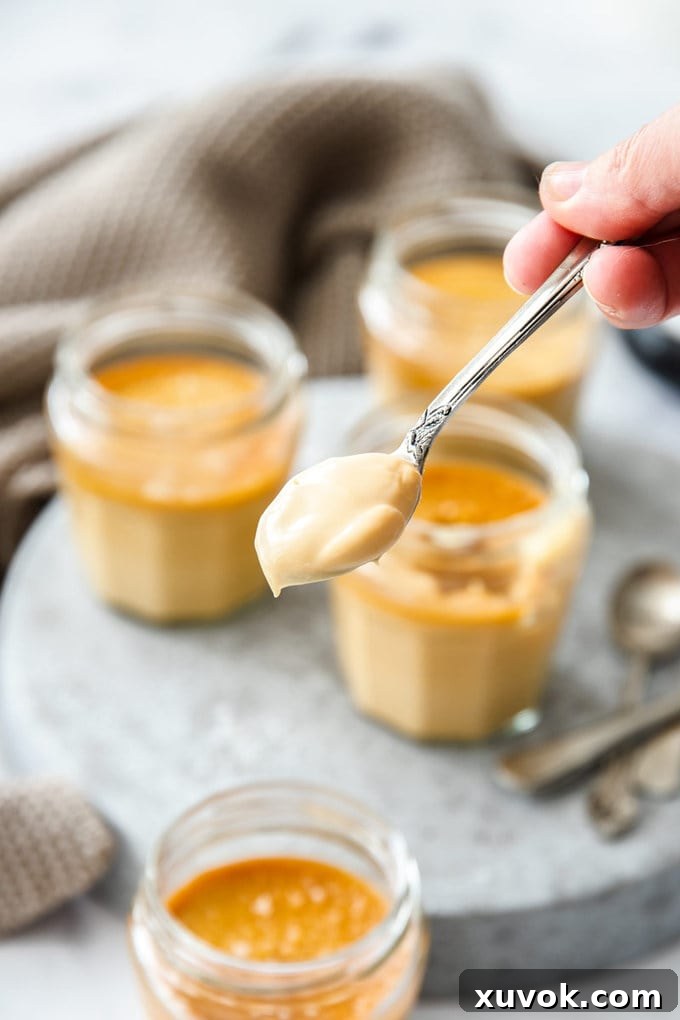
The key to perfectly baked pots de crème lies in recognizing that elusive “wiggle.” When you gently shake a ramekin, the custard should have a slight, delicate wobble in the center, much like a firm jelly (or jello). It should not appear liquidy or fluid in the middle. If it still looks watery or overly unset, continue baking in 5-minute increments until you achieve that characteristic jiggly set.
Several factors can influence the baking time, making it more an art than a strict science:
- Oven Variability: All ovens heat differently. What might be 45 minutes in one oven could be 60 minutes in another. It’s always a good idea to know your oven’s tendencies.
- Ramekin Size and Material: Larger or thicker ceramic ramekins will require a longer baking time compared to smaller, thinner glass jars.
- Custard Temperature: The initial temperature of your custard mixture before it goes into the oven can also play a role. If it’s colder, it will take slightly longer to set.
I typically start checking my pots de crème after 45 minutes, then continue to check every 5 minutes thereafter until they reach that ideal “jelly wiggle.” Remember that custards continue to cook slightly from residual heat even after they are removed from the oven and water bath. This is why it’s important to transfer them out of the hot water bath promptly and into the fridge to chill as soon as they are cool enough. Covering them with plastic wrap as they cool will prevent a “skin” from forming on the surface, ensuring a perfectly smooth top.
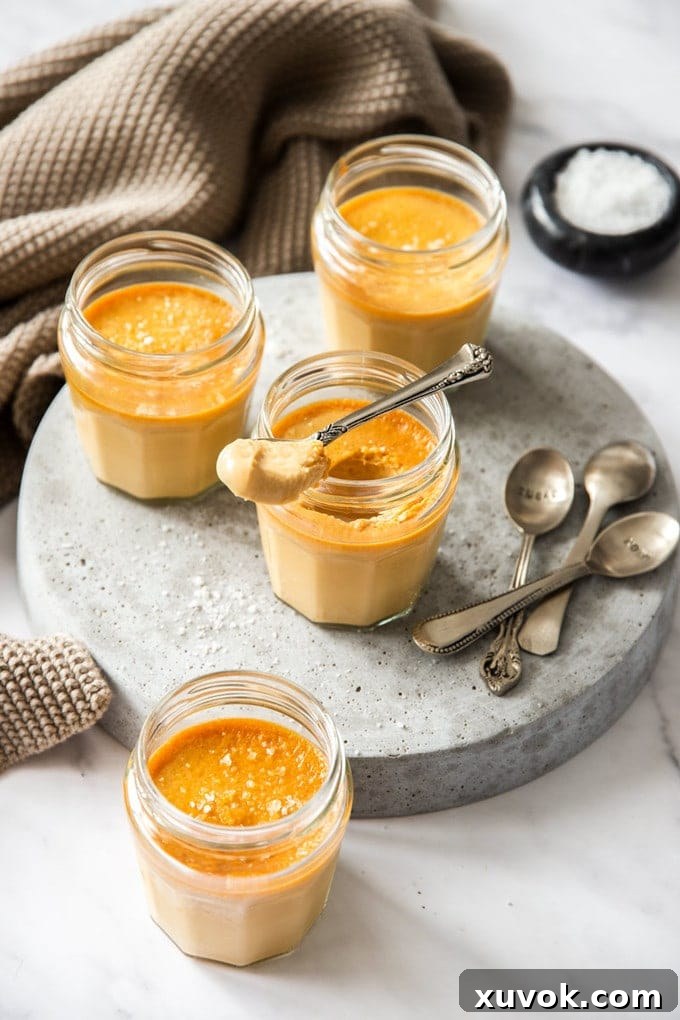
Serving Suggestions and Elegant Garnishes
While these Salted Caramel Pots De Crème are spectacular on their own, a few simple garnishes can elevate their presentation and enhance their flavor:
- Flaked Sea Salt: A delicate sprinkle of flaked sea salt just before serving is my top recommendation. It accentuates the “salted” aspect of the caramel, creating a wonderful contrast that brightens the entire dessert.
- Whipped Cream: A dollop of lightly sweetened whipped cream adds another layer of creamy texture and a cooling contrast to the rich caramel.
- Chocolate Shavings or Drizzle: For the ultimate indulgence, a few curls of dark chocolate or a fine drizzle of chocolate sauce can create a harmonious flavor pairing with the caramel.
- Fresh Berries: A scattering of fresh raspberries or blackberries adds a touch of acidity and freshness, cutting through the richness beautifully.
- Coffee or Liqueur Pairings: Serve these delightful custards alongside a freshly brewed espresso or a small glass of an after-dinner liqueur like Frangelico or a creamy Irish liqueur for a truly sophisticated end to a meal.
Make-Ahead Magic: Enjoying Dessert with Ease
One of the most appealing features of Salted Caramel Pots De Crème is their incredible make-ahead convenience. This aspect makes them an ideal choice for dinner parties, holidays, or simply having a luxurious treat on hand during a busy week. You can prepare these custards up to 2 days in advance, allowing them to chill thoroughly in the refrigerator. This extended chilling time not only ensures they are perfectly set but also allows the complex caramel flavors to deepen and meld, resulting in an even more delicious dessert.
When preparing them ahead of time, ensure each ramekin is tightly covered with plastic wrap after it has cooled. This prevents any odors from the refrigerator from affecting the delicate flavor of the custard and keeps the surface from drying out or forming a skin. Store them on a flat surface in the fridge until you’re ready to serve. If you plan to add a caramelized sugar topping to turn them into crème brûlée, do this step just before serving to ensure the sugar crust is perfectly crisp and fresh.
This “set it and forget it” quality means you can spend less time in the kitchen and more time enjoying your company or simply relaxing, knowing that a truly elegant and delicious dessert is waiting to be unveiled.
Conclusion: A Dessert to Savor
These cute little pots of luscious salted caramel custard are nothing short of divine. They’re the kind of dessert that elicits gasps of delight and disappears from the table in record time. As my own mother can attest, once you start, it’s just impossible to stop! With a minimal investment of time and effort for just 4 servings, they’re the perfect indulgent treat for your family. Yet, their simplicity and scalability also make them an elegant and stress-free option for entertaining a crowd. Don’t just make dessert; create an experience with these irresistible Salted Caramel Pots De Crème.
More Recipes You’ll Love
- Coffee Creme Brulee
- Easy Dark Chocolate Pots De Crème
- Chocolate Creme Brulee
- Frangelico Chocolate Custard Pots
- Mini Chocolate Custard Tarts
- Eggnog Creme Brulee
- Orange Creme Brulee
⭐⭐⭐⭐⭐
Did you make this Salted Caramel Pots De Crème recipe?
Show it some love by rating/commenting below.
Hungry for more? Subscribe to our newsletter for free recipes straight to your inbox. Also, follow along on Facebook, Pinterest and Instagram.
Salted Caramel Pots De Crème Recipe

Yield: 4 serves
Prep Time: 20 minutes
Cook Time: 45 minutes
Setting Time: 3 hours
Total Time: 1 hour 5 minutes (plus chilling)
A classic pots de crème recipe with an irresistible twist, these Salted Caramel Pots De Crème are absolutely addictive. Sweet, salty, silky-smooth caramel custard, created with just 5 ingredients and minimal effort, offers an elegant and comforting dessert experience.
Print Recipe
Don’t forget to leave a rating and comment below and let me know how it was! I love hearing from you.
Ingredients
- 2 cups thickened (or heavy) cream (500ml)
- 4 egg yolks, from large eggs
- ½ cup caster (superfine) sugar (100g / 3½oz)
- ¼ cup water (60ml)
- ½ teaspoon salt (optional, adjust to taste)
- Flaked sea salt for topping (optional)
For best results, always weigh ingredients where a weight is provided.
Instructions
- Preheat the oven to 160°C (140°C fan forced) / 320°F. Place 4 ramekins or small glass jars in a flat-bottomed baking tray with high sides.
- Warm the cream in the microwave for 30 seconds (or gently on the stovetop) and set aside. It should be warm, not hot.
- Place the caster sugar and water in a heavy-based stainless steel saucepan over low heat. Heat, swirling from time to time until all the sugar is completely dissolved into a clear syrup.
- Increase heat slightly and let it come to a bubble, then continue to cook, swirling often, until the caramel turns a deep amber color.
- Carefully pour in the warmed cream, being mindful of splashes. Stir with a spatula over low heat until any seized caramel melts back into the cream, creating a smooth caramel cream. Remove from heat and set aside.
- In a medium bowl, whisk the egg yolks until they are pale in color.
- Slowly pour the hot caramel cream mixture into the whisked egg yolks while gently stirring with a whisk. Pour gradually to temper the eggs and prevent them from scrambling.
- Add the salt to the mixture and stir until combined.
- Strain the mixture through a fine-mesh sieve into a pouring jug, then evenly distribute the custard into the prepared ramekins.
- Pour hot (but not boiling) water into the baking dish, around the outside of the ramekins, until it reaches halfway up their sides.
- Bake for 45 minutes, or until the centers appear just set with a slight wiggle (refer to notes on doneness).
- Very carefully remove the ramekins from the baking dish and place them on a wire rack to cool for 15 minutes. Once cooled, cover each with plastic wrap and transfer to the fridge to chill for 3-4 hours, or ideally overnight.
- Please take a moment to leave a comment & rating. It’s appreciated and so helpful.
Notes
- Caster (superfine) sugar is recommended as it dissolves quicker. If using regular white granulated sugar, keep the heat a little lower to ensure it dissolves mostly before boiling vigorously.
- Oven temperatures vary: Baking time can differ based on your oven, ramekin size/thickness, and the initial temperature of your custard. I generally bake for 45 minutes, then check every 5 minutes thereafter.
- Testing for Doneness: The pots de crème are done when they have a gentle, jelly-like wobble in the center but are not liquidy. They will continue to set as they cool.
- Pots de crème can be prepared up to 2 days in advance. If you choose to add a sugar topping to transform them into crème brûlée, do so just before serving for the best crispness.
Nutrition Information (Approximate)
- Calories:
- 559 kcal
- Fat:
- 48g (74% DV)
- Saturated Fat:
- 29g (181% DV)
- Polyunsaturated Fat:
- 3g
- Monounsaturated Fat:
- 13g
- Cholesterol:
- 329mg (110% DV)
- Sodium:
- 42mg (2% DV)
- Potassium:
- 133mg (4% DV)
- Carbohydrates:
- 29g (10% DV)
- Sugar:
- 29g (32% DV)
- Protein:
- 6g (12% DV)
- Vitamin A:
- 2009IU (40% DV)
- Vitamin C:
- 1mg (1% DV)
- Calcium:
- 102mg (10% DV)
- Iron:
- 1mg (6% DV)
* Percent Daily Values are based on a 2000 calorie diet. Nutrition information is approximate and derived from an online calculator. The brands you use may cause variations.
MORE PUDDING RECIPES!