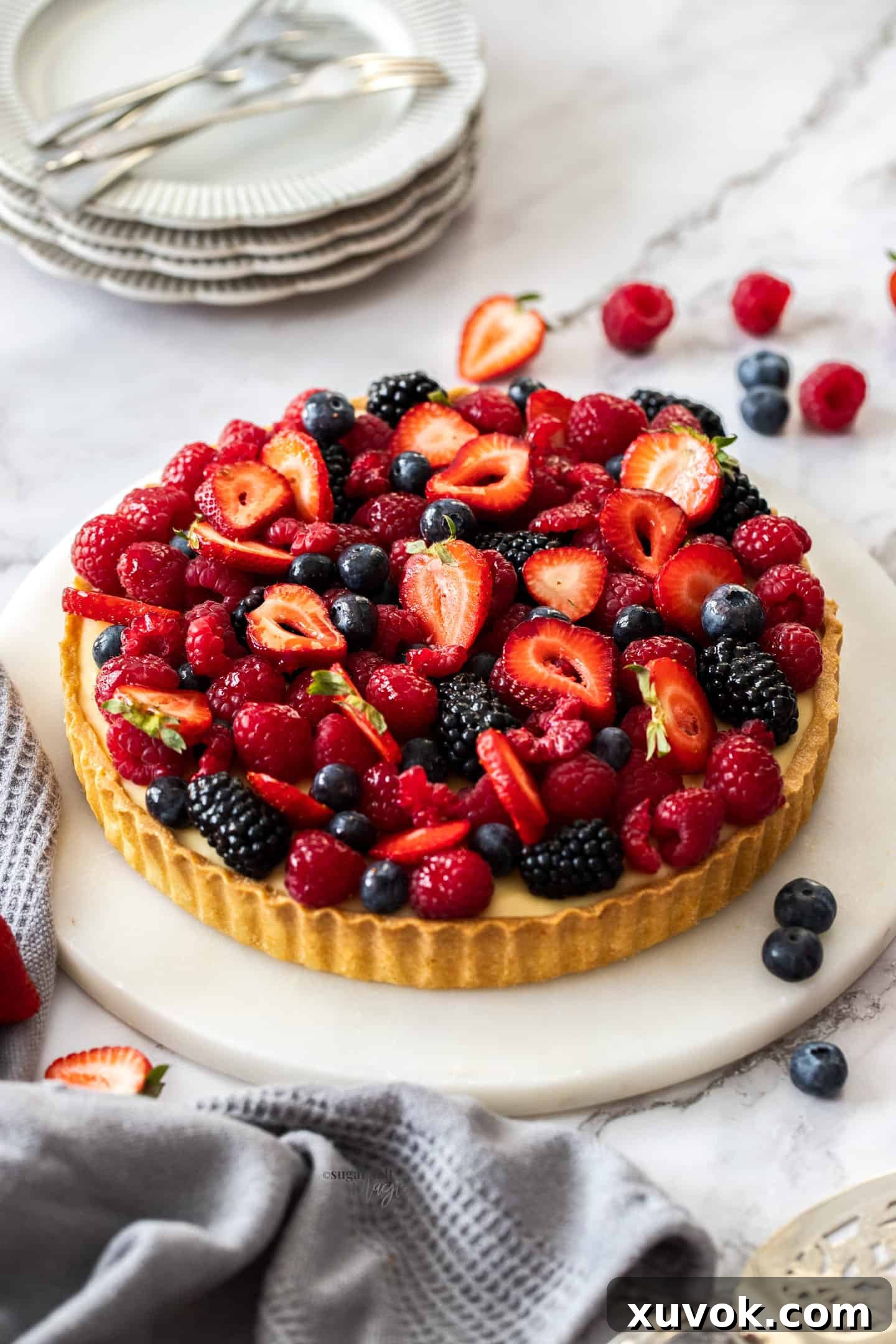
Irresistible Fruit Custard Tart: A French Classic Perfect for Any Season
Indulge in the sublime pleasure of a classic Fruit Custard Tart – a dessert that effortlessly balances indulgence with refreshing lightness. This exquisite French fruit tart features a crisp, buttery tart shell, a velvety smooth vanilla custard filling, and a vibrant medley of fresh, seasonal fruits. It’s a versatile masterpiece that, while visually stunning for spring and summer gatherings, can be adapted with warming toppings like spiced apples or pears for a cozy winter treat. Each bite offers a symphony of textures and flavors, making it a truly unforgettable dessert that delights both the eyes and the palate.
What makes this custard tart a perennial favorite?
- Flawlessly Buttery Tart Shell: A delicate, crisp shortcrust pastry (known as pâte sucrée in French) that provides the perfect structural and textural contrast to the creamy filling.
- Silky Vanilla Custard Filling: A rich, smooth, and utterly melt-in-your-mouth vanilla pastry cream (crème patissière) that forms the heart of this delectable dessert.
- Bursting with Fresh Seasonal Fruit: Crowned with your favorite fresh berries or other seasonal fruits, adding natural sweetness, a touch of tang, and a pop of vibrant color.
While a fruit custard tart often conjures images of sun-drenched picnics and garden parties, its adaptability means it truly is a dessert for any time of year. Imagine a summer version overflowing with luscious berries, or a winter rendition topped with warmly spiced cinnamon apples, poached pears, or even roasted figs. The possibilities are endless, allowing you to enjoy this timeless classic throughout the seasons.
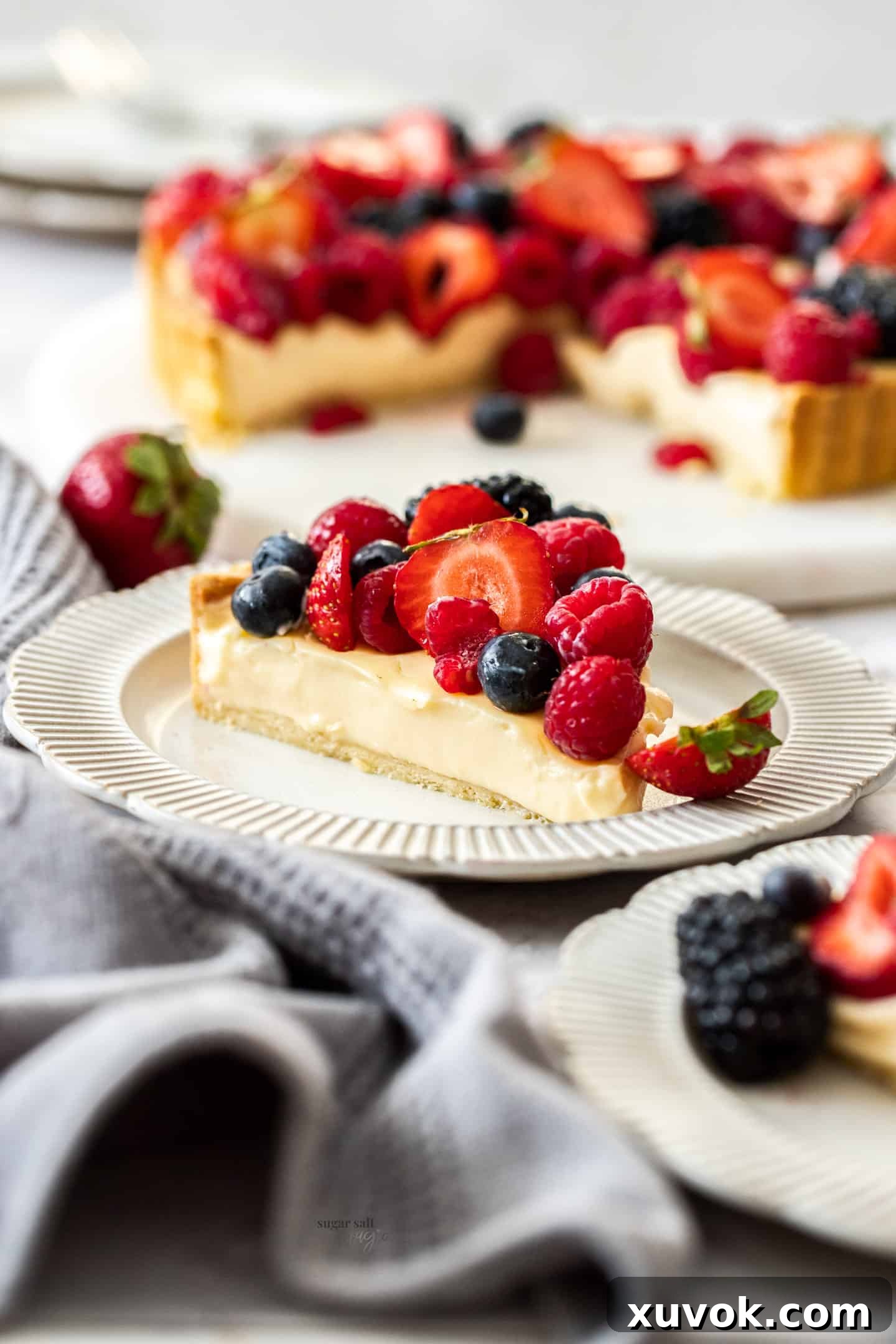
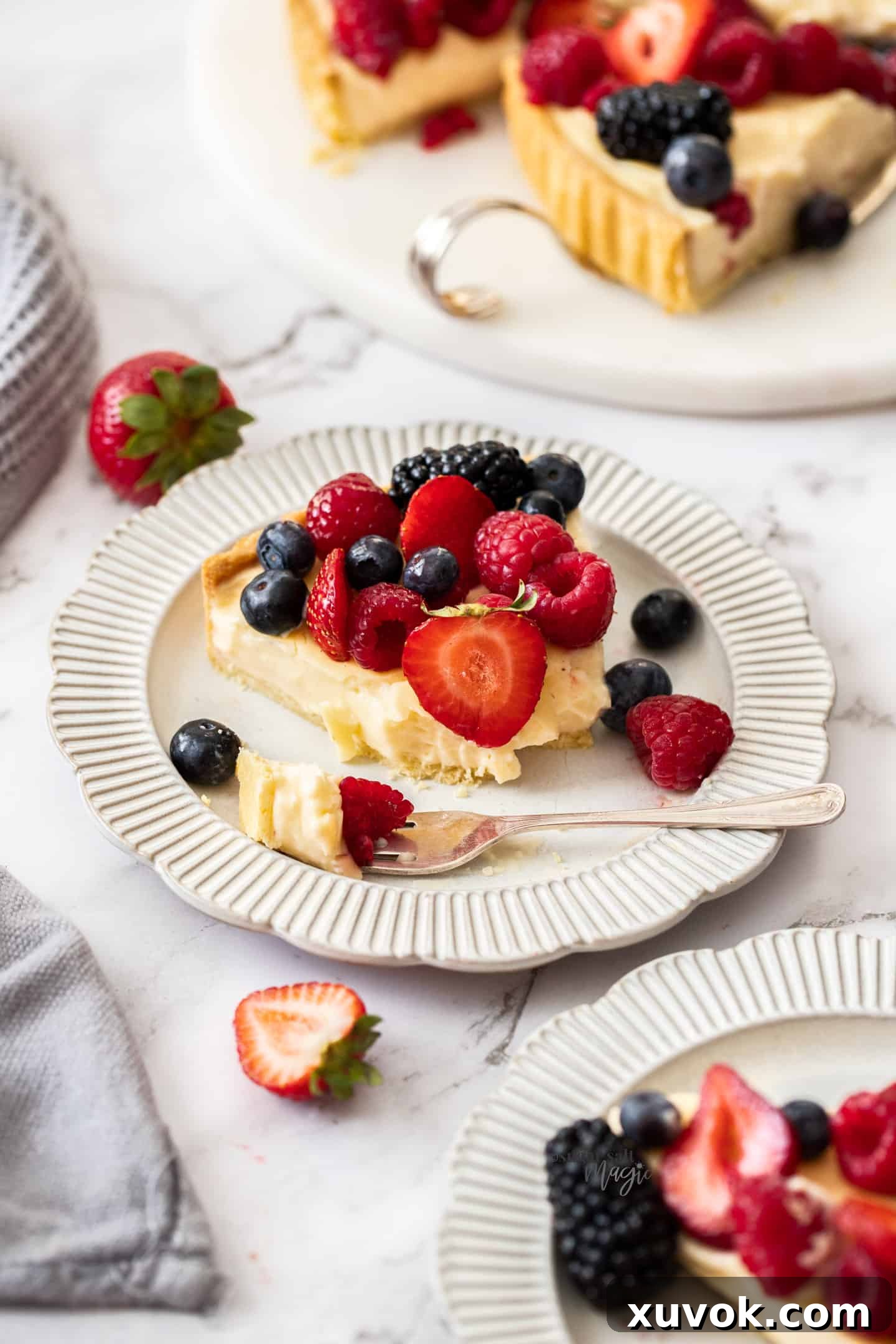
The star of this tart, the just-barely-set custard filling, boasts an incredible smoothness and softness that dissolves delightfully on the tongue. Yet, it sets perfectly enough to allow for clean, elegant slices. This sumptuous filling is essentially a homemade crème patissière, infused with rich vanilla notes and an irresistible creamy texture that is truly the essence of French pastry.
If you cherish elegant fruit tarts as much as we do, you might also enjoy exploring other delightful variations such as a tropical Mango Tart or a charmingly rustic Simple Strawberry Flan. Each offers a unique twist on the classic fruit and pastry combination.
FEATURED COMMENT
The picture has a WOW factor. So I tried the recipe. This tart is WOW!!! All the guests at my party ABSOLUTELY ENJOYED IT.
Andrei Villamar
Table of Contents
- Ingredients You’ll Need for Your Custard Tart
- Mastering the Pâte Sucrée (Pastry Shell)
- Crafting the Silky Vanilla Custard
- Assembling Your Exquisite Tart
- Expert Tips for a Flawless Custard Tart
- Choosing the Perfect Seasonal Fruits
- Storage and Make-Ahead Advice
- Common Questions About Fruit Custard Tarts
- More Recipes You’ll Love
Never Miss a Recipe!
Get the latest recipes straight to your inbox by subscribing to our newsletter!
Ingredients You’ll Need for Your Fruit Custard Tart
Creating something so remarkably beautiful and delicious doesn’t require a long list of complex ingredients. In fact, this fruit custard tart comes together with just a handful of pantry staples. Each component plays a vital role in achieving the perfect balance of flavor and texture, from the sturdy yet tender crust to the luscious, creamy filling and the vibrant fruit topping.
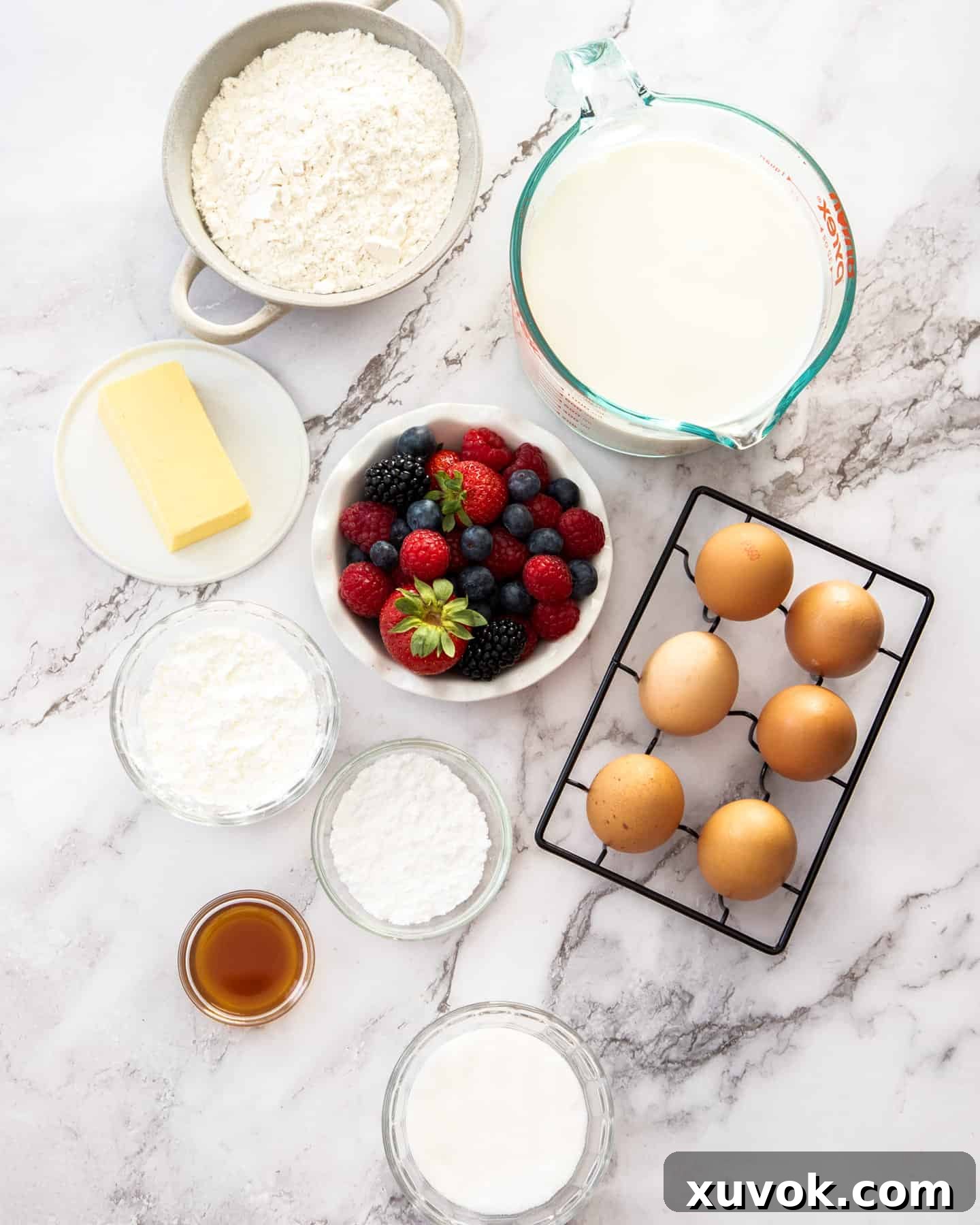
Detailed quantities and instructions can be found in the recipe card below.
- Flour: Standard plain or all-purpose flour is ideal for achieving the perfect tender-crisp pastry shell. Precision in measuring is key here for the best texture.
- Butter: We recommend using unsalted butter for both the pastry and the custard. This allows you to meticulously control the salt content, ensuring your tart is perfectly balanced. Make sure your butter for the pastry is softened to room temperature for easier mixing.
- Sugars: You’ll need two types of sugar for this recipe. Icing sugar (also known as powdered sugar or confectioners’ sugar) is used in the pastry for a finer crumb and smoother texture. For the custard filling, regular granulated white sugar provides the ideal sweetness and helps achieve that classic silky consistency.
- Eggs: Large, fresh, free-range eggs will contribute significantly to the richness and structure of both the pastry and the custard. For the pastry, a room-temperature egg incorporates more smoothly. For the custard, a combination of whole eggs and extra yolks creates a wonderfully rich and creamy texture.
- Milk: Full-cream or whole milk is essential for a truly decadent and rich custard filling. Its higher fat content contributes to the custard’s luxurious mouthfeel and creamy consistency.
- Cornflour (Cornstarch): This finely milled flour acts as our primary thickening agent for the custard. It ensures a stable, perfectly set custard that slices beautifully without being overly stiff, giving that signature just-barely-set texture.
- Vanilla: For the most authentic and exquisite flavor, always opt for pure vanilla extract over artificial vanilla essence. For an extra touch of gourmet elegance, consider using vanilla bean paste or scraping fresh vanilla seeds directly from a pod – you’ll love seeing those beautiful specks of vanilla throughout your creamy custard.
- Berries: While classic French fruit tarts are often adorned with an abundance of fresh berries, feel free to get creative with whatever fresh, seasonal fruit appeals to you most. For this recipe, a vibrant mix of blueberries, raspberries, strawberries (sliced), and blackberries creates a stunning visual and delicious flavor profile. The key is to choose ripe, flavorful fruits that complement the creamy vanilla custard.
How to Make the Perfect Fruit Custard Tart
Creating this show-stopping fruit custard tart involves three distinct but straightforward layers: the crisp pastry shell, the luscious vanilla custard, and the fresh fruit topping. While the process requires a little patience for chilling the dough, the steps themselves are remarkably simple and highly rewarding. Don’t be intimidated by the French name; mastering pâte sucrée and crème patissière is within reach for any home baker.
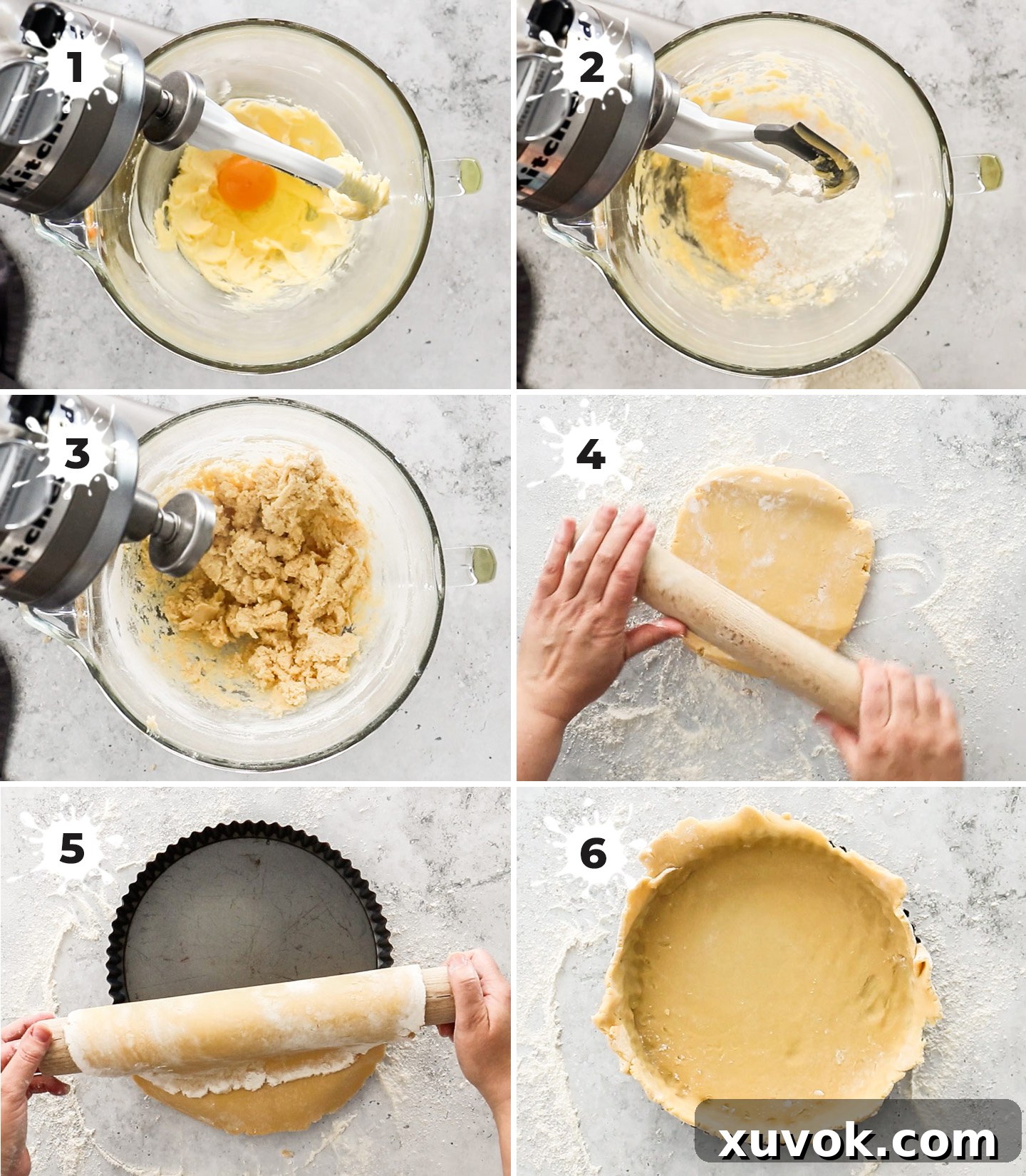
For detailed quantities and precise instructions, please refer to the recipe card below.
- Mastering the Pâte Sucrée (Sweet Shortcrust Pastry):
- Cream Butter & Sugar: Begin by combining the softened butter and icing sugar in the bowl of a stand mixer. Beat them together until the mixture is light, fluffy, and well combined (approx. 1-2 minutes). This creaming process ensures a tender pastry.
- Incorporate Egg & Flour: Add the room-temperature egg and beat on low speed until fully incorporated and smooth. Next, add the plain flour and mix just until large clumps begin to form. Be careful not to overmix, as this can develop the gluten and result in a tough crust.
- Form & Roll the Dough: Turn the dough out onto a lightly floured surface. Gently bring it together with your hands to form a smooth ball, being mindful not to overwork it. Flatten it into a 1-inch thick disk. Immediately, and gradually, roll the pastry out to about 4-5mm thick, or approximately 11 inches in diameter, turning it frequently to prevent sticking.
- Line the Tart Tin: Carefully transfer the rolled pastry into your 9-inch round tart tin with a removable base. A clever trick is to place your rolling pin in the middle of the dough, fold one side over it, and then lift and unroll it directly over the tin. Gently press the dough into the corners and up the scalloped sides with your fingertips, ensuring an even layer. Leave any excess pastry hanging over the edges for now.
- Chill Thoroughly: This step is crucial for preventing shrinkage during baking and ensuring a crisp, flaky crust. Place the lined tart tin into the refrigerator for a minimum of 2 hours, or ideally, overnight. If you’re short on time and your freezer has space, you can chill it there for about 30-45 minutes.
- Blind Bake the Tart Shell: Once chilled, preheat your oven to 180°C (160°C fan) / 350°F. Before baking, trim off the overhanging pastry edges using a sharp knife, laying it flat against the top of the tart tin for a clean edge. Prick the base of the pastry shell all over with a fork to prevent it from puffing up. Line the shell with baking paper, then fill it generously with pie weights or dry rice, ensuring they reach into the corners. Bake for 20 minutes, then carefully remove the baking paper and weights, and bake for another 15 minutes until the base is lightly colored and the edges are golden brown. If the edges brown too quickly, you can shield them with foil. Let it cool completely.
- Crafting the Silky Vanilla Custard (Crème Patissière):
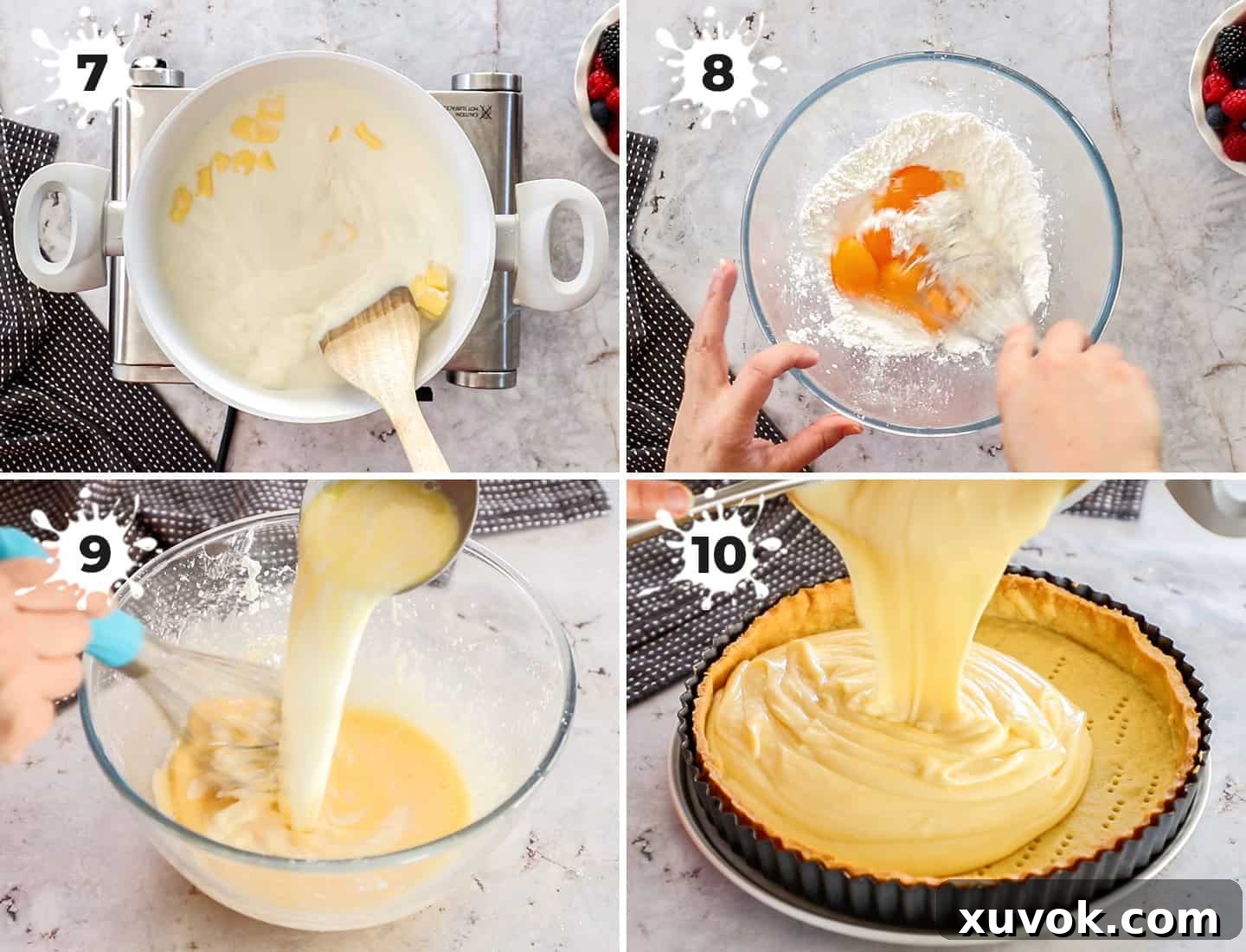
- Heat Milk Mixture: In a heavy-based saucepan, combine the whole milk, butter, granulated sugar, and pure vanilla extract. Heat this mixture over medium heat, stirring regularly, until it is steaming and the butter and sugar have fully dissolved. Do not let it boil.
- Prepare Egg Mixture: While the milk mixture heats, whisk together the cornflour, whole eggs, and egg yolks in a large bowl until completely smooth and combined.
- Temper the Eggs: This is a crucial step to prevent the eggs from scrambling. Once the milk mixture is steaming, slowly drizzle about half of it into the egg and cornflour mixture, whisking continuously and vigorously. This gradual addition raises the temperature of the eggs gently, or “tempers” them.
- Thicken the Custard: Pour the tempered egg and milk mixture back into the saucepan with the remaining hot milk. Return the pan to low-medium heat. Stir constantly with a balloon whisk for about 5-6 minutes, or until the custard becomes very thick. It will thicken quite suddenly, so it’s vital to keep stirring to prevent lumps and ensure even cooking. The custard is ready when it coats the back of a spoon and doesn’t immediately settle back into itself when you lift the spoon.
- Assembling Your Exquisite Tart:
- Fill the Shell: Remove the saucepan from the heat and allow the custard to cool for just a couple of minutes. Then, pour the warm, silky custard directly into your cooled, blind-baked tart shell. Use an offset spatula or the back of a spoon to gently level the top for a smooth finish.
- Chill & Set: Place the filled tart in the refrigerator to chill and set for at least 2-3 hours. This allows the custard to firm up beautifully, ensuring perfect slices. If you’re chilling it for an extended period before topping, you can gently press plastic wrap directly onto the surface of the pastry cream to prevent a skin from forming, or simply cover the entire tin with an upside-down plate.
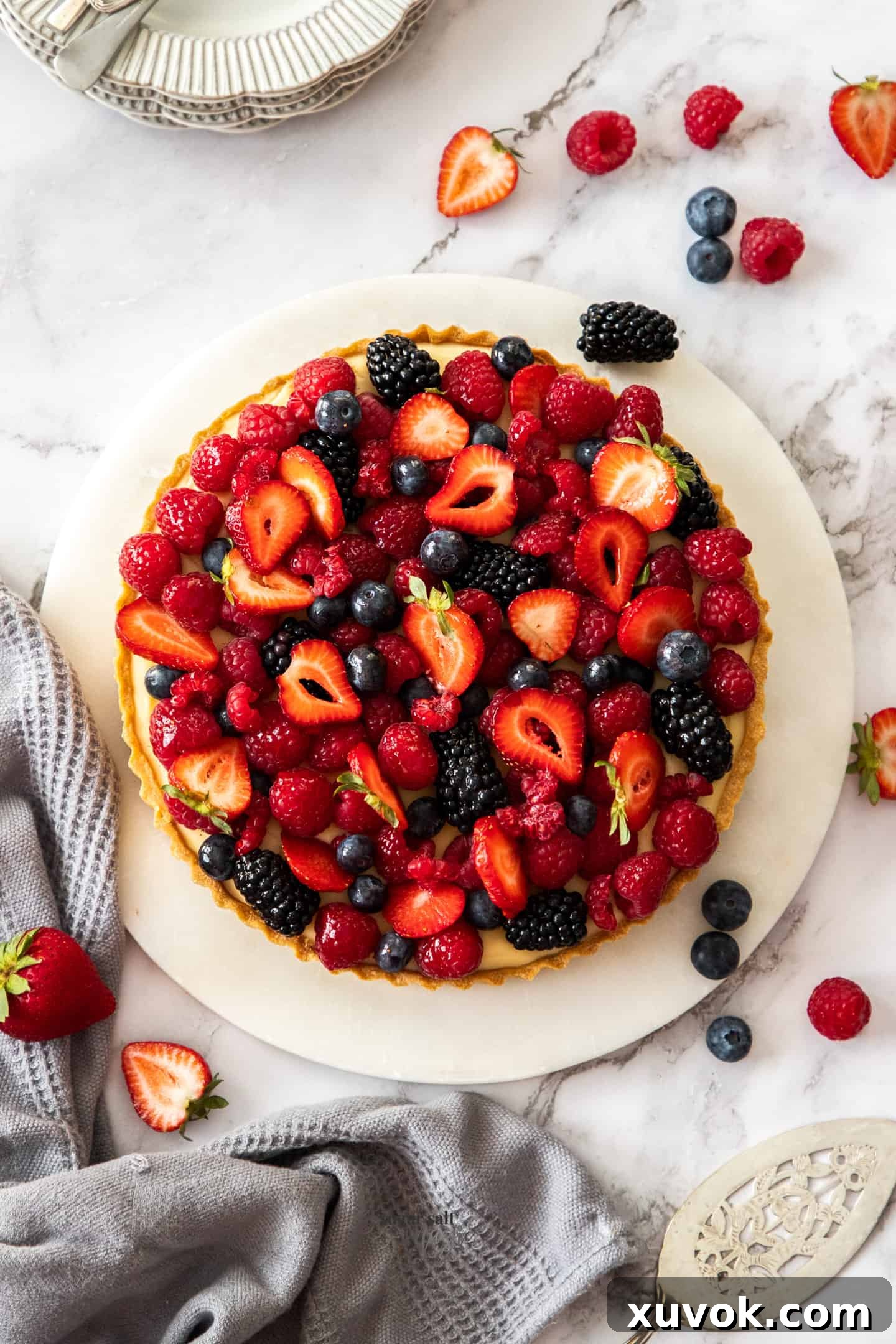
- Top with Fruit: Once the tart is fully set and chilled, arrange your chosen fresh fruits on top just before serving. While an elaborate circular design is often seen in French patisseries, a rustic pile of colorful berries also looks incredibly appealing and invites guests to dive in.
- Optional Glaze for Shine: For a professional finish and an extra touch of sheen, you can brush a thin layer of warm apricot or strawberry preserves (mixed with a dash of water) over the fruits. This enhances their natural beauty and adds a subtle sweetness.
Often, you’ll see a French fruit tart with the fruit meticulously lined up in a circular design – fresh berries and thinly sliced kiwi are common choices for this elegant presentation. However, I often prefer a slightly less formal, more rustic aesthetic, hence my preference for simply loading a generous pile of mixed berries onto the tart. I find this approach makes the tart look even more inviting and abundant, but ultimately, the presentation is yours to personalize and enjoy!
Expert Tips for a Flawless Fruit Custard Tart
Achieving a truly perfect fruit custard tart, with its crisp crust and silky smooth filling, relies on a few key techniques. Follow these expert tips to ensure your homemade tart is nothing short of magnificent.
- Precision with Ingredients: Baking is a science, and even slight variations can impact the final result. For best results, always weigh your ingredients, especially flour and sugar. A kitchen scale will provide far greater accuracy than volume measurements, leading to a consistently perfect tart every time.
- Don’t Skip the Chill Time: Chilling the pastry dough is non-negotiable. This step is vital for two reasons: it prevents the pastry from shrinking during baking, and it ensures a wonderfully crisp, buttery crust. Cold butter in the dough creates steam during baking, leading to flaky layers, and a well-chilled dough is much easier to handle.
- Trimming the Pastry: For a neat and professional-looking edge, trim any excess pastry crust right before you blind-bake it, while the dough is still cold. Using a sharp knife or a pastry wheel held flat against the top edge of your tart pan will give you a clean, precise finish.
- Temper the Eggs Carefully: When making the custard, you’ll be adding hot milk to eggs. This process, known as tempering, is crucial to prevent the eggs from scrambling. Always pour the hot liquid into the egg mixture very slowly, in a thin stream, while continuously whisking. This gradually raises the temperature of the eggs, allowing them to blend smoothly into the custard base without cooking prematurely.
- Constant Stirring for Smooth Custard: Once the custard mixture returns to the saucepan, remain vigilant. Stir frequently and continuously with a whisk, especially as it begins to thicken. This constant motion prevents lumps from forming and ensures an incredibly smooth, homogenous custard. If you notice it thickening too rapidly, immediately remove it from the heat and whisk vigorously until smooth before returning it to very low heat if needed.
- Addressing Lumpy Custard: Even with careful stirring, sometimes a small lump or two can form. Don’t despair! If you’re concerned about the smoothness of your custard, simply pass it through a fine-mesh sieve before pouring it into your cooled tart shell. This will guarantee a perfectly silky-smooth filling.
Choosing the Perfect Seasonal Fruits for Your Tart
One of the most delightful aspects of a fruit custard tart is the opportunity to showcase the bounty of seasonal produce. While a classic French fruit tart often features a vibrant array of berries and thinly sliced kiwi, the choice of fruit is truly yours to personalize.
When selecting your fruits, be mindful of their moisture content. Fruits with a very high water content, such as melons or some citrus, can release excess moisture into the custard layer, potentially making it soggy over time. If you do choose to use such fruits, it’s best to decorate your tart just before serving to maintain its pristine condition.
Beyond traditional berries, why not explore a taste of the tropics? Sliced mango adds a beautiful color and exotic sweetness, while delicate banana slices (tossed lightly in lemon juice to prevent browning) can offer a comforting flavor. For a truly unique and visually striking tart, consider dragon fruit or star fruit, thinly sliced for an artistic touch. No matter your choice, aim to cut the fruit thinly or into small, manageable pieces. This not only makes for an attractive presentation but also ensures that slices of your beautiful tart can be cut and served effortlessly.
Consider the color and texture contrasts as well. A mix of red strawberries, blue blueberries, and green kiwi slices creates a visually appealing tart. Or, for a more monochromatic look, a single type of berry can be equally stunning. Fresh mint leaves or a dusting of powdered sugar can also serve as simple yet elegant garnishes.
Storage and Make-Ahead Advice for Your Fruit Custard Tart
To keep your fruit custard tart at its best, proper storage is essential. This tart is a fresh dessert, and while utterly delicious, it’s best enjoyed within a few days of preparation.
Once assembled, store the fruit custard tart in the refrigerator. It will generally keep well for 2-3 days. For optimal freshness and to prevent the fruit from weeping into the custard, it’s often best to store the tart without the fresh fruit on top, adding the fruit just before serving. However, if you plan to serve it within 24 hours, the fruit can be placed on top immediately.
To prevent the top surface of the creamy custard from forming a skin, especially if storing overnight or longer, cover the tart. A simple trick is to place an upside-down dinner plate directly over the tart tin; this creates a dome that protects the custard without sticking. For extended refrigeration (more than overnight), consider wrapping the entire plate-covered tin tightly with plastic wrap. This extra layer of protection will help seal in moisture and prevent any strong refrigerator aromas from permeating your delicate dessert.
If you’re planning ahead for an event, you can prepare the tart shell (pâte sucrée) a day or two in advance. Bake it and allow it to cool completely, then store it in an airtight container at room temperature. The custard can also be made a day in advance and chilled in an airtight container, with plastic wrap pressed directly onto its surface to prevent a skin. Assemble the tart on the day of serving for the freshest taste and best presentation.
Common Questions About Fruit Custard Tarts
Here are answers to some frequently asked questions to help you bake the perfect fruit custard tart.
- Can I use frozen fruit for the topping? While fresh fruit is highly recommended for its texture and vibrant appearance, you can use frozen berries if absolutely necessary. However, allow them to thaw completely and drain any excess liquid before placing them on the tart, as frozen fruit tends to release more moisture.
- How can I prevent a soggy tart crust? The key to a crisp crust is proper blind baking and thorough chilling of the dough. Ensuring your tart shell is fully baked and lightly golden brown before adding the custard will create a barrier against moisture. Using pie weights is also crucial during blind baking.
- Can I make this tart gluten-free? Yes, you can experiment with a high-quality gluten-free all-purpose flour blend for the pastry shell. Look for blends that are designed for baking and often contain xanthan gum. The custard filling is naturally gluten-free.
- What’s the best way to transport a fruit tart? If the tart is fully assembled, transport it in a flat, sturdy box. If you’re traveling a long distance, it’s best to transport the baked crust and chilled custard separately, assembling them at your destination.
- Can I adjust the sweetness of the custard? Yes, the sugar content in the custard can be slightly adjusted to your preference. If you prefer a less sweet dessert, you can reduce the granulated sugar by 10-20g without significantly impacting the custard’s setting ability.
More Recipes You’ll Love
If you’ve enjoyed making this beautiful fruit custard tart, be sure to explore more of our delicious dessert recipes that are perfect for any occasion:
- Strawberry Custard Tart: A fresh and vibrant take on the classic.
- Panna Cotta Fresh Peach Tart: An elegant tart with a creamy panna cotta filling and fresh peaches.
- Passionfruit Tart: Zesty and tropical, a delightful treat for citrus lovers.
- Lemon Vanilla Custard Slice: A simpler, yet equally delicious, custard dessert.
- How to Make Pastry Cream (Crème Patissière): Master the essential base for many French desserts.
- Lemon Tartlets: Bite-sized versions of a beloved classic.
⭐⭐⭐⭐⭐
Did you try this fruit custard tart recipe?
Show it some love by commenting and rating below.
Hungry for more? Subscribe to the newsletter for free recipes straight to your inbox. Also, follow along on Facebook, Pinterest and Instagram.
Fruit Custard Tart
Yield: 8 serves
Prep Time: 25 minutes
Cook Time: 40 minutes
Resting & Setting Time: 3 hours
Total Time: 1 hour 5 minutes (excluding resting/setting)
This gorgeous fruit custard tart has a crisp and buttery tart shell filled with creamy vanilla custard and topped with a pile of fresh berries. Fresh, creamy, smooth and crunchy all at once, this classic French tart is a feast for your eyes and your taste buds.
Rate This Recipe (Currently 4.7 out of 5 from 19 ratings)
Pin Recipe
Ingredients
FOR THE PASTRY SHELL
- 100 g unsalted butter, softened (7 tablespoons / 3.5oz)
- 40 g icing sugar (powdered sugar) (⅓ cup / 1.4oz)
- 1 large egg, room temperature
- 225 g plain flour (all-purpose flour) (1 ¾ cups / 8oz)
FOR THE FILLING AND TOPPING
- 3 ½ cups whole milk (875ml / 1.8 pints)
- 57 g butter
- 3 teaspoons vanilla extract
- 100 g granulated white sugar (½ cup / 3.5oz)
- ½ cup cornflour (cornstarch)
- 2 large eggs
- 3 egg yolks, from large eggs
- 3 cups berries (strawberries, raspberries, blueberries) (strawberries sliced)
For best results, always weigh ingredients where a weight is provided.
Instructions
-
FOR THE SHORTCRUST PASTRY:
In the bowl of a stand mixer with a paddle attachment, add the softened butter and icing sugar. Beat on medium speed until fully combined and smooth (1-2 minutes).
-
Add the large egg and beat on low speed until smooth. Add the plain flour and beat just until large clumps of dough are forming. Avoid overmixing.
-
Turn the dough out onto a clean surface and gently bring it together into a smooth ball with your hands, being careful not to overwork it. Press it out into a 1-inch thick disk.
-
Place the dough onto a lightly floured work surface and dust the top with a little flour. Gently and gradually roll the pastry out, turning it often, to approximately 4-5mm thick or about 11 inches in diameter.
-
To transfer, place your rolling pin in the middle of the dough and fold one side of the pastry over the top. Lift the rolling pin so the pastry hangs over it, and lightly dust off any excess flour from underneath. Carefully lay it into a 9-inch round tart pan with a removable base.
-
Press the dough down into the corners all the way around with your fingertips, then press it firmly into the scalloped sides of the pan. Leave the overhang standing upright. Place the tart pan into the fridge to chill for a minimum of 2 hours, or ideally overnight. If your freezer has space, you can place it in there for a quicker chill (about 30-45 minutes).
-
BAKE THE TART SHELL:
Preheat your oven to 180°C (160°C fan) / 350°F.
-
Trim the overhang off the pastry using a sharp knife laid flat along the top edge of the tart tin. Prick the base of the pastry shell all over with a fork.
-
Lay a sheet of baking paper into the shell and fill it with rice (or pie weights), nudging them into the corners to ensure even weight distribution.
-
Transfer the tart shell to the preheated oven and bake for 20 minutes. Then, carefully remove the baking paper and rice, and bake for a further 15 minutes. If the edges start browning too much, cover them loosely with foil. The shell is done when the base is lightly colored and the edges are a pale golden brown.
-
FOR THE FILLING:
Pour the whole milk into a heavy-based saucepan. Add the butter, granulated sugar, and vanilla extract. Heat over medium heat until steaming, stirring regularly until butter and sugar are dissolved. Do not boil.
-
While the milk mixture is heating, whisk together the cornflour, 2 large eggs, and 3 egg yolks in a large bowl until well combined and smooth.
-
Once the milk mixture is steaming, slowly drizzle about half of it into the egg mixture while whisking constantly. This is tempering the eggs and prevents them from scrambling. Do not pour too quickly.
-
Return the entire milk and egg mixture back to the saucepan. Heat over low-medium heat, stirring constantly with a balloon whisk, until it gets very thick. This will happen quite suddenly after about 5-6 minutes. It is important to keep stirring vigorously to prevent any lumps from forming.
-
The custard is thick enough when it coats the back of a spoon thickly and doesn’t immediately settle back into itself in the saucepan when you lift the spoon.
-
Remove from the heat and allow to cool for a couple of minutes before pouring into your cooled, blind-baked tart shell. Level out the top with an offset spatula or the back of a knife.
-
Place the filled tart in the fridge and allow it to set for at least 3 hours before topping with fresh berries and serving.
-
Please take a moment to leave a comment & rating. It’s appreciated and so helpful.
Notes
- Tablespoons: I use a standard Australian 20ml tablespoon (equivalent to 4 US teaspoons).
- For the most accurate results in baking, you should always weigh ingredients like flour and sugar. Kitchen scales are relatively inexpensive and provide precision. If you do not have a scale, use the “spoon and level” method (spoon flour into measuring cup, then level off, rather than scooping directly from the bag).
- Optional Glaze: If you desire a shiny finish for your fruit, you can add a simple glaze. Mix a dash of water with a tablespoon of strawberry or apricot jam, then warm it slightly in the microwave. Gently brush this mixture over the arranged fruit. I sometimes add little dots of shine here and there for a subtle effect.
More Information
These links will take you to specific sections within this post for further details.
- Step-by-step photos
- Custard tart tips
- Storage advice
DISCOVER MORE PIES AND TARTS!
Calories: 473 kcal
Author: Marie Roffey
Course: Dessert
Cuisine: French, World
Have you tried this recipe?
Don’t forget to leave a rating and comment below and let me know how it was! I love hearing from you. Nutrition information is approximate and derived from an online calculator. The brands you use may cause variations.
Calories from Fat 207