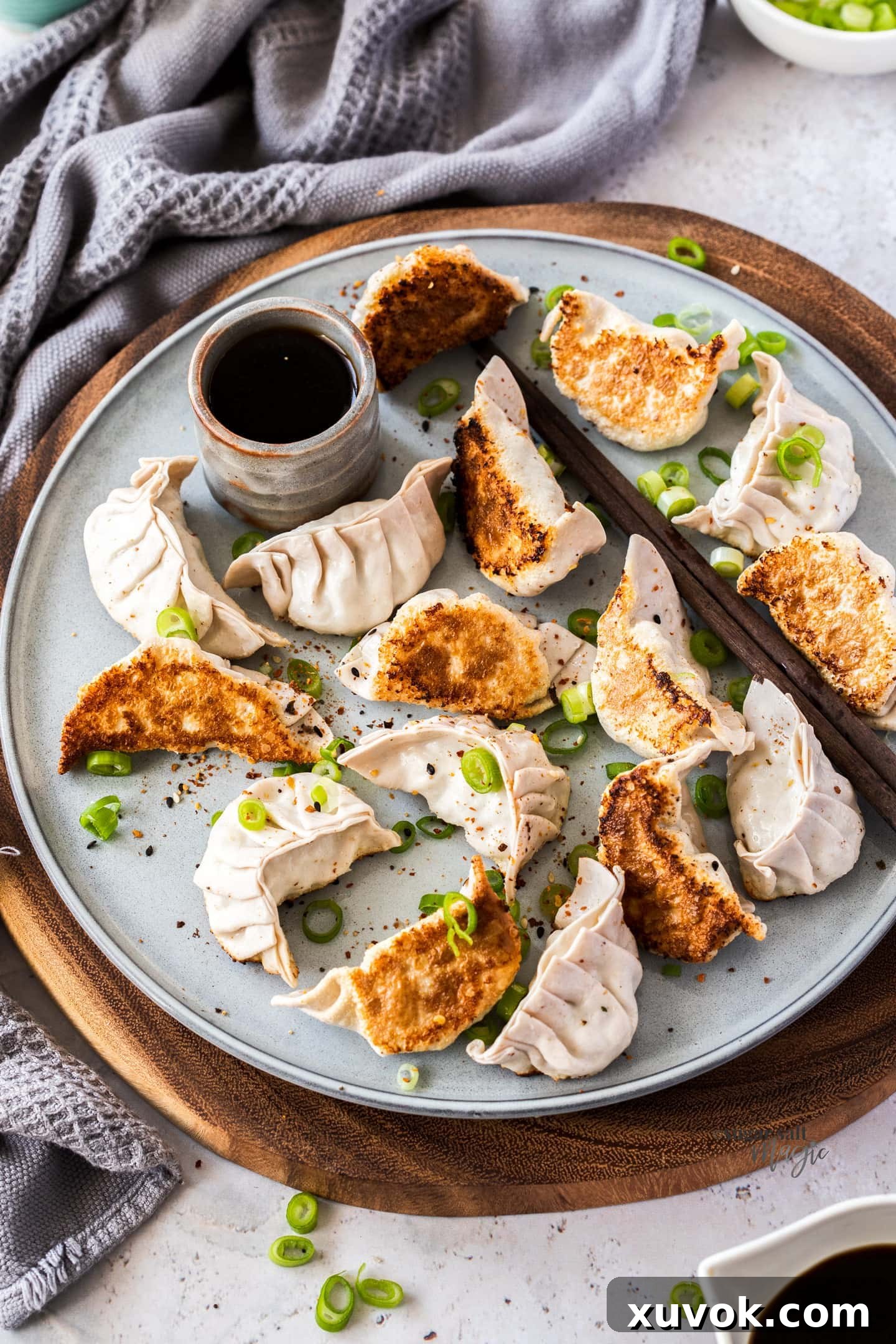
Delightful, savory, and utterly addictive, Pork Gyoza are culinary masterpieces. With their signature crispy bottoms, tender chewy tops, and a deeply flavorful filling, these Japanese dumplings offer an irresistible texture and taste experience. Once you try them, it’s easy to see why they become a slight obsession for many.
Among the vast world of dumplings, gyoza stand out as a truly exceptional dish. They are surprisingly simple to prepare at home, especially when utilizing readily available store-bought dumpling wrappers. The secret to their irresistible appeal lies in a wonderfully aromatic and savory pork filling that comes together with minimal effort. This makes them a perfect treat for a weeknight meal or a fantastic addition to any gathering. I often prepare a large batch to serve as a satisfying main course, always accompanied by a simple yet effective two-ingredient gyoza dipping sauce.
- Made with just a few very simple ingredients, easily found in most grocery stores or Asian markets.
- Exploding with flavor, flavor, flavor – a perfect balance of savory, umami, and aromatic notes in every bite.
- They take only minutes to cook, making them an ideal option for a quick and impressive meal.
- Conveniently make them ahead: prepare the gyoza a day or two in advance and store them covered in the refrigerator.
- Excellent for meal prepping: freeze them in an airtight container for a ready-to-cook meal anytime.
- Incredibly versatile, perfect in soups, as a side dish, an impressive appetizer, or a satisfying main course.
The art of making Japanese gyoza may appear intimidating at first glance, but rest assured, it’s much simpler than it seems. The flavorful filling requires only minutes to assemble. And even if you don’t master the traditional pleating technique right away, it genuinely doesn’t matter. As long as your dumplings are securely sealed, they will cook perfectly and taste absolutely delicious. So, feel free to fold them in any way you prefer – the taste will be phenomenal regardless!
For an authentic Japanese culinary experience, why not dedicate a night to Japanese cuisine? Begin your feast with these delectable gyoza as an appetizer, followed by a succulent Oven Baked Teriyaki Salmon or the crispy, comforting classic, Chicken Katsu. These pairings create a harmonious and unforgettable meal that will transport your taste buds straight to Japan.
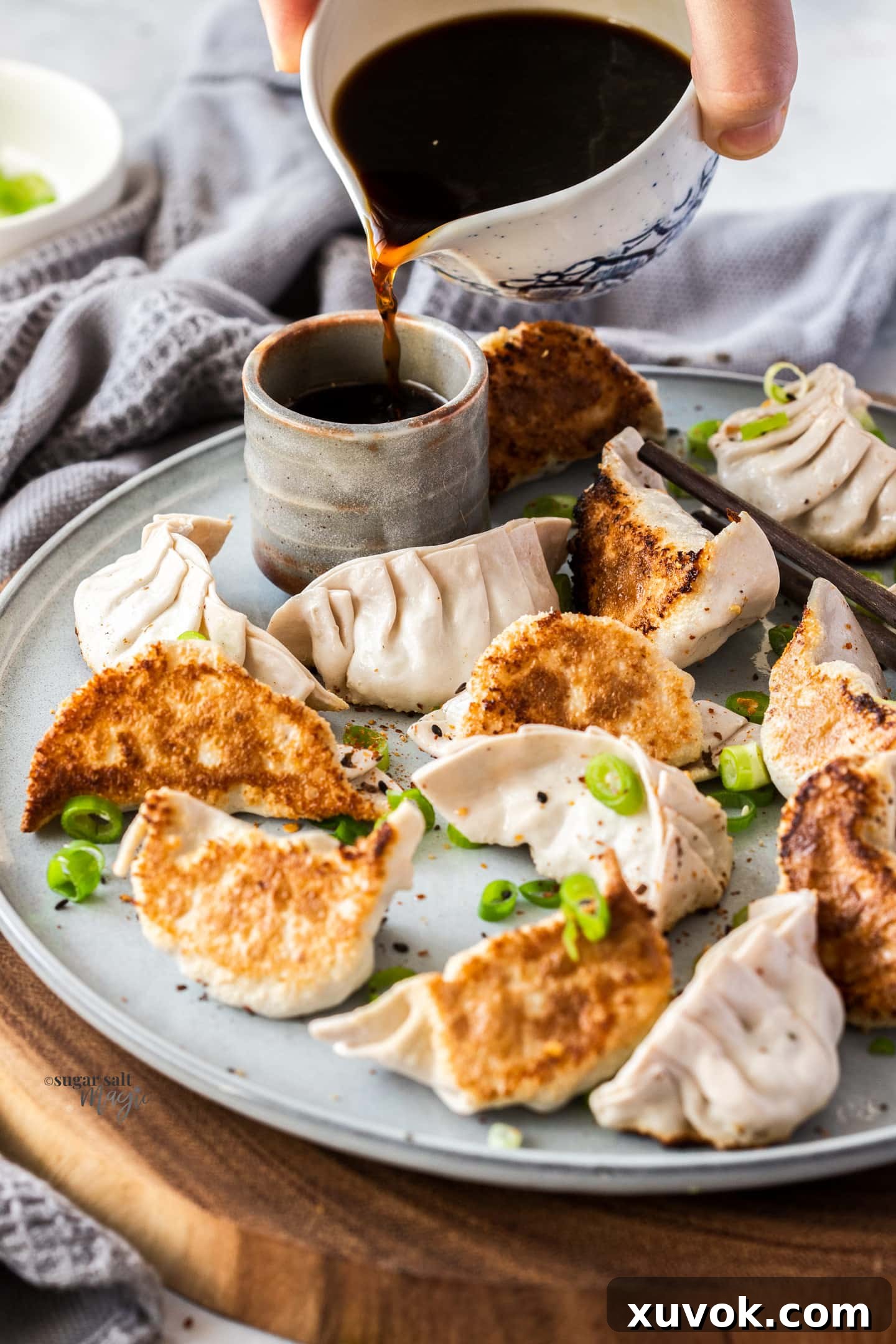
Table of contents
- What Exactly Are Gyoza?
- The Irresistible Pork Gyoza Filling
- Choosing the Perfect Gyoza Wrappers
- How To Make Japanese Pork Gyoza
- How To Fold Gyoza: A Step-by-Step Guide
- How To Cook Gyoza: Achieving That Perfect Crispy-Tender Balance
- Gyoza Dipping Sauce Recipes for Every Taste
- Expert Tips for the Best Homemade Pork Gyoza
- Substitutions and Creative Gyoza Variations
- Storage and Reheating Homemade Gyoza
- More Asian-Inspired Recipes You’ll Love
Never Miss a Recipe!
Get the latest recipes straight to your inbox and elevate your home cooking!
What Exactly Are Gyoza?
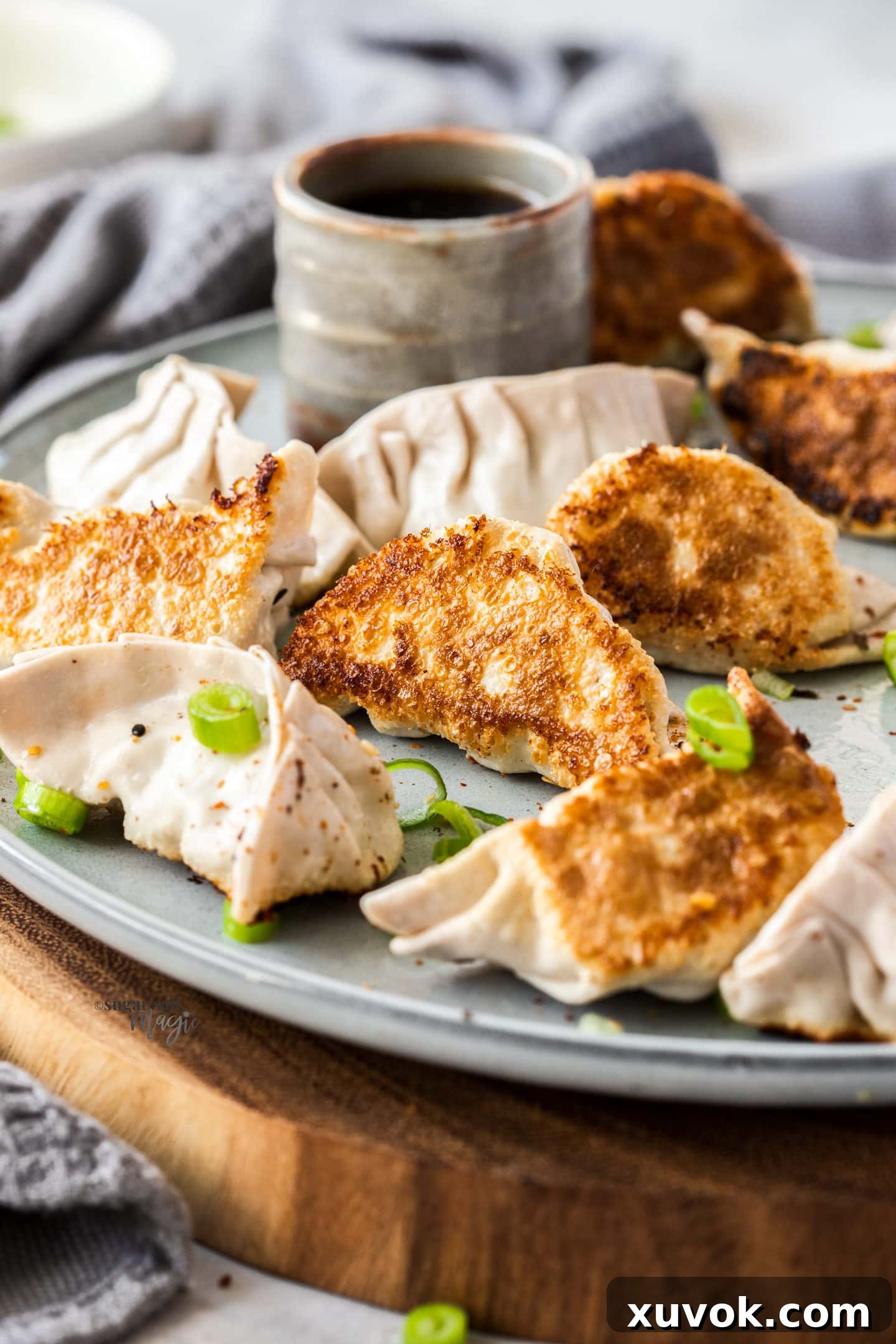
Japanese Gyoza are savory, crescent-shaped dumplings, typically distinguished by their unique cooking method that combines pan-frying and steaming. This dual technique results in a wonderfully crispy, golden-brown bottom and a tender, soft top. While often compared to Chinese potstickers, gyoza typically feature thinner wrappers and a more finely textured filling. These delightful parcels of flavor are a staple in Japanese cuisine, commonly found in izakayas (Japanese pubs) and as a popular side dish or appetizer in restaurants worldwide.
The term “gyoza” is derived from the Chinese word “jiaozi,” reflecting their shared origins. However, Japanese gyoza have evolved to develop their own distinct characteristics, including the use of slightly different spices in their fillings and the specific pan-frying and steaming method that gives them their signature texture. They are truly an embodiment of comfort food, offering a burst of umami and satisfying textures in every bite.
The Irresistible Pork Gyoza Filling
The heart of any great gyoza lies in its filling, and for pork gyoza, it’s all about creating a harmonious blend of simple yet powerful flavors. A classic combination features succulent ground pork mixed with finely chopped cabbage, pungent garlic, fresh grated ginger, and crisp spring onion. This combination delivers an incredibly aromatic and savory profile that is both comforting and exciting.
My pork gyoza recipe embraces this traditional approach, focusing on maximizing flavor with minimal fuss. While spring onion adds a delightful mild oniony kick, feel free to experiment with substitutions. Finely chopped leek can offer a slightly sweeter, milder onion note, while garlic chives will amplify the aromatic intensity. The key is to achieve a filling that is moist, well-seasoned, and brimming with the fresh flavors of its ingredients.
Choosing the Perfect Gyoza Wrappers
Crafting gyoza from scratch doesn’t necessarily mean making your own wrappers. In fact, excellent quality gyoza skins or gyoza wrappers are widely available. You can typically find them in the refrigerated section of Oriental supermarkets, and many larger mainstream supermarkets now carry them due to their increasing popularity. These wrappers are usually white, round, and slightly thinner than traditional wonton wrappers, designed to achieve that perfect crispy-chewy texture when cooked.
If specialized gyoza wrappers are hard to come by, don’t despair! Regular thin wonton wrappers can be a fantastic alternative. To achieve the classic round gyoza shape, simply use a round cookie cutter to cut them into circles. This simple trick ensures your homemade gyoza look as authentic as they taste. Remember to keep your wrappers covered with a damp cloth while working to prevent them from drying out, which can make them difficult to seal.
How To Make Japanese Pork Gyoza
Creating these delicious Japanese dumplings is surprisingly straightforward and incredibly rewarding. The process primarily involves two main stages: preparing the flavorful pork filling and then expertly wrapping and cooking the gyoza.
First, all the ingredients for the delectable pork filling are combined in a large bowl. This simple mixing step ensures every element is evenly distributed, creating a burst of flavor in every bite. Next, small portions of this seasoned filling are carefully enclosed within the delicate gyoza wrappers. While the pleating technique adds to their aesthetic appeal, remember that a secure seal is the most important aspect for a delicious outcome.
The magic truly happens during the cooking phase. Gyoza are cooked using a unique pan-frying and steaming method. This technique allows the bottom of each dumpling to achieve a beautiful golden-brown crispness, while the introduction of water creates steam that perfectly cooks and tenderizes the filling and the top portion of the wrapper. The entire cooking process is remarkably quick, with your homemade gyoza ready to enjoy in **under 10 minutes** – perfect for a fast, flavorful meal.
How To Fold Gyoza: A Step-by-Step Guide
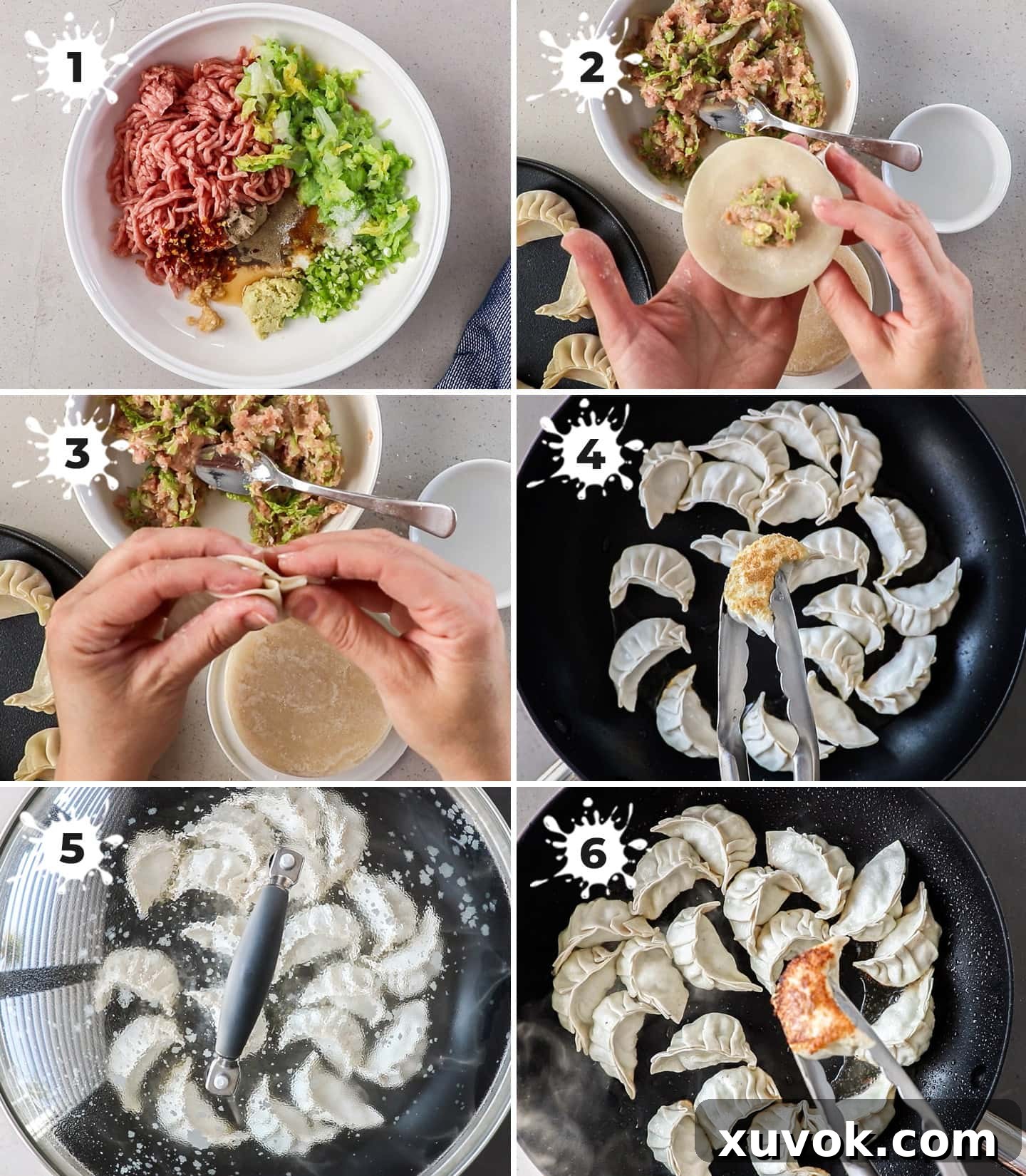
The distinctive appearance of Japanese pork dumplings, with their delicate pleats along one edge, forms a charming crescent shape, making them instantly recognizable. This iconic shape is achieved by carefully pleating only one side of the wrapper while leaving the opposing side flat. Don’t worry if your first few attempts aren’t perfect; practice makes perfect, and even imperfectly folded gyoza taste amazing. Here’s a detailed guide to help you master the folding technique:
The beauty of pleating just one side is that it naturally encourages the dumpling to curve into that classic crescent. This method not only looks professional but also helps create a secure pocket for the delicious filling. Remember, a light touch and a little water are your best friends during this process.
- Begin by holding a single gyoza wrapper in the palm of your non-dominant hand. Place 1-2 teaspoons of the pork filling directly in the center of the wrapper. (Start with a smaller amount and increase as you become more confident in your folding skills).
- Lightly moisten the entire edge of the gyoza wrapper with a finger dipped in water. This will help create a strong seal.
- Carefully bring one edge of the wrapper over the filling to meet the other edge, forming a taco-like shape without fully sealing it yet.
- Using your dominant hand, gently press and seal just a tiny portion of the corner closest to your dominant hand. This creates your starting point.
- Place the thumb of your dominant hand firmly on this initial sealed corner to hold it in place.
- Now, with your non-dominant hand, position your index finger on the inside of the wrapper, very close to the bottom corner.
- Using your non-dominant thumb on the outside, gently slide and fold a small section of the wrapper down to overlap it slightly over the sealed corner.
- Immediately press this new pleat down with the thumb of your dominant hand, securing it.
- Repeat steps 6-8, creating 6-7 small, even pleats along one side of the dumpling, until you reach the other end. This will naturally form the characteristic crescent shape with a beautifully pleated top edge.
How To Cook Gyoza: Achieving That Perfect Crispy-Tender Balance
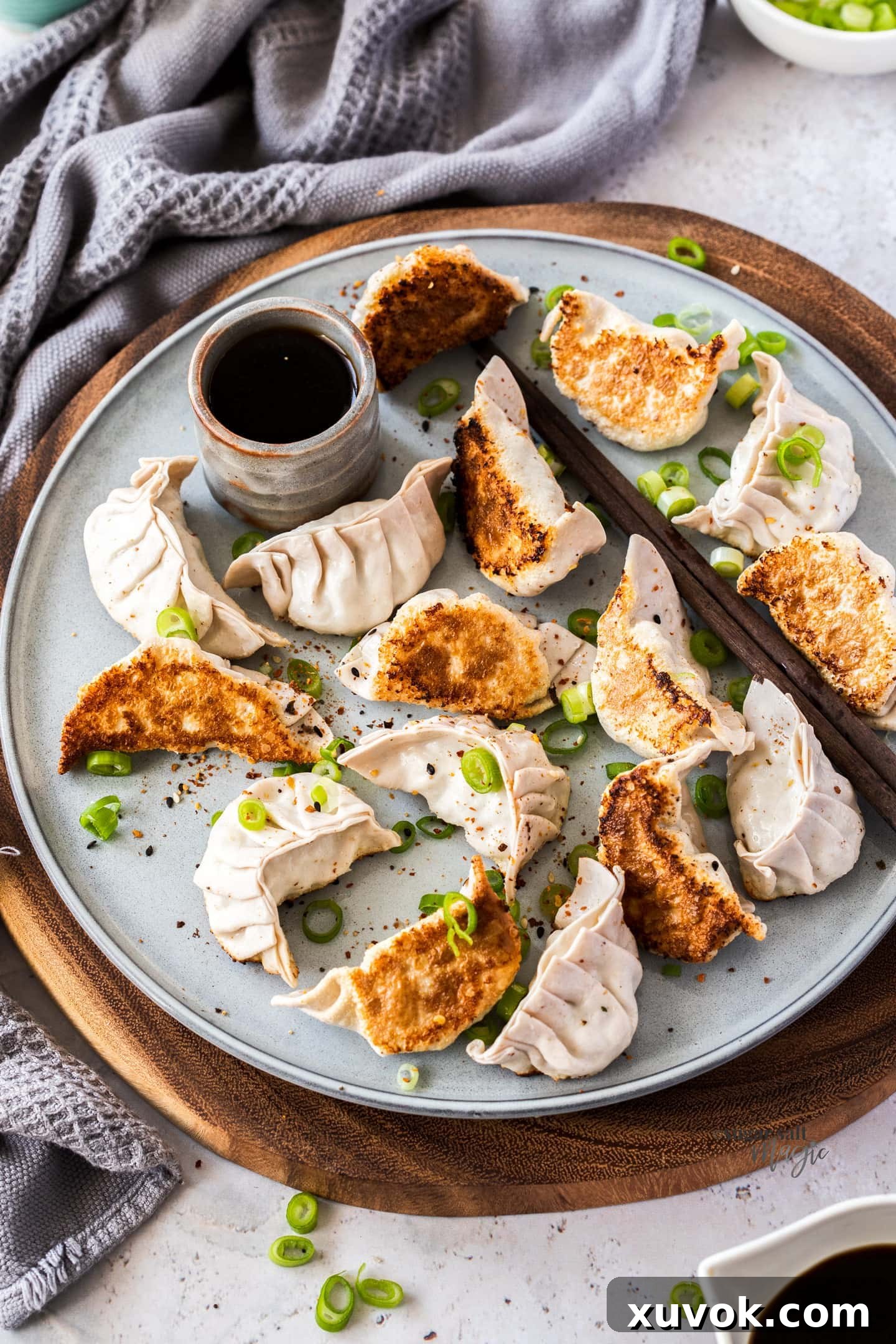
One of the defining characteristics of Japanese Gyoza is their incredible textural complexity, born from a clever combination of pan-frying and steaming. This method ensures a delightful contrast: a wonderfully soft and slightly chewy top, perfectly complemented by a spectacularly crispy, golden-brown base. Achieving this perfect balance is key to authentic gyoza, and here’s how you can master it:
The initial pan-frying creates a Maillard reaction on the wrapper’s base, developing deep flavor and crunch. The subsequent steaming step cooks the filling thoroughly and softens the wrapper, while trapping the moisture to keep the dumpling juicy. Finally, a brief re-frying ensures the bottom becomes impeccably crisp once more after the steam has dissipated.
- Pan Fry for Crispness: Begin by heating just a small amount of oil (vegetable or peanut oil works best) in a large, non-stick skillet or frypan over medium-high heat. Carefully arrange your gyoza in a single layer, pleated side up. Fry them for 2-3 minutes until their bases start to turn a light golden color and become visibly crisp.
- Steam for Tenderness: Once the bottoms are lightly browned, it’s time to steam. Carefully add about ⅓ cup of water to the pan. Immediately use the pan lid to shield yourself from any spitting oil, then quickly place the lid on top, ensuring a tight seal. Allow the pork gyoza to steam for 3-4 minutes, or until all the water has completely evaporated. During this phase, the steam will cook the pork filling and tenderize the top part of the wrappers, making them soft and translucent.
- Finish for Golden Perfection: After the water has evaporated, remove the lid. Let the gyoza continue to cook for an additional 1-2 minutes over medium heat. This final frying step ensures any remaining moisture evaporates and the bases turn a beautiful, deep golden-brown and achieve their ultimate crispness. Serve immediately with your favorite dipping sauce.
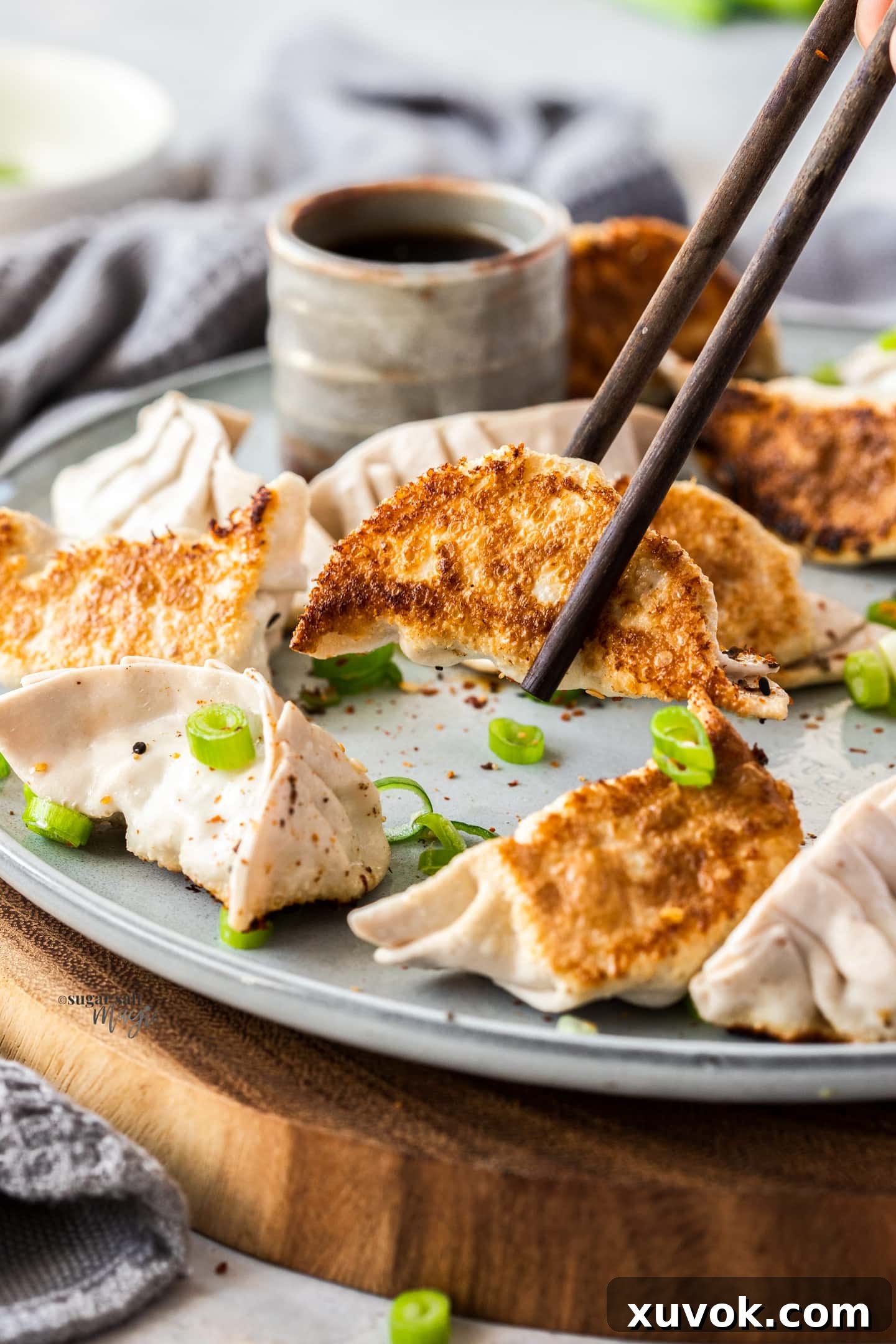
Gyoza Dipping Sauce Recipes for Every Taste
No plate of gyoza is complete without a tantalizing dipping sauce to complement its rich flavors. A classic, effortlessly simple gyoza dipping sauce can be prepared by combining equal amounts of rice wine vinegar and light soy sauce. This creates a beautifully balanced sauce that is tangy, salty, and incredibly refreshing, perfectly cutting through the richness of the pork filling.
For those looking to explore other traditional Japanese dipping options, a creamy Japanese sesame sauce (Goma Dare) is a popular and delicious choice. Its nutty, rich flavor adds another layer of complexity to the gyoza experience. If you prefer a sauce with a zesty, herbaceous kick, venturing into Thai flavors with a vibrant nam jim sauce offers a wonderful tangy and spicy contrast. You can also customize your dipping sauce with a dash of chili oil for heat, a hint of grated ginger for freshness, or a sprinkle of toasted sesame seeds for added texture and aroma.
Expert Tips for the Best Homemade Pork Gyoza
Mastering homemade gyoza is a rewarding journey, and a few key tips can elevate your results from good to truly exceptional. Follow these expert recommendations for consistently perfect pork gyoza:
- Gentle Mixing for the Filling: When combining the ingredients for the pork filling, resist the urge to knead them vigorously. Instead, mix everything lightly until all components are just evenly distributed. Overmixing can result in a tough, dense filling, whereas a gentle mix keeps it tender and juicy.
- Choose the Right Soy Sauce: For the most authentic flavor in your gyoza filling and dipping sauce, always use light soy sauce. Avoid “sushi style” soy sauce, which can often be sweeter or darker, and definitely steer clear of sweet soy (kecap manis), as these will drastically alter the intended flavor profile.
- Safety First When Adding Water: When it’s time to add water to the hot pan for steaming, exercise caution. The hot oil will react with the water and cause splattering. To protect yourself, hold the lid of the pan partially over the pan as you pour in the water, creating a shield against any splashes.
- Don’t Overcook Your Gyoza: Precision in cooking time is crucial. Steaming for 3-4 minutes is the ideal duration for the pork filling to be thoroughly cooked and the gyoza wrapper to reach its desired tender consistency. Cooking for too long, especially during the steaming phase, can lead to a dry and less flavorful filling. Watch for the water to evaporate and the wrappers to become translucent and shiny.
- Even Browning: For that perfect crispy bottom, ensure your gyoza are placed in a single layer in the pan and have enough space to brown evenly without overcrowding. Cook in batches if necessary.
- Keep Wrappers Moist: As mentioned before, always keep unused gyoza wrappers covered with a damp kitchen towel to prevent them from drying out, which makes them prone to cracking during folding.
Substitutions and Creative Gyoza Variations
The beauty of gyoza lies not only in their deliciousness but also in their adaptability. Don’t be afraid to experiment with ingredients to suit your preferences or what you have on hand. Here are some popular substitutions and creative variations to inspire your gyoza adventures:
- Gyoza Wrappers Alternatives: If traditional gyoza skins or wrappers are unavailable, regular thin wonton wrappers are an excellent stand-in. To achieve the iconic round shape, simply use a circle cookie cutter to cut them. Ensure they are thin enough to cook through properly and create that delicate texture.
- Diverse Gyoza Filling Options: The possibilities for gyoza fillings are endless! While pork is classic, you can easily change the protein to create exciting new flavors. Try lean ground chicken or turkey for a lighter option, or finely minced beef for a richer taste. For seafood lovers, succulent prawn gyoza are absolutely wonderful. Vegetarian gyoza can be made with a hearty mix of finely chopped mushrooms, tofu, cabbage, and carrots, seasoned with ginger, garlic, and soy sauce. The key is to ensure your chosen filling is finely minced and well-seasoned.
- Folding Flexibility: While the signature pleated shape is undeniably cute and adds a lovely visual appeal, it can be tricky for beginners. If you find the pleating process challenging or time-consuming, don’t let it deter you! Simply fold the wrappers in half to create a half-moon shape and firmly seal the edges by pressing them together or crimping with a fork. As long as the filling is sealed securely inside, your gyoza will still taste incredibly delicious and cook perfectly. The goal is flavor and enjoyment, not necessarily perfection in aesthetics.
What’s not to love about a delicate little dumpling wrapper, encasing a tasty, juicy pork mince filling? Pork Gyoza are such a delicious authentic Japanese treat that are actually very simple to make at home. Their crisp bottoms and tender tops create an unforgettable texture, while the savory filling delivers a burst of umami in every bite.
Beyond their delightful taste, gyoza offer incredible convenience. You can make them ahead of time for easy weeknight meals or even freeze them in batches for a quick, delicious dinner whenever a craving strikes. These versatile little dumplings are perfect for changing up the filling and can be enjoyed in so many ways: served in comforting soups, as an exciting side dish, an impressive appetizer to kick off a meal, or even as a satisfying main course on their own. Their ease of preparation and deliciousness make them a must-try for any home cook.
Storage and Reheating Homemade Gyoza
One of the fantastic advantages of making homemade gyoza is their excellent storage potential, both cooked and uncooked. This makes them ideal for meal prep and ensures you always have a delicious snack or meal on hand.
Storing Uncooked Gyoza:
If you’re making a big batch, you can store uncooked gyoza in the refrigerator for up to 24-48 hours. Arrange them in a single layer on a lightly floured baking sheet, ensuring they don’t touch to prevent sticking. Cover them loosely with plastic wrap or a damp towel to keep them from drying out. For longer storage, uncooked gyoza freeze exceptionally well. Place them on a flour-dusted baking sheet in a single layer and freeze until solid. Once frozen, transfer them to an airtight freezer bag or container. They can be stored in the freezer for up to 2-3 months. Cook from frozen, adding a few extra minutes to the steaming time.
Storing Cooked Gyoza:
Leftover cooked gyoza can be stored in an airtight container in the refrigerator for 2-3 days. While they won’t retain their crispy bottom as perfectly as freshly cooked ones, they will still be delicious.
Reheating Cooked Gyoza:
To reheat cooked gyoza, the best method is to gently pan-fry them again with a little oil until they are heated through and the bottoms crisp up once more. You can also briefly microwave them if you’re in a hurry, but they won’t achieve the same crispy texture. Air fryers are also a great option for reheating, giving them a renewed crispiness.
More Asian-Inspired Recipes You’ll Love
If you enjoyed making and savoring these delightful Pork Gyoza, you’re in for a treat! Our collection of Asian-inspired recipes offers a wide array of flavors and cooking experiences. Expand your culinary repertoire with these equally delicious dishes that are perfect for any occasion, from quick weeknight dinners to impressive weekend feasts.
- Crispy Asian Chilli Beef Mince: A flavorful and versatile dish that’s perfect over rice or noodles.
- Mini Korean Beef Tacos: A fun and vibrant fusion dish, perfect for entertaining.
- Homemade Spring Rolls: Crispy, fresh, and customizable – a classic appetizer.
- Golden Sesame Prawn Toast: Indulgent and irresistible, a dim sum favorite made at home.
- Karaage Chicken (Japanese Fried Chicken): Crispy, juicy, and incredibly flavorful Japanese-style fried chicken.
- Salt and Pepper Chicken Wings: A simple yet powerfully flavored dish that’s perfect for snacking or as a starter.
Did you try this pork gyoza recipe?
Leaving a rating and comment below the recipe is so helpful! We love hearing from you!
Hungry for more culinary inspiration? Subscribe to our newsletter for free, delicious recipes delivered straight to your inbox. Also, follow along and connect with us on Facebook, Pinterest, and Instagram for daily cooking tips, behind-the-scenes glimpses, and more.
Pork Gyoza Recipe (Japanese Pork Dumplings)
22
pieces
30 minutes
10 minutes
0 minutes
40 minutes
Rate
Pin
Ingredients
FOR THE GYOZA DUMPLINGS
-
200 g pork mince (ground pork) (7oz) -
1 ½ cups chinese cabbage -
1 ½ teaspoons grated ginger (notes) -
1 large clove garlic, minced -
2 tablespoons spring onion (green onion), finely chopped (notes) -
1 teaspoon sesame oil -
1 teaspoon light soy sauce -
½ teaspoon sugar -
½ teaspoon white pepper -
½ teaspoon salt -
22 round gyoza or dumpling wrappers -
2 tablespoons vegetable or peanut oil (notes) -
⅓ cup water
FOR THE GYOZA DIPPING SAUCE
-
¼ cup soy sauce (60ml) -
¼ cup rice wine vinegar (or mirin) (60ml)
For best results, always weigh ingredients where a weight is provided
Instructions
-
Wash the cabbage leaves thoroughly, then finely shred them – you’ll need about 1 ½ cups. Place the shredded cabbage in a heatproof bowl and pour boiling water over it to cover. Let it soften for 5 minutes, then drain the water extremely well, pressing out any excess moisture with your hands or a clean towel. Set aside to cool.
-
In a separate large mixing bowl, combine the pork mince (ground pork), grated ginger, minced garlic, finely chopped spring onion, sesame oil, light soy sauce, sugar, white pepper, and salt. Mix thoroughly with your hands or a spoon until all ingredients are well combined and distributed. Add the cooled, well-drained cabbage to the pork mixture and mix again gently until everything is evenly incorporated. Avoid overmixing to keep the filling tender.
-
Prepare your workspace: set up a small dish of water, the prepared pork mixture, a teaspoon for portioning the filling, your gyoza wrappers (kept covered with a damp cloth), and a clean plate or baking sheet dusted with a little flour for the finished dumplings.
-
Take one gyoza wrapper and lay it flat in the palm of your non-dominant hand. Dip a finger in the small dish of water and run it around the entire edge of the wrapper to moisten it. This creates the seal.
-
Place 2-3 teaspoons of the pork mixture in the center of the wrapper (adjust amount based on wrapper size and your comfort with folding). Fold the wrapper in half, bringing the edges almost together so it resembles a small taco shape, without sealing it fully yet.
-
Press the bottom corner on one side of the wrapper firmly together with the thumb and forefinger of your dominant hand to create an initial seal.
-
Now, use the index fingertip (on the inside) and thumb (on the outside) of your non-dominant hand to create a small pleat by folding a section of the wrapper over the thumb that is holding the initial seal closed. Once the pleat is formed, move your dominant thumb on top of this newly created pleat to secure it.
-
Repeat the pleating process, making 6-7 small, even pleats along one side of the dumpling, ensuring the other side remains flat. This action will naturally cause the gyoza to bend into its characteristic crescent shape with a beautifully pleated top edge. Place the finished gyoza on your floured plate or baking sheet, making sure they don’t touch each other.
-
In a large non-stick fry pan (ensure it has a well-fitting lid – see notes for pan selection), heat 2 tablespoons of vegetable or peanut oil over medium-high heat. Carefully place the gyoza into the hot pan in a single layer, with the pleated edge pointing upwards. Fry them for 2-3 minutes, or until the bottoms just begin to take on a light golden color.
-
Once lightly browned, carefully pour in the ⅓ cup of water. Immediately use the pan lid as a shield to protect yourself from any splattering oil, then quickly cover the pan tightly with the lid. Allow the dumplings to steam for 3-4 minutes, or until all the water has completely evaporated. The dumplings should appear softened, shiny, and slightly translucent.
-
Remove the lid from the pan and continue to cook the gyoza for an additional 1-2 minutes over medium heat. This final frying step allows any remaining moisture to evaporate and ensures the bottoms achieve a beautiful, crisp, golden-brown color.
-
Serve the gyoza immediately, crispy side up, alongside your homemade dipping sauce (a simple combination of soy sauce and rice wine vinegar is perfect).
-
If you enjoyed this pork gyoza recipe, please take a moment to leave a comment & rating below. Your feedback is greatly appreciated and incredibly helpful to us!
Notes
- I use an Australian standard 20ml tablespoon for all measurements in this recipe.
- Authentic gyoza skins or dumpling wrappers can be readily found at most large supermarkets, especially in the international or refrigerated section, and are always available at Oriental supermarkets.
- The precise amount of pork mixture you can comfortably fit into each wrapper will vary depending on the specific size of your gyoza wrappers and your level of experience in folding dumplings. It’s always a good idea to start with a slightly smaller amount of filling and gradually increase it as you become more practiced and confident in your folding technique.
- Choosing the right pan is crucial for achieving that perfect crispy bottom. Make sure to use a high-quality non-stick pan for cooking your gyoza. If your pan is not adequately non-stick, you may need to use a bit more oil to prevent sticking, and it’s important to monitor the gyoza frequently to ensure they don’t adhere to the pan surface.
EXPLORE MORE APPETISERS & SNACKS HERE!
46
kcal
Marie Roffey
appetiser, Appetizer, Lunch, Main Course, Snack, tapas
Japanese
Have you tried this recipe?
Don’t forget to leave a rating and comment below and let me know how it was! I love hearing from you. Nutrition information is approximate and derived from an online calculator. The brands you use may cause variations.