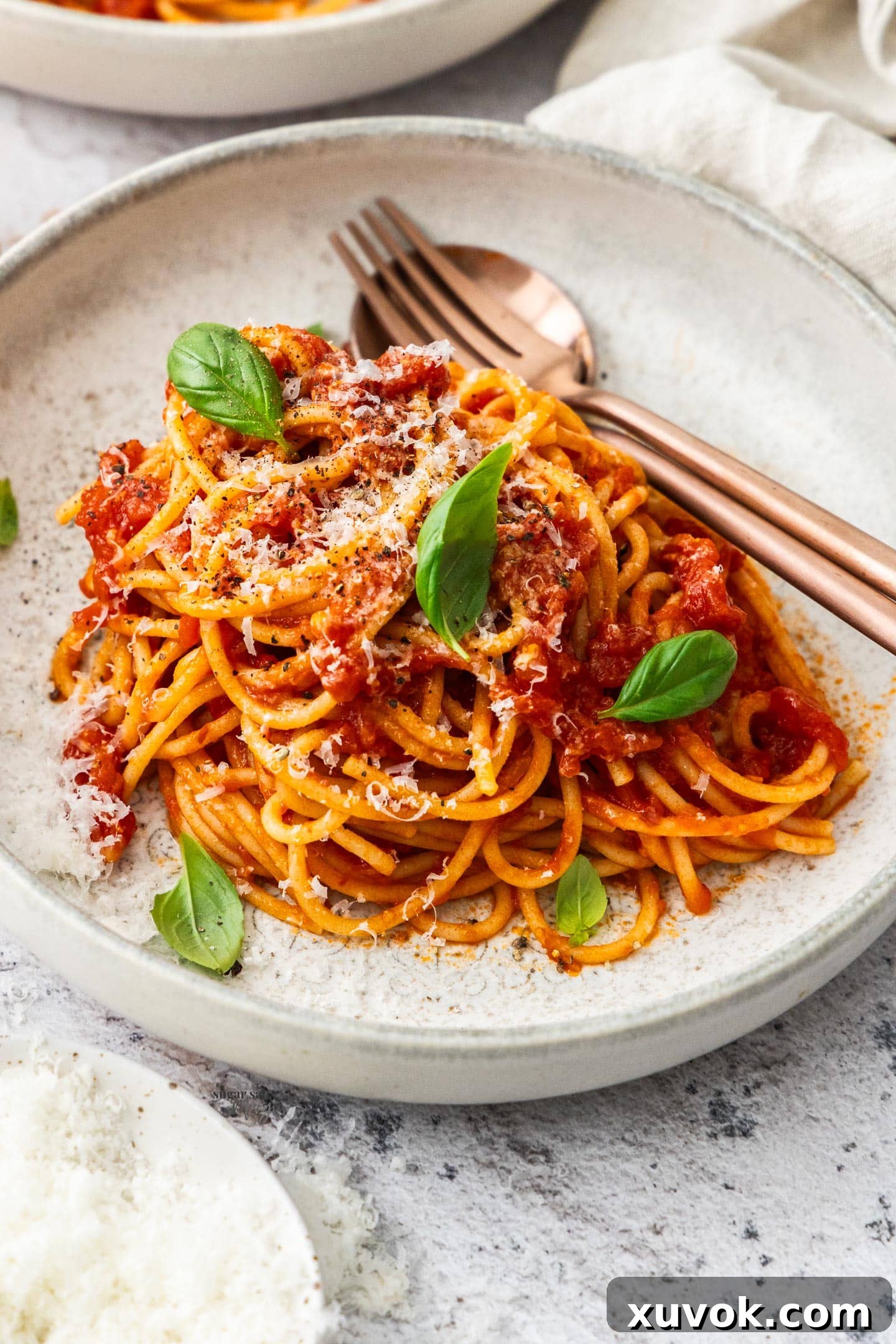
Authentic Spaghetti Arrabbiata: A Fiery Italian Classic for Your Dinner Table
There are days when the desire to cook simply wanes, but that doesn’t mean sacrificing flavour or quality. On such evenings, I invariably turn to a dish that is both effortlessly simple and incredibly satisfying: Spaghetti Arrabbiata. This classic Italian pasta dish is a perfect solution for a quick weeknight meal, delivering a robust flavour profile with minimal effort. Its naturally vegetarian composition also makes it an ideal choice for a meat-free Monday, ensuring everyone can enjoy its delightful kick.
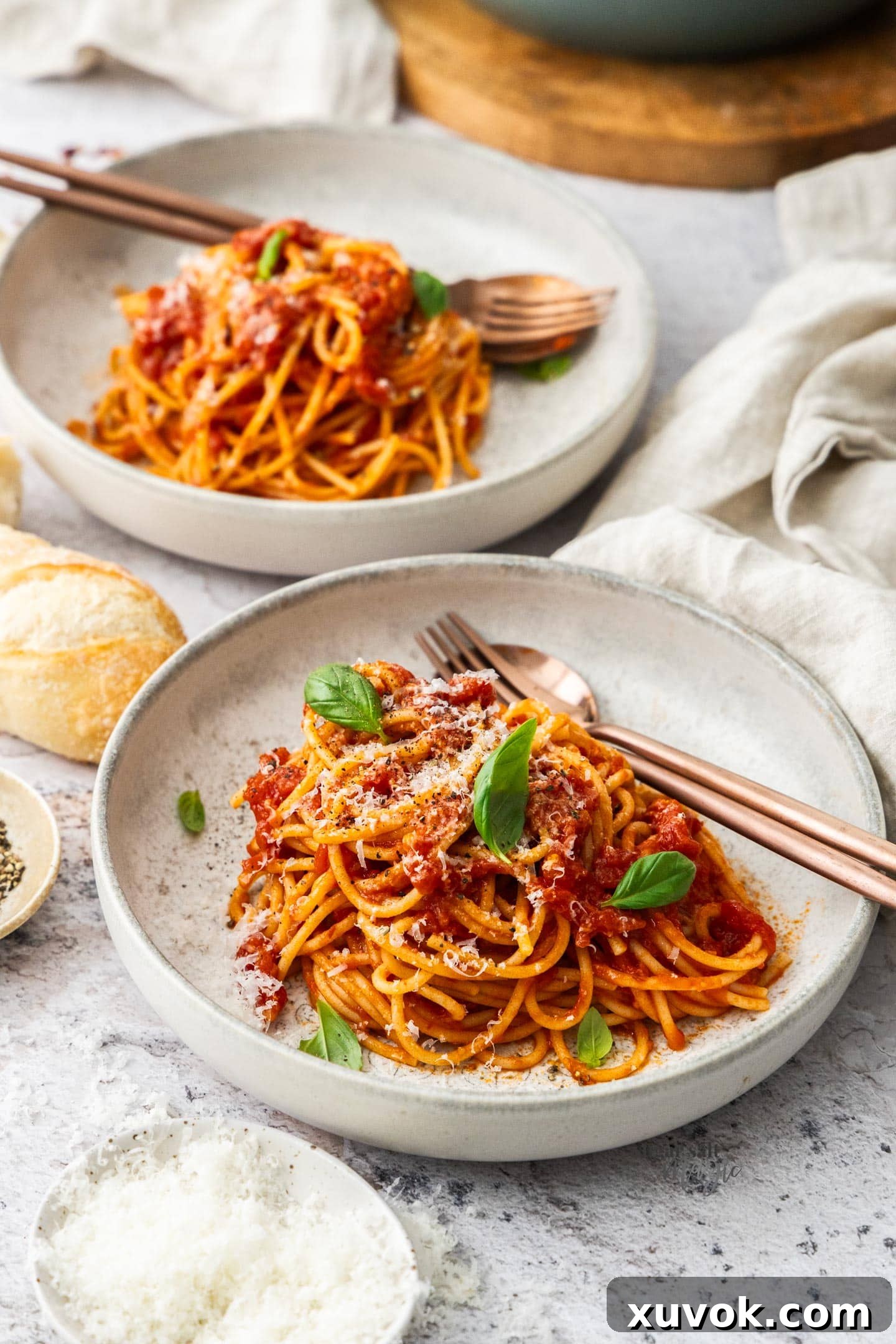
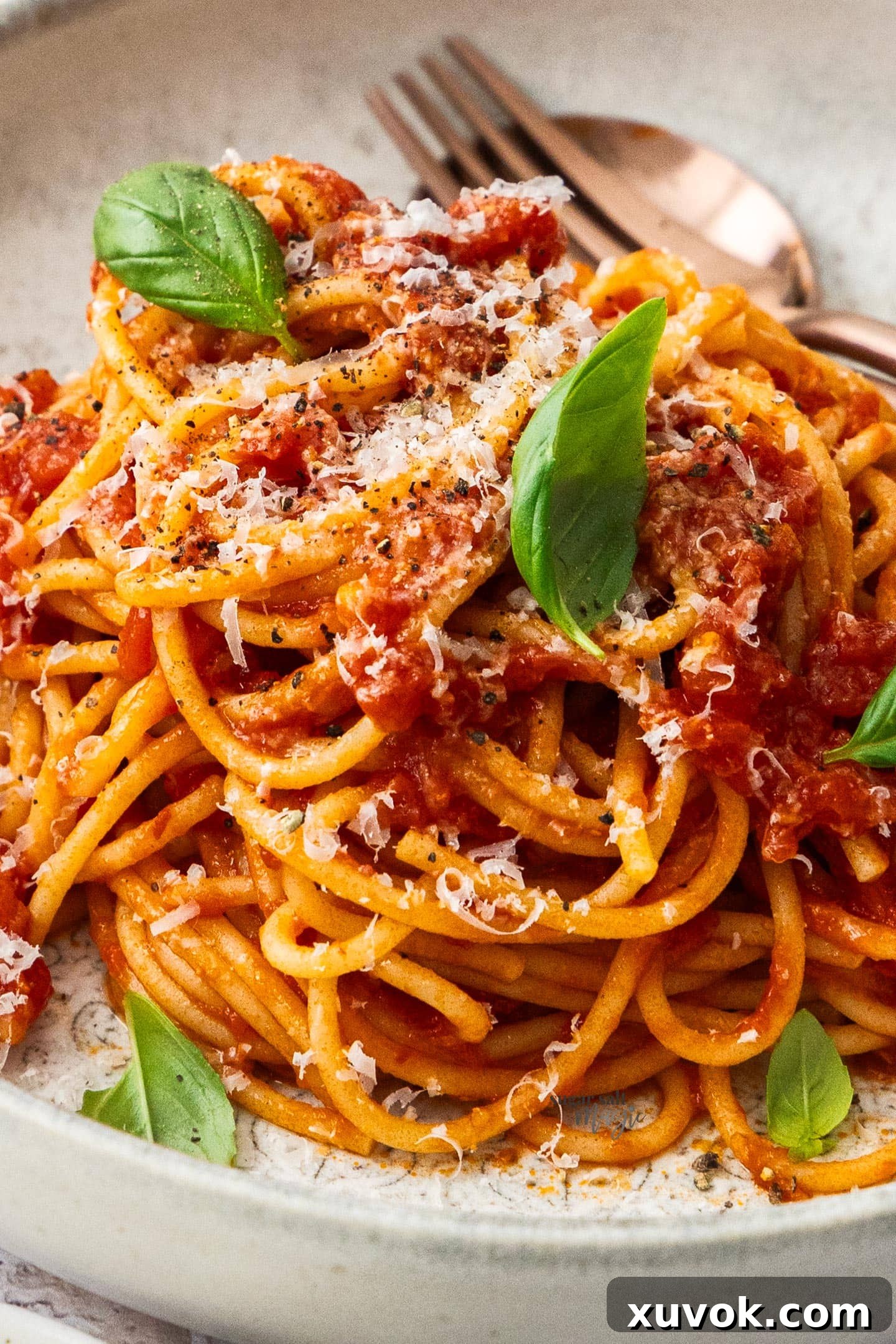
The essence of Spaghetti Arrabbiata lies in its vibrant sauce – a rich yet surprisingly light concoction. It boasts a natural sweetness derived from ripe, juicy tomatoes, beautifully complemented by a generous punch of fresh garlic and the fiery warmth of chili flakes. Paired with perfectly cooked al dente spaghetti, the dish achieves a wonderful balance: substantial enough to feel like a complete meal, yet light enough not to weigh you down. To elevate the experience, serve it alongside some crusty bread or a slice of savoury garlic bread, perfect for soaking up every last drop of the delectable sauce. For an added layer of texture and flavour, a sprinkle of crispy pangrattato makes this pasta dish truly exceptional.
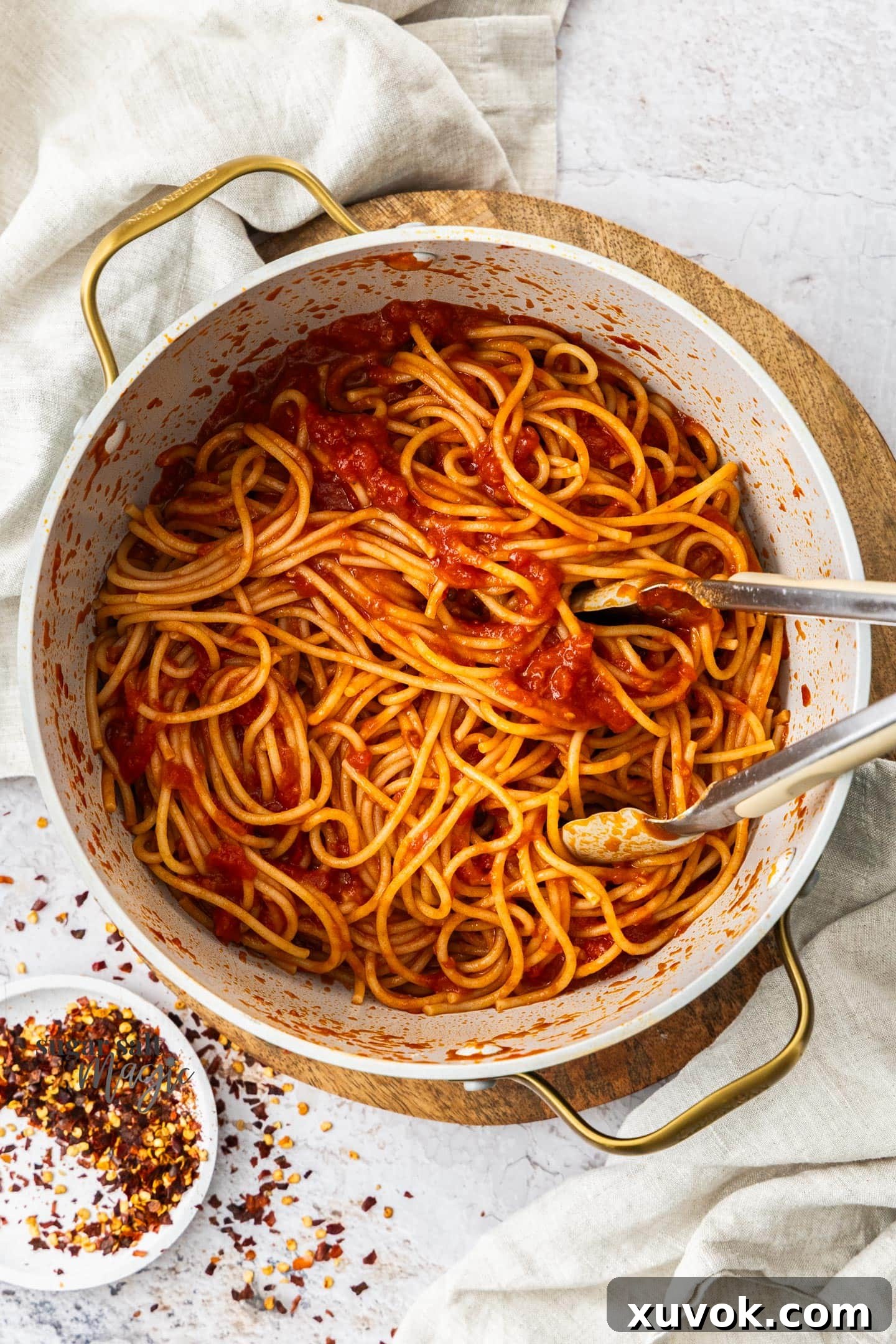
What is Arrabbiata Sauce? Unveiling the “Angry” Italian Classic
Originating from Rome, the heart of Italy’s Lazio region, Arrabbiata is a renowned spicy tomato sauce that has captivated palates worldwide. The sauce is traditionally crafted from a simple yet powerful combination of staple Italian ingredients: ripe tomatoes, fiery chili (often in the form of dried flakes), aromatic garlic, and high-quality olive oil. The very name arrabbiata, meaning “angry” in Italian, is a playful nod to the sauce’s characteristic heat. This delightful spiciness comes from the chili, which gives the dish its signature fiery kick, making it a favourite among those who appreciate a bit of zest in their pasta.
While Penne Arrabbiata is arguably the most common and popular iteration of this dish, pairing the robust sauce with tube-shaped pasta, my personal preference leans towards spaghetti. The long strands of spaghetti perfectly cling to the rich sauce, creating an authentic and incredibly satisfying spaghetti all’arrabbiata experience. The simple beauty of this dish lies in its ability to transform everyday ingredients into an extraordinary meal, proving that true culinary masterpieces often rely on quality and balance rather than complexity. Whether you choose penne or spaghetti, the vibrant, spicy tomato sauce remains the star, promising an unforgettable taste of Roman tradition right in your own kitchen.
Table of Contents
- Key Ingredients for the Perfect Sauce
- How to Make Spaghetti Arrabbiata
- Tips and Tricks for Success
- Serving Suggestions and Variations
- Storage and Reheating
- Frequently Asked Questions
- More Recipes You’ll Love
Never Miss a Recipe!
Get the latest recipes straight to your inbox and discover new culinary delights!
Sign up to our newsletter for delicious recipes delivered directly to you!
Key Ingredients for the Perfect Sauce
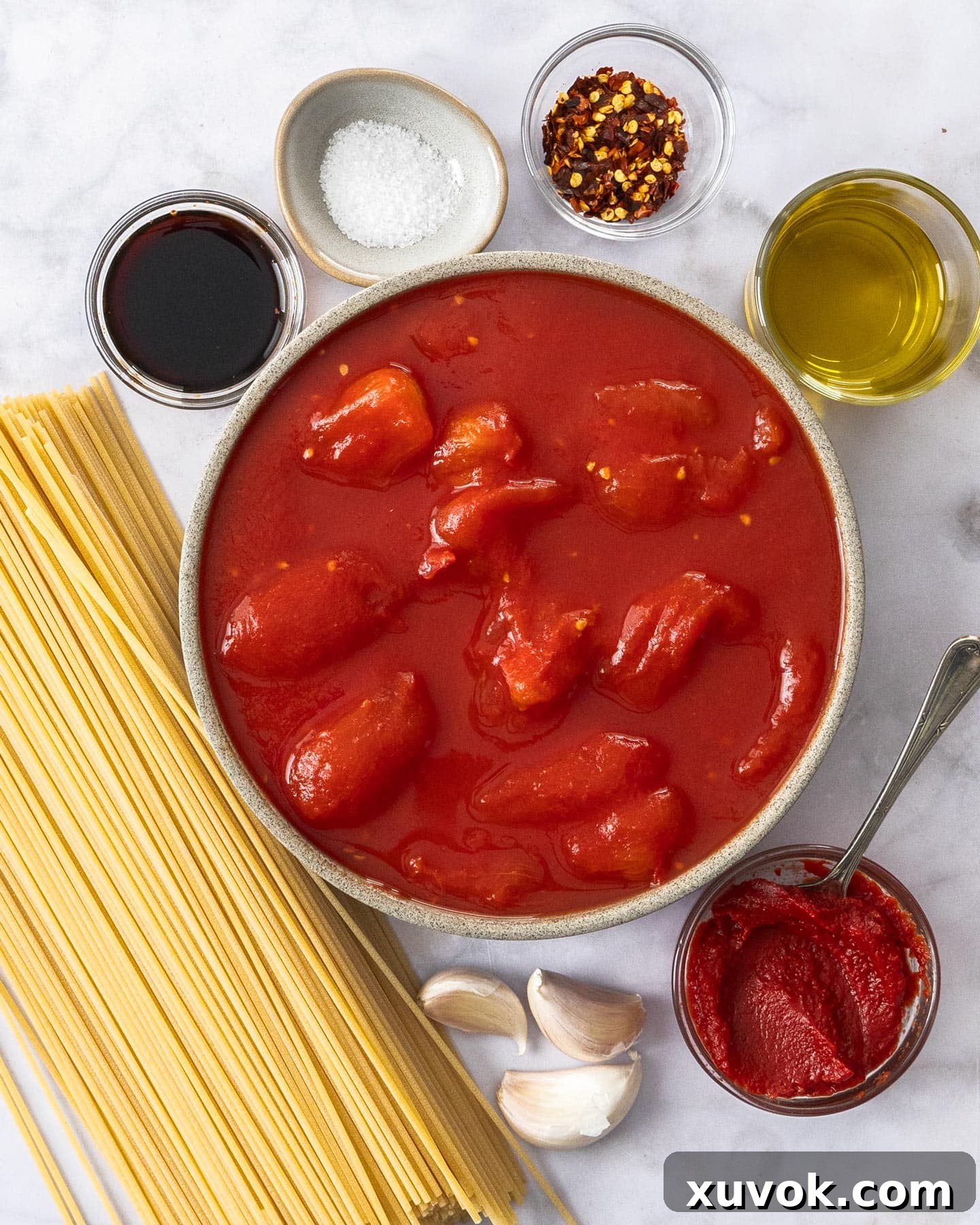
For the precise measurements and detailed instructions, please refer to the complete recipe card below.
- Tomatoes: The Foundation of Flavor
The quality of your tomatoes is paramount for an authentic arrabbiata sauce. I highly recommend using canned San Marzano tomatoes if you can find them. These plum tomatoes, known for their sweet flavour, low acidity, and tender flesh, are considered the gold standard for Italian sauces. If San Marzano are unavailable, good quality tinned peeled whole tomatoes will also yield excellent results. Avoid crushed or diced tomatoes if possible, as whole tomatoes tend to have a fresher, less processed taste. You’ll also need a touch of tomato paste to deepen the tomato flavour and add richness to the sauce. - Garlic & Dried Chilli Flakes: The Spicy Heart
These two ingredients are the true flavour makers, providing the pungent, savoury, and fiery notes that define arrabbiata. Freshly minced garlic offers an aromatic depth that beautifully complements the natural sweetness of the tomatoes. Dried chilli flakes, also known as crushed red pepper flakes, are responsible for the sauce’s signature spiciness. The amount you use can be adjusted to your personal heat preference, transforming a simple marinara into a lively arrabbiata. - Olive Oil: The Golden Elixir
A good quality extra virgin olive oil is essential, not just for cooking the garlic and chilli, but also for its distinctive fruity and peppery flavour that is characteristic of Italian and Mediterranean cuisine. It helps to mellow and meld the strong flavours, creating a harmonious sauce. - Balsamic Vinegar: My Secret Brightening Touch
This might seem like an unconventional addition, but a small splash of balsamic vinegar added towards the end of the simmering process is my secret ingredient. It acts as a flavour enhancer, balancing out the acidity of the tomatoes and brightening all the other elements of the sauce. It adds a subtle tang that makes the final dish taste incredibly vibrant and complex. - Spaghetti: The Perfect Vehicle
While the sauce is undoubtedly the star, the pasta is its indispensable partner. Spaghetti, with its long, thin strands, is excellent for coating evenly with the robust sauce. However, if you prefer a different texture or shape, feel free to substitute with penne. Indeed, penne all’arrabbiata is often considered even more traditional in many Italian households. Other sturdy pasta shapes like rigatoni or fusilli would also work wonderfully. - For Serving: Freshness and Finish
To complete your pasta masterpiece, have fresh basil leaves, finely grated Parmesan cheese, and some crusty bread ready. The fresh basil adds a fragrant, herbaceous note that brightens the rich sauce, while Parmesan provides a salty, umami finish. The bread is, of course, for mopping up any leftover sauce – a tradition not to be missed! For an alternative, fresh parsley can be used instead of basil.
How to Make Spaghetti Arrabbiata: A Speedy & Flavorful Journey
Creating this delicious spaghetti arrabbiata is incredibly straightforward, requiring only about 20 minutes from start to finish. The recipe moves quickly once you begin, making it ideal for those busy weeknights when time is of the essence. You’ll be amazed at how such simple ingredients can transform into a dish bursting with authentic Italian flavours in such a short period.
To ensure a smooth cooking process and minimal mess, I highly recommend using a deep pan for your sauce. Tomato sauces, particularly when simmering, have a tendency to sputter and splash, potentially staining your stovetop and clothes. A splatter guard can be a kitchen hero here, providing excellent protection. If you don’t own one, a clever workaround is to use a wire rack topped with a single layer of paper towel, resting your spoon on top to secure it. This simple trick can save you a significant amount of cleanup time later.
For the full list of ingredients and step-by-step instructions, please scroll down to the detailed recipe card.
1. Build the Flavor Base: Sauté Garlic & Chilli Flakes
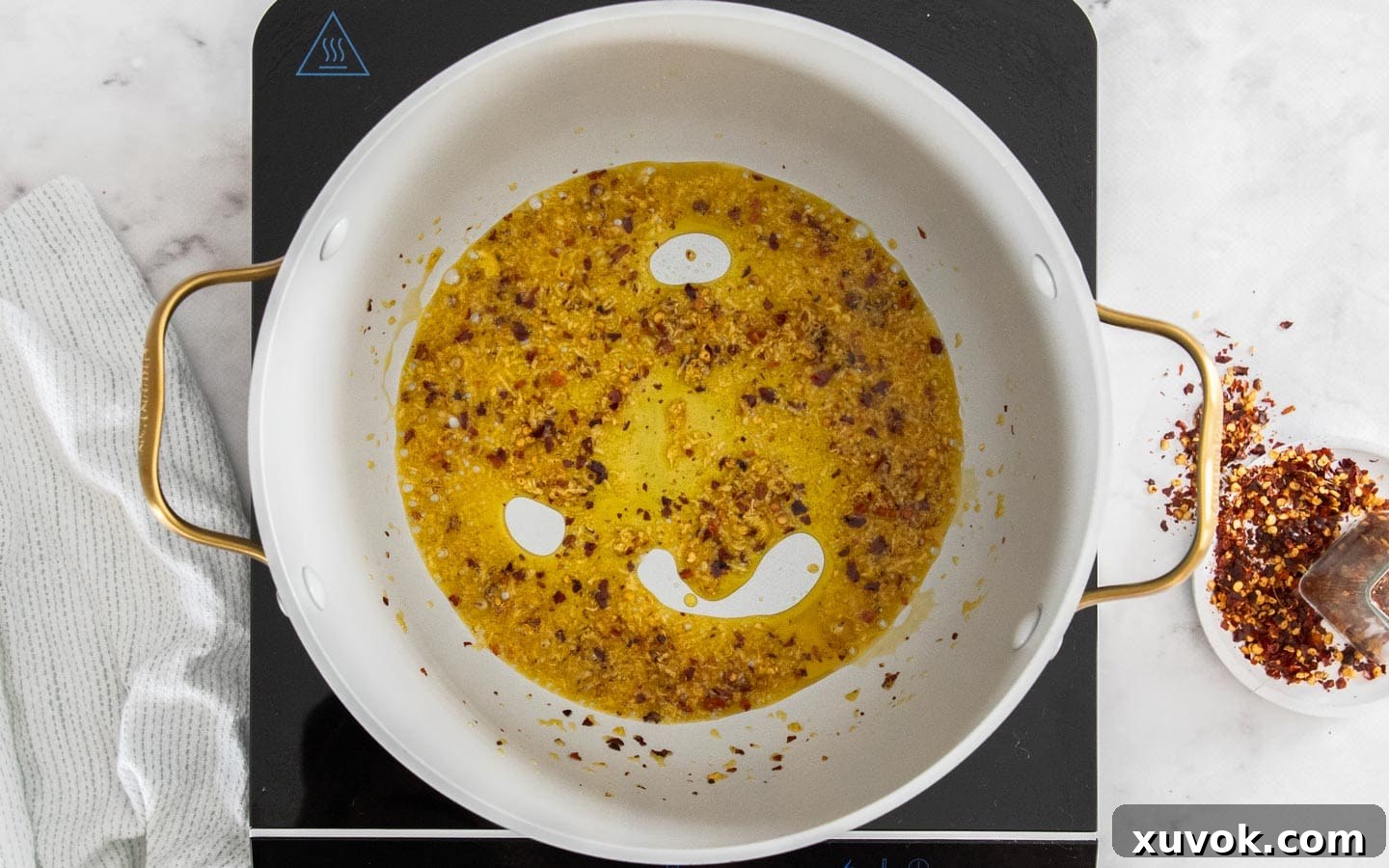
Begin by heating the extra virgin olive oil in a deep pan over medium heat. Once the oil is warm and shimmering, add your minced garlic and dried chili flakes. Sauté these aromatics gently for 1-2 minutes. The goal here is to release their intense fragrances and flavours into the oil without burning them. Watch carefully to ensure the garlic turns a light golden colour, not brown, which can make it bitter.
2. Develop the Sauce: Add Tomatoes & Simmer
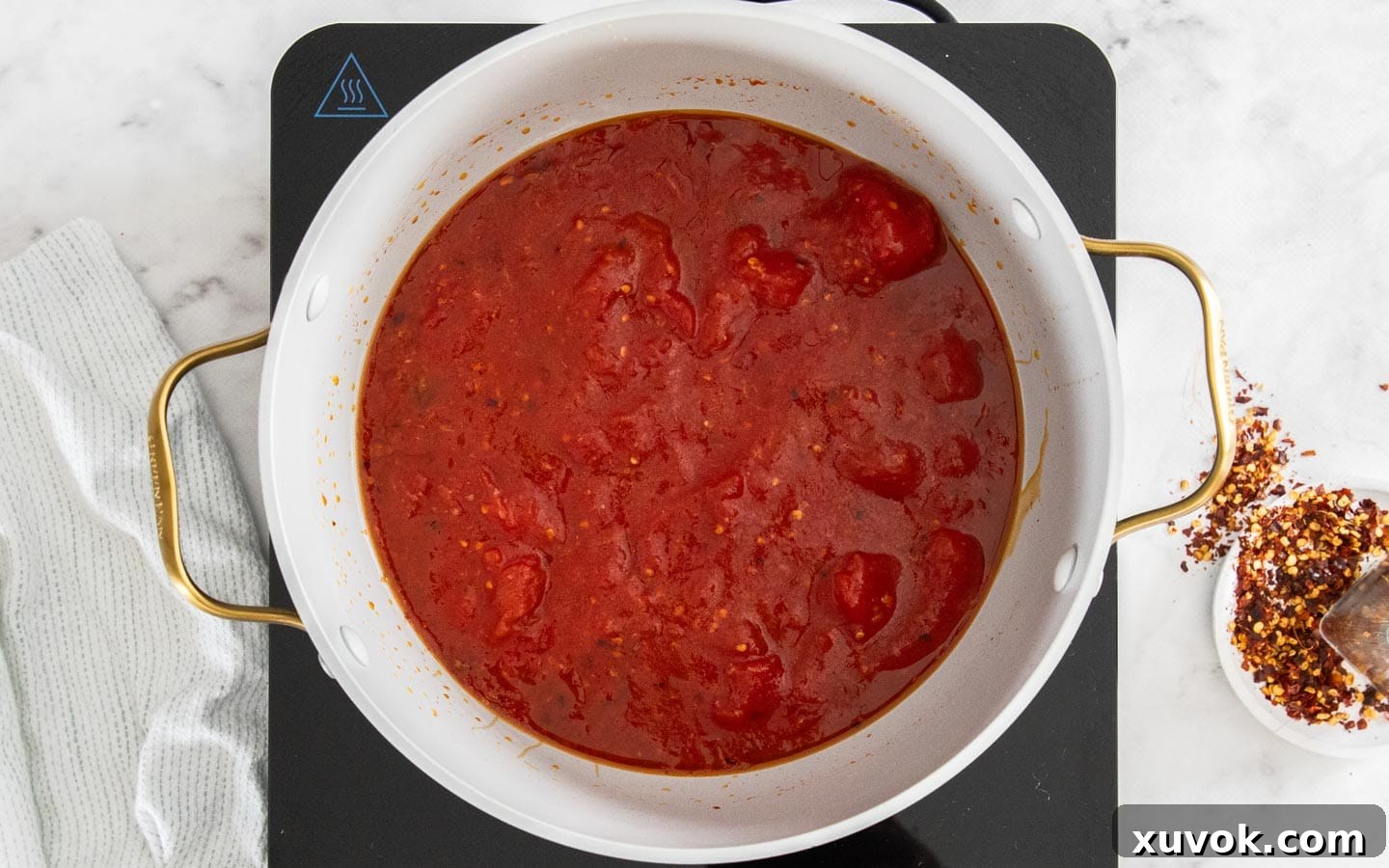
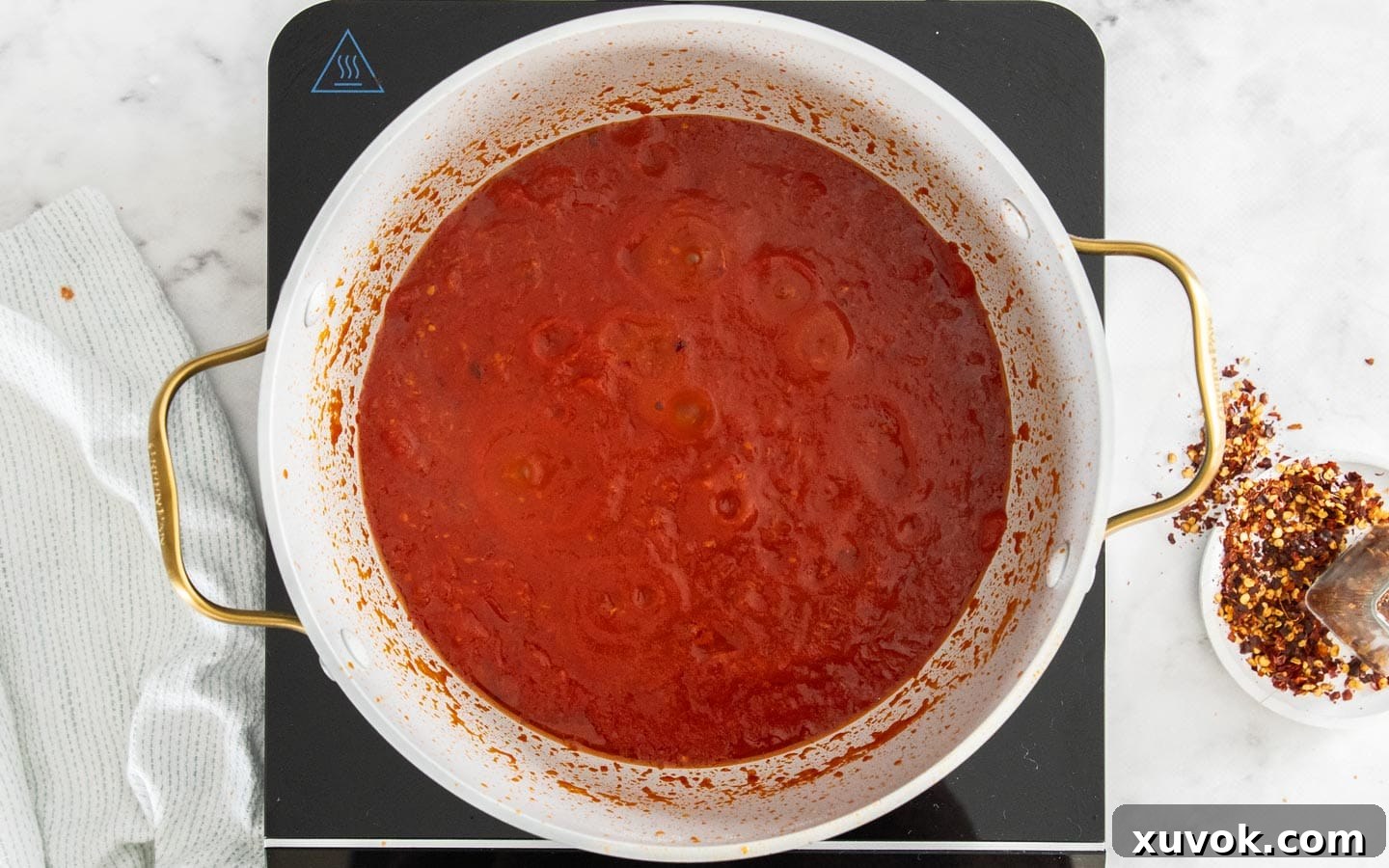
Next, carefully add the tinned whole tomatoes, tomato paste, and salt to the pan with the fragrant garlic and chilli. If using whole peeled tomatoes, take a potato masher or the back of a spoon to gently break up the tomatoes into smaller chunks. This helps to create a rustic, yet cohesive sauce. Bring the mixture to a gentle simmer, then reduce the heat slightly and let it cook uncovered for 15-20 minutes. This simmering time allows the flavours to meld beautifully and the sauce to thicken to a rich, luscious consistency. Stir occasionally to prevent sticking.
3. Cook the Pasta: Al Dente Perfection
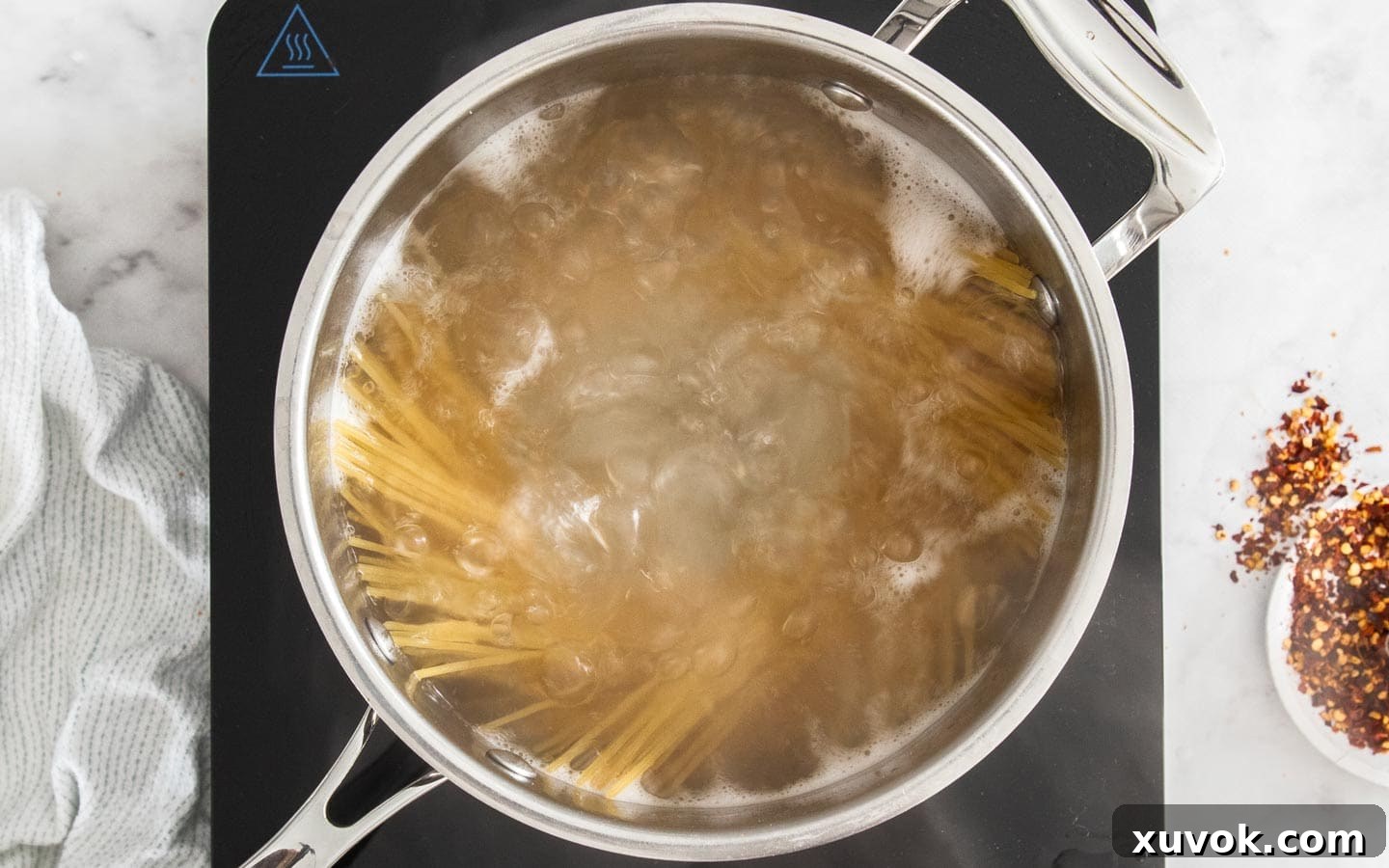
While your arrabbiata sauce is simmering, bring a large pot of generously salted water to a rolling boil. Add your spaghetti to the boiling water and cook according to package directions, typically for 1-2 minutes less than recommended. The key is to achieve an al dente texture, meaning the pasta should be firm to the bite, not mushy. This ensures it holds up well with the robust sauce and continues to cook slightly when combined with the hot sauce. Always taste a strand to check for doneness.
4. Final Touches & Assembly: Combine & Serve
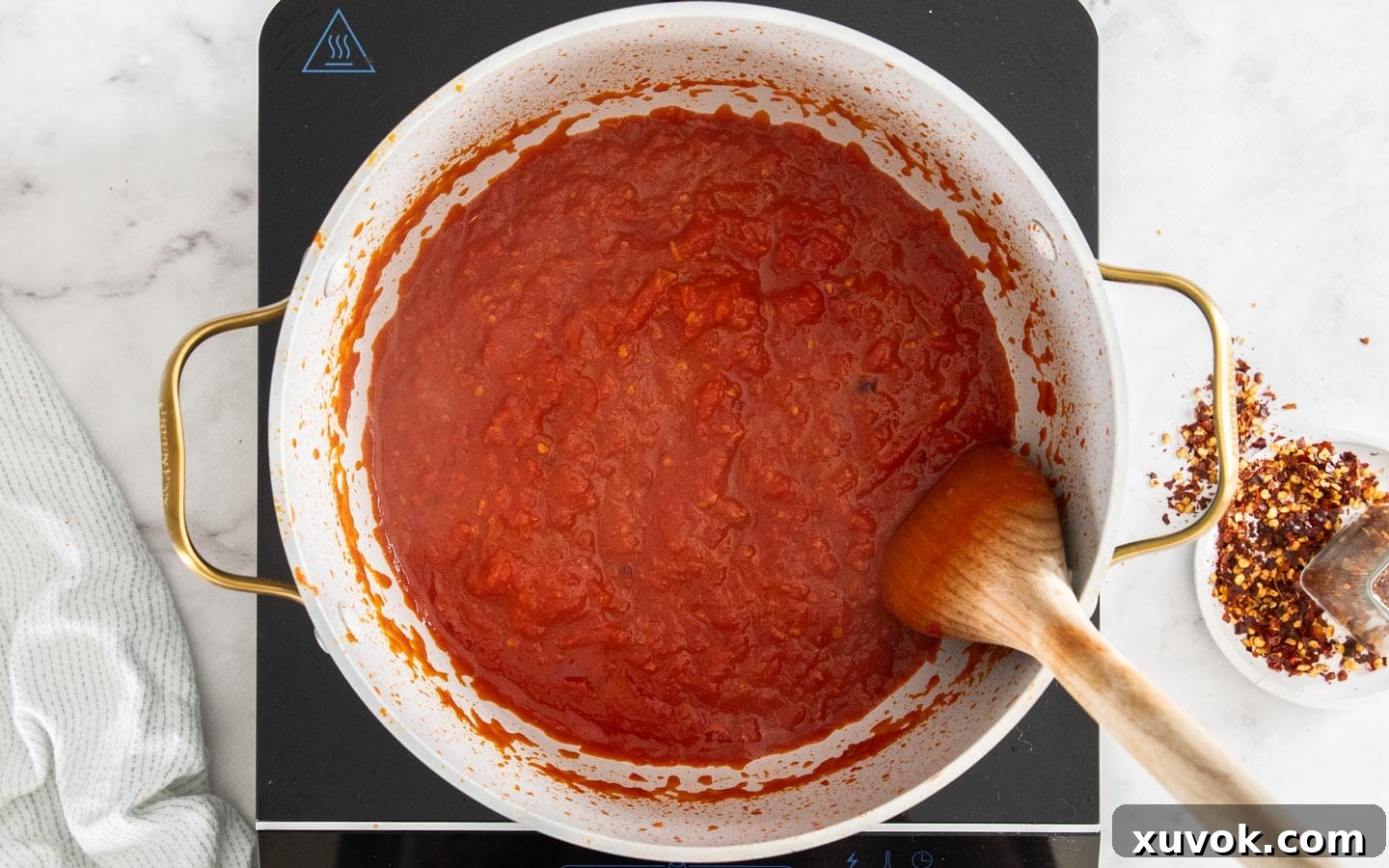
Once the sauce has reached your desired thickness, stir in the balsamic vinegar. This adds a beautiful brightness and depth. Taste the sauce and adjust seasonings as needed, adding more salt or a grind of black pepper if desired. Using tongs, transfer the cooked spaghetti directly from the boiling water into the pan with the arrabbiata sauce. The small amount of starchy pasta water that clings to the spaghetti is crucial; it helps to emulsify and bind the sauce to the pasta, creating a silkier, more cohesive dish. Toss and stir everything vigorously until the spaghetti is thoroughly coated. Serve your exquisite pasta all’arrabbiata immediately, garnished generously with fresh basil leaves and a dusting of finely grated Parmesan cheese. Enjoy every spicy, flavourful bite!
Tips and Tricks for Success
- Prioritize High-Quality Ingredients: Given the simplicity of spaghetti arrabbiata, the quality of each component shines through. Invest in the best extra virgin olive oil you can afford, choose fresh, pungent garlic, and opt for premium canned San Marzano tomatoes for an unparalleled flavour base. High-quality ingredients are the secret to an outstanding dish.
- Master the Spice Level: Arrabbiata is defined by its “angry” kick. While some enjoy a fiery inferno, others prefer a more gentle warmth. Start with ½ teaspoon of dried red chili flakes and taste the sauce before adding more. For extra heat, finely chop a fresh red chili and add it along with the dried flakes. For a milder sauce, you can reduce the amount of chili flakes or even remove some if it becomes too potent.
- Embrace the Starchy Pasta Water: Never drain your pasta entirely! The starchy water leftover from cooking the spaghetti is a chef’s secret weapon. Use tongs to transfer the spaghetti directly from the hot water to the sauce. This starchy liquid acts as an emulsifier, helping the sauce cling beautifully to the pasta and creating a wonderfully silky texture. If your sauce seems too thick, gradually add more pasta water, a tablespoon at a time, until it reaches your desired consistency.
- Don’t Overcook the Pasta: Always aim for al dente pasta. Overcooked, mushy spaghetti will detract from the texture of the dish. It should have a slight bite to it, as it will continue to cook slightly when tossed with the hot sauce.
- Fresh Herbs at the End: Add fresh basil or parsley just before serving. The heat of the pasta and sauce will release their aromas without cooking them down, preserving their vibrant colour and flavour.
Serving Suggestions and Variations
Spaghetti Arrabbiata is a standalone star, but it also welcomes companions and subtle twists. For a complete meal, serve it with a crisp green salad dressed with a simple vinaigrette to cut through the richness of the tomato sauce. A glass of dry red wine, such as a Chianti or Sangiovese, would also be a perfect pairing.
While the traditional recipe is vegetarian, you can easily introduce protein. Sautéed shrimp, grilled chicken, or even Italian sausage can be added to the sauce during the final simmering stages. For a richer, almost creamy texture without dairy, stir in a spoonful of cashew cream or a touch of butter at the end. Don’t limit yourself to spaghetti; try other pasta shapes like rigatoni, fusilli, or even orecchiette for a different mouthfeel. Experiment with different fresh herbs, too – a blend of basil and oregano can be delightful.
Storage and Reheating
Leftover spaghetti arrabbiata can be stored in an airtight container in the refrigerator for up to 3-4 days. While it’s certainly still enjoyable as leftovers, I find that the dish is at its peak freshness and flavour when served immediately after cooking. The pasta tends to absorb more sauce over time, which can alter the texture. Therefore, if possible, aim to enjoy it within the first day or two.
To reheat, transfer the pasta to a pan over medium-low heat. Stir gently and add a splash of water or vegetable broth if the sauce appears too dry, which often happens as pasta absorbs liquid when cooling. Heat slowly until warmed through, usually about 5-10 minutes. Avoid reheating at high temperatures or for too long, as this can overcook the pasta and diminish the sauce’s vibrant flavour. A little extra fresh basil or Parmesan after reheating can also help revive its appeal.
Frequently Asked Questions
Absolutely, using fresh, ripe tomatoes can impart a wonderful, bright flavour to your arrabbiata sauce, especially if they are in season. However, be aware that this will make the recipe significantly more labour-intensive. You’ll first need to blanch and peel the fresh tomatoes to remove their skins, and then simmer the sauce for a considerably longer period to reduce their higher water content. The result will be a sauce with a lighter, fresher taste, but it requires a greater time commitment. It’s definitely worth trying when you have the time and access to excellent quality fresh tomatoes!
Not at all! As mentioned, penne arrabbiata is actually a very traditional and perhaps even more common way to enjoy this spicy sauce. The hollow tubes of penne pasta are excellent for catching and holding the rich sauce within. If you prefer long pasta, fettuccine, linguine, or even angel hair pasta would also pair beautifully with arrabbiata. Ultimately, you can use any shaped pasta you desire to create your own version of arrabbiata pasta; the key is choosing a shape that you enjoy and that effectively carries the sauce.
While the beauty of traditional spaghetti arrabbiata lies in its simplicity, you are certainly welcome to add other vegetables to customize the dish to your liking. Keep in mind that doing so will deviate from the classic recipe, but it can be a great way to boost nutritional content or use up ingredients you have on hand. Sautéed mushrooms, thinly sliced zucchini, or colourful bell peppers would all be delicious additions. For best results, sauté these vegetables separately until tender before adding them to the simmering tomato sauce.
More Recipes You’ll Love
- Pasta Napolitana
- Prawn and Chorizo Linguine
- Creamy Pesto Pasta
- Rigatoni al Forno
- Chicken Basil Pesto Pasta
⭐⭐⭐⭐⭐
Did you try this authentic spaghetti arrabbiata recipe? Please share your thoughts and love in the comments below!
Hungry for more? Subscribe to our newsletter for free, delicious recipes delivered straight to your inbox. Also, connect with us on Facebook, Pinterest and Instagram for daily inspiration!
Spaghetti Arrabbiata
4
servings
5
15
20
Rate This Recipe
Pin Recipe
Ingredients
- 2 tablespoons extra virgin olive oil (see notes)
- 3 cloves garlic, minced
- ½-1 teaspoon dried chilli flakes (red pepper flakes), adjust to taste
- 800 g tinned peeled whole tomatoes (San Marzano recommended) (approx. 28oz)
- 2 tablespoons tomato paste
- ½ teaspoon salt, or to taste
- 350 g dried spaghetti
- 2 teaspoons balsamic vinegar
TO SERVE
- fresh basil leaves, for garnish
- Finely grated parmesan, for serving
- crusty bread, for dipping
For best results, always weigh ingredients where a weight is provided
Equipment
-
2 Large saucepans
-
Splatter guard (optional, but recommended for cleaner cooking)
Instructions
-
Heat the olive oil in a deep pan over medium heat.
-
Add the minced garlic and dried chilli flakes to the pan. Cook gently for 1-2 minutes until fragrant, ensuring the garlic does not brown.
-
Stir in the tinned whole tomatoes, tomato paste, and salt. Use a potato masher or the back of a spoon to break up the whole tomatoes into smaller pieces.
-
Bring the sauce to a gentle simmer, then reduce the heat and cook uncovered for 15-20 minutes, or until the sauce has thickened to your desired consistency. Stir occasionally.
-
While the sauce simmers, bring a large pot of generously salted water to a boil. Add the spaghetti and cook according to package directions, aiming for an al dente texture (firm to the bite). Cook 1-2 minutes less than the package suggests, then test for doneness.
-
Stir the balsamic vinegar into the arrabbiata sauce. Taste and adjust seasoning with more salt and/or pepper if needed.
-
Using tongs, transfer the cooked spaghetti directly from the pasta water into the pan with the arrabbiata sauce. Allow some of the starchy pasta water to transfer with it. Toss and stir vigorously to combine, ensuring the spaghetti is well coated. If the sauce is too thick, add a little more pasta water until it reaches your preferred consistency.
-
Serve immediately, topped with fresh basil leaves and finely grated Parmesan cheese.
-
Please take a moment to leave a comment & rating if you enjoyed this recipe. Your feedback is greatly appreciated!
Notes
- Tablespoon Measurement: I use a standard Australian 20ml tablespoon (equal to 4 teaspoons). Please check your own tablespoon measure before using for accurate results.
- Serving Size: This recipe is suggested for 4 servings, but actual portion sizes can vary based on individual appetite. Served with crusty bread, it comfortably satisfies four people.
- Nutritional Information: The nutritional details provided below are approximate values only, derived from an online calculator. Variations may occur depending on the specific brands and quantities of ingredients used.
DISCOVER MORE PASTA RECIPES!
433kcal
Marie Roffey
Dinner
Italian
Have you tried this recipe?
Don’t forget to leave a rating and comment below and let me know how it was! I love hearing from you. Nutrition information is approximate and derived from an online calculator. The brands you use may cause variations.
Calories from Fat 81