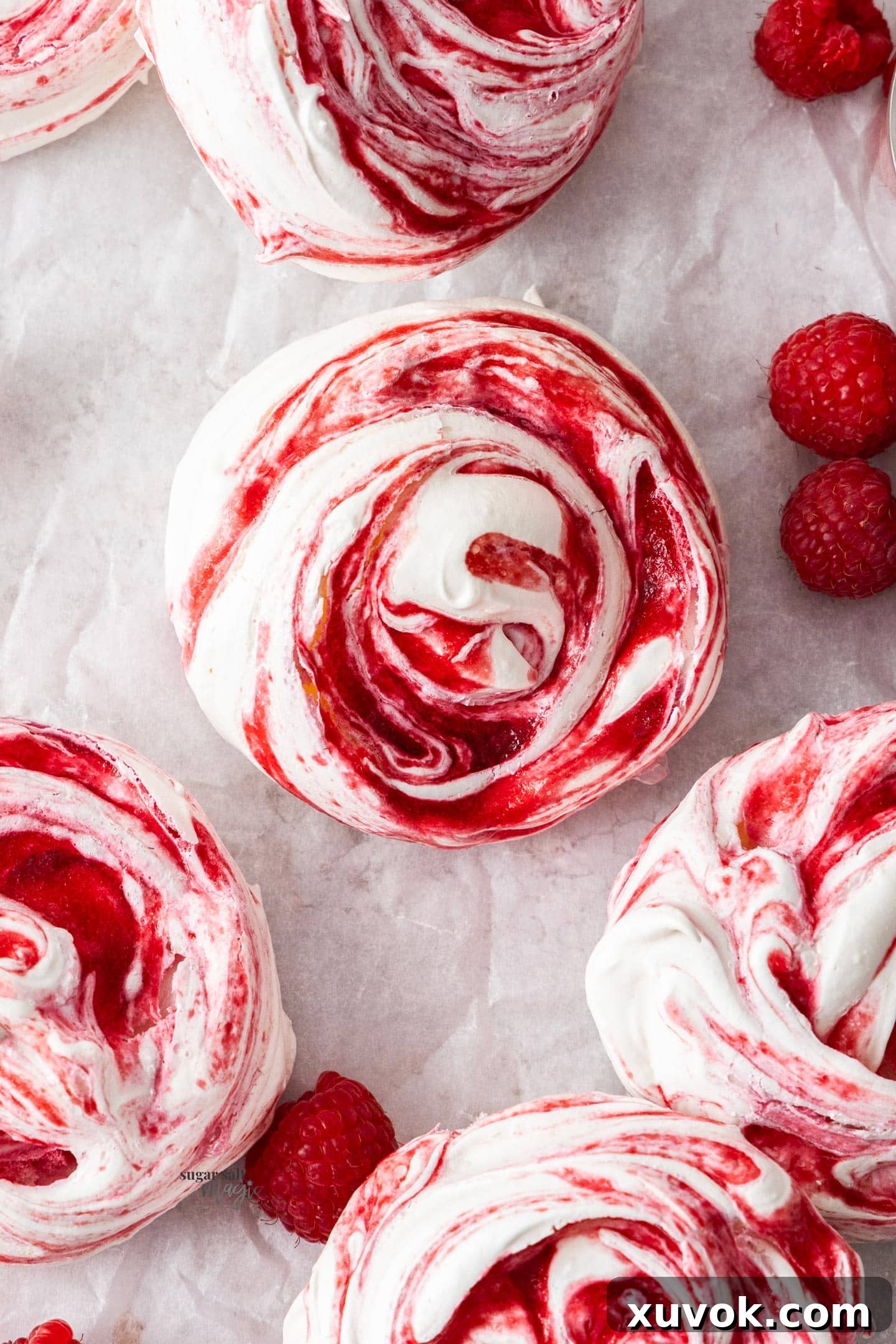
Irresistible Raspberry Meringues: Your Guide to Crispy, Chewy Perfection
Imagine a delicate dessert with a perfectly crisp, melt-in-your-mouth exterior, giving way to a delightfully chewy, soft interior. These aren’t just any meringues; they’re light, airy raspberry meringues, boasting a wonderful texture that harmonizes beautifully with their sweet and tangy flavor profile. The natural sweetness of the meringue is brilliantly balanced by the vibrant zest and a hint of lemon juice, creating a symphony of tastes that truly shines alongside fresh, tart raspberries and a homemade raspberry coulis. This combination is simply divine, offering a gourmet dessert experience that’s surprisingly achievable in your own kitchen.
Whether served elegantly on their own, accompanied by a generous dollop of freshly whipped cream, or adorned with additional fresh raspberries, these raspberry meringues are guaranteed to impress any guest or simply elevate your everyday dessert indulgence. They are a celebration of contrasting textures and complementary flavors, making them a standout sweet treat for any occasion.
Having crafted countless meringues and pavlovas over the years, I’ve gathered all the essential tips, tricks, and secrets you’ll need to master this delightful dessert. My passion for these airy confections is so strong that I’ve dedicated an entire section to meringues and pavlovas on this site. If the thought of making homemade meringues from scratch feels daunting, rest assured, you’ve landed in the perfect place. Beyond these individual raspberry meringue cookies, feel empowered to explore your creativity with a stunning pavlova grazing board or bake a magnificent classic pavlova from the ground up.
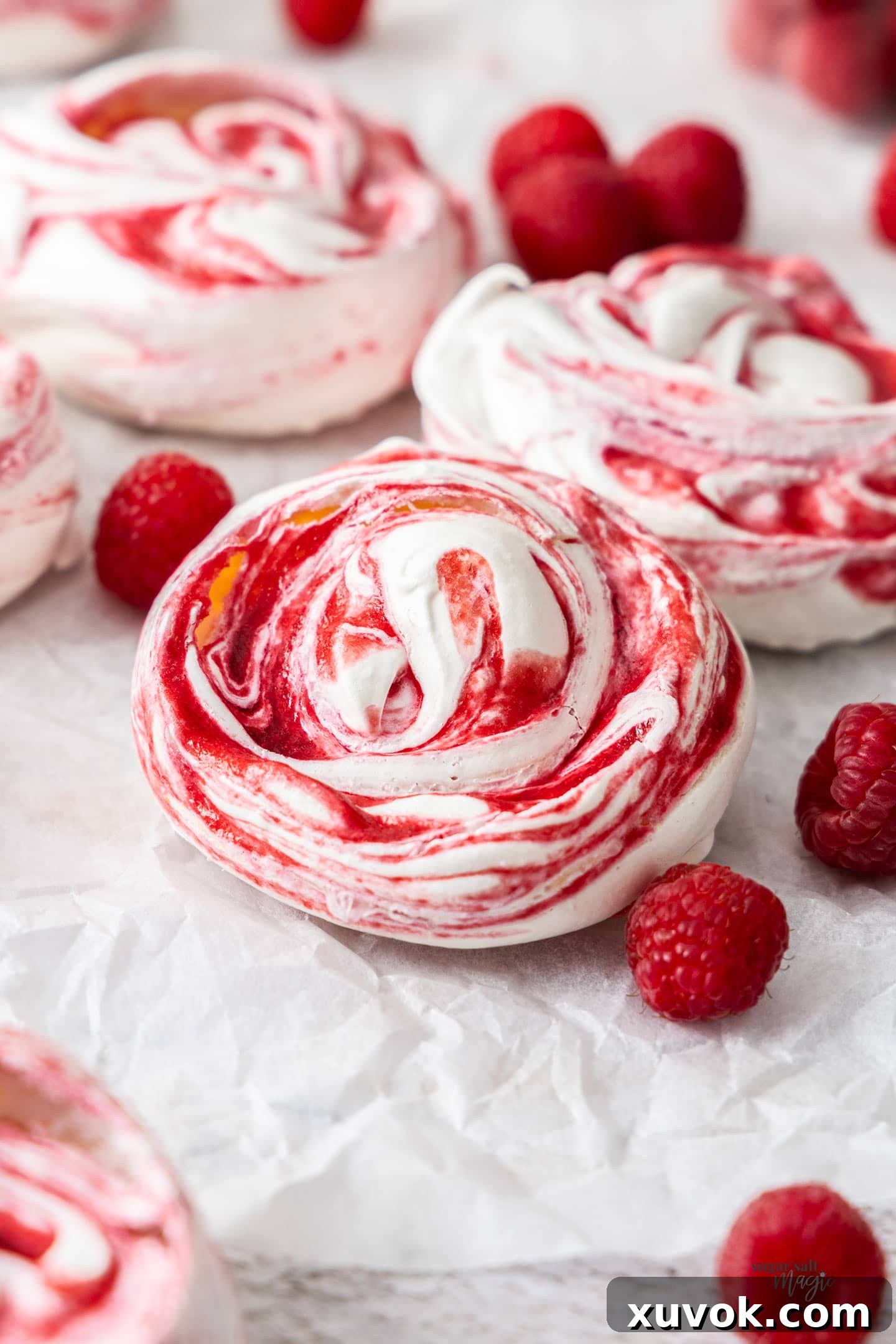
Table of Contents
- Essential Ingredients for Raspberry Meringues
- How to Craft Perfect Raspberry Meringues
- Common Meringue Mistakes & How to Fix Them
- Serving Suggestions & Delightful Variations
- Proper Storage for Meringue Perfection
- Expert Tips and Tricks for Meringue Success
- Frequently Asked Questions (FAQ)
- More Meringue & Pavlova Recipes You’ll Love
Never Miss a Recipe!
Stay updated with our latest delicious creations delivered straight to your inbox!
Essential Ingredients for Raspberry Meringues
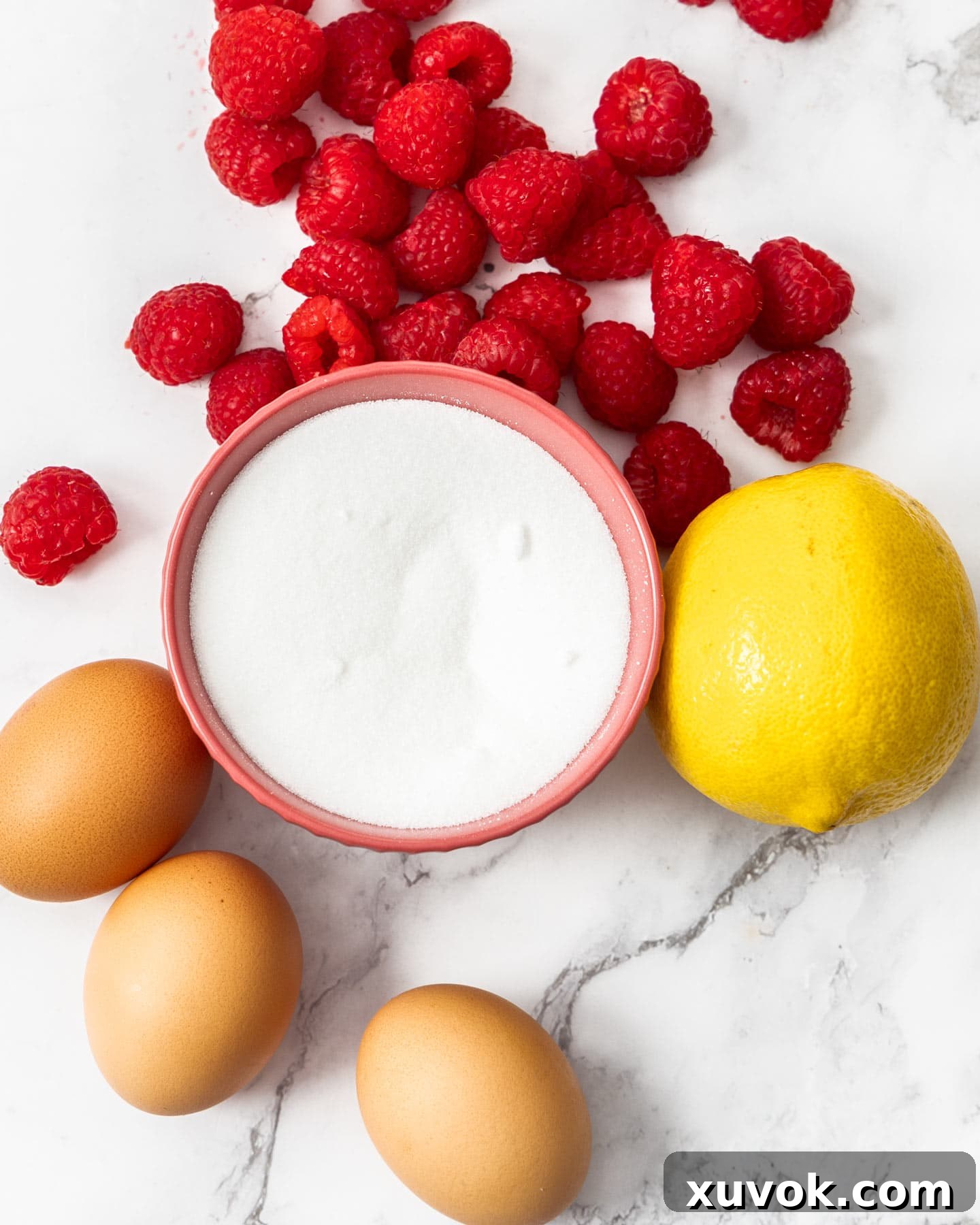
You’ll be amazed to discover that these stunning raspberry meringues – sometimes affectionately called meringue cookies – require just a handful of simple ingredients. Seriously, only four core components stand between you and these delectable treats, making them an accessible yet impressive dessert!
Jump directly to the recipe card for precise measurements and detailed instructions.
- Egg Whites: The Foundation of Fluffiness. At the heart of any meringue are egg whites. For optimal volume and stability, always use fresh, large eggs and ensure their whites are at room temperature before you begin whipping. Room temperature egg whites have looser proteins, allowing them to whip up much faster and achieve greater volume compared to cold ones, leading to lighter and airier meringues.
- Sugar: The Sweet Stabilizer. While sugar undeniably provides the sweetness, it also plays a crucial role in stabilizing the whipped egg whites. Caster sugar (also known as superfine sugar) is my preferred choice because its finer granules dissolve more easily and thoroughly into the egg whites. This ensures a smooth, non-grainy meringue mixture without the risk of overwhipping. If you only have granulated sugar, a quick pulse in a food processor can refine it, but remember to let it cool completely before adding it to the egg whites.
- Acid: The Meringue’s Best Friend. Although not always strictly necessary for smaller meringue cookies, a touch of acid significantly enhances the stability of egg whites. It helps create a stronger protein structure, ensuring your meringue holds its shape beautifully and maintains its lofty volume. In this recipe, I opt for lemon juice, which not only provides the necessary acidity but also infuses the meringues with a delicate, bright flavor that perfectly complements the raspberries. As a bonus, we’ll use the lemon zest to amplify this aromatic hint. Other acidic alternatives include half the amount of white vinegar, cream of tartar, or citric acid.
- Raspberries: The Star Flavor and Swirl. Both fresh and thawed frozen raspberries work wonderfully for this recipe. If you’re using frozen raspberries, ensure they are fully thawed before proceeding to achieve the best consistency for your coulis. Their sweet-tart nature is what truly defines these raspberry swirl meringues, providing a vibrant contrast to the sweet meringue base.
Don’t hesitate to experiment with additional flavorings! A dash of vanilla extract can add another layer of warmth, or you can swap out raspberries for other delightful berries like blackberries or blueberries for a unique twist and visual appeal.
How to Craft Perfect Raspberry Meringues: A Step-by-Step Guide
Meringues and pavlovas hold a special place in my heart as truly delightful treats. My inspiration for these gorgeous raspberry swirl meringues directly stems from the popularity of my chocolate swirl meringues. While the idea of making meringue might initially seem intimidating, I promise you, it’s remarkably straightforward once you understand and follow a few key steps. I’m here to share all my essential secrets to ensure your raspberry meringue cookies turn out perfectly every time!
For a complete list of ingredients and detailed, printable instructions, jump straight to the recipe card below.
1. Prepare the Vibrant Raspberry Coulis
The beautiful raspberry swirl that defines these meringues comes from a simple, yet incredibly flavorful, two-ingredient raspberry coulis. Begin by combining your fresh or thawed frozen raspberries with a touch of sugar in a blender or a mini food processor. Blend until the mixture is completely smooth. Don’t worry about the tiny seeds at this stage – we’ll address those next.
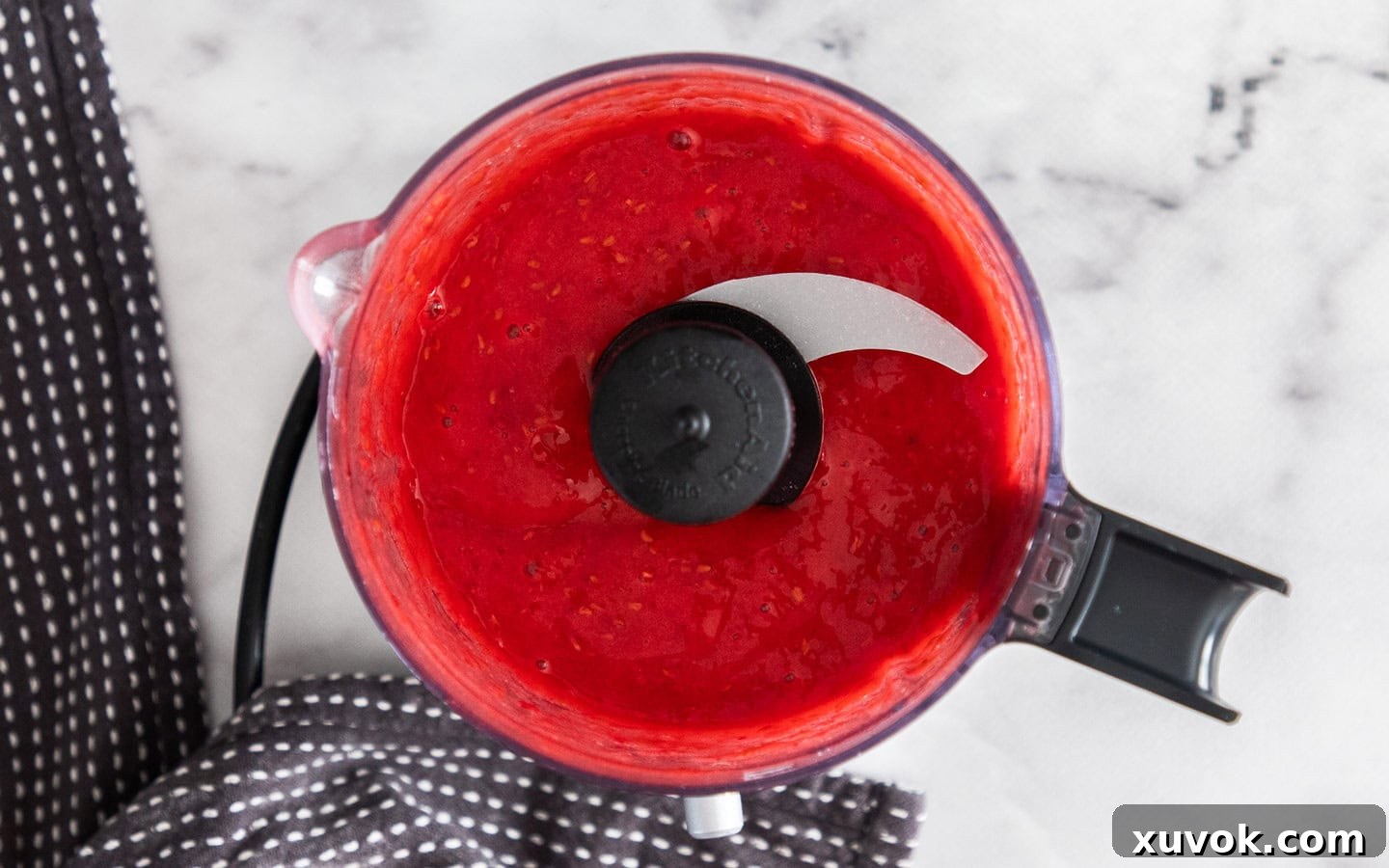
Next, meticulously strain the blended mixture through a fine-mesh sieve into a small saucepan. This crucial step removes all the seeds, resulting in a perfectly smooth and luxurious coulis, free of any gritty texture. Bring the strained mixture to a gentle simmer or low boil over medium heat, stirring frequently to prevent sticking to the bottom of the pan. Continue to cook until the coulis visibly thickens and reduces by approximately half. This reduction process intensifies the raspberry flavor and creates a more concentrated, glossy sauce. Once thickened, pour the coulis into a clean bowl and place it in the refrigerator to cool completely. It’s essential that the coulis is cold before you incorporate it into the delicate meringue, as warmth can destabilize the whipped egg whites.
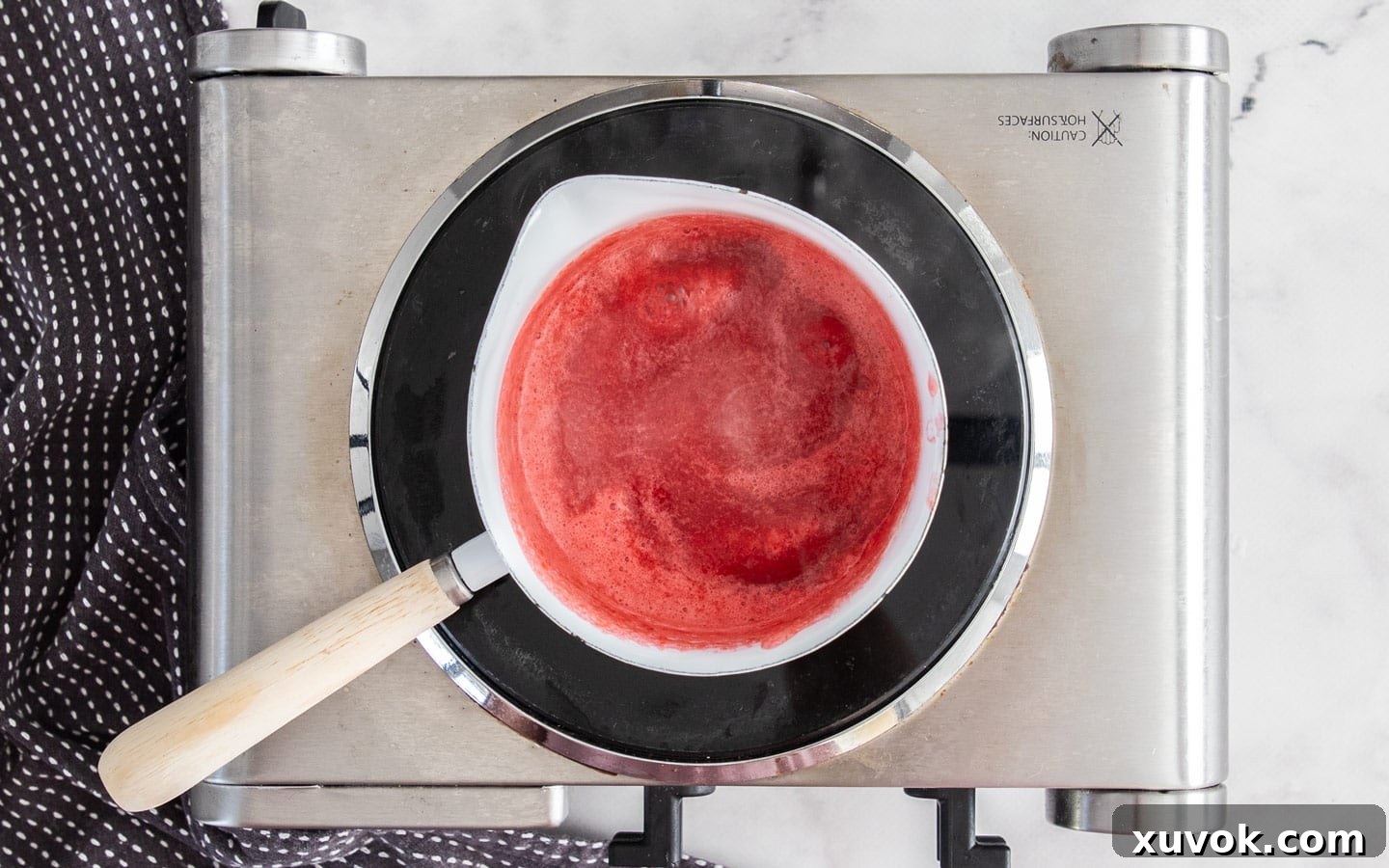
2. Whip Egg Whites to the Soft Peak Stage
Transfer the room-temperature egg whites into the impeccably clean bowl of a stand mixer fitted with the whisk attachment. Alternatively, you can use a large mixing bowl with a handheld electric beater. Begin beating the egg whites on a medium speed, without any additions, for about 4-5 minutes. You’ll know they’ve reached the soft peak stage when you lift the whisk out, and the meringue forms a peak that gracefully curls over, still sitting on top of the mixture without sinking back in. This initial whipping introduces vital air, creating the foundational volume and airy texture for your raspberry meringues.
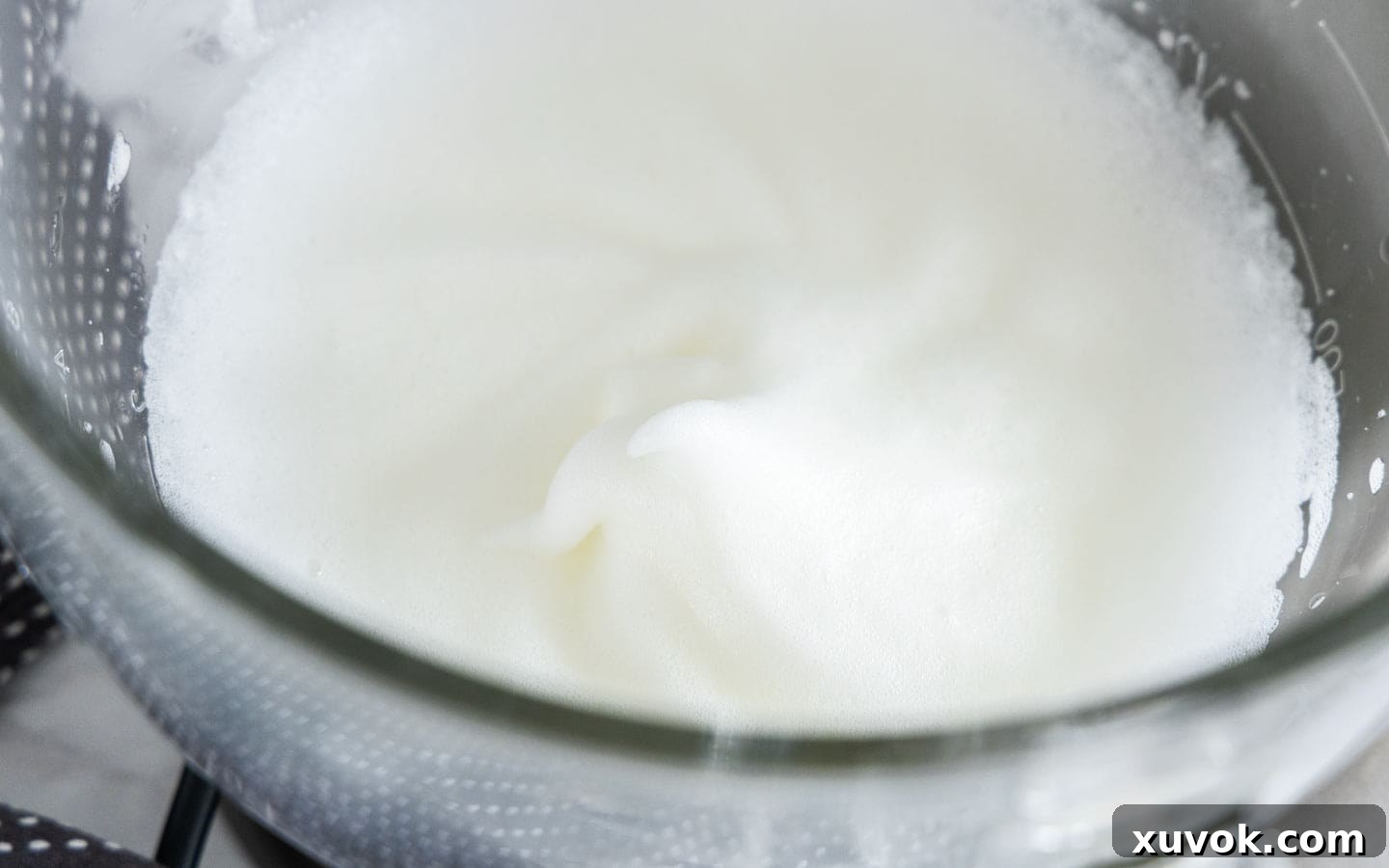
3. Gradually Incorporate the Sugar
This step requires patience, but it’s absolutely crucial for achieving a stable, glossy, and perfectly textured meringue. With your mixer still running on the absolute lowest setting, begin adding the sugar. Introduce it one tablespoon at a time, allowing approximately 20 seconds between each addition. This slow and steady approach gives the sugar ample time to dissolve completely into the egg whites, preventing deflation and ensuring a smooth, stable mixture. Rushing this step can lead to a grainy meringue or one that ‘weeps’ liquid. Your patience here will truly be rewarded with a beautiful, silken meringue at the end.
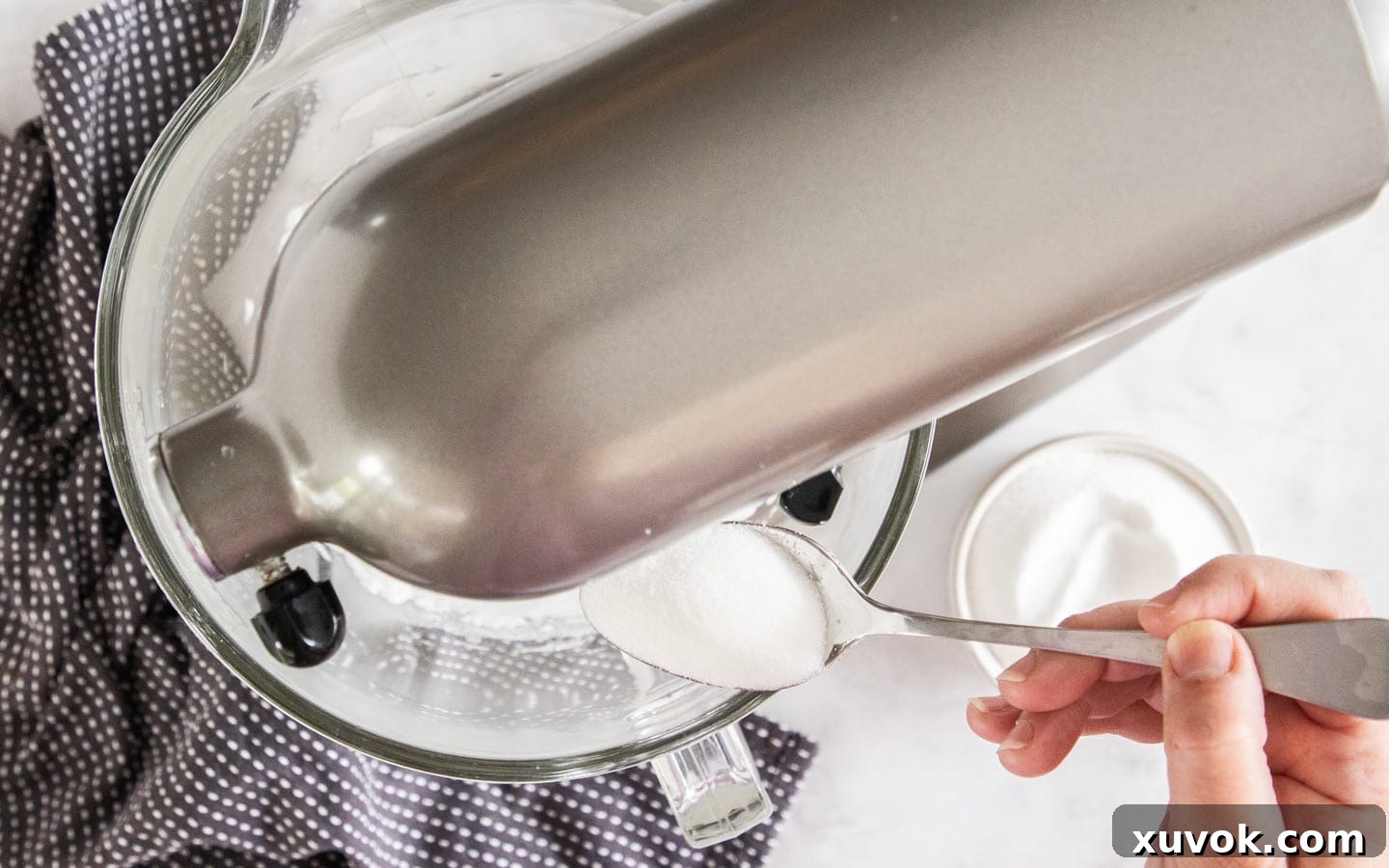
4. Achieve the Stiff Peak Stage
Once all the sugar has been incorporated, increase your mixer speed to medium-high (avoiding the absolute highest setting, as overwhipping can lead to dry meringues) and continue beating the meringue mixture until it reaches the stiff peak stage. This process typically takes another 5-10 minutes, depending on the power of your mixer. You’ll know it’s perfectly ready when:
- The meringue appears remarkably thick and possesses a beautiful, glossy sheen.
- When you slowly lift the beater out of the mixture, a peak forms that stands upright without curling or collapsing.
- If you rub a tiny bit of the meringue between your thumb and forefinger, it should feel completely smooth, indicating that all the sugar has fully dissolved. If you detect any grittiness, continue beating until it’s smooth.
If any of these criteria aren’t met, keep beating until your meringue achieves this perfect consistency. This stage is vital for the structure, crispness, and stability of your baked raspberry meringues.
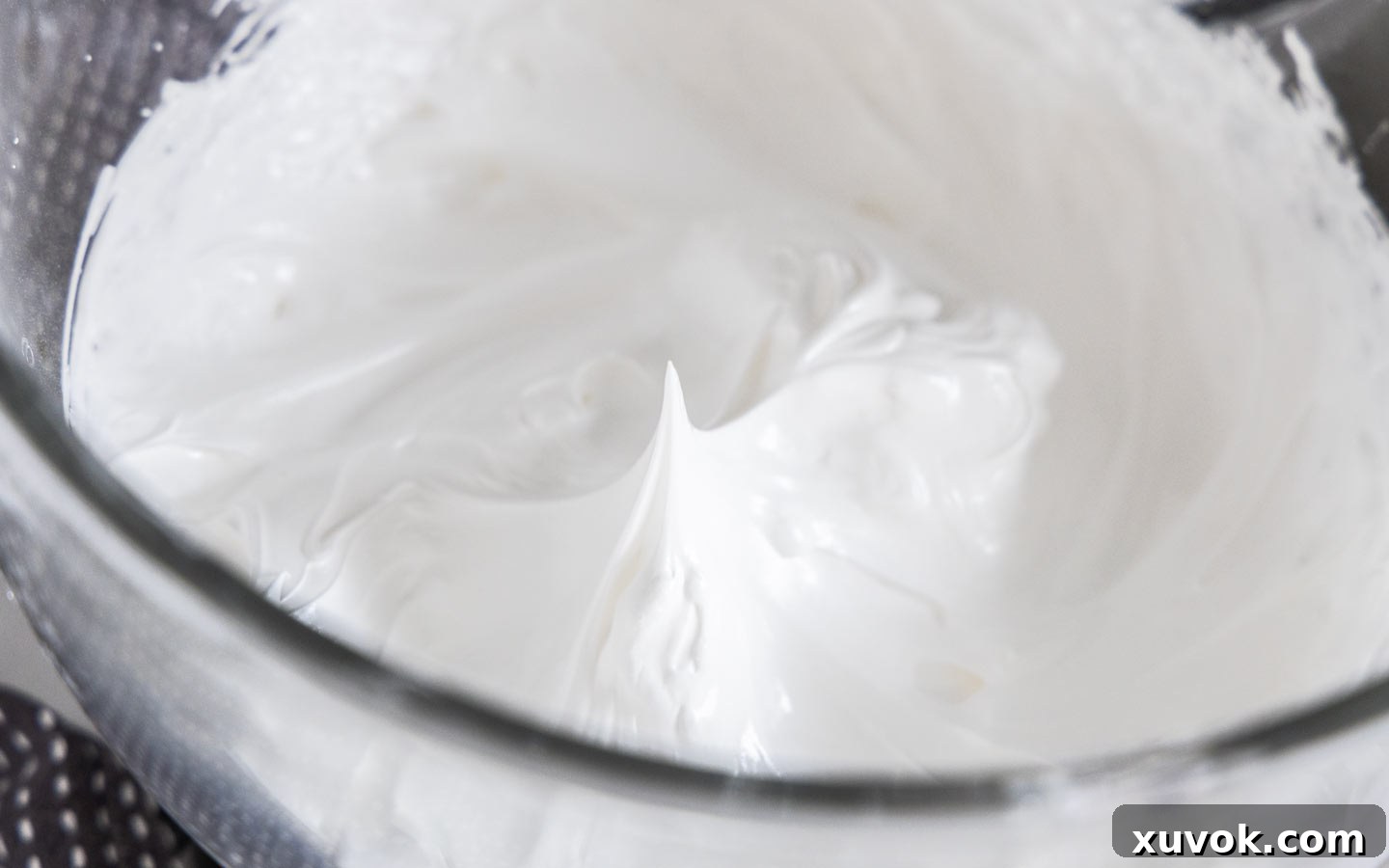
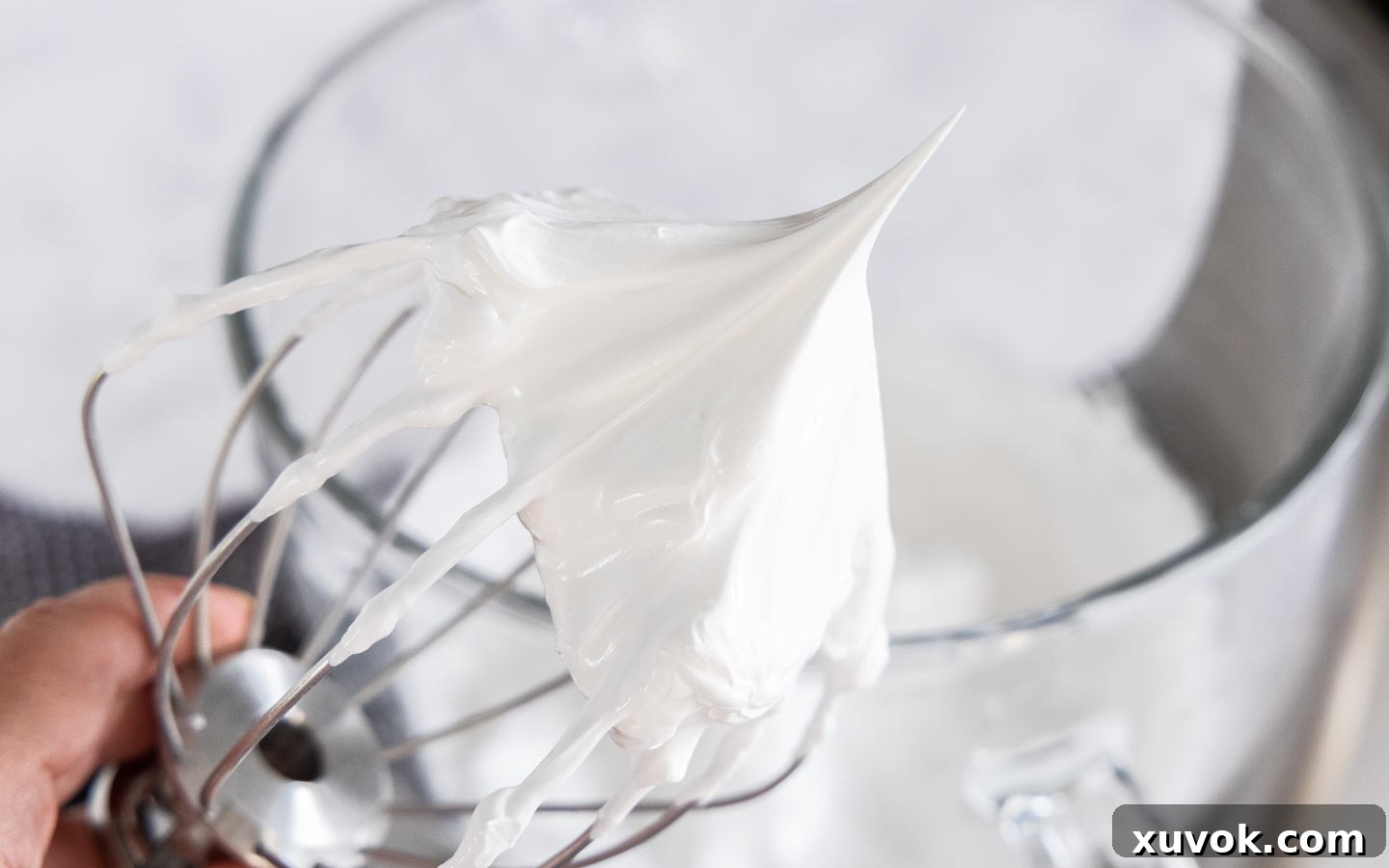
5. Gently Fold in the Aromatic Lemon Zest
This step, while entirely optional, is highly recommended for an extra layer of flavor and aroma. The bright, fragrant lemon zest introduces a wonderful aromatic note that beautifully complements the sweet and tart raspberries. Using a flexible spatula, very gently fold the lemon zest into the stiff meringue mixture. The goal is to distribute the zest evenly without deflating the meringue, so be careful not to overmix, as you want to preserve as much of the air and volume as possible that you’ve painstakingly whipped into the meringue.
6. Portion the Meringue and Create the Raspberry Swirl
To create uniform and beautifully shaped raspberry meringue cookies, I recommend using a large ice cream scoop (a ⅓ cup size works well, but a ½ cup volume would be ideal for larger, more impressive meringues) to portion six even mounds of meringue onto a baking sheet meticulously lined with baking paper. Use the back of a spoon or a spatula to gently shape these mounds into roughly round forms. The key is to avoid flattening them too much; maintain their height and volume for that characteristic airy and crisp texture after baking.
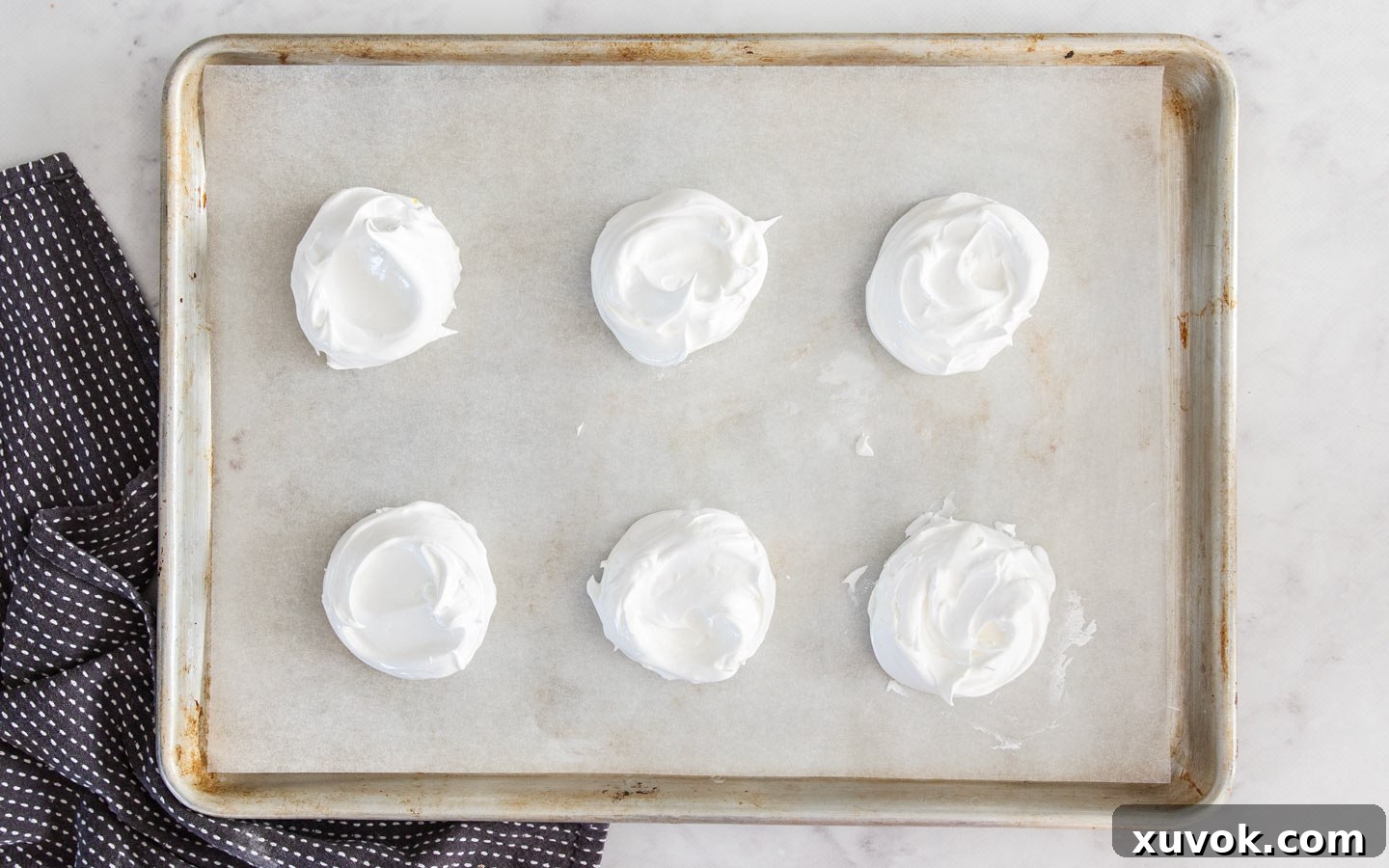
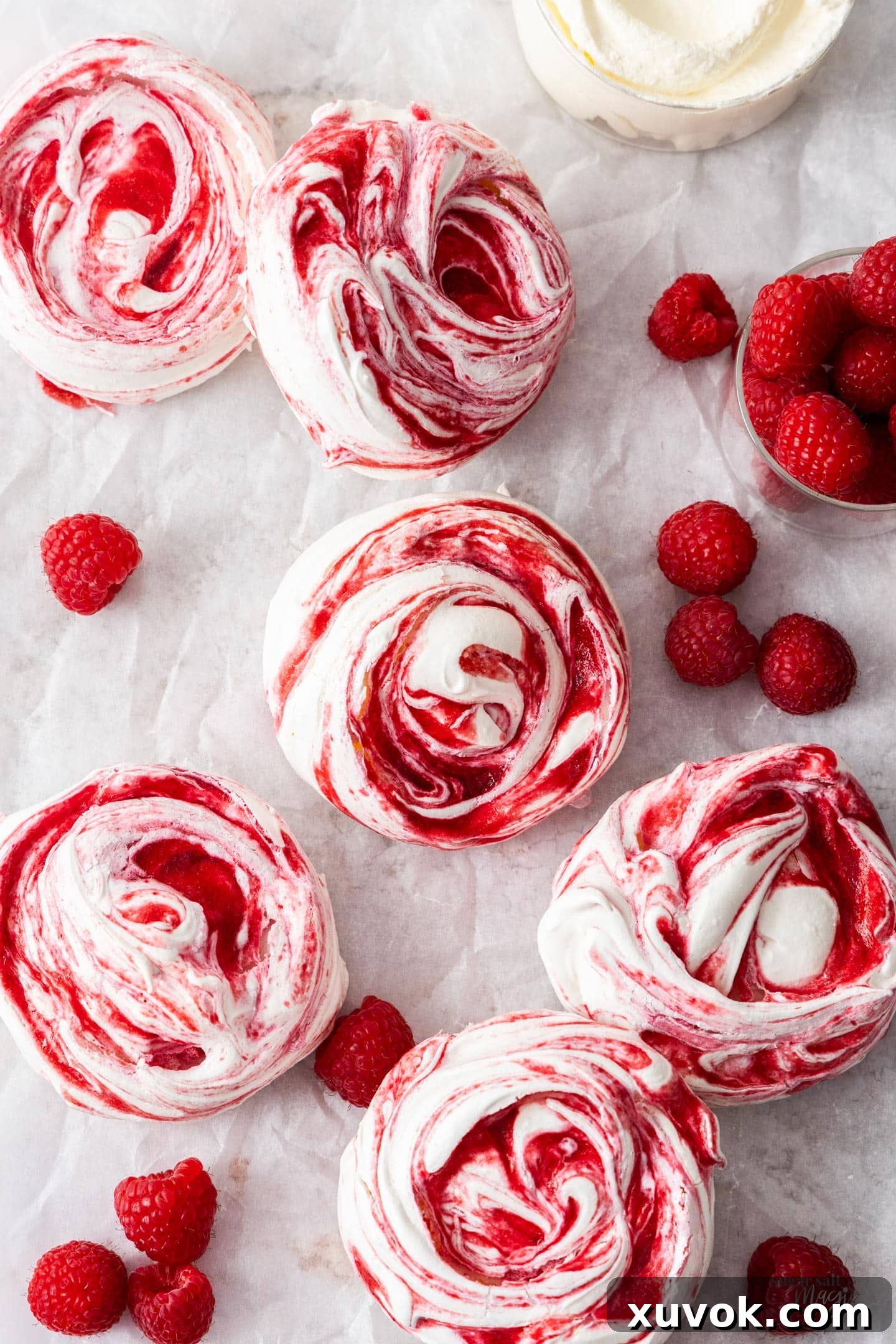
Now for the magical raspberry swirl! Take your previously cooled raspberry coulis and drizzle approximately 1 ½ to 2 teaspoons over the top of each meringue mound. Then, grab a chopstick or a thin skewer and gently swirl the coulis into the meringue, creating beautiful, vibrant patterns. As you swirl, you can also use the chopstick to subtly refine the round shape of your meringues, ensuring they look as good as they taste.
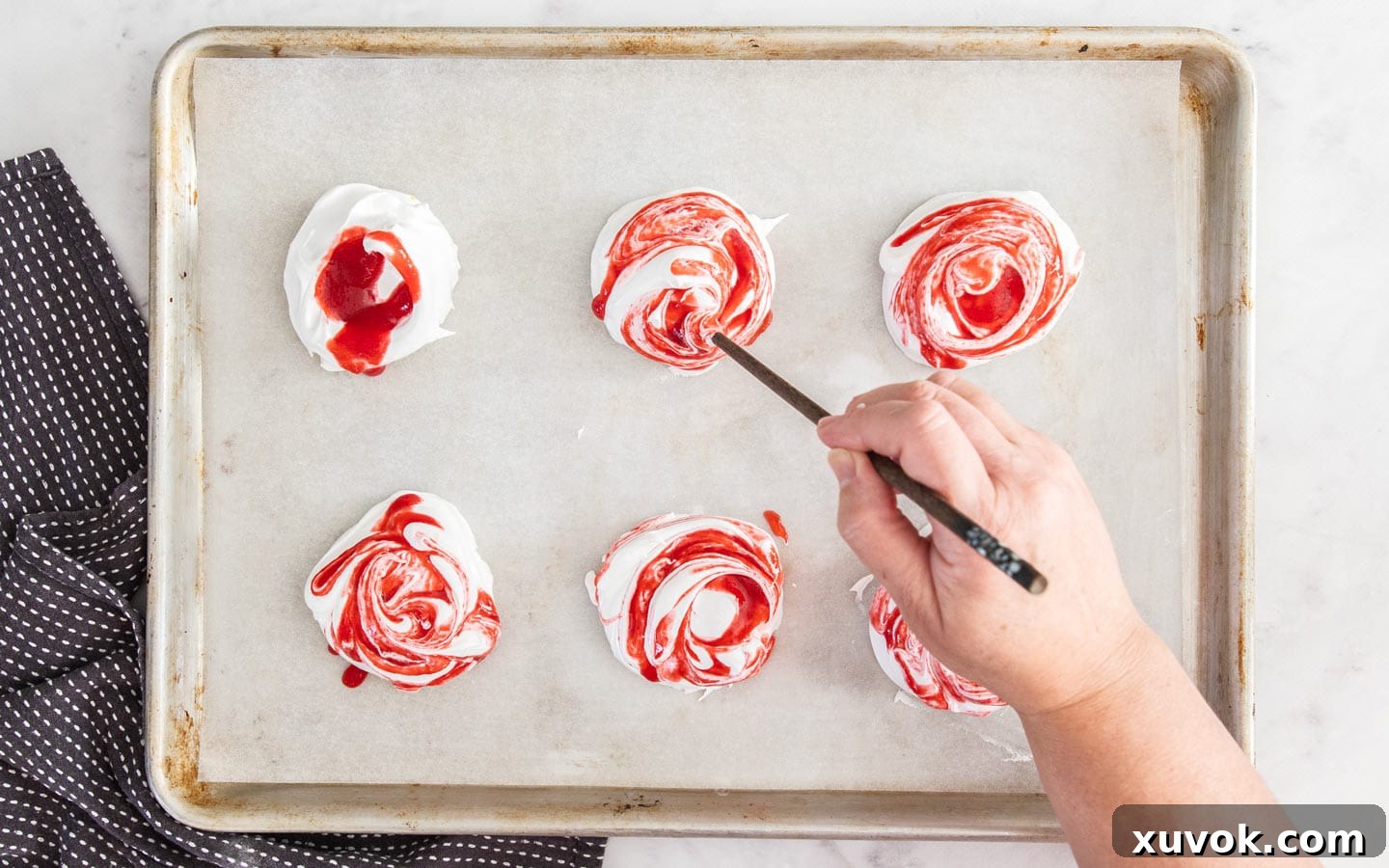
7. Bake Low and Slow, Then Cool Completely
Preheat your oven to a very low temperature: 100°C (210°F), using the fan-forced setting for best results. This low heat is absolutely crucial for slowly drying out the meringues rather than cooking them too quickly, which can lead to cracks and a yellowed, undesirable appearance. Bake the meringues for approximately 90 minutes (1 ½ hours). Once the baking time is complete, turn off the oven *without opening the door*. It is absolutely vital to let the meringues cool completely inside the turned-off oven for a minimum of 1 hour, or ideally even longer if your schedule permits. This slow cooling process helps prevent them from cracking and ensures they achieve that perfect crispy exterior and slightly chewy interior.
Common Meringue Mistakes & How to Fix Them
Meringue making is more of a science than an art, and a few common pitfalls can lead to less-than-perfect results. But don’t despair! Understanding these issues will help you troubleshoot and achieve consistent success with your raspberry meringues. Knowledge is power when it comes to delicate baking!
- Flat or Runny Meringue: This is almost always due to fat contamination. Even a tiny speck of egg yolk, grease from your hands, or residue on your bowl/utensils can prevent egg whites from whipping properly. Ensure all equipment is spotlessly clean and dry. Over-beating the egg whites before adding sugar can also cause them to become dry and then collapse.
- Grainy Meringue: If your meringue feels gritty between your fingers, it means the sugar hasn’t fully dissolved. This usually happens if you add the sugar too quickly or don’t beat it long enough. Always add sugar gradually and beat until absolutely smooth. Using caster (superfine) sugar helps immensely due to its smaller crystal size.
- Weeping Meringue: When clear, sugary syrup leaks from the base of your meringue, it’s called weeping. This is almost always a sign of undissolved sugar. The sugar absorbs moisture from the air and releases it. Ensure thorough beating to dissolve all sugar crystals, as detailed in the instructions.
- Cracked Meringues: Meringues crack when they cool too quickly or are baked at too high a temperature. The sudden temperature change causes the crisp exterior to contract faster than the soft interior. The solution is simple: bake low and slow, and, most importantly, allow them to cool completely inside the turned-off oven for several hours.
- Yellowish Meringues: High baking temperatures can cause meringues to brown or yellow, losing their desirable pristine white color. Keeping the oven temperature low and consistent will help maintain that beautiful white appearance, especially for delicate raspberry meringues.
Serving Suggestions & Delightful Variations
While these raspberry meringues are absolutely delicious on their own, a few simple additions can elevate them to an even more impressive dessert. Get creative and make them your own signature treat!
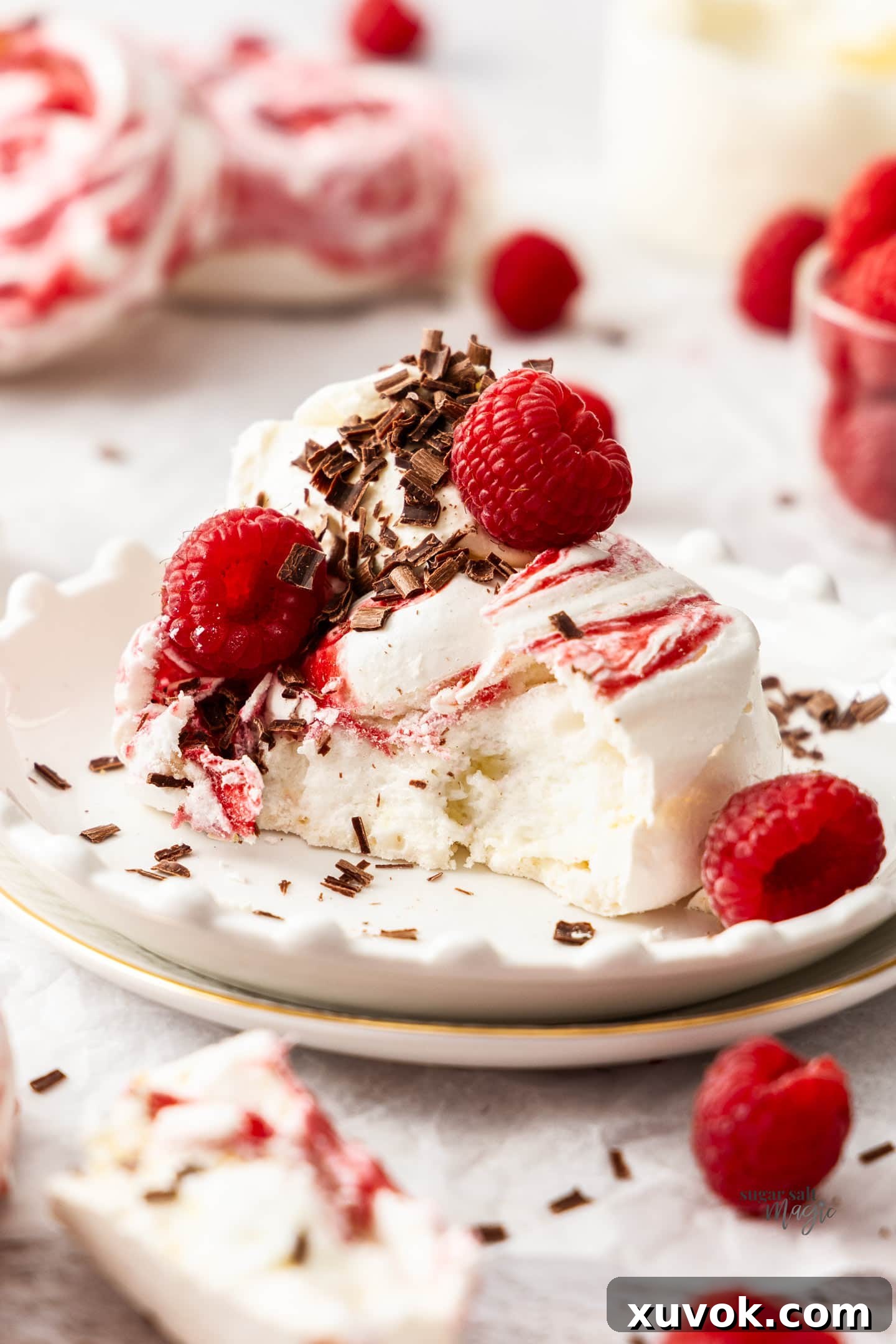
- Classic Pairing: A generous dollop of freshly whipped cream and a sprinkling of fresh raspberries are the ultimate accompaniment. The coolness and richness of the cream provide a lovely contrast to the meringue’s texture and sweetness.
- Chocolate Lover’s Dream: Drizzle with melted dark or white chocolate, or sprinkle with chocolate shavings before serving. The rich notes of chocolate and the tartness of raspberry are a match made in heaven!
- Ice Cream Extravaganza: Serve your meringue alongside a scoop of vanilla bean ice cream or a complementary sorbet (like lemon or raspberry) for a truly decadent and refreshing treat.
- Fruity Freshness: Beyond raspberries, consider adding other fresh berries (like blueberries or blackberries), sliced peaches, or kiwi for a burst of color and additional fruity notes. A mixed berry medley can be stunning.
- Aromatic Additions: Before baking, a tiny pinch of finely ground cardamom, a drop of rosewater extract, or a hint of almond extract can be gently folded into the meringue for an exotic and sophisticated twist.
- Different Berry Swirls: Instead of raspberries, try making your coulis with blueberries, blackberries, or even a mix of summer berries for a different color and flavor profile in your meringue swirl. Each berry offers a unique charm.
Proper Storage for Meringue Perfection
For the absolute best experience, these raspberry meringues are most delightful when enjoyed on the day they are made. Because the raspberry coulis on top retains some moisture, it will gradually soften the crisp meringue over time. To maintain their quality as much as possible, store any leftover raspberry meringues in an airtight container in a cool, dry place, such as your pantry, for up to 3-4 days. Avoid refrigeration, as the high humidity can quickly turn them soft and sticky, compromising their delicate texture.
Expert Tips and Tricks for Meringue Success
Meringues, while simple in ingredients, do involve some precise techniques to ensure perfect results. Once you grasp these crucial steps, you’ll be amazed at how effortlessly you can create these impressive desserts. It might seem like a lot of information, but taking a moment to read through these expert tips will truly set you up for ultimate meringue mastery and success with your raspberry meringues.
- Absolutely Spotless Equipment: This is arguably the most critical tip for meringue making. Even the smallest trace of fat (from egg yolk, oily hands, or greasy bowls) can prevent egg whites from whipping up properly. Always use a meticulously clean, dry glass, ceramic, or metal bowl and whisk attachment. Plastic bowls are not recommended as they can retain grease. Wiping your bowl and whisk with lemon juice or vinegar before starting can help ensure they are truly fat-free.
- Room Temperature Egg Whites are Key: Cold egg whites are tighter and more difficult to whip, yielding less volume. Allow your egg whites to come to a full room temperature (ideally 20-30 minutes out of the fridge) before you begin. This allows the protein structures to relax, making them more pliable and able to trap more air, resulting in a much lighter and airier meringue.
- Choose the Right Sugar and Add it Slowly: Caster sugar (superfine sugar) is preferred for meringues because its fine granules dissolve readily into the egg whites, creating a smooth, stable, and glossy meringue. If you only have granulated sugar, you can briefly pulse it in a food processor to create a finer texture, but ensure it cools completely before use to avoid cooking the egg whites. The pace of adding sugar is equally important: introduce it one tablespoon at a time, allowing 15-20 seconds between additions while the mixer is on a low setting. This slow incorporation is vital for dissolving the sugar and building a strong, stable structure without deflating the egg whites.
- Ensure All Sugar is Fully Dissolved: A grainy meringue or one that “weeps” (leaks sugary liquid) is almost always a result of undissolved sugar. After all the sugar has been added and the meringue looks thick and glossy, take a small pinch between your thumb and forefinger. It should feel perfectly smooth. If it’s still grainy, continue beating on medium-high speed until it is smooth. This step prevents your meringues from being sticky or developing sugary spots, which can happen if sugar crystals draw moisture from the air.
- Avoid Overwhipping: While you need to beat the meringue sufficiently to dissolve the sugar and reach stiff peaks, there is such a thing as overwhipping. Beating at the highest speed for too long can cause the meringue to become dry, brittle, and prone to cracking during baking. Instead, use a medium-high setting (one or two settings below maximum on most mixers) to achieve the desired consistency without compromising the meringue’s delicate structure.
- Mastering the Stiff Peak Stage: The term “stiff peaks” can sometimes be misleading. To accurately check for stiff peaks, slowly lift your mixer’s whisk attachment straight up from the meringue mixture. A truly stiff peak will stand erect, holding its shape firmly with perhaps only the very tip curling slightly. If the peak collapses, continue beating. If you pull the whisk out too quickly, the tip might naturally curl over, leading you to believe it needs more beating when it might not.
- Bake Low and Slow: The Meringue Golden Rule: To achieve that classic pristine white color and prevent cracking, meringues must be baked at a very low temperature (around 100°C / 210°F). Baking too hot will cause them to brown, cook too fast, and crack significantly. The gentle, long bake slowly dries them out, creating that desirable crispy shell and chewy interior. Using a fan-forced oven generally promotes a whiter meringue due to even heat distribution.
- Cool Completely in the Oven: This is a non-negotiable step for perfect meringues. Once baked, turn off the oven and leave the meringues inside, completely undisturbed, for at least 1-2 hours. For larger pavlovas, it’s best to leave them overnight. This gradual cooling process prevents thermal shock, which can cause meringues to crack and shrink. It also helps them to fully dry out, ensuring they are beautifully crisp throughout.
Frequently Asked Questions (FAQ) About Meringues
- Can I make meringues ahead of time? Yes, you can! Once baked and completely cooled in the oven, store them in an airtight container in a cool, dry place (like a pantry) for up to 3-4 days. However, for the best crispness, they are ideal eaten the day they are made, especially with the raspberry coulis, which can soften them over time.
- Why did my meringues collapse or go flat? This is often due to fat contamination (even a tiny bit of egg yolk or grease) in your bowl or on your whisk, or due to not beating the egg whites sufficiently to achieve stiff peaks. Ensure all equipment is meticulously clean and dry before starting.
- Can I use powdered sugar instead of caster sugar? No, powdered sugar (also known as icing sugar or confectioners’ sugar) contains cornstarch, which can negatively affect the meringue’s texture and stability. Always use caster (superfine) or finely ground granulated sugar for best results.
- My meringue is chewy but not crispy. What went wrong? This usually means the meringue wasn’t baked long enough or cooled properly in the oven. The low, slow bake is essential for drying out the meringues completely, and the slow cooling prevents moisture from being reabsorbed. Ensure they cool entirely inside the switched-off oven for maximum crispness.
- Can I double this recipe? Yes, you can easily double the recipe for more servings. Just ensure your mixing bowl is large enough to accommodate the increased volume of egg whites and sugar, and you may need to bake in batches or use larger baking sheets.
- How do I separate egg whites from yolks perfectly? It’s often easiest to separate cold eggs, as the yolks are firmer and less likely to break. Once separated, let the whites come to room temperature before whipping. If a speck of yolk accidentally gets in, use a clean piece of eggshell or a spoon to carefully scoop it out.
More Meringue & Pavlova Recipes You’ll Love
If you’ve enjoyed making these raspberry meringues, you’ll surely love exploring more delightful recipes from our collection:
- Classic Meringue Nests
- Stunning Pavlova Grazing Board
- Decadent Chocolate Swirl Meringues
- Refreshing Easy Peppermint Meringues
- Indulgent Chocolate Meringue Cake
- Explore All Meringue and Pavlova Creations
⭐⭐⭐⭐⭐
Did you try this raspberry meringues recipe? Leaving a rating and comment below the recipe is so helpful!

Raspberry Meringues
6
serves
20 minutes
1 hour
30 minutes
1 hour
2 hours
50 minutes
Rate
Pin
Ingredients
- 1 cup raspberries fresh or frozen (190g/6.7oz)
- 2 tablespoons caster sugar or granulated sugar (see notes)
- 3 egg whites from large eggs, room temp
- ¾ cup caster sugar superfine sugar (150g / 5.3oz)
- 1 lemon
For best results, always weigh ingredients where a weight is provided
Equipment
-
stand mixer with whisk attachment or handheld beater
-
large baking sheet
-
large ice cream scoop helpful but not essential
Instructions
-
Blend the raspberries and 2 tablespoons of sugar in a blender or mini food processor until smooth. Strain into a small saucepan and bring to a simmer over medium heat, stirring often, for 4-5 minutes until thick and reduced to about ¼ cup. Pour into a small dish and place in the fridge to chill completely.
-
Preheat the oven to 100°C/210°F fan forced. Line a large baking sheet with baking paper.
-
In the bowl of a stand mixer, with the whisk attachment (or using a handheld beater), beat the egg whites on medium speed until soft peaks form (4-5 minutes)
-
Zest the lemon and set the zest aside then juice it. Add ½ teaspoon of juice to the egg whites and beat to incorporate. (Any leftover lemon juice can be frozen in ice cube trays for use in other dishes).
-
Turn the mixer down to low and begin adding the ¾ cup of sugar, one tablespoon at a time, counting to 20 seconds between each addition. Once all the sugar is added, increase to medium-high speed (not the highest setting) and continue to beat until the egg whites are thick and glossy and at stiff peak stage. Test the mixture by rubbing a little between your finger and thumb. It should be smooth. If it is still grainy, keep beating until it is smooth when you test it.
-
Gently fold in 1 teaspoon of the lemon zest with a spatula.
-
Use a large ice cream scoop or dessert spoons and divide the meringue mixture into 6 even portions on the baking sheet. Use a spoon or spatula just to gently shape them into roughly round mounds, trying not to flatten them too much.
-
Drizzle about 2 teaspoons of the raspberry coulis over each one and use a chopstick to swirl it around the meringue. You can use the chopstick to help reshape them into a circle shape too.
-
Place in the oven and bake for 1 ½ hours then turn the heat off and leave the meringue nests in the oven, undisturbed, for at least 1 hour (see notes for longer cooling). Don’t open it until at least this time. If you have longer, leave them to cool in there longer.
-
Please take a moment to leave a comment & rating. It’s appreciated and so helpful.
Notes
- Tablespoons: I use a standard Australian 20ml tablespoon (equal to 4 teaspoons). Always check your measuring spoons before use as sizes can vary by region.
- Caster sugar, also known as superfine sugar, is granulated sugar that has been ground to a finer consistency. It is distinct from icing sugar or powdered sugar. Caster sugar is highly recommended for meringues as it dissolves quickly and evenly, minimizing the risk of overwhipping your meringue while still ensuring all sugar is incorporated. If only granulated sugar is available, briefly blend it in a food processor or spice grinder until the grains are slightly finer. Crucially, allow it to cool completely before incorporating it into the egg whites. **Do not use** icing sugar, powdered sugar, or confectioners’ sugar.
- Nutrition details are approximate only – scroll below the recipe to find the full nutritional information. These values can vary based on the specific brands and ingredients you use.
Discover More Meringue and Pavlova Delights!
135
kcal
Marie Roffey
Dessert
Australian, French, World
Have you tried this recipe?
Don’t forget to leave a rating and comment below and let me know how it was! I love hearing from you. Nutrition information is approximate and derived from an online calculator. The brands you use may cause variations.
Calories from Fat 3