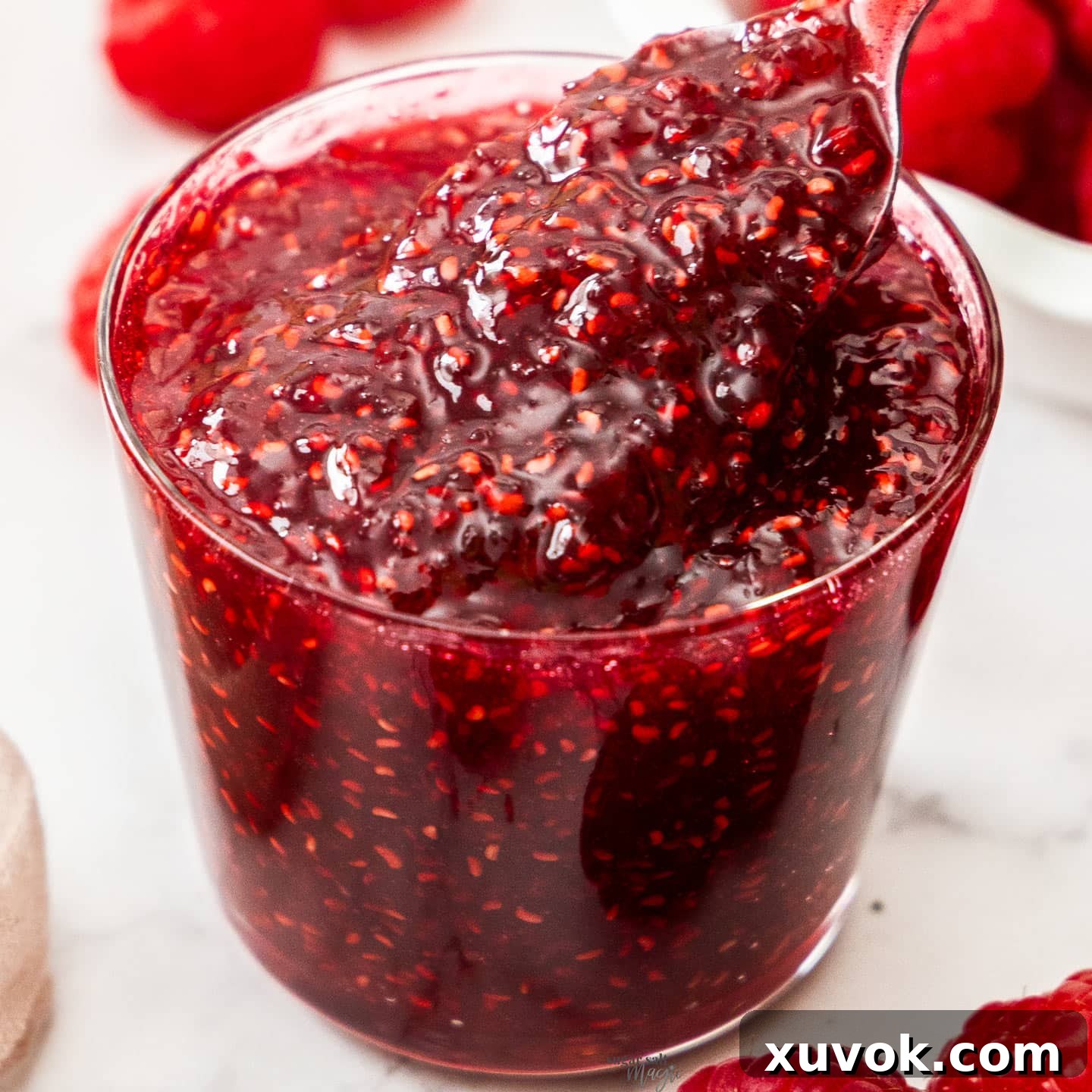
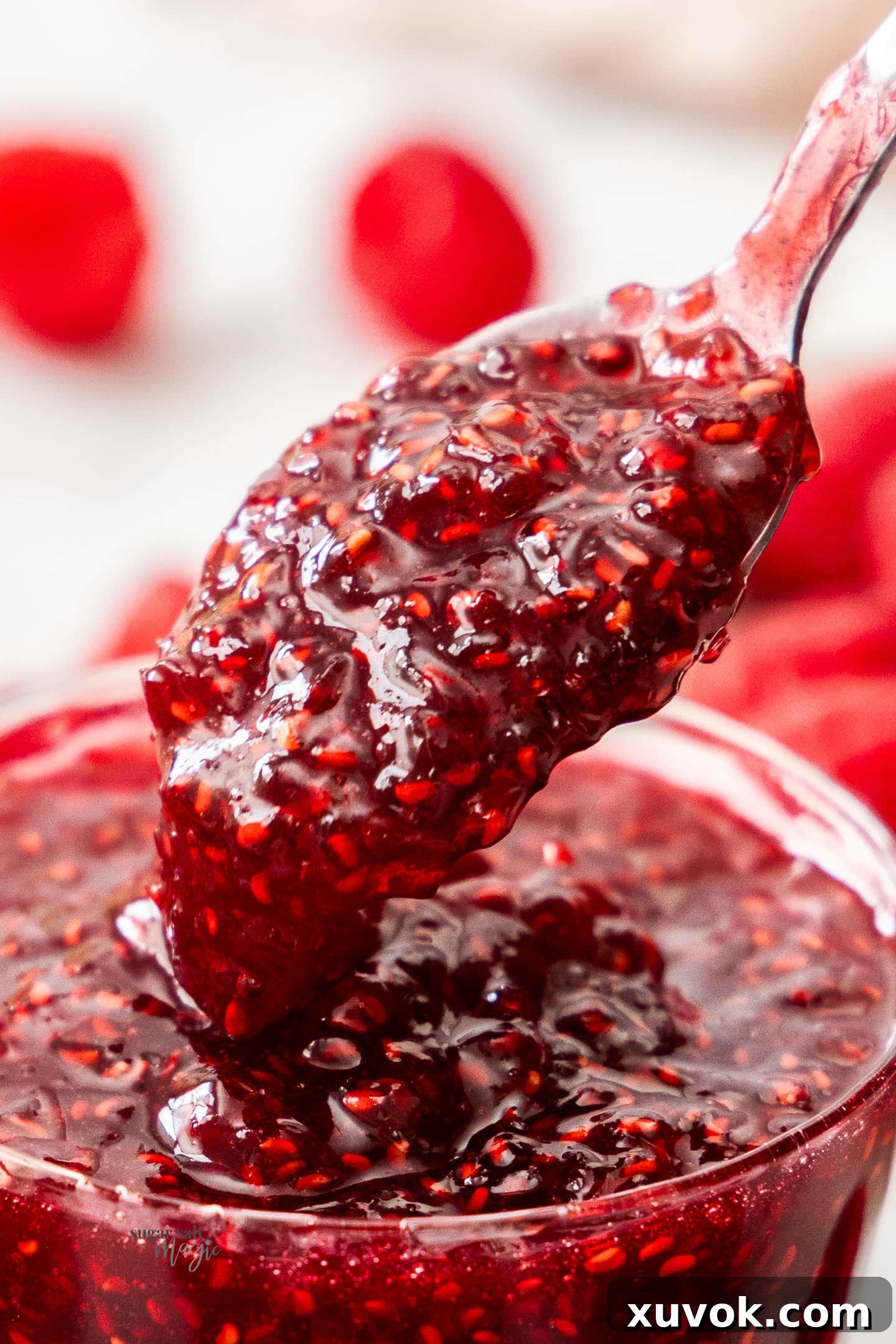
Transform fresh or frozen raspberries into a vibrant, luscious spread with this incredibly easy raspberry jam recipe. Crafted with just three simple ingredients and requiring only about 20 minutes of active time, you’ll soon be enjoying a sticky, sweet, and intensely fruity homemade jam that far surpasses store-bought options. This ruby-red delight bursts with the natural flavor and brilliant color of real raspberries, free from any artificial additives or preservatives. It’s the perfect way to capture the essence of summer in a jar, ready to elevate your breakfast, desserts, and baked goods.
Making your own raspberry jam from scratch offers the unique advantage of customizing its consistency to your exact preference. Whether you desire a softly spoonable texture for drizzling over yogurt or a thicker, more spreadable jam for generously slathering on toast, this recipe makes it effortlessly achievable. Its rich flavor and beautiful hue make it an ideal companion for delicate cakes, flaky pastries, and, of course, a warm slice of bread. Discover the simple magic of homemade preserves and experience the joy of creating something truly special. This jam is absolutely divine when featured in a Raspberry Sponge Cake, adding an irresistible layer of tangy sweetness.
Never Miss a Recipe!
Get the latest recipes straight to your inbox and unlock a world of culinary delights!
❤️ Why you’ll adore this homemade raspberry jam
- Incredibly Simple: Forget complex canning procedures. This recipe uses only three basic ingredients you likely already have on hand: raspberries, sugar, and lemon juice. No fancy equipment or expertise required, making it perfect for beginners and seasoned preservers alike.
- Lightning Fast: From start to finish, this jam comes together in about 20 minutes. It’s an ideal project for a busy afternoon, allowing you to enjoy fresh, homemade jam without waiting hours. The rapid cooking process also helps preserve the vibrant flavor of the raspberries.
- Year-Round Enjoyment: Whether you have a bounty of fresh raspberries in summer or a stash of frozen berries from the grocery store, this recipe works beautifully with both. This means you can whip up a batch of delicious jam any time the craving strikes, regardless of the season.
- Naturally Beautiful: The stunning, intense ruby-red hue of this jam comes entirely from the raspberries themselves. There’s no need for artificial colors or dyes, ensuring a pure and wholesome product that looks as good as it tastes.
- Customizable Consistency: You are in complete control of your jam’s texture. Prefer a looser, more syrupy spread? Or perhaps a firm, spoon-standing jam perfect for fillings? Simply adjust the cooking time slightly and perform the easy cold-plate test to achieve your desired thickness.
- Endlessly Versatile: This homemade raspberry jam isn’t just for toast. It’s a fantastic ingredient for baking, adding a burst of fruitiness to cakes, tarts, and cookies. Drizzle it over ice cream, swirl it into yogurt, or serve it alongside cheese boards for an exquisite touch.
Ingredients & Smart Substitutions for Perfect Raspberry Jam
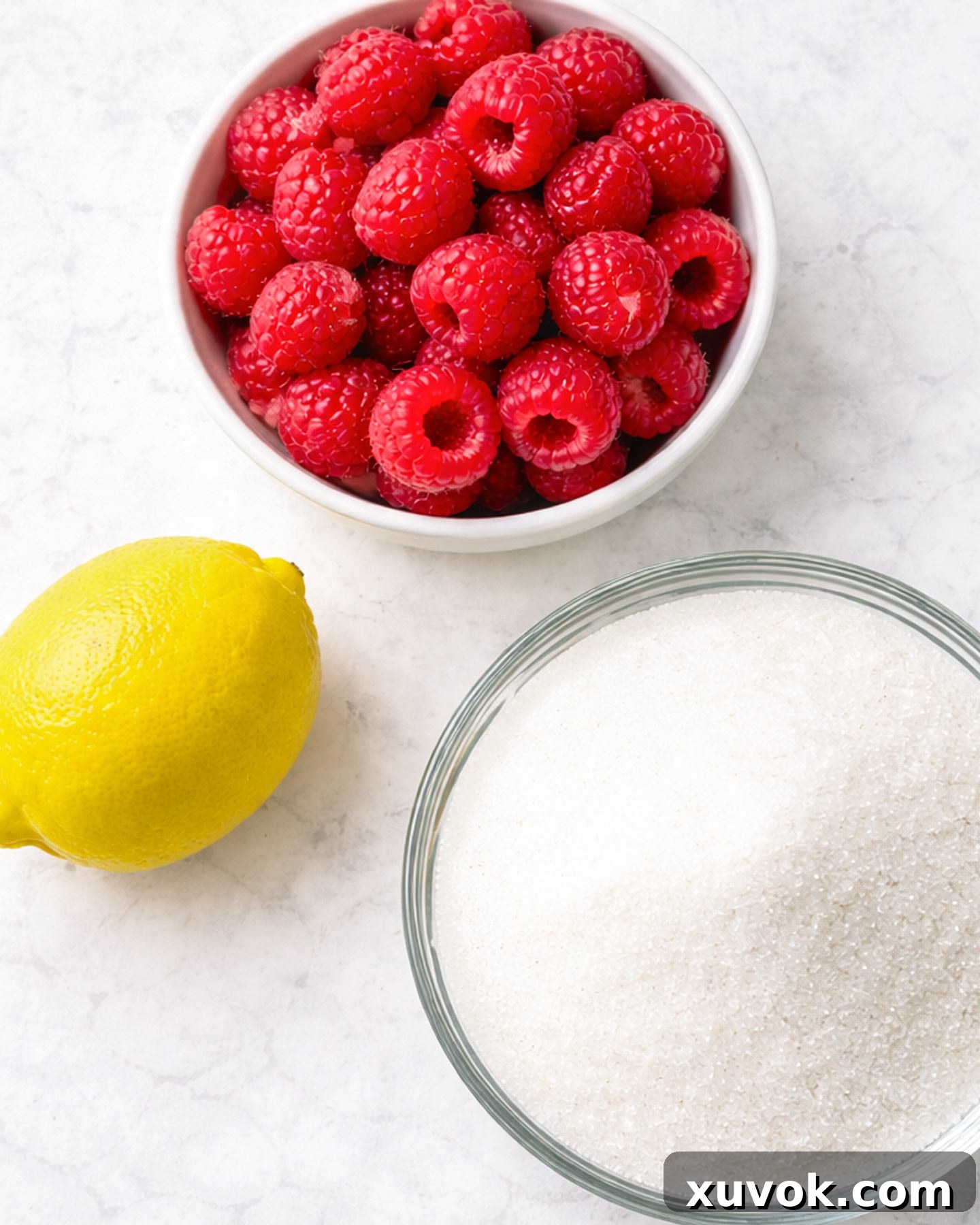
Crafting this delightful raspberry jam is wonderfully straightforward, relying on just three core ingredients. Each plays a vital role in achieving that perfect balance of sweetness, tang, and set. Let’s explore them in detail to ensure your homemade jam is nothing short of exceptional.
Jump to the full recipe card for precise quantities and step-by-step instructions.
- Raspberries: The star of our jam! You can confidently use either fresh or frozen raspberries for this recipe. If opting for frozen berries, there’s no need to thaw them beforehand; simply add them straight to the saucepan. Keep in mind that frozen raspberries tend to release more liquid as they cook, which may slightly extend the thickening time. For the best flavor, avoid using underripe raspberries, as they can introduce an undesirable bitter note to your otherwise sweet jam. While this recipe focuses on raspberries, you could experiment with other berries like blackberries or blueberries, though cooking times and pectin levels may vary.
- Sugar: Sugar is not merely a sweetener in jam making; it’s a crucial component for preservation, texture, and activating pectin. This recipe calls for white granulated sugar, which provides the cleanest sweetness and allows the raspberry flavor to shine. I strongly advise against reducing the sugar quantity for this particular jam, as it doesn’t contain added pectin. The sugar plays a vital role in helping the jam thicken and set properly. Significant reduction would likely result in a much runnier consistency and a less vibrant flavor profile. Similarly, while sugar substitutes exist, they typically alter the jam’s texture and setting properties significantly, so this recipe is optimized for traditional sugar.
- Lemon Juice: A splash of freshly squeezed lemon juice is essential for two primary reasons. Firstly, its acidity perfectly balances the sweetness of the sugar, preventing the jam from tasting cloyingly sweet and enhancing the overall fruit flavor. Secondly, and critically, lemon juice helps activate the natural pectin present in the raspberries. Pectin is a gelling agent, and the acidity from the lemon is key to kickstarting this process. For the freshest and most effective results, always use freshly squeezed lemon juice over bottled varieties, which can sometimes have a duller flavor or contain additives that affect the jam.
Understanding Pectin’s Role in Jam Making:
Pectin is a naturally occurring, soluble fiber found in varying amounts in fruits and vegetables. When combined with sugar and acid, it forms a gel that gives jam its characteristic set. Fruits like apples and citrus peels are high in pectin, while raspberries are considered a low-pectin fruit. Many jam recipes call for added commercial pectin to ensure a firm set. However, this particular recipe cleverly leverages the natural pectin present in the raspberries themselves, alongside the activating power of lemon juice and the setting properties of sugar. Although most of the pectin in lemons is concentrated in their skin and seeds, the citric acid in the juice is powerful enough to encourage the natural pectin in raspberries to gel. This means you can achieve a beautifully set, delicious homemade raspberry jam without needing any store-bought pectin or specialized jam sugar.
How to Make Easy Raspberry Jam: A Step-by-Step Guide
Embarking on the journey of making raspberry jam from scratch is a surprisingly simple and rewarding experience. This method simplifies the process to just a few key steps, primarily involving combining ingredients in a saucepan and allowing them to cook until they reach that perfect thick, sweet, and spreadable consistency. You’ll be amazed at how quickly and easily you can create a truly artisanal preserve.
For precise quantities and detailed instructions, remember to jump directly to the recipe card below.
1. Combine the Ingredients and Begin Cooking
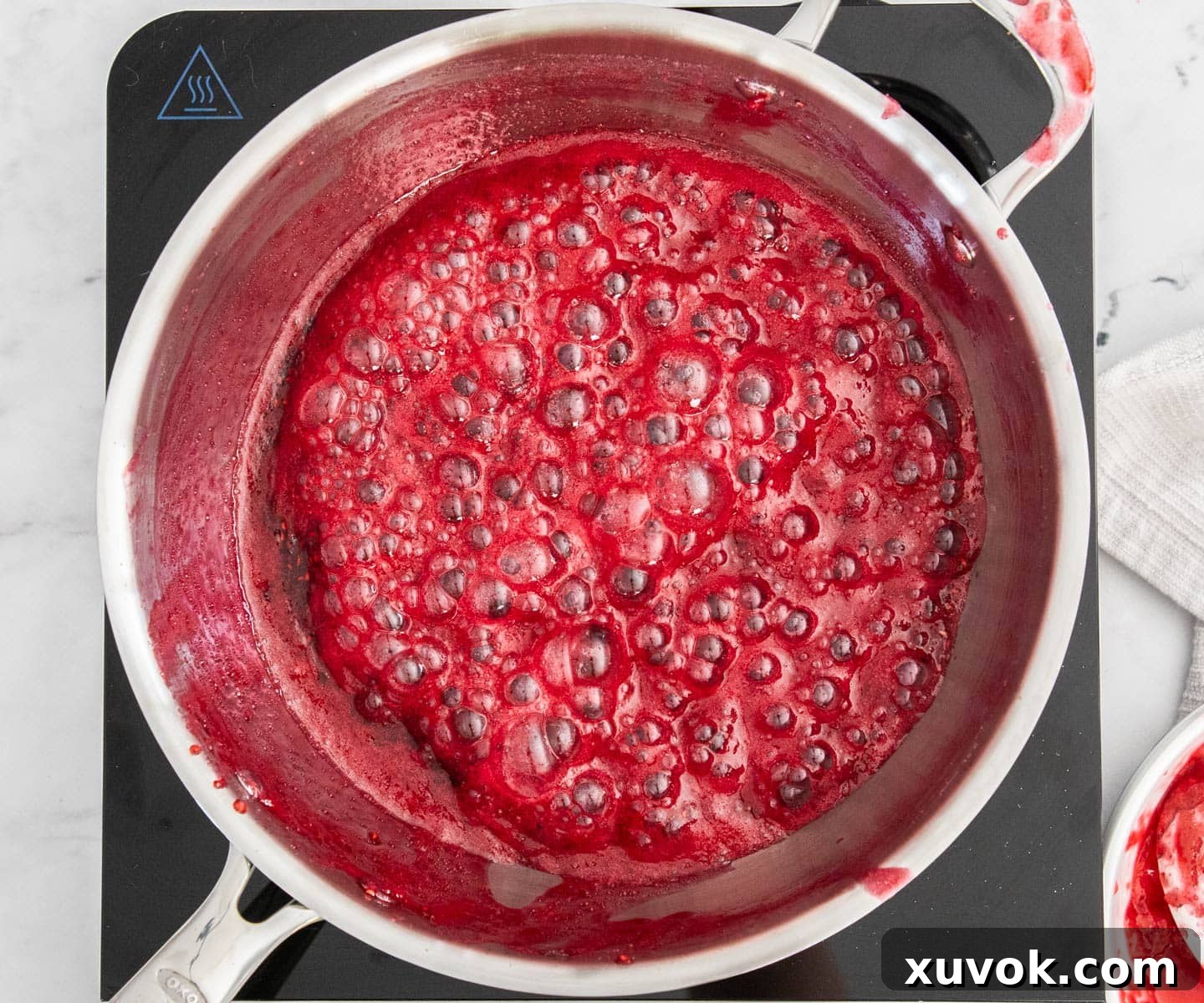
Start by preparing a small plate and placing it in your freezer. This chilled plate will be crucial later for testing your jam’s consistency. In a heavy-bottomed saucepan, combine the fresh or frozen raspberries, granulated sugar, and freshly squeezed lemon juice. Place the saucepan over a low to medium heat setting. Begin stirring the mixture gently but consistently as it heats. This initial stirring is important to help the sugar dissolve evenly into the fruit juices and prevent any sticking or scorching at the bottom of the pan. As the mixture warms, the raspberries will start to soften and release their juices, creating a beautiful, fragrant syrup. Continue heating until the mixture comes to a gentle boil.
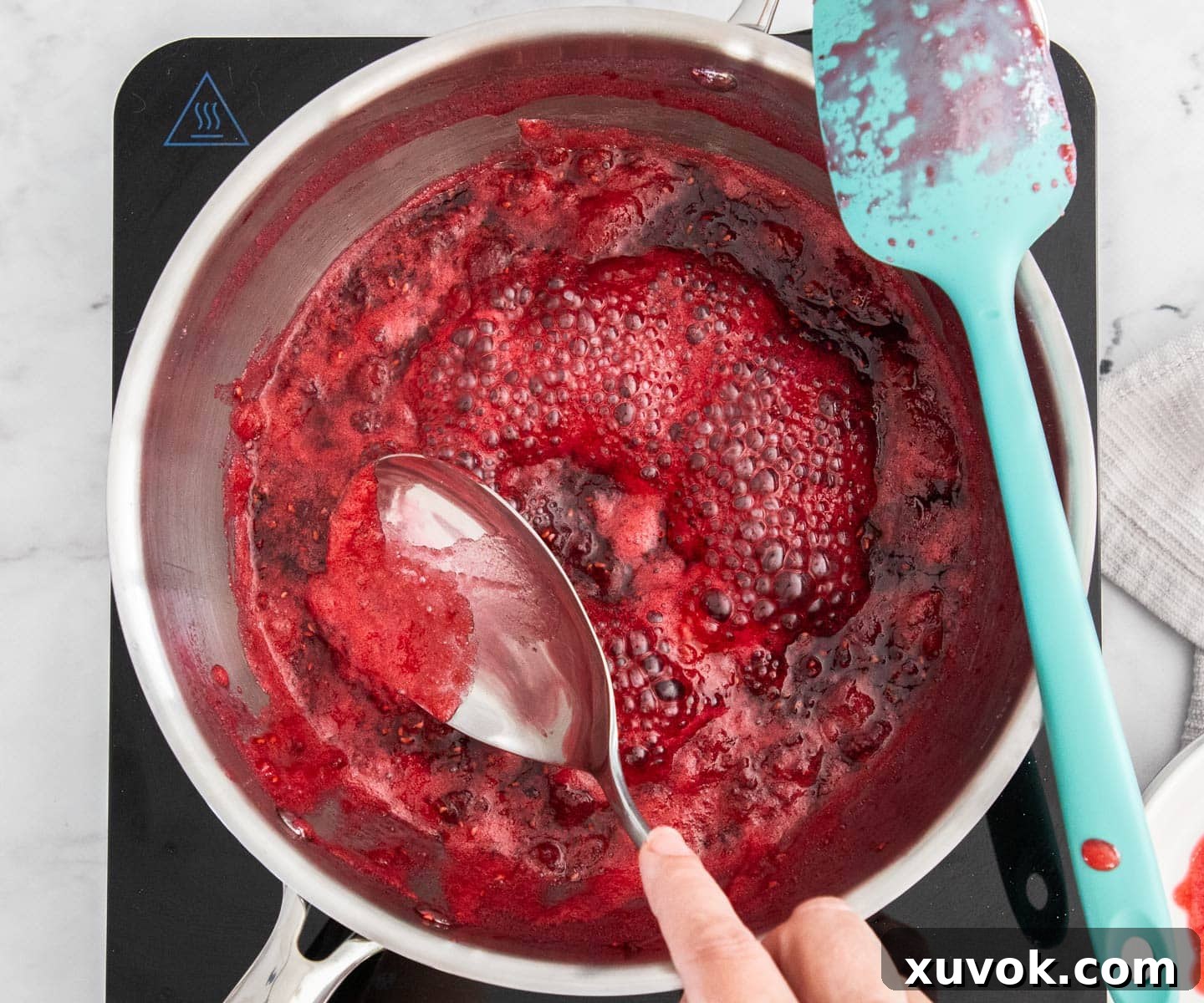
Once boiling, you may notice a layer of foamy scum forming on the surface. While harmless, removing this foam is recommended as it helps achieve a clearer, more vibrant, and aesthetically pleasing jam. Use a metal spoon or a fine-mesh skimmer to carefully skim off this foam and discard it. This small step ensures your finished jam has that gorgeous, bold ruby-red color and a clean, glossy appearance, preventing it from looking cloudy.
2. Allow the Jam to Thicken to Perfection
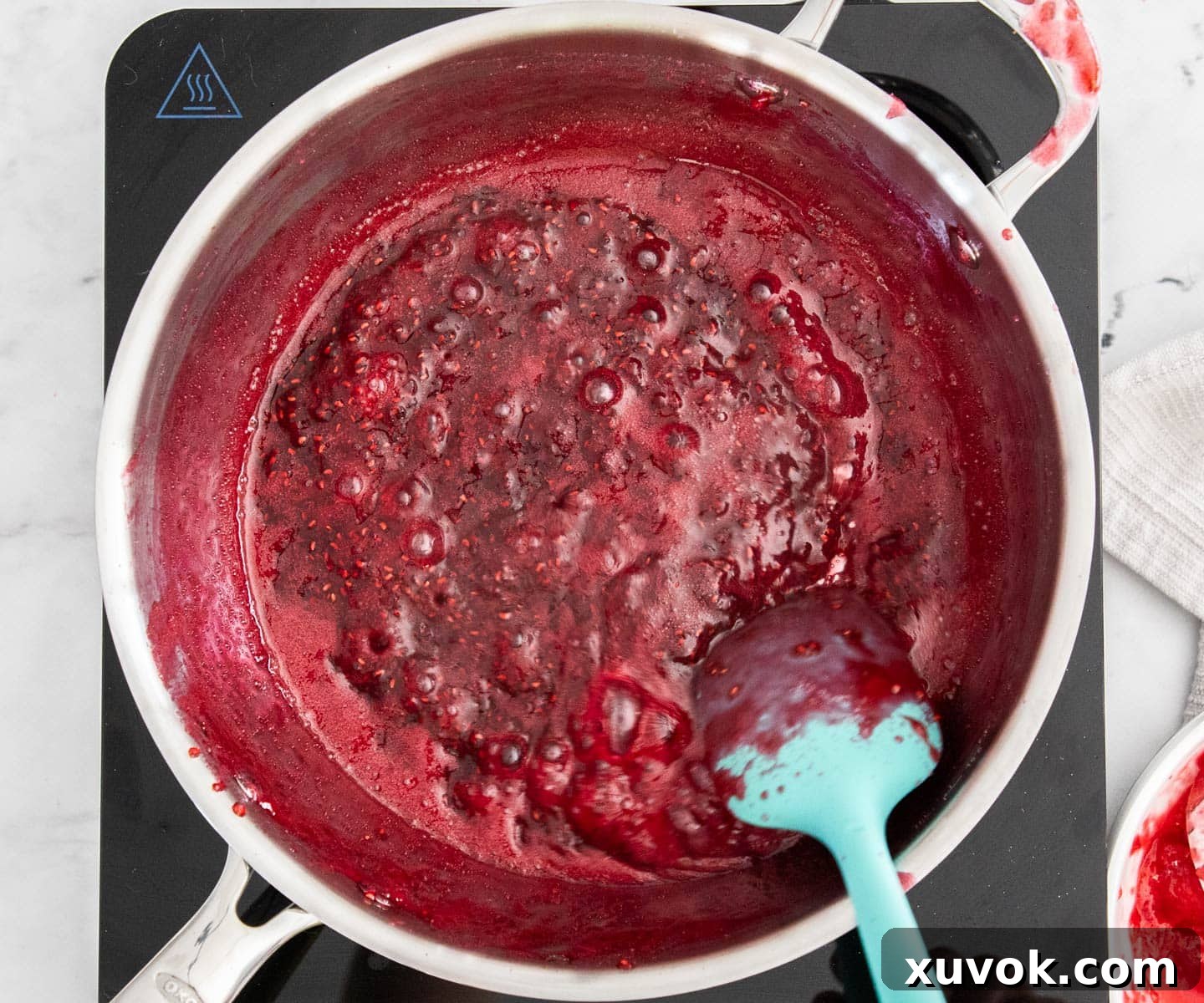
After skimming the foam, allow the jam mixture to continue bubbling gently over medium heat. The goal here is to reduce the liquid content and encourage the natural pectin to activate and thicken the jam. This thickening process typically takes between 10 to 12 minutes, though it can vary slightly depending on your heat level and the moisture content of your raspberries. During this time, it’s important to stir the jam periodically, especially around the edges and bottom of the pan, to prevent it from sticking and burning. The constant gentle bubbling will concentrate the flavors and gradually transform the liquid mixture into a viscous, syrupy jam.
Keep a close eye on the jam; as it thickens, the bubbles will become larger and slower, and the mixture will cling more to the spoon. The color will also deepen, becoming more intense. If you’re using a candy thermometer, the jam is typically ready when it reaches approximately 104-105°C (219-221°F), which indicates the correct sugar concentration for gelling. However, the cold plate test (explained in the next step) is often the most reliable method for home jam makers to determine the perfect set.
3. Verify the Perfect Jam Consistency with the Cold Plate Test
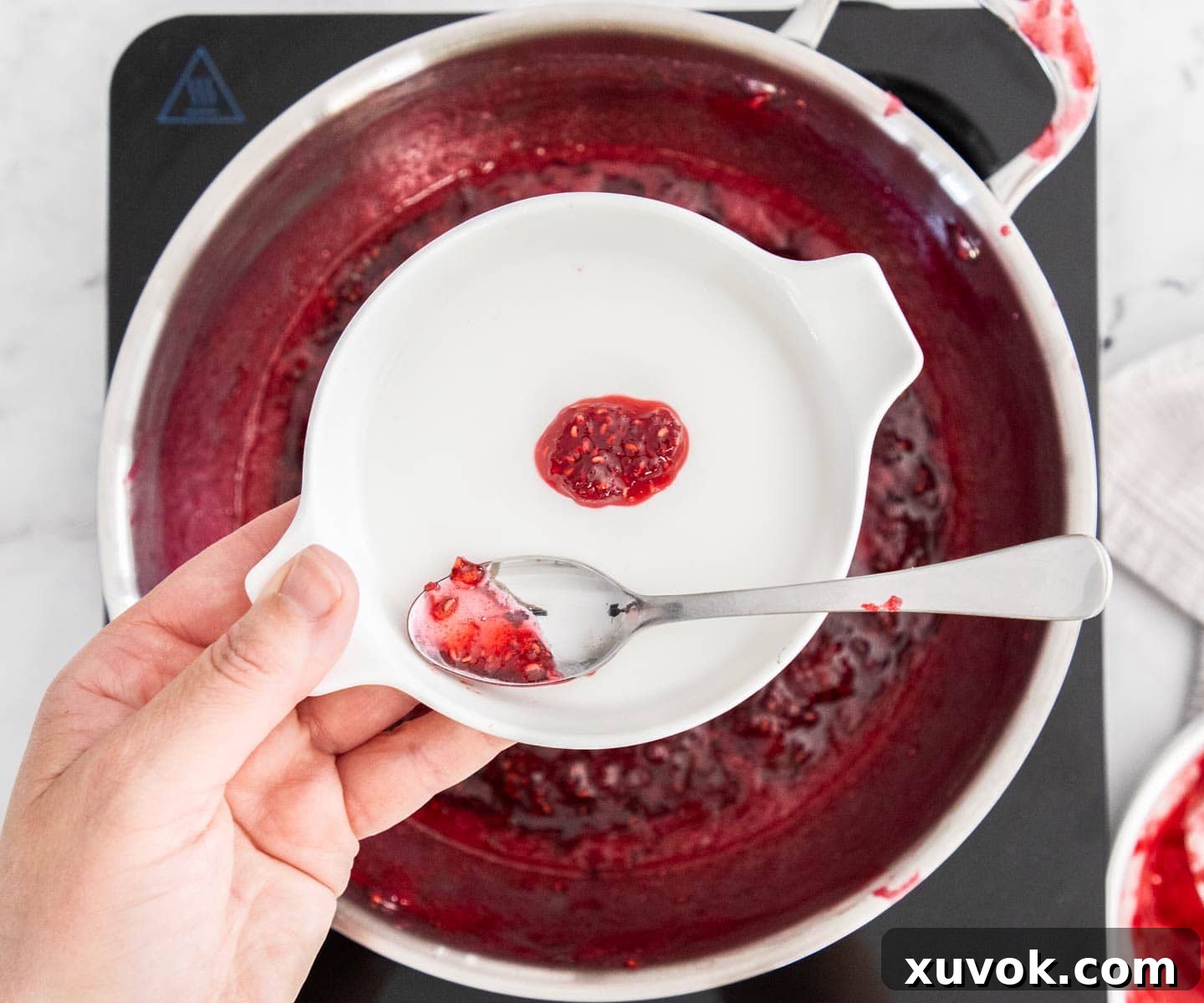
Once your jam appears visibly thick and has been bubbling for the recommended time, it’s crucial to perform the cold plate test to confirm it has reached the desired consistency. Retrieve the chilled plate from the freezer. Carefully spoon a small amount (about half a teaspoon) of the hot jam onto the cold plate. Allow it to sit undisturbed for about one minute. The rapid cooling will mimic how the jam will set once it cools completely.
After a minute, gently push the edge of the jam with your fingertip. You’re looking for a “soft set” – the jam should wrinkle slightly and hold its shape, rather than spreading out or running like syrup. It should feel thick but still easily spreadable. If the jam appears too runny, return the saucepan to the heat and cook for an additional 1-2 minutes, then repeat the cold plate test with a fresh, cold spot on your plate or a new chilled dish. If, by chance, your jam becomes too thick, don’t worry! You can easily remedy this by stirring in a tablespoon or two of boiling water until it reaches your preferred consistency. Remember to always test with a cold dish, as a warm plate will not accurately reflect the final set.
Storing Your Homemade Raspberry Jam for Freshness and Longevity
Once your delicious homemade raspberry jam is ready, proper storage is key to enjoying its fresh flavor for as long as possible. This easy recipe creates a “quick jam” or “refrigerator jam,” meaning it’s not intended for long-term, shelf-stable pantry storage without specific canning techniques. Here’s how to store it effectively:
Room Temperature Storage (Short-Term & with Sterilization)
While this specific raspberry jam recipe, as written, is primarily designed for quick consumption and refrigerator storage, you can extend its shelf-life significantly at room temperature for a few months by meticulously following proper sterilization techniques. This method allows for a limited period of pantry storage before opening:
- Sterilize Your Jars: Begin by thoroughly washing your glass jars and their lids in hot, soapy water. Rinse them completely to remove all soap residue.
- Heat Sterilization: Place the clean, wet jars (without lids) in an oven preheated to 120°C (250°F). Allow them to dry completely and remain hot in the oven until you are ready to fill them. Submerge the lids in a saucepan of simmering (not boiling) water for at least 10 minutes, keeping them hot until use.
- Fill While Hot: Carefully remove the hot jars from the oven (use oven mitts!). Immediately pour the freshly cooked, hot jam into the hot jars, leaving about 1/4 inch (0.5 cm) of headspace from the rim.
- Seal Quickly: Wipe the rims clean with a damp cloth, then carefully place the hot lids on the jars and seal them tightly.
When done correctly, this creates a vacuum seal, which allows the jam to be stored in a cool, dark pantry for several months. However, once a jar is opened, it must be refrigerated. For absolute peace of mind and extended shelf life (up to a year or more), traditional water-bath canning is recommended, but that’s a more involved process than this quick jam recipe.
Refrigerator Storage (Standard Method)
For everyday use and simplicity, storing your raspberry jam in the refrigerator is the most common and easiest method. Once the jam has cooled to room temperature, transfer it to a clean, airtight container or a sterilized jar with a tight-fitting lid. Stored this way, your homemade raspberry jam will remain fresh and delicious for up to 3 weeks in the fridge. Always ensure the lid is securely closed to prevent air exposure, which can lead to spoilage.
Freezer Storage (Longest Shelf-Life)
To significantly prolong the shelf-life of your homemade raspberry jam, freezing is an excellent option. It can be stored in the freezer for up to 6 months without any loss of quality or flavor. This is particularly useful if you’ve made a larger batch or want to enjoy fresh jam for an extended period.
Tips for Freezing Jam:
- Use Freezer-Safe Containers: Opt for rigid freezer-safe containers, plastic tubs, or even sturdy glass jars (ensure they are tempered for freezing and leave ample headspace to prevent cracking).
- Leave Headspace: Always leave about 1/2 to 1 inch (1-2.5 cm) of headspace in your containers, as the jam will expand slightly when frozen.
- Ice Cube Trays: For convenient portioning, consider freezing the jam in large ice cube trays. Once frozen solid, pop out the jam cubes and transfer them to a freezer-safe bag. This allows you to thaw only the amount you need, minimizing waste.
When you’re ready to use your frozen jam, simply transfer it to the refrigerator to thaw overnight. Once thawed, treat it like refrigerated jam and consume it within 2-3 weeks.
Frequently Asked Questions About Easy Raspberry Jam
No, there’s no need to thaw frozen raspberries beforehand. You can add them directly to the saucepan with the sugar and lemon juice. As they heat, they will naturally release their juices. Keep in mind that using frozen berries might mean the jam takes a little longer to come to a boil and thicken, as there’s more initial moisture to evaporate.
This particular easy raspberry jam recipe is formulated as a “quick jam” or “refrigerator jam,” designed for immediate enjoyment and shorter storage in the fridge or freezer. It has not been specifically developed with the precise sugar-to-acid ratio and extended processing times required for safe, long-term shelf-stable water-bath canning. While you can sterilize jars for temporary room-temperature storage as outlined in the storage section, for true water-bath canning and extended pantry storage, it’s best to follow a recipe specifically designed and tested for that method.
If you prefer a smooth, seedless raspberry jam, you can easily achieve this! After the jam has cooked and thickened, but before transferring it to jars, carefully press the hot jam through a fine-mesh sieve or a food mill. This will separate the seeds from the smooth fruit pulp. You might lose a small amount of yield, but the result will be a luxurious, seedless spread. Return the sieved jam to the saucepan for a quick reheat if it cools down too much before jarring.
Don’t despair! If your jam hasn’t set adequately after cooling, it simply needs a bit more time on the heat. Return the jam to your saucepan and bring it back to a gentle boil. Continue cooking for another 2-5 minutes, then re-test the consistency using a fresh, cold plate from the freezer. Remember to always use a cold plate for accurate results. A slight adjustment in cooking time usually does the trick!
If you’ve overcooked your jam and it’s become too stiff or firm, you can easily adjust it. Return the jam to the saucepan and add a tablespoon or two of boiling water. Gently stir over low heat until the jam reaches your desired, more spreadable consistency. Be careful not to add too much liquid at once; you can always add more if needed.
This recipe can generally be doubled successfully, but be aware that doubling the ingredients will require a larger pot and will significantly increase the cooking and thickening time. The wider surface area of the larger pot will help with evaporation. Halving the recipe is also possible and will reduce cooking time. Just be sure to use appropriate pot sizes for either adjustment to ensure even cooking and evaporation.
A heavy-bottomed saucepan or a Dutch oven is ideal for jam making. The heavy base helps distribute heat evenly, preventing the fruit and sugar mixture from scorching on the bottom. This is especially important for recipes like this one, which don’t use added pectin and rely on the reduction of liquid for thickening.
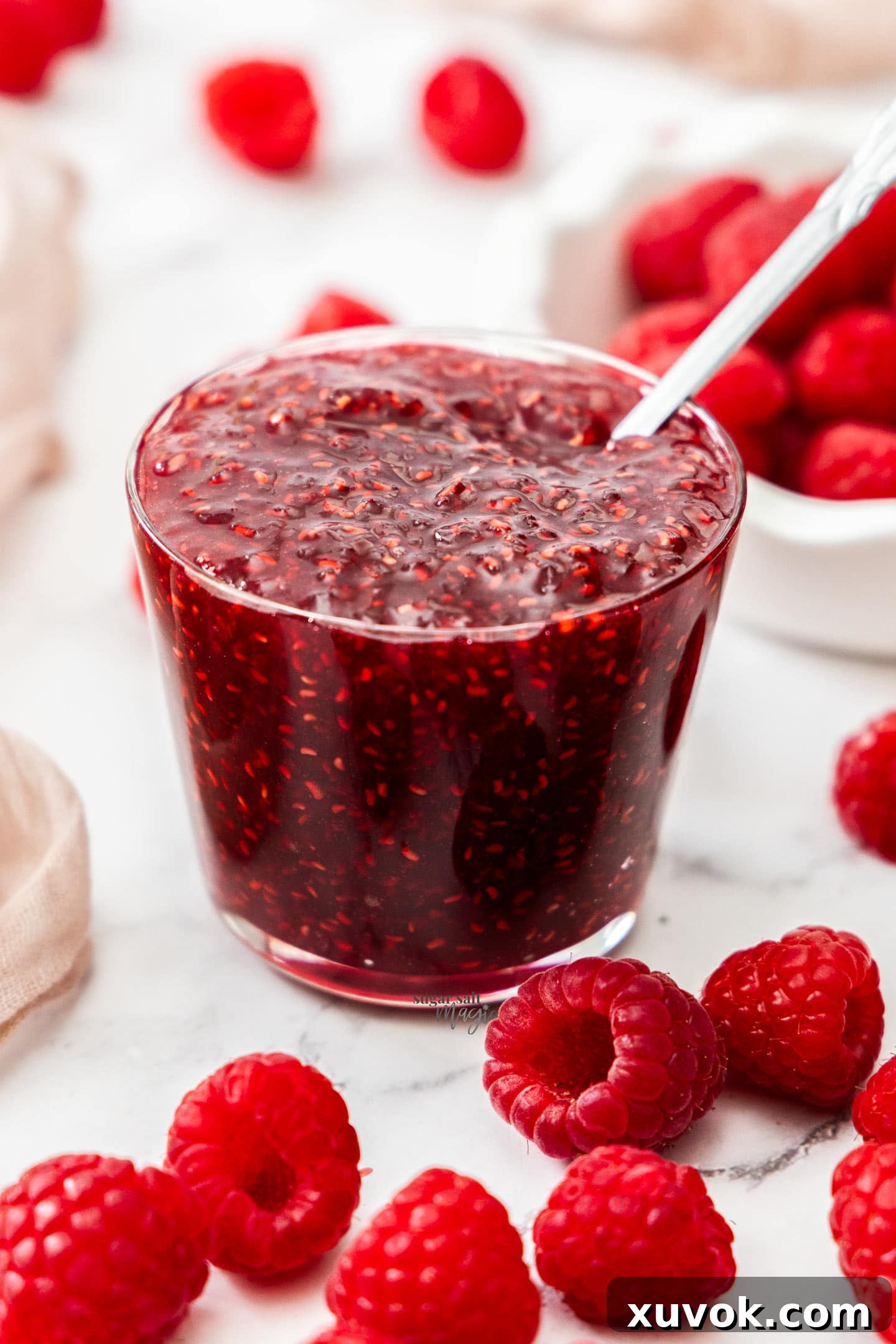
Once you’ve experienced the simple pleasure and incredible flavor of homemade jam, it’s truly difficult to go back to store-bought varieties. This easy raspberry jam is a testament to how delicious, effortless, and versatile homemade preserves can be. Enjoy the rich rewards of your kitchen creations!
More Delicious Recipes You’ll Adore
Put your freshly made, homemade raspberry jam to incredible use with these delightful recipes. Each one is a perfect pairing for your sweet, fruity spread!
If you try this easy raspberry jam recipe,
show it some love with a ⭐⭐⭐⭐⭐ rating below. Your feedback truly helps!
Hungry for more? Subscribe to our newsletter for free recipes straight to your inbox. Also, follow along with our culinary adventures on Facebook, Pinterest and Instagram for daily inspiration!
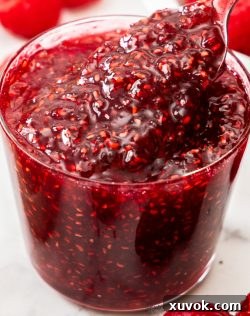
Effortless Homemade Raspberry Jam
Rate
Pin
Ingredients
- 300 g raspberries fresh or frozen, for vibrant flavor
- 200 g white granulated sugar (approximately 1 cup, for sweetness and set)
- 2 teaspoons fresh lemon juice (activates pectin and balances flavor)
For optimal results and consistent texture, always weigh ingredients when a weight is provided.
Equipment Essentials
-
Heavy-based medium saucepan (prevents scorching and ensures even heat distribution)
-
Small plate, chilled in the freezer (essential for the cold plate test)
-
Metal spoon or fine-mesh skimmer (for removing foam)
Step-by-Step Instructions
-
Prepare for Testing: Begin by placing a small ceramic plate or saucer into your freezer. This chilled dish will be essential for accurately testing the jam’s consistency later in the process.
-
Combine and Dissolve: In a heavy-based medium saucepan, combine the raspberries (fresh or frozen), granulated sugar, and freshly squeezed lemon juice. Place the saucepan over a low to medium heat. Stir continuously as the mixture gradually warms up. This stirring is crucial to help the sugar completely dissolve into the fruit juices, preventing it from sticking to the bottom of the pan and burning. Continue until the sugar crystals are no longer visible.
-
Simmer and Skim: Once the sugar is dissolved, increase the heat slightly to bring the mixture to a gentle, steady boil. Allow it to bubble for approximately 10-12 minutes. During this time, stir occasionally to ensure even cooking and prevent sticking. You may notice a foamy layer forming on the surface; use a metal spoon or skimmer to carefully remove this foam. Skimming helps ensure your finished jam has a clear, vibrant color and smooth texture. Continue boiling until the jam visibly thickens.
-
Test for Set: After about 8-10 minutes of cooking (or when the jam looks adequately thick), retrieve your chilled plate from the freezer. Spoon a very small amount of hot jam onto the cold plate and let it sit for 1 minute to cool rapidly. After a minute, gently push the jam with your fingertip. It should wrinkle and hold its shape, feeling thick but still spreadable. If it’s too runny, continue cooking for another 1-2 minutes and re-test with a fresh cold spot on the plate.
Expert Tip: If, by chance, you cook the jam a little too long and it becomes excessively thick, simply stir in a tablespoon or two of boiling water until you reach your desired consistency. Let it cool slightly before re-checking.
-
Jar and Store: Once your jam has reached the perfect consistency, carefully transfer it to a clean, sterilized jar with a tight-fitting lid. Allow the jam to cool completely at room temperature before storing it in the fridge. For best flavor and safety, consume your homemade raspberry jam within 2-3 weeks when stored in the refrigerator. Refer to the storage section above for longer-term options.
-
Please take a moment to leave a comment & rating below after trying this recipe. Your feedback is greatly appreciated and incredibly helpful to other home cooks!
Helpful Notes
- Nutritional information shown is an approximation per cup serving, calculated by an online tool. Actual values may vary based on specific ingredient brands and preparation methods.
- For a seedless jam, press the cooked jam through a fine-mesh sieve before jarring.
- Always use a heavy-bottomed saucepan to prevent the jam from burning, especially when cooking sugar.
EXPLORE MORE DELICIOUS CONDIMENTS AND SPREADS!
Calories from Fat 27