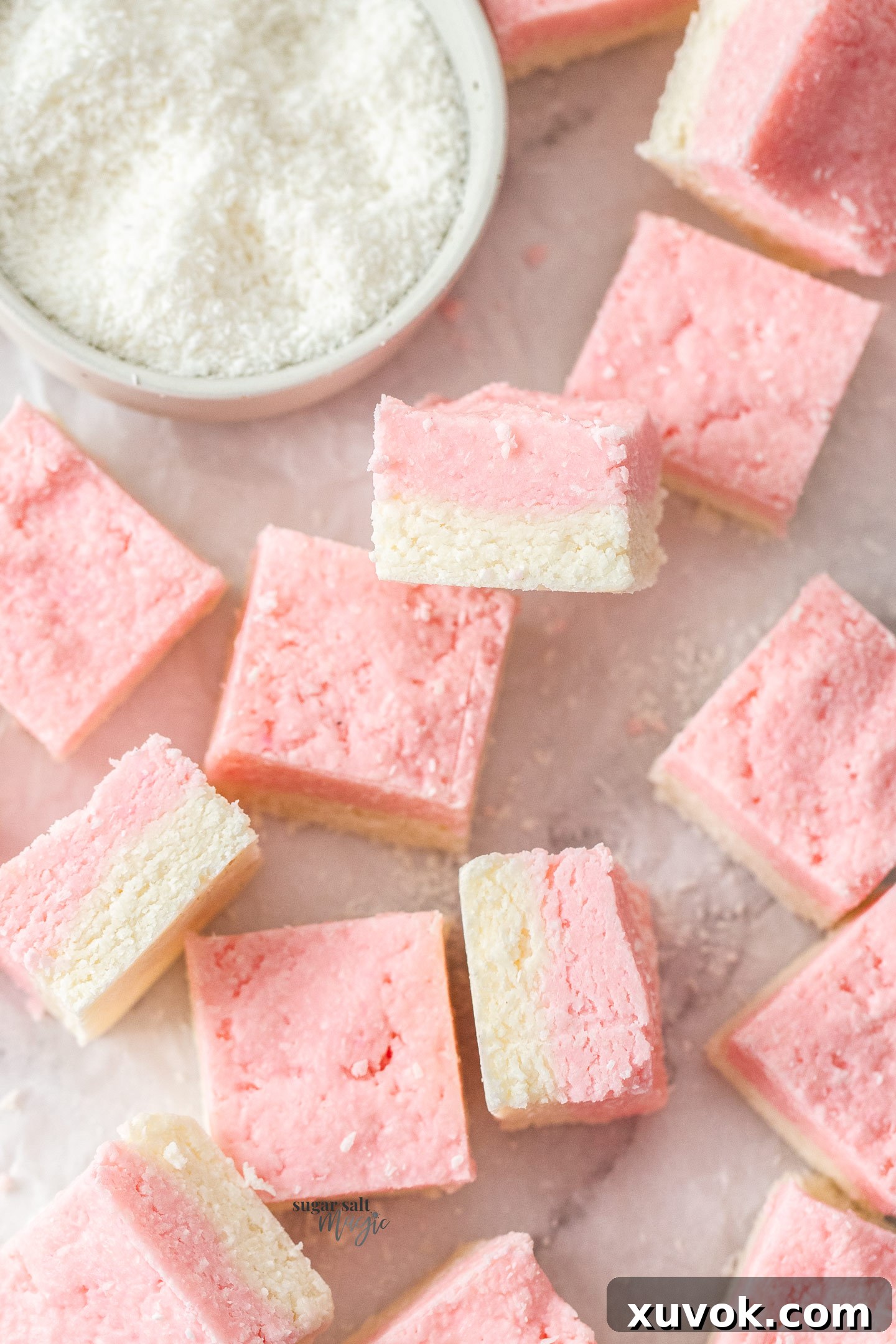
Irresistible No-Bake Coconut Ice: An Easy Homemade Sweet Treat
Calling all coconut enthusiasts! Prepare to embark on a delightful culinary journey with this incredibly simple, yet utterly irresistible, homemade coconut ice recipe. This classic sweet treat evokes a sense of nostalgic comfort, reminiscent of childhood kitchen adventures and festive gatherings. Requiring just 5 essential ingredients and absolutely no baking, this no-fuss slice comes together in a mere 10 minutes of active preparation time, delivering a sweet, creamy, and intensely coconutty sensation that will have you hooked from the very first bite. It’s the perfect solution for satisfying those sudden sweet cravings or preparing a charming gift.
Whether you’re new to the world of homemade candy or a seasoned sweet maker, this recipe is designed for effortless success. Its charming two-toned appearance, typically pink and white, adds a touch of visual appeal that makes it stand out on any dessert platter. Beyond its straightforward creation, this delightful confection boasts a host of benefits that make it a year-round favorite:
- Minimal Ingredients: Crafted with only 5 readily available pantry staples.
- Effortless No-Bake Method: No oven or complex cooking steps required, making it perfect for all skill levels and warmer days.
- Rich & Creamy Indulgence: A perfectly balanced sweetness combined with a luxurious, melt-in-your-mouth texture.
- Thoughtful Gifting Option: Beautifully presented, these squares make a fantastic homemade present for friends and family.
- Excellent Shelf Life: Keeps wonderfully and can be frozen, allowing you to enjoy it over an extended period.
As the holiday season approaches, or simply when the mood for something sweet strikes, classic candy recipes always come to mind. While tempting treats like rich salted caramel fudge or fluffy homemade marshmallows often grace our tables, few compare to the enduring charm of coconut ice. Originating from British kitchens, this beloved confection has found a special place in the hearts and homes of many across Australia, New Zealand, and South Africa, becoming a cherished staple in their sweet traditions. Its simple elegance and delightful flavor transcend borders, proving that truly good food knows no geographical limits.
If the luscious taste of coconut is what you crave, you’re in for a treat with this recipe. And if you find yourself captivated by this classic, you’ll undoubtedly adore these other coconut-infused delights: a vibrant peppermint coconut fudge that adds a refreshing twist, and the ever-popular classic coconut balls for another bite-sized indulgence.
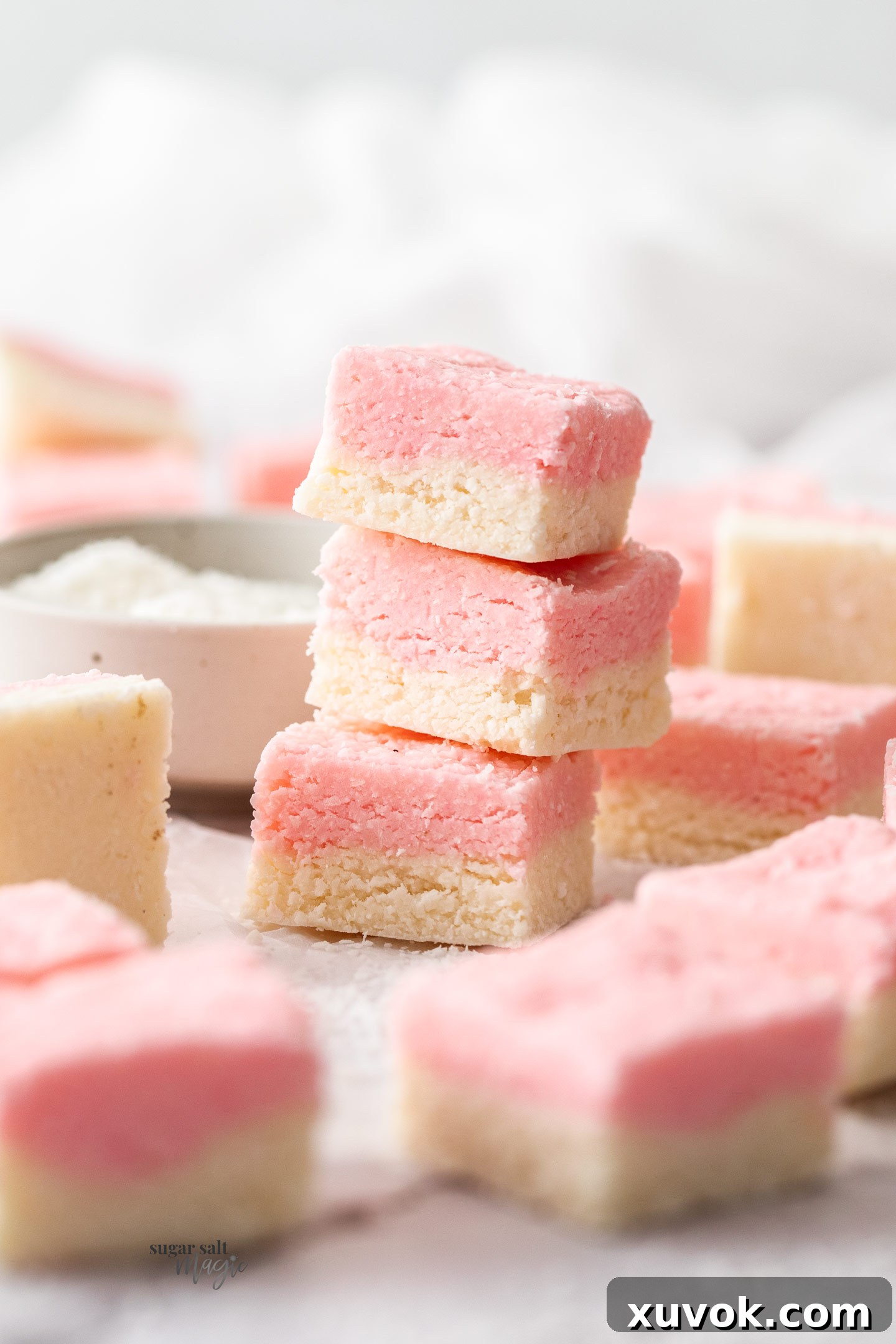
Table of Contents
- Essential Ingredients for Coconut Ice
- Creative Variations
- How to Make No-Bake Coconut Ice (Step-by-Step)
- Expert Tips and Tricks for Perfect Coconut Ice
- Yield, Storage, and Gifting Ideas
- More Coconut and Sweet Treat Recipes You’ll Love
Never Miss a Recipe!
Get the latest, most delicious recipes straight to your inbox – subscribe now!
Essential Ingredients for Coconut Ice
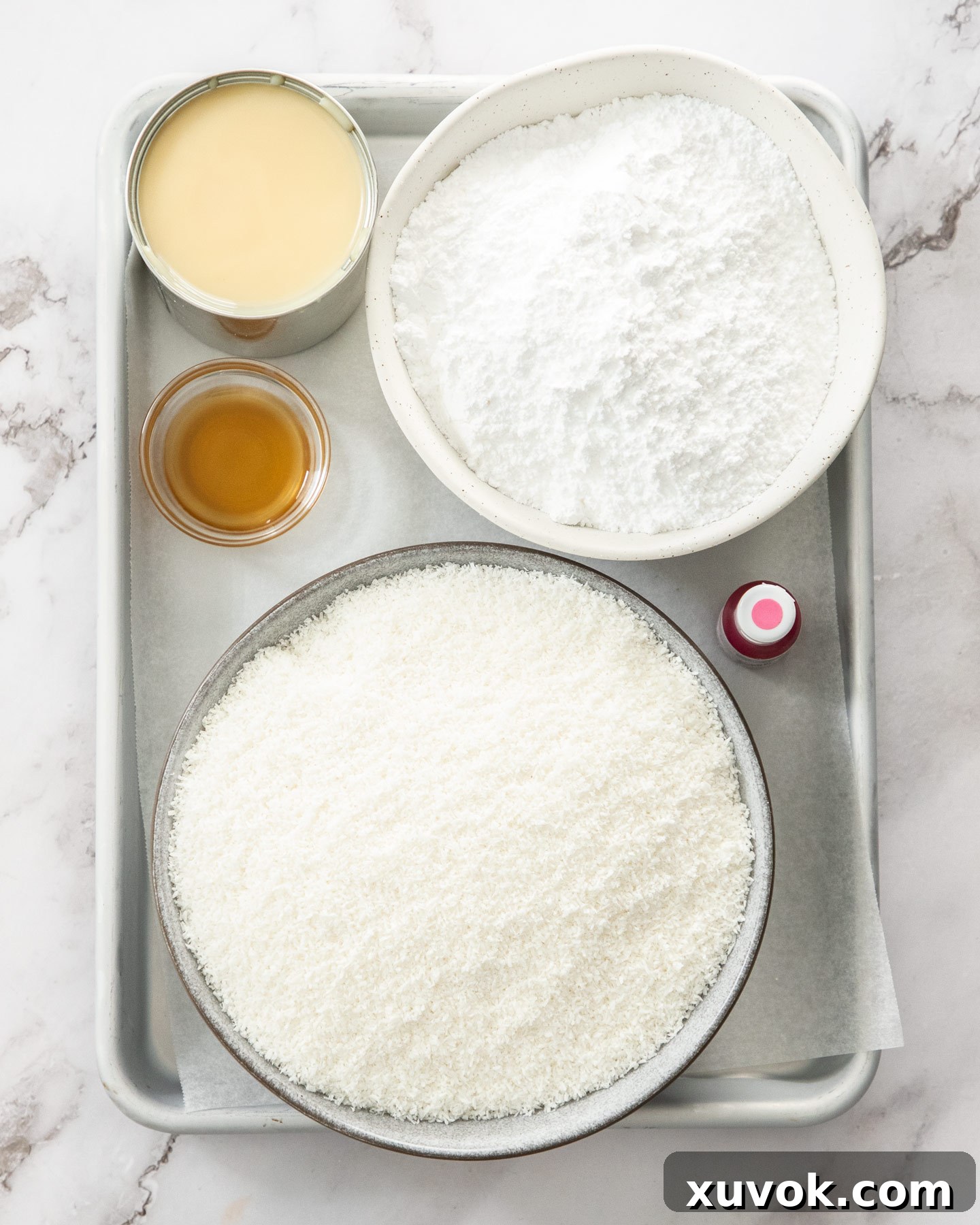
Achieving the perfect batch of coconut ice relies on a few fundamental ingredients that work in harmony to create its distinct texture and flavor. While the full, detailed quantities and precise instructions are conveniently located in the recipe card below, let’s delve into the core components that make this dessert a star.
The magic of coconut ice springs from a simple quartet of ingredients: premium desiccated coconut, fine sugar, creamy sweetened condensed milk, and a touch of pink food colouring. To elevate the flavour profile, I always incorporate a hint of vanilla extract; its warm, aromatic notes beautifully complement the tropical sweetness of the coconut.
Choosing the right type of coconut is crucial for achieving the desired consistency. For this particular no-bake slice, it’s imperative to use fine desiccated coconut. Its smaller, finer shreds bind together much more effectively than their coarsely grated counterparts, ensuring a firm, sliceable texture that holds its shape beautifully. Coarser coconut can result in a more crumbly mixture, which might not set as well.
When it comes to the sweetener, icing sugar – also known as powdered sugar or confectioners’ sugar – is your go-to. This finely milled sugar dissolves easily and, in combination with the sweetened condensed milk, acts as the primary binder, creating the fudge-like consistency that is characteristic of perfect coconut ice. Avoid granulated sugar, as it won’t melt sufficiently to provide the necessary structure.
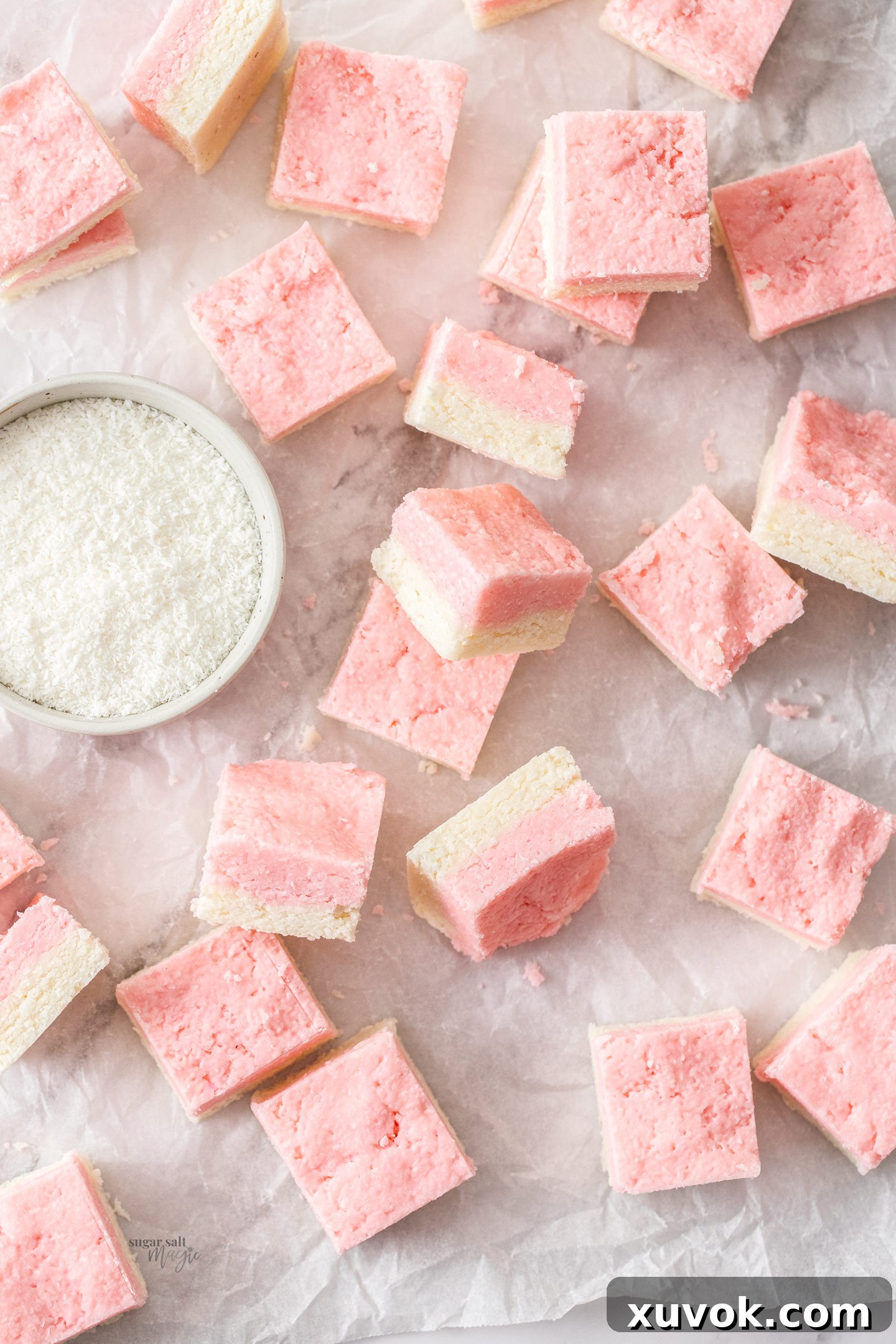
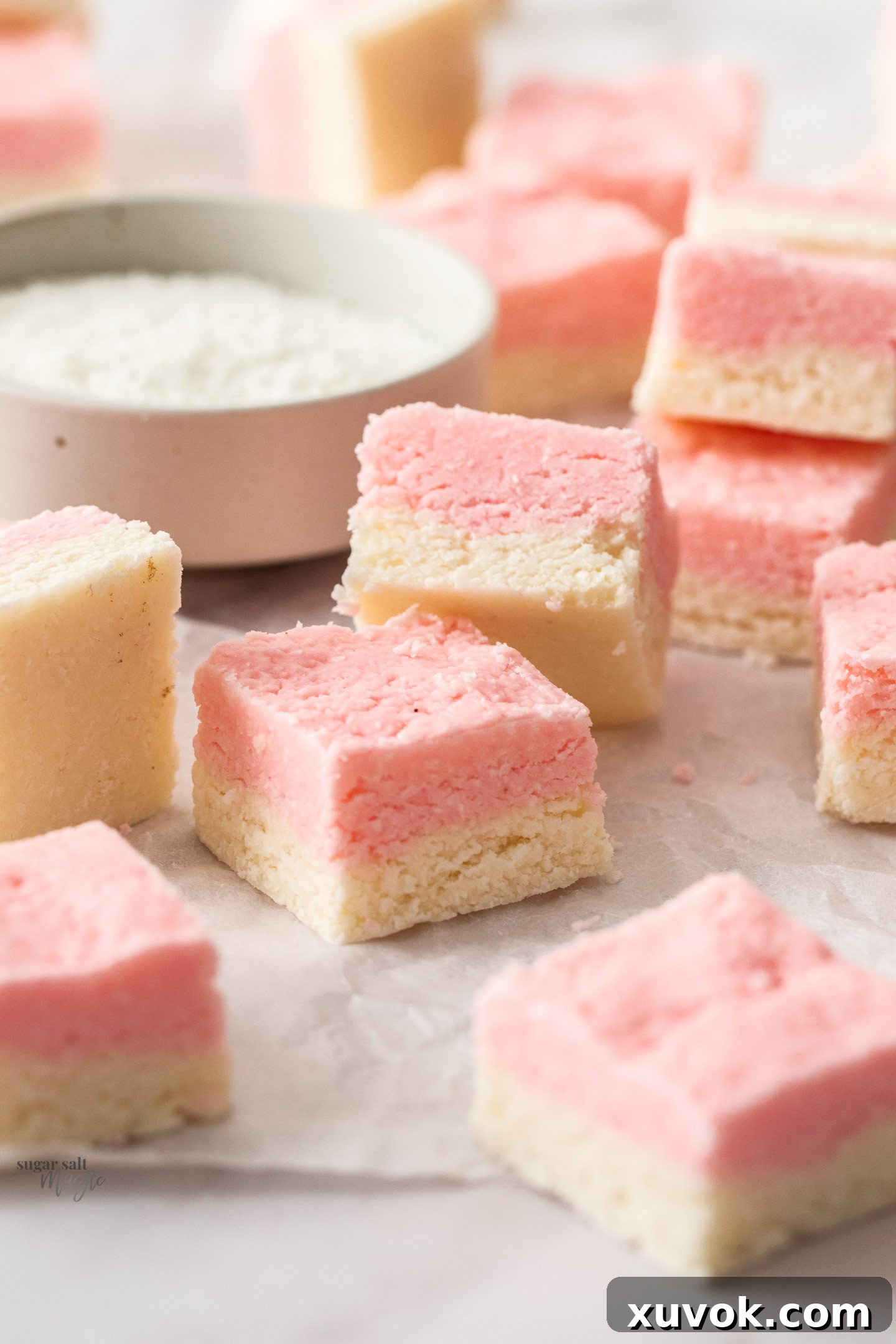
And of course, the iconic appearance of coconut ice wouldn’t be complete without its signature two layers: a pristine white base and a vibrant pink top. The gorgeous pink hue is effortlessly achieved with just a few drops of food colouring, transforming half of the mixture into an eye-catching pastel shade.
Creative Variations to Personalize Your Coconut Ice
While classic coconut ice is a masterpiece in its own right, there’s no rule against a little creative experimentation! Though traditional variations are not commonplace, this simple recipe provides a fantastic canvas for personalization. Here are some delightful ideas to inspire your next batch:
- Fruity Flavors & Colors: Just as I’ve experimented with vibrant coconut ice using packets of jelly crystals for both color and flavor, you can explore a wide array of fruit powders or even natural fruit extracts. Think raspberry, lime, or passionfruit for a zesty twist.
- Citrus Zest: Incorporate finely grated lemon, lime, or orange zest into the mixture. The bright, fresh aroma and flavor of citrus perfectly complement the richness of coconut.
- Nutty Additions: For an extra layer of texture and flavor, try folding in finely chopped nuts like almonds, pistachios, or macadamias. Toasting them lightly beforehand will enhance their taste.
- Chocolate Lover’s Dream: Drizzle melted dark or white chocolate over the set coconut ice, or gently fold in miniature chocolate chips into the mixture. The combination of chocolate and coconut is always a winner! For inspiration, check out this cherry ripe slice, which is essentially a cherry-flavored coconut ice coated in chocolate – utterly divine.
- Natural Coloring: If you prefer natural dyes, a tiny pinch of beetroot powder can achieve a lovely pink shade, while spirulina powder can create a subtle green or blue.
- Spice It Up: A hint of ground ginger, cardamom, or cinnamon can add a sophisticated warmth, especially for a festive touch.
- Extract Alternatives: Beyond vanilla, consider almond extract for a delicate marzipan-like note, or a touch of coconut extract to intensify the tropical flavor.
- Layering Fun: Instead of just two layers, consider three! You could have white, pink, and then another color, or even a different flavor in the middle. Swirling the colors together before pressing can also create a beautiful marbled effect.
Don’t be afraid to make this recipe your own. These simple additions can transform a classic into a unique creation that perfectly suits your taste!
How to Make No-Bake Coconut Ice (Step-by-Step)
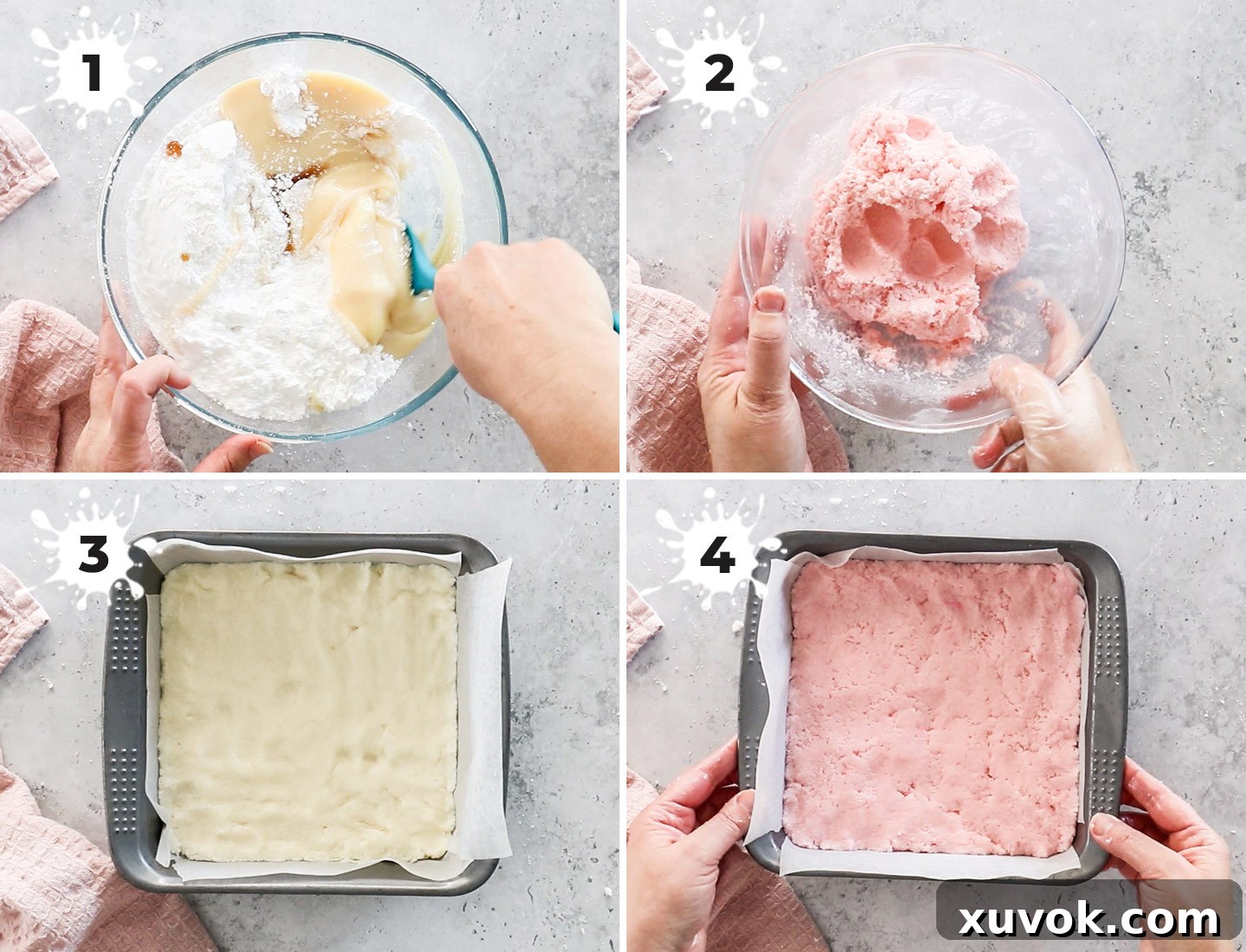
The beauty of this coconut ice recipe lies in its sheer simplicity. It’s a truly no-fail, no-bake method that comes together quickly, making it an ideal project for busy schedules or even involving children in the kitchen. For precise measurements and the full recipe details, please refer to the recipe card below. Here’s a quick overview of the straightforward steps:
- Combine Ingredients: Begin by gathering all your main ingredients – the desiccated coconut, icing sugar, sweetened condensed milk, and vanilla extract – into a generously sized mixing bowl. Stir everything together thoroughly with a sturdy spoon or spatula until a thick, cohesive mixture begins to form. Don’t be afraid to switch to your hands for the final stage of mixing; it’s often the most effective way to ensure everything is evenly incorporated and the mixture starts to come together into a firm, sticky dough.
- Divide and Color: Once your base mixture is ready, transfer approximately half of it into a separate bowl. To the remaining half in the first bowl, add just a single drop or two of pink or red food coloring. Knead the mixture by hand (wearing food-safe gloves is highly recommended here to avoid stained hands) until the color is evenly distributed throughout, creating a beautiful, consistent pink hue. This is where the magic of the two-tone effect begins!
- Layer and Press: Prepare a 20cm (8-inch) square baking tin by lining it completely with baking paper, ensuring there’s an overhang on the sides to easily lift the set slice later. Lightly moisten your hands with water (this prevents sticking) and press the uncolored, white coconut mixture firmly and evenly into the bottom of the prepared tin, creating a smooth, compact base layer. Next, break the pink mixture into smaller pieces and scatter them over the white layer. Using your wet hands again, firmly press the pink mixture down, ensuring it forms a compact and even second layer over the white. The key here is firm, consistent pressure to ensure the layers bond well.
- Chill to Perfection: Once both layers are pressed into place, transfer the baking tin to the refrigerator. Allow it to chill for a minimum of 2-3 hours, or until the coconut ice is completely firm and set. This chilling time is essential for the mixture to solidify, making it easy to slice into neat, perfect squares.
The method outlined above is the modern, easy recipe, celebrated for its speed, simplicity, and lack of cooking, making it an ideal choice for home cooks of all ages. This no-bake approach removes the need for precise temperature control or constant stirring, significantly reducing the chance of error and making it a fun activity even for kids.
In contrast, the traditional method of making coconut ice involves a more laborious process. It typically requires bringing sugar and milk to a boil in a saucepan, cooking them for 5-7 minutes to create a sugar syrup, before the coconut is added and cooked for a little longer. This results in a very hot, sticky mixture that sets considerably firmer than the easy method. While traditionalists might argue for its authentic texture, the modern no-bake approach delivers equally delicious results with far less effort and without the need to handle hot sugar mixtures, making it a safer and more convenient option for most.
Expert Tips and Tricks for Perfect Coconut Ice
Even though this no-bake coconut ice recipe is incredibly forgiving, a few expert tips can elevate your creation from good to absolutely perfect. Pay attention to these details for the best possible results:
- Precision with Icing Sugar: For consistent results every time, I highly recommend weighing your icing sugar (powdered sugar/confectioners’ sugar). Digital kitchen scales offer the most accuracy. If you don’t have scales, spoon the sugar lightly into your measuring cup, then level it off with the back of a knife. This “spoon and level” method minimizes over-packing and gets you closest to the correct amount. Too much sugar can make the mix dry and crumbly, while too little can prevent it from setting properly.
- Embrace Gloves for Sticky Situations: Coconut ice mixture, by its very nature, is incredibly sticky! You’ll find it easiest to combine and press the mixture using your hands. To save yourself from a messy cleanup and sticky fingers, I strongly advise wearing food-safe gloves during the mixing and pressing stages. It makes the process much more pleasant.
- Resist Reducing the Sugar: This is a sweet treat, and its sweetness is part of its charm. More importantly, the precise balance of icing sugar and sweetened condensed milk is fundamental to how the coconut ice sets into a firm, sliceable confection. Reducing the sugar content can compromise its structural integrity, leading to a softer, stickier, or even crumbly result that won’t hold its shape. Trust the recipe for that perfect firm texture.
- Achieving Clean Slices: Once your coconut ice is perfectly chilled and firm, use a sharp knife for cutting. For exceptionally clean, neat squares, run your knife under hot water, wipe it dry, and then make your cuts. Reheat and wipe the knife between slices if necessary. This warm blade will glide through the sticky mixture without dragging.
- Lining the Tin is Key: Always line your baking tin with baking paper (parchment paper), leaving an overhang on all sides. This simple step makes lifting the entire block of set coconut ice out of the tin incredibly easy, ensuring a perfect release without any sticking or breakage.
- Room Temperature for Easier Mixing: While not strictly necessary, having your condensed milk at room temperature can make it slightly easier to mix with the other ingredients, creating a smoother, more homogenous mixture from the start.
- Patience During Chilling: The chilling time is non-negotiable. Don’t rush this step, as proper setting is vital for the texture and ability to slice. A full 2-3 hours ensures the coconut ice becomes firm enough to handle and cut beautifully.
- Troubleshooting – Too Crumbly: If your mixture seems too dry and crumbly, it might be due to slightly less condensed milk or too much coconut/sugar. Try adding another tablespoon or two of condensed milk, one at a time, until the mixture comes together and feels pliable.
- Troubleshooting – Too Sticky: If it’s overly sticky and doesn’t hold its shape even after chilling, you might have too little sugar or too much condensed milk. This is less common with exact measurements, but a bit more finely sifted icing sugar (a tablespoon at a time) can help absorb excess moisture and firm it up.
By following these simple guidelines, you’ll master the art of making flawless homemade coconut ice every single time!
Yield, Storage, and Gifting Ideas
This fantastic coconut ice recipe is designed to yield approximately 25 generous pieces, making it perfect for sharing with a crowd or enjoying over an extended period. While the recipe is technically scalable, handling a double batch can become quite cumbersome due to the sticky nature of the mixture. For the best results and easiest preparation, it’s often more practical to make individual batches if you need a larger quantity.
One of the many advantages of homemade coconut ice is its exceptional keeping quality, making it an excellent treat to prepare in advance. Store your delightful squares in an airtight container to maintain their freshness. They will keep beautifully in a cool, dry place like your pantry for up to two weeks, or even longer – up to 4 weeks – when stored in the refrigerator. Just be sure to keep them away from direct sunlight or heat sources.
For even longer preservation, coconut ice freezes wonderfully! Simply place the cut squares in an airtight freezer-safe container, separating layers with baking paper to prevent sticking. It can be frozen for up to 3 months without any loss of quality. When you’re ready to enjoy, simply transfer the frozen coconut ice to the refrigerator overnight to thaw gently.
Perfect for Gifting
Coconut ice isn’t just a delicious treat for yourself; it also makes an absolutely charming and thoughtful homemade gift, especially during the festive season or for special occasions. Imagine the delight on someone’s face receiving a beautifully wrapped package of these vibrant, homemade sweets! Here’s how to make your coconut ice gifts extra special:
- Elegant Presentation: Arrange a few pieces neatly in small cellophane bags or decorative boxes.
- Festive Ribbons: Tie the bags or boxes with a pretty ribbon, perhaps in colors matching the occasion (red and green for Christmas, pastels for spring).
- Personal Touch: Add a small handwritten tag with the ingredients list (for allergy awareness) and a heartfelt message.
- Gift Baskets: Incorporate coconut ice into a larger homemade sweet treat gift basket, alongside other candies or baked goods.
Your homemade coconut ice will undoubtedly be a well-received and appreciated gesture!
More Coconut and Sweet Treat Recipes You’ll Love
If you’ve fallen in love with the delightful simplicity and rich coconut flavor of this no-bake coconut ice, then you’re in for a treat! Explore more irresistible recipes that celebrate the magic of coconut and other easy-to-make sweets:
- Classic Coconut Balls
- Easy Raspberry Rocky Road
- Delicious Almond Coconut Cookies
- Refreshing Lime and Coconut Cake
- Sweet Coconut Tartlets
- Indulgent Coconut Chocolate Fudge Slice
Did you try this easy coconut ice recipe?
Leaving a rating and comment below the recipe is so helpful!
Hungry for more? Subscribe to our newsletter for free recipes straight to your inbox. Also, follow along with our latest culinary adventures on Facebook, Pinterest and Instagram.
Coconut Ice Recipe
25
pieces
10
minutes
0
minutes
3
hours
3
hours
10
minutes
Rated 4.5 from 6 ratings
Rate
Pin
Ingredients
-
390
g
icing sugar, sifted
(3 cups / 13.8oz) -
320
g
fine desiccated coconut
(4 cups / 11.3oz) -
395
g
can sweetened condensed milk
(14oz) -
2
teaspoons
vanilla extract - Pink or red food colouring
For best results, always weigh ingredients where a weight is provided
Equipment
-
large mixing bowl & medium mixing bowl
-
wooden spoon or spatula
-
food safe gloves, optional
-
20cm / 8 inch square baking pan
Instructions
-
Combine the icing sugar, sweetened condensed milk, desiccated coconut, and vanilla extract in a large mixing bowl. Stir well to combine with a spoon or spatula. For best incorporation, you may need to use your hands to bring the sticky mixture together. Use food-safe gloves if you wish to avoid sticky hands.
-
Transfer half of the mixture to a second, separate bowl. To the remaining half in the first bowl, add just a drop or two of pink or red food colouring. Knead the mixture thoroughly to distribute the color evenly throughout (using food-safe gloves is highly recommended for this part).
-
Line a 20cm / 8 inch square baking tin with baking paper, ensuring there’s an overhang to help with removal.
-
Lightly wet your hands to prevent sticking. Press the uncolored (white) coconut mixture firmly and evenly into the bottom of the prepared tin, creating a compact base layer.
-
Break the pink mixture into small pieces and scatter them evenly over the white layer. Again, using lightly wet hands, press the pink mixture down firmly and evenly over the white to form the top layer.
-
Place the tin in the refrigerator and chill for a minimum of 3 hours, or until the coconut ice is completely firm and set.
-
Once set, use the baking paper overhang to lift the coconut ice out of the tin. Place it on a cutting board and use a sharp knife to slice it into 25 equal squares.
-
Please take a moment to leave a comment & rating. It’s appreciated and so helpful.
Notes
- Storage: Store the coconut ice squares in an airtight container in the fridge or at a cool room temperature for up to 4 weeks. For longer preservation, it can be frozen for up to 3 months. Thaw overnight in the fridge before serving.
- Gifting: Homemade coconut ice makes a delightful gift, especially during holidays or special occasions. Wrap a few pieces in cellophane and tie with a pretty ribbon for a charming presentation.
MORE FUDGE & CANDY RECIPES!
176
kcal
Marie Roffey
Dessert, Food Gifts, Sweet Treat
Australian, British
Have you tried this recipe?
Don’t forget to leave a rating and comment below and let me know how it was! I love hearing from you. Nutrition information is approximate and derived from an online calculator. The brands you use may cause variations.