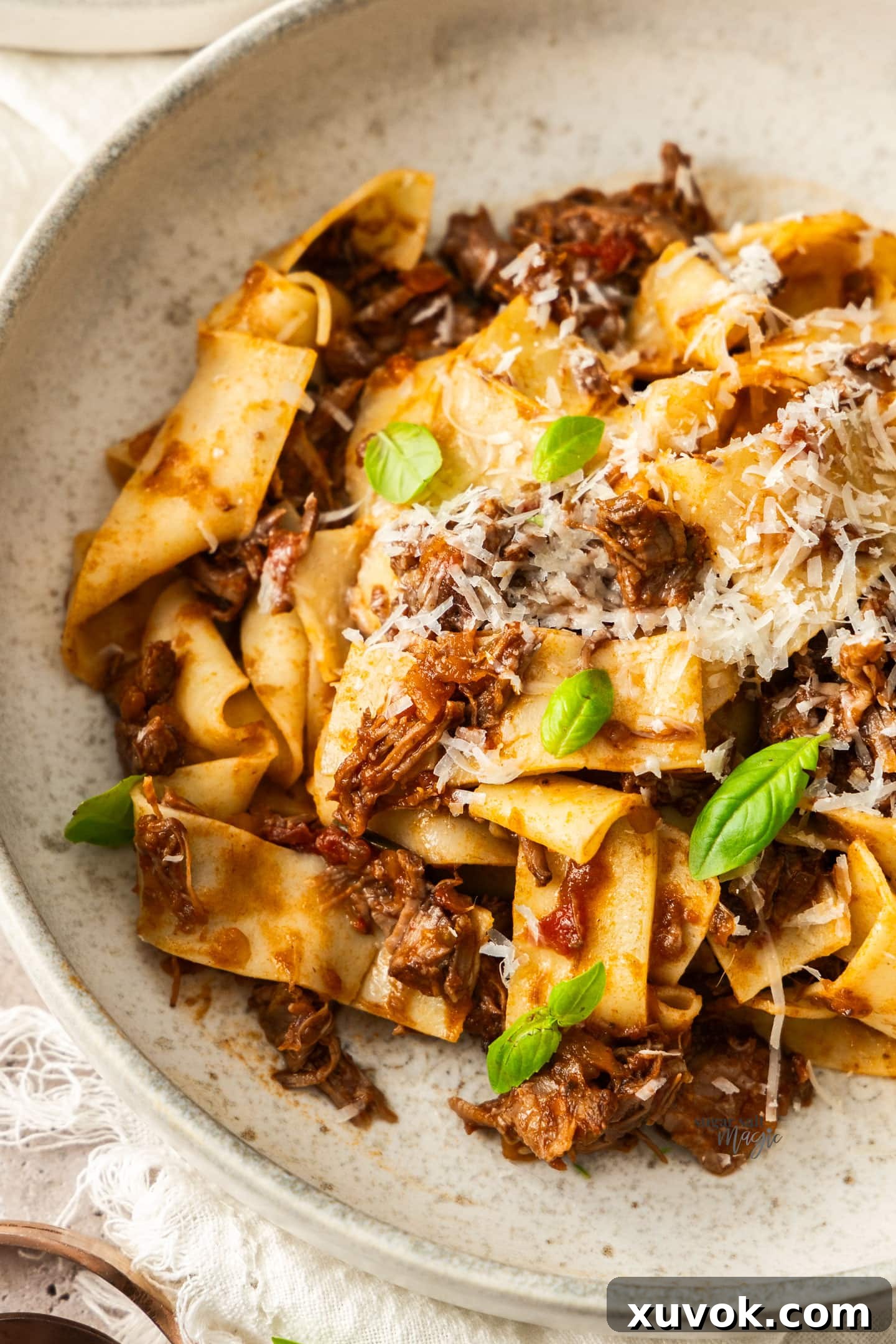
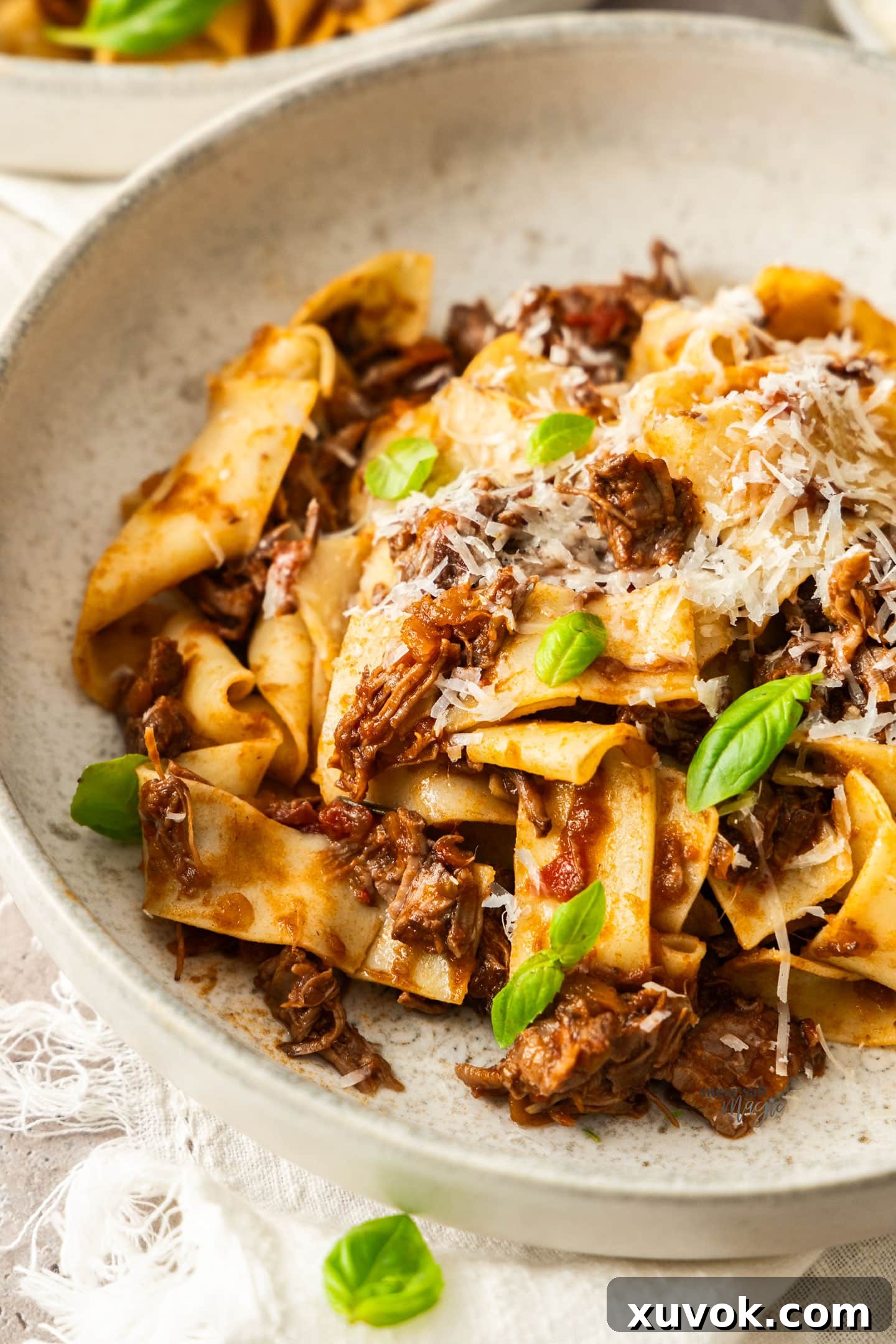
Prepare to elevate your home cooking with this utterly sensational Beef Shin Ragu with Pappardelle. This isn’t just another pasta dish; it’s a rich, deeply flavored, and incredibly tender slow-cooked masterpiece that rivals any restaurant creation. Imagine succulently shredded beef, braised to perfection in a robust red wine and tomato sauce, then generously tossed with wide, luscious ribbons of pappardelle pasta. It’s the kind of hearty, comforting meal that promises to become a cherished staple in your culinary repertoire.
The beauty of this recipe lies in its simplicity and the magic of slow cooking. Once your initial prep is complete, the oven takes over, transforming humble beef shin into an unctuous, melt-in-your-mouth experience. This hands-off approach makes it an ideal dish for leisurely weekends or impressive make-ahead entertaining, allowing you to enjoy the delightful aromas filling your kitchen as it slowly simmers to perfection.
While this beef shin ragu is a match made in heaven with pappardelle, its versatility knows no bounds. We love pairing it with other pasta shapes, but don’t limit yourself! It makes an incredible filling for gourmet burgers, adding a depth of flavor that’s truly unforgettable. It also serves as a fantastic, rich alternative to traditional bolognese in a classic lasagna, promising layers of savory goodness that will delight any palate. Get ready to discover your new favorite comfort food!
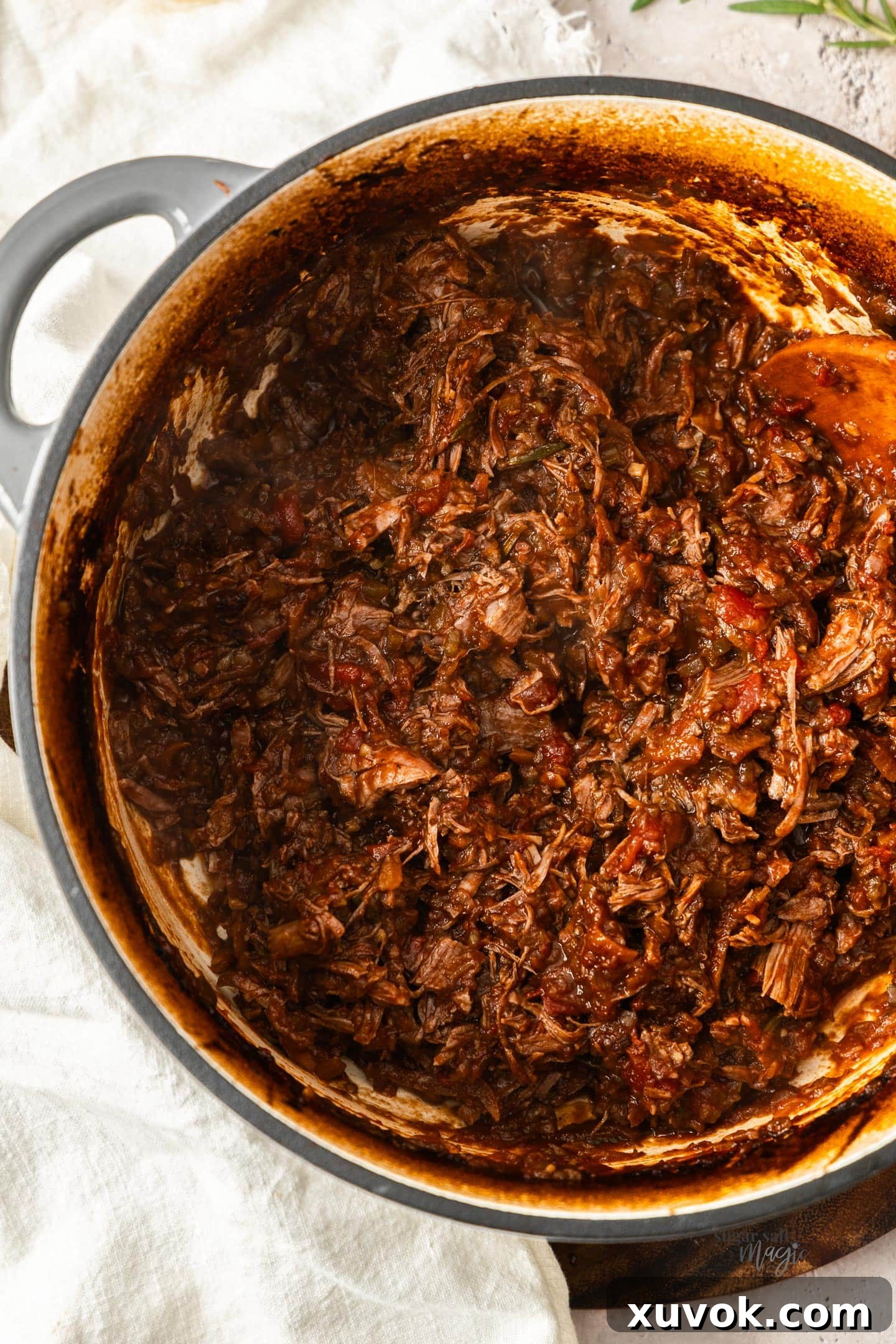
Table of Contents
- Bolognese vs. Ragu: Understanding the Difference
- Essential Ingredients for a Perfect Beef Shin Ragu
- Mastering the Art of Beef Shin Ragu
- Serving Suggestions: Beyond Pappardelle
- Expert Tips for an Unforgettable Ragu
- Storing Your Delicious Beef Ragu
- Frequently Asked Questions About Beef Ragu
- More Italian-Inspired Recipes You’ll Adore
Never Miss a Recipe!
Be the first to get my newest recipes delivered straight to your inbox!
Bolognese vs. Ragu: Understanding the Difference
The terms “bolognese” and “ragu” are often used interchangeably, leading to some confusion. While they both refer to slow-cooked meat sauces, there are distinct differences, especially in traditional Italian cooking. Understanding these nuances will enhance your appreciation for this particular beef shin ragu.
Historically, ragu is a broader term for a meat-based sauce, typically cooked slowly with aromatic vegetables and often wine, broth, and a small amount of tomato. Bolognese, or ragù alla bolognese, is a specific type of ragu originating from Bologna, Italy. It traditionally features ground meat (often a mix of beef and pork), a smaller proportion of tomato, and crucially, the inclusion of milk or cream, which adds richness and tenderizes the meat further. Bolognese typically has a finer, less chunky texture.
Our Beef Shin Ragu, on the other hand, embraces a more rustic style. It showcases substantial cuts of boneless beef shin, which break down into incredibly tender, shreddable pieces during the long braising process. While it includes the classic soffritto base of onion, carrot, and celery, along with a rich tomato and red wine foundation, it omits milk. The inherent connective tissue in beef shin naturally breaks down into gelatin, providing all the unctuousness and tenderness needed, resulting in a sauce that is deeply flavorful, wonderfully rich, and boasts a satisfyingly hearty texture without needing additional dairy for tenderization. This makes it a robust and comforting dish that truly highlights the rich taste of the beef.
Essential Ingredients for a Perfect Beef Shin Ragu
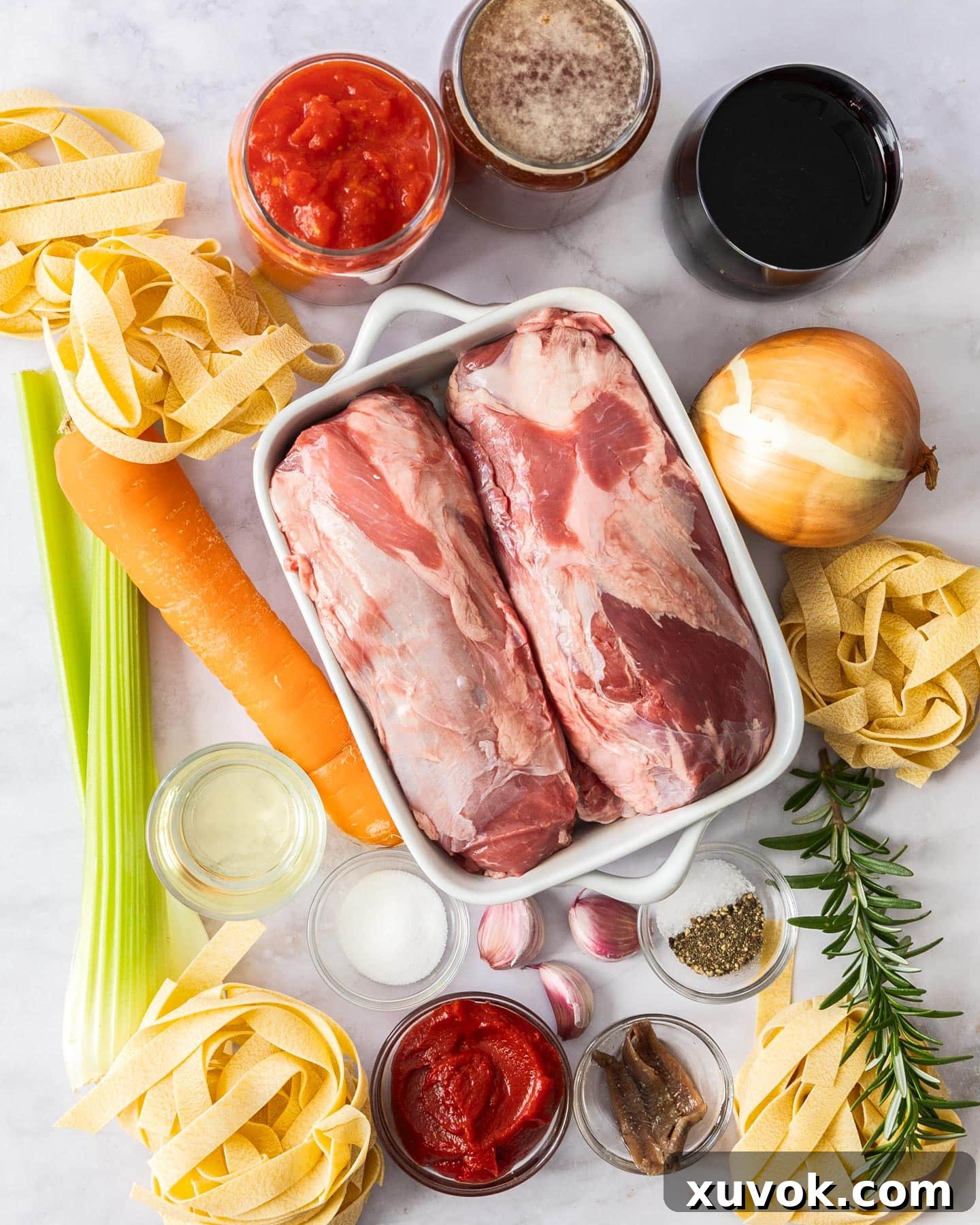
Jump to the recipe card below for a precise list of ingredients and detailed instructions.
- Boneless Beef Shin: The star of our ragu! Beef shin is a remarkably flavorful cut, brimming with connective tissue that, when slow-cooked, transforms into rich gelatin. This process ensures the meat becomes incredibly succulent and tender, easily shredding into the luxurious texture characteristic of a perfect ragu. Don’t be deterred by its initial toughness; patience in slow cooking yields immense rewards here.
- The Soffritto Trio (Onion, Carrot, Celery): This aromatic base is fundamental to Italian cuisine. Finely diced and gently sautéed in olive oil with garlic and a touch of anchovy, these vegetables build the foundational layer of flavor, adding sweetness, depth, and a subtle earthiness to the sauce.
- Anchovy Fillets: Please, don’t skip this secret ingredient! Even if you’re not a fan of anchovies, you absolutely won’t taste any fishiness in the final dish. As they cook down, anchovies melt completely into the sauce, providing an unparalleled depth of savory umami that elevates the beef and tomato flavors to new heights. They act as a natural flavor enhancer, creating a complex and irresistible profile.
- Red Wine: A robust, dry red wine is crucial for adding complexity and richness. Choose a wine you’d genuinely enjoy drinking, as its flavor will concentrate in the sauce. Avoid sweet wines, which can throw off the balance of the ragu. A good quality Cabernet Sauvignon, Merlot, or Chianti works beautifully, adding tannic structure and fruit notes that complement the beef.
- Tomatoes: The heart of any great ragu! We use both crushed tomatoes for a rich, liquid base and tomato paste for concentrated tomato flavor and added body. Opt for high-quality canned tomatoes, such as San Marzano, for the best results, as they offer a superior sweetness and less acidity.
- Beef Stock (Broth): Essential for providing additional liquid for the long braising process and infusing the ragu with an even deeper, more robust beefy flavor. Always choose a good quality beef stock or broth.
- Sugar: A small amount of sugar works wonders to balance the acidity found in most canned tomatoes, ensuring a perfectly rounded, harmonious flavor in your ragu without making it sweet.
- Seasonings & Aromatics: We keep it classic with simple yet powerful additions: salt, freshly ground black pepper, and fresh rosemary. The rosemary infuses the sauce with an earthy, piney aroma that pairs beautifully with beef. For an extra layer of savory depth, consider adding a Parmesan rind to the pot during cooking, removing it before shredding the meat. A pinch of dried chili flakes (red pepper flakes) can also be added for a subtle warmth and hint of spice, if desired. Fresh basil leaves are the perfect aromatic garnish at the end.
- For Serving (Pasta & Garnish): While pappardelle pasta is our preferred choice due to its broad, flat ribbons that perfectly capture the rich sauce, other sturdy pasta types like tagliatelle, mafalde (mafaldine), penne, or even gnocchi would be excellent. Freshly grated Parmesan cheese and a sprinkle of fresh basil leaves are essential for that authentic Italian finish.
Mastering the Art of Beef Shin Ragu
Creating this magnificent beef shin ragu is surprisingly straightforward, thanks to the magic of slow cooking. The initial steps involve building layers of flavor on the stovetop, followed by a long, gentle braise in the oven. This hands-off approach ensures the beef becomes incredibly tender and the sauce develops profound depth without requiring constant attention.
The key to an exceptionally flavorful ragu begins with proper browning of the meat. This isn’t just about color; it’s about initiating the Maillard reaction, a chemical process that creates hundreds of new flavor compounds, contributing significantly to the richness of your sauce. Never skip this crucial step! A heavy-bottomed pot, ideally a Dutch oven, is your best companion for this recipe. Its excellent heat retention and even cooking properties are perfect for searing and then slowly braising the beef. If you don’t have a large, oven-safe pot, simply execute the stovetop steps in a spacious saucepan and then transfer everything to a large casserole dish for oven baking. Embrace the slow process, and you’ll be rewarded with an unforgettable meal.
For precise quantities and detailed step-by-step instructions, please refer to the complete recipe card below.
1. Brown the Beef to Perfection
Begin by preheating your oven to 160°C / 320°F. Ensure your oven rack is positioned to accommodate a large Dutch oven with its lid, as this will be where all the magic happens.
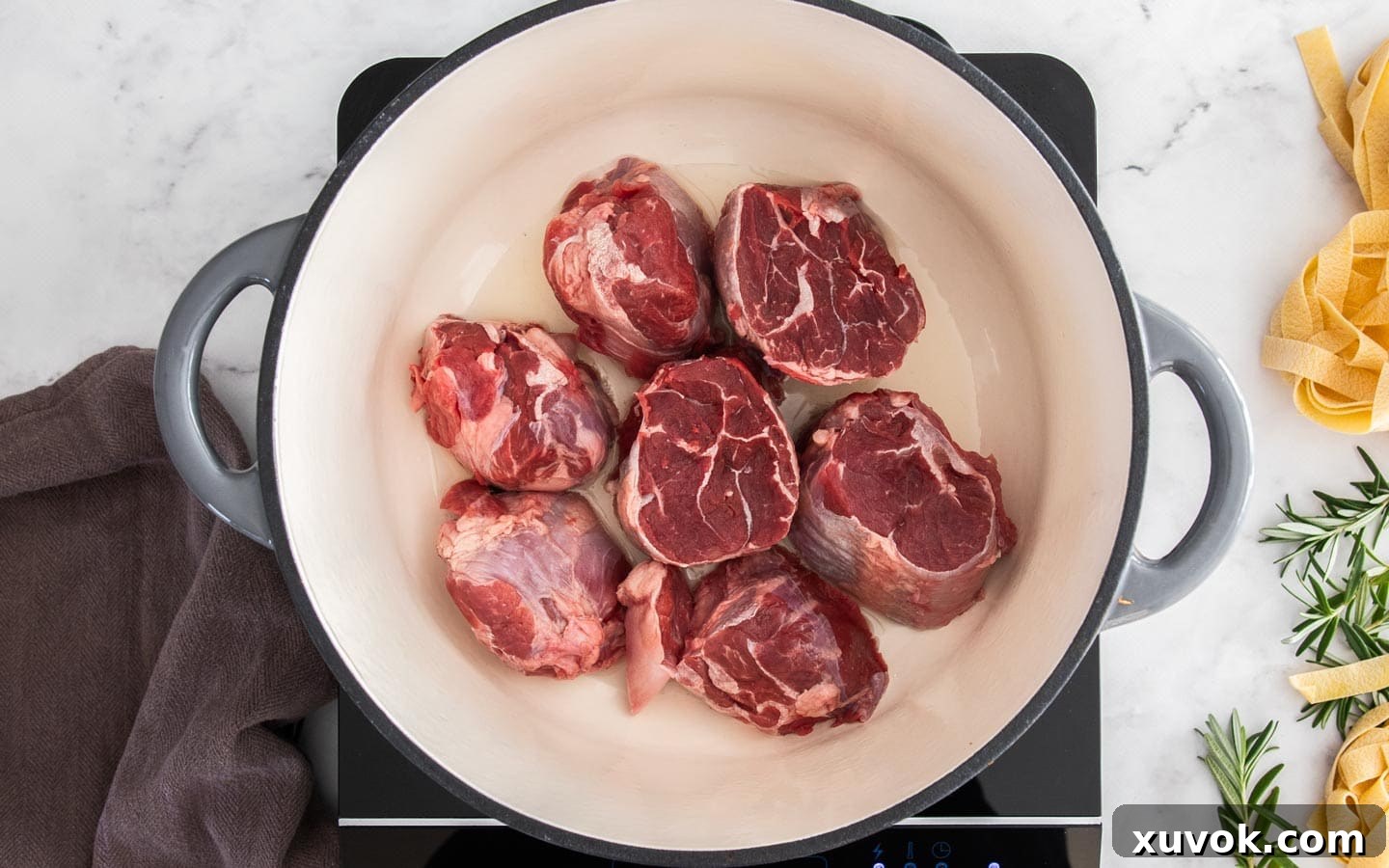
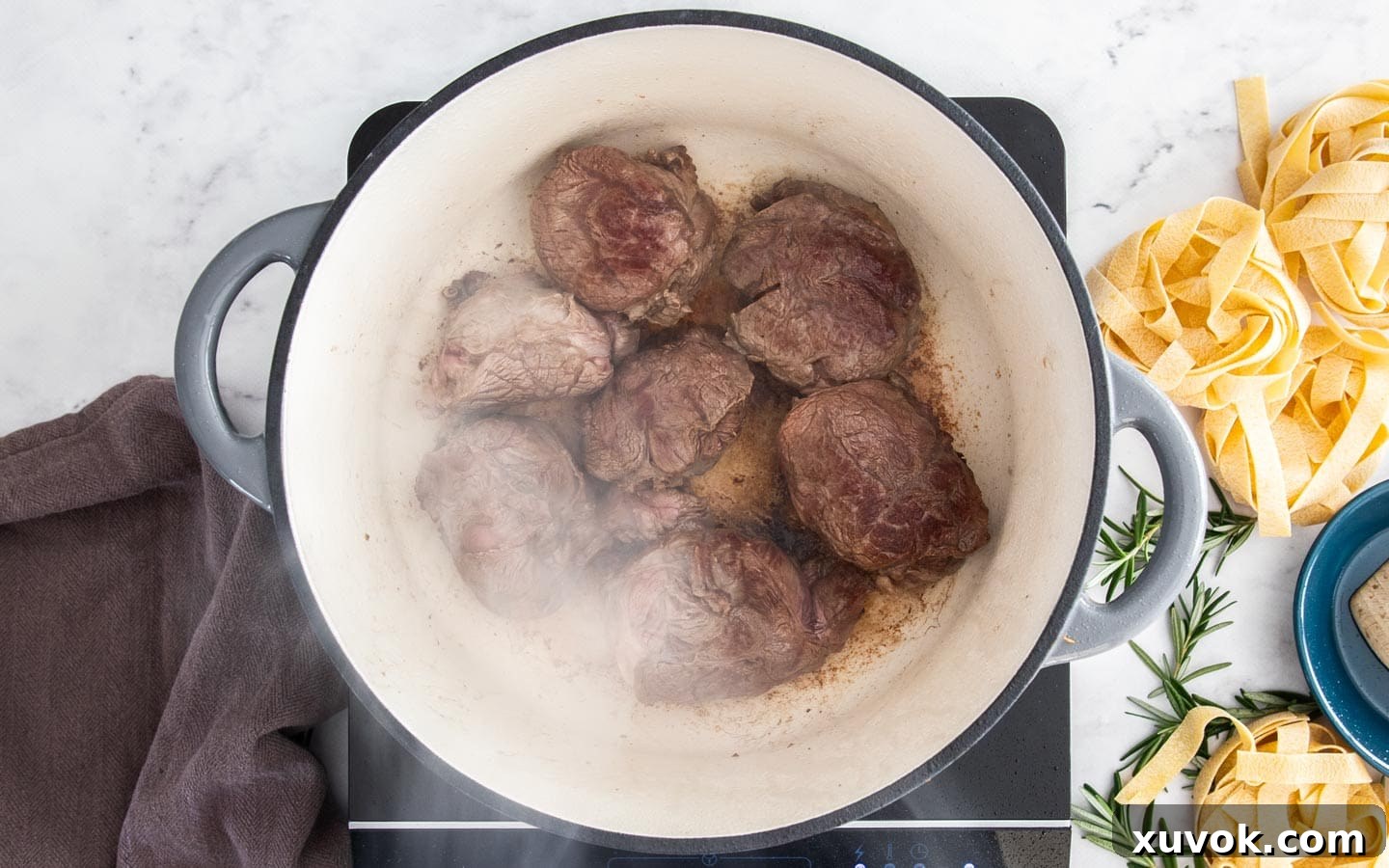
Add the olive oil to the bottom of your Dutch oven or heavy-based pan and heat it over medium-high heat until shimmering. Carefully introduce the beef shins, making sure not to overcrowd the pan. Brown the meat in batches if necessary, allowing each piece to develop a rich, deep caramelized crust on all sides. This browning is critical for building profound flavor in your ragu. Once beautifully browned, remove the beef and set it aside. Add a splash of water to the hot pan and scrape up all the flavorful brown bits (fond) from the bottom – this is a crucial step in deglazing and capturing all those delicious essences.
2. Sauté the Soffritto and Reduce the Wine
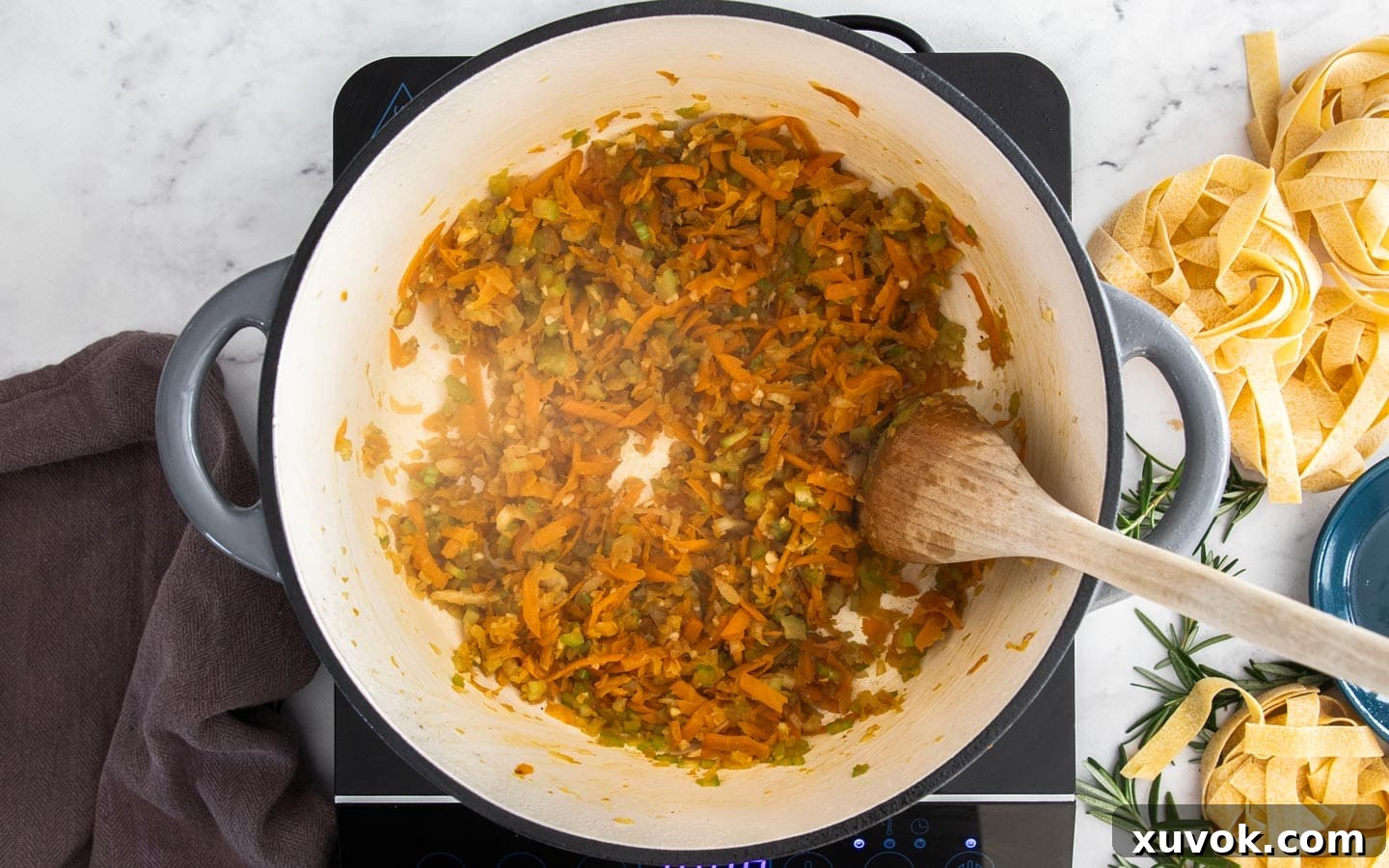
In the same pan with the deglazed bits, add your finely chopped garlic, onions, celery, carrots, and the anchovy fillets. Sauté these ingredients over medium heat for approximately 4-5 minutes, or until the vegetables have softened and become translucent. The anchovies will dissolve almost entirely into the oil, infusing it with their savory essence without any residual fishy taste. Continue to scrape the bottom of the pan as you stir to ensure no delicious fond is left behind or burns.
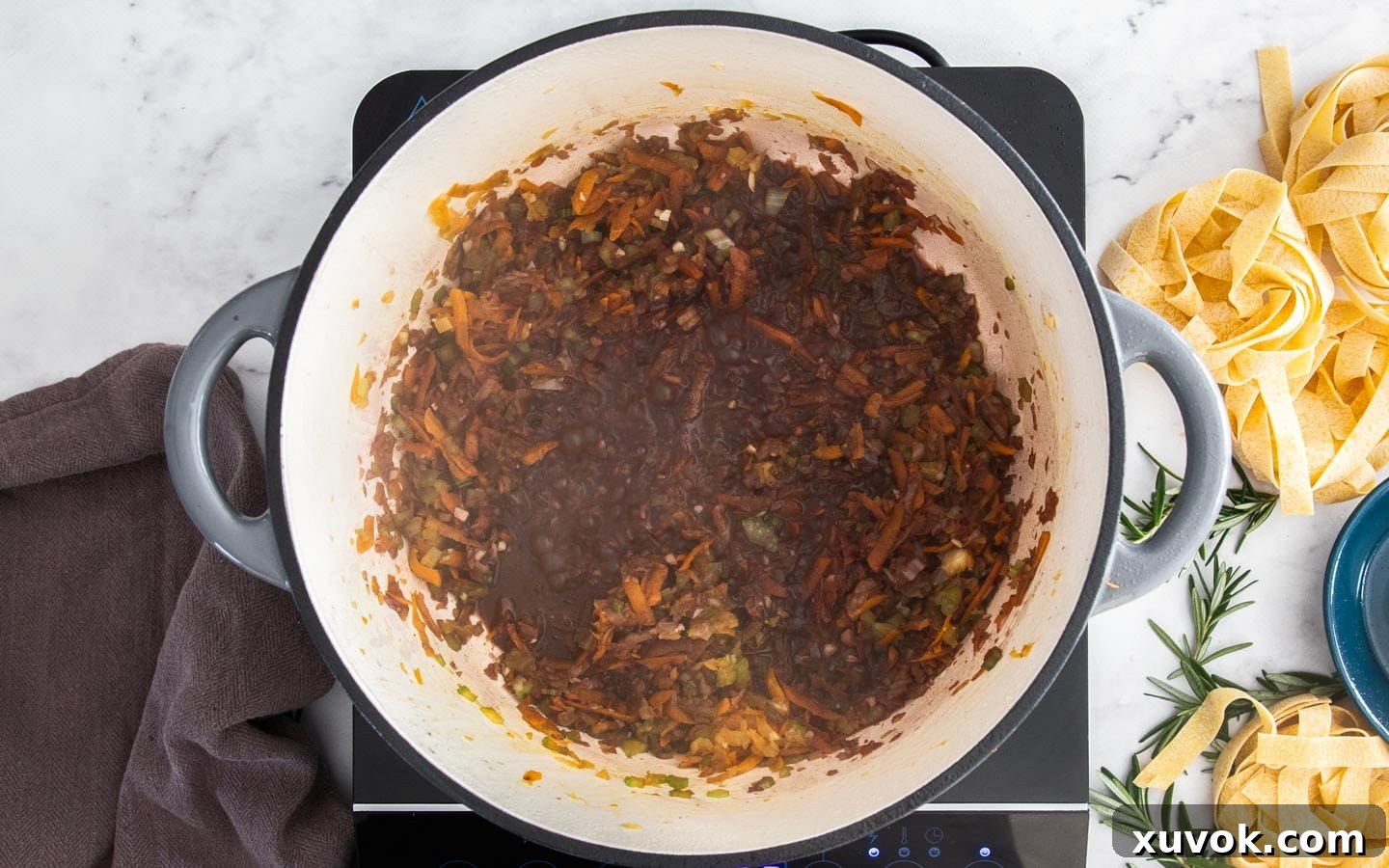
Next, pour in the red wine. Stir well to combine, making sure to scrape any remaining browned bits from the bottom of the pan – this process adds another layer of deep flavor. Bring the mixture to a rapid boil and let it simmer vigorously for about 1 minute, or until most of the wine has been absorbed by the vegetables. This reduction step is essential; it concentrates the wine’s flavor while cooking off the alcohol, leaving behind a rich, complex foundation for your ragu.
3. The Long, Luxurious Slow Cook
Now, it’s time to bring all the elements together for their slow dance in the oven. Return the browned beef shins and any accumulated juices to the pan. Add the crushed tomatoes, tomato paste, beef stock, the fresh sprig of rosemary, sugar, pepper, and salt. Give everything a good stir to ensure all ingredients are well combined and the beef is submerged in the rich liquid. Bring the entire mixture to a gentle simmer on the stovetop.
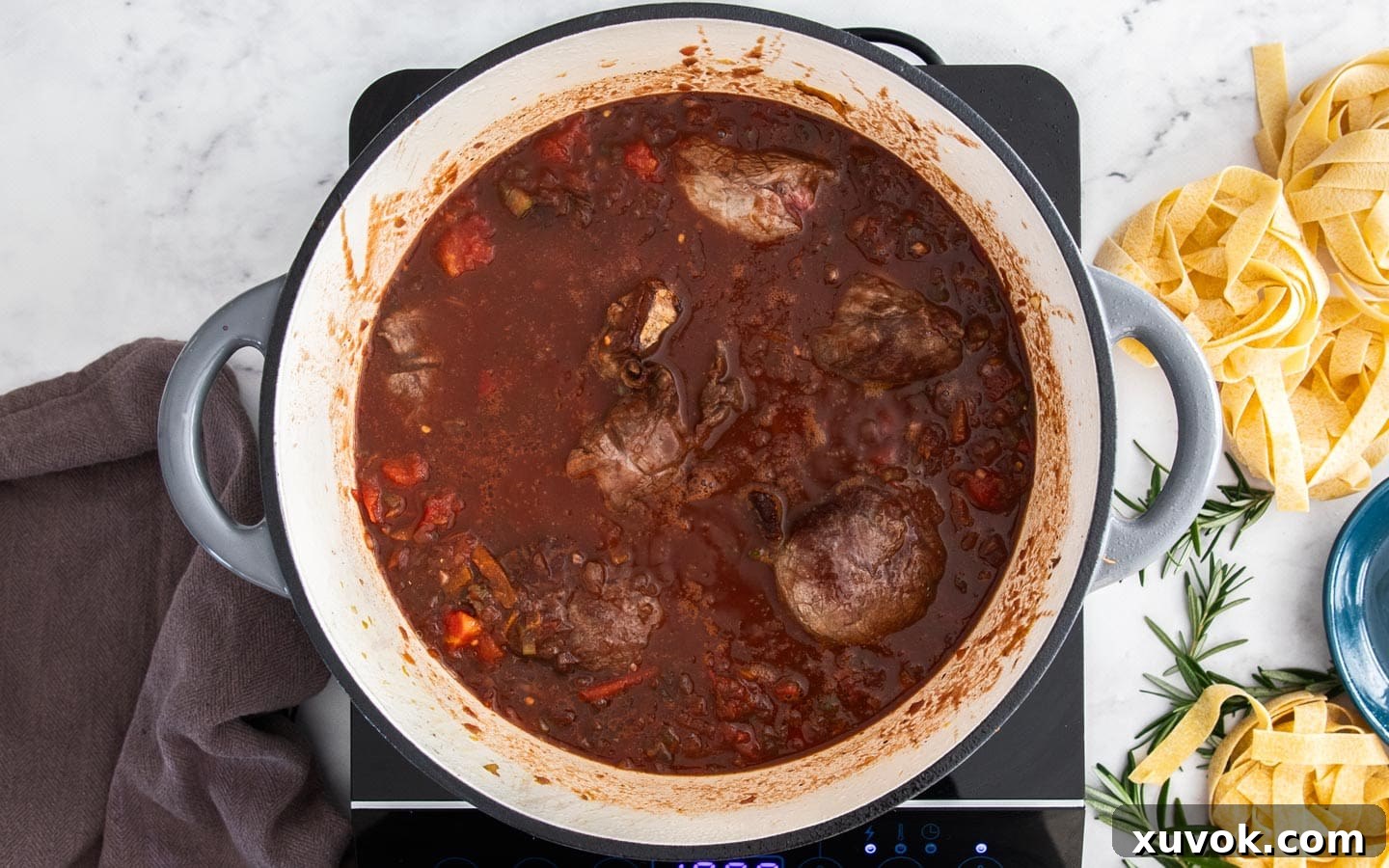
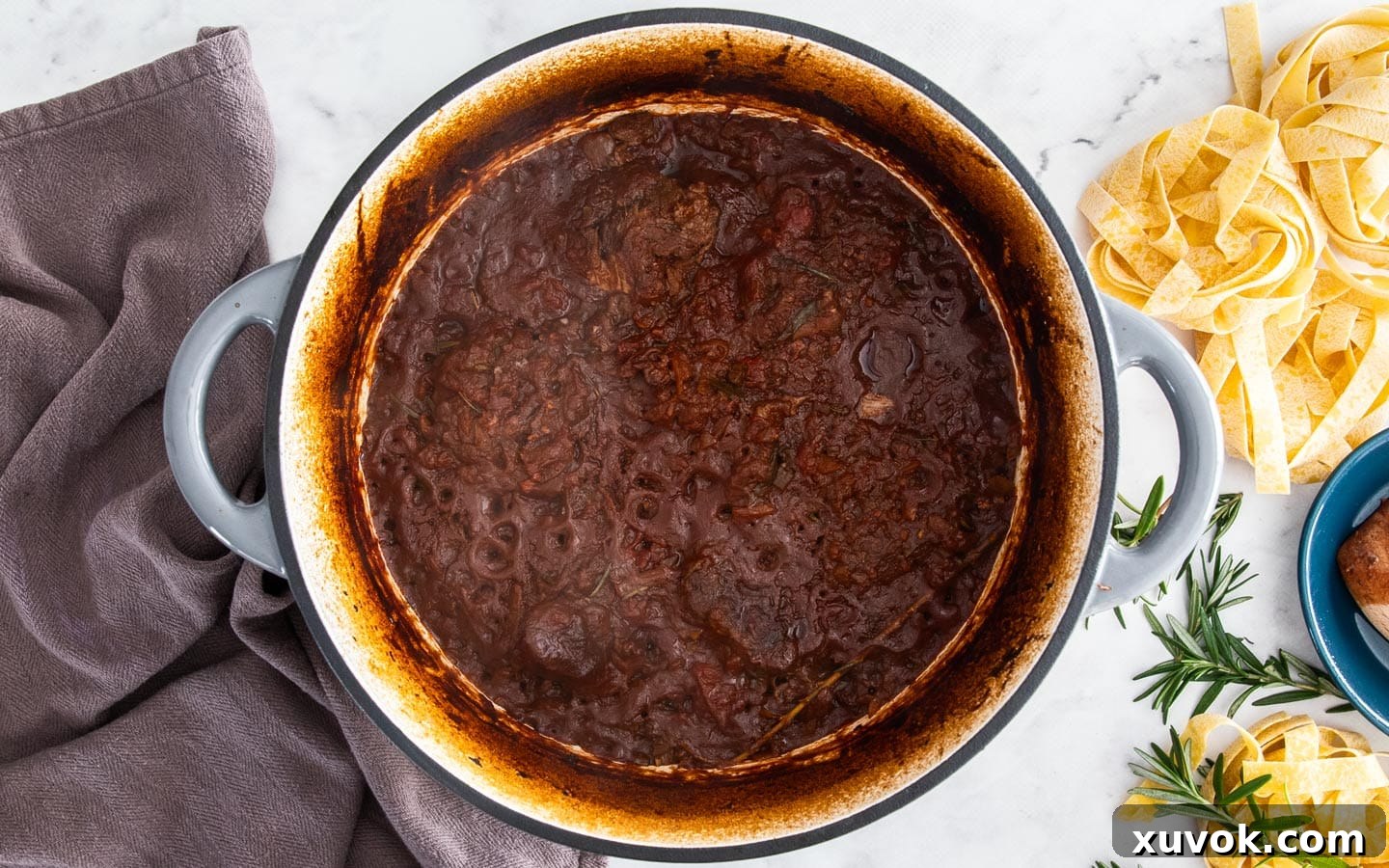
Cover the Dutch oven tightly with its lid (or heavy-duty foil) and transfer it to your preheated oven. Let the shin of beef ragu slowly braise for 2 ½ to 3 hours. During this time, the tough connective tissues in the beef will break down, turning into succulent gelatin, and the meat will become incredibly tender and easy to shred. The sauce will also reduce and thicken, concentrating its flavors into a decadent, unctuous consistency. You’ll know it’s ready when the meat practically falls apart with the slightest touch of a spoon. The heavenly aroma that fills your home at this stage is truly one of the best parts of the cooking process!
4. Shred, Toss & Savor
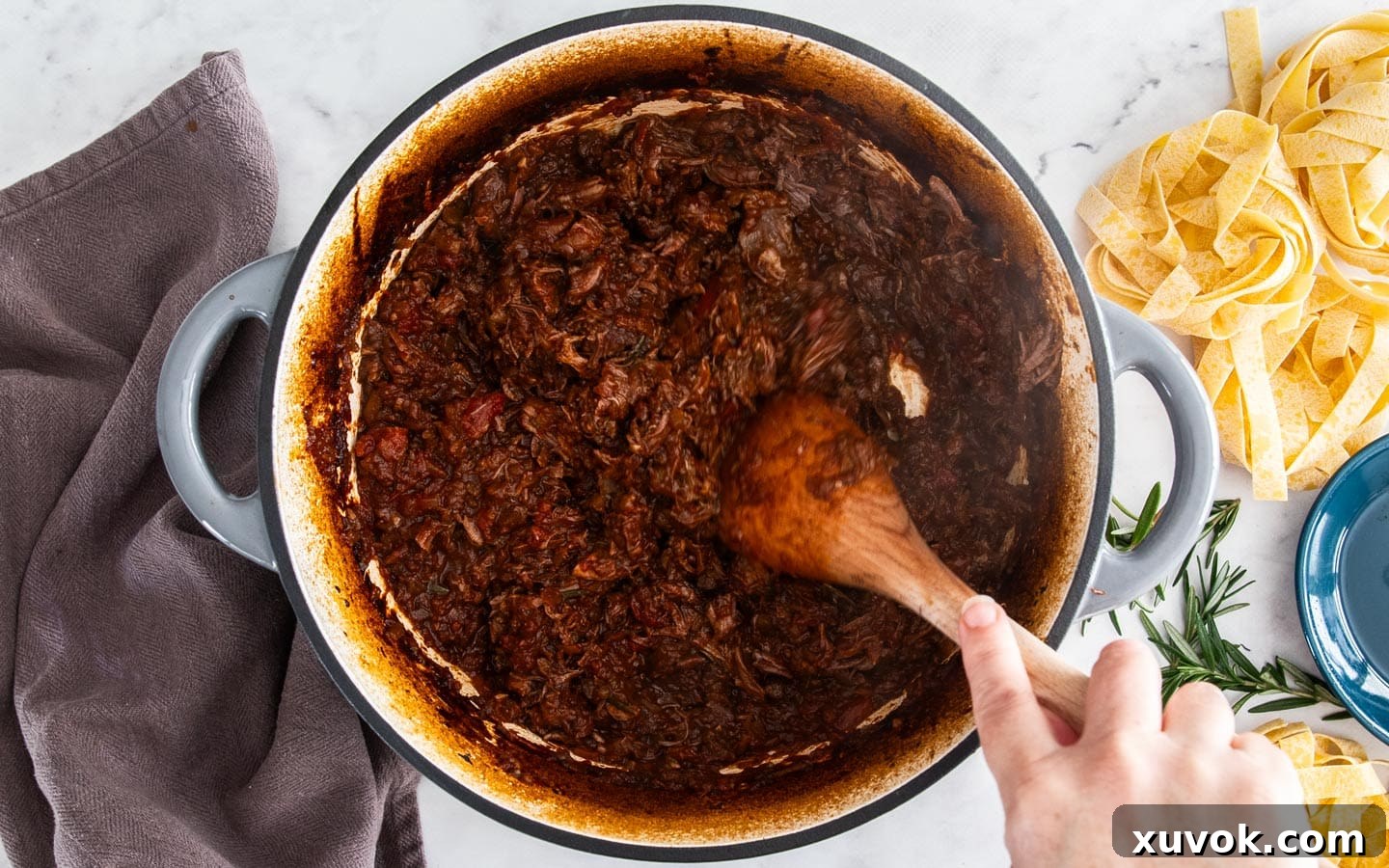
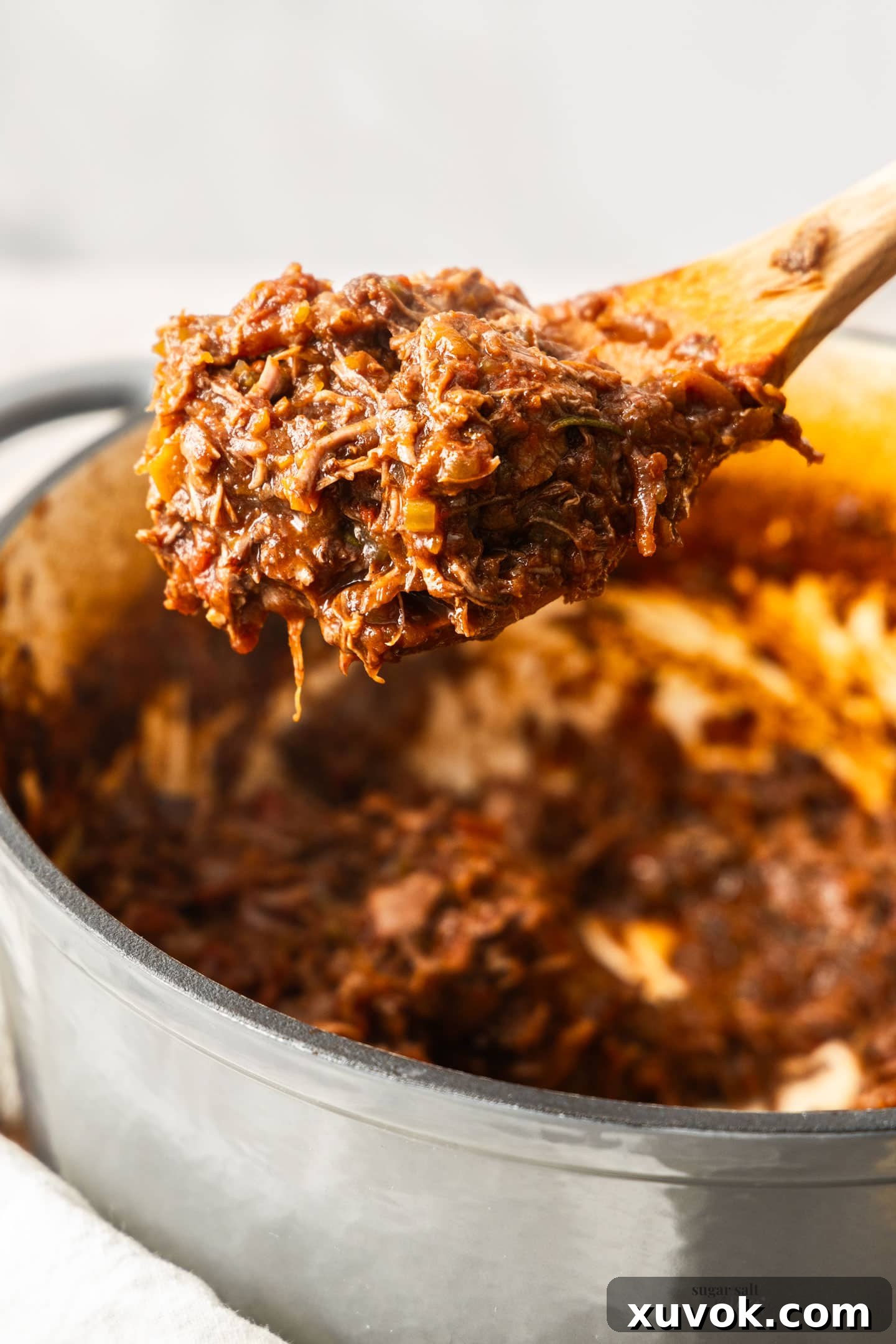
Once the ragu has achieved its tender, shreddable perfection, carefully remove the rosemary stalk from the pot. Using a sturdy wooden spoon or two forks, gently shred the slow-cooked beef shin directly into the rich, thickened sauce. At this point, you can remove any small, stubborn bits of sinew or gristle that haven’t fully broken down.
If you’re not planning to enjoy your ragu immediately, allow it to cool completely before transferring it to an airtight container and refrigerating. The flavors deepen beautifully overnight, making it an excellent make-ahead meal that will be ready to serve within 2-3 days.
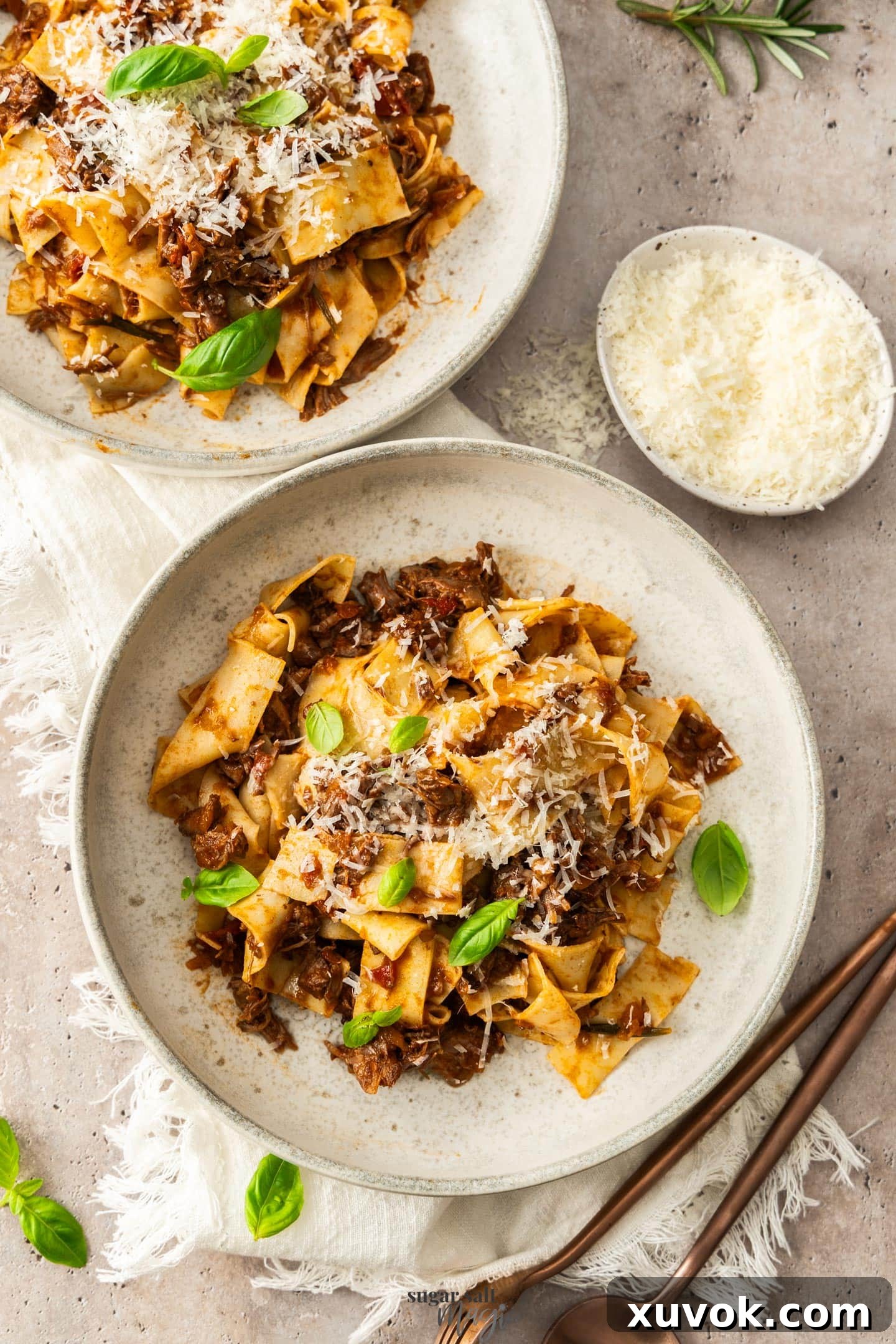
For immediate gratification, begin cooking your chosen pasta (pappardelle is highly recommended!) in a large pot of generously salted boiling water while you’re shredding the beef. Remember to reserve at least one cup of the starchy pasta water before draining. This liquid gold is crucial for achieving the perfect sauce consistency and helps the ragu cling beautifully to the pasta. Toss the shredded beef ragu with the cooked pasta, adding reserved pasta water incrementally until the sauce reaches your desired lusciousness. Serve generously topped with a shower of freshly grated Parmesan cheese and a scattering of vibrant fresh basil leaves. Prepare for a truly exquisite dining experience!
Serving Suggestions: Beyond Pappardelle
While the classic pairing of rich beef shin ragu with broad pappardelle noodles is undeniably perfect, its robust flavor and hearty texture make it incredibly versatile for a variety of culinary applications. The wide, flat surface of pappardelle is ideal for catching every shred of meat and spoonful of sauce, creating a truly satisfying bite.
However, don’t hesitate to experiment with other pasta shapes. Sturdy options like tagliatelle, fettuccine, mafalde (also known as mafaldine), or even rigatoni and penne, which feature ridges or hollows to hold the sauce, work beautifully. For a delightful twist, consider serving it with soft, pillowy gnocchi – the ragu’s richness contrasts wonderfully with the light potato dumplings.
If you’re looking to venture beyond pasta, this slow-cooked beef shin ragu shines equally bright. Spoon it generously over a bed of creamy, fluffy mashed potatoes, a velvety polenta, or even a light and fluffy couscous for a comforting meal. It also makes an exceptional filling for gourmet burgers, adding a depth of savory flavor that will truly impress. This is particularly fantastic for utilizing any delicious leftovers. Alternatively, transform it into a show-stopping savory pie filling, reminiscent of these mini lamb pies, encased in a flaky crust for an indulgent treat. No matter how you choose to serve it, this beef shin ragu promises a deeply flavorful and satisfying experience.
Expert Tips for an Unforgettable Ragu
- Finely Grate Your Soffritto: To ensure the vegetables meld seamlessly into the sauce without large, chunky bits, I highly recommend grating your carrot and onion on a box grater. For the onion, you can grate until it becomes too small to safely handle, then simply finely chop the remainder. This technique saves time and contributes to a smoother, more refined sauce texture, allowing the beef to truly be the star.
- Embrace the Connective Tissue: Beef shin naturally contains a good amount of silver skin and connective tissue. It might not look appealing raw, but resist the urge to trim it all away! This tissue is packed with collagen, which, through the magic of slow cooking, breaks down into gelatin. This gelatin is what gives the ragu its incredibly rich, silken texture and helps to thicken the sauce naturally. While most of it will dissolve, you might find tiny, unrendered pieces; simply pull these out with your wooden spoon as you shred the meat.
- Don’t Waste the Fond: The dark, caramelized bits that stick to the bottom of your pan after browning the beef and sautéing the vegetables are known as ‘fond’. This isn’t burnt residue; it’s pure, concentrated flavor! It’s absolutely crucial not to let it burn, as that would indeed make your sauce bitter. Instead, ensure you regularly deglaze the pan with a splash of water, wine, or beef stock, scraping up all those delicious brown bits with a wooden spoon. These golden morsels are essential for building the ragu’s complex flavor profile.
- Choose Fresh, Quality Parmesan: For the ultimate serving experience, always opt for a block of high-quality Parmesan cheese and grate it fresh. Pre-shredded or shelf-stable Parmesan often contains anti-caking agents that affect its flavor and texture, detracting from the luxuriousness of your ragu. Freshly grated Parmesan melts beautifully and offers a superior salty, nutty counterpoint to the rich sauce. Finish your dish with a generous amount, along with fresh basil leaves.
- Make Ahead for Enhanced Flavor: This beef shin ragu is an ideal make-ahead meal. In fact, its flavors deepen and meld even further after a night’s rest in the refrigerator. Feel free to cook it up to 2-3 days in advance. Simply reheat gently on the stovetop, adding a splash of water or stock if needed to achieve your desired consistency. It tastes even better the next day!
- Adjust Consistency with Pasta Water: When tossing the ragu with pasta, don’t forget to reserve some of the starchy pasta cooking water. This liquid is a game-changer! It not only helps to loosen the sauce to your preferred consistency but also contains starches that aid in emulsifying the sauce, helping it cling beautifully to every strand of pasta. Add it gradually, a tablespoon at a time, until you achieve the perfect saucy coating.
Storing Your Delicious Beef Ragu
One of the many advantages of this beef shin ragu is its excellent storage potential. It’s a fantastic dish for meal prepping, as the flavors often improve after a day or two in the refrigerator, allowing them to fully develop and deepen.
Refrigerator Storage: Your beef shin ragu will keep beautifully in an airtight container in the refrigerator for up to 3-4 days. When you’re ready to enjoy it again, I recommend reheating it gently on the stovetop over medium-low heat. If the sauce has thickened considerably, you might want to add a dash of water or beef stock to achieve your preferred consistency. Stir occasionally until it’s heated through.
Freezer Storage: This ragu is also highly freezer-friendly, making it perfect for having a delicious, homemade meal ready whenever cravings strike. It will maintain its quality in the freezer for up to 3 months. To maximize convenience and minimize waste, I love using silicone freezer storage cubes (like Souper Cubes, widely available online) to portion out the ragu. Once frozen solid, I transfer the individual blocks to an airtight container or a freezer-safe Ziploc bag. This method allows you to easily pull out just the right amount for a single serving or a family meal, eliminating guesswork and waste.
While Souper Cubes are a popular choice, many excellent brands offer similar silicone freezer trays. For those in Australia, brands like Smash are readily available in supermarkets like Woolworths and offer comparable functionality. While the initial investment might be around $20, these reusable tools are incredibly durable and will prove invaluable for all your freezing needs, quickly becoming a kitchen staple.
Reheating Frozen Ragu: For the best results when reheating from frozen, it’s ideal to let the ragu thaw overnight in the refrigerator. Once thawed, reheat it gently on the stovetop, again adding a small amount of water or stock if needed to reach the desired sauce consistency. If you’re in a pinch, you can reheat from frozen on the stovetop over very low heat, stirring frequently, or in the microwave, though the stovetop method generally yields a better texture.
Frequently Asked Questions About Beef Ragu
While various beef cuts can be used for ragu, and delicious versions can be made with chuck roast or beef cheeks, I genuinely believe boneless beef shin stands out as the superior choice for this particular recipe. Its rich, deep flavor profile combined with its abundance of connective tissue makes it uniquely suited for slow cooking. This connective tissue breaks down beautifully during a long braise, transforming into gelatin that imparts incredible tenderness and a silky, unctuous mouthfeel to the sauce. The result is a beef ragu with pappardelle that is both robust and exquisitely tender.
Shin beef truly shines in recipes that call for slow cooking and braising. Due to its tough nature when raw, it’s not suitable for quick cooking methods like grilling or pan-frying, which would leave it chewy and unappetizing. Instead, shin beef excels in dishes where it has ample time to break down and become incredibly tender. Beyond this delicious ragu, it’s perfect for hearty stews, goulash, or even a slow-cooked classic like beef stroganoff. Its ability to absorb flavors and tenderize over time makes it a favorite for comfort food dishes around the world.
While slow-cooked dishes are often forgiving, it is possible to overcook beef ragu. The goal is to reach a point where the beef is succulent and easily shreddable, and the sauce is perfectly thickened. This beef shin ragu thrives on a minimum of 2 ½ hours in the oven, and depending on the specific batch and your oven, sometimes up to 3 hours or slightly more can be ideal. If you choose to extend the cooking time significantly beyond this, you must ensure there’s sufficient liquid in the pot to prevent the sauce from drying out or burning. However, simply adding more liquid might dilute the concentrated flavors, so it’s a balance. Always aim for tenderness first, and rely on visual cues like easily shredding meat and a thickened sauce.
Absolutely! This beef shin ragu recipe adapts beautifully to a slow cooker. You’ll still want to perform the initial browning of the beef and sautéing of the soffritto (vegetables, garlic, anchovies) on the stovetop to build maximum flavor – these steps are crucial and worth the extra effort. After the wine reduction, transfer all ingredients to your slow cooker. Cook on low for 6-8 hours or on high for 3-4 hours, or until the beef is fork-tender and easily shreds. The exact timing may vary slightly based on your slow cooker model.
While red wine adds a distinctive richness and depth of flavor that is hard to fully replicate, you can make substitutions if necessary. For a non-alcoholic alternative, you can use additional beef stock or even a dark, unsweetened grape juice, though the flavor profile will be different. For a closer approximation of the wine’s acidity and fruitiness, a combination of beef stock with a tablespoon of balsamic vinegar or red wine vinegar can work in a pinch. However, for the most authentic and robust flavor, good quality dry red wine is highly recommended.
More Italian-Inspired Recipes You’ll Adore
If you loved this rich and comforting Beef Shin Ragu, you’re in for a treat! Explore more of our delectable pasta and hearty meal recipes that bring the flavors of Italy and beyond right to your kitchen:
- Classic Spaghetti Bolognese: A timeless favorite featuring a rich, savory meat sauce.
- Fennel Sausage Pasta: A flavorful and aromatic pasta dish with Italian sausage and fragrant fennel.
- Lasagna Stuffed Shells: All the beloved layers of lasagna, neatly tucked into convenient pasta shells.
- Rigatoni al Forno: A comforting baked pasta dish with a hearty sauce and bubbling cheese.
- Slow Cooked Beef Stroganoff: Tender beef in a creamy mushroom sauce, perfect for a cozy evening.
⭐⭐⭐⭐⭐
Did you try this Beef Shin Ragu with Pappardelle? We’d love to hear from you! Please share your thoughts and show it some love in the comments below.
Hungry for more deliciousness? Subscribe to our newsletter for free, mouth-watering recipes delivered straight to your inbox. And don’t forget to follow us on Facebook, Pinterest, and Instagram for daily inspiration and culinary adventures!
Decadent Beef Shin Ragu with Pappardelle
Rate
Pin
Ingredients
- 2 tablespoons extra-virgin olive oil (see notes)
- 1 kg boneless beef shins cut into 3-inch (7-8cm) pieces (approx. 35oz)
- 1 large onion finely chopped or grated
- 1 medium carrot grated (~ 1 cup / 100g / 3 ½ oz)
- 2 medium celery stalks finely chopped (~ 1 cup / 100g / 3 ½ oz)
- 3 cloves garlic minced
- 2-3 anchovy fillets (canned/jarred, see notes)
- ¾ cup dry red wine (180ml, e.g., Merlot or Cabernet Sauvignon)
- 400 g can crushed tomatoes (approx. 14oz)
- ¼ cup tomato paste
- 2 cups beef stock (beef broth, 500ml)
- 1 sprig fresh rosemary
- 1 teaspoon granulated sugar
- ½ teaspoon freshly ground black pepper
- ½ teaspoon salt
TO SERVE
- 450 g pappardelle pasta fresh or dried (see notes)
- Finely grated Parmesan cheese for serving (freshly grated is best!)
- Handful of fresh basil leaves chopped, for serving
For optimal results, it is always recommended to weigh ingredients when a weight measurement is provided.
Instructions
-
Preheat your oven to 160°C (140°C fan-forced) / 320°F. Adjust an oven rack to ensure it can comfortably fit a large Dutch oven with its lid in place.
-
Heat 1 tablespoon of olive oil in your Dutch oven or a very large, heavy-based pan over medium-high heat. Add the beef shins in batches, ensuring not to overcrowd the pan, and brown them thoroughly on all sides until a deep, caramelized crust forms. Add the remaining oil as needed for subsequent batches. Once browned, remove the beef and set aside. If there’s excessive oil remaining, drain all but about 1 tablespoon.
-
Pour ¼ cup of water into the hot pan and immediately use a wooden spoon to scrape up all the flavorful browned bits (fond) from the bottom. This essential step, known as deglazing, captures concentrated flavors and prevents burning. Do not discard this flavorful liquid.
-
Add the minced garlic, chopped onions, celery, carrots, and anchovy fillets to the pan. Sauté the vegetables for approximately 4-5 minutes, stirring frequently, until they soften and become fragrant. If you notice any dark bits forming at the bottom, add a small dash of water or beef stock to deglaze again; ensure nothing burns, as this can make the sauce bitter.
-
Pour in the red wine and stir well to combine all ingredients. Bring the mixture to a rapid boil and let it simmer for 1 minute, allowing most of the wine to be absorbed and its flavors to concentrate within the vegetables.
-
Return the browned beef shins and any collected juices to the pan. Add the remaining ingredients: crushed tomatoes, tomato paste, beef stock, fresh rosemary sprig, sugar, pepper, and salt. Stir everything thoroughly until well combined, ensuring the beef is largely submerged in the liquid. Bring the entire mixture to a gentle simmer on the stovetop.
-
Cover the Dutch oven tightly with its lid (or heavy-duty foil) and transfer it to the preheated oven. Bake for 2 ½ to 3 hours, or until the beef is incredibly tender and easily shreds with a fork, and the sauce has significantly thickened to a rich consistency.
-
If you plan to serve the ragu immediately, begin preparing your pasta during this time.
-
Once the ragu is cooked, carefully remove the rosemary stalk. Use a wooden spoon or two forks to shred the tender beef directly into the sauce. As you shred, remove any noticeable bits of gristle or tough sinew that haven’t fully broken down during cooking.
-
Taste the ragu and adjust the seasoning with additional salt and pepper as needed. If not serving immediately, allow the ragu to cool completely before chilling it in the refrigerator. The flavors will continue to develop and improve over 3-4 days.
-
IF SERVING IMMEDIATELY:
Bring a large pot of generously salted water to a rolling boil. Add your pappardelle (or preferred pasta) and cook according to package instructions until it is just al dente.
-
Before draining the pasta, reserve 1 cup of the starchy pasta water. Drain the pasta thoroughly. Add the hot ragu to the drained pasta, using as much or as little sauce as you prefer, and mix vigorously to combine. If the sauce appears too thick, gradually add some of the reserved hot pasta water, a tablespoon at a time, until you achieve your desired smooth and clingy consistency.
-
Serve your exquisite beef shin ragu immediately, generously topped with freshly grated Parmesan cheese and a sprinkle of fresh basil leaves for garnish. Enjoy!
-
Please take a moment to leave a comment & rating. Your feedback is greatly appreciated and incredibly helpful!
Notes
- Tablespoon Measurement: Please note that I use a standard Australian 20ml tablespoon in my recipes, which is equivalent to 4 teaspoons. It’s advisable to check your own tablespoon measure before proceeding to ensure accuracy.
- Reheating Chilled Ragu: If your ragu has been chilled, simply reheat it gently in a pan over medium heat until it’s hot throughout. If the consistency is too thick, add a small splash of water or beef stock to loosen it to your liking.
- Anchovy Fillets: The anchovies are a secret weapon for umami! They will completely dissolve during cooking and will not impart a “fishy” flavor to your ragu. Instead, they provide a deep, savory seasoning that elevates the overall taste. If you absolutely prefer not to use them, you can substitute with 1 teaspoon of Vegemite/Marmite or 2 teaspoons of white miso paste for a similar umami boost, or simply omit them entirely, though the flavor will be slightly less complex.
- Pasta Varieties: While pappardelle is a perfect match, this versatile beef shin ragu pairs wonderfully with many other pasta types, from ridged penne and ziti to flat tagliatelle and fettuccine. Its rich, shreddable texture also makes it an excellent filling for lasagna, ravioli, or cannelloni.
- Nutrition Information: The provided nutrition details are approximate and are generated by an online calculator. Please be aware that the specific brands and quantities of ingredients you use may lead to variations in the actual nutritional values. For precise dietary information, it is recommended to calculate based on your exact ingredients.
Further Information & Resources
These helpful links will guide you back to relevant sections within the main article for more in-depth details and visual aids.
- Step-by-step photos
- What to serve beef shin ragu with
- Tips and tricks for success
- Proper storage and make-ahead advice
DISCOVER MORE EXCELLENT PASTA DISHES!
Calories from Fat 243