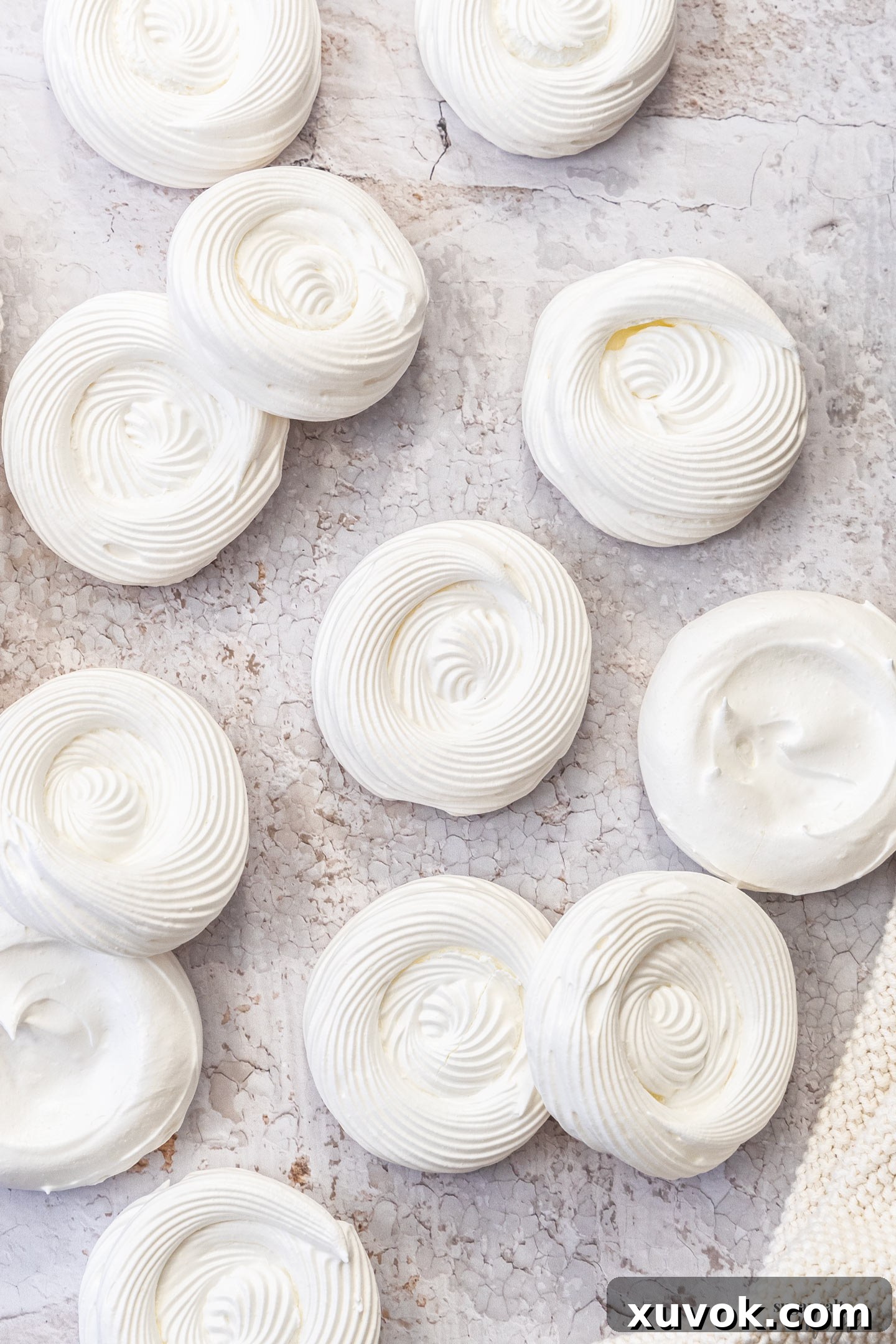
Delicate, elegant, and surprisingly easy to create, these beautiful meringue nests are a dessert lover’s dream. Imagine a crisp, cloud-like shell that melts on your tongue, offering a sweet whisper of flavor with a subtle lemon zest, ready to cradle a myriad of delectable fillings. This comprehensive guide will equip you with all the essential tips and tricks to master perfect meringue nests every single time, transforming simple ingredients into an impressive culinary delight.
Meringue nests are more than just a dessert; they are miniature works of art, ideal for any occasion from a casual afternoon tea to a sophisticated dinner party. Their delightful crunch gives way to a tender, ethereal interior, providing the perfect canvas for light and fresh accompaniments. While they are a classic pairing with whipped cream and fresh fruit – a combination that never fails to charm – their versatility invites endless creative possibilities for fillings. Whether you’re a seasoned baker or a curious beginner, the journey to crafting these exquisite treats is both rewarding and straightforward.
At their core, meringues are a harmonious blend of egg whites and sugar, meticulously whipped until they achieve a thick, smooth, and magnificently glossy consistency. This airy mixture is then baked slowly at a low temperature, allowing it to dry out thoroughly and become wonderfully crisp. While some variations might leave a slightly chewy center, our focus here is on achieving that coveted crispness throughout, reminiscent of professional bakery-quality meringues. Get ready to impress your guests and satisfy your sweet tooth with these truly special meringue nests.
For another delightful meringue adventure, don’t miss our recipe for raspberry swirl meringues!
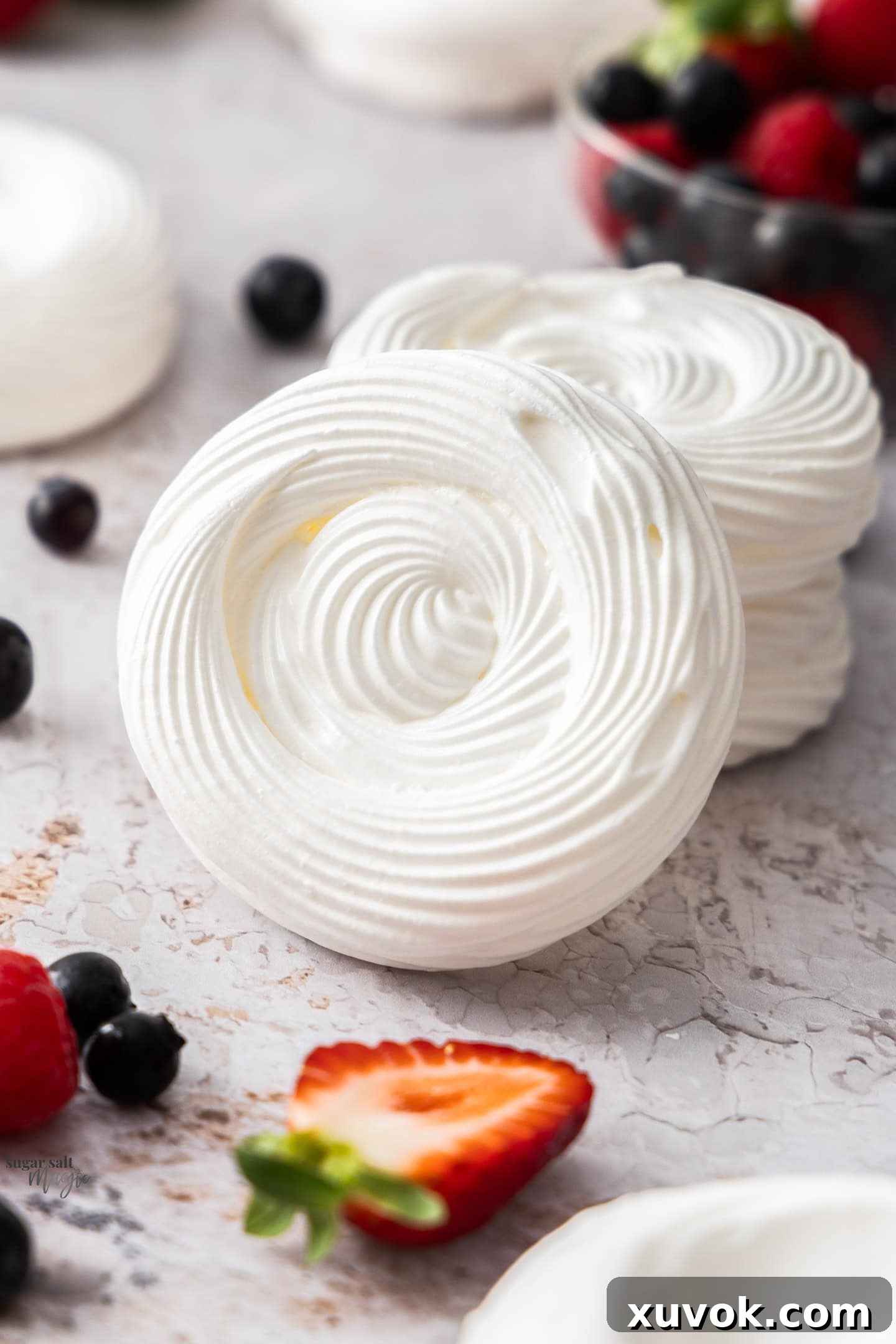
Table of Contents
- Essential Ingredients for Perfect Meringue Nests
- Mastering the Art of Meringue Nests: A Step-by-Step Guide
- 1. Whip Egg Whites to Soft Peaks: The Foundation of Fluffy Meringues
- 2. Gradually Add Sugar for Stability and Shine
- 3. Beat to Stiff Peaks: Achieving Ultimate Structure
- 4. Shape Your Meringue Nests: Piping or Spooning
- 5. Bake Low and Slow for Crisp Perfection
- Endless Filling Ideas for Your Meringue Nests
- Storage and Freshness: Keeping Your Meringues Perfect
- Troubleshooting Common Meringue Problems
- More Delightful Meringue and Pavlova Recipes You’ll Adore
Never Miss a Recipe!
Get the latest recipes straight to your inbox and elevate your baking!
Essential Ingredients for Perfect Meringue Nests
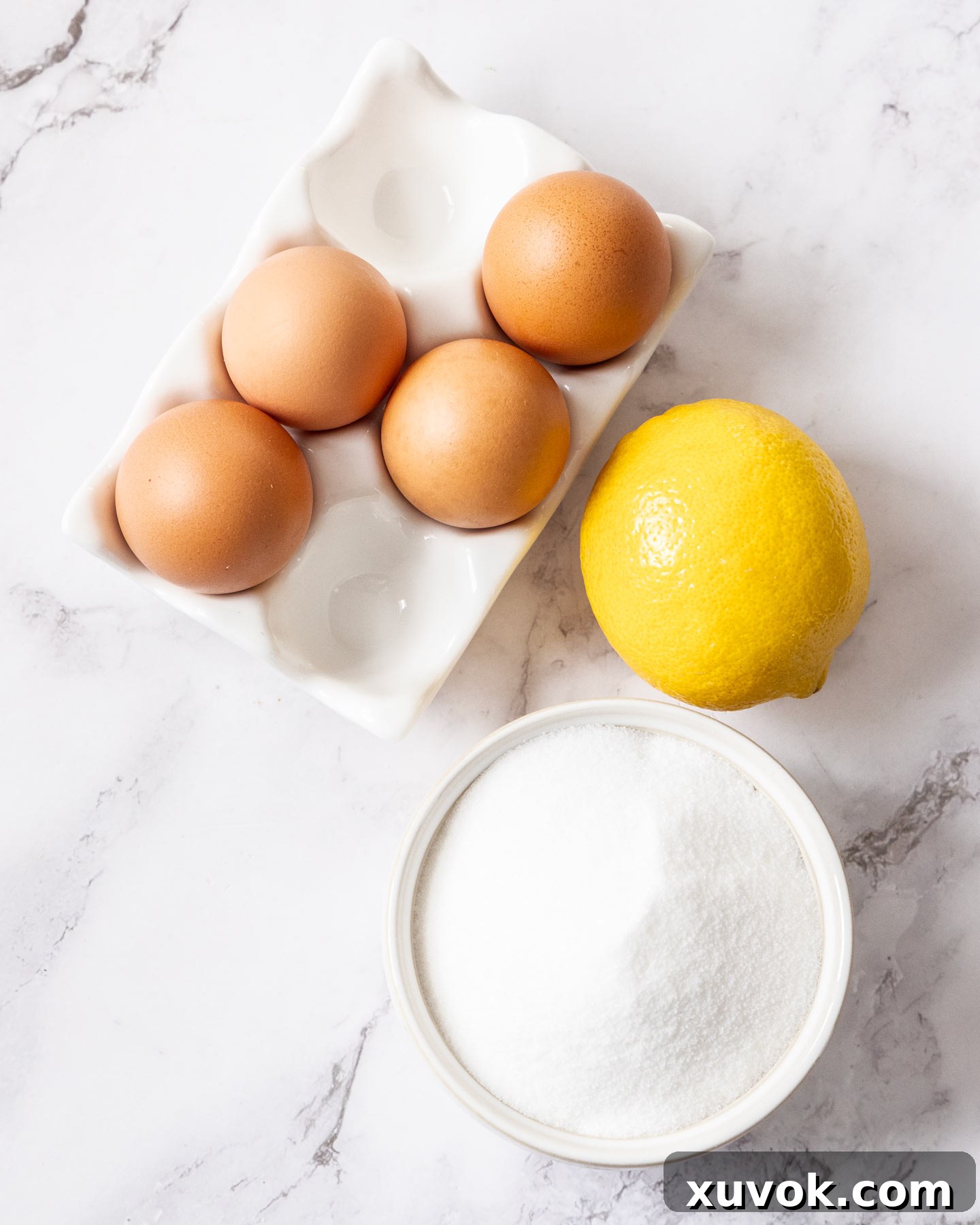
For precise measurements and detailed steps, refer to the full recipe card below.
Crafting perfect meringue nests begins with understanding the role of each ingredient. While the list is delightfully short, quality and preparation make all the difference:
Egg Whites: The Heart of Meringue
Fresh egg whites are an absolute non-negotiable for successful meringue. They must be at room temperature, as this allows the proteins to relax and whip up to a much greater volume and stability compared to cold eggs. When separating eggs, extreme caution is key: even a tiny speck of egg yolk (which contains fat) can prevent your egg whites from whipping properly. For consistency, measuring your egg whites by volume (e.g., ½ cup) or weight (e.g., 115g) rather than counting individual eggs is highly recommended, as egg sizes can vary significantly. A good rule of thumb to remember is roughly ¼ cup of sugar for every egg white.
Caster Sugar (Superfine Sugar): The Sweet Stabilizer
Sugar not only sweetens the meringue but also plays a crucial role in stabilizing the whipped egg whites. For the best results, superfine caster sugar is preferred over granulated sugar. Its finer crystals dissolve more readily into the egg whites, resulting in a smoother, less grainy meringue with a superior texture. Undissolved sugar can lead to a chewy or “weepy” meringue, so taking your time with this step is vital.
Lemon Juice (or Vinegar/Cream of Tartar): The Acidic Helper
A small amount of acid, such as lemon juice, white vinegar, or cream of tartar, is your secret weapon for perfectly stable meringues. This acidity helps to denature the egg white proteins, allowing them to form a stronger, more resilient foam that holds its shape beautifully. While you might be tempted to skip it, its inclusion guarantees a better, more robust meringue structure. An added benefit of using lemon juice is the delicate, fresh hint of lemon flavor it imparts, which perfectly complements the sweetness of the meringue.
Optional Flavorings (with caution)
While ingredients like vanilla extract can be added for extra flavor, it’s worth noting that darker liquid flavorings can sometimes cause your meringues to take on a golden hue in the oven rather than staying their classic pristine white. If you desire a specific flavor, consider using clear extracts or zest, but always keep in mind the potential impact on color.
Mastering the Art of Meringue Nests: A Step-by-Step Guide
Many home bakers find the idea of making meringue or pavlova a bit daunting, but I’m here to tell you it’s incredibly straightforward once you understand a few fundamental principles. With this detailed, step-by-step guide, you’ll discover just how easy it is to whip up these elegant treats. You’ll be amazed at how effortlessly these mini pavlova shells come together, even as you juggle other kitchen tasks. This recipe utilizes the classic French meringue method, renowned for its crisp texture and delicate structure.
For the complete recipe with exact ingredient quantities and timing, please jump to the recipe card.
1. Whip Egg Whites to Soft Peaks: The Foundation of Fluffy Meringues
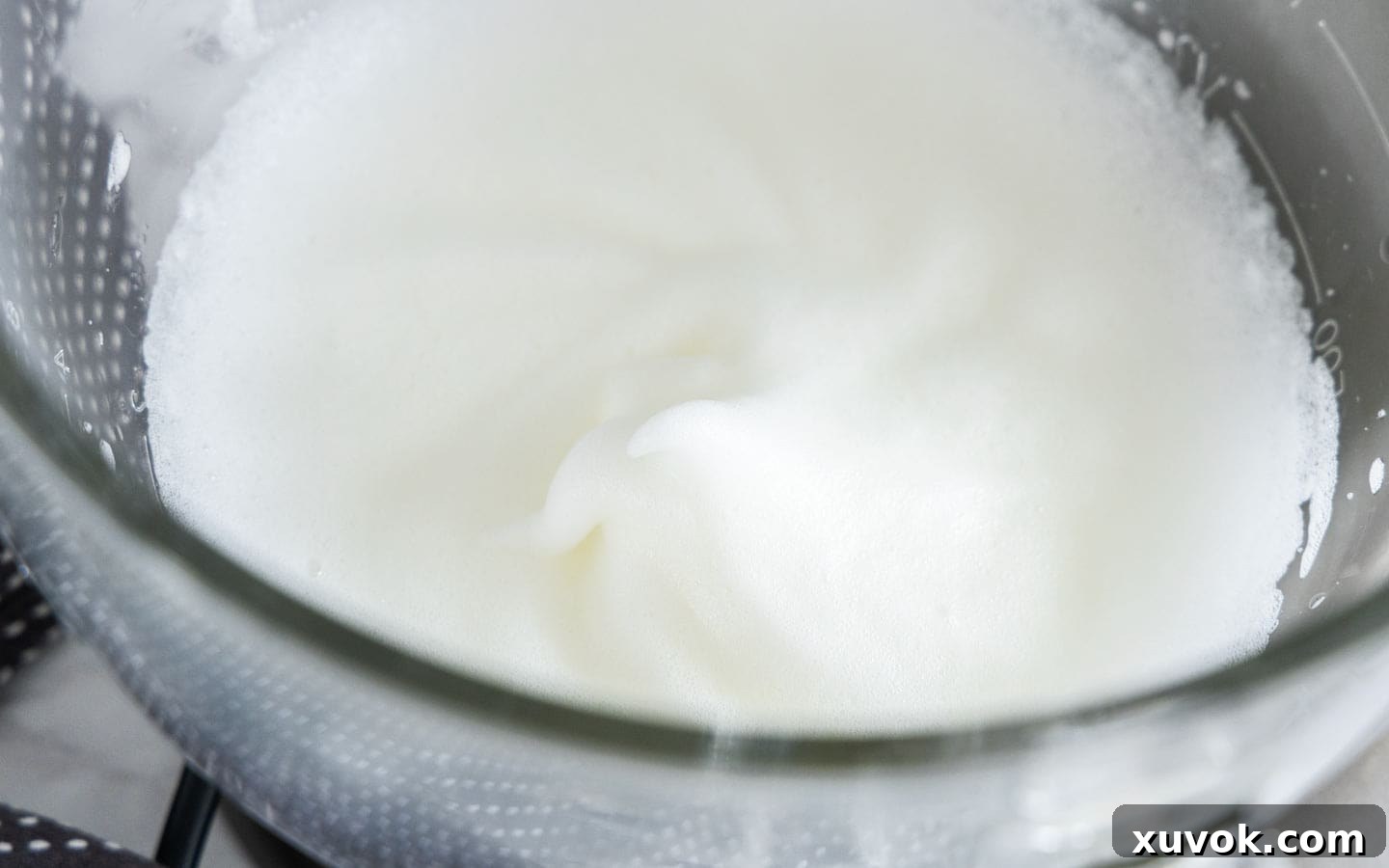
The first critical step involves whipping your room-temperature egg whites. Begin by pouring the egg whites into the impeccably clean bowl of your stand mixer (fitted with the whisk attachment) or a large bowl if using a handheld mixer. Start whipping on a medium speed. This gradual approach allows air to be incorporated steadily into the egg whites, creating a more stable and robust foam. Aggressive high-speed whipping from the start can create large, unstable air bubbles that are prone to collapsing.
Continue whipping for approximately 4-5 minutes until the egg whites reach the “soft peak” stage. You’ll know they’re ready when you lift the beater out slowly, and the tip of the peak formed in the egg whites gently curls over, resembling the crest of a soft wave or a cloud. The mixture should be opaque, frothy, and considerably increased in volume. Remember, a perfectly clean bowl and whisk are paramount; any trace of grease or fat will prevent your egg whites from aerating properly.
2. Gradually Add Sugar for Stability and Shine
Once your egg whites have reached soft peaks, it’s time to introduce the acid. Add the lemon juice (or vinegar) and beat it briefly to ensure it’s fully incorporated. This initial acidity helps further stabilize the delicate egg white foam.
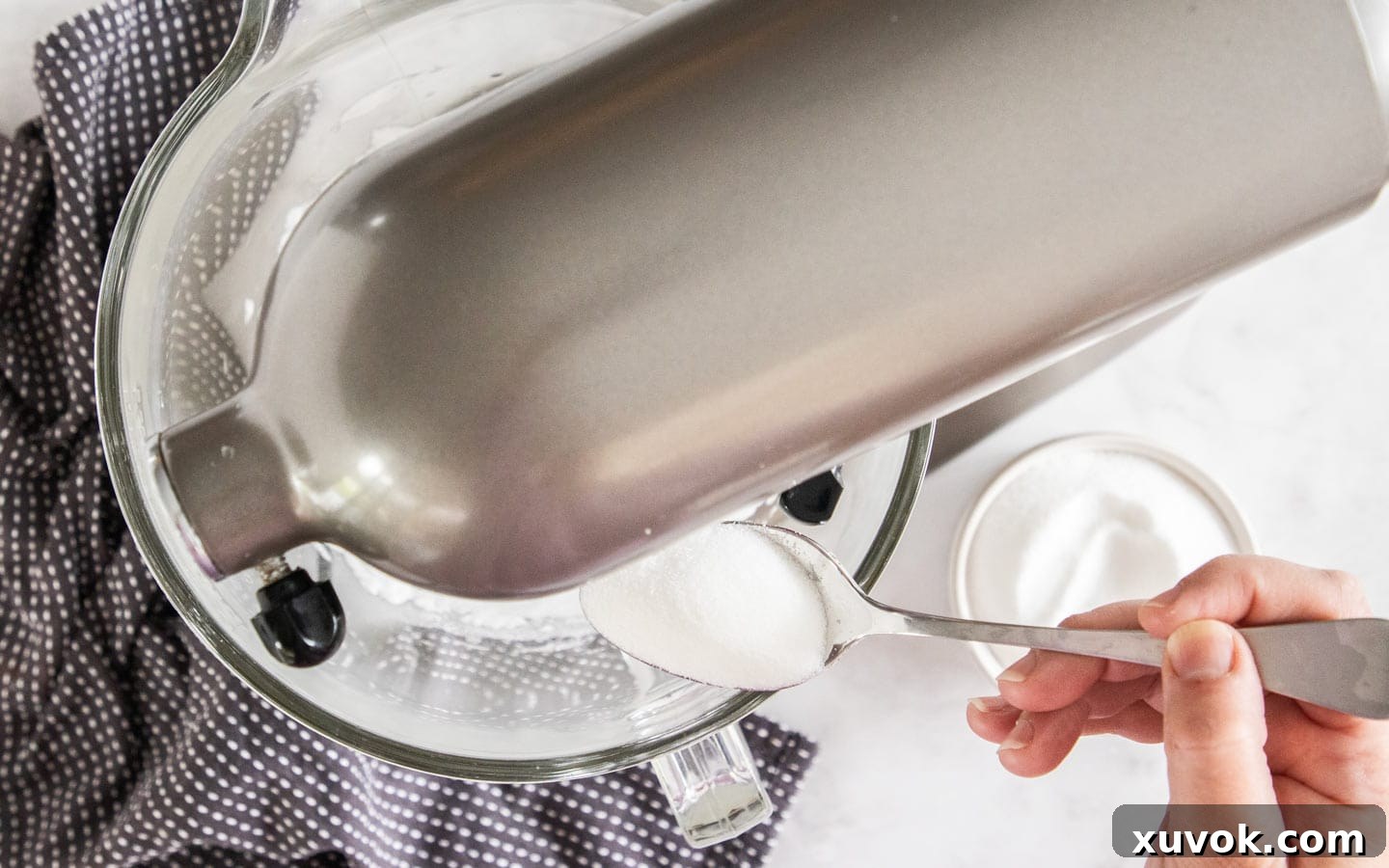
Now, for the sugar – this is a crucial step that demands patience and precision. With your mixer still running on a low speed, begin adding the caster sugar a little at a time. I swear by a very specific method: use a regular dessert spoon and tip one spoonful of sugar into the egg whites. Then, count slowly to 20, as if counting seconds, allowing the sugar granules to begin dissolving. Repeat this process, adding another spoonful of sugar and counting to 20, until all the sugar has been gradually incorporated into the meringue mixture.
This slow addition is incredibly important. It gives the sugar enough time to dissolve completely, preventing a grainy meringue and ensuring the egg whites maintain their volume and don’t deflate. The sugar binds with the egg white proteins, strengthening the structure and making the meringue stable and glossy. Rushing this step is a common pitfall that can lead to flat or unstable meringues.
3. Beat to Stiff Peaks: Achieving Ultimate Structure
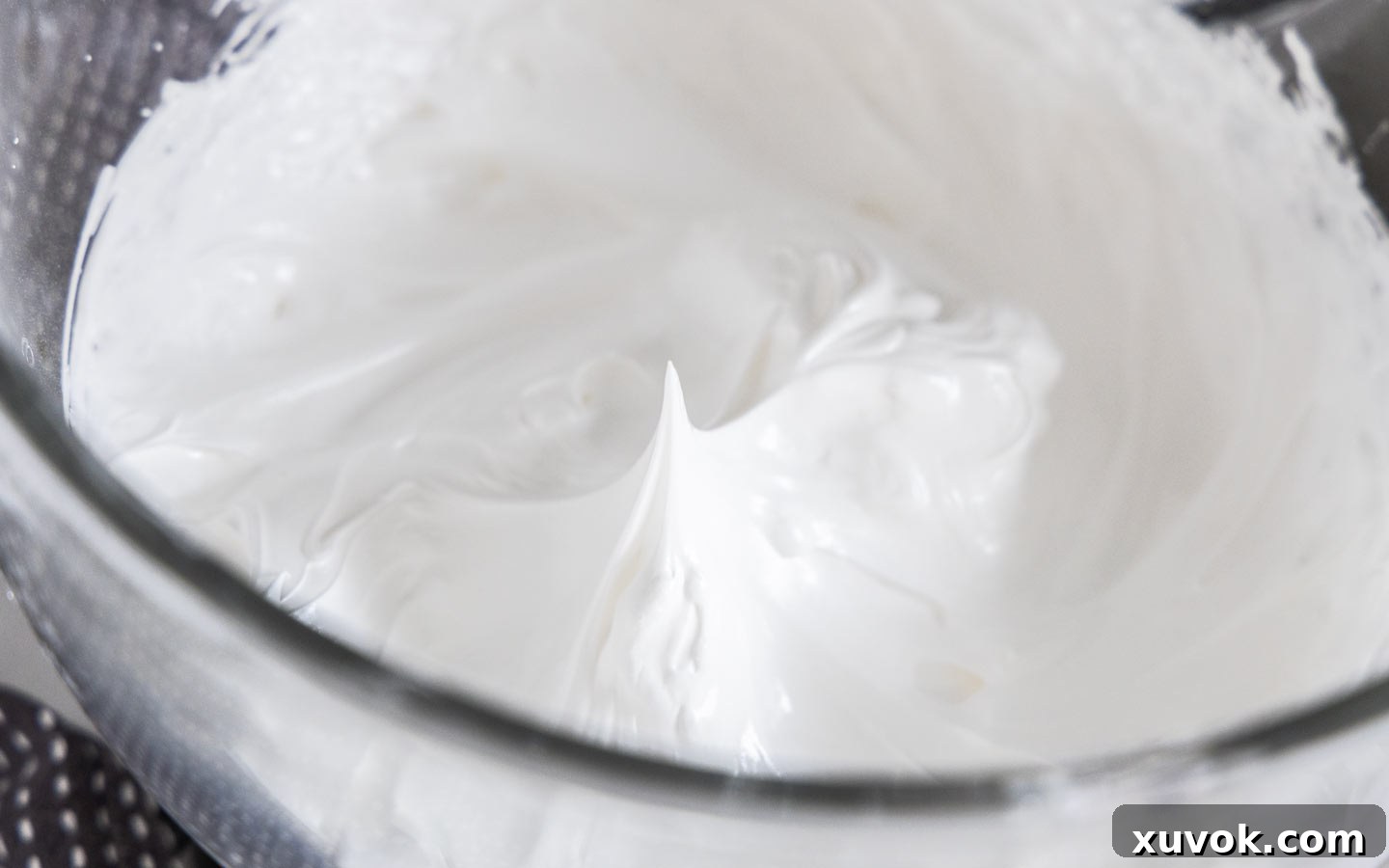
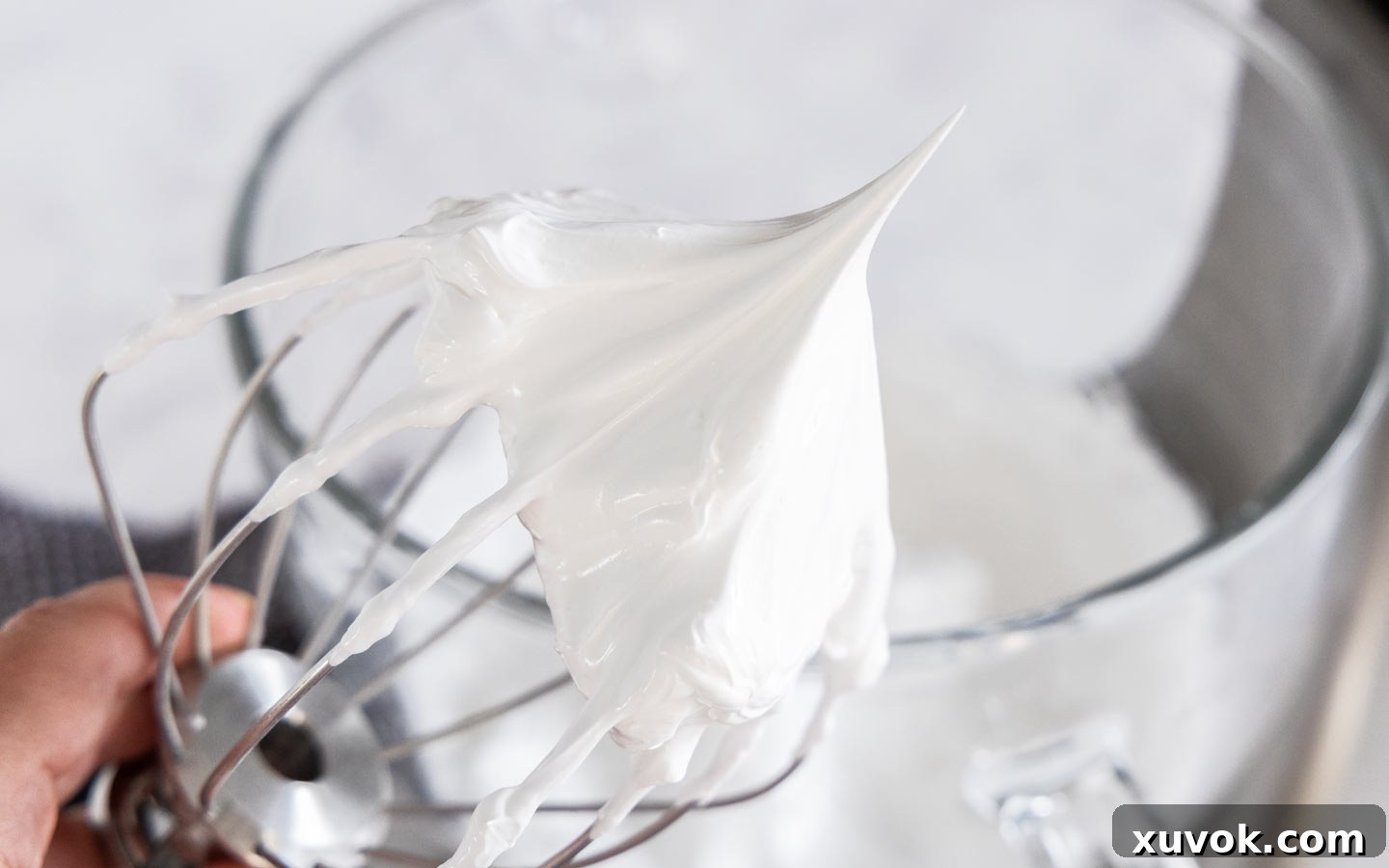
Once all the sugar has been carefully added, increase your mixer speed to medium-high (avoiding the absolute highest setting, which can sometimes overwork the meringue). Continue to beat the mixture for another 5-7 minutes. During this time, you’ll witness a remarkable transformation: the meringue will become incredibly thick, smooth, and magnificently glossy, almost shimmering. It should hold its shape firmly, forming sharp, upright peaks when you lift the whisk.
To confirm your meringue is ready, perform a simple test: rub a tiny bit of the meringue between your thumb and forefinger. It should feel completely smooth, with no discernible sugar granules. If you still feel any grittiness, continue beating for a little longer until the sugar has fully dissolved. Achieving this smooth, stiff-peak stage is crucial for the meringue nests to hold their shape during baking and to achieve that coveted melt-in-your-mouth texture. Be careful not to overbeat, as this can lead to a dry, brittle meringue prone to cracking.
4. Shape Your Meringue Nests: Piping or Spooning
Congratulations, you’ve successfully made a beautiful, stable meringue! Now comes the fun part: shaping it into those adorable little nests. Begin by preparing your baking sheets. Line two large sheets with high-quality baking paper or parchment paper. To guide your shaping, lightly draw 7.5cm (3-inch) circles on the baking paper using a non-toxic pencil or food-safe marker. I typically fit 6 circles per sheet for this recipe, ensuring enough space between each nest for even baking. Once drawn, remember to flip the baking paper over so the meringue doesn’t come into direct contact with the pencil marks. Dot a tiny bit of meringue under each corner of the parchment paper and press it down onto the baking sheet to secure it in place.
You have two excellent options for creating your nest shapes, depending on your preference and desired aesthetic:
- Piping Method: For Elegant Uniformity
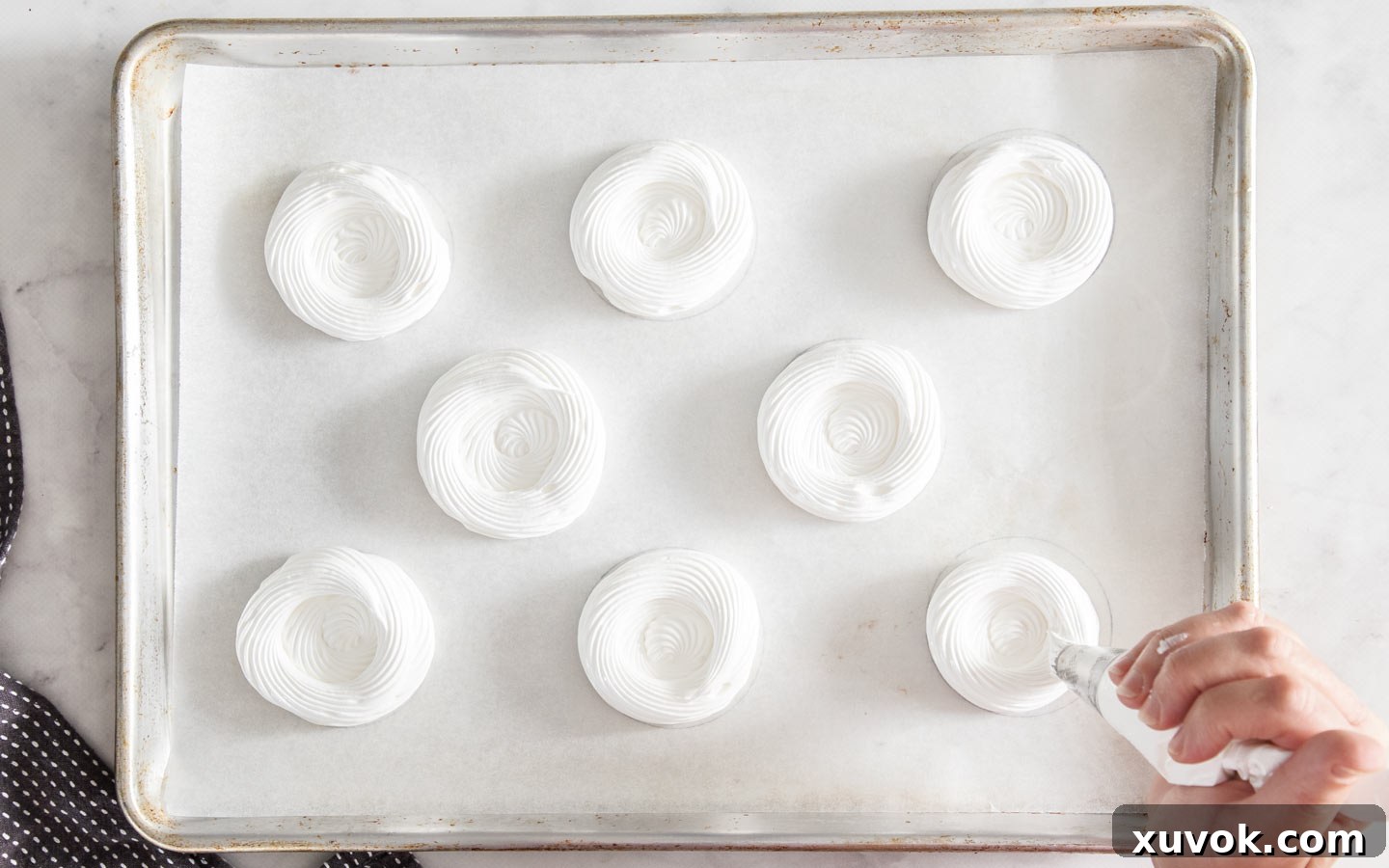
For a professional, uniform look, transfer the meringue mixture into a piping bag fitted with an open star tip (approximately 1 ½ cm or ⅔ inch opening). Starting in the very center of one of your drawn circles, pipe the meringue in a continuous spiral outwards until you reach the edge. Once at the edge, continue piping another layer directly on top of the outer ring of meringue. This creates a raised wall, forming a perfect crater or “nest” in the center, ideal for holding your delicious fillings. Repeat for all desired nests. - Spoon Method: Simple and Rustic Charm
If you prefer a simpler approach or don’t have piping equipment, the spoon method works beautifully. Use a ⅓ cup volume cookie scoop or a large dessert spoon to scoop mounds of meringue onto the baking paper, centered within your traced circles. Then, using the back of your spoon (or an offset spatula), gently coax the meringue into a circular shape, pushing it up slightly around the edges to create a wall and forming a dent or hollow in the center. Don’t worry about perfection; a slightly rustic look adds to their charm.
You’ll notice in the image below that I’ve opted for 8 nests on my baking sheet. This is often done to maximize the number of meringues baked in the optimal, middle section of the oven. If using two trays, place one in the middle and the other on the bottom shelf, rotating them halfway through baking for even results.
5. Bake Low and Slow for Crisp Perfection
The baking process for meringues is more about drying them out than actively cooking them, which is why a low oven temperature is crucial. Place your shaped meringue nests into a preheated oven set at a very low temperature (e.g., 120°C / 245°F, or 100°C fan-forced). Bake them for approximately 1 ½ hours. The key here is to allow them to slowly dehydrate, becoming perfectly dry and crisp without browning.
Many bakers find that a fan-forced oven often yields whiter meringue nests, as the circulating air helps to dry them evenly and quickly. After the initial baking time, turn off the oven heat completely. Here’s another golden rule for crack-free meringues: leave them undisturbed in the cooling oven for at least an hour, or even overnight. This gradual cooling process prevents a sudden temperature shock, which is a common culprit for cracked meringues. They will continue to crisp up as the oven cools, ensuring a stable, beautifully structured nest.
Endless Filling Ideas for Your Meringue Nests
Once your meringue nests are perfectly baked and cooled, the real fun begins! While they are truly irresistible on their own, the magic happens when you get creative with their fillings. Their delicate sweetness and crisp texture make them an ideal partner for a vast array of flavors and textures.
- Classic Cream and Fruit: A Timeless Pairing
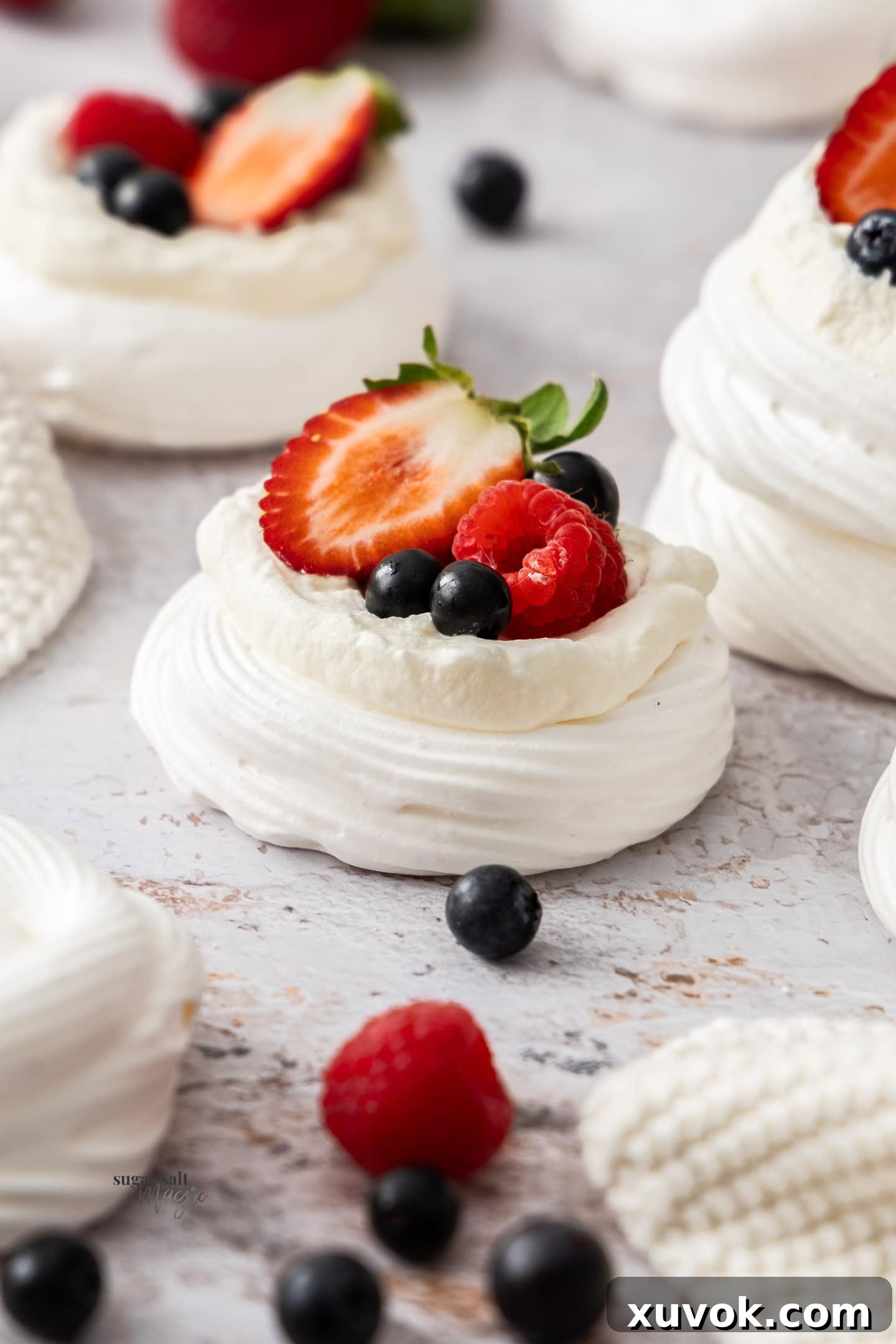
The quintessential topping for meringue nests involves freshly whipped cream (or chantilly cream, for added elegance) crowned with an assortment of vibrant berries or other fresh fruits. Raspberries, strawberries, blueberries, and blackberries offer a beautiful color contrast and tangy counterpoint. Don’t limit yourself to berries – slices of exotic kiwi fruit, sweet mango, succulent peaches, or even roasted plums can create stunning and delicious variations. A sprinkle of fresh mint leaves can add an aromatic finish. - Whipped Cream and Luscious Curds: A Zesty Twist
Elevate your cream filling by pairing it with a vibrant fruit curd. The creamy sweetness of the meringue and whipped cream perfectly balances the bright, zesty tang of fruit curd. Explore these delightful options:- Classic Lemon Curd: Bright and tangy, a universally loved choice.
- Blood Orange Curd: Adds a beautiful color and sophisticated citrus note.
- Zesty Lime Curd: For a sharper, more tropical flavor profile.
- Rich Blackberry Curd: A deeper, fruitier option, especially good with a dollop of clotted cream.
- Tropical Pineapple Curd: Offers a sweet, tangy, and refreshing burst.
- Exotic Passionfruit Curd: For a truly special, aromatic experience.
- Sweet Mango Curd: Perfectly complements the light texture of meringue.
- Decadent Mousses: Light and Airy Indulgence
For an even lighter, more airy filling, consider a delicate mousse. The contrast between the crisp meringue and the creamy, aerated mousse is simply divine. Try:- Silky Chocolate Mousse: A rich yet airy choice, perhaps topped with a few fresh raspberries or chocolate shavings.
- Light Strawberry Mousse: Paired with sliced fresh strawberries, it’s a celebration of spring and summer flavors.
- Lemon or Raspberry Mousse: Offering a lighter, fruit-forward option.
- Creamy Pastry Creams: A Rich and Luxurious Treat
For an extra-indulgent and sophisticated filling, look no further than classic pastry creams. Their smooth, custardy texture provides a wonderful contrast to the meringue’s crispness.- Crème Pâtissière (Vanilla Pastry Cream): A classic French cream, often paired with fresh fruit.
- Chocolate Pastry Cream: For a deeper, more intense chocolate flavor.
- Chocolate Crèmeux: An even richer, silkier version of chocolate cream.
- Caramel and Nuts: Sweet and Salty Harmony
Drizzle a spoonful of rich caramel sauce or dulce de leche into your meringue nests, then sprinkle with toasted chopped nuts like pecans, walnuts, or almonds for a delightful textural crunch and nutty flavor. - Lemon Mascarpone Cream: Tangy and Rich
Whip mascarpone cheese with lemon zest and a touch of powdered sugar for a rich, creamy, and subtly tangy filling that’s truly elegant.
With so many fantastic filling options, you can easily transform these mini meringues into individual pavlovas. Why not create a stunning and interactive pavlova grazing board for your next gathering? It’s always a surefire winner at parties, allowing guests to customize their own delightful dessert.
Storage and Freshness: Keeping Your Meringues Perfect
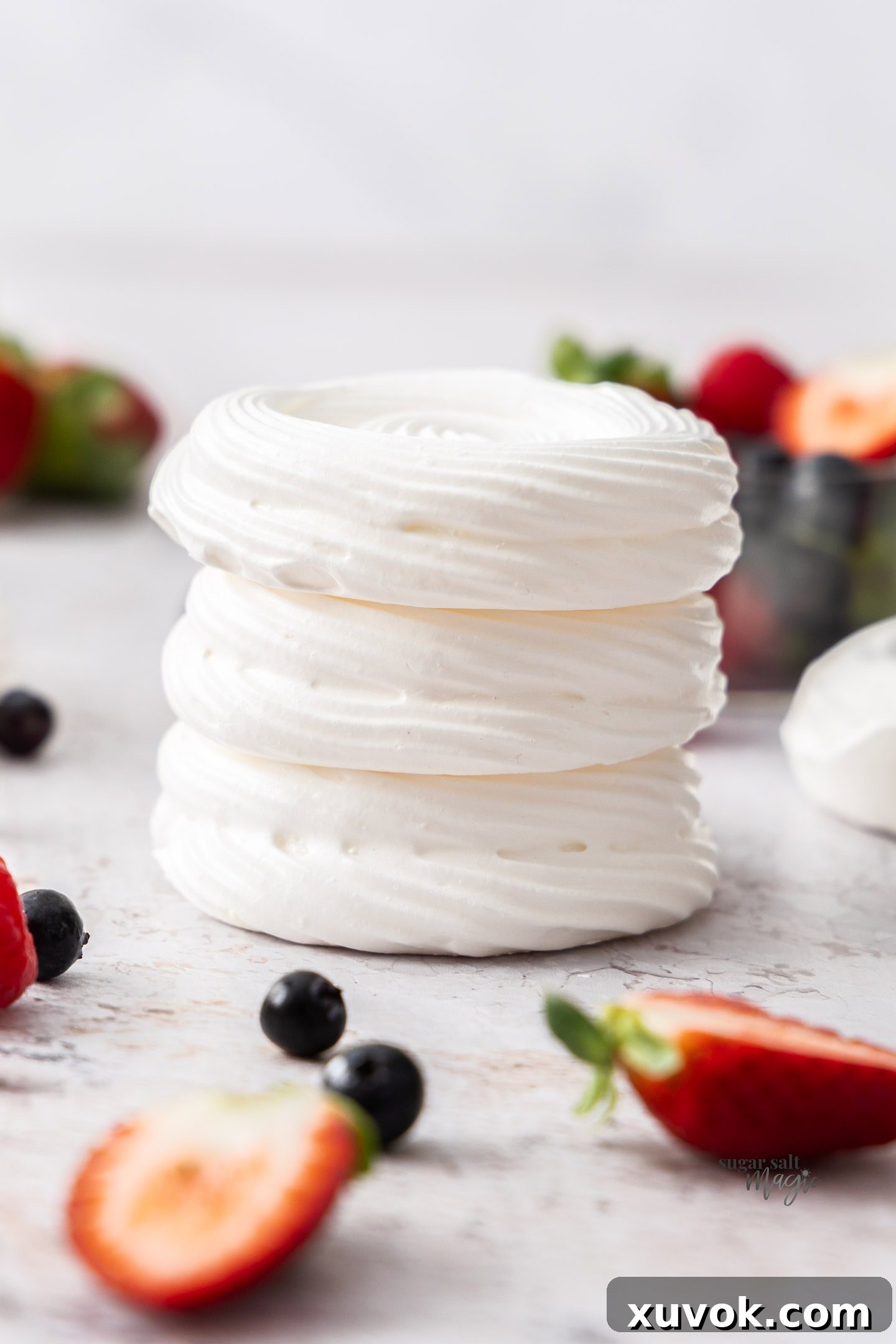
Proper storage is essential to maintain the delicate crunch and freshness of your baked meringue shells. Once they have completely cooled, transfer them to an airtight container. The best place to store them is in a cool, dry environment, such as your pantry or even a linen cupboard. It’s important to note that the refrigerator is generally not the ideal place for meringues, as humidity can cause them to soften or “weep.”
- Do meringues need to be refrigerated? Absolutely not. In fact, refrigerating meringues can introduce moisture, causing them to lose their crispness and potentially become sticky or watery. Keep them away from high humidity.
- Will meringue keep overnight? Yes, they will keep for much longer than just overnight! When stored correctly in an airtight container, they can maintain their quality for several weeks.
- How long can you store meringue nests? If baked thoroughly until completely dry and stored properly in an airtight container in a cool, dry spot, these meringue nests will keep beautifully for 2-3 weeks. Some adventurous bakers have even reported keeping them for up to two months with good results, though for optimal freshness, I recommend enjoying them within a few weeks.
- Can I freeze meringue nests? Yes, freezing meringue nests is a very successful way to extend their shelf life! Once they have cooled completely, carefully transfer them to an airtight freezer-safe container, separating layers with parchment paper if stacking. They can be frozen for up to 3 months. When ready to serve, thaw them slowly at room temperature in the airtight container to prevent condensation from forming on their surface, which could make them sticky.
Troubleshooting Common Meringue Problems
Even with the best intentions, meringues can sometimes be a bit finicky. Here are some common issues you might encounter and how to prevent or fix them:
The most common culprit is fat or grease. Even a microscopic amount of fat can prevent egg whites from aerating and forming a stable foam. This includes traces of egg yolk, oil residue on your mixing bowl or whisk, or even greasy hands touching the equipment. To ensure your equipment is perfectly grease-free, wash it thoroughly with hot, soapy water, then rinse well. For an extra measure, you can wipe the bowl and whisk with half a lemon or a little white vinegar, then rinse and dry completely before use. Always ensure your egg whites are free of any yolk.
Don’t panic! This is one of the forgiving aspects of meringue. If you’re not happy with the shape of a nest – maybe it’s a bit wobbly or uneven – simply scrape the meringue off the baking paper with a knife or spatula. Gently return the mixture to your piping bag or bowl and reshape it. You can typically do this 2-3 times without negatively impacting the meringue mixture’s stability or texture, as the sugar content helps to keep it robust.
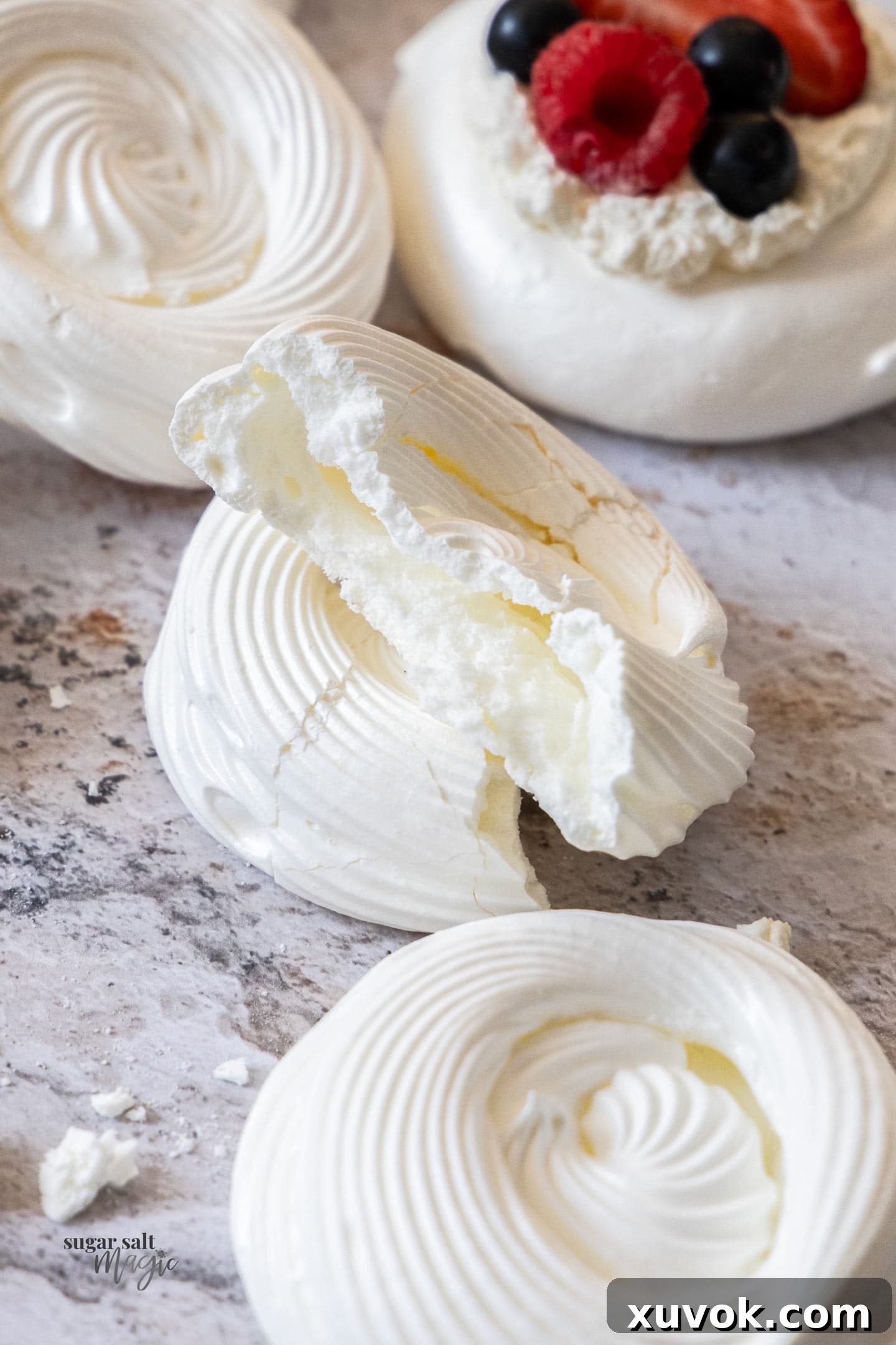
Meringues require a long, slow bake at a very low temperature to dry out completely without browning. Your meringue nests are ready when they are firm, dry to the touch all over, and lift off the baking paper easily without sticking. If they’re still sticky on the bottom or feel soft, they need more time in the oven. A perfectly baked meringue should feel very light for its size and sometimes produce a hollow sound when gently tapped on the bottom.
The two primary enemies of a good meringue are fat and moisture. As mentioned, fat will prevent your egg whites from whipping. Moisture, whether from high humidity in the air, condensation from refrigeration, or underbaking, can cause meringues to “weep” (exude liquid), become sticky, or lose their crisp texture. Always aim for a dry environment for whipping and storing.
Cracking is a common issue with meringues. It can be caused by over-whipping the meringue mixture, making it too brittle before baking. However, the most frequent cause of cracks is sudden temperature changes. Opening the oven door too early during baking, or not allowing the meringues to cool slowly and undisturbed in the turned-off oven for at least an hour (or even overnight), can lead to rapid contraction and subsequent cracking. Ensure a gradual cool-down for the best results.
A chewy interior typically indicates that your meringues are underbaked or that the oven temperature was slightly too high. They need sufficient time at a low temperature to thoroughly dry out. If your oven runs hot, you might need to reduce the temperature slightly and extend the baking time. The goal is to dehydrate them, not cook them quickly.
Meringues should ideally be pristine white. If yours turned yellow or brown, it’s usually a sign that the oven temperature was too high. Sugar caramelizes at higher temperatures, leading to discoloration. Ensure your oven thermometer is accurate and maintain a low temperature throughout the baking process. Additionally, some darker liquid flavorings like vanilla extract can contribute to a slight off-white color.
Deflation after adding sugar is often due to adding the sugar too quickly or at too high a speed. The sugar needs time to dissolve and integrate into the egg white structure gradually. If added too rapidly, it can break down the delicate air bubbles. It can also happen if the egg whites were over-whipped to a very dry, crumbly consistency *before* the sugar was added; they become too fragile to incorporate the sugar.
More Delightful Meringue and Pavlova Recipes You’ll Adore
If you’ve fallen in love with the light, crisp texture of meringues, you’ll be thrilled to discover these other fantastic recipes that celebrate this versatile dessert. From grand pavlovas to unique meringue creations, there’s always something new to bake!
- Pavlova Grazing Board: The ultimate showstopper for entertaining.
- Raspberry Meringues: Delicate meringues with a vibrant berry swirl.
- Pavlova Roll (Meringue Roulade): A stunning rolled meringue filled with cream and fruit.
- Chocolate Meringue Cake: Layers of rich chocolate and airy meringue.
- Swirled Chocolate Meringues: Large, dramatic meringues with beautiful chocolate ribbons.
- Tropical Mango Pavlova: A classic pavlova topped with sweet, juicy mango.
⭐⭐⭐⭐⭐
Did you try this meringue nests recipe? Leaving a rating and comment below the recipe is so helpful!
Hungry for more? Subscribe to the newsletter for free recipes straight to your inbox. Also, follow along on Facebook, Pinterest and Instagram.
Meringue Nests
12
nests
25 minutes
1 hour
15 minutes
0 minutes
1 hour
40 minutes
2 ratings
Rate
Pin
Ingredients
-
½
cup
egg whites
(approximately 4 large eggs/115g), room temp (for best results use ½ cup or gram measurements here). -
1
cup
caster sugar (superfine sugar)
(200g / 7oz) -
1
teaspoon
lemon juice (or vinegar)
For best results, always weigh ingredients where a weight is provided
Equipment
-
Standmixer (whisk attachment) or
hand mixer -
Piping bag
optional, not essential -
⅓ cup volume ice cream scoop
optional, not essential -
2 Large baking sheets
Instructions
-
Preheat oven to 120C (100C fan forced) / 245F.
-
Line 2 large baking sheets with baking paper. On each piece of paper, trace around the edge of an 7.5cm/3 inch
round cookie cutter with a pencil or non-toxic marker to make 6 circles on each one. Place the sheets, marked side down, onto the baking sheets. -
In the bowl of a
stand mixer, with the whisk attachment (or using a
handheld beater), beat the egg whites on medium speed until soft peaks form (4-5 minutes) -
Add the lemon juice and beat to incorporate.
-
Turn the mixer down to low and begin adding the sugar, one tablespoon at a time, counting to 20 between each addition. Once all the sugar is added, increase to medium-high speed (not the highest setting) and continue to whisk until the egg whites are thick and glossy and at stiff peak stage.
-
Test the mixture by rubbing a little between your finger and thumb. It should be smooth. If it is still grainy, keep beating until it is smooth when you test it.
-
Take the first baking sheet and dot little bits of meringue under the corners of the baking paper then press it down onto the tray. Repeat with the second tray. This will hold it down while you pipe.
-
You have two options to create your shapes. The first is piping and the second is with a spoon. can pipe the meringue onto the sheet or use a large spoon to create dollops then using the back of the spoon to create a dip or crater in the centre.
-
If you want to pipe, add half of the meringue to a large piping bag fitted with an open star tip about 1 ½cm. Starting in the centre of one of your drawn circles, pipe the meringue in a spiral. When you get to the outside edge, continue piping around the edge on top of the meringue already there to create a wall around the edge, so you have a crater or dip in the centre for your fillings.
-
Or with a spoon, just use a large dessert spoon or ⅓ cup volume ice cream scoop to spoon mounds of meringue onto the paper inside the circle templates. Use a spoon or
offset spatula to coax them into more circular shapes then use the back of the spoon if you need and to create a dip or crater in the centre. -
If you aren’t happy with any of your shapes, just scrape them up and start again. You can do this 2-3 times without ruining the meringue mixture.
-
Place in the oven and bake for 1 ½ hours then turn the heat off and leave the meringue nests in the oven, undisturbed, for at least 1 hour (notes).
-
See notes for topping ideas.
-
Please take a moment to leave a
comment & rating. It’s appreciated and so helpful.
Notes
- Tablespoons: I use a standard Australian 20ml tablespoon (equal to 4 teaspoons). Check yours before measuring.
-
Toppings: A classic topping is just some whipped cream or chantilly cream with fresh fruit, like gorgeous berries, mango or kiwi fruit. Get creative though, try some cream,
maraschino cherries and chocolate shavings for a black forest vibe, or how about cream with custard, jam or lemon curd. Yum. - Nutrition details are approximate only – scroll below the recipe to find the full nutritional information.
70
kcal
Marie Roffey
Dessert
Australian, French
Have you tried this recipe?
Don’t forget to leave a
rating and comment below and let me know how it was! I love hearing from you. Nutrition information is approximate and derived from an online calculator. The brands you use may cause variations.
Calories 70
Calories from Fat 1
% Daily Value*
Fat 0.1g
0%
Sodium 17mg
1%
Potassium 17mg
0%
Carbohydrates 17g
6%
0%
19%
Protein 1g
2%
Vitamin A 0.02IU
0%
Vitamin C 0.2mg
0%
Calcium 1mg
0%
Iron 0.02mg
0%