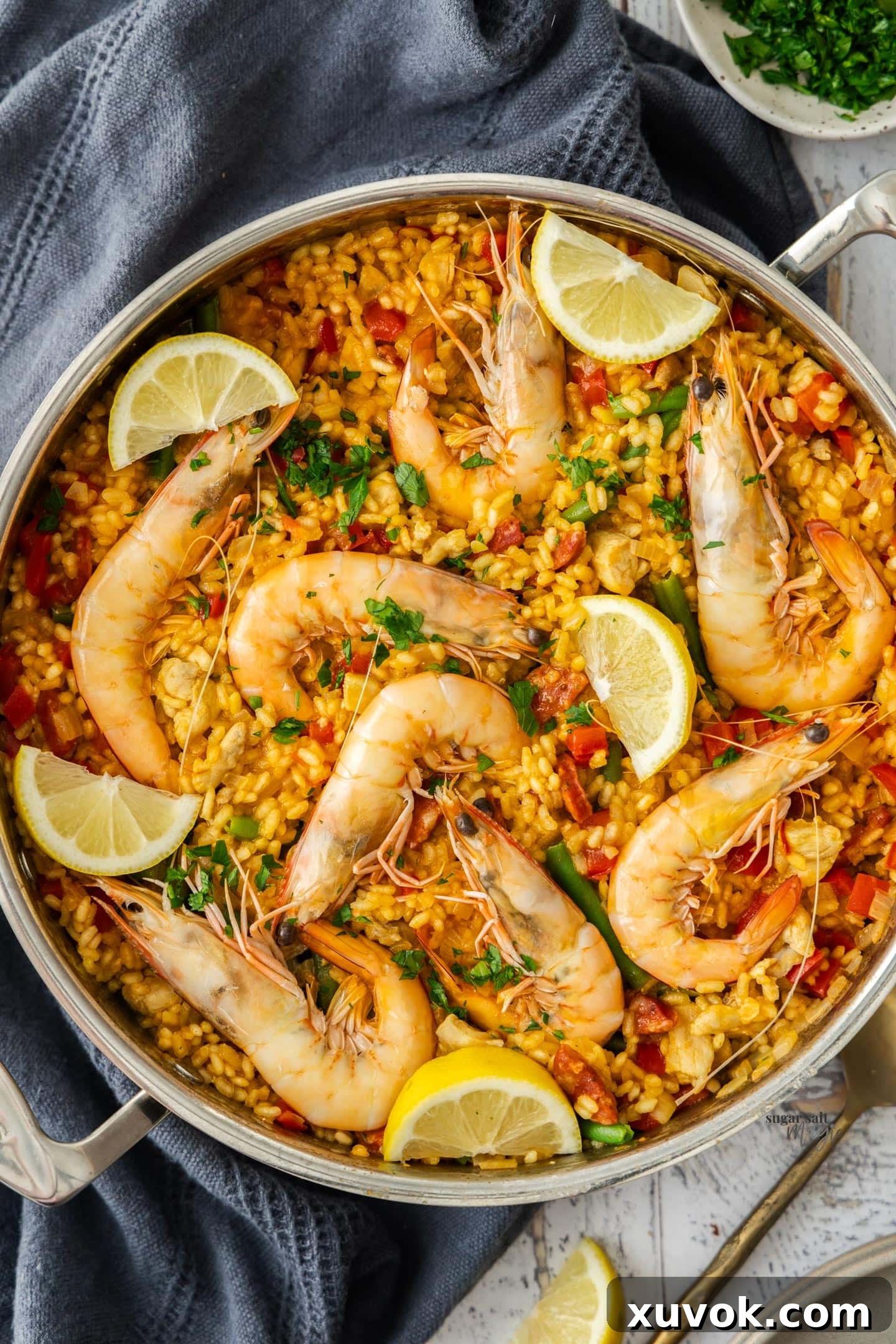
Unleash the vibrant flavors of Spain in your own kitchen with this incredible Prawn, Chicken, and Chorizo Paella. This beloved rice dish, a culinary icon known the world over, brings together succulent chicken, robust chorizo, and tender prawns in a single, magnificent pan. Infused with aromatic spices and rich tomatoes, it’s a truly comforting and deeply satisfying meal that promises to transport your taste buds straight to the heart of Spain.
While often associated with intricate preparations, this recipe is designed to be approachable for the home cook, making it an ideal choice for both a cozy family dinner and an impressive dish for entertaining guests. The harmonious blend of textures and bold flavors, from the perfectly cooked rice to the juicy proteins, makes this paella a standout. Serve it as a complete meal on its own, or complement its richness with a light side salad for a perfectly balanced dining experience.
Despite its gourmet appeal, this chicken chorizo paella is surprisingly easy to make and can be ready in **under 45 minutes**. Traditionally cooked over an open flame in a special paella pan, my adapted recipe ensures you can achieve fantastic results using a standard skillet on your stovetop. It’s truly a celebration of flavor and a testament to the fact that authentic-tasting Spanish cuisine is within everyone’s reach.
If you’re a fan of flavorful rice dishes, you’ll also love this Mexican red rice recipe.
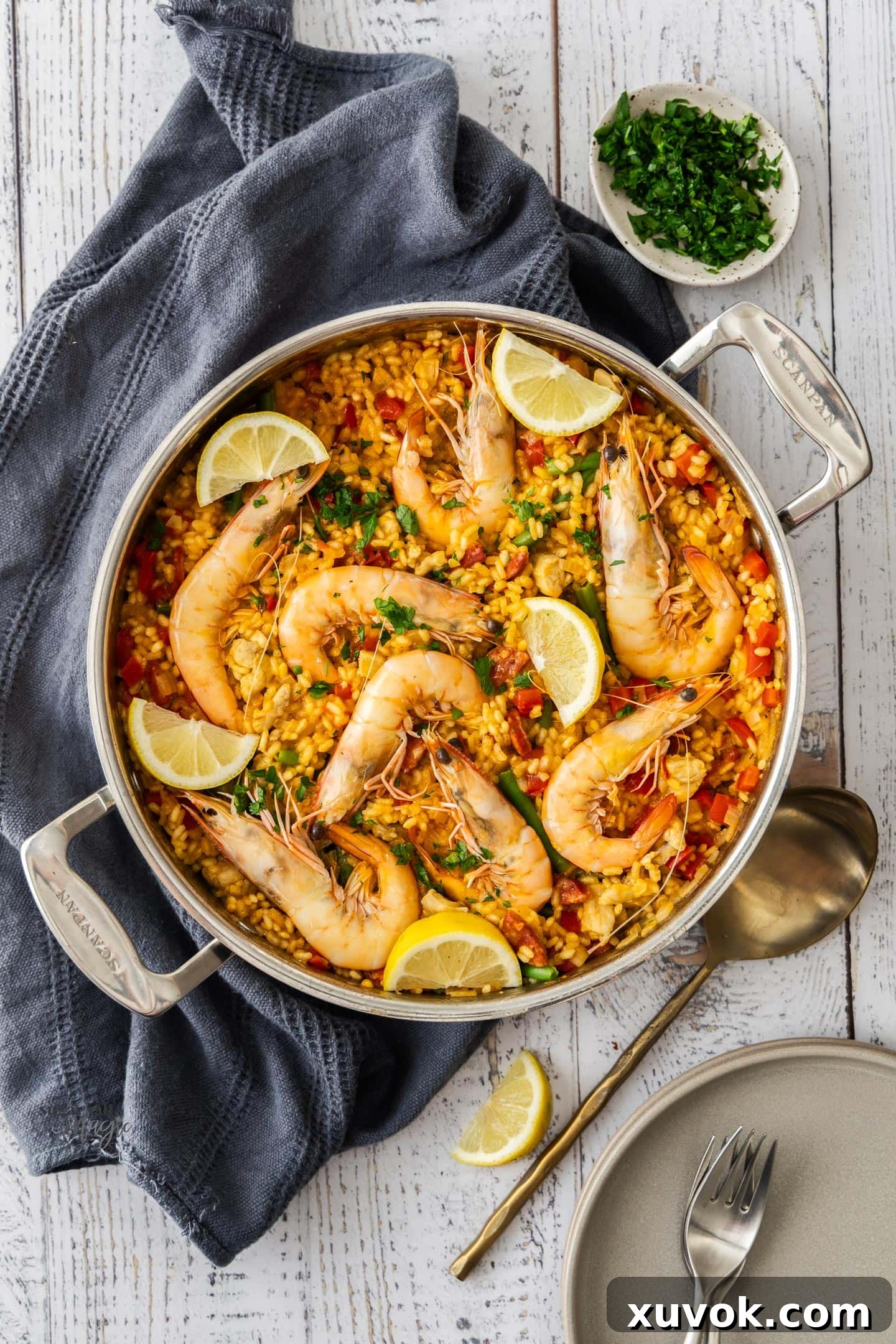
Table of Contents
- What is Paella? A Spanish Culinary Icon
- Ingredients: Crafting Your Flavorful Paella Mixta
- How to Make Prawn, Chicken, and Chorizo Paella
- Paella Variations & Customizations
- Storage and Reheating Tips
- Frequently Asked Questions About Paella
- More Delicious Recipes You’ll Love
Never Miss a Recipe!
Get the latest recipes straight to your inbox!
Join our community for exclusive recipes and cooking tips!
What is Paella? A Spanish Culinary Icon
Paella is much more than just a rice dish; it’s a vibrant symbol of Spanish culinary tradition, originating from Valencia on the eastern coast of Spain. The dish takes its name from the wide, shallow, two-handled pan it’s traditionally cooked in, known as a ‘paellera’. Historically, paella was a humble meal cooked by farmers and farm laborers over an open fire, utilizing whatever ingredients were readily available in the surrounding countryside – often including rice, vegetables, and small game like rabbit or duck.
An authentic Valencian paella recipe typically features specific ingredients: Bomba rice (a short-grain variety perfect for absorbing liquids without becoming mushy), aromatic saffron for its distinct flavor and golden hue, rabbit, chicken, or duck, green beans, and sometimes local garrofó (a type of butter bean) or even snails. While Spanish culinary enthusiasts, particularly Valencians, are quite protective of what constitutes a “true” paella, the spirit of the dish lies in its adaptability and resourcefulness.
For many, making paella is about honoring its roots as a dish crafted from local provisions. This philosophy allows for creative interpretations, especially when traditional ingredients are hard to source. Therefore, while my version might not strictly adhere to the most rigid Valencian standards, it aims to capture the comforting, communal essence of paella, delivering a rich and flavorful experience that stays true to its heartwarming spirit.
Ingredients: Crafting Your Flavorful Paella Mixta
While true Valencian paella is steadfast in its ingredient list, the beauty of paella lies in its ability to adapt, giving rise to delicious variations like paella mixta – a mixed paella incorporating both meat and seafood. My take on this Spanish classic embraces this versatility, focusing on readily available ingredients that deliver maximum flavor and comfort. Instead of rabbit or duck, I use tender chicken, and for a deep tomato flavor without chunks, I opt for concentrated tomato paste. And though traditionalists might raise an eyebrow, the rich, smoky notes of chorizo are a welcome addition that I simply adore.
The inclusion of seafood, particularly prawns, is often debated amongst paella aficionados. Some argue against it in a “true” paella, while others point to historical accounts of crustaceans from rice paddies finding their way into farmer’s dishes. Regardless of the historical accuracy, prawns add a delightful sweetness and texture that perfectly complements the other flavors in this mixed paella. This recipe, therefore, presents a delicious and accessible *paella mixta* that respects the essence of the original while inviting modern culinary preferences.
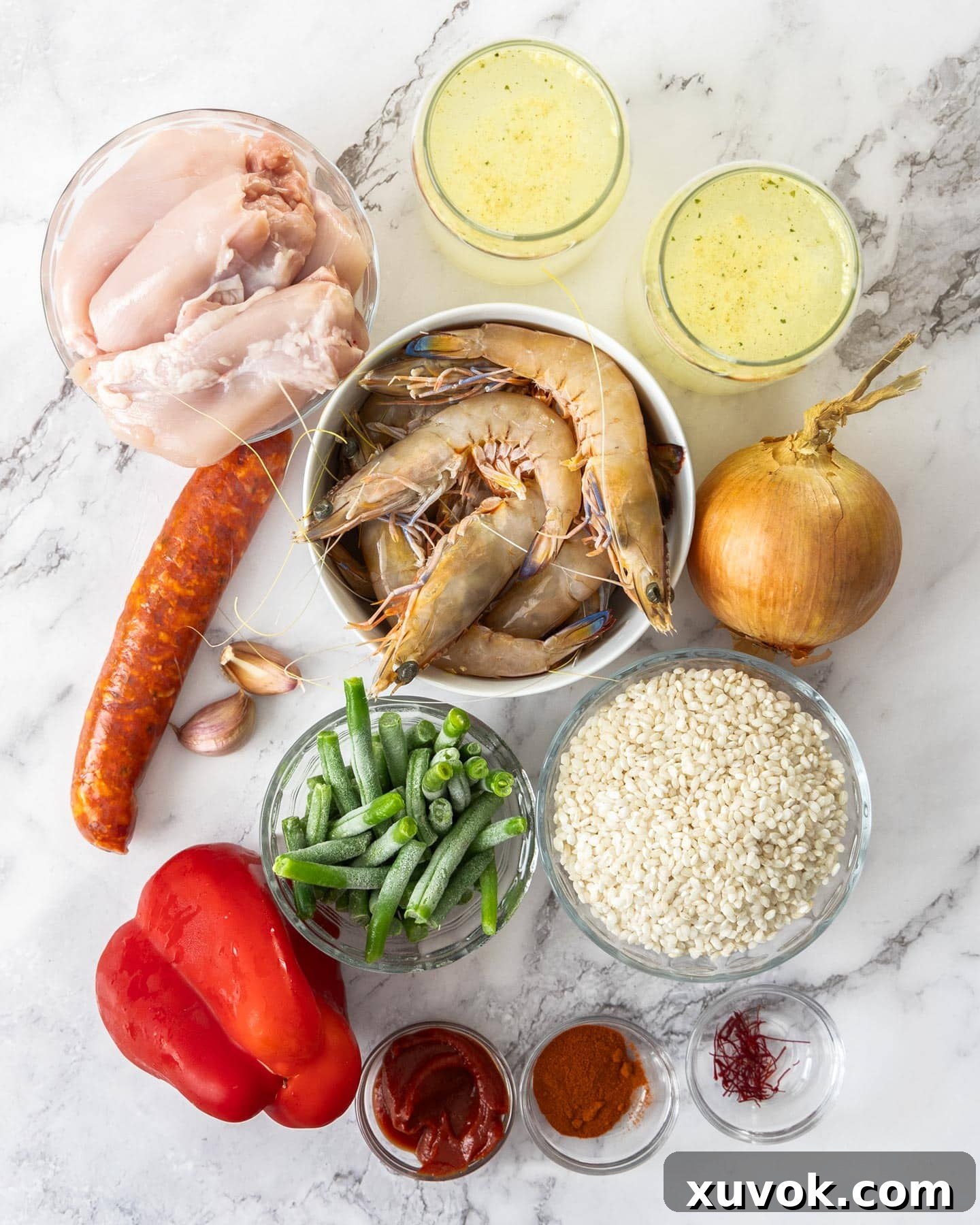
For the full list of ingredients with precise measurements and detailed instructions, please jump to the recipe card at the bottom of this page.
- Calasparra Rice, also known as Bomba Rice: This is the cornerstone of any great paella. Its short-grain structure allows it to absorb a significant amount of liquid and flavor without becoming sticky or mushy. It’s also key to achieving the coveted “socarrat.” While some might suggest arborio rice as a substitute, it won’t yield the same authentic texture or finish, so invest in the real deal if possible.
- Chicken Thighs: I prefer boneless, skinless chicken thighs for their tenderness and juiciness, which hold up beautifully during cooking. You can certainly use more traditional options like rabbit or duck, or opt for chicken breast, though it may dry out more easily.
- Chorizo: A semi-cured Spanish chorizo is my choice here. Its rich, smoky, and slightly spicy fat renders beautifully into the rice, imparting an incredible depth of flavor that is simply irresistible. Avoid fully cured or dried chorizo, as its intense flavor can overpower the delicate balance of the dish. Also, be sure to use Spanish chorizo, not Mexican chorizo, which has a very different spice profile.
- Prawns: Use medium or large raw prawns (or shrimp) to ensure they remain succulent. Feel free to be generous – a good rule of thumb is to allow a certain number per serving. You can leave them shell-on for added flavor and a rustic presentation, or shell them for easier eating.
- Vegetables:
- Green Beans: A classic addition to paella, offering a lovely fresh bite and color. Frozen peas are a popular alternative.
- Capsicum (Bell Pepper): While not strictly traditional in a Valencian paella, red bell pepper adds a wonderful sweetness and vibrant color to *paella mixta*. Diced roasted peppers can also be used for an even deeper flavor.
- Onions and Garlic: These aromatic staples form the flavor base, providing essential savory notes.
- Tomato Paste: I find tomato paste incredibly convenient and effective for delivering a concentrated tomato flavor without introducing unwanted texture or excess moisture from fresh or tinned tomatoes, especially for those who prefer no tomato chunks.
- Other Flavors:
- Saffron: Absolutely essential for paella. Its unique floral aroma, earthy notes, and signature golden color are irreplaceable.
- Paprika (Pimentón): I add a touch of smoked paprika (pimentón) for its characteristic smoky depth, which beautifully complements the chorizo and chicken.
- Chicken Stock: High-quality chicken stock or broth is the perfect liquid base, infusing the rice with rich, savory flavors as it cooks.
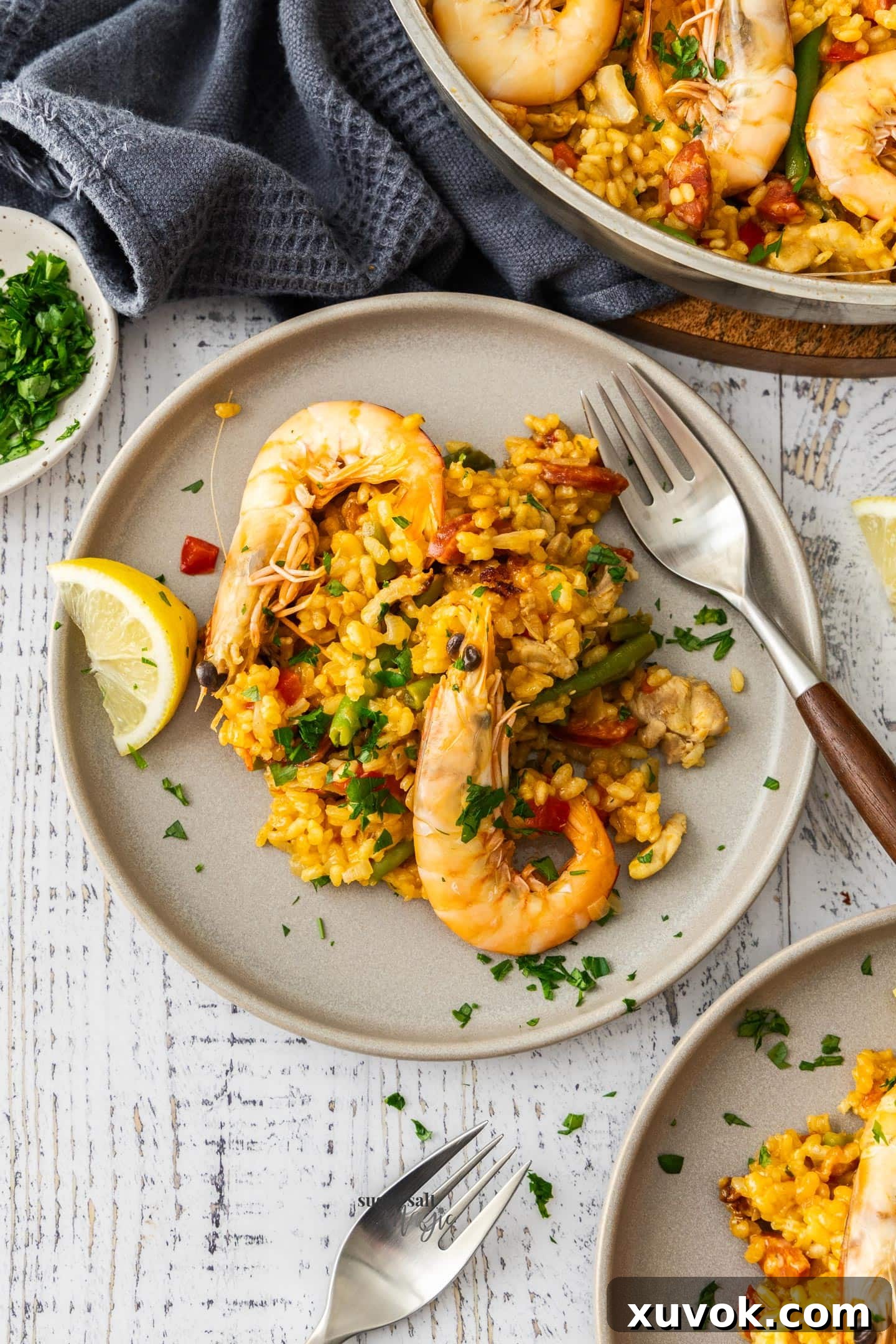
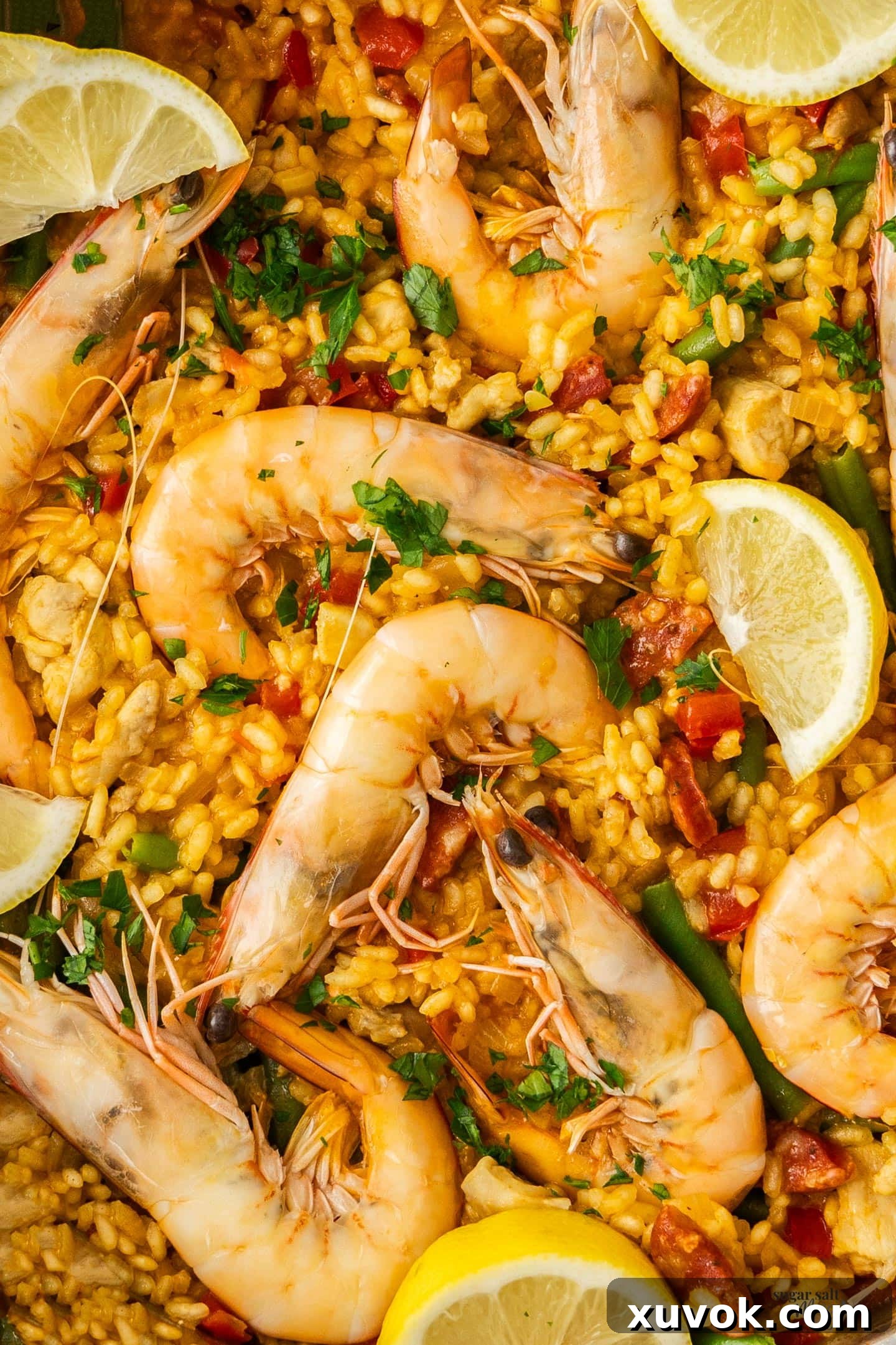
To truly elevate your Prawn, Chicken, and Chorizo Paella, serve it generously garnished with fresh chopped parsley and, crucially, plenty of lemon wedges. A squeeze of fresh lemon juice over the finished dish provides a bright, acidic lift that cuts through the richness and enhances all the wonderful flavors.
How to Make This Flavorful Paella at Home
This Prawn, Chicken, and Chorizo Paella recipe might seem impressive, but it’s genuinely simple to master in your home kitchen. While paella is traditionally prepared over an open flame in a specialized paella pan for that perfect crispy bottom (socarrat), I’ve adapted this recipe to yield fantastic results using a standard skillet on your stovetop, making it accessible to everyone. The key is to build layers of flavor and manage your heat effectively.
Ready to start cooking? You can find the complete list of ingredients and step-by-step instructions in the recipe card below.
1. Steep the Saffron for Maximum Flavor
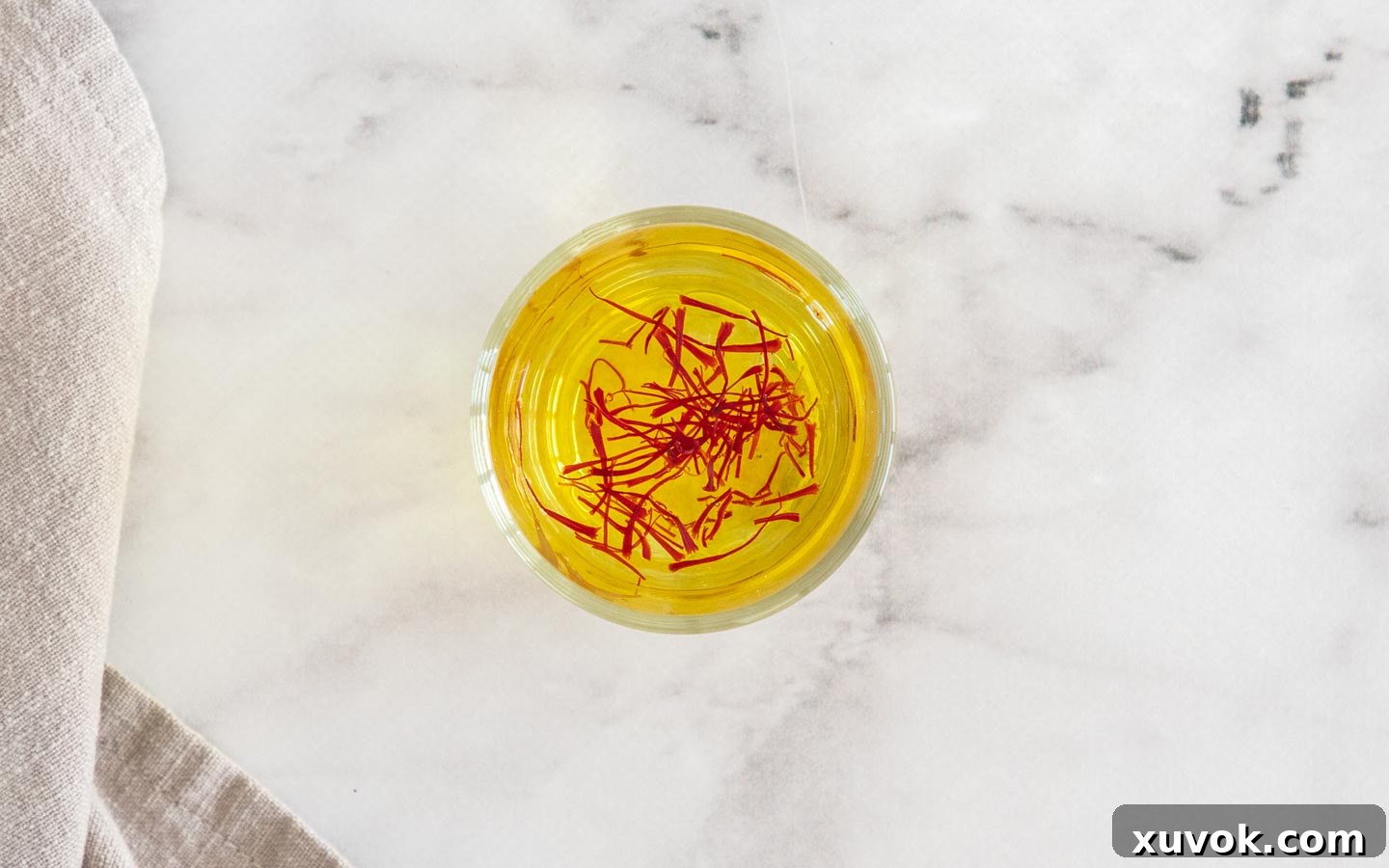
The magic of saffron is best released by steeping it. Add your precious saffron threads to a small amount of warm water (about ¼ cup) and set it aside. This allows the vibrant color and distinct floral aroma to infuse the water, which will later be added to the paella, ensuring an even distribution of this unique spice throughout your dish.
2. Sauté the Meats and Aromatics
First, ensure you have the right cooking vessel. A large, heavy-based stainless steel or cast-iron skillet is ideal, as its weight will distribute heat evenly, which is crucial for paella. Select the largest burner on your stove, preferably gas, though a high-quality induction burner also works wonderfully. If you’re passionate about paella and consider a long-term investment, a traditional paella pan and burner set can elevate your experience (just remember you might need to double this recipe for a true paellera).
Begin by heating olive oil in your chosen pan over medium-high heat. Add the chopped chicken thighs, sliced chorizo, and finely chopped onion. Cook this mixture for about 5-6 minutes, stirring regularly. The goal is to brown and seal the chicken on all sides, allowing the chorizo to release its flavorful, smoky oils into the pan, and softening the onion to create a sweet, aromatic base.
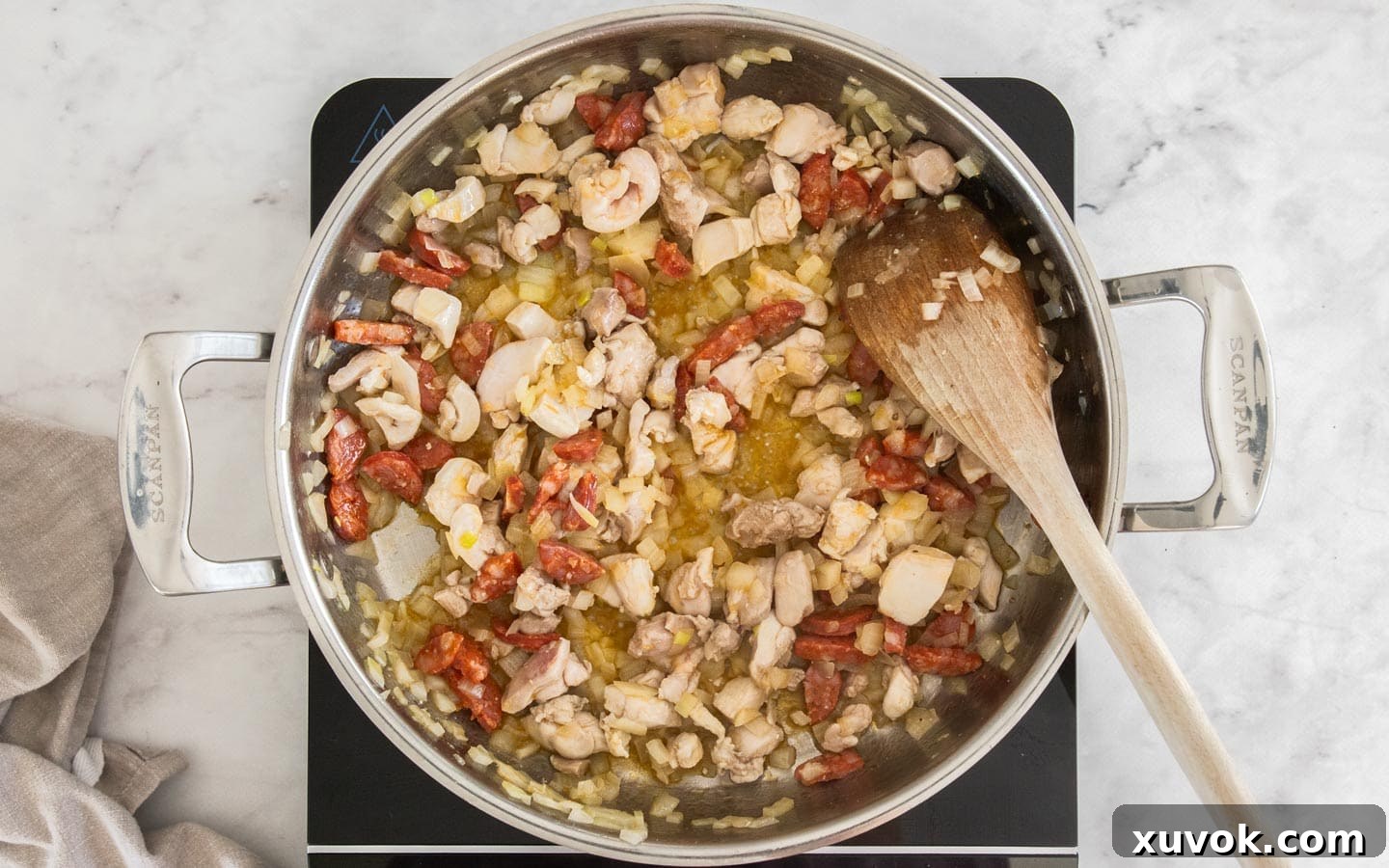
Once the chicken is nicely browned and the onion is translucent, reduce the heat to medium. Add the diced capsicum (bell pepper) and minced garlic to the pan. Sauté for another 2 minutes, stirring frequently to prevent the garlic from burning. This step infuses the dish with fresh, vibrant vegetable flavors before the rice is added.
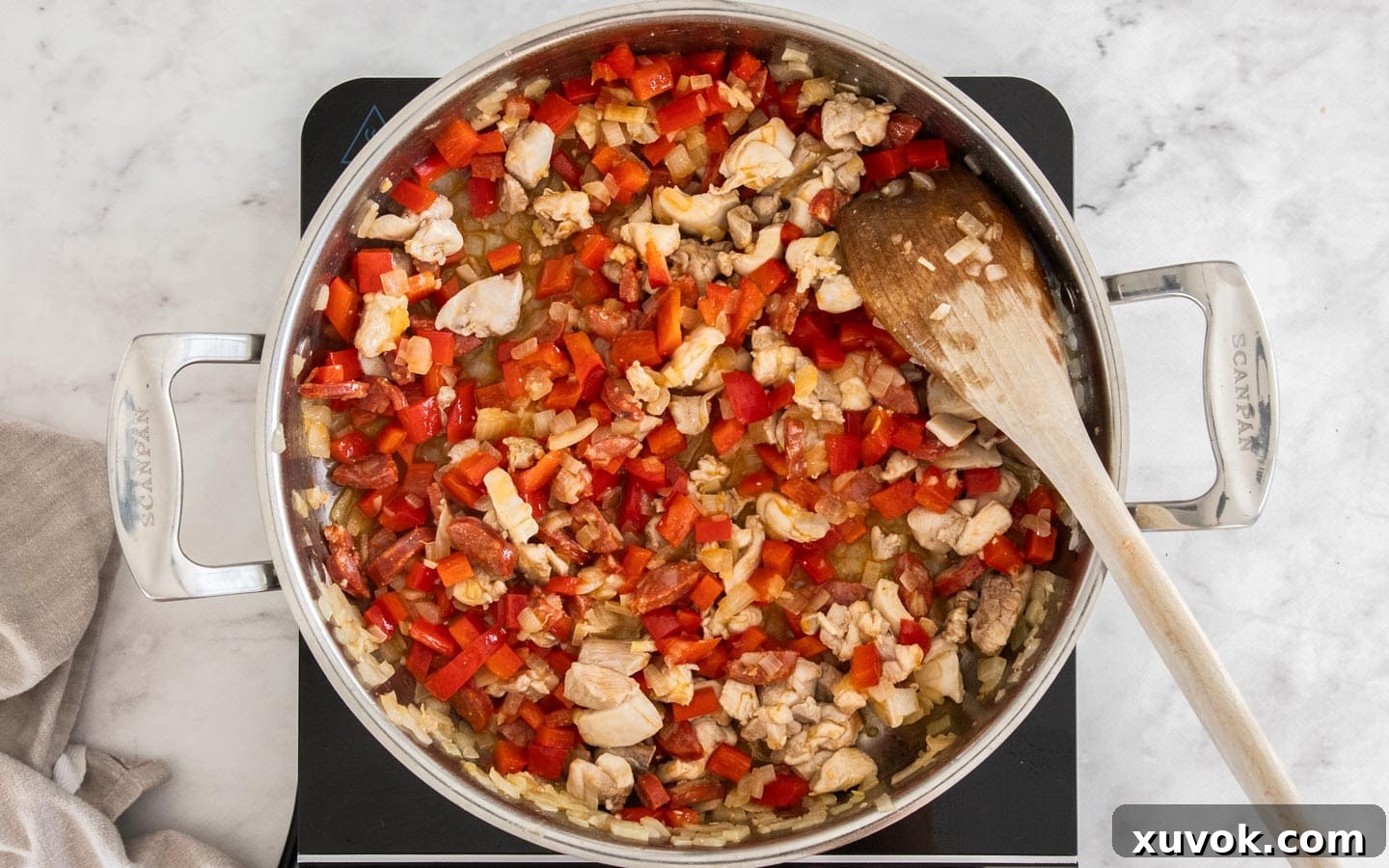
3. Toast the Rice and Build Deeper Flavor
Now, it’s time to add the star of the show: the rice. Introduce the paella rice, tomato paste, and smoked paprika to the pan. Give everything a good, thorough stir, ensuring the rice grains are fully coated in the aromatic oils, tomato paste, and spices. Cook for another couple of minutes. This brief toasting of the rice helps it absorb flavors more effectively and contributes to its distinct texture, preventing it from becoming overly sticky.
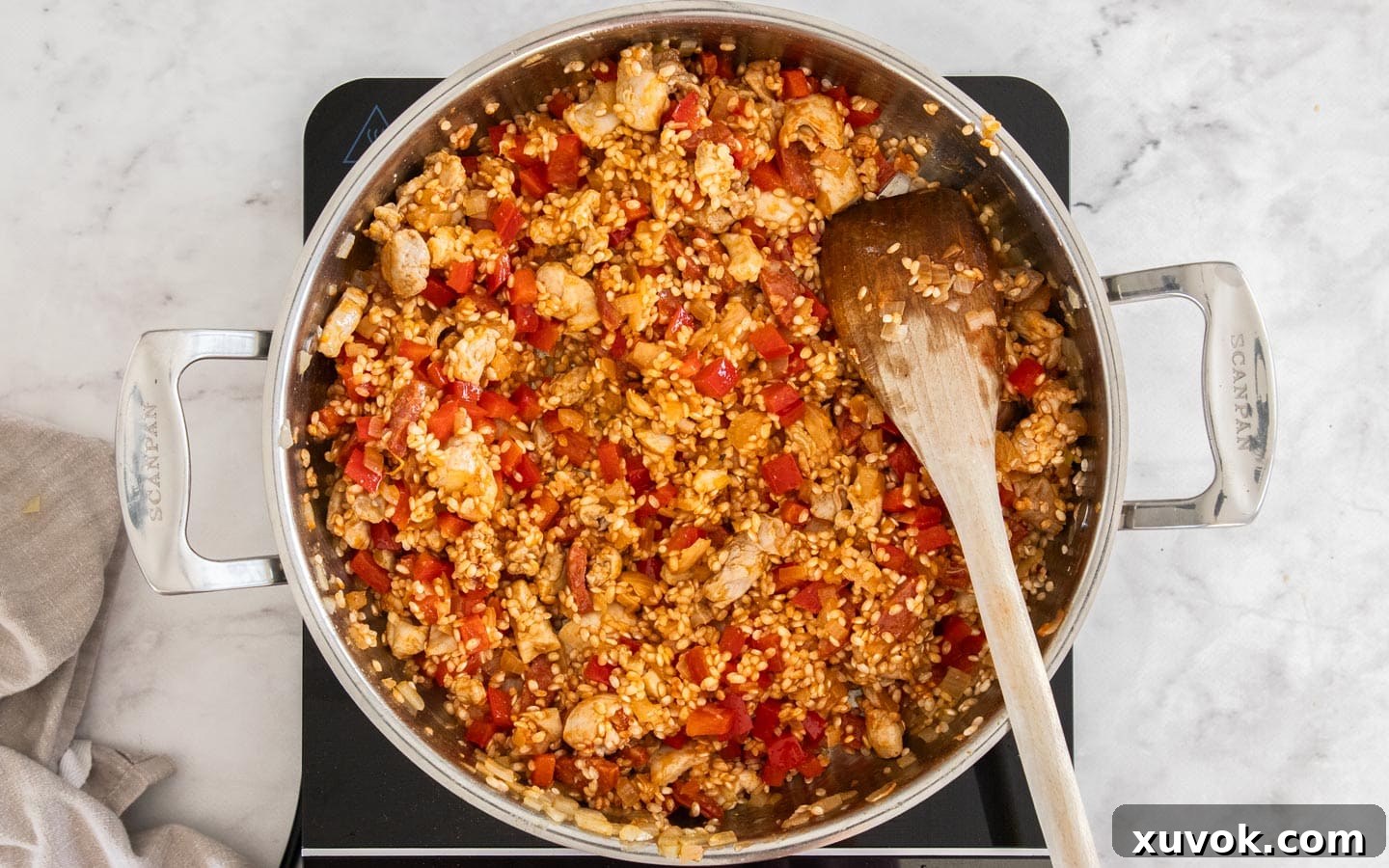
4. Add the Liquid and Gently Simmer
Pour in the chicken stock along with the steeped saffron water. Stir everything well initially to ensure all ingredients are evenly distributed and the rice is submerged. Bring the mixture to a gentle boil, then immediately reduce the heat to a low simmer. Cover the pan with a lid (or foil if your skillet doesn’t have a tight-fitting lid) and let it cook undisturbed for about 12-15 minutes. Stirring should be minimal during this stage – just a quick stir at the 5 and 10-minute marks to ensure even cooking and prevent sticking. The goal is for the rice to absorb most of the liquid and become tender, yet still have a slight bite, with some moisture remaining in the pan.
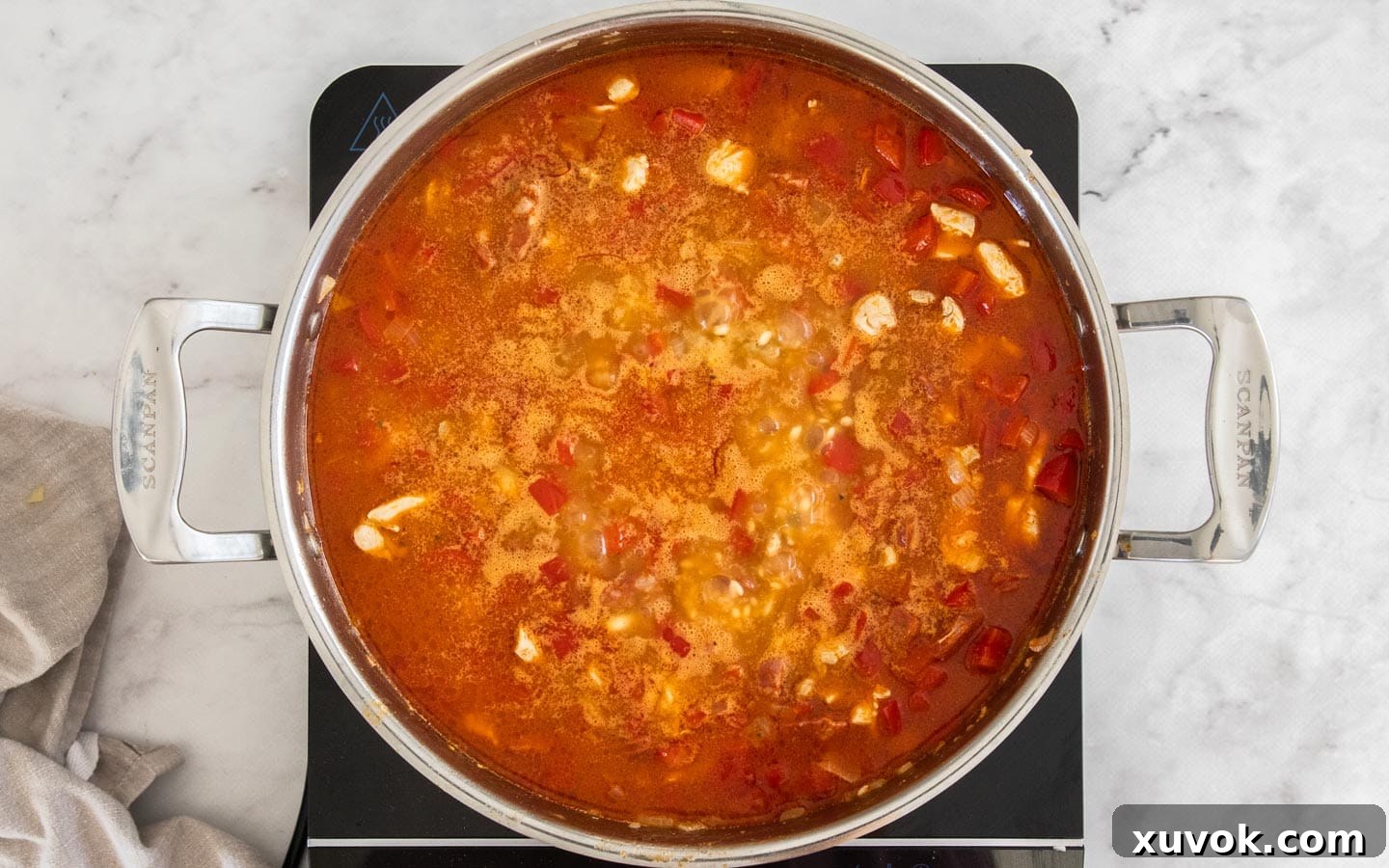
5. Incorporate the Beans and Prawns
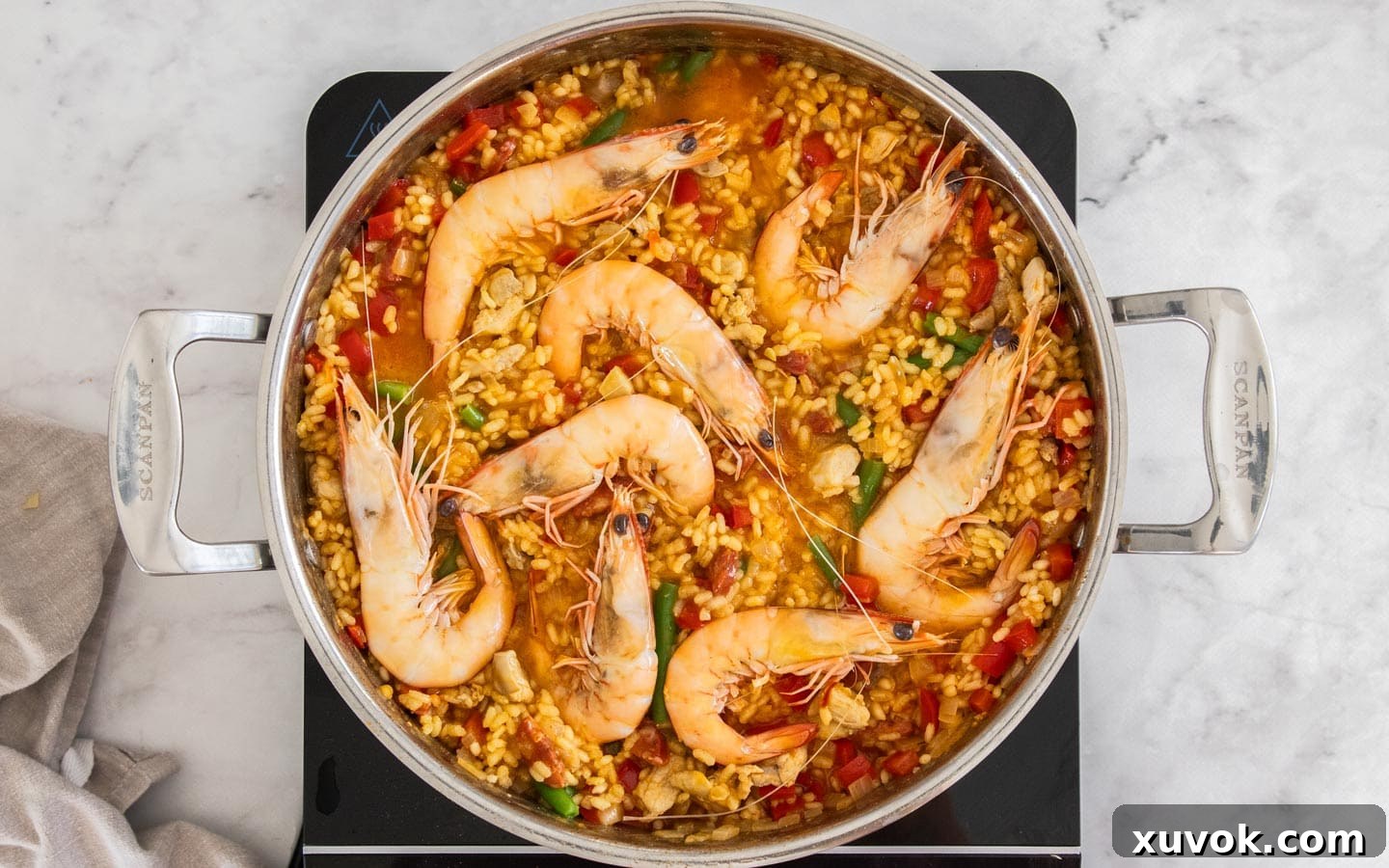
After the initial simmer, remove the lid. Stir in the frozen green beans (or peas if you prefer). If the paella seems too dry or is sticking, add a couple of tablespoons of water or extra stock. Taste the rice at this point and season with salt if needed. Then, artfully arrange the raw prawns on top of your chicken chorizo paella. The prawns will steam and cook directly on the surface of the rice.
You can add the prawns whole and shell-on for a more traditional look and enhanced flavor, though this will mean sticky fingers at the dinner table – be sure to provide finger bowls and plenty of napkins! Alternatively, for easier eating, you can shell and devein them beforehand, or even chop them into smaller pieces if desired. Cook uncovered for another 5-7 minutes, or until the prawns turn opaque and pink.
6. Achieving the Coveted Socarrat
The socarrat is a signature and highly prized element of a perfectly cooked paella. This Valencian word translates to “scorched” and refers to the delightful, toasted layer of browned, slightly crispy rice that forms at the very bottom of the paella, where it touches the pan’s surface. It’s not burnt, but rather caramelized and deeply flavorful, offering a wonderful textural contrast to the tender rice above.
To achieve this culinary masterpiece, once the prawns are cooked, remove the lid (if you were using one) and turn the heat up to medium-high for just 1-2 minutes. Listen for a gentle crackling or sizzling sound coming from the bottom of the pan – this indicates the socarrat is forming. Resist the urge to stir! Let the rice undisturbed during this short period. Once you hear that tell-tale sizzle and a peek confirms a golden-brown crust, remove the pan from the heat. Allow the paella to rest for a few minutes before serving, which helps the flavors meld and the socarrat to fully set.
Paella Variations & Customizations
This Prawn, Chicken, and Chorizo Paella recipe serves as a fantastic base, but paella is incredibly versatile and lends itself beautifully to customization. Don’t hesitate to experiment with different ingredients to suit your taste or what you have on hand:
- Seafood Lovers: For an even richer seafood experience, consider adding clams or mussels during the last few minutes of cooking. Simply nestle them into the rice, cover, and cook until they open. You could also include chunks of firm white fish, scallops, or calamari.
- Different Proteins: For a more traditional touch, swap the chicken for rabbit or duck. You can also make an all-meat paella with just chicken and chorizo, or a pure seafood paella by omitting the meats and using a quality fish stock.
- Vegetable Swaps: The green beans can easily be replaced with frozen peas for a sweeter flavor. Instead of red capsicum, try adding artichoke hearts, asparagus spears, or even a mix of seasonal vegetables like mushrooms or broad beans. Diced roasted peppers can add a smoky, pre-cooked sweetness.
- Vegetarian Paella: Omit the meats and use vegetable stock. Bulk it up with a greater variety of vegetables such as eggplant, zucchini, artichokes, and chickpeas.
- Spice It Up: If you enjoy a bit of heat, a pinch of chili flakes can be added along with the paprika.
Storage and Reheating Tips
Paella is best enjoyed fresh, straight from the pan, but leftovers can certainly be stored and reheated. Allow any leftover paella to cool completely before transferring it to an airtight container. It will keep well in the refrigerator for up to 2-3 days.
To reheat, you can use a microwave, covering the dish to help retain moisture and prevent the rice from drying out. For best results and to try and regain some texture, reheat gently on the stovetop in a skillet over low heat, adding a splash of chicken stock or water to loosen the rice if needed. Avoid overheating, as this can make the rice mushy or dry out the proteins.
Frequently Asked Questions About Paella
The ideal rice for paella is a short-grain, round rice known as Calasparra rice or Bomba rice. These varieties are highly prized because of their unique ability to absorb a large amount of liquid and flavor while maintaining their individual grain structure and not becoming sticky or mushy. This characteristic is crucial for paella, as it allows the rice to cook perfectly and also contributes to the formation of the highly sought-after socarrat. While arborio rice (used in risotto) can be a substitute in a pinch, it has a higher starch content and tends to create a creamier texture, which is not traditional for paella.
From a strictly traditional Valencian perspective, chorizo is not an ingredient found in an authentic paella. Classic Valencian paella features chicken, rabbit, and sometimes duck or snails. However, in other regions of Spain and certainly in many kitchens around the world, chorizo has become a popular and flavorful addition to *paella mixta* (mixed paella) or seafood paella variations. Its rich, smoky, and slightly spicy fat renders beautifully into the rice, adding an amazing depth of flavor that many find irresistible. So, while it’s not traditional, it’s a fantastic addition if you appreciate its punchy taste.
If there were one “secret” ingredient that truly defines paella, it would undoubtedly be saffron. This exquisite spice imparts a mesmerizing golden color and a uniquely floral, slightly earthy aroma and flavor that is irreplaceable. It’s what gives paella its signature vibrancy and depth. Another equally important “secret” to a great paella is the socarrat – the crispy, caramelized crust of rice that forms at the bottom of the pan. Achieving this perfect texture is a mark of a skilled paella chef and adds an incredible dimension to the dish.
While many variations exist, the three most recognized categories of paella are: 1) Paella Valenciana, which is considered the original and typically contains chicken, rabbit, green beans, and sometimes snails; 2) Paella de Marisco, a delicious seafood paella featuring various shellfish and fish; and 3) Paella Mixta, or mixed paella, which ingeniously combines elements of both meat and seafood, often with a mix of vegetables. This recipe falls into the *paella mixta* category, offering a delightful blend of land and sea.
Absolutely! While the core concept of a rice dish cooked in a wide, flat pan is consistent, paella varies significantly between different regions of Spain and even among individual families within Valencia. This regional diversity stems from paella’s origin as a dish made with locally available ingredients. Coastal regions, for example, tend to feature more seafood, while inland areas might incorporate more pork, game, or local vegetables. Even within Valencia, families often have their own cherished versions, passed down through generations, making each paella a unique culinary expression.
More Delicious Recipes You’ll Love
- Mexican Red Rice (Arroz Rojo)
- Chinese Prawn Fried Rice
- Tomato Arancini
- Mojo Verde (Spanish Green Sauce)
- Prawn and Chorizo Linguine
⭐⭐⭐⭐⭐
Did you try this easy paella recipe with chicken, chorizo and prawns? Show it some love in the comments below.
Hungry for more? Subscribe to the newsletter for free recipes straight to your inbox. Also, follow along on Facebook, Pinterest and Instagram.
Prawn, Chicken and Chorizo Paella
4
-5 serves
10
35
45
Rate
Pin
Ingredients
- big pinch saffron threads
- 2 tbsp olive oil
- 350 g skinless boneless chicken thighs chopped into bite-size pieces, (about 3 medium thighs)
- 1 Spanish chorizo sausage sliced into half moons (100g)
- 1 medium brown onion finely chopped
- 1 medium red capsicum (red bell pepper) diced
- 2 cloves garlic minced
- 1 teaspoon smoked paprika
- 1 tablespoon tomato paste
- 1 ½ cups paella rice (calasparra rice / bomba rice) (300g / 10½oz)
- 3 cups chicken stock (750ml)
- 8-10 medium or large raw prawns (see notes)
- ¾ cup frozen green beans (or frozen peas) (95g /~3½oz)
- parsley and lemon wedges to serve
For best results, always weigh ingredients where a weight is provided
Equipment
-
large skillet or deep frying pan
heavy based stainless steel or cast iron
Instructions
-
Add the saffron threads to ¼ cup of hot water and set aside to steep.
-
Heat the olive oil in a paella pan or large, heavy-based skillet over medium-high heat. Add the chicken, chorizo, and onion and cook for 5-6 minutes, stirring regularly until the chicken is sealed and the onion has softened.
-
Turn the heat down to medium. Add the capsicum and garlic and cook for 2 minutes, stirring often, until fragrant.
-
Add the smoked paprika, tomato paste, and paella rice. Cook for another 2 minutes, stirring regularly to coat the rice grains and deepen the flavors.
-
Add the chicken stock and the saffron mixture. Mix well to combine all ingredients, then bring to a boil. Reduce the heat to a low simmer, cover the pan with a lid, and cook for 12-15 minutes. Stir gently at the 5 and 10-minute marks to ensure even cooking, but avoid excessive stirring.
-
Remove the lid and stir in the frozen green beans. If the paella appears too dry or is sticking to the bottom, add a couple of tablespoons of water or extra stock. Taste the rice and adjust salt to your preference.
-
Arrange the raw prawns on top of the paella. Cook uncovered for another 5-7 minutes, or until the prawns are opaque and fully cooked through.
-
Once the prawns are cooked, remove any lid. Turn the heat up to high for 1-2 minutes. Listen for a sizzling sound – this helps create the “socarrat,” the crispy, browned rice crust at the bottom of the pan, which is an essential part of paella. Do not stir during this step.
-
Remove from heat, let it rest for a few minutes, then serve immediately with fresh parsley and lemon wedges. Please take a moment to leave a comment & rating if you tried this recipe. Your feedback is greatly appreciated and helpful!
Notes
- Tablespoons: This recipe uses a standard Australian 20ml tablespoon (equal to 4 teaspoons). Please check your own tablespoon size before measuring.
- Socarrat: A Valencian word meaning “scorched,” referring to the highly desired browned rice crust at the bottom of a paella. It’s not burnt, but rather caramelized and crispy.
- You can shell and devein your prawns if you prefer, and you can chop them up too for easier serving.
- Ensure you use Spanish chorizo, not Mexican chorizo, as their flavor profiles are distinctly different.
- Nutrition details are approximate only and derived from an online calculator. The specific brands and ingredients you use may cause variations.
EXPLORE MORE ONE-PAN DINNERS!
568
kcal
Marie Roffey
Dinner
Spanish
Have you tried this recipe?
Don’t forget to leave a rating and comment below and let me know how it was! I love hearing from you. Nutrition information is approximate and derived from an online calculator. The brands you use may cause variations.
Calories from Fat 153